
Showing 46 items matching "s class locomotives"
-
 Wodonga & District Historical Society Inc
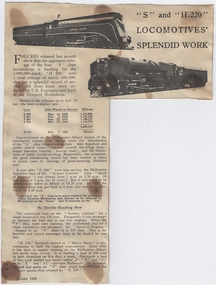
Article - Fred Rochow Railways Collection - Locomotives' Splendid Work, October 1948
... ...S Class Locomotives... An article (Source Unknown), detailing the service records of Victoria's S Class Locomotives and Locomotive H220 known as "Heavy Harry"....Railways Wodonga Fred Rochow S Class Locomotives Locomotive H220 An article (Source Unknown), detailing the service records of Victoria's S Class Locomotives and Locomotive H220 known as "Heavy Harry". ...The Fred Rochow Railways Collection incorporates photos related to the operation of the Wodonga Railway Station including different types of trains and railways staff C. 1930 – 1990. It was donated to the Wodonga Historical Society by Fred Rochow, a railwayman who spent many years based in Wodonga. He joined the Victorian Railways on 17th June l947 and retired in 1988. For some time, he was a member of the Australian Federated Union of Locomotive Enginemen and served a term as a member of the Trades Hall Council. He had an extensive knowledge of the struggles that took place to achieve better conditions for railway workers. Fred worked for many years as a fireman and then worked his way up the ranks to driver, experiencing many changes from the days of steam locomotives through to diesel trains, locomotives and even the modern XPT train. He worked throughout Victoria at different stages of his career, with his final working years focused on the northeast of Victoria and the Albury to Melbourne line. After his retirement, Fred continued to share his love of steam miniature trains with the community.This collection has local and statewide significance as it captures images of trains, locomotives and personnel who operated the railway services in Wodonga and throughout Northeast Victoria. The railways played a critical role in opening up Victoria and connecting Australia for trade, business, social communication and transport. An article (Source Unknown), detailing the service records of Victoria's S Class Locomotives and Locomotive H220 known as "Heavy Harry".railways wodonga, fred rochow, s class locomotives, locomotive h220 -
 Wodonga & District Historical Society Inc
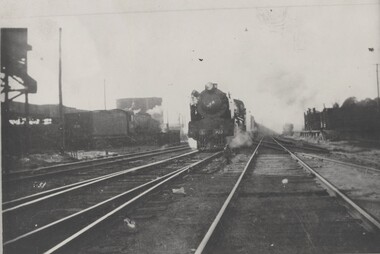
Photograph - Fred Rochow Railways Collection - "Spirit of Progress" test run, November 17, 1937
... ...S class steam locomotives...Considered by many to be Victorian Railways' greatest passenger locomotives, the 4 S class steam locomotives were the first 3 cylinder steam locomotives. ...Considered by many to be Victorian Railways' greatest passenger locomotives, the 4 S class steam locomotives were the first 3 cylinder steam locomotives. ...The Fred Rochow Railways Collection incorporates photos related to the operation of the Wodonga Railway Station including different types of trains and railways staff C. 1930 – 1990. It was donated to the Wodonga Historical Society by Fred Rochow, a railwayman who spent many years based in Wodonga. He joined the Victorian Railways on 17th June l947 and retired in 1988. For some time, he was a member of the Australian Federated Union of Locomotive Enginemen and served a term as a member of the Trades Hall Council. He had an extensive knowledge of the struggles that took place to achieve better conditions for railway workers. Fred worked for many years as a fireman and then worked his way up the ranks to driver, experiencing many changes from the days of steam locomotives through to diesel trains, locomotives and even the modern XPT train. He worked throughout Victoria at different stages of his career, with his final working years focused on the northeast of Victoria and the Albury to Melbourne line. After his retirement, Fred continued to share his love of steam miniature trains with the community.This collection has local and statewide significance as it captures images of trains, locomotives and personnel who operated the railway services in Wodonga and throughout Northeast Victoria. The railways played a critical role in opening up Victoria and connecting Australia for trade, business, social communication and transport.The "Spirit of Progress" on a test run prior to its official launch being hauled by Locomotive S303. It was named the C.J. LaTrobe after the1st Lieutenant-Governor of Victoria, Charles Joseph Latrobe. Considered by many to be Victorian Railways' greatest passenger locomotives, the 4 S class steam locomotives were the first 3 cylinder steam locomotives. This small class was built to run the Melbourne to Albury passenger trains and spent their entire careers on the North East line. They were built unstreamlined and ran in this condition until 1937. The streamlining modifications complimented the all new "Spirit Of Progress" carriages. The S class ran the "Spirit" until 1952 at which time the newly delivered B class diesels took over. The 4 S class locomotive which were allocated to the "Spirit of Progress" were S300 - the "Mathew Flinders", withdrawn in September 1954, having covered 1,379,791 miles. S301 - the "Sir Thomas Mitchell", withdrawn in October 1953, having covered 1,414,367 miles. S302 - the "Edward Henty", withdrawn in July 1954, having covered 1,446,468 miles and S303 - the "C.J. Latrobe", withdrawn in May 1954, having covered 1,434,664 miles.On the lower front of the Locomotive "S303"railways wodonga, fred rochow, wodonga railwaymen, spirit of progress, s class steam locomotives -
 Wodonga & District Historical Society Inc
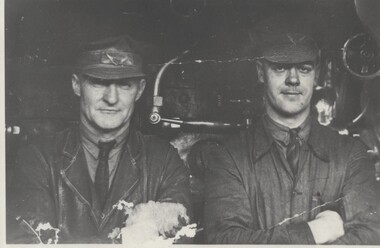
Photograph - Fred Rochow Railways Collection - Driver Ray Murphy and Fireman Bill Welsh, 1942
... Driver Ray Murphy and Fireman Bill Welsh in S-class Locomotive cab at Spencer Street Station, Melbourne. ...Railways Wodonga Fred Rochow Wodonga Railwaymen Ray Murphy Bill Welsh Driver Ray Murphy and Fireman Bill Welsh in S-class Locomotive cab at Spencer Street Station, Melbourne. ...The Fred Rochow Railways Collection incorporates photos related to the operation of the Wodonga Railway Station including different types of trains and railways staff C. 1930 – 1990. It was donated to the Wodonga Historical Society by Fred Rochow, a railwayman who spent many years based in Wodonga. He joined the Victorian Railways on 17th June l947 and retired in 1988. For some time, he was a member of the Australian Federated Union of Locomotive Enginemen and served a term as a member of the Trades Hall Council. He had an extensive knowledge of the struggles that took place to achieve better conditions for railway workers. Fred worked for many years as a fireman and then worked his way up the ranks to driver, experiencing many changes from the days of steam locomotives through to diesel trains, locomotives and even the modern XPT train. He worked throughout Victoria at different stages of his career, with his final working years focused on the northeast of Victoria and the Albury to Melbourne line. After his retirement, Fred continued to share his love of steam miniature trains with the community.This collection has local and statewide significance as it captures images of trains, locomotives and personnel who operated the railway services in Wodonga and throughout Northeast Victoria. The railways played a critical role in opening up Victoria and connecting Australia for trade, business, social communication and transport.Driver Ray Murphy and Fireman Bill Welsh in S-class Locomotive cab at Spencer Street Station, Melbourne. S Class Diesel Locomotives The eighteen members of the S Class were ordered in two batches by the Victorian Railways from Clyde Engineering for express passenger and freight workings, with the final eight locomotives ordered specifically to work the North-East standard gauge line. Many were named after prominent Victorians.railways wodonga, fred rochow, wodonga railwaymen, ray murphy, bill welsh -
 Wodonga & District Historical Society Inc
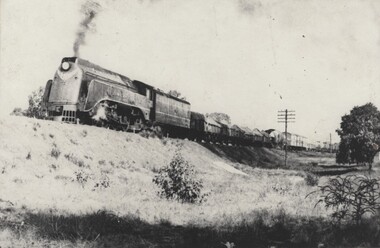
Photograph - Fred Rochow Railways Collection - S Class Locomotive, C. 1960s
... Fred Rochow Railways Collection - S Class Locomotive...Fred Rochow Railways Collection - S Class Locomotive......S Class Locomotive...An S Class locomotive pulling a goods train into Wodonga in its last days before being scrapped. ...Railways Wodonga Fred Rochow Wodonga Railwaymen S Class Locomotive An S Class locomotive pulling a goods train into Wodonga in its last days before being scrapped. ...The Fred Rochow Railways Collection incorporates photos related to the operation of the Wodonga Railway Station including different types of trains and railways staff C. 1930 – 1990. It was donated to the Wodonga Historical Society by Fred Rochow, a railwayman who spent many years based in Wodonga. He joined the Victorian Railways on 17th June l947 and retired in 1988. For some time, he was a member of the Australian Federated Union of Locomotive Enginemen and served a term as a member of the Trades Hall Council. He had an extensive knowledge of the struggles that took place to achieve better conditions for railway workers. Fred worked for many years as a fireman and then worked his way up the ranks to driver, experiencing many changes from the days of steam locomotives through to diesel trains, locomotives and even the modern XPT train. He worked throughout Victoria at different stages of his career, with his final working years focused on the northeast of Victoria and the Albury to Melbourne line. After his retirement, Fred continued to share his love of steam miniature trains with the community.This collection has local and statewide significance as it captures images of trains, locomotives and personnel who operated the railway services in Wodonga and throughout Northeast Victoria. The railways played a critical role in opening up Victoria and connecting Australia for trade, business, social communication and transport.An S Class locomotive pulling a goods train into Wodonga in its last days before being scrapped. S Class Diesel Locomotives The eighteen members of the S Class were ordered in two batches by the Victorian Railways from Clyde Engineering for express passenger and freight workings, with the final eight locomotives ordered specifically to work the North-East standard gauge line. Many were named after prominent Victorians. They were introduced into service about 1957railways wodonga, fred rochow, wodonga railwaymen, s class locomotive -
 Ballarat Tramway Museum
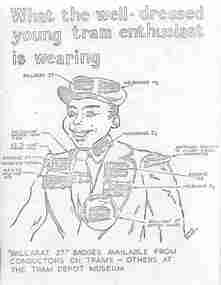
Pamphlet, David Frost, "What the well-dressed young tram enthusiast is wearing", c1980
... These include Ballarat 27, Melbourne W2, V214, VR B class loco, Brisbane 47, MMTB half cab bus, Melbourne Z3, VR S class locomotive, Brisbane 136, Melbourne Z2 and Ballarat 27 button badge....s sold well and gave the BTPS much needed income. Produced by David Frost. Trams tramways Badges BTPS Pamphlets Foolscap, photocopied sheet, titled "What the well-dressed young tram enthusiast is wearing", prepared by David Frost, featuring a "young man" wearing BTPS or other organisations tram badges. These include Ballarat 27, Melbourne W2, V214, VR B class loco, Brisbane 47, MMTB half cab bus, Melbourne Z3, VR S class locomotive ...Shows a style of promotion of tram badges, sales items, produced by the BTPS at the time. Were very popular early 1980's sold well and gave the BTPS much needed income. Produced by David Frost.Foolscap, photocopied sheet, titled "What the well-dressed young tram enthusiast is wearing", prepared by David Frost, featuring a "young man" wearing BTPS or other organisations tram badges. These include Ballarat 27, Melbourne W2, V214, VR B class loco, Brisbane 47, MMTB half cab bus, Melbourne Z3, VR S class locomotive, Brisbane 136, Melbourne Z2 and Ballarat 27 button badge.trams, tramways, badges, btps, pamphlets -
 Wodonga & District Historical Society Inc
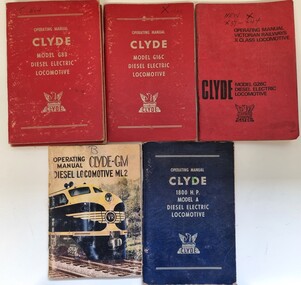
Manual - Operating Manuals for Clyde Diesel Locomotives
... class locomotive. It was introduced in 1955 and was the most numerous class of diesel locomotive used in Victoria. This model continued in operation until 1968, although many were modified for continued service. Clyde Model G16C, later superseded by the G26C operated in Victoria as the X class locomotive between 1966 and 1976. Clyde Model 1800HP Model A became the S...class locomotive. It was introduced in 1955 and was the most numerous class of diesel locomotive used in Victoria. This model continued in operation until 1968, although many were modified for continued service. Clyde Model G16C, later superseded by the G26C operated in Victoria as the X class locomotive between 1966 and 1976. Clyde Model 1800HP Model A became the S...class locomotive. It was introduced in 1955 and was the most numerous class of diesel locomotive used in Victoria. This model continued in operation until 1968, although many were modified for continued service. Clyde Model G16C, later superseded by the G26C operated in Victoria as the X class locomotive between 1966 and 1976. Clyde Model 1800HP Model A became the S ...This collection of Diesel Locomotive Manuals was published by the Clyde EngineeringA collection of 5 manuals for a range of Clyde Diesel Locomotives. The collection includes instructions for the Clyde G8B, G16C, G26C, 1800 HP Model A and the Clyde Mailiner Model 2. On the cover of each manual, the owner has written the letter for the name of class which the relevant locomotive was ascribed in Victoria. The Clyde Engineering Company Limited was registered on 30 September 1898 in New South Wales. It was one of the iconic Australian engineering firms whose history spanned just over a century and was one of the few locomotive and rolling stock builders in the world that transitioned from steam to diesel to electric traction. The company was formed by Walter Maplesden Noakes who purchased the works of Hudson Brothers Limited in the Sydney suburb of Granville, which had been established by in 1882. The manuals refer to the following locomotives:- Clyde Model G8B which operated in Victoria as the new T class locomotive. It was introduced in 1955 and was the most numerous class of diesel locomotive used in Victoria. This model continued in operation until 1968, although many were modified for continued service. Clyde Model G16C, later superseded by the G26C operated in Victoria as the X class locomotive between 1966 and 1976. Clyde Model 1800HP Model A became the S class locomotives in Victoria. Additional numbers were purchased in preparation for the opening of the standard gauge line between Melbourne and Albury, They entered service between 1957 and 1961. Clyde Mainline Model 2 became the B class in Victoria. The B class were the first mainline diesel-electric locomotives in Victoria entering service in June 1952. They were initially used on the main passenger and freight services, before moving out to other areas. They remained in service until the early 1990s.fiction This collection of Diesel Locomotive Manuals was published by the Clyde Engineeringclyde engineering, diesel locomotives, locomotives victoria -
 Sunshine and District Historical Society Incorporated
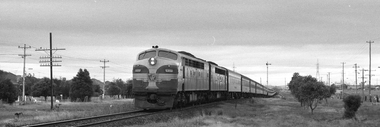
Photograph - The Overland Train, Clive Mottam, May 1973
... This picture shows the S302 and another S class locomotive haul "The Overland" bound for Spencer Street, Melbourne, as it crosses the Kororoit Creek Bridge, west of Sunshine and was taken back in the days before the tracks were duplicated between Sunshine and Deer Park West, and well before the line between Melbourne and Adelaide was standardised, resulting in the diversion of interstate trains away from this section of line....This picture shows the S302 and another S class locomotive haul "The Overland" bound for Spencer Street, Melbourne, as it crosses the Kororoit Creek Bridge, west of Sunshine and was taken back in the days before the tracks were duplicated between Sunshine and Deer Park West, and well before the line between Melbourne and Adelaide was standardised, resulting in the diversion of interstate trains away from this section of line. ...The Overland was a direct Melbourne to Adelaide interstate train, running as a daylight service (no sleeper carriages), operating twice weekly in each direction. The train departed Spencer Street Station (Southern Cross Station) to Adelaide on Mondays and Fridays and departed Adelaide Parklands Terminal to Melbourne on Thursdays and Sundays. There were two classes for passengers to choose from, the Red Standard Class with reclining seats and cafe access and the Red Premium Class with wider seats, extra legroom, dedicated dining carriage with meals included. The journey time was 10 1/2 to 12 hours. This train service is still operating and remains the only passenger rail link between the two cities. It is one of Australia’s oldest continuously named interstate trains (the name dates to 1926, with roots back to the Adelaide Express of the 1880s). Some media reports refer to it generically as “The Melbourne – Adelaide Train", but the official service name "The Overland" remains unchanged. This picture shows the S302 and another S class locomotive haul "The Overland" bound for Spencer Street, Melbourne, as it crosses the Kororoit Creek Bridge, west of Sunshine and was taken back in the days before the tracks were duplicated between Sunshine and Deer Park West, and well before the line between Melbourne and Adelaide was standardised, resulting in the diversion of interstate trains away from this section of line.The Overland was a popular slight for the local Albion, Ardeer, Deer Park, Sunshine & Sunshine West residents as it travelled along the Melbourne to Adelaide trainline, blowing its whistle at the various road and pedestrian crossings and spectators along the route.S302 VR S302overland train, forrest street, kororoit creek bridge, albion -
 Wodonga & District Historical Society Inc
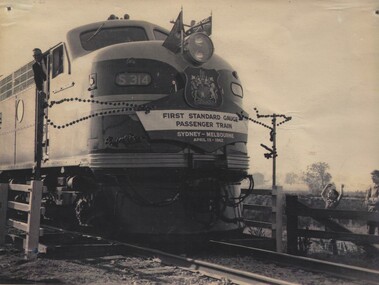
Photograph - Fred Rochow Railways Collection - First standard gauge passenger train from Sydney to Melbourne, 13 April 1962
... After his retirement, Fred continued to share his love of steam miniature trains with the community. S Class Locomotives - The eighteen members of the S Class were ordered in two batches by the Victorian Railways from Clyde Engineering for express passenger and freight workings, with the final eight locomotives ordered specifically to work the North-East standard gauge line. ...After his retirement, Fred continued to share his love of steam miniature trains with the community. S Class Locomotives - The eighteen members of the S Class were ordered in two batches by the Victorian Railways from Clyde Engineering for express passenger and freight workings, with the final eight locomotives ordered specifically to work the North-East standard gauge line. ...The Fred Rochow Railways Collection incorporates photos related to the operation of the Wodonga Railway Station including different types of trains and railways staff C. 1930 – 1990. It was donated to the Wodonga Historical Society by Fred Rochow, a railwayman who spent many years based in Wodonga. He joined the Victorian Railways on 17th June l947 and retired in 1988. For some time, he was a member of the Australian Federated Union of Locomotive Enginemen and served a term as a member of the Trades Hall Council. He had an extensive knowledge of the struggles that took place to achieve better conditions for railway workers. Fred worked for many years as a fireman and then worked his way up the ranks to driver, experiencing many changes from the days of steam locomotives through to diesel trains, locomotives and even the modern XPT train. He worked throughout Victoria at different stages of his career, with his final working years focused on the northeast of Victoria and the Albury to Melbourne line. After his retirement, Fred continued to share his love of steam miniature trains with the community. S Class Locomotives - The eighteen members of the S Class were ordered in two batches by the Victorian Railways from Clyde Engineering for express passenger and freight workings, with the final eight locomotives ordered specifically to work the North-East standard gauge line. Many were named after prominent Victorians.This collection has local and statewide significance as it captures images of trains, locomotives and personnel who operated the railway services in Wodonga and throughout Northeast Victoria. The railways played a critical role in opening up Victoria and connecting Australia for trade, business, social communication and transport.The first standard gauge passenger train from Sydney to Melbourne pulled by Locomotive S314. This was made possible when part of Australia's gauge problem was solved with the construction of a new standard gauge line. The new line was a 317 km long line running from Albury, NSW, parallel to the existing broad gauge line to Melbourne, connecting Australia's two largest cities by standard gauge. S314 entered service on 24 April 1961 and was named after Sir John O'Shannassy who was the second Premier of Victoria. The S314 pulled the first passenger train to travel straight through from Sydney to Melbourne on 13 April 1962. On the morning of 7th February 1969, the southbound Southern Aurora collided head-on with a northbound goods train near Violet Town, Victoria. The Locomotive S314 was hauling the goods train and was destroyed by the impact of the collision. On front of locomotive "S314" On banner below Coat of Arms "FIRST STANDARD GAUGE PASSENGER TRAIN / SYDNEY - MELBOURNE/ APRIL 13 - 1962"railways wodonga, fred rochow, walker rail motor vehicles, wodonga to tallangatta rail service -
 Wodonga & District Historical Society Inc
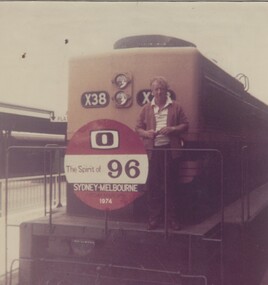
Photograph - Fred Rochow Railways Collection - Driver George Judge, 1974
... Driver George Judge standing on front of Locomotive X38 special train "Spirit of 96" The X class are a class of mainline diesel locomotives built by Clyde Engineering Victorian Railways between 1966 and 1976. X 38 was part of the second order. It entered service on Friday, 8th May 1970. X 37 and X 38 were built as replacements for the two S...Railways Wodonga Fred Rochow Wodonga Railwaymen X class diesel locomotive George Judge Spirit of 96 On front of locomotive "X38" On red black and white sign attached to the front rail of the locomotive "O/The Spirit of 96/Sydney-Melbourne/1974" Driver George Judge standing on front of Locomotive X38 special train "Spirit of 96" The X class are a class of mainline diesel locomotives built by Clyde Engineering Victorian Railways between 1966 and 1976. X 38 was part of the second order. It entered service on Friday, 8th May 1970. X 37 and X 38 were built as replacements for the two S ...The Fred Rochow Railways Collection incorporates photos related to the operation of the Wodonga Railway Station including different types of trains and railways staff C. 1930 – 1990. It was donated to the Wodonga Historical Society by Fred Rochow, a railwayman who spent many years based in Wodonga. He joined the Victorian Railways on 17th June l947 and retired in 1988. For some time, he was a member of the Australian Federated Union of Locomotive Enginemen and served a term as a member of the Trades Hall Council. He had an extensive knowledge of the struggles that took place to achieve better conditions for railway workers. Fred worked for many years as a fireman and then worked his way up the ranks to driver, experiencing many changes from the days of steam locomotives through to diesel trains, locomotives and even the modern XPT train. He worked throughout Victoria at different stages of his career, with his final working years focused on the northeast of Victoria and the Albury to Melbourne line. After his retirement, Fred continued to share his love of steam miniature trains with the community.This collection has local and statewide significance as it captures images of trains, locomotives and personnel who operated the railway services in Wodonga and throughout Northeast Victoria. The railways played a critical role in opening up Victoria and connecting Australia for trade, business, social communication and transport.Driver George Judge standing on front of Locomotive X38 special train "Spirit of 96" The X class are a class of mainline diesel locomotives built by Clyde Engineering Victorian Railways between 1966 and 1976. X 38 was part of the second order. It entered service on Friday, 8th May 1970. X 37 and X 38 were built as replacements for the two S Class locomotives lost in the fatal Southern Aurora crash at Violet Town in 1969. It was later sold to Pacific National and rebuilt as XR550. "Spirit of 96" was a passenger train specially designed for cast and crew of the Australian 0-10 Network series “Number 96”. It was used to travel from Sydney to Melbourne for the annual TV Week Logie Awards. It was a silver, multi-carriage train with the Commissioner's carriage hooked up at the rear for VIPs. The 16 and a half-hour overnight journey, left from the centre of Sydney at 4.30 pm with a farewell party, complete with red carpet and jazz band in attendance. It featured whistle stop visits at country sidings and stations. Thousands of people turned out to see their favourite stars, before it arrived at Spencer Street station. The rail service of the time was keen to promote its overnight tourism packages, and for the journey the train was christened as the "Spirit of 96”. On front of locomotive "X38" On red black and white sign attached to the front rail of the locomotive "O/The Spirit of 96/Sydney-Melbourne/1974"railways wodonga, fred rochow, wodonga railwaymen, x class diesel locomotive, george judge, spirit of 96 -
 Wodonga & District Historical Society Inc
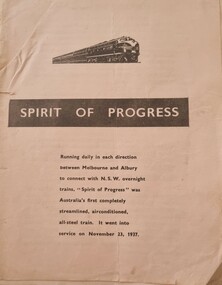
Booklet - Spirit of Progress, Victorian Railways, 1958
... After World War II the locomotives were converted to oil burners and were hauled by “S” class diesel-electric locomotives. ...After World War II the locomotives were converted to oil burners and were hauled by “S” class diesel-electric locomotives. ...The "Spirit of Progress' was constructed at the Railway Workshops, Newport, Victoria, and placed into service between Melbourne and Albury on 23rd November, 1937. It was the first completely streamlined, airconditioned, all steel train in the Southern Hemisphere. It travelled non-stop daily in both directions between Melbourne and Albury. On its daily run a speed of one mile a minute was averaged for much of the 1,904 mile journey. Eighty m.p.h. was exceeded in tests, but in normal running a 70 m.p.h. restriction was imposed. The average load of the "Spirit of Progress" was 499 tons, and it could carry 240 first-class and 192 second-class passengers. A luxurious dining car was a feature of the “Spirit of Progress” with Queensland beech walls and leather upholstered seats. It had a well-equipped kitchen with walls of stainless steel, a slow combustion coke-burning range and a modern air circulation system. The "Spirit of Progress" was hauled by one of the four giant "S" class steam locomotives. Each was named after a man famous in Australian History: Matthew Flinders, Edward Henty, Sir Thomas Mitchell and C.J. Latrobe. After World War II the locomotives were converted to oil burners and were hauled by “S” class diesel-electric locomotives. In a normal year, the "Spirit of Progress" travelled about 146, 000 miles and carried over 300,000 passengers, while approximately 126,000 meals and 45, 000 serves of light refreshments would be provided in the dining car. The Spirit of Progress ran for the last time on 2nd August 1986.This item is significant because it provides a description and information about an important locomotive which served the Wodonga DistrictA small leaflet of six pages plus cover outlining information about the Spirit of Progress. The cover features a picture of the Spirit of Progress. Printed on buff coloured paper in black ink.SPIRIT OF PROGRESS"spirit of progress", victorian railways, locomotives -- victoria -- history -
 Wodonga & District Historical Society Inc
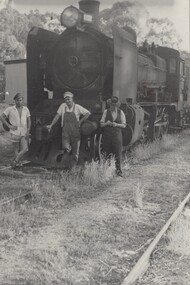
Photograph - Fred Rochow Railways Collection - Shunting at Shelley Station, 1961
... ...S Class Locomotive...Locomotive S300 - the ‘Matthew Flinders’ The S class diesel locomotives were built by Clyde Engineering in 1957 for the Victorian Railways. ...Locomotive S300 - the ‘Matthew Flinders’ The S class diesel locomotives were built by Clyde Engineering in 1957 for the Victorian Railways. ...The Fred Rochow Railways Collection incorporates photos related to the operation of the Wodonga Railway Station including different types of trains and railways staff C. 1930 – 1990. It was donated to the Wodonga Historical Society by Fred Rochow, a railwayman who spent many years based in Wodonga. He joined the Victorian Railways on 17th June l947 and retired in 1988. For some time, he was a member of the Australian Federated Union of Locomotive Enginemen and served a term as a member of the Trades Hall Council. He had an extensive knowledge of the struggles that took place to achieve better conditions for railway workers. Fred worked for many years as a fireman and then worked his way up the ranks to driver, experiencing many changes from the days of steam locomotives through to diesel trains, locomotives and even the modern XPT train. He worked throughout Victoria at different stages of his career, with his final working years focused on the northeast of Victoria and the Albury to Melbourne line. After his retirement, Fred continued to share his love of steam miniature trains with the community. Shelley Railway Station - Shelley was once Victoria's highest railway station, located 781 metres above sea level. The Shelley Railway Station was opened in 1916 and closed in 1979. The railway was used early in its life to transport farmer’s livestock from the Upper Murray to Wodonga. From the 1950s the railway was used heavily to transport equipment and machinery from Wodonga to the Upper Murray to help build the Snowy Mountains Hydro Electric Scheme. The Snowy Hydro Scheme was completed in 1974 and after several years of low level use, the railway was closed. Some remnants of the Shelley Station passenger platform can still be seen today, along with some information boards. The Shelley Railway Station now forms part of the High Country Rail Trail.This collection has local and statewide significance as it captures images of trains, locomotives and personnel who operated the railway services in Wodonga and throughout Northeast Victoria. The railways played a critical role in opening up Victoria and connecting Australia for trade, business, social communication and transport.Left to Right: Fireman Bert Cadman, Driver Wally Riley, Guard Hugh Fraser. Locomotive S300 - the ‘Matthew Flinders’ The S class diesel locomotives were built by Clyde Engineering in 1957 for the Victorian Railways. Designed as premier express passenger diesels, they assumed the ‘S class’ title from a fleet of steam locomotives. They were also given names of famous Australians. The S300 took the name ‘Matthew Flinders’. In 1962, S300 was converted from the Victorian broad gauge of 5’3” to the New South Wales gauge of 4’8.5”, in order to operate the new Southern Aurora between Sydney & Melbourne. As the locomotive grew older it was removed from these duties and was sold to Chicago Freight Car Leasing Australia (CFCLA) in 2004. It is now owned by a private owner and is on loan to the Canberra Railway Museum.railways wodonga, fred rochow, wodonga railwaymen, s class locomotive -
 Wodonga & District Historical Society Inc
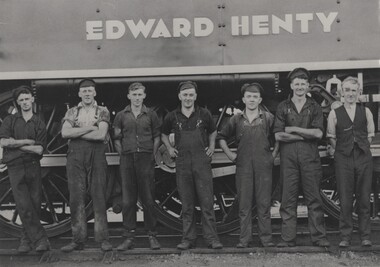
Photograph - Fred Rochow Railways Collection - Cleaning Crew for the 'Edward Henty" Locomotive S302, 1938
... "Edward Henty" Considered by many to be Victorian Railways' greatest passenger locomotives, the 4 S class steam locomotives were the first 3 cylinder steam locomotives. ..."Edward Henty" Considered by many to be Victorian Railways' greatest passenger locomotives, the 4 S class steam locomotives were the first 3 cylinder steam locomotives. ...The Fred Rochow Railways Collection incorporates photos related to the operation of the Wodonga Railway Station including different types of trains and railways staff C. 1930 – 1990. It was donated to the Wodonga Historical Society by Fred Rochow, a railwayman who spent many years based in Wodonga. He joined the Victorian Railways on 17th June l947 and retired in 1988. For some time, he was a member of the Australian Federated Union of Locomotive Enginemen and served a term as a member of the Trades Hall Council. He had an extensive knowledge of the struggles that took place to achieve better conditions for railway workers. Fred worked for many years as a fireman and then worked his way up the ranks to driver, experiencing many changes from the days of steam locomotives through to diesel trains, locomotives and even the modern XPT train. He worked throughout Victoria at different stages of his career, with his final working years focused on the northeast of Victoria and the Albury to Melbourne line. After his retirement, Fred continued to share his love of steam miniature trains with the community.This collection has local and statewide significance as it captures images of trains, locomotives and personnel who operated the railway services in Wodonga and throughout Northeast Victoria. The railways played a critical role in opening up Victoria and connecting Australia for trade, business, social communication and transport.Left to right: W. Orchard, Hec Lloyd, Jack Hinchcliffe, Charlie Edmondson, George Lynch, Jack Bowden, Driver Tommy Black. "Edward Henty" Considered by many to be Victorian Railways' greatest passenger locomotives, the 4 S class steam locomotives were the first 3 cylinder steam locomotives. This small class was built to run the Melbourne to Albury passenger trains and spent their entire careers on the North East line. They were built unstreamlined and ran in this condition until 1937. The streamlining modifications complimented the all new "Spirit Of Progress" carriages. The S class ran the "Spirit" until 1952 at which time the newly delivered B class diesels took over. Locomotive S302 - the "Edward Henty" was withdrawn in July 1954, having covered 1,446,468 miles. On the locomotive in the background "EDWARD HENTY"railways wodonga, fred rochow, wodonga railwaymen, steam locomotive 302, edward henty -
 Wodonga & District Historical Society Inc
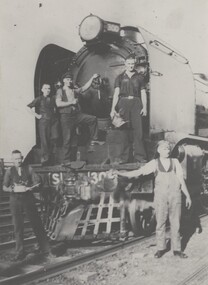
Photograph - Fred Rochow Railways Collection - Preparing Locomotive S300, 1937
... Locomotive S300 for travel. Driver George Padgett, Fireman S Salvin, Cleaners George Lynch, A. Milne and Jack Dawe. Locomotive S300 - the ‘Matthew Flinders’ The S class diesel locomotives were built by Clyde Engineering in 1957 for the Victorian Railways. ...Locomotive S300 for travel. Driver George Padgett, Fireman S Salvin, Cleaners George Lynch, A. Milne and Jack Dawe. Locomotive S300 - the ‘Matthew Flinders’ The S class diesel locomotives were built by Clyde Engineering in 1957 for the Victorian Railways. ...The Fred Rochow Railways Collection incorporates photos related to the operation of the Wodonga Railway Station including different types of trains and railways staff C. 1930 – 1990. It was donated to the Wodonga Historical Society by Fred Rochow, a railwayman who spent many years based in Wodonga. He joined the Victorian Railways on 17th June l947 and retired in 1988. For some time, he was a member of the Australian Federated Union of Locomotive Enginemen and served a term as a member of the Trades Hall Council. He had an extensive knowledge of the struggles that took place to achieve better conditions for railway workers. Fred worked for many years as a fireman and then worked his way up the ranks to driver, experiencing many changes from the days of steam locomotives through to diesel trains, locomotives and even the modern XPT train. He worked throughout Victoria at different stages of his career, with his final working years focused on the northeast of Victoria and the Albury to Melbourne line. After his retirement, Fred continued to share his love of steam miniature trains with the community.This collection has local and statewide significance as it captures images of trains, locomotives and personnel who operated the railway services in Wodonga and throughout Northeast Victoria. The railways played a critical role in opening up Victoria and connecting Australia for trade, business, social communication and transport.Preparing Locomotive S300 for travel. Driver George Padgett, Fireman S Salvin, Cleaners George Lynch, A. Milne and Jack Dawe. Locomotive S300 - the ‘Matthew Flinders’ The S class diesel locomotives were built by Clyde Engineering in 1957 for the Victorian Railways. Designed as premier express passenger diesels, they assumed the ‘S class’ title from a fleet of steam locomotives. They were also given names of famous Australians. The S300 took the name ‘Matthew Flinders’. In 1962, S300 was converted from the Victorian broad gauge of 5’3” to the New South Wales gauge of 4’8.5”, in order to operate the new Southern Aurora between Sydney & Melbourne. As the locomotive grew older it was removed from these duties and was sold to Chicago Freight Car Leasing Australia (CFCLA) in 2004. It is now owned by a private owner and is on loan to the Canberra Railway Museum.rochow collection, railways wodonga, locomotive s300 -
 Wodonga & District Historical Society Inc
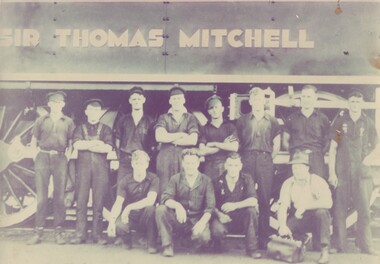
Photograph - Fred Rochow Railways Collection - Cleaning Crew for the 'Sir Thomas Mitchell" Locomotive S301, 1938
... "Sir Thomas Mitchell" Considered by many to be Victorian Railways' greatest passenger locomotives, the 4 S class steam locomotives were the first 3 cylinder steam locomotives. ..."Sir Thomas Mitchell" Considered by many to be Victorian Railways' greatest passenger locomotives, the 4 S class steam locomotives were the first 3 cylinder steam locomotives. ...The Fred Rochow Railways Collection incorporates photos related to the operation of the Wodonga Railway Station including different types of trains and railways staff C. 1930 – 1990. It was donated to the Wodonga Historical Society by Fred Rochow, a railwayman who spent many years based in Wodonga. He joined the Victorian Railways on 17th June l947 and retired in 1988. For some time, he was a member of the Australian Federated Union of Locomotive Enginemen and served a term as a member of the Trades Hall Council. He had an extensive knowledge of the struggles that took place to achieve better conditions for railway workers. Fred worked for many years as a fireman and then worked his way up the ranks to driver, experiencing many changes from the days of steam locomotives through to diesel trains, locomotives and even the modern XPT train. He worked throughout Victoria at different stages of his career, with his final working years focused on the northeast of Victoria and the Albury to Melbourne line. After his retirement, Fred continued to share his love of steam miniature trains with the community.This collection has local and statewide significance as it captures images of trains, locomotives and personnel who operated the railway services in Wodonga and throughout Northeast Victoria. The railways played a critical role in opening up Victoria and connecting Australia for trade, business, social communication and transport.Left to right: Jack Hinchcliffe, George Lynch, Bill Orchard, Hec Lloyd, ; BILL ROWE; Bill Rowe, Bill McLaren, Jack Dore, Jack Bowden, George Judge, Harry Alderson, Charlie Edmondson, Fireman Cyril Hughes. Cyril Hughes was born on 30 January 1903, started cleaning on 17 December 1924 and passed his Driving Qualifications on 27 June1941. "Sir Thomas Mitchell" Considered by many to be Victorian Railways' greatest passenger locomotives, the 4 S class steam locomotives were the first 3 cylinder steam locomotives. This small class was built to run the Melbourne to Albury passenger trains and spent their entire careers on the North East line. They were built unstreamlined and ran in this condition until 1937. The streamlining modifications complimented the all new "Spirit Of Progress" carriages. The S class ran the "Spirit" until 1952 at which time the newly delivered B class diesels took over. Locomotive S301 - the "Sir Thomas Mitchell" was withdrawn in October 1953, having covered 1,414,367 miles. On the locomotive in the background "SIR THOMAS MITCHELL"railways wodonga, fred rochow, wodonga railwaymen, steam locomotive s301, locomotive "sir thomas mitchell" -
 Wodonga & District Historical Society Inc
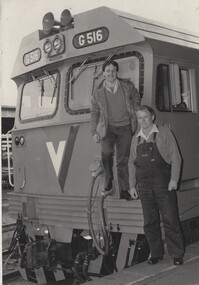
Photograph - Fred Rochow Railways Collection - Driver Tom Symonds and Fireman Billy Hyde, 3 August 1986
... The classic S Class locomotive was used to haul the early Southern Aurora trains. ...The classic S Class locomotive was used to haul the early Southern Aurora trains. ...The Fred Rochow Railways Collection incorporates photos related to the operation of the Wodonga Railway Station including different types of trains and railways staff C. 1930 – 1990. It was donated to the Wodonga Historical Society by Fred Rochow, a railwayman who spent many years based in Wodonga. He joined the Victorian Railways on 17th June l947 and retired in 1988. For some time, he was a member of the Australian Federated Union of Locomotive Enginemen and served a term as a member of the Trades Hall Council. He had an extensive knowledge of the struggles that took place to achieve better conditions for railway workers. Fred worked for many years as a fireman and then worked his way up the ranks to driver, experiencing many changes from the days of steam locomotives through to diesel trains, locomotives and even the modern XPT train. He worked throughout Victoria at different stages of his career, with his final working years focused on the northeast of Victoria and the Albury to Melbourne line. After his retirement, Fred continued to share his love of steam miniature trains with the community.This collection has local and statewide significance as it captures images of trains, locomotives and personnel who operated the railway services in Wodonga and throughout Northeast Victoria. The railways played a critical role in opening up Victoria and connecting Australia for trade, business, social communication and transport.At Spencer Street Station on the last “Southern Aurora". The locomotive was G516. Driver Tom Symonds was based in Wodonga from 1955 to 1987. He served as AFULE Branch Secretary from 1962 to 1963 and 1966 to 1971. G Class Locomotives - G Class locomotives were primarily intended for hauling freight services, they were also used on passenger trains such as the “Southern Aurora” and the “Intercapital Daylight”. Locomotive G516 came into service in December 1984. After a series of contractual changeovers between companies it was transferred to QR National and is still in operation, The "Southern Aurora", the overnight Sydney-Melbourne express, was one of the icons of Australian railways in the 1960s and 1970s. Uniquely in Australia, it conveyed only First Class passengers, all of whom were accommodated in air-conditioned sleeping cars, all equipped with showers. The Southern Aurora was introduced when part of Australia's rail gauge problem was solved with the construction of a new standard gauge line. The new line was a 317 km long line running from Albury, NSW, parallel to the existing broad gauge line to Melbourne, connecting Australia's two largest cities by standard gauge. The Southern Aurora consisted of 14 stainless steel cars: a luggage van, a power van, a dining car, a lounge car, and ten First Class Sleeping Cars. The total capacity was 198 passengers. For a number of years, there were no intermediate stops for passengers, and the train had the longest non-stop run in Australia, 430 km from Goulburn to Albury. Dining car crews changed at Goulburn and Albury, and locos were changed at Albury. The first train ran from Sydney on Thursday 14th April 1962, with full regular services starting from both Sydney and Melbourne on Monday 16th April 1962. The classic S Class locomotive was used to haul the early Southern Aurora trains. From 1984 it was also hauled by the new G Class locomotives, On the morning of 7th February 1969, the southbound Southern Aurora collided head-on with a northbound goods near Violet Town, Victoria. Nine passengers and crew were killed, and seven carriages were destroyed. A steady decline in patronage saw the withdrawal of the service in August 1986. At top of locomotive "G516". In centre of locomotive, "V" insignia of VLinerailways wodonga, fred rochow, wodonga railway men, g class locomotives, the southern aurora -
 Wodonga & District Historical Society Inc
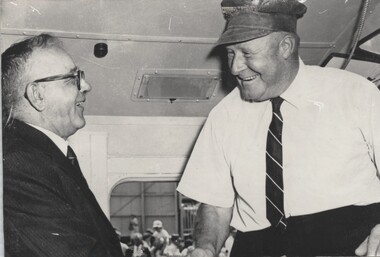
Photograph - Fred Rochow Railways Collection - Harry Binder on Locomotive S315, 3 January 1962
... ...S Class Locomotive...locomotives and even the modern XPT train. He worked throughout Victoria at different stages of his career, with his final working years focused on the northeast of Victoria and the Albury to Melbourne line. After his retirement, Fred continued to share his love of steam miniature trains with the community. S Class...locomotives and even the modern XPT train. He worked throughout Victoria at different stages of his career, with his final working years focused on the northeast of Victoria and the Albury to Melbourne line. After his retirement, Fred continued to share his love of steam miniature trains with the community. S Class ...The Fred Rochow Railways Collection incorporates photos related to the operation of the Wodonga Railway Station including different types of trains and railways staff C. 1930 – 1990. It was donated to the Wodonga Historical Society by Fred Rochow, a railwayman who spent many years based in Wodonga. He joined the Victorian Railways on 17th June l947 and retired in 1988. For some time, he was a member of the Australian Federated Union of Locomotive Enginemen and served a term as a member of the Trades Hall Council. He had an extensive knowledge of the struggles that took place to achieve better conditions for railway workers. Fred worked for many years as a fireman and then worked his way up the ranks to driver, experiencing many changes from the days of steam locomotives through to diesel trains, locomotives and even the modern XPT train. He worked throughout Victoria at different stages of his career, with his final working years focused on the northeast of Victoria and the Albury to Melbourne line. After his retirement, Fred continued to share his love of steam miniature trains with the community. S Class Diesel Locomotives The eighteen members of the S Class were ordered in two batches by the Victorian Railways from Clyde Engineering for express passenger and freight workings, with the final eight locomotives ordered specifically to work the North-East standard gauge line. Many were named after prominent Victorians. S315 entered service on 16 October 1961 and was named after Sir Charles Gavan Duffy who was an Irish poet and journalist, Young Irelander and tenant-rights activist. After emigrating to Australia in 1856 he entered the politics of Victoria on a platform of land reform, and in 1871-72 served as the colony's 8th Premier. The S315 pulled the first goods train to travel straight through from Sydney to Melbourne on 3 January 1962. The S315 was withdrawn from service on 22 August 1988 and scrapped in April 1992.This collection has local and statewide significance as it captures images of trains, locomotives and personnel who operated the railway services in Wodonga and throughout Northeast Victoria. The railways played a critical role in opening up Victoria and connecting Australia for trade, business, social communication and transport.Harry Binder being congratulated by Commissioner Edgar Brownbill on the arrival of the first standard gauge goods train at North Dynon Terminal, The Fireman was John Wortmann.railways wodonga, fred rochow, wodonga railway men, harry binder, s class locomotive -
 Sunshine and District Historical Society Incorporated
Archive - Sunshine Railways and Trains, Various
... Drawing of signalling Diagram included dated 19th May 1996 Sunshine Issue of Caution Orders|Photocopy of The Victorian Railways Magazine dated Aug 1929 Australias Highest Railway Bridge|Photocopy of Spencer Street - Sunshine showing extra train commencing Tuesday 3 May Dated 30 April 1921|Correspondene from Secretary of the Victorian Railways Books Series 422|Photocopy of Special Train Circular S2966 Special Funeral train for HV McKay funeral on 22 May 1926|Newspaper Article The Advocate Tracking History showing photograph of Tom Rigg dated 29 April 1998|Photocopy of Victorian Railways Timetable Dec 1865|Newspaper Article about Paddy Doyle an old locomotive Dated 20 May 1925|Extract from a book about the Big Bridge across the Maribyrnong River September 1927|Newspaper Article about Project Albion Maltese Club Dated 2 September 1992|Newspaper Article about Paddy Doyle and Patsy Dooley Dated 1925|Letter and a list in chronological events for the Braybrook Junction in 1908 smash dated 12 April 1988|Photocopy of the persons employed by the Melbourne and Hobsons Bay United Railway Company on 30 June 1878|Photocopy of Tom Riggs speech as a guest speaker at the Sunshine Historical Society dated 14 August 1988|Newspaper Articl e remembering Australias second worst rail disaster 90 years after dated 13 May 1997|Photocopy of the List of the Dead and addresses for the Rail disaster 27 April 1908|Photocopy of Selection of Names for S Class Locomotives|Photocopy of Maroona to Ararat Station Details|Notes about railway guages in Australia|Photocopy of a Letter regarding Main Road St Albans Railway Station Crossing Dated 6 May 2001|Brochure St Albans to Sydenham Rail Electrification Project Bulletin 2 May 2001|Brochure St Albans to Sydenham Rail Electrification Project Bulletin 3 December 2001|Brochure St Albans to Sydenham Rail Electrification Project Bulletin 4 January 2002|Newspaper Article Star Plainly its Keilor showing photograph of Keilor Plains Dated 18 December 2001|Newspaper Article Brimbank Leader showing All aboard for Keilor Plains Dated 18 December 2001|Media release regarding St Albans to Sydenham dated 12 December 2001|Brochure Its Steam Day Tours 1984|May of Victorian Railway|Brochure of North Williamstown Railway Museum|Photocopy of Map from Footscray and Bacchus March Line 12 June 2003|Newspaper Article Brimbank Independent Residents angry over freight rail decision dated 3 February 1998|Newspaper Article Advocate Greater respect urged for dead and rescuers Dated 16 December 1998|Extract Railway intercommunication Between Werribee and Braybook Junction|Newspaper Article Star Mixed Blessings for the HV McKay building in Devonshire Road added to Victorian Heritage register dated 16 April 2002|Newspaper Article Star Sydenham rail its electifying dated 18 December 2001|Newspaper Article Herald Sun Rail Horror at Sunshine Dated 27 May 1999...Drawing of signalling Diagram included dated 19th May 1996 Sunshine Issue of Caution Orders|Photocopy of The Victorian Railways Magazine dated Aug 1929 Australias Highest Railway Bridge|Photocopy of Spencer Street - Sunshine showing extra train commencing Tuesday 3 May Dated 30 April 1921|Correspondene from Secretary of the Victorian Railways Books Series 422|Photocopy of Special Train Circular S2966 Special Funeral train for HV McKay funeral on 22 May 1926|Newspaper Article The Advocate Tracking History showing photograph of Tom Rigg dated 29 April 1998|Photocopy of Victorian Railways Timetable Dec 1865|Newspaper Article about Paddy Doyle an old locomotive Dated 20 May 1925|Extract from a book about the Big Bridge across the Maribyrnong River September 1927|Newspaper Article about Project Albion Maltese Club Dated 2 September 1992|Newspaper Article about Paddy Doyle and Patsy Dooley Dated 1925|Letter and a list in chronological events for the Braybrook Junction in 1908 smash dated 12 April 1988|Photocopy of the persons employed by the Melbourne and Hobsons Bay United Railway Company on 30 June 1878|Photocopy of Tom Riggs speech as a guest speaker at the Sunshine Historical Society dated 14 August 1988|Newspaper Articl e remembering Australias second worst rail disaster 90 years after dated 13 May 1997|Photocopy of the List of the Dead and addresses for the Rail disaster 27 April 1908|Photocopy of Selection of Names for S Class Locomotives|Photocopy of Maroona to Ararat Station Details|Notes about railway guages in Australia|Photocopy of a Letter regarding Main Road St Albans Railway Station Crossing Dated 6 May 2001|Brochure St Albans to Sydenham Rail Electrification Project Bulletin 2 May 2001|Brochure St Albans to Sydenham Rail Electrification Project Bulletin 3 December 2001|Brochure St Albans to Sydenham Rail Electrification Project Bulletin 4 January 2002|Newspaper Article Star Plainly its Keilor showing photograph of Keilor Plains Dated 18 December 2001|Newspaper Article Brimbank Leader showing All aboard for Keilor Plains Dated 18 December 2001|Media release regarding St Albans to Sydenham dated 12 December 2001|Brochure Its Steam Day Tours 1984|May of Victorian Railway|Brochure of North Williamstown Railway Museum|Photocopy of Map from Footscray and Bacchus March Line 12 June 2003|Newspaper Article Brimbank Independent Residents angry over freight rail decision dated 3 February 1998|Newspaper Article Advocate Greater respect urged for dead and rescuers Dated 16 December 1998|Extract Railway intercommunication Between Werribee and Braybook Junction|Newspaper Article Star Mixed Blessings for the HV McKay building in Devonshire Road added to Victorian Heritage register dated 16 April 2002|Newspaper Article Star Sydenham rail its electifying dated 18 December 2001|Newspaper Article Herald Sun Rail Horror at Sunshine Dated 27 May 1999 Various articles regarding railways and trains Part of E Wegeners collection of historically significant articles from various of local papers of the Sunshine district Including article from the Brimbank Independent and The Advocate also includes The Age and Herald Sun. ...Postcard Railway Museum North Williamstown|List of Railway Stations from Footscray - Sunshine and when they opened and closed|Letter regarding historic railway wagons dated 24 July 1979|Letter from Victorian Railways regarding QR wagon donation Dated 20 August 1979|Letter from Historical Society regarding wagons manufactured at Qright and Edwards Works. Dated 24 July 1979|Letter and Photocopy of Steam Locomotive 3801 at Anderson Road Level Crossing 23 April 1973|Drawing of Footscray Junction to Sunbury listing opening and closing dates|Large Drawing of Braybrook Junction Signal box tracks|Brochure for Steamrail Victoria The Vintage Train Mystery Tour on 1 July 1984|Bridge Inspection report for Devonshire Road Foot Bridge dated 26 March 1992|Complaint about goats tresspassing dated 7 July 1868|Drawing Footscray Junction Proposed alterations to Signal Arrangements 19 February 1900|Newspaper article Brimbank Messenger 8 September 1998 Technology signals new rail era about the closing of Sunshine Signal Box|Letter for amendment to 1994 Book of rules and Operating Procedures for Sunshine. Drawing of signalling Diagram included dated 19th May 1996 Sunshine Issue of Caution Orders|Photocopy of The Victorian Railways Magazine dated Aug 1929 Australias Highest Railway Bridge|Photocopy of Spencer Street - Sunshine showing extra train commencing Tuesday 3 May Dated 30 April 1921|Correspondene from Secretary of the Victorian Railways Books Series 422|Photocopy of Special Train Circular S2966 Special Funeral train for HV McKay funeral on 22 May 1926|Newspaper Article The Advocate Tracking History showing photograph of Tom Rigg dated 29 April 1998|Photocopy of Victorian Railways Timetable Dec 1865|Newspaper Article about Paddy Doyle an old locomotive Dated 20 May 1925|Extract from a book about the Big Bridge across the Maribyrnong River September 1927|Newspaper Article about Project Albion Maltese Club Dated 2 September 1992|Newspaper Article about Paddy Doyle and Patsy Dooley Dated 1925|Letter and a list in chronological events for the Braybrook Junction in 1908 smash dated 12 April 1988|Photocopy of the persons employed by the Melbourne and Hobsons Bay United Railway Company on 30 June 1878|Photocopy of Tom Riggs speech as a guest speaker at the Sunshine Historical Society dated 14 August 1988|Newspaper Articl e remembering Australias second worst rail disaster 90 years after dated 13 May 1997|Photocopy of the List of the Dead and addresses for the Rail disaster 27 April 1908|Photocopy of Selection of Names for S Class Locomotives|Photocopy of Maroona to Ararat Station Details|Notes about railway guages in Australia|Photocopy of a Letter regarding Main Road St Albans Railway Station Crossing Dated 6 May 2001|Brochure St Albans to Sydenham Rail Electrification Project Bulletin 2 May 2001|Brochure St Albans to Sydenham Rail Electrification Project Bulletin 3 December 2001|Brochure St Albans to Sydenham Rail Electrification Project Bulletin 4 January 2002|Newspaper Article Star Plainly its Keilor showing photograph of Keilor Plains Dated 18 December 2001|Newspaper Article Brimbank Leader showing All aboard for Keilor Plains Dated 18 December 2001|Media release regarding St Albans to Sydenham dated 12 December 2001|Brochure Its Steam Day Tours 1984|May of Victorian Railway|Brochure of North Williamstown Railway Museum|Photocopy of Map from Footscray and Bacchus March Line 12 June 2003|Newspaper Article Brimbank Independent Residents angry over freight rail decision dated 3 February 1998|Newspaper Article Advocate Greater respect urged for dead and rescuers Dated 16 December 1998|Extract Railway intercommunication Between Werribee and Braybook Junction|Newspaper Article Star Mixed Blessings for the HV McKay building in Devonshire Road added to Victorian Heritage register dated 16 April 2002|Newspaper Article Star Sydenham rail its electifying dated 18 December 2001|Newspaper Article Herald Sun Rail Horror at Sunshine Dated 27 May 1999railways -
 Eltham District Historical Society Inc
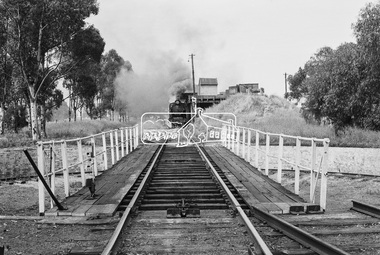
Photograph, Turntable at Echuca rail yards; steam locomotive J-500 at the coal hopper in distance, November 1963, 1963
... Class 1940-1960's" . In blue pen:" Photo by: George L. Coop Nov 1963" https://victoriancollections.net.au/items/59dea30a21ea6b12dc430192 echuca railway station, george coop collection, j-500, j-class steam locomotive (vulcan foundry), railway turntable Digital TIFF file Scan of 35mm Ilford FP3 black and white negative transparency Turntable at Echuca rail yards; steam locomotive J-500 at the coal hopper in distance, November 1963 Photograph George Coop George Coop ...Image dated as November 1963 based on same image in Port of Echuca collection (print 19.5 x 24.5cm) On reverse in pencil: " J Class 1940-1960's" . In blue pen:" Photo by: George L. Coop Nov 1963" https://victoriancollections.net.au/items/59dea30a21ea6b12dc430192Digital TIFF file Scan of 35mm Ilford FP3 black and white negative transparencyechuca railway station, george coop collection, j-500, j-class steam locomotive (vulcan foundry), railway turntable -
 Bendigo Historical Society Inc.
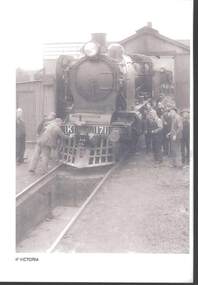
Photograph - RAILWAYS COLLECTION: BLACK AND WHITE PHOTO OF K CLASS STEAM TRAIN NUMBER 171
... New boilers for D and K class locomotives were built at Bendigo North in the 1950's....New boilers for D and K class locomotives were built at Bendigo North in the 1950's. Photograph RAILWAYS COLLECTION: BLACK AND WHITE PHOTO OF K CLASS STEAM TRAIN NUMBER 171 ...RAILWAYS COLLECTION -Black and white photo of K class steam train Number 171 - which appears to be outside a Railways workshop sitting behind an Inspection pit and flanked by workers inspecting the train. There is another steam train inside the Repair shop. An explanatory note says - In this photograph taken in 1951 Workshop staff gather around what appears to be a freshly overhauled k 171 at the Bendigo north weighbridge. New boilers for D and K class locomotives were built at Bendigo North in the 1950's.railways, bendigo to melbourne -
 Bendigo Historical Society Inc.
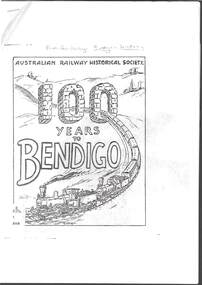
Book - RAILWAYS COLLECTION: AUSTRALIAN RAILWAYS HISTORICAL SOCIETY 100 YEARS TO BENDIGO
... Locomotives and carriages that were used. Page 23 has a photo of G Class Light Lines 4-4-0 and V Class Compound 2-8-0 Locos at Bendigo Engine shed in the early 1900's....Locomotives and carriages that were used. Page 23 has a photo of G Class Light Lines 4-4-0 and V Class Compound 2-8-0 Locos at Bendigo Engine shed in the early 1900's. ...Railways Collection-Stapled A4 paper Booklet (Commemorating the Centenary of the opening of the railway from Melbourne to Bendigo , 20.10.1962 ) - Australian Railways Historical Society ''100 Years to Bendigo''. The front page has a sketch by Ted Healey of two old trains pulling passenger carriages.There are some black and white photos. The inside cover shows steam Loco with a caption - Down Great Northern Limited express in 1938 Double headed by A2 .972 and A2.883 passing Footscray. (photo : J.L. Buckland ) Page 2 has a photo of a Postcard - 450 Tons of Gold - Pages 10-12 provide information on the Locomotives and carriages that were used. Page 23 has a photo of G Class Light Lines 4-4-0 and V Class Compound 2-8-0 Locos at Bendigo Engine shed in the early 1900's.railways, bendigo to melbourne, 450 tons of gold - -
 Coal Creek Community Park & Museum
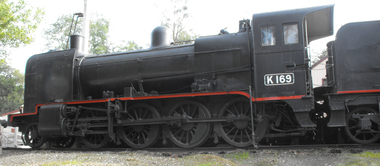
Steam Locomotive, Steam Locomotive K169, 1941
... class locos were first built in the 1920's This one was built in 1941 and was the 20th loco to be built. It entered service on the 28th/7/1941 and was withdrawn from service on the 1/10/1970. It is believed to have travelled a total of 421,708 miles or 674,733 km during its 29 year working life. K169 in white lettering on the sides and the front. This is a K class steam locomotive ...K class locos were first built in the 1920's This one was built in 1941 and was the 20th loco to be built. It entered service on the 28th/7/1941 and was withdrawn from service on the 1/10/1970. It is believed to have travelled a total of 421,708 miles or 674,733 km during its 29 year working life.This is a K class steam locomotive, No. 169. Wheel configuration: 2-8-0, gauge: 5'3" (1600mm) The K 169 was the 20th (of 53) to be built. It is black in colour with red pin stripping down the side.K169 in white lettering on the sides and the front. -
 Port of Echuca
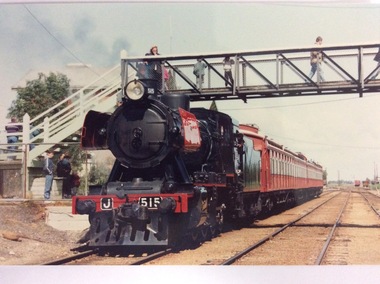
A coloured rectangular photograph
... s. It shows the state of the station and it's surrounds at that time. It also shows the good condition of the J Locomotive at that time. This photograph shows that state of the J class ...This photograph which could have been taken in the 1970's. It shows the state of the station and it's surrounds at that time. It also shows the good condition of the J Locomotive at that time.This photograph shows that state of the J class locomotive at that time. It appears to be in very good condition. The passenger carriages behind appear to be more of the usual carriages used in the 1970's.The J Class locomotive and train passing under the Echuca Station footbridge. Some people are on the bridge and also next to the train.Verso: Hart's 01301111NNNN037railways, echuca station, j locomotive -
 Ballarat Tramway Museum
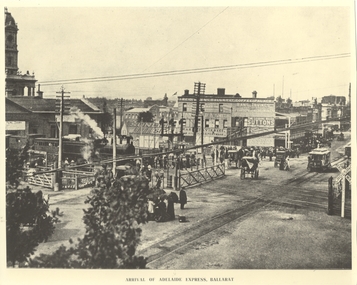
Photograph - Black & White Photograph/s, Lydidard St level crossing and a picnic train, c1905 to 1906
... class loco, with two six wheel carriages behind the locomotive. Group of women with umbrellas (sun) waiting for the tram. Horse drawn carts, interlocked gates, signals prior to resignalling of the post and railway level crossing signs. In the background is Reids Coffee Palace, advertising Sunlight soap, Suttons Music, Pearson's Hard soap, Hans Irvines Champion Wines and Standard & Smith. Lydidard St level crossing and a picnic train Photograph Black & White Photograph/s ...Yields information about the Lydiard St level crossing.Black and white photograph of No. ESCo No. 10 about to cross the Lydiard St level crossing. Photo has the title of "Arrival of Adelaide Express, Ballarat", which is not correct for the trains consist - more like a picnic special - this photo has been written up somewhere. D class loco, with two six wheel carriages behind the locomotive. Group of women with umbrellas (sun) waiting for the tram. Horse drawn carts, interlocked gates, signals prior to resignalling of the post and railway level crossing signs. In the background is Reids Coffee Palace, advertising Sunlight soap, Suttons Music, Pearson's Hard soap, Hans Irvines Champion Wines and Standard & Smith.trams, tramways, railway station, lydiard st north, reids coffee palace, esco, tram 10 -
 Ballarat Tramway Museum
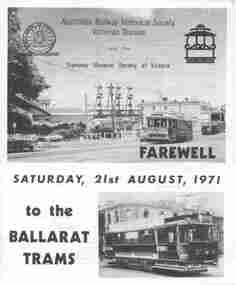
Document - Form/s, Australian Railway Historical Society (ARHS), "Farewell to the Ballarat Trams", Jul. 1971
... class steam locomotives in the background and ESCo. No. 5, with the ARHS and TMSV logos. Printed by Kamera Press. .2 - tour circular duplicated yellow paper, for the tour of 21/8/1971 - giving tour arrangements, photo stops, tram tour, tram mail, and next tour dates. Contains a tear off slip for the last tram mail - see Reg Item 2942. Item added 19/10/2017. "Farewell to the Ballarat Trams" Document Form/s ...Folded foolscap sheet - white paper - offset printed both sides, tour brochure - titled "Farewell to the Ballarat Trams". Rail tour brochure published jointly by the ARHS and TMSV gives details of the proposed tour, timetable, fares, tram hire, how to book and tour organisers and on the rear conditions of travel. On the front has a photo of 28 crossing Lydiard St North level crossing with an R and J class steam locomotives in the background and ESCo. No. 5, with the ARHS and TMSV logos. Printed by Kamera Press. .2 - tour circular duplicated yellow paper, for the tour of 21/8/1971 - giving tour arrangements, photo stops, tram tour, tram mail, and next tour dates. Contains a tear off slip for the last tram mail - see Reg Item 2942. Item added 19/10/2017.trams, tramways, arhs, tmsv, pamphlets, closure, tours -
 Ballarat Tramway Museum
Photograph - Colour Photograph/s - set of 8, Alan Harnwell?, c1973
... class locomotive) and been met by Richard Gilbert and Geoff Cargeeg to inform passengers about the opening of the tram depot. Has set of "cryptic" captions with each photograph - possibly written by Alan Harnwell (no one else identified themselves up enquiry during 2007). Photographs and captions used in display boards following event. Photograph Colour Photograph/s ...Has a strong association with a BTPS and two of the BTPS staff on an open day at the depot prior to the opening of the tramway. Passengers have been met at the Wendouree Station where a train has made a special stop. Has a series of cryptic captions to go with the photographs.Set of 8 colour prints/photographs of an open day at the BTPS depot c1973, Begonia Festival time? where the Horsham train has stopped at Wendouree Platform, running an hour late (T class locomotive) and been met by Richard Gilbert and Geoff Cargeeg to inform passengers about the opening of the tram depot. Has set of "cryptic" captions with each photograph - possibly written by Alan Harnwell (no one else identified themselves up enquiry during 2007). Photographs and captions used in display boards following event.btps, wendouree station, depot, tram 26, tram 27, tram 40 -
 Ballarat Tramway Museum
Photograph - Black & White Photograph/s - set of 6, Charles Craig, 1950s
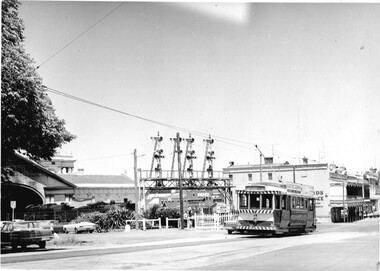
... Set of six black and white photographs of trams at the railway level crossing, Ballarat, Lydiard St North featuring the railway station, gates and signals, Reeds Coffee Palace and the Provincial Hotel. .1 - 28 heading south, with an R class and a K class locomotive in the view. .2 - 11, heading north - taken during the 1950's. .3 - 17 parked right up to the gates while K184 shunts at the station. .4 - single trucker (number obscured) - most likely 17 giving the passengers in the previous photo. .5 - Photo with two single truckers in the view and the gates being closed after the tram has passed. .6 - 11, at the gates with a bogie tram behind. ...Trams tramways Lydiard St North Railway Station Signals Level Crossings tram 28 tram 11 tram 17 Set of six black and white photographs of trams at the railway level crossing, Ballarat, Lydiard St North featuring the railway station, gates and signals, Reeds Coffee Palace and the Provincial Hotel. .1 - 28 heading south, with an R class and a K class locomotive in the view. .2 - 11, heading north - taken during the 1950's. .3 - 17 parked right up to the gates while K184 shunts at the station. .4 - single trucker (number obscured) - most likely 17 giving the passengers in the previous photo. .5 - Photo with two single truckers in the view and the gates being closed after the tram has passed. .6 - 11, at the gates with a bogie tram behind. ...Yields information about the appearance and use of the Ballarat Railway Station level crossing by trams prior to closure.Set of six black and white photographs of trams at the railway level crossing, Ballarat, Lydiard St North featuring the railway station, gates and signals, Reeds Coffee Palace and the Provincial Hotel. .1 - 28 heading south, with an R class and a K class locomotive in the view. .2 - 11, heading north - taken during the 1950's. .3 - 17 parked right up to the gates while K184 shunts at the station. .4 - single trucker (number obscured) - most likely 17 giving the passengers in the previous photo. .5 - Photo with two single truckers in the view and the gates being closed after the tram has passed. .6 - 11, at the gates with a bogie tram behind. No. 11 has a Briquettes roof advert and a Twin Lakes sign. Photo by Charles Craig - during 1971, except for .2, taken during the 1950's. trams, tramways, lydiard st north, railway station, signals, level crossings, tram 28, tram 11, tram 17 -
 Ballarat Tramway Museum
Photograph - Digital image, W. J. Llewelyn, late 1960s
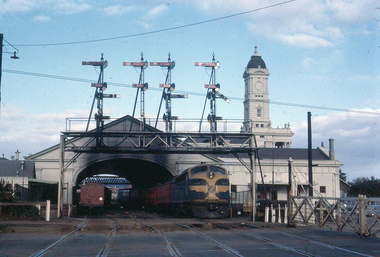
... Trams tramways Railway Station Level Crossings Lydiard St North Steam Locomotive Set of three colour digital images taken by W. J. Llewelyn of the Ballarat Railway Station at Lydiard St North. .1 - Possibly a S class loco on the Horsham / Dimboola/Serviceton St, about to leave Ballarat station during the late 1960's or early 1970's. ...Set of three colour digital images taken by W. J. Llewelyn of the Ballarat Railway Station at Lydiard St North. .1 - Possibly a S class loco on the Horsham / Dimboola/Serviceton St, about to leave Ballarat station during the late 1960's or early 1970's. A freight train is on platform 2. Note the Parcels Office and that the clock had not been fitted to the station building. .2 - S305? shunting at Ballarat station, during the late 1960's or early 1970's. Photos taken from the signal box. .3 - R766 on a special train at the station - late 1980's. Has the failed Melbourne - Canberra - Sydney tourism venture carriages at the rear.trams, tramways, railway station, level crossings, lydiard st north, steam locomotive -
 Ballarat Tramway Museum
Slide - 35mm slide/s, Peter Moses, Jan. 1969
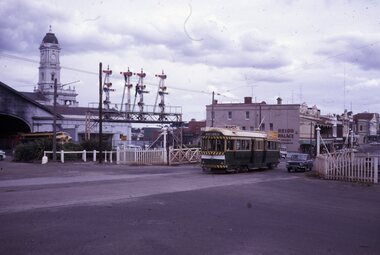
... class locomotive on a passenger train is standing in platform 1 of the station. Kodak cardboard mount slide, taken by Peter Moses assumed Jan. 1969, dated only "Jan", but date lines up with Bendigo slides and type of numbering. Could be 1970. Slide 35mm slide/s ...Photo of SEC Ballarat No.41 passing through the railway gates at Ballarat Railway Station, Lydiard St. North, with the destination of "Lydiard St Nth". Tram has a SEC "Everything's under control in my all-electric kitchen". Reid's Coffee Palace is in the background. Photo shows the Ballarat Railway Station clock tower, part of the train shed and the signals on the station side of the gates. A "B" class locomotive on a passenger train is standing in platform 1 of the station. Kodak cardboard mount slide, taken by Peter Moses assumed Jan. 1969, dated only "Jan", but date lines up with Bendigo slides and type of numbering. Could be 1970.On the rear of the slides in black ink "P. Moses" along bottom left hand corner in black ink.tramways, trams, railway crossing, lydiard st, railway station, reid's coffee palace, tram 41 -
 Ballarat Tramway Museum
Ephemera - Christmas Card, Australian Railway Historical Society (ARHS)
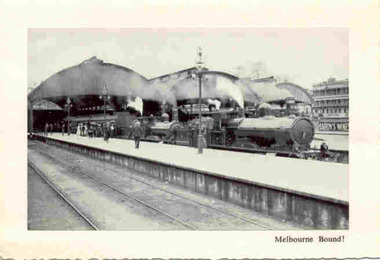
... class locomotives on the front of the Adelaide to Melbourne Express at Adelaide Railway Station c1900. The train later became known as The Overland. The first two carriages are Mansard Roofed Carriages. The photo has been printed as an illustration and then glued to the front of the card. On the inside of the card is a Greetings message from the Council and Members of the South Australian Division of the Australian Railway Historical Society. See December 1999 issue of Newsrail for some information about the locomotives and carriages. Year not known, probably late 1960's...class locomotives on the front of the Adelaide to Melbourne Express at Adelaide Railway Station c1900. The train later became known as The Overland. The first two carriages are Mansard Roofed Carriages. The photo has been printed as an illustration and then glued to the front of the card. On the inside of the card is a Greetings message from the Council and Members of the South Australian Division of the Australian Railway Historical Society. See December 1999 issue of Newsrail for some information about the locomotives and carriages. Year not known, probably late 1960's ...Christmas card made from white stippled cardboard with a serrated edge, folded centrally with a photo of Rx and R class locomotives on the front of the Adelaide to Melbourne Express at Adelaide Railway Station c1900. The train later became known as The Overland. The first two carriages are Mansard Roofed Carriages. The photo has been printed as an illustration and then glued to the front of the card. On the inside of the card is a Greetings message from the Council and Members of the South Australian Division of the Australian Railway Historical Society. See December 1999 issue of Newsrail for some information about the locomotives and carriages. Year not known, probably late 1960's. Would have been sent to Les Denmead by someone in the ARHS SA Division. See Newsrail Dec. 1999tramways, trams, adelaide, passenger trains, christmas cards, sar, arhs -
 Puffing Billy Railway
Victorian Railways 2'6" Transporter wagon 129Q, 1926
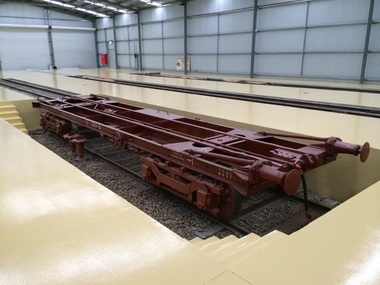
... class were introduced as bogie flatwagons in the 1870's. Large Q wagons as shown were built to the 1920's In the early 1900's, some Q wagons were modified for Pintsch Gas traffic with a small pump motor cabin at one end and a tank for carrying the gas. Other conversions for traffic were as required. Examples were: sheet glass, skeletal underframes between workshops In 1926 the railways built two narrow gauge Garratt locomotives...class were introduced as bogie flatwagons in the 1870's. Large Q wagons as shown were built to the 1920's In the early 1900's, some Q wagons were modified for Pintsch Gas traffic with a small pump motor cabin at one end and a tank for carrying the gas. Other conversions for traffic were as required. Examples were: sheet glass, skeletal underframes between workshops In 1926 the railways built two narrow gauge Garratt locomotives ...The Q class were introduced as bogie flatwagons in the 1870's. Large Q wagons as shown were built to the 1920's In the early 1900's, some Q wagons were modified for Pintsch Gas traffic with a small pump motor cabin at one end and a tank for carrying the gas. Other conversions for traffic were as required. Examples were: sheet glass, skeletal underframes between workshops In 1926 the railways built two narrow gauge Garratt locomotives. As normal wagons were unsuitable for moving these locomotives a special skeletal wagon was built. The engines were split into units for transportation. It featured axle bearings and boxes from steam engines, had hinged buffers that could drop out of the way during loading/unloading. It also featured 'strap' rail along the deck. The wagon was Q 129. This wagon was also available for general narrow gauge rolling stock. Q wagons were numbered from 1 to 136. Service History: *Q 129.VA - 1/ 6/1926 NWS Built new H/brake & drop buffers. For traffic of Narrow Guage stock 31/ 1/1931 NWS Into Workshops - 16/ 6/1931 NWS Out of Workshops (50 days) 6/11/1931 NWS Into Workshops - 27/11/1931 NWS Out of Workshops (22 days) 24/ 8/1936 NWS Into Workshops - 10/ 9/1936 NWS Out of Workshops (18 days) 27/11/1936 NWS Into Workshops - 26/ 2/1937 NWS Out of Workshops (Light repairs) circa 1960 - Photograph SL20 p32, loaded with 7NA / /1975 - Photograph #393 / /1976 - Photograph #553, #554 19/ 3/1979 - Condemned - 10/ 4/1979 - Off Register - 10/ 4/1979 - Sold (to) ETR, Belgrave / /1989 EME Body [GRE]. [SXC]: 29/3/92, MEL127E5, Puffing Billy at station Historic - Victorian Railways - Transporter wagon used to carry and transfer 2' 6" Narrow gauge rolling stock over Victorian broad gauge (1,600 mm (5 ft 3 in) main lines to the narrow gauge lines. Q 129 was unique, it was built to transport narrow gauge locomotives. Transporter Wagon made of Steel and wrought Iron129Q129q, puffing billy, transporter wagon
