
Showing 461 items matching "s price"
-
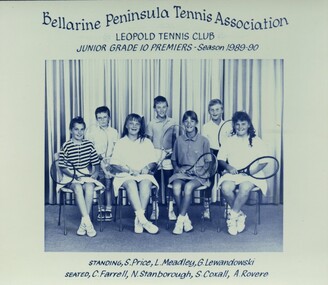 Leopold Tennis Club
Photograph, Robert Pockley Studios, Bellarine Peninsula Tennis Association Leopold Tennis Club Junior Grade 10 Premiers - Season 1989-90, 1990
... ...S Price...Standing, S. Price, L. Meadley, G. Lewandowski Seated, C. ...Leopold Tennis Club Bellarine Peninsula Tennis Association S Price L Meadley C Farrell N Stanborough S Coxall A Rovere Glen Lewandowski Standing, S. ...Image taken of the Bellarine Peninsula Tennis Association Junior Grade 10 Premiers for Season 1989-90. 1 photograph of Premiership tennis team Standing, S. Price, L. Meadley, G. Lewandowski Seated, C. Farrell, N. Stanborough, S. Coxall, A. Rovere leopold tennis club, bellarine peninsula tennis association, s price, l meadley, c farrell, n stanborough, s coxall, a rovere, glen lewandowski -
 Glen Eira Historical Society
Ephemera - Carnegie Cricket Club
... S. H.... Price C....Shelton J. N. Reid S. H. Price C. Harratt F. Stevenson H. Donaldson T. ...This file contains nineteen Carnegie Cricket Club season match cards owned by the club’s Honorary Secretary for 1930-1931, and life member, Mr. T. E. S. Ash. The cards encompass the years from 1930-1931, 1936-1938, 1940-1941, 1943-1951 and 1952-1960. Each of the match cards list the office bearers for the year as well as the club’s fixtures. Some contain handwritten annotations by Mr. Ash as to the outcomes of the matches. ash mr., shelton j. n., reid s. h., price c., harratt f., stevenson h., donaldson t., walker a., cakebread e., gregg r., tebbs j., tempany t., quinn p., price f., lonch w., newing s., henderson e., reader a., larter f. t., harwood h., ash t. e. s., neerim road, bone j., jenner t., paul j., richards u., diamond c., mckee w., reid s. h., robertson g., sherwood j., tyers s. w., allaway j. e., clarke t. b., goldman a., jukes a., spencer w., beaumont c., carnegie, wishart g., bone r., boxshall k., cameron h., johnson a., hubbard l., larter f., price c. l., moore d., allaway e., ash t., louch w. h., goodall m., reid g., graham j., reid m., wilde w., willison p., murrumbeena, henty street, crussell j. a., williams h., allan p., pooley p. c., greig g., pierce l., caples r. w., newbury c. j., chamberlain a., cusack r., driver w. j., mau r., moore d. c., wishart m., pummeroy k., bailey f. i., brown r. w., whelan j. g., parker c., rofe r., wilkins d., dann e., tebbs j. (junior), yenden road, loush w., neville street, williams r. h., greenway a., lewis j., rolfe d., saunders r., wishart d., st. anthony, glenhuntly, stocks w., christie a., greenway a. e., caulfield south, ireland p., mcdougall c. j., burke s., pert r. g. a., mimosa road, carn. soc., carnegie socials, caulfield sth, ormond a, sweetnam r. w., price f. n., bone r. n., burke s. r., mcintosh a., ormond, caulfield east, ormond park, murrumbeena c, murrumbeena d, elsternwick, murrumbeena e, carnegie soldiers, mccarron a., newbury c. r., middleton j., o’connor j., cakebread j., morton l., lyons street, mckinnon, carnegie traders, bone r. j., north road, caul. f’balls, caulfield north, clarke t., whitelaw w., sweetman r. w., jury j., macfarlan i., daniells j. (senior), price r., bull a. j., tranmere avenue, wakeman o. w., coorigil road, bailey i., james p. c., ormond b, james p., pert r., green w., knox h., reid street, caulfield, heib j., price v. j., elliot a., phillips n., wilde w. j., cusack s., tyers n. s., hender b., george d., ford j., castles p., rolfe d. h., cusack r. s., gamble h., louch w. h., pearce e., koornang road, koornan road, harrington a., somerville h. j., grange road, sutherland m., bent street, rowland s., chestnut street, ariadne avenue, rankin ian, caulfield city, carnegie r. s. l., caulfield foot, murrumbeena foot, whitelaw m., chilvers r., kennedy d., mclatchie h., murrumbeena z, ormond c. of c., murrumbeena b, bentleigh, crussell j., mckee g., andrews e. j., andrews n., somerville h., moonya road, murrumbeena park, sweetnan r. w., hubbard l. c., harwood h. j., wilkins d. (senior), sporting clubs, cricket, clubs and associations, volunteers -
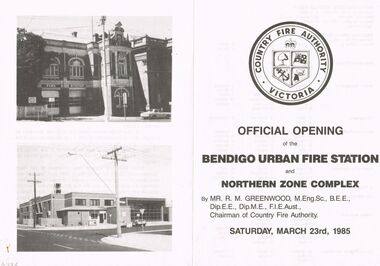 Bendigo Historical Society Inc.
Document - OFFICIAL OPENING OF THE BENDIGO URBAN FIRE STATION AND NORTHERN ZONE COMPLEX, 23 March 1985
... S Pearson... M Ruff... N Wastell... G Wilkinson... D Dean... A Rogers. Life Members: Perc Terrill... Max Ellis... George Ellis... Ron Wee Hee... Stan Price...Reserve Firefighters: D Anderson, P Barker, P Chapman, C Clayton, S Guest, D McCarroll, A Maes, S Pearson, M Ruff, N Wastell, G Wilkinson, D Dean, A Rogers. Life Members: Perc Terrill, Max Ellis, George Ellis, Ron Wee Hee, Stan Price, S/O Vin Lapsley (retired). ...Reserve Firefighters: D Anderson P Barker P Chapman C Clayton S Guest D McCarroll A Maes S Pearson M Ruff N Wastell G Wilkinson D Dean A Rogers. Life Members: Perc Terrill Max Ellis George Ellis Ron Wee Hee Stan Price S/O Vin Lapsley (retired). ...Official Opening of the Bendigo Urban Fire Station and Northern Zone Complex by Mr R M Greenwood, M.Eng.Sc., B.E.E., Dip.E.E., Dip.M.E., F.I.E.Aust., Chairman of Country Fire Authority. Saturday, March 23rd, 1985. Northern Zone Complex Staff: Assistance Chief Officer: A Graham. Regional Officers: W Walker, R Morrall. Deputy Regional Officers: D Barber, J Ray. Typist Clerks: H Harrison, A Connelly. Bendigo Urban Fore Brigade: Station Officer in Charge: M Gray. Station Officers: J Chapman, J Clark, R Ellis, S Knight, R Langridge, K Pinner, D Vecht, E Walder. Volunteer Officers: Chairman: Geoff Flack. Foreman: J Turner. Apparatus Officer: P Sheers. Secretary: L Rodda. Senior Firefighters: J Absalom, R Allott, L Anglin, P Brereton, P Brown, B Cole, A Dennis, G Ellis, J Griffiths, A Harrington, R Lindsay, A Hartland, J Meagher, G Monro, T Nolan, W Watters, J Wellard. Firefighters: R Barry, A Boromeo, A Crosthwaite, A Hand. Volunteer Firefighters: P Bouwmeester, M Bracey, E Carruthers, D Dunlop, G Ellis, M Ellis, I Ellis, George Flack, I Johnson, C Lapsley, P Mundy, G Nadort, M Nabbs, J Phillips, T Rosewall, R Schintler, B Sandlant, G Watson, R Watt, R Wee Hee. Reserve Firefighters: D Anderson, P Barker, P Chapman, C Clayton, S Guest, D McCarroll, A Maes, S Pearson, M Ruff, N Wastell, G Wilkinson, D Dean, A Rogers. Life Members: Perc Terrill, Max Ellis, George Ellis, Ron Wee Hee, Stan Price, S/O Vin Lapsley (retired). Ladies Auxiliary: President: Mary Dillon, Secretary: Ruth Turner, Treasurer: Karen Watt. J Clark, T Graham, M Gray, M Gray, Y Yore, M Letts, J Nadort, J Vecht, M Lapsley, D Dunlop, A Flack, L Graham. Junior Brigade Members: M Graham, G Hore, T Hore, D Spiers, A Hore, P Holloway, S Turner. Short History on the Bendigo Fire Brigade which was established on 1st May 1899, taking the form of an amalgamation of the 3 Fire Brigades in existence in Bendigo. . . Back cover 2 photographs original Bendigo Station and new Bendigo Station. event, official, country fire authority, official opening of the bendigo urban fire station and northern zone complex by mr r m greenwood, m.eng.sc., b.e.e., dip.e.e., dip.m.e., f.i.e.aust., chairman of country fire authority. march 23rd, 1985. staff: assistance chief officer: a graham. regional officers: w walker, r morall. deputy regional officers: d barber, j ray. typist clerks: h harrison, a connelly. bendgio urban fore brigade: station officer in charge: m gray. station officers: j chapman, j clark, r ellis, s knight, r langridge, k pinner, d vecht, e walder. volunteer officers: chairman: geoff flack. foreman: j turner. apparatus officer: p sheers. secretary: l rodda. senior firefighters: j absalom, r allott, l anglin, p brereton, p brown, b cole, a dennis, g ellis, j griffiths, a harrington, r lindsay, a hartland, j meagher, g monro, t nolan, w watters, j wellard. firefighters: r barry, a boromeo, a crosthwaite, a hand. volunteer firefighters: p bouwmeester, m bracey, e carruthers, d dunlop, g ellis, m ellis, i ellis, george flack, i johnson, c lapsley, p mundy, g nadort, m nabbs, j phillips, t roasewall, r schintler, b sandlant, g watson, r watt, r wee hee. reserve firefighters: d anderson, p barker, p chapman, c clayton, s guest, d mccarroll, a maes, s pearson, m ruff, n wastell, g wilkinson, d dean, a rogers. life members: perc terrill, max ellis, george ellis, ron wee hee, stan price, s/o vin lapsley (retired). ladies auxiliary: president: mary dillon, secretary: ruth turner, treasurer: karen watt. j clark, t graham, m gray, m gray, y yore, m letts, j nadort, j vecht, m lapsley, d dunlop, a flack, l graham. junior brigade members: m graham, g hore, t hore, d spiers, a hore, p holloway, s turner. short history bendigo fire brigade established 1st may 1899, amalgamation of the 3 fire brigades in existence in bendigo. . .2 photographs original bendigo station new bendigo station. -
Port Melbourne Historical & Preservation Society
Letter - Port Melbourne Cricket Club congratulating Mr G GLOVER on a recent performance, Port Melbourne Cricket Club, 1 Jan 1940
... ...W J PRICE...S...Port Melbourne Cricket Club Sport - Cricket James Peter CRICHTON W J PRICE S C FINDLAY Letter on Port Melbourne Cricket Club headed paper. ...Letter on Port Melbourne Cricket Club headed paper. Typed letter of congratulation to Mr G GLOVER for his excellent performance in the last match against Hawthorn East Melbourne port melbourne cricket club, sport - cricket, james peter crichton, w j price, s c findlay -
 Warrnambool and District Historical Society Inc.
Booklet - Lettering Book, Halstead Press Pty Ltd, The Australian Lettering Book, 1945
... Hand written name on top of outline black border S. R Coleston. Price 3/9...Note by the publishers provides standards for the correct form of the characters. warrnambool lettering book angus & robertson limited s.r. coleston herbert newell Hand written name on top of outline black border S. R Coleston. Price 3/9 Light brown light card cover with black ink font and border patterns. 32 Cream pages with black ink. ...Author Herbert Newell. Alphabets of varied fonts, headings, flourishes, plans, numerals, sketch maps, scrolls, shading, common errors, compass points. Especially designed for use in Australian Schools, offices of Lawyers, Architects, Surveyors, Engineers, Engravers, and Draughtsmen. Table of contents The author is a teacher of show card and ticket writing at Sydney Technical College. Book used by many students and offices. Note by the publishers provides standards for the correct form of the characters. Light brown light card cover with black ink font and border patterns. 32 Cream pages with black ink. Two staples. Hand written name on top of outline black border S. R Coleston. Price 3/9 warrnambool, lettering book, angus & robertson limited, s.r. coleston, herbert newell -
 Phillip Island and District Historical Society Inc.
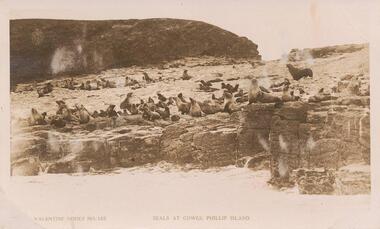
Photographs, 1930's
... 13 photographs collected in the 1930's by Reg & Nell Price who lived at Sale, Gippsland at the time....13 photographs collected in the 1930's by Reg & Nell Price who lived at Sale, Gippsland at the time. seal rocks phillip island seals on seal rocks phillip island phillip island early roads cowes pier phillip island cowes jetty cowes cenotaph, phillip island forrest caves, phillip island cape woolamai quarries phillip island lover's walk cowes the nobbies phillip island seascape ferries "alvina" ferry "genista" - cowes jetty the pinnacles the sentinel cape woolamai reg & nell price david price On the back of each photograph description of the photo. ...13 photographs collected in the 1930's by Reg & Nell Price who lived at Sale, Gippsland at the time. Photograph 224-01. Sepia photograph of seals on Seal Rocks, Phillip Island Photograph 224-02. Black & White photograph of the dirt road to the Back Beach, Phillip Island. Photograph 224-03. Black & White photograph of the Cowes Pier/Jetty with the Cenotaph in the foreground. Photograph 224-04. Black & White photograph of Forrest Caves, Phillip Island. Photograph 224-05. Black & White photograph of Cape Woolamai Quarry. People and a small boat working. Photograph 224-06. Black & White photograph of the Cowes Pier taken through the trees on the foreshore. Photograph 224-07. Black & White photograph of Lover's Walk, Cowes with foot bridge in foreground. Photograph 224-08. Black & White photograph of rocky seascape at The Nobbies, Phillip Island. Photograph 224-09. Black & White photograph of Forrest Caves, Phillip Island. Photograph 224-10. Black & White photograph of Cowes Pier with the Ferries "Alvina" and "Genista". Many people also on the pier. Photograph 224-11. Black & White photograph of The Pinnacles, Cape Woolamai. Photograph 224-12. Black & White photograph of The Sentinel, Cape Woolamai. Photograph 224-13. Black & White photograph of the beach and pier at Cowes, Phillip Island. On the back of each photograph description of the photo. seal rocks phillip island, seals on seal rocks phillip island, phillip island early roads, cowes pier phillip island, cowes jetty, cowes cenotaph, phillip island, forrest caves, phillip island, cape woolamai quarries phillip island, lover's walk cowes, the nobbies phillip island, seascape, ferries, "alvina", ferry "genista" - cowes jetty, the pinnacles, the sentinel cape woolamai, reg & nell price, david price -
 National Wool Museum
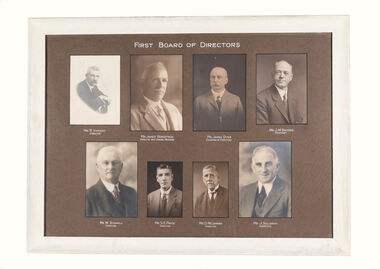
Photograph, First Board of Directors
... First Board of Directors Mr R Vincent, Director; Mr James Robertson, Director and General Manager; Mr James Dyer, Chairman of Directors; Mr J M Badger, Secretary; Mr W Stawell, Director; Mr S E Price, Director; Mr D McLennan, Director; Mr J Solomon, Director....Acquired when "Classweave Industries" closed down woollen mills - history woollen mills textile mills - staff classweave industries pty ltd federal woollen mills ltd woollen mills - history woollen mills textile mills - staff First Board of Directors Mr R Vincent, Director; Mr James Robertson, Director and General Manager; Mr James Dyer, Chairman of Directors; Mr J M Badger, Secretary; Mr W Stawell, Director; Mr S E Price, Director; Mr D McLennan, Director; Mr J Solomon, Director. ...Acquired when "Classweave Industries" closed down Framed image First Board of Directors Mr R Vincent, Director; Mr James Robertson, Director and General Manager; Mr James Dyer, Chairman of Directors; Mr J M Badger, Secretary; Mr W Stawell, Director; Mr S E Price, Director; Mr D McLennan, Director; Mr J Solomon, Director. woollen mills - history woollen mills textile mills - staff, classweave industries pty ltd federal woollen mills ltd, woollen mills - history, woollen mills, textile mills - staff -
 Warrnambool and District Historical Society Inc.
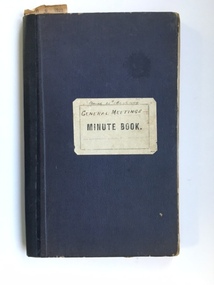
Document - Minutes Books, Woollen Mills 1909- 1923 1933-1945, C 1909 C 1933-1945
... Worland, W H Philpott, G S Mackay, E H Price, S McDonald, J C Beeching, W Rogers ,J Marfell, J Deany, Jas Duirs, Jas. ...Worland, W H Philpott, G S Mackay, E H Price, S McDonald, J C Beeching, W Rogers ,J Marfell, J Deany, Jas Duirs, Jas. ...The minutes book of the Warrnambool Woollen Mill are an important record of the beginnings of one of Warrnambool's major industries for close to one hundred years. They record the struggle in the early days of 1909 and 1910 to raise the capital. Also mentioned is the support which had been given by local people of small means who were prepared to back the enterprise while those with financial means had been rather more reserved. Apart from a Mr Vidler all the initial directors were initially working in an honorary capacity. They lamented the fact that local banks held half a million pounds on fixed interest so there was no shortage of money. The first directors were appointed in March 1909 : Jas. Worland, W H Philpott, G S Mackay, E H Price, S McDonald, J C Beeching, W Rogers ,J Marfell, J Deany, Jas Duirs, Jas. Ponting, H Jessen, S Nettleton, J Blain, J Gooden, Drs. Holmes, Henderson and Powell. Mr J E Bennett was secured as first manager of the mill in 1910 Over the ten year period of this book there is much discussion on possible returns and share prices as well as decisions relating to the operation of and production from the mill. Within four years they were using more yarn than they were producing. Electricity was connected around 1914 and by 1915 shareholders were receiving eight percent return on their investment and were also contributing to the first world War effort by supplying blankets. Assets continued to accumulate and building was also continued with sandstone being quarried from the site and rain water tanks and asphalt floors installed, all contributing to savings. By 1917 The Warrnambool Woollen Mill was considered to be one of the states best investments and it continued to prosper through the years. The second minutes book likewise records similar events and circumstances for the period 1933-1945. This like wise is an interesting period, covering the period of the second World War. In 1955 the Warrnambool Woollen Mill formed a partnership with the Wangaratta Woollen Mills. Dunlop bought the mill in 1968. From that time until its closure in 2000 it had a number of different owners, the last being the Smith Family Industries. These minutes books hold an important information regarding the establishment and early operation of one of Warrnambool's major industries. The mill itself has strong connection to the Warrnambool community and many of the names mentioned as directors and shareholders have held positions within the community as businessmen and city officials. These minutes add another dimension to their contribution to Warrnambool. .1Navy blue hard card cover with cloth spine. White label glued to front cover.186 pages.There are handwritten entries in black ink which are interspersed with reports from newspaper. .2 Pale grey cloth cover on early Kalamazoo filing system 612 pages of typed minutes . .1There are dates from 1910 through to 1923. Minutes have been signed by chairman of directors, M Saltau.label on front cover has blue stamp, The Warrnambool Woollen Mill Company. hand written above in black ink "opened 24th March 1909." .2 dated from May 1933 to September 1945. Signatures include M Saltau, James Disckson and Fletcher Jones. warrnambool, warrnambool woollen mill, first minutes book warrnambool woollen mill, minutes book, warrnambool woollen mill 1909, minutes book warrnambool woollen mill 1945 -
 Wangaratta High School
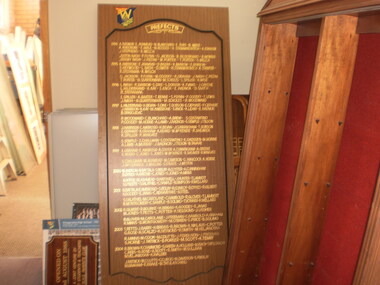
WHS Prefects Honour Board, 1994-2004
... MONTGOMERY, M. O'BRIEN, S. PRICE, S. SOLIMO 2003 T. PETTS: J. BARRY, H. ...MONTGOMERY, M. O'BRIEN, S. PRICE, S. SOLIMO 2003 T. PETTS: J. BARRY, H. ...Brown wooden honour board with gold writing and decorative border. Hugging the border at the top is a curved title reading PREFECTS. In the top left corner of the honour board is a WHS logo. PREFECTS 1994 A. RADNOR: E. ASHMEAD, N. BLANCHARD, E. FURS, N. IMRIE, K. KNEEBONE, E. MALE, N. ROSSER, M. STANIMROACH, A. STANVER, J. STEPHENS, K. WELCH. JUSTIN NASH,: P. FLYNN, G. JACKSON, B. HILDEBRAND, B. MORRIS, JEREMY NASH, J. PIZZINI, M. PORTER, T. PORTER, S. WELCH 1995 K. KNEEBONE: E. ACHMEAD, D. BIGGER, R. BARROW, S. DOBSON, S. HEYWOOD, L. NASH, D. SMITH, H. STANIMIROVITCH, A. STANYER, R. STEFANIARK, K. WELCH. G. JACKSON: P. FLYNN, M. GOODSEY, R. GRAHAM, J. NASH, C. PIZZINI, T. PORTER, N. QUARTERMAIN, M. SCHOLES, L. SPILLER, A. WISE 1996 L. NASH: R. BARROW, S. DIKE, S. DOBSON, R. EVANS, J. GREENE, L. HILDEBRAND, K. KAY, S. KNOX, E. RADNOR, D. SMITH, R. STEFANIAK. L. SPILLER: A. BAXTER, T. BENNE, S. FLYNN, P. GOODEY, T. LEWIS, J. NASH, N. QUARTERMAIN, M. SCHOLES, R. WOODWARD 1997 L. HILDEBRAND: H. BEVAN, S. DIKE, T. TOBSON, E. GEPHART, J. HARRISON, K. KAY, M. KNEEBONE, S. KNOX, K. LEARY, E. RADNOR, B. SPASOJEVIC. r. WOODWARD: C. BLANCHARD, A. BREW, S. CONSTANTINO, P. GOODEY, M. HORNE, A. LAMB, J. RADNOR, S. SEMPLE, J. TILSON 1998 J. HARRISON, C. CAMBROSIO, H. BEVAN, J. CUNNINGHAM, T. DOBSON, E. GEPHART, K. GRAHAM, A. HEARD, M. McKENZIE, R. SHEARER, K. SPILLER, R. WINGATE. S. SEMPLE: S. CHALLMAN, S. CONSTANTINI, K. GADSDEN, M. HORNE, A. LAMB, A. MURRAY, J. RADNOR, J. TILSON, B. TAVARE. 1999 K. GRAHAM: E. AMBROSO, A. COSTER, A. CUNNINGHAM, A. GREENE, K. HEARD, C. JONES, S. JONES, M. McKENZIE, R. SHEARER, R. WINGATE. S. CHALLMAN: M. ASHMEAD, M. CAMERON, G. HANCOCK, A. HORNE, J. MCCORMICK, J. MULLINS, S. O'KEEFE, J. WESTON 2000 M. ANDISON: N. BAYTALA, S. BEILBY, A. COSTER, A. CUNNINGHAM, B. DYKES, A. GREEN, C. JONES, S. JONES, A. MINNS. A. HORNE: M. ASHMEAD, D. HATSWELL, J. HUNTER, T. LAMBERT, S. O'KEEFE, S. SALATHIEL, C. SAMPLE, B. SIMPSON, R. WELLARD 2001 N. BAYTALA: E. AMBROSIO, S. BEILBY, R. CONLEY, B. DYKES, R. GILBERT, K. GOODEY, E. JANAS, C. RIDGEWAY-FAYE, B. STEEL. S. SALATHIEL: M. CAROLANE, C. GAMBOLD, R. GLOVER, T. LAMBERT, B. MONTGOMERY, C. SAMPLE, B. SOLIMO, T. VONARX, R. WELLARD 2002 R. GILBERT: R. BURKE, H. BRIGGS, K. GOODEY, E. JANAS, M. JONES, T. PETTS, C. POTTER, K. SESSIONS, J. USSHER. R. GLOVER: M. CAROLANE, J. FREEMAN, C. GAMBOLD, A. GRAHAM, R. MINNS, B. MONTGOMERY, M. O'BRIEN, S. PRICE, S. SOLIMO 2003 T. PETTS: J. BARRY, H. BRIGGS, R. BROWN, K. NIKLAUS, C. POTTER, G. ROSE, A. SCALZO, K. SESSIONS, R. SMITH, M. VELJANOSKA. R. MINNS: M. COOK, M. COURTS, J. FERGUSON, J. FREEMAN, S. HORNE, J. PATRICK, B. PORKER, M. SCOTT, K. TEMBY 2004 R. BROWN: K. CRAMMOND, S. GREEN, A. HOLLAND, M. ISKOV, S. McCONACHY, S. REES, G. ROSE, K. SCOTT, R. SMITH, M. SULLIVAN, M. VELJANOSKA, K. WALDER. J. PATRICK: M. COUTTS, C. CURCIO, M. DAVIDSON, S. FINDLAY, M. GRAHAM, R. KRAKE, M. TATULASCHWILI -
 National Wool Museum
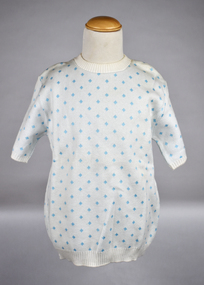
Textile - Children's Jumper, Kathryn Knitwear, c.1964-1970
... .1) [label stitched into back neck of garment] KATHRYN REGD CREATED BY ROBERT BLAKE .2) [retail tag, intended to be folded in three, printed on both sides] [OBVERSE] KATHRYN Children’s Knitwear STYLE: [blue pen] S/35B SIZE: PRICE: / KATHRYN Garments are… • PRE-SHRUNK • STANDARD MEASUREMENTS • FIT EXACTLY • LAUNDER PERFECTLY / NOW .. ...Their legacy forms an integral part of both Australian social and manufacturing history. knitwear children's knitwear clothing children's clothing jumper manufacturing Fashion Textile Production machine knitting colourwork .1) [label stitched into back neck of garment] KATHRYN REGD CREATED BY ROBERT BLAKE .2) [retail tag, intended to be folded in three, printed on both sides] [OBVERSE] KATHRYN Children’s Knitwear STYLE: [blue pen] S/35B SIZE: PRICE: / KATHRYN Garments are… • PRE-SHRUNK • STANDARD MEASUREMENTS • FIT EXACTLY • LAUNDER PERFECTLY / NOW .. ...Kathryn Knitwear, founded by Robert Blake, manufactured high quality children’s knitwear in Melbourne from the 1940s – 1980s. Robert Blake began manufacturing children’s knitwear in his bedroom in Strathmore using a hand powered machine in the late 1940s. The operation moved to Ascot Vale and Essendon, before eventually establishing a factory in Moonee Ponds in the early 1950s. The business continued to expand, necessitating a move to a new factory in Broadmeadows. By 1962, the Broadmeadows factory was producing an average of 20,000 garments per month, which increased to 24,000 by 1964. Robert Blake’s Son, Brendan recalls that “The Kathryn brand was famous around Australia, anywhere children needed to keep warm and dress smartly. It also won a number of wool fashion awards”, including the 1969 Wool Awards, which was held by the Australian Wool Bureau and published in Women’s Weekly. The Kathryn range was designed for durability, comfort and care, without sacrificing style. They used patterning techniques that increase stretchiness, comfort and fit, as well as integrating decorative elements into the fabric to prevent them from being bulky, uncomfortable or tight. Making longevity of style a priority, Brendan Blake remembers that “there was one particular garment that was in the range for at least thirty years”. He also recalls “In the past, when women have found out that I was associated with Kathryn Knitwear, they would often relate to me the story of a garment they had purchased or received as a gift and, when their child had grown out of it, they would hand it on to another child. Several ladies have told me of purchasing garments for their daughters’ glory box, or saving a particular garment after their daughter had grown out of it. Brendan Blake: “At the peak of their operation they employed approximately two hundred people, mainly women and girls. A family would often seek to send their daughter to work in this company because they knew they would be looked after and safe. One lady wrote to me telling me that working at the Moonee Ponds Factory prior to getting married was the happiest time of her life.” In 1963, workers at the Kathryn factory earned £13 per week, which was 8 shillings and 8 pence higher than the minimum weekly wage for female workers in the textile manufacturing industry (£12 11s 4d). By 1970, the Kathryn Knitwear brand expanded from children’s knitwear into womenswear under the brand name ‘Lady Kathryn’, and for boys and men under ‘Robert Blake’. Continuing to diversify their distribution, they also began exporting ‘Kathryn’ garments to New Zealand, the Pacific Islands, and Japan. ‘Kathryn Knitwear’ was well-known for their early adoption of modern materials and techniques that had broad appeal to their customer base. This is shown in their early use of the acrylic fibre ‘Orlon’ in the 50s and 60s and ‘Superwash’ wool in the 1970s. Many of Kathryn Knitwear’s styles, particularly those that were long running staples of the brand, were available in both wool and Orlon to suit the consumer’s preference. Far from the humble origins of one man in his bedroom with a hand-cranked machine; at its closure in 1980, the Broadmeadows factory of ‘Kathryn’ housed more than 100 machines, including 53 sewing machines and 45 knitting machines. Robert Blake was “a passionate advocate for wool and Australian Made” throughout his whole life. A strong thread that ties through the lifespan of Robert Blake and Kathryn Knitwear is a balance between adopting new innovations without sacrificing the core values of durability, comfort, care and style that had made the brand so well known. Their legacy forms an integral part of both Australian social and manufacturing history. White short-sleeved jumper with all-over pattern of aqua blue diamonds. Blue floated threads slightly show through white on main body, leading to an overall pale blue effect on body, with white collar and cuffs. Closes with three pearlescent plastic buttons at back neck. .2 is a retail tag marked with the style code, and includes generic information on care for garments of different material composition. .1) [label stitched into back neck of garment] KATHRYN REGD CREATED BY ROBERT BLAKE .2) [retail tag, intended to be folded in three, printed on both sides] [OBVERSE] KATHRYN Children’s Knitwear STYLE: [blue pen] S/35B SIZE: PRICE: / KATHRYN Garments are… • PRE-SHRUNK • STANDARD MEASUREMENTS • FIT EXACTLY • LAUNDER PERFECTLY / NOW .. KATHRYN GOES TO . . SCHOOL Ask your retailer for SCHOOL PULLOVERS by KATHRYN [REVERSE] WASHING INSTRUCTIONS WOOL Wash frequently to AVOID HEAVY SOILING Wash garment BY HAND, in lukewarm Velvet Soap suds. ON NO ACCOUNT RUB SOAP ON GARMENT. Squeeze suds gently through garment but DO NOT RUB. Rubbing will cause garment to thicken. RINSE AT LEAST TWICE IN CLEAN WATER TO REMOVE ALL SOAP. TO dry, roll garment in a towel to remove excess moisture, turn garment inside out and pull it lengthwise, DRY IN SHADE… AVOID SUNLIGHT. When dry, place brown paper or pressing cloth over garment and press with iron at correct heat. ORLON Wash as wool Lay flat to dry but DO NOT IRON. To keep brushed suits like new, brush frequently with nylon brush supplied. COTTON Wash by hand for preference in Velvet Soap suds. Rinse thoroughly in cold water and remove all excess water before drying on line. Please do not use any harsh detergent or bleach. Designed and manufactured by ROBERT BLAKE Pty. Ltd., MELB. (handwritten in pencil) S35 (untintelligible)/5 / NOW KATHRYN GOES TO SCHOOL Ask your retailer for SCHOOL PULLOVERS by KATHRYN knitwear, children's knitwear, clothing, children's clothing, jumper, manufacturing, fashion textile production, machine knitting, colourwork -
Bendigo Historical Society Inc.
Document - ROYAL PRINCESS THEATRE COLLECTION: PROGRAM OF COMING EVENTS, 1916
... Nursery (Rose) at Epsom, Stock to be Sold at Half Usual Price. Mr S H Hunt, who has 33 prizes & championships, has accepted a position with Brunning's of Bendigo and has sold the of his 10,000 Roses to them. ...Nursery (Rose) at Epsom, Stock to be Sold at Half Usual Price. Mr S H Hunt, who has 33 prizes & championships, has accepted a position with Brunning's of Bendigo and has sold the of his 10,000 Roses to them. ...Princess Theatre Bendigo - Program of coming events in c1917. Coming Events: Gonsalez, Italian Grand Opera Company, commencing Monday May 7, for 3 nights' season. The Brilliant and Incomparable Gonzalez, Italian Grand Opera Company. Opening Production_Verdi's Immortal Masterpiece Il Trovatore. Page 3. Monday, May 7, 1917. Il Trovatore. Opera in 4 acts. Music by G Verdi. Cast of Characters: Signorinas: De Revers, Russ, Capelli. Signors: Scamuzzi, Cacialli. Chorus of voices. Overture at 8pm sharp. Director of Orchestra: Giovanni Gonsalez. Leader of Orchestra: Mr S de Tarczynski. Cello Soloist: Mr Laurie Kennedy. Page 9 Farewell Night. Wednesday, May 9, 1917 Faust, Opera in 5 acts. Music by Gounod. Cast of Characters: Signors Balboni, Cacialli, Filippini, Cesaroni. Signorinas: Visoni, Russ, Piccolo. Overture at 7.45pm sharp. Director of Orchestra: Giovanni Gonsalez. Leader of Orchestra: Mr S de Tarczynski. Cello: Mr Laurie Kennedy. Cast members: Signors Balboni, Cacialli, Filippini and Cesaroni. Signorinas: Visoni, Russ and Piccolo. Director of Orchestra: Giovanni Gonzalez. Leader of Orchestra: Mr S de Tarczynski. Cello Soloist: Mr Laurie Kennedy. Page 11, Repertoire of Operas to be produced by the Gonsalez Opera Company to Wednesday, May 9. Monday, May 7, at 8pm. Cavalleia Rusticana, I Pagliacci. Wednesday, May 9 at 7.45pm. Faust. Between the acts. The story of 'Cavalleria Rusticana' is based on truth and reality alone. It is built up on the fact Turridu, a young peasant, has loved and wooed Lola before . . . . . . Of all the many successful productions in which Mme. Petrova, the celebrated Metro star, appeared, 'The Black Butterfly,' in which she appears in this Theatre, on Thursday, Friday and Saturday, next, is considered her greatest, In 'The Black Butterfly . . . The story of 'Rigoletto' is taken from Victor Hugo's drama 'Le roi S'amuse.' In it the Duke of Mantua a wild and unprincipled youth makes love to every . . . Programme Compiled. Wholly Set Up and Printed by The Cambridge Press, Phone 130. Market Sq., Bendigo. Many ads appear throughout the brochure: Allan's, 253 Mitchell Street Bendigo. Ph 244. W Brown, 171 Mitchell Street, 'Centerway' 105 View Street, Bendigo's Leading Pastrycook & Caterer. Hume & Iser: English and Canadian wallpapers. Timber Merchants & Iron Mongers, full range of stoves, Mantlepieces, grates, tiles, bath-heaters, bathroomware, Berger's Paints. Phones: Yard 48, Showroom 470. Cambridge Press: For artistic programmes, menus, concert tickets, At-Home Cards, and Commercial Printing. Ph 130. Delves' Café, Dainty Service. 'Class' Suppers at moderate Cost. Ph 805. Next to Royal Bank (above Hampton's). Bendigo Business College: Evening Commercial Classes, book-keeping, typewriting, shorthand. Applications to James E Holland, F.P.S.A. Pianoforte & Organ Tuning. A B Challen, Qualified Tuner Ph 319, 42 Rowan St., Bendigo. Chatfield Bros. The Motor Experts, High Street, Bendigo. Ph 609. Car repairs, New cars, hire cars, something for your car. Service Station for Ford car parts, Dunlop & Goodyear tyres. Accessories of all kinds stocked. Oxy Acetylene welding of all metals. Bartlett Bros. Photographers. Bartlett Bros' Studios, (R W Bugg, Proprietor) Williamson St, (opp Hotel Shamrock). Half & Half (Registered) Non-Alcoholic and Invigorating. Manufactured by C J Glover, Ph 343, Chapel Street, Bendigo. R D Ellis, Ladies & Gents Tailor, 241 Mitchell Street, (opposite Morley Johnson's). Nursery (Rose) at Epsom, Stock to be Sold at Half Usual Price. Mr S H Hunt, who has 33 prizes & championships, has accepted a position with Brunning's of Bendigo and has sold the of his 10,000 Roses to them. There are . . . Baker & Woods, 313 Hargreaves St, Ph 209. Electric light installed in your home. 'THE BEEHIVE' Bendigo's Famous Store. Blouses of Beauty, Coats of Comfort, Costumes of Character, Dresses of Delight, Skirts of Style, Millinery of Merit are Permantant Features of Bendigo's Famous Store 'The Beehive'. Best by Test, Leggos of Bendigo 'Progress' Tomato Sauce on the table, wether at home or in the restaurant, there should always be Leggos of Bendigo 'Progress' Tomato Sauce. It's the kind of Sauce you enjoy to the last-no bitting acidity-but a Delicious and Delicate Flavor combined with a Smoothness always agreeable to the palate,. Leggo's 'Progress' Sauce is the result of the . . . H M Leggo& Co Manufacturers, Bendigo. Est. 1881. The Cambridge Press, Market Sq. Bendigo Ph 130 program, theatre, princess theatre bendigo -
 Flagstaff Hill Maritime Museum and Village
Nibs & box, late 19th to early 20th century
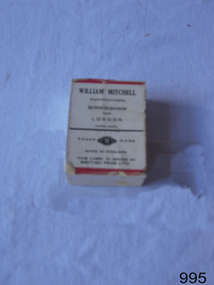
... S Grant. Email on file, from Mike Chappell, Sales and Marketing Manager, William Mitchell Calligraphy, “20161122 - William Mitchell re pen nibs” How to use a dip pen to create modern calligraphy, https://thepostmansknock.com/how-to-use-a-dip-pen-to-create-modern-calligraphy/ India Ink, Wikipedia https://en.wikipedia.org/wiki/India_ink birmingham Pen Trade, Wikipedia, https://en.wikipedia.org/wiki/Birmingham_pen_trade The Pen Museum, http://penmuseum.org.uk/ The early 19th century invention and later mass production of pen nibs such these in our collection had a large impact on education and literacy because the nibs could be produced in great numbers and affordable prices. flagstaff hill warrnambool shipwrecked-coast flagstaff-hill flagstaff-hill-maritime-museum maritime-museum shipwreck-coast flagstaff-hill-maritime-village william mitchell calligraphy ltd pen nib writing implement writing accessories dip pen birmingham manufacturer communication in writing mass produced pen nibs Nib “0505 Wm MITCHELLS PEDIGREE ENGLAND” Box “PEDIGREE / MAINFOLD SLIP”, “WILLIAM MITCHELL / BIRM - - - - - - LOND” Box of patent Mitchell nibs containing 48 "Pedigree" nibs. ...Box of dip pen nibs made by William Mitchell Calligraphy dating back to late 19th or early 20th century when dip pens with steel nibs were the main writing instruments. The pen nibs are shaped to fit into a slot in the base of a wooden or Bakelite pen holder. The hole at the front of the nib is for collecting ink from a well, which is then stored in a reservoir at the back of the nib. The nibs are stamped with their nib size and Pedigree (what type of nib it is) and maker’s details. William Mitchell Calligraphy still makes these nibs today with a slightly difference finish. (ref: Sales and Marketing Director of William Mitchell Calligraphy in 2016). HISTORY of the Ink Pen Quills and ink were common writing tools until the early 19th century when the pen trade began mass producing steel nibs and pens. The steel nibs each have a hole in the middle that acts like a well for the ink. When the nib is dipped into the ink well the writer needs to ensure that it is dipped to only just past that well. India Ink was one of the most popular inks used with the nib pens, notable for its satin-like smooth flow. This ink is composed of a particularly fine carbon mixed with water; it can also be obtained as a dry stick that is then crushed and mixed with water as required. The Jewellery Quarter of Birmingham had the largest concentration of independent jewellers in Europe. Birmingham became the centre of the world’s pen trade for many years -, during the 1800’s over 100 factories, employing 1000s of skilled workers, manufactured the ‘Birmingham Pen’. ABOUT WILLIAM MITCHELL CALLIGRAPHY LTD.* (*The following text is quoted from the William Mitchell Calligraphy website) British based William Mitchell Calligraphy has been designing and manufacturing exceptional pens for almost 200 years. The William Mitchell heritage in making pen nibs began whilst working with his brother John Mitchell in the early 1820s. William Mitchell established his own business in 1825 to become one of the leading nib manufacturers and famous for lettering pens. Almost 100 years later William Mitchell merged with Hinks, Wells & Co, another pen manufacturer, to form British Pens, employing around 1000 people in the Bearwood Road area of Birmingham. During the early 1960s British Pens acquired the pen business of other pen manufacturers Perry & Co and John Mitchell, once again reuniting the two brothers. Joseph Gillott, who were famous for their artist drawing and mapping nibs, amalgamated with British pens in 1969. William Mitchell and Joseph Gillott established in Birmingham during the early part of the nineteenth century and [their products] are still proudly made here. British Pens were subsequently purchased by its current owner Byron Head, the owner of William Mitchell (Sinkers) in 1982, and was subsequently renamed William Mitchell (calligraphy) Ltd. Established in 1827 Joseph Gillott was one of the pioneers of mass steel pen nib manufacturing. The company was particularly strong in the American market, prompting Elihu Burrit, the American consul, to write “In ten thousand school houses across the American continent between two oceans, a million children are as familiarly acquainted with Joseph Gillott as with Noah Webster” (The compiler of the famous American dictionary). The company consequently received visits from many notable Americans, including president Ulysses S Grant. Email on file, from Mike Chappell, Sales and Marketing Manager, William Mitchell Calligraphy, “20161122 - William Mitchell re pen nibs” How to use a dip pen to create modern calligraphy, https://thepostmansknock.com/how-to-use-a-dip-pen-to-create-modern-calligraphy/ India Ink, Wikipedia https://en.wikipedia.org/wiki/India_ink birmingham Pen Trade, Wikipedia, https://en.wikipedia.org/wiki/Birmingham_pen_trade The Pen Museum, http://penmuseum.org.uk/ The early 19th century invention and later mass production of pen nibs such these in our collection had a large impact on education and literacy because the nibs could be produced in great numbers and affordable prices. Box of patent Mitchell nibs containing 48 "Pedigree" nibs. Box depicts picture of William Mitchell on lid, and picture of nib pen on lid and side. Made in Birmingham, England. Nib “0505 Wm MITCHELLS PEDIGREE ENGLAND” Box “PEDIGREE / MAINFOLD SLIP”, “WILLIAM MITCHELL / BIRM - - - - - - LOND” flagstaff hill, warrnambool, shipwrecked-coast, flagstaff-hill, flagstaff-hill-maritime-museum, maritime-museum, shipwreck-coast, flagstaff-hill-maritime-village, william mitchell calligraphy ltd, pen nib, writing implement, writing accessories, dip pen, birmingham manufacturer, communication in writing, mass produced pen nibs -
 Federation University Historical Collection
Photograph, Colin Campbell Price and the 8th Battalion Senior Cadets at Daylesford
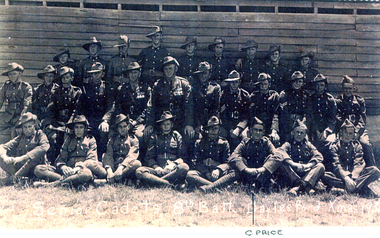
... Front Row L-R: Colin Price, E. Barker, S. Cox, S. Paul ...Front Row L-R: Colin Price, E. Barker, S. Cox, S. Paul Colin Campbell Price and the 8th Battalion Senior Cadets at Daylesford Photograph Photograph ...Five images relating to Colin Campbell Price and military Service. .1) Colin Campbell Price .2) 8th Battalion Senior Cadets at Daylesford, 193? .3) HMAS Albatross 808 Squadron in front of an aeroplane and hanger. .4) Darwin mess mates of Colin Price .5) Twenty uniformed men in 1948 - Fleet Arm - HMS Condor - C4 Conversion Course. Back Row L-R: K. Roberts, J. Lamb, N. Hallas, A. Woods, H. Gid=bson, G. Coker-Godson, M. Green, K. Nicholls, M. Gardener. Centre Row L -R: D. Eastgate, B. Gilroy, R.Smith, G. Foale, J. Sergeant, A. Sara, R. Higgins. Front Row L-R: Colin Price, E. Barker, S. Cox, S. Paul -
 Federation University Historical Collection
Book, Ballarat School of Mines Annual Report, 1972
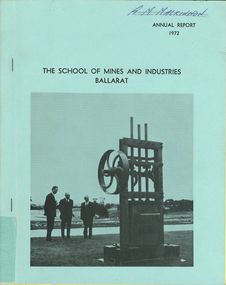
... price...dobell...mckay...M.B. John...Ballarat School of Mines Stamper Battery...Rex Hollioake...Arthur Nicholson...G.K. Sutton...E.J. Tipett...l.c. yandell...Morgan Bevan John...A.E. Stohr...R.T Morrell...Robert MOrrell...mt helen campus...continuing education...ken clements...colin kline...j.l. finkelstein...centenary appeal...Ballarat...gaol gates...Chong Lip Lee...Pang Chew Ting...yung nien chu...roland parfenovics...alonzo we foo ng...Victoria"s...price dobell mckay M.B. John Ballarat School of Mines Stamper Battery Rex Hollioake Arthur Nicholson G.K. Sutton E.J. Tipett l.c. yandell Morgan Bevan John A.E. Stohr R.T Morrell Robert MOrrell mt helen campus continuing education ken clements colin kline j.l. finkelstein centenary appeal Ballarat gaol gates Chong Lip Lee Pang Chew Ting yung nien chu roland parfenovics alonzo we foo ng Victoria"s fourth University paul husluck visit of governor general lindsay pattenden panelbeating craftmanship awards Ballarat Technical School Green soft covered, stapled annual report Ballarat School of Mines Annual Report, 1972 Book Book ...The president in 1972 was M.B. John. During 1972 considerable progress was made towards the introduction of amendments to the School's Memorandum and Articles of Association, Victoria's Fourth University, Ballarat Technical School Green soft covered, stapled annual report ballarat school of mines, john, price, dobell, mckay, m.b. john, ballarat school of mines stamper battery, rex hollioake, arthur nicholson, g.k. sutton, e.j. tipett, l.c. yandell, morgan bevan john, a.e. stohr, r.t morrell, robert morrell, mt helen campus, continuing education, ken clements, colin kline, j.l. finkelstein, centenary appeal, ballarat, gaol gates, chong lip lee, pang chew ting, yung nien chu, roland parfenovics, alonzo we foo ng, victoria"s fourth university, paul husluck, visit of governor general, lindsay pattenden, panelbeating, craftmanship awards, ballarat technical school -
 Flagstaff Hill Maritime Museum and Village
Domestic object - Bowl, J & G Meakin, Late 19th or early 20th Century
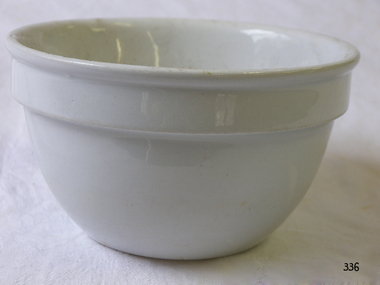
... price of regular clay), and for any third firing process! Once your work has been fired it can not turn back into clay for millennia – so don’t fire it if you don’t like it! Put it in the bucket for recycling. https://firebirdstudios.com.au/the-process-of-making-pottery/ This bowl was made by renowned pottery company J & G Meakin of England. The firm was established in the mid-1800's ...The Process of Making Pottery Decorating, Firing, Glazing, Making, Technical There is a rhythm and flow to clay. It can’t be done all at once! Even the making process! It can take weeks to get everything done, especially if you can only work on your pottery once a week! Even though we have three hour classes, it’s often just not enough time! Here is an overview of some of the processes so you have a bit more grasp on some of the technical stuff! Step One – Design There are SO many ideas out there for making stuff in clay! From delicate porcelain jewellery, through to heavy sculptural work and everything in between. Deciding your direction is sometimes not that easy – when you first start, try everything, you will naturally gravitate to the style that you enjoy! The options and variations are endless and can get a wee bit overwhelming too! Check in with me before you start to ensure your ideas will work, what order you might do things, how you could achieve the look you are seeking and any other technical data required! Step Two – Making Clay is thixotropic. This means that as you work with it, the clay first gets sloppier and wetter, before is begins to dry in the atmosphere. For most things, you simply can’t do all parts of the project at once. An example of work order might look like: Get last weeks work out from the shelves Prepare clay for today’s work – roll your clay, prepare balls for throwing, make the first stage of a pinch pot) Clean up last week’s work and put it on the shelf for bisque firing Check that you have any glazing to do – and do enough of it that you will have time to finish your main project Do the next step of your next project – there might be a further step that can’t be complete immediately, in that case, wrap your work well and put onto the shelves. Letting your work rest for a while can really help keep your work clean and professional looking. Many things require bagging under plastic to keep it ready for work the next week – put your name on the outside of the bag so you can find your work easily. We have stickers and markers. Consider how you want to decorate your work – coloured slip can be applied at a fairly wet stage (remembering that it will make your work even wetter!). Trying to apply slip to dry clay won’t work! If you want to do sgraffito – you will need to keep the work leather hard (a state of dryness where you can still work the clay with a little effort and a little water and care). Step Three – Drying Most of the time your work can go into the rack uncovered to let it dry out for the following week. If you want to continue forming or shaping you will need to double bag your work – put your work on a suitable sized bat and put the bat in a bag so the base of the bag is under the bat, then put another bag over the top of the work and tuck the top of the bag under the bat. If you want to trim (or turn) your thrown work the following week, it should also be double bagged. If your work is large, delicate, or of uneven thicknesses, you should lightly cover your work for drying. When considering the drying process, bare in mind the weather, humidity and wind! The hotter and dryer, the faster things dry and work can dry unevenly in the shelves – this can lead to cracking – another time to lightly cover your work for drying. Step Four – Trimming and Cleaning Up Your work is dry! It is called greenware now and it is at it’s most fragile! Handle everything with two hands. I often refer to soft hands – keep everything gentle and with your fingers spread as much as possible. Try to not pick up things like plates too much, and always with both hands! Before your work can be bisque fired it should be “cleaned up”. You work won’t go into the kiln if it has sharp edges – when glazed, sharp edges turn into razor blades! Use a piece of fly wire to rub the work all over – this will scratch a little so be light handed. Use a knife or metal kidney to scrape any areas that require a bit more dynamic treatment than the fly wire offers! Finally, a very light wipe over with a slightly damp sponge can help soften and soothe all of your edges and dags! Trimming thrown work: If you are planning to trim (or turn) your thrown work (and you should be), make sure you bag it well – your work should be leather hard to almost dry for easiest trimming. Use this step to finish the work completely – use a metal kidney to polish the surface, or a slightly damp sponge to give a freshly thrown look. Wipe the sponge around the rim after trimming, and check the inside of the pot for dags! Trimming slip cast work: Usually I will trim the rims of your work on the wheel the following day to make that stage easier, however you will still need to check your work for lumps and bumps. Last but not least – check that your name is still clearly on the bottom of your work. Step Five – Bisque Firing When the work is completely dry it can go into the bisque kiln. The bisque kiln is fired to 1000°C. This process burns off the water in the clay as well as some of the chemically bound water. The structure of the clay is not altered that much at this temperature. Inside the bisque kiln, the work is stacked a little, small bowl inside a larger bowl and onto a heavy plate. Smaller items like decorations or drink coasters might get stacked several high. Consideration is paid to the weight of the stack and shape of the work. A bisque kiln can fire about one and a half times the amount of work that the glaze kiln can fire. The firing takes about 10 hours to complete the cycle and about two days to cool down. Once it has been emptied the work is placed in the glaze room ready for you to decorate! Step Six – Glazing Decorating your work with colour can be a lot of fun – and time consuming! There are three main options for surface treatment at this stage: Oxide Washes Underglazes Glazes Washes and underglazes do not “glaze” the work – It will still need a layer of glaze to fully seal the clay (washes don’t need glaze on surfaces not designed for food or liquid as they can gloss up a little on their own). Underglazes are stable colourants that turn out pretty much how they look in the jar. They can be mixed with each other to form other colours and can be used like water colours to paint onto your work. Mostly they should have a clear glaze on top to seal them. Oxides are a different species – the pink oxide (cobalt) wash turns out bright blue for instance. They don’t always need a glaze on top, and some glazes can change the colour of the wash! The glazes need no other “glaze” on top! Be careful of unknown glaze interactions – you can put any combination of glaze in a bowl or on a plate, but only a single glaze on the outside of any vertical surface! Glazes are a chemical reaction under heat. We don’t know the exact chemicals in the Mayco glazes we use. I can guess by the way they interact with each other, however, on the whole, you need to test every idea you have, and not run the test on a vertical surface! Simply put, glaze is a layer of glass like substance that bonds with the clay underneath. Clay is made of silica, alumina and water. Glaze is made of mostly silica. Silica has a melting point of 1700°C and we fire to 1240°C. The silica requires a “flux” to help it melt at the lower temperature. Fluxes can be all sorts of chemicals – a common one is calcium – calcium has a melting point of 2500°C, however, together they both melt at a much lower temperature! Colourants are metal oxides like cobalt (blue), chrome (green through black), copper (green, blue, even red!), manganese (black, purple and pink) iron (red brown), etc. Different chemicals in the glaze can have dramatic effects. for example, barium carbonate (which we don’t use) turns manganese bright pink! Other elements can turn manganese dioxide brown, blue, purple and reddish brown. Manganese dioxide is a flux in and of itself as well. So, glazes that get their black and purple colours, often interact with other glazes and RUN! Our mirror black is a good example – it mixes really well with many glazes because it fluxes them – causes them to melt faster. It will also bring out many beautiful colours in the glazes because it’s black colouring most definitely comes from manganese dioxide! Glaze chemistry is a whole subject on it’s own! We use commercial Mayco glazes on purpose – for their huge range of colour possibilities, stability, cool interactions, artistic freedom with the ability to easily brush the glazes on and ease of use. We currently have almost 50 glazes on hand! A major project is to test the interactions of all glazes with each other. That is 2,500 test tiles!!!! I’m going to make the wall behind the wheels the feature wall of pretty colours! Step Seven – Glaze (Gloss or sometimes called “Glost”) Firing Most of the time this is the final stage of making your creation (but not always!) The glaze kiln goes to 1240°C. This is called cone 6, or midrange. It is the low end of stoneware temperatures. Stoneware clays and glazes are typically fired at cone 8 – 10, that is 1260 – 1290°C. The energy requirement to go from 1240°C to 1280°C is almost a 30% more! Our clay is formulated to vitrify (mature, turn “glass-like”) at 1240°, as are our glazes. A glaze kiln take around 12 hours to reach temperature and two to three days to cool down. Sometimes a third firing process is required – this is for decoration that is added to work after the glaze firing. For example – adding precious metals and lustres. this firing temperature is usually around 600 – 800°C depending upon the techniques being used. There are many students interested in gold and silver trims – we will be doing this third type of firing soon! After firing your work will be in the student finished work shelves. Remember to pay for it before you head out the door! There is a small extra charge for using porcelain clay (it’s more than twice the price of regular clay), and for any third firing process! Once your work has been fired it can not turn back into clay for millennia – so don’t fire it if you don’t like it! Put it in the bucket for recycling. https://firebirdstudios.com.au/the-process-of-making-pottery/ This bowl was made by renowned pottery company J & G Meakin of England. The firm was established in the mid-1800's. The bowl is an example of kitchenware used in the 19th century and still in use today. Bowl; white ceramic, round and tapering inwards towards base. Made by J and G Meakin England. On base, 'Ironstone China Reg SOL 391413' with symbol flagstaff hill, flagstaff hill maritime museum and village, warrnambool, maritime museum, maritime village, great ocean road, shipwreck coast, mixing bowl, food preparation, j & g meakin, pottery, stoke-on-trent, kitchen equipment, ceramic -
 Flagstaff Hill Maritime Museum and Village
Vehicle - Vessel, Couta boat, Viator, 1890-1920
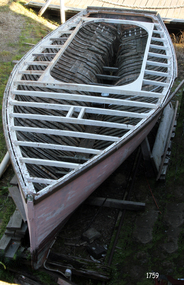
... s “Brusher” Richards of Warrnambool and Port Fairy used it for fishing. - Peter Watson and his son also went fishing in Viator. - Frank Ferrier, boat builder, was an owner (son of ‘La Bella’ hero, William Ferrier) - Arthur Rogers owned Viator too, then sold it to Terry Pridmore and Wayne Moorefield - The Viator was stored in a paddock, unused, in Fairmont Avenue, Warrnambool, where it was gradually deteriorating. - 1975 Viator was purchase at a very reasonable price from Pridmore, then donated to Flagstaff Hill Maritime Village. ...s “Brusher” Richards of Warrnambool and Port Fairy used it for fishing. - Peter Watson and his son also went fishing in Viator. - Frank Ferrier, boat builder, was an owner (son of ‘La Bella’ hero, William Ferrier) - Arthur Rogers owned Viator too, then sold it to Terry Pridmore and Wayne Moorefield - The Viator was stored in a paddock, unused, in Fairmont Avenue, Warrnambool, where it was gradually deteriorating. - 1975 Viator was purchase at a very reasonable price from Pridmore, then donated to Flagstaff Hill Maritime Village. ...The historic Victorian ‘couta boat “Viator” was built by renowned boat builder J.R. Jones of Williamstown in Melbourne, between 1890 and 1920. He was one of the early builders of this design. The features of Viator - carvel planked, open cockpit, vertical stem and straight keel, single mast and a pivoting centreboard - are all characteristics of an early Bass Strait ‘couta boat. This has been confirmed by experienced Victorian ‘couta boat restorer Tim Phillips. Viator served as a ‘couta fishing boat in the Warrnambool area until the mid-1930s, then some say she served as a mail ferry across to Portland. Later it was used as a fishing and recreation boat for local families. For years Viator sat in a paddock in East Warrnambool until purchased in 1975 and donated to Flagstaff Hill. ‘COUTA BOATS - The ‘couta design for vessels is believed to have originated at Port Phillip, Victoria, for the purpose of the Barracouta (‘couta) fishing industry, being both fast and seaworthy. , The 'couta fish was an important food fish in Australian waters, supplying Melbourne with plenty of inexpensive fish. VIATORY’S OWNERS - Some of Viator’s history is known: - 1940, registered Port Fairy and owned by G.J. Richards. - 1941-1945, registered in Port Fairy and owned by Jens “Peter” Petersen. - 1950’s “Brusher” Richards of Warrnambool and Port Fairy used it for fishing. - Peter Watson and his son also went fishing in Viator. - Frank Ferrier, boat builder, was an owner (son of ‘La Bella’ hero, William Ferrier) - Arthur Rogers owned Viator too, then sold it to Terry Pridmore and Wayne Moorefield - The Viator was stored in a paddock, unused, in Fairmont Avenue, Warrnambool, where it was gradually deteriorating. - 1975 Viator was purchase at a very reasonable price from Pridmore, then donated to Flagstaff Hill Maritime Village. RESTORATION - Shipwright Erik Mikkelsen soon started restoration on the Viator after it arrived at Flagstaff Hill in 1975. In 2006 the Maritime Museums of Australia awarded a grant to Flagstaff Hill Maritime Village to assist with the restoration and renovation of the Viator. Its restoration continues today in the care of Flagstaff Hill’s boat builder. J R. JONES - boat builder The photograph of the EVA MYRL shows the builder J R Jones with his team of workers. The other photograph shows a vessel built by J R Jones' son, J B Jones of Footscray, and his team of boat boulders. The photograph of the EVA MYRL was taken by E. A. Dond---. The other photograph is of the Sturrock Coot, taken a Albert Park Lake in St Kilda. The Viator is the most significant boat in the Flagstaff Hill's fleet, being the last remaining local 'couta boat and one of few existing examples of this craft. Viator received Heritage status with the Australian Maritime Museums Council and is listed on the Australian Register of Historical Vessels in 2006 (ARHV Number: HV000561). Viator was built in Victoria in the early days by renowned boat builder J.R. Jones, and sailed by fishermen for many years, both local and on the coastal waters of Victoria, and was possibly used for the mail service. It is significant for being used for the fishing trade, for government service, perhaps as a mail boat, and for recreation by local families. Vessel, the ‘Viator’, an historic Victorian ‘couta boat, handmade by renowned boat builder This J.R. Jones 'couta boat, the Viator, was built in Williamstown, c.1890-1920. The single mast vessel has a Caravel hull built from New Zealand Kauri, blackwood, with a red gum keel and a jarrah stem and stern. It has a pivoting centreboard. Two photographs are included; one of the builder with his team, the other is of his son J B Jones, with his team. Marked "Viator" Photograph 1759.2: "E. A. Dond---" (indecipherable". Handwritten on back "Grandfather / J R Jones / Built" Photograph 1759.3; sign within photograph "J B JONES / BUILDER / FOOTSCRAY", stamped in the card, bottom right " ----- / MELBOURNE" and handwritten on the back "I think this is Mr Abel Sturrock Coot Albert Park Lake" flagstaff hill, warrnambool, shipwrecked coast, flagstaff hill maritime museum, maritime museum, shipwreck coast, flagstaff hill maritime village, great ocean road, arhv hv000561, arthur rogers, bass strait ‘couta boat, “brusher” richards of warrnambool and port fairy, clinker hull boat, ‘couta crafted boat c 1890-1905, ‘couta fishing boat, erik mikkelsen shipwright, g.j. richards of port fairy, jens “peter” petersen, john lindsay, old mail boat, pivoting centerboard boat, peter watson, single-masted ketch, terry prodmore and wayne moorefield, vessel viator, viator a historical vessel, victorian ‘couta boat, victorian barracoota boat, warrnambool ‘couta boat, western victoria fishing boat, western victoria mail boat, hv000561, australian register of historical vessels, erik mikkelsen, j b jones, j b jones boat builder, footscray, sturrock coot, sturrock, j r jones, j r jones boat builder, williamstown, eva myrl -
 Flagstaff Hill Maritime Museum and Village
Functional object - Marine Lamp, R C Murray & Co Ltd, 1900 -1930
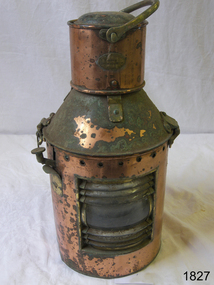
... prices on many auction websites. A significant item used in the marine industry on many ships, the company made kerosene lamps for other industries as well and was a well-known company in the early part of the 20th century. flagstaff hill warrnambool shipwrecked-coast flagstaff-hill flagstaff-hill-maritime-museum maritime-museum shipwreck-coast flagstaff-hill-maritime-village lamp lantern brass lamp nautical object Inscribed "RC Murray and Co Limited" "Pollokshaws Road Glasgow S.1." ...The item is a kerosene marine ships lamp used onboard ships and smaller vessels for general lighting and navigation the subject lamp was made by a very well known maker R C Murray of Glasgow Scotland. During the research several different addresses were found but nothing on the founder or company history. It appears RC Murray made not only marine lamps but lamps for the railways as well. The company is listed in the Scottish Post Office Directories for 1885 to 1886 as manufacturing tinsmiths, lamp makers, coppersmiths, gas fitters, bell hangers and workers in sheet iron, zinc and brass at street numbers 7, 9 and 11 Carlton Court, Bridge St Glasgow. An additional address is at 37 Cavendish St Glasgow listed for 1910, and also at Pollokshaws Road. The writer assumes the company must have moved sometime between 1886 & 1910 to these addresses. The writer at this time cannot ascertain any more historical information regarding the company or its founder, however, lamps made by RC Murray are now collector's items commanding significant sale prices on many auction websites. A significant item used in the marine industry on many ships, the company made kerosene lamps for other industries as well and was a well-known company in the early part of the 20th century. Marine kerosene ships lamp, round copper handle on top and side top is hinged with catch and lever, protruding near top. Inscribed "RC Murray and Co Limited" "Pollokshaws Road Glasgow S.1." flagstaff hill, warrnambool, shipwrecked-coast, flagstaff-hill, flagstaff-hill-maritime-museum, maritime-museum, shipwreck-coast, flagstaff-hill-maritime-village, lamp, lantern, brass lamp, nautical object -
 Flagstaff Hill Maritime Museum and Village
Clock, 1940's
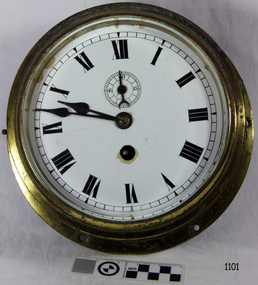
... S Smith & Sons (Motor Accessories) Ltd. This is the start of "Smiths Clocks" because this is when they began to manufacture domestic clocks in quantity. Moreover, they set out to produce these clocks at a price...S Smith & Sons (Motor Accessories) Ltd. This is the start of "Smiths Clocks" because this is when they began to manufacture domestic clocks in quantity. Moreover, they set out to produce these clocks at a price ...Smiths began with a craftsman named Samuel Smith who in 1851 opened a shop in Newington Causeway, London, where he made and sold watches, clocks and precision instruments. Samuel had a son, Samuel Jnr who was apprenticed in his fathers business. Samuel Jnr eventually opened his own business at 85 Strand and later opened other premises at 9 Strand, Trafalgar Square and 68 Piccadilly. In 1899 he turned his business into a private limited company, S. Smith & Son Ltd. Samuel Jnr son, Sir Allan Gordon-Smith, joined him as Manager at 9 Strand in 1903 and laid the foundation of the vast Smiths organisation of the future, leading the company towards the supply of accessories for the then developing motor industry making car clocks and the first speedometers patented in 1904. In July 1914 a new company was formed under the name S. Smith & Sons (Motor Accessories) Ltd., to take over the motor accessory business of S. Smith and Son Ltd. and this became the main company of the group which eventually grew to become Smiths Industries Ltd. The original company S Smith and Sons Ltd., continued as jewelers and clock and watchmakers until 1930 when the company was taken over by Bravingtons retail jeweller chain. In 1931 Smiths decided to enter the domestic clock market and formed a new company, Smiths English Clocks Ltd., as the Clock and Watch division of S Smith & Sons (Motor Accessories) Ltd. This is the start of "Smiths Clocks" because this is when they began to manufacture domestic clocks in quantity. Moreover, they set out to produce these clocks at a price that the average householder could afford. S Smith & Sons (Motor Accessories) was at this time was the main company in the Smiths group of companies and their business developed both in the motor vehicle field and outside it. Smiths began to make automatic pilots for aircraft and, through the acquisition of a majority interest in Henry Hughes & Sons Ltd., entered the field of marine instruments. During the war from 1939 to 1945, Smiths' production expanded. There was a demand for motor, aircraft and marine instruments for the Services and the production of industrial instruments and it is at this time that our item was made. In 1944 many changes were made to the Smiths' organisation. The name of the principal company was changed from S Smith & Sons (Motor Accessories) to S. Smith & Sons (England) Ltd. and four new subsidiary selling companies were set up. These were Smiths Motor Accessories Ltd., Smiths Aircraft Instruments Ltd., Smiths Industrial Instruments Ltd., and Smiths English clocks Ltd. The manufacture of clocks and watches ceased in 1979 and 1983 saw Smiths withdraw from producing items for the motor industry. An item that is now regarded as a vintage, sought by horology collectors worldwide and is in excellent condition. The item is unique in that it was made specifically for ships by the Smith company a well known British clock manufacture. Its provenance is well established and it was made during the world war II era specifically for merchant and naval vessels of the time. Naval brass ships bulkhead clock. The clock face is of white enamel with black Roman numerals, an outer minutes ring and black steel hands. There is a subsidiary seconds dial with sweeping hand just above the centre and a fast/slow adjustment lever above that. There is no manufactures name on the dial. There are a beveled glass and brass hinged lid to the front of the clock. The clock is housed in a heavy brass case with screw holes around the circumference for mounting. There are no markings on the clock or mechanism flagstaff hill, warrnambool, shipwrecked-coast, flagstaff-hill, flagstaff-hill-maritime-museum, maritime-museum, shipwreck-coast, flagstaff-hill-maritime-village, s smith and sons, clock, maritime clocks, clock makers, bulkhead clock -
 Mission to Seafarers Victoria
Booklet - Music Score, Franz Schubert Song Album, c. 1950
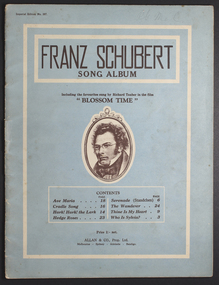
... Price 2/- / Allan and Co Prop. Ltd / Melbourne. Sydney. Adelaide. Bendigo. BACK COVER song and music excerpts advertise another Allan publication: AUSTRALIAN ABORIGINAL SONGS / Collected by Dr H. O. Lethbridge / accompaniements arranged by Arthur S...Price 2/- / Allan and Co Prop. Ltd / Melbourne. Sydney. Adelaide. Bendigo. BACK COVER song and music excerpts advertise another Allan publication: AUSTRALIAN ABORIGINAL SONGS / Collected by Dr H. O. Lethbridge / accompaniements arranged by Arthur S ...Commercially printed Song book with blue cover featuring small portrait of composer. Contains words and music scores for 8 songs by Franz Schubert. non-fiction music, sheet-music, entertainment, indigenous songs, songs, franz schubert, allan and co music -
 Ballarat Clarendon College
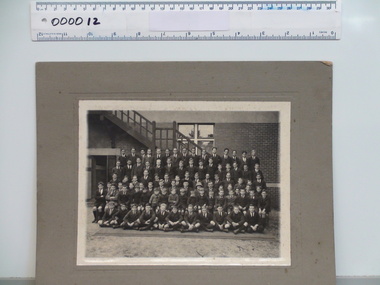
Photograph, 1923 (exact)
... S M Polson Principal – Miss Gilbert – Mr G Hay – A J Besemeres - ? - ? – R G Bradby – H F Brind 5th row from top R Buchanan - ? – M Symons – J Riddle - ? Goon - ? Symons - ? Komesarook - ? Fairey - ? – B Ronaldson - ? Buchanan - ? - ? – M Whiteside – Pat Shaw – J Groat - ? Front G P Jeffrey - ? Goon – R G Dowling – H M Greenfield – G Dale – A Hall-Jones – A Baker – J L Price... – K McLean – E M Price ballarat 1923 college j m gray major a s m polson student cohort J.M. ...This named photograph is an excellent record of the 80 strong student cohort of 1923. There are 6 adults in the photograph. Principal Major A.S.M. Polson is clearly identified. Top row (Left to right) G Den – E Beacham – J B Coutts – J C Besemeres – G Naismith – M Levy – G N Witter – J C Loughrey – G Bredby – A P McLean – B Currie – W A Kilpatrick – G Clark – E Wearne – R Monteith 2nd row from top L T Wotherspoon – W A Stickland – E Campbell – A Bell – H Thomas – W A Paterson – E? Lyne – J Leishman – E J Forbes – J M Gray – J H Burr – J Creer - ? – C? Morgan – J Hammon 3rd row from top D A Miller – A G Shaw – W John – J Moorhouse – G L Scott – A Levy - ? Ford - ? Gill – T G Dowling – D Campbell – W McLean – J E Coutts - C? Carthew – D Douglas – A L McLean 4th row from top A M Greenfield - ? - M Featonby – G Leishman – J Woodward – Mr F R Potts BSc – Mr D S Coutts BA – Mr A S M Polson Principal – Miss Gilbert – Mr G Hay – A J Besemeres - ? - ? – R G Bradby – H F Brind 5th row from top R Buchanan - ? – M Symons – J Riddle - ? Goon - ? Symons - ? Komesarook - ? Fairey - ? – B Ronaldson - ? Buchanan - ? - ? – M Whiteside – Pat Shaw – J Groat - ? Front G P Jeffrey - ? Goon – R G Dowling – H M Greenfield – G Dale – A Hall-Jones – A Baker – J L Price – K McLean – E M Price Mounted black and white photograph of the Ballarat College student cohort in 1923. Cohort are arranged on tiered rows in front of timber external staircase. First row sitting cross-legged on ground. Second and third rows seated. Fourth, fifth and sixth standing on tiers. The photograph is mounted on grey cardboard. J. M. Gray written in ink on back of mount. Pencilled initials 'J.M.' also on back of mount. Photograph is accompanied by photocopy of photograph and handwritten papers detailing names of those in photograph. These papers are signed by Grant Coutts. J. M. Gray is identified as tenth from left on second top row. J.M. ballarat, 1923, college, j m gray, major a s m polson, student cohort -
 Ballarat Clarendon College
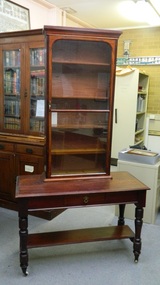
Furniture, Table and cabinet
... s. The small book shelf was donated by Rosalie price and fixed to the table to create a display cabinet during her tenure as alumni officer. ...s. The small book shelf was donated by Rosalie price and fixed to the table to create a display cabinet during her tenure as alumni officer. rosalie-price wanliss-house Wooden table with small drawer and shelf at foot. ...These items originated in Wanliss House. The table was part of the office furniture during the 1960's. The small book shelf was donated by Rosalie price and fixed to the table to create a display cabinet during her tenure as alumni officer. Wooden table with small drawer and shelf at foot. Book shelf with glass doors fixed to table top. rosalie-price, wanliss-house, -
Ballarat Clarendon College
Match box cover
... S Coltman. John Coltman attended Ballarat College attended Ballarat College 1913 – 1920. A very high achiever John was Dux of College 1919 School Captain 1920 Captain of Cricket 1920, Captain of Tennis 1918 – 1920 Captain of Athletics and Football 1919 – 1920 Stroke, Rowing Firsts, 1919-1920. He maintained a long association with the school through participation in the Old Collegians Association. The match box may have been an Old Collegian's memento. John married Elvie (Price...S Coltman. John Coltman attended Ballarat College attended Ballarat College 1913 – 1920. A very high achiever John was Dux of College 1919 School Captain 1920 Captain of Cricket 1920, Captain of Tennis 1918 – 1920 Captain of Athletics and Football 1919 – 1920 Stroke, Rowing Firsts, 1919-1920. He maintained a long association with the school through participation in the Old Collegians Association. The match box may have been an Old Collegian's memento. John married Elvie (Price ...Property of John S Coltman. John Coltman attended Ballarat College attended Ballarat College 1913 – 1920. A very high achiever John was Dux of College 1919 School Captain 1920 Captain of Cricket 1920, Captain of Tennis 1918 – 1920 Captain of Athletics and Football 1919 – 1920 Stroke, Rowing Firsts, 1919-1920. He maintained a long association with the school through participation in the Old Collegians Association. The match box may have been an Old Collegian's memento. John married Elvie (Price) Coltman. Elvie entered Clarendon Ladies College 1919, her childhood home ‘Dumbarton’ 1425 Sturt Street was purchased by the school and is part of the Girls Boarding House. Metal match box cover with Ballarat College emblem fixed to top face Ballarat College emblem fixed to top face john-s-coltman, ballarat-college, old colegians -
 Flagstaff Hill Maritime Museum and Village
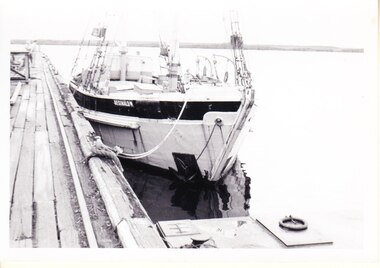
Photograph - Vessels, Sail and Steam Ships, c. 1972-1975
... price that was unattainable at the time. Flagstaff Hill later requested photographs of the hull to discern the dimensions and also the condition of the timbers as well as wanting advice on its seafaring capability. In 1972 the Flagstaff Hill Historic Park Planning Board – Chairman J. (John) S...price that was unattainable at the time. Flagstaff Hill later requested photographs of the hull to discern the dimensions and also the condition of the timbers as well as wanting advice on its seafaring capability. In 1972 the Flagstaff Hill Historic Park Planning Board – Chairman J. (John) S ...Andy Clapham owned and operated a boat yard on the Maribyrnong River in Footscray, Victoria. The river runs into Port Phillip Bay (sometimes known as Hobson’s bay) at Williamstown, an area with a history of trades associated with the shipping and construction industry. Andy Clapham’s photographs include those of the Reginald M and one of Polly Woodside, another vessel restored and used as a maritime exhibition. Andy Clapham’s letter of 1972 was posted in a and envelope with an early Australian decimal currency stamp showing the profile portrait of Queen Elizabeth II, and valued at 7 cent. Andy offered invaluable advice to the Flagstaff Hill Historic Park Planning Board regarding the purchase a vessel suitable for use as an exhibit once Flagstaff Hill was opened. The Planning Board was set up by the Warrnambool Chamber of Commerce and approved by the City Council and State Government. Flagstaff Hill was investigating vessels in Adelaide and Tasmania as well as Melbourne. Andy looked at several vessels in 1972-1973. He also serviced the Reginald M among other vessels belonging to Captain Julian Dyson of Yarra Ferries, who had casually offered the vessel to Flagstaff Hill as a price that was unattainable at the time. Flagstaff Hill later requested photographs of the hull to discern the dimensions and also the condition of the timbers as well as wanting advice on its seafaring capability. In 1972 the Flagstaff Hill Historic Park Planning Board – Chairman J. (John) S. Lindsay (1972-1980), Secretary J. (James) Mark – wrote a letter of appreciation to Mr A. (Andy) Clapham of 3 Charles Street Footscray ... “Dear Mr. Clapham, The Board has asked me to write to you to express our appreciation for the assistance you have offered us through our Chairman John Lindsay. The information you have already given us has been invaluable, in that is shows us that we have not been setting out to do something that is impossible. We look forward to receiving further information from you as it becomes available and we appreciate that you must be busy enough without our problems. Members of our Board hope to call and see you on a trip to Melbourne in the near future. The Board is optimistic about the future of Flagstaff Hill as a Maritime Museum and look forward to you visiting Warrnambool to examine what we believe will be an ideal site. Yours faithfully, James Mark.” ABOUT the vessel “Reginald M” The vessel “Reginald M” was a two-masted, timber coastal vessel built by John Henry Murch in Birkenhead, Port of Adelaide, South Australia. It was named after Reginald Murch. (It was occasionally referred to as the Reginald “Emm”). Its construction took approximately 6 months using many materials and fittings from salvage yards. It is believed that the keep was hewn from two telegraph poles! Reginald M was launched at Largs Bay in 1922. Reginald M was approximately 30 metres long and was fore-to-aft ketch rigged with an ‘auxiliary’ motor to support any loss of sail power. The Reginald M was built to service the coastal ports of South Australia to Port Victoria on the York Peninsular, Spencer Gulf. It freighted cargo from port to port cheaply and efficiently. It had a very shallow draft and a flat bottom, enabling it to come close to shore and sit high and dry at low tide, or to be beached on the sand. It could easily skim over reefs due to its flat bottom. Wagons could be loaded and unloaded directly from the side of the vessel. Over the years her cargo included guano, barley, wool, horses, cattle, timber, explosives, potatoes, shell grit and gypsum. The Murch brothers from Port Adelaide were owners of the Reginald M and Richard Murch as the Captain. On April 9, 1931, Reginald M weathered a large storm in St. Vincents Gulf, SA, suffering much damage; the mast snapped and the crew laboured for four hours to free it up by severing the mast and rigging. The crew patched it up and slowly returned to Port Adelaide with only a portion of the insured cargo being damaged. The crew members at that time were owner Mr John Henry Murch of Wells Street Largs Bay, Skipper Mr R Murch – John’s brother, Murray – son of Captain Murch and Seaman John Smith. At some stage it seems that the Reginald M was used as a Customs vessel “H.M.C. No. 3, Pt Adelaide” as shown in a photograph in Flagstaff Hill’s collection. In 1969 Reginald M’s last freight trip left Marion Bay, carrying grain, wool and explosives. In late 1970 it was sold to the Mount Lyall Mining and Railway Clompany and used as a barge to carry explosives. In 1972 The Navy League of Strahan, Tasmania, purchased the vessel for use by the Strahan Sea Cadet Unit at Macquarie Harbour; it was renamed “T.S. Macquarie”. (This plan did not come to pass.) In 1974 Mr Andrew Rennie of East Brighton, Melbourne, brought Reginald M for shipping purposes, He sailed it from Strahan to Melbourne, planning to use it for pleasure sailing. The Reginald M was later sold at auction to Captain Julian Dyson, owner of Yarra Passenger Ferries in Melbourne. Later in 1975 funds became available to Flagstaff Hill Maritime Village to purchase the Reginald M. It was then restored and used as an exhibit here for many hears. Flagstaff Hill’s collection also includes various objects related to the Reginald M: - Photographs of Reginald M over the years in various aspects of its use - a life buoy with the inscription of “Pt. Adelaide” - helm section that was removed and replaced during restoration - a bullet found in pieces of timber during the 1979 restoration ABOUT THE POLLY WOODSIDE On the bow in the Polly Woodside's photograph is the word "RONA". the Polly Woodside was built at Belfast in 1885. In 1904 the vessel was sold to A.H. Turnbull of New Zealand and renamed "RONA". The letter and photographs are significant for their association with the Reginald M, an Australian built coastal trader now on the Australian Register of Historic Vessels (number HV000562). The letter and photographs are also significant as part of both the history of Flagstaff Hill and the history of the vessel “Reginald M” that has been on display in the lake for many years. Objects retained from this boat are included in Flagstaff Hill’s collection of maritime history. Packet with photographs and negatives in a KODAK envelope. The photographs are of two sail and steam vessels; twelve (12) black and white photographs of the 'Reginald M', and one (1) colour photograph of the Polly Woodside, plus six (6) negative strips. Included int he packet is a letter in stamped and postmarked envelope addressed to Mr A Clapham of Footscray. The envelope postmarked 9 Dec 1972, with the Warrnambool postcode 3280, A 7c Australian postage stamp in attached to the envelope. They are associated with Flagstaff Hill’s acquisition of the vessel “Reginald M”. Envelope "9 DEC 1972 / 3280" Postage stamp "7c" "Australia" Inscriptions on one Reginald M;; "REGINALD M" and "Pt ADELAIDE H.M.C. No. 3" Inscriptions of the Polly Woodside; "RONA / MSC" "MHI / NO. 1" Ball point ink, reverse of photograph "POLLY WOODSIDE" flagstaff hill, warrnambool, shipwrecked coast, flagstaff hill maritime museum, maritime museum, shipwreck coast, flagstaff hill maritime village, great ocean road, vessel reginald m, reginald emm, t. s. macquarie, h.m.c. no. 3, pt adelaide, australian register of historic vessels (number hv000562), boat building trade, jack murch, john henry murch, birkenhead, port adelaide sa, largs bay sa, coastal trader south australia, 1920 ketch reginald m, marion bay produce, mount lyall mining and railway company, navy league of strahan, tasmania, melbourne ferry company, flagstaff hill historic park planning board, john lindsay, james mark, andy clapham of footscray, andy clapham boat builder, kodak photograph packet envelope, kodak super-size prints, kodak australia pty ltd, australian postage stamp 1972 - 7c -
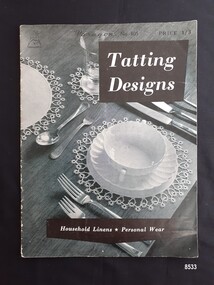 Flagstaff Hill Maritime Museum and Village
Book - Tatting craft book, Paragon Art Needlecraft Pty Ltd, Tatting Designs, circa 1940's
... s in Australia. Flagstaff Hill Maritime Museum and Village Great Ocean Road Warrnambool Shipwreck Coast tatting book tatting patterns craft handiwork handcraft needlework shuttle Front cover - "Paragon's No 105" "PRICE 1/3" "Tatting Designs" "Household Linens * Personal Wear" Plus a stylized drawing of a deer A soft covered, 16 page instruction book titled "Tatting Designs". ...Tatting is a form of knotted lace making using thread and a small shuttle. Twisted threads are tied around or through small, pointed shuttles that can be made of bone, mother of pearl, tortoise shell, steel or plastic. This produces a stable, strong lace using simple knots of two half hitches to make rings and chains embellished with picots. The origins of tatting are not clear but early versions of decorative knotting were used by the Egyptians on their ceremonial dress. Tatting also has elements of fishermen's net making techniques and the decorative knotting that was practiced by aristocratic women from the 15th century. Tatting, as we know it today, emerged in the first half of the 19th century. The new availability of mercerised thread from 1835 encouraged a burgeoning of lace crafts of all sorts. It was known in Italy as "occhi" and in France as "la frivolite". It looks fragile but is both strong and durable. An article in a column named "Wives and Daughters" published in the Star newspaper in May 1910 describes the durability of tatting lace - "there is edging and insertion still in existence that have outworn two sets of pillow slips." In the 19th century and well into the 20th century, tatting was used like crochet and knitted lace for decorative edgings, collars, doylies, tray cloths etc. At first, different tatting patterns were passed along by word of mouth from person to person, however in time, patterns regularly appeared in newspapers and magazines well into the 1950's. Paragon knitting, crochet and tatting books have been distributed throughout Australia since the 1930's, originally by "Paragon Art Needlework Pty Ltd" of Sydney, N.S.W. From 1946 these books were designed and printed in Australia from patterns provided by British and Australian thread companies. Consequently these patterns may also appear in similar British and American publications. Paragon Book No. 104 is an instruction book designed for the "beginner" whilst Paragon book No. 105 is designed for the more experienced tatter. The layout of these books was typical of the 1940s period when paper was in short supply. Most of the pattern books were approximately 18 cms wide by 24 cms high and some were smaller at about 13cm by 21 cms. The type used was small (about four lines of text per centimetre) which was difficult to read. This item is an excellent example of a needle work pattern book available to women in the 1940's in Australia. A soft covered, 16 page instruction book titled "Tatting Designs". It has black and white photographs and detailed patterns for tatted doilies, a tray mat, a chairback and arm rests, a cheval set, a luncheon set, collars and edgings for an underskirt, gloves and handkerchief. It is published by Paragon Art Needlecraft of Sydney. Front cover - "Paragon's No 105" "PRICE 1/3" "Tatting Designs" "Household Linens * Personal Wear" Plus a stylized drawing of a deer flagstaff hill maritime museum and village, great ocean road, warrnambool, shipwreck coast, tatting book, tatting patterns, craft, handiwork, handcraft, needlework, shuttle -
 Flagstaff Hill Maritime Museum and Village
Book - Tatting craft book, Paragon Art Needlecraft Pty Ltd, Learn to Tat, circa 1940's
... s in Australia. Flagstaff Hill Maritime Museum and Village Warrnambool Great Ocean Road Shipwreck Coast tatting tatting pattern book tatting instructions handicraft needlework shuttle tatting shuttle Paragon Needlecraft Paragon craft book Front cover - "PARAGON BOOK NO. 104" "PRICE 1/3" "Learn to/ TAT' Back Cover - "36/D5 E/A DO2" - handwritten in pencil A soft covered 16 page instruction book with black and white photographs and detailed instructions explaining how to tat and eight tatting projects including how to make a collar and handkerchief edgings, published by Paragon Art Needlecraft of Sydney. ...Tatting is a form of knotted lace making using thread and a small shuttle. Twisted threads are tied around or through small, pointed shuttles that can be made of bone, mother of pearl, tortoise shell, steel or plastic. This produces a stable, strong lace using simple knots of two half hitches to make rings and chains embellished with picots. The origins of tatting are not clear but early versions of decorative knotting were used by the Egyptians on their ceremonial dress. Tatting also has elements of fishermen's net making techniques and the decorative knotting that was practiced by aristocratic women from the 15th century. Tatting, as we know it today, emerged in the first half of the 19th century. The new availability of mercerised thread from 1835 encouraged a burgeoning of lace crafts of all sorts. It was known in Italy as "occhi" and in France as "la frivolite". It looks fragile but is both strong and durable. An article in a column named "Wives and Daughters" published in the Star newspaper in May 1910 describes the durability of tatting lace - "there is edging and insertion still in existence that have outworn two sets of pillow slips." In the 19th century and well into the 20th century, tatting was used like crochet and knitted lace for decorative edgings, collars, doylies, tray cloths etc. At first, different tatting patterns were passed along by word of mouth from person to person, however in time, patterns regularly appeared in newspapers and magazines well into the 1950's. Paragon knitting, crochet and tatting books have been distributed throughout Australia since the 1930's, originally by "Paragon Art Needlework Pty Ltd" of Sydney, N.S.W. From 1946 these books were designed and printed in Australia from patterns provided by British and Australian thread companies. Consequently these patterns may also appear in similar British and American publications. Paragon Book No. 104 is an instruction book designed for the "beginner" whilst Paragon book No. 105 is designed for the more experienced tatter. The layout of these books was typical of the 1940s period when paper was in short supply. Most of the pattern books were approximately 18 cms wide by 24 cms high and some were smaller at about 13cm by 21 cms. The type used was small (about four lines of text per centimetre) which was difficult to read. This item is an excellent example of a needle work pattern book available to women in the 1940's in Australia. A soft covered 16 page instruction book with black and white photographs and detailed instructions explaining how to tat and eight tatting projects including how to make a collar and handkerchief edgings, published by Paragon Art Needlecraft of Sydney. Front cover - "PARAGON BOOK NO. 104" "PRICE 1/3" "Learn to/ TAT' Back Cover - "36/D5 E/A DO2" - handwritten in pencil flagstaff hill maritime museum and village, warrnambool, great ocean road, shipwreck coast, tatting, tatting pattern book, tatting instructions, handicraft, needlework, shuttle, tatting shuttle, paragon needlecraft, paragon craft book -
 City of Moorabbin Historical Society (Operating the Box Cottage Museum)
Tool - Farm Machinery, Horse-drawn Furrow Plough, Early 20th Century
... During the gold-rush of the 1850s the rapidly increasing population of Melbourne saw a huge demand and a rise in prices for all foodstuffs, including the vegetables and fruit grown in the Shire of Moorabbin. brighton moorabbin pioneers fruit bentleigh vineyards vegetables plough market gardens plow Painted yellow. Although this Box Cottage museum plough is unbranded, the most widely used plough in the Shire of Moorabbin was made by Oliver. This plough appears to be identical to that brand. Circa late 1800's ...Late 1800s-early 1900s A horse-drawn furrow plough is an example of the type of farm implement widely used by pioneer market gardeners in the Moorabbin Shire following 'Dendy's Special Survey' of 1841 and the Crown Land Sale in 1852. Land allotments were bought by pioneer settlers who established or rented allotments for market gardens in the area. They supplied produce to the markets in St Kilda and Melbourne. During the gold-rush of the 1850s the rapidly increasing population of Melbourne saw a huge demand and a rise in prices for all foodstuffs, including the vegetables and fruit grown in the Shire of Moorabbin. This heralded a time of prosperity for market gardeners, and an equally rapid expansion of the numbers of vegetable and produce growers in the area. The 'knock-on effect" resulted in an increased interest and development of the community in the Shire of Moorabbin. Following 'Dendy's Special Survey' of 1841 and the Crown Land Sale in 1852, land allotments were bought by pioneer settlers who established or rented allotments for market gardens in the area and they supplied produce to the markets in St Kilda and Melbourne. During the gold-rush of the 1850s the rapidly increasing population of Melbourne saw a huge demand and a rise in prices for all foodstuffs, including the vegetables and fruit grown in the Shire of Moorabbin. Circa late 1800's to early 1900s. A horse-drawn furrow plough was the most common type of agricultural implement used by the pioneers of the 1800s and continued on into the 1940s when motorised tractors came into use. This plough is an example of a two furrow, mullboard plough which would most likely have been pulled by two horses. The long handle was used to lower the silver plates, (mullboards), to the chosen depth of soil. Painted yellow. Although this Box Cottage museum plough is unbranded, the most widely used plough in the Shire of Moorabbin was made by Oliver. This plough appears to be identical to that brand. brighton, moorabbin, pioneers, fruit, bentleigh, vineyards, vegetables, plough, market gardens, plow -
 Greensborough Historical Society
Plate, Serge Daeffler, Old Eltham Bridge at Lower Plenty, 1980s
... Card of Banyule's Heidelberg School Heritage Artist, Robert S, Phillips attached to rear, with price label from Savers....Card of Banyule's Heidelberg School Heritage Artist, Robert S, Phillips attached to rear, with price label from Savers. Ceramic plate, off-white with green edges, colour transfer photograph, glazed Old Eltham Bridge at Lower Plenty Plate Serge Daeffler ...Ceramic plate, decorated by Serge Daeffler. Hand painted text with transfer illustration of the Old Eltham Bridge at Lower Plenty which was opened on 8/3/1867. Ceramic plate, off-white with green edges, colour transfer photograph, glazed "Welcome to Banyule", "Old Etham (sic) Bridge at Lower Plenty", by Serge Daeffler. Card of Banyule's Heidelberg School Heritage Artist, Robert S, Phillips attached to rear, with price label from Savers. plates, lower plenty -
 City of Moorabbin Historical Society (Operating the Box Cottage Museum)
Education, Booklet, Australian Copy Book 1907, c1907
... Rossiter Whelan / AUSTRALIAN COPY BOOK / LOWER FIRST CLASS / FOR TRACING WITH LEAD PENCIL OR PEN / INTRODUCTORY BOOK, PRICE ONE PENNY /MELBOURNE PUBLISHED FOR THE EDUCATION DEPARTMENT BY ROBT. S, BAIN, GOVERNMENT PRINTER...Rossiter Whelan was an early settler's child who attended Cheltenham State School c 1907 This is a typical Copy Book used by school children learning to print and write with lead pencil and dipping pens and ink c 1907 Rossiter Whelan / AUSTRALIAN COPY BOOK / LOWER FIRST CLASS / FOR TRACING WITH LEAD PENCIL OR PEN / INTRODUCTORY BOOK, PRICE ONE PENNY /MELBOURNE PUBLISHED FOR THE EDUCATION DEPARTMENT BY ROBT. S, BAIN, GOVERNMENT PRINTER 'Copy Book' for learning to write for 1st class Cheltenham State School 1907 Education, Booklet, Australian Copy Book 1907 Robert S Bain ...School children were taught to print and write with lead pencil using this type of copy book. When proficient they were permitted to begin using dipping pen and ink. Rossiter Whelan was an early settler's child who attended Cheltenham State School c 1907 This is a typical Copy Book used by school children learning to print and write with lead pencil and dipping pens and ink c 1907 'Copy Book' for learning to write for 1st class Cheltenham State School 1907 Rossiter Whelan / AUSTRALIAN COPY BOOK / LOWER FIRST CLASS / FOR TRACING WITH LEAD PENCIL OR PEN / INTRODUCTORY BOOK, PRICE ONE PENNY /MELBOURNE PUBLISHED FOR THE EDUCATION DEPARTMENT BY ROBT. S, BAIN, GOVERNMENT PRINTER -
Glenelg Shire Council Cultural Collection
Booklet - Cinema Program, 'Observer' Print Portland, Star Cinema Program, 1935
... S. Richards, opening of 27th October 1937. In 2011, there was a small Star Cinema operating in the former balcony area. The main orchestra floor has been in use as a plumbers merchants, but is unused. The Star Cinema was closed in 2015 and is now in use as a church. Star Cinema Green card (folded) Cinema Program for 'Star Talkies' for weeks ending January 26 and February 2, 1935. Includes list of films, admission prices ...The Star Theatre opened on 7th November 1925, with 991 seats located in orchestra and balcony levels. It was rebuilt to the plans of architect Geoffrey S. Richards, opening of 27th October 1937. In 2011, there was a small Star Cinema operating in the former balcony area. The main orchestra floor has been in use as a plumbers merchants, but is unused. The Star Cinema was closed in 2015 and is now in use as a church. Green card (folded) Cinema Program for 'Star Talkies' for weeks ending January 26 and February 2, 1935. Includes list of films, admission prices, where to buy tickets and whether the films are suitable or not suitable for a general audience. star cinema -
 Ballan Shire Historical Society
Map - Map. Bungal, Department of Lands and Survey, Bungal, County of Grant, 09/09/1926
... s showing the allotments, and the size, with the names of the residents. It shows the roads and the Western and Eastern Moorarbool River, and the Whipstick State Forest. bungal kerrit bareet egerton lal lal borhoneyghurk bungeeltap ballark yaloak gorong moorarbool west Coloured pen marks and circled numbers on various areas. Price ...A map of Bungal in the 1920's showing the allotments, and the size, with the names of the residents. It shows the roads and the Western and Eastern Moorarbool River, and the Whipstick State Forest. Cream coloured map of Bungal in the County of Grant, bounded by the the East Moorarbool River on the East, and the State Forest on the South. It is marked with the scale of chains and the number L.358. Lithographed at the Department of Lands and Survey. Melbourne by W. J. Butson on 9.9.1926. It shows the land allotments with names of owners. Coloured pen marks and circled numbers on various areas. Price 2 shillings marked on bottom right hand edge. bungal, kerrit bareet, egerton, lal lal, borhoneyghurk, bungeeltap, ballark, yaloak, gorong, moorarbool west
