
Showing 48 items matching "shooting (sports)"
-
 Emerald Museum & Nobelius Heritage Park
Book - Information Booklet, 1900
... ...shooting (sports)...Emerald Victoria Australia shooting (sports) A.V. Nobelius C.P. Nobelius General Issue Book for Emerald Rifle Club, 1901-c.1910. ...Shows issues of guns to members of Emerald Rifle Club, of which Nobelius brothers and others were members.General Issue Book for Emerald Rifle Club, 1901-c.1910. Lists allocation of rifles by name of member.emerald, victoria, australia, shooting (sports), a.v. nobelius, c.p. nobelius -
 Flagstaff Hill Maritime Museum and Village
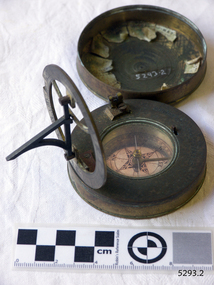
Compass and Sundial, Mid 19th Century
... As the governing body for full bore rifle and pistol shooting sports in the UK. The Association established in 1859 with the aim to improve the shooting skills of the newly formed corps of volunteers to meet the perceived threat of an invasion by the French. ...As the governing body for full bore rifle and pistol shooting sports in the UK. The Association established in 1859 with the aim to improve the shooting skills of the newly formed corps of volunteers to meet the perceived threat of an invasion by the French. ...James Henry Steward (1817–1896) established J.H. Steward in London in 1852. As “Head Optician” he would have been a qualified oculist but little is known about the founder’s early life and scholastic achievements. However, given the variety of disciplines for which he undertook he was also an accredited instrument maker,he clearly was a gifted scholar and quickly gained professional recognition in a full range of fields for an instrument maker of his day. J.H Steward became incorporated as J.H. Steward Limited on 1st February,1913. The business grew from modest beginnings. Steward would sell pocket watches and assorted items at the annual competition days of "The National Rifle Association of the United Kingdom(NRA)" from a stall. As the governing body for full bore rifle and pistol shooting sports in the UK. The Association established in 1859 with the aim to improve the shooting skills of the newly formed corps of volunteers to meet the perceived threat of an invasion by the French. J.H. Steward advert first appeared in the NRA competition program of 1865. The NRA meetings were held at first on Wimbledon Common, Surrey until 1889. Then because of pressure by the local community, the NRA along with its buildings and its flourishing meetings moved further south to Brookwood, Surrey. By now the Steward operation had grown from a modest stall into a large marquee selling various optical and scientific instruments at these meetings. Throughout its long trading history the J.H. Steward company and many members of the family maintained strong ties to the NRA and competition shooting events. The NRA records show that at the end of the 19th century the NRA bestowed a Life Membership on 7 Steward family members. First presented by J. H. Steward Ltd. in 1902 was the “Steward Trophy” that is still an annual competition for teams of four from any rifle club affiliated to the NRA. There is also evidence that many family members were fine shots.The item was made by a significant instrument manufacturing company that concentrated during the middle 19th century on supplying the British military. This items pattern & design is still available as a reproduction, available on the internet. However this original seems unique as the writer cannot find another for sale or in a collection to date. The assumption is that this type of compass was made for the British artillery units given the sun dial. Further research is ongoing as the writer regards this item as rare and social significant.Brass Compass and Sundial manufactured by J H Steward 407 & 406 West Strand, London. Can be used in both hemispheres. flagstaff hill, warrnambool, shipwrecked-coast, flagstaff-hill, flagstaff-hill-maritime-museum, maritime-museum, shipwreck-coast, flagstaff-hill-maritime-village, compass, sundial, combination compass and sundial, steward strand london, j h steward -
 Federation University Historical Collection
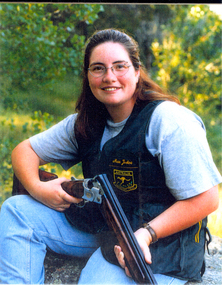
Photograph - colour, Nessa Jenkins
... shooting, and I could hear Di calling for her targets. Sometimes you can hear the buzzer if someone misses and I didn’t hear it so I thought things were okay.” “We’ve had a lot of competition practice before coming to the Commonwealth Games – we’ve been to the World Cup and the World Championship so it’s been a big build up, but this just topped it off today.”(http://m2002.thecgf.com/Sports...shooting, and I could hear Di calling for her targets. Sometimes you can hear the buzzer if someone misses and I didn’t hear it so I thought things were okay.” “We’ve had a lot of competition practice before coming to the Commonwealth Games – we’ve been to the World Cup and the World Championship so it’s been a big build up, but this just topped it off today.”(http://m2002.thecgf.com/Sports ...Nessa Jenkins was born at Ararat in 1980. She was a student of the University of Ballarat. At the 2002 Manchester Commonwealth Games Nessa Jenkins won the Women's Trap Pairs and was 5th in the Shooting Women's Trap. "At the 2002 Manchester Commonwealth Games Nessa Jenkins and Diane Reeves took gold from England by one point. The National Shooting Centre in Bisley provided the scene for some thrilling entertainment the Australian pair of Nessa Jenkins and Diane Reeves completed a hat trick of victories in world-class shooting events. Jenkins said: “I’m wrapped – the hardest thing is that you are trying to shoot your own score, but you’re still thinking about what your partner’s shooting, and I could hear Di calling for her targets. Sometimes you can hear the buzzer if someone misses and I didn’t hear it so I thought things were okay.” “We’ve had a lot of competition practice before coming to the Commonwealth Games – we’ve been to the World Cup and the World Championship so it’s been a big build up, but this just topped it off today.”(http://m2002.thecgf.com/Sports/Shooting/News/default.asp?id=579&folder=Shooting, accessed 07/08/2014) Colour photograph of Nessa Jenkins.jessa jenkins, commonwealth games, manchester, trap shooting -
 Orbost & District Historical Society
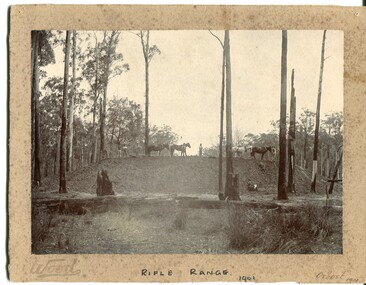
black and white photograph, Wood, 1901
... Target shooting is one of the oldest organised sports in Australia. Records date back to the British Marines at Sydney Cove in 1788. ...This photograph appears to have been taken during the construction of the rifle range just north of the Orbost township. "The photo shows the range stop butt being formed by the scoops being pulled by the horses. It appears that the rear of the mound there is a wall of logs lining it, most likely to help with being eroded or washed away. They haven’t yet formed the mantlet and target machines." ( Info, from Victorian Rifle Association) The Orbost Rifle Club existed in the early 20th century. (There are records from 1900). It folded in the late 1970's.Target shooting is one of the oldest organised sports in Australia. Records date back to the British Marines at Sydney Cove in 1788. The Victorian Rifle Association (VRA) was formed in 1860. After Federation in 1901, rifle clubs came under army control, but in 1921 they were reconstituted as a civilian organisation, which they have remained ever since. After World War I a system of national training was embodied in the Defence Act and the rifle clubs reverted to their purely sporting role. A black / white photograph of four men and four horses standing an a soil bank with another man, a lady and a small girl at the base of the hill. It is in a clearing in forest. It appears to have a row of targets set at the edge of the bank. The photograph is mounted on a very mouldy cream coloured buff card.on front - "Wood" ; "Rifle Range - 1901" ; "Orbost 1901"sport-shooting orbost-rifle-range -
 Orbost & District Historical Society
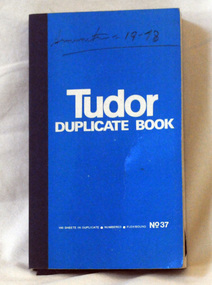
accounts book, 24-27 May 1978
... Target shooting is one of the oldest organised sports in Australia. Records date back to the British Marines at Sydney Cove in 1788. ...The Orbost Rifle Club existed in the early 20th century. (There are records from 1900). It folded in the late 1970's. This book was used by the club just before it folded.Target shooting is one of the oldest organised sports in Australia. Records date back to the British Marines at Sydney Cove in 1788. The Victorian Rifle Association (VRA) was formed in 1860. One of the most important adjuncts to the militia system from 1903 to the re-organisation of 1912 was the role played by the Rifle Club movement in Australia. At the time, these clubs were seen as the reservoir of manpower for a potential guerrilla force should any invasion occur. For Australia, the invasion fear was uppermost in the minds of the population. So important were the rifle clubs for the defence of Australia that the Commonwealth provided the training staff, rifles and ammunition so the clubs could function. Members were drilled, wore uniforms and practised all the basic skills of soldiering as well as target shooting. The Orbost Rifle Club was active during this period.An almost new blue covered book for accounts and receipts. It has a navy blue spine and white print on the cover - "TUDOR DUPLICATE BOOK No. 37". It contains a record of ammunition. Only two pages of 100 have been used.orbost-rifle-club -
 Orbost & District Historical Society
account book, November 5 1976 - July 18 1977
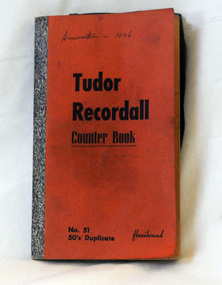
... Target shooting is one of the oldest organised sports in Australia. Records date back to the British Marines at Sydney Cove in 1788. ...The Orbost Rifle Club existed in the early 20th century. (There are records from 1900). It folded in the late 1970's.Target shooting is one of the oldest organised sports in Australia. Records date back to the British Marines at Sydney Cove in 1788. The Victorian Rifle Association (VRA) was formed in 1860. One of the most important adjuncts to the militia system from 1903 to the re-organisation of 1912 was the role played by the Rifle Club movement in Australia. At the time, these clubs were seen as the reservoir of manpower for a potential guerrilla force should any invasion occur. For Australia, the invasion fear was uppermost in the minds of the population. So important were the rifle clubs for the defence of Australia that the Commonwealth provided the training staff, rifles and ammunition so the clubs could function. Members were drilled, wore uniforms and practised all the basic skills of soldiering as well as target shooting. The Orbost Rifle Club was active during this period.A bright orange receipt / account book with a blue spine. On the cover in dark blue is "Tudor Recordall COUNTER BOOK" at the top and at the bottom is " No. 51 50's Duplicate flexibound"on front cover - handwritten -" Amunition (sic) 1976"orbost-rifle-club -
 Orbost & District Historical Society
accounts book, June 30 1956
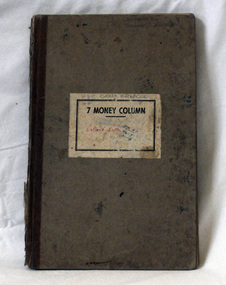
... Target shooting is one of the oldest organised sports in Australia. Records date back to the British Marines at Sydney Cove in 1788. ...The Orbost Rifle Club existed in the early 20th century. (There are records from 1900). It folded in the late 1970's.Target shooting is one of the oldest organised sports in Australia. Records date back to the British Marines at Sydney Cove in 1788. The Victorian Rifle Association (VRA) was formed in 1860. One of the most important adjuncts to the militia system from 1903 to the re-organisation of 1912 was the role played by the Rifle Club movement in Australia. At the time, these clubs were seen as the reservoir of manpower for a potential guerrilla force should any invasion occur. For Australia, the invasion fear was uppermost in the minds of the population. So important were the rifle clubs for the defence of Australia that the Commonwealth provided the training staff, rifles and ammunition so the clubs could function. Members were drilled, wore uniforms and practised all the basic skills of soldiering as well as target shooting. The Orbost Rifle Club was active during this period.A grey covered bookj with a light brown fabric spine. The front has a white sticker label with "Orbost Rifle Club" handwritten in ink. It contains accounts and a trophy list.orbost-rifle-club accounts-book -
 Orbost & District Historical Society
minute book, 10.2.1950 - 11.5.1961
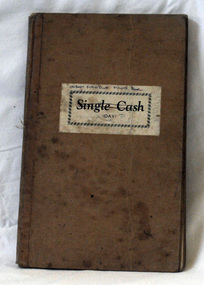
... Healey. arget shooting is one of the oldest organised sports in Australia. Records date back to the British Marines at Sydney Cove in 1788. ...The Orbost Rifle Club existed in the early 20th century. (There are records from 1900). It folded in the late 1970's. The secretaries at the time of this book were D.Towers and ? Healey.arget shooting is one of the oldest organised sports in Australia. Records date back to the British Marines at Sydney Cove in 1788. The Victorian Rifle Association (VRA) was formed in 1860. One of the most important adjuncts to the militia system from 1903 to the re-organisation of 1912 was the role played by the Rifle Club movement in Australia. At the time, these clubs were seen as the reservoir of manpower for a potential guerrilla force should any invasion occur. For Australia, the invasion fear was uppermost in the minds of the population. So important were the rifle clubs for the defence of Australia that the Commonwealth provided the training staff, rifles and ammunition so the clubs could function. Members were drilled, wore uniforms and practised all the basic skills of soldiering as well as target shooting. The Orbost Rifle Club was active during this period.A light brown covered book with a brown fabric binding. There is a white sticker label on the front - "Single Cash" in black print. It contains minutes .orbost-rifle-club minute-book -
 Orbost & District Historical Society
accounts book, 6.7.1968 - 13.10. 1973
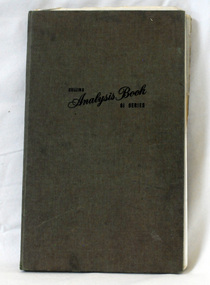
... Target shooting is one of the oldest organised sports in Australia. Records date back to the British Marines at Sydney Cove in 1788. ...The Orbost Rifle Club existed in the early 20th century. (There are records from 1900). It folded in the late 1970's.Target shooting is one of the oldest organised sports in Australia. Records date back to the British Marines at Sydney Cove in 1788. The Victorian Rifle Association (VRA) was formed in 1860. One of the most important adjuncts to the militia system from 1903 to the re-organisation of 1912 was the role played by the Rifle Club movement in Australia. At the time, these clubs were seen as the reservoir of manpower for a potential guerrilla force should any invasion occur. For Australia, the invasion fear was uppermost in the minds of the population. So important were the rifle clubs for the defence of Australia that the Commonwealth provided the training staff, rifles and ammunition so the clubs could function. Members were drilled, wore uniforms and practised all the basic skills of soldiering as well as target shooting. The Orbost Rifle Club was active during this period.A green fabric covered book with "Collins Analysis Book 81 Series" in black print on front cover. Inside the pages are lined in green and blue. It contains accounts and a trophy list at the back. There is a page on a memo to clubs re Stamp Duties Act 1967. orbost-rifle-club acounts-book trophy-list -
 Orbost & District Historical Society
correspondence books, 10.12.1955 - 20.9.1977
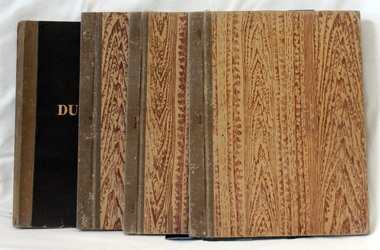
... Target shooting is one of the oldest organised sports in Australia. Records date back to the British Marines at Sydney Cove in 1788. ...These books were used by the Orbost Rifle Club to record correspondence. The Orbost Rifle Club existed in the early 20th century. (There are records from 1900). It folded in the late 1970's.Target shooting is one of the oldest organised sports in Australia. Records date back to the British Marines at Sydney Cove in 1788. The Victorian Rifle Association (VRA) was formed in 1860. One of the most important adjuncts to the militia system from 1903 to the re-organisation of 1912 was the role played by the Rifle Club movement in Australia. At the time, these clubs were seen as the reservoir of manpower for a potential guerrilla force should any invasion occur. For Australia, the invasion fear was uppermost in the minds of the population. So important were the rifle clubs for the defence of Australia that the Commonwealth provided the training staff, rifles and ammunition so the clubs could function. Members were drilled, wore uniforms and practised all the basic skills of soldiering as well as target shooting. The Orbost Rifle Club was active during this period.Four duplicate Correspondence books. All are brown with a brown cloth spine. 1359.1, 1359.2 and 1359.3 have marbled covers and 1359.4 has a dark brown soft cover with "TUDOR DUPLICATE BOOK" in paler print. -
 Orbost & District Historical Society
book, Warne Dollar & Cent Ready Reckoner, 1967
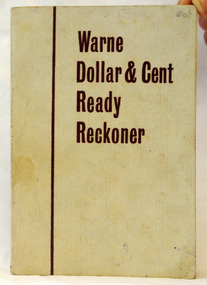
... Target shooting is one of the oldest organised sports in Australia. Records date back to the British Marines at Sydney Cove in 1788. ...This book was used after the introduction of decimal currency in 1966. it was used by the Orbost Rifle Club. The Orbost Rifle Club existed in the early 20th century. (There are records from 1900). It folded in the late 1970's.Target shooting is one of the oldest organised sports in Australia. Records date back to the British Marines at Sydney Cove in 1788. The Victorian Rifle Association (VRA) was formed in 1860. One of the most important adjuncts to the militia system from 1903 to the re-organisation of 1912 was the role played by the Rifle Club movement in Australia. At the time, these clubs were seen as the reservoir of manpower for a potential guerrilla force should any invasion occur. For Australia, the invasion fear was uppermost in the minds of the population. So important were the rifle clubs for the defence of Australia that the Commonwealth provided the training staff, rifles and ammunition so the clubs could function. Members were drilled, wore uniforms and practised all the basic skills of soldiering as well as target shooting. The Orbost Rifle Club was active during this period. This item is an example of accounting practices during the transition to Decimal currency.A small cream coloured book with brown print on front cover - "Warne Dollar & Cent Ready Reckoner".inside cover - Ted Curtis 5 Lind Lane Orbostaccounting orbost-rifle-club ready-reckoner-warne decimal-currency -
 Orbost & District Historical Society
folder of documents, 1960 - 1970
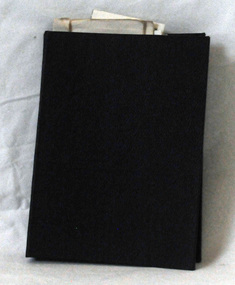
... Target shooting is one of the oldest organised sports in Australia. Records date back to the British Marines at Sydney Cove in 1788. ...The Orbost Rifle Club existed in the early 20th century. (There are records from 1900). It folded in the late 1970's.Target shooting is one of the oldest organised sports in Australia. Records date back to the British Marines at Sydney Cove in 1788. The Victorian Rifle Association (VRA) was formed in 1860. One of the most important adjuncts to the militia system from 1903 to the re-organisation of 1912 was the role played by the Rifle Club movement in Australia. At the time, these clubs were seen as the reservoir of manpower for a potential guerrilla force should any invasion occur. For Australia, the invasion fear was uppermost in the minds of the population. So important were the rifle clubs for the defence of Australia that the Commonwealth provided the training staff, rifles and ammunition so the clubs could function. Members were drilled, wore uniforms and practised all the basic skills of soldiering as well as target shooting. The Orbost Rifle Club was active during this period.A small blue folder with a metal grip. It contains assorted documents concerning the Orbost Rifle Club.orbost-rifel-club documents -
 Orbost & District Historical Society
cash book, 6. 7. 1977 - 3.8.1977
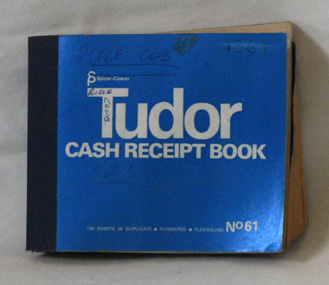
... Target shooting is one of the oldest organised sports in Australia. Records date back to the British Marines at Sydney Cove in 1788. ...The Orbost Rifle Club existed in the early 20th century. (There are records from 1900). It folded in the late 1970's.Target shooting is one of the oldest organised sports in Australia. Records date back to the British Marines at Sydney Cove in 1788. The Victorian Rifle Association (VRA) was formed in 1860. One of the most important adjuncts to the militia system from 1903 to the re-organisation of 1912 was the role played by the Rifle Club movement in Australia. At the time, these clubs were seen as the reservoir of manpower for a potential guerrilla force should any invasion occur. For Australia, the invasion fear was uppermost in the minds of the population. So important were the rifle clubs for the defence of Australia that the Commonwealth provided the training staff, rifles and ammunition so the clubs could function. Members were drilled, wore uniforms and practised all the basic skills of soldiering as well as target shooting. The Orbost Rifle Club was active during this period.A small thick light blue cocered book with whit print on front - "Tudor Cash Receipt Book No. 61". Eleven pages have been used.Inside T of Tudor is written - "Rifle Club".orbost-rifle-club accounts-receipts -
 Orbost & District Historical Society
documents, 1977-1978
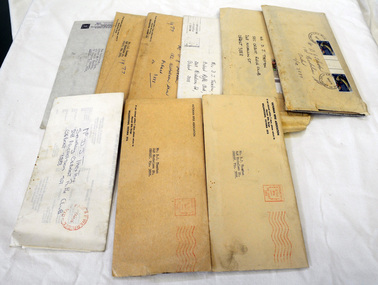
... Target shooting is one of the oldest organised sports in Australia. Records date back to the British Marines at Sydney Cove in 1788. ...The Orbost Rifle Club existed in the early 20th century. (There are records from 1900). It folded in the late 1970's.Target shooting is one of the oldest organised sports in Australia. Records date back to the British Marines at Sydney Cove in 1788. The Victorian Rifle Association (VRA) was formed in 1860. One of the most important adjuncts to the militia system from 1903 to the re-organisation of 1912 was the role played by the Rifle Club movement in Australia. At the time, these clubs were seen as the reservoir of manpower for a potential guerrilla force should any invasion occur. For Australia, the invasion fear was uppermost in the minds of the population. So important were the rifle clubs for the defence of Australia that the Commonwealth provided the training staff, rifles and ammunition so the clubs could function. Members were drilled, wore uniforms and practised all the basic skills of soldiering as well as target shooting. The Orbost Rifle Club was active during this period.Nine envelopes containing correspondence sent to Mr D. Thexton, Secretary of Orbost Rifle Club in 1977-1978. Some are from the Victorian Rifle Association.orbost-rifle-club shooting -
 Orbost & District Historical Society
book, Orbost Rifle Club, Match Record Book, 5th January, 1974 ; 13th May, 1978
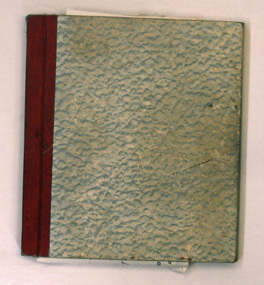
... Target shooting is one of the oldest organised sports in Australia. Records date back to the British Marines at Sydney Cove in 1788. ...Cec, Curtis was a member of the Orbost Rifle Club. He was a cycle trader with a business in Lind Lane, Orbost. The Orbost Rifle Club existed in the early 20th century. (There are records from 1900). It folded in the late 1970's.Target shooting is one of the oldest organised sports in Australia. Records date back to the British Marines at Sydney Cove in 1788. The Victorian Rifle Association (VRA) was formed in 1860. One of the most important adjuncts to the militia system from 1903 to the re-organisation of 1912 was the role played by the Rifle Club movement in Australia. At the time, these clubs were seen as the reservoir of manpower for a potential guerrilla force should any invasion occur. For Australia, the invasion fear was uppermost in the minds of the population. So important were the rifle clubs for the defence of Australia that the Commonwealth provided the training staff, rifles and ammunition so the clubs could function. Members were drilled, wore uniforms and practised all the basic skills of soldiering as well as target shooting. The Orbost Rifle Club was active during this period A light blue covered book with a bright red spine. It contains hand-written records of the shooters who were members of the Orbost Rifle Club. Inside are seven letter heads of CED. CURTIS - 9 LIND ST ORBOST and a newspaper cutting ( date unknown). orbost-rifle-club shooting -
 Orbost & District Historical Society
book, Match Record Book, 13.1.1965 - 12.5. 1973
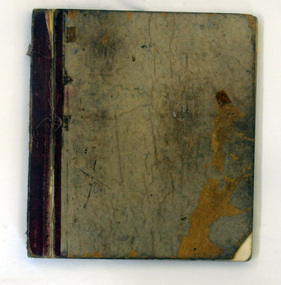
... Target shooting is one of the oldest organised sports in Australia. Records date back to the British Marines at Sydney Cove in 1788. ...The Orbost Rifle Club existed in the early 20th century. (There are records from 1900). It folded in the late 1970's.Target shooting is one of the oldest organised sports in Australia. Records date back to the British Marines at Sydney Cove in 1788. The Victorian Rifle Association (VRA) was formed in 1860. One of the most important adjuncts to the militia system from 1903 to the re-organisation of 1912 was the role played by the Rifle Club movement in Australia. At the time, these clubs were seen as the reservoir of manpower for a potential guerrilla force should any invasion occur. For Australia, the invasion fear was uppermost in the minds of the population. So important were the rifle clubs for the defence of Australia that the Commonwealth provided the training staff, rifles and ammunition so the clubs could function. Members were drilled, wore uniforms and practised all the basic skills of soldiering as well as target shooting. The Orbost Rifle Club was active during this period A grey cardboard covered book with a red spine. It contains hand-written match records of the members of the Orbost Rifle Club.records orbost-rifle-club shooting -
 Orbost & District Historical Society
book, Handicaps, 1968
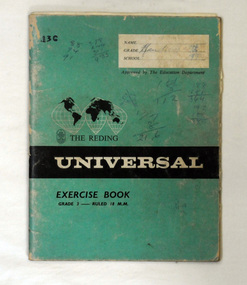
... Target shooting is one of the oldest organised sports in Australia. Records date back to the British Marines at Sydney Cove in 1788. ...The Orbost Rifle Club existed in the early 20th century. (There are records from 1900). It folded in the late 1970's.Target shooting is one of the oldest organised sports in Australia. Records date back to the British Marines at Sydney Cove in 1788. The Victorian Rifle Association (VRA) was formed in 1860. One of the most important adjuncts to the militia system from 1903 to the re-organisation of 1912 was the role played by the Rifle Club movement in Australia. At the time, these clubs were seen as the reservoir of manpower for a potential guerrilla force should any invasion occur. For Australia, the invasion fear was uppermost in the minds of the population. So important were the rifle clubs for the defence of Australia that the Commonwealth provided the training staff, rifles and ammunition so the clubs could function. Members were drilled, wore uniforms and practised all the basic skills of soldiering as well as target shooting. The Orbost Rifle Club was active during this period. A green Universal exercise book which contains hand-written handicap record of the Orbost Rifle Club. On front cover - handwritten - Handicap Recordsorbost-rifle-club shooting records -
 Orbost & District Historical Society
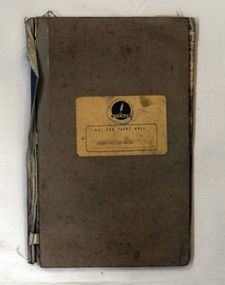
inventory book, 1950-1970
... Target shooting is one of the oldest organised sports in Australia. Records date back to the British Marines at Sydney Cove in 1788. ...The Orbost Rifle Club existed in the early 20th century. (There are records from 1900). It folded in the late 1970's.Target shooting is one of the oldest organised sports in Australia. Records date back to the British Marines at Sydney Cove in 1788. The Victorian Rifle Association (VRA) was formed in 1860. One of the most important adjuncts to the militia system from 1903 to the re-organisation of 1912 was the role played by the Rifle Club movement in Australia. At the time, these clubs were seen as the reservoir of manpower for a potential guerrilla force should any invasion occur. For Australia, the invasion fear was uppermost in the minds of the population. So important were the rifle clubs for the defence of Australia that the Commonwealth provided the training staff, rifles and ammunition so the clubs could function. Members were drilled, wore uniforms and practised all the basic skills of soldiering as well as target shooting. The Orbost Rifle Club was active during this period. A plain grey covered indexed book with a light blue cloth spine. It has a yellow label on the front cover. It appears to be a record of individual results for the Orbost Rifle Club.On label - printed - ORBOST RIFLE CLUB 211orbost-rifle-club shooting records -
 Orbost & District Historical Society
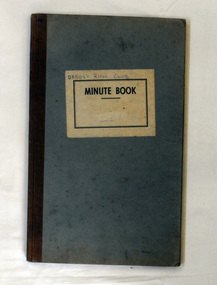
minute book, 8.6.1961 - 15.2.1978
... Target shooting is one of the oldest organised sports in Australia. Records date back to the British Marines at Sydney Cove in 1788. ...The Orbost Rifle Club existed in the early 20th century. (There are records from 1900). It folded in the late 1970's.Target shooting is one of the oldest organised sports in Australia. Records date back to the British Marines at Sydney Cove in 1788. The Victorian Rifle Association (VRA) was formed in 1860. One of the most important adjuncts to the militia system from 1903 to the re-organisation of 1912 was the role played by the Rifle Club movement in Australia. At the time, these clubs were seen as the reservoir of manpower for a potential guerrilla force should any invasion occur. For Australia, the invasion fear was uppermost in the minds of the population. So important were the rifle clubs for the defence of Australia that the Commonwealth provided the training staff, rifles and ammunition so the clubs could function. Members were drilled, wore uniforms and practised all the basic skills of soldiering as well as target shooting. The Orbost Rifle Club was active during this period. A plain light blue minute book with a cloth brown spine. It has a white label on the front cover.On label- Orbost Rifle Clubminutes orbost-rifle-club shooting -
 Bendigo Military Museum
Photograph - Bones Day – Army Survey Regiment Verses RAAF School of Radio at Bendigo, Victoria, 1984
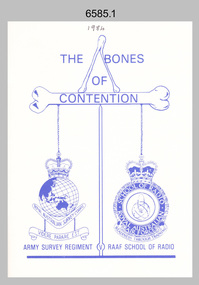
... These 41 photographs were taken at Bones Day, an annual sports competition between the Army Survey Regiment and the RAAF School of Radio, at Bendigo on the 14th of November 1984. The two units took turns each year to host the event. The day competition usually comprised basketball, cricket, cross country, golf, pistol shooting...These 41 photographs were taken at Bones Day, an annual sports competition between the Army Survey Regiment and the RAAF School of Radio, at Bendigo on the 14th of November 1984. The two units took turns each year to host the event. The day competition usually comprised basketball, cricket, cross country, golf, pistol shooting ...These 41 photographs were taken at Bones Day, an annual sports competition between the Army Survey Regiment and the RAAF School of Radio, at Bendigo on the 14th of November 1984. The two units took turns each year to host the event. The day competition usually comprised basketball, cricket, cross country, golf, pistol shooting, sailing, squash, rifle shooting, softball, tennis, touch football, tug-of-war and volleyball. The “big bone” trophy comprising a large bone from a beast housed inside a wooden framed glass case, was awarded to the winner of the day competition. The “O.H.A.R.A Rock” seen on the table in photo 6585.10P was awarded to the shooter with the lowest score in rifle shooting. The evening competition often included darts, carpet bowls, hookey, quoits and billiards/snooker. The “little bone” (a mounted chicken bone) was the consolation trophy awarded to the winner of the evening competition. The 3-hour bus trip for the visiting unit on their return was typically very raucous. The history of the Bones Day competition is best described in the booklet titled - Bones of Contention Souvenir Program. 1965. Refer to Item 6267. Photo 6585.41P is also published with Item 6276.5P.This item comprises the cover of a program booklet and a set of 40 photographs from Bones Day, an annual sports competition between the Army Survey Regiment and the RAAF School of Radio, held at Bendigo on the 14th of November 1984. The photographs were printed on photographic paper and are part of the Army Survey Regiment’s Collection. The colour A4 booklet cover and black and white photographs were scanned at 300 dpi. .1) – A5 size program booklet titled ‘The Bones of Contention’, buff card cover, graphics and internal text printed in purple. 32 pages dated 1984. .2) to .4) - Photo, black & white, 1984. Basketball. Army in darker tops, RAAF in white. .5) - Photo, black & white, 1984. Basketball. Unidentified participants from RAAF. .6) - Photo, black & white, 1984. Rifle Shooting. L to R: CPL Graham Johnston, unidentified. .7) & .8) - Photo, black & white, 1984. Rifle Shooting. Unidentified participants. .9) - Photo, black & white, 1984. Rifle Shooting. Unidentified officials at Range Control. .10) - Photo, black & white, 1984. Rifle Shooting. Unidentified participants from RAAF. The “O.H.A.R.A Rock” awarded to the shooter with the lowest score in rifle shooting is seen on the table. .11) - Photo, black & white, 1984. Pistol Shooting. Army CO LTCOL Jorge Gruszka. .12) - Photo, black & white, 1984. Pistol Shooting. L to R: Army CO LTCOL Jorge Gruszka, CPL Doug Home. .13) - Photo, black & white, 1984. Pistol Shooting. Army CO LTCOL Jorge Gruszka. .14) - Photo, black & white, 1984. Pistol Shooting. RAAF’s participants L to R: unidentified, CO WGCDR McCarthy, remainder unidentified. .15) - Photo, black & white, 1984. Pistol Shooting. ARMY’s participants L to R: CPL Doug Home, SSGT Davidson, SPR Andy Godden, CO LTCOL Jorge Gruszka. .16) & .17) - Photo, black & white, 1984. Pistol Shooting. ARMY and RAAF participants Back row L to R: CPL Doug Home, SSGT Davidson, unidentified RAAF participants (x2). Front row L to R: SPR Andy Godden, RAAF CO WGCDR McCarthy, Army CO LTCOL Jorge Gruszka. .18) to .25) - Photo, black & white, 1984. Softball. Unidentified ARMY & RAAF participants. .26) - Photo, black & white, 1984. Tennis. L to R: ARMY’s CPL John ‘Stormy’ Tempest, SPR Steve Coulson. .27) - Photo, black & white, 1984. Tennis. Unidentified participant. .28) - Photo, black & white, 1984. Tennis. CPL Ginny (Turner) Rowe, unidentified in background. .29) to .31) - Photo, black & white, 1984. Tennis. Unidentified participants. .32) - Photo, black & white, 1984. Tug-of-War. Army team lines up L to R: SPR Kerron South, CPL Leon Jackson, SPR Brett McAllister, CPL Jamie ‘Fish’ McRae, unidentified, CPL Roger Graf, CPL Peter Lefel. .33) - Photo, black & white, 1984. Tug-of-War. Army team pulling hard L to R: unidentified, CPL Jamie ‘Fish’ McRae, SPR Brett McAllister, CPL Leon Jackson, SPR Kerron South. .34) - Photo, black & white, 1984. Tug-of-War. Army and RAAF spectators. Centre foreground L to R: MAJ Bob Roche, Army CO LTCOL Jorge Gruszka, RAAF CO WGCDR McCarthy. .35) - Photo, black & white, 1984. Tug-of-War. RAAF team taking the strain on the rope. Unidentified participants. .36) - Photo, black & white, 1984. Tug-of-War. Army and RAAF teams shake hands after Army’s victory. .37) - Photo, black & white, 1984. Volleyball. Army’s team (light shirts) prepare to receive RAAF’s serve. L to R: CPL Rod Skidmore, CPL Ian Nichols, CPL Dan Cirsky, CPL Terry ‘TJ’ Wicker. .38) - Photo, black & white, 1984. Volleyball. Army’s CPL Rod Skidmore (light shirt) attempts to block a RAAF spike. Unidentified RAAF participants at left. Army team L to R: CPL Terry ‘TJ’ Wicker CPL Robin Marshall, CPL Dan Cirsky. .39) - Photo, black & white, Trophy presentation. L to R: RAAF CO WGCDR McCarthy presents ‘the Big Bone’ to Army’s CO LTCOL Jorge Gruszka. .40) - Photo, black & white, Trophy presentation. L to R: RAAF CO WGCDR McCarthy presents ‘the Little Bone’ to Army’s CO LTCOL Jorge Gruszka. .41) - Photo, black & white, Trophy presentation. L to R: RAAF CO WGCDR McCarthy presents an unidentified trophy to Army’s CO LTCOL Jorge Gruszka..1 - 'The Bones of Contention' title on booklet cover. '1984' hand written on top of cover Photos .2P to .41P – 'Bones Day 1984' annotated on cover sleeve.royal australian survey corps, rasvy, army survey regiment, army svy regt, fortuna, bones day -
 Bendigo Military Museum
Photograph - Bones Day – Army Survey Regiment Verses RAAF School of Radio at Laverton, Victoria, 1985
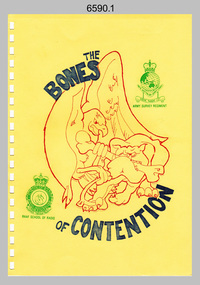
... The 10 photographs were taken at Bones Day, an annual sports competition between the Army Survey Regiment and the RAAF School of Radio, at Laverton on the 13th of November 1985. The two units took turns each year to host the event. The day competition usually comprised basketball, cricket, cross country, golf, sailing, pistol shooting, squash, rifle shooting, softball, tennis, touch football, tug-of-war and volleyball. ...The 10 photographs were taken at Bones Day, an annual sports competition between the Army Survey Regiment and the RAAF School of Radio, at Laverton on the 13th of November 1985. The two units took turns each year to host the event. The day competition usually comprised basketball, cricket, cross country, golf, sailing, pistol shooting, squash, rifle shooting, softball, tennis, touch football, tug-of-war and volleyball. ...The 10 photographs were taken at Bones Day, an annual sports competition between the Army Survey Regiment and the RAAF School of Radio, at Laverton on the 13th of November 1985. The two units took turns each year to host the event. The day competition usually comprised basketball, cricket, cross country, golf, sailing, pistol shooting, squash, rifle shooting, softball, tennis, touch football, tug-of-war and volleyball. The “big bone” trophy comprising a large bone from a beast housed inside a wooden framed glass case, was awarded to the winner of the day competition. The “O.H.A.R.A Rock” was awarded to the shooter with the lowest score in rifle shooting. The evening competition often included darts, carpet bowls, hookey, quoits and billiards/snooker. The “little bone” (a mounted chicken bone) was the consolation trophy awarded to the winner of the evening competition. The 3-hour bus trip for the visiting unit on their return was typically very raucous. The history of the Bones Day competition is best described in the booklet titled - Bones of Contention Souvenir Program. 1965. Refer to Item 6267. This item comprises the cover of a program booklet and a set of 10 photographs taken at Bones Day, an annual sports competition between the Army Survey Regiment and the RAAF School of Radio, held at Laverton on the 13th of November 1985. The photographs were printed on photographic paper and are part of the Army Survey Regiment’s Collection. The colour A4 booklet cover and black and white photographs were scanned at 300 dpi. .1) – A4 size program booklet titled ‘The Bones of Contention’, buff card cover and colour graphics, internal text and cartoon graphics printed in purple. 32 pages dated 1985. .2) - Photo, black & white, 1985. Basketball teams. Back row L to R: unidentified (x2), Bob Croxton, unidentified, Danny Galbraith, unidentified, Steve Burke. Middle row L to R: Rob Jones, unidentified (x2), Sherri (Dally) Burke, unidentified, Evan Allanson, unidentified. Front row L to R: unidentified (x4), Brenton McDonald, unidentified, Max Shaw. .3) - Photo, black & white, 1985. Cricket teams. Back row L to R: unidentified, Bill Griggs, unidentified, Mick Hogan, unidentified, Jim Ash, Dave Wright, Bob Thrower. Middle row L to R: PTE Hudson, unidentified, Brett McAllister, unidentified (x5). Front row L to R: PTE Wigg, unidentified, Brian Partridge, unidentified, Graham Hales, unidentified (x3). .4) - Photo, black & white, 1985. Cross Country teams. Back row L to R: unidentified (x3), Peter Barrett unidentified (x2), Paul Davis, unidentified. Front row L to R: unidentified, Jeff Rudd, unidentified, Greg Rowe, unidentified (x2), Steve Winner, unidentified. .5) - Photo, black & white, 1985. Golf teams. Back row L to R: unidentified (x2), Brian Johnson, unidentified (x2). Front row L to R: Doug Arman, unidentified, Graeme Dowd, unidentified, Peter Imeson, unidentified (x2). .6) - Photo, black & white, 1985. Pistol Shooting teams. Back row L to R: unidentified, Doug Home, unidentified, Tony Clark, Ben Lucas. Front row L to R: unidentified (x2), Daryl Hockings CSM, unidentified, Max Colletti. .7) - Photo, black & white, 1985. Pistol Shooting teams. Back row L to R: unidentified, Greg Sulman, unidentified, Bob Bright, Tom Bloxham, Bob Hopper, unidentified (x2). Front row L to R: unidentified (x2), Dan Cirsky, unidentified (x3), Brad Peppler, unidentified. .8) - Photo, black & white, 1985. Softball teams. Back row L to R: Scheryl Delforce, unidentified, Le-Anne (Smallshaw) Shirley, unidentified, Raelene (Munting) Brodie, Carmel (Butler) Fauth, Gill Park. Middle row L to R: unidentified (x2), Viv (Hawkins) Doherty, unidentified, Avril (Bray) Lloyd, unidentified (x6). Front row L to R: Wendy (Leitinger) McCarthy, unidentified, Leah (Hoffman) Peppler, unidentified, Lorraine (Daly) Talbot-Smith, unidentified, Chris Gordon, unidentified. .9) - Photo, black & white, 1985. Tennis teams. Back row L to R: Damien Killeen, unidentified, Ozzie Slade, unidentified, Dennis Learmonth, unidentified. Middle row L to R: Carol Dunstan, unidentified, Ginny (Turner) Rowe, unidentified (x2), Steve Coulson. Front row L to R: unidentified (x4), Col McInness, Peter Ball. .10) - Photo, black & white, 1985. Touch Football teams. Back row L to R: unidentified, Paul Baker, Jeff Willey, Per Andersen, unidentified (x4). Middle row L to R: John ’Junior’ Whaling, Simon ‘Andy’ Capp, Daryl South, Ken Talbot-Smith, unidentified (x4). Front row L to R: Frank Downie, Peter ‘Spoon’ Lefel, Roy Hicks, Greg Oaten CSC, unidentified (x4). .11) - Photo, black & white, 1985. Tug-of-War teams. Back row L to R: unidentified (x2), Steve Burke, unidentified (x3). Middle row L to R: unidentified (x2), JB Zahra, unidentified, Mal Paterson, Geunther Ebenwaldner, unidentified, Peter ‘Spoon’ Lefel. Front row L to R: Kerron South, unidentified, Barry Hogan, unidentified (x2), Brett McAllister. .1 - 'The Bones of Contention' title on booklet cover. Photos .2P to .11P – 'Bones Day 1985' annotated on cover sleeve.royal australian survey corps, rasvy, army survey regiment, army svy regt, fortuna, bones day -
 Bendigo Military Museum
Photograph - Bones Day – Army Survey Regiment Verses RAAF School of Radio at Laverton, Victoria, c1961
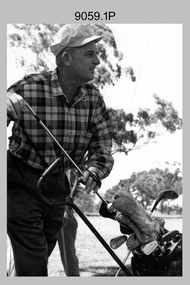
... sports competition between the Army Headquarter (AHQ) Survey Regiment and the RAAF School of Radio at Laverton circa 1961. The two units took turns each year to host the event. The day competition usually comprised basketball, cricket, cross country, golf, sailing, squash, softball, tennis, touch football, rifle shooting, tug-of-war and volleyball. ...sports competition between the Army Headquarter (AHQ) Survey Regiment and the RAAF School of Radio at Laverton circa 1961. The two units took turns each year to host the event. The day competition usually comprised basketball, cricket, cross country, golf, sailing, squash, softball, tennis, touch football, rifle shooting, tug-of-war and volleyball. ...These eight photographs were taken at Bones Day, an annual sports competition between the Army Headquarter (AHQ) Survey Regiment and the RAAF School of Radio at Laverton circa 1961. The two units took turns each year to host the event. The day competition usually comprised basketball, cricket, cross country, golf, sailing, squash, softball, tennis, touch football, rifle shooting, tug-of-war and volleyball. The “big bone” trophy comprising a large bone from a beast housed inside a wooden framed glass case, was awarded to the winner of the day competition. The evening competition often included darts, carpet bowls, hookey, quoits and billiards/snooker. The “little bone” (a mounted chicken bone) was the consolation trophy awarded to the winner of the evening competition. The 3-hour bus trip for the visiting unit on their return was typically very raucous. The history of the Bones Day competition is best described in the booklet titled - Bones of Contention Souvenir Program. 1965. Refer to Item 6267.These eight photographs were taken at Bones Day, an annual sports competition between the Army Survey Regiment and the RAAF School of Radio at Laverton circa 1961. The photographs were printed on photographic paper and are part of the Army Survey Regiment’s Collection. The black and white photographs were scanned at 300 dpi. .1) - Photo, black & white, c1961, Golf. MAJ John Nolan. .2) - Photo, black & white, c1961, Cricket. CPL Walter Mooney. .3) - Photo, black & white, c1961, Volleyball – Army v Ballarat. .4) - Photo, black & white, c1961, Squash. Back row L to R: unidentified (x3), Tom Royale. Front row L to R: unidentified, Barbara Minto. .5) - Photo, black & white, c1961, Hockey. All unidentified. .6) - Photo, black & white, c1961, Evening trophy presentations. L to R: unidentified RAAF School of Radio’s CO/or representative, AHQ Survey Regiment CO’s representative MAJ John Nolan. .7) - Photo, black & white, c1961, Evening trophy presentations. L to R: unidentified RAAF School of Radio’s CO/or representative, AHQ Survey Regiment RSM WO1 De Moore, CO’s representative MAJ John Nolan. .8) - Photo, black & white, c1961, Day Competition Trophy – The Big Bone..1P annotated ‘Nolan’ on back of photo .2P annotated ‘Mooney’ on back of photo .3P annotated ‘Volleyball – Army v Ballarat’ on back of photo .4P to .8P not annotated.royal australian survey corps, rasvy, army survey regiment, army svy regt, fortuna, bones day -
 Bendigo Military Museum
Photograph - Bones Day – Army Survey Regiment Verses RAAF School of Radio at Bendigo, Victoria, 1978
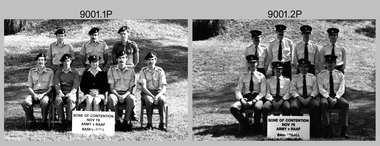
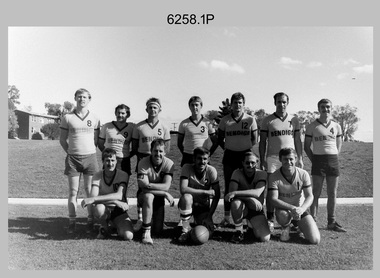
... sports competition between the Army Survey Regiment and the RAAF School of Radio at Bendigo in November 1978. The two units took turns each year to host the event. The day competition usually comprised basketball, cricket, cross country, golf, sailing, squash, softball, tennis, touch football, rifle shooting, tug-of-war and volleyball. ...sports competition between the Army Survey Regiment and the RAAF School of Radio at Bendigo in November 1978. The two units took turns each year to host the event. The day competition usually comprised basketball, cricket, cross country, golf, sailing, squash, softball, tennis, touch football, rifle shooting, tug-of-war and volleyball. ...This set of 31 photographs was taken at Bones Day, an annual sports competition between the Army Survey Regiment and the RAAF School of Radio at Bendigo in November 1978. The two units took turns each year to host the event. The day competition usually comprised basketball, cricket, cross country, golf, sailing, squash, softball, tennis, touch football, rifle shooting, tug-of-war and volleyball. The “big bone” trophy comprising a large bone from a beast housed inside a wooden framed glass case, was awarded to the winner of the day competition. The evening competition often included darts, carpet bowls, hookey, quoits and billiards/snooker. The “little bone” (a mounted chicken bone) was the consolation trophy awarded to the winner of the evening competition. The 3-hour bus trip for the visiting unit on their return was typically very raucous. See item 6275.8P for more photographs taken on this occasion. The history of the Bones Day competition is best described in the booklet titled - Bones of Contention Souvenir Program. 1965. Refer to Item 6267.This set of 31 photographs were taken at Bones Day, an annual sports competition between the Army Survey Regiment (ASR) and the RAAF School of Radio (RSR) at Bendigo in November 1978. The photographs were printed on photographic paper and are part of the Army Survey Regiment’s Collection. The black and white photographs were scanned at 300 dpi. .1) - Photo, black & white, 1978, ASR Basketball Team Back row L to R: Jamie ‘Fish’ McRae, John Thomas, Gary Kerr. Front row L to R: Phil McGuire, Bill Jones, Gill Park, Bruce ‘Stretch’ Gordon, Stuart Symonds. .2) - Photo, black & white, 1978, RSR Basketball Team: All unidentified. .3) - Photo, black & white, 1978, Basketball action: Gill Park in No. 8 top, remainder unidentified. .4) - Photo, black & white, 1978, Basketball action: L to R: unidentified (x4), Gill Park, unidentified, Bruce ‘Stretch’ Gordon, remainder unidentified. .5) - Photo, black & white, 1978, ASR Cricket Team Back row L to R: Alan Toogood, Bob Norwood, Ken ‘Sluggo’ Slater, unidentified, Josh Degroot. Front row L to R: Rick van der Bom, Greg Byers, Peter Hammer, 2LT Trevor Black, Alan Bunn, Mark Casey. .6) - Photo, black & white, 1978, RSR Cricket Team: All unidentified. .7) - Photo, black & white, 1978, ASR Rifle Shooting Team Back row L to R: John Cain, Bob Clark, Ian Belmont, unidentified. Front row L to R: Steve Hansen, Struan Robinson, Max Neil, Warren ‘Waldo’ Shirley. .8) - Photo, black & white, 1978, RSR Rifle Shooting Team: All unidentified. .9) - Photo, black & white, 1978, ASR Squash Team Back row L to R: Errol Fletcher, Rick Downie, Andy Wilson, George Timmins, John Bennett. Front row L to R: Terry Danger, Di Norling, Rob John, Dennis Puniard. .10) - Photo, black & white, 1978, Softball action: L to R: Janet (Chopping) Justin, Lorraine ‘Snoopy’ (Daly) Talbot-Smith. In left background: Janet (Chopping) Justin. .11) - Photo, black & white, 1978, Softball action: L to R: Le-anne (Smallshaw) Shirley, Lynn Johnson. .12) - Photo, black & white, 1978, Softball action: L to R: Lorraine ‘Snoopy’ (Daly) Talbot-Smith, John Ashby, unidentified. .13) - Photo, black & white, 1978, RSR Tennis Team: All unidentified. .14) - Photo, black & white, 1978, ASR Volleyball Team Back row L to R: Kerry ‘Gags’ Gallager, Gerry Gates, Bob Clisby, unidentified, Cornelius Moorrees, Laurie Justin. Front row L to R: Chris Edwards, Bob Bright, Keith Quinton, Mick ‘Buddha’ Ellis, George Holland, unidentified. .15) - Photo, black & white, 1978, RSR Volleyball Team: All unidentified. .16) - Photo, black & white, 1978, Volleyball action L to R: Keith Quinton, unidentified, Chris Edwards, remainder unidentified. .17) - Photo, black & white, 1978, Volleyball action L to R: unidentified, Keith Quinton in No. 4 top, unidentified, unidentified. .18) - Photo, black & white, 1978, ASR Tug-of-War Team Back row L to R: Russ Mollenhaur, Brian Collings, Noel ‘Macca’ McNamara, Ken ‘Sluggo’ Slater, Mick Davey, Russell ‘Rusty’ Williams, unidentified. Front row L to R: Wolfgang Thun, Rhys Delaine, Phil Boyle, unidentified, Ian Nelson, Jamie ‘Fish’ McRae. .19) - Photo, black & white, 1978, RSR Tug-of-War Team: All unidentified. .20) - Photo, black & white, 1978, ASR Tug-of-War Team in action. .21) - Photo, black & white, 1978, RSR Tug-of-War Team in action. .22) & .23) - Photo, black & white, 1978, Tug-of-War Teams at end of contest. .24) - Photo, black & white, 1978, Darts competition: Di Chalmers in action. John Ashby in right background. .25) - Photo, black & white, 1978, Carpet bowls competition: All unidentified. .26) - Photo, black & white, 1978, Ian Whittington EXCH-UK admires the view from the Tavern’s rafters. .27) - Photo, black & white, 1978, social activities L to R: Paul Baker, unidentified. .28) - Photo, black & white, 1978, social activities L to R: Adrian Rynberk, unidentified, unidentified. .29) - Photo, black & white, 1978, Trophy presentation. L to R: RAAF CO presents ‘the Little Bone’ to Army’s CO LTCOL Bob Skitch. In background L to R: unidentified, Ian Whittington EXCH-UK in right background. .30) - Photo, black & white, 1978, Trophy presentation. L to R: RAAF CO presents ‘the Little Bone’ to Army’s CO LTCOL Bob Skitch. In background L to R: John Smith, Ian Whittington EXCH-UK. .31) - Photo, black & white, 1978, Trophy presentation. L to R: RAAF CO presents ‘the Little Bone’ to Army’s CO LTCOL Bob Skitch. In background L to R: unidentified, Ian Whittington EXCH-UK in right background. .1P to.9P – ‘Bones Day 1978’ annotated on cover sleeve.royal australian survey corps, rasvy, army survey regiment, army svy regt, fortuna, bones day -
 Bendigo Military Museum
Photograph - Bones Day - Army Survey Regiment, Bendigo versus RAAF School of Radio, Laverton, 1984, 1985 and 1988
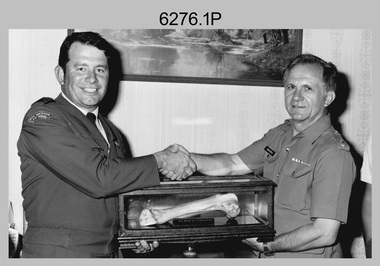
... sports competition between the Army Survey Regiment and the RAAF School of Radio in November 1984, 1985, and 1988. The two units took turns each year to host the event. The day competition usually comprised basketball, cross country, golf, sailing, squash, softball, tennis, touch football, rifle shooting, tug-of-war and volleyball. ...sports competition between the Army Survey Regiment and the RAAF School of Radio in November 1984, 1985, and 1988. The two units took turns each year to host the event. The day competition usually comprised basketball, cross country, golf, sailing, squash, softball, tennis, touch football, rifle shooting, tug-of-war and volleyball. ...These five photographs were taken at Bones Day, an annual sports competition between the Army Survey Regiment and the RAAF School of Radio in November 1984, 1985, and 1988. The two units took turns each year to host the event. The day competition usually comprised basketball, cross country, golf, sailing, squash, softball, tennis, touch football, rifle shooting, tug-of-war and volleyball. The “big bone” trophy comprising a large bone from a beast housed inside a wooden framed glass case, was awarded to the winner of the day competition. The evening competition often included darts, carpet bowls, hookey, quoits and billiards/snooker. The “little bone” (a mounted chicken bone) was the consolation trophy awarded to the winner of the evening competition. The “O.H.A.R.A Rock” seen in photo 6276.2P was awarded to PTE Zahra for the lowest score in rifle shooting. He had to lug it with him for the rest of the evening. The 3-hour bus trip for the visiting unit on their return was typically very raucous. The history of the Bones Day competition is best described in the booklet titled - Bones of Contention Souvenir Program. 1965. Refer to Item 6267. Photo 6276.1P is also published with item 6585.41P.This collection of five photographs was taken at Bones Day, an annual sports competition between the Army Survey Regiment and the RAAF School of Radio, at Bendigo and Laverton respectively in November 1984, 1985, and 1988. The photographs were printed on photographic paper and are part of the Army Survey Regiment’s Collection. The photographs were scanned at 300 dpi. .1) - Photo, black & white, 14th November 1984, RAAF CO WGCDR McCarthy presents ‘the Big Bone’ to Army’s CO LTCOL Jorge Gruszka. .2) - Photo, black & white, 13th November 1985, Trophy presentations L to R: MAJ Daryl Hockings CSM, PTE JB Zahra, unidentified RAAF officer. .3) - Photo, black & white, 13th November 1985, tug-of-war L to R: Peter Lefel, Kerron South, Barry Hogan, DB Zahra, unidentified (x2), Guenther Ebenwaldner, Steve Burke, Mal Paterson. .4) - Photo, colour, 1988, at Bendigo, tug-of-war L to R: Jodi Bowman, unidentified, Frank Savy, Barry Hogan, unidentified (x2), Graeme Spong, unidentified (x2), Mick Duggan, unidentified, Dave Lambton-Young, unidentified (x2). .5) - Photo, colour, 1988, at Bendigo, tug-of-war L to R: Mick Duggan, Dave Lambton-Young, unidentified (x3), Frank Savy (with sign), unidentified, Barry Hogan, unidentified, Graeme Spong, unidentified (x3)..1P to .7P – No personnel are identified. The date is stamped on the back of photos .1P to .3P.royal australian survey corps, rasvy, army survey regiment, army svy regt, fortuna, asr, raaf school of radio, bones day -
 Bendigo Military Museum
Photograph - Bones Day – Army Survey Regiment Verses RAAF School of Radio at Laverton, Victoria, 1967
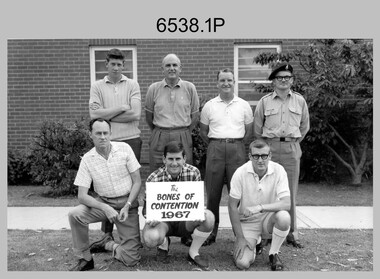
... sports competition between the Army Survey Regiment and the RAAF School of Radio at Laverton in 1967. The two units took turns each year to host the event. The day competition usually comprised basketball, cricket, cross country, golf, sailing, squash, softball, tennis, touch football, rifle shooting, tug-of-war and volleyball. ...sports competition between the Army Survey Regiment and the RAAF School of Radio at Laverton in 1967. The photographs were printed on photographic paper and are part of the Army Survey Regiment’s Collection. The black and white photographs were scanned at 300 dpi. .1) - Photo, black & white, 1967, Golf. ASR Team Back row L to R: Graeme Jeffers, CO LTCOL John Nolan, unidentified, Ace Evans. Front row L to R: unidentified (x2), Stan Vote. .2) - Photo, black & white, 1967, ASR Rifle Shooting...sports competition between the Army Survey Regiment and the RAAF School of Radio at Laverton in 1967. The two units took turns each year to host the event. The day competition usually comprised basketball, cricket, cross country, golf, sailing, squash, softball, tennis, touch football, rifle shooting, tug-of-war and volleyball. ...These seven photographs were taken at Bones Day, an annual sports competition between the Army Survey Regiment and the RAAF School of Radio at Laverton in 1967. The two units took turns each year to host the event. The day competition usually comprised basketball, cricket, cross country, golf, sailing, squash, softball, tennis, touch football, rifle shooting, tug-of-war and volleyball. The “big bone” trophy comprising a large bone from a beast housed inside a wooden framed glass case, was awarded to the winner of the day competition. The evening competition often included darts, carpet bowls, hookey, quoits and billiards/snooker. The “little bone” (a mounted chicken bone) was the consolation trophy awarded to the winner of the evening competition. The 3-hour bus trip for the visiting unit on their return was typically very raucous. The history of the Bones Day competition is best described in the booklet titled - Bones of Contention Souvenir Program. 1965. Refer to Item 6267.These seven photographs were taken at Bones Day, an annual sports competition between the Army Survey Regiment and the RAAF School of Radio at Laverton in 1967. The photographs were printed on photographic paper and are part of the Army Survey Regiment’s Collection. The black and white photographs were scanned at 300 dpi. .1) - Photo, black & white, 1967, Golf. ASR Team Back row L to R: Graeme Jeffers, CO LTCOL John Nolan, unidentified, Ace Evans. Front row L to R: unidentified (x2), Stan Vote. .2) - Photo, black & white, 1967, ASR Rifle Shooting Team Back row L to R: Ian ‘Lofty’ Turner, Bill Van Mallenstein, Daryl Hockings CSM, Geoff Haynes, unidentified (x2). Front row L to R: Rob Bridge, Con Tsakalos, unidentified UK exchange officer. .3) - Photo, black & white, 1967, ASR Tennis Team L to R: unidentified, Kalen Sargeant, unidentified, Marj Knight. .4) - Photo, black & white, 1967, ASR Squash Team – Back row L to R: unidentified (x2), Bob Williams, Peter Saunders. Front row L to R: L.D. Clayden, Loretta Hall. .5) - Photo, black & white, 1967, ASR Cricket Team: Back row: unidentified, Bruce Whitecross, Wally Herbst, unidentified (x4). Front row: Paddy Strunks, Don Taylor, unidentified (x2), Warren Chadwick. .6) - Photo, black & white, 1967, ASR Basketball Team Back row L to R: Tom Royal, Geoff Wasser, Gordon Lowery. Front row L to R: unidentified, John McCulloch, Ken ‘Sluggo’ Slater. .7) - Photo, black & white, 1967, ASR Tug-of-War Team Back row unidentified (x4), Tom Pattison, Geoff Wasser, Evan Giri. Front row L to R: unidentified, Ken ‘Sluggo’ Slater, unidentified (x3)..1P to .7P –No personnel are identified.royal australian survey corps, rasvy, army survey regiment, army svy regt, fortuna, bones day -
 Bendigo Military Museum
Photograph - Bones Day – Army Survey Regiment Verses RAAF School of Radio at Laverton, Victoria, 1977
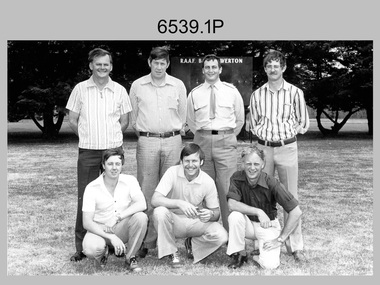
... sports competition between the Army Survey Regiment and the RAAF School of Radio at Laverton on the 10th of November 1977. The two units took turns each year to host the event. The day competition usually comprised basketball, cricket, cross country, golf, sailing, squash, softball, tennis, touch football, rifle shooting, tug-of-war and volleyball. ...sports competition between the Army Survey Regiment and the RAAF School of Radio at Laverton on the 10th of November 1977. The two units took turns each year to host the event. The day competition usually comprised basketball, cricket, cross country, golf, sailing, squash, softball, tennis, touch football, rifle shooting, tug-of-war and volleyball. ...These two photographs were taken at Bones Day, an annual sports competition between the Army Survey Regiment and the RAAF School of Radio at Laverton on the 10th of November 1977. The two units took turns each year to host the event. The day competition usually comprised basketball, cricket, cross country, golf, sailing, squash, softball, tennis, touch football, rifle shooting, tug-of-war and volleyball. The “big bone” trophy comprising a large bone from a beast housed inside a wooden framed glass case, was awarded to the winner of the day competition. The evening competition often included darts, carpet bowls, hookey, quoits and billiards/snooker. The “little bone” (a mounted chicken bone) was the consolation trophy awarded to the winner of the evening competition. The 3-hour bus trip for the visiting unit on their return was typically very raucous. The history of the Bones Day competition is best described in the booklet titled - Bones of Contention Souvenir Program. 1965. Refer to Item 6267.These two photographs were taken at Bones Day, an annual sports competition between the Army Survey Regiment and the RAAF School of Radio at Laverton on the 10th of November 1977. The photographs were printed on photographic paper and are part of the Army Survey Regiment’s Collection. The black and white photographs were scanned at 300 dpi. .1) - Photo, black & white, 1977, ASR Golf Team Back row L to R: Alf Behr, Graeme Jeffers, Lloyd Binion, unidentified. Front row L to R: Ian Marner, Peter Warwick, Roy Morgan. .2) - Photo, black & white, 1977, ASR Squash Team Back row L to R: unidentified (x4), Rob John, Dennis Puniard. Middle row L to R: Kerry Brown, unidentified, Tony Spurling, Errol Fletcher. Front row L to R: Terry Danger, unidentified (x2), Lynn Johnson, unidentified..1P to .2P –No personnel are identified.royal australian survey corps, rasvy, army survey regiment, army svy regt, fortuna -
 Bendigo Military Museum
Photograph - Annual Sport Competition: Flag Day - Army Survey Regiment Verses School of Military Survey, Bendigo, 1977
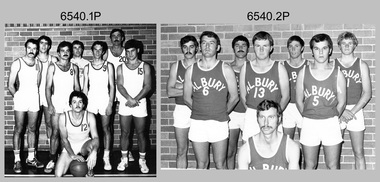
... shooting, touch football, tug-of-war and volleyball. The evening competition often included darts, carpet bowls, hookey, quoits and snooker. See items 6025.15P for photo proofs of sports...shooting, touch football, tug-of-war and volleyball. The evening competition often included darts, carpet bowls, hookey, quoits and snooker. See items 6025.15P for photo proofs of sports ...This set of 33 photographs of sports action was taken on Flag Day, an annual sports competition between the Army Survey Regiment (ASR) and the School of Military Survey (SMS), at Bendigo on the 13th of May 1977. Softball was held at Beischer Park Strathdale, sailing was most likely held at Lake Eppalock, rifle shooting at Wellsford Rifle Range and tug-of-war at Fortuna. The venues for basketball, golf, squash and volleyball are unknown. The two RA Svy units took turns each year to host the event. Personnel from the ASR’s Detachment located at Bonegilla were part of the SMS’s teams. The day competition usually comprised basketball, cross country, golf, sailing, squash softball, tennis, rifle shooting, touch football, tug-of-war and volleyball. The evening competition often included darts, carpet bowls, hookey, quoits and snooker. See items 6025.15P for photo proofs of sports action and 6326.25P for softball action and taken on the day. There are numerous duplicates previously published from these photo proofs; however they are inferior in quality.This is a set of 33 photographs of sports action was taken on Flag Day, Army Survey Regiment (ASR) versus the School of Military Survey (SMS), at Bendigo on the 13th of May 1977. The photographs were printed on photographic paper and are part of the Army Survey Regiment’s Collection. The black and white photographs were scanned at 300 dpi. .1) - Photo, black & white, 1977, Basketball. ASR Team Back row L to R: unidentified, Stuart Symonds, Bruce Gordon. Front row L to R: unidentified (x2), Bill Jones, unidentified. Sitting: unidentified. .2) - Photo, black & white, 1977, Basketball. SMS Team Back row L to R: Duncan Burns, Stuart Thaxter, unidentified (x2). Front row L to R: Owen Moss, unidentified, Steve Hansen. Sitting: unidentified. .3) to .5) - Photo, black & white, 1977. Basketball action. .6) - Photo, black & white, 1977, Golf - L to R: Kevin ‘Chuck’ Berry, George Austen, unidentified, Roy Morgan. .7) - Photo, black & white, 1977, Golf - L to R: Stan Vote, Gordon Lowery, Peter Warwick, John ‘JB’ Barrie. .8) & .9) - Photo, black & white, 1977, ASR Golf Team – Back row L to R: Peter Warwick, unidentified, Graeme Jeffers, John Sinclair. Front row L to R: Stan Vote, Roy Morgan, George Austen, Len Thirlwell. .10) & .11) - Photo, black & white, 1977, SMS Golf Team - Back row L to R: Kevin ‘Chuck’ Berry, unidentified, Gordon Lowery. Front row L to R: unidentified, Peter Hardy, unidentified, John ‘JB’ Barrie. .12) & .13) - Photo, black & white, 1977, Golf. Teeing off – unidentified. .14) - Photo, black & white, 1977, Golf. Teeing off – John Sinclair. .15) - Photo, black & white, 1977, Golf. Putting – Stan Vote. .16) - Photo, black & white, 1977, Golf. Putting - Peter Warwick. .17) - Photo, black & white, 1977, Golf. Putting – Roy Morgan. .18) - Photo, black & white, 1977, ASR Rifle Shooting Team - Back row L to R: Paul Davis, unidentified (x2), Max Neil, Rhys De Laine. Front row L to R: Tony Lawler, Rene van den Tol, unidentified, Warren ‘Waldo’ Shirley. .19) - Photo, black & white, 1977, ASR Rifle Shooting Team – L to R: unidentified (x4), 2nd back right: Tony Lawler, unidentified. .20) - Photo, black & white, 1977, SMS Rifle Shooting Team - Back row L to R: John Ashby, unidentified (x3). Front row L to R: Dave Murphy, Wolfgang Thun, John ‘Stormy’ Tempest, unidentified. .21) - Photo, black & white, 1977, Softball – L to R: Jenny Haddow, Debbie Brown, unidentified umpire. .22) - Photo, black & white, 1977, ASR & SMS Sailing Teams – Back row L to R: Chris Osborne, Josh De Groot, unidentified (x2), Greg Francis-Wright, Peter Breukel. 3rd row L to R: Marrianne (Van De Zee) De Groot, unidentified, Kim Reynolds, Alex Cairney, unidentified, Sam Chambers. 2nd row L to R: Les Dixon, Jim Macdonald, unidentified, George Graham, Ted ‘FOT’ Burgess. Front row L to R: Doug Carswell, Alan Adsett, Peter Mustart, Tony Waldon, Dave Miles. .23) - Photo, black & white, 1977, Sailing on Lake Eppalock, Victoria. .24) - Photo, black & white, 1977, SMS Squash Team – Back row L to R: Graham Squire, Peter Constantine AM, Peter Colwell, Bill Boyd OAM, Front row L to R: unidentified, Dick Barwald, Colin Darch, unidentified. .25) - Photo, black & white, 1977, ASR Squash Team – Back row L to R: Andy Wilson, Terry Danger, Errol Fletcher, Dennis Puniard. Front row L to R: Lynn Johnson, Kerry Browne. .26) - Photo, black & white, 1977, ASR Tug-of-War Team: Back row L to R: Russ Mollenhauer, Neville Stone, Jim Cook, Jeff Willey, unidentified (x3). Front row L to R: unidentified, John ‘Flash’ Anderson, Mick ‘Buddha’ Ellis, Ken ‘Sluggo’ Slater, Rob ‘Boges’ Bogumil, Frank Lenane, unidentified. .27) - Photo, black & white, 1977, SMS Tug-of-War Team: Back row L to R: unidentified, Stuart Thaxter, Steve Hansen, unidentified (x2). Front row L to R: Kim Lenson, unidentified (x4), Jamie ‘Fish’ McRae. .28) & .29) - Photo, black & white, 1977, ASR Tug-of-War Team in action. .30) - Photo, black & white, 1977, Volleyball action. .31) - Photo, black & white, 1977, Volleyball action. Chris Edwards blocking. .32) & .33) - Photo, black & white, 1977, Volleyball action..1P to .33P –No personnel are identified. ‘Regiment v School 13 May 1977’ annotated on cover sleeve.royal australian survey corps, rasvy, army survey regiment, army svy regt, fortuna, asr, school of military survey, flag day -
 Bendigo Military Museum
Photograph - Flag Day – Army Survey Regiment Verses School of Military Survey, Bendigo, 1974
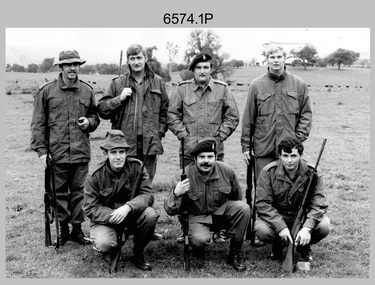
... sports competition between the Army Survey Regiment (ASR) and the School of Military Survey (SMS), at Bonegilla in 1974. The two RA Svy units took turns each year to host the event. Personnel from the ASR’s Detachment located at Bonegilla were part of the SMS’s teams. The day competition usually comprised basketball, cross country, golf, sailing, squash softball, tennis, rifle shooting...sports action was taken on Flag Day, Army Survey Regiment (ASR) versus the School of Military Survey (SMS), at Bonegilla in 1974. The photographs were printed on photographic paper and are part of the Army Survey Regiment’s Collection. The black and white photographs were scanned at 300 dpi. .1) & .2) - Photo, black & white, 1974, ASR Rifle Shooting...sports competition between the Army Survey Regiment (ASR) and the School of Military Survey (SMS), at Bonegilla in 1974. The two RA Svy units took turns each year to host the event. Personnel from the ASR’s Detachment located at Bonegilla were part of the SMS’s teams. The day competition usually comprised basketball, cross country, golf, sailing, squash softball, tennis, rifle shooting ...This set of seven photographs of sports action was taken on Flag Day, an annual sports competition between the Army Survey Regiment (ASR) and the School of Military Survey (SMS), at Bonegilla in 1974. The two RA Svy units took turns each year to host the event. Personnel from the ASR’s Detachment located at Bonegilla were part of the SMS’s teams. The day competition usually comprised basketball, cross country, golf, sailing, squash softball, tennis, rifle shooting, touch football, tug-of-war and volleyball. The evening competition often included darts, carpet bowls, hookey, quoits and snooker. This is a set of seven photographs of sports action was taken on Flag Day, Army Survey Regiment (ASR) versus the School of Military Survey (SMS), at Bonegilla in 1974. The photographs were printed on photographic paper and are part of the Army Survey Regiment’s Collection. The black and white photographs were scanned at 300 dpi. .1) & .2) - Photo, black & white, 1974, ASR Rifle Shooting Team - Back row L to R: Max Neil, Barry Lutwyche OAM, Warren ‘Waldo’ Shirley, unidentified. Front row L to R: Jim McDonald, Warren ‘WAH’ Hall, unidentified. .3) - Photo, black & white, 1974, ASR Golf: L to R: unidentified (x2), Alex Cairney. .4) - Photo, black & white, 1974, unidentified golfer. .5) - Photo, black & white, 1974, ASR Tug-of-War Team: Back row L to R: Ian ‘Rock’ Thistleton, unidentified (x2), Jeff Willey, Bob ‘Stretch’ Hayden, Peter Bion. Front row L to R: unidentified, Jim Cook, Ken ‘Sluggo’ Slater, Tom Pattison. .6) & .7) - Photo, black & white, 1974, ASR Tug-of-War Team in action..1P to .7P –No personnel are identified. ‘Visit to the School of Military Survey, 1974’ annotated on cover sleeve.royal australian survey corps, rasvy, army survey regiment, army svy regt, fortuna, flag day -
 Bendigo Military Museum
Photograph - Bones Day - Army Survey Regiment Versus RAAF School of Radio, 1969
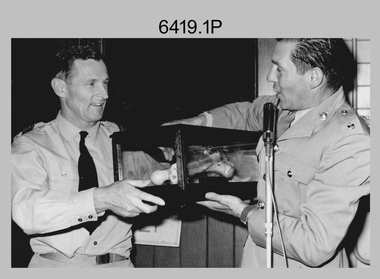
... sports competition between the Army Survey Regiment and the RAAF School of Radio in 1969. The two units took turns each year to host the event and on this occasion was held at the RAAF School of Radio, Laverton. The day competition usually comprised basketball, cross country, golf, sailing, squash, softball, tennis, touch football, rifle shooting, tug-of-war and volleyball. ...sports competition between the Army Survey Regiment and the RAAF School of Radio in 1969. The two units took turns each year to host the event and on this occasion was held at the RAAF School of Radio, Laverton. The day competition usually comprised basketball, cross country, golf, sailing, squash, softball, tennis, touch football, rifle shooting, tug-of-war and volleyball. ...These two photographs were taken at Bones Day, an annual sports competition between the Army Survey Regiment and the RAAF School of Radio in 1969. The two units took turns each year to host the event and on this occasion was held at the RAAF School of Radio, Laverton. The day competition usually comprised basketball, cross country, golf, sailing, squash, softball, tennis, touch football, rifle shooting, tug-of-war and volleyball. The “big bone” trophy comprising a large bone from a beast housed inside a wooden framed glass case, was awarded to the winner of the day competition. The evening competition often included darts, carpet bowls, hookey, quoits and billiards/snooker. The “little bone” (a mounted chicken bone) was the consolation trophy awarded to the winner of the evening competition. The 3-hour bus trip for the visiting unit on their return was typically very raucous. The history of the Bones Day competition is best described in the booklet titled - Bones of Contention Souvenir Program. 1965. Refer to Item 6267. The winner of the two trophies in 1969 is not known. MAJ Donald Ridge was probably on this occasion was the 2IC of the Army Headquarters Survey Regiment, He was subsequently promoted to the rank of LTCOL was the CO of the unit from 1972 to 1973; and continued as the CO of the renamed Army Survey Regiment from 1974 to 1975. He served from 1946 to 1975.These two photographs were taken at Bones Day, an annual sports competition between the Army Survey Regiment the RAAF School of Radio in 1969. The photographs were printed on photographic paper and are part of the Army Survey Regiment’s Collection. They were scanned at 300 dpi. .1) - Photo, black & white, 1969. L to R: Unidentified CO or representative from the RAAF School of Radio, MAJ Don Ridge. .2) - Photo, black & white, 1969. L to R: MAJ Don Ridge, unidentified CO or representative from the RAAF School of Radio..1P to .9P – no annotationsroyal australian survey corps, rasvy, army survey regiment, army svy regt, fortuna, asr, bones day, raaf school of radio -
 Bendigo Military Museum
Photograph - Bones Day - Army Survey Regiment Versus RAAF School of Radio. Fortuna, Bendigo, c1982
... sports competition between the Army Survey Regiment and the RAAF School of Radio at Bendigo c1982. The two units took turns each year to host the event. The day competition usually comprised basketball, cross country, golf, sailing, squash, softball, tennis, touch football, rifle shooting, tug-of-war and volleyball. ...sports competition between the Army Survey Regiment and the RAAF School of Radio at Bendigo c1982. The two units took turns each year to host the event. The day competition usually comprised basketball, cross country, golf, sailing, squash, softball, tennis, touch football, rifle shooting, tug-of-war and volleyball. ...These four photographs were taken at Bones Day, an annual sports competition between the Army Survey Regiment and the RAAF School of Radio at Bendigo c1982. The two units took turns each year to host the event. The day competition usually comprised basketball, cross country, golf, sailing, squash, softball, tennis, touch football, rifle shooting, tug-of-war and volleyball. The two sports featuring in these photos are touch football and tug-of-war. The “big bone” trophy comprising a large bone from a beast housed inside a wooden framed glass case, was awarded to the winner of the day competition. The evening competition often included darts, carpet bowls, hookey, quoits and billiards/snooker. The “little bone” (a mounted chicken bone) was the consolation trophy awarded to the winner of the evening competition. The 3-hour bus trip for the visiting unit on their return was typically very raucous. The history of the Bones Day competition is best described in the booklet titled - Bones of Contention Souvenir Program. 1965. Refer to Item 6267.These four photographs were taken at Bones Day, an annual sports competition between the Army Survey Regiment and the RAAF School of Radio at Bendigo c1982. The photographs are on 35mm negative film. They are part of the Army Survey Regiment’s Collection. The photographic negatives were scanned at 96 dpi. There are additional photos in this set that have not been scanned due to poor quality or low historical value. .1) - Photo, black & white, 1982, Touch Football Team Back Row L to R: Brian Fauth, Bruce Bowers, Bob Mason, Paul Baker, Danny Galbraith, John Hook, Scott Payne. Front Row L to R: Roy Hicks, Peter Imeson, Alan Glanville, John Gilbert, Wally Chilcott. .2) - Photo, black & white, 1982, Tug-of-War Team Back Row L to R: Cliff Webb, Peter Treble, John Lane, Tom Pattison, Andy Wilson, Rick Warren, Rusty Williams, Brian Paul. Front Row L to R: Brian Fauth, Rick Downie, unidentified, Ken Slater, Rhys De Laine, John Smith, unidentified. .3) - Photo, black & white, 1982, Tug-of-War Team L to R: Peter Treble, Brian Paul, Rusty Williams, Rhys De Laine, John Lane, unidentified, John Smith. Army personnel in background standing L to R: Rick van der Bom, Paul Hopes, Ian Nelson, Mick Dempster, John ‘Flash’ Anderson, Geoff Havelberg, John ‘Stormy’ Tempest, Bruce Gordon, Dan Cirsky, Neil Jones, Gerry Gates, Peter Main, Bob Thrower, Barry Miller, Gill Park. Army personnel in background seated L to R: Roger Pearson, Mick Gillham, Penny Knott, Leanne Shirley. .4) - Photo, black & white, 1982, Tug-of-War Team L to R: Rick Warren, Cliff Webb, Andy Wilson, Peter Treble, Brian Paul, Rusty Williams, Rhys De Laine, John Lane. Army personnel in background standing L to R: Rick van der Bom, Ian Nelson, Mick Dempster. .1P to .4P – No personnel are identified.royal australian survey corps, rasvy, army survey regiment, army svy regt, fortuna, raaf school of radio, bones day
