
Showing 33 items matching "sickles"
-
 Mont De Lancey
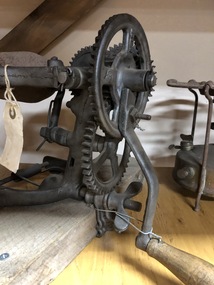
Tool - Sickle Grinder, International Harvester
... Sickles...Cast iron grain sickle with hand-cranked wooden handle, stone grinder head, and 4 wheels, on a wooden base....Tool Sickle Grinder International Harvester ...Cast iron grain sickle with hand-cranked wooden handle, stone grinder head, and 4 wheels, on a wooden base.International Harvestersickles, grinding tools -
 Puffing Billy Railway
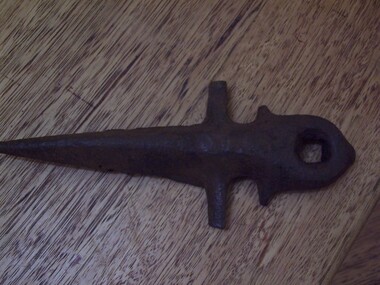
sickle knife Guard bar, for an old horse drawn mower
... Metal sickle knife Guard bar for an old horse drawn mower ...Metal - wrought iron sickle knife Guard bar for an old horse drawn mower ...Metal sickle knife Guard bar for an old horse drawn mower Historic - Farming Equipment - sickle knife Guard bar puffing billy sickle knife guard bar Metal - wrought iron sickle knife Guard bar for an old horse drawn mower for an old horse drawn mower sickle knife Guard bar ...Metal sickle knife Guard bar for an old horse drawn mower Historic - Farming Equipment - sickle knife Guard bar Metal - wrought iron sickle knife Guard bar for an old horse drawn mower puffing billy, sickle knife guard bar -
 Puffing Billy Railway
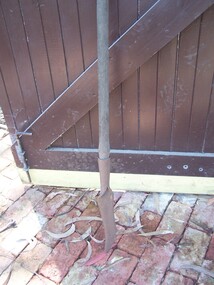
Tool - Sickle, Grass
... Sickle...During early farming in Australia (before motorised whipper snippers) the hand held sickle was used to cut long grass, in this case in or around railway tracks. ...Wrought iron sickle with extended with wooden handle....Grass Tool Sickle ...During early farming in Australia (before motorised whipper snippers) the hand held sickle was used to cut long grass, in this case in or around railway tracks. The inside of the blade's curve was sharp, so that the user can either draw or swing it against the base of the grass, catching the stems in the curve and slicing them at the same time. Historic - Railway Permanent Way and Works - track equipment - Grass SlasherWrought iron sickle with extended with wooden handle.puffing billy, extended sickle, farm tool, reaping hook, curved blade, grass cutting -
 Mont De Lancey
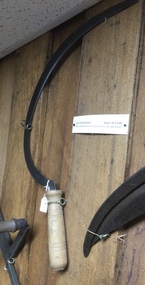
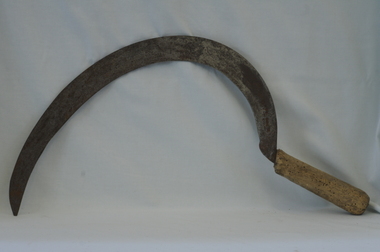
Tool - Hand Sickle, Unknown
... ...Sickles...A curved steel long bladed hand sickle with a turned wooden handle which has a lined pattern on it....Tool Hand Sickle ...A curved steel long bladed hand sickle with a turned wooden handle which has a lined pattern on it.agricultural tools, sickles, tools, agricultural equipment -
 Orbost & District Historical Society
sickle, late 19th -early 20th century
... sickle...A hand sickle is typically used for harvesting grain crops or cutting succulent forage chiefly for feeding livestock (either freshly cut or dried as hay). this one was used for cutting back bracken fern....A wooden handled sickle used for fern cutting. It has a steel curved blade....It has a steel curved blade. sickle ...A hand sickle is typically used for harvesting grain crops or cutting succulent forage chiefly for feeding livestock (either freshly cut or dried as hay). this one was used for cutting back bracken fern.Sickles were not used as often on farms after the mechanisation of harvesting. They were still used for cutting awkward shaped small plots, for opening a path for the tractors and for clearing bracken. This item is an example of a tool used by the early settlers of the Orbost district.A wooden handled sickle used for fern cutting. It has a steel curved blade.Stamped on blade - RY4 MADE IN ENGLANDtool farming-implement sickle -
 City of Ballarat
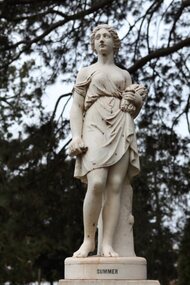
Artwork, other - Public Artwork, Angelo Bertozzi, Summer by Angelo Bertozzi, Circa 1880
... Summer is portrayed with the handle of a sickle and holding a sheaf of grain, symbolising harvest time....White marble figure shown with handle of sickle and holding a sheaf of grain, symbolising harvest time....Summer is portrayed with the handle of a sickle and holding a sheaf of grain, symbolising harvest time. ...Thomas Stoddart, 1828 - 1905, bought 12 white marble statues during a visit to Italy. Stoddart arranged for them to be shipped to Victoria and placed on pedestals of Sicilian marble and on bases of Victorian granite. These statues were unveiled in the gardens on Queen Victoria's birthday, 24th May, 1884. His intention was for the statues to adorn and add interest to the gardens. Summer is portrayed with the handle of a sickle and holding a sheaf of grain, symbolising harvest time.The artwork is of historic and aesthetic significance to the people of BallaratWhite marble figure shown with handle of sickle and holding a sheaf of grain, symbolising harvest time.Summersummer, stoddart -
 Stawell Historical Society Inc
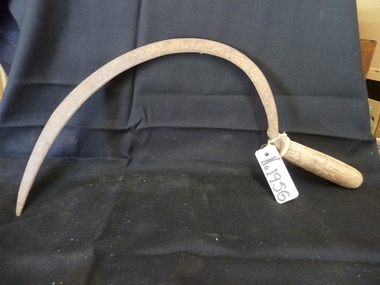
Memorabilia - Realia
... Hand held steel Sickle with wooden handle...Stawell Hand held steel Sickle with wooden handle Memorabilia Realia ...Hand held steel Sickle with wooden handlestawell -
 Parks Victoria - Days Mill and Farm
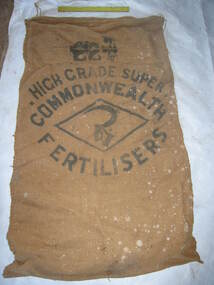
Container - Bags
... On front of one bag with sickle image within a diamond shape." 22 / HIGH GRADE SUPER / COMMONWEALTH / FERTILISERS" On front of other bag with sickle picture."...On front of one bag with sickle image within a diamond shape." 22 / HIGH GRADE SUPER / COMMONWEALTH / FERTILISERS" On front of other bag with sickle picture." ...Used to transport fertilizer but probably had other uses on the farm or at the mill.Two large hessian bags with string and straw inside; with inscription.On front of one bag with sickle image within a diamond shape." 22 / HIGH GRADE SUPER / COMMONWEALTH / FERTILISERS" On front of other bag with sickle picture."FLORIDA / SUPER /SICKLE / BRAND / CUMING. SMITH & Co" -
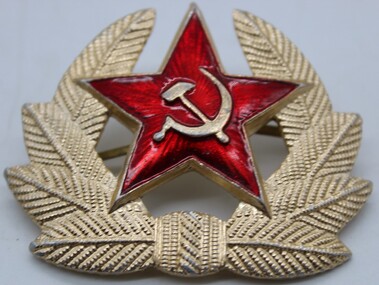 Ringwood RSL Sub-Branch
Badge- Russian, Circa 1980
... Russian cap badge, Hammer and Sickle on Red Star....Russian cap badge, Hammer and Sickle on Red Star. Badge- Russian ...Sold on street corners in East Germany.Russian cap badge, Hammer and Sickle on Red Star. -
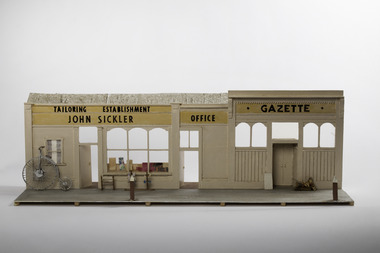 Port Fairy Historical Society Museum and Archives
Mixed media - Model, John Sickler Tailor and Gazette Building, early 1970`s
... Tailoring Establishment John Sickler Gazette Office...By a local resident. model panorama sackville street mewkill almanac bank street Tailoring Establishment John Sickler Gazette Office small hand made model of a shop front from the 1892 almanac John Sickler Tailor and Gazette Building Mixed media Model ...This model was part of a panorama of 11 pieces designed from drawings in an 1892 almanac printed by the Port Fairy Gazette. The panorama was used in the Historical rooms in Bank Street on an extended mantle piece before the museum and Archives were relocated to Gipps Street.This model was made as a part of an eleven piece panorama of the streetscape of Port Fairy in 1892. By a local resident.small hand made model of a shop front from the 1892 almanacTailoring Establishment John Sickler Gazette Officemodel, panorama, sackville street, mewkill, almanac, bank street -
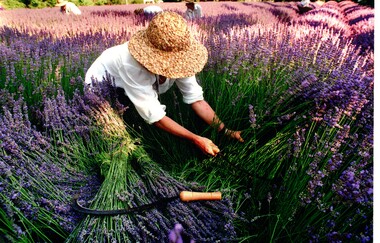 Whitehorse Historical Society Inc.
Photograph - Coloured Photograph, Sickle and Lavender
... Sickle and Lavender...A coloured photograph showing a lady using a sickle to harvest lavender....Tools Farm Implement Lavender A coloured photograph showing a lady using a sickle to harvest lavender. Sickle and Lavender Photograph Coloured Photograph ...A coloured photograph showing a lady using a sickle to harvest lavender.tools, farm implement, lavender -
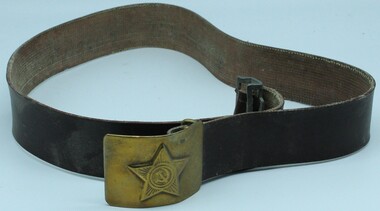 Ringwood RSL Sub-Branch
Memorabilia - Uniform Russian, Circa 1970
... Buckle embossed with STALIN Star; hammer and sickle. Also embossed is a W in a circle....Buckle embossed with STALIN Star; hammer and sickle. Also embossed is a W in a circle. Leather belt with a brass buckle Memorabilia Uniform Russian ...Leather belt with a brass buckleBuckle embossed with STALIN Star; hammer and sickle. Also embossed is a W in a circle. -
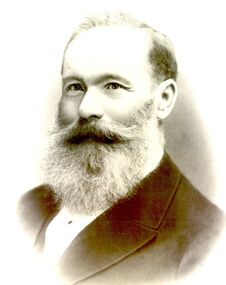 Port Fairy Historical Society Museum and Archives
Photograph, John Sickler
... John Sickler Mayor of Port Fairy 1900...John Sickler Mayor of Port Fairy 1900 John Sickler, town tailor and Mayor of Port Fairy tailor john sickler mayor port fairy none Black and white photograph John Sickler Photograph Photograph ...John Sickler Mayor of Port Fairy 1900John Sickler, town tailor and Mayor of Port FairyBlack and white photographnonetailor, john sickler, mayor, port fairy -
 Unions Ballarat
Anatomy of a Coup - The Sinister Intrigue behind the Dismissal (Don Woodward Collection), Foley, Stephen et al, 1990
... Front cover: Australian flag background; hammer and sickle image; black and white head shots; black and white lettering; author's name and title....Front cover: Australian flag background; hammer and sickle image; black and white head shots; black and white lettering; author's name and title. ...The author analyses the 1975 Whitlam/ALP dismissal focussing upon a theory that the KGB played a role in these events.Political analysis.Book; 262 pages. Front cover: Australian flag background; hammer and sickle image; black and white head shots; black and white lettering; author's name and title.btlc, ballarat trades hall, ballarat trades and labour council, politics and government, whitlam, gough, alp, australian labor party, kerr, sir john, constitution - australia, kgb, komitet gosudarstvennoy bezopasnosti, committee for state security, soviet union, double dissolution election, the dismissal -
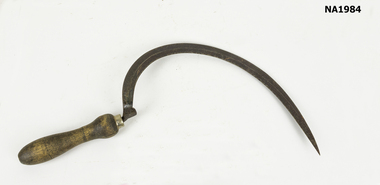 Whitehorse Historical Society Inc.
Tool - Sickle
... Sickle...Type of sickle used by Mr. Slater at his property 'Mitcham Grove' North Blackburn. ...Type of sickle used by Mr. Slater at his property 'Mitcham Grove' North Blackburn. ...Type of sickle used by Mr. Slater at his property 'Mitcham Grove' North Blackburn. A lavender farm.Large curved sharpened steel blade with a wooden handle.Austriarural industry, agriculture -
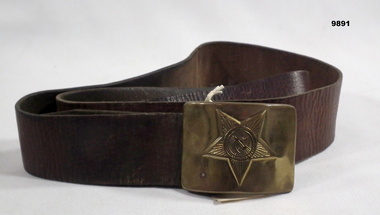 Bendigo Military Museum
Uniform - BELT
... Belt from WW2 Soviet Army soldier with star and sickle on buckle. Part of the collection of William (Bill) THOMASON. ...Belt from WW2 Soviet Army soldier with star and sickle on buckle. Part of the collection of William (Bill) THOMASON. ...Belt from WW2 Soviet Army soldier with star and sickle on buckle. Part of the collection of William (Bill) THOMASON. CAT NO. 4136P.Brown leather belt with square brass buckle with 5 pointed star on buckle representing USSR.soviet uniform, belt -
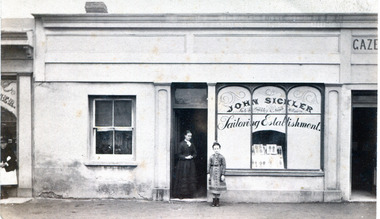 Port Fairy Historical Society Museum and Archives
Photograph
... Tailor's shop next door to the Port Fairy Gazette Office (local newspaper office) in Sackville Street owned by John Sickler and later W. george...Tailor's shop next door to the Port Fairy Gazette Office (local newspaper office) in Sackville Street owned by John Sickler and later W. george tailor shop commercial enterprise shop Store sackville street Black and white photograph of shop front with arched windows on right hand side and a female and a young girl standing in the doorway Photograph Photograph ...Tailor's shop next door to the Port Fairy Gazette Office (local newspaper office) in Sackville Street owned by John Sickler and later W. georgeBlack and white photograph of shop front with arched windows on right hand side and a female and a young girl standing in the doorwaytailor shop, commercial enterprise, shop, store, sackville street -
 Kiewa Valley Historical Society
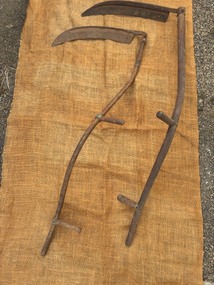
Farming Tools - 2 Scythes, 2 Fern Hooks, 2 Long Handled Sickles, Mattock, Pitch Fork, Pick Axe
... Fern Hook - Used for slashing or reaping plants 3. Long handled sickle - A traditional single handed agricultural tool with a curved metal blade and handle. ...Fern Hooks x2 - Wooden handle with curved steel blade attached at one end 3. Long-handled Sickles x2 - Both have wooden handles one of which is made from a branch of a 'tree' hence the curve. ...Farming Tools - 2 Scythes, 2 Fern Hooks, 2 Long Handled Sickles, Mattock, Pitch Fork, Pick Axe ...1. Scythe - Agricultural hand-tool for mowing grass or harvesting crops.Horse drawn machinery and tractors replaced the scythe. The scythe with the metal rod may have been fitted later, replacing a wooden rod. 2. Fern Hook - Used for slashing or reaping plants 3. Long handled sickle - A traditional single handed agricultural tool with a curved metal blade and handle. Used for harvesting. 4. Mattock - Heavy duty hand tool featuring a long handle and a stout dual-headed metal blade used in many ways eg. digging 5. Pitch Fork - An agricultural tool used to pitch loose material such as hay or leaves. 6. Pick Axe - A tool used to break and pry at the pointed end and the axe end for hoeing, skimming and chopping through roots.Douglas used these tools 70-80 years ago (1950s) mainly on his family's farm at Dandongadale near Buffalo River for harvesting as well as clearing land. Some may have been used on a family property at Whorouly as well and at the Dederang family properties from 1964. At Dederang the family had a tobacco farm and a dairy farm - (now 4 properties). Douglas Petzke had a soldier settlement farm in Dederang. Property was 'Woodside' about 1 km south east of the Dederang store. Douglad had 100 acres on each of the top and bottom sides. The bottom side was the dairy farm and the top side was beside House Creek. The farm totalled more than 200 acres. Douglas left Dederang c 2000 and now (2026) lives at Baranduda.1. Scythes x2 - Long wooden and one is metal curved rod with offset handles and a curved 600 mm long steel blade projecting from one end 2. Fern Hooks x2 - Wooden handle with curved steel blade attached at one end 3. Long-handled Sickles x2 - Both have wooden handles one of which is made from a branch of a 'tree' hence the curve. The blade is curved metal 4. Mattock - A long wooden handle with a dual-headed metal blade 5. Pitch Fork - A long wooden handle with three curved metal prongs attached at one end 6. Pick Axe - A wooden handle with a T-shaped metal attachment fixed perpendicularly to one end. The metal has a pointed end on one side of its head and a broad flat blade on the other side. Fern Hook - "116-319 1250 forge steel" Mattock - "783 4 1/2 (half) lbs" "oomatty". On the other side "LTD" and "AM"farm tools, deans family, douglas petzke, dederang -
 Kiewa Valley Historical Society
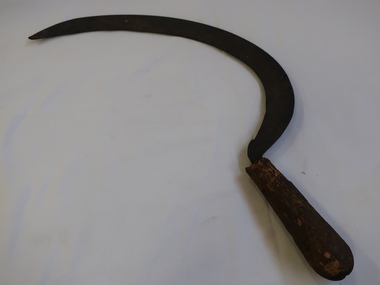
Tool - Sickle
... sickle...The sickle was used to cut crops and grass and vegetable matter. ...The sickle was used to cut crops and grass and vegetable matter. ...The sickle was used to cut crops and grass and vegetable matter. It has been in use for a very long time but has probably been superceded by electric tools in developed countries.This sickle was used by a resident of the Kiewa Valley.A curved steel edged blade fixed to a short wooden handle. It is used for harvesting the crops, grass and cutting other vegetative matters. The previous KVHS committee referred to it as a '"Hand Craft Cutter".sickle, farm tool, garden tool -
 National Wool Museum
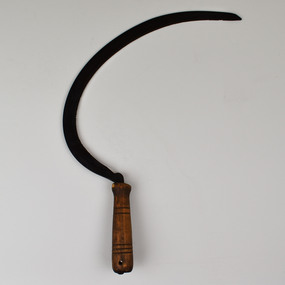
Tool - Sickle, Pre. 1988
... Sickle...This is where the sickle is introduced to sheep farming. Although modern-day machines are used to harvest cereals, in times past the sickle was used for harvesting these crops. ...This is where the sickle is introduced to sheep farming. Although modern-day machines are used to harvest cereals, in times past the sickle was used for harvesting these crops. ...Feed for sheep farming is crucially important. Whether growing a sheep for breeding, wool or meat, it is vital to ensure that all sheep at whatever stage of life are maintaining or growing in weight. Sheep are often pictured grazing in paddocks; however, the grass available in a paddock is often not enough to maintain a sheep’s weight. In addition, if a sheep eats grass too low in a paddock then corrosion can affect the soil preventing any grass from growing in this location. For these reasons, supplementary feed is introduced to sheep’s diets. In most occasions’ food high in protein such as Lupins is sought. In times such as drought or to makeup a sheep’s roughage; feed such as silage, hay and straw may be required in the feeding of sheep. This is where the sickle is introduced to sheep farming. Although modern-day machines are used to harvest cereals, in times past the sickle was used for harvesting these crops. Once harvested, these crops can be fed to sheep freshly cut or dried. This sickle has been on display for 30 years at the National Wool Museum. It was at the entrance to Gallery One in the “A New Europe” wood hut display case. It was taken off display in 2021 with the “On the Land” redevelopment of this gallery space.Curved Metal serrated blade extending from carved dark wooden handletools of the trade, sheep feed, sheep farming -
 Orbost & District Historical Society
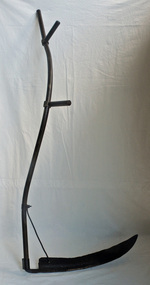
scythe, early -mid 20th century
... Scythes were used with a long sweeping movement which made them much less tiring for labourers to use than reaping hooks or sickles though they still involved great physical labour and considerable skill to perfect. ...Scythes were used with a long sweeping movement which made them much less tiring for labourers to use than reaping hooks or sickles though they still involved great physical labour and considerable skill to perfect. ...Scythes were used with a long sweeping movement which made them much less tiring for labourers to use than reaping hooks or sickles though they still involved great physical labour and considerable skill to perfect. Both hands were in use and the operator did not have to bend his back to reach down to the crop. Scythes were not used as often on farms after the mechanisation of harvesting. They were still used for cutting awkward shaped small plots and for opening a path for the tractors. This item is an example of a tool used by the early settlers of the Orbost district.A curved iron blade with one sharp edge. It is attached to a curved hollow handle with two extensions on one side where the scythe can be held by two hands.scythe agriculture tool -
 Orbost & District Historical Society
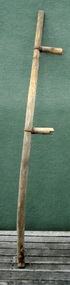
scythe handle, Early 20th century
... Scythes were used with a long sweeping movement which made them much less tiring for labourers to use than reaping hooks or sickles though they still involved great physical labour and considerable skill to perfect. ...Scythes were used with a long sweeping movement which made them much less tiring for labourers to use than reaping hooks or sickles though they still involved great physical labour and considerable skill to perfect. ...Scythes were used with a long sweeping movement which made them much less tiring for labourers to use than reaping hooks or sickles though they still involved great physical labour and considerable skill to perfect. Both hands were in use and the operator did not have to bend his back to reach down to the crop. Scythes were not used as often on farms after the mechanisation of harvesting. They were still used for cutting awkward shaped small plots and for opening a path for the tractors. This item is an example of a tool used by the early settlers of the Orbost district. A curved wooden scythe handle with two nailed grips attached with metal rings. There is no blade. There is a metal hook at the bottom.scythe agricultural tool farming -
 Bendigo Historical Society Inc.
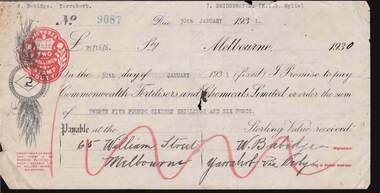
Document - W. BABIDGE COLLECTION: PROMISSORY NOTE
... On the left are two sheaves of grain, a circle with a sickle in the centre and a red printed suty stamp. ...On the left are two sheaves of grain, a circle with a sickle in the centre and a red printed suty stamp. ...Printed promissory note No. 9087 to pay Commonwealth Fertilisers and Chemicals Limited the sum of £25/16/6. Dated 30th January 1931. W. Babidge and 7. Bridgewater. (K.L.G. Wylie) typed at the top of the note. On the left are two sheaves of grain, a circle with a sickle in the centre and a red printed suty stamp. Hand written at the bottom is 65 William Street Melbourne and W. Babidge Yarraberb Via Derby. Both have been crossed out in red.document, w. babidge collection - promissory note, commonwealth fertislers and chemicals limited -
Clunes Museum
Tool - SICKLE
... SICKLE...SICKLE...3 SICKLES WITH CURVED CAST IRON BLADES USED FOR CUTTING CORN. .1 WOODEN HANDLE HAS 5 LINES ETCHED INTO THE WOOD. ...SICKLE CORN CUTTING AGRICULTURE AS ABOVE 3 SICKLES WITH CURVED CAST IRON BLADES USED FOR CUTTING CORN. .1 WOODEN HANDLE HAS 5 LINES ETCHED INTO THE WOOD. ...3 SICKLES WITH CURVED CAST IRON BLADES USED FOR CUTTING CORN. .1 WOODEN HANDLE HAS 5 LINES ETCHED INTO THE WOOD. BLADE IS CURVED WITH "TPC 3 No 86 MADE IN ENGLAND" STAMPED INTO THE METAL. .2 PLAIN WOODEN HANDLE. STAMPED INTO THE BLADE IS "BY 5" AND SOMETHING ILLEGIBLE. .3 PLAIN WOODEN HANDLE WITH SOME GREEN PAINT. STAMPED ONTO THE METAL BLADE IS "TPC 3 No 25 MADE IN ENGLAND" SOME RIDGING ON THE BLADE.AS ABOVEsickle, corn cutting, agriculture -
 Orbost & District Historical Society
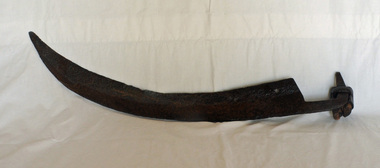
scythe blade, late 19th - early 20th century
... Scythes were used with a long sweeping movement which made them much less tiring for labourers to use than reaping hooks or sickles though they still involved great physical labour and considerable skill to perfect. ...Scythes were used with a long sweeping movement which made them much less tiring for labourers to use than reaping hooks or sickles though they still involved great physical labour and considerable skill to perfect. ...Scythes were used to manually mow wheat or grass. Scythes were used with a long sweeping movement which made them much less tiring for labourers to use than reaping hooks or sickles though they still involved great physical labour and considerable skill to perfect. Both hands were in use and the operator did not have to bend his back to reach down to the crop. On farms scythes were sharpened on a sandstone wheel mounted on an axle with a crank handle on one side. This was hand powered and used with water. Scythes were not used as often on farms after the mechanisation of harvesting. They were still used for cutting awkward shaped small plots and for opening a path for the tractors. This item is an example of a tool used by the early settlers of the Orbost district. An iron scythe blade, curved and tapered. There is no handle and the blade is rusted and pitted."ROSE"scythe tool agriculture rural -
 Bendigo Military Museum
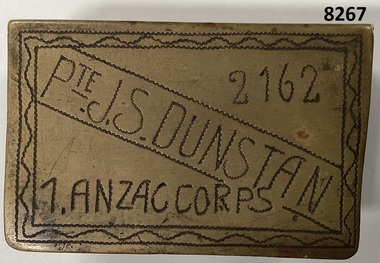
Memorabilia - TRENCH ART, MATCH BOX HOLDER WW1, C 1917
... Re Dunstan No 2162 and the Matchbox holder. John Sickler Dunstan enlisted on 23.7.1915 in the 4th reinforcements 21st Bn, embark for Eygpt 27.9.1915, embark for France 26.3.1916. ...Re Dunstan No 2162 and the Matchbox holder. John Sickler Dunstan enlisted on 23.7.1915 in the 4th reinforcements 21st Bn, embark for Eygpt 27.9.1915, embark for France 26.3.1916. ...Item in the collection of George Wheeler Life Member Bendigo RSL, refer Cat No 8263 for his RSL and Service history. The association between Wheeler and Dunstan is at this point unknown. Re Dunstan No 2162 and the Matchbox holder. John Sickler Dunstan enlisted on 23.7.1915 in the 4th reinforcements 21st Bn, embark for Eygpt 27.9.1915, embark for France 26.3.1916. For a period he acted as escort for General Birdwood from 7.4.1916, transfer to 1st ANZAC HQ, hospital with Gastritis 13.1.1917, attached to 3 Sqd RFC 8.3.1917, rejoin unit 13.5.1917, promoted to Sgt 23.6.1917, detached for duty with 4th Field Survey Coy RE 1.3.1918, rejoin unit 16.3.1918. Married in England 12.7.1919, embark for Australia 12.5.1920, discharged from the AIF 11.8.1920. He was awarded a Croix De Guerre on 14.7.1919. At a point in his records when with 1st ANZAC HQ he was in the Topographical Section. Trench Art, Matchbox Holder, brass engraved on three sides.Side i, " 2162 - Pte. J. S. Dunstan - 1 ANZAC CORPS" Side 2, "Engraved image of the Rising Sun badge". Side 3, Somme 1916/17"smirsl, trench art, brsl, match box, gwheeler -
 Maccabi Victoria
Accessory, 2000
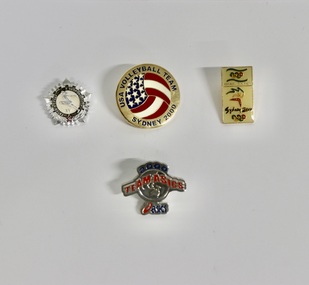
... Assorted countries' pins from 2000 Olympic Games collected by Judy Kohn who was a volunteer at the Games. 01: USA Volleyball Team Sydney 2000 and USA flag on volleyball - red, white, blue on gold 02: Israel & in Hebrew, logo & Sydney 2000 with rings - blue, black, red, yellow, green & gold on cream, on back - 10,000 pcs 03: Sydney 2000, rings & Germany logo - red & black on gold 04: INDIA Sydney Olympics 2000, rings and Indian logo - black, blue, red, yellow, green & orange on white & gold edge 05: CYPRUS, rings & Cyprus logo - blue, black, red, yellow, green & gold on cream 06: CUBA, rings & flag - red, black, white, gold 07: ESPANA (SPAIN) - red, yellow, black & gold rings & Sydney 2000 08: AUSTRIA Olympic Team Sydney 2000 - orange, red, white, black on silver with Austrian airlines plane 09: TEAM ASICS 2000 and Asics logo - red & blue on silver 10: NBC, logo & Olympic rings - yellow, orange, red, purple, blue, green & gold on navy blue enamelled badge 11: Russian - looks like athletics v cheap aluminium badge with red sickle Russian logo & white background with athlete & IV in silver - this is a propaganda pin about GTO organisation (Ready for Labour and Defence of the USSR) - awarded to 220,000,000 people in Russia doing an athletic program during late 1970s 12: LIETUVA (Lithuania) - Sydney 2000 & flag colours & Olympic rings - red, yellow, green, white, gold...These pins are assorted from various countries Olympics 27 Assorted countries' pins from 2000 Olympic Games collected by Judy Kohn who was a volunteer at the Games. 01: USA Volleyball Team Sydney 2000 and USA flag on volleyball - red, white, blue on gold 02: Israel & in Hebrew, logo & Sydney 2000 with rings - blue, black, red, yellow, green & gold on cream, on back - 10,000 pcs 03: Sydney 2000, rings & Germany logo - red & black on gold 04: INDIA Sydney Olympics 2000, rings and Indian logo - black, blue, red, yellow, green & orange on white & gold edge 05: CYPRUS, rings & Cyprus logo - blue, black, red, yellow, green & gold on cream 06: CUBA, rings & flag - red, black, white, gold 07: ESPANA (SPAIN) - red, yellow, black & gold rings & Sydney 2000 08: AUSTRIA Olympic Team Sydney 2000 - orange, red, white, black on silver with Austrian airlines plane 09: TEAM ASICS 2000 and Asics logo - red & blue on silver 10: NBC, logo & Olympic rings - yellow, orange, red, purple, blue, green & gold on navy blue enamelled badge 11: Russian - looks like athletics v cheap aluminium badge with red sickle Russian logo & white background with athlete & IV in silver - this is a propaganda pin about GTO organisation (Ready for Labour and Defence of the USSR) - awarded to 220,000,000 people in Russia doing an athletic program during late 1970s 12: LIETUVA (Lithuania) - Sydney 2000 & flag colours & Olympic rings - red, yellow, green, white, gold Accessory ...These pins are assorted from various countriesAssorted countries' pins from 2000 Olympic Games collected by Judy Kohn who was a volunteer at the Games. 01: USA Volleyball Team Sydney 2000 and USA flag on volleyball - red, white, blue on gold 02: Israel & in Hebrew, logo & Sydney 2000 with rings - blue, black, red, yellow, green & gold on cream, on back - 10,000 pcs 03: Sydney 2000, rings & Germany logo - red & black on gold 04: INDIA Sydney Olympics 2000, rings and Indian logo - black, blue, red, yellow, green & orange on white & gold edge 05: CYPRUS, rings & Cyprus logo - blue, black, red, yellow, green & gold on cream 06: CUBA, rings & flag - red, black, white, gold 07: ESPANA (SPAIN) - red, yellow, black & gold rings & Sydney 2000 08: AUSTRIA Olympic Team Sydney 2000 - orange, red, white, black on silver with Austrian airlines plane 09: TEAM ASICS 2000 and Asics logo - red & blue on silver 10: NBC, logo & Olympic rings - yellow, orange, red, purple, blue, green & gold on navy blue enamelled badge 11: Russian - looks like athletics v cheap aluminium badge with red sickle Russian logo & white background with athlete & IV in silver - this is a propaganda pin about GTO organisation (Ready for Labour and Defence of the USSR) - awarded to 220,000,000 people in Russia doing an athletic program during late 1970s 12: LIETUVA (Lithuania) - Sydney 2000 & flag colours & Olympic rings - red, yellow, green, white, goldolympics 27 -
 National Wool Museum
Textile - Tapestry, Lisa Kendal et al, WARM, 2016
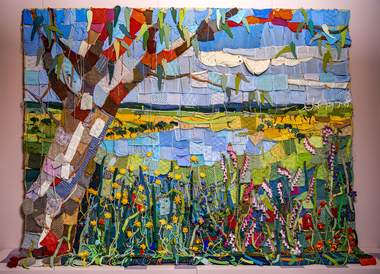
... In the foreground of the coal mine painting is the same gum tree described in the tapestry; however, it is grey and sickle with only 4 leaves visible at the top border, compared to the numerous leaves in the tapestry. ...In the foreground of the coal mine painting is the same gum tree described in the tapestry; however, it is grey and sickle with only 4 leaves visible at the top border, compared to the numerous leaves in the tapestry. ...WARM was a community textile art project that saw over 250 knitters come together to create a beautiful collage tapestry. Made entirely from wool, the artwork contains more than 1000 individual hand knitted sections. The project takes aim at global warming, it highlights both the causes and solutions for us to create a sustainable and safe climate for future generations. Lisa Kendal, the co-creator of the project, said “One of the problems in the world is that we have forgotten how to warm ourselves with wool. We have become too dependent on fossil fuels (for heating)”. This is the key idea surrounding the project. WARM began as two large scale images created by Lars Stenberg. The first image is a landscape scarred by coal mining. The second image is the same landscape only many decades later. Regeneration and regrowth have taken over the landscape and hidden the past coal mine completely. In its place is a beautiful landscape including trees, native flowers, a lake, lots of greenery and wind turbines. From March to the end of August in 2016, knitters worked hard to create the over one thousand pieces that came together to form the final tapestry. The pieces were all designed by Fibre Artist Georgie Nicolson of Tikki Knitting Designs, who converted the second image of the healed landscape into patterns for the 250 plus knitters to follow. These patterns included unusual designs such as gum leaves, trees, native flowers and even the wind turbines. During several days of installation, the knitted pieces were stitched together by Lars Stenberg over a picture of the first image of the operational coal mine. They worked to create the second image of the renewed landscape; like an enormous collage. The WARM project was donated to the National Wool Museum in 2021. It was a much-loved hanging within the Ballarat Hospital for many years before coming to the museum. More information about the project can be found on the following website. http://www.seam.org.au/warm The tapestry is made from 1000+ hand knitted sections stitched together to make an image. In the foreground of this image is a large gum tree that stretches from the bottom left to the top right corner. The trunk of this tree follows the left edge of the tapestry, with foliage from the gum tree spanning its top border. The bottom third of the tapestry is predominantly green grass with yellow, pink and red flowers providing sporadic colour. The middle third encompasses a lake, with orange colours surrounding the banks of the water as opposed to the green grasses of the bottom third. To the right of the lake are wind turbines. The top third of the tapestry is blue sky with white clouds. It also contains the previously described gum tree leaves. Each piece of the tapestry is 100% wool and was hand knitted and stitched together. The Tapestry is accompanied by an oil painting on canvas. It is a painting that matches the tapestry and served as a template for the final tapestry. Finally, the tapestry is accompanied by another pointing on wood board. This final panting is of a coal mine. This is the setting before regeneration and regrowth have reclaimed this site, which is the theme captured in the final tapestry. In the foreground of the coal mine painting is the same gum tree described in the tapestry; however, it is grey and sickle with only 4 leaves visible at the top border, compared to the numerous leaves in the tapestry. Also in the foreground is a broken barb wire fence adding to the unwelcoming nature of the site. The colour scheme of this image is of dark greys and browns. A coal fired power plant can be seen in the final third of the image with four chimneys emitting plumes of smoke into the sky. In front of this power plant is the spiral shape of a coal mine, burrowing deep into the earth’s crust. Inside of the coal mine 3 yellow trucks are seen mining and transporting coal to the top of the mine.warm, community textile tapestry, knitting, community artwork, global warming -
 Sunshine and District Historical Society Incorporated
Archive - City of Sunshine Street Names Origins
... Minutes of Brimbank City Council Ordinary Meeting No 111 on 19 September 2001|Alphabetical Book with Street Names|Letter to City Of Maribyrnong on 24 September 2000 regarding change Burke Street Braybrook|Newspaper article Sunshine Advocate 21 April 1993 Streets to change Hampshire Road partly one way|Newspaper article Messenger 1 February 2000 Signposts pointing to the previous days of our lives|Newspaper article The Age 9 January 2002 Melbourne Street names|Photocopy of Alphabetical book of Sunshine Street names 3020|Handwritten notes about possible origins|Newspaper article Sunshine Advocate 15 December 1939 Council Rejects the Ratepayers request to keep Hampshire Road instead of Main Street|Newspaper article Sunshine Advocate 31 March 1950 Ratepayer complains at Councils neglect|Newspaper article Sunshine Advocate 18 August 1950 Confusion over Street Names Hampshire Crescent and Hampshire Road|Newspaper article Sunshine Advocate 14 November 1952 Letter to the Editor rise in rates|Newspaper Article Sunshine Advocate 10 July 1953 New type of Street Name Corio Street to have concrete slab containing a street name set into the footpath|Newspaper article Sunshine Advocate 26 March 1954 Council items|Newspaper article Sunshine Advocate 17 September 1954 Tottenham requests|Newspaper article Sunshine Advocate 1 October 1954|Newspaper article Sunshine Advocate 7 February 1920 Braybrook Shire Council First session in year lasts until midnight|Newspaper article Sunshine Advocate 18 July 1930 Aussie Draws Dinkum Workers Fire|Newspaper article Sunshine Advocate 12 February 1932 Keilor Council|Newspaper article Sunshine Advocate 23 September 1932 Braybrook Shire Council|Newspaper article Sunshine Advocate 28 July 1933 Braybrook Council Meeting|Newspaper article Sunshine Advocate 26 November 1937 the Novembers of Yesteryear|Newspaper article Sunshine Advocate 14 January 1938 Street Names and numbers|Newspaper article Sunshine Advocate 31 March 1939 Naming of Streets costly procedure|Newspaper article Sunshine Advocate 23 January 1926 Braybrook Shire Council|Newspaper article Sunshine Advocate 28 August 1926 Sunshine Progress Association|Newspaper article Sunshine Advocate 30 October 1926 Saving the Roads|Newspaper article Sunshine Advocate 4 June 1927 Braybrook Council|Newspaper article Sunshine Advocate 25 June 1927 Meeting of Braybrook Shire Council|Newspaper article Sunshine Advocate 16 July 1937 Braybrook Shire Council Fortnightly meeting|Newspaper article Sunshine Advocate 30 July 1927 Braybrook Shire Council|Newspaper article Sunshine Advocate 13 August 1927 Braybrook Shire Council|Newspaper article Sunshine Advocate 10 September 1927 Ordindary Meeting Correspondence|Newspaper article Sunshine Advocate 1 October 1927 Braybrook Council another lengthy meeting|Newspaper article Sunshine Advocate 19 November 1927 Gas and Electric Humour|Newspaper article Sunshine Advocate 3 December 1927 Braybrook Shire Council|Newspaper article Sunshine Advocate 17 December 1927 Braybrook Shire Council|Newspaper article Sunshine Advocate 28 January 1928 Braybrook Shire Council|Newspaper article Sunshine Advocate 5 May 1928 Braybrook Council|Newspaper article Sunshine Advocate 9 June 1928 Keilor Shire Council|Newspaper article Sunshine Advocate 14 March 1952 Duplication of Street Names|Newspaper article Sunshine Advocate 21 March 1952 Street Names to Honor Citizens|Newspaper article Sunshine Advocate 19 September 1952 Confusion on Street names|Newspaper article Sunshine Advocate 3 October 1952 Change of Street Name|Newspaper article Sunshine Advocate 10 October 1952 Keilor Council decisions|Newspaper article Sunshine Advocate 6 February 1953 Duplicated Street Names to be altered|Newspaper article Sunshine Advocate 27 February 1953 Lack of Street Names|Newspaper article Sunshine Advocate 5 June 1953 Duplication of Street Names|Newspaper article Sunshine Advocate 19 June 1953 Honoring the Fee|Newspaper article Sunshine Advocate 30 October 1953 Request for change to Street Name|Newspaper article Sunshine Advocate 5 February 1954 Attention to Street name plates|Newspaper article Sunshine Advocate 7 May 1954 New Street Names|Newspaper article Sunshine Advocate 30 July 1954 Street Name confusion|Newspaper article Sunshine Advocate 17 September 1954 Complaints at Street name plates|Newspaper Article Sunshine Advocate 5 November 1954 Street name changed|Newspaper Article Sunshine Advocate 1 May 1931 Alteration of Street names essential|Newspaper Article Sunshine Advocate 25 August 1933 New Road to be Names St Albans Road|Newspaper Article Sunshine Advocate 29 May 1936 Bars to Progress of Sunshine some Suggestions|Newspaper Article Sunshine Advocate 8 July 1938 Shire of Braybrook Street Name changed|Newspaper Article Sunshine Advocate 12 August 1938 Shire of Braybrook|Newspaper Article Sunshine Advocate 19 August 1938 Shire of Braybrook|Newspaper Article Sunshine Advocate 26 May 1939Some Streets should be renamed|Newspaper Article Sunshine Advocate 10 November 1939 Street Names Suggested|Newspaper Article Sunshine Advocate 24 November 1939 Topics of the week Street Names aleration|Newspaper Article Sunshine Advocate 1 December 1939 Shopkeepers Object to Change of Street Name|Newspaper Article Sunshine Advocate 15 December 1939 Council Rejects the Ratepayers Request|Newspaper Article Sunshine Advocate 2 August 1924 Street Names Sunshine and Native Product|Newspaper Article Sunshine Advocate 16 August 1924 Street names|Newspaper Article Sunshine Advocate 23 August 1924 Sunshine Street names|Newspaper Article Sunshine Advocate 30 August 1924 Rebaptism of Streets|Newspaper Article Sunshine Advocate 26 June 1926 Braybrook Council|Newspaper Article Sunshine Advocate 17 July 1926 Street names farce|Newspaper Article Sunshine Advocate 4 September 1926 Street names|Newspaper Article Sunshine Advocate 25 September 1926 What is in a name|Newspaper Article Sunshine Advocate 11 December 1926 Our Street Names|Newspaper Article Sunshine Advocate 7 May 1927 Street Names|Newspaper Article Sunshine Advocate 7 April 1928 New Street Names for Sunshine|Newspaper Article Sunshine Advocate 6 December 1929 Braybrook Shire Council|Newspaper Article Sunshine Advocate 19 February 1937 Where is Langbien Street|Newspaper Article Sunshine Advocate 30 May 1941 Council Reports Engineers report|Newspaper Article Sunshine Advocate 8 August 1941 Keilor Council Activities|Newspaper Article Sunshine Advocate 24 April 1947 Referred to Officers|Newspaper Article Sunshine Advocate 9 February 1940 Name of Hampshire Road to be Retained|Newspaper Article Sunshine Advocate 10 May 1940 Confusing Street Names|Newspaper Article Sunshine Advocate 19 July 1940 Confusing Street Name|Newspaper Article Sunshine Advocate 18 October 1940 St Albans Street Renamed|Newspaper Article Sunshine Advocate 25 October 1940 Braybrook Council Enigneers report|Newspaper Article Sunshine Advocate 23 November 1941 The Councillors and Street Names|Newspaper Article Sunshine Advocate 23 January 1942 The Kilt beats the Hammer and Sickle|Newspaper Article Sunshine Advocate 23 January 1942 Old Ships Remembered|Newspaper Article Sunshine Advocate 3 August 1945 Braybrook Council|Newspaper Article Sunshine Advocate 3 April 1947 Street Names to Perpetuate Old Residents|Newspaper Article Sunshine Advocate 18 November 1949 Council News Street names Duplicated|Newspaper Article Sunshine Advocate 16 December 1949 New street Names South Road Beachley Hotham Windsor|Newspaper Article Sunshine Advocate 13 December1940 More Fire Alarms needed|Flyer Willaton Street St Albans...City of Sunshine Minutes of Brimbank City Council Ordinary Meeting No 111 on 19 September 2001|Alphabetical Book with Street Names|Letter to City Of Maribyrnong on 24 September 2000 regarding change Burke Street Braybrook|Newspaper article Sunshine Advocate 21 April 1993 Streets to change Hampshire Road partly one way|Newspaper article Messenger 1 February 2000 Signposts pointing to the previous days of our lives|Newspaper article The Age 9 January 2002 Melbourne Street names|Photocopy of Alphabetical book of Sunshine Street names 3020|Handwritten notes about possible origins|Newspaper article Sunshine Advocate 15 December 1939 Council Rejects the Ratepayers request to keep Hampshire Road instead of Main Street|Newspaper article Sunshine Advocate 31 March 1950 Ratepayer complains at Councils neglect|Newspaper article Sunshine Advocate 18 August 1950 Confusion over Street Names Hampshire Crescent and Hampshire Road|Newspaper article Sunshine Advocate 14 November 1952 Letter to the Editor rise in rates|Newspaper Article Sunshine Advocate 10 July 1953 New type of Street Name Corio Street to have concrete slab containing a street name set into the footpath|Newspaper article Sunshine Advocate 26 March 1954 Council items|Newspaper article Sunshine Advocate 17 September 1954 Tottenham requests|Newspaper article Sunshine Advocate 1 October 1954|Newspaper article Sunshine Advocate 7 February 1920 Braybrook Shire Council First session in year lasts until midnight|Newspaper article Sunshine Advocate 18 July 1930 Aussie Draws Dinkum Workers Fire|Newspaper article Sunshine Advocate 12 February 1932 Keilor Council|Newspaper article Sunshine Advocate 23 September 1932 Braybrook Shire Council|Newspaper article Sunshine Advocate 28 July 1933 Braybrook Council Meeting|Newspaper article Sunshine Advocate 26 November 1937 the Novembers of Yesteryear|Newspaper article Sunshine Advocate 14 January 1938 Street Names and numbers|Newspaper article Sunshine Advocate 31 March 1939 Naming of Streets costly procedure|Newspaper article Sunshine Advocate 23 January 1926 Braybrook Shire Council|Newspaper article Sunshine Advocate 28 August 1926 Sunshine Progress Association|Newspaper article Sunshine Advocate 30 October 1926 Saving the Roads|Newspaper article Sunshine Advocate 4 June 1927 Braybrook Council|Newspaper article Sunshine Advocate 25 June 1927 Meeting of Braybrook Shire Council|Newspaper article Sunshine Advocate 16 July 1937 Braybrook Shire Council Fortnightly meeting|Newspaper article Sunshine Advocate 30 July 1927 Braybrook Shire Council|Newspaper article Sunshine Advocate 13 August 1927 Braybrook Shire Council|Newspaper article Sunshine Advocate 10 September 1927 Ordindary Meeting Correspondence|Newspaper article Sunshine Advocate 1 October 1927 Braybrook Council another lengthy meeting|Newspaper article Sunshine Advocate 19 November 1927 Gas and Electric Humour|Newspaper article Sunshine Advocate 3 December 1927 Braybrook Shire Council|Newspaper article Sunshine Advocate 17 December 1927 Braybrook Shire Council|Newspaper article Sunshine Advocate 28 January 1928 Braybrook Shire Council|Newspaper article Sunshine Advocate 5 May 1928 Braybrook Council|Newspaper article Sunshine Advocate 9 June 1928 Keilor Shire Council|Newspaper article Sunshine Advocate 14 March 1952 Duplication of Street Names|Newspaper article Sunshine Advocate 21 March 1952 Street Names to Honor Citizens|Newspaper article Sunshine Advocate 19 September 1952 Confusion on Street names|Newspaper article Sunshine Advocate 3 October 1952 Change of Street Name|Newspaper article Sunshine Advocate 10 October 1952 Keilor Council decisions|Newspaper article Sunshine Advocate 6 February 1953 Duplicated Street Names to be altered|Newspaper article Sunshine Advocate 27 February 1953 Lack of Street Names|Newspaper article Sunshine Advocate 5 June 1953 Duplication of Street Names|Newspaper article Sunshine Advocate 19 June 1953 Honoring the Fee|Newspaper article Sunshine Advocate 30 October 1953 Request for change to Street Name|Newspaper article Sunshine Advocate 5 February 1954 Attention to Street name plates|Newspaper article Sunshine Advocate 7 May 1954 New Street Names|Newspaper article Sunshine Advocate 30 July 1954 Street Name confusion|Newspaper article Sunshine Advocate 17 September 1954 Complaints at Street name plates|Newspaper Article Sunshine Advocate 5 November 1954 Street name changed|Newspaper Article Sunshine Advocate 1 May 1931 Alteration of Street names essential|Newspaper Article Sunshine Advocate 25 August 1933 New Road to be Names St Albans Road|Newspaper Article Sunshine Advocate 29 May 1936 Bars to Progress of Sunshine some Suggestions|Newspaper Article Sunshine Advocate 8 July 1938 Shire of Braybrook Street Name changed|Newspaper Article Sunshine Advocate 12 August 1938 Shire of Braybrook|Newspaper Article Sunshine Advocate 19 August 1938 Shire of Braybrook|Newspaper Article Sunshine Advocate 26 May 1939Some Streets should be renamed|Newspaper Article Sunshine Advocate 10 November 1939 Street Names Suggested|Newspaper Article Sunshine Advocate 24 November 1939 Topics of the week Street Names aleration|Newspaper Article Sunshine Advocate 1 December 1939 Shopkeepers Object to Change of Street Name|Newspaper Article Sunshine Advocate 15 December 1939 Council Rejects the Ratepayers Request|Newspaper Article Sunshine Advocate 2 August 1924 Street Names Sunshine and Native Product|Newspaper Article Sunshine Advocate 16 August 1924 Street names|Newspaper Article Sunshine Advocate 23 August 1924 Sunshine Street names|Newspaper Article Sunshine Advocate 30 August 1924 Rebaptism of Streets|Newspaper Article Sunshine Advocate 26 June 1926 Braybrook Council|Newspaper Article Sunshine Advocate 17 July 1926 Street names farce|Newspaper Article Sunshine Advocate 4 September 1926 Street names|Newspaper Article Sunshine Advocate 25 September 1926 What is in a name|Newspaper Article Sunshine Advocate 11 December 1926 Our Street Names|Newspaper Article Sunshine Advocate 7 May 1927 Street Names|Newspaper Article Sunshine Advocate 7 April 1928 New Street Names for Sunshine|Newspaper Article Sunshine Advocate 6 December 1929 Braybrook Shire Council|Newspaper Article Sunshine Advocate 19 February 1937 Where is Langbien Street|Newspaper Article Sunshine Advocate 30 May 1941 Council Reports Engineers report|Newspaper Article Sunshine Advocate 8 August 1941 Keilor Council Activities|Newspaper Article Sunshine Advocate 24 April 1947 Referred to Officers|Newspaper Article Sunshine Advocate 9 February 1940 Name of Hampshire Road to be Retained|Newspaper Article Sunshine Advocate 10 May 1940 Confusing Street Names|Newspaper Article Sunshine Advocate 19 July 1940 Confusing Street Name|Newspaper Article Sunshine Advocate 18 October 1940 St Albans Street Renamed|Newspaper Article Sunshine Advocate 25 October 1940 Braybrook Council Enigneers report|Newspaper Article Sunshine Advocate 23 November 1941 The Councillors and Street Names|Newspaper Article Sunshine Advocate 23 January 1942 The Kilt beats the Hammer and Sickle|Newspaper Article Sunshine Advocate 23 January 1942 Old Ships Remembered|Newspaper Article Sunshine Advocate 3 August 1945 Braybrook Council|Newspaper Article Sunshine Advocate 3 April 1947 Street Names to Perpetuate Old Residents|Newspaper Article Sunshine Advocate 18 November 1949 Council News Street names Duplicated|Newspaper Article Sunshine Advocate 16 December 1949 New street Names South Road Beachley Hotham Windsor|Newspaper Article Sunshine Advocate 13 December1940 More Fire Alarms needed|Flyer Willaton Street St Albans List of City Sunshine Street Names Origins and collection of articles on street names Archive City of Sunshine Street Names Origins ...Minutes of Brimbank City Council Ordinary Meeting No 111 on 19 September 2001|Alphabetical Book with Street Names|Letter to City Of Maribyrnong on 24 September 2000 regarding change Burke Street Braybrook|Newspaper article Sunshine Advocate 21 April 1993 Streets to change Hampshire Road partly one way|Newspaper article Messenger 1 February 2000 Signposts pointing to the previous days of our lives|Newspaper article The Age 9 January 2002 Melbourne Street names|Photocopy of Alphabetical book of Sunshine Street names 3020|Handwritten notes about possible origins|Newspaper article Sunshine Advocate 15 December 1939 Council Rejects the Ratepayers request to keep Hampshire Road instead of Main Street|Newspaper article Sunshine Advocate 31 March 1950 Ratepayer complains at Councils neglect|Newspaper article Sunshine Advocate 18 August 1950 Confusion over Street Names Hampshire Crescent and Hampshire Road|Newspaper article Sunshine Advocate 14 November 1952 Letter to the Editor rise in rates|Newspaper Article Sunshine Advocate 10 July 1953 New type of Street Name Corio Street to have concrete slab containing a street name set into the footpath|Newspaper article Sunshine Advocate 26 March 1954 Council items|Newspaper article Sunshine Advocate 17 September 1954 Tottenham requests|Newspaper article Sunshine Advocate 1 October 1954|Newspaper article Sunshine Advocate 7 February 1920 Braybrook Shire Council First session in year lasts until midnight|Newspaper article Sunshine Advocate 18 July 1930 Aussie Draws Dinkum Workers Fire|Newspaper article Sunshine Advocate 12 February 1932 Keilor Council|Newspaper article Sunshine Advocate 23 September 1932 Braybrook Shire Council|Newspaper article Sunshine Advocate 28 July 1933 Braybrook Council Meeting|Newspaper article Sunshine Advocate 26 November 1937 the Novembers of Yesteryear|Newspaper article Sunshine Advocate 14 January 1938 Street Names and numbers|Newspaper article Sunshine Advocate 31 March 1939 Naming of Streets costly procedure|Newspaper article Sunshine Advocate 23 January 1926 Braybrook Shire Council|Newspaper article Sunshine Advocate 28 August 1926 Sunshine Progress Association|Newspaper article Sunshine Advocate 30 October 1926 Saving the Roads|Newspaper article Sunshine Advocate 4 June 1927 Braybrook Council|Newspaper article Sunshine Advocate 25 June 1927 Meeting of Braybrook Shire Council|Newspaper article Sunshine Advocate 16 July 1937 Braybrook Shire Council Fortnightly meeting|Newspaper article Sunshine Advocate 30 July 1927 Braybrook Shire Council|Newspaper article Sunshine Advocate 13 August 1927 Braybrook Shire Council|Newspaper article Sunshine Advocate 10 September 1927 Ordindary Meeting Correspondence|Newspaper article Sunshine Advocate 1 October 1927 Braybrook Council another lengthy meeting|Newspaper article Sunshine Advocate 19 November 1927 Gas and Electric Humour|Newspaper article Sunshine Advocate 3 December 1927 Braybrook Shire Council|Newspaper article Sunshine Advocate 17 December 1927 Braybrook Shire Council|Newspaper article Sunshine Advocate 28 January 1928 Braybrook Shire Council|Newspaper article Sunshine Advocate 5 May 1928 Braybrook Council|Newspaper article Sunshine Advocate 9 June 1928 Keilor Shire Council|Newspaper article Sunshine Advocate 14 March 1952 Duplication of Street Names|Newspaper article Sunshine Advocate 21 March 1952 Street Names to Honor Citizens|Newspaper article Sunshine Advocate 19 September 1952 Confusion on Street names|Newspaper article Sunshine Advocate 3 October 1952 Change of Street Name|Newspaper article Sunshine Advocate 10 October 1952 Keilor Council decisions|Newspaper article Sunshine Advocate 6 February 1953 Duplicated Street Names to be altered|Newspaper article Sunshine Advocate 27 February 1953 Lack of Street Names|Newspaper article Sunshine Advocate 5 June 1953 Duplication of Street Names|Newspaper article Sunshine Advocate 19 June 1953 Honoring the Fee|Newspaper article Sunshine Advocate 30 October 1953 Request for change to Street Name|Newspaper article Sunshine Advocate 5 February 1954 Attention to Street name plates|Newspaper article Sunshine Advocate 7 May 1954 New Street Names|Newspaper article Sunshine Advocate 30 July 1954 Street Name confusion|Newspaper article Sunshine Advocate 17 September 1954 Complaints at Street name plates|Newspaper Article Sunshine Advocate 5 November 1954 Street name changed|Newspaper Article Sunshine Advocate 1 May 1931 Alteration of Street names essential|Newspaper Article Sunshine Advocate 25 August 1933 New Road to be Names St Albans Road|Newspaper Article Sunshine Advocate 29 May 1936 Bars to Progress of Sunshine some Suggestions|Newspaper Article Sunshine Advocate 8 July 1938 Shire of Braybrook Street Name changed|Newspaper Article Sunshine Advocate 12 August 1938 Shire of Braybrook|Newspaper Article Sunshine Advocate 19 August 1938 Shire of Braybrook|Newspaper Article Sunshine Advocate 26 May 1939Some Streets should be renamed|Newspaper Article Sunshine Advocate 10 November 1939 Street Names Suggested|Newspaper Article Sunshine Advocate 24 November 1939 Topics of the week Street Names aleration|Newspaper Article Sunshine Advocate 1 December 1939 Shopkeepers Object to Change of Street Name|Newspaper Article Sunshine Advocate 15 December 1939 Council Rejects the Ratepayers Request|Newspaper Article Sunshine Advocate 2 August 1924 Street Names Sunshine and Native Product|Newspaper Article Sunshine Advocate 16 August 1924 Street names|Newspaper Article Sunshine Advocate 23 August 1924 Sunshine Street names|Newspaper Article Sunshine Advocate 30 August 1924 Rebaptism of Streets|Newspaper Article Sunshine Advocate 26 June 1926 Braybrook Council|Newspaper Article Sunshine Advocate 17 July 1926 Street names farce|Newspaper Article Sunshine Advocate 4 September 1926 Street names|Newspaper Article Sunshine Advocate 25 September 1926 What is in a name|Newspaper Article Sunshine Advocate 11 December 1926 Our Street Names|Newspaper Article Sunshine Advocate 7 May 1927 Street Names|Newspaper Article Sunshine Advocate 7 April 1928 New Street Names for Sunshine|Newspaper Article Sunshine Advocate 6 December 1929 Braybrook Shire Council|Newspaper Article Sunshine Advocate 19 February 1937 Where is Langbien Street|Newspaper Article Sunshine Advocate 30 May 1941 Council Reports Engineers report|Newspaper Article Sunshine Advocate 8 August 1941 Keilor Council Activities|Newspaper Article Sunshine Advocate 24 April 1947 Referred to Officers|Newspaper Article Sunshine Advocate 9 February 1940 Name of Hampshire Road to be Retained|Newspaper Article Sunshine Advocate 10 May 1940 Confusing Street Names|Newspaper Article Sunshine Advocate 19 July 1940 Confusing Street Name|Newspaper Article Sunshine Advocate 18 October 1940 St Albans Street Renamed|Newspaper Article Sunshine Advocate 25 October 1940 Braybrook Council Enigneers report|Newspaper Article Sunshine Advocate 23 November 1941 The Councillors and Street Names|Newspaper Article Sunshine Advocate 23 January 1942 The Kilt beats the Hammer and Sickle|Newspaper Article Sunshine Advocate 23 January 1942 Old Ships Remembered|Newspaper Article Sunshine Advocate 3 August 1945 Braybrook Council|Newspaper Article Sunshine Advocate 3 April 1947 Street Names to Perpetuate Old Residents|Newspaper Article Sunshine Advocate 18 November 1949 Council News Street names Duplicated|Newspaper Article Sunshine Advocate 16 December 1949 New street Names South Road Beachley Hotham Windsor|Newspaper Article Sunshine Advocate 13 December1940 More Fire Alarms needed|Flyer Willaton Street St Albanscity of sunshine -
 Federation University Herbarium
Plant specimen, Alexander Clifford Beauglehole, Pterostylis falcata R.S.Rogers, 3/11/1978
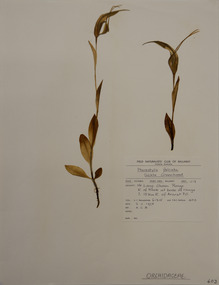
... Beauglehole Herbarium Herbarium specimen Botany Herbarium Plant Science Plant Specimen Field Naturalists' Club Ballarat Federation University Herbarium Pterostylis falcata Sickle Greenhood Orchidaceae A mounted botanical specimen. ...Cliff Beauglehole was an orchardist at Portland, Victoria, who throughout hislife took an intense interest in the plants of Victoria. Over his lifetime he collected 90,000 plant specimens as part of a comprehensive study of Victoria's plants and wrote thirteen books under the heading The Distribution and Conservation of Vascular Plants in Victoria, each written to cover the 13 study areas of the Victorian and Conservation Council.A mounted botanical specimen.beauglehole herbarium, herbarium specimen, botany, herbarium, plant science, plant specimen, field naturalists' club ballarat, federation university herbarium, pterostylis falcata, sickle greenhood, orchidaceae
