
Showing 18 items matching "skyscrapers"
-
 Mission to Seafarers Victoria
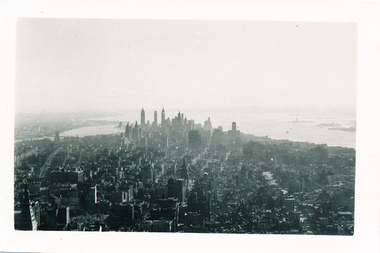
Photograph - Photograph, Black and white, Allan Charles Quinn, Down Town New York, 10 September 1949
... ...skyscrapers...Black and white photograph of Manhattan and Hudson River showing skyscrapers in the background with other buildings and general cityscape in foreground....Black and white photograph of Manhattan and Hudson River showing skyscrapers in the background with other buildings and general cityscape in foreground. ...Allan Charles Quinn was a member of the Merchant Navy from aged 16 as well as being a trained photographer. This photograph was taken during his travels through America whilst still being associated with the Merchant Navy.This photograph captures the New York skyline of 1949 in very clear detail. This photograph is part of a larger collection, know as the Allan Charles Quinn collection, which provides a photographic autobiography of the life of an individual seafarerBlack and white photograph of Manhattan and Hudson River showing skyscrapers in the background with other buildings and general cityscape in foreground.Blue handwritten ink on reverse of photograph "10-9-49".photographs, mission-to-seafarers, seamen, hudson-river, skyscrapers, new-york, allan-charles-quinn, manhattan, skyline, cityscape -
 Robin Boyd Foundation
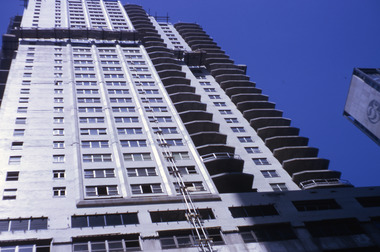
Slide, Robin Boyd, 1967
... Colour slide in a mount. Skyscraper, unknown location...Robin Boyd Foundation 290 Walsh Street South Yarra melbourne slide robin boyd Made in Australia / 1 / JUN 67M6 Colour slide in a mount. Skyscraper, unknown location Slide Robin Boyd ...Colour slide in a mount. Skyscraper, unknown locationMade in Australia / 1 / JUN 67M6slide, robin boyd -
 Robin Boyd Foundation
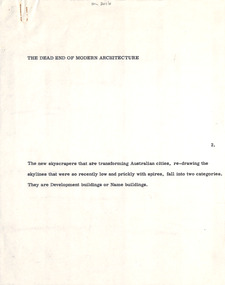
Document - Manuscript, Robin Boyd, The Dead End of Modern Architecture, 1971
... ... skyscrapers...Discusses the new skyscrapers changing our skyline and classifies them into two types - development buildings and name buildings....Robin Boyd Foundation 290 Walsh Street South Yarra melbourne Discusses the new skyscrapers changing our skyline and classifies them into two types - development buildings and name buildings. ...Discusses the new skyscrapers changing our skyline and classifies them into two types - development buildings and name buildings.Original manuscript of the article ‘Big boxes with holes – for high profits or for prestige’ published in The Sunday Australian on 01.08.1971.Typewritten (c copy), quarto, 8 pagesmodern architecture, skyscrapers, development buildings, name buildings, sculptural competitions, clean and uncomplicated, marland house, robin boyd, manuscript -
 Victoria Police Museum
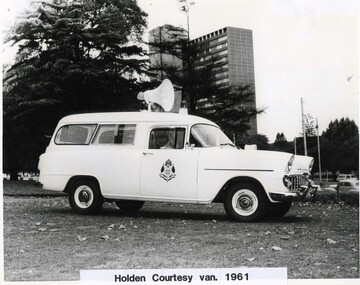
Photograph (police car)
... Holden courtesy van in a park with skyscraper in background. Circa 1961...Victoria Police Museum 313 Spencer Street Docklands melbourne Used by the Mobile Traffic Section for patrol and warning motorists at incidents etc. police vehicles; wireless patrol; motor transport branch; motor transport section; holden courtesy van Holden courtesy van in a park with skyscraper in background. Circa 1961 Photograph (police car) ...Used by the Mobile Traffic Section for patrol and warning motorists at incidents etc.Holden courtesy van in a park with skyscraper in background. Circa 1961police vehicles; wireless patrol; motor transport branch; motor transport section; holden courtesy van -
 Robin Boyd Foundation
Slide, Robin Boyd, 1950
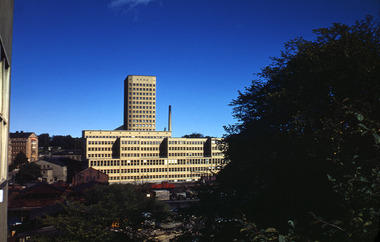
... Stockholm / Office / 20 Storey 'Skyscraper' / 1950 (All Handwritten)...Haddon Travelling Scholarship Haddon robin boyd slide Stockholm / Office / 20 Storey 'Skyscraper' / 1950 (All Handwritten) Colour slide in a mount. ...Penleigh Boyd, Robin and Patricia Boyd's son, writes “Prior to 1950 Robin, like most other amateur or hobby photographers, took black and white printed photographs. The oldest slides date from 1950 when Robin and Patricia travelled to Europe on Robin’s Robert Haddon Travelling Scholarship.” In 1948 Robin Boyd was awarded ‘joint first place’ in the Robert Haddon competition for his design of Mildura art gallery. The scholarship helped fund their first overseas trip. Robin and Patricia were passengers on the Greek ship “Cyrenia” departing in May 1950, passing through the Suez Canal and landing in Genoa five weeks later. For six months, they travelled extensively throughout Europe (predominantly driving themselves) - France, Italy, United Kingdom, Sweden, Denmark, Germany, Austria, Switzerland and Spain.Colour slide in a mount. Office building (20 storeys), Stockholm, SwedenStockholm / Office / 20 Storey 'Skyscraper' / 1950 (All Handwritten)haddon travelling scholarship, haddon, robin boyd, slide -
 Unions Ballarat
Badges of labour, banners of pride : aspects of working class celebration, Stephan, Ann et al, 1985
... Front cover: yellow background; image of a large man, red trucks and skyscrapers; black text....Front cover: yellow background; image of a large man, red trucks and skyscrapers; black text. Badges of labour, banners of pride : aspects of working class celebration Stephan, Ann Reeves, Andrew ...Contents: Badges of labour The banner painters Banners of pride British tradition National symbolism City and landscape WorkRelevant to labour and union banners and propaganda.Paper; paperback book. Front cover: yellow background; image of a large man, red trucks and skyscrapers; black text.Front cover: authors' names and title.btlc, ballarat trades hall, ballarat trades and labour council, union banners, flags, badges, unions, union emblems, history, union history -
 Robin Boyd Foundation
Document - Manuscript, Robin Boyd, Announcing the end of the glass box and the birth of a new 3D city architecture, 1965
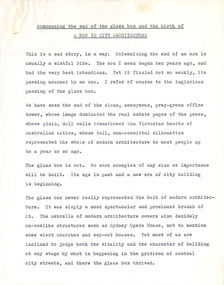
... Discussion of the history of the 'glass box', i.e. the glazed curtain wall skyscraper and its appearance and demise in Australia. ...Robin Boyd Foundation 290 Walsh Street South Yarra melbourne Discussion of the history of the 'glass box', i.e. the glazed curtain wall skyscraper and its appearance and demise in Australia. ...Discussion of the history of the 'glass box', i.e. the glazed curtain wall skyscraper and its appearance and demise in Australia. Also discusses the phenomenon of multi-storey car parks, and RMIT student designs for Victoria Market.Published as "Death notice: The End of the Glass Box/Birth Notice: A New 3-D Style for a City" in 'The Australian' on 13/11/1965.Typewritten (c copy), quarto, 8 pagesaustralia square, bates, smart & mccutcheon, john a la gerche, walter gropius, ici house, mcconnel, smith and johnson, harry seidler, sydney opera house, un secretariat, bogle and banfield, peter mcintyre, robin boyd, manuscript -
 Musculoskeletal Health Australia (now held by the Glen Eira Historical Society)
Photograph - Objects, 20/04/2004
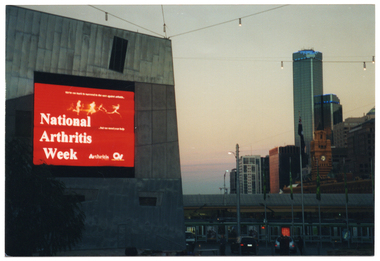
... In the background, there is a view of some multistory buildings, including two tall skyscrapers....In the background, there is a view of some multistory buildings, including two tall skyscrapers. Photograph Objects ...One of the many events held during National Arthritis Week in 2004 was a Tai Chi exercise demonstration at Federation Square in Melbourne. This photo, taken at dusk, depicts a large electronic advertising billboard at Federation Square commissioned to promote National Arthritis Week. The Tai Chi demonstration is featured in a round up of the National Arthritis Week 2004 events on pages 12-13 of the Vol 17 issue 2, Winter 2004 edition of the Arthritis Foundation of Victoria's quarterly magazine, Update.COL photo of a large electronic advertising billboard on the side of a tall building. The billboard displays white text on a red background. The text is, "National Arthritis Week", with the respective text and logos for 'Arthritis Victoria' and 'Osteoporosis Victoria' beside it. Above the main text are the silouhettes of some figures running and leaping. In the background, there is a view of some multistory buildings, including two tall skyscrapers.[In the bottom right corner, handwritten in black ink] tai chi NAW 04 [On the bottom left, handwritten in blue ink] Cover [circled]arthritis foundation of victoria, afv, arthritis victoria, av, national arthritis week, naw, tai chi, exercise demonstration, federation square, advertising billboard, electronic billboard, melbourne, 2004 -
 Robin Boyd Foundation
Document - Manuscript, Robin Boyd, Two Strong, Unpopular Buildings, 1964
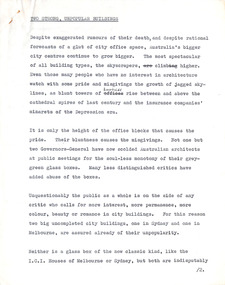
... ... Skyscraper...Boyd discusses skyscrapers and the city, wondering what the next steps are after Mies Van Der Rohe's 'glass and steel'. ...Robin Boyd Foundation 290 Walsh Street South Yarra melbourne Boyd discusses skyscrapers and the city, wondering what the next steps are after Mies Van Der Rohe's 'glass and steel'. ...Boyd discusses skyscrapers and the city, wondering what the next steps are after Mies Van Der Rohe's 'glass and steel'. He then considers two buildings under construction as potential answers: Harry Seidler's Pitt Street Building in Sydney and Yuncken Freeman's Royal Insurance Building.Original manuscript published as 'Something out of the Box' in 'The Australian' on 23.09.1964.Typewritten (c copy), pencil edits, quarto, 7 pagesroyal insurance building, yuncken freeman, skyscraper, mies van der rohe, harry seidler, robin boyd, manuscript -
 Robin Boyd Foundation
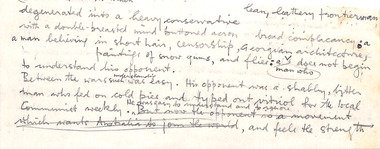
Document - Notes, Robin Boyd
... One page written in pencil and green ink appears to be a draft for an article on Australia moving forward to modern architecture after WWII and the potentials of Skyscrapers and prefabricated housing....One page written in pencil and green ink appears to be a draft for an article on Australia moving forward to modern architecture after WWII and the potentials of Skyscrapers and prefabricated housing. Expo 64 prefabrication Archigram and Metabolism robin boyd manuscript Handwritten, quarto, 3 pieces: x2 are folded, x1 small paper slip pages Document Notes Robin Boyd ...Drafts of various writings/speeches by Boyd. One page written in blue and red ink appears to be a draft for 'The Value of Expos' (see D112) that is taken in point form. One page written in pencil and green ink appears to be a draft for an article on Australia moving forward to modern architecture after WWII and the potentials of Skyscrapers and prefabricated housing.Handwritten, quarto, 3 pieces: x2 are folded, x1 small paper slip pagesexpo 64, prefabrication, archigram and metabolism, robin boyd, manuscript -
 Robin Boyd Foundation
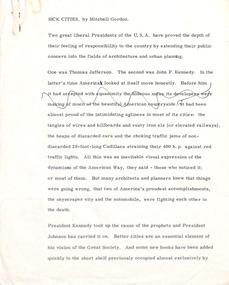
Document - Manuscript, Robin Boyd, Sick Cities by Mitchell Gordon
... He opens with a scathing description of American urbanism: the skyscraper and the automobile in a fight to the death, and a culture unwilling to engage with a discussion of urbanism. ...He opens with a scathing description of American urbanism: the skyscraper and the automobile in a fight to the death, and a culture unwilling to engage with a discussion of urbanism. ...Boyd reviews Mitchell Gordon's Sick Cities. He opens with a scathing description of American urbanism: the skyscraper and the automobile in a fight to the death, and a culture unwilling to engage with a discussion of urbanism. Boyd presents Gordon's book as a non-technical and non-partisan contribution to the new field of American urbanism, focussed on the functional problems (sprawl, traffic, squatting, air pollution) rather than visual ugliness. He commends Gordon's book as 'good, meaty [and] helpful' to city administrators and city lovers everywhere.Book Review (Mitchell Gordon)Typewritten, quarto, 3 pagesScribbled out sections on pages 1, 2 and 3; addition of notes in pages 2 and 3.mitchell gordon, sick cities, urban planning, thomas jefferson, john f. kennedy, the american way, racial segregation, suburban sprawl, air pollution, urbanism, traffic, robin boyd, manuscript -
 Flagstaff Hill Maritime Museum and Village
Domestic object - Butter Dish
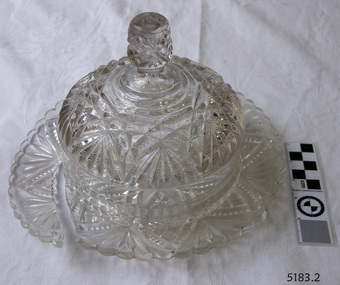
... Today, several skyscrapers, small and big homes, and offices use glass in almost all aspects of construction and design. ...Today, several skyscrapers, small and big homes, and offices use glass in almost all aspects of construction and design. ...The art of making glass can be traced back to 2600 BC in Mesopotamia. Egyptians practised making glass around 2500 BC. Artificial glass first appeared in the Egyptian or the Mesopotamian civilization, whereas they used tools made out of volcanic glass obsidian in the Stone Age. Ancient China, however, discovered how to make glass a little later. Glass beads are known to be one of the earliest products made out of glass. Their creation is thought to be primarily accidental. In the later Bronze Age, glassmaking came to a halt. Glass was a luxury material back then. Archaeological excavations suggest the use of glass in England during the middle ages. In the 10th century, stained glass found a place in cathedrals and windows of palaces. After the Renaissance, architectural methods changed substantially, leading to a decrease in stained glass as a building material. Domestic use of glass increased following the industrial revolution. Vessels, glass windows, and glass beads gained popularity in Europe during this period. During the 19th century, many people preferred glass windows and doors as a decorative option. In the late 19th century, some designers brought back stained glass in decorative windows. It was during this period that Mr Tiffany discovered several methods to make domed glass handicrafts. People discovered the true versatility of using glass as a building material only in the 20th century. With glassmaking technology receiving an industrial boom, you could produce several different types of glass. Toughened glass, laminated glass, bulletproof glass, and smart glass all boosted the use of glass in buildings. Today, several skyscrapers, small and big homes, and offices use glass in almost all aspects of construction and design. https://www.aisglass.com/glass-made-step-step-process/The invention and development of glass, both as domestic items and in building, has been nothing short of revolutionary. Prior to the use of glass for windows, the interior of buildings were extremely dark, even during sunny days. The use of glass domestic objects, that could be easily washed, led to improved hygiene.Moulded patterned glass butter dish. Base has been broken.None.flagstaff hill, warrnambool, shipwrecked-coast, flagstaff-hill, flagstaff-hill-maritime-museum, maritime-museum, shipwreck-coast, flagstaff-hill-maritime-village, glass, kitchen item, butter -
 Flagstaff Hill Maritime Museum and Village
Domestic object - Glass
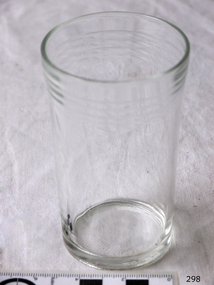
... Today, several skyscrapers, small and big homes, and offices use glass in almost all aspects of construction and design. ...Today, several skyscrapers, small and big homes, and offices use glass in almost all aspects of construction and design. ...The art of making glass can be traced back to 2600 BC in Mesopotamia. Egyptians practised making glass around 2500 BC. Artificial glass first appeared in the Egyptian or the Mesopotamian civilization, whereas they used tools made out of volcanic glass obsidian in the Stone Age. Ancient China, however, discovered how to make glass a little later. Glass beads are known to be one of the earliest products made out of glass. Their creation is thought to be primarily accidental. In the later Bronze Age, glassmaking came to a halt. Glass was a luxury material back then. Archaeological excavations suggest the use of glass in England during the middle ages. In the 10th century, stained glass found a place in cathedrals and windows of palaces. After the Renaissance, architectural methods changed substantially, leading to a decrease in stained glass as a building material. Domestic use of glass increased following the industrial revolution. Vessels, glass windows, and glass beads gained popularity in Europe during this period. During the 19th century, many people preferred glass windows and doors as a decorative option. In the late 19th century, some designers brought back stained glass in decorative windows. It was during this period that Mr Tiffany discovered several methods to make domed glass handicrafts. People discovered the true versatility of using glass as a building material only in the 20th century. With glassmaking technology receiving an industrial boom, you could produce several different types of glass. Toughened glass, laminated glass, bulletproof glass, and smart glass all boosted the use of glass in buildings. Today, several skyscrapers, small and big homes, and offices use glass in almost all aspects of construction and design. https://www.aisglass.com/glass-made-step-step-process/The invention and development of glass, both as domestic items and in building, has been nothing short of revolutionary. Prior to the use of glass for windows, the interior of buildings were extremely dark, even during sunny days. The use of glass domestic objects, that could be easily washed, led to improved hygiene.Cylindrical drinking glass with stepped relief around lipNoneflagstaff hill, warrnambool, shipwrecked-coast, flagstaff-hill, flagstaff-hill-maritime-museum, maritime-museum, shipwreck-coast, flagstaff-hill-maritime-village, glass -
 Melbourne Tram Museum
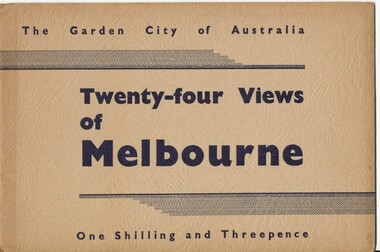
Book, Victorian Government Information Bureau?, "The Garden City of Australia / Twenty-four views of Melbourne", c1950
... Page Photo details by 1 Skyline of the City of Melbourne from Yarra Bank Victorian Railways 2 Collins St from Spring St (with trams) ditto 3 Princes Bridge, River Yarra ditto 4 St Kilda Rd from Flinders St Station ditto 5 St Pauls Cathedral ditto 6 Bourke St Shopping Centre - with double deck buses no details of photographer 7 Elizabeth St - with trams and buses Victorian Railways 8 Swanston St with modern skyscrapers (Collins) ditto 9 Aerial view, city of Melbourne ditto 10 Parliament House ditto 11 Public Library, Museum and Art Gallery ditto 12 St Kilda Rd, Looking towards the City trams 772 and W2 ditto 13 Kings Domain - Pioneer Monument ditto 14 Royal Melbourne Hospital - with back view inset ditto 15 Alexandra Gardens and the Shrine of Remembrance ditto 16 Alexandra Gardens and Government House ditto 17 Captain Cook's House - Fitzroy Gardens ditto 18 Albert Park Lake no details of photographer 19 Melbourne Boys School, MacRobertson's Girls High School and Melbourne Uni - no details of photographer 20 Scene in the Botanical Gardens Victorian Railways 21 Aerial view of St Kilda with Brighton in background Victorian Railways 22 Melbourne Cricket ground, taken during the testimonial match to Sir Donald Bradman - no details 23 Queen Victoria Memorial Hospital and Exhibition Buildings and Aquarium - Victorian Railways 24 Dandenong - Showing Silvan Dam Victorian Railways The testimonial match took place in Melbourne during December 1948 (Reference Sir Donald Bradman Museum). ...Page Photo details by 1 Skyline of the City of Melbourne from Yarra Bank Victorian Railways 2 Collins St from Spring St (with trams) ditto 3 Princes Bridge, River Yarra ditto 4 St Kilda Rd from Flinders St Station ditto 5 St Pauls Cathedral ditto 6 Bourke St Shopping Centre - with double deck buses no details of photographer 7 Elizabeth St - with trams and buses Victorian Railways 8 Swanston St with modern skyscrapers (Collins) ditto 9 Aerial view, city of Melbourne ditto 10 Parliament House ditto 11 Public Library, Museum and Art Gallery ditto 12 St Kilda Rd, Looking towards the City trams 772 and W2 ditto 13 Kings Domain - Pioneer Monument ditto 14 Royal Melbourne Hospital - with back view inset ditto 15 Alexandra Gardens and the Shrine of Remembrance ditto 16 Alexandra Gardens and Government House ditto 17 Captain Cook's House - Fitzroy Gardens ditto 18 Albert Park Lake no details of photographer 19 Melbourne Boys School, MacRobertson's Girls High School and Melbourne Uni - no details of photographer 20 Scene in the Botanical Gardens Victorian Railways 21 Aerial view of St Kilda with Brighton in background Victorian Railways 22 Melbourne Cricket ground, taken during the testimonial match to Sir Donald Bradman - no details 23 Queen Victoria Memorial Hospital and Exhibition Buildings and Aquarium - Victorian Railways 24 Dandenong - Showing Silvan Dam Victorian Railways The testimonial match took place in Melbourne during December 1948 (Reference Sir Donald Bradman Museum). ...Book, brown cover patterned (Deer skin?), titled "The Garden City of Australia / Twenty-four views of Melbourne" with 24 pages (smaller than cover) printed pages stapled inside. Inside front cover is a map of Melbourne, with specific buildings marked, inside rear cover - Where to go in Melbourne, General Information and Sight seeing tours. On rear cover is printer details. Page Photo details by 1 Skyline of the City of Melbourne from Yarra Bank Victorian Railways 2 Collins St from Spring St (with trams) ditto 3 Princes Bridge, River Yarra ditto 4 St Kilda Rd from Flinders St Station ditto 5 St Pauls Cathedral ditto 6 Bourke St Shopping Centre - with double deck buses no details of photographer 7 Elizabeth St - with trams and buses Victorian Railways 8 Swanston St with modern skyscrapers (Collins) ditto 9 Aerial view, city of Melbourne ditto 10 Parliament House ditto 11 Public Library, Museum and Art Gallery ditto 12 St Kilda Rd, Looking towards the City trams 772 and W2 ditto 13 Kings Domain - Pioneer Monument ditto 14 Royal Melbourne Hospital - with back view inset ditto 15 Alexandra Gardens and the Shrine of Remembrance ditto 16 Alexandra Gardens and Government House ditto 17 Captain Cook's House - Fitzroy Gardens ditto 18 Albert Park Lake no details of photographer 19 Melbourne Boys School, MacRobertson's Girls High School and Melbourne Uni - no details of photographer 20 Scene in the Botanical Gardens Victorian Railways 21 Aerial view of St Kilda with Brighton in background Victorian Railways 22 Melbourne Cricket ground, taken during the testimonial match to Sir Donald Bradman - no details 23 Queen Victoria Memorial Hospital and Exhibition Buildings and Aquarium - Victorian Railways 24 Dandenong - Showing Silvan Dam Victorian Railways The testimonial match took place in Melbourne during December 1948 (Reference Sir Donald Bradman Museum). Possibly arranged by the Victorian Government Information Bureau given the number of Victorian Railways photographs.trams, tramways, melbourne, st kilda rd, swanston st, bourke st, victorian railways, flinders st station, gardens -
 Eltham District Historical Society Inc
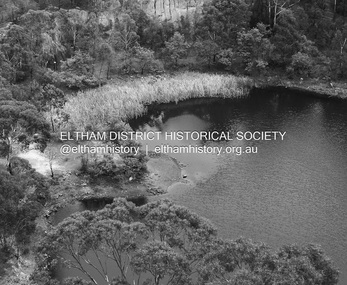
Photograph - Digital Photograph, Alan King, Blue Lake, Plenty Gorge Park, 2008
... Following the 1957 bushfires, this area was quarried by Reid Quarries Pty Ltd for Melbourne’s first skyscrapers, then by Boral Australia. However in the early 1970s water began seeping into the quarry forming the Blue Lake and the quarry was closed. ...Following the 1957 bushfires, this area was quarried by Reid Quarries Pty Ltd for Melbourne’s first skyscrapers, then by Boral Australia. However in the early 1970s water began seeping into the quarry forming the Blue Lake and the quarry was closed. ...A quarry was transformed into the Blue Lake. Published: Nillumbik Now and Then / Marguerite Marshall 2008; photographs Alan King with Marguerite Marshall.; p179 The dramatic steep-sided Plenty Gorge lies along the divide of two geological areas, and separates the Nillumbik Shire and the City of Whittlesea. On the Nillumbik side are undulating hills and sedimentary rock, and in Whittlesea, lies a basalt plain formed by volcanic action up to two million years ago. This provides the Plenty Gorge Park with diverse vegetation and habitats, making it one of Greater Melbourne’s most important refuges for threatened and significant species. The park, established in 1986, consists of around 1350 hectares, and extends 11 kilometres along the Plenty River, from Greensborough to Mernda. It provides a wildlife corridor for around 500 native plant and 280 animal species. The area’s plentiful food and water attracted the Wurundjeri Aboriginal people and then European settlers. By 1837 squatters had claimed large runs of land for their sheep and cattle. The Plenty Valley was among the first in the Port Phillip District to be settled - mainly in the less heavily timbered west - and was proclaimed a settled district in 1841.But by the late 1880s, the settlers’ extensive land clearing for animal grazing, then agriculture, depleted the Wurundjeri’s traditional food sources, which helped to drive them away. Many Wurundjeri artefacts remain (now government protected), and so far 57 sites have been identified in the park, including scarred trees, burial areas and stone artefacts. Pioneer life could be very hard because of isolation, flooding, bushfires and bushrangers. Following the Black Thursday bushfires of 1851, basalt was quarried to build more fire-resistant homes. Gold discoveries in the early 1850s swelled the population, particularly around Smugglers Gully; but food production made more of an impact. In the late 1850s wheat production supplanted grazing. In the 1860s the government made small holdings available to poorer settlers. These had the greatest effect on the district, particularly in Doreen and Yarrambat, where orchards were established from the 1880s to 1914. Links with a prominent early family are the remains of Stuchbery Farm, by the river’s edge bounded by Smugglers Gully to the north and La Trobe Road, Yarrambat, to the east. The Stuchberys moved to the valley in 1890, and the family still lives in the area. In 1890, Alfred and Ada first lived in a tent where four children were born, then Alfred built the house and outbuildings around 1896. They planted an orchard, then a market garden, and developed a dairy. The family belonged to the local Methodist and tennis communities. Their grandson Walter, opened the Flying Scotsman Model Railway Museum in Yarrambat, which his widow, Vi, continues to run. Wal was also the Yarrambat CFA Captain for 22 years until 1987. Walter sold 24 hectares in 1976 for development - now Vista Court - and in 1990, the remaining 22.6 hectares for the park. Remaining are an early stone dairy and remnants of a stone barn, a pig sty and a well. Until it was destroyed by fire in 2003, a slab hut stood on the Happy Hollow Farm site, at the southern end of the park. The hut is thought to have been built in the Depression around 1893. This was a rare and late example of a slab hut with a domestic orchard close to Melbourne. Emmet Watmough and his family first occupied the hut, followed by a succession of families, until the Bell family bought it around 1948. There they led a subsistence lifestyle for 50 years, despite encroaching Melbourne suburbia. The Yellow Gum Recreation Area includes the Blue Lake, coloured turquoise at certain times of the year. Following the 1957 bushfires, this area was quarried by Reid Quarries Pty Ltd for Melbourne’s first skyscrapers, then by Boral Australia. However in the early 1970s water began seeping into the quarry forming the Blue Lake and the quarry was closed. The State Government bought the site in 1997 and opened it as a park in 1999.This collection of almost 130 photos about places and people within the Shire of Nillumbik, an urban and rural municipality in Melbourne's north, contributes to an understanding of the history of the Shire. Published in 2008 immediately prior to the Black Saturday bushfires of February 7, 2009, it documents sites that were impacted, and in some cases destroyed by the fires. It includes photographs taken especially for the publication, creating a unique time capsule representing the Shire in the early 21st century. It remains the most recent comprehenesive publication devoted to the Shire's history connecting local residents to the past. nillumbik now and then (marshall-king) collection, blue lake, plenty gorge park -
 Eltham District Historical Society Inc
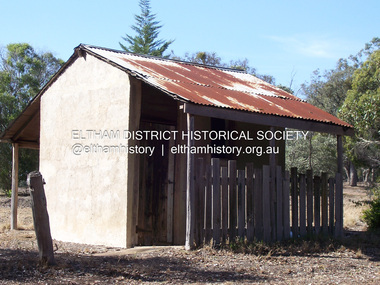
Photograph - Digital Photograph, Marguerite Marshall, Stuchbery Farm dairy, 14 March 2008
... Following the 1957 bushfires, this area was quarried by Reid Quarries Pty Ltd for Melbourne’s first skyscrapers, then by Boral Australia. However in the early 1970s water began seeping into the quarry forming the Blue Lake and the quarry was closed. ...Following the 1957 bushfires, this area was quarried by Reid Quarries Pty Ltd for Melbourne’s first skyscrapers, then by Boral Australia. However in the early 1970s water began seeping into the quarry forming the Blue Lake and the quarry was closed. ...Stuchbery Farm was situated on the Plenty River bounded by Smugglers Gully to the north and La trobe Road, Yarrambat, to the east. Alan and Ada Stutchbery moved to the valley in 1890, first living in a tent where four children were born. Alfred built a home and outbuildings around 1896. They planted an orchard, then a market garden and developed a dairy. Published: Nillumbik Now and Then / Marguerite Marshall 2008; photographs Alan King with Marguerite Marshall.; p179 The dramatic steep-sided Plenty Gorge lies along the divide of two geological areas, and separates the Nillumbik Shire and the City of Whittlesea. On the Nillumbik side are undulating hills and sedimentary rock, and in Whittlesea, lies a basalt plain formed by volcanic action up to two million years ago. This provides the Plenty Gorge Park with diverse vegetation and habitats, making it one of Greater Melbourne’s most important refuges for threatened and significant species. The park, established in 1986, consists of around 1350 hectares, and extends 11 kilometres along the Plenty River, from Greensborough to Mernda. It provides a wildlife corridor for around 500 native plant and 280 animal species. The area’s plentiful food and water attracted the Wurundjeri Aboriginal people and then European settlers. By 1837 squatters had claimed large runs of land for their sheep and cattle. The Plenty Valley was among the first in the Port Phillip District to be settled - mainly in the less heavily timbered west - and was proclaimed a settled district in 1841. But by the late 1880s, the settlers’ extensive land clearing for animal grazing, then agriculture, depleted the Wurundjeri’s traditional food sources, which helped to drive them away. Many Wurundjeri artefacts remain (now government protected), and so far 57 sites have been identified in the park, including scarred trees, burial areas and stone artefacts. Pioneer life could be very hard because of isolation, flooding, bushfires and bushrangers. Following the Black Thursday bushfires of 1851, basalt was quarried to build more fire-resistant homes. Gold discoveries in the early 1850s swelled the population, particularly around Smugglers Gully; but food production made more of an impact. In the late 1850s wheat production supplanted grazing. In the 1860s the government made small holdings available to poorer settlers. These had the greatest effect on the district, particularly in Doreen and Yarrambat, where orchards were established from the 1880s to 1914. Links with a prominent early family are the remains of Stuchbery Farm, by the river’s edge bounded by Smugglers Gully to the north and La Trobe Road, Yarrambat, to the east. The Stuchberys moved to the valley in 1890, and the family still lives in the area. In 1890, Alfred and Ada first lived in a tent where four children were born, then Alfred built the house and outbuildings around 1896. They planted an orchard, then a market garden, and developed a dairy. The family belonged to the local Methodist and tennis communities. Their grandson Walter, opened the Flying Scotsman Model Railway Museum in Yarrambat, which his widow, Vi, continues to run. Wal was also the Yarrambat CFA Captain for 22 years until 1987. Walter sold 24 hectares in 1976 for development - now Vista Court - and in 1990, the remaining 22.6 hectares for the park. Remaining are an early stone dairy and remnants of a stone barn, a pig sty and a well. Until it was destroyed by fire in 2003, a slab hut stood on the Happy Hollow Farm site, at the southern end of the park. The hut is thought to have been built in the Depression around 1893. This was a rare and late example of a slab hut with a domestic orchard close to Melbourne. Emmet Watmough and his family first occupied the hut, followed by a succession of families, until the Bell family bought it around 1948. There they led a subsistence lifestyle for 50 years, despite encroaching Melbourne suburbia. The Yellow Gum Recreation Area includes the Blue Lake, coloured turquoise at certain times of the year. Following the 1957 bushfires, this area was quarried by Reid Quarries Pty Ltd for Melbourne’s first skyscrapers, then by Boral Australia. However in the early 1970s water began seeping into the quarry forming the Blue Lake and the quarry was closed. The State Government bought the site in 1997 and opened it as a park in 1999.This collection of almost 130 photos about places and people within the Shire of Nillumbik, an urban and rural municipality in Melbourne's north, contributes to an understanding of the history of the Shire. Published in 2008 immediately prior to the Black Saturday bushfires of February 7, 2009, it documents sites that were impacted, and in some cases destroyed by the fires. It includes photographs taken especially for the publication, creating a unique time capsule representing the Shire in the early 21st century. It remains the most recent comprehenesive publication devoted to the Shire's history connecting local residents to the past. nillumbik now and then (marshall-king) collection, ada stuchbery, alan stuchbery, dairy, stuchbery farm, farm buildings, yarrambat, plenty gorge park -
 Mission to Seafarers Victoria
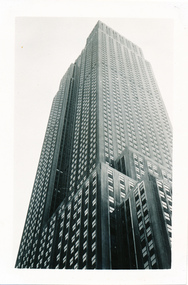
Photograph - Photograph, Black and white, Allan Charles Quinn, 5 October 1949
... ...skyscraper...This photograph of the Empire State building is a part of the Allan Charles Quinn Collection which is a photographic autobiography of the life of an individual seafarer. seamen america fifth-avenue allan charles quinn merchant navy new york skyscraper Handwritten in blue ink on reverse of photograph: "EMPIRE STATE/ 5-10-49". ...Allan Charles Quinn was a member of the Merchant Navy from aged 16 as well as being a trained photographer. This photograph was taken during his travels through America whilst still being associated with the Merchant Navy.This photograph of the Empire State building is a part of the Allan Charles Quinn Collection which is a photographic autobiography of the life of an individual seafarer.Black and white photograph of the Empire State Building, New York, taken from street level looking towards the top of the building.Handwritten in blue ink on reverse of photograph: "EMPIRE STATE/ 5-10-49".seamen, america, fifth-avenue, allan charles quinn, merchant navy, new york, skyscraper -
 Federation University Historical Collection
Book, Art Decoration Ornaments
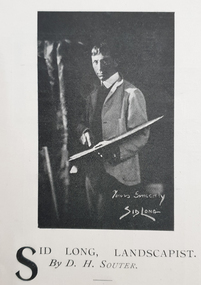
... ballarat technical art school ballarat technical art school library bank of australasia mount kosciusko siry henry parkes pyrmont bridge maori ancient egypt julian ashton st andrew'e cathedral sydney edmond thomas blacket sydney university comisariat stores circular quay the rocks w. lister-lister sydney domestic architecture james barnet john horbury hunt sidney long maori art wall decoratoni paperhangings australian stained glass art and architecture stamped metalwork w.c. piguenit australian architecture rose bay convent chapel australian posters pottery cyril blacket bookbinding new south wales state library architecture oxford st sydney'tom roberts repousse sydney harbour bridge john longstaff women painters the great pyramid of egypt skyscraper comes to new south wales melbourne hospital plans governor bligh electric illumination Black cloth covered book with leather spine. ...Black cloth covered book with leather spine. Colour illustrationsballarat technical art school, ballarat technical art school library, bank of australasia, mount kosciusko, siry henry parkes, pyrmont bridge, maori, ancient egypt, julian ashton, st andrew'e cathedral sydney, edmond thomas blacket, sydney university, comisariat stores circular quay, the rocks, w. lister-lister, sydney domestic architecture, james barnet, john horbury hunt, sidney long, maori art, wall decoratoni, paperhangings, australian stained glass, art and architecture, stamped metalwork, w.c. piguenit, australian architecture, rose bay convent chapel, australian posters, pottery, cyril blacket, bookbinding, new south wales state library architecture, oxford st sydney'tom roberts, repousse, sydney harbour bridge, john longstaff, women painters, the great pyramid of egypt, skyscraper comes to new south wales, melbourne hospital plans, governor bligh, electric illumination
