
Showing 17 items matching "social and political studies"
-
 Federation University Historical Collection
Book, Ballarat School of Mines Tertiary Orientation Programs, 1980, 1980
... The courses offered were TOP Biology, Chemistry, Computer Science, Workshop Practice and Drawing, Home Economics, Applied MAthematics, General Mathematics (Computing Option), Pure Mathematics, Physical Education, Physics, Craft, Ceramics and Sculpture, Garment Construction, Graphic Communication, Graphic Design (including Design Studies and Printmaking), History of Art, Painting and Drawing, Drawing, Photography, Accounting, Advanced Typewriting, Economics, Legal Studies, Secretarial Studies, 19th Century Australian History, 20th Century Australian History, Australian Media, Behavioural Studies, Drama, English Expression, Field Studies, Film Studies, Introduction to Psychology, Literature, Music, Political Studies and Sociology. Programs were offered in Applied Science, Nursing, Physical Education, Home Economics, Engineering, Computer Science, Accounting, Secretarial, Humanities and Social Sciences, Art & Design and Fashion and Design....The courses offered were TOP Biology, Chemistry, Computer Science, Workshop Practice and Drawing, Home Economics, Applied MAthematics, General Mathematics (Computing Option), Pure Mathematics, Physical Education, Physics, Craft, Ceramics and Sculpture, Garment Construction, Graphic Communication, Graphic Design (including Design Studies and Printmaking), History of Art, Painting and Drawing, Drawing, Photography, Accounting, Advanced Typewriting, Economics, Legal Studies, Secretarial Studies, 19th Century Australian History, 20th Century Australian History, Australian Media, Behavioural Studies, Drama, English Expression, Field Studies, Film Studies, Introduction to Psychology, Literature, Music, Political Studies and Sociology. Programs were offered in Applied Science, Nursing, Physical Education, Home Economics, Engineering, Computer Science, Accounting, Secretarial, Humanities and Social Sciences, Art & Design and Fashion and Design. ...148 page yellow covered book outlining the Tertiary Orientation Programs offered by the Ballarat School of Mines in 1980. The courses offered were TOP Biology, Chemistry, Computer Science, Workshop Practice and Drawing, Home Economics, Applied MAthematics, General Mathematics (Computing Option), Pure Mathematics, Physical Education, Physics, Craft, Ceramics and Sculpture, Garment Construction, Graphic Communication, Graphic Design (including Design Studies and Printmaking), History of Art, Painting and Drawing, Drawing, Photography, Accounting, Advanced Typewriting, Economics, Legal Studies, Secretarial Studies, 19th Century Australian History, 20th Century Australian History, Australian Media, Behavioural Studies, Drama, English Expression, Field Studies, Film Studies, Introduction to Psychology, Literature, Music, Political Studies and Sociology. Programs were offered in Applied Science, Nursing, Physical Education, Home Economics, Engineering, Computer Science, Accounting, Secretarial, Humanities and Social Sciences, Art & Design and Fashion and Design.ballarat school of mines, tertiary orientation program, top, courses -
Federation University Historical Collection
Pamphlet - Humanities and Social Sciences Course information, Ballarat College of Advanced Education Humanities and Social Sciences Course Information 1980s, 1980s
... ...Social and Political Studies...Ballarat College of Advanced Education is a predecessor of Federation University Ballarat College of Advanced Education humanities and social sciences Administrative Studies Behavioural Studies Data Analysis Economics Education English Film & Media Studies Mathematics Social and Political Studies .2 & .3 have been marked in pen for changes to be made before it is printed again .1 Cream pamphlet with black images and writing .2 Orange and White A5 booklet with black writing .3 Beige and Maroon A5 booklet with black writing 1983 .4 Orange A5 booklet with checkerboard pattern on the front and black writing 1987 Ballarat College of Advanced Education Humanities and Social Sciences Course Information 1980s Pamphlet Humanities and Social Sciences Course information ...Ballarat College of Advanced Education is a predecessor of Federation University .1 Cream pamphlet with black images and writing .2 Orange and White A5 booklet with black writing .3 Beige and Maroon A5 booklet with black writing 1983 .4 Orange A5 booklet with checkerboard pattern on the front and black writing 1987.2 & .3 have been marked in pen for changes to be made before it is printed againballarat college of advanced education, humanities and social sciences, administrative studies, behavioural studies, data analysis, economics, education, english, film & media studies, mathematics, social and political studies -
 Federation University Historical Collection
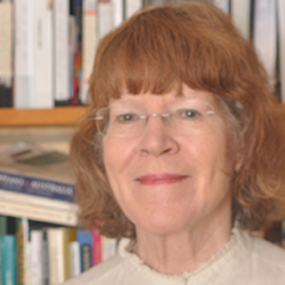
Article - Article - Women, Federation University: Women of Note; Anne Beggs-Suntar, Historical Studies, Lecturer and Author
... She has written a number of books, exhibition catalogues and articles for different audiences ranging from specialised academic journals to newspapers. women of note dr anne beggs-suntar historian school of arts federation university social cultural political histories history of ballarat heritage conservation eureka stockade ballarat art gallery gold museum author books articles lecturer historical studies Federation University: Women of Note; Anne Beggs-Suntar, Historical Studies, Lecturer and Author Article Article - Women ...Dr. Anne Beggs-Sunter is an historian who lectures in the School of Arts at Federation University Ballarat in Wathawurrung country. Her major interests are in Australian social, cultural and political history. Her special interests relate to the colonial era, to the history of Ballarat and its heritage conservation, and the significance and commemoration of the Eureka Stockade. Anne is actively involved with a number of cultural institutions, including the Art Gallery of Ballarat, the Gold Museum and the Buninyong Historical Society, and serves on a number of City of Ballarat committees. She has written a number of books, exhibition catalogues and articles for different audiences ranging from specialised academic journals to newspapers.women of note, dr anne beggs-suntar, historian, school of arts, federation university, social cultural political histories, history of ballarat, heritage conservation, eureka stockade, ballarat art gallery, gold museum, author, books articles, lecturer, historical studies -
 Flagstaff Hill Maritime Museum and Village
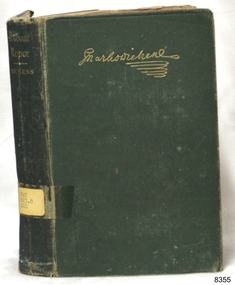
Book - A Fictional Story, Charles Dickens, Barnaby Rudge, (1871–1879)
... Buried in Westminster Abbey, his vivid characters and social commentary remain influential. “Barnaby Rudge” is significant because it is Dickens’s first historical novel and his only major novel before “A Tale of Two Cities” to place a real political upheaval at the center of the narrative. ...Charles Dickens (1812–1870) was one of the great English novelists of the Victorian era, famous for vivid characters, social criticism, and stories that were first published in serial form. He began as a journalist, rose to enormous popularity during his lifetime, and wrote major works such as Oliver Twist, David Copperfield, and Great Expectations. Barnaby Rudge is a historical Dickens novel set against the Gordon Riots of 1780, mixing mystery, political unrest, family secrets, and the story of a simple minded young man, Barnaby, and his pet raven Grip. It is considered Dickens’s first historical novel and one of his less widely read works, but it remains important for its treatment of mob violence and social disorder. The novel begins with a murder mystery linked to the Haredale and Rudge families, then broadens into the chaos of the anti Catholic Gordon Riots in London. Barnaby, an innocent and impressionable character, is drawn into the riotous crowd. Other threads involve love, family conflict, imprisonment, and eventual reckoning. Dickens uses the riot setting to show how crowd panic and prejudice can spread destructively through society.Barnaby Rudge Author: Charles Dickens Publisher: Chapman & Hall Ltd Date: Household Edition (1871–1879) (See note section this document for more information on Edition). Green cloth hardcover with a black spine with authors name signed on front cover, lettering in gold. The spine has a Library label. First Published as part of the weekly Master Humphrey's Clock series (1840-1841)fictionCharles Dickens (1812–1870) was one of the great English novelists of the Victorian era, famous for vivid characters, social criticism, and stories that were first published in serial form. He began as a journalist, rose to enormous popularity during his lifetime, and wrote major works such as Oliver Twist, David Copperfield, and Great Expectations. Barnaby Rudge is a historical Dickens novel set against the Gordon Riots of 1780, mixing mystery, political unrest, family secrets, and the story of a simple minded young man, Barnaby, and his pet raven Grip. It is considered Dickens’s first historical novel and one of his less widely read works, but it remains important for its treatment of mob violence and social disorder. The novel begins with a murder mystery linked to the Haredale and Rudge families, then broadens into the chaos of the anti Catholic Gordon Riots in London. Barnaby, an innocent and impressionable character, is drawn into the riotous crowd. Other threads involve love, family conflict, imprisonment, and eventual reckoning. Dickens uses the riot setting to show how crowd panic and prejudice can spread destructively through society.flagstaff hil, warrnambool, flagstaff hill maritime museum, maritime museum, shipwreck coast, flagstaff hill maritime village, great ocean road, book, pattison collection, warrnambool library, warrnambool mechanics’ institute, ralph eric pattison, corangamite regional library service, warrnambool city librarian, mechanics’ institute library, victorian library board, warrnambool books and records, warrnambool children’s library, barnaby rudge, charles dickens -
 Flagstaff Hill Maritime Museum and Village
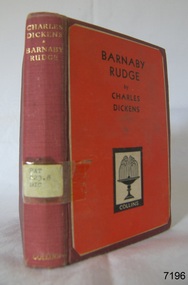
Book - A Fictional Story, Charles Dickens, Barnaby Rudge, Prior to 1911
... Dickens legacy is that his works endure, for vivid characters, social critiques of poverty, greed, and themes of innocence versus exploitation that can still be regarded as appropriate in today's society. ...Charles Dickens (1812–1870) was one of the great English novelists of the Victorian era, famous for vivid characters, social criticism, and stories that were first published in serial form. He began as a journalist, rose to enormous popularity during his lifetime, and wrote major works such as Oliver Twist, David Copperfield, and Great Expectations. Barnaby Rudge is a historical Dickens novel set against the Gordon Riots of 1780, mixing mystery, political unrest, family secrets, and the story of a simple minded young man, Barnaby, and his pet raven Grip. It is considered Dickens’s first historical novel and one of his less widely read works, but it remains important for its treatment of mob violence and social disorder. The novel begins with a murder mystery linked to the Haredale and Rudge families, then broadens into the chaos of the anti Catholic Gordon Riots in London. Barnaby, an innocent and impressionable character, is drawn into the riotous crowd. Other threads involve love, family conflict, imprisonment, and eventual reckoning. Dickens uses the riot setting to show how crowd panic and prejudice can spread destructively through society.Barnaby Rudge. Author: Charles Dickens. Publisher: Collins, Clear Type Press (London & Glasgow) Date: Mid 20th Century. (See note section this document for more information on Edition). Red leather hardcover with title on front on paper with a dark red spine and lettering in gold. The spine has a Library label.fictionCharles Dickens (1812–1870) was one of the great English novelists of the Victorian era, famous for vivid characters, social criticism, and stories that were first published in serial form. He began as a journalist, rose to enormous popularity during his lifetime, and wrote major works such as Oliver Twist, David Copperfield, and Great Expectations. Barnaby Rudge is a historical Dickens novel set against the Gordon Riots of 1780, mixing mystery, political unrest, family secrets, and the story of a simple minded young man, Barnaby, and his pet raven Grip. It is considered Dickens’s first historical novel and one of his less widely read works, but it remains important for its treatment of mob violence and social disorder. The novel begins with a murder mystery linked to the Haredale and Rudge families, then broadens into the chaos of the anti Catholic Gordon Riots in London. Barnaby, an innocent and impressionable character, is drawn into the riotous crowd. Other threads involve love, family conflict, imprisonment, and eventual reckoning. Dickens uses the riot setting to show how crowd panic and prejudice can spread destructively through society.book, the old curiosity shop, charles dickens, shipwrecked-coast, flagstaff-hill, flagstaff-hill-maritime-museum, warrnambool, maritime-museum, flagstaff-hill-maritime-village, pattison collection, warrnambool library, warrnambool mechanics’ institute, ralph eric pattison, corangamite regional library service, warrnambool city librarian, mechanics’ institute library, victorian library board, warrnambool books and records, warrnambool children’s library, great ocean road -
 Flagstaff Hill Maritime Museum and Village
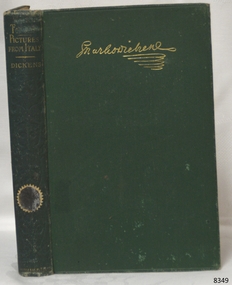
Book - A Travel & Political Critique, Charles Dickens, Hard Times and Pictures from Italy, 1866-1870’s
... studies of Victorian literature and social thought. The second part of this novel “Pictures from Italy” is a key example of Dickens’s non fiction and travel writing, frequently compared to his earlier “Sketches by Boz” and later “The Uncommercial Traveller”. “Hard Times and Pictures from Italy” reveals his eye for national character and social contrasts, and is valued for combing a social political ...Charles Dickens (1812–1870) was one of the great English novelists of the Victorian era, famous for vivid characters, social criticism, and stories that were first published in serial form. He began as a journalist, rose to enormous popularity during his lifetime, and wrote major works such as Oliver Twist, David Copperfield, and Great Expectations. Pictures from Italy first published 1846 is a travelogue describing Dickens’s 1844 journey through Italy with his family that included Rome, Venice, Florence, and other cities. It mixes vivid descriptions of art, landscape, and carnival life with his characteristic observations on social inequality and political fragmentation in pre unification Italy. Together this combined volume offers both a major insight on Victorian industrial England and a lighter, more personal travel narrative showing Dickens from two sides, the social reformer and the acute observer tourist.Hard Cover edition, Hard Times and Pictures for Italy. Author: Charles Dickens. Publisher: Chapman & Hall Ltd, London. Date: 1866-1870’s first published in book form 1846 (See note section this document for more information on Edition). Green cloth hardcover, Spine black has Author and Title in gold lettering. The spine has a Library label and no Volume information.non-fictionCharles Dickens (1812–1870) was one of the great English novelists of the Victorian era, famous for vivid characters, social criticism, and stories that were first published in serial form. He began as a journalist, rose to enormous popularity during his lifetime, and wrote major works such as Oliver Twist, David Copperfield, and Great Expectations. Pictures from Italy first published 1846 is a travelogue describing Dickens’s 1844 journey through Italy with his family that included Rome, Venice, Florence, and other cities. It mixes vivid descriptions of art, landscape, and carnival life with his characteristic observations on social inequality and political fragmentation in pre unification Italy. Together this combined volume offers both a major insight on Victorian industrial England and a lighter, more personal travel narrative showing Dickens from two sides, the social reformer and the acute observer tourist.book, the old curiosity shop, charles dickens, shipwrecked-coast, flagstaff-hill, flagstaff-hill-maritime-museum, warrnambool, maritime-museum, flagstaff-hill-maritime-village, pattison collection, warrnambool library, warrnambool mechanics’ institute, ralph eric pattison, corangamite regional library service, warrnambool city librarian, mechanics’ institute library, victorian library board, warrnambool books and records, warrnambool children’s library, great ocean road, hard times for these times -
 Monbulk RSL Sub Branch
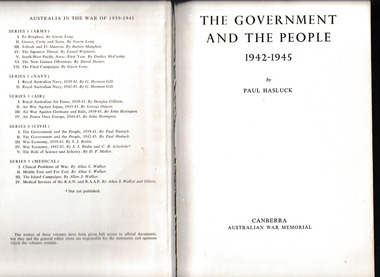
Book, Australian War Memorial, The government and the people, 1942-1945, 1970
... Australia - Politics and government - 1942-1945 Australia - Politics and government - Social conditions A study of the administrative and political management of the Australian war effort. ...A study of the administrative and political management of the Australian war effort.Index, ill, p.644.non-fictionA study of the administrative and political management of the Australian war effort.australia - politics and government - 1942-1945, australia - politics and government - social conditions -
 Narre Warren and District Family History Group
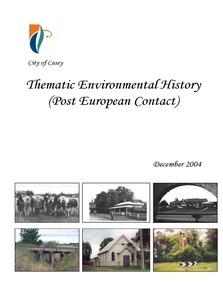
Book, Context Pty Ltd, City of Casey Heritage Study 2004 (Post European Contact) Volume 1: Thematic Environmental History, 2004
... .) -- history heritage studies An explanation of the themes and activities that have been important in shaping the present day City of Casey (the study area), which was created in 1994 and comprises parts of the former Cities of Berwick, Cranbourne and Knox. Not intended to be a complete social or political history, but a summary of-human use and impact upon the landscape in the years since first contact with indigenous inhabitants. ...An explanation of the themes and activities that have been important in shaping the present day City of Casey (the study area), which was created in 1994 and comprises parts of the former Cities of Berwick, Cranbourne and Knox. Not intended to be a complete social or political history, but a summary of-human use and impact upon the landscape in the years since first contact with indigenous inhabitants. It is not a chronological record but organised with themes providing a context to help with identifying heritage places. This publication can be downloaded from the City of Casey website.non-fictionAn explanation of the themes and activities that have been important in shaping the present day City of Casey (the study area), which was created in 1994 and comprises parts of the former Cities of Berwick, Cranbourne and Knox. Not intended to be a complete social or political history, but a summary of-human use and impact upon the landscape in the years since first contact with indigenous inhabitants. It is not a chronological record but organised with themes providing a context to help with identifying heritage places. This publication can be downloaded from the City of Casey website.city of casey (vic.) -- history, heritage studies -
 Victorian Aboriginal Corporation for Languages
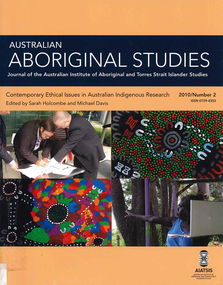
Periodical, Australian Institute of Aboriginal and Torres Strait Islander Studies, Australian Aboriginal studies : journal of the Australian Institute of Aboriginal and Torres Strait Islander Studies, 2010
... Studies and draws upon both actual and hypothetical examples of issues that may arise when requests are made for Indigenous material. Specific concerns about ethical practices in collecting data and the subsequent control of access to both the data itself and to published works based upon it are raised within the context of several types of collections, including those held by AIATSIS and by Native Title Representative Bodies. Ethics or social justice? Heritage and the politics...Ngarrindjeri ethics ethnography Indigenous research social justice Indigenous health b&w photographs, colour photographs 'Whose Ethics?' ...'Whose Ethics?':Codifying and enacting ethics in research settings Bringing ethics up to date? A review of the AIATSIS ethical guidelines Michael Davis (Independent Academic) A revision of the AIATSIS Guidelines for Ethical Research in Indigenous Studies was carried out during 2009-10. The purpose of the revision was to bring the Guidelines up to date in light of a range of critical developments that have occurred in Indigenous rights, research and knowledge management since the previous version of the Guidelines was released in 2000. In this paper I present an outline of these developments, and briefly discuss the review process. I argue that the review, and the developments that it responded to, have highlighted that ethical research needs to be thought about more as a type of behaviour and practice between engaged participants, and less as an institutionalised, document-focused and prescriptive approach. The arrogance of ethnography: Managing anthropological research knowledge Sarah Holcombe (ANU) The ethnographic method is a core feature of anthropological practice. This locally intensive research enables insight into local praxis and culturally relative practices that would otherwise not be possible. Indeed, empathetic engagement is only possible in this close and intimate encounter. However, this paper argues that this method can also provide the practitioner with a false sense of his or her own knowing and expertise and, indeed, with arrogance. And the boundaries between the anthropologist as knowledge sink - cultural translator and interpreter - and the knowledge of the local knowledge owners can become opaque. Globalisation and the knowledge ?commons?, exemplified by Google, also highlight the increasing complexities in this area of the governance and ownership of knowledge. Our stronghold of working in remote areas and/or with marginalised groups places us at the forefront of negotiating the multiple new technological knowledge spaces that are opening up in the form of Indigenous websites and knowledge centres in these areas. Anthropology is not immune from the increasing awareness of the limitations and risks of the intellectual property regime for protecting or managing Indigenous knowledge. The relevance of the Declaration on the Rights of Indigenous Peoples in opening up a ?rights-based? discourse, especially in the area of knowledge ownership, brings these issues to the fore. For anthropology to remain relevant, we have to engage locally with these global discourses. This paper begins to traverse some of this ground. Protocols: Devices for translating moralities, controlling knowledge and defining actors in Indigenous research, and critical ethical reflection Margaret Raven (Institute for Sustainability and Technology Policy (ISTP), Murdoch University) Protocols are devices that act to assist with ethical research behaviour in Indigenous research contexts. Protocols also attempt to play a mediating role in the power and control inherent in research. While the development of bureaucratically derived protocols is on the increase, critiques and review of protocols have been undertaken in an ad hoc manner and in the absence of an overarching ethical framework or standard. Additionally, actors implicated in research networks are seldom theorised. This paper sketches out a typology of research characters and the different moral positioning that each of them plays in the research game. It argues that by understanding the ways actors enact research protocols we are better able to understand what protocols are, and how they seek to build ethical research practices. Ethics and research: Dilemmas raised in managing research collections of Aboriginal and Torres Strait Islander materials Grace Koch (AIATSIS) This paper examines some of the ethical dilemmas for the proper management of research collections of Indigenous cultural materials, concentrating upon the use of such material for Native Title purposes. It refers directly to a number of points in the draft of the revised AIATSIS Guidelines for Ethical Research in Indigenous Studies and draws upon both actual and hypothetical examples of issues that may arise when requests are made for Indigenous material. Specific concerns about ethical practices in collecting data and the subsequent control of access to both the data itself and to published works based upon it are raised within the context of several types of collections, including those held by AIATSIS and by Native Title Representative Bodies. Ethics or social justice? Heritage and the politics of recognition Laurajane Smith (ANU) Nancy Fraser?s model of the politics of recognition is used to examine how ethical practices are interconnected with wider struggles for recognition and social justice. This paper focuses on the concept of 'heritage' and the way it is often uncritically linked to 'identity' to illustrate how expert knowledge can become implicated in struggles for recognition. The consequences of this for ethical practice and for rethinking the role of expertise, professional discourses and disciplinary identity are discussed. The ethics of teaching from country Michael Christie (CDU), with the assistance of Yi?iya Guyula, Kathy Gotha and Dh�?gal Gurruwiwi The 'Teaching from Country' program provided the opportunity and the funding for Yol?u (north-east Arnhem Land Aboriginal) knowledge authorities to participate actively in the academic teaching of their languages and cultures from their remote homeland centres using new digital technologies. As two knowledge systems and their practices came to work together, so too did two divergent epistemologies and metaphysics, and challenges to our understandings of our ethical behaviour. This paper uses an examination of the philosophical and pedagogical work of the Yol?u Elders and their students to reflect upon ethical teaching and research in postcolonial knowledge practices. Closing the gaps in and through Indigenous health research: Guidelines, processes and practices Pat Dudgeon (UWA), Kerrie Kelly (Australian Indigenous Psychologists Association) and Roz Walker (UWA) Research in Aboriginal contexts remains a vexed issue given the ongoing inequities and injustices in Indigenous health. It is widely accepted that good research providing a sound evidence base is critical to closing the gap in Aboriginal health and wellbeing outcomes. However, key contemporary research issues still remain regarding how that research is prioritised, carried out, disseminated and translated so that Aboriginal people are the main beneficiaries of the research in every sense. It is widely acknowledged that, historically, research on Indigenous groups by non-Indigenous researchers has benefited the careers and reputations of researchers, often with little benefit and considerably more harm for Indigenous peoples in Australia and internationally. This paper argues that genuine collaborative and equal partnerships in Indigenous health research are critical to enable Aboriginal and Torres Islander people to determine the solutions to close the gap on many contemporary health issues. It suggests that greater recognition of research methodologies, such as community participatory action research, is necessary to ensure that Aboriginal people have control of, or significant input into, determining the Indigenous health research agenda at all levels. This can occur at a national level, such as through the National Health and Medical Research Council (NHMRC) Road Map on Indigenous research priorities (RAWG 2002), and at a local level through the development of structural mechanisms and processes, including research ethics committees? research protocols to hold researchers accountable to the NHMRC ethical guidelines and values which recognise Indigenous culture in all aspects of research. Researching on Ngarrindjeri Ruwe/Ruwar: Methodologies for positive transformation Steve Hemming (Flinders University) , Daryle Rigney (Flinders University) and Shaun Berg (Berg Lawyers) Ngarrindjeri engagement with cultural and natural resource management over the past decade provides a useful case study for examining the relationship between research, colonialism and improved Indigenous wellbeing. The Ngarrindjeri nation is located in south-eastern Australia, a ?white? space framed by Aboriginalist myths of cultural extinction recycled through burgeoning heritage, Native Title, natural resource management ?industries?. Research is a central element of this network of intrusive interests and colonising practices. Government management regimes such as natural resource management draw upon the research and business sectors to form complex alliances to access funds to support their research, monitoring, policy development, management and on-ground works programs. We argue that understanding the political and ethical location of research in this contemporary management landscape is crucial to any assessment of the potential positive contribution of research to 'Bridging the Gap' or improving Indigenous wellbeing. Recognition that research conducted on Ngarrindjeri Ruwe/Ruwar (country/body/spirit) has impacts on Ngarrindjeri and that Ngarrindjeri have a right and responsibility to care for their lands and waters are important platforms for any just or ethical research. Ngarrindjeri have linked these rights and responsibilities to long-term community development focused on Ngarrindjeri capacity building and shifts in Ngarrindjeri power in programs designed to research and manage Ngarrindjeri Ruwe/Ruwar. Research agreements that protect Ngarrindjeri interests, including cultural knowledge and intellectual property, are crucial elements in these shifts in power. A preliminary review of ethics resources, with particular focus on those available online from Indigenous organisations in WA, NT and Qld Sarah Holcombe (ANU) and Natalia Gould (La Trobe University) In light of a growing interest in Indigenous knowledge, this preliminary review maps the forms and contents of some existing resources and processes currently available and under development in the Northern Territory, Queensland and Western Australia, along with those enacted through several cross-jurisdictional initiatives. A significant majority of ethics resources have been developed in response to a growing interest in the application of Indigenous knowledge in land and natural resource management. The aim of these resources is to ?manage? (i.e. protect and maintain) Indigenous knowledge by ensuring ethical engagement with the knowledge holders. Case studies are drawn on from each jurisdiction to illustrate both the diversity and commonality in the approach to managing this intercultural engagement. Such resources include protocols, guidelines, memorandums of understanding, research agreements and strategic plans. In conducting this review we encourage greater awareness of the range of approaches in practice and under development today, while emphasising that systematic, localised processes for establishing these mechanisms is of fundamental importance to ensuring equitable collaboration. Likewise, making available a range of ethics tools and resources also enables the sharing of the local and regional initiatives in this very dynamic area of Indigenous knowledge rights.b&w photographs, colour photographsngarrindjeri, ethics, ethnography, indigenous research, social justice, indigenous health -
 Victorian Aboriginal Corporation for Languages
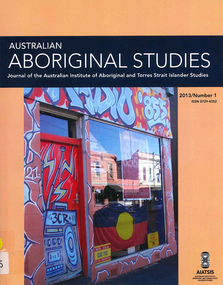
Periodical, Australian Institute of Aboriginal and Torres Strait Islander Studies, Australian Aboriginal studies : journal of the Australian Institute of Aboriginal and Torres Strait Islander Studies, 2013
... s learning through reading workshops, social media, and the writing and publication of their own stories. ...s learning through reading workshops, social media, and the writing and publication of their own stories. ...We don?t leave our identities at the city limits: Aboriginal and Torres Strait Islander people living in urban localities Bronwyn Fredericks Aboriginal and Torres Strait Islander people who live in cities and towns are often thought of as ?less Indigenous? than those who live ?in the bush?, as though they are ?fake? Aboriginal people ? while ?real? Aboriginal people live ?on communities? and ?real? Torres Strait Islander people live ?on islands?. Yet more than 70 percent of Australia?s Indigenous peoples live in urban locations (ABS 2007), and urban living is just as much part of a reality for Aboriginal and Torres Strait Islander people as living in remote discrete communities. This paper examines the contradictions and struggles that Aboriginal and Torres Strait Islander people experience when living in urban environments. It looks at the symbols of place and space on display in the Australian cities of Melbourne and Brisbane to demonstrate how prevailing social, political and economic values are displayed. Symbols of place and space are never neutral, and this paper argues that they can either marginalise and oppress urban Aboriginal and Torres Strait Islander people, or demonstrate that they are included and engaged. Juggling with pronouns: Racist discourse in spoken interaction on the radio Di Roy While the discourse of deficit with regard to Australian Indigenous health and wellbeing has been well documented in print media and through images on film and on television, radio talk concerning this discourse remains underresearched. This paper interrogates the power of an interactive news interview, aired on the Radio National Breakfast program on ABC Radio in 2011, to maintain and reproduce the discourse of deficit, despite the best intentions of the interview participants. Using a conversation-analytical approach, and membership categorisation analysis in particular, this paper interrogates the spoken interaction between a well-known radio interviewer and a respected medical researcher into Indigenous eye health. It demonstrates the recreation of a discourse emanating from longstanding hegemonies between mainstream and Indigenous Australians. Analysis of firstperson pronoun use shows the ongoing negotiation of social category boundaries and construction of moral identities through ascriptions to category members, upon which the intelligibility of the interview for the listening audience depended. The findings from analysis support claims in a considerable body of whiteness studies literature, the main themes of which include the pervasiveness of a racist discourse in Australian media and society, the power of invisible assumptions, and the importance of naming and exposing them. Changes in Pitjantjatjara mourning and burial practices Bill Edwards, University of South Australia This paper is based on observations over a period of more than five decades of changes in Pitjantjatjara burial practices from traditional practices to the introduction of Christian services and cemeteries. Missions have been criticised for enforcing such changes. However, in this instance, the changes were implemented by the Aboriginal people themselves. Following brief outlines of Pitjantjatjara traditional life, including burial practices, and of the establishment of Ernabella Mission in 1937 and its policy of respect for Pitjantjatjara cultural practices and language, the history of these changes which commenced in 1973 are recorded. Previously, deceased bodies were interred according to traditional rites. However, as these practices were increasingly at odds with some of the features of contemporary social, economic and political life, two men who had lost close family members initiated church funeral services and established a cemetery. These practices soon spread to most Pitjantjatjara communities in a manner which illustrates the model of change outlined by Everett Rogers (1962) in Diffusion of Innovations. Reference is made to four more recent funerals to show how these events have been elaborated and have become major social occasions. The world from Malarrak: Depictions of South-east Asian and European subjects in rock art from the Wellington Range, Australia Sally K May, Paul SC Ta�on, Alistair Paterson, Meg Travers This paper investigates contact histories in northern Australia through an analysis of recent rock paintings. Around Australia Aboriginal artists have produced a unique record of their experiences of contact since the earliest encounters with South-east Asian and, later, European visitors and settlers. This rock art archive provides irreplaceable contemporary accounts of Aboriginal attitudes towards, and engagement with, foreigners on their shores. Since 2008 our team has been working to document contact period rock art in north-western and western Arnhem Land. This paper focuses on findings from a site complex known as Malarrak. It includes the most thorough analysis of contact rock art yet undertaken in this area and questions previous interpretations of subject matter and the relationship of particular paintings to historic events. Contact period rock art from Malarrak presents us with an illustrated history of international relationships in this isolated part of the world. It not only reflects the material changes brought about by outside cultural groups but also highlights the active role Aboriginal communities took in responding to these circumstances. Addressing the Arrernte: FJ Gillen?s 1896 Engwura speech Jason Gibson, Australian National University This paper analyses a speech delivered by Francis James Gillen during the opening stages of what is now regarded as one of the most significant ethnographic recording events in Australian history. Gillen?s ?speech? at the 1896 Engwura festival provides a unique insight into the complex personal relationships that early anthropologists had with Aboriginal people. This recently unearthed text, recorded by Walter Baldwin Spencer in his field notebook, demonstrates how Gillen and Spencer sought to establish the parameters of their anthropological enquiry in ways that involved both Arrernte agency and kinship while at the same time invoking the hierarchies of colonial anthropology in Australia. By examining the content of the speech, as it was written down by Spencer, we are also able to reassesses the importance of Gillen to the ethnographic ambitions of the Spencer/Gillen collaboration. The incorporation of fundamental Arrernte concepts and the use of Arrernte words to convey the purpose of their 1896 fieldwork suggest a degree of Arrernte involvement and consent not revealed before. The paper concludes with a discussion of the outcomes of the Engwura festival and the subsequent publication of The Native Tribes of Central Australia within the context of a broader set of relationships that helped to define the emergent field of Australian anthropology at the close of the nineteenth century. One size doesn?t fit all: Experiences of family members of Indigenous gamblers Louise Holdsworth, Helen Breen, Nerilee Hing and Ashley Gordon Centre for Gambling Education and Research, Southern Cross University This study explores help-seeking and help-provision by family members of Indigenous people experiencing gambling problems, a topic that previously has been ignored. Data are analysed from face-to-face interviews with 11 family members of Indigenous Australians who gamble regularly. The results confirm that substantial barriers are faced by Indigenous Australians in accessing formal help services and programs, whether for themselves or a loved one. Informal help from family and friends appears more common. In this study, this informal help includes emotional care, practical support and various forms of ?tough love?. However, these measures are mostly in vain. Participants emphasise that ?one size doesn?t fit all? when it comes to avenues of gambling help for Indigenous peoples. Efforts are needed to identify how Indigenous families and extended families can best provide social and practical support to assist their loved ones to acknowledge and address gambling problems. Western Australia?s Aboriginal heritage regime: Critiques of culture, ethnography, procedure and political economy Nicholas Herriman, La Trobe University Western Australia?s Aboriginal Heritage Act 1972 (WA) and the de facto arrangements that have arisen from it constitute a large part of the Aboriginal ?heritage regime? in that state. Although designed ostensibly to protect Aboriginal heritage, the heritage regime has been subjected to various scholarly critiques. Indeed, there is a widespread perception of a need to reform the Act. But on what basis could this proceed? Here I offer an analysis of these critiques, grouped according to their focus on political economy, procedure, ethnography and culture. I outline problems surrounding the first three criticisms and then discuss two versions of the cultural critique. I argue that an extreme version of this criticism is weak and inconsistent with the other three critiques. I conclude that there is room for optimism by pointing to ways in which the heritage regime could provide more beneficial outcomes for Aboriginal people. Read With Me Everyday: Community engagement and English literacy outcomes at Erambie Mission (research report) Lawrence Bamblett Since 2009 Lawrie Bamblett has been working with his community at Erambie Mission on a literacy project called Read With Me. The programs - three have been carried out over the past four years - encourage parents to actively engage with their children?s learning through reading workshops, social media, and the writing and publication of their own stories. Lawrie attributes much of the project?s extraordinary success to the intrinsic character of the Erambie community, not least of which is their communal approach to living and sense of shared responsibility. The forgotten Yuendumu Men?s Museum murals: Shedding new light on the progenitors of the Western Desert Art Movement (research report) Bethune Carmichael and Apolline Kohen In the history of the Western Desert Art Movement, the Papunya School murals are widely acclaimed as the movement?s progenitors. However, in another community, Yuendumu, some 150 kilometres from Papunya, a seminal museum project took place prior to the completion of the Papunya School murals and the production of the first Papunya boards. The Warlpiri men at Yuendumu undertook a ground-breaking project between 1969 and 1971 to build a men?s museum that would not only house ceremonial and traditional artefacts but would also be adorned with murals depicting the Dreamings of each of the Warlpiri groups that had recently settled at Yuendumu. While the murals at Papunya are lost, those at Yuendumu have, against all odds, survived. Having been all but forgotten, this unprecedented cultural and artistic endeavour is only now being fully appreciated. Through the story of the genesis and construction of the Yuendumu Men?s Museum and its extensive murals, this paper demonstrates that the Yuendumu murals significantly contributed to the early development of the Western Desert Art Movement. It is time to acknowledge the role of Warlpiri artists in the history of the movement.b&w photographs, colour photographsracism, media, radio, pitjantjatjara, malarrak, wellington range, rock art, arrernte, fj gillen, engwura, indigenous gambling, ethnography, literacy, erambie mission, yuendumu mens museum, western desert art movement -
 Sunshine and District Historical Society Incorporated
Archive - Aboriginal First Nation and Archaelogy
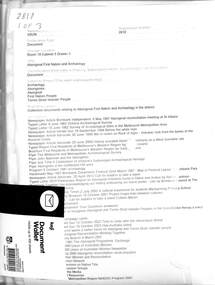
... Newspaper Article Brimbank Independent 6 May 1997 Aboriginal reconciliation meeting at St Albans|Typed Letter 8 June 1982 Victoria Archaelogical Survey|Typed Letter 10 June 1982 Survey of Archaelogical Sites in the Melbourne Metropolitan Area|Newspaper Article Herald Sun 18 September 1994 Before the white man|Newspaper Article Advocate 30 June 1999 We re rockin on Rock of Ages - Volcanic rock from the banks of the Kororoit Creek|Newspaper Article Advocate 20 June 2000 History revealed Aboriginal artefacts on a West Sunshine site|Typed Report First Residents of Melbourne's Western Region by Gary Presland|Brochure First Residents of Melbourne's Western Region by Gary Presland|Flyer The Melbourne and Metropolitan Archaeological Survey|Flyer John Bateman and the Aborigines|Flyer and Time A Celebration of Victoria's Submerged Archaelogical Heritage|Flyer Aborigines in the Gellibrand Hill area|Program 9 Octoberr 1981 Archaelogy|Handmade Map 1997 Brimbank Dreamtime Festival 22nd March 1997 - Map of Festival Layout at Brimbank Park|Newspaper Article Advocate 20 April 2013 Call for leaders to take a stand|Typed Letter 2010 Preliminary Report on Aboriginal Artefacts found in Albion and Ardeer by Robert Jackson|Brimbank Together Yes Acknowledging our history embracing our future poster - Use by Brimbank Council at The Hunt Club Community Centre|Newspaper Article Weekly Times 2 July 2002 A cultural experience for students Maribyrnong Primary School|Newspaper Article Living Museum 10 October 2001 Project forges links between cultures|The Advocate 20th April - Call for leaders to take a stand Colleen Marion|Booklet The Voice to Parliament|Booklet The Voice to Parliament Your Questions answered|Brochure Yes23 It's time to recognise Aboriginal and Torres Strait Islander Peoples in the Consititution throug a voice information sheets|Your official referendum booklet|Flyer How to vote yes campaign cards|Newspaper Article Herald Sun 15 October 2023 Time to Unite after the referendum defeat|Newspaper Article Herald Sun 16 October 2023 How Australia Voted|Brochure Brimbank council wants a better future for Aboriginal and Torres Strait Islander people|Brochure council for Aboriginal Reconciliation Working Together|Email La Trobe University Branch 4 March 2001|Typed Letter 13 March 1991 The Aboriginal Programme Exchange|Typed Letter 20 April 2000 Union of Australian Women|Typed Letter August 2000 Union of Australian Women Newsletter|Magazine Dissent Spring 2000 Aborigines reconciliation racial prejudice|Brochure Talking Together Women and Reconciliation|Brochure A National Action Network|Brochure High Court Decision on Native Title|Brochure Running Discussion Groups|Brochure Dealing with the Media|Brochure Contacts and Resources|Program The Western Metropolitan Region NAIDOC Program 2007|Newspaper Article The Age 25 May 1991 The Jawoyns troubled dreaming|Newsletter AEQUA Equal Employment Opportunity Newsletter 12 August 1981 Aboriginal employment in the APS on the up|Photocopy of Photograph Off Opie Road near Brachnell Place|Brochure Brimbank News Issue 10 2023 Be Bold Festival 7 October 2023|Typed Notes Uluru Statement from the Heart|Newspaper Article The Age 18 January 2001 William Barak|Newspaper Article The Star 17th October 2006 Special day for youth Karen Jackson|Newspaper Article Lalor Star March 1980 Aboriginal Treaty|Typed Letter Womens International Leagure for Peace and Freedom November 1979|Newspaper Article The Age 17 April 1997 Rednecks using Wik debate to grab new rights|Flyer Support Workers Claims for Stolen Wages and Return the Stolen wages for Workers and their families and Support Wage Justice Return the Stolen Wages|Handwritten Letter from Leo Prestia 27 January|List of Aboriginal Organisatons February 2004|Newspaper Article A Saturday Reflection|Postcard Pitchi Richi Sanctuary Alice Springs|Postcard Pitchi Richi Sanctuary Alice Spring|Invitation The Mayor and Councillors of Moreland City Council Connections Land and people|Notes Address Selina Aborignes|Booklet Recognition The Way forward An Issues paper from the Ausralian Catholic Social Justice Council|Newspaper Article The Age 21 January 1980 Signs of ancient man found in threatened valley|Form Australians for Native title reconciliation|Booklet Vic Uni News June 1997 Jindi woraback joining together|Newspaper Article The Age 17 April 1997 Black network hears Wik plan|Booklet Australian Institute for a Just Sustainable Peaceful Future Native Title Implications for Land management April 1997 Discussion Paper Number 11|Typed Notes Parliament of Australia Department of the Parliamentary Library current Information Digest Education and Welfare 14 January 1973 Aborigines Government Policy|Koori music and the Multicultural choir 13 July|Typed Notes 4 February 2004|Flyer State of Shock A new film by David Bradbury|Newspaper Article 21 October 1997 The Age Metro Arts and Life Heritage voting for a Trust you can trust6|Typed Letter from Parliament of Australia The Senate Hon Margaret Reynolds 15 September 1997 Native title Amendment bill 1997|Typed notes What are the International implications of Australias proposed legislative response to the Wik decision 16 May 1997|Newspaper Article The Age 11 October 1980 CRA and the Aborigines|Newspaper Article The Age 27 October 1980 Lost languages of the Aborigine|Program Western Metropolitan Region NAIDOC Committee 6 October 2004|Typed Notes How the English Language is used to put Aborigines down Deny us rights or Is Employed as a Political Tool Against Us|Flyer Australias for Reconciliation Study Circle The Footscray Community Arts Centre|Newspaper Article Weekly Times 4 December 2001 Smoking marks opening|Flyer Save The Racial Discrimination Act The Law for All of Us|Flyer Freedom fund for 1988 Dont Celebrate 1988 White Australia Has a Black History|Typed Notes 4 May 1997 Area Meeting on Aboriginal Reconciliation 20 May 1997 Why Reconciliation|Newspaper Article Sunday Press 17 July 1988 Hes black hes white and hes Browned off|Handwritten list Morning Tea with Yolande Klempprier 5 December 1979|Typed Notes Interim Consultative Committee Western Region Community Legal Centre|Brochure Aboriginal Myths and Legends from the Goldfields to the South West of Western Australia|Brochure Messagestick Conserve or Destroy May 1980 Voume 5 No 1|Brochure Aboringinal Women's Task Force "We need to know what you think"|Newspaper Article The Age 27th February 1980 Aboriginal skeleton found by workmen Barries Rd Melton|Newspaper Article 18th September 1985 Only maternal instricts have saved Aboriginal race from destruction says Hollows|Newspaper Article Star Weekly 26th March 2024 New Indigenous name for Sydenham Park "Yaluk barring Park"|Newspaper Article Star Weekly 30th July 2024 - New name for park|Newspaper Artilce 9th January 2024 Abandoning January 26 - Brimbank Council will no longer hold citizenship cermonies on January 26...Aborigine Aboriginal First Nation Newspaper Article Brimbank Independent 6 May 1997 Aboriginal reconciliation meeting at St Albans|Typed Letter 8 June 1982 Victoria Archaelogical Survey|Typed Letter 10 June 1982 Survey of Archaelogical Sites in the Melbourne Metropolitan Area|Newspaper Article Herald Sun 18 September 1994 Before the white man|Newspaper Article Advocate 30 June 1999 We re rockin on Rock of Ages - Volcanic rock from the banks of the Kororoit Creek|Newspaper Article Advocate 20 June 2000 History revealed Aboriginal artefacts on a West Sunshine site|Typed Report First Residents of Melbourne's Western Region by Gary Presland|Brochure First Residents of Melbourne's Western Region by Gary Presland|Flyer The Melbourne and Metropolitan Archaeological Survey|Flyer John Bateman and the Aborigines|Flyer and Time A Celebration of Victoria's Submerged Archaelogical Heritage|Flyer Aborigines in the Gellibrand Hill area|Program 9 Octoberr 1981 Archaelogy|Handmade Map 1997 Brimbank Dreamtime Festival 22nd March 1997 - Map of Festival Layout at Brimbank Park|Newspaper Article Advocate 20 April 2013 Call for leaders to take a stand|Typed Letter 2010 Preliminary Report on Aboriginal Artefacts found in Albion and Ardeer by Robert Jackson|Brimbank Together Yes Acknowledging our history embracing our future poster - Use by Brimbank Council at The Hunt Club Community Centre|Newspaper Article Weekly Times 2 July 2002 A cultural experience for students Maribyrnong Primary School|Newspaper Article Living Museum 10 October 2001 Project forges links between cultures|The Advocate 20th April - Call for leaders to take a stand Colleen Marion|Booklet The Voice to Parliament|Booklet The Voice to Parliament Your Questions answered|Brochure Yes23 It's time to recognise Aboriginal and Torres Strait Islander Peoples in the Consititution throug a voice information sheets|Your official referendum booklet|Flyer How to vote yes campaign cards|Newspaper Article Herald Sun 15 October 2023 Time to Unite after the referendum defeat|Newspaper Article Herald Sun 16 October 2023 How Australia Voted|Brochure Brimbank council wants a better future for Aboriginal and Torres Strait Islander people|Brochure council for Aboriginal Reconciliation Working Together|Email La Trobe University Branch 4 March 2001|Typed Letter 13 March 1991 The Aboriginal Programme Exchange|Typed Letter 20 April 2000 Union of Australian Women|Typed Letter August 2000 Union of Australian Women Newsletter|Magazine Dissent Spring 2000 Aborigines reconciliation racial prejudice|Brochure Talking Together Women and Reconciliation|Brochure A National Action Network|Brochure High Court Decision on Native Title|Brochure Running Discussion Groups|Brochure Dealing with the Media|Brochure Contacts and Resources|Program The Western Metropolitan Region NAIDOC Program 2007|Newspaper Article The Age 25 May 1991 The Jawoyns troubled dreaming|Newsletter AEQUA Equal Employment Opportunity Newsletter 12 August 1981 Aboriginal employment in the APS on the up|Photocopy of Photograph Off Opie Road near Brachnell Place|Brochure Brimbank News Issue 10 2023 Be Bold Festival 7 October 2023|Typed Notes Uluru Statement from the Heart|Newspaper Article The Age 18 January 2001 William Barak|Newspaper Article The Star 17th October 2006 Special day for youth Karen Jackson|Newspaper Article Lalor Star March 1980 Aboriginal Treaty|Typed Letter Womens International Leagure for Peace and Freedom November 1979|Newspaper Article The Age 17 April 1997 Rednecks using Wik debate to grab new rights|Flyer Support Workers Claims for Stolen Wages and Return the Stolen wages for Workers and their families and Support Wage Justice Return the Stolen Wages|Handwritten Letter from Leo Prestia 27 January|List of Aboriginal Organisatons February 2004|Newspaper Article A Saturday Reflection|Postcard Pitchi Richi Sanctuary Alice Springs|Postcard Pitchi Richi Sanctuary Alice Spring|Invitation The Mayor and Councillors of Moreland City Council Connections Land and people|Notes Address Selina Aborignes|Booklet Recognition The Way forward An Issues paper from the Ausralian Catholic Social Justice Council|Newspaper Article The Age 21 January 1980 Signs of ancient man found in threatened valley|Form Australians for Native title reconciliation|Booklet Vic Uni News June 1997 Jindi woraback joining together|Newspaper Article The Age 17 April 1997 Black network hears Wik plan|Booklet Australian Institute for a Just Sustainable Peaceful Future Native Title Implications for Land management April 1997 Discussion Paper Number 11|Typed Notes Parliament of Australia Department of the Parliamentary Library current Information Digest Education and Welfare 14 January 1973 Aborigines Government Policy|Koori music and the Multicultural choir 13 July|Typed Notes 4 February 2004|Flyer State of Shock A new film by David Bradbury|Newspaper Article 21 October 1997 The Age Metro Arts and Life Heritage voting for a Trust you can trust6|Typed Letter from Parliament of Australia The Senate Hon Margaret Reynolds 15 September 1997 Native title Amendment bill 1997|Typed notes What are the International implications of Australias proposed legislative response to the Wik decision 16 May 1997|Newspaper Article The Age 11 October 1980 CRA and the Aborigines|Newspaper Article The Age 27 October 1980 Lost languages of the Aborigine|Program Western Metropolitan Region NAIDOC Committee 6 October 2004|Typed Notes How the English Language is used to put Aborigines down Deny us rights or Is Employed as a Political Tool Against Us|Flyer Australias for Reconciliation Study Circle The Footscray Community Arts Centre|Newspaper Article Weekly Times 4 December 2001 Smoking marks opening|Flyer Save The Racial Discrimination Act The Law for All of Us|Flyer Freedom fund for 1988 Dont Celebrate 1988 White Australia Has a Black History|Typed Notes 4 May 1997 Area Meeting on Aboriginal Reconciliation 20 May 1997 Why Reconciliation|Newspaper Article Sunday Press 17 July 1988 Hes black hes white and hes Browned off|Handwritten list Morning Tea with Yolande Klempprier 5 December 1979|Typed Notes Interim Consultative Committee Western Region Community Legal Centre|Brochure Aboriginal Myths and Legends from the Goldfields to the South West of Western Australia|Brochure Messagestick Conserve or Destroy May 1980 Voume 5 No 1|Brochure Aboringinal Women's Task Force "We need to know what you think"|Newspaper Article The Age 27th February 1980 Aboriginal skeleton found by workmen Barries Rd Melton|Newspaper Article 18th September 1985 Only maternal instricts have saved Aboriginal race from destruction says Hollows|Newspaper Article Star Weekly 26th March 2024 New Indigenous name for Sydenham Park "Yaluk barring Park"|Newspaper Article Star Weekly 30th July 2024 - New name for park|Newspaper Artilce 9th January 2024 Abandoning January 26 - Brimbank Council will no longer hold citizenship cermonies on January 26 Collection documents relating to Aboriginal First Nation and Archaelogy in the district Archive Aboriginal First Nation and Archaelogy ...Newspaper Article Brimbank Independent 6 May 1997 Aboriginal reconciliation meeting at St Albans|Typed Letter 8 June 1982 Victoria Archaelogical Survey|Typed Letter 10 June 1982 Survey of Archaelogical Sites in the Melbourne Metropolitan Area|Newspaper Article Herald Sun 18 September 1994 Before the white man|Newspaper Article Advocate 30 June 1999 We re rockin on Rock of Ages - Volcanic rock from the banks of the Kororoit Creek|Newspaper Article Advocate 20 June 2000 History revealed Aboriginal artefacts on a West Sunshine site|Typed Report First Residents of Melbourne's Western Region by Gary Presland|Brochure First Residents of Melbourne's Western Region by Gary Presland|Flyer The Melbourne and Metropolitan Archaeological Survey|Flyer John Bateman and the Aborigines|Flyer and Time A Celebration of Victoria's Submerged Archaelogical Heritage|Flyer Aborigines in the Gellibrand Hill area|Program 9 Octoberr 1981 Archaelogy|Handmade Map 1997 Brimbank Dreamtime Festival 22nd March 1997 - Map of Festival Layout at Brimbank Park|Newspaper Article Advocate 20 April 2013 Call for leaders to take a stand|Typed Letter 2010 Preliminary Report on Aboriginal Artefacts found in Albion and Ardeer by Robert Jackson|Brimbank Together Yes Acknowledging our history embracing our future poster - Use by Brimbank Council at The Hunt Club Community Centre|Newspaper Article Weekly Times 2 July 2002 A cultural experience for students Maribyrnong Primary School|Newspaper Article Living Museum 10 October 2001 Project forges links between cultures|The Advocate 20th April - Call for leaders to take a stand Colleen Marion|Booklet The Voice to Parliament|Booklet The Voice to Parliament Your Questions answered|Brochure Yes23 It's time to recognise Aboriginal and Torres Strait Islander Peoples in the Consititution throug a voice information sheets|Your official referendum booklet|Flyer How to vote yes campaign cards|Newspaper Article Herald Sun 15 October 2023 Time to Unite after the referendum defeat|Newspaper Article Herald Sun 16 October 2023 How Australia Voted|Brochure Brimbank council wants a better future for Aboriginal and Torres Strait Islander people|Brochure council for Aboriginal Reconciliation Working Together|Email La Trobe University Branch 4 March 2001|Typed Letter 13 March 1991 The Aboriginal Programme Exchange|Typed Letter 20 April 2000 Union of Australian Women|Typed Letter August 2000 Union of Australian Women Newsletter|Magazine Dissent Spring 2000 Aborigines reconciliation racial prejudice|Brochure Talking Together Women and Reconciliation|Brochure A National Action Network|Brochure High Court Decision on Native Title|Brochure Running Discussion Groups|Brochure Dealing with the Media|Brochure Contacts and Resources|Program The Western Metropolitan Region NAIDOC Program 2007|Newspaper Article The Age 25 May 1991 The Jawoyns troubled dreaming|Newsletter AEQUA Equal Employment Opportunity Newsletter 12 August 1981 Aboriginal employment in the APS on the up|Photocopy of Photograph Off Opie Road near Brachnell Place|Brochure Brimbank News Issue 10 2023 Be Bold Festival 7 October 2023|Typed Notes Uluru Statement from the Heart|Newspaper Article The Age 18 January 2001 William Barak|Newspaper Article The Star 17th October 2006 Special day for youth Karen Jackson|Newspaper Article Lalor Star March 1980 Aboriginal Treaty|Typed Letter Womens International Leagure for Peace and Freedom November 1979|Newspaper Article The Age 17 April 1997 Rednecks using Wik debate to grab new rights|Flyer Support Workers Claims for Stolen Wages and Return the Stolen wages for Workers and their families and Support Wage Justice Return the Stolen Wages|Handwritten Letter from Leo Prestia 27 January|List of Aboriginal Organisatons February 2004|Newspaper Article A Saturday Reflection|Postcard Pitchi Richi Sanctuary Alice Springs|Postcard Pitchi Richi Sanctuary Alice Spring|Invitation The Mayor and Councillors of Moreland City Council Connections Land and people|Notes Address Selina Aborignes|Booklet Recognition The Way forward An Issues paper from the Ausralian Catholic Social Justice Council|Newspaper Article The Age 21 January 1980 Signs of ancient man found in threatened valley|Form Australians for Native title reconciliation|Booklet Vic Uni News June 1997 Jindi woraback joining together|Newspaper Article The Age 17 April 1997 Black network hears Wik plan|Booklet Australian Institute for a Just Sustainable Peaceful Future Native Title Implications for Land management April 1997 Discussion Paper Number 11|Typed Notes Parliament of Australia Department of the Parliamentary Library current Information Digest Education and Welfare 14 January 1973 Aborigines Government Policy|Koori music and the Multicultural choir 13 July|Typed Notes 4 February 2004|Flyer State of Shock A new film by David Bradbury|Newspaper Article 21 October 1997 The Age Metro Arts and Life Heritage voting for a Trust you can trust6|Typed Letter from Parliament of Australia The Senate Hon Margaret Reynolds 15 September 1997 Native title Amendment bill 1997|Typed notes What are the International implications of Australias proposed legislative response to the Wik decision 16 May 1997|Newspaper Article The Age 11 October 1980 CRA and the Aborigines|Newspaper Article The Age 27 October 1980 Lost languages of the Aborigine|Program Western Metropolitan Region NAIDOC Committee 6 October 2004|Typed Notes How the English Language is used to put Aborigines down Deny us rights or Is Employed as a Political Tool Against Us|Flyer Australias for Reconciliation Study Circle The Footscray Community Arts Centre|Newspaper Article Weekly Times 4 December 2001 Smoking marks opening|Flyer Save The Racial Discrimination Act The Law for All of Us|Flyer Freedom fund for 1988 Dont Celebrate 1988 White Australia Has a Black History|Typed Notes 4 May 1997 Area Meeting on Aboriginal Reconciliation 20 May 1997 Why Reconciliation|Newspaper Article Sunday Press 17 July 1988 Hes black hes white and hes Browned off|Handwritten list Morning Tea with Yolande Klempprier 5 December 1979|Typed Notes Interim Consultative Committee Western Region Community Legal Centre|Brochure Aboriginal Myths and Legends from the Goldfields to the South West of Western Australia|Brochure Messagestick Conserve or Destroy May 1980 Voume 5 No 1|Brochure Aboringinal Women's Task Force "We need to know what you think"|Newspaper Article The Age 27th February 1980 Aboriginal skeleton found by workmen Barries Rd Melton|Newspaper Article 18th September 1985 Only maternal instricts have saved Aboriginal race from destruction says Hollows|Newspaper Article Star Weekly 26th March 2024 New Indigenous name for Sydenham Park "Yaluk barring Park"|Newspaper Article Star Weekly 30th July 2024 - New name for park|Newspaper Artilce 9th January 2024 Abandoning January 26 - Brimbank Council will no longer hold citizenship cermonies on January 26aborigine, aboriginal, first nation -
Koorie Heritage Trust
Article - Thesis, Gibbins, Helen, Possum Skin Cloaks and the Construction of Identity Through Place and Space, 2007
... I will use the construction of possum skin cloaks as a case study through which to examine this. A thesis submitted to the School of Political and Social Inquiry Monash University (2007) in partial fulfllment of a Bachelor of Letters (Honours) degree. 111 P.; tables; ports.; facs.; refs.; maps; Possum Skin Cloaks and the Construction of Identity Through Place and Space. ...In this thesis I aim to investigate how Indigenous people in southeastern Australia construct identity through place two hundred and eighteen years after the first arrival of European settlers and the dislocation of Indigenous people from Country began. I will use the construction of possum skin cloaks as a case study through which to examine this. A thesis submitted to the School of Political and Social Inquiry Monash University (2007) in partial fulfllment of a Bachelor of Letters (Honours) degree.111 P.; tables; ports.; facs.; refs.; maps; In this thesis I aim to investigate how Indigenous people in southeastern Australia construct identity through place two hundred and eighteen years after the first arrival of European settlers and the dislocation of Indigenous people from Country began. I will use the construction of possum skin cloaks as a case study through which to examine this. A thesis submitted to the School of Political and Social Inquiry Monash University (2007) in partial fulfllment of a Bachelor of Letters (Honours) degree.aboriginal, australin, material culture, possum skin cloaks, aboriginal australian., indigenous culture, aboriginal, australian - 19th century, contemporary koorie culture - possum skin cloak making. -
Koorie Heritage Trust
Book, Brady, Maggie, Heavy metal : the social meaning of petrol sniffing in Australia, 1992
... Heavy metal : the social meaning of petrol sniffing in Australia Book Brady, Maggie Aboriginal Studies Press ...In Heavy Metal the author attempts to go beyond the socio-political or disease models. Brady focuses on petrol (gasoline) sniffing in a number of Aboriginal communities to arrive at an understanding of the users' subjective decisions to engage in this behaviour.... This informed ethnographic account is the first major published study of contemporary drug use by Aborigines.xii, 223 p. ; ill., maps : 24 cm.In Heavy Metal the author attempts to go beyond the socio-political or disease models. Brady focuses on petrol (gasoline) sniffing in a number of Aboriginal communities to arrive at an understanding of the users' subjective decisions to engage in this behaviour.... This informed ethnographic account is the first major published study of contemporary drug use by Aborigines.petrol sniffing -- australia. | aboriginal australians -- health and hygiene. | aboriginal australians -- substance use. | inhalant abuse -- australia. -
Koorie Heritage Trust
Book, Bandler, Faith, Turning the tide : a personal history of the Federal Council for the Advancement of Aborigines and Torres Strait Islanders, 1989
... . | Aboriginal Australians -- Social conditions. | Race discrimination -- Australia. | Australia -- History -- 20th century. | Australia -- Race relations. ...Turning the Tide is about political struggle in the past three decades of Aboriginal affairs in Australia. Faith Bandler's background has given her the right to speak out loudly and clearly against racial discrimination. In 1956 she co-founded the Aboriginal - Australian Fellowship and later became a key figure in the founding of the Federal Council for the Advancement of Aborigines and Torres Strait Islandersxvii, 173 p. : ill., ports. ; 20 cm.Turning the Tide is about political struggle in the past three decades of Aboriginal affairs in Australia. Faith Bandler's background has given her the right to speak out loudly and clearly against racial discrimination. In 1956 she co-founded the Aboriginal - Australian Fellowship and later became a key figure in the founding of the Federal Council for the Advancement of Aborigines and Torres Strait Islandersbandler, faith. | federal council for the advancement of aborigines and torres strait islanders -- history. | federal council for the advancement of aborigines and torres strait islanders -- history. | aboriginal australians -- social conditions. | race discrimination -- australia. | australia -- history -- 20th century. | australia -- race relations. -
Unions Ballarat
Equality and authority: a study of class, status and power in Australia, Encel, S, 1970
... Significant to economics, social structures, politics and way of life. ...Study of Australian society - "class, status and power in ... affluent industrial communities of today ...". Book is in five parts: 1. Introduction; 2. An egalitarian society? 3. Political authority; 4. Economy and society; 5. Nationalism, imperialism and militarism. Significant to economics, social structures, politics and way of life.Paperback book; 492 pages. Cover: black background; orange and white text; photographs of unknown persons.Front cover: title and author's name. Back cover: description of content.btlc, ballarat trades hall, ballarat trades and labour council, sociology, class - australia, bureaucracy, politics, economy, war -
Unions Ballarat
Book - Labour History No. 66 May 1994 (D.J. Spiers Collection), Irving, Terry
... Published semi-annually, contains refereed, scholarly articles about social and labour history in Australasia, - labour politics, trade unions, management labour practices, co-operatives, gender and ethnicity. ...Published semi-annually, contains refereed, scholarly articles about social and labour history in Australasia, - labour politics, trade unions, management labour practices, co-operatives, gender and ethnicity. This edition includes these articles: -Labourism: a Political Genealogy -Class, Populism and Labour Politics in Victoria, 1890-1914 -Keynesianism, Socialism and Labourism and the Role of Ideas in Labour Ideology -A Century of Laborism and the State, 1891-1993: An Historical Interpretation -We are of Age: Class, Locality and Region at Port Kembla, 1900-1940 -Researching Industrial Relations History: The Development of a Databas on Australian Trade Unions 1825-1900 -Loyalty and Communists: an interview with Bill Gollan -International Women's Day in Newcastle in the Fifties and Sixties: A Personal Account -Forthcoming: A Bibliography of Australian Communism -Postcard from California: the Hoover Institute -The ACTU Congress of 1993 -Australian Canadian Labour History Conference -The Australian Society for the Study of Labour History -The Classing Gaze: Sexuality, Class and Surveillance -Book reviews -Newcastle's Special Day; Australians in Spain Memorial UnveilingLabour and class politics; direct relevance to industrial relations; social issues in general that fall within the purview of the union movement.Book; paper.btlc, ballarat trades and labour council, history - labour, labourism, politics - class, industrial relations, economics, politics - communism, women's rights, book reviews, conference reports -
 Returned Nurses RSL Sub-branch
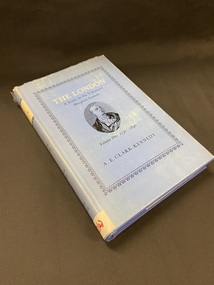
Book - Hardcover book, Pitman Medical Publishing Company, The London: a study in the voluntary hospital system: volume one, the first hundred years, 1740-1840, 1963
... Rather it is the exciting early life of one, told in the entertaining style of the day against the medical, social and political history of that period.' ...This is the first volume of the history of the Voluntary Hospital System. 'This book is not just another history of a hospital. Rather it is the exciting early life of one, told in the entertaining style of the day against the medical, social and political history of that period.' [From dust jacket]Hardcover book with a blue dust jacket. The dust jacket has an ornate black border surrounding the title and author information and in the centre is a black pen drawing of a man in an oval template. The spine has a cream coloured box at the top with 'The London' printed in black.non-fictionThis is the first volume of the history of the Voluntary Hospital System. 'This book is not just another history of a hospital. Rather it is the exciting early life of one, told in the entertaining style of the day against the medical, social and political history of that period.' [From dust jacket]hospitals, london hospital, history of hospitals
