
Showing 391 items matching "social research"
-
 Robin Boyd Foundation
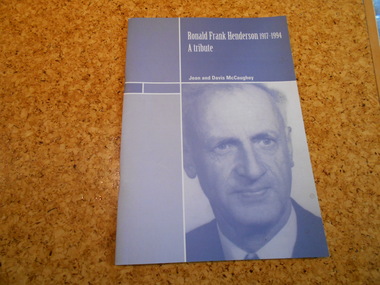
Book, Jean and Davis McCaughey, Ronald Frank Henderson: A Tribute, 1997
... Institute of Applied Economic and Social Research...Melbourne Institute of Applied Economic and Social Research...Australian biography economists philanthropists University of Melbourne Institute of Applied Economic and Social Research Ronald Frank Henderson economics Walsh St library Staple bound booklet Ronald Frank Henderson: A Tribute Book Jean and Davis McCaughey Melbourne Institute of Applied Economic and Social Research ...Staple bound bookletaustralian biography, economists, philanthropists, university of melbourne, institute of applied economic and social research, ronald frank henderson, economics, walsh st library -
 Federation University Historical Collection
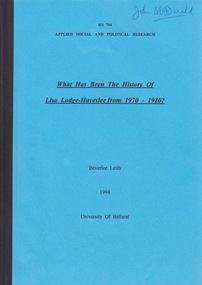
Document - Document - Research Paper, University of Ballarat: Applied Social and Political Research; "What has been the History of Lisa Lodge-Haveslee from 1970 - 1980?" Beverlee Leith, 1994
... University of Ballarat: Applied Social and Political Research; "What has been the History of Lisa Lodge-Haveslee from 1970 - 1980?" ...research ethics committee...school of humanities & social sciences...Research Ethics Committee, University of Ballarat. This was granted at their meeting on Thursday, 11 August 1994. Dr John McDonald, School of Humanities and Social Sciences was supervisor....University of Ballarat: Applied Social and Political Research; "What has been the History of Lisa Lodge-Haveslee from 1970 - 1980?" ...Lisa Lodge Girls' Hostel, Ballarat, was established in 1970 and was run by a committee of women. All the women were Honorary Probation Officers. It provided residential care for eight adolescent girls at a time. Lisa Lodge was located in a number of different properties around Ballarat. The Hostel closed in 1994. Some time after this, Hayeslee House (another home in Ballarat, run by the same committee) became known as Lisa Lodge. This Committee managed a number of institutions in the Ballarat region. Another institution to start in 1994 was Berry Street Incorporated that amalgamated with Sutherland Child, Youth and Family Services. In 2009 Berry Street was the largest independent child and family welfare organisation in Victoria. In 2012 Lisa Lodge merged with Berry Street to strengthen Berry Street's services provided in the Grampians Region of Victoria. This research paper explores the first ten years of Lisa Lodge. Of note is Lisa Lodge was set up by a group of women for a group of women. It depended on donations to continue operating. Data was collected through interviews and analysing minutes of meetings. Correspondence and newspaper clipping were also used. This is a historical report so there are no recommendations. Before proceeding with this project, Beverlee Leith had to seek approval from the Human Research Ethics Committee, University of Ballarat. This was granted at their meeting on Thursday, 11 August 1994. Dr John McDonald, School of Humanities and Social Sciences was supervisor.Booklet of 51 pages. Blue paper cover front and back. Pages are glued together and have black binding. Name John McDonald written in biro - top right corner of front cover. Date of item is 1994honorary probation officers, ballarat, adolescent girls, hayeslee house, minutes of meetings, correspondence, berry street, interviews, beverlee leith, human research ethics committee, school of humanities & social sciences, dr john mcdonald, lisa lodge girls' hostel, residential care -
 Whitehorse Historical Society Inc.
Document, Australian Social History House Research Assignment, 1986
... Australian Social History House Research Assignment...Australian Social History House Research Assignment Document Document ...Social History of 2 Gordon Crescent, Blackburn,Social History of 2 Gordon Crescent, Blackburn, included - History of Blackburn, Architecture of the House and first owner, Thomas Richards Burrowes. Morton. Real Estate Brochures, Maps, Photos, Floor Plans.Social History of 2 Gordon Crescent, Blackburn, morton thomas richards burrowes, architecture -
The Ed Muirhead Physics Museum
FACIT Electronic
... as for EL2: 14 Electronic digits appear on Screen Plaque: Donated by the Institute of Applied Economic and Social Research 21-6-80...as for EL2: 14 Electronic digits appear on Screen Plaque: Donated by the Institute of Applied Economic and Social Research 21-6-80 FACIT Electronic ...as for EL2: 14 Electronic digits appear on Screen Plaque: Donated by the Institute of Applied Economic and Social Research 21-6-80 -
 Broadmeadows Historical Society & Museum
Book - Project Report, Jan Flannagan, The Housing and Accommodation Needs of the Aged in the City of Broadmeadows, 1985
... ...Social Research...social issue. The publication contributes to understanding the development of housing, welfare, and community services within Broadmeadows and serves as a valuable research resource for historians, social researchers, urban planners and local studies collections. ...Research report investigating the housing and accommodation needs of elderly residents within the City of Broadmeadows. The publication analyses demographic characteristics, housing circumstances, service provision, and future accommodation requirements of older people, providing recommendations to assist local government planning and community welfare initiatives. The report contains statistical data, maps, analysis, and references relating to ageing and housing policy in Broadmeadows during the mid-1980s.Bound report of approximately 95-100 pages comprising introduction, demographic analysis, assessment of housing and accommodation conditions for older residents, maps, statistical data, findings, recommendations, bibliography, and supporting research relating to the City of Broadmeadows.non-fictionResearch report investigating the housing and accommodation needs of elderly residents within the City of Broadmeadows. The publication analyses demographic characteristics, housing circumstances, service provision, and future accommodation requirements of older people, providing recommendations to assist local government planning and community welfare initiatives. The report contains statistical data, maps, analysis, and references relating to ageing and housing policy in Broadmeadows during the mid-1980s.broadmeadows (victoria), city of broadmeadows, older people, ageing population, housing, housing needs, accommodation, aged accommodation, aged care, retirement housing, community welfare, social services, municipal planning, local government, urban development, demographic studies, social policy, community development, public housing, independent living, senior citizens, population ageing, human services, victoria (australia), social research -
The Ed Muirhead Physics Museum
S.C.M. HAMANN
... HAMANN Mechanical Type 505 Ser. no. 501354 Donated by Institute of Applied Economic and Social Research keys: 9 x 8 x 16 ELECTRICAL!...HAMANN Mechanical Type 505 Ser. no. 501354 Donated by Institute of Applied Economic and Social Research keys: 9 x 8 x 16 ELECTRICAL! S.C.M. ...S.C.M. HAMANN Mechanical Type 505 Ser. no. 501354 Donated by Institute of Applied Economic and Social Research keys: 9 x 8 x 16 ELECTRICAL!HANANN Rechenmaschinen GMBH Berlin SW61 (West G) -
 The Ed Muirhead Physics Museum
S.C.M. HAMANN
... HAMANN Mechanical Type 505 Ser. no. 501354 Donated by Institute of Applied Economic and Social Research keys: 9 x 8 x 16 ELECTRICAL! ...HAMANN Mechanical Type 505 Ser. no. 501354 Donated by Institute of Applied Economic and Social Research keys: 9 x 8 x 16 ELECTRICAL! S.C.M. ...S.C.M. HAMANN Mechanical Type 505 Ser. no. 501354 Donated by Institute of Applied Economic and Social Research keys: 9 x 8 x 16 ELECTRICAL! HANANN Rechenmaschinen GMBH Berlin SW61 (West G) -
 Victorian Aboriginal Corporation for Languages
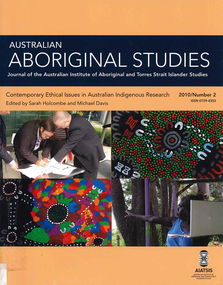
Periodical, Australian Institute of Aboriginal and Torres Strait Islander Studies, Australian Aboriginal studies : journal of the Australian Institute of Aboriginal and Torres Strait Islander Studies, 2010
... ...Indigenous research...social...Research in Indigenous Studies and draws upon both actual and hypothetical examples of issues that may arise when requests are made for Indigenous material. Specific concerns about ethical practices in collecting data and the subsequent control of access to both the data itself and to published works based upon it are raised within the context of several types of collections, including those held by AIATSIS and by Native Title Representative Bodies. Ethics or social...Ngarrindjeri ethics ethnography Indigenous research social justice Indigenous health b&w photographs, colour photographs 'Whose Ethics?' ...'Whose Ethics?':Codifying and enacting ethics in research settings Bringing ethics up to date? A review of the AIATSIS ethical guidelines Michael Davis (Independent Academic) A revision of the AIATSIS Guidelines for Ethical Research in Indigenous Studies was carried out during 2009-10. The purpose of the revision was to bring the Guidelines up to date in light of a range of critical developments that have occurred in Indigenous rights, research and knowledge management since the previous version of the Guidelines was released in 2000. In this paper I present an outline of these developments, and briefly discuss the review process. I argue that the review, and the developments that it responded to, have highlighted that ethical research needs to be thought about more as a type of behaviour and practice between engaged participants, and less as an institutionalised, document-focused and prescriptive approach. The arrogance of ethnography: Managing anthropological research knowledge Sarah Holcombe (ANU) The ethnographic method is a core feature of anthropological practice. This locally intensive research enables insight into local praxis and culturally relative practices that would otherwise not be possible. Indeed, empathetic engagement is only possible in this close and intimate encounter. However, this paper argues that this method can also provide the practitioner with a false sense of his or her own knowing and expertise and, indeed, with arrogance. And the boundaries between the anthropologist as knowledge sink - cultural translator and interpreter - and the knowledge of the local knowledge owners can become opaque. Globalisation and the knowledge ?commons?, exemplified by Google, also highlight the increasing complexities in this area of the governance and ownership of knowledge. Our stronghold of working in remote areas and/or with marginalised groups places us at the forefront of negotiating the multiple new technological knowledge spaces that are opening up in the form of Indigenous websites and knowledge centres in these areas. Anthropology is not immune from the increasing awareness of the limitations and risks of the intellectual property regime for protecting or managing Indigenous knowledge. The relevance of the Declaration on the Rights of Indigenous Peoples in opening up a ?rights-based? discourse, especially in the area of knowledge ownership, brings these issues to the fore. For anthropology to remain relevant, we have to engage locally with these global discourses. This paper begins to traverse some of this ground. Protocols: Devices for translating moralities, controlling knowledge and defining actors in Indigenous research, and critical ethical reflection Margaret Raven (Institute for Sustainability and Technology Policy (ISTP), Murdoch University) Protocols are devices that act to assist with ethical research behaviour in Indigenous research contexts. Protocols also attempt to play a mediating role in the power and control inherent in research. While the development of bureaucratically derived protocols is on the increase, critiques and review of protocols have been undertaken in an ad hoc manner and in the absence of an overarching ethical framework or standard. Additionally, actors implicated in research networks are seldom theorised. This paper sketches out a typology of research characters and the different moral positioning that each of them plays in the research game. It argues that by understanding the ways actors enact research protocols we are better able to understand what protocols are, and how they seek to build ethical research practices. Ethics and research: Dilemmas raised in managing research collections of Aboriginal and Torres Strait Islander materials Grace Koch (AIATSIS) This paper examines some of the ethical dilemmas for the proper management of research collections of Indigenous cultural materials, concentrating upon the use of such material for Native Title purposes. It refers directly to a number of points in the draft of the revised AIATSIS Guidelines for Ethical Research in Indigenous Studies and draws upon both actual and hypothetical examples of issues that may arise when requests are made for Indigenous material. Specific concerns about ethical practices in collecting data and the subsequent control of access to both the data itself and to published works based upon it are raised within the context of several types of collections, including those held by AIATSIS and by Native Title Representative Bodies. Ethics or social justice? Heritage and the politics of recognition Laurajane Smith (ANU) Nancy Fraser?s model of the politics of recognition is used to examine how ethical practices are interconnected with wider struggles for recognition and social justice. This paper focuses on the concept of 'heritage' and the way it is often uncritically linked to 'identity' to illustrate how expert knowledge can become implicated in struggles for recognition. The consequences of this for ethical practice and for rethinking the role of expertise, professional discourses and disciplinary identity are discussed. The ethics of teaching from country Michael Christie (CDU), with the assistance of Yi?iya Guyula, Kathy Gotha and Dh�?gal Gurruwiwi The 'Teaching from Country' program provided the opportunity and the funding for Yol?u (north-east Arnhem Land Aboriginal) knowledge authorities to participate actively in the academic teaching of their languages and cultures from their remote homeland centres using new digital technologies. As two knowledge systems and their practices came to work together, so too did two divergent epistemologies and metaphysics, and challenges to our understandings of our ethical behaviour. This paper uses an examination of the philosophical and pedagogical work of the Yol?u Elders and their students to reflect upon ethical teaching and research in postcolonial knowledge practices. Closing the gaps in and through Indigenous health research: Guidelines, processes and practices Pat Dudgeon (UWA), Kerrie Kelly (Australian Indigenous Psychologists Association) and Roz Walker (UWA) Research in Aboriginal contexts remains a vexed issue given the ongoing inequities and injustices in Indigenous health. It is widely accepted that good research providing a sound evidence base is critical to closing the gap in Aboriginal health and wellbeing outcomes. However, key contemporary research issues still remain regarding how that research is prioritised, carried out, disseminated and translated so that Aboriginal people are the main beneficiaries of the research in every sense. It is widely acknowledged that, historically, research on Indigenous groups by non-Indigenous researchers has benefited the careers and reputations of researchers, often with little benefit and considerably more harm for Indigenous peoples in Australia and internationally. This paper argues that genuine collaborative and equal partnerships in Indigenous health research are critical to enable Aboriginal and Torres Islander people to determine the solutions to close the gap on many contemporary health issues. It suggests that greater recognition of research methodologies, such as community participatory action research, is necessary to ensure that Aboriginal people have control of, or significant input into, determining the Indigenous health research agenda at all levels. This can occur at a national level, such as through the National Health and Medical Research Council (NHMRC) Road Map on Indigenous research priorities (RAWG 2002), and at a local level through the development of structural mechanisms and processes, including research ethics committees? research protocols to hold researchers accountable to the NHMRC ethical guidelines and values which recognise Indigenous culture in all aspects of research. Researching on Ngarrindjeri Ruwe/Ruwar: Methodologies for positive transformation Steve Hemming (Flinders University) , Daryle Rigney (Flinders University) and Shaun Berg (Berg Lawyers) Ngarrindjeri engagement with cultural and natural resource management over the past decade provides a useful case study for examining the relationship between research, colonialism and improved Indigenous wellbeing. The Ngarrindjeri nation is located in south-eastern Australia, a ?white? space framed by Aboriginalist myths of cultural extinction recycled through burgeoning heritage, Native Title, natural resource management ?industries?. Research is a central element of this network of intrusive interests and colonising practices. Government management regimes such as natural resource management draw upon the research and business sectors to form complex alliances to access funds to support their research, monitoring, policy development, management and on-ground works programs. We argue that understanding the political and ethical location of research in this contemporary management landscape is crucial to any assessment of the potential positive contribution of research to 'Bridging the Gap' or improving Indigenous wellbeing. Recognition that research conducted on Ngarrindjeri Ruwe/Ruwar (country/body/spirit) has impacts on Ngarrindjeri and that Ngarrindjeri have a right and responsibility to care for their lands and waters are important platforms for any just or ethical research. Ngarrindjeri have linked these rights and responsibilities to long-term community development focused on Ngarrindjeri capacity building and shifts in Ngarrindjeri power in programs designed to research and manage Ngarrindjeri Ruwe/Ruwar. Research agreements that protect Ngarrindjeri interests, including cultural knowledge and intellectual property, are crucial elements in these shifts in power. A preliminary review of ethics resources, with particular focus on those available online from Indigenous organisations in WA, NT and Qld Sarah Holcombe (ANU) and Natalia Gould (La Trobe University) In light of a growing interest in Indigenous knowledge, this preliminary review maps the forms and contents of some existing resources and processes currently available and under development in the Northern Territory, Queensland and Western Australia, along with those enacted through several cross-jurisdictional initiatives. A significant majority of ethics resources have been developed in response to a growing interest in the application of Indigenous knowledge in land and natural resource management. The aim of these resources is to ?manage? (i.e. protect and maintain) Indigenous knowledge by ensuring ethical engagement with the knowledge holders. Case studies are drawn on from each jurisdiction to illustrate both the diversity and commonality in the approach to managing this intercultural engagement. Such resources include protocols, guidelines, memorandums of understanding, research agreements and strategic plans. In conducting this review we encourage greater awareness of the range of approaches in practice and under development today, while emphasising that systematic, localised processes for establishing these mechanisms is of fundamental importance to ensuring equitable collaboration. Likewise, making available a range of ethics tools and resources also enables the sharing of the local and regional initiatives in this very dynamic area of Indigenous knowledge rights.b&w photographs, colour photographsngarrindjeri, ethics, ethnography, indigenous research, social justice, indigenous health -
 Bendigo Historical Society Inc.
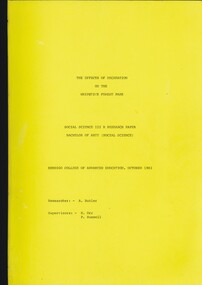
Book - THE EFFECTS OF RECREATION ON THE WHIPSTICK FOREST PARK, 1983
... The Effects of Recreation on the Whipstick Forest Park a Social Science III B research paper Bachelor of Arts (Social Science) Bendigo College of Advanced Education. 51 pages with maps....Anne Butler The Effects of Recreation on the Whipstick Forest Park a Social Science III B research paper Bachelor of Arts (Social Science) Bendigo College of Advanced Education. 51 pages with maps. ...The Effects of Recreation on the Whipstick Forest Park a Social Science III B research paper Bachelor of Arts (Social Science) Bendigo College of Advanced Education. 51 pages with maps.Anne Butlerbook, bendigo, whipstick, whipstick forest, land conservation, flora & fauna. -
 Women's Art Register
Book, Isabelle Anscombe, A Woman's Touch, A. Women in Design from 1860 to the Present Day, 1984
... Interviews and well researched social history illustrate how interior design created by Vanessa Bell, Sonia Delaunay, Elsie de Wolfe and others revolutionized ideas about form and function in the home. ...Interviews and well researched social history illustrate how interior design created by Vanessa Bell, Sonia Delaunay, Elsie de Wolfe and others revolutionized ideas about form and function in the home. ...Women interior decorators of the 1920s and 30s and their contribution to the Arts and Crafts movement in Britain, The Glasgow School of Art and The Bauhaus School..non-fictionWomen interior decorators of the 1920s and 30s and their contribution to the Arts and Crafts movement in Britain, The Glasgow School of Art and The Bauhaus School..industrial design, craft, wallpaper, weaving, furniture, design theory, architecture -
 Sunshine and District Historical Society Incorporated
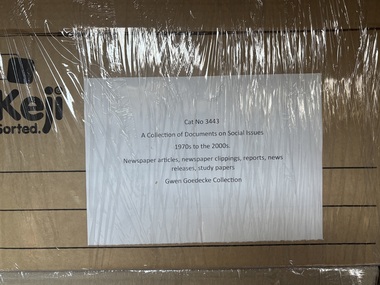
Archive - Gwen Goedecke Collection - A Collection of documents on Social Issues
... FOLDERS: |Employment|Education|Violence|Childcare Services|Divorce/Old Age/Victorian Caregiver's Association|Families/ The Institute of Family Studies (including newsletters, discussion and study papers)|Socialism|Social Welfare|Poverty |PUBLICATIONS: |Royal Commission on Human Relationships, Final Report Vol 5 - Commonwealth of Australia 1977|Possibilities for Social Welfare in Australia - Commonwealth of Australia 1975|Social Welfare Research Centre Newsletter - Number 8 - 1983|Social Justice Consultative Council Department of the Premier and Cabinet, Melbourne 1992|Voluntary Associations and Funding Issues Working Party - Lost Sleep Over Government Funding - 5 Case Studies - Victoria 1979|Government of Victoria - Submission to the Senate Standing Committee on Social Welfare concerning Homeless Youth Melbourne 1981|Victorian Council of Social Service - Passing the Buck - A Victorian Perspective on Federal Responsibility 2 copies - 1982|Social Welfare Research Bulletin No 1 - Australian Government Social Welfare Commission - 1975|FACS - The Victorian Family & Community Service Programme What is it about? ...Gwyneth 'Gwen Goedecke' collection FOLDERS: |Employment|Education|Violence|Childcare Services|Divorce/Old Age/Victorian Caregiver's Association|Families/ The Institute of Family Studies (including newsletters, discussion and study papers)|Socialism|Social Welfare|Poverty |PUBLICATIONS: |Royal Commission on Human Relationships, Final Report Vol 5 - Commonwealth of Australia 1977|Possibilities for Social Welfare in Australia - Commonwealth of Australia 1975|Social Welfare Research Centre Newsletter - Number 8 - 1983|Social Justice Consultative Council Department of the Premier and Cabinet, Melbourne 1992|Voluntary Associations and Funding Issues Working Party - Lost Sleep Over Government Funding - 5 Case Studies - Victoria 1979|Government of Victoria - Submission to the Senate Standing Committee on Social Welfare concerning Homeless Youth Melbourne 1981|Victorian Council of Social Service - Passing the Buck - A Victorian Perspective on Federal Responsibility 2 copies - 1982|Social Welfare Research Bulletin No 1 - Australian Government Social Welfare Commission - 1975|FACS - The Victorian Family & Community Service Programme What is it about? ...Gwyneth 'Gwen Goedecke' collectionFOLDERS: |Employment|Education|Violence|Childcare Services|Divorce/Old Age/Victorian Caregiver's Association|Families/ The Institute of Family Studies (including newsletters, discussion and study papers)|Socialism|Social Welfare|Poverty |PUBLICATIONS: |Royal Commission on Human Relationships, Final Report Vol 5 - Commonwealth of Australia 1977|Possibilities for Social Welfare in Australia - Commonwealth of Australia 1975|Social Welfare Research Centre Newsletter - Number 8 - 1983|Social Justice Consultative Council Department of the Premier and Cabinet, Melbourne 1992|Voluntary Associations and Funding Issues Working Party - Lost Sleep Over Government Funding - 5 Case Studies - Victoria 1979|Government of Victoria - Submission to the Senate Standing Committee on Social Welfare concerning Homeless Youth Melbourne 1981|Victorian Council of Social Service - Passing the Buck - A Victorian Perspective on Federal Responsibility 2 copies - 1982|Social Welfare Research Bulletin No 1 - Australian Government Social Welfare Commission - 1975|FACS - The Victorian Family & Community Service Programme What is it about? - Department of Community Welfare Services, Victoria - 1979| FACS - The Victorian Family & Community Service Programme What is it about? - Department of Community Welfare Services, Victoria (Second Draft) - 1979| Australian Government Social Welfare Commission Annual Report - 1973|Australian Government Commission of Inquiry into Poverty - Study of the Heidelberg Community - 1976|Victorian Emergency Relief Committee findings/report- March 1982|Monday on a Shoestring - a resource guide for low-income people in the West - 1997 -
 Sunshine and District Historical Society Incorporated
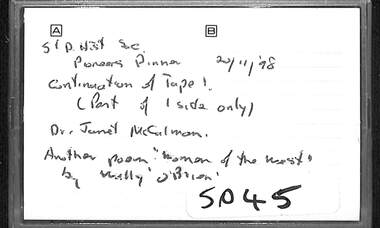
Audio - Sunshine And District Pioneers Dinner 1998 Audio Tape, Guest speaker Dr Janet McCalman, 20/11/1998
... Dr Janet McCalman, an Australian social historian, population researcher and author was the guest speaker at the dinner....Dr Janet McCalman, an Australian social historian, population researcher and author was the guest speaker at the dinner. ...The Sunshine and District Historical Society Pioneers’ Lunch / Dinner is an annual event. It’s a commemorative gathering that honours the early settlers, people, community leaders of Sunshine and the surrounding district, events, achievements, etc. At the Pioneers’ Lunch / Dinner, a toast is a ritual and a dedicated moment to honour the original settlers and their contributions, and a guest speaker talks about an interesting subject. Sunshine and District Historical Society annual Pioneer Dinner. Dr Janet McCalman, an Australian social historian, population researcher and author was the guest speaker at the dinner.Sunshine And District Pioneers Dinner 20/11/98 Continuation of Tape 1 Dr Janet McCalman Another poem by Wally O'Briendr janet mccalman, sunshine and district historical society, pioneers dinner, wally o'brien -
 Sunshine and District Historical Society Incorporated
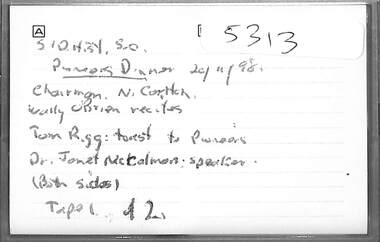
Audio - Sunshine And District Historical Society Pioneers Dinner 1998 Audio Tape, Guest speakers Wally O'Brien, Tom Rigg, Dr Janet McCalmon
... Dr Janet McCalman, an Australian social historian, population researcher and author was the guest speaker at the dinner. ...Dr Janet McCalman, an Australian social historian, population researcher and author was the guest speaker at the dinner. ...The Sunshine and District Historical Society Pioneers’ Lunch / Dinner is an annual event. It’s a commemorative gathering that honours the early settlers, people, community leaders of Sunshine and the surrounding district, events, achievements, etc. At the Pioneers’ Lunch / Dinner, a toast is a ritual and a dedicated moment to honour the original settlers and their contributions, and a guest speaker talks about an interesting subject. Tom Rigg has written a book "Sunshine Railway Disaster 1908" detailing all the events before, during and after the accident. Dr Janet McCalman, an Australian social historian, population researcher and author was the guest speaker at the dinner. Audio Tape This audio tape has been digitised. This audio tape has been transcribed. No editing of the recording has taken place, except where the speaker(s) can be identified.tom rigg, wally o'brien, dr janet mccalman, pioneers dinner -
Federation University Historical Collection
Booklet, Meredith Fletcher, Alumni 2002, 2002
... The University’s commitment to educational and social equity, teaching excellence, research distinction, environmental sustainability and regional capacity building has enabled it to develop in a way that draws on its proud heritage to inform its future. ...The University’s commitment to educational and social equity, teaching excellence, research distinction, environmental sustainability and regional capacity building has enabled it to develop in a way that draws on its proud heritage to inform its future. ...Federation University Australia was established on 1 January 2014. Formerly known as the University of Ballarat, its enabling legislation was the University of Ballarat Amendment (Federation University Australia) Act 2013. On 1 January 2014, the University of Ballarat amalgamated with the Monash University Gippsland Campus to form Federation University Australia. The Gippsland Campus also had a long lineage dating back to 1928 with the establishment of the Yallourn Technical School which became a predecessor institution to the Gippsland College of Advanced Education formed in 1968. In 1990, it was renamed the Monash University College and in 1993 became the Gippsland Campus of Monash University. In 2016, Federation University Australia announced plans to take possession, over a two-year period, of Monash’s Berwick Campus in the south-east corridor of Melbourne. Federation University Australia, or FedUni, is headquartered in Ballarat and offers programs in Higher Education and Vocational Education and Training to regional Victoria and beyond. The University’s commitment to educational and social equity, teaching excellence, research distinction, environmental sustainability and regional capacity building has enabled it to develop in a way that draws on its proud heritage to inform its future. Its regional character sets a framework for the University’s priorities but does not constrain it from serving wider community interests, nationally and internationally. The name Federation University Australia was chosen to convey the scope and capacity of an expanded regional university with a federated network of campuses. History of the Gippsland Campus of Federation University located at Churchill.gippsland history, yallourn technical school, brian mckenzie, latrobe valley, gippsland institute of advanced education, monash university gippsland campus, yallourn, sec, peter farago, churchill campus, gippsland campus, binishell, tom kennedy, meredith fletcher, loy yang power station, yallourn open cut, yallourn power station, r.d. dixon, howard beanland, yallourn w. power station, dante bini, bini shell, sculpture, churchill, gippsland campus collection -
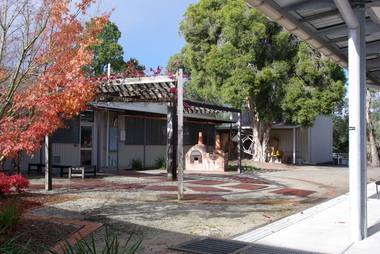 Federation University Historical Collection
Photograph, Clare Gervasoni, Federation University Gippsland Campus Art Courtyard, 2015, 01/06/2015
... The University’s commitment to educational and social equity, teaching excellence, research distinction, environmental sustainability and regional capacity building has enabled it to develop in a way that draws on its proud heritage to inform its future. ...The University’s commitment to educational and social equity, teaching excellence, research distinction, environmental sustainability and regional capacity building has enabled it to develop in a way that draws on its proud heritage to inform its future. ...Federation University Australia was established on 1 January 2014. Formerly known as the University of Ballarat, its enabling legislation was the University of Ballarat Amendment (Federation University Australia) Act 2013. On 1 January 2014, the University of Ballarat amalgamated with the Monash University Gippsland Campus to form Federation University Australia. The Gippsland Campus also had a long lineage dating back to 1928 with the establishment of the Yallourn Technical School which became a predecessor institution to the Gippsland College of Advanced Education formed in 1968. In 1990, it was renamed the Monash University College and in 1993 became the Gippsland Campus of Monash University. In 2016, Federation University Australia announced plans to take possession, over a two-year period, of Monash’s Berwick Campus in the south-east corridor of Melbourne. Federation University Australia, or FedUni, is headquartered in Ballarat and offers programs in Higher Education and Vocational Education and Training to regional Victoria and beyond. The University’s commitment to educational and social equity, teaching excellence, research distinction, environmental sustainability and regional capacity building has enabled it to develop in a way that draws on its proud heritage to inform its future. Its regional character sets a framework for the University’s priorities but does not constrain it from serving wider community interests, nationally and internationally. The name Federation University Australia was chosen to convey the scope and capacity of an expanded regional university with a federated network of campuses. Courtyard at the Gippsland Campus of Federation University.churchill, gippsland campus, art courtyard -
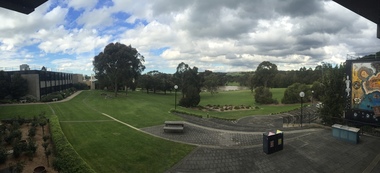 Federation University Historical Collection
Photograph, Clare Gervasoni, Federation University Gippsland Campus, 2017, 03/10/2017
... The University’s commitment to educational and social equity, teaching excellence, research distinction, environmental sustainability and regional capacity building has enabled it to develop in a way that draws on its proud heritage to inform its future. ...The University’s commitment to educational and social equity, teaching excellence, research distinction, environmental sustainability and regional capacity building has enabled it to develop in a way that draws on its proud heritage to inform its future. ...Federation University Australia was established on 1 January 2014. Formerly known as the University of Ballarat, its enabling legislation was the University of Ballarat Amendment (Federation University Australia) Act 2013. On 1 January 2014, the University of Ballarat amalgamated with the Monash University Gippsland Campus to form Federation University Australia. The Gippsland Campus also had a long lineage dating back to 1928 with the establishment of the Yallourn Technical School which became a predecessor institution to the Gippsland College of Advanced Education formed in 1968. In 1990, it was renamed the Monash University College and in 1993 became the Gippsland Campus of Monash University. In 2016, Federation University Australia announced plans to take possession, over a two-year period, of Monash’s Berwick Campus in the south-east corridor of Melbourne. Federation University Australia, or FedUni, is headquartered in Ballarat and offers programs in Higher Education and Vocational Education and Training to regional Victoria and beyond. The University’s commitment to educational and social equity, teaching excellence, research distinction, environmental sustainability and regional capacity building has enabled it to develop in a way that draws on its proud heritage to inform its future. Its regional character sets a framework for the University’s priorities but does not constrain it from serving wider community interests, nationally and internationally. The name Federation University Australia was chosen to convey the scope and capacity of an expanded regional university with a federated network of campuses. Colour panoramic photorgraph of the Federation University Gippsland Campus.federation university, gippsland campus, churchill campus -
 Federation University Historical Collection
Photograph, Federation University Centre for Gippsland Studies, 2016, 12/05/2016
... The University’s commitment to educational and social equity, teaching excellence, research distinction, environmental sustainability and regional capacity building has enabled it to develop in a way that draws on its proud heritage to inform its future. ...The University’s commitment to educational and social equity, teaching excellence, research distinction, environmental sustainability and regional capacity building has enabled it to develop in a way that draws on its proud heritage to inform its future. ...Federation University Australia was established on 1 January 2014. Formerly known as the University of Ballarat, its enabling legislation was the University of Ballarat Amendment (Federation University Australia) Act 2013. On 1 January 2014, the University of Ballarat amalgamated with the Monash University Gippsland Campus to form Federation University Australia. The Gippsland Campus also had a long lineage dating back to 1928 with the establishment of the Yallourn Technical School which became a predecessor institution to the Gippsland College of Advanced Education formed in 1968. In 1990, it was renamed the Monash University College and in 1993 became the Gippsland Campus of Monash University. In 2016, Federation University Australia announced plans to take possession, over a two-year period, of Monash’s Berwick Campus in the south-east corridor of Melbourne. Federation University Australia, or FedUni, is headquartered in Ballarat and offers programs in Higher Education and Vocational Education and Training to regional Victoria and beyond. The University’s commitment to educational and social equity, teaching excellence, research distinction, environmental sustainability and regional capacity building has enabled it to develop in a way that draws on its proud heritage to inform its future. Its regional character sets a framework for the University’s priorities but does not constrain it from serving wider community interests, nationally and internationally. The name Federation University Australia was chosen to convey the scope and capacity of an expanded regional university with a federated network of campuses. Photographs of the Centre for Gippsland Studies located at the Churchill campus of Federation University.centre for gippsland studies, churchill campus, gippsland campus, grsc, gippsland campus collection -
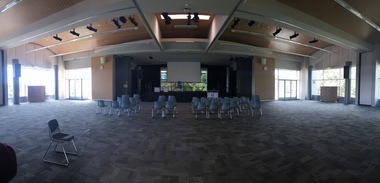 Federation University Historical Collection
Photograph, Clare Gervasoni, Federation University Gippsland Campus Auditorum, 2016, 03/10/2016
... The University’s commitment to educational and social equity, teaching excellence, research distinction, environmental sustainability and regional capacity building has enabled it to develop in a way that draws on its proud heritage to inform its future. ...The University’s commitment to educational and social equity, teaching excellence, research distinction, environmental sustainability and regional capacity building has enabled it to develop in a way that draws on its proud heritage to inform its future. ...Federation University Gippsland Campus was formerly a Monash University campus. The Auditorium was opened on 09 June 2009 by Professor David de Kretser AC, Governor of Victoria. Federation University Australia was established on 1 January 2014. Formerly known as the University of Ballarat, its enabling legislation was the University of Ballarat Amendment (Federation University Australia) Act 2013. On 1 January 2014, the University of Ballarat amalgamated with the Monash University Gippsland Campus to form Federation University Australia. The Gippsland Campus also had a long lineage dating back to 1928 with the establishment of the Yallourn Technical School which became a predecessor institution to the Gippsland College of Advanced Education formed in 1968. In 1990, it was renamed the Monash University College and in 1993 became the Gippsland Campus of Monash University. In 2016, Federation University Australia announced plans to take possession, over a two-year period, of Monash’s Berwick Campus in the south-east corridor of Melbourne. Federation University Australia, or FedUni, is headquartered in Ballarat and offers programs in Higher Education and Vocational Education and Training to regional Victoria and beyond. The University’s commitment to educational and social equity, teaching excellence, research distinction, environmental sustainability and regional capacity building has enabled it to develop in a way that draws on its proud heritage to inform its future. Its regional character sets a framework for the University’s priorities but does not constrain it from serving wider community interests, nationally and internationally. The name Federation University Australia was chosen to convey the scope and capacity of an expanded regional university with a federated network of campuses. Colour panoramic photograph of the Federation University Gippsland Campus Auditorum.churchill campus, gippsland campus, buildings, auditorium, david de kretser, richard larkins, helen bartlett -
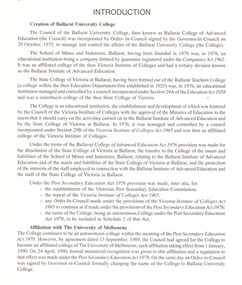 Federation University Historical Collection
Document, Creation of Ballarat University College, c1993
... The University’s commitment to educational and social equity, teaching excellence, research distinction, environmental sustainability and regional capacity building has enabled it to develop in a way that draws on its proud heritage to inform its future. ...The University’s commitment to educational and social equity, teaching excellence, research distinction, environmental sustainability and regional capacity building has enabled it to develop in a way that draws on its proud heritage to inform its future. ...Ballarat University College was a predecessor institution of Federation University Australia. Federation University Australia was established on 1 January 2014. Formerly known as the University of Ballarat, its enabling legislation was the University of Ballarat Amendment (Federation University Australia) Act 2013. Although formally created as a University in 1994, the University of Ballarat had a lineage back to 1870 with the establishment of the School of Mines Ballarat, making it the third institution of higher learning to be established in Australia and the first to be established in regional Australia. On 1 January 1994, Ballarat University College became the University of Ballarat and in 1998 the University merged with three TAFE Institutes to become a dual sector institution with multiple campuses. On 1 January 2014, the University of Ballarat amalgamated with the Monash University Gippsland Campus to form Federation University Australia. The Gippsland Campus also had a long lineage dating back to 1928 with the establishment of the Yallourn Technical School which became a predecessor institution to the Gippsland College of Advanced Education formed in 1968. In 1990, it was renamed the Monash University College and in 1993 became the Gippsland Campus of Monash University. Federation University Australia, or FedUni, is Australia’s newest public University. Headquartered in Ballarat, Victoria, the University offers programs in Higher Education and Vocational Education and Training to regional Victoria and beyond. The University’s commitment to educational and social equity, teaching excellence, research distinction, environmental sustainability and regional capacity building has enabled it to develop in a way that draws on its proud heritage to inform its future. Its regional character sets a framework for the University’s priorities but does not constrain it from serving wider community interests, nationally and internationally. With campuses from Horsham in the west of the state, to Churchill in the east, the name Federation University Australia was chosen to convey the scope and capacity of an expanded regional university with a federated network of campuses contributing to a new and different Australian university.A printed page from the 1993 Ballarat University College Handbook outlining the history and creation of the Ballarat University Collegeballarat university college, history, ballarat school of mines, establishment -
 Federation University Historical Collection
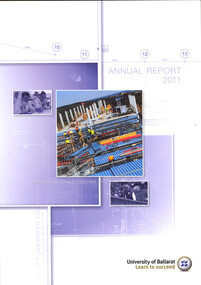
Book, University of Ballarat Annual Report, 2011, 2011
... The University’s commitment to educational and social equity, teaching excellence, research distinction, environmental sustainability and regional capacity building has enabled it to develop in a way that draws on its proud heritage to inform its future. ...The University’s commitment to educational and social equity, teaching excellence, research distinction, environmental sustainability and regional capacity building has enabled it to develop in a way that draws on its proud heritage to inform its future. ...Federation University Australia was established on 1 January 2014. Formerly known as the University of Ballarat, its enabling legislation was the University of Ballarat Amendment (Federation University Australia) Act 2013. Although formally created as a University in 1994, the University of Ballarat had a lineage back to 1870 with the establishment of the School of Mines Ballarat, making it the third institution of higher learning to be established in Australia and the first to be established in regional Australia. On 1 January 1994, Ballarat University College became the University of Ballarat and in 1998 the University merged with three TAFE Institutes to become a dual sector institution with multiple campuses. On 1 January 2014, the University of Ballarat amalgamated with the Monash University Gippsland Campus to form Federation University Australia. The Gippsland Campus also had a long lineage dating back to 1928 with the establishment of the Yallourn Technical School which became a predecessor institution to the Gippsland College of Advanced Education formed in 1968. In 1990, it was renamed the Monash University College and in 1993 became the Gippsland Campus of Monash University. Federation University Australia, or FedUni, is Australia’s newest public University. Headquartered in Ballarat, Victoria, the University offers programs in Higher Education and Vocational Education and Training to regional Victoria and beyond. The University’s commitment to educational and social equity, teaching excellence, research distinction, environmental sustainability and regional capacity building has enabled it to develop in a way that draws on its proud heritage to inform its future. Its regional character sets a framework for the University’s priorities but does not constrain it from serving wider community interests, nationally and internationally. With campuses from Horsham in the west of the state, to Churchill in the east, the name Federation University Australia was chosen to convey the scope and capacity of an expanded regional university with a federated network of campuses contributing to a new and different Australian university.Soft covered annual report of 152 pages with a photo of a building under construction on the cover. Photographs include Y Building (Science) under construction, University of Ballarat Pipe Band, Ted Ballieu, Julia Gillard, Honorary Doctorate to Jeremy Johnson; Grant Petch, Khoa Do, Sonia Tuner, Lisa Marshall, Danielle Button, Rana Stollery, Christopher Schliefort Inscriptions and Markings peter hall, robert smith, ebony place, michael thurston, roger donaldson, heather ridout, petch, khoa do, sonia turner, colin marshall, university of ballarat act, sizer, quigley, walker, wilson, mcquilton, simmons, doig, hobday, douglas, hemming, paul hemming, coutts, holmes, battersby, david battersby, reconciliation, reconciliation action plan, atkinson, fagan, balliue, gillard, prime minister, premier, pipe band, university of ballarat pipe band, pipe band championships, jeremy johnson, sovereign hill scholarships, foundation. chancellor's circle, robert h.t. smith, bonnie fagan, bonnie chew, ashlee rodgers, shanaya sheridan, alinta edwards, deanne gilson, ben atkinson, ted ballieu, julia gillard, nick maxwell, e.j. barker, jeanetta kerr-grant, grant petch, sonia tuner, lisa marshall, danielle button, rana stollery, mt rowan equine centre, christopher schliefort, honorary doctorate, university of ballarat -
Federation University Historical Collection
Book - Handbooks, Monash University Handbooks, 1993-4
... The University’s commitment to educational and social equity, teaching excellence, research distinction, environmental sustainability and regional capacity building has enabled it to develop in a way that draws on its proud heritage to inform its future. ...The University’s commitment to educational and social equity, teaching excellence, research distinction, environmental sustainability and regional capacity building has enabled it to develop in a way that draws on its proud heritage to inform its future. ...Federation University Australia was established on 1 January 2014. Formerly known as the University of Ballarat, its enabling legislation was the University of Ballarat Amendment (Federation University Australia) Act 2013. Although formally created as a University in 1994, the University of Ballarat had a lineage back to 1870 with the establishment of the School of Mines Ballarat, making it the third institution of higher learning to be established in Australia and the first to be established in regional Australia. On 1 January 1994, Ballarat University College became the University of Ballarat and in 1998 the University merged with three TAFE Institutes to become a dual sector institution with multiple campuses. On 1 January 2014, the University of Ballarat amalgamated with the Monash University Gippsland Campus to form Federation University Australia. The Gippsland Campus also had a long lineage dating back to 1928 with the establishment of the Yallourn Technical School which became a predecessor institution to the Gippsland College of Advanced Education formed in 1968. In 1990, it was renamed the Monash University College and in 1993 became the Gippsland Campus of Monash University. Federation University Australia, or FedUni, is Australia’s newest public University. Headquartered in Ballarat, Victoria, the University offers programs in Higher Education and Vocational Education and Training to regional Victoria and beyond. The University’s commitment to educational and social equity, teaching excellence, research distinction, environmental sustainability and regional capacity building has enabled it to develop in a way that draws on its proud heritage to inform its future. Its regional character sets a framework for the University’s priorities but does not constrain it from serving wider community interests, nationally and internationally. With campuses from Horsham in the west of the state, to Churchill in the east, the name Federation University Australia was chosen to convey the scope and capacity of an expanded regional university with a federated network of campuses contributing to a new and different Australian university.20 handbooks relating to subjects offered by Monash University in 1993-4. .1) Monash University Arts Handbook 1993 (red cover) .2) Monash University Arts Graduate Handbook 1994 (red cover) .3) Monash University Art & Design Handbook 1994 (red cover) .4) Monash University Engineering Handbook 1993 (brown cover) .5) Monash University Engineering Handbook 1994 (brown cover) .6) Monash University Education Handbook 1993 (yellow cover) .7) Monash University Education Handbook 1994 (yellow cover) .8) Monash University Economics Commerce & Management Handbook Handbook 1993 (blue cover) .9) Monash University Computing & Information Technology Handbook 1995 (green cover) .10) Monash University Business Handbook 1993 (red cover) .11) Monash University Business 7 Economics Handbook 1994 (mid blue) .12) Monash University Professional Studies Handbook 1993 (purple cover) .13) Monash University Science Handbook 1993 (green cover) .14) Monash University Science Handbook 1994 (green cover)monash university, gippsland campus, medicine, law, pharmacy, nursing, education, handbook -
Federation University Historical Collection
Booklets, Gippsland Institute of Advanced Education External Studies, 1976-1984
... The University’s commitment to educational and social equity, teaching excellence, research distinction, environmental sustainability and regional capacity building has enabled it to develop in a way that draws on its proud heritage to inform its future. ...The University’s commitment to educational and social equity, teaching excellence, research distinction, environmental sustainability and regional capacity building has enabled it to develop in a way that draws on its proud heritage to inform its future. ...Federation University Australia was established on 1 January 2014. Formerly known as the University of Ballarat, its enabling legislation was the University of Ballarat Amendment (Federation University Australia) Act 2013. Although formally created as a University in 1994, the University of Ballarat had a lineage back to 1870 with the establishment of the School of Mines Ballarat, making it the third institution of higher learning to be established in Australia and the first to be established in regional Australia. On 1 January 1994, Ballarat University College became the University of Ballarat and in 1998 the University merged with three TAFE Institutes to become a dual sector institution with multiple campuses. On 1 January 2014, the University of Ballarat amalgamated with the Monash University Gippsland Campus to form Federation University Australia. The Gippsland Campus also had a long lineage dating back to 1928 with the establishment of the Yallourn Technical School which became a predecessor institution to the Gippsland College of Advanced Education formed in 1968. In 1990, it was renamed the Monash University College and in 1993 became the Gippsland Campus of Monash University. Federation University Australia, or FedUni, is Australia’s newest public University. Headquartered in Ballarat, Victoria, the University offers programs in Higher Education and Vocational Education and Training to regional Victoria and beyond. The University’s commitment to educational and social equity, teaching excellence, research distinction, environmental sustainability and regional capacity building has enabled it to develop in a way that draws on its proud heritage to inform its future. Its regional character sets a framework for the University’s priorities but does not constrain it from serving wider community interests, nationally and internationally. With campuses from Horsham in the west of the state, to Churchill in the east, the name Federation University Australia was chosen to convey the scope and capacity of an expanded regional university with a federated network of campuses contributing to a new and different Australian university.5 booklets outlining external studies at the Gippsland Institute of Advanced Education. Staffmembers of particular courses are given. .1) 1976 (white) .2) 1977 (white) .3) 1982 (white) .4) 1983 (brown) .5) 1984 (blue)gippsland institute of advanced education, churchill, gippsland campus, keith hamilton, a. marianne robinson, andrea devent, peter harwood, alan maclaine, graham dettrich, leslie g. gordon, ethel ruymaker, kevin hince, william battersby, ann hodgkinson, eric thorne, john etheredge, v.g. venturini, rhonda jacobs, peter farago, asim kumar pal, martin hooper, jeffrey dowsley, neil clutterbuck, john yocklunn, janet martin, neil grant, michelle harris, felicetta kille, jennifer hill, john levans, clive vernon, peter charles -
Federation University Historical Collection
Book, Gippsland Institute of Advanced Education Student Information Guide, 1983, 1983
... The University’s commitment to educational and social equity, teaching excellence, research distinction, environmental sustainability and regional capacity building has enabled it to develop in a way that draws on its proud heritage to inform its future. ...The University’s commitment to educational and social equity, teaching excellence, research distinction, environmental sustainability and regional capacity building has enabled it to develop in a way that draws on its proud heritage to inform its future. ...Federation University Australia was established on 1 January 2014. Formerly known as the University of Ballarat, its enabling legislation was the University of Ballarat Amendment (Federation University Australia) Act 2013. Although formally created as a University in 1994, the University of Ballarat had a lineage back to 1870 with the establishment of the School of Mines Ballarat, making it the third institution of higher learning to be established in Australia and the first to be established in regional Australia. On 1 January 1994, Ballarat University College became the University of Ballarat and in 1998 the University merged with three TAFE Institutes to become a dual sector institution with multiple campuses. On 1 January 2014, the University of Ballarat amalgamated with the Monash University Gippsland Campus to form Federation University Australia. The Gippsland Campus also had a long lineage dating back to 1928 with the establishment of the Yallourn Technical School which became a predecessor institution to the Gippsland College of Advanced Education formed in 1968. In 1990, it was renamed the Monash University College and in 1993 became the Gippsland Campus of Monash University. Federation University Australia, or FedUni, is Australia’s newest public University. Headquartered in Ballarat, Victoria, the University offers programs in Higher Education and Vocational Education and Training to regional Victoria and beyond. The University’s commitment to educational and social equity, teaching excellence, research distinction, environmental sustainability and regional capacity building has enabled it to develop in a way that draws on its proud heritage to inform its future. Its regional character sets a framework for the University’s priorities but does not constrain it from serving wider community interests, nationally and internationally. With campuses from Horsham in the west of the state, to Churchill in the east, the name Federation University Australia was chosen to convey the scope and capacity of an expanded regional university with a federated network of campuses contributing to a new and different Australian university.White covered booklet including a listing of Academic staff and their Schools.gippsland, gippsland institute of advanced education -
Federation University Historical Collection
Annual report, Federation University Australia Annual Report, 2014, 2014
... The University’s commitment to educational and social equity, teaching excellence, research distinction, environmental sustainability and regional capacity building has enabled it to develop in a way that draws on its proud heritage to inform its future. ...The University’s commitment to educational and social equity, teaching excellence, research distinction, environmental sustainability and regional capacity building has enabled it to develop in a way that draws on its proud heritage to inform its future. ...Federation University Australia was established on 1 January 2014. Formerly known as the University of Ballarat, its enabling legislation was the University of Ballarat Amendment (Federation University Australia) Act 2013. Although formally created as a University in 1994, the University of Ballarat had a lineage back to 1870 with the establishment of the School of Mines Ballarat, making it the third institution of higher learning to be established in Australia and the first to be established in regional Australia. On 1 January 1994, Ballarat University College became the University of Ballarat and in 1998 the University merged with three TAFE Institutes to become a dual sector institution with multiple campuses. On 1 January 2014, the University of Ballarat amalgamated with the Monash University Gippsland Campus to form Federation University Australia. The Gippsland Campus also had a long lineage dating back to 1928 with the establishment of the Yallourn Technical School which became a predecessor institution to the Gippsland College of Advanced Education formed in 1968. In 1990, it was renamed the Monash University College and in 1993 became the Gippsland Campus of Monash University. Federation University Australia, or FedUni, is Australia’s newest public University. Headquartered in Ballarat, Victoria, the University offers programs in Higher Education and Vocational Education and Training to regional Victoria and beyond. The University’s commitment to educational and social equity, teaching excellence, research distinction, environmental sustainability and regional capacity building has enabled it to develop in a way that draws on its proud heritage to inform its future. Its regional character sets a framework for the University’s priorities but does not constrain it from serving wider community interests, nationally and internationally. With campuses from Horsham in the west of the state, to Churchill in the east, the name Federation University Australia was chosen to convey the scope and capacity of an expanded regional university with a federated network of campuses contributing to a new and different Australian university.Hard and electronic copy of the Federation University Australia Annual Report. This annual report includes details of the establishment of Federation University Australia.federation university, timeline, david battersby, todd walker, paul hemming, establishment, gippsland campus, university of ballarat, annual report, 2014, charter, graeme ambrose, rowena coutts, john dixon, bernard o'meara, vicki rethus, denise wren -
 Federation University Historical Collection
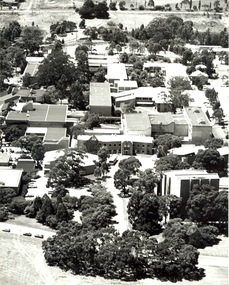
Photograph - Black and White, Aerial Photograph of Federation University Mount Helen Campus
... The University’s commitment to educational and social equity, teaching excellence, research distinction, environmental sustainability and regional capacity building has enabled it to develop in a way that draws on its proud heritage to inform its future. ...The University’s commitment to educational and social equity, teaching excellence, research distinction, environmental sustainability and regional capacity building has enabled it to develop in a way that draws on its proud heritage to inform its future. ...Federation University Australia was established on 1 January 2014. Formerly known as the University of Ballarat, its enabling legislation was the University of Ballarat Amendment (Federation University Australia) Act 2013. Although formally created as a University in 1994, the University of Ballarat has a lineage back to 1870 with the establishment of the School of Mines Ballarat, making it the third institution of higher learning to be established in Australia and the first to be established in regional Australia. On 1 January 1994, Ballarat University College became the University of Ballarat and in 1998 the University merged with three TAFE Institutes to become a dual sector institution with multiple campuses. On 1 January 2014, the University of Ballarat amalgamated with the Monash University Gippsland Campus to form Federation University Australia. The Gippsland Campus also had a long lineage dating back to 1928 with the establishment of the Yallourn Technical School which became a predecessor institution to the Gippsland College of Advanced Education formed in 1968. In 1990, it was renamed the Monash University College and in 1993 became the Gippsland Campus of Monash University. In 2016, Federation University Australia announced plans to take possession, over a two-year period, of Monash’s Berwick Campus in the south-east corridor of Melbourne. Federation University Australia, or FedUni, is headquartered in Ballarat and offers programs in Higher Education and Vocational Education and Training to regional Victoria and beyond. The University’s commitment to educational and social equity, teaching excellence, research distinction, environmental sustainability and regional capacity building has enabled it to develop in a way that draws on its proud heritage to inform its future. Its regional character sets a framework for the University’s priorities but does not constrain it from serving wider community interests, nationally and internationally. The name Federation University Australia was chosen to convey the scope and capacity of an expanded regional university with a federated network of campuses.Aerial black and white photograph of Federation University Mount Helen Campus taken from Chancellor Drive.mount helen campus, federation university, aerial photograph -
 Federation University Historical Collection
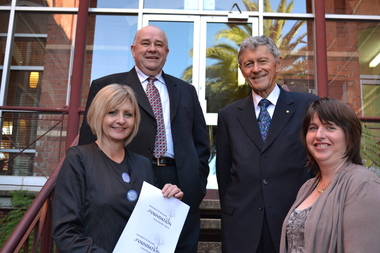
Photograph - Images, Federation University Chancellor Robert H.T. Smith
... The University’s commitment to educational and social equity, teaching excellence, research distinction, environmental sustainability and regional capacity building has enabled it to develop in a way that draws on its proud heritage to inform its future. ...The University’s commitment to educational and social equity, teaching excellence, research distinction, environmental sustainability and regional capacity building has enabled it to develop in a way that draws on its proud heritage to inform its future. ...Federation University Australia was established on 1 January 2014. Formerly known as the University of Ballarat, its enabling legislation was the University of Ballarat Amendment (Federation University Australia) Act 2013. Although formally created as a University in 1994, the University of Ballarat has a lineage back to 1870 with the establishment of the School of Mines Ballarat, making it the third institution of higher learning to be established in Australia and the first to be established in regional Australia. On 1 January 1994, Ballarat University College became the University of Ballarat and in 1998 the University merged with three TAFE Institutes to become a dual sector institution with multiple campuses. On 1 January 2014, the University of Ballarat amalgamated with the Monash University Gippsland Campus to form Federation University Australia. The Gippsland Campus also had a long lineage dating back to 1928 with the establishment of the Yallourn Technical School which became a predecessor institution to the Gippsland College of Advanced Education formed in 1968. In 1990, it was renamed the Monash University College and in 1993 became the Gippsland Campus of Monash University. In 2016, Federation University Australia announced plans to take possession, over a two-year period, of Monash’s Berwick Campus in the south-east corridor of Melbourne. Federation University Australia, or FedUni, is headquartered in Ballarat and offers programs in Higher Education and Vocational Education and Training to regional Victoria and beyond. The University’s commitment to educational and social equity, teaching excellence, research distinction, environmental sustainability and regional capacity building has enabled it to develop in a way that draws on its proud heritage to inform its future. Its regional character sets a framework for the University’s priorities but does not constrain it from serving wider community interests, nationally and internationally. The name Federation University Australia was chosen to convey the scope and capacity of an expanded regional university with a federated network of campuses.A CD-ROM of a number of images relating to Federation University Chancellor Robert H.T. Smithdavid battersby, federation university, robert smith, robert h.t. smith, graduation, christine nixon, pam sutcliffe, le-anne o'brien, federation university foundation -
 Federation University Historical Collection
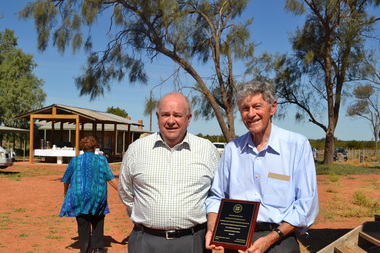
Photograph, Federation University Nanya Station
... The University’s commitment to educational and social equity, teaching excellence, research distinction, environmental sustainability and regional capacity building has enabled it to develop in a way that draws on its proud heritage to inform its future. ...The University’s commitment to educational and social equity, teaching excellence, research distinction, environmental sustainability and regional capacity building has enabled it to develop in a way that draws on its proud heritage to inform its future. ...Federation University Australia was established on 1 January 2014. Formerly known as the University of Ballarat, its enabling legislation was the University of Ballarat Amendment (Federation University Australia) Act 2013. Although formally created as a University in 1994, the University of Ballarat has a lineage back to 1870 with the establishment of the School of Mines Ballarat, making it the third institution of higher learning to be established in Australia and the first to be established in regional Australia. On 1 January 1994, Ballarat University College became the University of Ballarat and in 1998 the University merged with three TAFE Institutes to become a dual sector institution with multiple campuses. On 1 January 2014, the University of Ballarat amalgamated with the Monash University Gippsland Campus to form Federation University Australia. The Gippsland Campus also had a long lineage dating back to 1928 with the establishment of the Yallourn Technical School which became a predecessor institution to the Gippsland College of Advanced Education formed in 1968. In 1990, it was renamed the Monash University College and in 1993 became the Gippsland Campus of Monash University. In 2016, Federation University Australia announced plans to take possession, over a two-year period, of Monash’s Berwick Campus in the south-east corridor of Melbourne. Federation University Australia, or FedUni, is headquartered in Ballarat and offers programs in Higher Education and Vocational Education and Training to regional Victoria and beyond. The University’s commitment to educational and social equity, teaching excellence, research distinction, environmental sustainability and regional capacity building has enabled it to develop in a way that draws on its proud heritage to inform its future. Its regional character sets a framework for the University’s priorities but does not constrain it from serving wider community interests, nationally and internationally. The name Federation University Australia was chosen to convey the scope and capacity of an expanded regional university with a federated network of campuses.Two Coloured photographs of Federation University staffmembers on Nanya Station.In one photograph Robert H.T. Smith holds a plaque. "Refurbishments at Nanya Station were funded by the Commonwealth Government and officially launched i the presence of the greater Nanya community which has generusly assisted and supported the development of the teaching and research facility operated by the University of Ballarat. 16 April 2012 Emeritus Professor Robert H.T. Smith AM Chancellor Professor David Battersby Vice-Chancellor and President"federation university, nanya station, david battersby, robert h.t. smith, martin westbrooke, peter gell -
Federation University Historical Collection
Banner, Federation University Pullup Banner - Blue and White in black carry case
... The University’s commitment to educational and social equity, teaching excellence, research distinction, environmental sustainability and regional capacity building has enabled it to develop in a way that draws on its proud heritage to inform its future. ...The University’s commitment to educational and social equity, teaching excellence, research distinction, environmental sustainability and regional capacity building has enabled it to develop in a way that draws on its proud heritage to inform its future. ...Federation University Australia was established on 1 January 2014. Formerly known as the University of Ballarat, its enabling legislation was the University of Ballarat Amendment (Federation University Australia) Act 2013. Although formally created as a University in 1994, the University of Ballarat has a lineage back to 1870 with the establishment of the School of Mines Ballarat, making it the third institution of higher learning to be established in Australia and the first to be established in regional Australia. On 1 January 1994, Ballarat University College became the University of Ballarat and in 1998 the University merged with three TAFE Institutes to become a dual sector institution with multiple campuses. On 1 January 2014, the University of Ballarat amalgamated with the Monash University Gippsland Campus to form Federation University Australia. The Gippsland Campus also had a long lineage dating back to 1928 with the establishment of the Yallourn Technical School which became a predecessor institution to the Gippsland College of Advanced Education formed in 1968. In 1990, it was renamed the Monash University College and in 1993 became the Gippsland Campus of Monash University. In 2016, Federation University Australia announced plans to take possession, over a two-year period, of Monash’s Berwick Campus in the south-east corridor of Melbourne. Federation University Australia, or FedUni, is headquartered in Ballarat and offers programs in Higher Education and Vocational Education and Training to regional Victoria and beyond. The University’s commitment to educational and social equity, teaching excellence, research distinction, environmental sustainability and regional capacity building has enabled it to develop in a way that draws on its proud heritage to inform its future. Its regional character sets a framework for the University’s priorities but does not constrain it from serving wider community interests, nationally and internationally. The name Federation University Australia was chosen to convey the scope and capacity of an expanded regional university with a federated network of campuses.Federation University Pullup Banner - Blue and White in black carry casefederation university, pullup banner, marketing -
Federation University Historical Collection
Poster, Federation University: Our History, 2019, 2019
... The University’s commitment to educational and social equity, teaching excellence, research distinction, environmental sustainability and regional capacity building has enabled it to develop in a way that draws on its proud heritage to inform its future. ...The University’s commitment to educational and social equity, teaching excellence, research distinction, environmental sustainability and regional capacity building has enabled it to develop in a way that draws on its proud heritage to inform its future. ...Federation University Australia was established on 1 January 2014. Formerly known as the University of Ballarat, its enabling legislation was the University of Ballarat Amendment (Federation University Australia) Act 2013. Although formally created as a University in 1994, the University of Ballarat has a lineage back to 1870 with the establishment of the School of Mines Ballarat, making it the third institution of higher learning to be established in Australia and the first to be established in regional Australia. On 1 January 1994, Ballarat University College became the University of Ballarat and in 1998 the University merged with three TAFE Institutes to become a dual sector institution with multiple campuses. On 1 January 2014, the University of Ballarat amalgamated with the Monash University Gippsland Campus to form Federation University Australia. The Gippsland Campus also had a long lineage dating back to 1928 with the establishment of the Yallourn Technical School which became a predecessor institution to the Gippsland College of Advanced Education formed in 1968. In 1990, it was renamed the Monash University College and in 1993 became the Gippsland Campus of Monash University. In 2016, Federation University Australia announced plans to take possession, over a two-year period, of Monash’s Berwick Campus in the south-east corridor of Melbourne. Federation University Australia, or FedUni, is headquartered in Ballarat and offers programs in Higher Education and Vocational Education and Training to regional Victoria and beyond. The University’s commitment to educational and social equity, teaching excellence, research distinction, environmental sustainability and regional capacity building has enabled it to develop in a way that draws on its proud heritage to inform its future. Its regional character sets a framework for the University’s priorities but does not constrain it from serving wider community interests, nationally and internationally. The name Federation University Australia was chosen to convey the scope and capacity of an expanded regional university with a federated network of campuses.White, blue, grey and gold poster outlining the establishment date of each organisation and dates of name changes at Federation University Australia as of 2019. timeline, ballarat school of mines, ballarat junior technical school, ararat technical school, stawell school of design, stawell technical school, stawell junior technical school, wimmera institute of tafe, horsham technical school, ballarat base hospital school of nursing, ballarat teachers' college, ballarat school of industries, ballarat technical school, ballarat institute of advanced education, ballarat school of mines and industries, ballarat college of advanced education, yallourn technical school, yallourn technical college, gippsland institute of advanced education, horsham working men's college, ballarat university college, university of ballarat, monash university college, monash university gippsland, federation university australia, state college of victoria ballarat, chart, university of ballarat establishment, ballarat school of mines establishment, berwick campus, gisspland campus, brisbane campus -
 Federation University Historical Collection
Poster, FedUni celebrating our differences, c2016
... The University’s commitment to educational and social equity, teaching excellence, research distinction, environmental sustainability and regional capacity building has enabled it to develop in a way that draws on its proud heritage to inform its future. ...The University’s commitment to educational and social equity, teaching excellence, research distinction, environmental sustainability and regional capacity building has enabled it to develop in a way that draws on its proud heritage to inform its future. ...Federation University Australia was established on 1 January 2014. Formerly known as the University of Ballarat, its enabling legislation was the University of Ballarat Amendment (Federation University Australia) Act 2013. Although formally created as a University in 1994, the University of Ballarat has a lineage back to 1870 with the establishment of the School of Mines Ballarat, making it the third institution of higher learning to be established in Australia and the first to be established in regional Australia. On 1 January 1994, Ballarat University College became the University of Ballarat and in 1998 the University merged with three TAFE Institutes to become a dual sector institution with multiple campuses. On 1 January 2014, the University of Ballarat amalgamated with the Monash University Gippsland Campus to form Federation University Australia. The Gippsland Campus also had a long lineage dating back to 1928 with the establishment of the Yallourn Technical School which became a predecessor institution to the Gippsland College of Advanced Education formed in 1968. In 1990, it was renamed the Monash University College and in 1993 became the Gippsland Campus of Monash University. In 2016, Federation University Australia announced plans to take possession, over a two-year period, of Monash’s Berwick Campus in the south-east corridor of Melbourne. Federation University Australia, or FedUni, is headquartered in Ballarat and offers programs in Higher Education and Vocational Education and Training to regional Victoria and beyond. The University’s commitment to educational and social equity, teaching excellence, research distinction, environmental sustainability and regional capacity building has enabled it to develop in a way that draws on its proud heritage to inform its future. Its regional character sets a framework for the University’s priorities but does not constrain it from serving wider community interests, nationally and internationally. The name Federation University Australia was chosen to convey the scope and capacity of an expanded regional university with a federated network of campuses.Poster from the Federation University Equity and Equal Opportunity Officefederation university, poster, equity, equal opportunity, difference, rainbow, barbara webb
