
Showing 8 items matching "sociology and politics"
-
 Unions Ballarat
Power, action and belief: A new sociology of knowledge?, 1986
... ...sociology...Fyfe -- The Politics of schism: routinisation and social control in the International Socialists/Socialist workers' party / Steve Rayner -- The Social preconditions of radical scepticism / Mary Douglas -- The values of quantification / Jean Lave -- 'Interests' in political analysis / Barry Hindess -- Interactive-orientation and argumentation in scientific texts / Steven Yearley -- The Question of ideology: Althusser, Pecheux and Foucault / Mark Cousins and Athar Hussain -- On authority and its relationship to power / Barry Barnes -- Some elements of a sociology of translation: domestication of the scallops and the fishermen of St Brieuc Bay / Michel Callon -- On the methods of long-distance control: vessels, navigation and the Portuguese route to India / John Law -- The Powers of association / Bruno Latour. ...Socially and politically significant. Broad relevance to how societies work. btlc ballarat trades and labour council ballarat trades hall power knowledge art socialism sociology politics science ideology Back cover: contributors' and editor's bios. ...Sociological text that explores social structure. Marxist and Durkeimian influences. Editor's introduction: Power/knowledge and the dissolution of the sociology of knowledge / John Law -- Art exhibitions and power during the nineteenth century / Gordon J. Fyfe -- The Politics of schism: routinisation and social control in the International Socialists/Socialist workers' party / Steve Rayner -- The Social preconditions of radical scepticism / Mary Douglas -- The values of quantification / Jean Lave -- 'Interests' in political analysis / Barry Hindess -- Interactive-orientation and argumentation in scientific texts / Steven Yearley -- The Question of ideology: Althusser, Pecheux and Foucault / Mark Cousins and Athar Hussain -- On authority and its relationship to power / Barry Barnes -- Some elements of a sociology of translation: domestication of the scallops and the fishermen of St Brieuc Bay / Michel Callon -- On the methods of long-distance control: vessels, navigation and the Portuguese route to India / John Law -- The Powers of association / Bruno Latour. Socially and politically significant. Broad relevance to how societies work.Paperback; white background; blue and black text; price sticker; 280 pages.Back cover: contributors' and editor's bios. Front cover: editor's name and title.btlc, ballarat trades and labour council, ballarat trades hall, power, knowledge, art, socialism, sociology, politics, science, ideology -
 Federation University Historical Collection
Article - Article - Women, Ballarat Teachers' College: Women of Note; Isobel Dowling, Educator, d.2013
... More name changes and she finished her career as a lecturer in Sociology and Politics at the University of Ballarat. ...More name changes and she finished her career as a lecturer in Sociology and Politics at the University of Ballarat. ...Isobel Dowling began her career in tertiary education in Ballarat at the Teachers' College. This merged with the Ballarat College of Advanced Education in 1976. More name changes and she finished her career as a lecturer in Sociology and Politics at the University of Ballarat. One of her students was Steve Bracks who became Premier of Victoria. One of her greatest achievements involved pioneering work towards forging a career in higher education for women. An inaugural listing on "Ballarat's Great Women Honour Roll' in 2008, Isobel Dowling died in 2013.isobel dowling, women of note, tertiary educator, ballarat teachers' college, ballarat college of advanced education, university of ballarat, sociology and politics, steve bracks, premier of victoria, career in higher education for women, honour roll in 2008 -
Unions Ballarat
Equality and authority: a study of class, status and power in Australia, Encel, S, 1970
... ...Sociology...Significant to economics, social structures, politics and way of life. BTLC Ballarat Trades Hall Ballarat Trades and Labour Council Sociology Class - Australia Bureaucracy Politics Economy War Front cover: title and author's name. ...Study of Australian society - "class, status and power in ... affluent industrial communities of today ...". Book is in five parts: 1. Introduction; 2. An egalitarian society? 3. Political authority; 4. Economy and society; 5. Nationalism, imperialism and militarism. Significant to economics, social structures, politics and way of life.Paperback book; 492 pages. Cover: black background; orange and white text; photographs of unknown persons.Front cover: title and author's name. Back cover: description of content.btlc, ballarat trades hall, ballarat trades and labour council, sociology, class - australia, bureaucracy, politics, economy, war -
Federation University Historical Collection
Book, Ballarat School of Mines Tertiary Orientation Programs, 1980, 1980
... The courses offered were TOP Biology, Chemistry, Computer Science, Workshop Practice and Drawing, Home Economics, Applied MAthematics, General Mathematics (Computing Option), Pure Mathematics, Physical Education, Physics, Craft, Ceramics and Sculpture, Garment Construction, Graphic Communication, Graphic Design (including Design Studies and Printmaking), History of Art, Painting and Drawing, Drawing, Photography, Accounting, Advanced Typewriting, Economics, Legal Studies, Secretarial Studies, 19th Century Australian History, 20th Century Australian History, Australian Media, Behavioural Studies, Drama, English Expression, Field Studies, Film Studies, Introduction to Psychology, Literature, Music, Political Studies and Sociology. Programs were offered in Applied Science, Nursing, Physical Education, Home Economics, Engineering, Computer Science, Accounting, Secretarial, Humanities and Social Sciences, Art & Design and Fashion and Design....The courses offered were TOP Biology, Chemistry, Computer Science, Workshop Practice and Drawing, Home Economics, Applied MAthematics, General Mathematics (Computing Option), Pure Mathematics, Physical Education, Physics, Craft, Ceramics and Sculpture, Garment Construction, Graphic Communication, Graphic Design (including Design Studies and Printmaking), History of Art, Painting and Drawing, Drawing, Photography, Accounting, Advanced Typewriting, Economics, Legal Studies, Secretarial Studies, 19th Century Australian History, 20th Century Australian History, Australian Media, Behavioural Studies, Drama, English Expression, Field Studies, Film Studies, Introduction to Psychology, Literature, Music, Political Studies and Sociology. Programs were offered in Applied Science, Nursing, Physical Education, Home Economics, Engineering, Computer Science, Accounting, Secretarial, Humanities and Social Sciences, Art & Design and Fashion and Design. ...148 page yellow covered book outlining the Tertiary Orientation Programs offered by the Ballarat School of Mines in 1980. The courses offered were TOP Biology, Chemistry, Computer Science, Workshop Practice and Drawing, Home Economics, Applied MAthematics, General Mathematics (Computing Option), Pure Mathematics, Physical Education, Physics, Craft, Ceramics and Sculpture, Garment Construction, Graphic Communication, Graphic Design (including Design Studies and Printmaking), History of Art, Painting and Drawing, Drawing, Photography, Accounting, Advanced Typewriting, Economics, Legal Studies, Secretarial Studies, 19th Century Australian History, 20th Century Australian History, Australian Media, Behavioural Studies, Drama, English Expression, Field Studies, Film Studies, Introduction to Psychology, Literature, Music, Political Studies and Sociology. Programs were offered in Applied Science, Nursing, Physical Education, Home Economics, Engineering, Computer Science, Accounting, Secretarial, Humanities and Social Sciences, Art & Design and Fashion and Design.ballarat school of mines, tertiary orientation program, top, courses -
 Monbulk RSL Sub Branch
Book, Routledge, The genocide studies reader, 2009
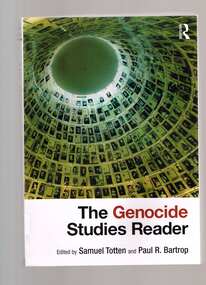
... Genocide - History Genocide - case studies This thorough overview of all aspects of the field of genocide studies brings together for the first time classic and contemporary writings from some of the most noted scholars writing on genocide in the fields of genocide studies, political science, history, and sociology. The Reader covers key aspects of a host of complex and thorny issues, such as the definition of genocide, theories of genocide, prevention and intervention, and its denial. ...This thorough overview of all aspects of the field of genocide studies brings together for the first time classic and contemporary writings from some of the most noted scholars writing on genocide in the fields of genocide studies, political science, history, and sociology. The Reader covers key aspects of a host of complex and thorny issues, such as the definition of genocide, theories of genocide, prevention and intervention, and its denial. This collection of writings is essential reading for anyone who wants to understand this most atrocious form of political violence that has plagued human history.Index, bib, p.552.non-fictionThis thorough overview of all aspects of the field of genocide studies brings together for the first time classic and contemporary writings from some of the most noted scholars writing on genocide in the fields of genocide studies, political science, history, and sociology. The Reader covers key aspects of a host of complex and thorny issues, such as the definition of genocide, theories of genocide, prevention and intervention, and its denial. This collection of writings is essential reading for anyone who wants to understand this most atrocious form of political violence that has plagued human history.genocide - history, genocide - case studies -
 Victorian Aboriginal Corporation for Languages
Periodical, Australian Institute of Aboriginal and Torres Strait Islander Studies, Australian Aboriginal studies : journal of the Australian Institute of Aboriginal and Torres Strait Islander Studies, 2007
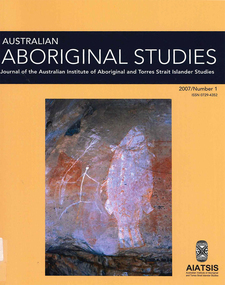
... About Peter Sutton?s ?The Politics of Suffering: Indigenous Policy in Australia since the 1970s? ...1. The moral lexicon of the Warlpiri people of central Australia LR Hiatt This paper discusses words that match ?Good? and ?Bad?; examples of ?Good? and ?Bad? behaviour; morality and law; and egalitarianism and dominance. It also presents a comparison with Gidjingarli (Burarra). 2. Mobs and bosses: Structures of Aboriginal sociality Patrick Mullins (Mount Druitt, NSW) A commonality of Aboriginal social organisation exists across the continent in communities as different as those from the Western Desert across to Cape York, from the towns of New South Wales and Western Australia to cities like Adelaide. This is found in the colloquial expressions ?mob? and ?boss?, which are used in widely differing contexts. Mobbing is the activity where relatedness, in the sense of social alliances, is established and affirmed by virtue of a common affiliation with place, common experience and common descent, as well as by the exchange of cash and commodities. Bossing is the activity of commanding respect by virtue of one?s capacity to bestow items of value such as ritual knowledge, nurturance, care, cash and commodities. Mobbing and bossing are best understood as structures in Giddens? sense of sets of rules and resources involved in the production of social systems, in this case social alliances. Mobbing and bossing imply a concept of a person as a being in a relationship. Attention needs to be given to the way these structures interact with institutions in the wider Australian society. 3. Recognising victims without blaming them: A moral contest? About Peter Sutton?s ?The Politics of Suffering: Indigenous Policy in Australia since the 1970s? and Gillian Cowlishaw?s replies Ma�a Ponsonnet (Universit� Paris- 8-Saint-Denis) Peter Sutton?s texts on Aboriginal violence, health and their politicisation are replied to using his methodology, and acknowledging his convincing points. Sutton rightly denounces a lack of lucidity and scientific objectivity in anthropological debates. These inadequacies impede identification of what Aboriginal groups can do to improve their situations for fear that this identification would lead to blame the victims. At the other end of the ethical spectrum, those who advocate a broader use of what I will call a ?resistance interpretation? of violence fail to recognise victims as such, on the implicit grounds that seeing victims as victims would deprive them of any agency, on the one hand, and entail blame, on the other hand. I aim to define a middle road between those views: the idea that victims should be acknowledged as such without being denied their agency and without being blamed for their own condition. This middle road allows identification of the colonisers? responsibilities in the contemporary situation of Indigenous communities in Australia, and to determine who can do what. Secondly, I show that Sutton?s texts convey, through subtle but recurrent remarks, an ideology of blame rather than a mere will to identify practical solutions. As a consequence, some of his proposals do not stand on a solid and objective causal analysis. 4. 'You would have loved her for her lore?: The letters of Daisy Bates Bob Reece (Murdoch University) Daisy Bates was once an iconic figure in Australia but her popular and academic reputation became tarnished by her retrograde views. Her credibility was also put in doubt through the exposure of her fictionalised Irish background. In more recent times, however, her ethnographic data on the Aborigines of Western Australia has been an invaluable source for Native Title claims, while her views on Aboriginal extinction, cannibalism and ?castes? are being seen as typical of her time. This article briefly reviews what has been the orthodox academic opinion of her scientific achievement before summarising what is reliably known of her early history and indicating what kind of person is revealed in the 3000 or more letters that she left behind. 5. What potential might Narrative Therapy have to assist Indigenous Australians reduce substance misuse? Violet Bacon (Curtin University of Technology) Substance misuse is associated with adverse consequences for many Australians including Aboriginal and Torres Strait Islander peoples. Extensive research has been conducted into various intervention, treatment and prevention programs to ascertain their potential in reducing substance misuse within Aboriginal and non-Aboriginal communities. I explore the potential of Narrative Therapy as a counselling intervention for assisting Indigenous Australians reduce the harm associated with substance misuse. 6. Bone points from the Adelaide River, Northern Territory Sally Brockwell (University of Canberra) and Kim Akerman (Moonah) Large earth mounds located next to the vast floodplains of the lower Adelaide River, one of the major tropical rivers draining the flat coastal plains of northern Australia, contain cultural material, including bone points. The floodplains of the north underwent dynamic environmental change from extensive mangrove swamps in the mid-Holocene, through a transition phase of variable estuarine and freshwater mosaic environments, to the freshwater environment that exists today. This geomorphological framework provides a background for the interpretation of the archaeology, which spans some 4000 years. 7. A different look: Comparative rock-art recording from the Torres Strait using computer enhancement techniques Liam M Brady (Monash University) In 1888 and 1898, Cambridge University?s Alfred C Haddon made the first recording of rock-art from the Torres Strait islands using photography and sketches. Systematic recording of these same paintings and sites was carried out from 2000 to 2004 by archaeologists and Indigenous Torres Strait Islander and Aboriginal communities as part of community-based rock-art recording projects. Computer enhancement techniques were used to identify differences between both sets of recordings, to reveal design elements that Haddon missed in his recordings, and to recover images recorded by Haddon that are today no longer visible to the naked eye. Using this data, preliminary observations into the antiquity of Torres Strait rock-art are noted along with recommendations for future Torres Strait region rock-art research and baseline monitoring projects. 8. Sources of bias in the Murray Black Collection: Implications for palaeopathological analysis Sarah Robertson (National Museum of Australia) The Murray Black collection of Aboriginal skeletal remains has been a mainstay of bio-anthropological research in Australia, but relatively little thought has been given to how and why this collection may differ from archaeologically obtained collections. The context in which remains were located and recovered has created bias within the sample, which was further skewed within the component of the collection sent to the Australian Institute of Anatomy, resulting in limitations for the research potential of the collection. This does not render all research on the collection unviable, but it demonstrates the importance of understanding the context of a skeletal collection when assessing its suitability for addressing specific research questions.maps, b&w photographs, colour photographs, illustrations, graphs, chartswarlpiri, sociology, daisy bates, substance abuse, narrative therapy, rock art, technology and art, murray black collection, pleistocene sites, watarrka plateau -
 Robin Boyd Foundation
Document - Manuscript, Zelman Cowen, The Way We Live Now, 1974
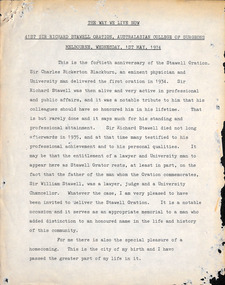
... This is a speech – 41st Sir Richard Stawell Oration, Australian College of Surgeons, Melbourne 01.05.1974 Sociological jurisprudence law ethics politics Social history Authority Justice Richard Stawell Zelman Cowen Typewritten, quarto, 34 pages The Way We Live Now Document Manuscript Zelman Cowen ...The is a speech given by Zelman Cowen in Melbourne, on Wednesday 1st May 1974 for the 41st Sir Richard Stawell Oration, Australian College of Surgeons. This may have been sent to Patricia Boyd since the Zelman Cowen was a long time friend of the family.This is a speech – 41st Sir Richard Stawell Oration, Australian College of Surgeons, Melbourne 01.05.1974Typewritten, quarto, 34 pagessociological jurisprudence, law, ethics, politics, social history, authority, justice, richard stawell, zelman cowen -
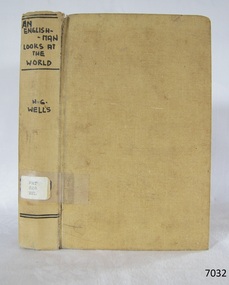 Flagstaff Hill Maritime Museum and Village
Book - A Collection of Essays, H G Wells, An Englishman Looks At the World, 1914
... Wells became an active political socialist and joined the Fabian Society in 1903, though a bitter power struggle with George Bernard Shaw and the Webbs in 1906–07 later found its way into his novel The New Machiavelli. ...Published in 1914, this is a collection of essays by H.G. Wells consisting of journalistic pieces written between 1909 and 1914, spanning twenty-six pieces ranging from five to sixty-two pages in length. Roughly half of the essays were originally printed in the Daily Mail between 1904 and 1913, with ten more appearing in nearly as many weekly and monthly papers, and three others having had prior publication in volume form. The subjects range widely flight and aviation with the opening with Blériot's Channel crossing, the monarchy, imperialism, labour and socialism, modern warfare, sociology, divorce, education, motherhood, the future of civilisation, and more. It's essentially Wells thinking aloud in print opinionated, topical journalism rather than fiction, reflecting a period when he was consciously stepping back from novel-writing to comment directly on contemporary affairs. A companion American edition was published the same year by Harper and Brothers under the different title Social Forces in England and America.Hard Cover Book. An English Man Looks At The World Author: HG Wells Publisher: Cassell & Co Date: 1914 Further Information: Yellow Cloth hardcover with lettering and patterning to spine in black. The spine has a Library label with an inscription.fictionPublished in 1914, this is a collection of essays by H.G. Wells consisting of journalistic pieces written between 1909 and 1914, spanning twenty-six pieces ranging from five to sixty-two pages in length. Roughly half of the essays were originally printed in the Daily Mail between 1904 and 1913, with ten more appearing in nearly as many weekly and monthly papers, and three others having had prior publication in volume form. The subjects range widely flight and aviation with the opening with Blériot's Channel crossing, the monarchy, imperialism, labour and socialism, modern warfare, sociology, divorce, education, motherhood, the future of civilisation, and more. It's essentially Wells thinking aloud in print opinionated, topical journalism rather than fiction, reflecting a period when he was consciously stepping back from novel-writing to comment directly on contemporary affairs. A companion American edition was published the same year by Harper and Brothers under the different title Social Forces in England and America.warrnambool, shipwrecked-coast, flagstaff-hill, flagstaff-hill-maritime-museum, maritime-museum, shipwreck-coast, flagstaff-hill-maritime-village, shipwrecked-artefact, book, an englishman looks at the world, h g wells, warrnambool mechanics’ institute, pattison collection, warrnambool library, ralph eric pattison, corangamite regional library service, warrnambool city librarian, mechanics’ institute library, victorian library board, warrnambool books and records, warrnambool children’s library
