
Showing 25 items matching "south atlantic"
-
 4th/19th Prince of Wales's Light Horse Regiment Unit History Room
Medal, South Atlantic Medal
... South Atlantic Medal......South Atlantic...The South Atlantic Medal Association was formed in 1997. ...A laurel wreath and the words "SOUTH ATLANTIC MEDAL" make up the border. ...The South Atlantic Medal Association was formed in 1997. ...The South Atlantic Medal is a British campaign medal awarded to British military personnel and civilians for service in the Falklands War of 1982, between the United Kingdom and Argentina; 29,700 were issued. The South Atlantic Medal Association was formed in 1997. The medal is a coin, made of cupronickel, 36 mm in diameter, and was struck by the Royal Mint and issued by the Army Medal Office, Droitwich. The obverse side bears a crowned effigy of the The Queen. Like a modern British coin, it has the abbreviated form of ELIZABETH II DEI GRATIA REGINA FIDEI DEFENSOR ("Elizabeth II, by the grace of God, Queen and Defender of the Faith") on the border and the Queen is facing to the right. The reverse side has the Falkland Islands' coat of arms, which bears the words "DESIRE THE RIGHT" (an allusion to English explorer John Davis' ship, "Desire"). A laurel wreath and the words "SOUTH ATLANTIC MEDAL" make up the border. CPL J FINLAY (number) RAFmedal, south atlantic, falklands -
 Warrnambool RSL Sub Branch
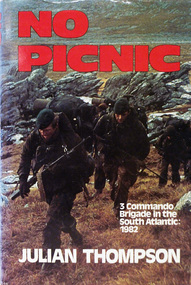
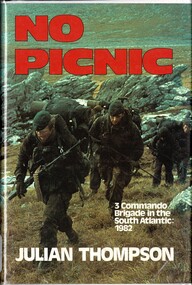
Book, NO PICNIC 3 Commando Brigade in the South Atlantic: 1982
... NO PICNIC 3 Commando Brigade in the South Atlantic: 1982...London: 1985 Hard Cover with dust cover Author's name, Julian Thompson, on dust cover NO PICNIC 3 Commando Brigade in the South Atlantic: 1982 Book ...Hard Cover with dust cover Author's name, Julian Thompson, on dust coverPublisher: Leo Cooper in association with Secker & Warburg Ltd. London: 1985falklands. 3 commando. -
 National Vietnam Veterans Museum (NVVM)
Book, Thompson, Julian, No Picnic: 3 Commando Brigade in the South Atlantic 1982
... No Picnic: 3 Commando Brigade in the South Atlantic 1982...No Picnic: 3 Commando Brigade in the South Atlantic 1982 Book Book Thompson, Julian ...One phenomenon of modern warfare is the instant paperback which arrears almost before the echo of the last shot has died away.One phenomenon of modern warfare is the instant paperback which arrears almost before the echo of the last shot has died away.great britain. royal marines. commando 3 - history, faulkland islands war, 1982 - commando operations -
University of Melbourne, Burnley Campus Archives
Journal, Cultivating the Global Garden, 1998-1999
... Drafts and final version of entry in the South Atlantic Quarterly 98: 4 Fall 1999 by Duke University Press, by Ruth Beilin. ...horticulture Drafts and final version of entry in the South Atlantic Quarterly 98: 4 Fall 1999 by Duke University Press, by Ruth Beilin. ...horticulture -
 Bendigo Military Museum
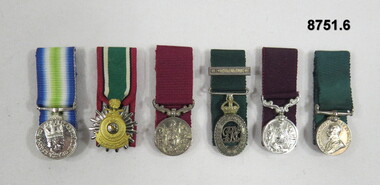
Award - MEDALS, MINIATURE, Unknown
... Miniature medals, all original, Court mounted. 1. Original - South Atlantic Medal. 2. Original - Saudi Arabian Medal for the Liberation of Kuwait. 3. ...Passchendaele Barracks Trust PBT267to272 Bob English Collection Miniature medals, all original, Court mounted. 1. Original - South Atlantic Medal. 2. Original - Saudi Arabian Medal for the Liberation of Kuwait. 3. ...Miniature medals, all original, Court mounted. 1. Original - South Atlantic Medal. 2. Original - Saudi Arabian Medal for the Liberation of Kuwait. 3. Original - Army Long Service and Good Conduct medal 1855-1874, 4. Original - Colonial Auxiliary Forces Decoration with one clasp. 5. Original - Army Long Service and Good Conduct Medal (Pre 1901), 6. Original - Colonial Auxiliary Forces Medal (George V).passchendaele barracks trust, pbt267to272, bob english collection -
 Wangaratta RSL Sub Branch
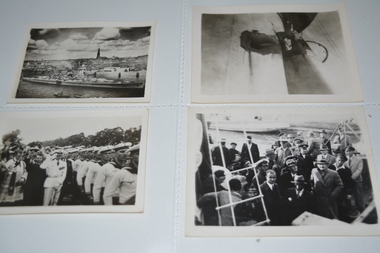
Photograph - Photographs, Admiral Graf Spee
... Photographs of the German ship Admiral Graf Spee which was involved in the Battle of the River Plate, the first naval battle in the Second World War and the first one of the Battle of the Atlantic in South American waters. The German panzerschiff Admiral Graf Spee had cruised into the South Atlantic a fortnight before the war began, and had been commerce raiding after receiving appropriate authorisation on 26 September 1939. ...Photographs of the German ship Admiral Graf Spee which was involved in the Battle of the River Plate, the first naval battle in the Second World War and the first one of the Battle of the Atlantic in South American waters. The German panzerschiff Admiral Graf Spee had cruised into the South Atlantic a fortnight before the war began, and had been commerce raiding after receiving appropriate authorisation on 26 September 1939. ...Photographs of the German ship Admiral Graf Spee which was involved in the Battle of the River Plate, the first naval battle in the Second World War and the first one of the Battle of the Atlantic in South American waters. The German panzerschiff Admiral Graf Spee had cruised into the South Atlantic a fortnight before the war began, and had been commerce raiding after receiving appropriate authorisation on 26 September 1939. One of the hunting groups sent by the British Admiralty to search for Graf Spee, comprising three Royal Navy cruisers, HMS Exeter, Ajax and Achilles (the last from the New Zealand Division), found and engaged their quarry off the estuary of the River Plate close to the coast of Uruguay in South America. 12 black and white unframed photographs of ship at seaInscription in pencil on rear of each photographadmiral graf spee, ww2, montevideo, battle of the river plate -
 Mission to Seafarers Victoria
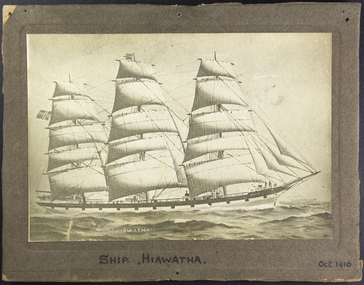
Photograph - Photograph, Sepia, Mounted, Ship Hiawatha Oct.1910, 1910
... Her best work was performed after passing Tristan d'Acunha in the South Atlantic Ocean. From that stage to the meridian of the Cape of Good Hope she was only a week, whilst from the latter point to Hobson's Bay the ship made an equally capital run of 27 days, her best daily record being 29 knots, representing an hourly average speed of 12 knots. ...Her best work was performed after passing Tristan d'Acunha in the South Atlantic Ocean. From that stage to the meridian of the Cape of Good Hope she was only a week, whilst from the latter point to Hobson's Bay the ship made an equally capital run of 27 days, her best daily record being 29 knots, representing an hourly average speed of 12 knots. ...The Hiawatha was a Norwegian windjammer sailing from Fredrikstadt. End of September 1910 the ship arrive nearly two weeks before its anticipated arrival date, making the trip in 81 days instead of a 100. Her arrival made the news in the Argus : SHIP HIAWATHA : A SMART VOYAGE. Seeing that she was not expected to arrive here for another couple of weeks or so the appear ance of the Norwegian ship Hiawatha at Port Phillip Heads yesterday morning caused some surprise. It was anticipated by shipping folk that her voyage from Fredrikstadt would occupy about 100 days which is a fair average passage but clipping a big slice off this allowance, the Hiawatha completed her long run from the Nor wegian port in the excellent time of 811/2 days, or within about 36 hours of the best effort previously made by a "windjammer" between these ports. An appropriate finish was given by the Hiawatha to this creditable voyage by a run of a little under three hours from the Heads up to Hobson's Bay, where she dropped anchor at about noon amid squalls of rain, which at times almost blinded her out from view. Few more 'racy' looking sailors than the Hiawatha have visited this port, and as she has proved on the present and many previous occasions sions, her looks do not belie her. Being laden with Baltic timber and in splendid sailing trim, the ship only required favourable winds to make a good voyage. These fell to her lot, and taking full advantage of every opportunity the vessel bowled across the ocean at steamboat speed. Reckoned from the time she cleared the English Channel, her passage occupied only 76 days. Her best work was performed after passing Tristan d'Acunha in the South Atlantic Ocean. From that stage to the meridian of the Cape of Good Hope she was only a week, whilst from the latter point to Hobson's Bay the ship made an equally capital run of 27 days, her best daily record being 29 knots, representing an hourly average speed of 12 knots. Several periods of exceptionally rough weather were passed through, but the ship suffered no ill effects. She will discharge at a berth up the river.One of the ships photograph that crew would leave at the Mission as a souvenir of their visit.Sepia photograph in cardboard frame of a three-masted full-rigged barque.On the photographic in white : Hiawatha On the frame in black: Ship Hiawatha - Oct. 1910hiawatha, windjammer, norway, full rigged barque, ships, crews and ships -
 Flagstaff Hill Maritime Museum and Village
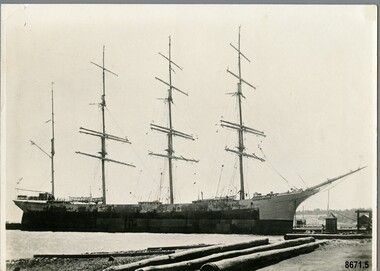
Photograph - Vessel "Strathgryfe", late 19th or early 20th century
... They had been marooned at Tristan D'Acunha (a remote group of volcanic islands in the South Atlantic ocean). Captain McIntyre, of the Strathgryfe, offered to bring Captain Shaw (of the Glen Huntly) on to Melbourne with them but the "old mariner" decided to stay on with his crew till arrangements could be made for rescuing the whole of them. ...They had been marooned at Tristan D'Acunha (a remote group of volcanic islands in the South Atlantic ocean). Captain McIntyre, of the Strathgryfe, offered to bring Captain Shaw (of the Glen Huntly) on to Melbourne with them but the "old mariner" decided to stay on with his crew till arrangements could be made for rescuing the whole of them. ...This photograph was one of ten photographs donated to Flagstaff Hill Maritime Museum and Village by Fred Trewartha. Frederick John Fox Trewartha (Fred) was a well-known Warrnambool businessman. He was born in Beeac near Geelong in 1920 and came to Warrnambool with his family as a very young child. He was apprenticed to his father John, as a saddler and later opened his own shop on Raglan Parade. He then moved into working with tarpaulins and canvases for the trucking industry. Fred was keenly interested in photography (and was a member of the Warrnambool Cine Club), yachting and boat building. He kept his yacht moored at Port Fairy for many years and participated in sailing events locally and interstate. He also built boats with his sons. He had the opportunity to meet many older sailors and it's thought this photo (and others in the set) may have been given to him by one of these men. Fred Trewartha died in 2016 in Warrnambool. The "Strathgryfe" was a four masted steel barque built in 1890 by "Russell and Company", Port Glasgow and was owned by Duncan McGillivray (The Strathgryfe Ship Company Limited), Greenock. It arrived in Melbourne in December 1891 from New York. Between 1891 and 1910 it carried merchandise in and out of Australia to ports around the world - Melbourne to London (1892), Newcastle to San Francisco (1894), Capetown to Newcastle (1894), New York to Shanghai (1897), New York to Melbourne (1898), Frederickstadt to Melbourne (1899), Liverpool to Sydney (1900), San Francisco to Brisbane (1903), Newcastle to Pisagna, Chile (1905) and Rotterdam to Melbourne (1910). It carried breadstuffs from San Francisco, coal from Newcastle, wool from Sydney, saltpetre from Hamburg and wheat from Brisbane and Melbourne as well as a variety of general merchandise. In 1898, whilst on route between New York and Melbourne, it came across the Captain and crew of the missing barque "Glen Huntley" which had been reported as "lost" several months earlier. They had been marooned at Tristan D'Acunha (a remote group of volcanic islands in the South Atlantic ocean). Captain McIntyre, of the Strathgryfe, offered to bring Captain Shaw (of the Glen Huntly) on to Melbourne with them but the "old mariner" decided to stay on with his crew till arrangements could be made for rescuing the whole of them. In 1899, when in Melbourne, seven of its crew refused to go to sea in it due to its unsafe conditions. They said the vessel was unseaworthy and that the rigging was unsafe and the lifeboats, not watertight. The Captain (Donald McIntyre) denied the allegations and produced a marine surveyor's certificate as evidence of the condition of the vessel. The men were sentenced to three weeks imprisonment. In 1901 there was a fire on board the Strathgryfe just after it left Sydney for London which resulted in many bales of wool being destroyed. In 1902 it was beached at Shellback island (near Wilson's promontory) for several weeks and had to be considerably dismantled in order to lighten its load enough to allow tugs to pull it back into deep water. In 1910 it was sold to a German firm and renamed "Margretha". It continued to operate in Australian ports until 1914 when it left Sydney for the English Channel with 42,438 bags of wheat. However owing to W.W.1 breaking out, it made for the port of St Michael's where it remained for twenty-one months. Later it was seized by the Portuguese Government and renamed "Graciosa" and was leased back to the English Government. It was sunk by two German submarines in 1918.This photograph is significant as a record of the world wide mercantile trade Australia was engaged in at the end of the nineteenth century and beginning of the twentieth century.Black and white photograph of a four masted barque moored at a dock. The rigging and two lifeboats are clearly visible. Three large timber logs are in the foreground. On the back of the photograph, the donor's name and telephone number have been written in black ballpoint pen and the name of the ship has been handwritten (incorrectly) in pencil in cursive script.Back of Photo - donor's name and telephone number "Strarthgryfe" [Strathgryfe] / "late" / "Margurita" [Margretha]flagstaff hill maritime museum and village, warrnambool, great ocean road, shipwreck coast, strathgryfe, barque, steel barque, margretha, graciosa, frederick trewartha, mercantile trade, russell and company, merchandise, cargo ship, glen huntly, w. w. 1 -
 Flagstaff Hill Maritime Museum and Village
Book - Reference Book/History, Henry Smith Williams, The Historians History of the World Vol 22 set 1 - Edited by Henry Smith Williams L.L.D. Published by “The Times” 1908, 1908
... South America, including the roles of figures like Simon Bolivar and Jose de San Martin. Within the set volume 22 is significant for several structural and thematic reasons While previous volumes (like Vol. 20 and 21) focus on the internal struggles of European monarchies, Volume 22 chronicles the first successful large-scale implementation of a democratic republic in the modern era. It marks the series transition from an "Old World" centrist narrative to a global perspective, acknowledging that historical development was shifting across the Atlantic ...Henry Smith Williams’ “The Historians' History of the World” is a chronological and geographical "tapestry" of human events, these twenty five volumes occupy a very specific and prestigious place in historical research. Volume 22 represents a critical pivot point in the series, shifting the focus away from the concentrated histories of Europe and the British Empire toward the "New World" and the rising power of the West.The Book is part of a 25 volume set with red cloth bindings and gold filigree design to rib.non-fictionHenry Smith Williams’ “The Historians' History of the World” is a chronological and geographical "tapestry" of human events, these twenty five volumes occupy a very specific and prestigious place in historical research. Volume 22 represents a critical pivot point in the series, shifting the focus away from the concentrated histories of Europe and the British Empire toward the "New World" and the rising power of the West.flagstaff hill, warrnambool, shipwrecked-coast, flagstaff-hill, flagstaff-hill-maritime-museum, maritime-museum, shipwreck-coast, flagstaff-hill-maritime-village, book, the historians history of the world vol 22 set 1 -
 Mission to Seafarers Victoria
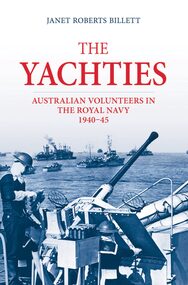
Book, Janet Billett, The Yachties - Australian Volunteers in the Royal Navy 1940-45, 2023
... Atlantic and some in the Arctic run to Murmansk in Russia. A small group distinguished themselves in Rendering Mines Safe. The majority served in Combined Operations, which included daring coastal raids, the amphibious landings in the Mediterranean and Normandy, covert operations, and mine sweeping. Later in the war, Yachties also served in the Royal Australian Navy in South...Atlantic and some in the Arctic run to Murmansk in Russia. A small group distinguished themselves in Rendering Mines Safe. The majority served in Combined Operations, which included daring coastal raids, the amphibious landings in the Mediterranean and Normandy, covert operations, and mine sweeping. Later in the war, Yachties also served in the Royal Australian Navy in South ...201 pages with black and white illustrations; notes, bibliography, index.non-fictionyachties, dominion yachtsmen scheme, royal navy, ww2 -
 Mission to Seafarers Victoria
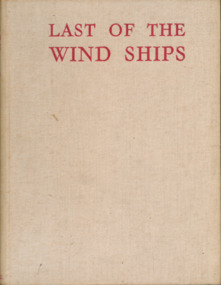
Book, Routledge, The Last of the Wind Ships, 1934
... South Australia to England, resulting in the books Falmouth for Orders (1928) and By Way of Cape Horn (1930), and the film Windjammer (1930). There followed many projects requiring his formidable skills of seamanship, command and organisation: sailing with the Parma in the 1932 and 1933 grain races; as proprietor of the sail-training vessel, Joseph Conrad, in 1934-36; training as a pilot, 1937-38; sailing with Arab dhows in the Persian Gulf, 1938-39; and captaining a replica of the Mayflower in its Atlantic crossing in 1957. ...No dust jacketnon-fictionsea voyage, allan villiers (1903-1982), keith oliver, donation, windjammers -
 Mission to Seafarers Victoria
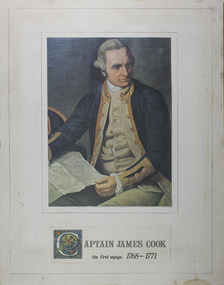
Print - Reproduction of a painting, Captain James Cook - The First Voyage 1768-1771
... south Pacific Ocean aboard HMS Endeavour, from 1768 to 1771. The aims of this first expedition were to observe the transit of Venus across the Sun (3–4 of June 1769). Departing from Plymouth in August 1768, the expedition crossed the Atlantic...south Pacific Ocean aboard HMS Endeavour, from 1768 to 1771. The aims of this first expedition were to observe the transit of Venus across the Sun (3–4 of June 1769). Departing from Plymouth in August 1768, the expedition crossed the Atlantic ...The first voyage of Lieutenant James Cook was a combined Royal Navy and Royal Society expedition to the south Pacific Ocean aboard HMS Endeavour, from 1768 to 1771. The aims of this first expedition were to observe the transit of Venus across the Sun (3–4 of June 1769). Departing from Plymouth in August 1768, the expedition crossed the Atlantic, rounded Cape Horn and reached Tahiti in time to observe the transit of Venus. In September 1769 the expedition reached New Zealand. In April 1770 they became the first known Europeans to reach the east coast of Australia, making landfall near present-day Point Hicks, and then proceeding north to Botany Bay. The expedition continued northward along the Australian coastline. In October 1770 they reached the port of Batavia in the Dutch East Indies. They resumed their journey on 26 December, rounded the Cape of Good Hope on 13 March 1771, and reached the English port of Deal on 12 July. The voyage lasted almost three years. Voyage 1 (1768–1771): ship Endeavour Route: London – Madiera – Rio de Janeiro – Cape Horn – Tuamotu Island – Tahiti – Society Islands – New Zealand – New Holland (Australia) – East Timor – Java – Batavia – Cape of Good Hope – St Helena – Ascension – LondonCook joined the British merchant navy as a teenager and joined the Royal Navy in 1755.Colour reproduction of portrait of Captain Cook by Nathaniel Dance (1735-1811)Captain James Cook - The First Voyage 1768-1771captain james cook, nathaniel dance (1735-1811), endeavour, navigators, sea voyage -
 Federation University Historical Collection
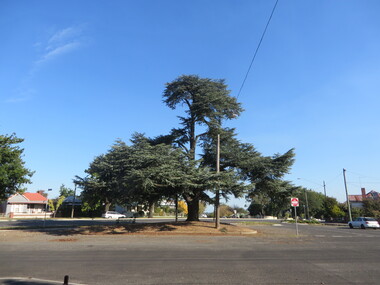
Photograph, Atlantic Cedar in South Street, Ballarat, 13/04/2020
... Atlantic Cedar in South Street, Ballarat......atlantic cedar...south...Colour photograph of an Atlantic Cedar (Cedrus atlantica glauca) on the intersection of South Street, Skipton Street and Lyons Street South, Ballarat....ballarat skipton street lyons street north tree atlantic cedar south street Colour photograph of an Atlantic Cedar (Cedrus atlantica glauca) on the intersection of South Street, Skipton Street and Lyons Street South, Ballarat. ...Colour photograph of an Atlantic Cedar (Cedrus atlantica glauca) on the intersection of South Street, Skipton Street and Lyons Street South, Ballarat.ballarat, skipton street, lyons street north, tree, atlantic cedar, south street -
 Federation University Historical Collection
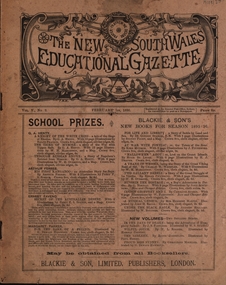
Booklet, The New South Wales Educational Gazette, 01 February 1896, 01/02/1896
... South Wales teachers. Articles include: * A Comparison of the Classical and Shakespean Dramas. * Geology for Australian Students by Rev. J. Miln Curran * From the Atlantic...South Wales teachers. Articles include: * A Comparison of the Classical and Shakespean Dramas. * Geology for Australian Students by Rev. J. Miln Curran * From the Atlantic ...Booklet published for New South Wales teachers. Articles include: * A Comparison of the Classical and Shakespean Dramas. * Geology for Australian Students by Rev. J. Miln Curran * From the Atlantic to the Pacific: Niagara to Minneapolis * G.A. Henty * The Study of Entomology by Walter W. Froggatt molong, anticline, syncline, jenolan, education gazette, educational gazette -
 Flagstaff Hill Maritime Museum and Village
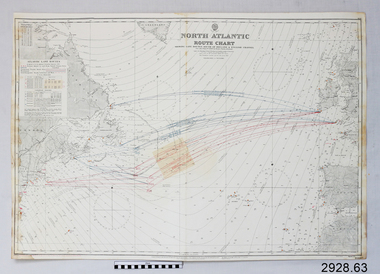
Document - Navigation Chart, North Atlantic : Route Chart showing Lane Routes South of Ireland & English Channel
... North Atlantic : Route Chart showing Lane Routes South of Ireland & English Channel...British Admiralty Navigation Chart - North Atlantic : Route Chart showing Lane Routes South of Ireland & English Channel...warrnambool shipwrecked-coast flagstaff-hill flagstaff-hill-maritime-museum maritime-museum shipwreck-coast flagstaff-hill-maritime-village shipwrecked-artefact navigation chart british admiralty navigation chart british admiralty north atlantic route chart north atlantic British Admiralty Navigation Chart - North Atlantic : Route Chart showing Lane Routes South of Ireland & English Channel North Atlantic : Route Chart showing Lane Routes South of Ireland & English Channel Document Navigation Chart ...British Admiralty Navigation Chart - North Atlantic : Route Chart showing Lane Routes South of Ireland & English Channelwarrnambool, shipwrecked-coast, flagstaff-hill, flagstaff-hill-maritime-museum, maritime-museum, shipwreck-coast, flagstaff-hill-maritime-village, shipwrecked-artefact, navigation chart, british admiralty navigation chart, british admiralty, north atlantic route chart, north atlantic -
 Greensborough Historical Society
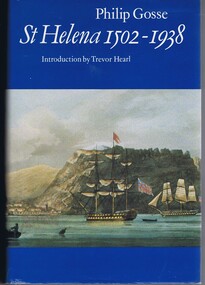
Book, Philip Gosse, St Helena 1502-1938 by Philip Gosse, 1990
... A history of the island of St Helena in the South Atlantic Ocean. 447 p., illus., maps. St Helena 1502-1938 by Philip Gosse Book Book Philip Gosse Anthony Nelson ...A history of the island of St Helena in the South Atlantic Ocean.447 p., illus., maps.non-fictionA history of the island of St Helena in the South Atlantic Ocean. -
 Bendigo Military Museum
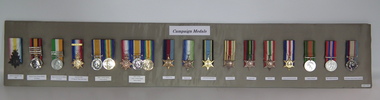
Award - REPLICA AUSTRALIAN MILITARY AWARDS DISPLAY, Unknown
... Replica Kandahar Star (1881), Replica Kings South African Medal with Two Clasps, Replica 1914/1919 War and Victoria Medals, Replica (Trio) 1914/15 Star, 1914/19 War and Victory Medals. Replica 1939-1945 Star, Replica Atlantic...Replica Kandahar Star (1881), Replica Kings South African Medal with Two Clasps, Replica 1914/1919 War and Victoria Medals, Replica (Trio) 1914/15 Star, 1914/19 War and Victory Medals. Replica 1939-1945 Star, Replica Atlantic ...Displays Military Awards that have been awarded to Australians since 1881 through to 1945. Replica Kandahar Star (1881), Replica Kings South African Medal with Two Clasps, Replica 1914/1919 War and Victoria Medals, Replica (Trio) 1914/15 Star, 1914/19 War and Victory Medals. Replica 1939-1945 Star, Replica Atlantic Star, Replica Air Crew Europe Star, Replica Africa Star, Replica Pacific Star, Replica Italy Star, Replica France and Germany Star, Original Australian Defence Medal (no identification number). Original 1939-1945 War Medal (no identification number). Original 1914 Star with clasp - 5th Aug - 22nd November 1914. 1 set of 16 Australian Military Awards dating from 1881 through to 1945 placed on a display board titled Board Number two. There is an attached list identifying these awards. Each award has it's appropriate title placed underneath the awards.There are no inscriptions on these medals. Three of these medals are listed as "Original". R/H corner of the display board identifies - "" From the Bob English Collection".medals, awards, passchendaele barracks trust -
4th/19th Prince of Wales's Light Horse Regiment Unit History Room
Medal
... Atlantic Star, France and Germany Star WW2 medal air ops Europe The Air Crew Europe Star is a six–pointed star of yellow copper zinc alloy. The obverse has a central design of the Royal Cypher of King George VI, surmounted by a crown. The cypher is surrounded by a circlet containing the words 'The Air Crew Europe Star'. The reverse is plain, although Stars issued to Australian and South ...Awarded by United Kingdom and Commonwealth Type :Campaign medal Eligibility Two months operational flying Awarded for Flying over occupied Europe Campaign European Air Operations 1939 – 1944 Description Six pointed star Clasps Atlantic France and Germany Related Atlantic Star, France and Germany Star The Air Crew Europe Star is a six–pointed star of yellow copper zinc alloy. The obverse has a central design of the Royal Cypher of King George VI, surmounted by a crown. The cypher is surrounded by a circlet containing the words 'The Air Crew Europe Star'. The reverse is plain, although Stars issued to Australian and South African personnel have recipient names impressed. The ribbon for this medal, along with those of the other Second World War campaign stars, is reputed to have been designed by King George VI. The sky is represented by pale blue, night flying by the black stripes on the edges, with the yellow stripes representing enemy searchlights.ww2, medal, air ops europe -
 Monbulk RSL Sub Branch
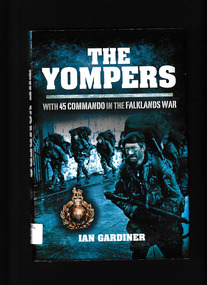
Book, Barnsley Pen & Sword Military, The Yompers : with 45 Commando in the Falklands War, 2012
... Given the intense public interest in the dramatic events then unfolding in the South Atlantic, it caught on and is now in common usage.The Yompers is the first account to be written by a company commander who fought in the Falklands War. ...Yomping was revealed by the journalist Charles Laurence in 1982 as the word which the Royal Marines used to describe carrying heavy loads long distances on foot. Given the intense public interest in the dramatic events then unfolding in the South Atlantic, it caught on and is now in common usage.The Yompers is the first account to be written by a company commander who fought in the Falklands War. Called to action from their beds early on 2 April 1982, the author along with the rest of 45 Commando Royal Marines, sailed 8,000 miles to play a key role in the recovery of the Falkland Islands from Argentine occupation. Lacking helicopters and short of food, they yomped in appalling weather carrying overloaded rucksacks, across ground which threatened to break legs and ankles at every step. Despite extreme hardship, their morale and training ensured they remained a cohesive fighting-fit body of men.Ill, maps, p.208.non-fictionYomping was revealed by the journalist Charles Laurence in 1982 as the word which the Royal Marines used to describe carrying heavy loads long distances on foot. Given the intense public interest in the dramatic events then unfolding in the South Atlantic, it caught on and is now in common usage.The Yompers is the first account to be written by a company commander who fought in the Falklands War. Called to action from their beds early on 2 April 1982, the author along with the rest of 45 Commando Royal Marines, sailed 8,000 miles to play a key role in the recovery of the Falkland Islands from Argentine occupation. Lacking helicopters and short of food, they yomped in appalling weather carrying overloaded rucksacks, across ground which threatened to break legs and ankles at every step. Despite extreme hardship, their morale and training ensured they remained a cohesive fighting-fit body of men.falklands war 1982, great britain - royal marines - commando 45 -
Moorabbin Air Museum
Document (item) - Roland Jahne Collection - See Description for details
... Atlantic Fokker Manilla folder No date ASTA components Manilla folder No date Associated Airlines Manilla folder Jul-87 ARV Aviation Ltd Manilla folder Feb-75 Albemarle. Air International Manilla folder No date Argosy. Armstrong Whitworth. Manilla folder Various Whitley. Armstrong Whitworth. Manilla folder Various Armstrong + Manilla folder Jun-85 Ariane 5 Manilla folder Various Arado Folder 1995 The New South...Atlantic Fokker Manilla folder No date ASTA components Manilla folder No date Associated Airlines Manilla folder Jul-87 ARV Aviation Ltd Manilla folder Feb-75 Albemarle. Air International Manilla folder No date Argosy. Armstrong Whitworth. Manilla folder Various Whitley. Armstrong Whitworth. Manilla folder Various Armstrong + Manilla folder Jun-85 Ariane 5 Manilla folder Various Arado Folder 1995 The New South ... -
Victorian Aboriginal Corporation for Languages
Conference proceedings, Joan Argenter, Endangered languages and linguistic rights on the margins of nations : proceedings of the Eighth FEL Conference : Barcelona (Catalonia) Spain 1-3 October 2004, 2005
... Section 1: Grass-roots Efforts and Top-down Institutions Keynote Address: Leanne Hinton The Death and Rebirth of Native American Languages Patrick Marlow Bilingual Education, Legislative Intent, and Language Maintenance in Alaska Galina Dyrkheeva New Language Policy and Small Languages in Russia: the Buryat Example Zelealem Leyew The Fate of Endangered Languages in Ethiopia Gregory Hankoni Kamwendo Language Planning from Below: Chitumbuka as a Marginalised Language in Malawi John Hobson Learning to Speak Again: Towards the Provision of Appropriate Training for the Revitalization of Australian Languages in New South Wales Shelley Tulloch Grassroots Desires for Language Planning in Nunavut Amandina C�rdenas Demay Hacia la definici�n de una pol�tica del lenguaje & Alejandra Arellano Mart�nez expl�cita en M�xico Elena Benedicto, G. McLean, Linguistic Rights in the Nicaraguan Atlantic...NSW endangered languages linguistic rights maps, tables, graphs Section 1: Grass-roots Efforts and Top-down Institutions Keynote Address: Leanne Hinton The Death and Rebirth of Native American Languages Patrick Marlow Bilingual Education, Legislative Intent, and Language Maintenance in Alaska Galina Dyrkheeva New Language Policy and Small Languages in Russia: the Buryat Example Zelealem Leyew The Fate of Endangered Languages in Ethiopia Gregory Hankoni Kamwendo Language Planning from Below: Chitumbuka as a Marginalised Language in Malawi John Hobson Learning to Speak Again: Towards the Provision of Appropriate Training for the Revitalization of Australian Languages in New South Wales Shelley Tulloch Grassroots Desires for Language Planning in Nunavut Amandina C�rdenas Demay Hacia la definici�n de una pol�tica del lenguaje & Alejandra Arellano Mart�nez expl�cita en M�xico Elena Benedicto, G. McLean, Linguistic Rights in the Nicaraguan Atlantic ...Section 1: Grass-roots Efforts and Top-down Institutions Keynote Address: Leanne Hinton The Death and Rebirth of Native American Languages Patrick Marlow Bilingual Education, Legislative Intent, and Language Maintenance in Alaska Galina Dyrkheeva New Language Policy and Small Languages in Russia: the Buryat Example Zelealem Leyew The Fate of Endangered Languages in Ethiopia Gregory Hankoni Kamwendo Language Planning from Below: Chitumbuka as a Marginalised Language in Malawi John Hobson Learning to Speak Again: Towards the Provision of Appropriate Training for the Revitalization of Australian Languages in New South Wales Shelley Tulloch Grassroots Desires for Language Planning in Nunavut Amandina C�rdenas Demay Hacia la definici�n de una pol�tica del lenguaje & Alejandra Arellano Mart�nez expl�cita en M�xico Elena Benedicto, G. McLean, Linguistic Rights in the Nicaraguan Atlantic Coast: Grupo de Ling�istas Ind�genas Mayangna Actions on the Ground within the Legislative Framework of the Estatuto de Autonom�a Bartomeu Meli� Las lenguas ind�genas en el Paraguay. Una visi�n desde el Censo 2002 Monica Ward Building from the Bottom-up: Linguistic Rights for Extremely Endangered Languages Marta Moskal Language Policy and Protection of Endangered Languages in Poland Sue Wright What is a language? Some difficulties inherent in language rights Joan Ramon Sol� Obstacles in the Way of the Recovery of Catalan Section 2: The Global vs. the Local in Linguistic Rights Keynote Address: Patxi Goenaga Fronteras que dividen y fronteras que separan. Una mirada a Europa desde el Euskara Yun-Hsuan Kuo Languages, Identity, and Linguistic Rights in Taiwan Estibaliz Amorrortu, Andoni Barre�a, What Do Linguistic Communities Think about the Esti Izagirre, Itziar Idiazabal, Bel�n Uranga Official Recognition of their Languages? Alok Kumar Das Linguistic Practices and Not Just Linguistic Rights: Endangered Languages in New Europe Section 3: Languages crossing the Borders Keynote Address: Tjeerd de Graaf The Status of Endangered Languages in the Border Areas of Japan and Russia Mariana Bara Arm�n endangered language Ver�nica Grondona Language Policy, Linguistic Rights and Language Maintenance in Argentina Grup d?Estudi de Lleng�es Amena�ades Linguistic diversity in Catalonia: towards a model of linguistic revitalization Nataliya Belitser Endangered Languages in Crimea/Ukraine: The Cases of Crimean Tatar, Karait, and Krymchak Ivelina Kazakova & Maria Miteva The Future of Bulgarian: The Road to Extinction or Paradise Regained Luke O?Callaghan War of Words: Language Policy in Post Independence Kazakhstan Eden Naby From Lingua Franca to Endangered Language: The Legal Aspects of the Preservation of Aramaic in Iraq Poster presentations Akim Elnazarov Endangered languages and Education. A Case of Badakhshan Province of Tajikistan Arnfinn Muruvik Vonen & Oddvar Hjulstad Linguistic Rights Paving the Way Towards Language Endangerment? The Case of Norwegian Sign Language Eva Savelsberg Kurdish (Kurmanc�) as Minority Language in the Federal Republic of Germany Jos� Antonio Flores Farf�n Cultural and Linguistic Revitalization, Maintenance and Development in Mexico Mary Jane Norris Assessing the Status, Use and Accessibility of Canada?s Aboriginal Languages within Communities and Cities: Some Proposed Indicators Michael Prosser van der Riet Promotion of Minority Language Scripts in Southwest China. A Relative Success or Complete Failure? Mikael Grut The Endangered Celtic Languages: A Wake-up Call Nariyo Kono Developing Partnerships Between Universities and Language Communities: Top-down and Bottom-up Integration Richard J. Hawkins Probit Modeling Language Attrition Rudy Osiel Camposeco El idioma maya Popti? y la Declaraci�n Universal de los Derechos Ling��sticos Victorio N. Sugbo The literary Response: Claiming Rights in Three Philippin Languages Ya-ling Chang Language Policies in an Aboriginal Primary School in Taiwanmaps, tables, graphsnsw, endangered languages, linguistic rights -
 Ballarat Tramway Museum
Album - Photo Album, Wal Jack, USA and Canada, 1940s
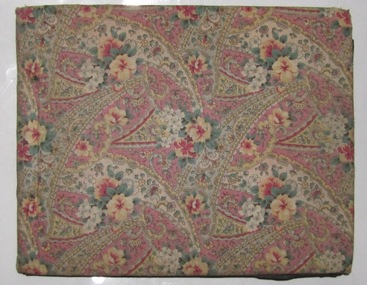
... Has photos of various locations and lines within USA and Canada, Chicago, Vancouver, Le High Valley, Montreal, Los Angeles, Cincinnati, San Francisco, Connecticut, Lake Shore, New York, Brooklyn, San Diego, Pittsburgh, South Bend, Sacramento & Northern, Little Rock, Buffalo, Philadelphia, Jamestown, Monongahela, Atlantic City, Boston, Cleveland, Detroit, Milwaukee, Gary and North Shore. ...Has photos of various locations and lines within USA and Canada, Chicago, Vancouver, Le High Valley, Montreal, Los Angeles, Cincinnati, San Francisco, Connecticut, Lake Shore, New York, Brooklyn, San Diego, Pittsburgh, South Bend, Sacramento & Northern, Little Rock, Buffalo, Philadelphia, Jamestown, Monongahela, Atlantic City, Boston, Cleveland, Detroit, Milwaukee, Gary and North Shore. ...Has photos of various locations and lines within USA and Canada, Chicago, Vancouver, Le High Valley, Montreal, Los Angeles, Cincinnati, San Francisco, Connecticut, Lake Shore, New York, Brooklyn, San Diego, Pittsburgh, South Bend, Sacramento & Northern, Little Rock, Buffalo, Philadelphia, Jamestown, Monongahela, Atlantic City, Boston, Cleveland, Detroit, Milwaukee, Gary and North Shore. Includes images of cable cars in Chicago, San Francisco. PCC car 7022 of Baltimore image includedHas a strong association with Wal Jack and his collecting of tramway history / developments until 1964.Floor pattern covered album with black paper inside covers holding some 21 sheets of card on which photos have been mounted using photo corners of various types, captions in white ink. Has punched holes on the left hand side but was not bound with cord at the time of acquisition. Parts of the album originally started as a the Melbourne album and remnants of photos hinges and notes left on the sheets. Has some 142 black and white photographs. Has some loose photographs.trams, tramways, usa, canade -
 Melbourne Tram Museum
Photograph - Spencer & Clarendon Sts traffic issues - set of 3, Melbourne & Metropolitan Tramways Board (MMTB), 1954
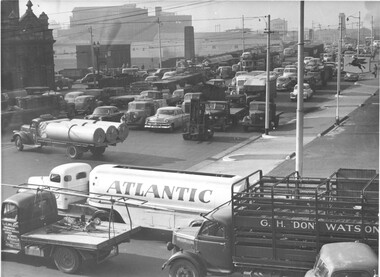
... 1 - "Spencer Street looking south from the roof of Hamill tyre service, tramcar held up in northbound traffic for a period of 3.5 minutes, date 28.9.54, time 0835 hrs. In the background is part of the Fish market building, the bridge itself carrying very heavy traffic. In the foreground is coming out of Siddeley Street, is an "Atlantic...1 - "Spencer Street looking south from the roof of Hamill tyre service, tramcar held up in northbound traffic for a period of 3.5 minutes, date 28.9.54, time 0835 hrs. In the background is part of the Fish market building, the bridge itself carrying very heavy traffic. In the foreground is coming out of Siddeley Street, is an "Atlantic ...1 - "Spencer Street looking south from the roof of Hamill tyre service, tramcar held up in northbound traffic for a period of 3.5 minutes, date 28.9.54, time 0835 hrs. In the background is part of the Fish market building, the bridge itself carrying very heavy traffic. In the foreground is coming out of Siddeley Street, is an "Atlantic" petrol tanker and trucks for L & G Wilson carriers, and G H 'Don' Watson cattle truck. Note the truck carrying paper reels has come out of the Mobil Service Station and is turning south onto the bridge. Traffic is also struggling to exit Queens Wharf Road onto the bridge as well. The W2 class, is running to East Preston on Route 9 service. Note the Pioneer Tour coach, "CDR" petrol tanker and a forklift truck in the traffic mix. 2 - "Clarendon Street at Whiteman Street looking north (from tray of tramways truck), northbound trams held up by traffic across tracks, date 13-10-54, time 0810hrs". In the view is W5 class No. 808, running a Thornbury route 9B service. Another "Thornbury" bound tram can be glimpsed in the traffic ahead. In the background are the Robar Tea House, Hart & Co, Robur Tea advert, Bullen's Circus, and Vincent's pills. 3 - "Spencer Street from Batman Hill Hotel, looking south, general view of traffic, dated 22-10-54, time 1712 hrs". Has in the view, W2 class tram 574, running to "East Preston" route 9 service, and W2 No.566, running to "Hawthorn" on route 27 service. In the background is the Victorian Railways Head office, the Tea House and the railway viaduct. Note also the advertising for both Philips and Berger Master (Paints). Yields information about the traffic issues in Clarendon and Spencer Sts. 1954Black and white photograph with handwritten details of time and location on the rear. - set of 3.On the rear of each print is the details - see Context.trams, tramways, traffic congestion, w2 class, tram 808, tram 574, w5 class, clarendon st, spencer st, tram 566, route 9, route 27, route 9b -
 Linton and District Historical Society Inc
Photograph, Dumbrell's Southern Cross Motors, 52 Sussex Street, Linton
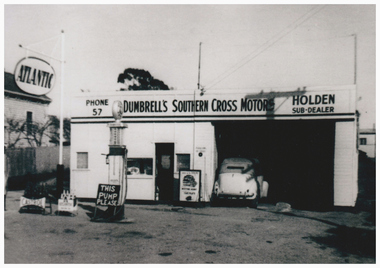
... Atlantic Petrol Buildings Petrol stations Mechanics Dark family Photograph copied from original of a petrol station/mechanic's workshop. At the time the photograph was taken the workshop was owned by John and Alice (Jill) Dumbrell. The date the photograph was taken is unknown. The car that is parked in the workshop was owned by Ernie Page, an employee of the Bank of New South ...This garage was on the site of the Ball family's blacksmith's workshop. In 2017 parts of the building are still on the site, although in a very dilapidated condition.Photograph copied from original of a petrol station/mechanic's workshop. At the time the photograph was taken the workshop was owned by John and Alice (Jill) Dumbrell. The date the photograph was taken is unknown. The car that is parked in the workshop was owned by Ernie Page, an employee of the Bank of New South Wales in Linton.john dumbrell, alice (jill) dumbrell, dumbrell's southern cross motors linton, holden dealership linton, atlantic petrol, buildings, petrol stations, mechanics, dark family -
 City of Melbourne Libraries
Photograph, Bull, Hugh Jones, 1897-1993, Leather Exhibition, Melbourne Town Hall
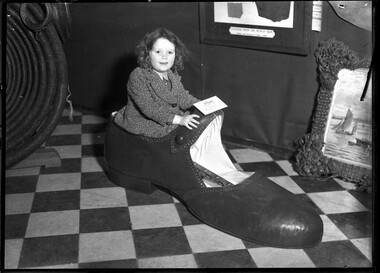
... South Yarra. There is also a creditable display of exhibits submitted by boys of the orthopaedic section of the Children's Hospital at Frankston. Amongst the novelties on view in other portions of the exhibition were the following: — Leather coats worn by Sir C. Kingsford Smith on his Atlantic...South Yarra. There is also a creditable display of exhibits submitted by boys of the orthopaedic section of the Children's Hospital at Frankston. Amongst the novelties on view in other portions of the exhibition were the following: — Leather coats worn by Sir C. Kingsford Smith on his Atlantic ...Photographer notations on slide: At the Leather Exhib. at T. Hall Melb 1933 Age Published: Age (Melbourne, Vic.: 1854- ), 1933 THE EXHIBITS. (1933, September 20). The Age (Melbourne, Vic. : 1854 - 1954), p. 16. Retrieved January 25, 2026, from http://nla.gov.au/nla.news-article205109730 Published title: THE EXHIBITS. A COMPREHENSIVE RANGE. Curios, Novelties, Working Displays Published Caption: ONE OF THE NOVELTIES – AN OUTSIZE IN SHOES Research by Project Volunteer, Louise McKenzie: Our photo is dated 20 September 1933, and shows a happy, chubby-faced young girl sitting in a very over-sized girl’s shoe. It is labelled – “Shoe, An Out Size, loaned by Messrs Blackman & Rose”. (1) It is an effective way to capture the attention of the readership and alert them to the Melbourne Leather Show 1933. This show was designed to be a drawcard of extraordinary proportion, and there is no doubt that this leather exhibition was a really big deal for Melbourne. It completely took over the Melbourne Town Hall, and was open from 10.30 am until 10.30 pm. It seemed to contain something for everyone – the military, the man about town, the home handyman, the housewife, the child, the sporting types, the domestic workers, the outdoor enthusiasts, the horseracing fans, car enthusiasts, those wishing to show off the latest fashion – both men and women - and those just intrigued by a lot of fascinating and wide ranging exhibits. One of the most comprehensive descriptions of the Exhibition accompanies the photograph, and is worth quoting in full: “PROMINENT among exhibits which first attract attention in the foyer of the Town Hall is a comprehensive display of leather articles used by the defence forces. A conspicuous legend states that leather plays an important part in national defence, being used for saddlery, tool containers, holdalls, range-finding, surveying and signalling equipment, explosives factories, harness accoutrement, bandsmen's equipment and clothing. Three models of horses and several figures of soldiers wearing leather equipment illustrate the lesson, and a great range of leather goods used in military training and work variegate the display. Nearby are Texas cowboy, buckjumping and breaking-in saddles; whips, a walking stick, made of leather and numerous other curios. The general exhibition occupies the whole floor space of the main Town Hall, and is subdivided by partitions running most of the length of the hall. A bewildering variety, of leather goods presses for close and leisured inspection. Here and there operatives in charge of working machinery give practical demonstrations of factory processes in the production of footwear. Polishing materials are well represented. One attractive exhibit includes two bush huts constructed of leather, with wattle bark for roofing. Opossums, rosellas and a kookaburra add touches of bush realism. Adjacent exhibits include bags, fishing boots, leggings, leather covers in all colours. Factory Processes. One exhibitor has installed an automatic cinema apparatus and screen, which projects various factory processes in making a shoe, the operator being shown at work. Elsewhere an interesting exhibit depicts the five stages in the manufacture of sole leather, and the tanning materials employed. "Very handsome effects are achieved in the interior appointments of motor cars, which are attended by figures of smart chauffeurs in leather coats. Motor-trimming leather is said to be more durable and hygienic than fabric materials, and cheaper. The neat finish of the material, its excellent appearance, certainly make a very favourable impression. It takes the hides of three beasts to cover the cushions, squabs and door panels of a full-sized sedan, while to finish the entire interior, including quarter-panels and head linings would take four or even five. Special Exhibits. Amongst the special sections the display arranged by the handicrafts and home industries- committee of the Country Women's Association of Victoria is a notable one. In all there are about 130 entries which are in four classifications, viz., hand-tooled or embossed leathers, suede, hand-made gloves and undecorated leather. The glove section attracted the most numerous entries, a number being the work of members and craft subscribers of the Country Women's Association. In the leathercraft competition, organised by the Country Women's Association, the judges yesterday awarded the first prize for bookbinding (the only prize given in this division) to Miss M. Alston, of South Yarra. There is also a creditable display of exhibits submitted by boys of the orthopaedic section of the Children's Hospital at Frankston. Amongst the novelties on view in other portions of the exhibition were the following: — Leather coats worn by Sir C. Kingsford Smith on his Atlantic flight. Model Wellington boot, Phar Lap's saddle. Melbourne Cup winner's saddle. Longest whip in world, 108 feet long. (33 metres) [See our photo, to left of Girl in Shoe] Diminutive shoes. Pair of shoes 65 years old. Pair of men's working boots 75 years old. Larwood's, Tate’s and Pataudi’s cricket boots. [Three internationally revered cricketers of the day] (2) Picture frame made of leather bought 63 years ago. [See our photo, to right of Girl in Shoe] Leather frame, powder bowl, &c. Saddle used by world's champion buckjumper in U.S.A. Mexican cowboy outfit. Miniature saddle and bridle. A fireman's helmet made of sole leather. (3) Sample of the leather hat worn by porters at the Billingsgate Fish Market, London. (4) From South Australia there have been obtained sets of harness for donkeys, goats and camels, the equipment being displayed to good advantage on stuffed representations of the animals mentioned. Close to the platform is a glass case containing snow shoes and coats which have been used in Antarctic exploration work. Trade Display. Amongst the trade exhibits may be seen in operation a slipper turn shoe sewing machine, with heeling and channelling facilities, and the various stages in the production of ladies' sandals are shown. There is a wide contrast between sole leather of varying degrees of thickness on view in one stall and the choice samples of ladies' footwear in another — footwear, by the way, which could almost be used as ornaments, so dainty in colour and production are they. Again, there are displays of upholstering leathers of such soft texture that they could he readily mistaken for some of the finest cloth. Those who may be particularly interested in the production of chamois leather may gain an insight into the materials and chemicals used in the "working up” of this variety of leather. Supplies of glace kid (5) are tastefully arranged, and there may also be seen bags of all shapes and sizes, including satchels, suit cases and "sporting" cases, and bags for tennis players and golfers. Further variety is given to the exhibition by the display of antique hides, brightly coloured, with punching balls, boxing gloves and batsman's pads. There are crocodile skins and snake skins so cleverly "Worked up" that one could be almost pardoned for betraying an affection for such unpopular creatures.” “ Another wonderful article on this Exhibition, published the same day in one of the opposition daily newspapers, The Argus, is in the weekly article “Women to Women”, entitled “A Great Victorian Industry: Many Uses for Leather”. This weekly column was penned by Vesta, and she writes, with much purpose: “Yesterday afternoon I paid a hurried visit to the Leather Exhibition now being held in the Melbourne Town Hall and I was disappointed to find that the early visitors to the main exhibition were almost all men. Women, I think, should make a point of seeing every exhibition of our great industries, for women are the buyers of household requisites and goods for their own use and their tastes, and opinion influence also, to a large extent, the purchases of men. So, the welfare of industries is more or less in their hands and it becomes a duty for them to inform themselves fully of the extent and the quality of the manufacturing that is done here. The value of the output of the Australian boot and shoe factories alone was in 1930-31, the latest year for which the figures are given, Stg 3,750,000. Fully two thirds of that amount must have been spent by women on boots and shoes for themselves and their children. In a host of other directions, in the purchase of handbags, travelling bags, belts and straps, cushions, furniture coverings, purses, notebooks, spectacle cases, their annual expenditure must be very high. Their interest, therefore, in this industry is practical, and their support of it should be governed by knowledge of comparable values and qualities of the goods they buy. From the point of view of women, however, the exhibition itself is rather disappointing. There is an amazing collection of good stuff on show, but most of it is not displayed in a fashion that attracts attention. I was surprised, for example, at the range and quality of the leathers displayed, the suppleness of the finer qualities, and the varied range of colours and designs. But they are shown in such a fashion that if one set out deliberately to look for them it would be quite easy to miss most of them.” …It was surprising, too, that no one seemed to have taken advantage of the present fashion of wearing coloured gloves, or the cult of glove making, which the Country Women’s Association has fostered so successfully. Outside the collection of chamois leathers I saw no skins which were suitable to glove making. (6) However, it is perhaps a little unfair to be highly critical of the exhibition, inasmuch as it is the first of its kind. The material is there, undoubtedly, for a splendid show of every phase of this enterprising industry, and I am confident that experience will prove to those concerned that it will be worth while next time to devote a great deal of attention of the method of display.” With further research, it transpires that “Vera” is in fact NZ born Stella May Allen (nee Henderson) (1871-1962), a journalist, the first woman in NZ to begin a law course, in 1890-91). She later worked at a law firm while she completed her degree. Study of the law had always been open to women in NZ, but its practice was still barred to them. Her case “…led to amending legislation in 1896 allowing women to practise as barristers or solicitors. However, on gaining her LL.B. in November 1897 she did not apply for admission to the Bar. Instead, she became the Wellington-based correspondent and leader-writer for the Lyttelton Times. Her appointment, the first for a woman, was not welcomed by the all-male Press Gallery, and special permission had to be obtained from a subcommittee of the House before her presence was accepted. In 1900 she married Edwin Allen, a senior leader-writer for the Wellington Evening Post, and they moved to Australia in 1903 when Edwin Allen took up the post of foreign affairs leader-writer and parliamentary man for the Melbourne Argus. As Patricia Keep notes in her excellent entry of Stella Allan in the Australian Dictionary of Biography: “In 1907 The Argus commissioned her to write a series of articles on the first Australian Women's Work Exhibition held in October. They aroused much interest and next year The Argus invited her to join its full-time staff and begin a weekly section on the particular interests of women. She adopted the nom de plume 'Vesta' and called the column 'Women to Women'. Her work was unique in an Australian daily paper at that time. Her pages extended to cover every aspect of women's affairs, children's interests and community welfare, and 'Vesta' became a household word for authoritative information and advice on such matters. An excellent needlewoman and first-rate cook herself, she thoroughly tutored her staff in the work and needs of women in both country and city, as well as providing the usual training for cadet journalists. She conducted interviews and also visited the country to see at first hand the results of bushfires, mouse plagues, droughts and floods. In 1910 she was one of three women foundation members of the Australian Journalists' Association. “…she found time to become deeply involved in community affairs. She was an original committee-member of the Victorian Association of Crèches and of the Free Kindergarten Union of Victoria, and had much to do with the early days of the Victorian Bush Nursing Association, the Baby Health Centres Association and the Queen Victoria Hospital. She was a member of the National Council of Women, first in New Zealand and then in Melbourne, and of the Country Women's Association from its inception. … in 1924 she was appointed substitute delegate for Australia to the fifth assembly of the League of Nations at Geneva and was a delegate to the second Pan Pacific Women's Conference in Hawaii in 1930. A meeting held in the Melbourne Town Hall in 1938 by representatives of all the main Victorian women's organizations paid special tribute to her work and influence. She retired next year to England where she continued to write for the Argus, contributing articles on the experiences of women and children in wartime.” It is little wonder that “Vesta” was unafraid to take to task both the women of Victoria, and those who created the exhibition! One item which appears to have gone unnoticed, or at least unreported, is a framed article in the background of the photo of the chubby girl in the shoe. The display frame is labelled “Leather from the Human Skin, Tanned and Dressed by French artists.” The exhibition was certainly a cabinet of curiosities! A charming article in The Argus is a nice note on which to end. It gives a quick history and overview of the Australian leather industry and its unprecedented, and possibly unexpected, development and success, and states with pride: “Though Victoria is the largest leather producer in the Commonwealth all tanners in the Commonwealth can look back with pride on the long march of progress.” Footnotes: (1) “Blackman and Rose”. Messrs Blackman and Rose were shoe manufacturers, from 1927 located at 200 Noone Street, Clifton Hill. The Melbourne Circle describes their building as a “fine-looking building in the Federation ‘blood and bandage’ style.” It was built around 1912 for Puttifoot and Bloom, boot manufacturers, and today the building is apartments. (2) These cricketers were household names in the day: Tate: Maurice Tate, “English cricketer of the 1920s and 1930s, and leader of England’s Test bowling attack for a long time during this period. The founder of modern seam bowling. “ Larwood: Harold Larwood, “English right-arm fast bowler and the main exponent of the bowling style known as “bodyline”. Used to considerable effect in the 1932-33 Test series in Australia. Pataudi: Iftikhar A K Pataudi, “an Indian prince who in the 1930s played Test cricket for England, and in the 1940s played Test cricket for India (as Captain) – the only test cricketer to have played for both India and England. (3) “sole” leather “… is the thickest and most resistant material existing in the tanning industry … made from vegetable tanned leathers, usually bovine butts, processed in a special way to make them the hardest type of leather in existence.” (4) The hats worn by porters at Billingsgate Fish Market were also known as a “Bobbin” and look quite squat and rather unsophisticated. They were made of wood and tarred leather, with a “flat, hardened top designed to support large rectangular boxes of fish. The upturned brim protected the porter’s head against fish juice draining from the boxes of fish which would be carried on top of the hat. Some hats featured a small drain hole at the rear to allow this collected juice to drain down the back of the carrier. The hats were made using the ‘cuir bouilli’ technique. The leather was immersed in water which was heated until the leather began to shrink. It was then removed and put on a wooden former. The leather was stitched together to make the hat while still wet, and then held in place until dry.” (See article and photo on the London Museum website) (5) Glace kid – described on the Boston Museum of Fine Arts’ Cameo database as “A smooth glossy leather originally prepared from goat or sheepskin. Early glace kid had a shiny surface that was originally prepared by tawing the skin in a mixture of alum, table salt, flour, and egg yolk. Today, glace kid is prepared from many types of vegetable or chrome tanned leathers. The smooth polished surface is obtained mechanically by shaving, glazing, ironing, and/or rolling the dry leather.” (6) In the 1930s, Melbourne’s glovemaking industry was characterised by local manufacturing, with key producers like Simpson’s Gloves Pty Ltd in Richmond and the Stagg Glove Company in Clifton Hill leading the market. These factories produced high-quality leather gloves, handbags, and specialty gear, often employing a clear gendered division of labour and training young, local women. Museum Victoria holds the Simpson’s Gloves Collection, comprising over 1200 items, and the University of Melbourne Archives holds the company’s business records. References: THE EXHIBITS. (1933, September 20). The Age (Melbourne, Vic. : 1854 - 1954), p. 16. Retrieved January 25, 2026, from http://nla.gov.au/nla.news-article205109730 EXPORT LEATHER. (1929, September 17). The Argus (Melbourne, Vic. : 1848 - 1957), p. 17. Retrieved January 19, 2026, from http://nla.gov.au/nla.news-article4037647 LEATHER EXHIBITION (1933, September 18). The Argus (Melbourne, Vic. : 1848 - 1957), p. 10. Retrieved January 19, 2026, from http://nla.gov.au/nla.news-article11693362 (1933, September 23). The Argus (Melbourne, Vic. : 1848 - 1957), p. 21. Retrieved January 19, 2026, from http://nla.gov.au/nla.news-page522766 WOMEN TO WOMEN (1933, September 20). The Argus (Melbourne, Vic. : 1848 - 1957), p. 13. Retrieved January 19, 2026, from http://nla.gov.au/nla.news-article11694034 Australian Dictionary of Biography, Stella May Allan (1871–1962) https://adb.anu.edu.au/biography/allan-stella-may-4998 WOMEN TO WOMEN (1930, January 22). The Argus (Melbourne, Vic. : 1848 - 1957), p. 13. Retrieved January 19, 2026, from http://nla.gov.au/nla.news-article4063888 Museums Victoria, Simpson’s Gloves, 486-496 Victoria Street, North Richmond, VIC, Australia https://collections.museumsvictoria.com.au/articles/2702 The Argus. (1927, October 31). The Argus (Melbourne, Vic. : 1848 - 1957), p. 20. Retrieved February 7, 2026, from http://nla.gov.au/nla.news-article3888451 Melbourne Circle: stories from the suburbs: “Boots and all in Clifton Hill” https://melbournecircle.net/2015/11/20/bootmakers-of-clifton-hill/ Wikipedia, Maurice Tate, https://en.wikipedia.org/wiki/Maurice_Tate Wikipedia, Harold Larwood, https://en.wikipedia.org/wiki/Harold_Larwood Wikipedia, Iftikhar Ali Khan Pataudi, https://en.wikipedia.org/wiki/Iftikhar_Ali_Khan_Pataudi Buy Leather Online Italy, Sole leather: https://buyleatheronline.com/en/blog/outsole-and-insole-leather-n7 London Museum, Porters hats, https://www.londonmuseum.org.uk/collections/v/object-731122/hat-porters-hat/ Cameo Database, Museum of Fine Arts, Boston, Glace Kid, https://cameo.mfa.org/wiki/Glac%C3%A9_kid VICTORIAN LEATHER HAS WON RENOWN (1937, September 22). The Argus (Melbourne, Vic. : 1848 - 1957), p. 31 (March of Progress Supplement). Retrieved February 7, 2026, from http://nla.gov.au/nla.news-article1108704 Photographer notations on slide: "At the Leather Exhib. at T. Hall Melb 1933 Age B5".displays, melbourne town hall, leather, children, shoes, 1930-1939, industry, hats, gloves
