
Showing 239 items matching "special operations"
-
 Australian Commando Association - Victoria
Book - Official History of Special Operations Australia- Volume 1 Organisation
... Official History of Special Operations Australia- Volume 1 Organisation......Special operations...Popularly known today as Z Special Unit, or by the wartime cover names of Inter-Allied Services Department (ISD) and Services Reconnaissance Department (SRD), Special Operations Australia (SOA) was the Special Operations component of the US-led Allied Intelligence Bureau in the Pacific Theatre during the Second World War. ...Australian commandos Special operations Special forces World War II Soft cover with 200 pages Book Official History of Special Operations Australia- Volume 1 Organisation ...Popularly known today as Z Special Unit, or by the wartime cover names of Inter-Allied Services Department (ISD) and Services Reconnaissance Department (SRD), Special Operations Australia (SOA) was the Special Operations component of the US-led Allied Intelligence Bureau in the Pacific Theatre during the Second World War. The first in a set of five, Volume 1 – Organization tells the story of the establishment, organisation and function of SOA from its earliest days as a direct offshoot of the British Special Operations Executive, until the organisation’s disbandment after a long, brutal and bloody conflict. Introduced by clandestine operations and espionage writer C.A. Brown, Volume 1 tells the story of the establishment of SOA and its fight for survival as a British-oriented Special Ops organisation under American command, while giving the Imperial Japanese invaders a bloody nose all the way from New Guinea to Indochina. Covering in detail the major personalities, departments, directorates, training and operational bases of SOA, Volume 1.Soft cover with 200 pagesaustralian commandos, special operations, special forces, world war ii -
 Australian Commando Association - Victoria
Book - Official History of Special Operations Australia- Volume 2 Operations
... Official History of Special Operations Australia- Volume 2 Operations...Special operations Australia...Through the examination of this volume, the strategic role of the Special Operations - Australia organisation becomes apparent. ...Through the examination of this volume, the strategic role of the Special Operations - Australia organisation becomes apparent. ...Popularly known today as Z Special Unit, or by the wartime cover names of Inter-Allied Services Department (ISD) and Services Reconnaissance Department (SRD), Special Operations Australia (SOA) was the Special Operations component of the US-led Allied Intelligence Bureau in the Pacific Theatre during the Second World War. From the secret files of Z Special Unit, and the second in a set of five volumes, Volume 2 - Operations describes almost two hundred separate "Z" Operations. Through the examination of this volume, the strategic role of the Special Operations - Australia organisation becomes apparent. Students of history will easily identify the ebb and flow of the Allied campaigns in the Pacific Theatre, with many of the operations of SOA being precursors to larger Allied offensives. Several serious blunders by SRD headquarters are also identified, one of which in particular had the capacity to compromise one of the greatest secrets of the Second World War and could have cost thousands of Allied lives...special operations australia, australian commandos, world war ii, special forces -
 Australian Commando Association - Victoria
Book, The Official History of Special Operations Australia Vol. 3- Communications
... The Official History of Special Operations Australia Vol. 3- Communications...Australian special operations...The Official History of Special Operations Australia, Volume 3 - Communications is a unique record of one of the most important aspects of Second World War Special Operations....Australian special operations Special forces World War II The Official History of Special Operations Australia Vol. 3- Communications Book ...Popularly known today as Z Special Unit, or by the wartime cover names of Inter-Allied Services Department (ISD) and Services Reconnaissance Department (SRD), Special Operations Australia (SOA) was the Special Operations component of the US-led Allied Intelligence Bureau in the Pacific Theatre during the Second World War. From the secret files of Z Special Unit, and the third in a set of five volumes, Volume 3 - Communications describes the communications links and equipment which were the lifeline for "Z" Operatives in the field. From "Z's" early days relying on Dutch military communications stations in Melbourne and Darwin to the establishment of dedicated "Z" communications stations in Darwin, Morotai and Labuan, Vol 3 provides the only comprehensive history of these sites ever committed to paper. Radio and Special Forces enthusiasts will be agog at the appendices in this volume, which not only include copies of the actual operating instructions and technical manuals for much of the specialist SOE communications hardware used by "Z" during the war, but also the once-top secret SOE ciphers and codes used by Z parties in the field. The Official History of Special Operations Australia, Volume 3 - Communications is a unique record of one of the most important aspects of Second World War Special Operations.australian special operations, special forces, world war ii -
 Australian Commando Association - Victoria
The Official History of Special Operations Australia SRD Technical Handbook
... The Official History of Special Operations Australia SRD Technical Handbook...Australian special operations...Australian special operations Special forces Commandos World War II The Official History of Special Operations Australia SRD Technical Handbook ...This book reproduces the SRD Technical Handbook, which was a top secret equipment supply catalogue published for internal use within SRD in February, 1945. While many of the items in the handbook are British SOE “special stores” shipped over from London, a great deal of developmental and experimental work was done by SRD’s Technical Directorate at its technical research station at Mount Martha on Victoria’s Mornington Peninsula. A flick through these pages will show unusual items such as folding midget motorbikes, silenced pistols and machine guns, knuckle-knives, mini-submarines, booby trap devices and more. In fact, it contains just about everything a WWII-era commando or a spy required to successfully complete a secret mission. Lavishly illustrated with original wartime photographs, plans and diagrams, many never before seen publicly, the S.R.D. Technical Handbook is timely evidence that mankind is never as ingenious as he is during time of war.australian special operations, special forces, commandos, world war ii -
 Australian Commando Association - Victoria
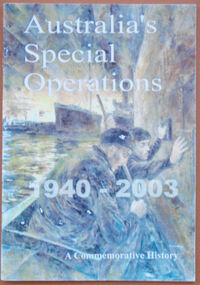
Australia's Special Operations 1940-2003. A Commemorative History
... Australia's Special Operations 1940-2003. A Commemorative History...A detailed history of Australian Special Forces operations during World War Two by the commandos of the Allied Intelligence Bureau and the Independent Companies/Commando Squadrons and through to operations in Vietnam and later conflicts. ...Australia's Special Operations 1940-2003. A Commemorative History ...A detailed history of Australian Special Forces operations during World War Two by the commandos of the Allied Intelligence Bureau and the Independent Companies/Commando Squadrons and through to operations in Vietnam and later conflicts. Compiled by two of Australia’s most famous military historians for the 60th anniversary of Operation JAYWICK in 2003. -
 Australian Commando Association - Victoria
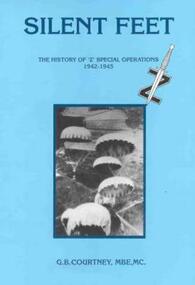
Book, Silent Feet:The History of 'Z' Special Operations, 1942-1945
... Silent Feet:The History of 'Z' Special Operations, 1942-1945 ...WW2 Australian special oeprations Silent Feet:The History of 'Z' Special Operations, 1942-1945 Book ...non-fiction -
 Australian Commando Association - Victoria
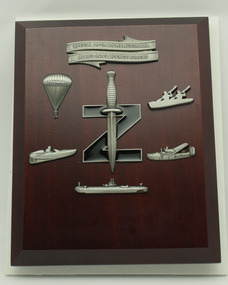
Memorabilia, Special Operations Australia WW2 Commemorative Plaque
... Special Operations Australia WW2 Commemorative Plaque...Soft Cover without Dust Jacket – 41 pages Special Operations Australia WW2 Commemorative Plaque Memorabilia ...Soft Cover without Dust Jacket – 41 pages -
 Monbulk RSL Sub Branch
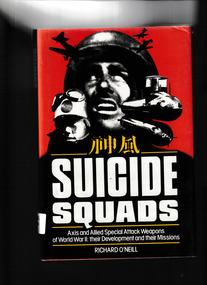
Book, Salamander Books, Suicide squads: the men and machines of World War II special operations, 1981
... Suicide squads: the men and machines of World War II special operations...Suicide squads: the men and machines of World War II special operations Book Salamander Books Richard O'Neill ...An examination of the machinery and motives of self sacrifice during World War TwoIndex, bibliography, ill, diagrams, p.281.non-fictionAn examination of the machinery and motives of self sacrifice during World War Twoworld war 1939 – 1945 – aerial operations - japan, kamikaze attacks -
 Monbulk RSL Sub Branch
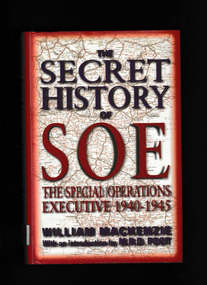
Book, St Ermin's Press, The secret history of SOE : the Special Operations Executive, 1940-1945, 2000
... The secret history of SOE : the Special Operations Executive, 1940-1945...The secret history of SOE : the Special Operations Executive, 1940-1945 Book St Ermin's Press William Mackenzie ...At the end of World War II, the Cabinet Office commissioned an eminent academic, Professor William Mackenzie, to undertake a comprehensive secret history of Special Operations Executive. Given access to both personnel and surviving wartime files, Mackenzie's report was a reference document to be used by intelligence agenices in a future conflict, its audience the very elite of Whitehall insidersIndex, bib, maps, p.814.non-fictionAt the end of World War II, the Cabinet Office commissioned an eminent academic, Professor William Mackenzie, to undertake a comprehensive secret history of Special Operations Executive. Given access to both personnel and surviving wartime files, Mackenzie's report was a reference document to be used by intelligence agenices in a future conflict, its audience the very elite of Whitehall insidersworld war 1939-1945 - espionage, world war 1939 – 1945 – secret operations – britain -
 Tramways/East Melbourne RSL Sub Branch - RSL Victoria Listing id: 27511
Book, G.B.COURTNEY et al, SILENT FLEET (THE HISTORY OF 'Z' SPECIAL OPERATIONS 1942 -45), 1993
... SILENT FLEET (THE HISTORY OF 'Z' SPECIAL OPERATIONS 1942 -45)...940 548694092 Biography ISBN: 0 646 12903 1 SILENT FLEET (THE HISTORY OF 'Z' SPECIAL OPERATIONS 1942 -45) Book G.B.COURTNEY National Library of Australia ...940 548694092, biography, isbn: 0 646 12903 1 -
 Australian Commando Association - Victoria
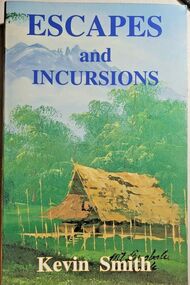
Book, Escapes and Incursions -Sabah 1942-45 by Kevin Smith
... ...Australian special operations...It also covers in detail a number of operations conducted by Special Operations Australia in the North Borneo region during World War II....World War II Australian commandos Australian special operations Borneo Special operations Australia Allied intelligence bureau Z special unit signed by author Escapes and Incursions -Sabah 1942-45 by Kevin Smith Book ...This book tells in close detail the stories of the perilous adventures and dreadful ordeals of 90 attempted escapes, some successful, by desperate Australian prisoners of war in Borneo 1942 - 1945. It also covers in detail a number of operations conducted by Special Operations Australia in the North Borneo region during World War II.signed by authorworld war ii, australian commandos, australian special operations, borneo, special operations australia, allied intelligence bureau, z special unit -
 Beechworth RSL Sub-Branch
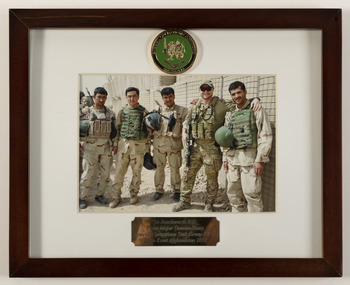
Photograph - Picture Special Operation Task Group XVIII - Tarin Kowt Afghanistan 2012, c2012
... Picture Special Operation Task Group XVIII - Tarin Kowt Afghanistan 2012...Featuring a unit medallion of the Special Operations Task Group XVIII above the photograph and a gold plated plaque below the photograph. ...Plaque engraving- TO BEECHWORTH RSL / FROM MAJOR DAMIEN BATTY / SPECIAL OPERATIONS TASK GROUP XVIII / TARIN KOWT AFGANISTAN 2012...Photograph Picture Special Operation Task Group XVIII - Tarin Kowt Afghanistan 2012 Major Damien Batty ...Coloured photograph of five men in uniform, featuring Major Damien Batty second from the right. Featuring a unit medallion of the Special Operations Task Group XVIII above the photograph and a gold plated plaque below the photograph. Framed in a dark timber. Plaque engraving- TO BEECHWORTH RSL / FROM MAJOR DAMIEN BATTY / SPECIAL OPERATIONS TASK GROUP XVIII / TARIN KOWT AFGANISTAN 2012photograph, un, peace keeping, afghanistan -
 Australian Commando Association - Victoria
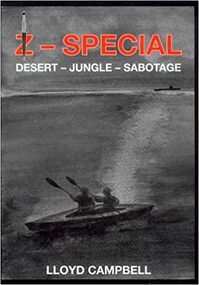
Book, Z Special- Desert-Jungle- Sabotage
... The Australian special operations...Later in New Guinea he made a major career change and volunteered for an unknown unit and special operations. What he had joined was the SRD – known as Z-Special Unit. ...Later in New Guinea he made a major career change and volunteered for an unknown unit and special operations. What he had joined was the SRD – known as Z-Special Unit. ...When Lloyd Campbell joined the AIF, he was underage and went to the Middle East with 2/17 Battalion. Later in New Guinea he made a major career change and volunteered for an unknown unit and special operations. What he had joined was the SRD – known as Z-Special Unit. Z Special Unit—also known as Special Operations Executive (SOE), Special Operations Australia (SOA) or the Services Reconnaissance Department (SRD)—was a joint Allied special forces unit formed during the Second World War to operate behind Japanese lines in South East Asia. Predominantly Australian, Z Special Unit was a specialist reconnaissance and sabotage unit that included British, Dutch, New Zealand, Timorese and Indonesian members, predominantly operating on Borneo and the islands of the former Netherlands East Indies. The unit carried out a total of 81 covert operations in the South West Pacific theatre, with parties inserted by parachute or submarine to provide intelligence and conduct guerrilla warfare. The best known of these missions were Operation Jaywick and Operation Rimau, both of which involved raids on Japanese shipping in Singapore Harbour; the latter of which resulted in the deaths of 23 commandos either in action or by execution after capture. Although the unit was disbanded after the war, many of the training techniques and operational procedures employed were later used during the formation of other Australian Army special forces units and they remain a model for guerrilla operations to this day. pp. 274, illusts, maps ww2, the australian special operations, special forces, z special unit -
 Australian Commando Association - Victoria
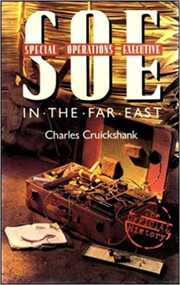
Book, SOE In the Far East
... ...special operations...Details the work of the Special Operations Executive in the five countries of Mountbatten's South East Asia Command-- India, Burma, Ceylon, Malaya and Sumatra, later expanded to include the Dutch East Indies and French Indochina-- and how the actions of the command could have made Force 136 a more decisive player in the liberation of the South East Asia.There were Australia members of Force 136....Relevant to WW2 Australian Special operations. ww2 soe special operations SOE In the Far East Book ...Details the work of the Special Operations Executive in the five countries of Mountbatten's South East Asia Command-- India, Burma, Ceylon, Malaya and Sumatra, later expanded to include the Dutch East Indies and French Indochina-- and how the actions of the command could have made Force 136 a more decisive player in the liberation of the South East Asia.There were Australia members of Force 136.Relevant to WW2 Australian Special operations. ww2, soe, special operations -
 Australian Commando Association - Victoria
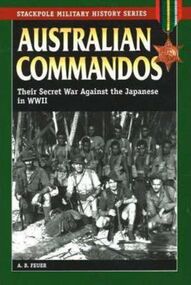
Book, A.B.Feure, Australian Commando: Their Secret War against the Japanese in World War II
... ...Australian special operations...While M Unit secretly set up coast-watching posts to monitor Japanese shipping movements and bombing flights, operatives of Special Operations Australia also known as the Allied Intelligence Bureau were inserted deep behind enemy lines, where they attacked Japanese targets in brutal terrain and where capture meant death by beheading. ...WW2 Australian Commandos Australian special operations Australian special forces World War II Australian Commando: Their Secret War against the Japanese in World War II. ...non-fictionww2, australian commandos, australian special operations, australian special forces, world war ii -
 Australian Commando Association - Victoria
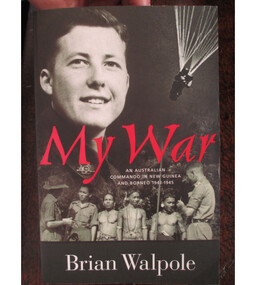
Book, My War: An Australian Commando in New Guinea and Borneo 1943 to 1945
... ...Australian special operations...Brian Walpole, the author, was a Australian Commando and special operations operative behind enemy lines in New Guinea and Borneo during WW2. ...Brian Walpole, the author, was a Australian Commando and special operations operative behind enemy lines in New Guinea and Borneo during WW2. ...Brian Walpole, the author, was a Australian Commando and special operations operative behind enemy lines in New Guinea and Borneo during WW2. Brian was a commando with the Australian 2/3 Independent Company. He went to New Guinea in January 1943 and remained until the fall of the Japanese base at Salamaua in September. He fought on the Bobdubi Ridge. His commanding officer was the well-regarded George Warfe, whose portrait was sketched by war artist Ivor Hele. Brian blazed a trail through the New Guinea jungle which appears on some maps as Walpole’s Track, discovering and naming the ambush site Goodview Junction. Soon afterwards (July 1943) Goodview Junction was the scene of a key campaign victory which contributed to George Warfe being awarded the Military Cross.Brian’s Special Operations training mostly took place at Careening Bay (Western Australia) and Fraser Island (Queensland). He arrived in Borneo at the time of the 9th Division’s landing at Labuan Island, and took part in two SRD operations – Colt and Semut 3. After the surrender, Walpole's work continued as many of the Japanese did not recognise the surrender and continued to fight on. Brian relates how on the 14th of September 1945 while still an operative in SRD he was able to save POWs from certain death and after a firefight arrested 10 Japanese soldiers at Simanggang Borneo. He was alone and had been assisted in the battle by 20 headhunters from the jungles along the Rejang River. One of the people saved was a young nurse in her 20s, Lena Ricketts. ww2, australian special operations, australian commando, new guinea, borneo, world war ii -
 Australian Commando Association - Victoria
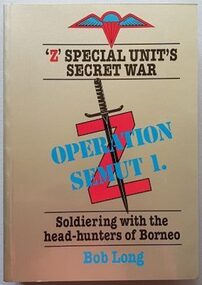
Book, Z Special Units' Secret War- Operations SEMUT 1, 1989
... Z Special Units' Secret War- Operations SEMUT 1...Z Special Unit an administrative support unit of (also known as Special Operations Australia (SOA) or the Services Reconnaissance Department (SRD)) was a joint Allied special forces unit formed during the Second World War to operate behind Japanese lines in South East Asia. ...Z Special Unit an administrative support unit of (also known as Special Operations Australia (SOA) or the Services Reconnaissance Department (SRD)) was a joint Allied special forces unit formed during the Second World War to operate behind Japanese lines in South East Asia. ...An account of the operations of The Allied Intelligence Bureau (AIB) better known as ‘Z’ Special Unit. Now a scarce and highly sought after title. The author’s personal experiences with Australian Special Forces (Services Reconnaissance Department) which involved guerrilla soldiering with the head-hunters of Japanese held Borneo during World War 2. Z Special Unit an administrative support unit of (also known as Special Operations Australia (SOA) or the Services Reconnaissance Department (SRD)) was a joint Allied special forces unit formed during the Second World War to operate behind Japanese lines in South East Asia. Predominantly Australian, SRD was a specialist reconnaissance and sabotage unit that included British, Dutch, New Zealand, Timorese and Indonesian members, predominantly operating on Borneo and the islands of the former Netherlands East Indies. The unit carried out a total of 81 covert operations in the South West Pacific theatre, with parties inserted by parachute or submarine to provide intelligence and conduct guerrilla warfare. The best known of these missions were Operation Jaywick and Operation RIMAU, both of which involved raids on Japanese shipping in Singapore Harbour; the latter of which resulted in the deaths of twenty-three commandos either in action or by execution after capture. Although the unit was disbanded after the war, many of the training techniques and operational procedures employed were later used during the formation of other Australian Army special forces units and they remain a model for guerrilla operations to this day.Hard Cover with Dust Jacket – 608 pagesInscribed by author-Bob Long AK223 SEMUT 1 Borneo 1945 -
 Running Rabbits Military Museum operated by the Upwey Belgrave RSL Sub Branch
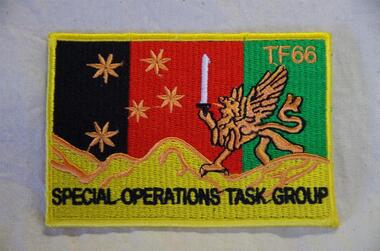
Unit Patch
... Special Operations Task Group TF66...Badge/Buttons somalia Army Special Operations Task Group TF66 Unit Patch ...Special Operations Task Group TF66badge/buttons, somalia, army -
 Monbulk RSL Sub Branch
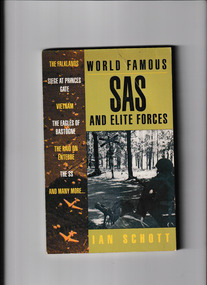
Book, Parragon, World famous SAS and elite forces, 1994
... worldwar 1939-1945 - special operations...special forces - operations - 20th century worldwar 1939-1945 - special operations First hand accounts of the astonishing bravery of the SAS and other elite forces of the world Ill, p.122. ...First hand accounts of the astonishing bravery of the SAS and other elite forces of the worldIll, p.122.First hand accounts of the astonishing bravery of the SAS and other elite forces of the worldspecial forces - operations - 20th century, worldwar 1939-1945 - special operations -
Australian Commando Association - Victoria
Book, United Kingdom, UK War Office -Amphibious Warfare Handbook No.10a-The Organisation Employment and Training of Commandos 1951
... ...Special operations...A training publication used by training staff and cadre during the formation of the Australian post-war commando companies. Commandos Special operations Special forces Australian military Marked as "Confidential' and number 6078 AN A4 80 page UK War Office -Amphibious Warfare Handbook No.10a-The Organisation Employment and Training of Commandos 1951 Book United Kingdom- ...A training publication used by training staff and cadre during the formation of the Australian post-war commando companies.AN A4 80 page Marked as "Confidential' and number 6078commandos, special operations, special forces, australian military -
 Australian Commando Association - Victoria
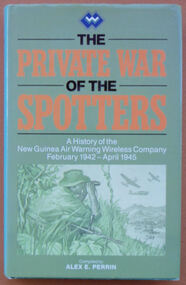
Book, The Private War of the Spotters: A history of the New Guinea Air Warning Wireless Company, February 1942-April 1945
... ...Special operations...World War II Special operations New Guinea New Guinea air warning Wireless Company The history of the New Guinea Air Warning Wireless Company. ...The history of the New Guinea Air Warning Wireless Company. This reprinted version contains a map of the dispositions of Spotting Stations August 1943, additional MID awards listed and some additions to the nominal roll. The New Guinea Air Warning Wireless Company was formed in Port Moresby in late January 1942 and was granted “Separate Independent Establishment” status in October 1943. The company’s “founding father” was Major Don Small, who had witnessed Japanese air raids on Rabaul and realised that having lacked an effective early-warning system around New Britain meant that the defenders were taken by surprise. At the time, gaps had also appeared in the coast-watching communications network because the territory administration ordered the withdrawal of civilian wireless operators when Japan entered the war. The first influx of men into the company consisted largely of volunteers from the 39th Infantry Battalion, which was stationed at Port Moresby. Initial training was rudimentary, hasty, and was sometimes even carried out on en route to a new station. The first party of company personnel, or “spotters”, left Port Moresby as early as 1 February 1942, bound for the strategically important Samarai area, at the tip of Papua. In the first month of the company’s existence 16 spotter stations were established on the coast of Papua and in the mountains around Port Moresby. At the end of 1942 there were 61 operational stations being run by 180 men. The company’s high-water mark was in late 1944, by which time over 150 stations had been set up in Papua and New Guinea behind enemy lines. On 3 February 1942 the company issued its first air warning in Papua, when spotters at Tufi saw Japanese aircraft about to attack Port Moresby for the first time. The following month the company was responsible for the first Japanese killed in action in Papua by Australian ground forces, when spotters from Gona engaged the crew of a downed Japanese bomber. And in July 1942 the station at Buna signalled Port Moresby with news of the Japanese landings in Papua, marking the beginning of the Kokoda campaign. The dangers involved in the company’s work had also been made clear by this time. In July 1942 a party of spotters attempting to set up a station at Misima Island, off Milne Bay, was intercepted by a Japanese destroyer, resulting in the company’s first operational losses. Anticipating the direction of the campaign as a whole, the company’s focus moved north and north-west over the three years of its existence. In May 1942 a network was set up in the Wau area in association with the activities of Kanga Force. As part of the Wau network, spotter Ross Kirkwood audaciously constructed an observation post overlooking the Japanese airstrip at Salamaua. Kirkwood’s position was photographed by Damian Parer on the understanding that the pictures would not be published. They nevertheless appeared in a Sydney newspaper. The day after the publication of the photographs the observation post was attacked by the Japanese and Kirkwood was lucky to escape. In June 1944 the company’s headquarters were moved to Nadzab. By that time, spotter stations existed behind Japanese lines, as far north as Hollandia, and the company began to train Americans to perform similar work in the Philippines. In early 1945 the company moved to Balcombe, Victoria, where its members were posted to other units of the Australian Corps of Signals.gray plasticnon-fictionThe history of the New Guinea Air Warning Wireless Company. This reprinted version contains a map of the dispositions of Spotting Stations August 1943, additional MID awards listed and some additions to the nominal roll. The New Guinea Air Warning Wireless Company was formed in Port Moresby in late January 1942 and was granted “Separate Independent Establishment” status in October 1943. The company’s “founding father” was Major Don Small, who had witnessed Japanese air raids on Rabaul and realised that having lacked an effective early-warning system around New Britain meant that the defenders were taken by surprise. At the time, gaps had also appeared in the coast-watching communications network because the territory administration ordered the withdrawal of civilian wireless operators when Japan entered the war. The first influx of men into the company consisted largely of volunteers from the 39th Infantry Battalion, which was stationed at Port Moresby. Initial training was rudimentary, hasty, and was sometimes even carried out on en route to a new station. The first party of company personnel, or “spotters”, left Port Moresby as early as 1 February 1942, bound for the strategically important Samarai area, at the tip of Papua. In the first month of the company’s existence 16 spotter stations were established on the coast of Papua and in the mountains around Port Moresby. At the end of 1942 there were 61 operational stations being run by 180 men. The company’s high-water mark was in late 1944, by which time over 150 stations had been set up in Papua and New Guinea behind enemy lines. On 3 February 1942 the company issued its first air warning in Papua, when spotters at Tufi saw Japanese aircraft about to attack Port Moresby for the first time. The following month the company was responsible for the first Japanese killed in action in Papua by Australian ground forces, when spotters from Gona engaged the crew of a downed Japanese bomber. And in July 1942 the station at Buna signalled Port Moresby with news of the Japanese landings in Papua, marking the beginning of the Kokoda campaign. The dangers involved in the company’s work had also been made clear by this time. In July 1942 a party of spotters attempting to set up a station at Misima Island, off Milne Bay, was intercepted by a Japanese destroyer, resulting in the company’s first operational losses. Anticipating the direction of the campaign as a whole, the company’s focus moved north and north-west over the three years of its existence. In May 1942 a network was set up in the Wau area in association with the activities of Kanga Force. As part of the Wau network, spotter Ross Kirkwood audaciously constructed an observation post overlooking the Japanese airstrip at Salamaua. Kirkwood’s position was photographed by Damian Parer on the understanding that the pictures would not be published. They nevertheless appeared in a Sydney newspaper. The day after the publication of the photographs the observation post was attacked by the Japanese and Kirkwood was lucky to escape. In June 1944 the company’s headquarters were moved to Nadzab. By that time, spotter stations existed behind Japanese lines, as far north as Hollandia, and the company began to train Americans to perform similar work in the Philippines. In early 1945 the company moved to Balcombe, Victoria, where its members were posted to other units of the Australian Corps of Signals.world war ii, special operations, new guinea, new guinea air warning wireless company -
 Australian Commando Association - Victoria
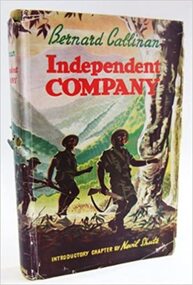
Book, Bernard J Callinan DSO MC, Independent Company: The 2/2 and 2/4 Australian Independent Companies in Portuguese Timor, 1941-1943, April 2021
... ...australian special operations...WW2 ww2 independent companies commandos australian special operations he detailed history of the No.2 and No. 4 Independent Commando Companies and their operations during World War 2 against the Japanese. ...he detailed history of the No.2 and No. 4 Independent Commando Companies and their operations during World War 2 against the Japanese. No dust jacket.younon-fictionhe detailed history of the No.2 and No. 4 Independent Commando Companies and their operations during World War 2 against the Japanese. No dust jacket.you ww2, independent companies, commandos, australian special operations -
 Australian Commando Association - Victoria
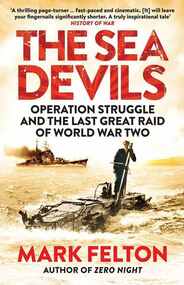
The Sea Devils. Operation STRUGGLE and the last great raid of World War II
... ...special operations...Mark Felton tells the true story of a band of young men living on raw courage, nerves and Adrenalin as they attempt to pull off what could be the last great raid of World War Two. ww2 special operations submarine operations The Sea Devils. ...July 1945. Eighteen young British, Australian and New Zealand special forces from a top-secret underwater warfare unit prepare to undertake three audacious missions against the Japanese. Using XE-craft midget submarines, the raiders will creep deep behind Japanese lines to sink two huge warships off Singapore and sever two vitally important undersea communications cables. Success will hasten ultimate victory over Japan; but if any of the men are captured they can expect a gruesome execution. Can the Sea Devils overcome Japanese defences, mechanical failures, oxygen poisoning and submarine disasters to fulfill their missions? Mark Felton tells the true story of a band of young men living on raw courage, nerves and Adrenalin as they attempt to pull off what could be the last great raid of World War Two.ww2, special operations, submarine operations -
 Australian Commando Association - Victoria
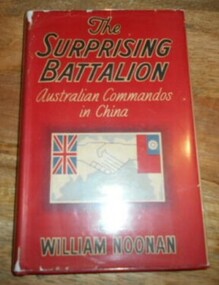
Book, The Surprising Battalion – Australian Commandos in China
... ...australian special operations...They were allocated to Brigadier Orde Wingate’s force but were recalled whilst on leave and returned to Australia after two years in the tropics. world war ii ww2 australian commando australian special forces australian special operations world war ii australian operations in china Hard cover first edition The Surprising Battalion – Australian Commandos in China Book ...The detailed account of Australian Commandos in China during World War Two. This, the story of Australia’s first Commandos, is an epic of the war. Here is hardship and adventure, pathos and humour, suffering and excitement. It tells of the men who went to Malaya with the 22nd Brigade, then sailed to Burma to train under Britain’s finest Commando leaders. Escaping from the Japanese, they journeyed the length of the tortuous Burma Road, crossing China almost to the coast. Here they trained the Surprising Battalions, some of China’s crack guerrillas, and operated with them in war torn provinces. The became famous as the “Lost Legion of the AIF” – the boys of Mission 204. After almost a year of guerrilla existence, the survivors were withdrawn to Kunming and flew to India. They were allocated to Brigadier Orde Wingate’s force but were recalled whilst on leave and returned to Australia after two years in the tropics.Hard cover first edition world war ii, ww2, australian commando, australian special forces, australian special operations, world war ii australian operations in china -
 Australian Commando Association - Victoria
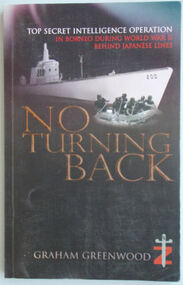
Book, No Turning Back: Top Secret Intelligence Operation in Borneo During World War II Behind Japanese Lines
... ...australian special operations...This is the account of the experiences of one soldier’s operation in Borneo – and is an account of their divine protection. ww2 australian special operations nz special forces in ww2 Signed by author. ...Twenty-two young New Zealand soldiers were posted to a clandestine intelligence unit in Melbourne called the Allied Intelligence Bureau. Their task was to undertake espionage and sabotage lines of communication, train natives as soldiers for local resistance and set up a radio link back to Australia. This is the account of the experiences of one soldier’s operation in Borneo – and is an account of their divine protection. Soft cover 174 pageSigned by author.ww2, australian special operations, nz special forces in ww2 -
 Australian Commando Association - Victoria
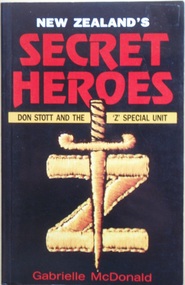
New Zealand's Secret Hero's: Don Stott and Z Special Unit
... ...Australian Special Operations...WW2 Australian Special Operations Australian Special forces Australian Commandos New Zealand Commandos Soft cover 168 pages New Zealand's Secret Hero's: Don Stott and Z Special Unit ...The incredible tale of ‘Z’ Special Unit – a group of mainly New Zealand and Australian commandos and saboteurs who parachuted into enemy-occupied territory to fight the war, sometimes single-handedly.The story begins in Greece, with the extraordinary sabotage feats of Don Stott and his friend Bob Morton. Stott’s success in blowing up the strategically crucial Asopos Viaduct was one of the greatest such exploits of World War II and changed the course of the war in Greece”.Soft cover 168 pagesww2, australian special operations, australian special forces, australian commandos, new zealand commandos -
 Australian Commando Association - Victoria
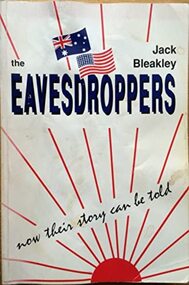
Book, The Eavesdroppers – WW2 Signals Intelligence (1st Edition)
... ...special operations...The story of Australian men and women, wireless interceptors, whose skill in intercepting coded Japanese transmissions in WWII provided MacArthur’s intelligence organisation with vital information about enemy operations in the South West Pacific Area. i ww2 signals australian signals intelligence special operations Soft cover 261 pages The Eavesdroppers – WW2 Signals Intelligence (1st Edition) Book ...The story of Australian men and women, wireless interceptors, whose skill in intercepting coded Japanese transmissions in WWII provided MacArthur’s intelligence organisation with vital information about enemy operations in the South West Pacific Area.iSoft cover 261 pagesww2, signals, australian signals intelligence, special operations -
 Australian Commando Association - Victoria
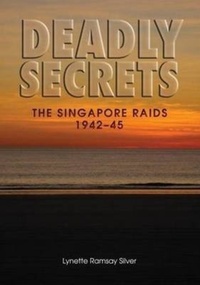
Book, Deadly Secrets: the Singapore Raids 1942-45
... ...Australian special operations...World War II WW2 Australian commandos Australian special operations Operation JAYWICK Operation RIMAU Soft Cover without Dust Jacket – 464 pages Deadly Secrets: the Singapore Raids 1942-45 Book ...Deadly Secrets tells the engrossing true story of the Allied raids launched on Singapore in World War II. Laying many myths to rest, military historian Lynette Ramsay Silver, the author of The Bridge At Parit Sulong, outlines Operation Jaywick, which used a stolen Japanese fishing boat, renamed Krait, to attack Singapore Harbour. It also discusses the more ambitious raid; Operation Rimau.Soft Cover without Dust Jacket – 464 pagesworld war ii, ww2, australian commandos, australian special operations, operation jaywick, operation rimau -
 Australian Commando Association - Victoria
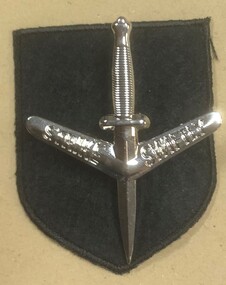
Badge - 1st Commando Regiment Silver Badge Annual Award for Best Commando
... ...Special operations...Australian commando Special operations Australian special forces Inscribed with number 49 Badge 1st Commando Regiment Silver Badge Annual Award for Best Commando ...Yearly award for the best commando within a commando companyLimited production of regimental hat badges has been coloured silver for presentation as an annual award to the best commando within a commando company.Inscribed with number 49australian commando, special operations, australian special forces -
 Australian Commando Association - Victoria
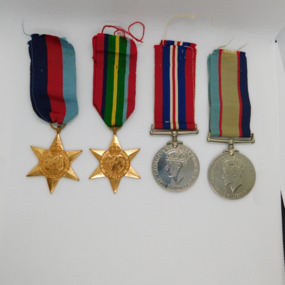
Memorabilia - WW2 Set of 4 medals- Norman Ernest Baxter 2nd Independent Company
... ...australian special operations...A reinforcement to 2nd Independent Company. ww2 independent company australian commando timor australian special forces australian special operations world war ii Memorabilia WW2 Set of 4 medals- Norman Ernest Baxter 2nd Independent Company. ...Medals issued to Norman Ernest Baxter VX63211. A reinforcement to 2nd Independent Company. ww2, independent company, australian commando, timor, australian special forces, australian special operations, world war ii
