
Showing 52 items matching "spirit of eltham"
-
 Eltham District Historical Society Inc
Audio - Audio Recording, Audio Recording; 2018-10-11 The Spirit of Eltham with Lynnsay Prunotto and Hamish Knox, 11 Oct 2018
... Audio Recording; 2018-10-11 The Spirit of Eltham with Lynnsay Prunotto and Hamish Knox...audio recording, eltham district historical society, hamish knox, lynnsay prunotto, meeting, society meeting, spirit of eltham...October Meeting (Newsletter No. 242, Oct. 2018) At our Society meeting at 8.00pm on Wednesday 10th October 2018 we will explore ideas about what is considered to be the ‘Spirit of Eltham’. We will view a video produced for the Shire of Eltham in response to the 1985 Victorian Local Government Commission Report titled ‘The Restructure of Local Government in Victoria – Principles and Program’ (the Morris review). ...The recommendation was to amalgamate the Shires of Eltham and Diamond Valley, something that Eltham Council did not support as being appropriate for the shire or compatible with the ‘Spirit of Eltham’. We will also be fortunate to have a presentation on this theme by Lynnsay Prunotto, a local architect, who is also involved in community planning activities, as well as some insights from Hamish Knox on his experience of growing up and working for many years in the region. audio recording, eltham district historical society, hamish knox, lynnsay prunotto, meeting, society meeting, spirit of eltham 1:29:41 duration Digital MP3 File 32 MB Audio Recording; 2018-10-11 The Spirit of Eltham with Lynnsay Prunotto and Hamish Knox Audio Audio Recording Eltham District Historical Society Eltham District Historical Society ...October Meeting (Newsletter No. 242, Oct. 2018) At our Society meeting at 8.00pm on Wednesday 10th October 2018 we will explore ideas about what is considered to be the ‘Spirit of Eltham’. We will view a video produced for the Shire of Eltham in response to the 1985 Victorian Local Government Commission Report titled ‘The Restructure of Local Government in Victoria – Principles and Program’ (the Morris review). The recommendation was to amalgamate the Shires of Eltham and Diamond Valley, something that Eltham Council did not support as being appropriate for the shire or compatible with the ‘Spirit of Eltham’. We will also be fortunate to have a presentation on this theme by Lynnsay Prunotto, a local architect, who is also involved in community planning activities, as well as some insights from Hamish Knox on his experience of growing up and working for many years in the region.1:29:41 duration Digital MP3 File 32 MB audio recording, eltham district historical society, hamish knox, lynnsay prunotto, meeting, society meeting, spirit of eltham -
 Eltham District Historical Society Inc
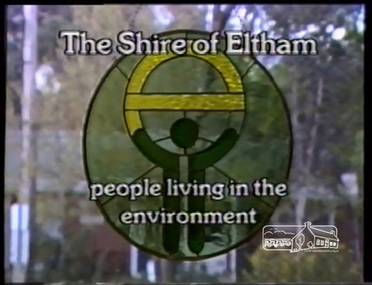
Film - Video (VHS), IMP Productions, Eltham Shire Council - People Living in the Environment (Series 69, Item 2), 7 Oct 1985
... ...shire of eltham...spirit...The recommendation was to amalgamate the Shires of Eltham and Diamond Valley, something that Eltham Council did not support as being appropriate for the shire or compatible with the 'Spirit of Eltham'. The video features Shire President, Cr. ...The recommendation was to amalgamate the Shires of Eltham and Diamond Valley, something that Eltham Council did not support as being appropriate for the shire or compatible with the 'Spirit of Eltham'. The video features Shire President, Cr. ...Shire of Eltham Archives: Series 69, Item 2 This video was produced for the Shire of Eltham in response to the 1985 Victorian Local Government Commission Report titled ‘The Restructure of Local Government in Victoria – Principles and Program’ (the Morris review). The recommendation was to amalgamate the Shires of Eltham and Diamond Valley, something that Eltham Council did not support as being appropriate for the shire or compatible with the 'Spirit of Eltham'. The video features Shire President, Cr. Mary Grant talking with the Hon. Pauline Toner MP and Max McDonald MP. Eltham Shire CEO Rodney Roschellor presents an alternate proposal for a shire merging more aligned to the 'Spirit of Eltham'.Also featured are Eltham icons such as the Eltham Railway Trestle Bridge, Montsalvat, Eltham Community Centre along with mudbrick making, artist Matcham Skipper, the Green Wedge and St Andrews Market. Other commentary is provided by locals Judy Wadham and Lester Eaton.VHS Video cassette Converted to MP4 file format 00:10:56; 73MBcouncil amalgamation, cr. mary grant, eltham community centre, eltham railway trestle bridge, eltham shire council, green wedge, judy wadham, lester eaton, matcham skipper, max mcdonald, montsalvat, morris review, mudbrick construction, pauline toner, rodney roscholler, shire of diamond valley, shire of eltham, spirit of eltham, st andrews market, video recording, shire of eltham archives -
 Nillumbik Shire Council
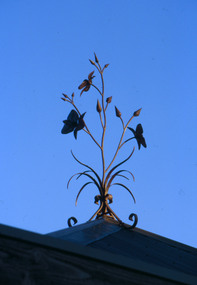
Sculpture (finial): Malcolm Laurence (b.1974 Melb), Malcolm Laurence, Chocolate Lilies: The Spirit of Nillumbik Location: Eltham Town Square - Main St, Eltham, 2001
... Chocolate Lilies: The Spirit of Nillumbik Location: Eltham Town Square - Main St, Eltham... of Nillumbik' is a celebration of the artistic spirit of Eltham and surrounding communities. Each area is identified through the flora and fauna represented in the panels. ...In October 2000, Council invited three artists from the region (Deborah Halpern, Matcham Skipper, Tony Trembath) to submit designs for a sculpture / public art work for the Eltham Town Square. The commission was paid for by supermarket giant Safeway (Woolies) as part of its supermarket permit, which required them to contribute to beautification work in the Town Square.This is the third of three parts. The 'Spirit of Nillumbik' is a celebration of the artistic spirit of Eltham and surrounding communities. Each area is identified through the flora and fauna represented in the panels. The work honours the many creative artists and architects, past and present, who have built homes and shaped lives and livelihoods with their unique creative spirit. Halpern describes her work as a public expression of their individual and collective visions. Halpern acknowledges these contributions to our hand-made history and the influence they have on the character and identity of Eltham and Nillumbik.Realistic depiction of 'chocolate lilies' in wrought iron (three flowers in bloom, four large buds and six small buds). Chocolate lilies are indigenous to Nillumbik.N/A -
 Eltham District Historical Society Inc
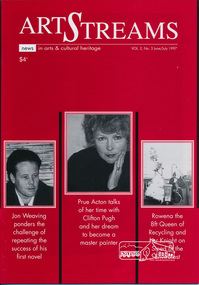
Journal, Peter Doughtery, ArtStreams: News in arts and cultural heritage; Vol. 2, No. 3, Jun-Jul 1997, 1997
... ...spirit of eltham...." - Eltham District Historical Society Newsletter No. 161, March 2005 art streams food for all seasons prue acton jon weaving michelle lonsdale sandon mcleod patrickk mccauley malcolm riddle cultural tourism valley of the arts tourism association inc. robert peter smith danny chable farm gate spirit of eltham chris stonehouse eltham bookshop carolyn pickett anne delaney richard besley mike parr anita furey aboriginal art indigenous art julie le bon jackie stojanova ranee lee daniel chabble tony trembath john kauffman westerfolds park envirofest were street cafe helen o'grady children's drama academy nillumbik art collection Colour front and back cover with feature articles and literary pieces with photographs and advertisements printed in black and white. 36 pages, 30 cm. ...Vol. 2, No. 3, Jun-Jul 1997 CONTENTS WEAVING ON A ROLL Author Jon Weaving talks about the pitfalls of success 3 DON’T PASS THE GUINNESS Poet Patrick McCauley turns over a new leaf 6 AIMING FOR THE TOP Prue Acton chases a dream 9 CULTURAL TOURISM Selling a way of life 12 CONVERSATION WITH BOB SMITH An artist shares some thoughts on the why and how of painting 14 REPRIEVE FOR A GATE Some traditions refuse to die 16 STALKING THE STRANGER Short story by Chris Stonehouse 18 THEATRE IN AUTUMN Melbourne theatre is alive and well 21 TO A WOLF THE KILL Anne Delaney reviews Jon Weaving's first novel 23 EXHIBITION REVIEWS Richard Besley, Neophytes, The Eye of the Storm, Soft But True 24, 26, 27, & 30 CD REVIEWS 28 NEW SOURCE OF POWER Tony Trembath lights up a town hall 29 WHO’S DOING WHAT 32 "Peter Dougherty has been involved in the local art scene for many years. As publisher and editor of the arts magazine Artstreams, his comments on the various branches of the arts are widely respected. His "The Arts" column in the Diamond Valley Leader presents a brief summary for a much wider cross section of the local community. Peter also operates his own gallery and the Artstreams Cafe at the St Andrews market. Peter has a wealth of knowledge about present day and historical aspects of local art and artists." - Eltham District Historical Society Newsletter No. 161, March 2005Colour front and back cover with feature articles and literary pieces with photographs and advertisements printed in black and white. 36 pages, 30 cm. Vol. 1, no. 1 (Nov. 1996) - Vol. 10, no. 5 (summer ed. 2005/06) art streams, food for all seasons, prue acton, jon weaving, michelle lonsdale, sandon mcleod, patrickk mccauley, malcolm riddle, cultural tourism, valley of the arts tourism association inc., robert peter smith, danny chable, farm gate, spirit of eltham, chris stonehouse, eltham bookshop, carolyn pickett, anne delaney, richard besley, mike parr, anita furey, aboriginal art, indigenous art, julie le bon, jackie stojanova, ranee lee, daniel chabble, tony trembath, john kauffman, westerfolds park envirofest, were street cafe, helen o'grady children's drama academy, nillumbik art collection -
 Nillumbik Shire Council
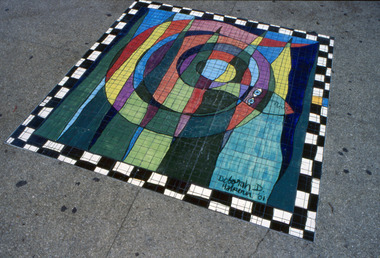
Floor mosaic: Deborah Halpern (b.1957 Melb.), Deborah Halpern, The Spirit of Nillumbik (Mosaic), Location: Eltham Town Square - Main St, Eltham, 2001
... The Spirit of Nillumbik (Mosaic), Location: Eltham Town Square - Main St, Eltham...eltham...halpern...mosaic...snake...square...laurence...painted...tiles...spirit... of Nillumbik' is a celebration of the artistic spirit of Eltham and surrounding communities. Each area is identified through the flora and fauna represented in the panels. ...In October 2000, Council invited three artists from the region (Deborah Halpern, Matcham Skipper, Tony Trembath) to submit designs for a sculpture / public art work for the Eltham Town Square. The commission was paid for by supermarket giant Safeway (Woolies) as part of its supermarket permit, which required them to contribute to beautification work in the Town Square. This is the second of three parts. The 'Spirit of Nillumbik' is a celebration of the artistic spirit of Eltham and surrounding communities. Each area is identified through the flora and fauna represented in the panels. The work honours the many creative artists and architects, past and present, who have built homes and shaped lives and livelihoods with their unique creative spirit. Halpern describes her work as a public expression of their individual and collective visions. Halpern acknowledges these contributions to our hand-made history and the influence they have on the character and identity of Eltham and Nillumbik. Square floor mosaic. Black and white chequered border. Multicoloured coiled snake intercepted with six multicoloured peaks. Made up of small mosaic tiles and hand painted. Hand painted artist signature bottom right hand side. 'Deborah D. Halpern '01'eltham, halpern, mosaic, snake, square, laurence, painted, tiles, spirit, nillumbik -
 Eltham District Historical Society Inc
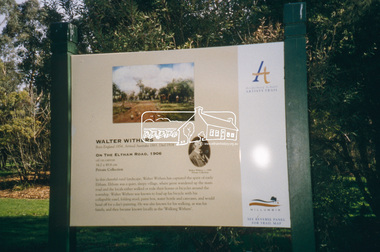
Slide - Photograph, On the Eltham Road, Walter Withers (1906), Heidelberg School Artists Trail, Alistair Knox Park, Eltham, c.Nov. 2001
... Eltham Road", 1906. Transcription of the text states: "In this cheerful rural landscape, Walter Withers has captured the spirit of early Eltham. ...Eltham Road", 1906. Transcription of the text states: "In this cheerful rural landscape, Walter Withers has captured the spirit of early Eltham. ...The Heidelberg School Artists Trail was established in about 1999 with about 52 signs across four local governemnt areas including Nillumbik and Banyule. It extends from Heidelberg through Eltham and Warrandyte and to the Dandenongs. It features signs depicting paintings of artists in the location in which they were painted. This one acknowledges "On the Eltham Road", 1906. Transcription of the text states: "In this cheerful rural landscape, Walter Withers has captured the spirit of early Eltham. Eltham was a quiet, sleepy village, where geese wandered up the main Road and the locals either walked or rode their horses or bicycles around the township. Walter Withers was known to load up his bicycle with his collapsible easel, folding stool, paint box, water bottle and canvases, and would head off for a day’s painting. He was also known for his walking, as was his family, and they became known as the ‘Walking Withers’ Part of a slide show presentation "A Trip Down the Diamond Creek" by Russell Yeoman to the Eltham District Historical Society meeting of 14 Nov. 200135mm colour positive transparency Mount - Black and Whiteeltham, alistair knox park, heidelberg school artists trail, on the eltham road, public art, sign, walter withers -
 Eltham District Historical Society Inc
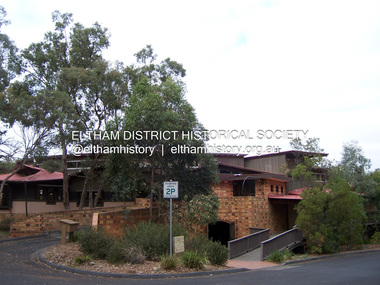
Photograph - Digital Photograph, Marguerite Marshall, Eltham Library, Panther Place, Eltham, 18 April 2008
... .; p183 Award-winning Eltham Library, with its earthy tones blending into the nearby parklands, celebrates some of the best of Eltham’s spirit. Designed by multi-award winning architect, Gregory Burgess, the library at Panther Place, won him the 1995 Royal Australian Institute of Architects (Vic) Merit Award in the New Institutional category.1 The design is typical of Burgess’ work, emphasising natural materials and forms, and the integration of building and site.2 In its distinctive architectural character, Burgess celebrated the spirit of Eltham’s artist/architect Justus Jörgenson and mud-brick builder Alistair Knox. ....; p183 Award-winning Eltham Library, with its earthy tones blending into the nearby parklands, celebrates some of the best of Eltham’s spirit. Designed by multi-award winning architect, Gregory Burgess, the library at Panther Place, won him the 1995 Royal Australian Institute of Architects (Vic) Merit Award in the New Institutional category.1 The design is typical of Burgess’ work, emphasising natural materials and forms, and the integration of building and site.2 In its distinctive architectural character, Burgess celebrated the spirit of Eltham’s artist/architect Justus Jörgenson and mud-brick builder Alistair Knox. ...Rear view of Eltham Library showing loading dock and ramp to the front of the building. Designed by multi-award winning architect, Gregory Burgess, for which he won the 1995 Royal Australian Insitute of architects (Vic.) Merit Award in the New Institutional category. Covered under Heritage Overlay, Nillumbik Planning Scheme. Published: Nillumbik Now and Then / Marguerite Marshall 2008; photographs Alan King with Marguerite Marshall.; p183 Award-winning Eltham Library, with its earthy tones blending into the nearby parklands, celebrates some of the best of Eltham’s spirit. Designed by multi-award winning architect, Gregory Burgess, the library at Panther Place, won him the 1995 Royal Australian Institute of Architects (Vic) Merit Award in the New Institutional category.1 The design is typical of Burgess’ work, emphasising natural materials and forms, and the integration of building and site.2 In its distinctive architectural character, Burgess celebrated the spirit of Eltham’s artist/architect Justus Jörgenson and mud-brick builder Alistair Knox. However this library, which opened in 1994, follows decades of efforts to acquire a suitable library for local residents. It was only in 1971 that Eltham acquired its first purpose-built library. In the 1930s books were borrowed from a mobile library run by Mr Foster of Bible Street. From the 1930s to the early 1950s, adults borrowed books from the newsagency and general store in Main Road (still a newsagency) near Arthur Street. As late as the 1950s, adults borrowed books in the shire office foyer, then in Main Road near the corner of Arthur Street.3 In the early 1950s the ratepayers voted for lower rates rather than a library, in a referendum to build a public library financed by higher rates. Children depended on volunteers for their library service until 1966. In 1946 the inaugural meeting of the Eltham War Memorial Trust’s Women’s Auxiliary, decided to support the Trust by raising funds to buy land and build a Children’s Library, Baby Health Centre and other facilities. The auxiliary formed the Children’s Library Committee, which included Mrs Morrison, Mrs Bow and Mrs Currie. They ran a library service in the stage area of the Eltham Hall, at the corner of Arthur Street and Main Road. In 1952 the books were relocated to a room in the newly opened Baby Health Centre on Main Road. Then in 1961, the Children’s Library received its own hall beside the Eltham Pre-School Centre on Main Road. From there, each month, volunteers delivered books to every school in the shire. In 1966 the Children’s Library closed after 17 years of service, following the transfer of the Trust land and buildings to the Shire of Eltham. The books were donated to nine schools in the shire and to Community Aid Abroad. An important boost to the library service came in 1965, when the Heidelberg Regional Library Service was formed by the City of Heidelberg with the Shires of Eltham and Diamond Valley. Its first library service for Eltham Shire was a bookmobile van. Books for children and adults were finally housed in one building in 1966, when the shire converted the Brinkkotter house in Dudley Street, into a library. At last in 1971, the Eltham Library moved to new premises attached to the shire offices near Panther Place. However these were demolished in 1996, by State Government appointed commissioners during council amalgamations. Meanwhile the Heidelberg Regional Library Service was disbanded in 1985 and the Yarra Plenty Regional Library Service was established. The burgeoning population brought pressure for a bigger library. Eltham was one of several municipalities in the 1970s and 1980s, battling with the State Government for adequate funding for public libraries. Funds were so tight, that in 1987 Eltham councillors threatened to close the library. However public petitions persuaded them to set aside funds to replace the cramped library facilities. In 1992 the Federal Government gave $887,496 towards the $3 million cost of the 1560 square metre library.4 The result is a light and spacious building with surrounding verandas, made of sustainable natural materials including earth and recycled and radially sawn timbers. It includes a gallery and function areas. In 2004 Mr Burgess won Australian architecture’s highest accolade: the Royal Australian Institute of Architects Gold Medal. He has received more than forty professional and community awards.This collection of almost 130 photos about places and people within the Shire of Nillumbik, an urban and rural municipality in Melbourne's north, contributes to an understanding of the history of the Shire. Published in 2008 immediately prior to the Black Saturday bushfires of February 7, 2009, it documents sites that were impacted, and in some cases destroyed by the fires. It includes photographs taken especially for the publication, creating a unique time capsule representing the Shire in the early 21st century. It remains the most recent comprehenesive publication devoted to the Shire's history connecting local residents to the past. nillumbik now and then (marshall-king) collection, eltham, eltham library, panther place -
 Eltham District Historical Society Inc
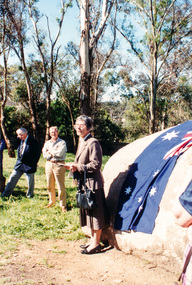
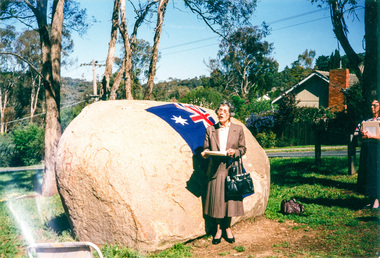
Photograph, Mary Owen, granddaughter of Walter Withers, unveiling the commemorative plaque on Walter Withers Rock at the corner of Bible and Arthur Streets, Eltham, 13 Oct 1990, 13/10/1990
... Kathleen is not well and she rang me a couple of days ago, regretting that she could not be present today “to pay tribute” as she said, “to Walter Withers for I always think Walter Withers is the spirit of Eltham.” Thank you, Kathleen. And now I have much pleasure in unveiling the plaque commissioned by the Eltham Historical Society from Bob McLellan of Charmac Industries to commemorate the life and work of Walter Withers, the spirit of Eltham. ...Kathleen is not well and she rang me a couple of days ago, regretting that she could not be present today “to pay tribute” as she said, “to Walter Withers for I always think Walter Withers is the spirit of Eltham.” Thank you, Kathleen. And now I have much pleasure in unveiling the plaque commissioned by the Eltham Historical Society from Bob McLellan of Charmac Industries to commemorate the life and work of Walter Withers, the spirit of Eltham. ...[from EDHS Newsletter No. 75, November 1990:] WALTER WITHERS PLAQUE At long last we have unveiled our plaque in the Walter Withers Reserve. The function was attended by a number of members and friends of the Society and descendants of the Withers family. Following the unveiling, the group proceeded to the Eltham Shire Office for afternoon tea and a small exhibition of Withers' paintings arranged by Andrew Mackenzie. The unveiling was performed by Mary Owen, a grand-daughter of Walter Withers. Her speech provided an interesting personal perspective on Withers and is repeated in full here: I feel somewhat overwhelmed by the responsibility of paying tribute to the man you have all come to honour today. I have the feeling that most of you probably know more about him and his work than I do. Walter Withers died nearly seven years before I was born and so I never knew him. Sadly, although other members of his family inherited some of his talent, I was not among them and I know very little about art. This is doubly hard to bear because my husband had some ability to draw and my second daughter also has some talent in this direction. My children are all artistic - mostly in the field of music inherited partly from their father - a Welshman who sang like a Welshman - and partly from my grandmother, Fanny Withers who, I believe was no mean pianist. However all this talent gave me a miss and for many years I felt a complete ignoramus in the fields of the arts. It was not until I was nearly fifty years old that I walked into a gallery in Brisbane and, as I wandered around the room, suddenly one picture leapt at me and I knew instantly that it had been painted by my grandfather. I had never seen the picture before and it gave me quite a shock to find that I had recognized the style of painting. I realized then that I had absorbed more than I realized simply by living with pictures and with people who painted them and talked about their painting and the painting of others. When I was a child I sometimes spent school holidays with my Aunt Margery Withers and her husband, Richard McCann. Aunt Marge painted me several times but I'm afraid I was a restless subject and used to sit reading a book and look up grudgingly when she wanted to paint my eyes. During the September holidays my aunt and uncle were busy preparing paintings far the annual exhibition of the Melbourne Twenty Painters, to which they both belonged. I remember how important I used to feel when they took me along to the Athenaeum Gallery on the Friday night before the opening to help hang their pictures. There were many artists there but the two I remember are perhaps surprisingly both women: Miss Bale and Miss Tweddle. I remember how cold it used to be up in that gallery at night. They used to heat water on a gas ring to make tea and Aunt Marge used to bring sandwiches and fruit for our evening meal. Everyone seemed to be poor in those days and no-one dreamed of going out for a meal. It was a case of make-do - even to cutting down frames to fit pictures or cutting pictures to fit the frames. They had to use the same frames from year to year if the pictures didn't sell. The opening was an exciting event for me. I felt I was privileged to meet important people - people who knew a lot more than I - and Uncle Dick would get quite merry after a couple of the tiny sweet sherries which were always distributed. I realise now that quite a lot of "art talk" rubbed off on me during my visits to the Athenaeum and during my stays with my aunt and uncle. I suspect that much of our most useful learning comes this way and those of us who have had the privilege of associating with artists, writers, philosophers and other thinkers have a richness in our lives of which we may be unaware. Walter Withers was a prolific painter and, although he painted for love of it, I suspect that the need to provide for his family drove him, like Mozart, to greater efforts than he might otherwise have achieved. Reading old letters and articles about the Heidelberg artists, I have come to realize something of the constant strain placed on many of them - particularly Withers and McCubbin - by poverty and the need to make ends meet. Withers was ever conscious of the need to provide for his wife and his five children and there are touching letters to his wife, regretting that he was not able to earn more for them. In addition to his painting, he worked hard at teaching and illustrating and, as he grew older, the strain began to tell and his health deteriorated. He seems never to have had a very strong constitution and suffered from rheumatism, which must have made painting quite painful at times. His eldest daughter, Gladys, was eventually confined to a wheelchair with rheumatoid arthritis and I have a tendency to arthritis myself, so I am particularly aware of what this could have meant to him. Recently I found a short letter written by my mother to her mother, Fanny Withers on the anniversary of her father's birthday in 1919, in which she said: "Poor old Dad, I often think now what a lot he must have suffered. His life was too hard and too strenuous for him. He had too many chick-a-biddies, I think. He wasn't equal to so much town life and train journeys with so many delicacies as he had. Since I have been ill, I have realised what he must have felt like.” He certainly drove himself to produce. He travelled all over Victoria by train, buggy, bicycle and on foot and for a time he travelled from Eltham to Melbourne every day by train, although later he lived in Melbourne during the week and only returned to Eltham for the weekends. My mother died seven years after her father's death, when my twin sisters were 10 days old and I was 16 months. So I never knew my mother or my grandfather. But my two aunts, Gladys and Margery, sometimes took me to stay with Gan Withers at Southernwood in Bolton Street . No cars in those days and it seemed a very long hot and dusty walk from the Station. Three memories remain with me of Southernwood. One is the well at the back which I found quite terrifying; the second is Gan killing a snake - even more terrifying. She was a formidable woman, my grandmother and a great ally and support to her husband. I think she was the business end of the partnership. The third memory of Southernwood is my grandfather's studio – down what seemed like a toy staircase inside the room. This and the big walk-in fireplace stayed in my mind from the age of about six until I saw them again about forty years later when the house was being used as a Sunday School. I just wish that money could be found to purchase this old house for the City of Eltham so that a permanent museum could be established in memory of a man who did so much to put Eltham on the map of art history. Recently I have become interested in family history and spent some time in England, Ireland and Wales looking for traces of my ancestors. I realized then how important it is to have records of people who have contributed to our society. We forget so soon and it is amazing how often, within two generations, names, dates and many details are forgotten. We are fortunate that so many of Walter Withers' works have been bought by galleries and that people like Andrew Mackenzie have taken the trouble to search out people who knew him and to write about him and his work. And I am very grateful to the Historical Society of Eltham for recognizing the importance of having a permanent tribute in Eltham to the contribution made by Walter Withers, who loved Eltham so much and who has assured this lovely district a place in the annals of history. I am indebted to Kathleen Mangan; the daughter of another famous Australian painter , Fred McCubbin, - featured in The Age this morning (thanks again to Andrew Mackenzie) for the most apt tribute to Walter Withers. Kathleen is not well and she rang me a couple of days ago, regretting that she could not be present today “to pay tribute” as she said, “to Walter Withers for I always think Walter Withers is the spirit of Eltham.” Thank you, Kathleen. And now I have much pleasure in unveiling the plaque commissioned by the Eltham Historical Society from Bob McLellan of Charmac Industries to commemorate the life and work of Walter Withers, the spirit of Eltham. Mary Owen, 13 October 1990.Three colour photographswalter withers rock, walter withers reserve, mary owen -
 Eltham District Historical Society Inc
Photograph, Mary Owen, granddaughter of Walter Withers, unveiling the commemorative plaque on Walter Withers Rock at the corner of Bible and Arthur Streets, Eltham, 13 Oct 1990, 13/10/1990
... Kathleen is not well and she rang me a couple of days ago, regretting that she could not be present today “to pay tribute” as she said, “to Walter Withers for I always think Walter Withers is the spirit of Eltham.” Thank you, Kathleen. And now I have much pleasure in unveiling the plaque commissioned by the Eltham Historical Society from Bob McLellan of Charmac Industries to commemorate the life and work of Walter Withers, the spirit of Eltham. ...Kathleen is not well and she rang me a couple of days ago, regretting that she could not be present today “to pay tribute” as she said, “to Walter Withers for I always think Walter Withers is the spirit of Eltham.” Thank you, Kathleen. And now I have much pleasure in unveiling the plaque commissioned by the Eltham Historical Society from Bob McLellan of Charmac Industries to commemorate the life and work of Walter Withers, the spirit of Eltham. ...[from EDHS Newsletter No. 75, November 1990:] WALTER WITHERS PLAQUE At long last we have unveiled our plaque in the Walter Withers Reserve. The function was attended by a number of members and friends of the Society and descendants of the Withers family. Following the unveiling, the group proceeded to the Eltham Shire Office for afternoon tea and a small exhibition of Withers' paintings arranged by Andrew Mackenzie. The unveiling was performed by Mary Owen, a grand-daughter of Walter Withers. Her speech provided an interesting personal perspective on Withers and is repeated in full here: I feel somewhat overwhelmed by the responsibility of paying tribute to the man you have all come to honour today. I have the feeling that most of you probably know more about him and his work than I do. Walter Withers died nearly seven years before I was born and so I never knew him. Sadly, although other members of his family inherited some of his talent, I was not among them and I know very little about art. This is doubly hard to bear because my husband had some ability to draw and my second daughter also has some talent in this direction. My children are all artistic - mostly in the field of music inherited partly from their father - a Welshman who sang like a Welshman - and partly from my grandmother, Fanny Withers who, I believe was no mean pianist. However all this talent gave me a miss and for many years I felt a complete ignoramus in the fields of the arts. It was not until I was nearly fifty years old that I walked into a gallery in Brisbane and, as I wandered around the room, suddenly one picture leapt at me and I knew instantly that it had been painted by my grandfather. I had never seen the picture before and it gave me quite a shock to find that I had recognized the style of painting. I realized then that I had absorbed more than I realized simply by living with pictures and with people who painted them and talked about their painting and the painting of others. When I was a child I sometimes spent school holidays with my Aunt Margery Withers and her husband, Richard McCann. Aunt Marge painted me several times but I'm afraid I was a restless subject and used to sit reading a book and look up grudgingly when she wanted to paint my eyes. During the September holidays my aunt and uncle were busy preparing paintings far the annual exhibition of the Melbourne Twenty Painters, to which they both belonged. I remember how important I used to feel when they took me along to the Athenaeum Gallery on the Friday night before the opening to help hang their pictures. There were many artists there but the two I remember are perhaps surprisingly both women: Miss Bale and Miss Tweddle. I remember how cold it used to be up in that gallery at night. They used to heat water on a gas ring to make tea and Aunt Marge used to bring sandwiches and fruit for our evening meal. Everyone seemed to be poor in those days and no-one dreamed of going out for a meal. It was a case of make-do - even to cutting down frames to fit pictures or cutting pictures to fit the frames. They had to use the same frames from year to year if the pictures didn't sell. The opening was an exciting event for me. I felt I was privileged to meet important people - people who knew a lot more than I - and Uncle Dick would get quite merry after a couple of the tiny sweet sherries which were always distributed. I realise now that quite a lot of "art talk" rubbed off on me during my visits to the Athenaeum and during my stays with my aunt and uncle. I suspect that much of our most useful learning comes this way and those of us who have had the privilege of associating with artists, writers, philosophers and other thinkers have a richness in our lives of which we may be unaware. Walter Withers was a prolific painter and, although he painted for love of it, I suspect that the need to provide for his family drove him, like Mozart, to greater efforts than he might otherwise have achieved. Reading old letters and articles about the Heidelberg artists, I have come to realize something of the constant strain placed on many of them - particularly Withers and McCubbin - by poverty and the need to make ends meet. Withers was ever conscious of the need to provide for his wife and his five children and there are touching letters to his wife, regretting that he was not able to earn more for them. In addition to his painting, he worked hard at teaching and illustrating and, as he grew older, the strain began to tell and his health deteriorated. He seems never to have had a very strong constitution and suffered from rheumatism, which must have made painting quite painful at times. His eldest daughter, Gladys, was eventually confined to a wheelchair with rheumatoid arthritis and I have a tendency to arthritis myself, so I am particularly aware of what this could have meant to him. Recently I found a short letter written by my mother to her mother, Fanny Withers on the anniversary of her father's birthday in 1919, in which she said: "Poor old Dad, I often think now what a lot he must have suffered. His life was too hard and too strenuous for him. He had too many chick-a-biddies, I think. He wasn't equal to so much town life and train journeys with so many delicacies as he had. Since I have been ill, I have realised what he must have felt like.” He certainly drove himself to produce. He travelled all over Victoria by train, buggy, bicycle and on foot and for a time he travelled from Eltham to Melbourne every day by train, although later he lived in Melbourne during the week and only returned to Eltham for the weekends. My mother died seven years after her father's death, when my twin sisters were 10 days old and I was 16 months. So I never knew my mother or my grandfather. But my two aunts, Gladys and Margery, sometimes took me to stay with Gan Withers at Southernwood in Bolton Street . No cars in those days and it seemed a very long hot and dusty walk from the Station. Three memories remain with me of Southernwood. One is the well at the back which I found quite terrifying; the second is Gan killing a snake - even more terrifying. She was a formidable woman, my grandmother and a great ally and support to her husband. I think she was the business end of the partnership. The third memory of Southernwood is my grandfather's studio – down what seemed like a toy staircase inside the room. This and the big walk-in fireplace stayed in my mind from the age of about six until I saw them again about forty years later when the house was being used as a Sunday School. I just wish that money could be found to purchase this old house for the City of Eltham so that a permanent museum could be established in memory of a man who did so much to put Eltham on the map of art history. Recently I have become interested in family history and spent some time in England, Ireland and Wales looking for traces of my ancestors. I realized then how important it is to have records of people who have contributed to our society. We forget so soon and it is amazing how often, within two generations, names, dates and many details are forgotten. We are fortunate that so many of Walter Withers' works have been bought by galleries and that people like Andrew Mackenzie have taken the trouble to search out people who knew him and to write about him and his work. And I am very grateful to the Historical Society of Eltham for recognizing the importance of having a permanent tribute in Eltham to the contribution made by Walter Withers, who loved Eltham so much and who has assured this lovely district a place in the annals of history. I am indebted to Kathleen Mangan; the daughter of another famous Australian painter , Fred McCubbin, - featured in The Age this morning (thanks again to Andrew Mackenzie) for the most apt tribute to Walter Withers. Kathleen is not well and she rang me a couple of days ago, regretting that she could not be present today “to pay tribute” as she said, “to Walter Withers for I always think Walter Withers is the spirit of Eltham.” Thank you, Kathleen. And now I have much pleasure in unveiling the plaque commissioned by the Eltham Historical Society from Bob McLellan of Charmac Industries to commemorate the life and work of Walter Withers, the spirit of Eltham. Mary Owen, 13 October 1990.Two colour photographswalter withers rock, walter withers reserve, mary owen -
 Eltham District Historical Society Inc
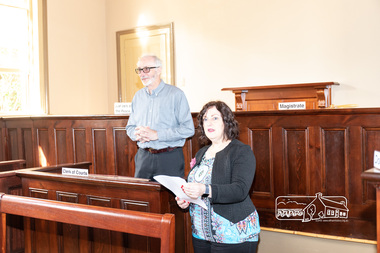
Photograph, Peter Pidgeon, Official opening of the restored Eltham Courthouse, 730 Main Road, Eltham, 23 Mar 2022
... This type of localised solution is characteristic of the self reliance preserved in Eltham today. The court house is an important symbol of the spirit which makes Eltham distinctive as a community.’ ...This type of localised solution is characteristic of the self reliance preserved in Eltham today. The court house is an important symbol of the spirit which makes Eltham distinctive as a community.’ ...Eltham Courthouse Officially Reopened (Jim Connor, EDHS Newsletter No. 263 April 2022) In the Conservation Management Plan prepared in 2006 for the Eltham Justice Precinct there is mention that more than 350 court houses have been built by the Public Works Department since 1856, when the Department was established. It also states Eltham was in an early group of 'Victorian Free Classical' structures, featuring a projecting entry porch and gabled roof. Characteristically, this group shares a simple, rectangular shape, central placement of the court room with smaller-scale offices set back at the sides or rear of the court room, arched openings, and decorative string courses. The Statement of Significance listed in the Victorian Heritage Register states: ‘The Eltham Court House dates from the time when the town was largely self-contained. It was initiated in response to itinerant gold prospectors who turned to crime when their quest was unsuccessful. This type of localised solution is characteristic of the self reliance preserved in Eltham today. The court house is an important symbol of the spirit which makes Eltham distinctive as a community.’ It also states: ‘The Eltham Court House, built in 1860, is one of only two intact examples in the state of this simple design with projecting entry.’ So with this background it is most appropriate this valued historic building has recently been the subject of a total restoration, as detailed in previous newsletters. This was a major project undertaken by Nillumbik Shire Council. At a small function in the Eltham Courthouse, on 23rd March 2022, Nillumbik Shire Council Mayor Fran Eyre declared the fully restored building officially reopened. In doing so the Mayor spoke about the earlier law and order function of the court and the importance of this building to the Eltham community. Wingrove Ward Councillor Geoff Paine then highlighted the importance of historical societies and groups within the shire and their valued activities in recording and preserving their local history. EDHS president Jim Connor thanked everyone involved with the project and provided an overview of the history of the courthouse. Michael Ioannides, Council’s project manager, spoke about how the restoration process proceeded and those involved in undertaking the works required. Cr. Natalie Duffy, various council officers, EDHS executive committee members, as well as representatives of the head contractor Ducon Building Services and the heritage advisors, RBA architects and Conservation Consultants, were also in attendance, as was a representative of Nillumbik U3A. After the formal part there was some light hearted interpretation of how past legal proceedings may, or may not have, occurred within this courthouse, before some refreshments were shared in the former second courthouse at the rear, which is now utilised by Nillumbik U3A. This was a successful celebration of a very worthwhile project.Born digital image (38)conservation consultants, cr. geoff paine, cr. natalie duffy, ducon building services, eltham courthouse, eltham district historical society, eltham justice precinct, jim connor, mayor cr. fran eyre, michael ioannides, nillumbik shire council, nillumbik u3a, opening ceremony, rba architects, restoration project -
 Eltham District Historical Society Inc
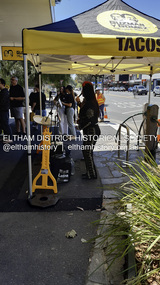
Photograph - Digital Photograph, Joan Castledine, Opening Day, Guzman y Gomez - Eltham, 963 Main Road, 3 December 2025
... "In true GYG spirit, the opening of Eltham has created 50 new local jobs, with the team already growing fast. ..."In true GYG spirit, the opening of Eltham has created 50 new local jobs, with the team already growing fast. ...The Guzman y Gomez Mexican fast-food chain opened their Eltham store at 963 Main Road on December 3, 2025 with fanfare and special promotions that attracted large crowds lining up to get a taste all day long. The appearance of the store in terms of the chain’s usual signage had to be toned down to some degree to comply with Eltham’s local planning requirements. Some excerpts from the Guzman y Gomez website post about the event: Eltham… You Absolutely Smashed It! Massive crowds, big energy and an unforgettable opening day. (2025, December 8). Retrieved from https://www.guzmanygomez.com.au/eltham-you-absolutely-smashed-it/ "Eltham, what a day! Opening day for our new GYG Eltham restaurant was nothing short of incredible, and we want to extend a huge thank you to everyone who came down to celebrate. From $5 Burritos and Bowls to free coffee and lots of exclusive GYG merch, the good vibes rolled non-stop from early morning through to dinner!" "The energy kicked off bright and early with the Mayor of Eltham [sic], John Dumaresq, arriving at 7am to officially cut the yellow ribbon and help launch the opening of GYG Eltham. It was an exciting way to open the doors and of course, the mayor enjoyed a delicious and clean GYG brekkie burrito!" "Behind GYG Eltham is Andre and Konrad Reich, a local father and son team who have a passion for great food, great people and making a real difference in the community. Opening a GYG has been a long-time dream for the pair, and they’ve been waiting years for this to happen!" "Thanks to the restaurant’s prime location right next to the train station, guests were hopping off public transport and walking straight into GYG for lunch and dinner. The after-school rush was huge, with local students and young people flooding in to take advantage of the $5 Burritos and Bowls." "In true GYG spirit, the opening of Eltham has created 50 new local jobs, with the team already growing fast. Andre and Konrad are passionate about building a fun, supportive crew who live and breathe GYG’s ‘Got Your Back’ value." "“As part of our opening, we’ve welcomed a number of local crew — for some, this will be their very first job. We’re proud to show them what GYG is all about while delivering incredible food and an outstanding guest experience. We’re still hiring and can’t wait to get involved with the community, fuelling local sports clubs with delicious GYG meals and epic merch,” added Konrad Reich."joan castledine collection, 963 main road, eltham shops, guzman y gomez - eltham, main road eltham, opening day, restaurants, john dumaresq, konrad reich, andre reich, youth employment, nillumbik shire mayor -
 Eltham District Historical Society Inc
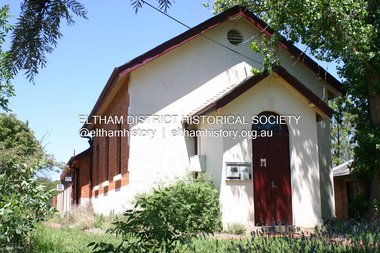
Photograph - Digital Photograph, Alan King, Eltham Court House, 730 Main Road, Eltham, 28 December 2007
... This type of localised solution is characteristic of the self-reliance preserved in Eltham today. The court house is an important symbol of the spirit which makes Eltham distinctive as a community. ...This type of localised solution is characteristic of the self-reliance preserved in Eltham today. The court house is an important symbol of the spirit which makes Eltham distinctive as a community. ...The Eltham Court House is Eltham's oldest public building. It was classified by the National Trust in 1977. In 1857 five Eltham residents petitioned the licensing magistrates of the Heidelberg district asking for better police protection, including from itinerant gold prospectors who turned to crime when their quest was unsuccessful. In response the Eltham Courthouse was constructed in 1860. Over the years it has also been used for other activities, including for electoral polling purposes, inquests, early meetings of the Eltham Roads Board and even as an overflow classroom. This type of localised solution is characteristic of the self-reliance preserved in Eltham today. The court house is an important symbol of the spirit which makes Eltham distinctive as a community. The Eltham Courthouse is historically significant because its construction was intended to emphasise the centralised control over law and order in the Colony of Victoria in the wake of the 1852 Snodgrass committee report on the Victorian police force and the resulting Police Regulation Act (1853). The nature of the Court House planning and use of architectural devices make the building's function easily interpreted. The arrangement of rooms, with public entry and clerical rooms to the rear, and the use of raised floor levels throughout these spaces to signify relative rank is easily perceived. The distinction in entries, public, magistrate and person-in-custody, and the existing court furniture enhances appreciation of this building. The Eltham Court House is one of only two intact examples in the state of this simple design with projecting entry. The building is of architectural significance because it retains intact early features. These include use of handmade bricks, simple decoration, roof trusses, timber ceiling boards, original windows, doors and associated hardware and a collection of court furniture. Additions to the court house have been done in a manner which did not interfere with the fabric of the original building. Typical cases heard before the Court of Petty Sessions included financial debt, straying livestock, theft, assault, drunkenness, public disorder, truancy, motor vehicle offences, unregistered animals and failing to have children attend school, or be vaccinated. The courthouse operated for over 120 years before it closed in 1985. In April 2021, Nillumbik Shire Council authorised restoration of the building and furnishings. The extensive works required for the total restoration of this highly valued heritage building was undertaken by Ducon Building Solutions and other specialist contractors. Covered under Heritage Overlay, Nillumbik Planning Scheme. Victorian Heritage National Trust of Australia (Victoria) State significance Published: Nillumbik Now and Then / Marguerite Marshall 2008; photographs Alan King with Marguerite Marshall.; p65 A demand for better police protection resulted in the building of the Eltham Courthouse and the police residence beside it. In 1857 five Eltham residents petitioned the Heidelberg district licensing magistrates. They pointed out that Eltham had two hotels, a population of about 1000, and many strangers employed on the public roads. Yet the nearest police were at Heidelberg eight miles (12.8km) away, or at the Caledonia Diggings 21 miles (33.7km) away.1 Subsequently the courthouse and then the police residence, near the corner of Main Road and Brougham Street, were built in 1859/60. The courthouse is Eltham’s oldest public building and the National Trust classified it in 1977. It ceased operation in 1984 and has since been used by local groups. There are only six other known examples of similar small brick country courthouses in Victoria . For £536, a Mr Duncan built the courthouse – a neat, narrow, oblong building with handmade orange bricks. Its gabled roof and porch are covered with brown slate tiles and it has 12-paned windows. Inside, the roof is peaked and the courthouse is still ventilated by oblong slits near the ceiling. Most of the fine carved timber and upholstered furniture is original. The original prisoners’ door, now permanently closed, led from the police station to the dock. Builders, Langridge Wright and Witney built a timber police station (since demolished) and a brick residence to its north,2 for £1150/7/-. Built around the same time were the lock-up behind the residence, also later demolished, and the two-storey orange brick stables. The former police residence also has a brown slate roof and handmade bricks. The front veranda roof is made of corrugated iron, as is the roof of the back weatherboard extension. The application for police protection was approved within a few months and police operated from a cottage rented at ten shillings a week and owned by William Jarrold. This was probably the one at the corner of Main Road and Dalton Street called Jarrold or White Cloud Cottage. In 1858 a second constable was appointed to Eltham following a fight at the hotel. The timber police office a replica of which was built in the early 1990s is at the building’s side. The lock-up was demolished following the relocation of the police to a new station in about 1952. The residence has been used as the Eltham District Historical Society centre since 1997. Records show court cases were held at Eltham before the courthouse was built, but the location is unknown. Some court cases were not very different from those today. In 1891 a man was charged with being drunk while in charge of a horse and was fined ten shillings. The courthouse was used for other purposes during its long history. It was probably used as a polling place as indicated by old photographs of election-day crowds outside. The Eltham Road Board met there from the early 1860s until 1868 when the Board transferred to Kangaroo Ground. During the same period the Road Board Secretary used the courthouse as an office until 1867 when it was transferred to his home at Wingrove Cottage. The courthouse was also used as an overflow classroom for the Dalton Street school in 1875. The two buildings can further link us with Eltham’s early days through Police Department correspondence. The first constable-in-charge was George Reid. In 1860 a letter to The Argus newspaper signed ‘A Sufferer’ declared the Eltham police were not active enough in their duties. The writer suggested that the ‘very snug’ police quarters were too comfortable, and he detailed various incidents including one of an alleged break-in to the Road Board Secretary’s home. But the Board Secretary, C S Wingrove, wrote to the Police Department refuting The Argus letter saying he had received full co-operation from Sen. Constable Peter Lawler.This collection of almost 130 photos about places and people within the Shire of Nillumbik, an urban and rural municipality in Melbourne's north, contributes to an understanding of the history of the Shire. Published in 2008 immediately prior to the Black Saturday bushfires of February 7, 2009, it documents sites that were impacted, and in some cases destroyed by the fires. It includes photographs taken especially for the publication, creating a unique time capsule representing the Shire in the early 21st century. It remains the most recent comprehenesive publication devoted to the Shire's history connecting local residents to the past. nillumbik now and then (marshall-king) collection, eltham, eltham court house, main road -
 Ringwood and District Historical Society
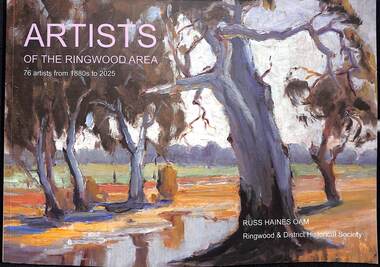
Book, Russ Haines OAM, Artists of the Ringwood Area, 2025
... spirit. Drawn to its rolling landscapes, bushland reserves, and meandering streams, students from the National Gallery of Victoria once ventured here to capture its beauty on canvas. As the neighbouring suburbs of Warrandyte and Eltham...spirit. Drawn to its rolling landscapes, bushland reserves, and meandering streams, students from the National Gallery of Victoria once ventured here to capture its beauty on canvas. As the neighbouring suburbs of Warrandyte and Eltham ...Soft cover book profiling a selection of 76 artists local to the Ringwood area. Front cover "Rivergums" by Roger Webber. Back cover Ernest Buckmaster and Rober Webber painting en plein air.(Back cover) "Since the 1880s, Ringwood has quietly nurtured a vibrant artistic spirit. Drawn to its rolling landscapes, bushland reserves, and meandering streams, students from the National Gallery of Victoria once ventured here to capture its beauty on canvas. As the neighbouring suburbs of Warrandyte and Eltham forged reputations as artistic hubs, Ringwood developed a creative character of its own, shaped by art groups, schools and talented individuals. This book celebrates that legacy through the lives of seventy-six artists who have connections with the Ringwood area. More than a history, this is a portrait of a community alive with creativity." Acknowledgements: "Many artists provided material on their artistic career which was appreciated. In some profiles, it may have been possible to write a separate book on the artist's life, therefore condensing it down to a page or two was difficult. Specific credits are given after each chapter but a special thanks to Gareth Syvret and Mattie Young (Maroondah City Council), Liz Seaton, Linda Besser, Kay Scott and Les Baxter. Heathmont History Group provided documentation on their artists and must be thanked, especially Gerry Robinson." Author and Designer Russ Haines OAM, using Affinity Publisher software Published by Ringwood & District Historical Society in October 2025 Funded by Maroondah City Council Arts & Cultural Grant Program Copyright: RDHS. "Where possible, permission has been sought from both the artist and owner of each work. In some instances, an image has been used from public websites, yet the copyright was not provided nor readily available. In any case, this book is considered a non-commerical research study of artists in the Ringwood area and, therefore, comes under the fair dealing exceptions listed in the Copyright Act that allows copyright material to be used without permission." CONTENTS: Ringwood Art Society, Art Shows and Competitions, Heathmont Community Bollards, Ringwood Pottery, Ringwood's Public Art. ARTISTS: Chris Adnam, Theo Anderson, Brian Armstrong, Linda Besser, Janette Bird, Curt Bjerking, Pierce Boardman, Nan Bretel, Rosalie Briant, George Browning, Ernest Buckmaster, Nola Clark, Bertha Darbyshire, Robin Dawson, Michael Dillon, Sue Dodd, Julie Fenton, Leon Ferguson, Bruce Fletcher, David Freedman, Gavin Fry, Kelly Gellatly William Gleeson, Pauline Grayling, William "Weg" Green, Liz Gridley, Tracie Grimwood, George Haddon, Thomas Ham, Louise Hearman, Linda Hibbs, Ramon Horsfield, Harry Hudson, Patricia Hunt, Ruth Jackson, Ann James, David Jamieson, Norma Kett, Martin King, Robin Kittelty-Redman, Wim Kortland, Bela Kozak, Francis Little, Evan Mackley, Barbara McCallum, Ken McFadyen, Barbara McManus, Winifred Miles, David Miller, Sally Miller, Jack Montgomery, David Moore, Graham Moore, Simon Normand, Trevor Opray, John Ford Patterson, Peter Pavey, Barbara Peake, Herman Pekel, Diana Platt, Anne Randles, Wayne Rankin, Charles Robb, Margaret Robbie, Hal Rooney, Les Sands, Kay Scott, Gordon Speary, Simone Thomson, Jack Truscott, William Unsworth, Olive Walls, Deb Webb, Judy Webber, Roger Webber, Charles Wilton. -
 Eltham District Historical Society Inc
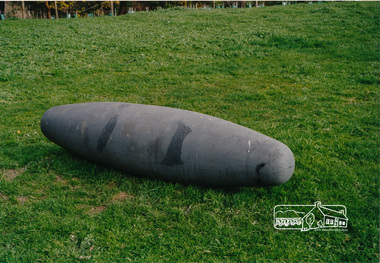
Photograph, Not Just a Pretty Place, Aleks Danko (2000), Lennister Farm, Eltham South, 2000c
... The carved bluestone form presents an oversize river pebble that echoes the spirit of the water and draws attention to this location as a meeting place an landmark. Awarded the 2000 Nillumbik Art in Public Places Award and situated behind Lennister Farm near Yarra Park aleks danko eltham lennister farm yarra park Colour photograph print Not Just a Pretty Place, Aleks Danko (2000), Lennister Farm, Eltham South Photograph ...Not Just a Pretty Place acknowledges the cultural significance of this site for the residents of Nillumbik Shire and for the Wurrundjeri community. Historically the confluence of rivers have particular importance as these were sites where rituals and ceremonies took place. The carved bluestone form presents an oversize river pebble that echoes the spirit of the water and draws attention to this location as a meeting place an landmark. Awarded the 2000 Nillumbik Art in Public Places Award and situated behind Lennister Farm near Yarra ParkColour photograph printaleks danko, eltham, lennister farm, yarra park -
 Eltham District Historical Society Inc
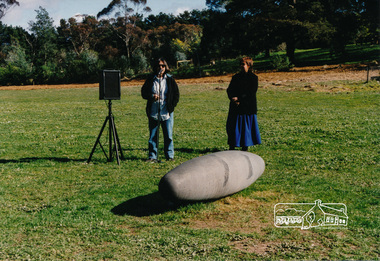
Photograph, Not Just a Pretty Place, Aleks Danko (2000), Lennister Farm, Eltham South, 2000c
... The carved bluestone form presents an oversize river pebble that echoes the spirit of the water and draws attention to this location as a meeting place an landmark. Awarded the 2000 Nillumbik Art in Public Places Award and situated behind Lennister Farm near Yarra Park aleks danko eltham lennister farm yarra park cr. diane bullen Colour photograph print Not Just a Pretty Place, Aleks Danko (2000), Lennister Farm, Eltham South Photograph Photograph ...The sculpture was launched on 9th August 2000 by Cr Diane Bullen and welcomed by Annette Xiberras of the Wurundjeri community. Not Just a Pretty Place acknowledges the cultural significance of this site for the residents of Nillumbik Shire and for the Wurrundjeri community. Historically the confluence of rivers have particular importance as these were sites where rituals and ceremonies took place. The carved bluestone form presents an oversize river pebble that echoes the spirit of the water and draws attention to this location as a meeting place an landmark. Awarded the 2000 Nillumbik Art in Public Places Award and situated behind Lennister Farm near Yarra ParkColour photograph printaleks danko, eltham, lennister farm, yarra park, cr. diane bullen -
 Eltham District Historical Society Inc
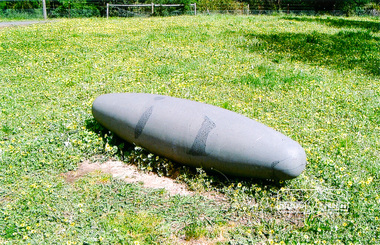
Photograph, Not Just a Pretty Place, Aleks Danko (2000), Lennister Farm, Eltham South, 2000c
... The carved bluestone form presents an oversize river pebble that echoes the spirit of the water and draws attention to this location as a meeting place an landmark. Awarded the 2000 Nillumbik Art in Public Places Award and situated behind Lennister Farm near Yarra Park aleks danko eltham lennister farm yarra park Colour photograph print Not Just a Pretty Place, Aleks Danko (2000), Lennister Farm, Eltham South Photograph ...Not Just a Pretty Place acknowledges the cultural significance of this site for the residents of Nillumbik Shire and for the Wurrundjeri community. Historically the confluence of rivers have particular importance as these were sites where rituals and ceremonies took place. The carved bluestone form presents an oversize river pebble that echoes the spirit of the water and draws attention to this location as a meeting place an landmark. Awarded the 2000 Nillumbik Art in Public Places Award and situated behind Lennister Farm near Yarra ParkColour photograph printaleks danko, eltham, lennister farm, yarra park -
 Eltham District Historical Society Inc
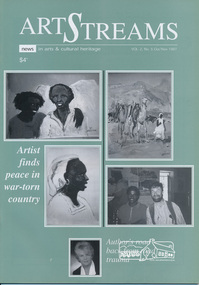
Journal, Peter Doughtery, ArtStreams: News in arts and cultural heritage; Vol. 2, No. 5, Oct-Nov 1997, 1997
... Vol. 2, No. 5, Oct-Nov 1997 CONTENTS ART BRIDGES GAP IN WAR-TORN NATION Painter Piers Batman captures life in Eritrea 3 TENACITY OF THE HUMAN SPIRIT A teacher's road back from road trauma 7 EXHIBITIONS 10 POETRY Ray Liversidge 11 STUDIO WALKABOUT Artists open studios for Eltham Festival 12 ART FROM THE HEART Interview with Herman Pekel 14 ERITREAN JOURNEY Bill Moseley's camera in Eritrea 16 ART AND THE INTERNET Two Kangaroo Ground women bring art to a wider audience 18 HOUSE AND GARDEN IN SUBURBIA Exhibition of sculpture at Austin and Repatriation Medical Centre 20 THEATRE New Playbox - powerful advocate of Australian theatre 21 SHORT STORY Goodbye Dave, by Sherry Clarke 22 BOOK REVIEW 27 POETRY READING 28 BOOK REVIEW 29 EXPATRIATES COME HOME Former Nillumbik artists exhibit works 30 ...Vol. 2, No. 5, Oct-Nov 1997 CONTENTS ART BRIDGES GAP IN WAR-TORN NATION Painter Piers Batman captures life in Eritrea 3 TENACITY OF THE HUMAN SPIRIT A teacher's road back from road trauma 7 EXHIBITIONS 10 POETRY Ray Liversidge 11 STUDIO WALKABOUT Artists open studios for Eltham Festival 12 ART FROM THE HEART Interview with Herman Pekel 14 ERITREAN JOURNEY Bill Moseley's camera in Eritrea 16 ART AND THE INTERNET Two Kangaroo Ground women bring art to a wider audience 18 HOUSE AND GARDEN IN SUBURBIA Exhibition of sculpture at Austin and Repatriation Medical Centre 20 THEATRE New Playbox - powerful advocate of Australian theatre 21 SHORT STORY Goodbye Dave, by Sherry Clarke 22 BOOK REVIEW 27 POETRY READING 28 BOOK REVIEW 29 EXPATRIATES COME HOME Former Nillumbik artists exhibit works 30 "Peter Dougherty has been involved in the local art scene for many years. ...Vol. 2, No. 5, Oct-Nov 1997 CONTENTS ART BRIDGES GAP IN WAR-TORN NATION Painter Piers Batman captures life in Eritrea 3 TENACITY OF THE HUMAN SPIRIT A teacher's road back from road trauma 7 EXHIBITIONS 10 POETRY Ray Liversidge 11 STUDIO WALKABOUT Artists open studios for Eltham Festival 12 ART FROM THE HEART Interview with Herman Pekel 14 ERITREAN JOURNEY Bill Moseley's camera in Eritrea 16 ART AND THE INTERNET Two Kangaroo Ground women bring art to a wider audience 18 HOUSE AND GARDEN IN SUBURBIA Exhibition of sculpture at Austin and Repatriation Medical Centre 20 THEATRE New Playbox - powerful advocate of Australian theatre 21 SHORT STORY Goodbye Dave, by Sherry Clarke 22 BOOK REVIEW 27 POETRY READING 28 BOOK REVIEW 29 EXPATRIATES COME HOME Former Nillumbik artists exhibit works 30 "Peter Dougherty has been involved in the local art scene for many years. As publisher and editor of the arts magazine Artstreams, his comments on the various branches of the arts are widely respected. His "The Arts" column in the Diamond Valley Leader presents a brief summary for a much wider cross section of the local community. Peter also operates his own gallery and the Artstreams Cafe at the St Andrews market. Peter has a wealth of knowledge about present day and historical aspects of local art and artists." - Eltham District Historical Society Newsletter No. 161, March 2005Colour front and back cover with feature articles and literary pieces with photographs and advertisements printed in black and white. 36 pages, 30 cm. Vol. 1, no. 1 (Nov. 1996) - Vol. 10, no. 5 (summer ed. 2005/06) art streams, thornton mccamish, bill moseley, eritrea, darebin festival, christine durham, michele lonsdale, ray liversidge, ona henderson, syd tunn, eltham festival, artists open studios program, nillumbik artists' open studios, david armfield, janet boddy, jules christian burns, wendy donald, jill forest, annie keil-taggart, ming bellamy mackay, jenni mitchell, grace mitchell, mervyn hannan, mary lou pittard, chris pittard, maureen runge, herman pekel, austin and repatriation medical centre, carolyn pickett, sherry clarke, manningham artspace, alan marshall short story award, eltham arts council inc., eltham library community gallery, harriot dance, chapman & bailey artists' stretchers and furniture, eltham high school -
 Eltham District Historical Society Inc
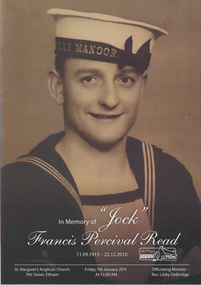
Folder, Francis Percival Read (Jock) (1915-2010)
... Eltham, Barry Plant Real Estate, The Weekly Review, 14 Mar 2002 - Wartime's memories of mates. Photo "Jock Read stands proud in front of the Australian flag in his front yard", Diamond Valley Leader, 19 Apr 2006, p1 - Keeping the Anzac spirit alive, Diamond Valley Leader, 19 Apr 2006, p10 - Meaningful life well lived by Jim Connor, Diamond Valley Leader, 16 Feb 2011, p25 3. ...Eltham, Barry Plant Real Estate, The Weekly Review, 14 Mar 2002 - Wartime's memories of mates. Photo "Jock Read stands proud in front of the Australian flag in his front yard", Diamond Valley Leader, 19 Apr 2006, p1 - Keeping the Anzac spirit alive, Diamond Valley Leader, 19 Apr 2006, p10 - Meaningful life well lived by Jim Connor, Diamond Valley Leader, 16 Feb 2011, p25 3. ...Franics Read known as Jock, was a life time resident of Eltham. He served in the Navy in WW2. He was well loved as a long time school crossing supervisor and member of EDHS with a remarkable memory of his life's experiences. Contents 1. In Memory of "Jock" Francis Percival Read 11.09.1915 - 22.12.2010; Funeral Service Booklet (3 copies), A4 card folded. Held at St Margaret's Anglican Church, Pitt Street, Eltham, Friday 7th January 2011 at 11:00 AM 2. News clippings - Clip Clop Lollipop!, Diamond Valley News, 14 Dec 1976, p1 - Jock Read with horse, Smokey, Diamond Valley News, 1978 - School Crossing Supervisor Jock Read with horse, Lofty, Diamond Valley News, 1982 - Families shed a tear for Tackey, Diamond Valley News, 23 Apr 1985 - For fallen friends, Diamond Valley News, 16 Nov 1992 - Lollipop man calls it a day, c.1996 - Local digger leads the march, Nillumbik Mail, 3 May 2000, p5 also “Our Anzacs remembered” - Rain holds off for people's march through memories, c.2001 - For Sale; 52-54 Henry Street, Eltham, Barry Plant Real Estate, The Weekly Review, 14 Mar 2002 - Wartime's memories of mates. Photo "Jock Read stands proud in front of the Australian flag in his front yard", Diamond Valley Leader, 19 Apr 2006, p1 - Keeping the Anzac spirit alive, Diamond Valley Leader, 19 Apr 2006, p10 - Meaningful life well lived by Jim Connor, Diamond Valley Leader, 16 Feb 2011, p25 3. Draft of obituary by Jim Connor published in Diamond Valley Leader 16 Feb 2011 4. Jock Read Memorial notes 5. Jock Read Distinguished Life Member, Eltham District Historical Society 6. Distinguished Life Member presentation to Jock Read by Eltham District Historical Society at Chatsworth House, 26 July 2010 7. Photographs (qty 3) 10 x 15 cm of Jock Read at the Distinguished Life Member presentation by Eltham District Historical Society members at Chatsworth House, 26 July 2010 (Photographer possibly Jim Connor) 8. Photographs (qty 9) printed on 3 sheets of A4 photo paper of Jock Read at the Distinguished Life Member presentation by Eltham District Historical Society members at Chatsworth House, 26 July 2010 (Photographer unknown) 9. Transcript of audio tape recorded by Peter Bassett-Smith with Jock Read at the old Police Residence, 728 Main Road, Eltham during Heritage Week display, 28 Apr 1990 10. Transcript of audio tape recorded by Denis Ward of Old characters and other folk around Eltham: a chat with Jock Read and Doug Orford at Eltham District Historical Society meeting held 10 May 2000 11. Interpretative transcript of audio tape EDHS_01636 Jock Read Tape 1 – 2002 12. Transcript of audio tape Main Road Eltham: a chat with Jock Read and Doug Orford at Eltham District Historical Society meeting held 10 Sep 2002 13. Baker's Run - List of names and deliveries forming Jock Read's Baker's run and discussed at meeting held 10 Sep 2002 15. Jock Read - when asked what he used to do around about 14. Nillumbik Council Item; Jock Read Eulogy 16. Photocopy of photo: Wedding Party; Jock Read and Beryl Olivia Burgess, St Katherine's Church, St Helena 17. Celebration of the life of Beryl Olivia Read nee Burgess 1 December 1924 - 17 July 2008harry gilham collection, jock read, frances percival read, 728 main road, alison delaney, bakers delivery run, blacksmith, building industry, david johns, diana bassett-smith, doug orford, funeral service, gwen orford, harry gilham, henry street, heritage week, i remember (poem), industry, jim connor, lofty (horse), matlock police (tv show), peter bassett-smith, russell yeoman, shamus (horse), smokey (horse), sue law, tackey (horse), wally, eulogy -
 Eltham District Historical Society Inc
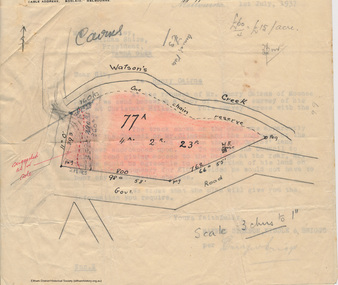
Booklet - Folder, Raynes Dickson Kiddle & Briggs Solicitors et al, Clintons Road, Christmas Hills, 1934-1938
... He owned a garage in Heidleberg (See: https://cv.vic.gov.au/stories/sporting-life/speed-style-spirit-the-rob-roy-hillclimb/the-rob-roy-hillclimb/) raynes dickson kiddle & briggs solicitors henry cairns shire of eltham roadworks christmas hills watsons creek w. e. clinton clintons road rob roy climb 16 pieces of paper Clintons Road, Christmas Hills Booklet Folder Raynes Dickson Kiddle & Briggs Solicitors Henry Cairns W. ...Correspondence over a four year period (probably an incomplete file) on the behalf of Henry Cairns of Moonee Ponds and property owner at Christmas Hills / Watsons Creek including copy of a survey of his land title in relation to complaint regarding the Shire of Eltham encroaching on his land to make a road and subsequent purchase of land. The road provided acccess to the property of Mr W. Clinton of Heidelberg and other properties at Christmas Hills. Note by H.G. indicates that the property discussed in file is Clintons Road (not stated in file), possibly named after 1938. In December 1937 Eltham Shire Council agreed to purchase a block of land at the intersection of the Christmas Hills -- Smiths Gully roads from Mr Cairns to provide an outlet for the road which ran through the Cairns property. In March 1928 Mr Clinton had previously offered to contribute a sum of money towards the cost of purchasing the Cairns block to permit the road to go into his property was intending to transfer the property to himself. A Councilor was reported as being astounded in The Advertiser, 11 March 1938, as the land was needed for a road. Cr Baird: "The road was only to help his sports" Mr W. E. Clinton (Bill) was one of the founders of the Rob Roy Hill climb which took place at his property at Christmas Hills. He owned a garage in Heidleberg (See: https://cv.vic.gov.au/stories/sporting-life/speed-style-spirit-the-rob-roy-hillclimb/the-rob-roy-hillclimb/)16 pieces of paperraynes dickson kiddle & briggs solicitors, henry cairns, shire of eltham, roadworks, christmas hills, watsons creek, w. e. clinton, clintons road, rob roy climb -
 Eltham District Historical Society Inc
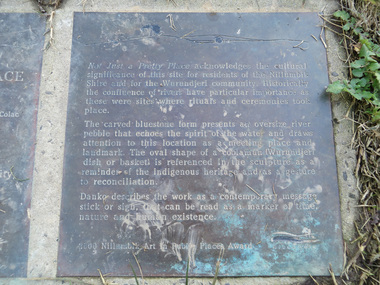
Photograph, Liz Pidgeon, Heritage Excursion; Eltham Lower Park Walk and Talk, 1 July 2017, 1 July 2017
... spirit of the water and draws attention to this location as a meeting place and landmark. The oval shape of a coolamun (Wurundjeri dish or basket) is referenced in the sculpture as a reminder of the indigenous heritage and as a gesture to reconciliation Danko describes the work as a contemporary message stick or sign, that can be read as a merker of time, nature and human existance. 2000 Nillumbik Art in Public Places Award. Heritage Excursion - Saturday 1st July - Eltham...spirit of the water and draws attention to this location as a meeting place and landmark. The oval shape of a coolamun (Wurundjeri dish or basket) is referenced in the sculpture as a reminder of the indigenous heritage and as a gesture to reconciliation Danko describes the work as a contemporary message stick or sign, that can be read as a merker of time, nature and human existance. 2000 Nillumbik Art in Public Places Award. Heritage Excursion - Saturday 1st July - Eltham ...Transcription of plaque: Not Just a Pretty Place acknowledges the cultural significance of this site for residnets of the Nillumbik Shire and for the Wurundjeri community. Historically the confluence of rivers have particular importance as these were sites where rituals and ceremonies took place. The carved bluestone form presents an oversize river pebble that echoes the spirit of the water and draws attention to this location as a meeting place and landmark. The oval shape of a coolamun (Wurundjeri dish or basket) is referenced in the sculpture as a reminder of the indigenous heritage and as a gesture to reconciliation Danko describes the work as a contemporary message stick or sign, that can be read as a merker of time, nature and human existance. 2000 Nillumbik Art in Public Places Award. Heritage Excursion - Saturday 1st July - Eltham Lower Park - Walk and Talk Eltham Lower Park has played an important part in the history of our area since the early days of European settlement when it was used by local residents as an informal racecourse. Prior to that its location at the junction of the Diamond Creek and the Yarra River made it an important meeting place for the Wurundjeri people. The park combines formal elements and sporting facilities with remnant bushland that is of environmental significance. It is home to sporting and horse riding clubs, popular play spaces and the Diamond Valley Miniature Railway, which attracts large numbers of visitors. The park will be the venue for our July excursion which will comprise a walk of about 3.5 km around the park and adjacent areas. Along the way we will discuss the history and natural history of the area. The path along the creek and the river provides a pleasant and scenic walk. This walk on Saturday 1st July is about 3.5 km in length and will take 2 to 2.5 hours. It will start at 2pm at the Main Road car park at the front of the park. (Melway ref 21 H 10). From Newsletter No., 234, June 2017 Born Digitalelection day, heritage excursion, activities, eltham district historical society, eltham lower park, not just a pretty place, public art, plaque -
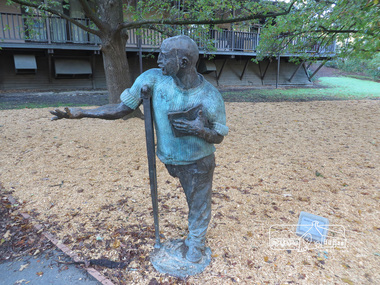 Eltham District Historical Society Inc
Photograph, Liz Pidgeon, Alan Marshall by Marcus Skipper (1995) outside Eltham Library, Panther Place, 21 May 2014, 21 May 2014
... Eltham library. Alan loved telling stories and talking to children and his own story overcoming the legacy of polio has been an inspiration to generations of Australians. Marcus Skipper, the sculptor, knew Alan well and the sculpture is said to capture his spirit and appearance perfectly; the jumper was even cast from one of Alan’s own. ...Eltham library. Alan loved telling stories and talking to children and his own story overcoming the legacy of polio has been an inspiration to generations of Australians. Marcus Skipper, the sculptor, knew Alan well and the sculpture is said to capture his spirit and appearance perfectly; the jumper was even cast from one of Alan’s own. ...A sculpture of local author Alan Marshall welcomes visitors in the grounds of Eltham library. Alan loved telling stories and talking to children and his own story overcoming the legacy of polio has been an inspiration to generations of Australians. Marcus Skipper, the sculptor, knew Alan well and the sculpture is said to capture his spirit and appearance perfectly; the jumper was even cast from one of Alan’s own. A realistic depiction (almost life size) of Alan Marshall (1902-1984) cast in bronze with green patination. Dressed in a jumper and slacks, Marshall is shown perched on a crutch, holding a book to his heart, gesturing to his audience to come and listen to his words. It was scupluted by local artist Marcus Skipper (b.1950 Melb. died 2011). HISTORICAL INFORMATION Alan Marshall was an author of more than fifteen books, and lived much of his life in Eltham. He became a central figure in the area's arts community of writers, artists, sculptors, film makers, actors and musicians . He is shown stroking a book to his heart, perched on a crutch, which references his disability (contracted polio when he was young), and his status as one of Australia's most successful and loved authors. His most famous book, 'I Can Jump Puddles' is based on his life story and the obstacles he faced as a child in trying to overcome his disability. Marcus Skipper submitted the idea for the work to the first 'Art in Public Places' Awards in 1990. The selectors at the time recommended that the work would be more suitably placed near the Eltham Library. It was commissioned and installed for the new Eltham Library, which was designed by Greg Burgess in 1994. It was partially funded by the then Shire of Eltham's Art Development Fund (Eltham Arts Council) and the rest donated by the artist Marcus Skipper. - Highlights from the Nillumbik Public Art Collection. "The setting and location are ideal and Marcus has really captured the typical Marshall character. It has attracted much favourable comment since its completion. .. Alan Marshall, A.M., O.B.E., Hon.LL.D. (1902-1984) was born at Noorat, Victoria and became one of Australia's most famous authors. His association with the Eltham area began in 1920 when he started his first job as a junior clerk at the Eltham Shire Offices, Kangaroo Ground. In the 1940s he spent some time living at Research. From 1955 he lived in Eltham for nearly 20 years. Disabilities resulting from polio as a young child did not prevent a wide range of experiences. Alan's occupations have been listed as clerk, night watchman, fortune teller, freelance journalist and author. He has been patron of many disadvantaged Children's Societies. Alan's books are numerous and include novels, short stories, children's books, history and travel. Among the best known are his autobiographies "I Can Jump Puddles" and "This is the Grass". Others include "These are My People", "Ourselves Writ Strange", "People of the Dreamtime", "The Gay Provider" and "Wild Red Horses". In 1971 he wrote the Centenary History of the Shire of Eltham, "Pioneers and Painters". -EDHS Newsletter No. 104, September 1995This work has significance for its reference to two well known names associated with Eltham and its history. The sculpture is a realistic statue of the famous Australian author Alan Marshall who wrote "I Can Jump Puddles". He lived and worked in the Shire. The artist Marcus Skipper represents a highly recognised family of artists associated with Monsalvat . The sculpture 'Alan Marshall' has been classified as of regional significance by the National Trust of Australia. - Highlights from the Nillumbik Public Art Collection.Born Digitalart in public places, alan marshall, marcus skipper, sculptures, eltham library -
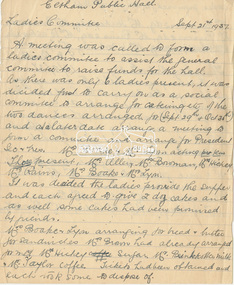 Eltham District Historical Society Inc
Minute Book, Correspondence, annual reports, etc inserted loose into Eltham Public Hall Ladies Committee Minute Book, 16 March 1939 to 14 March 1940, 1937-1941
... “Before any town can advance, a civic spirit must exist in the residents, and I hope the people will support the Hall Committee which has the interests of this district at heart.” Background workings for the funding of a Public Hall at Eltham. ...Contents: Formation of Eltham Public Hall Ladies Committee to assist general committee to raise funds for the hall, 21 September 1937 Minutes of Eltham Public Hall Ladies Committee, 21 September 1937 and 14 October 1937 Minutes Eltham Public Hall Combined Meeting, General and Ladies Committee, 6 April 1938 Annual Report, Eltham Public Hall Ladies Committee, 16 March 1939 Letter of thanks from Eltham War Service Committee to Eltham Public Hall Social Committee for donation of £16, 20 October 1939 Annual Report, Eltham Public Hall Ladies Committee, 14 March 1940 In September 1937, a group of ladies met to form a Ladies’ Committee to assist the General Committee in raising funds for a Public Hall. Those present were Mrs Allen, Mrs Bowman, Mrs Hickey, Mrs Rains, Mrs Boake and Mrs Lyon. As there were only six present, they elected to remain in the interim as a Social Committee to arrange catering, etc., for the two dances that had been arranged for September 29th and October 30th of that year. Both those dances proved a great success. Mrs McAdie joined the committee in October. The Ladies’ Committee was officially formed at a combined meeting of the General and Ladies’ committees held on April 6th, 1938. Mrs Boake agreed to be President, Mrs Lyon as Secretary and Mrs Rains as Assistant Secretary. Other members included Mrs Browne, Mrs Forde, Mrs Jarrold, Mrs Bradbury and Mrs Taylor. By 1941 their numbers had grown to include Matron Wilson, and Mesdames Andrew, Brinkkotter, Cloney, Walker, Parsons, Crick, Ballenger, Travena, Hurst, Shields and Le Brocq . A number of these ladies eventually became part of the Women’s Auxiliary of the Eltham War Memorial Trust. Councillor A. Brinkkotter, secretary of the Hall Committee, noted that Eltham had succeeded, after many long years of fighting, in erecting a new hall and civic centre which had been badly needed. “It took a long time to convince the Council of the necessity for a new hall and civic centre in Eltham.” “The councillors, in looking after the interests of all sections of the rate payers, could not see that such a move was necessary. But finally the Hall Committee proved that such a move was not only advisable, but would prove a financial asset to the Shire.” “This committee had to put down £1,500 in cash before the work on the hall began, and to enable the committee to do this, residents loaned them money free of interest for 12 months. In addition the committee has guaranteed to pay the Council £100 a year for the next ten years.” “The borrowed money has to be repaid to the lenders, and I hope that the public will realise this and support the functions which have been and will be arranged by the Hall Committee to enable them to return the money as soon, as possible.” At the opening gala for the Public Hall, Mr. G. L. Chandler, M.L.C. said “It speaks volumes for those people who have worked for many years for the hall. I know of no other place where the residents have handed over £1,500 for the erection of a hall and guaranteed the balance of the cost. You will always find the few who say ‘Time is not opportune.’ In these days you have to make your opportunities.” “Before any town can advance, a civic spirit must exist in the residents, and I hope the people will support the Hall Committee which has the interests of this district at heart.”Background workings for the funding of a Public Hall at Eltham. The funding was provided by public subscription and the money loaned to Council to build the hall. The hall was part of the new Eltham Shire offices located at the corner of Main Road and Arthur Street. A similar funding approach was used a few years later to provide for the Eltham War Memorial located on the opposite side of Main Road.7 pages (5 leafs) from exercise book, faint ruled both sides, hand written in ink approx 23 x 18 cmannual report, arthur street, e.m. dagnall, eltham public hall, eltham public hall general committee, eltham public hall ladies committee, eltham public hall social committee, eltham war service committee, main road, minutes, mrs ada lyon -
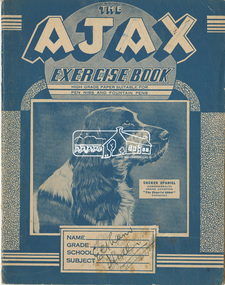 Eltham District Historical Society Inc
Minute Book, Eltham Public Hall Ladies Committee Minutes, 16 March 1939 to 14 March 1940, 1937-1941
... “Before any town can advance, a civic spirit must exist in the residents, and I hope the people will support the Hall Committee which has the interests of this district at heart.” Background workings for the funding of a Public Hall at Eltham. ...In September 1937, a group of ladies met to form a Ladies’ Committee to assist the General Committee in raising funds for a Public Hall. Those present were Mrs Allen, Mrs Bowman, Mrs Hickey, Mrs Rains, Mrs Boake and Mrs Lyon. As there were only six present, they elected to remain in the interim as a Social Committee to arrange catering, etc., for the two dances that had been arranged for September 29th and October 30th of that year. Both those dances proved a great success. Mrs McAdie joined the committee in October. The Ladies’ Committee was officially formed at a combined meeting of the General and Ladies’ committees held on April 6th, 1938. Mrs Boake agreed to be President, Mrs Lyon as Secretary and Mrs Rains as Assistant Secretary. Other members included Mrs Browne, Mrs Forde, Mrs Jarrold, Mrs Bradbury and Mrs Taylor. By 1941 their numbers had grown to include Matron Wilson, and Mesdames Andrew, Brinkkotter, Cloney, Walker, Parsons, Crick, Ballenger, Travena, Hurst, Shields and Le Brocq . A number of these ladies eventually became part of the Women’s Auxiliary of the Eltham War Memorial Trust. Councillor A. Brinkkotter, secretary of the Hall Committee, noted that Eltham had succeeded, after many long years of fighting, in erecting a new hall and civic centre which had been badly needed. “It took a long time to convince the Council of the necessity for a new hall and civic centre in Eltham.” “The councillors, in looking after the interests of all sections of the rate payers, could not see that such a move was necessary. But finally the Hall Committee proved that such a move was not only advisable, but would prove a financial asset to the Shire.” “This committee had to put down £1,500 in cash before the work on the hall began, and to enable the committee to do this, residents loaned them money free of interest for 12 months. In addition the committee has guaranteed to pay the Council £100 a year for the next ten years.” “The borrowed money has to be repaid to the lenders, and I hope that the public will realise this and support the functions which have been and will be arranged by the Hall Committee to enable them to return the money as soon, as possible.” At the opening gala for the Public Hall, Mr. G. L. Chandler, M.L.C. said “It speaks volumes for those people who have worked for many years for the hall. I know of no other place where the residents have handed over £1,500 for the erection of a hall and guaranteed the balance of the cost. You will always find the few who say ‘Time is not opportune.’ In these days you have to make your opportunities.” “Before any town can advance, a civic spirit must exist in the residents, and I hope the people will support the Hall Committee which has the interests of this district at heart.”Background workings for the funding of a Public Hall at Eltham. The funding was provided by public subscription and the money loaned to Council to build the hall. The hall was part of the new Eltham Shire offices located at the corner of Main Road and Arthur Street. A similar funding approach was used a few years later to provide for the Eltham War Memorial located on the opposite side of Main Road.The Ajax Exercise Book, faint lined each page, 24 pages with handwriting in ink; last six pages blank"Eltham Hall" written in ink on top of pencil stating "Mrs Lyon"arthur street, eltham public hall, eltham public hall ladies committee, main road, maria street, minute book -
 Eltham District Historical Society Inc
Minute Book, Eltham Public Hall Ladies Committee Minutes, 14 March 1940 to 4 May 1944, 1940-1944
... “Before any town can advance, a civic spirit must exist in the residents, and I hope the people will support the Hall Committee which has the interests of this district at heart.” Background workings for the funding of a Public Hall at Eltham. ...In September 1937, a group of ladies met to form a Ladies’ Committee to assist the General Committee in raising funds for a Public Hall. Those present were Mrs Allen, Mrs Bowman, Mrs Hickey, Mrs Rains, Mrs Boake and Mrs Lyon. As there were only six present, they elected to remain in the interim as a Social Committee to arrange catering, etc., for the two dances that had been arranged for September 29th and October 30th of that year. Both those dances proved a great success. Mrs McAdie joined the committee in October. The Ladies’ Committee was officially formed at a combined meeting of the General and Ladies’ committees held on April 6th, 1938. Mrs Boake agreed to be President, Mrs Lyon as Secretary and Mrs Rains as Assistant Secretary. Other members included Mrs Browne, Mrs Forde, Mrs Jarrold, Mrs Bradbury and Mrs Taylor. By 1941 their numbers had grown to include Matron Wilson, and Mesdames Andrew, Brinkkotter, Cloney, Walker, Parsons, Crick, Ballenger, Travena, Hurst, Shields and Le Brocq . A number of these ladies eventually became part of the Women’s Auxiliary of the Eltham War Memorial Trust. Councillor A. Brinkkotter, secretary of the Hall Committee, noted that Eltham had succeeded, after many long years of fighting, in erecting a new hall and civic centre which had been badly needed. “It took a long time to convince the Council of the necessity for a new hall and civic centre in Eltham.” “The councillors, in looking after the interests of all sections of the rate payers, could not see that such a move was necessary. But finally the Hall Committee proved that such a move was not only advisable, but would prove a financial asset to the Shire.” “This committee had to put down £1,500 in cash before the work on the hall began, and to enable the committee to do this, residents loaned them money free of interest for 12 months. In addition the committee has guaranteed to pay the Council £100 a year for the next ten years.” “The borrowed money has to be repaid to the lenders, and I hope that the public will realise this and support the functions which have been and will be arranged by the Hall Committee to enable them to return the money as soon, as possible.” At the opening gala for the Public Hall, Mr. G. L. Chandler, M.L.C. said “It speaks volumes for those people who have worked for many years for the hall. I know of no other place where the residents have handed over £1,500 for the erection of a hall and guaranteed the balance of the cost. You will always find the few who say ‘Time is not opportune.’ In these days you have to make your opportunities.” “Before any town can advance, a civic spirit must exist in the residents, and I hope the people will support the Hall Committee which has the interests of this district at heart.”Background workings for the funding of a Public Hall at Eltham. The funding was provided by public subscription and the money loaned to Council to build the hall. The hall was part of the new Eltham Shire offices located at the corner of Main Road and Arthur Street. A similar funding approach was used a few years later to provide for the Eltham War Memorial located on the opposite side of Main Road.Note Book; hard black covers with red fabric spine, faint lined each page, 56 pagesarthur street, eltham public hall, eltham public hall ladies committee, main road, maria street, minute book -
 Eltham District Historical Society Inc
Minute Book, Eltham Public Hall Social Committee Minute Book, 4 May 1944 to 11 December 1947, 1944-1947
... “Before any town can advance, a civic spirit must exist in the residents, and I hope the people will support the Hall Committee which has the interests of this district at heart.” Background workings for the funding of a Public Hall at Eltham. ...In September 1937, a group of ladies met to form a Ladies’ Committee to assist the General Committee in raising funds for a Public Hall. Those present were Mrs Allen, Mrs Bowman, Mrs Hickey, Mrs Rains, Mrs Boake and Mrs Lyon. As there were only six present, they elected to remain in the interim as a Social Committee to arrange catering, etc., for the two dances that had been arranged for September 29th and October 30th of that year. Both those dances proved a great success. Mrs McAdie joined the committee in October. The Ladies’ Committee was officially formed at a combined meeting of the General and Ladies’ committees held on April 6th, 1938. Mrs Boake agreed to be President, Mrs Lyon as Secretary and Mrs Rains as Assistant Secretary. Other members included Mrs Browne, Mrs Forde, Mrs Jarrold, Mrs Bradbury and Mrs Taylor. By 1941 their numbers had grown to include Matron Wilson, and Mesdames Andrew, Brinkkotter, Cloney, Walker, Parsons, Crick, Ballenger, Travena, Hurst, Shields and Le Brocq . A number of these ladies eventually became part of the Women’s Auxiliary of the Eltham War Memorial Trust. Councillor A. Brinkkotter, secretary of the Hall Committee, noted that Eltham had succeeded, after many long years of fighting, in erecting a new hall and civic centre which had been badly needed. “It took a long time to convince the Council of the necessity for a new hall and civic centre in Eltham.” “The councillors, in looking after the interests of all sections of the rate payers, could not see that such a move was necessary. But finally the Hall Committee proved that such a move was not only advisable, but would prove a financial asset to the Shire.” “This committee had to put down £1,500 in cash before the work on the hall began, and to enable the committee to do this, residents loaned them money free of interest for 12 months. In addition the committee has guaranteed to pay the Council £100 a year for the next ten years.” “The borrowed money has to be repaid to the lenders, and I hope that the public will realise this and support the functions which have been and will be arranged by the Hall Committee to enable them to return the money as soon, as possible.” At the opening gala for the Public Hall, Mr. G. L. Chandler, M.L.C. said “It speaks volumes for those people who have worked for many years for the hall. I know of no other place where the residents have handed over £1,500 for the erection of a hall and guaranteed the balance of the cost. You will always find the few who say ‘Time is not opportune.’ In these days you have to make your opportunities.” “Before any town can advance, a civic spirit must exist in the residents, and I hope the people will support the Hall Committee which has the interests of this district at heart.”Background workings for the funding of a Public Hall at Eltham. The funding was provided by public subscription and the money loaned to Council to build the hall. The hall was part of the new Eltham Shire offices located at the corner of Main Road and Arthur Street. A similar funding approach was used a few years later to provide for the Eltham War Memorial located on the opposite side of Main Road.The "Vana" Exercise Book, faint lined each page, approx. 70 pages; last approx 14 pages blank Minutes (incomplete) for 1947 meetings on loose pages torn out from a separate book and inserted loosely at endarthur street, eltham public hall, eltham public hall ladies committee, eltham public hall social committee, main road, minute book -
 Eltham District Historical Society Inc
Document, Blank form of acknowledgement for receipt of funds as a loan for use by the Eltham Public Hall Committee, 1941, 1941
... “Before any town can advance, a civic spirit must exist in the residents, and I hope the people will support the Hall Committee which has the interests of this district at heart.” Background workings for the funding of a Public Hall at Eltham. ...In September 1937, a group of ladies met to form a Ladies’ Committee to assist the General Committee in raising funds for a Public Hall. Those present were Mrs Allen, Mrs Bowman, Mrs Hickey, Mrs Rains, Mrs Boake and Mrs Lyon. As there were only six present, they elected to remain in the interim as a Social Committee to arrange catering, etc., for the two dances that had been arranged for September 29th and October 30th of that year. Both those dances proved a great success. Mrs McAdie joined the committee in October. The Ladies’ Committee was officially formed at a combined meeting of the General and Ladies’ committees held on April 6th, 1938. Mrs Boake agreed to be President, Mrs Lyon as Secretary and Mrs Rains as Assistant Secretary. Other members included Mrs Browne, Mrs Forde, Mrs Jarrold, Mrs Bradbury and Mrs Taylor. By 1941 their numbers had grown to include Matron Wilson, and Mesdames Andrew, Brinkkotter, Cloney, Walker, Parsons, Crick, Ballenger, Travena, Hurst, Shields and Le Brocq . A number of these ladies eventually became part of the Women’s Auxiliary of the Eltham War Memorial Trust. Councillor A. Brinkkotter, secretary of the Hall Committee, noted that Eltham had succeeded, after many long years of fighting, in erecting a new hall and civic centre which had been badly needed. “It took a long time to convince the Council of the necessity for a new hall and civic centre in Eltham.” “The councillors, in looking after the interests of all sections of the rate payers, could not see that such a move was necessary. But finally the Hall Committee proved that such a move was not only advisable, but would prove a financial asset to the Shire.” “This committee had to put down £1,500 in cash before the work on the hall began, and to enable the committee to do this, residents loaned them money free of interest for 12 months. In addition the committee has guaranteed to pay the Council £100 a year for the next ten years.” “The borrowed money has to be repaid to the lenders, and I hope that the public will realise this and support the functions which have been and will be arranged by the Hall Committee to enable them to return the money as soon, as possible.” At the opening gala for the Public Hall, Mr. G. L. Chandler, M.L.C. said “It speaks volumes for those people who have worked for many years for the hall. I know of no other place where the residents have handed over £1,500 for the erection of a hall and guaranteed the balance of the cost. You will always find the few who say ‘Time is not opportune.’ In these days you have to make your opportunities.” “Before any town can advance, a civic spirit must exist in the residents, and I hope the people will support the Hall Committee which has the interests of this district at heart.”Background workings for the funding of a Public Hall at Eltham. The funding was provided by public subscription and the money loaned to Council to build the hall. The hall was part of the new Eltham Shire offices located at the corner of Main Road and Arthur Street. A similar funding approach was used a few years later to provide for the Eltham War Memorial located on the opposite side of Main Road.Single pagearthur street, eltham public hall, fundraising, main road -
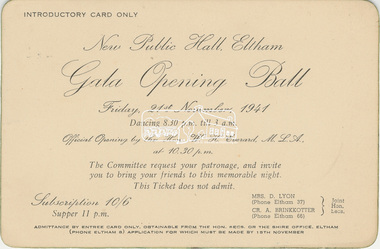 Eltham District Historical Society Inc
Invitation, Introductory Card, Gala Opening Ball, New Public Hall, Eltham, Friday 21st November, 1941, 1941
... “Before any town can advance, a civic spirit must exist in the residents, and I hope the people will support the Hall Committee which has the interests of this district at heart.” Background workings for the funding of a Public Hall at Eltham. ...In September 1937, a group of ladies met to form a Ladies’ Committee to assist the General Committee in raising funds for a Public Hall. Those present were Mrs Allen, Mrs Bowman, Mrs Hickey, Mrs Rains, Mrs Boake and Mrs Lyon. As there were only six present, they elected to remain in the interim as a Social Committee to arrange catering, etc., for the two dances that had been arranged for September 29th and October 30th of that year. Both those dances proved a great success. Mrs McAdie joined the committee in October. The Ladies’ Committee was officially formed at a combined meeting of the General and Ladies’ committees held on April 6th, 1938. Mrs Boake agreed to be President, Mrs Lyon as Secretary and Mrs Rains as Assistant Secretary. Other members included Mrs Browne, Mrs Forde, Mrs Jarrold, Mrs Bradbury and Mrs Taylor. By 1941 their numbers had grown to include Matron Wilson, and Mesdames Andrew, Brinkkotter, Cloney, Walker, Parsons, Crick, Ballenger, Travena, Hurst, Shields and Le Brocq . A number of these ladies eventually became part of the Women’s Auxiliary of the Eltham War Memorial Trust. Councillor A. Brinkkotter, secretary of the Hall Committee, noted that Eltham had succeeded, after many long years of fighting, in erecting a new hall and civic centre which had been badly needed. “It took a long time to convince the Council of the necessity for a new hall and civic centre in Eltham.” “The councillors, in looking after the interests of all sections of the rate payers, could not see that such a move was necessary. But finally the Hall Committee proved that such a move was not only advisable, but would prove a financial asset to the Shire.” “This committee had to put down £1,500 in cash before the work on the hall began, and to enable the committee to do this, residents loaned them money free of interest for 12 months. In addition the committee has guaranteed to pay the Council £100 a year for the next ten years.” “The borrowed money has to be repaid to the lenders, and I hope that the public will realise this and support the functions which have been and will be arranged by the Hall Committee to enable them to return the money as soon, as possible.” At the opening gala for the Public Hall, Mr. G. L. Chandler, M.L.C. said “It speaks volumes for those people who have worked for many years for the hall. I know of no other place where the residents have handed over £1,500 for the erection of a hall and guaranteed the balance of the cost. You will always find the few who say ‘Time is not opportune.’ In these days you have to make your opportunities.” “Before any town can advance, a civic spirit must exist in the residents, and I hope the people will support the Hall Committee which has the interests of this district at heart.”Background workings for the funding of a Public Hall at Eltham. The funding was provided by public subscription and the money loaned to Council to build the hall. The hall was part of the new Eltham Shire offices located at the corner of Main Road and Arthur Street. A similar funding approach was used a few years later to provide for the Eltham War Memorial located on the opposite side of Main Road.Printed card 5 copies numbered 68, 176, 201, 216 and 217 10.5 x 15.7 cmarthur street, eltham public hall, gala opening ball, main road -
 Eltham District Historical Society Inc
Flyer, Eltham Hall Social Committee Dance, Friday, (date to be filled in), 1937-1941
... “Before any town can advance, a civic spirit must exist in the residents, and I hope the people will support the Hall Committee which has the interests of this district at heart.” Background workings for the funding of a Public Hall at Eltham. ...In September 1937, a group of ladies met to form a Ladies’ Committee to assist the General Committee in raising funds for a Public Hall. Those present were Mrs Allen, Mrs Bowman, Mrs Hickey, Mrs Rains, Mrs Boake and Mrs Lyon. As there were only six present, they elected to remain in the interim as a Social Committee to arrange catering, etc., for the two dances that had been arranged for September 29th and October 30th of that year. Both those dances proved a great success. Mrs McAdie joined the committee in October. The Ladies’ Committee was officially formed at a combined meeting of the General and Ladies’ committees held on April 6th, 1938. Mrs Boake agreed to be President, Mrs Lyon as Secretary and Mrs Rains as Assistant Secretary. Other members included Mrs Browne, Mrs Forde, Mrs Jarrold, Mrs Bradbury and Mrs Taylor. By 1941 their numbers had grown to include Matron Wilson, and Mesdames Andrew, Brinkkotter, Cloney, Walker, Parsons, Crick, Ballenger, Travena, Hurst, Shields and Le Brocq . A number of these ladies eventually became part of the Women’s Auxiliary of the Eltham War Memorial Trust. Councillor A. Brinkkotter, secretary of the Hall Committee, noted that Eltham had succeeded, after many long years of fighting, in erecting a new hall and civic centre which had been badly needed. “It took a long time to convince the Council of the necessity for a new hall and civic centre in Eltham.” “The councillors, in looking after the interests of all sections of the rate payers, could not see that such a move was necessary. But finally the Hall Committee proved that such a move was not only advisable, but would prove a financial asset to the Shire.” “This committee had to put down £1,500 in cash before the work on the hall began, and to enable the committee to do this, residents loaned them money free of interest for 12 months. In addition the committee has guaranteed to pay the Council £100 a year for the next ten years.” “The borrowed money has to be repaid to the lenders, and I hope that the public will realise this and support the functions which have been and will be arranged by the Hall Committee to enable them to return the money as soon, as possible.” At the opening gala for the Public Hall, Mr. G. L. Chandler, M.L.C. said “It speaks volumes for those people who have worked for many years for the hall. I know of no other place where the residents have handed over £1,500 for the erection of a hall and guaranteed the balance of the cost. You will always find the few who say ‘Time is not opportune.’ In these days you have to make your opportunities.” “Before any town can advance, a civic spirit must exist in the residents, and I hope the people will support the Hall Committee which has the interests of this district at heart.”Background workings for the funding of a Public Hall at Eltham. The funding was provided by public subscription and the money loaned to Council to build the hall. The hall was part of the new Eltham Shire offices located at the corner of Main Road and Arthur Street. A similar funding approach was used a few years later to provide for the Eltham War Memorial located on the opposite side of Main Road.Paper with ink printingarthur street, dance, eltham public hall, eltham public hall social committee, main road -
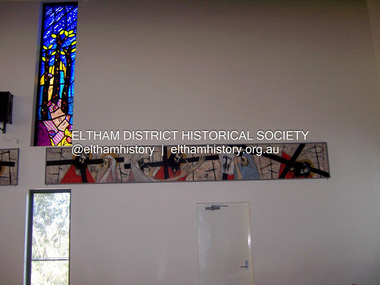 Eltham District Historical Society Inc
Photograph - Digital Photograph, Marguerite Marshall, Stations of the Cross, Clifton Pugh (1961); Our Lady Help of Christian's Church, Henry Street, Eltham, 11 October 2006
... Three beautiful stained-glass windows depicting the Passion, Death, Resurrection and the presence of Christ’s Spirit, link these with the church’s experiences. The first depicts a bushfire in Eltham, referring to their church damaged by fire. ...Three beautiful stained-glass windows depicting the Passion, Death, Resurrection and the presence of Christ’s Spirit, link these with the church’s experiences. The first depicts a bushfire in Eltham, referring to their church damaged by fire. ...Stations of the Cross by Clifton Pugh is a contempooray art piece in four sections making up 11 stations of the cross. It was commissioned by the Catholic parish in Eltham (Our Lady Help of Christians) in 1961 Published: Nillumbik Now and Then / Marguerite Marshall 2008; photographs Alan King with Marguerite Marshall.; p81 Art is an important means of nurturing faith at Our Lady Help of Christians Church, Henry Street, Eltham. The Stations of the Cross by Clifton Pugh and The Crucifix with the Ascending Jesus by sculptor Charles Rocco are two of the fine works that enhance the parishioners’ worship. These two inspiring works of art were added in 2001 – long after Roman Catholics began worshipping in Eltham around 1864. This beautiful worship centre was built following hardship and change – for parishioners have endured their church being destroyed by fire and have built four churches since they first worshipped together. Before 1864, according to local legend, a visiting priest administered sacraments in the parlour of former convict-turned-respected citizen Thomas Sweeney at Sweeneys Lane, Eltham.1 The first church was blessed in September, 1865, by the Archbishop of Melbourne, Dr Goold. It stood on an acre (0.4ha) of land in Little Eltham as that area was known then, near the present Fordhams and Main Roads and was part of the Heidelberg Church Parish. In 1912 the church was relocated to a new building on the present primary school site at 1 Henry Street. This was closer to the town centre, which had moved from Little Eltham after the railway line was extended to Eltham in 1902.2 In 1958 the church split from the Sacred Heart parish, Diamond Creek, to become a parish in its own right, with Father Tom Curran as inaugural priest. Not long after in 1961, a fire destroyed the church and huge working bees under the prominent Catholic builders, the Sibbel brothers, rebuilt and extended it, using the original altar from the first church. It was then that builder and parishioner Herman Sibbel asked his friend, artist Clifton Pugh, to paint the Stations of the Cross for the church. But the priest, Father Curran, neither approved of Pugh’s bohemian reputation nor liked the paintings, so they were hung in the corridor of Our Lady’s Primary School instead. The parishioners almost sold the paintings in 1989 to pay for major school renovations. However the paintings remained there for about 40 years, until 2001, when the church was extensively renovated by Father Barry Caldwell. Another change awaited the church, as it outgrew its building, later to be used as the school hall. So, in 1976, the present church was built across the road. Three beautiful stained-glass windows depicting the Passion, Death, Resurrection and the presence of Christ’s Spirit, link these with the church’s experiences. The first depicts a bushfire in Eltham, referring to their church damaged by fire. Another represents the Resurrection of Christ with new growth on a blackened stump and the Holy Spirit is represented by the Southern Cross. A window depicting Our Lady Help of Christians by parishioner Bill Peperkamp, was donated by parishioners to commemorate the Silver Jubilee of Father Desmond G Jenkins’ ordination to the priesthood on July 27, 1977. This, with the statue of Mary, creates a Marian shrine. In the 14 Stations of the Cross painted on four masonite panels Pugh captures the pathos of the suffering Christ and his disciples.3 The figures are stylised, except intriguingly, that of Pontias Pilate, who looks like Clifton Pugh. Charles Rocco’s sculpture is an extraordinary Jesus figure being raised from the Cross. The delicate stainless steel mesh of the figure creates a sense of the power of God over death. The organ, built in 1868 by George Fincham and Sons, was first installed in the All Saints’ Anglican Church, East St Kilda, then in the St Andrews Church, Clifton Hill. It was rebuilt into a modern instrument with a donation from parishioner Jim Murray, in memory of his wife Gwendolene Mary.4 Church members created their own work of art in front of the entrance, by painting designs and messages on 700 tiles. This work indicates the strong church family and faith expressed in art, that awaits the worshipper inside.This collection of almost 130 photos about places and people within the Shire of Nillumbik, an urban and rural municipality in Melbourne's north, contributes to an understanding of the history of the Shire. Published in 2008 immediately prior to the Black Saturday bushfires of February 7, 2009, it documents sites that were impacted, and in some cases destroyed by the fires. It includes photographs taken especially for the publication, creating a unique time capsule representing the Shire in the early 21st century. It remains the most recent comprehenesive publication devoted to the Shire's history connecting local residents to the past. nillumbik now and then (marshall-king) collection, art, clifton pugh, stations of the cross, our lady help of christans, installation -
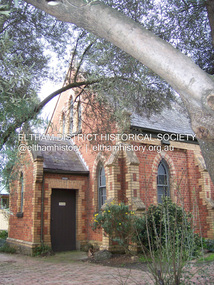 Eltham District Historical Society Inc
Photograph - Digital Photograph, Marguerite Marshall, Uniting Church, Main Road, Eltham, 19 August 2008
... Spirit and Comforter marked the death in 1936 of member Effie Lowerson from scarlet fever at 14 years. The other depicting the Biblical story A sower went forth to sow, commemorates Ross Gangell, who died in 1961 at 23 years of a rare blood condition. Eltham’s...Spirit and Comforter marked the death in 1936 of member Effie Lowerson from scarlet fever at 14 years. The other depicting the Biblical story A sower went forth to sow, commemorates Ross Gangell, who died in 1961 at 23 years of a rare blood condition. Eltham’s ...Eltham's original Wesleyan Methodist Church Covered under Heritage Overlay, Nillumbik Planning Scheme. Published: Nillumbik Now and Then / Marguerite Marshall 2008; photographs Alan King with Marguerite Marshall.; p97 The pretty Uniting Church building at the corner of John and Main Roads Eltham has served the community since 1881.1 Originally called the Eltham Wesleyan Church, the church became the Eltham Methodist Church in 1902, the year it united with the Primitive Methodists.2 As the church community developed, influencing and being influenced by the wider community, its buildings changed accordingly. Eltham Wesleyans first worshiped together in 1850 at the home of William and Mary Crozier on 24 acres (9.7ha) bounded by Mount Pleasant Road and Pitt Street. From 1855 the Wesleyans worshipped in a slab-and-bark hut; then in 1858 in a chapel on Henry Street close to Maria Street (now Main Road). Meanwhile, in 1860, the Primitive Methodists opened a brick chapel at the corner of Susan and Bridge Streets. The John Street building – in the Early English Gothic style with biochrome brick window frames, buttress heads and pinnacle – was designed by architects Crouch and Wilson. Church member George Stebbing built the church as he did Eltham’s St Margaret’s Anglican Church and Shillinglaw Cottage. The Church Honour Roll is a poignant reminder of how church members have served the wider community: 27 members enlisted and 11 died in World War One. Despite the Great Depression, 1931 was a time of expansion for the church. Its red-brick hall was opened by prominent Methodist and philanthropist F J Cato of the Moran and Cato Grocery chain. The hall enabled the church to attract people from outside through activities like its gymnasium – with 40 boys and youth participating – and the girls’ callisthenics club, which competed at the Ballarat South Street Competitions. The church also held concerts, bazaars, picnics and sports, with badminton and tennis played on the church court at 23 John Street. Two stained-glass windows commemorate tragic events. A dove representing the Holy Spirit and Comforter marked the death in 1936 of member Effie Lowerson from scarlet fever at 14 years. The other depicting the Biblical story A sower went forth to sow, commemorates Ross Gangell, who died in 1961 at 23 years of a rare blood condition. Eltham’s population expanson resulted in the growth of the church and an extension in 1971, designed by member and architect Colin Jones. The church was linked to the hall and additions included a foyer, vestry, meeting room and toilets. The design reflected the Eltham style of the time, with its simplicity, extensive clear glass, reused baked clay-bricks from the 1881 church, heavy ceiling beams and solomite (compressed straw) ceiling. On June 26, 1977 the church became part of the new Uniting Church in Australia consisting of the former Methodist and Congregational and most of the Presbyterian Churches. In 1981 membership peaked at 159 – about 20 years after most Protestant churches – and continued to reach out to the wider community.3 In 1987, 147 children attended Selihoo, the weekly after-school program organised with St Margaret’s Anglican Church. From 1993, the church with other local churches, participated in LINC (Love in the Name of Christ), helping the wider community in various ways including babysitting, transport, gardening and visiting. Despite such initiatives, church numbers declined, and on June 23, 1996, the church merged with the Montmorency Uniting Church.4 However, the church continued to proclaim its message of love in community service and strong social justice action, such as in Jubilee 2000, supporting debt relief to the world’s 45 poorest countries. Some of the many church members who have had an outstanding impact on the wider community include Philip Shillinglaw, farmer and poet, and Arthur Bird (after whom the Arthur Bird Reserve is named), a pioneer orchardist and the Sunday School Superintendent for 33 years. Others were: the Rev Dr Cliff Wright, who established the Methodist Youth Fellowship and was prominent in the World Council of Churches, the Rev Brian Howe, who became Deputy Prime Minister and Tim Marshall, awarded the Order of Australia in 2000 for his work on salinity.This collection of almost 130 photos about places and people within the Shire of Nillumbik, an urban and rural municipality in Melbourne's north, contributes to an understanding of the history of the Shire. Published in 2008 immediately prior to the Black Saturday bushfires of February 7, 2009, it documents sites that were impacted, and in some cases destroyed by the fires. It includes photographs taken especially for the publication, creating a unique time capsule representing the Shire in the early 21st century. It remains the most recent comprehenesive publication devoted to the Shire's history connecting local residents to the past. nillumbik now and then (marshall-king) collection, eltham uniting church, eltham methodist church
