
Showing 99 items matching "starting again"
-
 Nhill and District Historical Society Inc.
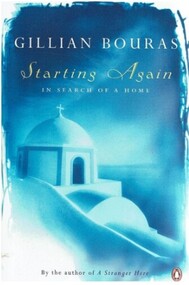
Book - Starting Again, In Search of a Home by Gillian Bouras, 1999
... Starting Again ...Starting Again: In Search of a Home by Gillian Bouras...Insightful and always engaging, Bouras explores the divide that exists between cultures, between the past and the present, between those who shut the world out and those who too readily let it in. Starting Again: In Search of a Home by Gillian Bouras In Search of a Home by Gillian Bouras Book Starting Again ...For some, home is not simply a matter of place. Gillian Bouras comes and goes between London, where she spends long periods, and the village in the Peloponnese to which she migrated nearly twenty years ago. Unable to settle in either England or Greece, her life is one of perpetual journey, of constant goodbyes and starting again. Even in Australia, where she was born and raised, she feels like an outsider. This journal deals with the complexity of finding your place in the world. Insightful and always engaging, Bouras explores the divide that exists between cultures, between the past and the present, between those who shut the world out and those who too readily let it in.non-fictionFor some, home is not simply a matter of place. Gillian Bouras comes and goes between London, where she spends long periods, and the village in the Peloponnese to which she migrated nearly twenty years ago. Unable to settle in either England or Greece, her life is one of perpetual journey, of constant goodbyes and starting again. Even in Australia, where she was born and raised, she feels like an outsider. This journal deals with the complexity of finding your place in the world. Insightful and always engaging, Bouras explores the divide that exists between cultures, between the past and the present, between those who shut the world out and those who too readily let it in.bouras gillian - 1945 - diaries, australian - diaries, women immigrants, social life and customs, cultural assimilation, greek australians, biography & autobiography, psychology, social science, customs & traditions, emigration & immigration, personal memoirs -
 Marysville & District Historical Society
THE TRIANGLE NEWS-VOL 36 NO 22-JUNE 19 2009
... ...starting again...marysville victoria australia starting again lynne phelps marysville bakery black saturday marysville central update wanted the lolly shop bruno's art and sculpture garden ses cfa what's on when free advice in marysville marysville & district lions club alexandra visitors information centre marysville fire brigade news seasonal road closures dse to reopen marysville office and depot advertisements murrindindi shire council seniors concert senior citizens hall marysville youth starts rebuild triangle distribution & fire relief centre community advisory groups formed for bushfire recovery documentary on marysville help wanted marysville opportunity shop church notices marysville art show marysville christian fellowship new firewood distribution plan house signs ready for pick up marysville medical centre THE TRIANGLE NEWS-VOL 36 NO 22-JUNE 19 2009 ...marysville, victoria, australia, starting again, lynne phelps, marysville bakery, black saturday, marysville central update, wanted, the lolly shop, bruno's art and sculpture garden, ses, cfa, what's on when, free advice in marysville, marysville & district lions club, alexandra visitors information centre, marysville fire brigade news, seasonal road closures, dse to reopen marysville office and depot, advertisements, murrindindi shire council, seniors concert, senior citizens hall, marysville youth starts rebuild, triangle distribution & fire relief centre, community advisory groups formed for bushfire recovery, documentary on marysville help wanted, marysville opportunity shop, church notices, marysville art show, marysville christian fellowship, new firewood distribution plan, house signs ready for pick up, marysville medical centre -
Ringwood and District Historical Society
Account Book, Ringwood State School - account book of Mothers Club showing fund raising accounts. Book started 1938 then a gap; started again 1950. Shows lists of members at meetings, 1930s
... Book started 1938 then a gap; started again 1950. Shows lists of members at meetings....Book started 1938 then a gap; started again 1950. Shows lists of members at meetings. ...Used at Mother's Club, Ringwood State SchoolRingwood State School - account book of Mothers Club showing fund raising accounts. Book started 1938 then a gap; started again 1950. Shows lists of members at meetings.School Committee Book for Accounts. (on a cloth spine) -
 Lara RSL Sub Branch
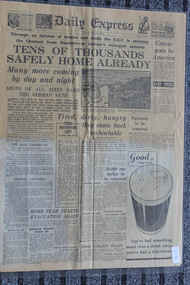
Newspaper - The Daily Express Newspaper Dated 31/5/1940, Dunkirk -Tens of Thousands Safely Home Already - Three Destroyers Lost - omb Fear Starts Evacuation Again
... Dunkirk -Tens of Thousands Safely Home Already - Three Destroyers Lost - Bomb Fear Starts Evacuation Again....The Daily Express Newspaper Dated 31/5/1940 The Daily Express Newspaper Dated 31/5/1940 dunkirk -tens of thousands safely home already - three destroyers lost - omb fear starts evacuation again. Dunkirk -Tens of Thousands Safely Home Already - Three Destroyers Lost - Bomb Fear Starts Evacuation Again. ...The Daily Express Newspaper Dated 31/5/1940The Daily Express Newspaper Dated 31/5/1940The Daily Express Newspaper Dated 31/5/1940Dunkirk -Tens of Thousands Safely Home Already - Three Destroyers Lost - Bomb Fear Starts Evacuation Again.dunkirk -tens of thousands safely home already - three destroyers lost - omb fear starts evacuation again. -
 Bendigo Historical Society Inc.
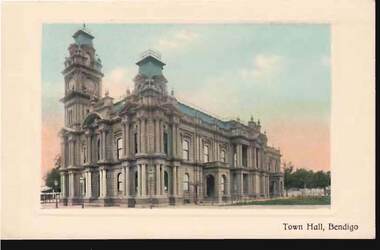
Postcard - TOWN HALL, BENDIGO
... It is not very nice starting again. This is the only postcard I can find; but suppose it will do. ...It is not very nice starting again. This is the only postcard I can find; but suppose it will do. ...Postcard: hand coloured image of Town Hall, Bendigo. On rear: written in black ink ' Dear Auntie, We got here allright, & Billy Bush & Ronny kept us laughing most of the time. I started school today and Reg started School of Mines. It is not very nice starting again. This is the only postcard I can find; but suppose it will do. With love from Reg and Merle' Card is postmarked with a penny stamp. No date visible. No address on card.bendigo, streetscape, town hall, bendigo, post office, merle ( bush ? ) -
 Bendigo Historical Society Inc.
Slide - BENDIGO VIEWS, Nov 1960
... A tree on the left has been cut off and starting to grow again....A tree on the left has been cut off and starting to grow again. Slide BENDIGO VIEWS ...Slide. Bendigo Views. Clouds above the houses and trees. A power line is above the houses. A tree on the left has been cut off and starting to grow again.slide, bendigo, bendigo views, bendigo views -
 Orbost & District Historical Society
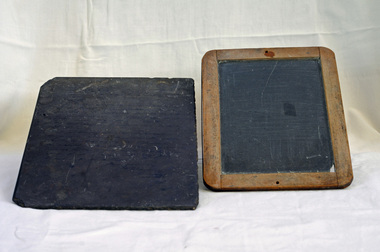
slates
... Children had to bring a dampened cloth or sponge to school so that they could clean the slate and start again but often they would use their own spit and the cuff of their sleeve! ...Children had to bring a dampened cloth or sponge to school so that they could clean the slate and start again but often they would use their own spit and the cuff of their sleeve! ...The board was made from a piece of quarry slate set in a wooden frame. In early times a slate pencil (not chalk) was used to form the letters. This slate pencil was often sharpened on the school wall. The advantage of slates over paper was that they could be wiped clean and used again and again. Children had to bring a dampened cloth or sponge to school so that they could clean the slate and start again but often they would use their own spit and the cuff of their sleeve! Two rectangular slate writing boards used in schools. .1 is plain black and is unframed. .2 is wooden-framed.education slate school-equipment -
 Ringwood and District Historical Society
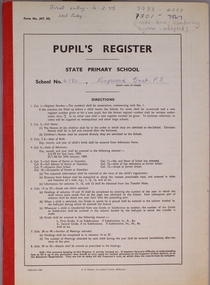
Administrative record, Ringwood East State School No 4180-Pupil Register (Book 12 of 15). Feb 1975 - Sep 1977 . Registration Numbers 3933 to 4224, then 7801 to 7867
... Registration numbers run from 3933 to 4224, then numbering starts again at 7801 through to 7867. Note: For a high resolution copy of one or more images, contact Ringwood and District Historical Society (RDHS). ...Registration numbers run from 3933 to 4224, then numbering starts again at 7801 through to 7867. Note: For a high resolution copy of one or more images, contact Ringwood and District Historical Society (RDHS). ...Ringwood East State School No 4180-Pupil Register Images. A searchable transcript of all these images can be found as a pdf in VC Record 7509. Note that a new registration numbering system was used from part way into this register. Registration numbers run from 3933 to 4224, then numbering starts again at 7801 through to 7867. Note: For a high resolution copy of one or more images, contact Ringwood and District Historical Society (RDHS). The original Registers are held at Public Records Victoria (PROV). Scanning of these was commissioned by RDHS and undertaken by Mark Grealy, Archival Access in 2013. (https://www.archivalaccessvictoria.com/). The registers were transcribed in 2021-2022 by Sue Breese, Archivist at RDHS. -
Federation University Art Collection
Ceramic - Artwork - Ceramics, Ray Hearn, 'End Game' by Ray Hearn
... Clay lives on, and the ceramic 'game' starts again too. As it transpires End Game is about my own work too. ...Clay lives on, and the ceramic 'game' starts again too. As it transpires End Game is about my own work too. ...Dr Ray HEARN (1943- ) Born Stawell, Victoria Ray Hearn graduated from the Ballarat School of Mines Technical Art School with a Diploma of Art (Ceramics) in 1970, followed by an Master of Fine Art from Regina Canada in 1976. He holds a PhD in Anthropology from Northern Territory, Darwin in 2003, with field work, exhibitions and teaching in Thailand since 1996. He has completed his MA in art curatorship from the University of Melbourne, with a thesis on Sidney Nolan and Ned Kelly.From Above and beyond function: Ray Hearn explains the reasons behind his useless ceramics:- "End Game suggests a climax of a tactical and intellectual struggle, in ceramics or chess, but it is also about beginnings and endings, for in chess the king can never be captured--one game ends and the board is reset so the next can begin. I made this piece at the start of my PhD work, acknowledging then that as there were once potters so too there are potters today--and tomorrow. The ceramic pieces were all collected in Tanon Suthep, one of Chiang Mai's streets. The board is a fragment of white tiles from a pharmacy building being remodelled, the bowl is a broken fast food noodle bowl from the ubiquitous street stalls, and the new small blue and white jars purchased from a market stall. Typical of my work, the objects are familiar--they might be just like ones we have at home today, had but threw away only yesterday, or objects we might purchase tomorrow. Clay lives on, and the ceramic 'game' starts again too. As it transpires End Game is about my own work too. All research degrees require an end--a thesis must reach a conclusion, and like a game of chess, start again. The sculptural potential of clay is unlimited, and in theory functional clay wares' aesthetic potential unlimited too, from a classic Song celadon to Arneson's genital encrusted teapots (which I first saw illustrated in Craft Horizons 1971). West Coast funk with its kitschy teapots and cups were vehicles for sculptural objects never meant to be drunk from, and a genre of useless functional wares emerged. Nothing could be more useless in a practical sense than a work of art, especially a painting--yet most craftwork has a passing reference at least to function." ( https://www.thefreelibrary.com/Above+and+beyond+function%3A+Ray+Hearn+explains+the+reasons+behind+his...-a0172598257, accessed 07 February 2018:)ray hearn, ballarat school of mines, ballarat technical art school, alumni, ceramics -
City of Moorabbin Historical Society (Operating the Box Cottage Museum)
Education kit - School Writing Slate early 20thC, 20thC
... After the pupil wrote on the Slate, the work was checked by the teacher and then erased for a new task Children had to bring a dampened cloth or sponge to school so that they could clean the slate and start again. ...After the pupil wrote on the Slate, the work was checked by the teacher and then erased for a new task Children had to bring a dampened cloth or sponge to school so that they could clean the slate and start again. The pioneer settlers in the Moorabbin Shire area valued education and established schools for their children in Cheltenham and East Brighton c1860's This writing slate is typical of the type used up to the mid 20th Century in preparatory classes. schools education writing equipment slate writing boards victoria melbourne market gardeners pioneer settlers cheltenham state school no. 84. bentleigh east state school no. 2083 st stephens c of e school tucker road east brighton A writing slate in a wood frame used by school children from c1880s to c1950s Education kit School Writing Slate early 20thC Victorian Education Department Carpenter ...School children learned to write using a slate From 1880’s to mid 1950’s in most schools, very young children first learned to write their letters in sand trays using their fingers or a stick. When about 6, they progressed onto writing on slates . The board was made from a piece of quarry slate set in a wooden frame. A slate pencil (not chalk) was used to form the letters. This slate pencil was often sharpened on the school wall. The advantage of slates over paper was that they could be wiped clean and used again and again. Until the mid 20thC paper was expensive . After the pupil wrote on the Slate, the work was checked by the teacher and then erased for a new task Children had to bring a dampened cloth or sponge to school so that they could clean the slate and start again. The pioneer settlers in the Moorabbin Shire area valued education and established schools for their children in Cheltenham and East Brighton c1860's This writing slate is typical of the type used up to the mid 20th Century in preparatory classes.A writing slate in a wood frame used by school children from c1880s to c1950sschools, education, writing equipment, slate writing boards, victoria melbourne, market gardeners, pioneer, settlers, cheltenham state school no. 84., bentleigh east state school no. 2083, st stephens c of e school tucker road east brighton -
 Warrnambool and District Historical Society Inc.
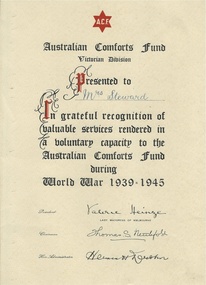
Document, Australian Comfort Fund Mrs Steward, C1946
... It ceased its work and was dissolved in 1920 at the ceasation of the war but was started again to continue the same work in 1939.In Australia it rivalled the work of the red Cross and many of the volunteers involved were women. ...It ceased its work and was dissolved in 1920 at the ceasation of the war but was started again to continue the same work in 1939.In Australia it rivalled the work of the red Cross and many of the volunteers involved were women. ...The Australian Comforts Fund was formed during the first World War and was an amalgamation of various organisations which were sending items of comfort such as toiletries, clothing and food to Australian troops who were fighting overseas. It ceased its work and was dissolved in 1920 at the ceasation of the war but was started again to continue the same work in 1939.In Australia it rivalled the work of the red Cross and many of the volunteers involved were women. As well as making and providing items themselves there was major fundraising to purchase further items. Over the course of the war they provided over 1.5 million hampers. This certificate was presented to Mrs Steward for valuable services rendered to the Australian Comforts Fund during World War 1939-1945. The Australian Comforts fund was wound up in June 1946.This certificate recognises the work of one of our residents to a fund which was Australia wide and would have been one of numerous certificates presented around the country. The Australian Comforts fund was an organisation with which numerous people would have been affiliated and which also assisted many soldiers over the years. Cream certificate with black text, highlighted with red. The name Mrs Steward has been written in in blue ink. In comes enclosed in a dark grey soft card folder.Mrs Steward. Signed Valerie Heinze, Lady mayoress of Melbourne. Thomas S Neu*tefold, Hermen W *ohn, On front of grey folder "Mrs Steward Warrnambool.warrnambool, warrnambool history, australian comforts fund, mrs steward warrnambool -
 Bendigo Military Museum
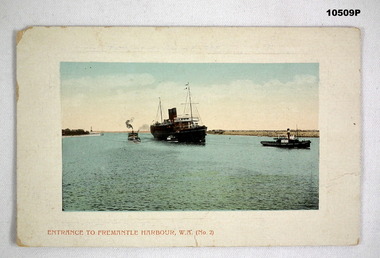
Postcard - PHOTOGRAPHIC POSTCARD, P. Falk & Co Ltd, Unknown
... i do not know how I am going to start work again. We have had dreadful weather, nothing but wind and dust, I would much rather live in Melbourne. ...I should have written to you before, but I have been dreadfully lazy. i do not know how I am going to start work again. We have had dreadful weather, nothing but wind and dust, I would much rather live in Melbourne. ...There is a Post Office stamp on top right side. Fees in Australasia and Great Britain 1 penny. Other places 1 1/2 pennies.A colourised postcard depicting a two funnel ship coming into Fremantle Harbour. The ship has 2 masts, the bridge is white. There is a tug boat in front of the ship. There is a small vessel against the starboard side. Two smaller vessels are between the ship and shore. All appear to be coal fired. The actual picture has a white border of approx 15mm size.Written on the back is:- “Date Sep 9th. Trafalgar Railway Station, W.A” “Dear Miss McIntyre. I hope you are quite well. I should have written to you before, but I have been dreadfully lazy. i do not know how I am going to start work again. We have had dreadful weather, nothing but wind and dust, I would much rather live in Melbourne. Love to all from Mat”postcard, fremantle wa -
 Ringwood and District Historical Society
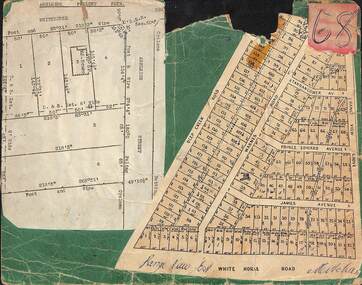
Card, Collage of Residential Subdivision Map Clippings - Ashleigh Poultry Farm, Blackburn, Vic and Range View East, Mitcham, Vic. (Undated, circa 1930s)
... Foote and her sons, have suffered a severe setback, as practically all their chickens and eggs are gone, and it is too late to start hatching again this season....Foote and her sons, have suffered a severe setback, as practically all their chickens and eggs are gone, and it is too late to start hatching again this season. Two maps mounted on green cardboard. 1. ...Weekly Times (Melbourne, Vic.) Sat 24 Aug 1935 Page 6 - 1800 Chickens Burnt. Starting in the incubator room, a fire at the Ashleigh Poultry Farm, Whitehorse Road Blackburn, early on August 20, incinerated 1800 young chickens and 1000 eggs. The incubator room and the chicken pens were reduced to ashes, but a large drum of kerosene standing in the room was undamaged! The owners of the farm, Mrs N. Foote and her sons, have suffered a severe setback, as practically all their chickens and eggs are gone, and it is too late to start hatching again this season.Two maps mounted on green cardboard. 1. Ashleigh Poultry Farm - Layout of weatherboard house and six residential allotments on Whitehorse Road and Ashleigh Street (later Ashburn Place), Blackburn, Victoria. 2. 140 allotments with frontages on Deep Creek Road, Warnes Road, Range View Grove, Tarrangower Avenue, Prince Edward Avenue, James Avenue and White Horse Road, Mitcham, Victoria. -
 Melton City Libraries
Letter, Letters from Fred to Mattie, 1910-11, 1913-14, 1916, 1920
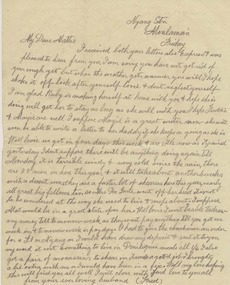
... We will probably start again Saturday. The weather has taken up nice and fine again…. ...We will probably start again Saturday. The weather has taken up nice and fine again…. ...Letters sent to Martha (Mattie) dated from 1907 to 1920. Each letter is an edited version of the original pertaining to aspects of Fred Myers life as a shearer. Cobran Stn via Deniliquin Thursday Sept 1st 1910 …I got a reply from Eynesbury and a favourable reply, it starts on the 13th Oct so I will have plenty of time to get there, in fact far to much as we will finish here in a month full time so that will leave a fortnight to spare. We got rain here at last and it has put us back considerably as we only worked Monday. I have been idle ever since. We will probably start again Saturday. The weather has taken up nice and fine again…. I hope it will keep up to the cut out now I have 800 sheep shorn up to date and am fifth among thirty men so I’m doing well I think. Did you get the pound I sent? I’m sending two more this time, which I drew on Saturday. I don’t like sending too much as there is a chance of it going astray. Postcard Cobran Sept 18 1910 Just a note to let you know I am all right. I was disappointed not getting a letter yesterday, Saturday…I won’t get it now till next Saturday. We have three weeks here yet. I am sending 2 and tell me if you got the other 1. Cobran Stn via Deniliquin NSW Sunday 21st August (1911) ..I’m having a good time here, a good cook and the best of everything, no fires to lights or kettles to boil just get up and wire in but plenty of hard work. The sheep here a pretty rough but much better than Wandook. I am well among them here we had a little rain on Friday but not enough to stop us so we have got one full week in and the weather is now lovely I have been basking in the sunshine all morning and feel strong and fit as a fiddle. They are all a grand lot of men here I only knew one out of the lot but now them all pretty well now. We have a bit of a concert here every night almost. There are a few good singers here and we also had a phonograph up from the station with all the latest records. We have has two dances amongst ourselves, very boisterous affairs indeed they do make the dust fly. I have not ventured to take part in them yet and don’ think I will either. I get enough dancing all day long and besides I have to furnish the music. You ought to see them going when I rattle up the concertina they do make the dust fly. Sample of letters written by Fred Myers to his wife Mattie Myerslocal identities -
 Melbourne Legacy
Letter, Aaron Beattie, 1928
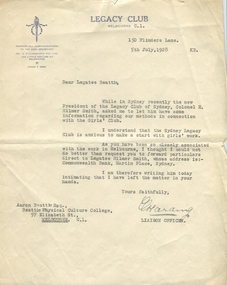
... Enclosed you will find a copy of our measurement chart, which is an important part - every child should be recorded before starting, and again at the end of the year. I am also sending you a copy of our Demonstration Programme. ...Enclosed you will find a copy of our measurement chart, which is an important part - every child should be recorded before starting, and again at the end of the year. I am also sending you a copy of our Demonstration Programme. ...Correspondence between Aaron Beattie Esq from Beattie Physical Culture College Melbourne and E. Hilmer Smith Esq about Girls’ Physical Culture Classes in July 1928. It was intended to aid the Sydney Legacy Club establish classes for girls. Excerpts include the following information: "I would suggest that you form a special C/tee to handle the Physical Culture work. . . . I would suggest that special care be taken to see that none but fully-qualified and trained teachers handle the children - this is all important. . . . We charge every child 5/- per year, payable quarterly. We have been most fortunate here with the girls section. An old friend of mine - Mrs Gillies - is our Hon. Directress. She was - until her marriage - in charge of all Physical Culture training in the State Schools of Victoria, and is a wonderful woman. She takes complete charge, appoints her own staff and so on. We pay some of her assistants from £2.2.0 to £5.5.0 per term of 12 weeks. The class was formed in May last year with 42 girls - we now have 121, and they have left the boys far behind. Enclosed you will find a copy of our measurement chart, which is an important part - every child should be recorded before starting, and again at the end of the year. I am also sending you a copy of our Demonstration Programme. This show was given after the girls had been going for 10 months, and it was a wonderful success - all these things help to bring success, and children seem to want these things to keep them going. . . . We spend about £600 per year on our Children's Work and nearly all of that goes to the Physical Culture side." The correspondence is a good snapshot of the undertaking of Melbourne Legacy running girls' club at that point in time and that Melbourne Legacy was trying to help Sydney Legacy establish a similar program. Legacy was only 5 years old at that time and already the importance of the physical culture classes for girls was underway.Set of three typed and dated handwritten letters on paper between Aaron Beattie Esq, and E Hilmer Smith Esq. 00126.1 on Legacy Club letterhead. 00126.4 on Commonwealth Bank notepaper.girls' club, junior legatee, girls' classes, aaron beattie -
 City of Ballarat
Artwork, other - Public Artwork, Ex-Prisoners of War Memorial by Peter Blizzard, 2004
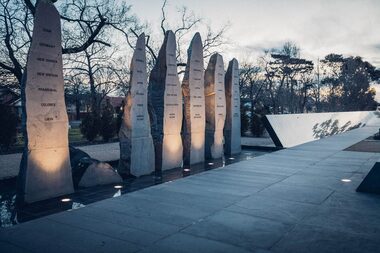
... Finally it disappears under the pathway, returning to its source under the 'Lest We Forget' stone to start the journey again. Water symbolizes the essential nature of man, sacrifice, suffering, spirituality, healing, cleansing, birth and re-birth. ...Finally it disappears under the pathway, returning to its source under the 'Lest We Forget' stone to start the journey again. Water symbolizes the essential nature of man, sacrifice, suffering, spirituality, healing, cleansing, birth and re-birth. ...This memorial designed by Peter Blizzard is dedicated to more than 36,000 Australian men and women were held captive as prisoners by the enemy during the Boer War, World War 1, World War 2 and the Korean War. This memorial honours and names them, the names are etched into the black granite wall adjacent to the pathway. Water springs from beneath the 'Lest We Forget' stone then flows down the wall into the narrow watercourse in front of the first group of names and into the reflective pool, then continues past the second group of names. Finally it disappears under the pathway, returning to its source under the 'Lest We Forget' stone to start the journey again. Water symbolizes the essential nature of man, sacrifice, suffering, spirituality, healing, cleansing, birth and re-birth. The memorial is created from natural materials and is designed to be in harmony with the Ballarat Botanical Gardens, and to create a sense of timeless, dignity and respect. The long pathway of the monument is designed to create a visual perspective of the large distances that Australians travelled to the various conflicts. The paving is shaped like railway sleepers in recognition of the role that railways and railway journeys were relevant to many prisoners of war. The Memorial was declared the first military memorial of national significance located outside Canberra in 2008. Dedication services are held at the memorial on the Sunday closest to 6th of February, ANZAC day and on Remembrance Day. The memorial is of historical and aesthetic importance to the people of BallaratMonument made from carved bluestone, water feature and flagsInscribed with the names of 36,000 Australian men and women were held captive as prisoners by the enemy during the Boer War, World War 1, World War 2 and the Korean War. The listing is by surname and initials and shown by war.prisoners of war, boer war, world war 1, world war 2, korean war, lest we forget, peter blizzard -
 National Wool Museum
Photograph
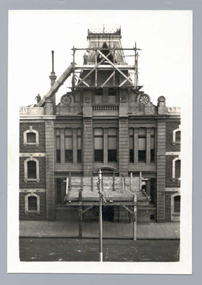
... He returned to Australia in early 1920 and started work at Strachan's again. He did the wool classing course (one year, evening?) ...He returned to Australia in early 1920 and started work at Strachan's again. He did the wool classing course (one year, evening?) ...This photograph shows the removal of the mansard roof from the Dennys Lascelles wool store (cnr Moorabool and Brougham Streets; now the National Wool Museum). This photo was taken by Mr Cyril Cameron (known as 'Cam'), the father of the donor of this item. Mr Cyril Cameron came from the family property 'Burnside' near Glenthompson in the Western District. He joined Strachan & Co. as an office boy in Aug. 1914 and then joined the 8th Battalion, 1st AIF in January 1915. He returned to Australia in early 1920 and started work at Strachan's again. He did the wool classing course (one year, evening?) at the Gordon in 1920-21. He became Head Wool Valuer at Strachan's in 1938 and retired in 1970. His office at Strachan's was on the top floor, directly overlooking what is now the entrance to the National Wool Museum (formerly Dennys Lascelles woolstore). He died in 1983. Mr Cameron took this photo from his office in Strachan's. The date written on the back of the photo (1932) is in Mr Cameron's handwriting.Photograph, showing the mansard roof being removed from the Dennys Lascelles wool store, Geelong, 1932.Dennys Lascelles / Geelong / Wrecking tower / 1932strachan, murray and shannon ltd dennys, lascelles limited, cameron, mr cyril -
 National Wool Museum
Photograph - Wool Classing Students, Gordon Technical College, Mr Geoffrey S. Wood, 1920
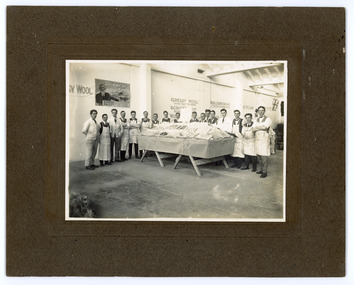
... He returned to Australia in early 1920 and started work at Strachan's again. He did the wool classing course (one year, evening?) ...He returned to Australia in early 1920 and started work at Strachan's again. He did the wool classing course (one year, evening?) ...Photo depicts a final year woolclassing class from the Gordon Institute in Geelong. They have prepared a display re: woolclassing for the visit of the Prince of Wales to Geelong in 1920. They are on the top floor of the Dennys Lascelles woolstore. The donor's father, Mr Cyril Cameron, can be seen in the photo at sixth from the right. Cyril Cameron (known as 'Cam') came from the family property 'Burnside' near Glenthompson in the Western District. He joined Strachan & Co. as an office boy in Aug. 1914 and then joined the 8th Battalion, 1st AIF in January 1915. He returned to Australia in early 1920 and started work at Strachan's again. He did the wool classing course (one year, evening?) at the Gordon in 1920-21. He became Head Wool Valuer at Strachan's in 1938 and retired in 1970. His office at Strachan's was on the top floor, directly overlooking what is now the entrance to the National Wool Museum (formerly Dennys Lascelles woolstore). He died in 1983. Interestingly, within the photo, can be seen a poster on the wall advertising the RSS or Diggers' Mill. The mill opened in 1922 but had been advertising for investors since the end of the war.Sepia photograph mounted on a dark brown mat. The photo depicts a group of 17 men in ties and shirtsleeves with white coats or aprons. They are standing behind a trestle table which is heavily laden with wool and open scrap books containing wool samples. The photo has been taken in a large, light room with signs on the walls and a Union Jack flag in the background.GEOFFREY S. WOOD, PHOTO, GEELONG Dennys Lascelles Show Floor 1920 / Visit of Prince of Waleswoolclassing royal visits, gordon technical college - woolclassing department, cameron, mr cyril, dennys lascelles wool store, woolclassing, royal visits -
 National Wool Museum
Photograph
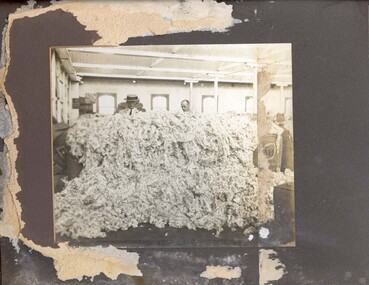
... He returned to Australia in early 1920 and started work at Strachan's again. He did the wool classing course (one year, evening?) ...He returned to Australia in early 1920 and started work at Strachan's again. He did the wool classing course (one year, evening?) ...Photo depicts the interior of the Strachan, Murray & Shannon Limited wool store in Geelong after a record price was reached for the wool shown. This occurred on 24 November, 1920. This photograph was owned by the donor's father, Mr Cyril Cameron. Mr Cyril Cameron came from the family property 'Burnside' near Glenthompson in the Western District. He joined Strachan & Co. as an office boy in Aug. 1914 and then joined the 8th Battalion, 1st AIF in January 1915. He returned to Australia in early 1920 and started work at Strachan's again. He did the wool classing course (one year, evening?) at the Gordon in 1920-21. He became Head Wool Valuer at Strachan's in 1938 and retired in 1970. His office at Strachan's was on the top floor, directly overlooking what is now the entrance to the National Wool Museum (formerly Dennys Lascelles woolstore). He died in 1983. This photo was originally framed together with a similar photo (3121) and a document detailing the wool sale (3123) under the title "Record Sale 24 November 1920". The two photos focus on lot 372, one looking to the north and the other to the west. These three items may have been a requirement of Mr Cameron's wool classing course.Interior of Strachan, Murray & Shannon Ltd wool store, Nov. 1920.strachan, murray and shannon ltd, cameron, mr cyril -
 National Wool Museum
Photograph
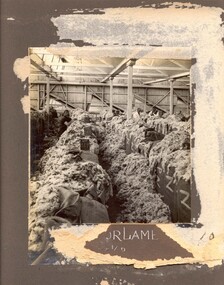
... He returned to Australia in early 1920 and started work at Strachan's again. He did the wool classing course (one year, evening?) ...He returned to Australia in early 1920 and started work at Strachan's again. He did the wool classing course (one year, evening?) ...Photo depicts the interior of the Strachan, Murray & Shannon Limited wool store in Geelong after a record price was reached for the wool shown. This occurred on 24 November, 1920. This photograph was owned by the donor's father, Mr Cyril Cameron. Mr Cyril Cameron came from the family property 'Burnside' near Glenthompson in the Western District. He joined Strachan & Co. as an office boy in Aug. 1914 and then joined the 8th Battalion, 1st AIF in January 1915. He returned to Australia in early 1920 and started work at Strachan's again. He did the wool classing course (one year, evening?) at the Gordon in 1920-21. He became Head Wool Valuer at Strachan's in 1938 and retired in 1970. His office at Strachan's was on the top floor, directly overlooking what is now the entrance to the National Wool Museum (formerly Dennys Lascelles woolstore). He died in 1983. This photo was originally framed together with another similar photo (3122) and a document (3123) detailing the wool sale and prices under the title "Record Sale 24 November 1920". The two photos focus on lot 372, one looking to the north and the other to the west. These three items may have been a requirement of Mr Cameron's wool classing course.Interior of Strachan, Murray & Shannon Ltd, Geelong in Nov. 1920....ORLAME / ... 7 1/2Dstrachan, murray and shannon ltd, cameron, mr cyril -
 Eltham District Historical Society Inc
Photograph, Tess Justine (Nillumbik Shire Council), Construction work on replacement of Murray's Bridge over the Diamond Creek, Eltham North, 31 Mar 2022
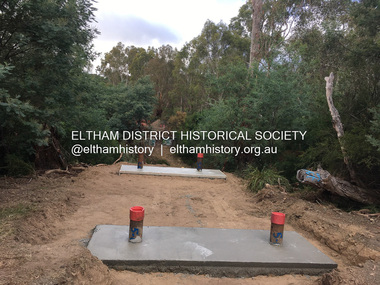
... Late in 1929 he stopped work on the bridge, for reasons unknown, but started work again and completed the bridge in 1931. ...Late in 1929 he stopped work on the bridge, for reasons unknown, but started work again and completed the bridge in 1931. ...Construction work on replacement of Murray's Bridge over the Diamond Creek on the Diamond Creek Trail Mary (Sweeney) Murray and John Wright Murray selected 80 acres, Lot C Section 16 and Lot 5 Section 17 Parish of Nillumbik, under an occupation license in 1866. John died in 1867 and freehold was granted to his son John in 1873. The farm was known as ‘Laurel Hill’. John Junior was an Eltham Shire councillor and sometime president from 1887 up until 1897. He added Lot A Section 16 to the farm in ca1888. John and his younger brother James arranged to rent/purchase Lot B Section 17, across Diamond Creek to the west, in ca1900. It appears that John and James farmed separately for a few years, with a new homestead built for James ad family on the high point of Lot B Section 17 in ca1910. John sold off Lot 5 Section 17 in 1912. When John died in 1912 James took over the land on both sides of the Diamond Creek. The old homestead on the west side of the Creek disappeared. A farm bridge over Diamond Creek from this period may have been located close to the northern boundary of the farm. John Langlands, owner of the farm known as ‘Ihurst’ on the west side of Diamond Creek to the south of the Murray’s land, died in 1907. In 1909 his land was then subdivided into 100 lots to become the ‘Glen Park Estate’. Other similar subdivisions of nineteenth century farms around Eltham in this period included the ‘Franktonia (or Beard’s) Estate’ to the northeast and ‘Bonsack’s Estate’ between Eltham and Greensborough. Soon after the opening of the railway extension line from Eltham to Hurstbridge in 1912, Glen Park and nearby residents including James Murray agitated for a railway station or siding to be located half-way between Eltham and Hurstbridge, so that the Glen Park residents who used the railway daily did not have to walk into the Eltham or Hurstbridge stations. Some believed Coleman’s Corner (opposite Edendale Farm) was an appropriate spot for the platform. James Murray was among those who thought the railway should be located on his land, closer to half-way between Eltham and Hurstbridge stations. The Railways Commissioners warned that the locals would have to fund these works themselves. The Glen Park Estate residents initially had difficulty accessing Eltham by road, with only an old low-level bridge over Diamond Creek at the south end of their estate. A new timber trestle bridge across the creek, now on Wattletree Road, was opened in 1915. Road access to the north was gained in 1927 when the new Murray’s Road, which crossed the Murray’s land, was built. Residents continued to agitate for a Glen Park station. By 1926 the Railways Commissioners’ preferred site was on the Murray’s land. They arranged an estimate of cost of a full-length platform. The estimate was too much for the locals, who in 1928 argued unsuccessfully for a shorter and hence cheaper platform. By 1929 Murray had agreed to donate the land, but the locals would still have to fund the works. Murray decided, unilaterally it would appear, to commence work on a timber trestle road bridge over Diamond Creek to link the new Murray Road to the proposed station. Late in 1929 he stopped work on the bridge, for reasons unknown, but started work again and completed the bridge in 1931. There is no further newspaper evidence of the campaign for the Glen Park station until 1939, when Murray and another local, Mr Maxwell, met the Railways Commissioner. The Glen Park locale now included 45 homes on the west side of the creek and 20 on the Eltham side. Most of the residents used the train every day. The Commissioner remained adamant that only a full-length platform could be built for safety reasons. It appears the campaign dissolved at this point. The increasing move to cars may have had an impact. There is no evidence of Murray’s bridge ever being connected to Murray’s Road, or of it having wide use for any purpose by locals. James Murray died in 1947 and the farm was taken over by his son James (Jim). Jim started to sell off parts of the farm in the 1980s, retaining a few acres around the ca1910 homestead and building a new house there. Recreation reserves were established along the creek. In ca1990 Murray’s bridge was renovated with steel girders as part of a bike/pedestrian path in the reserve. The old farmhouse was demolished in ca2014. Born digital image (5)diamond creek (creek), diamond creek trail, murrays bridge, ‘laurel hill’, john wright murray, mary (sweeney) murra, john murray jnr, james murray, john langlands, ‘ihurst’, ‘glen park estate’, beard's estate, franktonia, bonsack's estate, glen park estate, glen park railway station -
 Flagstaff Hill Maritime Museum and Village
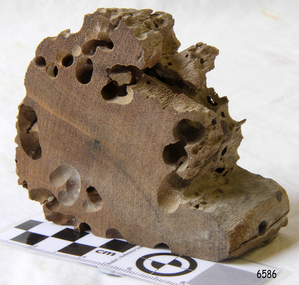
Memorabilia - Wood Sample, about 1871
... There was a clear space of water between this timber and the deck, except for the spare royal yard, and I again started, but the surf struck me and I went over and over. ...There was a clear space of water between this timber and the deck, except for the spare royal yard, and I again started, but the surf struck me and I went over and over. ...The American wooden ship Eric the Red was named after the Icelandic Viking Eric 'the Red-Haired' Thorvaldsson, who was the first European to reach the shores of North America in 980 A.D. The ship Eric the Red was owned by the Sewall family of Bath, Maine, between 1873 and 1877 it operated in the coal trade between Britain and America. It then operated on the South American guano/ nitrates trade, before again trading between Europe and New York. On this voyage the Eric the Red had been chartered to carry a full cargo of American merchandise including many exhibits bound for the international exhibition to be held in Melbourne in 1880. Eighty-five days out from New York with 23 crew and two passengers, the Eric the Red approached Cape Otway nearing the end of its long voyage. At 1 am on 4 September the weather was hazy with a moderate north-westerly wind, Captain Jacques Allen had all sail set except for the mizzen-royal and the cross jack sails doing 8 knots, and was steering by the light to keep 5-6 miles offshore and clear of Otway Reef. Returning to the deck after consulting his charts the ship bumped as it ran onto the Otway Reef. It struck a second time and then a heavy sea carried away the wheel ropes and the man at the wheel. A third bump carried away the rudder, and shortly after this the ship completely broke up - within twelve minutes it had disappeared but for floating wreckage and cargo. Captain Jacques Allen recounted that: "The mizzen topmast fell with all the rigging, but strange to say, not a man was hurt by it, although they were all standing about. As soon as I found out there was no hope I said to Ned Sewell, the owner's son, and the third mate on board "Stick to me, and hang on to this mizzen mast". I peeled off everything I had on except my drawers thinking I would be able to swim better without my clothes; and Sewell and myself, clinging to the mast, were washed overboard...It was a fearful sea; I have never seen anything like it". Attempting to swim to a more substantial raft of wreckage, and losing touch with young Sewell in the process, Captain Allen struck out: " Just as I left the spar my drawers got down my legs, and entangled them, and down I went. I managed to clear one of my legs and on coming up I managed to get hold of some floating timber. There was a clear space of water between this timber and the deck, except for the spare royal yard, and I again started, but the surf struck me and I went over and over. I managed to get hold of the spare yard, and after holding on to it for some time I managed to get to the deck. When I was pulled on to it I could not move, being so numb and cramped with the cold. The men had some blankets and other things which they had got from the passengers' room in the deck house, and they wrapped me in these. Shortly after I got onto the wreck we made out the steamer's lights, and as soon as she was within hearing distance the men haled. This must have been about half-past four the Captain of the Dawn sent two of his boats to cruise about, and at daylight, they picked us up off the wreck. We had drifted about four miles from the reef where the ship struck, all those who were rescued were more or less bruised. One man had two or three ribs broken, and another had some fingers crushed off. My left foot is very much hurt, and I am black and blue from head to foot. I never knew such ten minutes as that of the wreck, and I thought the time had come for me to 'hand in my checks'. The ship was worth about £15,000, and neither it nor the freight was insured one dollar". (Argus 14/9/1880). Three of the crew and one of the passengers had been swept away and drowned. Fortunately for those clinging to the remains of the shattered hull and floating wreckage, the steamer SS Dawn passed close by and the crew heard the distressed cries of the survivors. Boats were lowered and the survivors were rescued. The Dawn stayed in the area for several hours searching for more survivors. One body was found washed up at Cape Otway and was buried in the lighthouse cemetery. The captain and crew of the Dawn later received rewards and thanks from the United States consul for their efforts. The hull and cargo were sold for £410, and large rafts of floating wreckage and cargo washed up all over the Victorian coast. A section of the hull lies buried in the sand at the Parker River beach, an anchor is on the rocks at Point Franklin, a second anchor is on display at the Cape Otway lighthouse and parts of the ship are on display at Bimbi Park and the Apollo Bay museum. Various wreckage is located in a concentration off Point Franklin, but suitable diving conditions are rare due to waves and strong currents. At the time of the wreck parts of its were salvaged and used in the construction of houses and sheds around Apollo Bay, including Milford House (since burnt down in bush fires), which had furniture and fittings from the ship, and the dining room floor made out of its timbers. A ketch the Apollo was also built from its timbers and subsequently used in Tasmanian waters.The Eric the Red is historically significant as one of Victoria's major 19th-century shipwrecks. The wreck led to the provision of an additional warning light placed below the Cape Otway lighthouse to alert mariners to the location of Otway Reef. The site is archaeologically significant for its remains of a large and varied cargo and ship's fittings being scattered over a wide area. The site is recreationally and aesthetically significant as it is one of the few sites along this coast where tourists can visit identifiable remains of a large wooden shipwreck and for its location set against the background of Cape Otway, Bass Strait, and the Cape Otway lighthouse. (Victorian Heritage Database Registration Number S 239, Official Number 8745 USA) Wood sample from the wreck of the ship Eric the Red the wood is dark in colour and is very light in weight. Noneflagstaff hill, warrnambool, shipwrecked-coast, flagstaff-hill, flagstaff-hill-maritime-museum, maritime-museum, shipwreck-coast, flagstaff-hill-maritime-village, shipwreck-artefact, eric-the-red, zaccheus-allen, sewall, 1880, melbourne-exhibition, cape-otway, otway-reef, wood-sample, s.s.-dawn -
 Eltham District Historical Society Inc
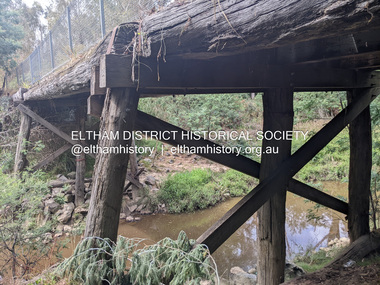
Photograph, Tess Justine (Nillumbik Shire Council), Murray's Bridge over the Diamond Creek, Eltham North, 19 Feb 2022
... Late in 1929 he stopped work on the bridge, for reasons unknown, but started work again and completed the bridge in 1931. ...Late in 1929 he stopped work on the bridge, for reasons unknown, but started work again and completed the bridge in 1931. ...Murray's Bridge over the Diamond Creek on the Diamond Creek Trail just prior to demolition and replacement with a new steel bridge. Heritage advice obtained by Nillumbik Shire Council, following a suggestion by the Eltham District Historical Society (EDHS), is that the original bridge appears to have been a simplified version of the Country Roads Board’s (CRB) standard timber bridge design of the early-to-mid 1920s. In c1990 Murray’s bridge was renovated with three recycled steel girders as part of a bike/pedestrian path in the reserve. During these alterations many parts of the bridge were removed, and some were replaced. Heritage advice indicates the condition of Murray’s bridge is poor. The remaining original parts are all in poor condition, with severe weathering, splitting and rot, especially to the stringers retained on the bridge. Heritage advice is that Murray’s Bridge does not have sufficient significance in the cultural history of the Nillumbik area to warrant inclusion in the Nillumbik Shire Heritage Overlay and also does not have sufficient significance as a rare survivor to warrant inclusion in the Nillumbik Shire Heritage Overlay. There are no indications in the historical record that this site was individually important to the cultural history of this area. EDHS is comfortable with the heritage advice provided to Council and has worked closely on this project with Council. EDHS has suggested some of the removed timbers be used in the vicinity of the bridge for landscaping and possibly seating, so as to retain these remnants close to the site of the original bridge, which is the last old timber bridge along the lower reaches of the Diamond Creek. Mary (Sweeney) Murray and John Wright Murray selected 80 acres, Lot C Section 16 and Lot 5 Section 17 Parish of Nillumbik, under an occupation license in 1866. John died in 1867 and freehold was granted to his son John in 1873. The farm was known as ‘Laurel Hill’. John Junior was an Eltham Shire councillor and sometime president from 1887 up until 1897. He added Lot A Section 16 to the farm in ca1888. John and his younger brother James arranged to rent/purchase Lot B Section 17, across Diamond Creek to the west, in ca1900. It appears that John and James farmed separately for a few years, with a new homestead built for James ad family on the high point of Lot B Section 17 in ca1910. John sold off Lot 5 Section 17 in 1912. When John died in 1912 James took over the land on both sides of the Diamond Creek. The old homestead on the west side of the Creek disappeared. A farm bridge over Diamond Creek from this period may have been located close to the northern boundary of the farm. John Langlands, owner of the farm known as ‘Ihurst’ on the west side of Diamond Creek to the south of the Murray’s land, died in 1907. In 1909 his land was then subdivided into 100 lots to become the ‘Glen Park Estate’. Other similar subdivisions of nineteenth century farms around Eltham in this period included the ‘Franktonia (or Beard’s) Estate’ to the northeast and ‘Bonsack’s Estate’ between Eltham and Greensborough. Soon after the opening of the railway extension line from Eltham to Hurstbridge in 1912, Glen Park and nearby residents including James Murray agitated for a railway station or siding to be located half-way between Eltham and Hurstbridge, so that the Glen Park residents who used the railway daily did not have to walk into the Eltham or Hurstbridge stations. Some believed Coleman’s Corner (opposite Edendale Farm) was an appropriate spot for the platform. James Murray was among those who thought the railway should be located on his land, closer to half-way between Eltham and Hurstbridge stations. The Railways Commissioners warned that the locals would have to fund these works themselves. The Glen Park Estate residents initially had difficulty accessing Eltham by road, with only an old low-level bridge over Diamond Creek at the south end of their estate. A new timber trestle bridge across the creek, now on Wattletree Road, was opened in 1915. Road access to the north was gained in 1927 when the new Murray’s Road, which crossed the Murray’s land, was built. Residents continued to agitate for a Glen Park station. By 1926 the Railways Commissioners’ preferred site was on the Murray’s land. They arranged an estimate of cost of a full-length platform. The estimate was too much for the locals, who in 1928 argued unsuccessfully for a shorter and hence cheaper platform. By 1929 Murray had agreed to donate the land, but the locals would still have to fund the works. Murray decided, unilaterally it would appear, to commence work on a timber trestle road bridge over Diamond Creek to link the new Murray Road to the proposed station. Late in 1929 he stopped work on the bridge, for reasons unknown, but started work again and completed the bridge in 1931. There is no further newspaper evidence of the campaign for the Glen Park station until 1939, when Murray and another local, Mr Maxwell, met the Railways Commissioner. The Glen Park locale now included 45 homes on the west side of the creek and 20 on the Eltham side. Most of the residents used the train every day. The Commissioner remained adamant that only a full-length platform could be built for safety reasons. It appears the campaign dissolved at this point. The increasing move to cars may have had an impact. There is no evidence of Murray’s bridge ever being connected to Murray’s Road, or of it having wide use for any purpose by locals. James Murray died in 1947 and the farm was taken over by his son James (Jim). Jim started to sell off parts of the farm in the 1980s, retaining a few acres around the ca1910 homestead and building a new house there. Recreation reserves were established along the creek. In ca1990 Murray’s bridge was renovated with steel girders as part of a bike/pedestrian path in the reserve. The old farmhouse was demolished in ca2014. * * * A theory posted on local community Facebook groups was that the bridge was built in the 1860s and was built to be more robust than was necessary for the movement of cows from one side of the creek to the other. It was suggested the robustness was necessary to support the weight of gold ore being transferred from a mine on Murray’s land to a railway siding near Murrays Bridge (presumably for transfer and processing at Diamond Creek). Perhaps this may have been one of the motivators for Murray, who really knows? Knowing when mining operations ceased on his land and how that fits the overall timeline would be useful but at the time the bridge was built, local gold production was minimal at best. The known facts are: • The railway line came to Eltham in 1902. • The extension of the railway from Eltham to Hurstbridge was constructed in 1912 so no railway line even existed through Murray's property until 1912 and the Victorian Railways maps at the time show no such siding on Murray’s property. • In 1923 a new company was formed in anticipation of the old Diamond Creek Gold Mine being re-opened. The mine had been previously closed and flooded. It was noted in the press at the time that the mine was within a mile of the railway. Nothing really came of this. • Construction of Murrays Bridge was commenced by James Murray in early 1929 in anticipation of a proposed flag station being nominated on his land, but work ceased shortly afterwards. The proposed flag station was commonly referred to as Glen Park as the residents of the Glen Park Estate wanted Option 1, located near them with the platform adjacent to Colemans corner. This was probably never going to fly as it was virtually in eyesight of Eltham station. Allandale Road was the third option, but the Commissioners' preferred option was No. 2 - on Murray's property. • The Railway Commissioners were not going to finance any such station and the works had to be funded by private landowners and residents, hence Murray investing in this himself. • Murray recommenced work two years later and finished his bridge in 1931 but unfortunately for him, the proposed flag station never eventuated. The bluestone siding you reference may well have been built by Murray as part of the proposed station platform. • Up until then, apart from the Main Road bridge, which was washed away in 1924, virtually all local crossings over the Diamond Creek were low lying bridges – Kaylocks Bridge at Brougham Street, Diamond Street bridge, Glen Park Road bridge. It is expected that Murray also had a low-lying bridge to connect his land either side of the creek. These were all washed away or severely damaged multiple times in the 1920s. Lessons were learnt, and Murrays Bridge appears to have been built in accordance with Country Road Board standards of the time. Flood damage was ongoing, and even more recently constructed raised bridges kept getting washed away, e.g., the new Wattle Tree Road bridge in 1958 just months after completion. Murray’s bridge was reinforced with steel some 30 years ago presumably to provide additional floodwater resistance, given the history of bridges disappearing in floodwaters. • In March 1932 it was reported in the Advertiser that there were still some prospectors operating around Eltham North who apart from further scarring the face of the earth over the previous two years had gained significant experience but little gold - hardly a driving factor for constructing a dedicated railway siding and bridge to transfer gold ore. It is far more probable that James Murray was hoping to have the railway station located on his property and invested his money by building the bridge to lead to it as well as a station platform. Had the station eventuated, it may well have driven up the value of his land for subdivision and new housing estates like the Glen Park Estate. That did not eventuate. Whilst the bridge was indeed old (90 years), the core structure being completed in 1931, it had been modified substantially from original and hence had no significant historic value – i.e., it was not a representative example of its type, construction, and age. Given that the bridge was not worthy of saving, the Eltham District Historical Society with Council’s support, and the Eltham Woodworkers group endeavoured to see what suitable sized timbers were salvageable to fabricate a commemorative seat. Unfortunately, the experts at the Woodworkers group were unable to salvage any suitable length/width timbers to fabricate the seat due to the presence of rot. Last remaining wooden trestle bridge on the Diamond Creek Trail just prior to demolition and replacementBorn digital image (27)diamond creek (creek), diamond creek trail, murrays bridge, ‘laurel hill’, john wright murray, mary (sweeney) murra, john murray jnr, james murray, john langlands, ‘ihurst’, ‘glen park estate’, beard's estate, franktonia, bonsack's estate, glen park estate, glen park railway station -
 Flagstaff Hill Maritime Museum and Village
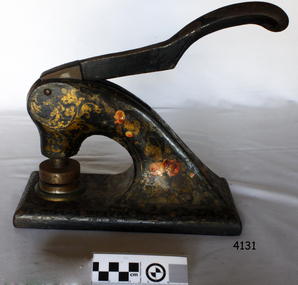
Functional object - Hand operated embossing document press, 1910
... The site was sold again in 1876 to grazer Robert Hood of Sherwood, who was chairman of directors of the failed company, which couldn’t raise sufficient capital to keep the works operating. The entrepreneurial Hood then used the existing plant to turn his own wool into tweed cloth. But just as the mill was starting...The site was sold again in 1876 to grazer Robert Hood of Sherwood, who was chairman of directors of the failed company, which couldn’t raise sufficient capital to keep the works operating. The entrepreneurial Hood then used the existing plant to turn his own wool into tweed cloth. But just as the mill was starting ...The woollen mill was a vital part of Warrnambool for all but 22 years of the town’s history since it's the establishment in 1847 when the first land sales were held and white settlement began. In 1869 the Warrnambool Meat Preserving Company began operations on the mill site, in 1875, shareholders of the then defunct Warrnambool Meat Preserving Company happily sold the land and buildings on the Merri river to Warrnambool Woollen Mill Company Ltd for £5,000. The site was sold again in 1876 to grazer Robert Hood of Sherwood, who was chairman of directors of the failed company, which couldn’t raise sufficient capital to keep the works operating. The entrepreneurial Hood then used the existing plant to turn his own wool into tweed cloth. But just as the mill was starting to show a profit, a fire destroyed the building and plant on the night of 25 March 1882. So again, the mill was operational for six short years. Insurers only paid a fraction over 10% of the damage, Hood couldn't raise sufficient capital to rebuild on his own, and so the site lay unused until 1910. In 1908 Marcus Saltau and Peter John McGennan convinced the Warrnambool Chamber of Commerce to invest in a secondary industry with local capital. A public meeting in September 1908 agreed to raise £40,000, electing Saltau chairman of directors, a post he held for 34 years. A year later, using mostly local money, the Warrnambool Woollen Mill Company dispatched its first manager, John E. Bennett, to buy a plant and recruit 20 experienced staff from the Yorkshire woollen industry in December 1909. Another year more, the new mill was officially opened on 14 November 1910 by Marcus Saltau as company chairman and town mayor. Eighteen months on, in May 1912, the mill paid its first half-yearly dividend of 2 ½%. It was now working two shifts, with a year's orders to fill. In 1914 the mill ordered its own generator, providing the town with electricity and effectively doubling its plant size by October 1915, six months after Gallipoli. Thereafter, government orders for cloth and military supplies assured the mill’s success right through the First World War and on until 1923. A plant upgrade in 1922 for machinery to make worsted fabric drained profits, which, with a fall in demand, led to a loss in 1925. Profits were restored by the 1930s, despite the Depression, mostly due to tight management and robust marketing. Production boomed again during the Second World War, but soon foreign competition bit into profits, forcing the company to consolidate operations. The ‘50s and ‘60s were golden years for the mill. Security and growth gave the company confidence to trial Australia’s first electric blanket in 1958 and to install Swiss Sulzer looms in 1965. Over time, the building facades took on the modern look that the mill presented until it closed. The Dunlop company bought the mill in 1968, fending off a challenge from Onkaparinga in South Australia, and continued to expand by adding Wendouree Woollen Mill in the same year and Dream-spun Textiles a decade later, in 1979. Soon after that purchase, however, the mill began its slippery slide into decline. Dunlop sold to its former rival bidder Onkaparinga Woollen Co. Ltd in 1982, which in turn was taken over by Macquarie Worsted's only a year later, in 1983. Operations remained stable for a decade until 1994 when the Macquarie Group signaled that its newly rationalised operations left no room for the Warrnambool investment. The final operator of the mill was The Smith Family charity group, which ran the site by agreement with the Warrnambool City Council and a state government grant in that same year, 1994. The mill became more of a fabric recycler than a manufacturer. The site was sold to private operators in February 2003 and rezoned four months later to allow for the mixed housing development. The embossing press is significant for its association with the Warrnambool Woollen Mills 1910-1968, a major employer in the Warrnambool district. The press is also significant as an example of commercial office equipment used in the 19th and 20th century.Press, metal, for Company seal of Warrnambool Woollen Mill, stamping their brand as Western District Worsted Mills Pty Ltd. Metal is black with red and gold floral markings. Inscription of stamp reads "WESTERN DISTRICT WORSTED MILLS PROPRIETRY LIMITED" flagstaff hill, warrnambool, shipwrecked-coast, flagstaff-hill, flagstaff-hill-maritime-museum, maritime-museum, warrnambool woollen mills, western district worsted mills proprietry limited, worsted fabric, printing press, logo printing press, stamp printing press, shipwreck-coast, flagstaff-hill-maritime-village -
 Flagstaff Hill Maritime Museum and Village
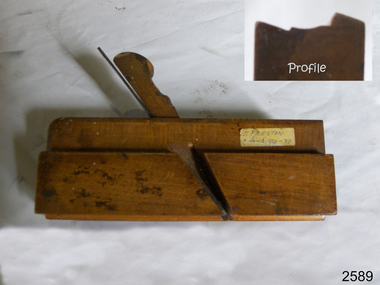
Tool - Wood moulding Plane, Edward Preston & Sons, Early 20th century
... start up his own "wood and brass spirit level manufacturing business at 97½ Lichfield Street by 1864. By 1866, Edward Jnr had added planes, routers, joiners, coach, gun, cabinet, and carpenters tools to his line, and the following year he moved his shop from his father's address and relocated to 26 Newton Street, before moving again to much larger premises at 22–24 Whittall Street. ...start up his own "wood and brass spirit level manufacturing business at 97½ Lichfield Street by 1864. By 1866, Edward Jnr had added planes, routers, joiners, coach, gun, cabinet, and carpenters tools to his line, and the following year he moved his shop from his father's address and relocated to 26 Newton Street, before moving again to much larger premises at 22–24 Whittall Street. ...By the end of the nineteenth century, the firm of Edward Preston & Sons was founded in 1825, becoming one of England's leading makers of hand tools and in many ways a British counterpart to America's "Stanley" for its wide range of quality utilitarian tools at affordable prices. Edward Preston Sr. (1798–1883) was first listed as a plane-maker at 77 Lichfield Street in the Birmingham Directory of 1833, but later listings and advertisements assert that the business was started in 1825. Preston is likewise recorded as a plane-maker living with his family in Lichfield Street in the 1841 census, at which time his younger son Edward was 6 years old. Around 1850, his son Edward left school to join his father's business and is recorded in the 1851 census as a plane-maker at his father's address. He appears to have been quite a talented and resourceful young man, as he had later been able to start up his own "wood and brass spirit level manufacturing business at 97½ Lichfield Street by 1864. By 1866, Edward Jnr had added planes, routers, joiners, coach, gun, cabinet, and carpenters tools to his line, and the following year he moved his shop from his father's address and relocated to 26 Newton Street, before moving again to much larger premises at 22–24 Whittall Street. This location became known as the Whittall Works and later was the office and factory of Edward Preston & Sons, Ltd. In 1889 Edward Preston Jnr and his three sons were brought into the firm and the name was changed to Edward Preston & Sons, becoming Edward Preston & Sons Ltd on incorporation in 1898. Part of the firm's output was a healthy line of malleable and gun-metal planes and patent adjustable iron smoothers, shoulder planes, bull-nose, and block planes - a range that was expanded in later years. The 1901 catalog shows several styles of planes that were unique to the Preston brand, along with the usual styles which had already been set by other makers. The death of Edward Preston Jnr was reported in the Lichfield Mercury of 26 September 1913. "Mr. Preston was decided of an innovative turn of mind," the newspaper wrote, "as many of the machines in use at his works, as well as of the tools produced were the invention of himself and his three sons, who now manage the business." The report noted that at the time of his death, the business was carried on at Whittall Works, Cheston Street, Aston, Birmingham. Falling on hard times, the firm of Edward Preston & Sons was sold to the Birmingham firm of John Rabone & Sons in 1932, and shortly thereafter manufacturing rights to some of the Preston range of planes were sold to the Sheffield firm of C. & J. Hampton, who would later merge with the Record Tool Company. Some of the Preston planes were directly added to the Record line by the Hampton firm, while others were modified or discontinued altogether. Generally, all Preston wooden planes are stamped on the front of the plane, the shape, size, and character type of the stamp indicating the age of the plane. On some metal planes, all the parts were stamped with a number or symbol during manufacture. This number was used to re-assemble the parts following a batch process. Not all Preston tools are trade-marked clearly. Early shoulder, rebate, chariot planes, and chamfer rebates commonly appear without trademarks but may have assembly numbers. The "E P" trade-mark was already in use by 1882. The trade-mark "Preston" also appears on some later tools that were manufactured in Sheffield, England. These are generally smoothing planes and appear modern and very similar in construction to other modern manufacturers' planes.The item gives a snapshot of one of England's premier tool manufacturing companies at a time when significant industrial changes were occurring in manufacturing and business structures in the World that were beginning to affect social changes.Ogee moulding Plane Maker E Preston & Sons sticker with date 1904 -1931flagstaff hill, warrnambool, shipwrecked-coast, flagstaff-hill, flagstaff-hill-maritime-museum, maritime-museum, shipwreck-coast, flagstaff-hill-maritime-village -
 Federation University Historical Collection
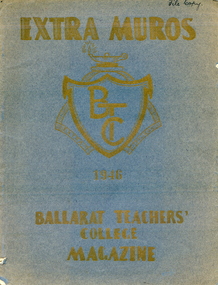
Book, Ballarat Teachers' College, Ballarat Teachers College Extra Muros, 1946, 1946
... The address started with "Our opportunity is with the children. If we failed i nthe past, lest us begin again now. ...The address started with "Our opportunity is with the children. If we failed i nthe past, lest us begin again now. ...Principal Frank Lord gave an ANZAC Day address called "Live Every Day as an Anzac Day". The address started with "Our opportunity is with the children. If we failed i nthe past, lest us begin again now. You are young, and let it be your resolve to live every day as an Anzac Day, and achieve some of the things for which the men of two wars have laid down their lives. Living your days with an air of kindness and decency, you will set an example to the children, and when a country's children are made happier and finer, it will follow that the county will be a happier and finer place." Mt Lord referred to theseven and a half months' occupation of Gallipoli, and the tenacious clinging by Anzac troops to their square mile of territory. Illness, disease and death came to the confined area, but there also came a spirit of self-sacrifice and charity, and a courage whoich scorrned death and won for the Australian troops world renown. Strong men broke under the conditions, but their comrades carried them on, and the prevailing spirit among men was that the had dedicated ther lives to ensuring a decent society at home, free of tyranny. For the achievement of this, they were prepared to die. It became characteristic that when things were at their worst, men were at their best. Discipline did not come from above on Gallipoli, for the men stuck their own standards of discipline, and stuck to them. ... After the 1914-18 war, it was surprising to find head teachers who did not know children of deceased and disabled soldiers in their schools. All teachers should acquaint themselves with this knowledge, and seek assistance from children who are eligible for help from the Repatriation Department. For those pupils who do not come withing the scope of Repatriation, teachers might secure the required help from the Teachers; R.S.L. sub-branch, the Carry-on Club, for from Government Scholarships. Blue soft covered magazine. Contents include: *Principal Frank Lord's Foreward * Rupert Brooke * Hostel Jottings * Looking Back * College photograph Images include: * Queenscliff Camp * Sport * ClubsCover 'File Copy' inside front cover (possibly by Monica Miller) 'With Compliments Ballarat Teachers' College. Xmas 1946'ballarat teachers college, monica miller, m fogarty, james parkinson, beatrix basterfield, patricia rea, nola stanway, valmai sprigg, valda sharp, queenscliffe, lonsdale, thea rowe, student hostel, student residence, wf lord, g kentish, don johnson, neville bunning, henry yeo, irene handley, betty smith, heather fraser, ron schneider, alma sunderland, pauline griffin, betty redford, robert eastcott, kathleen tobin, margaret mcintyre, jean somerville, ken andrews, frank lord -
 Flagstaff Hill Maritime Museum and Village
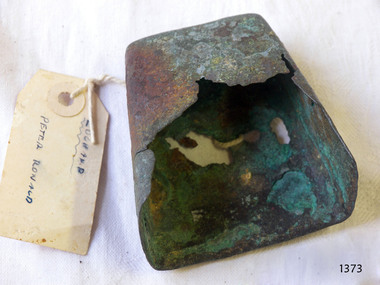
Functional object - Cow Bell, Circa 1878
... again next morning. Bells were fastened around the necks of household milking cows, domestic goats, bullock teams, horse teams, and camel teams, to help find them in the pre-dawn light. Station shepherds and cattle drovers also used them to warn of any disturbances to their flocks and herds overnight. The bells were a necessary item in a largely unfenced continent. So important, that Anthony Mongon began making his pot-bells at Yackandandah from 1861, August Menneke produced the “Wagga Pot” from 1867, and Samuel Jones started...again next morning. Bells were fastened around the necks of household milking cows, domestic goats, bullock teams, horse teams, and camel teams, to help find them in the pre-dawn light. Station shepherds and cattle drovers also used them to warn of any disturbances to their flocks and herds overnight. The bells were a necessary item in a largely unfenced continent. So important, that Anthony Mongon began making his pot-bells at Yackandandah from 1861, August Menneke produced the “Wagga Pot” from 1867, and Samuel Jones started ...The artefact is a damaged brass cow bell recovered from the 1878 shipwreck of the LOCH ARD near Port Campbell. It was raised by Flagstaff Hill divers in 1973 and is in storage at the Maritime Village. The LOCH ARD was constructed on the Clyde in 1873 for the prestigious Loch Line of colonial clipper ships, designed for the Australian run. She sailed from England on 1 March 1878 carrying 37 crew, 17 passengers and a diverse general cargo ranging from luxury items to bulk railway iron. On 1 June 1878, emerging from fog and hearing too late the sound of breakers against the tall limestone cliffs, the vessel struck the southern foot of Mutton Bird Island and sank in 23 metres of water. Of the fifty-four people on board only two survived, one young male crewman and one young female passenger. A century later, despite the pounding seas and the efforts of looters, the wreck site continued to provide ample evidence of the extraordinary range of goods being imported into the Colony of Victoria in the post-Gold Rush era. Flagstaff Hill divers in the 1970s reported finds of “Bottles of champagne, window panes, rolls of zinc, barrels of cement, iron rails, clocks, lead shot, corrugated iron, lead, marble, salad oil bottles, ink bottles, copper wire, gin bottles, rolls of carpet, floor tiles, copper rivets, gas light fittings, pocket knives, toys, crystal chandeliers, beer mugs, cutlery, candles sticks, wick scissors, cow bells, and sauce bottles.” From this array of objects on the ocean floor emerged the humble brass cow bell. Cow bells were common to colonial agriculture and transport, used wherever animals were turned out to graze overnight and had to be rounded up again next morning. Bells were fastened around the necks of household milking cows, domestic goats, bullock teams, horse teams, and camel teams, to help find them in the pre-dawn light. Station shepherds and cattle drovers also used them to warn of any disturbances to their flocks and herds overnight. The bells were a necessary item in a largely unfenced continent. So important, that Anthony Mongon began making his pot-bells at Yackandandah from 1861, August Menneke produced the “Wagga Pot” from 1867, and Samuel Jones started manufacturing his distinctively shaped “Condamine Bell” in 1868. However, these deeply resonant Australian bells were made from iron — Mongon and Jones were blacksmiths who simply beat old pitsaw blades into shape. Few genuinely brass cow bells were made here, the vast majority being imported from Britain where the industry of brass founding was already well established. (Some bells were also imported from the United States, but these too were nearly all of iron).This bell is historically significant as typical of a cow bell used by farmers and herdsmen in Colonial Victoria. Its significance is increased by being one of a collection of artefact recovered by the Flagstaff Hill Divers from the wreck of the Loch Ard in the early 1970s. Items that come from several wrecks along Victoria's coast have also been recovered for Flagstaff Hill Maritime Village’s museum collection under Government permit, illustrating this item’s level of historical value. The cow bell is also significant for being part of Flagstaff Hill’s collection of artefacts from LOCH ARD, which is significant for being one of the largest collections of artefacts from this shipwreck in Victoria. It is significant for its association with the shipwreck, which is on the Victorian Heritage Register (VHR S417). The collection is significant because of the relationship between the objects, as together they have a high potential to interpret the story of the LOCH ARD. The LOCH ARD collection is archaeologically significant as the remains of a large international passenger and cargo ship. The LOCH ARD collection is historically significant for representing aspects of Victoria’s shipping history and its potential to interpret sub-theme 1.5 of Victoria’s Framework of Historical Themes (living with natural processes). The collection is also historically significant for its association with the LOCH ARD, which was one of the worst and best known shipwrecks in Victoria’s history.A small brass cow bell, in poor condition. It is blunt-wedge shaped. The sides expand outwards from the smaller rectangular roof of the bell to a larger open rectangle or bell mouth. A handwritten label is attached to the bel. Recovered from the wreck of the Loch Ard.Label text "["10/6/73, Brass Cow Bell, LOCH ARD, Found in the sandy hole in the centre of the wreck site. Cow bells were part of the cargo" - "10/6/73, LOCH ARD, small brass cow bell salvaged by FHMV divers"]. "LOCH ARD / PETER RONALD"flagstaff hill, warrnambool, shipwrecked coast, flagstaff hill maritime museum, maritime museum, shipwreck coast, flagstaff hill maritime village, great ocean road, loch line, loch ard, eva carmichael, mutton bird island, loch ard gorge, brass cow bell, colonial cow bells, 1878 shipwreck, shipwreck artefact, flagstaff hill divers -
 Flagstaff Hill Maritime Museum and Village
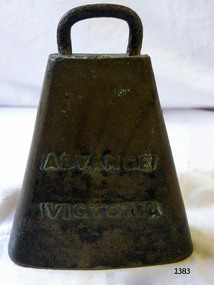
Functional object - Cow Bell, Early 20th century
... again next morning. Bells were fastened around the necks of household milking cows, domestic goats, bullock teams, horse teams, and camel teams, to help find them in the pre-dawn light. Station shepherds and cattle drovers also used them to warn of any disturbances to their flocks and herds overnight. The bells were a necessary item in a largely unfenced continent. So important, that Anthony Mongon began making his pot-bells at Yackandandah from 1861, August Menneke produced the “Wagga Pot” from 1867, and Samuel Jones started...again next morning. Bells were fastened around the necks of household milking cows, domestic goats, bullock teams, horse teams, and camel teams, to help find them in the pre-dawn light. Station shepherds and cattle drovers also used them to warn of any disturbances to their flocks and herds overnight. The bells were a necessary item in a largely unfenced continent. So important, that Anthony Mongon began making his pot-bells at Yackandandah from 1861, August Menneke produced the “Wagga Pot” from 1867, and Samuel Jones started ...Research is still being carried out regarding the inscription on this bell. Perhaps it was used for horses during the war. It may have been a souvenir or perhaps just a political statement, similar to 'Buy Australian'. Cow bells were common to colonial agriculture and transport, used wherever animals were turned out to graze overnight and had to be rounded up again next morning. Bells were fastened around the necks of household milking cows, domestic goats, bullock teams, horse teams, and camel teams, to help find them in the pre-dawn light. Station shepherds and cattle drovers also used them to warn of any disturbances to their flocks and herds overnight. The bells were a necessary item in a largely unfenced continent. So important, that Anthony Mongon began making his pot-bells at Yackandandah from 1861, August Menneke produced the “Wagga Pot” from 1867, and Samuel Jones started manufacturing his distinctively shaped “Condamine Bell” in 1868. However, these deeply resonant Australian bells were made from iron — Mongon and Jones were blacksmiths who simply beat old pitsaw blades into shape. Few genuinely brass cow bells were made here, the vast majority being imported from Britain where the industry of brass founding was already well established. (Some bells were also imported from the United States, but these too were nearly all of iron).This bell is historically significant as typical of a cow bell used by farmers and herdsmen in Colonial Victoria. Cow bell, brass, topless pyramid shape, inverted "U" shaped pin attached. Pin and clapper are iron. Bell is embossed on sides. Embossed "ADVANCE / VICTORIA" and "WWI"flagstaff hill, warrnambool, shipwreck coast, flagstaff hill maritime museum, flagstaff hill maritime village, maritime museum, great ocean road, cow bell, horse bell, bell smith, vintage bell, farmer, shepherd, drover, stock bell, brass bell, advance australia, wwi -
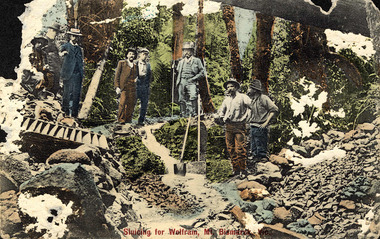 Marysville & District Historical Society
Photograph (item) - Colour tinted photograph, Sluicing for Wolfram, Mt. Bismark, 1908
... The first claims were lodged in 1908 and then with the start of World War I the value of tungsten increased and more claims were lodged and worked. After the war the use for tungsten diminished and the mine was abandoned until World War II when tungsten again became a valuable commodity. ...An early colour tinted photograph taken at the Wilks Creek wolfram mine near Marysville in Victoria.An early colour tinted photograph taken at the Wilks Creek wolfram mine near Marysville in Victoria. The first discovery of wolfram in this location was in 1894. The first claims were lodged in 1908 and then with the start of World War I the value of tungsten increased and more claims were lodged and worked. After the war the use for tungsten diminished and the mine was abandoned until World War II when tungsten again became a valuable commodity. However due to difficulties encountered in the mining of the tungsten at the Wilks Creek mine, it was unable to pay its way and at the end of 1943 the mine closed. The viability of mining wolfram at Wilks Creek was again reviewed in the 1960s but with little success. Once again, in 1980 it was reported that there would still be wolfram to be mined but the environmental impact to an area of outstanding natural beauty was deemed to be too great to continue with the project.wilks creek, wolfram mine, wolfram, tungsten, marysville, victoria, mt bismark, wood's point -
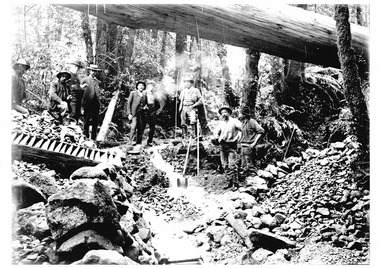 Marysville & District Historical Society
Photograph (item) - Colour tinted photograph, 1908
... The first claims were lodged in 1908 and then with the start of World War I the value of tungsten increased and more claims were lodged and worked. After the war the use for tungsten diminished and the mine was abandoned until World War II when tungsten again became a valuable commodity. ...An early black and white photograph taken at the Wilks Creek wolfram mine near Marysville in Victoria.An early black and white photograph taken at the Wilks Creek wolfram mine near Marysville in Victoria. The first discovery of wolfram in this location was in 1894. The first claims were lodged in 1908 and then with the start of World War I the value of tungsten increased and more claims were lodged and worked. After the war the use for tungsten diminished and the mine was abandoned until World War II when tungsten again became a valuable commodity. However due to difficulties encountered in the mining of the tungsten at the Wilks Creek mine, it was unable to pay its way and at the end of 1943 the mine closed. The viability of mining wolfram at Wilks Creek was again reviewed in the 1960s but with little success. Once again, in 1980 it was reported that there would still be wolfram to be mined but the environmental impact to an area of outstanding natural beauty was deemed to be too great to continue with the project.wilks creek, wolfram mine, wolfram, tungsten, marysville, victoria, mt bismark, wood's point
