
Showing 306 items matching "state electricity supply"
-
 Ringwood and District Historical Society
Envelope, Packet: State Electricity Commission supply to East Ringwood 1935 and Heathmont 1937
... Packet: State Electricity Commission supply to East Ringwood 1935 and Heathmont 1937....State Electricity Commission letter 1930; Electricity supply to East Ringwood 1935; Electricity supply to Heathmont 1937...State Electricity Commission letter 1930; Electricity supply to East Ringwood 1935; Electricity supply to Heathmont 1937 Packet: State Electricity Commission supply to East Ringwood 1935 and Heathmont 1937. ...State Electricity Commission letter 1930; Electricity supply to East Ringwood 1935; Electricity supply to Heathmont 1937 -
 Federation University Historical Collection
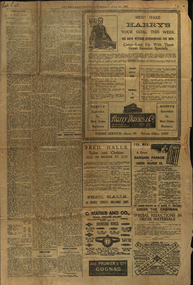
Newspaper, Lal Lal Iron and Coal as reported in the Ballarat Courier, 10/07/1923
... ...State Electricity Supply for Beaufort...Page 9 includes articles on Ripon's roads, Mount Cole Springs; Soldier Settlement Rates Beaufort; Creswick brass band Officers; Daylesford Road Deviation to Hepburn Springs; Dereel Public Telephone; State Electricity Supply for Beaufort; Newlyn Valedictory to Mr and Mrs W. ...Page 9 includes articles on Ripon's roads, Mount Cole Springs; Soldier Settlement Rates Beaufort; Creswick brass band Officers; Daylesford Road Deviation to Hepburn Springs; Dereel Public Telephone; State Electricity Supply for Beaufort; Newlyn Valedictory to Mr and Mrs W. ....1) Pages 7 to 10 of the Ballarat Courier, 10 July 1923. Page 7 includes the article 'Cheap electricity' and poses questions such as 'should Ballarat look to Morwell for cheap power?', and should an independent power plant be installed at Crockers, Arnolds, Harry Hall, Ewins, Harry Davies, Fred Halls, The London Drapery there. Page 9 includes articles on Ripon's roads, Mount Cole Springs; Soldier Settlement Rates Beaufort; Creswick brass band Officers; Daylesford Road Deviation to Hepburn Springs; Dereel Public Telephone; State Electricity Supply for Beaufort; Newlyn Valedictory to Mr and Mrs W. E. Bennett Page 9 - Racing at Ascot; Avoca Golf Tournament, Chinese Herbalists Page 10 - Auctions and house sales Advertisements include Harry Davies; Fred Halls; C. Marks and Co., London Drapery, Creer the Cashman; Chamberlain's Cough Remedy; Cornell's Little Liver Pills; Paynes; W. Fley Chemist; Bickart and Dawson; Rivers; Allchin Bros; J. Bartam & Son .2) Ballarat Courier, 30 July 1937, page 1 and 2 Page 1 reports Lal Lal's Iron Ore Company being formed. Page 2 reports the Prospectus of the lal lal Iron and Steel Blast Furnaces Mining Company, No Liability; Mining News - Wattle Gully; Commercial News Advertisements include Crockers, Arnolds, Harry Hall, Ewins, Harry Davies, Fred Halls, The London Drapery electricity, lal lal, lal lal iron, lal lal coalfield, morwell, gippsland, crockers, arnolds, harry hall, ewins, harry davies, fred halls, the london drapery, lal lal brown coal, ripon's roads, mount cole springs, soldier settlement rates beaufort, creswick brass band officers, daylesford road deviation to hepburn springs, dereel public telephone, state electricity supply for beaufort, newlyn, w.e. bennett, ascot, avoca golf tournament, chinese herbalists, c. marks and co., london drapery, creer the cashman, chamberlain's cough remedy, cornell's little liver pills, paynes, w. fley chemist, bickart and dawson, rivers, allchin bros, j. bartam & son, lal lal iron and steel blast furnaces mining company, wattle gully -
 Bendigo Historical Society Inc.
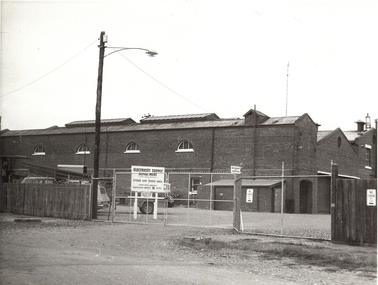
Photograph - ELECTRICITY SUPPLY DEPOT, C 1969
... ...state electricity supply...ORGANIZATION Government state electricity supply Allan Doney black and white photo: Electricity supply department, brick buildings with sky lights. ...black and white photo: Electricity supply department, brick buildings with sky lights. Sign in photograph ' Electricity supply department, Northern Branch, store and work area, please drive carefully. Maximum speed 5 mph.Allan Doneyorganization, government, state electricity supply -
Ballarat Tramway Museum
Plan - Map of Greater Ballarat Residential Development. c1949, State Electricity Commission of Victoria (SECV), c1949
... Created by the State Electricity Commission of Victoria (SECV), State Electricity Supply Department, Ballarat Branch....Created by the State Electricity Commission of Victoria (SECV), State Electricity Supply Department, Ballarat Branch. ...Map representation of the greater Ballarat area 1949. Created by the State Electricity Commission of Victoria (SECV), State Electricity Supply Department, Ballarat Branch.Map template used to create planning documents with association to the "Report by Hector H Bell Jnr of the Melbourne and Metropolitan Tramways Board, on the street passenger transport system of Ballaarat Urban Area".A2 map template. Scale 1 inch = 20 chain. Copy of hand drawn document. Black dye line print on beige paper.map, roads, secv, state electricity commission of victoria, ballarat, ballarat tramways, transport, planning -
Ballarat Tramway Museum
Plan - Map of Greater Ballarat Residential Development. c1949, State Electricity Commission of Victoria (SECV), c1949
... Created by the State Electricity Commission of Victoria (SECV), State Electricity Supply Department, Ballarat Branch....Created by the State Electricity Commission of Victoria (SECV), State Electricity Supply Department, Ballarat Branch. ...Map representation of the greater Ballarat area 1949. Created by the State Electricity Commission of Victoria (SECV), State Electricity Supply Department, Ballarat Branch.Map template used to create planning documents with association to the "Report by Hector H Bell Jnr of the Melbourne and Metropolitan Tramways Board, on the street passenger transport system of Ballaarat Urban Area".A2 map template. Scale 1 inch = 20 chain. Copy of hand drawn document. Black dye line print on beige paper. Residential, Industrial, Schools and Business areas hand drawn on print.TBDmap, roads, secv, state electricity commission of victoria, ballarat, ballarat tramways, transport, planning -
Ballarat Tramway Museum
Plan - Map of Greater Ballarat Residential Development. c1949, State Electricity Commission of Victoria (SECV), c1949
... Created by the State Electricity Commission of Victoria (SECV), State Electricity Supply Department, Ballarat Branch....Created by the State Electricity Commission of Victoria (SECV), State Electricity Supply Department, Ballarat Branch. ...Map representation of the greater Ballarat area 1949. Created by the State Electricity Commission of Victoria (SECV), State Electricity Supply Department, Ballarat Branch.Map template used to create planning documents with association to the "Report by Hector H Bell Jnr of the Melbourne and Metropolitan Tramways Board, on the street passenger transport system of Ballaarat Urban Area".A2 map template. Scale 1 inch = 20 chain. Copy of hand drawn document. Black dye line print on beige paper.map, roads, secv, state electricity commission of victoria, ballarat, ballarat tramways, transport, planning -
Ballarat Tramway Museum
Plan - Map of Greater Ballarat Residential Development. c1949, State Electricity Commission of Victoria (SECV), c1949
... Created by the State Electricity Commission of Victoria (SECV), State Electricity Supply Department, Ballarat Branch....Created by the State Electricity Commission of Victoria (SECV), State Electricity Supply Department, Ballarat Branch. ...Map representation of the greater Ballarat area 1949. Created by the State Electricity Commission of Victoria (SECV), State Electricity Supply Department, Ballarat Branch.Map template used to create planning documents with association to the "Report by Hector H Bell Jnr of the Melbourne and Metropolitan Tramways Board, on the street passenger transport system of Ballaarat Urban Area".A2 map template. Scale 1 inch = 20 chain. Copy of hand drawn document. Black dye line print on beige paper. Tram and Bus routes hand drawn on print.The words "SAMPLE" and "Office Copy" written above title block of document in pencil. Print mark "P.E. 2.1" on top left corner of document. Ballarat tramway location marked in orange marker. Bus routes shown in brown, green, and blue.map, roads, secv, state electricity commission of victoria, ballarat, ballarat tramways, transport, planning -
 Orbost & District Historical Society
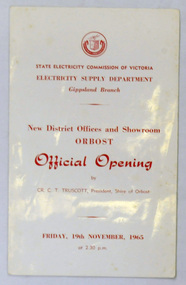
invitation, 1965
... The State Electricity Commission of Victoria was established in 1918 and the State Government appointed “Electricity Commissioners” responsible for generation and distribution of electricity throughout the State. The Electricity Supply...The State Electricity Commission of Victoria was established in 1918 and the State Government appointed “Electricity Commissioners” responsible for generation and distribution of electricity throughout the State. The Electricity Supply ...The State Electricity Commission of Victoria was established in 1918 and the State Government appointed “Electricity Commissioners” responsible for generation and distribution of electricity throughout the State. The Electricity Supply Department was a part of the State Electricity Commission of Victoria. This invitation was for the opening of the new district offices and showroom of the Electricity Supply Department. It took place on February 19 1965 at 2.30 p.m. in Orbost and was opened by Cr C.T. Truscott ( Charlie) who was the president of Orbost Shire. This item reflects a significant event in Orbost's history.A shiny white rectangular card with red print. It is an invitation to the opening of the new district offices and showroom of the Electricity Supply Department. It notes the date and time of the opening.electricity-supply-orbost invitation -
 Bendigo Historical Society Inc.
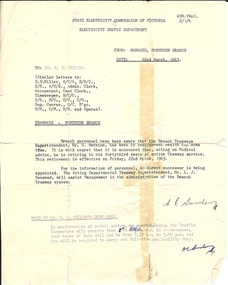
Document - BASIL MILLER COLLECTION: LETTER
... Typewritten letter to Basil Miller from the Manager of the Northern Branch of the State Electricity Commission of Victoria, Supply Department. Letter announcing the retirement of Mr H Watkins, Branch Tramways Superintendent after 43 years of service to the tramways. ...PERSON Individual basil miller Typewritten letter to Basil Miller from the Manager of the Northern Branch of the State Electricity Commission of Victoria, Supply Department. Letter announcing the retirement of Mr H Watkins, Branch Tramways Superintendent after 43 years of service to the tramways. ...Typewritten letter to Basil Miller from the Manager of the Northern Branch of the State Electricity Commission of Victoria, Supply Department. Letter announcing the retirement of Mr H Watkins, Branch Tramways Superintendent after 43 years of service to the tramways. A subnote details changes to Basil Miller's roster. Letter dated: Friday 22 March 1963. Signed by 'A. C. Sandowy'.person, individual, basil miller -
 Sunbury Family History and Heritage Society Inc.
Photograph, Former Engineer's Cottage
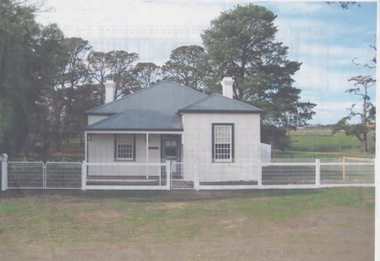
... The town's power supply put an end to gas lighting that had been used and homes had the benefit of having electricity connected to their homes. In 1926 the State...The town's power supply put an end to gas lighting that had been used and homes had the benefit of having electricity connected to their homes. In 1926 the State ...The building was the residence of the engineer who was responsible of managing the early electric supply that was installed in Sunbury in 1909. The town's power supply put an end to gas lighting that had been used and homes had the benefit of having electricity connected to their homes. In 1926 the State Electricity Commission took over supplying electrical power to Sunbury. The cottage is now a private home and the power house building has been demolished. The complex occupied land on the corner of Jackson and Shields Street.At the time the electric supply was installed in Sunbury in 1909, few small country towns had electric power connected.A non-digital scanned coloured photograph with a narrow white border of a small double fronted wooden cottage with a corrugated iron roof with trees growing behind the building.electricity, engineer's corrage, jackson street, shields street, power supplies -
 Kiewa Valley Historical Society
First Aid Kit, 1984
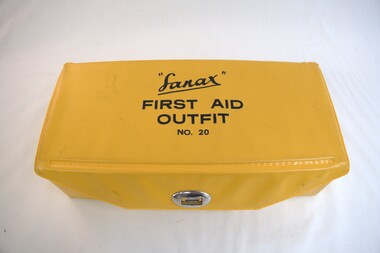
... The State Electricity Commission of Victoria supplied First Aid Kits to its employees and 'ran' an ambulance during the construction of the Kiewa Hydro Electric Scheme (KHES). ...The State Electricity Commission of Victoria supplied First Aid Kits to its employees and 'ran' an ambulance during the construction of the Kiewa Hydro Electric Scheme (KHES). ...The State Electricity Commission of Victoria supplied First Aid Kits to its employees and 'ran' an ambulance during the construction of the Kiewa Hydro Electric Scheme (KHES). The KHES was constructed at the upper end of the Kiewa Valley in the Victorian mountains on the Bogong High Plains. This area is remote with difficult terrain requiring people working and enjoying recreational activities to carry a first aid kit in case of emergency. This First Aid kit is light and portable enabling the user to 'fix' minor injuries and wait for access to medical assistance.This portable first aid kit was owned by a local Mt Beauty resident, Allan S. Clarke who was a long term staff employee for the State Electricity Commission of Victoria.First Aid Outfit (Kit), No.20 by "Sanax". Yellow plastic covered cardboard box with lid fastened by a metal swivel clasp. Complete with unused original contents displayed on two levels. On the top level - Absorbent lint in clear plastic bag; roll of Johnson's Cotton Wool in soft plastic; Plastic container of Sanax Aspirin tablets; glass bottle with brown plastic lid of Calamine Lotion; and steel scissors, safety pins and tweezers in small clear plastic bag. On the second/ bottom level - in a brown glass jar with brown plastic lid "Kuraburn for the treatment of Minor burns"; in a brown glass jar with brown plastic lid "Zeptic" (antiseptic); Johnson's Bandaids of varying shapes in a clear plastic bag; in a brown glass bottle with a brown plastic lid "Germistatic" (antiseptic); 2 packets of 4 Gauze bandages in clear plastic bags; and 1 large absorbent Gauze bandage in clear plastic bag.first aid kit; kiewa hydro electric scheme; sandax; medical aids; -
 Federation University Historical Collection
Photograph - Black and White, Charlie Farr, Duncan McDougall
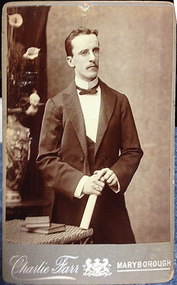
... He contended it was the duty of the State and Federal Governments to establish a central electricity generation plant in Kalgoorlie and supply power to the mines at not more than 1/2d a unit, at 3/4d per unit for winding only, and at 2d per unit for lighting. ...He contended it was the duty of the State and Federal Governments to establish a central electricity generation plant in Kalgoorlie and supply power to the mines at not more than 1/2d a unit, at 3/4d per unit for winding only, and at 2d per unit for lighting. ...Duncan McDougall was associated with the pioneering X-rays conducted by the Ballarat School of Mines in 1896. He was in the Mendelssohn Choir, and was associated with Professor Ross from University of Western Australia. The Ballarat Courier reported on 20 July 1896:"The Ballarat Courier reported on 20 July 1896 Thanks to the energy of the staff of the School of Mines Ballarat and particularly to Messers F J Martell and Duncan McDougall the assistance of Roentgen xrays will soon be available, for the relief of suffering at this institution. On Wednesday evening 22 July 1896 a number of ladies and gentlemen witnessed a series of experiments with the Roentgen x rays." Duncan McDougall later worked at the Kalgoorlie School of Mines as a lecturer in physics and mathematics. on 19 February 1905 the 'West australian' newspaper announced: " Mr Duncan McDougall, formerly of the Ballarat, and later of the Maryborough Schools of Mines, was appointed to succeed Mr. Hart. Mr. McDougall had also charge of the branch class at Midland Junction. In both cases his work proved thoroughly good. The alterations in the trades class regulations will cause all the students in these classes to take up the study of this subject. I have every confidence that Mr. McDou gall will handle these large classes as successfully as the classes he had last year." By 1925 McDougall is being reported in the Perth Daily News: "Duncan McDougall, lecturer on electrical engineering and physics at the W.A. School of Mines, put forward a scheme for reducing the cost of mining in Kalgoorlie. He contended it was the duty of the State and Federal Governments to establish a central electricity generation plant in Kalgoorlie and supply power to the mines at not more than 1/2d a unit, at 3/4d per unit for winding only, and at 2d per unit for lighting. He suggested, the transmission of this power over a radius of 25 miles from Kalgoorlie." (06 May 1925)Photograph of a man in a shirt, bow tie and jacket, holding a scroll and wearing glasses. He has two books beside him on a table. The man is Duncan McDougall, and is portrait was taken in the Charlie Farr studio at Maryborough, Victoriaduncan mcdougall, mcdougall, x-ray, xray, xray, ballarat school of mines, choir, mendelssohn, kalgoorlie -
Federation University Historical Collection
Minutes, Victoria Institute of Colleges Minutes (selected), 1967-1969
... Tippett, President of the Ballarat School of Mines Council was on the interim council and committee member of the Victorian Institute of Colleges. victoria institute of colleges victoria institute of colleges at ballarat vic vicb jack barker barker e.j. tippett tippett victoria institute of colleges council ll.h. vernon and associates vernon harrison g.j. harrison mount helen campus campus development master plan campus master plan water supply mt helen campus water supply ballarat school of mines yallourn technical school churchill campus churchill colleges of advanced education ballarat college of advanced education gippsland college of advanced education parry r.e. parry Foolscap typed Victorian Institute of Colleges (VIC) minutes .1) Minutes of the inaugural meeting of the Victorian Institute of College held at the State Electricity Commission of Victoria, 15-23 William Street, Melbourne on 26 June 1967. ...In 1966 E.J.T. Tippett, President of the Ballarat School of Mines Council was on the interim council and committee member of the Victorian Institute of Colleges.Foolscap typed Victorian Institute of Colleges (VIC) minutes .1) Minutes of the inaugural meeting of the Victorian Institute of College held at the State Electricity Commission of Victoria, 15-23 William Street, Melbourne on 26 June 1967. This meeting followed 25 meetings of the Interim Council. The Council included E.J. Barker of the Ballarat School of Mines, representing principals of affiliated colleges outside the metropolitan area. .2) Building Committee minutes of the Victoria Institute of Colleges, 11 April 1969. These minutes mention Ballarat Institute of Advanced Education including the request for approval to purchase recording double beam spectrophotometer, Logic panel for Hitachi 505 analog computer and Nuclear-magneto-resonance gaussmeter system). The also requested approval to appoint L.H. Vernon and Associates and G.J. Harrison as joint campus planners, and outlined how water would be supplied to the Mount Helen site. The minutes outline a request for State.Commonwealth approval to purchase a concrete testing machine and an Hydraulic Flow Channel for Yallourn Technical College. The request was moved by E.J. Barker of the Ballarat School of Mines. .3) 'Colleges of Advanced Education - The Vision and the Reality' an address delivered at the Diploma Conferring Ceremony, Yallourn Technical College by R.E. Parry, registrar of the Victoria Institute of Colleges on Friday 18 April 1960. .4) Minutes of the Victoria Institute of Colleges Buildings Committee minutes, 8 November 1968. These minutes include information on the transfer of Yallourn Technical College to the new site at Churchill. .5) Minutes of the Victoria Institute of Colleges Council , 17 September 1969.victoria institute of colleges, victoria institute of colleges at ballarat, vic, vicb, jack barker, barker, e.j. tippett, tippett, victoria institute of colleges council, ll.h. vernon and associates, vernon, harrison, g.j. harrison, mount helen campus, campus development, master plan, campus master plan, water supply, mt helen campus water supply, ballarat school of mines, yallourn technical school, churchill campus, churchill, colleges of advanced education, ballarat college of advanced education, gippsland college of advanced education, parry, r.e. parry -
 Federation University Historical Collection
Object, Synchronome Co. Ltd, Synchronome Frequency Checking Master Clock No. 2191, c1930
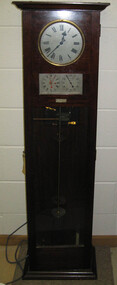
... state electricity commission...wendouree parade power station...secv...clock...time...pendulum...electric supply...supply in the early part of last century and in 1905 had sufficient generating capacity to enable the trams to be changed from horse drawn to DC electricity. The use of electricity increased with the main power station located on Wendouree Parade, near Webster Street, under the ownership of The Electric Supply Company of Victoria. AC generating plant was installed in 1925 and conversion to AC proceeded. In 1934 the company was taken over by the State...supply in the early part of last century and in 1905 had sufficient generating capacity to enable the trams to be changed from horse drawn to DC electricity. The use of electricity increased with the main power station located on Wendouree Parade, near Webster Street, under the ownership of The Electric Supply Company of Victoria. AC generating plant was installed in 1925 and conversion to AC proceeded. In 1934 the company was taken over by the State ...Information from Norman F. Dalton: Ballarat had a reticulated DC supply in the early part of last century and in 1905 had sufficient generating capacity to enable the trams to be changed from horse drawn to DC electricity. The use of electricity increased with the main power station located on Wendouree Parade, near Webster Street, under the ownership of The Electric Supply Company of Victoria. AC generating plant was installed in 1925 and conversion to AC proceeded. In 1934 the company was taken over by the State Electricity Commission Victoria (SECV) and more AC generation was installed and the changeover of customers was accelerated. This is around the time that the Synchronome Frequency Checking Mast Clock was installed at the Wendouree Parade Power Station. The SECV Annual Report of 1921 states: ::Section 11 of the act directed the COmmission to enquire into the question of securing the adoption of such standards of plant and equipment of a system, frequency and pressure for the generation and distribution of electricity as will admit of the efficient interconnection of undertakings throughout the State. In 1934 when the SECV took over the Ballarat operations the question of linking with the State grid had been a planned operation for some years but due to financial considerations had hindered it and in fact would continue to do so for a further 10 years. So while the need for close frequency control for interconnection was hardly an issue, the need to keep electric clocks correct was important, particularly as this item was a frequent sales point to cover the inconvenience and sometimes expense of converting from DC to AC. The clock is a very accurate pendulum clock with provision for varying effective length during operation for precise time regulation. There are two normal time dials and one is controlled by the pendulum and the other is operated by the system frequency. When the clock was in use it was installed by the MEter and Tests Laboratory and the time was checked daily by radio time signals. The two dials were repeated in the operators control panel in the Power Station. A maximum deviation between the two dials was set in the operating instructions (eg 5 seconds) and the operator would correct this when necessary by remote manual alteration of the turbine governor set point. The clock was used to drive and regulate a system of "slave" clocks which were used to display the time in various locations around the power station. A slave clock is a simple clock which is driven by a small electric motor, its accuracy is regulated by the master clock every 30 seconds to ensure that it and all the other slave clocks in the station are on exactly the right time; slave clocks were placed in various locations, from common rooms to workshops. A master clock could potentially run thousands of slave clocks at one plant. The clock also contains a rectifier. A rectifier is a device that is used to convert AC power to more stable DC current.Two clocks in a timber case. Both are electric, one is powered by the main pendulum mechanism, the other is a self contained electric clock. The main mechanism is of the gravity arm and roller type, which sends an impulse to the slave clocks every 30 seconds. The This Synchronome Frequency Checking Master Clock was used at the Ballarat Power Station. Below the main section of the case is a smaller cabinet containing a rectifier to provide consistent DC power for the clock. The rectifier was made by the Victorian company Hilco, which was located in Burwood. There is a high chance this is not the original rectifier from this clock as there appears to be brackets to hold a larger device in the space the rectifier occupies.Front below main clock face on front of case: "Patented Sychronome Brisbane" Lower left-hand clock face: "Frequency time" Lower right-hand clock face: "Standard Seconds" Synchronous electric clock mechanism on door (Frequency time clock): >200/250 V. 50~ >"Synchronomains" Made in England >Direction indicator for clock starting switch >"To start move lever in direction of arrow and release" >"Patent applied for" Mechanism for "standard seconds" clock: >"English Made" >"Patented" >Serial number "321" >0 above right-hand pillar on front-plate Mechanism for "standard seconds" clock: >"English Made" >"Patented" >Serial number "321" >0 above right-hand pillar on front-plate Mechanism for main clock face: >"English Made" >"Patented" >Serial number "8751" >0 above right-hand pillar on front-plate Inside case, back panel, top enamel plate: >Seconds Battery + Pos. > Battery Common or - Neg. >1/2 min dials Inside case, back panel, bottom enamel plate: external seconds dial Inside case, right hand side, electrical knobs: two switches, both "A.C. mains" Pendulum rod, below suspension spring: Serial number (?) 0000005 Rectifier in bottom cabinet: >"Hilco Rectifier" >"A.C. Volts 230/240" >"Model 1060/S" >"A.C. Amperes" >"Serial No. 1060/S >"Phases 1" >"D.C. Volts 6" >"C.P.S. 50" >"D.C. Amperes 1" >"Made in Australia by Hilco Transformers McIntyre St., Burwood, Victoria." Bakelite electrical plug: makers mark Lower cabinet, RH side panel, pressed tin plate: "AC" (upside down) Brass speed adjustment, outer right RH side: "S" and "F" Ivory and wood pendulum beat ruler: >Ruler, with 0 in centre and numbers 1-5 in ascending order from centre on left and right. > "Synchronome Patent." Steel plate, back panel, inside case, right hand side: >N R A" (descending) >"2191" serial number/part number Face of main clock: "Synchronome Electric" synchronome frequency checking master clock, electricity, state electricity commission, wendouree parade power station, secv, clock, time, pendulum, electric supply company of victoria, norman f. dalton, ballarat power station, rectifier, slave clock -
Federation University Historical Collection
Letter, Electric Supply Department Ballarat to Ballarat School of Mines, 21/04/1949
... electriciy department ballarat sec state electricity commission Foolscap letter to the Ballarat School of Mines with State Electricity Commission (SEC) information sheets. Electric Supply ...Foolscap letter to the Ballarat School of Mines with State Electricity Commission (SEC) information sheets. electriciy department ballarat, sec, state electricity commission -
 Federation University Historical Collection
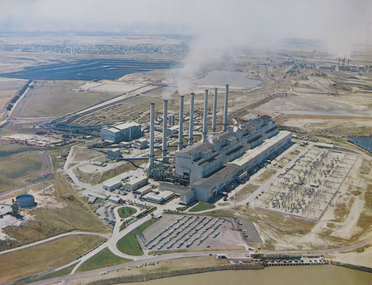
Book, State Electricity Commission, Serving Victoria. 50 Years of Service. State Electricity Commission of Victoria, 1969
... state electricity commission of victoria...anniversary...monash house...w.h. connolly...alexander fitzgerald...t.p. scott...b.j. callinan...yallourn...hazelwood power station...morwell power station...briquettes...morwell briquette works...water power...hydro-electric supply...state electricity commission of victoria anniversary monash house w.h. connolly alexander fitzgerald t.p. scott b.j. callinan yallourn hazelwood power station morwell power station briquettes morwell briquette works water power hydro-electric supply rocky valley reservoir electricity network transmission statins yallourn "w" power station eildon reservoir A blue, soft, illustrated covered book. ...A blue, soft, illustrated covered book.state electricity commission of victoria, anniversary, monash house, w.h. connolly, alexander fitzgerald, t.p. scott, b.j. callinan, yallourn, hazelwood power station, morwell power station, briquettes, morwell briquette works, water power, hydro-electric supply, rocky valley reservoir, electricity network, transmission statins, yallourn "w" power station, eildon reservoir -
 Learmonth and District Historical Society Inc.
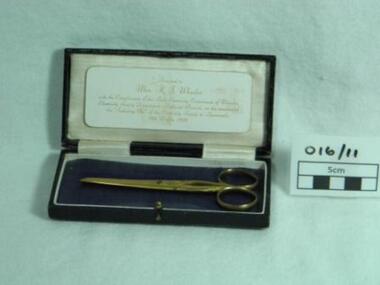
Boxed Gold Scissors, "Circa 1937"
... H.J.Wheeler with the compliments of the State Electricity Commission of Victoria, Electricity Supply Department, Ballarat Branch, on the occasion of the "Switching On" of the Electricity Supply to Learmonth,19th March,1938....H.J.Wheeler with the compliments of the State Electricity Commission of Victoria, Electricity Supply Department, Ballarat Branch, on the occasion of the "Switching On" of the Electricity Supply to Learmonth,19th March,1938. ...Presented to Mrs. H.J.Wheeler with the compliments of the State Electricity Commission of Victoria, Electricity Supply Department, Ballarat Branch, on the occasion of the "Switching On" of the Electricity Supply to Learmonth,19th March,1938.A pair of scissors that were used to "switch on" the electricity supply to Learmonth on the 19th March 1938. Gold Scissors in black box, with blue and white lining.Johns and Johnsonlearmonth, boxed gold scissors, electricity -
 Orbost & District Historical Society
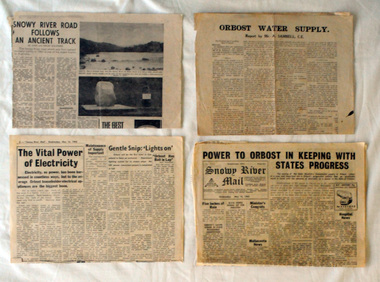
newspaper clippings, 1962
... C.E. on the Orbost Water Supply. 732.3 is from the Weekly Times, July 17 1968 and is titled "Snowy River Mail Follows Our Ancient Track". 732.4 is from the Snowy River Mail, May 16 1962 and is titled " Power To Orbost in Keeping with State's Progress. 732.5 is from the Snowy River Mail, May 16 1962 and is titled " The Vital Power of Electricity"....C.E. on the Orbost Water Supply. 732.3 is from the Weekly Times, July 17 1968 and is titled "Snowy River Mail Follows Our Ancient Track". 732.4 is from the Snowy River Mail, May 16 1962 and is titled " Power To Orbost in Keeping with State's Progress. 732.5 is from the Snowy River Mail, May 16 1962 and is titled " The Vital Power of Electricity". newspaper clippings Gilbert, Mary ...Collected by Mary Gilbert. This folder belonged to Mary Gilbert and was probably used by her whilst teaching at Orbost High School and as a member of the Orbost Historical Society. Mary Isabelle Gilbert was born in 1905 in Orbost, Australia. She was born to John Gilbert and Annie Cameron Gilbert, and had seven sisters and one brother. Four siblings died at a young age. .She was a teacher historian loved and respected by her family and the wider community. This item is a useful research tool.A manila folder containing b/w newspaper cuttings relating to the progress of Orbost power, mail and water supply. The articles are from various newspapers.. 732.2 is a report by Mr A. Sambell. C.E. on the Orbost Water Supply. 732.3 is from the Weekly Times, July 17 1968 and is titled "Snowy River Mail Follows Our Ancient Track". 732.4 is from the Snowy River Mail, May 16 1962 and is titled " Power To Orbost in Keeping with State's Progress. 732.5 is from the Snowy River Mail, May 16 1962 and is titled " The Vital Power of Electricity".orbost-power-water-supply -
Glenelg Shire Council Cultural Collection
Functional object - Foot Warmer, Hecla Electrics Pty Ltd, c. 1920
... electricity use exploded in the 1920s and 1930s, 'Hecla' became a household name in Melbourne. They made a wide range of appliances for the home, and supplied commercial appliances to cafés, hospitals and offices. In 1927, the company shifted from small premises in the city to a bigger, electric-powered factory in South Yarra. Hecla had no retail stores of its own - instead it sold products through wholesalers and retailers, including the State...electricity use exploded in the 1920s and 1930s, 'Hecla' became a household name in Melbourne. They made a wide range of appliances for the home, and supplied commercial appliances to cafés, hospitals and offices. In 1927, the company shifted from small premises in the city to a bigger, electric-powered factory in South Yarra. Hecla had no retail stores of its own - instead it sold products through wholesalers and retailers, including the State ...From Museum Victoria: Made in about 1927 by Hecla Electrics Pty Ltd and sold under the model name 'Foot Warma'. The foot warmer was made from the late 1920s until the 1950s and did not change substantially in design during this time. The Hecla brand name and logo was registered in 1918 by Clarence Marriott. It was inspired by the recent eruption of Iceland's volcano Mt Heckla. Clarence and his father James were metal workers who had made Australia's first carbon filament electric radiators in 1899, and also built an early steam car. As electricity use exploded in the 1920s and 1930s, 'Hecla' became a household name in Melbourne. They made a wide range of appliances for the home, and supplied commercial appliances to cafés, hospitals and offices. In 1927, the company shifted from small premises in the city to a bigger, electric-powered factory in South Yarra. Hecla had no retail stores of its own - instead it sold products through wholesalers and retailers, including the State Electricity Commission (SEC). The company promoted its goods through advertisements in home magazines and displays in shop windows, home shows and the 1935 All-Electricity Exhibition. A popular advertising slogan in the 1930s was 'Hecla household helps make happy healthy housewives!'. Hecla ceased manufacturing in Melbourne in the 1980s.Documentation of how people lived and is an example of early domestic electrical appliances. From Museum Victoria: Hecla Electrics Pty Ltd were a significant Melbourne manufacturing company, who became a household name in the 1920s making small electric appliances such as heaters and kettles. They also made a variety of other electrical appliances for domestic, commercial and military use. The company manufactured electric appliances in Melbourne from about 1922 until the 1980s, although Clarence Marriott, who formed the company, had begun making radiators with his father James in 1899. The company had a reputation for quality products. The company also played an important role within the Australian domestic and commercial appliance industry, both as a leading innovator and through its role in training skilled staff, many of whom went on to work for competitors such as Kambrook, Electrolux and Sunbeam. This electric coffee percolator represents the typical small domestic appliance that the Hecla company was famous for. Along with other items in the Hecla Collection, it highlights the diversity of electric appliances that the company made. This object also highlights the legacy of high quality design and metal construction work that Clarence and James established for the company, stemming from their early work as talented art metal workers. It also represents the first major period of the take-up of electricity use in the home. This take-up began in the 1920s and 1930s with the use of small appliances, and by the 1950s electricity had become commonplace in the home, and large appliances such as refrigerators and stoves became standard.Square metal object. The top surface is heavy cast iron and patterned with floral motifs. In the centre is a circle with the words ' Hecla Foot Warma' inside. Under the top is a black metal base with two feet at either end which extend the length of the base. The back foot is higher than the front foot. There is a circular disk from which extends the electrical cord. The cord is brown and white checks. At the end of the cord is a plug on which is printed 250V AMP S.2 EARTH 5. The plug is brown and made from Bakelite. On the base is a rectangular label which has words printed - HECLA Australia.Top: HECLA/-FOOT-/WARMA Base: Volts / 230/250 / WATTS / 80 / HECLA / Australia / CAT. NO. F26domestic, city of portland, glenelg shire council, electrical, foot warmer, heating, hecla, manufacture -
 Greensborough Historical Society
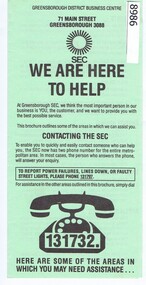
Pamphlet, Greensborough District Business Centre: SEC
... Electricity supply information in Greensborough supplied by the SEC (State Electricity Commission)...Electricity supply information in Greensborough supplied by the SEC (State Electricity Commission) state electricity commission Greensborough main street greensborough Tri-fold pamphlet, black text on green paper Greensborough District Business Centre: SEC Pamphlet Pamphlet ...Electricity supply information in Greensborough supplied by the SEC (State Electricity Commission)Tri-fold pamphlet, black text on green paper state electricity commission, greensborough, main street greensborough -
 Eltham District Historical Society Inc
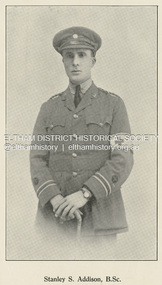
Folder, Stanley Simpson Addison M.B.E
... electricity supply connection 16. Copy of Memo for Electricity Supply Department (Greensborough), 5 May 1955 regarding area loan scrip – Panton Hill and Kangaroo Ground 17. Copy of Letter, State...electricity supply connection 16. Copy of Memo for Electricity Supply Department (Greensborough), 5 May 1955 regarding area loan scrip – Panton Hill and Kangaroo Ground 17. Copy of Letter, State ...Contents: 1. Who is this man? By Stanley Addison (M.B.E., B.A., B.Sc., J.P.) 2. Stanley Simpson Addison biography (b. 14/10/1880 d. 1/1/1972) 3. Eulogy: Stanley Simpson Addison (14 Oct 1880-1 Jan 1972) 4. Photograph: Stanley S. Addison, B.Sc., The Australasian Intercollegian, April 1, 1916 5. Letter, Eltham High School Advisory Committee re pending retirement of Cr. Addison from the Eltham Shire Council, 8 June 1956 6. Behind and Before by Stanley S. Addison, The Way, September 1956, pp 6-7 7. Newspaper clipping: Eltham Shire's President is Cr. S. Addison, Heidelberg News, Friday September 12, 1952 8. Newspaper clipping: Mr S. Addison Honored, Heidelberg News, Friday September 21st, 1956, p13 9. Opening of Lower Plenty Memorial Chapel, 30 November 1952 10. Letter from Brigadier H.H. Hammer, HQ 2 Armed Brigade to Cr. S. Addison, President, Shire of Eltham giving thanks for Coronation Celebrations parade support, June 1953 11. Newspaper clipping: Eltham President's Advance Programme 12. Newspaper clipping: Coronation Festivities; Eltham Shire President's Notes 13. Newspaper clipping: Hurstbridge: Coronation Day Ceremony 14. Draft of letter by Stanley S. Addison, President, Kangaroo Ground Advancement League regarding electricity connection for Kangaroo Ground - Panton Hill, 1954 including four small pages of notes 15. Note: Ian Potter & Co. (c.1955) regarding discount on funding for electricity supply connection 16. Copy of Memo for Electricity Supply Department (Greensborough), 5 May 1955 regarding area loan scrip – Panton Hill and Kangaroo Ground 17. Copy of Letter, State Electricity Commission of Victoria to Cr. S. Addison, 12 May 1955 regarding electricity supply for Panton Hill and Kangaroo Ground 18. Newspaper clipping: Light for Diamond Valley; Kangaroo Ground and Panton Hill, Friday 20th May, 1955 19. Letter: State Electricity Commission of Victoria to Cr. S. Addison, 26 May 1955 regarding Electricity supply to Kangaroo Ground and Panton Hill area 20. Letter: The National Mutual Life Association to S.S. Addison, 28 June 1955 regarding Electricity supply 21. Letter: The National Mutual Life Association to S.S. Addison, 1 July 1955 regarding Electricity connection, Kangaroo Ground and Panton Hill 22. Letter: Minister of Electrical Undertakings to Cr. Stanley S. Addison, 10 April 1956 regarding extension of supply to Panton Hill and Kangaroo Ground 23. Letter: State Electricity Commission of Victoria Stanley S. Addison, 13 September 1956 regarding proposed extension of supply to Panton Hill-and Kangaroo Ground 24. Letter: Minister of Electrical Undertakings to Cr. Stanley S. Addison, 1 July 1958 regarding extension of supply to 18 properties in the Panton Hill-Smiths Gully Road area 25. Letter: Acting Minister of Electrical Undertakings to Cr. Stanley S. Addison, 18 July 1958 regarding extension of supply to 18 properties in the Panton Hill-Smiths Gully Road area 26. 100th Anniversary Services, Kangaroo Ground Presbyterian Church, 17 March 1957 27. Speech by Stanley S. Addison on the history of the Kangaroo Ground Presbyterian Church (9 Feb. 1957) for the 100th Anniversary Services, Kangaroo Ground Presbyterian Church, 17 March 1957 28. Early History of Kangaroo Ground compiled by Neville Haughton in March, 1959 29. Newspaper clipping: Eltham Community Chest, Heidelberg News, 12 September 1958 30. Newspaper clipping: Proposed Eltham Community Chest by Stanley Addison, Heidelberg News, 29 January 1959 31. Newspaper clipping: Community Chest With Wider Objectives, Heidelberg News, 5 February 1959 32. Newspaper clipping: Community Chest for Eltham, 1959 33. Newspaper clipping: Council Protest on Community Chest, c.1959 34. Newspaper clipping: Community Chest Outlined at Small Meeting, c.1959 35. Newspaper clipping: Treasure in the Diamond Valley by Stanley Addison, Heidelberg News, 19 February 1959 36. Newspaper clipping: Diamond Valley Chamber of Commerce, c.1959 37. Additional information about Stanley Simpson Addison from Bill Glasson, 15 March 2014 38. Additional information about Stanley Simpson Addison's Naval Service record and MBE (National Archives)Approx. 68 pages of varying types; photocopies, newsclippings, hand written notes, invitations, lettersa.c. ring, a.s. davis, adult education, biography, brigadier h.h. hammer, centenary celebrations, coronation, d. dureau, d. scales, d.a. lyon, d.s. pepper, diamond creek, diamond valley chamber of commerce, diamond valley community hospital, electricity supply, eltham chamber of commerce, eltham community chest, eltham high school advisory committee, eltham high school, eltham infant welfare centre, eltham pre-school, eltham shire council, eltham war memorial trust, eulogy, f.f. durham, f.h. buckwell, f.v. squire, g.c. waring, g.w. smith, h. thompson, h.f. thorpe, j. north, j.l. ryan, j.r. stuber, j.w. burgoyne, j.w. middleton, k.w. smith, kangaroo ground advancement league, kangaroo ground presbyterian church, kangaroo ground, l.r. bassett, lower plenty memorial chapel, miss j. humphreys, montmorency girl guides, montmorency tennis club, montmorency, mrs. b. harrington, mrs. stanley addison, n.h. baxter, opening ceremony, panton hill, parade, r. t. harrap, r.s. leeson, s.a. hick, shire president, smiths gully, st faiths anglican church, stanley s addison collection, stanley simpson addison, stevenson family, vera addison (nee staley), vera addison, w. stephenson -
 Kiewa Valley Historical Society
Saucer Ceramic, c1921
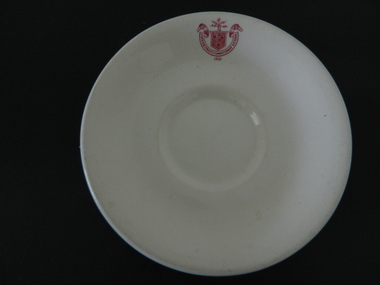
... supply food and beverages to the workers. This saucer was used at one of the sites on the Kiewa Hydro Electric Scheme. kiewa hydro electric scheme. mount beauty chalet. bogong mess hall. state electricity commission of victoria. crockery. ...The SECV had chalets, cafes, mess halls and tea rooms all over Victoria including their construction sites. The SECV had a stores system which purchased thousands of sets of crockery and cutlery for use by personnel. There was a system of chefs, cooks, tea persons etc. to supply food and beverages to the workers. This saucer was used at one of the sites on the Kiewa Hydro Electric Scheme.Heavy, white ceramic saucer with State Electricity Commission of Victoria 1921 log/insignia on inside lip. Curves up to sides. On base, also inscribed in red are details of the makers.State Electricity Commission Victoria / 1921 On base: Vitrified / Sold by / Cafe & Hotel Supplies / Pty Ltd / DunnBennett & Co. ITC / Burslem / Made in Englandkiewa hydro electric scheme. mount beauty chalet. bogong mess hall. state electricity commission of victoria. crockery. -
 Kiewa Valley Historical Society
Journals - S.E.C.V. 1936-1956, 1936 - 1956
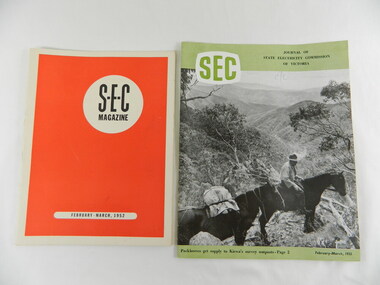
... State Electricity Commission of Victoria published a journal every second month for all its workers throughout Victoria. Each 'project' reported their news, giving an update on work, sport, technical achievements, social gatherings, personal notices etc. The S.E.C. Journal included a regular section for the Kiewa Hydro Electric Scheme titled "Kiewa Keynotes" giving an insight into life & an update on the work on the project and the reporting of new clubs, services etc. being formed. It also reported on many of the people living there. Eg. Feb.-Mar. 1955 Cover "Packhorses get supply ...The State Electricity Commission of Victoria published a journal every second month for all its workers throughout Victoria. Each 'project' reported their news, giving an update on work, sport, technical achievements, social gatherings, personal notices etc. The S.E.C. Journal included a regular section for the Kiewa Hydro Electric Scheme titled "Kiewa Keynotes" giving an insight into life & an update on the work on the project and the reporting of new clubs, services etc. being formed. It also reported on many of the people living there. Eg. Feb.-Mar. 1955 Cover "Packhorses get supply to Kiewa's survey outposts - Pg. 2. S.E.C.V. Journals covering the period of the Kiewa Hydro Electric Scheme. Each journal is about 33 pages with a soft card board or glossy paper cover. The earlier journals were plain with one colour and white , the later ones had a photo on the front. The journals were identified by Vol. & No. and months and year. Duplicate journals of S.E.C.V. journals covering the period from 1939, the 1940s. early to mid 1950s, mid to late 1970s and 1980s. Each of these journals have a pink tag indicating a reference to Mt Beauty.state electricity commission of victoria. kiewa hydro electric scheme. kiewa valley. bogong. mt beauty. dams. power stations. -
 Kiewa Valley Historical Society
Certificate - Volunteer Air Observers Corps, 20th September1945
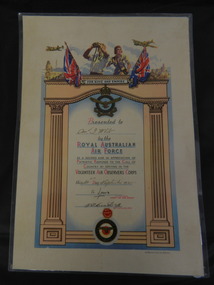
... The State Electricity Commission of Victoria were constructing the Kiewa Hydro Electric Scheme during World War 2. Workers lived at Bogong where the SECV supplied a hut for volunteers to observe air traffic during World War II. ...During WWII there were volunteers all over Australia observing air activity every night. This certificate is one that was presented to the volunteers who manned the observation points. This certificate was presented to Mr Gordon White of Mount Beauty who was one such volunteer on the 20th Sept. 1945.The State Electricity Commission of Victoria were constructing the Kiewa Hydro Electric Scheme during World War 2. Workers lived at Bogong where the SECV supplied a hut for volunteers to observe air traffic during World War II. Mr Gordon White was a volunteer at the time. See also KVHS 0937 (photo) and KVHS 1259 (Training Manual)Laminated coloured A3 size Certificate of appreciation RAAF for Volunteer Air Observers Corps.volunteer air observer corps; certificate; state electricity commission of victoria; bogong; gordon white -
 Kiewa Valley Historical Society
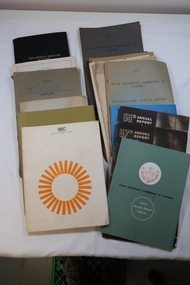
SECV including Annual Reports 1940s - 1970s
... SECV built KHES State Electricity Commission of Victoria 15 thick Booklets mostly Foolscap bound by staples 2 Royal Commission on Electricity Supply Answers to set of questions April 1947 1 SECV black hard cover book 'Acts' 1958 1 'SEC History in the Making - Golden Jubilee Photo feature - thin 8 page booklet. ...SECV built KHES15 thick Booklets mostly Foolscap bound by staples 2 Royal Commission on Electricity Supply Answers to set of questions April 1947 1 SECV black hard cover book 'Acts' 1958 1 'SEC History in the Making - Golden Jubilee Photo feature - thin 8 page booklet.state electricity commission of victoria -
 Kiewa Valley Historical Society
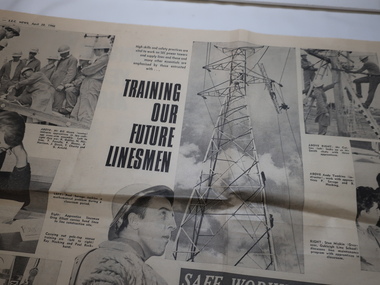
Newspaper - Linesman - S.E.C News 1966, Training our Future Linesmen
... supplying lines. They were also responsible for the maintenance of the lines. The article has photos of the men undergoing training with an emphasis on safety. The SEC constructed the Kiewa Hydro Electric Scheme and were resposible for the erection of the power towers and lines enabling the electricity to be distributed throughout the state of Victoria and beyond. linesmen power towers Electric power lines SEC training Pages 6 and 7, S.E.C. ...Linesmen worked on the SEC power towers erecting the towers and supplying lines. They were also responsible for the maintenance of the lines. The article has photos of the men undergoing training with an emphasis on safety.The SEC constructed the Kiewa Hydro Electric Scheme and were resposible for the erection of the power towers and lines enabling the electricity to be distributed throughout the state of Victoria and beyond.Pages 6 and 7, S.E.C. News, April 28, 1966 Article 'Safe Working Paramount' with 9 photos including names of the men working.linesmen, power towers, electric power lines, sec training -
 Kiewa Valley Historical Society
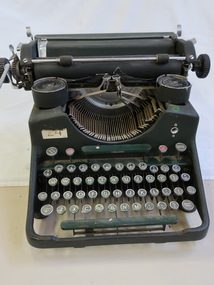
Typewriter - Barlock
... Used by the typists working in the office for the State Electricity Commission of Victoria during the construction of the Kiewa Hydro Electric Scheme typewriter Bar-Lock office equipment Bar-Lock / Manufactured by / Bar-Lock Typewriter Co. Nottingham England/Supplied ...The Bar Lock typewriter is a patented design by the inventor and lawyer Charles Spiro in 1888. The keys are easily recognised and well spaced. Used by the typists working in the office for the State Electricity Commission of Victoria during the construction of the Kiewa Hydro Electric SchemeLarge, heavy black typewriter with white letters on the keys. Green matt finish with gold printing. c 1921 Model 22?Bar-Lock / Manufactured by / Bar-Lock Typewriter Co. Nottingham England/Supplied by / Richard Williams Pty Ltd. 193/197 King St. Melbourne At the back in gold print: "Serial / Number' rest too hard to read. typewriter, bar-lock, office equipment -
 Kiewa Valley Historical Society
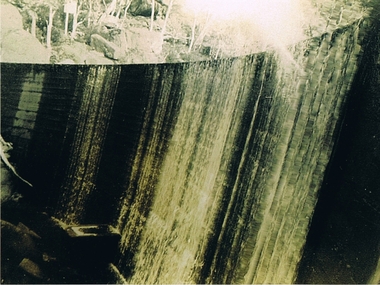
Photograph Clover Dam, Clover Dam Circa 1940, circa 1940s to 1950s
... As part of the push to cut electricity costs and diversify supply, the Victorian Government (circa 1930) implemented the conversion strategy from mainly brown coal supply to hydro - electricity. The Kiewa Hydroelectric Scheme became the largest scheme of its kind in the State...As part of the push to cut electricity costs and diversify supply, the Victorian Government (circa 1930) implemented the conversion strategy from mainly brown coal supply to hydro - electricity. The Kiewa Hydroelectric Scheme became the largest scheme of its kind in the State ...As part of the push to cut electricity costs and diversify supply, the Victorian Government (circa 1930) implemented the conversion strategy from mainly brown coal supply to hydro - electricity. The Kiewa Hydroelectric Scheme became the largest scheme of its kind in the State Of Victoria and the second largest scheme in Australia. This dam was constructed to supply water to feed four turbines (62 mega watts) at the West Kiewa Power Station. This was at the forefront of sustainable "Green" energy. Costs associated with power supplies is still a major incentive of governments, however environmentally friendly alternatives such as wind and nuclear have also made inroads. The Kiewa valley and its surrounding alpine catchment were looked at(Victorian State Government), from the beginning of the twentieth century as a source of alternate power for an every increasing demand for electricity by growing population and heavy industrial ares within Melbourne City and State regions. Construction of dams, such as Clover Dam provided the large quantity holding areas of water required to turn the turbines at the various power stations to provide the electricity needed. The impact of these controls by moderating water run off from the alpine regions is beneficial in reducing flooding from thawing of snow on the alps. This by-product allows agriculture and grazing to be less vulnerable to seasonal flooding thereby resulting in a more stable annual production level.Reproduction (scanned) of a black and white photo of Clover Dam circa 1940. The paper used is KodakXtraLife II paperThe reverse side of photo " KodakXtraLife II paperdams, pondage, hydro electricity, power stations, clover dam, secv -
 Kiewa Valley Historical Society
Mould Candle Making, Circa mid 1900's
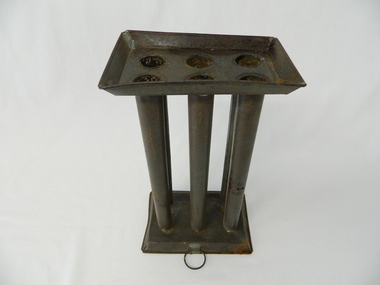
... Before the 1920"s electricity was in limited supply due to the inability of the private electricity suppliers to service isolated rural regions. It was not until the Victorian State...Before the 1920"s electricity was in limited supply due to the inability of the private electricity suppliers to service isolated rural regions. It was not until the Victorian State ...Candle stick manufacturing moulds were extensively used throughout the Kiewa Valley and its regions to provide rural homes and businesses with illumination during times of limited light e.g. night time. These candles were used before the Kiewa Valley was placed of the electrical grid. The candles were made from parrafin wax. Before the 1920"s electricity was in limited supply due to the inability of the private electricity suppliers to service isolated rural regions. It was not until the Victorian State Government passed legislation (1920) to improve electricity supplies by forming the State Electricity Commission of Victoria (S.E.C.V.) Isolated rural communities could not meet the higher costs to have electricity supplies connected and therefore it was not until the 1950's that adequate domestic electrical power could be supplied.The isolation that the Kiewa Valley provided was of a greater hindrance to any utility (power,roads & telephone) where the cost per instillation was beyond the rural population's ability to pay either directly or indirectly. One of the benefits that the "closed" community of Mount Beauty had, when it was administered by the SECV was that some utility costs were a lot lower than that of the other settlements in the Kiewa Valley. This disparity led to a conference in 1928 of the rural and regional councils to demand from the Government an equality of electricity tariffs. This equality did not take place until 1965. The demand and usage of cheaper and affordable lighting that wax candles provided was for some rural families a way of life until the mid 1900's.This candle making mould is made from mild rolled sheet steel(tin). The top basin is rectangular in shape with beveled edges(facing in on all sides. There are six holes in the top basin for vertical hollow tubes to feed off. The six tapered cyclindrical tubes running from the top basin to the bottom raised platform base. All connections are welded together. The bottom of each cylinder has an opening for the candle wick. The wick is positioned in place before the molten wax is poured into the cylinders. A positioning ring has been welded to one bottom ring for stability.parrafin wax, candles, domestic household ighting -
 Kiewa Valley Historical Society
Lamp Table Kerosene, pre 1950s
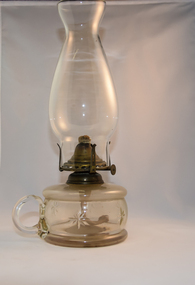
... The Kiewa Valley was supplied by electricity well before many other rural regions due to the State Electricity Commission constructing the Kiewa Hydro Electricity power turbines (late 1930's to mid 1950's). ...The Kiewa Valley was supplied by electricity well before many other rural regions due to the State Electricity Commission constructing the Kiewa Hydro Electricity power turbines (late 1930's to mid 1950's). ...This particular lamp was made for the dinner table or "parlour". This was the most effective indoor lighting before electrical lighting was introduced in the 1940's. These table lights would have still been used after this time as emergency lighting during electrical power shortages (outages). These emergency lighting lamps, including candles, were eventually replaced by battery power. The Kiewa Valley was supplied by electricity well before many other rural regions due to the State Electricity Commission constructing the Kiewa Hydro Electricity power turbines (late 1930's to mid 1950's). Petrol and diesel generators were used in other rural regions before state wide electricity was available.The significance of this kerosene lamp to the Kiewa Valley is that it provides the proof that before the Hydro electricity scheme was established in the valley, householder and commerce relied on candle/kerosene power. Although at certain times before battery and solar energy became the night time lighters the sole source of lighting was candle power and kerosene power. The supply of both however was still required by most of the population by supply from city and larger country town suppliers. This nearly fully glass made table lamp(kerosene) has a large glass bowl/basin like kerosene storage unit with a glass circular finger handle (similar to a ordinary cup). Formed single star like patterns (50mm apart) encircle the centre of the bowl. On top of the bowl sits the metal (brass) wick holder with a small wheel protruding out one side for adjusting the wick length(increasing or decreasing the strength(regulating) of the amount of light projected. Four prongs rise from the circular base light fixture holding the windproof and refractive glass "pot belly" shield. lamp table, kerosene lamp, household lighting (non electrical)
