
Showing 25 items matching "steam trains - new south wales"
-
 Victorian Railway History Library
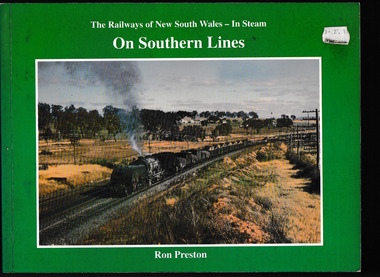
Book, Preston, R.G, The railways of New South Wales - In steam on southern lines, 2001
... ...Steam trains - New South Wales...Pictorial works - Steam - New South Wales Steam trains - New South Wales A pictorial history of New South Wales steam on the southern lines ill, p.80. ...A pictorial history of New South Wales steam on the southern linesill, p.80.non-fictionA pictorial history of New South Wales steam on the southern linespictorial works - steam - new south wales, steam trains - new south wales -
 Victorian Railway History Library
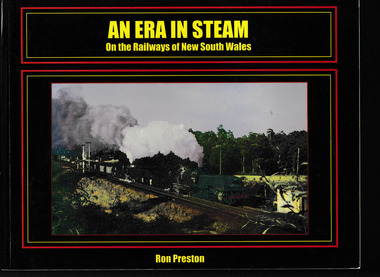
Book, Preston, R.G, An era in steam on the railways of New South Wales, 2001
... ...Steam trains - New South Wales...Pictorial works - Steam - New South Wales Steam trains - New South Wales A pictorial history of New South Wales steam ill, p.112. ...A pictorial history of New South Wales steamill, p.112.non-fictionA pictorial history of New South Wales steam pictorial works - steam - new south wales, steam trains - new south wales -
 Victorian Railway History Library
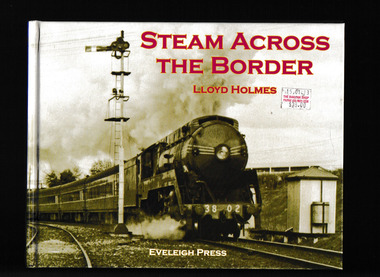
Book, Eveleigh Press, Steam across the border : the final days of steam on northern Victoria and southern New South Wales, 2012
... Steam trains - New South Wales...Steam trains - New South Wales Steam trains - Victoria Pictorial and descriptive account of the final days of steam on northern Victoria and southern New South Wales Ill p.72. ...Pictorial and descriptive account of the final days of steam on northern Victoria and southern New South WalesIll p.72.non-fictionPictorial and descriptive account of the final days of steam on northern Victoria and southern New South Walessteam trains - new south wales, steam trains - victoria -
 Eltham District Historical Society Inc
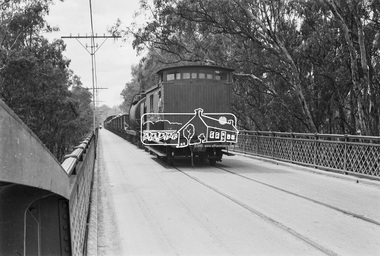
Photograph, Steam locomotive J-500 and goods train crossing the Echuca-Moama Road Rail Bridge, November 1963, 1963
... View at guard’s van end of steam train moving over the Echuca Iron Bridge looking north into Moama, New South Wales....View at guard’s van end of steam train moving over the Echuca Iron Bridge looking north into Moama, New South Wales. echuca-moama road rail bridge, george coop collection, goods train, j-500, j-class steam locomotive (vulcan foundry) Digital TIFF file Scan of 35mm Ilford FP3 black and white negative transparency Steam locomotive J-500 and goods train crossing the Echuca-Moama Road Rail Bridge, November 1963 Photograph Photograph George Coop George Coop ...View at guard’s van end of steam train moving over the Echuca Iron Bridge looking north into Moama, New South Wales.Digital TIFF file Scan of 35mm Ilford FP3 black and white negative transparencyechuca-moama road rail bridge, george coop collection, goods train, j-500, j-class steam locomotive (vulcan foundry) -
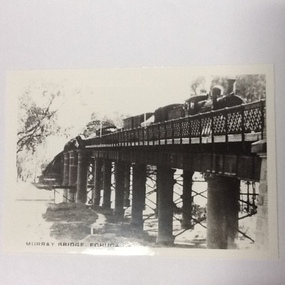 Port of Echuca
Photograph, Original photo C.1910. Copy 1984
... New South Wales and the Riverina to Melbourne. Goods trains were a very important mode to transport to our region and industrialisation of Echuca. Dowell collection Murray river bridge , Echuca Murray bridge, Echuca Steam engine goods train Railway Transportation Industrialisation Recto :"MURRAY BRIDGE Echuca"; Verso: "C.1910" "Low river" Photograph of the Murray bridge at Echuca at low river with a goods train crossing the bridge. ...This photograph comes from the Dowell collection. Related to P000202. At the turn of the 20th century, the railway line carried produce from southern New South Wales and the Riverina to Melbourne. Goods trains were a very important mode to transport to our region and industrialisation of Echuca. Photograph of the Murray bridge at Echuca at low river with a goods train crossing the bridge. Image is seen from bank facing north from Echuca.Recto :"MURRAY BRIDGE Echuca"; Verso: "C.1910" "Low river"dowell collection, murray river bridge , echuca, murray bridge, echuca, steam engine goods train, railway, transportation, industrialisation -
 Puffing Billy Railway
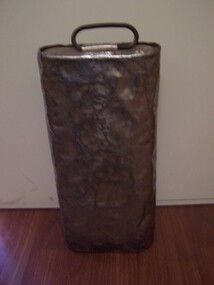
Equipment - Victorian Railways Carriage Foot Warmer
... The use of foot warmers began to decline in New South Wales from the 1930s with the first trial of carriage air-conditioning in 1936, steam heating from 1948 ad LP gas heating from 1961. By the early 1960s the main services using foot warmers were the overnight mail trains. ...The use of foot warmers began to decline in New South Wales from the 1930s with the first trial of carriage air-conditioning in 1936, steam heating from 1948 ad LP gas heating from 1961. By the early 1960s the main services using foot warmers were the overnight mail trains. ...During prestige, long distance train journeys some carriages had air-conditioning, and the majority of passengers had to brave unheated carriages. To offer some comfort during the winter months, the non-air-conditioned carriages were provided with footwarmers. These were metal containers roughly 100 mm thick and 300 mm wide, and about 750 mm long, which were filled with salt crystals (concentrated crystalline hydrated sodium acetate). The footwarmers were covered by sleeves of thick canvas, and two footwarmers were usually placed in each compartment of non-air-conditioned carriages. To activate the chemicals, the footwarmers were heated almost to boiling point. This was done by removing the canvas sleeves and placing the footwarmers in a large bath of very hot water. After they had been heated, they were removed from the bath and the sleeves refitted. They were then ready to be placed in the carriages. The McLaren patent foot warmer was used on railways in New South Wales, Queensland, Victoria and South Australia as well as South Africa and New Zealand. It was during the 1901 royal visit by the Duke and Duchess of Cornwall that these foot warmers were first used in New Zealand in the royal carriage. Before railway carriage heating was introduced, McLaren patent foot warmers were placed on the floor of New South Wales government railway carriages from 1891 to provide a little passenger comfort. The rectangular steel container worked a bit like a hot water bottle but instead of water contained six and a half kilograms of loosely-packed salt crystals, (concentrated crystalline hydrated sodium acetate). This was permanently sealed inside the container with a soldered cap. After the foot warmer was heated in vat of boiling water for about one and a quarter hours the crystals became a hot liquid. (The melting point for sodium acetate is 58 degrees). There was a whole infrastructure of special furnaces set up at stations for the daily heating of foot warmers. By 1914 the Victorian railways had 4,000 foot warmers in service and by 1935 there were 33 furnaces at principal stations to heat them. After about 10 hours the container was picked up by the handle and given a good vertical shake which helped the cooled liquid reform into a solid mass of hot crystals. Staff or sometimes passengers shook them en route when the foot warmers began to get cold. However, as they were heavy this was only possible by fit and agile passengers. At the end of the journey the containers were boiled again for reuse on the next trip. Sodium acetate railway foot warmers were introduced in Victoria in 1889, Adelaide to Melbourne express in 1899. "Shaking up" on this service took place at Murray Bridge and Stawell on the tip to Melbourne and at Ballarat and Serviceton on the trip to Adelaide. The use of foot warmers began to decline in New South Wales from the 1930s with the first trial of carriage air-conditioning in 1936, steam heating from 1948 ad LP gas heating from 1961. By the early 1960s the main services using foot warmers were the overnight mail trains. info from : http://www.powerhousemuseum.com/collection/database/?irn=67564#ixzz4UBNzVf6t Under Creative Commons License: Attribution Non-Commercial There was a whole infrastructure set up at stations for the daily heating of foot warmers in special furnaces. In Victoria alone in 1935 there were 33 heating works.Historic - Victorian Railways - Carriage Heater - Foot warmerA rectangular-shaped stainless steel casing with a welded seam down the back and welded ends. There is a handle at one end for carrying and shaking. Inside the foot warmer are two baffle plates and three trays to contain the sodium acetate. There was a cast-iron ball in each internal compartment. puffing billy, victorian railways, carriage haeter, foot warmer, passenger comfort, station furnace, railway ephemera, early heating methods -
 Puffing Billy Railway
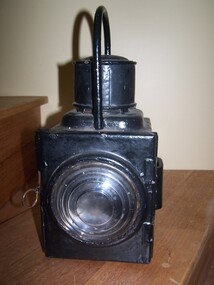
NSWTD Railway Marker Oil lamp, No.1 RA
... train at night. They were also used to indicate the rear of steam locomotive tenders for identification and safety purposes. This type of lamp was introduced to the railways around 1860 and continued to be used for over one hundred years. Oil lamps were phased out on the railways during the late 1960s and early 1970s, when they were replaced by battery lamps. Railway lighting included not only stations but yards, engines, rolling stock, signals, signal-boxes and crossings. There were a number of different types of lamps used for a variety of railway purposes. Historic - New South Wales ...NSWTD Railway Marker OIl lamp, No.1 RA Oil burning lamps have always been an important part of Australian railway signalling systems and have been used for communication, safety and lighting. It is called a marker lamp and was hung on rolling stock (carriages and wagons) such as the guard’s van to indicate the rear of the train at night. They were also used to indicate the rear of steam locomotive tenders for identification and safety purposes. This type of lamp was introduced to the railways around 1860 and continued to be used for over one hundred years. Oil lamps were phased out on the railways during the late 1960s and early 1970s, when they were replaced by battery lamps. Railway lighting included not only stations but yards, engines, rolling stock, signals, signal-boxes and crossings. There were a number of different types of lamps used for a variety of railway purposes. Historic - New South Wales Transport Department.- Railway Marker Oil Lamp NSWTD Railway Marker lamp, No.1 RA made of metal and Glass Railway lamp, paraffin, metal/glass/fabric, used for attaching to railway rolling stock to mark the end of the train, made by the New South Wales Transport Department, Sydney, New South Wales, Australia, 1870 - 1970 This lamp comprises a hollow cube of metal. One lens at the front transmits light from an interior light source. Fuel was either signal oil or kerosene. The burner inside the lamp used either cotton or felt wicks to create the light source. The lamp has a carry handle for carrying by hand and a bracket with a slot on the back for hanging onto the hook of a locomotive or item of rolling stock. It is marked "NSWTD" which stands for New South Wales Transport Department.NSWTD 1 RApuffing billy railway , pbr, nswtd railway marker oil lamp, no.1 ra -
 Puffing Billy Railway
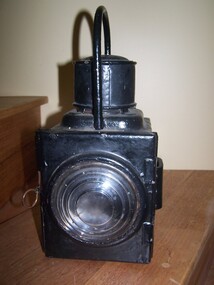
Four NSWTD Railway marker Oil lamps
... train at night. They were also used to indicate the rear of steam locomotive tenders for identification and safety purposes. This type of lamp was introduced to the railways around 1860 and continued to be used for over one hundred years. Oil lamps were phased out on the railways during the late 1960s and early 1970s, when they were replaced by battery lamps. Railway lighting included not only stations but yards, engines, rolling stock, signals, signal-boxes and crossings. There were a number of different types of lamps used for a variety of railway purposes. Historic - New South Wales ...Four NSWTD Railway marker Oil lamps at Nobelius Packing shed Item stamped numbers unknown Oil burning lamps have always been an important part of Australian railway signalling systems and have been used for communication, safety and lighting. It is called a marker lamp and was hung on rolling stock (carriages and wagons) such as the guard’s van to indicate the rear of the train at night. They were also used to indicate the rear of steam locomotive tenders for identification and safety purposes. This type of lamp was introduced to the railways around 1860 and continued to be used for over one hundred years. Oil lamps were phased out on the railways during the late 1960s and early 1970s, when they were replaced by battery lamps. Railway lighting included not only stations but yards, engines, rolling stock, signals, signal-boxes and crossings. There were a number of different types of lamps used for a variety of railway purposes. Historic - New South Wales Transport Department.- Railway Marker Oil LampFour NSWTD Railway marker Oil lamps made of metal and glass Railway lamp, paraffin, metal / glass / fabric, used for attaching to railway rolling stock to mark the end of the train, made by the New South Wales Transport Department, Sydney, New South Wales, Australia, 1870-1970 This lamp comprises a hollow cube of metal. One lens at the front transmits light from an interior light source. Fuel was either signal oil or kerosene. The burner inside the lamp used either cotton or felt wicks to create the light source. The lamp has a carry handle for carrying by hand and a bracket with a slot on the back for hanging onto the hook of a locomotive or item of rolling stock. It is marked "NSWTD" which stands for New South Wales Transport Department.NSWTDpuffing billy railway , pbr, four nswtd railway marker oil lamps -
 Wodonga & District Historical Society Inc
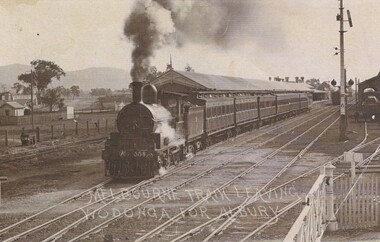
Photograph - The Melbourne Express in Wodonga and Chiltern, Thomas Bonsema, c1916
... New South Wales and died in Beecroft, NSW on 14th July 1944. Some of his photographs are held in the Victorian State Library and Mitchell Library Sydney Collections. These images are significant because they are the work of a recognised photographer Thomas Bonsema who was born in Wodonga in 1876. Bonsema Photography Thomas Peter John Bonsema Steam Locomotives Railways Victoria 1. Melbourne train ...Steam locomotives operated regularly between Wodonga and Melbourne from the opening of the line in November 1873 until the mid-1950s, hauling both passenger and goods trains. They were critical in opening up the Wodonga district to further development and trade and contributed to the demise of the paddle steamers which plied the Murray River. For many years, the Victorian Railways were one of the key employers in the Wodonga area. Our Collection includes several photographs signed BONSEMA WODONGA or sometimes simply TBW. Thomas Peter John Bonsema was born in Wodonga in 1876 to Peter John Bonsema and Mary Ann nee Nash. His name first appears on the Electoral Roll for Wodonga in 1909 and on the Electoral Roll in 1912 he is listed as a photographer. His photographs capture many scenes and events around Wodonga and surrounding areas. Thomas Bonsema married Minna Louisa Jones in 1912. By 1914 he had moved to Chiltern, Victoria where he established Bonsema’s Photographic Studio. From this time onward many of his works bore the signature “BONSEMA CHILTERN”. As well as continuing to photograph landscapes and important buildings, Mr Bonsema was often the official photographer at school and community celebrations. He also sold many framed photographs and postcards from his premises at 68 -70 Conness Street, Chiltern. By 1943 Thomas John Bonsema had relocated to New South Wales and died in Beecroft, NSW on 14th July 1944. Some of his photographs are held in the Victorian State Library and Mitchell Library Sydney Collections.These images are significant because they are the work of a recognised photographer Thomas Bonsema who was born in Wodonga in 1876. Black and white images of the Melbourne Express locomotive departing Wodonga and passing through Chiltern.1. Melbourne train leaving Wodonga for Albury 2. Melbourne Express Chilternbonsema photography, thomas peter john bonsema, steam locomotives, railways victoria -
 Wodonga & District Historical Society Inc
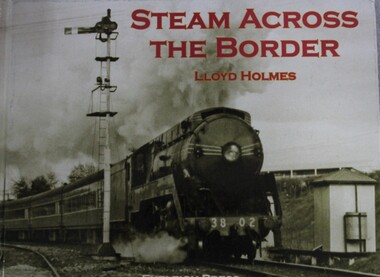
Book - Steam Across The Border, Lloyd Holmes, 2012
... steam locomotives railroads victoria history railroads new south wales history The author's interest in trains has been life long and many of his experiences have been recorded on film. ...The author's interest in trains has been life long and many of his experiences have been recorded on film. In these 72 pages, he shares these experiences, the chance meeting of the Express when he was on a family outing, the planned photo shoot of the streamlined VR S-class and NSWR 38-class on their respective Expresses, right down to the workhorses of both systems, the lowly goods engines.non-fictionThe author's interest in trains has been life long and many of his experiences have been recorded on film. In these 72 pages, he shares these experiences, the chance meeting of the Express when he was on a family outing, the planned photo shoot of the streamlined VR S-class and NSWR 38-class on their respective Expresses, right down to the workhorses of both systems, the lowly goods engines.steam locomotives, railroads victoria history, railroads new south wales history -
 Wodonga & District Historical Society Inc
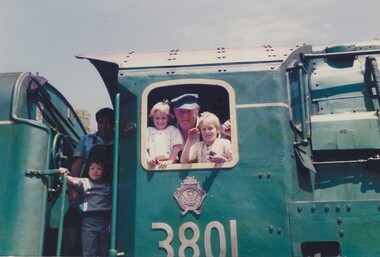
Photograph - Fred Rochow Railways Collection - Driver Fred Rochow with his grandchildren
... steam locomotives through to diesel trains, locomotives and even the modern XPT train. He worked throughout Victoria at different stages of his career, with his final working years focused on the northeast of Victoria and the Albury to Melbourne line. After his retirement, Fred continued to share his love of steam miniature trains with the community. Locomotive 3801 - The iconic streamlined engine was built by Clyde Engineering in Granville, entering service in January 1943 and leading a distinguished career as a crack express locomotive with the New South Wales...steam locomotives through to diesel trains, locomotives and even the modern XPT train. He worked throughout Victoria at different stages of his career, with his final working years focused on the northeast of Victoria and the Albury to Melbourne line. After his retirement, Fred continued to share his love of steam miniature trains with the community. Locomotive 3801 - The iconic streamlined engine was built by Clyde Engineering in Granville, entering service in January 1943 and leading a distinguished career as a crack express locomotive with the New South Wales ...The Fred Rochow Railways Collection incorporates photos related to the operation of the Wodonga Railway Station including different types of trains and railways staff C. 1930 – 1990. It was donated to the Wodonga Historical Society by Fred Rochow, a railwayman who spent many years based in Wodonga. He joined the Victorian Railways on 17th June l947 and retired in 1988. For some time, he was a member of the Australian Federated Union of Locomotive Enginemen and served a term as a member of the Trades Hall Council. He had an extensive knowledge of the struggles that took place to achieve better conditions for railway workers. Fred worked for many years as a fireman and then worked his way up the ranks to driver, experiencing many changes from the days of steam locomotives through to diesel trains, locomotives and even the modern XPT train. He worked throughout Victoria at different stages of his career, with his final working years focused on the northeast of Victoria and the Albury to Melbourne line. After his retirement, Fred continued to share his love of steam miniature trains with the community. Locomotive 3801 - The iconic streamlined engine was built by Clyde Engineering in Granville, entering service in January 1943 and leading a distinguished career as a crack express locomotive with the New South Wales Government Railways (NSWGR). It was withdrawn from regular service in October 1965. One of its most famous achievements was setting a record (2:01:51) for non-stop running between Sydney and Newcastle on 28 June 1964 which stood for a quarter of a century. This collection has local and statewide significance as it captures images of trains, locomotives and personnel who operated the railway services in Wodonga and throughout Northeast Victoria. The railways played a critical role in opening up Victoria and connecting Australia for trade, business, social communication and transport.Train driver Fred Rochow and driver David Brown, along with 3 grandchildren on the restored Locomotive 3801 during one of its visits to Albury. On the side of the locomotive, the insignia of Clyde Engineering above the number 3801fred rochow, david brown engine driver, steam locomotives australia, locomotive 3801 -
 Wodonga & District Historical Society Inc
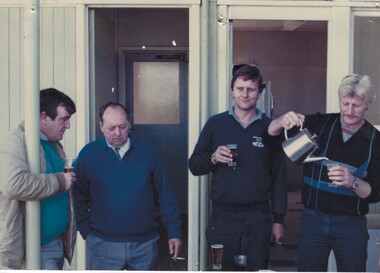
Photograph - Fred Rochow Railways Collection - Group of 4 men in Wodonga
... steam miniature trains with the community The first railway union in the world was created in Melbourne in 1861 when twenty locomotive drivers banded together to form the Locomotive Engine Drivers Association of Victoria. The forerunner to the A.F.U.L.E., the Association continues today and is the oldest continuous railway union in the world. A.R.U. - The Australian Railways Union formed in September 1920 with the amalgamation of the Queensland Railways Union, the New South Wales...steam miniature trains with the community The first railway union in the world was created in Melbourne in 1861 when twenty locomotive drivers banded together to form the Locomotive Engine Drivers Association of Victoria. The forerunner to the A.F.U.L.E., the Association continues today and is the oldest continuous railway union in the world. A.R.U. - The Australian Railways Union formed in September 1920 with the amalgamation of the Queensland Railways Union, the New South Wales ...The Fred Rochow Railways Collection incorporates photos related to the operation of the Wodonga Railway Station including different types of trains and railways staff C. 1930 – 1990. It was donated to the Wodonga Historical Society by Fred Rochow, a railwayman who spent many years based in Wodonga. He joined the Victorian Railways on 17th June l947 and retired in 1988. For some time, he was a member of the Australian Federated Union of Locomotive Enginemen and served a term as a member of the Trades Hall Council. He had an extensive knowledge of the struggles that took place to achieve better conditions for railway workers. Fred worked for many years as a fireman and then worked his way up the ranks to driver, experiencing many changes from the days of steam locomotives through to diesel trains, locomotives and even the modern XPT train. He worked throughout Victoria at different stages of his career, with his final working years focused on the northeast of Victoria and the Albury to Melbourne line. After his retirement, Fred continued to share his love of steam miniature trains with the community The first railway union in the world was created in Melbourne in 1861 when twenty locomotive drivers banded together to form the Locomotive Engine Drivers Association of Victoria. The forerunner to the A.F.U.L.E., the Association continues today and is the oldest continuous railway union in the world. A.R.U. - The Australian Railways Union formed in September 1920 with the amalgamation of the Queensland Railways Union, the New South Wales Amalgamated Railway and Tramway Service Association, the Victorian Railway Union, the Railway and Tramway Employees Association of South Australia and the Tasmanian Railway Union. It was the first Australian all-grades organisation of railway workers and was federally registered on 8 February 1921. In 1993 the ARU merged with other unions to form the Rail Tram & Bus Industry Union.This collection has local and statewide significance as it captures images of trains, locomotives and personnel who operated the railway services in Wodonga and throughout Northeast Victoria. The railways played a critical role in opening up Victoria and connecting Australia for trade, business, social communication and transport.A group 4 men in Wodonga. Possibly at branch union meeting.Left to right: Driver R. Heathcote AFULE Branch Secretary; Guard J. Young, ARU Branch Secretary; Driver S. Withers; P. Murnane.fred rochow, victorian railways wodonga, railway employees wodonga, railway trade unions -
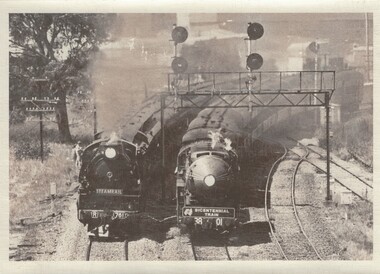 Wodonga & District Historical Society Inc
Photograph - Fred Rochow Railways Collection - Locomotive R761 and Bicentennial Train 3801 departing Wodonga, 16 October 1988
... trains. It became the final R class to run in VR service on the 5th September 1974, ending 120 years of mainline steam operation in Victoria. After years of debate about its future, on the 30th March 1985 the loco was officially returned to service, hauling special trains to celebrate the years of steam locomotives. Locomotive 3801 was built by Sydney company The Clyde Engineering Co. Ltd., Granville in 1943 as the first of five streamlined (C) 38-class locomotives for the New South Wales...trains. It became the final R class to run in VR service on the 5th September 1974, ending 120 years of mainline steam operation in Victoria. After years of debate about its future, on the 30th March 1985 the loco was officially returned to service, hauling special trains to celebrate the years of steam locomotives. Locomotive 3801 was built by Sydney company The Clyde Engineering Co. Ltd., Granville in 1943 as the first of five streamlined (C) 38-class locomotives for the New South Wales ...The Fred Rochow Railways Collection incorporates photos related to the operation of the Wodonga Railway Station including different types of trains and railways staff C. 1930 – 1990. It was donated to the Wodonga Historical Society by Fred Rochow, a railwayman who spent many years based in Wodonga. He joined the Victorian Railways on 17th June l947 and retired in 1988. For some time, he was a member of the Australian Federated Union of Locomotive Enginemen and served a term as a member of the Trades Hall Council. He had an extensive knowledge of the struggles that took place to achieve better conditions for railway workers. Fred worked for many years as a fireman and then worked his way up the ranks to driver, experiencing many changes from the days of steam locomotives through to diesel trains, locomotives and even the modern XPT train. He worked throughout Victoria at different stages of his career, with his final working years focused on the northeast of Victoria and the Albury to Melbourne line. After his retirement, Fred continued to share his love of steam miniature trains with the community.This collection has local and statewide significance as it captures images of trains, locomotives and personnel who operated the railway services in Wodonga and throughout Northeast Victoria. The railways played a critical role in opening up Victoria and connecting Australia for trade, business, social communication and transport.Locomotive R761 with Driver Norm Depomeroy and Fireman Steve Gibson running in parallel with the Bicentennial Train hauled by Locomotive 3801 with Driver Fred Rochow and Fireman David Brown. Locomotive R761 - The R761 arrived in Victoria on the 28th February 1952 upon the ship ‘Helenus’ and entered service on the 9th April 1952. R761 spent long periods in storage and occasionally saw service until it was withdrawn. In 1970 R761 was overhauled and was made available for use on special trains. It became the final R class to run in VR service on the 5th September 1974, ending 120 years of mainline steam operation in Victoria. After years of debate about its future, on the 30th March 1985 the loco was officially returned to service, hauling special trains to celebrate the years of steam locomotives. Locomotive 3801 was built by Sydney company The Clyde Engineering Co. Ltd., Granville in 1943 as the first of five streamlined (C) 38-class locomotives for the New South Wales Government Railways’ top-link express passenger duties. The delivery of 3801 was much delayed due to wartime labour & material shortages, together with competing wartime construction priorities. After many years of service, 3801 had been scheduled for withdrawal in 1962 due to deteriorating mechanical condition, but rail enthusiasts raised sufficient funds to cover the cost of its overhaul. 3801 joined the collection of the New South Wales Rail Transport Museum (NSWRTM), Enfield on withdrawal from NSWGR service and continued in operation as a tour locomotive. It hauled the “Western Endeavour” on the first crossing of the Australian continent by a standard gauge train from Sydney to Perth and return in August – September 1970. 3801 also stars in the railway film ‘A Steam Train Passes’ made by Film Australia in 1974 By 1976 had been withdrawn from service due to poor boiler condition and placed on static display by the Rail Transport Museum in Thirlmere, NSW. The Locomotive remained in Thirlmere until 1983 when it was decided it should be restored for the Australian Bicentenary in 1988. A new organisation was created specifically for the purpose of operating 3801, and thus 3801 Limited was incorporated on 5th June 1985. Work on the locomotive was completed after three years, with 3801 making its debut at a special Railway Ball hosted in its honour on 29th November 1986. During the Australian Bicentenary celebrations in 1988, it operated an extensive program across Australia visiting every mainland capital accessible by rail including an appearance at AusSteam ’88 in Melbourne in October 1988, stopping over in Wodonga on the way. After the company’s 20-year lease on the locomotive expired in 2006 Railcorp chose not to extend the agreement, and the locomotive returned to the Rail Transport Museum at Thirlmere (now the NSW Rail Museum). 3801 was withdrawn from service in 2007 for major boiler repairs. Locomotive 3801 was officially relaunched at Sydney's Central Station on Friday 12 March 2021 by Her Excellency, the Honourable Margaret Beazley AC QC, Governor of New South Wales.On front of locomotive on the left "STEAMRAIL /R761". On front of locomotive on the right "BICENTENNIAL TRAIN/3801" railways wodonga, fred rochow, locomotive r761, bicentennial train, locomotive 3801 -
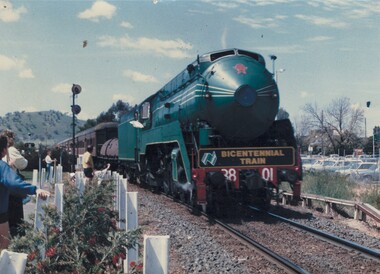 Wodonga & District Historical Society Inc
Photograph - Fred Rochow Railways Collection - Bicentennial Train Locomotive 3801, 29 October 1988
... New South Wales Rail Transport Museum (NSWRTM), Enfield on withdrawal from NSWGR service and continued in operation as a tour locomotive. It hauled the “Western Endeavour” on the first crossing of the Australian continent by a standard gauge train from Sydney to Perth and return in August – September 1970. 3801 also stars in the railway film ‘A Steam Train Passes’ made by Film Australia in 1974 By 1976 had been withdrawn from service due to poor boiler condition and placed on static display by the Rail Transport Museum in Thirlmere, NSW. ...New South Wales Rail Transport Museum (NSWRTM), Enfield on withdrawal from NSWGR service and continued in operation as a tour locomotive. It hauled the “Western Endeavour” on the first crossing of the Australian continent by a standard gauge train from Sydney to Perth and return in August – September 1970. 3801 also stars in the railway film ‘A Steam Train Passes’ made by Film Australia in 1974 By 1976 had been withdrawn from service due to poor boiler condition and placed on static display by the Rail Transport Museum in Thirlmere, NSW. ...The Fred Rochow Railways Collection incorporates photos related to the operation of the Wodonga Railway Station including different types of trains and railways staff C. 1930 – 1990. It was donated to the Wodonga Historical Society by Fred Rochow, a railwayman who spent many years based in Wodonga. He joined the Victorian Railways on 17th June l947 and retired in 1988. For some time, he was a member of the Australian Federated Union of Locomotive Enginemen and served a term as a member of the Trades Hall Council. He had an extensive knowledge of the struggles that took place to achieve better conditions for railway workers. Fred worked for many years as a fireman and then worked his way up the ranks to driver, experiencing many changes from the days of steam locomotives through to diesel trains, locomotives and even the modern XPT train. He worked throughout Victoria at different stages of his career, with his final working years focused on the northeast of Victoria and the Albury to Melbourne line. After his retirement, Fred continued to share his love of steam miniature trains with the community.This collection has local and statewide significance as it captures images of trains, locomotives and personnel who operated the railway services in Wodonga and throughout Northeast Victoria. The railways played a critical role in opening up Victoria and connecting Australia for trade, business, social communication and transport.Bicentennial Train hauled by Locomotive 3801 passing through Wodonga. Locomotive 3801 was built by Sydney company The Clyde Engineering Co. Ltd., Granville in 1943 as the first of five streamlined (C) 38-class locomotives for the New South Wales Government Railways’ top-link express passenger duties. The delivery of 3801 was much delayed due to wartime labour & material shortages, together with competing wartime construction priorities. After many years of service, 3801 had been scheduled for withdrawal in 1962 due to deteriorating mechanical condition, but rail enthusiasts raised sufficient funds to cover the cost of its overhaul. 3801 joined the collection of the New South Wales Rail Transport Museum (NSWRTM), Enfield on withdrawal from NSWGR service and continued in operation as a tour locomotive. It hauled the “Western Endeavour” on the first crossing of the Australian continent by a standard gauge train from Sydney to Perth and return in August – September 1970. 3801 also stars in the railway film ‘A Steam Train Passes’ made by Film Australia in 1974 By 1976 had been withdrawn from service due to poor boiler condition and placed on static display by the Rail Transport Museum in Thirlmere, NSW. The Locomotive remained in Thirlmere until 1983 when it was decided it should be restored for the Australian Bicentenary in 1988. A new organisation was created specifically for the purpose of operating 3801, and thus 3801 Limited was incorporated on 5th June 1985. Work on the locomotive was completed after three years, with 3801 making its debut at a special Railway Ball hosted in its honour on 29th November 1986. During the Australian Bicentenary celebrations in 1988, it operated an extensive program across Australia visiting every mainland capital accessible by rail including an appearance at AusSteam ’88 in Melbourne in October 1988, stopping over in Wodonga on the way. After the company’s 20-year lease on the locomotive expired in 2006 Railcorp chose not to extend the agreement, and the locomotive returned to the Rail Transport Museum at Thirlmere (now the NSW Rail Museum). 3801 was withdrawn from service in 2007 for major boiler repairs. Locomotive 3801 was officially relaunched at Sydney's Central Station on Friday 12 March 2021 by Her Excellency, the Honourable Margaret Beazley AC QC, Governor of New South Wales.On front of locomotive Australia Bicentennial logo and sign "BICENTENNIAL TRAIN/3801" railways wodonga, fred rochow, locomotive r761, bicentennial train, locomotive 3801 -
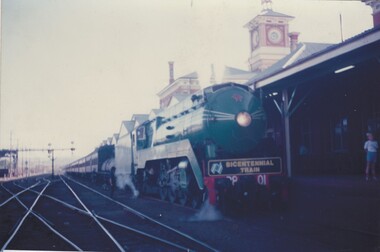 Wodonga & District Historical Society Inc
Photograph - Fred Rochow Railways Collection - Bicentennial Train Locomotive 3801 arriving in Albury, 29 October 1988
... New South Wales Rail Transport Museum (NSWRTM), Enfield on withdrawal from NSWGR service and continued in operation as a tour locomotive. It hauled the “Western Endeavour” on the first crossing of the Australian continent by a standard gauge train from Sydney to Perth and return in August – September 1970. 3801 also stars in the railway film ‘A Steam Train Passes’ made by Film Australia in 1974 By 1976 had been withdrawn from service due to poor boiler condition and placed on static display by the Rail Transport Museum in Thirlmere, NSW. ...New South Wales Rail Transport Museum (NSWRTM), Enfield on withdrawal from NSWGR service and continued in operation as a tour locomotive. It hauled the “Western Endeavour” on the first crossing of the Australian continent by a standard gauge train from Sydney to Perth and return in August – September 1970. 3801 also stars in the railway film ‘A Steam Train Passes’ made by Film Australia in 1974 By 1976 had been withdrawn from service due to poor boiler condition and placed on static display by the Rail Transport Museum in Thirlmere, NSW. ...The Fred Rochow Railways Collection incorporates photos related to the operation of the Wodonga Railway Station including different types of trains and railways staff C. 1930 – 1990. It was donated to the Wodonga Historical Society by Fred Rochow, a railwayman who spent many years based in Wodonga. He joined the Victorian Railways on 17th June l947 and retired in 1988. For some time, he was a member of the Australian Federated Union of Locomotive Enginemen and served a term as a member of the Trades Hall Council. He had an extensive knowledge of the struggles that took place to achieve better conditions for railway workers. Fred worked for many years as a fireman and then worked his way up the ranks to driver, experiencing many changes from the days of steam locomotives through to diesel trains, locomotives and even the modern XPT train. He worked throughout Victoria at different stages of his career, with his final working years focused on the northeast of Victoria and the Albury to Melbourne line. After his retirement, Fred continued to share his love of steam miniature trains with the community.This collection has local and statewide significance as it captures images of trains, locomotives and personnel who operated the railway services in Wodonga and throughout Northeast Victoria. The railways played a critical role in opening up Victoria and connecting Australia for trade, business, social communication and transport.Bicentennial Train hauled by Locomotive 3801 arriving at Albury Station, Locomotive 3801 was built by Sydney company The Clyde Engineering Co. Ltd., Granville in 1943 as the first of five streamlined (C) 38-class locomotives for the New South Wales Government Railways’ top-link express passenger duties. The delivery of 3801 was much delayed due to wartime labour & material shortages, together with competing wartime construction priorities. After many years of service, 3801 had been scheduled for withdrawal in 1962 due to deteriorating mechanical condition, but rail enthusiasts raised sufficient funds to cover the cost of its overhaul. 3801 joined the collection of the New South Wales Rail Transport Museum (NSWRTM), Enfield on withdrawal from NSWGR service and continued in operation as a tour locomotive. It hauled the “Western Endeavour” on the first crossing of the Australian continent by a standard gauge train from Sydney to Perth and return in August – September 1970. 3801 also stars in the railway film ‘A Steam Train Passes’ made by Film Australia in 1974 By 1976 had been withdrawn from service due to poor boiler condition and placed on static display by the Rail Transport Museum in Thirlmere, NSW. The Locomotive remained in Thirlmere until 1983 when it was decided it should be restored for the Australian Bicentenary in 1988. A new organisation was created specifically for the purpose of operating 3801, and thus 3801 Limited was incorporated on 5th June 1985. Work on the locomotive was completed after three years, with 3801 making its debut at a special Railway Ball hosted in its honour on 29th November 1986. During the Australian Bicentenary celebrations in 1988, it operated an extensive program across Australia visiting every mainland capital accessible by rail including an appearance at AusSteam ’88 in Melbourne in October 1988, stopping over in Wodonga on the way. After the company’s 20-year lease on the locomotive expired in 2006 Railcorp chose not to extend the agreement, and the locomotive returned to the Rail Transport Museum at Thirlmere (now the NSW Rail Museum). 3801 was withdrawn from service in 2007 for major boiler repairs. Locomotive 3801 was officially relaunched at Sydney's Central Station on Friday 12 March 2021 by Her Excellency, the Honourable Margaret Beazley AC QC, Governor of New South Wales.On front of locomotive Australia Bicentennial logo and sign "BICENTENNIAL TRAIN/3801" railways wodonga, fred rochow, locomotive r761, bicentennial train, locomotive 3801 -
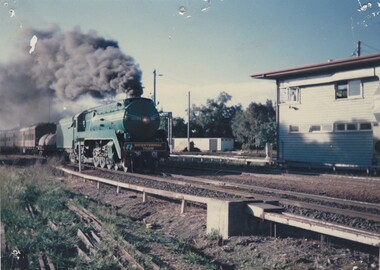 Wodonga & District Historical Society Inc
Photograph - Fred Rochow Railways Collection - Bicentennial Train Locomotive 3801 passing Wodonga Signal box, 29 October 1988
... New South Wales Rail Transport Museum (NSWRTM), Enfield on withdrawal from NSWGR service and continued in operation as a tour locomotive. It hauled the “Western Endeavour” on the first crossing of the Australian continent by a standard gauge train from Sydney to Perth and return in August – September 1970. 3801 also stars in the railway film ‘A Steam Train Passes’ made by Film Australia in 1974 By 1976 had been withdrawn from service due to poor boiler condition and placed on static display by the Rail Transport Museum in Thirlmere, NSW. ...New South Wales Rail Transport Museum (NSWRTM), Enfield on withdrawal from NSWGR service and continued in operation as a tour locomotive. It hauled the “Western Endeavour” on the first crossing of the Australian continent by a standard gauge train from Sydney to Perth and return in August – September 1970. 3801 also stars in the railway film ‘A Steam Train Passes’ made by Film Australia in 1974 By 1976 had been withdrawn from service due to poor boiler condition and placed on static display by the Rail Transport Museum in Thirlmere, NSW. ...The Fred Rochow Railways Collection incorporates photos related to the operation of the Wodonga Railway Station including different types of trains and railways staff C. 1930 – 1990. It was donated to the Wodonga Historical Society by Fred Rochow, a railwayman who spent many years based in Wodonga. He joined the Victorian Railways on 17th June l947 and retired in 1988. For some time, he was a member of the Australian Federated Union of Locomotive Enginemen and served a term as a member of the Trades Hall Council. He had an extensive knowledge of the struggles that took place to achieve better conditions for railway workers. Fred worked for many years as a fireman and then worked his way up the ranks to driver, experiencing many changes from the days of steam locomotives through to diesel trains, locomotives and even the modern XPT train. He worked throughout Victoria at different stages of his career, with his final working years focused on the northeast of Victoria and the Albury to Melbourne line. After his retirement, Fred continued to share his love of steam miniature trains with the community.This collection has local and statewide significance as it captures images of trains, locomotives and personnel who operated the railway services in Wodonga and throughout Northeast Victoria. The railways played a critical role in opening up Victoria and connecting Australia for trade, business, social communication and transport.Bicentennial Train hauled by Locomotive 3801 passing the Wodonga Signal box. Locomotive 3801 was built by Sydney company The Clyde Engineering Co. Ltd., Granville in 1943 as the first of five streamlined (C) 38-class locomotives for the New South Wales Government Railways’ top-link express passenger duties. The delivery of 3801 was much delayed due to wartime labour & material shortages, together with competing wartime construction priorities. After many years of service, 3801 had been scheduled for withdrawal in 1962 due to deteriorating mechanical condition, but rail enthusiasts raised sufficient funds to cover the cost of its overhaul. 3801 joined the collection of the New South Wales Rail Transport Museum (NSWRTM), Enfield on withdrawal from NSWGR service and continued in operation as a tour locomotive. It hauled the “Western Endeavour” on the first crossing of the Australian continent by a standard gauge train from Sydney to Perth and return in August – September 1970. 3801 also stars in the railway film ‘A Steam Train Passes’ made by Film Australia in 1974 By 1976 had been withdrawn from service due to poor boiler condition and placed on static display by the Rail Transport Museum in Thirlmere, NSW. The Locomotive remained in Thirlmere until 1983 when it was decided it should be restored for the Australian Bicentenary in 1988. A new organisation was created specifically for the purpose of operating 3801, and thus 3801 Limited was incorporated on 5th June 1985. Work on the locomotive was completed after three years, with 3801 making its debut at a special Railway Ball hosted in its honour on 29th November 1986. During the Australian Bicentenary celebrations in 1988, it operated an extensive program across Australia visiting every mainland capital accessible by rail including an appearance at AusSteam ’88 in Melbourne in October 1988, stopping over in Wodonga on the way. After the company’s 20-year lease on the locomotive expired in 2006 Railcorp chose not to extend the agreement, and the locomotive returned to the Rail Transport Museum at Thirlmere (now the NSW Rail Museum). 3801 was withdrawn from service in 2007 for major boiler repairs. Locomotive 3801 was officially relaunched at Sydney's Central Station on Friday 12 March 2021 by Her Excellency, the Honourable Margaret Beazley AC QC, Governor of New South Wales.On front of locomotive Australia Bicentennial logo and sign "BICENTENNIAL TRAIN/3801" railways wodonga, fred rochow, locomotive r761, bicentennial train, locomotive 3801 -
 Victorian Railway History Library
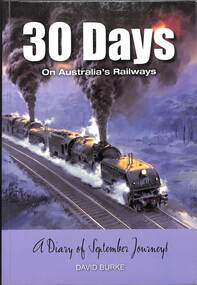
Book, David Burke, 30 Days On Australia's Railways - A diary of September journeys, 2014
... New South Wales, to 2013, when the great Bayer-Garrett AD6029 steam engine was restored to working order. For some strange reason, September has been a month when particularly memorable railway events tend to occur. Author David Burke has crafted a 'diary' which documents, day by day, major happenings to do with railways in Australia - from the days of steam, to diesel, to diesel-electric and electrification, covering the first trains that ran between New South Wales and Queensland, and to Melbourne. ...An entertaining look at railway events in Australia in the month of September - from 1848, when a meeting was called to start a railway company in New South Wales, to 2013, when the great Bayer-Garrett AD6029 steam engine was restored to working order. For some strange reason, September has been a month when particularly memorable railway events tend to occur. Author David Burke has crafted a 'diary' which documents, day by day, major happenings to do with railways in Australia - from the days of steam, to diesel, to diesel-electric and electrification, covering the first trains that ran between New South Wales and Queensland, and to Melbourne. It was in also September that the first sod was dug for the Trans-Australian Railway across the Nullarbor to Perth. The book is heavily illustrated with historic photographs, both black and white and colour, newspaper cuttings, sketches and maps, and features 13 paintings by renowned railway artist Phil Belbin. Names that leap to the fore among those who made railway history happen include Ben Chifley, the locomotive driver who became Prime Minister of Australia, engineer Dr John Bradfield, designer of the Sydney Harbour Bridge and responsible for putting Sydney's city trains underground, James Fraser, first Australian-born Chief Commissioner for Railways, and Harold Young, the Scotsman who designed the C38 engine and the Silver City Comet. Cover picture shows: Climbing the steep Fassifern Grade with a heavy coal train maakes for plenty of Bayer-Garrett action in Phil Belbin's painting of the AD60 class at work on the Shorty North line to Newcastle New South Wales Australia.ill. p.172.non-fictionAn entertaining look at railway events in Australia in the month of September - from 1848, when a meeting was called to start a railway company in New South Wales, to 2013, when the great Bayer-Garrett AD6029 steam engine was restored to working order. For some strange reason, September has been a month when particularly memorable railway events tend to occur. Author David Burke has crafted a 'diary' which documents, day by day, major happenings to do with railways in Australia - from the days of steam, to diesel, to diesel-electric and electrification, covering the first trains that ran between New South Wales and Queensland, and to Melbourne. It was in also September that the first sod was dug for the Trans-Australian Railway across the Nullarbor to Perth. The book is heavily illustrated with historic photographs, both black and white and colour, newspaper cuttings, sketches and maps, and features 13 paintings by renowned railway artist Phil Belbin. Names that leap to the fore among those who made railway history happen include Ben Chifley, the locomotive driver who became Prime Minister of Australia, engineer Dr John Bradfield, designer of the Sydney Harbour Bridge and responsible for putting Sydney's city trains underground, James Fraser, first Australian-born Chief Commissioner for Railways, and Harold Young, the Scotsman who designed the C38 engine and the Silver City Comet. Cover picture shows: Climbing the steep Fassifern Grade with a heavy coal train maakes for plenty of Bayer-Garrett action in Phil Belbin's painting of the AD60 class at work on the Shorty North line to Newcastle New South Wales Australia.railroads -- australia -- history., railroad travel -- australia -- history. -
 Victorian Railway History Library
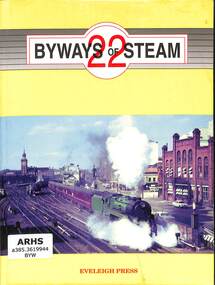
Book, Dunn, Ian, Byways of Steam 22, 2004
... Steam locomotives - NSW – pictorial Features: The Short North: Fassifern to Newcastle, by Peter Attenborough. The third and concluding essay in the series reviewing the main northern line between Gosford and Newcastle looks in detail at the section of railway between Fassifern and Newcastle. Passing through the southern suburbs of New South Wales’ second largest city, the line plays host to local goods and passenger services, a constant procession of coal trains ...Features: The Short North: Fassifern to Newcastle, by Peter Attenborough. The third and concluding essay in the series reviewing the main northern line between Gosford and Newcastle looks in detail at the section of railway between Fassifern and Newcastle. Passing through the southern suburbs of New South Wales’ second largest city, the line plays host to local goods and passenger services, a constant procession of coal trains, as well as the heavy traffic plying between Sydney and Newcastle. Driver in a Hurry, by Pat Turner. Pat Turner spent his entire railway career on the main southern line and in this essay recalls a couple of fast trips on the Southern Expresses during the late 1950s. Useful to Yardmaster, by Leon Oberg. Bob Payne commenced work for the NSWR in Goulburn in 1940 as a useful. Leon Oberg reports on Bob’s varied railway career in the Southern Tablelands town of Goulburn up until the time Bob finished work as a Yard Master. Traffic Officer: Station Master at Coonabarabran, by Russell Bright. In this, the final instalment of his career as an officer in the Traffic Branch of the NSW Railways, Russell describes his duties as Station Master, Coonabarabran during the period 1970 to 1990. This was a time when severe cutbacks were being made in the NSWR, particularly in country areas. Russell takes us through the effects this had on the railway at Coonabarabran during these years of change, as well as his additional responsibility as a union representative involved with the downsizing, closure and staff redundancies at many locations. The last duty he performed was his own redundancy and closure of Coonabarabran station in 1990.ill, maps, p.136.non-fictionFeatures: The Short North: Fassifern to Newcastle, by Peter Attenborough. The third and concluding essay in the series reviewing the main northern line between Gosford and Newcastle looks in detail at the section of railway between Fassifern and Newcastle. Passing through the southern suburbs of New South Wales’ second largest city, the line plays host to local goods and passenger services, a constant procession of coal trains, as well as the heavy traffic plying between Sydney and Newcastle. Driver in a Hurry, by Pat Turner. Pat Turner spent his entire railway career on the main southern line and in this essay recalls a couple of fast trips on the Southern Expresses during the late 1950s. Useful to Yardmaster, by Leon Oberg. Bob Payne commenced work for the NSWR in Goulburn in 1940 as a useful. Leon Oberg reports on Bob’s varied railway career in the Southern Tablelands town of Goulburn up until the time Bob finished work as a Yard Master. Traffic Officer: Station Master at Coonabarabran, by Russell Bright. In this, the final instalment of his career as an officer in the Traffic Branch of the NSW Railways, Russell describes his duties as Station Master, Coonabarabran during the period 1970 to 1990. This was a time when severe cutbacks were being made in the NSWR, particularly in country areas. Russell takes us through the effects this had on the railway at Coonabarabran during these years of change, as well as his additional responsibility as a union representative involved with the downsizing, closure and staff redundancies at many locations. The last duty he performed was his own redundancy and closure of Coonabarabran station in 1990.railroads - nsw - history, steam locomotives - nsw – pictorial -
 Victorian Railway History Library
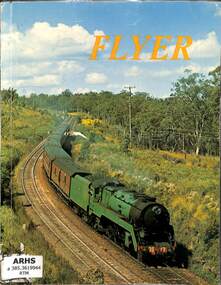
Book, The New South Wales Rail Transport Museum, Flyer, 1970
... railroad steam locomotives - New South Wales - history Railroads - passenger trains - Australia A tribute to steam locomotive operation on The Sydney - Newcastle Express on the New South Wales Railways. ill, maps, p.75. ...A tribute to steam locomotive operation on The Sydney - Newcastle Express on the New South Wales Railways.ill, maps, p.75.non-fictionA tribute to steam locomotive operation on The Sydney - Newcastle Express on the New South Wales Railways.railroad steam locomotives - new south wales - history, railroads - passenger trains - australia -
 Victorian Railway History Library
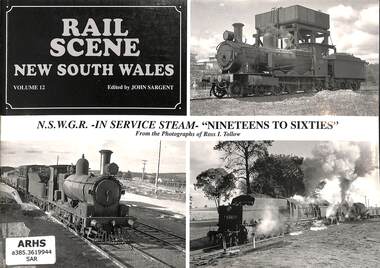
Book, Sargent, John, Rail Scene New South Wales N.S.W.G.R. - In Service Steam - Nineteens to Sixties, 1997
... Steam locomotives - NSW – pictorial railroad operations - New South Wales - history A pictorial history of steam locomotives in New South Wales from the 19 class to the 60 class. From the Ross Tallow photo collection. ill, p112. Rail Scene New South Wales N.S.W.G.R. - In Service Steam - Nineteens to Sixties Book Sargent, John Crow, Lindsay Verdich, Ross Tallow, Ross Train ...A pictorial history of steam locomotives in New South Wales from the 19 class to the 60 class. From the Ross Tallow photo collection.ill, p112.non-fictionA pictorial history of steam locomotives in New South Wales from the 19 class to the 60 class. From the Ross Tallow photo collection.steam locomotives - nsw – pictorial, railroad operations - new south wales - history -
 Victorian Railway History Library
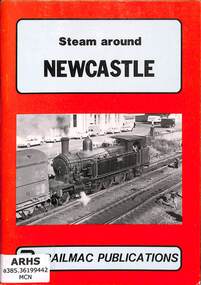
Book, McNicol, Steve, Steam Around Newcastle, 1984
... Steam locomotives - NSW – pictorial railroad operations - Newcastle NSW - history A pictorial of steam train operations in the Newcastle area on Government and private railways in New South Wales. ill, p.52. ...A pictorial of steam train operations in the Newcastle area on Government and private railways in New South Wales.ill, p.52.non-fictionA pictorial of steam train operations in the Newcastle area on Government and private railways in New South Wales.steam locomotives - nsw – pictorial, railroad operations - newcastle nsw - history -
 Victorian Railway History Library
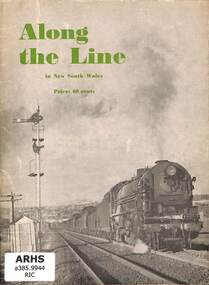
Book, Richardson, J, Along the Line in New South Wales, 1966
... Locomotives - New South Wales - pictorial works Railroad trains -- Australia -- History -- Pictorial works. Photographs of steam locomotives in New South Wales ill, p.42. ...Photographs of steam locomotives in New South Walesill, p.42.non-fictionPhotographs of steam locomotives in New South Waleslocomotives - new south wales - pictorial works, railroad trains -- australia -- history -- pictorial works. -
 Victorian Railway History Library
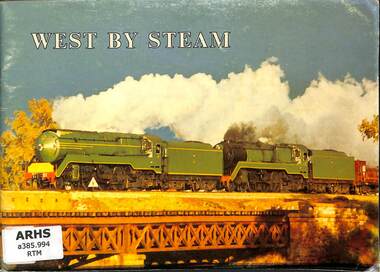
Book, New South Wales Rail Transport Museum, West by Steam, 1972
... Railroad passenger trains - Australia Western Endeavour special passenger train - Australia The story of the first steam train to cross Australia, the special Western Endeavour train from Sydney to Perth to commemorate the opening of the standard gauge all the way through from 22-08 to 12-09-1970. ill, maps, p.72. West by Steam Book New South Wales ...The story of the first steam train to cross Australia, the special Western Endeavour train from Sydney to Perth to commemorate the opening of the standard gauge all the way through from 22-08 to 12-09-1970.ill, maps, p.72.non-fictionThe story of the first steam train to cross Australia, the special Western Endeavour train from Sydney to Perth to commemorate the opening of the standard gauge all the way through from 22-08 to 12-09-1970.railroad passenger trains - australia, western endeavour special passenger train - australia -
 Victorian Railway History Library
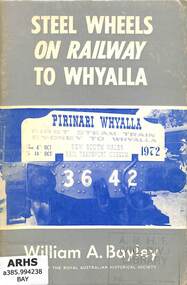
Book, Bayley, William, Steel Wheels on Railway to Whyalla, 1972
... Railroad construction - South Australia - history Preserved locomotives - South Australia - history A pictorial history of the first steam train from Sydney to Whyalla run by the New South Wales Rail Transport Museum in October 1972. ill, maps, p.64. ...A pictorial history of the first steam train from Sydney to Whyalla run by the New South Wales Rail Transport Museum in October 1972.ill, maps, p.64.non-fictionA pictorial history of the first steam train from Sydney to Whyalla run by the New South Wales Rail Transport Museum in October 1972.railroad construction - south australia - history, preserved locomotives - south australia - history -
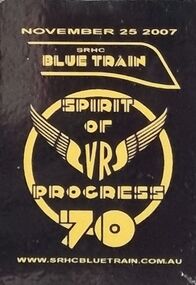 Wodonga & District Historical Society Inc
Memorabilia - Spirit of Progress 70th Anniversary, Seymour Railway Heritage Centre, 2007
... train. Its first journey was on 2nd November 1937 when it was launched by Victorian Premier Albert Dunstan and Chief Commissioner Harold Clapp at Spencer Street Station in Melbourne. It originally ran non-stop between Melbourne and the New South Wales border at Albury. The route was extended to Sydney in April 1962 after standard-gauge track was completed. The “Spirit” was Australia's first streamlined, air-conditioned, all-steel express train, styled in a 1930s Art Deco design with royal blue and gold paintwork . It was hauled by streamlined S-class 3-cylinder Pacific steam...train. Its first journey was on 2nd November 1937 when it was launched by Victorian Premier Albert Dunstan and Chief Commissioner Harold Clapp at Spencer Street Station in Melbourne. It originally ran non-stop between Melbourne and the New South Wales border at Albury. The route was extended to Sydney in April 1962 after standard-gauge track was completed. The “Spirit” was Australia's first streamlined, air-conditioned, all-steel express train, styled in a 1930s Art Deco design with royal blue and gold paintwork . It was hauled by streamlined S-class 3-cylinder Pacific steam ...This magnet commemorates the 70th Anniversary of the inaugural journey of the Spirit of Progress express passenger train. Its first journey was on 2nd November 1937 when it was launched by Victorian Premier Albert Dunstan and Chief Commissioner Harold Clapp at Spencer Street Station in Melbourne. It originally ran non-stop between Melbourne and the New South Wales border at Albury. The route was extended to Sydney in April 1962 after standard-gauge track was completed. The “Spirit” was Australia's first streamlined, air-conditioned, all-steel express train, styled in a 1930s Art Deco design with royal blue and gold paintwork . It was hauled by streamlined S-class 3-cylinder Pacific steam locomotives capable of travelling at around 75 to 100 kilometres per hour. It ceased operations in August 1986 due to competition from cars and air travel. Magnet Details & Event Background • The Anniversary Run: The magnet highlights the date November 25, 2007 when the Seymour Railway Heritage Centre (SRHC) operated a special celebratory commemorative run to mark exactly 70 years since the first journey of the Spirit of Progress. • The "Blue Train": The text at the top features the SRHC Blue Train. Seymour Railway Heritage Centre maintains a preserved fleet of original, iconic 1937 royal blue and gold all-steel passenger carriages and a dining car from the Spirit of Progress • Design Motifs: The centre of the magnet incorporates the classic winged "VR" logo used historically by the Victorian Railways, flanked by the stylized text "Spirit of Progress" and a large "70" at the bottom. • The Commemorative Journey: For this special anniversary event, the SRHC ran the original train from Melbourne to Albury using freshly repainted, heritage diesel locomotives B74 and S303 in their original Victorian Railways colours. This magnet is significant because it celebrates the Spirit of Progress which serviced Wodonga for 48 years and 8 months between 1937 and 1986.A small commemorative magnet with black background and gold lettering. It was used to celebrate the 70th anniversary of the inaugural run of the "Spirit of Progress".November 25 2007| SRHC BLUE TRAIN SPIRIT OF PROGRESS VR 70 www.SRCHBLUETRAIN.COM.AU"spirit of progress", spirit of progress 70th anniversary, spirit of progress memorabilia
