
Showing 65 items matching "stephen tasker"
-
 Federation University Historical Collection
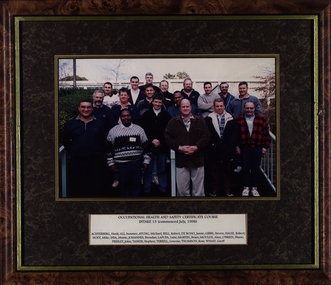
Photograph - Photograph - coloured, Occupational Health and Safety Certificate Course, intake 13, 1998, 1998
... ...stephen tasker...VIOSH accepts people into the Graduate Diploma of Occupational Hazard Management who have no undergraduate degree – on the basis of extensive work experience and knowledge. viosh viosh australia occupatonal health and safety henk achterberg summer ali micheal atung robert bell jamie debono steven gibbs robert halse mike hoey monte inia brendan johannes luke laptua brain martin alan moulds shane o'brian john presley stephen tasker graeme terrell ross thomson Framers details verso lls: "Artafact" Brown and gold framed photograph with title and names of students underneath, marbled background Occupational Health and Safety Certificate Course, intake 13, 1998 Photograph Photograph - coloured Artafact ...Victorian Institute of Occupational Safety and Health (VIOSH) Australia is the Asia-Pacific centre for teaching and research in occupational health and safety (OHS) and is known as one of Australia's leaders in the field. VIOSH has a global reputation for its innovative approach within the field of OHS management. Federation University VIOSH Australia students are safety managers, senior advisors and experienced OHS professionals. They come from all over Australia and industry. Students are taught active research and enquiry; rather than textbook learning and a one-size fits all approach. VIOSH accepts people into the Graduate Diploma of Occupational Hazard Management who have no undergraduate degree – on the basis of extensive work experience and knowledge.Brown and gold framed photograph with title and names of students underneath, marbled background Framers details verso lls: "Artafact"viosh, viosh australia, occupatonal health and safety, henk achterberg, summer ali, micheal atung, robert bell, jamie debono, steven gibbs, robert halse, mike hoey, monte inia, brendan johannes, luke laptua, brain martin, alan moulds, shane o'brian, john presley, stephen tasker, graeme terrell, ross thomson -
 Federation University Historical Collection
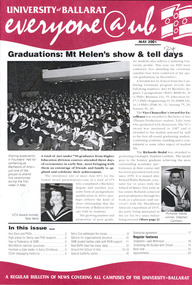
Magazine - Booklet, University of Ballarat, Everyone@UB, 2001
... Meg Tasker, Roy Taylor, Wendy Bolger, Robert Irvine, Angus McLachlan, Roger Castleman, Stephen Roberts, Philip Smith, Bob Allen, Rob Greig, Dennis Jeandet, Carole Wilson, Doug Lloyd...Meg Tasker, Roy Taylor, Wendy Bolger, Robert Irvine, Angus McLachlan, Roger Castleman, Stephen Roberts, Philip Smith, Bob Allen, Rob Greig, Dennis Jeandet, Carole Wilson, Doug Lloyd Everyone@UB Magazine Booklet University of Ballarat ...The University of Ballarat in 1998 comprised the Mt Helen Campus, SMB (Ballarat School of Mines) Campus and the Horsham Campus. It's current name is Federation University Australia. In 1998 Everyone@UB was a monthly staff newsletter edited by Peter Baird in consultation with Don Moconachie.A series of monthly bulletins covering all University of Ballarat campuses. .1) University merger, John Bailey, Michael Adermann, Vice-Chancellor, Jenny Nemeth, Katherine Birkin, Rowena Coutts, Ballarat Technology Park, Ron Wild .2) Chancellor appointment, Chancellor retirement, Geoffrey Blainey tribute, David Caro, Katherine Birkin, Arno Besse, George Murdoch, Bullarook, Stephen Kemmus, Neville French, ceramics, Tristan Smith, Horsham, Arnhem Land film, Ararat, Kerry Cox, anorexia, salary packages, University of Ballarat Brass Band, Natalie Radomski, becoming a university. Images: Geoffrey Blainey, David Caro, David James, Katherine Birkin, Arno Besse, George Murdoch, Geoffrey Blainey, Stephen Kemmis, Neville French, John Ackland, Richard Jardine, Glen Auld, Dennis Arne, Andrew Kotsonis, Kerry Cox, Suzanne McLaren, Marcia Pope, Rosemary Green, Leonie Otago, Natalie Rodomski .5) October 1998 - Carolyn Taylor, misogyny, Horsham campus building under construction, David Caro, Miranda Kerr, Martin Westbrook, Iain Reid, virtual monitors, teaching practice, Joanne Knight, John Pidgeon, Sally Buckland, arsenic, Ian Rae, Bob Allan, Patricia Cartwright, Matthew Baker, Sundru Sivamalai, Janine Smith, Pat Mann, International Student Market Research, Steve Mennen, Copyright, internet to the outback, Charters Towers, Engineering students, Darryl Dyason, Andrew McDougall, Dianne Jacono, Ross Morgan, Keith Boast, Cranbrook Academy of Art (Detroit), Helmut Stenzel, Mt Helen vegetation, Jan Bedggood, Ann-Maree Haintz, Kathleen Lakey, Adrienne Ryan, Fiona Schmidt. .11) Phil Candy, flexible learning, strategic planning. .12) diving, Reconciliation, Learning City, Student residence, Alex Rubinov, Graduate Centre, Ceramics, horse, Wimmera, tree regeneration, student poverty, UB museum, David Manterfeild, Heather Hatfeild. Redundancy, video conferencing Images: Steve Matthews, Craig Holloway, Peter Pilven, Sneha Kirubakaran, Phil Honeywood, Kerry Cox, David Manterfield, Martin Westbrooke, Ram Karan, Barry Jones, Gael Ramsay, Jenny Hargave, Heather Hatfield. .16) Jeff Kennett, Honorary Doctorate, Technology Park, Mary Atkinson, Ian Wright, Internet, Disability Action Plan, Robert Munt obituary, Sandra Stepcich obituary, Virginia Fenwlon, East Timor, Centre for Environmental Management, Wayne Jolly, 130th anniversary, Craig Hurley, Barry Wemyss, John Murray, Tori Power, Grant Curnow. Images: Vivienne Witwer, Claire Hetherington, Ian Wright, Virginia Fenelin .17) Broadband, AARNet, David James Retirement, wetlands, Debbie Eagles, Centre for Rural and Regional Health, numeracy, nursing, Sue Turale, Max Palmer, Camp Street, Arts Academy, library, SMB scholarship, Landcare, Mallee pipeline, Verna Barry, Alice Mills, Marian Brown, .18) Fiji, Texans, Greenhill, Robert Whitson, Ian Clark, Abororiginal history, Yuille St, Peter Baird, Martin Westrbrook, Robert Allen, Arts Academy, John McGrath, Phil Ruglen, 3BBB, John Ferrier .21) Beverley. Lassiter, Vice-ChAncellor appointment, Kerry Cox, Craig Hurley, Barry Wemyss, Ceramics, Bill Pryor, University Games, Olympics, Broken Hill, Alex Rubinov, Jonathan Halls, Dare to be different, Wayne Muir, Student Union Refit. Images: Wayne Muir, Alex Ruminov, Kerry Cox .22) December 2000 - nursing, David James, Phil Candy, John McLean, Debbie Eagles, brewery, brewing, Meredith Sussex, Lyn Faneco, TAFE,Joy Nunn, ARC, mosaics, Timor, Alfredo Pires, Centre for Rural and Regional Health, diabetes, kangaroos, Murray-Darling, Leagher Homestead, David Welch, Joy Nunn, Jill Blee, Maryanne Coutts, positive discrimination, Theresa Saunders, Imelda Crebbin .23) March 2001 - Nancy Lange, Paul Lambeth, Yvonne Button, Don Pennell, Natalie Radomski, Marcia Pope, McKinnon Walker, Marc Brodie, TAFE, WorldSkills, Horticulture, Ararat, Website, library, Leeanne Pitman, Liz Hartmann, nursing, Miranda Walker, Ciaran Pier, Anxiety Disorders, volcano, brewing, beer, Peter Aldred, Rob Greig, Jeremy Smith, Alice Mills, Geoff Burgess, .24) May 2001 - Graduations, Talia Venn, Stephen Carthew, Honory Doctorate, Steve Monaghetti, Heather Moore, Brendan O'Brien, Bill Pryr, Terry O'Brien, Carole Wilson, Carolyn Taylor, rape law reform, Federation at the Ballarat School of Mines, Work Skills, Debbie Eagles, Sue Purtle, Longerenong, Mohair, Early Childhood, Horsham, Kerry Cox, Willy Hobbs, David Firth, Kim Durban, BAPA, maryanne Coutts, Ewen McDonald, butterflys, Fukuoaka INstitute of Technology, Jane Wilkinson .25) Wayne Robinson, Neil McAdam retirement, Anne Beggs Sunter, nursing, Eileen Sellers, Hannelore Best, international nursing, Francis Adams, copyright, Roy Taylor, Wendy Bolger, unplugged, Horsham, Robert Irvine, Horsham graduations, Anxiety Clinic, Carole Wilson, Heart Mat, University of Ballarat Mission, Diabetes, Emelia Martinez-Brawley. Images include Wayne Robinson, Anne Beggs Sunter, Eileen Sellers, Hannelore Best, Phil Candy. Meg Tasker, Roy Taylor, Wendy Bolger, Robert Irvine, Angus McLachlan, Roger Castleman, Stephen Roberts, Philip Smith, Bob Allen, Rob Greig, Dennis Jeandet, Carole Wilson, Doug Lloyduniversity of ballarat, ballarat school of mines, wetland, broadband, david janes, smb, kennett, leadership, eagles, centre for rural and regional health, microwave, turale, arts academy, camp street, library, landcare, mallee, mallee pipeline, barry, verna barry, mills, brown, palmer, caro, geoffrey blainey, blainey, birkin, besse, kemmis, adermann, ackland, jardine, auld, mclaren, pope, green, otago, radomski, honorary doctorate, munt, stepcich, wemyss, rubinov, muir, everyone@ub, robinson, horsham, stawell, ararat, fukuoaka, taylor, moneghetti, coutt, hatfeild, westbrooke, karan, bailey, james, nemeth, wild, de bono, texas, sharpam, fiji, clark, ruyg, kropp, sugget, baird, allen, westbrook, rural health, stacpoole, mcgrath, ruglen, ferrier, manterfield, pilven, michael adermann, tafe, mount helen vegetation, dennis arne -
 City of Moorabbin Historical Society (Operating the Box Cottage Museum)
Education kit - School Writing Slate early 20thC, 20thC
... task Children had to bring a dampened cloth or sponge to school so that they could clean the slate and start again. The pioneer settlers in the Moorabbin Shire area valued education and established schools for their children in Cheltenham and East Brighton c1860's This writing slate is typical of the type used up to the mid 20th Century in preparatory classes. schools education writing equipment slate writing boards victoria melbourne market gardeners pioneer settlers cheltenham state school no. 84. bentleigh east state school no. 2083 st stephens c of e school tucker road east brighton A writing slate in a wood frame used by school children from c1880s to c1950s Education kit School Writing Slate early 20thC Victorian Education Department Carpenter ...School children learned to write using a slate From 1880’s to mid 1950’s in most schools, very young children first learned to write their letters in sand trays using their fingers or a stick. When about 6, they progressed onto writing on slates . The board was made from a piece of quarry slate set in a wooden frame. A slate pencil (not chalk) was used to form the letters. This slate pencil was often sharpened on the school wall. The advantage of slates over paper was that they could be wiped clean and used again and again. Until the mid 20thC paper was expensive . After the pupil wrote on the Slate, the work was checked by the teacher and then erased for a new task Children had to bring a dampened cloth or sponge to school so that they could clean the slate and start again. The pioneer settlers in the Moorabbin Shire area valued education and established schools for their children in Cheltenham and East Brighton c1860's This writing slate is typical of the type used up to the mid 20th Century in preparatory classes.A writing slate in a wood frame used by school children from c1880s to c1950sschools, education, writing equipment, slate writing boards, victoria melbourne, market gardeners, pioneer, settlers, cheltenham state school no. 84., bentleigh east state school no. 2083, st stephens c of e school tucker road east brighton -
 Royal Australian Air Force Band
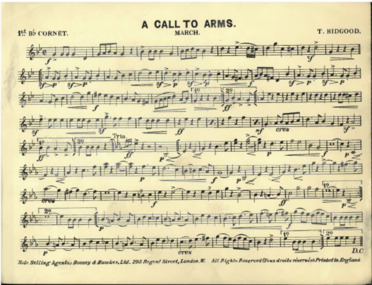
March Card, Bidgood, T. (Composer), A Call to Arms, Composed: 1912
... task was to record music to play on air four times a week, and to perform live concerts for the public. By November 1933 a band was put together with 40 musicians from around Australia. The band was initially conducted by Captain H. E. Adkins, Director of the Royal Military School of Music, Kneller Hall, London. After the tour, Adkins returned to his position at Kneller Hall, and Stephen ...In 1932 the call was put out to the ABC to start a military band. The band’s task was to record music to play on air four times a week, and to perform live concerts for the public. By November 1933 a band was put together with 40 musicians from around Australia. The band was initially conducted by Captain H. E. Adkins, Director of the Royal Military School of Music, Kneller Hall, London. After the tour, Adkins returned to his position at Kneller Hall, and Stephen Yorke, a retired bandmaster of the Gloucestershire Regiment, was brought out to Australia to become the permanent director and conductor of the band, which he did until the band closed in 1951. During the band’s 17 year history they presented a sizable program of music. Their final concert received a standing ovation from its audience of 1500, with a teary-eyed Yorke.19 PARTS BRASS BAND INSTRUMENTATION ONLY QUICK MARCH Key Sig: F MINOR Band series number: 4874 Instrumentation: Eb Soprano Cornet Solo Bb Cornet 1st Bb Cornet 2nd Bb Cornet 3rd & 4th Cornets 1st Eb Horn 2nd Eb Horn 1st Bb Baritone 2nd Bb Baritone Eb Solo Saxhorn 1st Trombone 2nd Trombone Bass Trombone Bb Euphonium (treble) Eb Bombardon (treble) Bb Bass (treble) Side Drum Bass Drum Written on some parts: - Caussinus progressive Method (for Cornet), new and revised edition 16/6 post free - Langey's Practical Tutor for the Slide Trombone is the best, 4/4 post freeOn envelope: 27 Nov 1940, 3 Dec 1943, QM27, Q214 Stamped on the reverse of each card: Australian Broadcasting Commission *Sydney*, Property of Charles Godfrey Musical Director & Arrangerbrass band, australian broadcasting commission, marching band, concert band -
 Royal Australian Air Force Band
March Card, Sousa, John Philip (Composer), The Pride of the Wolverines, Composed: 1926
... task was to record music to play on air four times a week, and to perform live concerts for the public. By November 1933 a band was put together with 40 musicians from around Australia. The band was initially conducted by Captain H. E. Adkins, Director of the Royal Military School of Music, Kneller Hall, London. After the tour, Adkins returned to his position at Kneller Hall, and Stephen ...In 1932 the call was put out to the ABC to start a military band. The band’s task was to record music to play on air four times a week, and to perform live concerts for the public. By November 1933 a band was put together with 40 musicians from around Australia. The band was initially conducted by Captain H. E. Adkins, Director of the Royal Military School of Music, Kneller Hall, London. After the tour, Adkins returned to his position at Kneller Hall, and Stephen Yorke, a retired bandmaster of the Gloucestershire Regiment, was brought out to Australia to become the permanent director and conductor of the band, which he did until the band closed in 1951. During the band’s 17 year history they presented a sizable program of music. Their final concert received a standing ovation from its audience of 1500, with a teary-eyed Yorke. 30 parts Concert Band Instrumentation Quick March Key Signature:D minor Written especially for and dedicated to The Honorable John W. Smith, mayor and the people of Detroit Instrumentation: Solo Bb Cornet Oboes Piccolo in Db Eb Clarinet Flute in C Bass Saxophone in Bb 1st Bb Clarinet 2nd Bb Clarinet 3rd Bb Clarinet Eb Cornet Alto Clarinet Bass Clarinet Soprano Saxophone Eb Alto Saxophone Tenor Saxophone Baritone Saxophone Bassoons 2nd & 3rd Cornets 1st & 2nd Horns in Eb 3rd & 4th Horns in Eb 1st & 2nd Trombones (bass clef) 1st & 2nd Trombones (treble clef) 3rd & 4th Trombones (bass clef) 3rd & 4th Trombones or Bb Bass (treble clef) Euphonium (bass clef) Baritone (treble clef) Basses Drums On envelope: QM160, The Pride of the Wolvertines Sousa, Q239 Stamped on the reverse of each card: Australian Broadcasting Co.brass band, australian broadcasting commission, marching band, concert band -
 Royal Australian Air Force Band
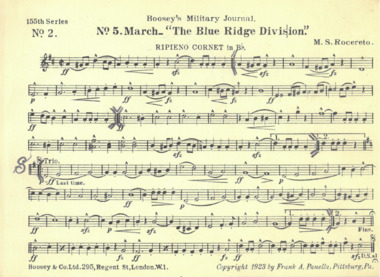
March Card, Rocereto, M.S. (Composer), No 5 MARCH "THE BLUE RIDGE DIVISION", Composed: 1923
... task was to record music to play on air four times a week, and to perform live concerts for the public. By November 1933 the musicians were chosen from around Australia. The band was initially conducted by Captain H. E. Adkins, Director of the Royal Military School of Music, Kneller Hall, London. After the tour, Adkins returned to his position at Kneller Hall, and Stephen ...In 1932 the call was put out to the ABC to start a military band. Their task was to record music to play on air four times a week, and to perform live concerts for the public. By November 1933 the musicians were chosen from around Australia. The band was initially conducted by Captain H. E. Adkins, Director of the Royal Military School of Music, Kneller Hall, London. After the tour, Adkins returned to his position at Kneller Hall, and Stephen Yorke, a retired bandmaster of the Gloucestershire Regiment, was brought out to Australia to become the permanent director and conductor of the band, which he did until the band closed in 1951. During the band’s 17 year history they presented a sizable program of music. Their final concert received a standing ovation from its audience of 1500, with a teary-eyed Yorke.19 Parts Concert Band Instrumentation Quick March Key Signature: C Major Boosey's Military Journal - 155th Series No. 2 Instrumentation: Eb Flute & Piccolo Oboes Eb Clarinets Solo & Ripieno Clarinets in Bb 2nd & 3rd Clarinets in Bb Bassoons Alto Saxophone & Alto Clarinet in Eb Tenor Saxophone 1st & 2nd Horns in Eb 3rd & 4th Horns in Eb Ripieno Cornet in Bb 1st Cornet in Bb 2nd Cornet in Bb 1st Baritone in Bb 1st & 2nd Tenor Trombones Bass Trombone Euphonion Basses DrumsStamped on the reverse of each card: Australian Broadcasting Commission *Sydney*, Property of Charles Godfrey Musical Director & Arrangerbrass band, australian broadcasting commission, marching band, concert band -
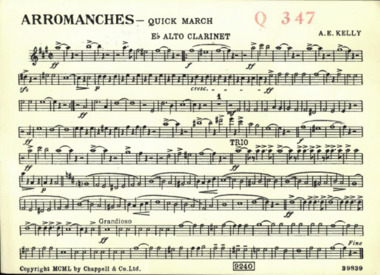 Royal Australian Air Force Band
March Card, Kelly, A. E. (Composer), Arromanches, Composed: 1950
... task was to record music to play on air four times a week, and to perform live concerts for the public. By November 1933 a band was put together with 40 musicians from around Australia. The band was initially conducted by Captain H. E. Adkins, Director of the Royal Military School of Music, Kneller Hall, London. After the tour, Adkins returned to his position at Kneller Hall, and Stephen ...In 1932 the call was put out to the ABC to start a military band. The band’s task was to record music to play on air four times a week, and to perform live concerts for the public. By November 1933 a band was put together with 40 musicians from around Australia. The band was initially conducted by Captain H. E. Adkins, Director of the Royal Military School of Music, Kneller Hall, London. After the tour, Adkins returned to his position at Kneller Hall, and Stephen Yorke, a retired bandmaster of the Gloucestershire Regiment, was brought out to Australia to become the permanent director and conductor of the band, which he did until the band closed in 1951. During the band’s 17 year history they presented a sizable program of music. Their final concert received a standing ovation from its audience of 1500, with a teary-eyed Yorke. 29 Parts Concert Band Instrumentation Quick March Key Signature: C Major Band series number: 9240 / 39839 Instrumentation: Db Piccolo Concert Piccolo Oboe Eb Clarinet 1st Bb Clarinet 2nd Bb Clarinet 3rd Bb Clarinet Eb Alto Clarinet Bb Bass Clarinet 1st Bassoon 2nd Bassoon Bb Soprano Saxophone Eb Alto Saxophone Bb Tenor Saxophone Eb Baritone Saxophone Solo Bb Cornet (Conductor) 2nd Bb Cornet 1st Bb Trumpet 2nd Bb Trumpet 1st Horn in F 2nd Horn in F 3rd Horn in F 4th Horn in F 1st Trombone 2nd Trombone Bass Trombone Euphonium in treble (Baritone) Bass DrumsStamped on the reverse of each card: Australian Broadcasting Commission *Sydney*, Property of Charles Godfrey Musical Director & Arranger, Music Library RAAF Central Band RAAF Base LAVERTON VIC 3027brass band, australian broadcasting commission, marching band, concert band -
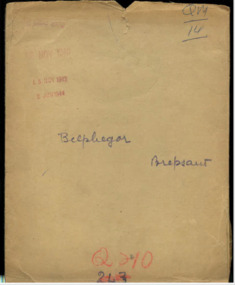 Royal Australian Air Force Band
March Card, Brepsant, Édouard (Composer), Belphegor Pas Redouble, Composed: 1930
... task was to record music to play on air four times a week, and to perform live concerts for the public. By November 1933 a band was put together with 40 musicians from around Australia. The band was initially conducted by Captain H. E. Adkins, Director of the Royal Military School of Music, Kneller Hall, London. After the tour, Adkins returned to his position at Kneller Hall, and Stephen ...In 1932 the call was put out to the ABC to start a military band. The band’s task was to record music to play on air four times a week, and to perform live concerts for the public. By November 1933 a band was put together with 40 musicians from around Australia. The band was initially conducted by Captain H. E. Adkins, Director of the Royal Military School of Music, Kneller Hall, London. After the tour, Adkins returned to his position at Kneller Hall, and Stephen Yorke, a retired bandmaster of the Gloucestershire Regiment, was brought out to Australia to become the permanent director and conductor of the band, which he did until the band closed in 1951. During the band’s 17 year history they presented a sizable program of music. Their final concert received a standing ovation from its audience of 1500, with a teary-eyed Yorke. 29 Parts Concert Band Instrumentation Quick March Key Signature: C Major Instrumentation: Piccolo Oboes Eb Clarinets 1st Bb Clarinet 2nd Bb Clarinet 3rd & 4th Bb Clarinets 1st Bassoon 2nd Bassoon 2nd Bb Baritone Eb Soprano Cornet Solo Bb Cornet (Conductor) 1st Bb Cornet 2nd Bb Cornet Eb Trumpets 1st Eb Horn 2nd Eb Horn 3rd Eb Horn or 1st Ed Tenor Saxhorn 4th Eb Horn or 2nd Eb Tenor Saxhorn 1st Trombone 2nd Trombone Bass Trombone Euphonium Bombardon Side Drum Bass Drum 1st Bb Baritone (scribbled out with Tenor Sax penciled over the top) 3rd & 4th Cornet (scribbled out with 2nd Clarinet penciled over the top)On envelope: QM14, Stamps indicating 10 NOV 1940, 15 NOV 1948, 9 JUN 1944. Q210 (penciled), 243 (crossed out). Stamped on the reverse of each card: Australian Broadcasting Commission *Sydney*, Charles Godfreybrass band, australian broadcasting commission, marching band, concert band -
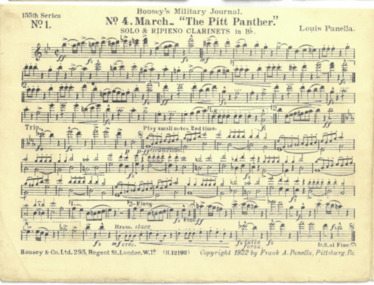 Royal Australian Air Force Band
March Card, Panella, Louis (Composer), No. 4 March "The Pitt Panther", Composed: 1922
... task was to record music to play on air four times a week, and to perform live concerts for the public. By November 1933 a band was put together with 40 musicians from around Australia. The band was initially conducted by Captain H. E. Adkins, Director of the Royal Military School of Music, Kneller Hall, London. After the tour, Adkins returned to his position at Kneller Hall, and Stephen ...In 1932 the call was put out to the ABC to start a military band. The band’s task was to record music to play on air four times a week, and to perform live concerts for the public. By November 1933 a band was put together with 40 musicians from around Australia. The band was initially conducted by Captain H. E. Adkins, Director of the Royal Military School of Music, Kneller Hall, London. After the tour, Adkins returned to his position at Kneller Hall, and Stephen Yorke, a retired bandmaster of the Gloucestershire Regiment, was brought out to Australia to become the permanent director and conductor of the band, which he did until the band closed in 1951. During the band’s 17 year history they presented a sizable program of music. Their final concert received a standing ovation from its audience of 1500, with a teary-eyed Yorke. 18 Parts Concert Band Instrumentation, Quick March Key Signature: A flat Major 155th Series No. 1 Boosey's Military Journal Band series number: H.12192 Instrumentation: Eb Flute & Piccolo Oboes Eb Clarinets Solo & Ripieno Clarinets in Bb 2nd & 3rd Clarinets in Bb Bassoons Alto Saxophone & Alto Clarinet in Eb Tenor Saxophone in Bb 1st & 2nd Horns in Eb 3rd & 4th Horns in Eb Ripieno Cornet in Bb 1st Cornet in Bb 2nd Cornet in Bb 1st Baritone in Bb 1st & 2nd Trombones Bass Trombone Euphonion Basses DrumsOn first envelope: Scrubbed out markings - V10, Dreamy Melody Waltz On second envelope: The Pitt Panther Panella, QM 157, Q36, Scrubbed out: 293 Stamped on the reverse of each card in the second set: Australian Broadcasting Commission *Sydney*, Property of Charles Godfrey Musical Director & Arrangerbrass band, australian broadcasting commission, marching band, concert band -
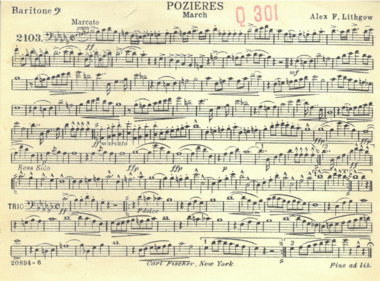 Royal Australian Air Force Band
March Card, Lithgow, Alex F, Pozieres March, Composed: 1918
... task was to record music to play on air four times a week, and to perform live concerts for the public. By November 1933 a band was put together with 40 musicians from around Australia. The band was initially conducted by Captain H. E. Adkins, Director of the Royal Military School of Music, Kneller Hall, London. After the tour, Adkins returned to his position at Kneller Hall, and Stephen ...In 1932 the call was put out to the ABC to start a military band. The band’s task was to record music to play on air four times a week, and to perform live concerts for the public. By November 1933 a band was put together with 40 musicians from around Australia. The band was initially conducted by Captain H. E. Adkins, Director of the Royal Military School of Music, Kneller Hall, London. After the tour, Adkins returned to his position at Kneller Hall, and Stephen Yorke, a retired bandmaster of the Gloucestershire Regiment, was brought out to Australia to become the permanent director and conductor of the band, which he did until the band closed in 1951. During the band’s 17 year history they presented a sizable program of music. Their final concert received a standing ovation from its audience of 1500, with a teary-eyed Yorke. 25 Parts Concert Band Instrumentation Quick March Key Signature: Bb Minor American Star Journal Serial number: 2103 / 20894-6 Instrumentation: Solo Bb Cornet C Flute Db Flute or Piccolo Eb Clarinet Oboe 1st Bb Clarinet 2nd Bb Clarinet Solo Eb Horn / Alto Saxophone Baritone (treble clef) / Tenor Saxophone Eb Bass / Baritone Saxophone Bassoon 1st Eb Horn 2nd & 3rd Eb Horn Solo Bb Cornet Repiano Cornet / 1st Bb Cornet or Soprano Saxophone 2nd Bb Cornet 3rd Bb Cornet 1st & 2nd Trombones (bass clef) 3rd Trombone (bass clef) 1st & 2nd Trombones / 1st & 2nd Tenors (treble clef) 3rd Trombone / Bb Bass (treble clef) Baritone (Bass clef) Basses DrumsOn envelope: QM158, Pozieres c, Q361 Stamped on the reverse of each card: A.B.C. Music Library, N.S.W. Division Stamped on reverse of Flute or Piccolo: with compliments of ALLAN & CO. PTY. LTD.brass band, australian broadcasting commission, marching band, concert band -
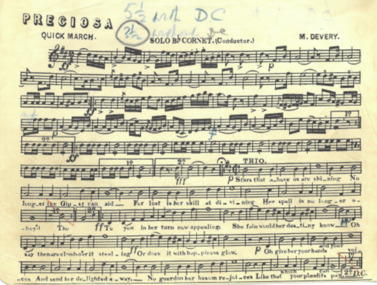 Royal Australian Air Force Band
March Card, Devery, M. (Composer), Preciosa, Composed: 1899 (?)
... task was to record music to play on air four times a week, and to perform live concerts for the public. By November 1933 a band was put together with 40 musicians from around Australia. The band was initially conducted by Captain H. E. Adkins, Director of the Royal Military School of Music, Kneller Hall, London. After the tour, Adkins returned to his position at Kneller Hall, and Stephen ...In 1932 the call was put out to the ABC to start a military band. The band’s task was to record music to play on air four times a week, and to perform live concerts for the public. By November 1933 a band was put together with 40 musicians from around Australia. The band was initially conducted by Captain H. E. Adkins, Director of the Royal Military School of Music, Kneller Hall, London. After the tour, Adkins returned to his position at Kneller Hall, and Stephen Yorke, a retired bandmaster of the Gloucestershire Regiment, was brought out to Australia to become the permanent director and conductor of the band, which he did until the band closed in 1951. During the band’s 17 year history they presented a sizable program of music. Their final concert received a standing ovation from its audience of 1500, with a teary-eyed Yorke. 23 parts Concert Band instrumentation Quick March Key Signature: C Major Instrumentation: Solo Bb Cornet (Conductor) - with lyrics in the Trio Db Piccolo Oboes Eb Clarinets 1st Bb Clarinet 2nd Bb Clarinet 3rd & 4th Clarinet 1st Bassoon 2nd Bassoon Eb Solo Tenor (penciled Alto Sax) 1st Bb Baritone (penciled Tenor Sax) 1st Eb Tenor 2nd Ed Tenor 1st Eb Horn 2nd Eb Horn 2nd Bb Cornet 1st Trombone 2nd Trombone Bass Trombone Euponium Bombardon Side Drum Bass Drum Handwritten Timpani partOn envelope: QM159, 15 APR 1910, 21 APR 1942, 23 FEB 1943, Q138 Scrubbed out: 419brass band, australian broadcasting commission, marching band, concert band -
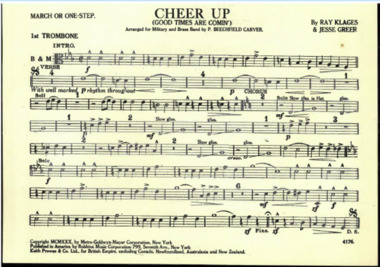 Royal Australian Air Force Band
March Card, Jesse Greer (Composer) et al, Cheer Up (Good Times Are Coming), Composed: 1930
... task was to record music to play on air four times a week, and to perform live concerts for the public. By November 1933 a band was put together with 40 musicians from around Australia. The band was initially conducted by Captain H. E. Adkins, Director of the Royal Military School of Music, Kneller Hall, London. After the tour, Adkins returned to his position at Kneller Hall, and Stephen ...In 1932 the call was put out to the ABC to start a military band. The band’s task was to record music to play on air four times a week, and to perform live concerts for the public. By November 1933 a band was put together with 40 musicians from around Australia. The band was initially conducted by Captain H. E. Adkins, Director of the Royal Military School of Music, Kneller Hall, London. After the tour, Adkins returned to his position at Kneller Hall, and Stephen Yorke, a retired bandmaster of the Gloucestershire Regiment, was brought out to Australia to become the permanent director and conductor of the band, which he did until the band closed in 1951. During the band’s 17 year history they presented a sizable program of music. Their final concert received a standing ovation from its audience of 1500, with a teary-eyed Yorke. 23 Parts Concert Band Instrumentation Quick March (March or One-Step) Key Signature: Eb Major Arranged for Military and Brass Band by P. Beechfield Carver Instrumentation: Eb Flute & Piccolo Oboes Eb Clarinets 1st Clarinets Bb 2nd & 3rd Clarinets Bb Bassoons Eb Alto Saxophone 1st Baritone Bb (or Tenor Saxophone) Repiano Cornet Bb Solo Cornet Bb (Conductor) 2nd Cornet Bb 1st Horn Eb (or Solo Tenor) 2nd Horn Eb (or 1st Tenor) 3rd & 4th Horns Eb (or 2nd Tenor) 1st Trombone (Alto Clef) 2nd Trombone (Tenor Clef) Bass Trombone Euphonium (Bass Clef) Bb Bass (Treble Clef) Basses (Bass Clef) Drums & Effects (Tubular Bells in Eb, Sleigh Bells, Tambourine etc.)On envelope: QM33. March or One Step, Cheer up Good Times are Coming, Greer. Q33, 402 (crossed out). Stamped on the reverse of each card: Australian Broadcasting Commission, Sydneybrass band, australian broadcasting commission, marching band, concert band -
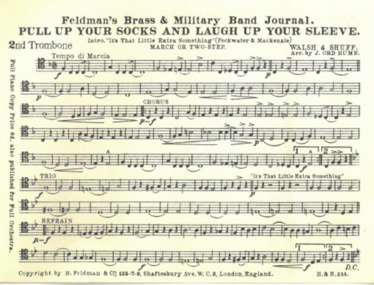 Royal Australian Air Force Band
March Card, Walsh & Shuff (Composer) et al, Pull Up Your Socks and Laugh Up Your Sleeve, Composed: ?
... task was to record music to play on air four times a week, and to perform live concerts for the public. By November 1933 a band was put together with 40 musicians from around Australia. The band was initially conducted by Captain H. E. Adkins, Director of the Royal Military School of Music, Kneller Hall, London. After the tour, Adkins returned to his position at Kneller Hall, and Stephen ...In 1932 the call was put out to the ABC to start a military band. The band’s task was to record music to play on air four times a week, and to perform live concerts for the public. By November 1933 a band was put together with 40 musicians from around Australia. The band was initially conducted by Captain H. E. Adkins, Director of the Royal Military School of Music, Kneller Hall, London. After the tour, Adkins returned to his position at Kneller Hall, and Stephen Yorke, a retired bandmaster of the Gloucestershire Regiment, was brought out to Australia to become the permanent director and conductor of the band, which he did until the band closed in 1951. During the band’s 17 year history they presented a sizable program of music. Their final concert received a standing ovation from its audience of 1500, with a teary-eyed Yorke. 23 parts Concert Band Instrumentation Quick March or Two Step Key Signature: F Major Intro. 'It's That Little Extra Something" (Peckwater & Mackenzie) Full Piano Copy Rice 6d. also published for Full Orchestra Instrumentation: Conductor Flute & Piccolo Oboe Eb Clarinet Bb Repiano 1st Clarinet in Bb 2nd Clarinet in Bb 3rd Clarinet in Bb Bassoon Eb Alto Saxophone 1st Baritone Bb & Tenor Saxophone Bb 1st Eb Horn or Solo Tenor 2nd Eb Horn or 1st Tenor 3rd Eb Horn or 2nd Tenor 4th Eb Horn Solo Cornet in Bb 2nd Cornet in Bb 1st Trombone 2nd Trombone Bass Trombone Euphonium (bass clef) Basses DrumsOn envelope: QM161, March at Two Step, Pull up your Socks, Walsh Q137, scrubbed out 407 Stamped on the reverse of each card: Australian Broadcasting Co.brass band, australian broadcasting commission, marching band, concert band -
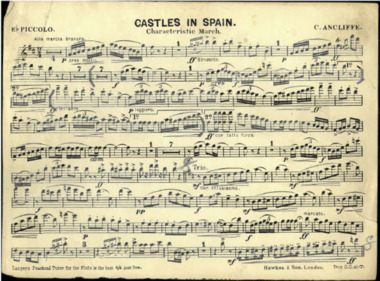 Royal Australian Air Force Band
March Card, Charles Ancliffe (composer), Castles in Spain, Composed: 1917
... task was to record music to play on air four times a week, and to perform live concerts for the public. By November 1933 a band was put together with 40 musicians from around Australia. The band was initially conducted by Captain H. E. Adkins, Director of the Royal Military School of Music, Kneller Hall, London. After the tour, Adkins returned to his position at Kneller Hall, and Stephen ...In 1932 the call was put out to the ABC to start a military band. The band’s task was to record music to play on air four times a week, and to perform live concerts for the public. By November 1933 a band was put together with 40 musicians from around Australia. The band was initially conducted by Captain H. E. Adkins, Director of the Royal Military School of Music, Kneller Hall, London. After the tour, Adkins returned to his position at Kneller Hall, and Stephen Yorke, a retired bandmaster of the Gloucestershire Regiment, was brought out to Australia to become the permanent director and conductor of the band, which he did until the band closed in 1951. During the band’s 17 year history they presented a sizable program of music. Their final concert received a standing ovation from its audience of 1500, with a teary-eyed Yorke. Concert Band & Brass Band Instrumentation Total 33 Parts Characteristic March Alla Marcia Bravura Key Signature:C minor Instrumentation: Eb Piccolo Oboes Eb Clarinet 1st Bb Clarinet 2nd Bb Clarinet 3rd & 4th Bb Clarinets 1st Bassoon 2nd Bassoon Solo Eb Saxhorn (Eb Alto) 1st Bb Baritone (Bb Tenor) Solo Bb Cornet 1st Bb Cornet 2nd Bb Cornet 3rd & 4th Bb Cornets Eb Trumpets 1st Eb Horn 2nd Eb Horn 3rd Eb Horn 4th Eb Horn 1st Trombone (Bass Clef) 1st Trombone (Tenor Clef) 2nd Trombone (Bass Clef) 2nd Trombone (Tenor Clef) Bass Trombone 2nd Bb Baritone (Bb Tenor) Euphonium (Baritone) Bombardon (Tuba) Eb Bombardon (Treble Clef) Bb Bass Side Drum Bass Drum Additional Hand Written 1st Bb ClarinetOn envelope: QM30. Castles in Spain. Ancliffe. Stamps indicating 30 OCT 1940, 30 NOV 1940, 23 APR 1941, 17 JAN 1944. Q26 (additional). 295 (crossed out) Stamped on the reverse of each card: Australian Broadcasting Co., The Property of Musical Director & Arrangerbrass band, australian broadcasting commission, marching band, concert band -
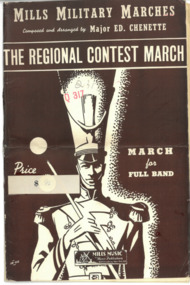 Royal Australian Air Force Band
March Card, Chenette, Ed. (Composer), Regional Contest March, Composed: 1939
... task was to record music to play on air four times a week, and to perform live concerts for the public. By November 1933 a band was put together with 40 musicians from around Australia. The band was initially conducted by Captain H. E. Adkins, Director of the Royal Military School of Music, Kneller Hall, London. After the tour, Adkins returned to his position at Kneller Hall, and Stephen ...In 1932 the call was put out to the ABC to start a military band. The band’s task was to record music to play on air four times a week, and to perform live concerts for the public. By November 1933 a band was put together with 40 musicians from around Australia. The band was initially conducted by Captain H. E. Adkins, Director of the Royal Military School of Music, Kneller Hall, London. After the tour, Adkins returned to his position at Kneller Hall, and Stephen Yorke, a retired bandmaster of the Gloucestershire Regiment, was brought out to Australia to become the permanent director and conductor of the band, which he did until the band closed in 1951. During the band’s 17 year history they presented a sizable program of music. Their final concert received a standing ovation from its audience of 1500, with a teary-eyed Yorke. 30 parts Concert Band Instrumentation Quick March Key Signature: C Minor Dedicated to the Bands of the Regional Districts of the National School Band Association Regional District Number 8 (1936-38) Note: For concert (not for contest) stand Cornets, Trombones and Baritones up the last 16 measures the last time thru and slow down on the last four bars. Instrumentation: Flute & Piccolo in C Db Piccolo Oboe Eb Clarinet Solo & 1st Bb Clarinet 2nd Bb Clarinet 3rd Bb Clarinet Eb Alto Clarinet Bb Bass Clarinet Bassoon 1st Eb Alto Saxophone 2nd Eb Alto Saxophone Bb Tenor Saxophone Eb Baritone Saxophone 1st Eb Horn (Alto) 2nd Eb Horn (Alto) 3rd & 4th Eb Horns (Altos) Solo & 1st Bb Cornet (Trumpet) 2nd Bb Cornet (Trumpet) 3rd Bb Cornet 1st & 2nd Trombone 1st Trombone 2nd Trombone 3rd Trombone Bb Bass Saxophone (Third Trombone treble clef) Baritone (Treble clef) Baritone (Euphonium) Basses Lyre Bells Drums On envelope: QM168, Q317 Stamped on the reverse of each card: Q317brass band, australian broadcasting commission, marching band, concert band -
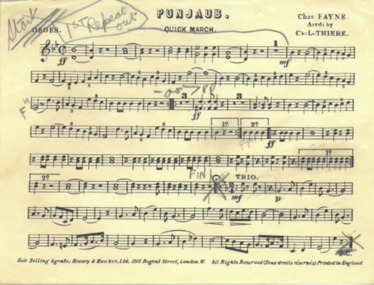 Royal Australian Air Force Band
March Card, Payne, Charles (Composer) et al, Punjaub, Composed: 1887
... task was to record music to play on air four times a week, and to perform live concerts for the public. By November 1933 a band was put together with 40 musicians from around Australia. The band was initially conducted by Captain H. E. Adkins, Director of the Royal Military School of Music, Kneller Hall, London. After the tour, Adkins returned to his position at Kneller Hall, and Stephen ...In 1932 the call was put out to the ABC to start a military band. The band’s task was to record music to play on air four times a week, and to perform live concerts for the public. By November 1933 a band was put together with 40 musicians from around Australia. The band was initially conducted by Captain H. E. Adkins, Director of the Royal Military School of Music, Kneller Hall, London. After the tour, Adkins returned to his position at Kneller Hall, and Stephen Yorke, a retired bandmaster of the Gloucestershire Regiment, was brought out to Australia to become the permanent director and conductor of the band, which he did until the band closed in 1951. During the band’s 17 year history they presented a sizable program of music. Their final concert received a standing ovation from its audience of 1500, with a teary-eyed Yorke. 25 parts Concert Band Instrumentation Quick March (Pas Redouble) Key Signature: Bb Major Instrumentation: Solo Bb Corner (Conductor) Piccolo (Pte flute) Oboes Eb Clarinet 1st Bb Clarinet 2nd Bb Clarinet 3rd & 4th Bb Clarinets 1st Bassoon 2nd Bassoon Saxophone Alto Eb (or Tenor Clar.) Saxophone Tenor Bb 1st Eb Horn (Alto Mib) 2nd Eb Horn 3rd Eb Horn 4th Eb Horn Solo Bb Cornet 2nd Bb Cornet (Bugle ou) 1st Trombone 2nd Trombone Bass Trombone 1st Bb Baritone Euphonium (Basses Ut) Bombardon (C. Basse Mib Treble) Side Drum (Tambour) Bass Drum (G. Caisse)On envelope: QM162, March Punjaub Payne, q139, scrubbed out 426 30 Apr 1940, 6 May 1940, 16 Dec 1940, 12 Jun 1944brass band, australian broadcasting commission, marching band, concert band -
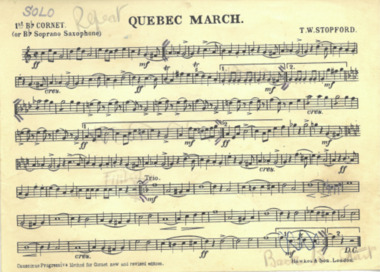 Royal Australian Air Force Band
March Card, Stopford, T. W. (Composer), Quebec March, Composed:1927
... task was to record music to play on air four times a week, and to perform live concerts for the public. By November 1933 a band was put together with 40 musicians from around Australia. The band was initially conducted by Captain H. E. Adkins, Director of the Royal Military School of Music, Kneller Hall, London. After the tour, Adkins returned to his position at Kneller Hall, and Stephen ...In 1932 the call was put out to the ABC to start a military band. The band’s task was to record music to play on air four times a week, and to perform live concerts for the public. By November 1933 a band was put together with 40 musicians from around Australia. The band was initially conducted by Captain H. E. Adkins, Director of the Royal Military School of Music, Kneller Hall, London. After the tour, Adkins returned to his position at Kneller Hall, and Stephen Yorke, a retired bandmaster of the Gloucestershire Regiment, was brought out to Australia to become the permanent director and conductor of the band, which he did until the band closed in 1951. During the band’s 17 year history they presented a sizable program of music. Their final concert received a standing ovation from its audience of 1500, with a teary-eyed Yorke. 22 parts Concert Band Instrumentation Quick March Key Signature: Bb Major Instrumentation: Solo Bb Cornet (handwritten 'Conductor') Eb Flute & Piccolo Oboes Eb Clarinet 1st Bb Clarinet 2nd Bb Clarinet 3rd & 4th Bb Clarinets 1st Bassoon 2nd Bassoon (Handwritten) Solo Eb Saxhorn (or Eb Alto Saxophone) 1st Eb Horn 2nd Eb Horn 3rd Eb Horn 1st Bb Cornet (or Bb Soprano Saxophone) 2nd Bb Cornet 1st Trombone 2nd Trombone Bass Trombone Euphonium (Baritone) Bombardon (Tuba) Side Drum Bass DrumOn envelope: QM164, March Quebec Stopford, Q213, Scrubbed out 378 6 Nov 1940 Stamped on the reverse of each card: Australian Broadcasting Co. & The Property of Musical Director & Arranger Charles Godfreybrass band, australian broadcasting commission, marching band, concert band -
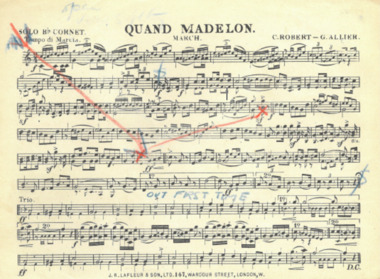 Royal Australian Air Force Band
March Card, Robert, Camille (Composer) et al, Quand Madelon March, Composed: 1914
... task was to record music to play on air four times a week, and to perform live concerts for the public. By November 1933 a band was put together with 40 musicians from around Australia. The band was initially conducted by Captain H. E. Adkins, Director of the Royal Military School of Music, Kneller Hall, London. After the tour, Adkins returned to his position at Kneller Hall, and Stephen ...In 1932 the call was put out to the ABC to start a military band. The band’s task was to record music to play on air four times a week, and to perform live concerts for the public. By November 1933 a band was put together with 40 musicians from around Australia. The band was initially conducted by Captain H. E. Adkins, Director of the Royal Military School of Music, Kneller Hall, London. After the tour, Adkins returned to his position at Kneller Hall, and Stephen Yorke, a retired bandmaster of the Gloucestershire Regiment, was brought out to Australia to become the permanent director and conductor of the band, which he did until the band closed in 1951. During the band’s 17 year history they presented a sizable program of music. Their final concert received a standing ovation from its audience of 1500, with a teary-eyed Yorke. 27 parts Concert Band Instrumentation Quick March Key Signature: Bb Major Instrumentation: Eb Piccolo Oboes Eb Clarinet 1st Bb Clarinet 2nd Bb Clarinet 3rd & 4th Bb Clarinet 1st Bassoon 2nd Bassoon 1st Alto in Eb Eb Alto Saxophone Bb Tenor Saxophone 1st & 2nd Cors in Eb 1st Eb Horn 2nd Eb Horn 3rd Eb Horn 4th Eb Horn Bb Bugle Solo Bb Cornet 2nd Bb Cornet 1st Trombone 2nd Trombone Bass Trombone 1st Bb Baritone Euphonium Bombardon Side Drum Bass DrumOn envelope: Qm163, Quand Madelon (Revised Ed.) Q250 15 Apr 1940 Stamped on the reverse of 1st Alto only: Australian Broadcasting Co. & The Property of Musical Director & Arranger Charles Godfreybrass band, australian broadcasting commission, marching band, concert band -
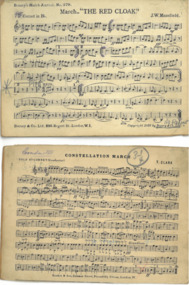 Royal Australian Air Force Band
March Card, Clark, Thomas (Composer) et al, Constellation March & Red Cloak, Composed: 1930 / 1925
... task was to record music to play on air four times a week, and to perform live concerts for the public. By November 1933 a band was put together with 40 musicians from around Australia. The band was initially conducted by Captain H. E. Adkins, Director of the Royal Military School of Music, Kneller Hall, London. After the tour, Adkins returned to his position at Kneller Hall, and Stephen ...In 1932 the call was put out to the ABC to start a military band. The band’s task was to record music to play on air four times a week, and to perform live concerts for the public. By November 1933 a band was put together with 40 musicians from around Australia. The band was initially conducted by Captain H. E. Adkins, Director of the Royal Military School of Music, Kneller Hall, London. After the tour, Adkins returned to his position at Kneller Hall, and Stephen Yorke, a retired bandmaster of the Gloucestershire Regiment, was brought out to Australia to become the permanent director and conductor of the band, which he did until the band closed in 1951. During the band’s 17 year history they presented a sizable program of music. Their final concert received a standing ovation from its audience of 1500, with a teary-eyed Yorke. This is a double sided set pasted onto backing card, with The Constellation March on one side, and Red Cloak on the other. Some parts are separate and included in separate files above. 25 / 28 parts Concert Band Instrumentation Quick March Key Signature: Db Major / Eb Major Instrumentation: Solo Bb Cornet (Conductor) / Solo Cornet in Bb Piccolo / Concert Flute & Piccolo Oboe / Oboe Eb Clarinets / Clarinet in Eb 1st Bb Clarinet / Solo Clarinet in Bb 2nd Bb Clarinet / 2nd Clarinet in Bb 3rd & 4th Bb Clarinet / 3rd Clarinet in Bb 1st Bassoon / 1st Bassoon 2nd Bassoon / 2nd Bassoon Eb Alto Saxophone / Alto Saxophone in Eb 1st Eb Horn / 1st & 2nd Horns in Eb 2nd Eb Horn / 1st & 2nd Horns in Eb 1st Bb Cornet / 1st Cornet in Bb 2nd Bb Cornet / 2nd Cornet in Bb 1st Trombone / 1st Trombone in Bb 2nd Trombone / 2nd Trombone in Bb Bass Trombone / Bass Trombone Euphonium / Euphonion (Bass clef) Bombardon / Basses Side Drum / Drums Constellation extra parts: 3rd Eb Horn or 1st Eb Saxhorn Solo Eb Saxhorn 1st Bb Baritone 2nd Bb Baritone Bass Drum Red Cloak missing parts: Ripieno Clarinet in Bb Flute & Piccolo in Eb Tenor Saxophone in Bb 3rd & 4th Horns in Eb On envelope: QM166, Red Cloak J.W. Mansfield, ...Stellation T. Clark, Q144 Stamped on the reverse of some of the loose march cards: Australian Broadcasting Co. & The Property of Musical Director & Arranger Charles Godfreybrass band, australian broadcasting commission, marching band, concert band -
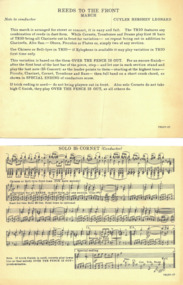 Royal Australian Air Force Band
March Card, Leonard, Hershey Cuyler (Composer), Reeds to the Front, Composed: 1940
... task was to record music to play on air four times a week, and to perform live concerts for the public. By November 1933 a band was put together with 40 musicians from around Australia. The band was initially conducted by Captain H. E. Adkins, Director of the Royal Military School of Music, Kneller Hall, London. After the tour, Adkins returned to his position at Kneller Hall, and Stephen ...In 1932 the call was put out to the ABC to start a military band. The band’s task was to record music to play on air four times a week, and to perform live concerts for the public. By November 1933 a band was put together with 40 musicians from around Australia. The band was initially conducted by Captain H. E. Adkins, Director of the Royal Military School of Music, Kneller Hall, London. After the tour, Adkins returned to his position at Kneller Hall, and Stephen Yorke, a retired bandmaster of the Gloucestershire Regiment, was brought out to Australia to become the permanent director and conductor of the band, which he did until the band closed in 1951. During the band’s 17 year history they presented a sizable program of music. Their final concert received a standing ovation from its audience of 1500, with a teary-eyed Yorke. 31 parts Concert Band Instrumentation Quick March Key Signature: F Major Standard Edition for Military Band No. 342 Note to the Conductor included above Instrumentation: Solo Bb Cornet (Conductor) Solo Bb Cornet - Conductor part (Special) 1st & 2nd Db Piccolos 1st & 2nd C Flutes 1st & 2nd Oboes Eb Clarinet Solo & 1st Bb Clarinet 2nd & 3rd Clarinets Special 3rd & 4th Clarinets (Simplified) - note; for concert, bring clarinets out in front at TRIO Eb Alto Clarinet Bb Bass Clarinet Bassoon Bb Soprano Saxophone 1st Eb Alto Saxophone 2nd Eb Alto Saxophone Bb Tenor Saxophone Eb Baritone Saxophone Bb Bass Saxophone (Bb Bass - Treble clef) 1st & 2nd Eb Horns (Altos) 3rd & 4th Eb Horns (Altos) Solo Bb Cornet (Straight Part) - note: When REEDS are out in front - Cornets take high finish. 1st Bb Cornet 2nd & 3rd Bb Cornets 1st & 2nd Bb Trombones (or tenors - treble clef) 3rd Trombone (treble clef) 1st & 2nd Trombones 3rd Trombone Bb Baritone (Treble clef) Baritone Basses Xylophone, Chimes (or Bells) Drums On envelope: QM167, ... to the Front, Q260 brass band, australian broadcasting commission, marching band, concert band -
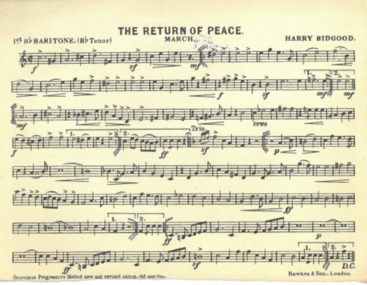 Royal Australian Air Force Band
March Card, Bidgood, Harry (Composer), The Return of Peace, Composed: 1920
... task was to record music to play on air four times a week, and to perform live concerts for the public. By November 1933 a band was put together with 40 musicians from around Australia. The band was initially conducted by Captain H. E. Adkins, Director of the Royal Military School of Music, Kneller Hall, London. After the tour, Adkins returned to his position at Kneller Hall, and Stephen ...In 1932 the call was put out to the ABC to start a military band. The band’s task was to record music to play on air four times a week, and to perform live concerts for the public. By November 1933 a band was put together with 40 musicians from around Australia. The band was initially conducted by Captain H. E. Adkins, Director of the Royal Military School of Music, Kneller Hall, London. After the tour, Adkins returned to his position at Kneller Hall, and Stephen Yorke, a retired bandmaster of the Gloucestershire Regiment, was brought out to Australia to become the permanent director and conductor of the band, which he did until the band closed in 1951. During the band’s 17 year history they presented a sizable program of music. Their final concert received a standing ovation from its audience of 1500, with a teary-eyed Yorke. 26 + 1 handwritten parts Concert Band Instrumentation Quick March Key Signature: Bb Major Instrumentation: Solo Bb Cornet Eb Flute & Piccolo Oboes Eb Clarinets 1st Bb Clarinet 2nd Bb Clarinet 3rd & 4th Bb Clarinets 1st Bassoon 2nd Bassoon Solo Eb Saxhorn (Eb Alto) 1st Bb Baritone (Bb Tenor) 1st Eb Horn 2nd Eb Horn 3rd Eb Horn 4th Eb Horn Eb Trumpets Solo Bb Cornet 1st Bb Cornet 2nd Bb Cornet 1st Trombone 2nd Trombone Bass Trombone Euphonium (Baritone) Bombardon (Tuba) Side Drum Bass Drum Rep Clari - handwritten part separate Written underneath on some of the march cards: - Langey's Practical Tutor for the Flute is the best, 4/4 post free. - Klose's Clarinet Method is the best, 16/6 post free - Berr's Clarinet Method is the best, 16/6 post free - Caussinus Progressive Method new and revised edition, 16/6 post free - Langey's Practical Tutor for the Slide Trombone is the best, 4/4 post free - Langey's Practical Tutor for the BassTrombone is the best, 4/4 post freeOn envelope: QM170, The Return of Peace Bidgood, Q140, Scrubbed out 316 Stamped on the reverse of each card: Australian Broadcasting Co. & The Property of Musical Director & Arranger Charles Godfreybrass band, australian broadcasting commission, marching band, concert band -
 Royal Australian Air Force Band
March Card, Roman, Frank (Composer) et al, Rambling Wreck from Georgia Tech, Composed: 1931
... task was to record music to play on air four times a week, and to perform live concerts for the public. By November 1933 a band was put together with 40 musicians from around Australia. The band was initially conducted by Captain H. E. Adkins, Director of the Royal Military School of Music, Kneller Hall, London. After the tour, Adkins returned to his position at Kneller Hall, and Stephen ...In 1932 the call was put out to the ABC to start a military band. The band’s task was to record music to play on air four times a week, and to perform live concerts for the public. By November 1933 a band was put together with 40 musicians from around Australia. The band was initially conducted by Captain H. E. Adkins, Director of the Royal Military School of Music, Kneller Hall, London. After the tour, Adkins returned to his position at Kneller Hall, and Stephen Yorke, a retired bandmaster of the Gloucestershire Regiment, was brought out to Australia to become the permanent director and conductor of the band, which he did until the band closed in 1951. During the band’s 17 year history they presented a sizable program of music. Their final concert received a standing ovation from its audience of 1500, with a teary-eyed Yorke. 33 parts Concert Band Instrumentation Quick March Key Signature: Eb Major Instrumentation: Piccolo in Db Flute (piccolo in C) Oboes Eb Clarinet Solo or 1st Bb Clarinet 2nd Bb Clarinet 3rd Bb Clarinet Eb Alto Clarinet 2nd Eb Alto Clarinet Bb Bass Clarinet Bassoons 1st Eb Alto Saxophone BB Tenor Saxophone Eb Baritone Saxophone Bb Bass Saxophone (Bb Bass) 1st Horn in Eb (Alto) 2nd Horn in Eb (Alto) 3rd Horns in Eb Alto 4th Horns in Eb (Alto) 1st Horn in F 2nd Horn in F 3rd Horns in F 4th Horns in F Solo for 1st Bb Cornet 2nd Bb Cornet 3rd Bb Cornet 1st & 2nd Bb Trumpets 1st Trombone (Bass Clef) 2nd Trombone (Bass Clef) 3rd Trombone (Bass Clef) Baritone (Treble Clef) Baritone (Bass Clef) (Euphonium) Basses (Tuba) DrumsOn envelope: QM165, ...g Wreck from Georgia Tech (arr. Paul Yoder), Q336brass band, australian broadcasting commission, marching band, concert band -
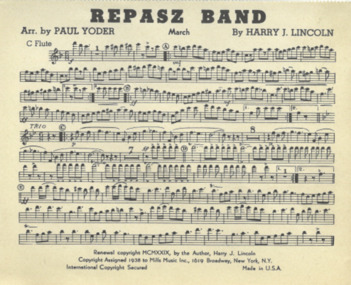 Royal Australian Air Force Band
March Card, Lincoln, Harry J. (Composer) et al, Repasz Band, Composed: 1929
... task was to record music to play on air four times a week, and to perform live concerts for the public. By November 1933 a band was put together with 40 musicians from around Australia. The band was initially conducted by Captain H. E. Adkins, Director of the Royal Military School of Music, Kneller Hall, London. After the tour, Adkins returned to his position at Kneller Hall, and Stephen ...In 1932 the call was put out to the ABC to start a military band. The band’s task was to record music to play on air four times a week, and to perform live concerts for the public. By November 1933 a band was put together with 40 musicians from around Australia. The band was initially conducted by Captain H. E. Adkins, Director of the Royal Military School of Music, Kneller Hall, London. After the tour, Adkins returned to his position at Kneller Hall, and Stephen Yorke, a retired bandmaster of the Gloucestershire Regiment, was brought out to Australia to become the permanent director and conductor of the band, which he did until the band closed in 1951. During the band’s 17 year history they presented a sizable program of music. Their final concert received a standing ovation from its audience of 1500, with a teary-eyed Yorke. 29 parts Concert Band Instrumentation Quick March Key Signature: F Major Instrumentation: C Flute Db Piccolo Eb Clarinet Oboe 1st Bb Clarinet 2nd Bb Clarinet 3rd Bb Clarinet Eb Alto Clarinet Bb Bass Clarinet 1st Eb Alto Saxophone 2nd Eb Alto Saxophone Bb Tenor Saxophone Bb Baritone Saxophone Bb Bass Saxophone (or Bb Bass) Bassoon 1st Horn in Eb (Alto) 2nd Horn in Eb (Alto) 3rd & 4th Horns in Bb (Alto) Solo and 1st Bb Cornet 2nd Bb Cornet 3rd Bb Cornet 1st and 2nd Bb Trumpets 1st Trombone (Bass Clef) 2nd Trombone (Bass Clef) 3rd Trombone (Bass Clef) Euphonium (Baritone) (Bass Clef) Baritone (Treble Clef) Basses DrumsOn envelope: QM169, Q315 Stamped on the reverse of some cards: Q315brass band, australian broadcasting commission, marching band, concert band -
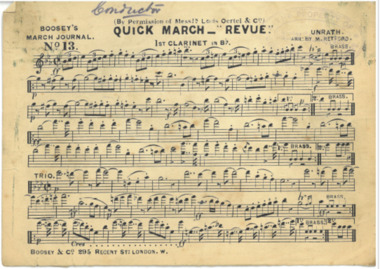 Royal Australian Air Force Band
March Card, Unrath, Carl Ludwig (Composer) et al, Quick March "Revue", Composed: ?
... task was to record music to play on air four times a week, and to perform live concerts for the public. By November 1933 a band was put together with 40 musicians from around Australia. The band was initially conducted by Captain H. E. Adkins, Director of the Royal Military School of Music, Kneller Hall, London. After the tour, Adkins returned to his position at Kneller Hall, and Stephen ...In 1932 the call was put out to the ABC to start a military band. The band’s task was to record music to play on air four times a week, and to perform live concerts for the public. By November 1933 a band was put together with 40 musicians from around Australia. The band was initially conducted by Captain H. E. Adkins, Director of the Royal Military School of Music, Kneller Hall, London. After the tour, Adkins returned to his position at Kneller Hall, and Stephen Yorke, a retired bandmaster of the Gloucestershire Regiment, was brought out to Australia to become the permanent director and conductor of the band, which he did until the band closed in 1951. During the band’s 17 year history they presented a sizable program of music. Their final concert received a standing ovation from its audience of 1500, with a teary-eyed Yorke. 23 + 2 handwritten parts Concert Band Instrumentation Quick March Key Signature: Db Major Boosey's March Journal No. 13 Instrumentation: 1st Clarinet in Bb (written above in cursive, Conductor) Piccolo in Eb Oboes or Clarinets in C 1st Clarinet in Eb 2nd Clarinet in Eb 1st Clarinet in Bb 2nd Clarinet in Bb 3rd Clarinet in Bb Alto Clarinet in Eb 1st Bassoon or Bass Clarinet in Bb 2nd Bassoon or Bass Clarinet in Bb 1st & 2nd Horns in Eb 3rd & 4th Horns in Eb 1st Trumpet in Eb 2nd Trumpet in Eb (Missing - 1st Cornet in Bb) 2nd Cornet in Bb 1st Tenor Trombone 2nd Tenor Trombone Bass Trombone Baritone in Bb Euphonion Basses DrumsOn envelope: QM171, Revue Unrath, Q141, Scrubbed out 215 Stamped on the reverse of each card: Australian Broadcasting Co. & The Property of Musical Director & Arrangerbrass band, australian broadcasting commission, marching band, concert band -
 Royal Australian Air Force Band
March Card, Gray, T. (Composer), The Rifleman, Composed: ?
... task was to record music to play on air four times a week, and to perform live concerts for the public. By November 1933 a band was put together with 40 musicians from around Australia. The band was initially conducted by Captain H. E. Adkins, Director of the Royal Military School of Music, Kneller Hall, London. After the tour, Adkins returned to his position at Kneller Hall, and Stephen ...In 1932 the call was put out to the ABC to start a military band. The band’s task was to record music to play on air four times a week, and to perform live concerts for the public. By November 1933 a band was put together with 40 musicians from around Australia. The band was initially conducted by Captain H. E. Adkins, Director of the Royal Military School of Music, Kneller Hall, London. After the tour, Adkins returned to his position at Kneller Hall, and Stephen Yorke, a retired bandmaster of the Gloucestershire Regiment, was brought out to Australia to become the permanent director and conductor of the band, which he did until the band closed in 1951. During the band’s 17 year history they presented a sizable program of music. Their final concert received a standing ovation from its audience of 1500, with a teary-eyed Yorke. 25 parts Concert Band Instrumentation Quick March Key Signature: Ab Major Instrumentation: Solo Bb Cornet (Conductor handwritten at top) Eb Flute & Piccolo Oboes Eb Clarinet 1st Bb Clarinet 2nd Bb Clarinet 3rd & 4th Bb Clarinets 1st Bassoon 2nd Bassoon Solo Eb Saxhorn (or Eb Alto Saxophone) 1st Bb Baritone ( or Bb Tenor Saxophone) 1st Eb Horn 2nd Eb Horn 3rd Eb Horn 4th Eb Horn Eb Trumpets Solo Bb Cornet 1st Bb Cornet (or Bb Soprano Saxophone) 2nd Bb Cornet 1st Trombone 2nd Trombone Bass Trombone Euphonium (Baritone) Bombardon (Tuba) Side Drum Bass DrumOn envelope: Qm172, March The Rifleman Gray, Q147, Scrubbed out 366 29 Sep 1941, 18 May 1942, 3 Aug 1942, 15 Aug 1942, 16 Jul 1943 Stamped on the reverse of each card: Australian Broadcasting Co. & The Property of Musical Director & Arranger Charles Godfreybrass band, australian broadcasting commission, marching band, concert band -
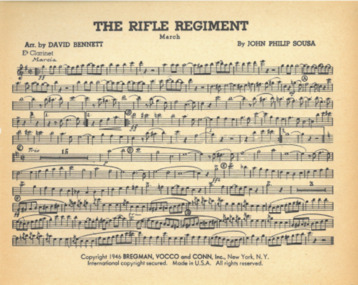 Royal Australian Air Force Band
March Card, Sousa, John Philip (Composer) et al, The Rifle Regiment, Composed: 1886
... task was to record music to play on air four times a week, and to perform live concerts for the public. By November 1933 a band was put together with 40 musicians from around Australia. The band was initially conducted by Captain H. E. Adkins, Director of the Royal Military School of Music, Kneller Hall, London. After the tour, Adkins returned to his position at Kneller Hall, and Stephen ...In 1932 the call was put out to the ABC to start a military band. The band’s task was to record music to play on air four times a week, and to perform live concerts for the public. By November 1933 a band was put together with 40 musicians from around Australia. The band was initially conducted by Captain H. E. Adkins, Director of the Royal Military School of Music, Kneller Hall, London. After the tour, Adkins returned to his position at Kneller Hall, and Stephen Yorke, a retired bandmaster of the Gloucestershire Regiment, was brought out to Australia to become the permanent director and conductor of the band, which he did until the band closed in 1951. During the band’s 17 year history they presented a sizable program of music. Their final concert received a standing ovation from its audience of 1500, with a teary-eyed Yorke. 30 parts Concert Band Instrumentation Quick March Key Signature: Bb Major Instrumentation: Db Piccolo 1st Flute & C Piccolo 2nd Flute Oboes Eb Clarinet Solo or 1st Bb Clarinet 2nd Bb Clarinet 3rd Bb Clarinet Eb Alto Clarinet Bb Bass Clarinet Bassoons 1st Eb Alto Saxophone 2nd Eb Alto Saxophone Bb Tenor Saxophone 2nd Bb Tenor Saxophone Eb Baritone Saxophone 1st Horn in Eb 2nd Horn in Eb Solo or 1st Bb Cornet 2nd Bb Cornet 3rd Bb Cornet 1st Trombone 2nd Trombone 3rd Trombone Euphonium (Baritone - Bass Clef) Baritone (Treble Clef) String Bass Basses (Tubas) Timpani Drums On envelope:QM173, Rifle Regiment, Q323brass band, australian broadcasting commission, marching band, concert band -
 Royal Australian Air Force Band
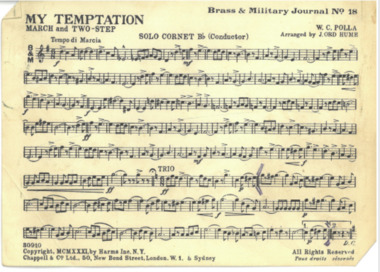
March Card, Polla, W. C. (Composer) et al, My Temptation, Composed: 1931
... task was to record music to play on air four times a week, and to perform live concerts for the public. By November 1933 a band was put together with 40 musicians from around Australia. The band was initially conducted by Captain H. E. Adkins, Director of the Royal Military School of Music, Kneller Hall, London. After the tour, Adkins returned to his position at Kneller Hall, and Stephen ...In 1932 the call was put out to the ABC to start a military band. The band’s task was to record music to play on air four times a week, and to perform live concerts for the public. By November 1933 a band was put together with 40 musicians from around Australia. The band was initially conducted by Captain H. E. Adkins, Director of the Royal Military School of Music, Kneller Hall, London. After the tour, Adkins returned to his position at Kneller Hall, and Stephen Yorke, a retired bandmaster of the Gloucestershire Regiment, was brought out to Australia to become the permanent director and conductor of the band, which he did until the band closed in 1951. During the band’s 17 year history they presented a sizable program of music. Their final concert received a standing ovation from its audience of 1500, with a teary-eyed Yorke. 24 parts Concert Band Instrumentation Quick March & Two Step Key Signature: F major Brass & Military Journal No. 18 Instrumentation: Solo Cornet Bb (Conductor) Piccolo Eb Oboe Eb Clarinet 1st Clarinet in Bb 2nd Clarinet in Bb 3rd Clarinet in Bb Bassoon Eb Alto Saxophone 1st Baritone Bb (and Tenor Saxophone Bb) 1st Horn Eb or Solo Tenor 2nd Horn Eb or 1st Tenor 3rd Horn Eb or 2nd Tenor 4th Horn Eb Repiano Cornet Bb 2nd Cornet Bb 1st Trombone 2nd Trombone Bass Trombone Euphonium (bass clef) Basses Contre Bass Bb Drums On envelope: QM136, March Two Step My Temptation Polla, Q114, Scrubbed out 375 Stamped on the reverse of each card: Australian Broadcasting Co. & The Property of Musical Director & Arranger Charles Godfreybrass band, australian broadcasting commission, marching band, concert band -
 Royal Australian Air Force Band
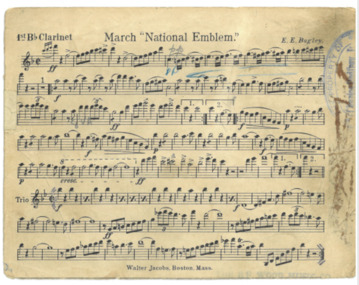
March Card, Bagley, E. E. (Composer), March "National Emblem", Composed: 1906
... task was to record music to play on air four times a week, and to perform live concerts for the public. By November 1933 a band was put together with 40 musicians from around Australia. The band was initially conducted by Captain H. E. Adkins, Director of the Royal Military School of Music, Kneller Hall, London. After the tour, Adkins returned to his position at Kneller Hall, and Stephen ...In 1932 the call was put out to the ABC to start a military band. The band’s task was to record music to play on air four times a week, and to perform live concerts for the public. By November 1933 a band was put together with 40 musicians from around Australia. The band was initially conducted by Captain H. E. Adkins, Director of the Royal Military School of Music, Kneller Hall, London. After the tour, Adkins returned to his position at Kneller Hall, and Stephen Yorke, a retired bandmaster of the Gloucestershire Regiment, was brought out to Australia to become the permanent director and conductor of the band, which he did until the band closed in 1951. During the band’s 17 year history they presented a sizable program of music. Their final concert received a standing ovation from its audience of 1500, with a teary-eyed Yorke. 20 parts Concert Band Instrumentation Quick March Key Signature: Eb Major Instrumentation: Solo or 1st Bb Cornet (Conductor handwritten at the top) Piccolo (Db handwritten) Eb Clarinet 1st Bb Clarinet 2nd Bb Clarinet 3rd Bb Clarinet Bassoon 1st & 2nd Eb Altos (crossed out and Horns) 3rd & 4th Eb Altos Eb Cornet 1st Bb Cornet (solo scrubbed out) 2nd & 3rd Bb Cornets 1st & 2nd Trombones 3rd Trombone 1st & 2nd Trombones (Treble Clef) 3rd Trombone (Treble Clef) Baritone (scrubbed out and written Euphonium) Baritone (treble clef) On envelope: QM137, March National Emblem Bagley, Q122, scrubbed out 396 4 Apr 1940, 8 Sep 1941, 14 Apr 1942, 27 Oct 1942 (twice), 15 Nov 1943 Stamped on the reverse of each card: Australian Broadcasting Co. & The Property of Musical Director & Arranger Charles Godfreybrass band, australian broadcasting commission, marching band, concert band -
 Royal Australian Air Force Band
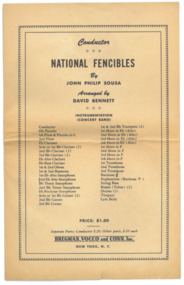
March Card, Sousa, John Philip (Composer) et al, National Fencibles, Composed: 1888
... task was to record music to play on air four times a week, and to perform live concerts for the public. By November 1933 a band was put together with 40 musicians from around Australia. The band was initially conducted by Captain H. E. Adkins, Director of the Royal Military School of Music, Kneller Hall, London. After the tour, Adkins returned to his position at Kneller Hall, and Stephen ...In 1932 the call was put out to the ABC to start a military band. The band’s task was to record music to play on air four times a week, and to perform live concerts for the public. By November 1933 a band was put together with 40 musicians from around Australia. The band was initially conducted by Captain H. E. Adkins, Director of the Royal Military School of Music, Kneller Hall, London. After the tour, Adkins returned to his position at Kneller Hall, and Stephen Yorke, a retired bandmaster of the Gloucestershire Regiment, was brought out to Australia to become the permanent director and conductor of the band, which he did until the band closed in 1951. During the band’s 17 year history they presented a sizable program of music. Their final concert received a standing ovation from its audience of 1500, with a teary-eyed Yorke. 29 Parts Concert Band Instrumentation Quick March Key Signature: Bb Major Instrumentation: 1st Flute & C Piccolo Db Piccolo Oboes Eb Clarinet Solo & 1st Bb Clarinet 2nd Bb Clarinet 3rd Bb Clarinets Bassoons 1st Eb Alto Saxophone Bb Tenor Saxophone 1st Horn in F 2nd Horn in F 2nd Bb Baritone Solo or 1st Bb Cornet 2nd Bb Cornet 3rd Eb Cornet 1st Trombone (Bass Clef) 2nd Trombone (Bass Clef) 3rd Trombone (Bass Clef) Euphonium (Baritone - Bass Clef) Basses (Tuba) String Bass Drums Lyre Bells Timpani Eb Alto Clarinet Eb Baritone Saxophone 2nd Flutes 2nd Bb Ten. Saxophone 1st & 2nd Bb Trumpets 2nd Eb Alto Saxophone On envelope: QM138, ...tional Fencibles, Q322brass band, australian broadcasting commission, marching band, concert band -
 Royal Australian Air Force Band
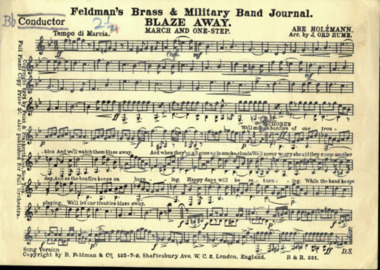
March Card, Abe Holzmann (Composer) et al, Blaze Away, Composed: 1901
... task was to record music to play on air four times a week, and to perform live concerts for the public. By November 1933 a band was put together with 40 musicians from around Australia. The band was initially conducted by Captain H. E. Adkins, Director of the Royal Military School of Music, Kneller Hall, London. After the tour, Adkins returned to his position at Kneller Hall, and Stephen ...In 1932 the call was put out to the ABC to start a military band. The band’s task was to record music to play on air four times a week, and to perform live concerts for the public. By November 1933 a band was put together with 40 musicians from around Australia. The band was initially conducted by Captain H. E. Adkins, Director of the Royal Military School of Music, Kneller Hall, London. After the tour, Adkins returned to his position at Kneller Hall, and Stephen Yorke, a retired bandmaster of the Gloucestershire Regiment, was brought out to Australia to become the permanent director and conductor of the band, which he did until the band closed in 1951. During the band’s 17 year history they presented a sizable program of music. Their final concert received a standing ovation from its audience of 1500, with a teary-eyed Yorke. 23 Parts Concert Band Instrumentation Feldman's Brass & Military Band Journal March and One-Step Tempo di Marcia Key Signature: Ab Major Instrumentation: Flute & Piccolo Eb Oboe Eb Clarinet 1st Clarinet Bb 2nd Clarinet Bb 3rd Clarinet Bb Bassoon Alto Saxophone Eb 1st Baritone Bb & Tenor Saxophone Bb (Treble Clef) Conductor (in Bb) Bb Repiano (Cornet) Solo Cornet Bb 2nd Cornet Bb 1st Horn Eb or Solo Tenor 2nd Horn Eb or 1st Tenor 3rd Horn Eb or 2nd Tenor 4th Horn Eb 1st Trombone 2nd Trombone Bass Trombone Euphonium (Bass Clef) Basses (Bass Clef) DrumsOn envelope: QM17, Stamps indicating 19 FEB 1940, 29 JUN 1940, 28 DEC 1940, 23 MAY 1941. Q23, 405 (crossed out). Stamped on the reverse of each card: Australian Broadcasting Commission *Sydney*brass band, australian broadcasting commission, marching band, concert band
