
Showing 42 items matching "street of shops exhibition"
-
 The Beechworth Burke Museum
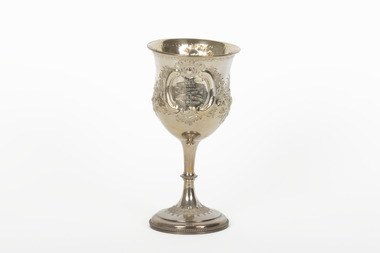
Award - Trophy, 1877
... Street of Shops Exhibition...It further provides a point of research in this area, and further investigation into Beechworth's history. Street of Shops Exhibition Silver Trophy Double-Hose Competition Beechworth Wangaratta 1877 V.F.C THE CUP AND FIVE GUINEAS / won by / THE BEECHWORTH V.F.C. / AT WANGARATTA / 26TH Dec. 1877 / DOUBLE HOSE COMPETITION / TIME 59 SECONDS A silver trophy cup. ...This trophy represents the winning the of Beechworth V.F.C at the 1877 Double-Hose Competition on the 26th of December against Wangaratta. This competition was an annual event which took place as part of the Christmastide Festivities in Beechworth on Boxing Day. This Trophy was created by the British silver manufacturing company, Hilliard and Thomason in Birmingham, England in 1877.This trophy holds significance for the Burke Museum Collection and the history of Beechworth. Due to its historical associations with the Beechworth Double-Hose Competition in 1877, it holds significance as an important item representing Beechworth's history. It further provides a point of research in this area, and further investigation into Beechworth's history.A silver trophy cup.THE CUP AND FIVE GUINEAS / won by / THE BEECHWORTH V.F.C. / AT WANGARATTA / 26TH Dec. 1877 / DOUBLE HOSE COMPETITION / TIME 59 SECONDSstreet of shops exhibition, silver trophy, double-hose competition, beechworth, wangaratta, 1877 v.f.c -
 The Beechworth Burke Museum
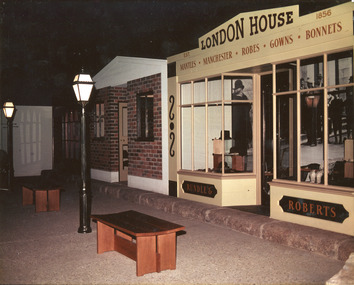
Photograph, C1990s
... Street of shops...historical streetscape...recreated shops...Roy harvey...museum exhibit...burke museum...beechworth...19th century museum display...Victorian artefacts...community...exhibition history...shop...street of shops and London houses at Burke Museum in the 1990s. It features an indoor recreated historical streetscape of the 19th century. Within the shop window recreation are objects on display, including hats. The Street of Shops exhibition...street of shops and London houses at Burke Museum in the 1990s. It features an indoor recreated historical streetscape of the 19th century. Within the shop window recreation are objects on display, including hats. The Street of Shops exhibition ...This photograph is recorded as depicting a street of shops and London houses at Burke Museum in the 1990s. It features an indoor recreated historical streetscape of the 19th century. Within the shop window recreation are objects on display, including hats. The Street of Shops exhibition is still on display at Burke Museum and features objects collected in 1979 through the community by Roy Harvey (also author of Background to Beechworth from 1852), to provide insight into eras of the past. This exhibit displays a collection of over 30,000 items, many dating back over 150 years. The ‘street of shops’ tell the story of the changing town and its community.This photograph is of social significance to the Beechworth area and the Burke Museum as it depicts a still-exhibiting museum display that is of value to the community. The artefacts exhibited in the photograph all have a strong connection to the Beechworth area, having been donated by members of the local community, and are of special value to that community. It is also a record of the curating work of Roy Harvey, a local historian, author and museum curator, as well as a depiction of the curating and exhibition practices of the 1990s, when the photo was taken.This is a colour rectangular photograph printed on paper.Obverse: Est London House 1856 / mantles, manchester, robes, gowns, bonnets / rundle and roberts. Reverse: 53307street of shops, historical streetscape, recreated shops, roy harvey, museum exhibit, burke museum, beechworth, 19th century museum display, victorian artefacts, community, exhibition history, shop history, shop recreation, hats, bonnets, manchester, robes, gowns, rundle and roberts -
 The Beechworth Burke Museum
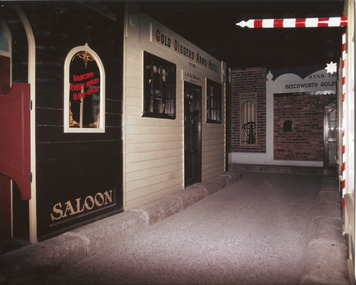
Photograph, c1990
... Taken in the 1990's, this photograph depicts a row of shop fronts in the 'Street of Shops' exhibition in the Burke Museum in Beechworth. ...Taken in the 1990's, this photograph depicts a row of shop fronts in the 'Street of Shops' exhibition in the Burke Museum in Beechworth. ...Taken in the 1990's, this photograph depicts a row of shop fronts in the 'Street of Shops' exhibition in the Burke Museum in Beechworth. This exhibition was created and opened in 1979 and was intended to reflect and imitate a historic peirod in the town's past. The time period decpicted is that of the Gold Rush which swept through many Victorian towns from the 1850's onwards. For the town of Beechworth, the gold rush began in 1852, when gold was discovered in Spring Creek, drawing in many new residents seeking to make a fortune and transforming a once remote town into a bustling centre brimming with hope and opportunity. By 1857, the town contained over 200,000 residents and with this, the need for more amenities and intsitutions arose. Multiple churches, banks, schools, shops, hospitals and other essential buildings appearing over the years. The wealth acquired through the gold rush is largely responsible for the vast development of the town and many of its significant buildings which still remain to this day. This photograph also highlights the significance of this type of exhibition, providing a new mode of experiencing and learning about the past. The street depicts the many supporting trades and industries that arose from the mass migration during the gold rush. The creation of the Street of Shops in 1979 was envisioned by Roy Harvey who was the curator at the time, with the intention of recreating an authentic feel to the environment while collecting from the community to accurately portray the multiculturalism that is ingrainded in many towns and communities of Victoria. This photograph contains historical significance as it relates to and portrays an especially important period of time within Beechworth and Victoria's history. The gold rush phenomena ushered in a wave of hope and prosperity for citizens and immigrants alike. It provided many with the opportunity to strike it rich, while the town prospered and grew in many ways. This widespread development that accompanied the gold rush occured throughout Victoria and holds great historical importance when recording the social, economic and communal developments that occured throughout the time period which gave way to the beloved towns and communities we know today. Beechworth itself is acknowledged as Victoria's best-preserved gold mining town and deserves recognition of its significance. it also showcases the great significance of social develpment and globalization that occured throughout the state during this period. Coloured rectangular photograph printed on matte photographic paper and unmounted. Obverse: Dancing every night 8pm-6am [mirror] / Gold Diggers Arms Hotel façade / Star / Beechworth Gold / J. Davidson / Saloon Reverse: 3306 beechworth, burke museum, street of shops, gold rush, indigo shire gold rush, 1850s beechworth, burke museum exhibitions, saloon, gold buyer, hotel, historical streetscape, gold rush immigration -
 Flagstaff Hill Maritime Museum and Village
Theodolite, Troughton & Simms, Mid 19th Century
... Street on the corner of Royal Arcade, Gaunt's shop quickly became a Melbourne institution. Gaunt proudly advertised that he was 'The only watch manufacturer in the Australian colonies'. While many watches and clocks may have had Gaunt's name on the dial, few would have been made locally. Gaunt did make some watches for exhibitions...Street on the corner of Royal Arcade, Gaunt's shop quickly became a Melbourne institution. Gaunt proudly advertised that he was 'The only watch manufacturer in the Australian colonies'. While many watches and clocks may have had Gaunt's name on the dial, few would have been made locally. Gaunt did make some watches for exhibitions ...The theodolite was sold by T. Gaunt & Co. of Melbourne, a manufacturer, importer and retailer of a wide variety of goods including jewellery, clocks and watches, navigational and measuring instruments, dinnerware, glassware and ornaments. Thomas Gaunt photograph was included in an album of security identity portraits of members of the Victorian Court, Centennial International Exhibition, Melbourne, 1888. (See further details below.) History for Troughton & Simms: Edward Troughton & William Simms established a scientific instrument making business in London in 1826. Edward Troughton (1756-1835) had previously had his own scientific instrument business, inherited from his father. His achievement's included a transit telescope for Greenwich Observatory (1816) and the precision surveying instruments for the Ordnance Survey of Britain, Ireland and India. William Simms (1793-1860) had trained as a goldsmith and began to gain work dividing circles on fine astronomical instruments. When William Simms died in 1860, the business was taken over by his son James and nephew William. Troughton & Simms shop in Fleet Street became the hub of the finest scientific instrument made in London, in a period in which there was an expanding demand for precision instruments, for astronomy, surveying and precision measurement. They made instruments for Greenwich Observatory, for imperial surveys and exploring expeditions. When fire destroyed the Houses of Parliament in 1834, the firm was commissioned to create new standard lengths, this required 10 years of testing against the remaining old measurements. Troughton and Simms made several of the main instruments for Melbourne Observatory, including an 18 inch azimuth used of the Geodetic Survey, portable transit instrument (circa 1850), zenith sector (1860), a 4.5 inch equatorial telescope (1862), an 8 inch equatorial telescope (1874) spectroscope (1877) and an 8 inch transit instrument in (1884). While the firm had an excellent reputation for quality the company exasperated many of its customers with delays of years in delivering some instruments. History for Thomas Gaunt: Thomas Ambrose Gaunt (1829 – 1890) was a jeweller, clock maker, and manufacturer of scientific instruments, whose head office and showroom were at 337–339 Bourke Street, Melbourne, Victoria, Australia. Thomas Gaunt established Melbourne's leading watchmaking, optical and jewellery business during the second half of the 19th century. Gaunt arrived in Melbourne in 1852, and by 1858 had established his own business at 14 Little Bourke Street. Around 1869 he moved to new premises in Bourke Street on the corner of Royal Arcade, Gaunt's shop quickly became a Melbourne institution. Gaunt proudly advertised that he was 'The only watch manufacturer in the Australian colonies'. While many watches and clocks may have had Gaunt's name on the dial, few would have been made locally. Gaunt did make some watches for exhibitions, and perhaps a few expensive watches for wealthy individuals. Gaunt's received a telegraph signal from Melbourne Observatory each day to correct his main clock and used this signal to rate and repair ship's chronometers and good quality watches. Thomas Gaunt also developed a department that focused on scientific instrumentation, making thermometers and barometers (from imported glass tubes), telescopes, surveying instruments and microscopes. Significance: With the rapid urban expansion, one of the most important needs of the new colony was to survey and map the landscape of the Australian Colony’s interior. Theodolites, such as this one, made by Troughton and Simms, who were significant scientific instrument makers of the 19th century were instrumental to the colony's surveyors and would have played an important part in their everyday work. This transit theodolite remains of national significance due to its pioneering role in Australian science and its association with Australia's earliest surveyors and astronomers. It is also significant for its association with nineteenth-century surveying instruments and instrument makers. Theodolite, Vernier repetition theodolite with enclosed horizontal circle (of about 130 mm diameter). Vertical circle exposed and somewhat corroded (diameter about 115 mm). Plate level 20" per division. Altitude bubble 20" per division. Horizontal and vertical circle intervals 20". Original (blue/grey) paint. Altitude bubble setting screw disabled. Tribrach allows movement of theodolite by 15 mm inside tribrach (for centering).Inscribed on the inner mounting plate,“Specially made in England for T Gaunt & Co Melbourne” and inscribed a little lower “Troughton & Simms London”flagstaff hill, warrnambool, shipwrecked-coast, flagstaff-hill, flagstaff-hill-maritime-museum, maritime-museum, shipwreck-coast, flagstaff-hill-maritime-village, theodolite, t. gaunt & co, troughton & simms, scientific instrument, measuring instrument, surveyor's instrument -
 Flagstaff Hill Maritime Museum and Village
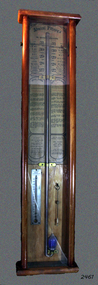
Barometer, 1858-1869
... Street on the corner of Royal Arcade. Gaunt's shop quickly became a Melbourne institution. Gaunt proudly advertised that he was 'The only watch manufacturer in the Australian colonies'. While many watches and clocks may have had Gaunt's name on the dial, few would have been made locally. Gaunt did make some watches for exhibitions...Street on the corner of Royal Arcade. Gaunt's shop quickly became a Melbourne institution. Gaunt proudly advertised that he was 'The only watch manufacturer in the Australian colonies'. While many watches and clocks may have had Gaunt's name on the dial, few would have been made locally. Gaunt did make some watches for exhibitions ...The barometer was either made or sold by T. Gaunt & Co. of Melbourne, a manufacturer, importer and retailer of a wide variety of goods including jewellery, clocks and watches, navigational and measuring instruments, dinnerware, glassware and ornaments. Thomas Gaunt photograph was included in an album of security identity portraits of members of the Victorian Court, Centennial International Exhibition, Melbourne, 1888. (See below for further details.) Admiral Fitzroy Pattern Barometer History: The stick mercury barometer was named after Admiral Robert Fitzroy of the Royal Navy (1805-1865) for his detailed instructions on how to interpret the weather, which were included with the instrument. Fitzroy was the captain of the HMS Beagle, also a weather forecaster to Charles Darwin and the second Governor of New Zealand. He developed many different types of barometers and was the first person to introduce the science of weather forecasting to the British Isles. A local manufacturer of scientific instruments, Thomas Gaunt, produced the barometer that was adapted for the southern hemisphere by Robert Ellery, the State Astronomer based at the Melbourne Observatory. In the original sale catalogue for Gaunt's, the item is described as "Gaunt's Fitzroy Barometers" and it was priced from 25/- to ₤9.9s. History of Thomas Gaunt: Thomas Gaunt established Melbourne's leading watchmaking, optical and jewellery business during the second half of the 19th century. Gaunt arrived in Melbourne in 1852, and by 1858 had established his own business at 14 Little Bourke Street. Around 1869 he moved to new premises in Bourke Street on the corner of Royal Arcade. Gaunt's shop quickly became a Melbourne institution. Gaunt proudly advertised that he was 'The only watch manufacturer in the Australian colonies'. While many watches and clocks may have had Gaunt's name on the dial, few would have been made locally. Gaunt did make some watches for exhibitions, and perhaps a few expensive watches for wealthy individuals. Gaunt's received a telegraph signal from Melbourne Observatory each day to correct his main clock and used this signal to rate and repair ship's chronometers and good quality watches. His main horological manufacturing was directed at turret clocks for town halls, churches and post offices. These tended to be specific commissions requiring individualised design and construction. He made the clock for the Melbourne Post Office lobby, to a design by Government Astronomer Robert Ellery, and won an award at the 1880-81 Melbourne International Exhibition for his turret clock for the Emerald Hill Town Hall. He became well known for his installation of a chronograph at Flemington Racecourse in 1876, which showed the time for the race, accurate to a quarter of a second. The firm also installed the clockwork and figures for Gog and Magog in the Royal Arcade. Thomas Gaunt also developed a department that focused on scientific instrumentation, making thermometers and barometers (from imported glass tubes), telescopes, surveying instruments and microscopes. Another department specialised in electroplating for trophies, awards and silverware, and the firm manufactured large amounts of ecclesiastical gold ware and silverware, for the church including St Patrick's Cathedral. There are no records that disclose the number of employees in the firm, but it was large enough for Gaunt to hold an annual picnic for the watchmakers and apprentices at Mordialloc from 1876; two years previously they had successfully lobbied Gaunt to win the eight hour day. Gaunt's workforce was reportedly very stable, with many workers remaining in the business for 15 to 30 years. Gaunt's wife Jane died on September 1894, aged 64. They had one son and six daughters, but only three daughters survived to adulthood. Two became nuns at the Abbotsford Convent and one daughter, Cecelia Mary Gaunt (died 28 July 1941), married William Stanislaus Spillane on 22 September 1886 and had a large family. Gaunt died at his home in Coburg, Victoria, leaving an estate valued at ₤41,453. The business continued as T. Gaunt & Co. after his death. The barometer is historically significant as an example of the work of Melbourne’s leading scientific instrument maker, Thomas Gaunt. The barometer has social significance as an example of the type of scientific equipment that Thomas Gaunt expanded his horology business into producing. Further social significance lies in the fact that Robert Ellery, the Government Astronomer who designed the local version of the barometer, had a direct connection with the Melbourne Athenaeum founded in 1839 as the Melbourne Mechanics' Institution. Its purpose was "the diffusion of literary, scientific and other useful information". There are also records of a T Gaunt as a subscription and committee member of this the Athenaeum organisation during the 1870s and 1880s which may be Thomas Gaunt, unfortunately still unverified.Stick mercury barometer known as the Admiral Fitzroy Barometer. It comprises an oblong wooden case with glass front panel, ornate pediment, barometer with bulb cistern (empty of fluid), cleaning brush with printed instructions for interpreting information given by the gauge affixed to left and right face of instrument. Includes a thermometer. The barometer appears to be intact. Adapted to the Southern Hemisphere. Special remarks by Admiral Fitzroy. Made by Thomas Gaunt, Melbourne. Manufacturer's details are on back of wooden casing. Rear has upper and lower brass screw plates for securing to vertical surface."Manufactured by Thomas Gaunt, 14 Little Bourke Street, Melbourne. "flagstaff hill, warrnambool, shipwrecked-coast, flagstaff-hill, flagstaff-hill-maritime-museum, maritime-museum, shipwreck-coast, flagstaff-hill-maritime-village, barometer, admiral fitzroy, thomas gaunt, thomas gaunt of melbourne, clockmaker, admiral fitzroy barometer, barometer instructions, gaunt’s fitzroy barometer, gaunt’s of melbourne, gog and magog designer, horological manufacturer, meteorological instrument, melbourne athenaeum, melbourne mechanics' institution, melbourne observatory time signal, robert ellery government astronomer, scientific instrument, stick mercury barometer, thermometer, weather forecast, t gaunt & co -
 The Beechworth Burke Museum
Award - Trophy
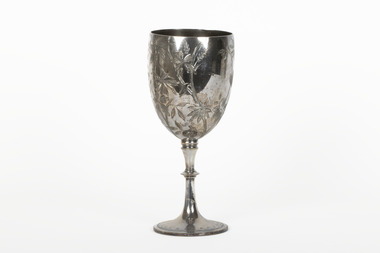
... Falck Watchmaker & Jeweller display in the Street of Shops Exhibition. Silver trophy Walker & Hall A00632 / 79.88 / 1.5 / Walker & Hall / Silver Cutlers / Silver Smiths Sheffield / 719 Deep hollow silver cup tapers to pedestal, engraved with branches and leaves. ...This trophy was made in 1879 and used in Beechworth in the same year, 1879. Donated by Miss Ethel Spencer this trophy belonged to Catherine Mitchell Pyle. Miss Ethel Spencer was bridesmaid to Catherine Mitchell Pyle's daughter Jessie Pyle. Catherine Mitchell Pyle came to live with Ethel Spencer at Black Springs where she remained until she died in 1921. Ethel recalled that Catherine had a strong will and 'ruled the house inside and out'. Besides making beautiful bread, she also grew chrysanthemums. This silver trophy has been part of Beechworth history since 1879, and is currently held in the Burke Museum C.F. Falck Watchmaker & Jeweller display in the Street of Shops Exhibition.Deep hollow silver cup tapers to pedestal, engraved with branches and leaves. Base decorated with engraved lines, dots and half-moon pattern. Not inscribed. A00632 / 79.88 / 1.5 / Walker & Hall / Silver Cutlers / Silver Smiths Sheffield / 719 silver, trophy, walker & hall -
 Mission to Seafarers Victoria
Domestic object - Mug, The Mission to Seafarers; Caring for Seafarers since 1857, 2018
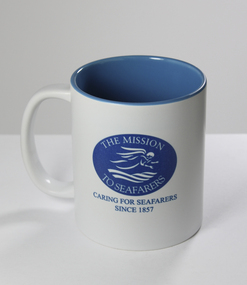
... exhibitions. This mug added to the Mission collection as a contemporary example of MTSV memorabilia and promotion and features bth current logo and image of the building complex. mtsv memorabillia mug souvenir mtsv shop marketing The Mission to Seafarers logo in a blue oval with 'Caring for Seafarers since 1857' printed in blue underneath is printed on the front. On the back in dark gray is a stamped effect of a street ...Production of the mugs was inspired by the interest of visitors in purchasing a mug like the ones on display created by an artist Catherine Bell in 2017 for the Sounding Histories exhibitions.This mug added to the Mission collection as a contemporary example of MTSV memorabilia and promotion and features bth current logo and image of the building complex.Pale gray ceramic drinking mug with a mid-blue lining and a large handle (1668). Colour image transfers decorating outer walls.The Mission to Seafarers logo in a blue oval with 'Caring for Seafarers since 1857' printed in blue underneath is printed on the front. On the back in dark gray is a stamped effect of a street scape with Mission buildings with 'www.missiontoseafarers.com.au . On the underside a paper lined is adhered with a printed barcode and price of $12.00. mtsv memorabillia, mug, souvenir, mtsv shop, marketing -
 Flagstaff Hill Maritime Museum and Village
Vehicle - Furphy Water Cart, J. Furphy & Sons, c. 1942
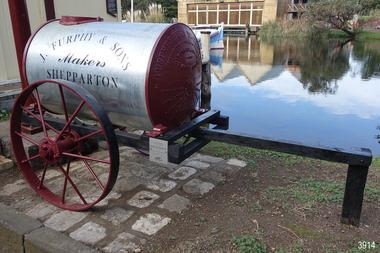
... Street in Kyneton in 1864. He relocated for a business opportunity and founded the first blacksmiths and wheelwrights shop in the newly surveyed town of Shepparton in 1873. Furphy invented many farming tools and machines including a patented grain-stripper, and won awards at the 1888-89 Melbourne International Exhibition. ...Street in Kyneton in 1864. He relocated for a business opportunity and founded the first blacksmiths and wheelwrights shop in the newly surveyed town of Shepparton in 1873. Furphy invented many farming tools and machines including a patented grain-stripper, and won awards at the 1888-89 Melbourne International Exhibition. ...This horse-drawn, two-wheeled cart with a tank, is known as a Furphy Farm Water Cart that was made in Shepparton, northern Victoria, c. 1942. John Furphy (1842-1920) was born in Moonee Ponds, in 1842 to Irish immigrant parents and subsequently raised in the Yarra Valley before the family moved to Kyneton in central Victoria, where he completed an apprenticeship with the firm Hutcheson and Walker. Murphy began operations of his own at a site on Piper Street in Kyneton in 1864. He relocated for a business opportunity and founded the first blacksmiths and wheelwrights shop in the newly surveyed town of Shepparton in 1873. Furphy invented many farming tools and machines including a patented grain-stripper, and won awards at the 1888-89 Melbourne International Exhibition. His most famous invention is the Furphy Farm Water Cart, designed in the 1880s, at a time when water for most households and farms was carted on wagons in wooden barrels. The Furphy’s water cart is a single item that combines a water metal tank and a cart. The design of the cart was simple yet effective, and became popular very quickly and established itself as a vital piece of farming equipment. The water cart has had a number of words cast into its ends over many years. References to the foundry’s location in Shepparton, as well as advertising of other products also manufactured by J. Furphy & Sons were present on the ends. However, the most significant set of words to feature on the tank, was a poem encouraging continual improvement: ‘Good Better Best, Never Let it Rest, Until your Good is Better, And your Better Best’. During The Great War (1914-1918), the water cart was used by the Australian militarily at a large AIF (Australian Imperial Force) camp in Broadmeadows (Melbourne) where thousands of men were camped for months, before being transported aboard. Furphy Water Carts provided water to the troops, and were usually placed near the camp latrines, which was one of the few places the troops could share gossip and tall tales away from the prying eyes and ears of their officers. The water cart drivers were also notorious sources of information, despite most of their news being hearsay, or totally unreliable. By the time the men of the AIF were in engaged in combat on the Gallipoli Peninsula and the Western Front, the carts used for water supply had no markings and became simply referred to as Furphys. This owed as much to the coining of the term ‘Furphy’, Australian slang for suspect information or rumour. After a number of decades as principally a soldier’s word, 'Furphy' entered the broader Australian vernacular and was used mainly by the political class until recently when the term was taken up by a Australian brewer as a beer brand. This Furphy Water Cart was purchased by Friends of Flagstaff Hill in 2014. The support of local individuals, organisations and businesses enabled its restoration and later its installation alongside the existing late-19th century water pipe stand and 1940s hand pump The Furphy Farm Water Cart is of historical significance as it represents a famous Australian time-saving and energy-saving invention of the 1880s, replacing the labour intensive activity of collecting and dispensing water from barrels and casks on the back of carts. The water cart’s connection with manufacturing companies J. Furphy & Sons and Furphy Foundry are significant for being early Australian businesses that are still in operation today. Furphy carts are of military significance for the role they played during The Great War (1914-1918) in Australian army camps, and theatres of war in Europe and the Middle East, to supply the AIF troops with fresh water. A wooden framed, two-wheeled, horse-drawn cart, fitted with a horizontally mounted, cylindrical metal tank. The tank is made of rolled, sheet steel with a riveted seam, and cast iron ends with cast iron ends. The spoked metal wheels have fitted flat iron tyres and metal hubs. A metal pipe is joined to the outlet. The tank is silver coloured, the ends, wheels and trims are crimson, and the script lettering on tank sides is black. There are inscriptions on the tank, ends, and hubs. The water tank was made in 1942 in Shepparton, Australia, by J. Furphy & Sons and has a capacity of 180 gallons (848 litres). Hub perimeter, embossed “J. FURPHY & SONS” “KEEP THE / BOLTS TIGHT” Hub centre embossed [indecipherable] Tank, each side, painted “J. FURPHY & SONS / Makers / SHEPPARTON” Tank ends, embossed – “FURPHY’S FARM WATER CART” “BORN ABOUT 1880 – STILL ‘GOING STRONG’ 1942” “j. FURPHY & SONS / MAKERS / SHEPPARTON - VIC “ “S - - - - - L MANUFACTURERS” [SPECIAL] “SPIKE ROLLERS” “SINGLE TREES” “PLOUGH WHEELS” “IRON CASTINGS” “LAND GRADERS” “STEEL DELVERS” “CAST IRON PIG” “CHAIN YOKES” “GOOD – BETTER – BEST / NEVER LET IT REST / TILL YOUR GOOD IS BETTER / AND YOUR BETTER – BEST” Image [Stork carrying a baby] above shorthand, transcribed "Produce and populate or perish" Image [Furphy Pig Feeder] beside ‘Cast Iron Pig’ Shorthand, transcribed “"Water is the gift of God but beer and whiskey are concoctions of the Devil, come and have a drink of water"warrnambool, flagstaff hill maritime museum, water cart, furphy cart, furphy tank, furphy farm water cart, furphy, john furphy, john furphy & sons, furphy foundry, kyneton, shepparton, mobile water tank, jinker, hutchinson & walker, blacksmith, farm equipment, implement maker, tool maker, horse drawn, stork and baby, good, better, best, barrel, tank, first world war, wwi, eastern front, gallipoli, j furphy & sons -
 Flagstaff Hill Maritime Museum and Village
Container - Medicine Glass, W T & Co. (Whitall Tatum), late 1880's
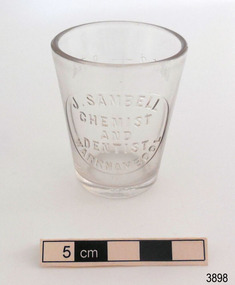
... shop, and another was the new home to W. Kucks Baker. In 1877 William constructed a building in Liebig Street for the Warrnambool Steam Packet Company, which has since been incorporated into the Warrnambool Art Gallery. Its western wall shows to older construction and design. William and Sibilla had five other children. By 1896 their sons William Jnr. and Henry operated the business as “Messrs Kucks Bros., Bakers & Confectioners”. They employed six staff and used three carts for deliveries over a thirty-mile radius. They catered for clubs and functions including the Exhibitors’ Picnic Luncheon for the Warrnambool Industrial and Arts Exhibition...shop, and another was the new home to W. Kucks Baker. In 1877 William constructed a building in Liebig Street for the Warrnambool Steam Packet Company, which has since been incorporated into the Warrnambool Art Gallery. Its western wall shows to older construction and design. William and Sibilla had five other children. By 1896 their sons William Jnr. and Henry operated the business as “Messrs Kucks Bros., Bakers & Confectioners”. They employed six staff and used three carts for deliveries over a thirty-mile radius. They catered for clubs and functions including the Exhibitors’ Picnic Luncheon for the Warrnambool Industrial and Arts Exhibition ...This medicine glass was previously owned by Sybilla Margaret Kucks (1904-1978), daughter of Henry and Julia Kucks, and granddaughter of William and Sibilia Kucks. Sibilla was born in Warrnambool and lived there until 1917 when she moved to Armadale, Victoria, with her family. The medicine glass was among her effects left to her nephew William when she passed away and has been looked after by his wife Eva and treasured as a memento of their Warrnambool heritage. Mrs Sibilla Kucks sold sweets and fancy cakes in her Liebig Street shop from 1873 until the 1880s. She operated one of Warrnambool’s earliest dedicated confectionery shops at a time when sweets were more commonly found in a fruiterer’s shop. Her window display would have been full of brightly coloured sweets in shiny glass jars tempting passers-by. Sibilla (née Leyendecker) married Johann Wilhelm Kucks in New York, USA in 1856. Both were originally from Prussia. They sailed to Australia on the Ocean Rover and arrived in Melbourne June 10th, 1858. Seventeen days later their second child, William Jnr., was born. Warrnambool’s population was around 2,000 in 1859 when Sibilla and Johann (known as “William”) settled here. William was employed as a tailor by Cramond & Dickson. In 1859 the couple bought George Fergusson’s bakery in Timor Street and opened it as “W. Kucks Baker”. Along with fancy breads and biscuits, he advertised baked dinners to order. William supplied bread to the Warrnambool Hospital until the 1880s. In 1873 William built a row of four shops at 140-146 Liebig Street, one of which became Sibilla’s confectionery shop, and another was the new home to W. Kucks Baker. In 1877 William constructed a building in Liebig Street for the Warrnambool Steam Packet Company, which has since been incorporated into the Warrnambool Art Gallery. Its western wall shows to older construction and design. William and Sibilla had five other children. By 1896 their sons William Jnr. and Henry operated the business as “Messrs Kucks Bros., Bakers & Confectioners”. They employed six staff and used three carts for deliveries over a thirty-mile radius. They catered for clubs and functions including the Exhibitors’ Picnic Luncheon for the Warrnambool Industrial and Arts Exhibition (1896-7). In 1907 Messrs Kucks Bros. baked a monster Pyramid Cake for a local bazaar. It contained coins of various sizes and weighed 84lbs (38kg). Everyone buying a slice hoped to be lucky enough to end up with a coin! William Kucks Jnr. also became licensee of Terang’s ”Wheatsheaf Hotel”, its name and logo connecting it to the family’s bakery in Warrnambool. William (1825-1911) and Sibilla (1833-1910) Kucks and three of their seven children are buried at the Warrnambool Cemetery in a family grave. John Sambell migrated from England and established his chemist and dentist business in Warrnambool around 1890 in his premises in Fairy Street. The business later included his son Herbert. The maker, Whitall Tatum & Co, is clearly marked on the base of the bottle. The company was a a well known maker of prescription bottles. He used the brand "W. T. & Co. from Mid-1870's until the late 1880's, moulded into his glassware. This medicine glass is significant as one of very few remaining items from the history of John Sambell, chemist and dentist, Warrnambool. It is also significant as an example of medical equipment that has a design still used today. It is also significant for its association with William and Sibilla Kucks, a colonial family in Warrnambool that was greatly involved in the community and commerce of early days in Warrnambool.Medicine glass, (measuring glass or dose cup), clear glass, round. The antique chemist measuring glass is wide at the top and tapers to a narrow base. The glass has side seams and an uneven base. The glass has imperfections ans bubbles. The base is uneven. The measuring scale lines have been scored into the glass and the measurements and other inscriptions have been moulded into the glass. Glass is from J. Sambell, chemist and dentist in Warrnambool. On the back there is a measuring scale in tablespoons and teaspoons. There is also an inscription of the maker on the base. The glass was made in the late 1880's by Whitall Tatum & Co., America.Embossed within a round border "J. SAMBELL / CHEMIST / AND / DENTIST / WARRNAMBOOL" The scale on the back has "TABLE" "1" and "2", and "TEA" "8", "4", "2" and "1" The base has "W.T. & CO." around the edge.flagstaff hill, warrnambool, shipwrecked coast, flagstaff hill maritime museum, maritime museum, shipwreck coast, flagstaff hill maritime village, great ocean road, medicine glass, measuring glass, dose cup, medicine dispensing, medicine measurement, sambell pharmacy warrnambool, sambell chemist and dentist, warrnambool chemist, history of warrnambool, early 20th century chemist, john sambell, medical equipment, warrnambool medical services, kucks family in warrnambool, william and sibilla kucks descendant, mrs kucks' confectionery, william kucks baker, warrnambool dentist, herbert sambell, whitall tatum & co, w. t. & co., warrnambool steam packet, warrnambool art gallery -
 Flagstaff Hill Maritime Museum and Village
Instrument - Clock, c. 1860s
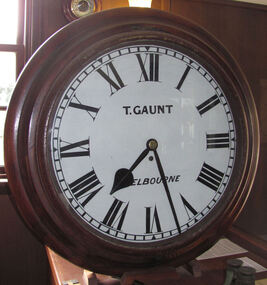
... Exhibition, Melbourne, 1888. Thomas Gaunt History: Thomas Gaunt established Melbourne's leading watchmaking, optical and jewellery business during the second half of the 19th century. Gaunt arrived in Melbourne in 1852, and by 1858 had established his own business at 14 Little Bourke Street. Around 1869 he moved to new premises in Bourke Street on the corner of Royal Arcade, Gaunt's shop...Exhibition, Melbourne, 1888. Thomas Gaunt History: Thomas Gaunt established Melbourne's leading watchmaking, optical and jewellery business during the second half of the 19th century. Gaunt arrived in Melbourne in 1852, and by 1858 had established his own business at 14 Little Bourke Street. Around 1869 he moved to new premises in Bourke Street on the corner of Royal Arcade, Gaunt's shop ...The clock was either made or sold by T. Gaunt & Co. of Melbourne, a manufacturer, importer and retailer of a wide variety of goods including jewellery, clocks and watches, navigational and measuring instruments, dinnerware, glassware and ornaments. Thomas Gaunt photograph was included in an album of security identity portraits of members of the Victorian Court, Centennial International Exhibition, Melbourne, 1888. Thomas Gaunt History: Thomas Gaunt established Melbourne's leading watchmaking, optical and jewellery business during the second half of the 19th century. Gaunt arrived in Melbourne in 1852, and by 1858 had established his own business at 14 Little Bourke Street. Around 1869 he moved to new premises in Bourke Street on the corner of Royal Arcade, Gaunt's shop quickly became a Melbourne institution. Gaunt proudly advertised that he was 'The only watch manufacturer in the Australian colonies'. While many watches and clocks may have had Gaunt's name on the dial, few would have been made locally. Gaunt did make some watches for exhibitions, and perhaps a few expensive watches for wealthy individuals. Gaunt's received a telegraph signal from Melbourne Observatory each day to correct his main clock and used this signal to rate and repair ship's chronometers and good quality watches. His main horological manufacturing was directed at turret clocks for town halls, churches and post offices. These tended to be specific commissions requiring individualised design and construction. He made the clock for the Melbourne Post Office lobby, to a design by Government Astronomer Robert Ellery, and won an award at the 1880-81 Melbourne International Exhibition for his turret clock for the Emerald Hill Town Hall. He became well known for his installation of a chronograph at Flemington Racecourse in 1876, which showed the time for the race, accurate to a quarter of a second. The firm also installed the clockwork and figures for Gog and Magog in the Royal Arcade. Thomas Gaunt also developed a department that focused on scientific instrumentation, making thermometers and barometers (from imported glass tubes), telescopes, surveying instruments and microscopes. Another department specialised in electroplating for trophies, awards and silverware, and the firm manufactured large amounts of ecclesiastical gold ware and silverware, for the church including St Patrick's Cathedral. There are no records that disclose the number of employees in the firm, but it was large enough for Gaunt to hold an annual picnic for the watchmakers and apprentices at Mordialloc from 1876; two years previously they had successfully lobbied Gaunt to win the eight hour day. Gaunt's workforce was reportedly very stable, with many workers remaining in the business for 15 to 30 years. Gaunt's wife Jane died on September 1894, aged 64. They had one son and six daughters, but only three daughters survived to adulthood. Two became nuns at the Abbotsford Convent and one daughter, Cecelia Mary Gaunt (died 28 July 1941), married William Stanislaus Spillane on 22 September 1886 and had a large family. Gaunt died at his home in Coburg, Victoria, leaving an estate valued at ₤41,453. The business continued as T. Gaunt & Co. after his death. Post Office and Clock History: Warrnambool’s Post Office has been in existence since 1857, when it was originally situated on the corner of Timor and Gilles Street. In March 1864 the Warrnambool Borough Council purchased this clock from Henry Walsh Jnr. for the sum of £25, “to be put up in front of the Post Office”. Henry Walsh Jnr was the eldest son of Melbourne’s Henry Walsh, maker and retailer of clocks, watches, thermometers and jewellery. In 1854 Henry Walsh Jnr. began business in Warrnambool as a watchmaker and jeweller later becoming a Councillor with now a local street named after him. The Post Office was extensively remodelled in 1875-76. Early photographs of this building show that the clock was installed on the northern outside wall, Timor Street, under the arches and between the 2 centre windows, where it could be seen by passers-by. Although spring loaded clocks date back to the 15th century, and fob and pocket watches evolving from these date to the 17th century, personal pocket watches were only affordable to the very fortunate. Public clocks such as this Post Office clock provided opportunity for all to know the time, and for those in possession of a personal watch to check and set their own timepieces to the correct time. During post office reservations during the 1970s the clock was removed and was eventually donated to the Flagstaff Collection. The Clock’s maker Thomas Gaunt, is historically significant and was an established and well renowned scientific instrument and clock maker in Melbourne during the 1860s. He was at that time the only watchmaker in the Australian colonies. In the 1870’s and 1880’s he won many awards for his clocks and was responsible for sending time signals to other clocks in the city and rural areas, enabling many businesses and organisations to accurate set their clocks each day. Warrnambool Borough Council purchased this clock from Henry Walsh Jnr. for the sum of £25 and the clock used to stand in front of the Warrnambool post office to allow ordinary citizens to set their time pieces as they walked by. The item is not only important because it was made by a significant early colonial clock maker and retailed by a locally known clock maker and jeweler but also that it was installed in the Warrnambool Post Office a significantly historical building in it's own right. Built in 1857 and regarded as one of the oldest postal facilities in Australia, with a listing on the National Heritage Database, (ID 15656). This 1864 hall clock originates from the Warrnambool Post Office. The clock glass is hinged to the top of the clock face and has a catch at the bottom. The metal rim of the glass is painted black. The clock face is metal, painted white, with black Roman numerals and markings for minutes and five minutes. The tip of the small hour hand is shaped like a leaf. "T. GAUNT / MELBOURNE" is printed in black on the clock face. The winding key hole is just below the centre of the clock face. The key winds a fusee chain mechanism, attached to the brass mainspring barrel that powers the pendulum with an 8-day movement. The speed of the clock can be adjusted by changing the position of the weight on the pendulum, lengthening or shortening the swing; raising the pendulum shortens its swing and speeds up the clock. The metal fusee mechanism has an inscription on it. The rectangular wooden casing is with a convex curve at the bottom that has a hinged door with a swivel latch. The original stained surface has been painted over with a matte black. There are two other doors that also allow access to the clock’s workings. The case fits over the pendulum and workings at the rear and attaches to the clock by inserting four wooden pegs into holes in the sides of the case then into the back of the clock. A flat metal plate has been secured by five screws onto the top of the case and a hole has been cut into it for the purpose of hanging up the clock. There is a nail inside the case, possibly used for a place to the key."T. GAUNT MELBOURNE" is printed on the clock face. “6 1 3” embossed on the back of the fusee mechanism behind the clock. warrnambool, shipwrecked coast, flagstaff hill, flagstaff hill maritime museum, maritime museum, shipwreck coast, flagstaff hill maritime village, shipwrecked artefact, clock, warrnambool post office, fusee, henry walsh jnr, thomas gaunt, t gaunt & co, post office clock -
 Eltham District Historical Society Inc
Photograph, Daniel Rutter Long, Bridge over the Diamond near Eltham, Daniel Rutter Long, 1855
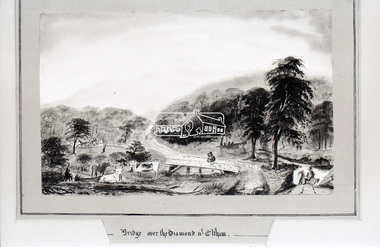
... By 1843 he had his own chemist shop in Bourke Street, later erecting a well known pharmacy on the corner of Bourke and Exhibition streets. ...By 1843 he had his own chemist shop in Bourke Street, later erecting a well known pharmacy on the corner of Bourke and Exhibition streets. ...Daniel Rutter Long was born in England, after training as a pharmacist he, his wife and family emigrated to Port Phillip, Victoria in 1840. By 1843 he had his own chemist shop in Bourke Street, later erecting a well known pharmacy on the corner of Bourke and Exhibition streets. During the gold rush of the 1850s he purchased gold at the shop for shipment to a Quaker syndicate in London. Retiring from the business in 1857 Long took up painting, sometimes returning to his original profession. He painted hundreds of landscapes in other colonies as well as in Victoria. Long participated in local affairs and was one of the earliest members of the municipal council. Later he was elected mayor and instrumental in the in the erection of Prahran Town Hall. He was also a member of the Police Court Bench for many years. Daniel Long died at the age of eighty-three in 1886. (State Library of Victoria)This photo forms part of a collection of photographs gathered by the Shire of Eltham for their centenary project book,"Pioneers and Painters: 100 years of the Shire of Eltham" by Alan Marshall (1971). The collection of over 500 images is held in partnership between Eltham District Historical Society and Yarra Plenty Regional Library (Eltham Library) and is now formally known as the 'The Shire of Eltham Pioneers Photograph Collection.' It is significant in being the first community sourced collection representing the places and people of the Shire's first one hundred years.Digital image 35mm B&W negativeshire of eltham pioneers photograph collection, bridge, daniel rutter long, diamond creek (creek), eltham, sepp -
 Eltham District Historical Society Inc
Journal, Peter Doughtery, ArtStreams: News in arts and cultural heritage; Vol. 1, No. 1, November 1996, 1996
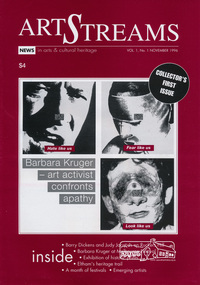
... exhibition...nillumbik festival...nola spence...ona henderson...opportunity shop...our lady of help christians church...pamela conder...parafinallen...patrick mccauley...peter burns...peter dougherty...pond...road...robbie greig...roger shuttleworth...ron hanson...rory cole...ross hannaford...ross needham...ruckers hill...sanctuary...scott griffiths...shep huntly...shillinglaw cottage...shire of nillumbik...shoestring...sigmund jorgensen...silvio apponyi...spindrift...st margarets anglican church...stebbing cottage...steve sedergreen...susan street..." - Eltham District Historical Society Newsletter No. 161, March 2005 1996 adam simmons akira takizawa alison cassidy alistair knox park allwood house alvaro castagnet angels of soul anita hustas anna kelly anne curry arts ball avenue of honour barbara kruger barry dickens batacuda belli belly dance and drumming group betty rowland bike paths bits & pieces blair fraser blue tongue bridge street bulleen art & garden centre bulleen nursery bux caffe poco cal martin carla cordeiro cate bailey charles morris charlie dowley chris hooke chris kandis chute street circus in a suitcase crucial kick deirdre o'reilly diamond creek diamond valley big band edna kenny ellis cottage eltham arts council eltham cemetery eltham courthouse eltham festival eltham high school stage and jazz band eltham high school eltham library eltham people's choir eltham symphonica band eltham war memorial building eltham wiregrass gallery eucalypso fay alexander jenkins fiona furphy firefly food for all seasons friends of the earth forest action fund gavan gray gene strode geoff braithwaite geoff kluke george kirov gil askey golden cascades graeme barker and the cats greg o'leary harry gilham helen o'grady children's drama academy heritage trail hurstbridge goldworks gallery italian women's choir jackie gaudion jackie stojznova jacqueline gawler janine james jarrold cottage jay atwill jazz band ball jerry hughes jock ryan john rasmussen jon weaving joseph zbukvic joy ness judy jacques judy racz jules burns june cugola kate jones kavisha mazzella kevin spearey les gyori lisa walker lothlorian louise jade magwal margie allan margie lou dyer margo barrett mary burns masquerade ball melody james and friends mermaid in the well michael eames michael murray michele lonsdale monique di mattina montsalvat myra skipper nell frysteen nerida kirov nicole o'connor nillumbik emerging artists exhibition nillumbik festival nola spence ona henderson opportunity shop our lady of help christians church pamela conder parafinallen patrick mccauley peter burns peter dougherty pond road robbie greig roger shuttleworth ron hanson rory cole ross hannaford ross needham ruckers hill sanctuary scott griffiths shep huntly shillinglaw cottage shire of nillumbik shoestring sigmund jorgensen silvio apponyi spindrift st margarets anglican church stebbing cottage steve sedergreen susan street sweeney syd tunn tennis-courts terry cole the great gizmo the picture theo scharf thermal skunkrust untitled scraper board victorian artists supplies war artist warrandyte westgarth writers' week wingrove cottage wolfgangs palace theatre troupe women's circus yarra plenty rock gospel choir you did alright kid art streams Colour front and back cover with feature articles and literary pieces with photographs and advertisements printed in black and white. 36 pages, 30 cm. ...Vol. 1, No. 1 November 1996 CONTENTS REFORMIST?: Barbara Kruger comes to the Museum of Modern Art at Heide 3 FESTIVALS Nillumbik festival celebrates our lifestyle in food, wine, music and art 5 WRITERS WEEK Barry Dickens and Judy Jacques on Ruckers Hill present the "word" in all its possibilities 8 EMERGING ARTISTS Nillumbik presents a new wave of visual artists 11 SHORT STORY Extract from a novel in progress by Jon Weaving 12 POETRY Tribute to Myra Skipper 16 HERITAGE TRAIL Youth of Eltham research local history 1 8 SCULPTURE Akira Takizawa's search for harmony 22 WRITER'S JOURNEY A writer overcomes a nightmare 24 SCIENCE AND ART Pamela Conder analyses nature 26 ARTS BALL Jazz greats come to town 27 HISTORY IN PRINTS Australia's forgotten war artist 28 "Peter Dougherty has been involved in the local art scene for many years. As publisher and editor of the arts magazine Artstreams, his comments on the various branches of the arts are widely respected. His "The Arts" column in the Diamond Valley Leader presents a brief summary for a much wider cross section of the local community. Peter also operates his own gallery and the Artstreams Cafe at the St Andrews market. Peter has a wealth of knowledge about present day and historical aspects of local art and artists." - Eltham District Historical Society Newsletter No. 161, March 2005Colour front and back cover with feature articles and literary pieces with photographs and advertisements printed in black and white. 36 pages, 30 cm. Vol. 1, no. 1 (Nov. 1996) - Vol. 10, no. 5 (summer ed. 2005/06) 1996, adam simmons, akira takizawa, alison cassidy, alistair knox park, allwood house, alvaro castagnet, angels of soul, anita hustas, anna kelly, anne curry, arts ball, avenue of honour, barbara kruger, barry dickens, batacuda, belli, belly dance and drumming group, betty rowland, bike paths, bits & pieces, blair fraser, blue tongue, bridge street, bulleen art & garden centre, bulleen nursery, bux, caffe poco, cal martin, carla cordeiro, cate bailey, charles morris, charlie dowley, chris hooke, chris kandis, chute street, circus in a suitcase, crucial kick, deirdre o'reilly, diamond creek, diamond valley big band, edna kenny, ellis cottage, eltham arts council, eltham cemetery, eltham courthouse, eltham festival, eltham high school stage and jazz band, eltham high school, eltham library, eltham people's choir, eltham symphonica band, eltham war memorial building, eltham wiregrass gallery, eucalypso, fay alexander jenkins, fiona furphy, firefly, food for all seasons, friends of the earth forest action fund, gavan gray, gene strode, geoff braithwaite, geoff kluke, george kirov, gil askey, golden cascades, graeme barker and the cats, greg o'leary, harry gilham, helen o'grady children's drama academy, heritage trail, hurstbridge goldworks gallery, italian women's choir, jackie gaudion, jackie stojznova, jacqueline gawler, janine james, jarrold cottage, jay atwill, jazz band ball, jerry hughes, jock ryan, john rasmussen, jon weaving, joseph zbukvic, joy ness, judy jacques, judy racz, jules burns, june cugola, kate jones, kavisha mazzella, kevin spearey, les gyori, lisa walker, lothlorian, louise jade, magwal, margie allan, margie lou dyer, margo barrett, mary burns, masquerade ball, melody james and friends, mermaid in the well, michael eames, michael murray, michele lonsdale, monique di mattina, montsalvat, myra skipper, nell frysteen, nerida kirov, nicole o'connor, nillumbik emerging artists exhibition, nillumbik festival, nola spence, ona henderson, opportunity shop, our lady of help christians church, pamela conder, parafinallen, patrick mccauley, peter burns, peter dougherty, pond, road, robbie greig, roger shuttleworth, ron hanson, rory cole, ross hannaford, ross needham, ruckers hill, sanctuary, scott griffiths, shep huntly, shillinglaw cottage, shire of nillumbik, shoestring, sigmund jorgensen, silvio apponyi, spindrift, st margarets anglican church, stebbing cottage, steve sedergreen, susan street, sweeney, syd tunn, tennis-courts, terry cole, the great gizmo, the picture, theo scharf, thermal skunkrust, untitled scraper board, victorian artists supplies, war artist, warrandyte, westgarth writers' week, wingrove cottage, wolfgangs palace theatre troupe, women's circus, yarra plenty rock gospel choir, you did alright kid, art streams -
 Warrnambool and District Historical Society Inc.
Ephemera - Token, Hickford Mayoral token
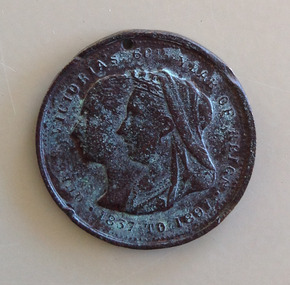
... Exhibition of 1896-7. A skilled decorative artist, Hickford carried out art work in many private houses, business and churches in Warrnambool. His shop in Liebig Street...Exhibition of 1896-7. A skilled decorative artist, Hickford carried out art work in many private houses, business and churches in Warrnambool. His shop in Liebig Street ...This so-called Hickford medal was a medal struck in 1897 by the Town of Warrnambool (bearing Walter Hickford’s name as the Mayor at the time) to commemorate the 60th anniversary of the reign of Queen Victoria. Walter John Hickford was Mayor of Warrnambool 1895-6-7 and President of the Committee that organized the Warrnambool Industrial and Art Exhibition of 1896-7. A skilled decorative artist, Hickford carried out art work in many private houses, business and churches in Warrnambool. His shop in Liebig Street supplied paint materials for households, businesses and artists. Hickford Parade is named after him. The 60th anniversary of Queen Victoria’s reign was celebrated widely throughout Australia and the British Empire. This medal is one of several owned by the Warrnambool and District Historical Society. It is of some importance as it shows the extent to which civic authorities and individuals in places like Warrnambool were concerned with all things British and the influence of the British monarchy in Australian affairs in the late 19th century. It also shows the importance attached at the time to the position of Mayor, with his name being inscribed on the medal.This is a medal, possibly bronze, with the logo of the Town of Warrnambool on one side and two images of Queen Victoria on the other. Side one: Town of Warrnambool, W.J.Hickford, Mayor Side two: 1837-1897, Queen Victoria’s 60th Year of Reign queen victoria, town of warrnambool walter hickford -
 Warrnambool and District Historical Society Inc.
Work on paper - Card, Giles, 1973
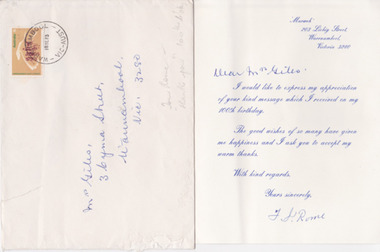
... shop at 115 Liebig Street in 1907, retiring in 1962. Thomas Rome is remembered today not only for his long life and prominent Liebig Street business but also because of the sound recordings he made in 1896-7 at the Warrnambool Industrial and Art Exhibition. ...shop at 115 Liebig Street in 1907, retiring in 1962. Thomas Rome is remembered today not only for his long life and prominent Liebig Street business but also because of the sound recordings he made in 1896-7 at the Warrnambool Industrial and Art Exhibition. ...This thank you card is from Thomas Rome (1873-1974) when he was celebrating his 100th birthday in 1973. Thomas Rome came to Warrnambool from Beechworth to work with John Younger in his Warrnambool store in 1888. He worked there for 17 years before opening his boot and shoe shop at 115 Liebig Street in 1907, retiring in 1962. Thomas Rome is remembered today not only for his long life and prominent Liebig Street business but also because of the sound recordings he made in 1896-7 at the Warrnambool Industrial and Art Exhibition. With an Edison phonograph machine he made sound recordings of local artists and these are regarded as one of the oldest, if not the oldest, surviving sound recordings made in Australia. This card with its envelope is of interest as it reminds us of the long life of a prominent Warrnambool identity of the late 19th century and the first 70 years of the 20th century. The card has T. J. Rome’s signature. Mrs Vera Giles was the recipient of the card a long-serving member of the Warrnambool and District Historical Society and, like Tommy Rome, a person who reached her 100th year and beyond. This is a small piece of white lightweight card folded into two to make a card. Inside is a handwritten and printed message from Tommy Rome on the occasion of his 100th birthday The envelope bears the post mark 18th September 1973 and is addressed to Mrs Giles. Envelope: ‘Mrs Giles, 3 Cyma Street, Warrnambool, Vic. 3280, a seven cent stamp and a handwritten note – ‘Tom Rome, ‘thank you’ 100th b’day’. Card: ‘Murweh’, 203 Liebig Street, Warrnambool 3280 Dear Mrs Giles I would like to express my appreciation of your kind message which I received on my 100th birthday. The good wishes of so many have given me happiness and I ask you to accept my warm thanks, With kind regards, Yours sincerely, T.J.Rome thomas rome, murweh, warrnambool history, vera giles warrnambool -
 Warrnambool and District Historical Society Inc.
Souvenir - Warrnambool Exhibition Glass, 1896-7
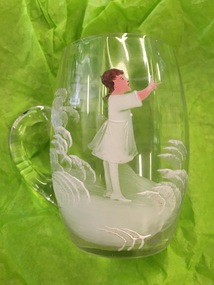
... This exhibition lasted three months and was staged at the Liebig/Timor Streets intersection at the Warrnambool Town Hall and Council buildings with some temporary buildings added for the occasion. It was reported that 70,000 people visited the displays, attended the concerts and entered the competitions. John Villiers, a Warrnambool painter and decorator with a glassware and chinaware shop...This exhibition lasted three months and was staged at the Liebig/Timor Streets intersection at the Warrnambool Town Hall and Council buildings with some temporary buildings added for the occasion. It was reported that 70,000 people visited the displays, attended the concerts and entered the competitions. John Villiers, a Warrnambool painter and decorator with a glassware and chinaware shop ...This is a glass cup which has been painted and etched at the Warrnambool Industrial and Art Exhibition of 1896-7. This exhibition lasted three months and was staged at the Liebig/Timor Streets intersection at the Warrnambool Town Hall and Council buildings with some temporary buildings added for the occasion. It was reported that 70,000 people visited the displays, attended the concerts and entered the competitions. John Villiers, a Warrnambool painter and decorator with a glassware and chinaware shop in Liebig Street, had a stall at the Exhibition. He brought from Melbourne a glass etcher who etched glass souvenirs such as this one for patrons of the Exhibition. It was the first time that glass etching had been done in Warrnambool. Alice McConnell was born in 1885 in Warrnambool to Robert McConnell and Matilda Russell so she was about 11 or 12 at the time of the Exhibition. She died at the age of 17 in Warrnambool. Her father was possibly the proprietor of the R. and J. McConnell livery stables which later became a transport company in Warrnambool.This glass is most significant because it is one of the few surviving souvenirs of the important Warrnambool Industrial and Art Exhibition of 1896-7. It is also a memento of Alice McConnell, the owner of the glass, who died at the young age of 17. The item comes from the estate of Ken Wooles who was a descendant of the Wooles family prominent in Warrnambool as monumental masons. He was also related to the McConnell family on his mother’s side of the familyThis is a glass cup with a handle. It has a curved shape and has a painting of a young girl with brown hair in a white decorative setting. The glass is etched with the name of Alice McConnell and this was done in 1897 at the Warrnambool Industrial and Art Exhibition of 1896-7. There is a crack near the handle.‘Warrnambool Exhibition, Alice McConnell, 1897’warrnambool industrial and art exhibition 1896-7, alice mcconnell -
 Bendigo Historical Society Inc.
Souvenir - Views of Bendigo, 1902
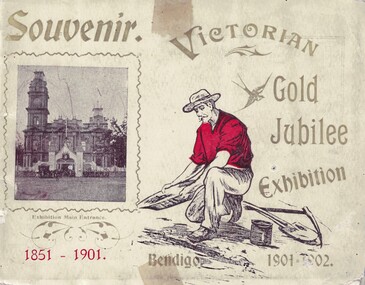
... Exhibition - Page 16 of 29 T. J. Connelly and Co's Exhibit. T.J. Connelly an American immigrant came to the Bendigo goldfields where he later established Connelly’s Tin Shop on the corner of High and Forest Streets 1853. ...Exhibition - Page 16 of 29 T. J. Connelly and Co's Exhibit. T.J. Connelly an American immigrant came to the Bendigo goldfields where he later established Connelly’s Tin Shop on the corner of High and Forest Streets 1853. ...The Victorian Gold Jubilee Exhibition, held at Bendigo from 13 November 1901 to 14 May 1902. The courts were numbered from one, or had titles like “Machinery”, “Agricultural”, “Naval & Military Court” and “Art”. The female visitors to the Exhibition were able to view exhibits deemed suitable for the fairer sex and located within their own “Women’s Court”. There were exhibits such as “Parasols & Umbrellas”, cotton and haberdashery from Manchester and Staffordshire, “Corsets & Embroideries” from Paris. The most valuable exhibits were mining machinery such as Taylor Horsfield’s £850 “Air Compressor & Rock Borer”. “Bohemian Glassware” brought down from Sydney was valued at £600. The profits from this Exhibition were used to fund the sculpture known as the Gold Monument, which still gazes along Pall Mall (from the McCrae Street end). The Exhibition’s Cash Book shows payments, which totalled £1160, were made to then up and coming sculptor C.D.Richardson. Recently a City of Greater Bendigo staff member used both these volumes to write a detailed report about this monument, for Heritage Victoria.Carol Holsworth Collection: Small book Souvenir, 29 pages plus cover; each page. has a photo of the exhibit. Exhibition was held on the site of the present Bendigo Library between Hargreaves St and Lyttleton Terrace. * 8662.1a Victorian Gold Jubilee Exhibition - Front Cover: Printed 'Souvenir', 'Bendigo 1901-1902'; a photo of the Entrance to the exhibition beside the Town Hall. * 8662.1b Victorian Gold Jubilee Exhibition - Inside Front Cover - Page 1 of 29. Portraits of Exhibition President S.H. Cowen esq.; and G.V. Allen esc., General Secretary. Photos by W.H. Robinson publisher. Printed by T. Cambridge, Market Square Bendigo. * 8662.1c Victorian Gold Jubilee Exhibition - Page 1 of 29 The Governor General at the Exhibition. Photo of the crowd, police, trooper and horse drawn vehicles. * 8662.1d Victorian Gold Jubilee Exhibition - Page 2 of 29 Procession Passing the Fountain, Pall Mall. The crowd and horse drawn vehicles. *8662.1e Victorian Gold Jubilee Exhibition - Page 3 of 29 James Martin and Co's Exhibit. James Martin & Co was an Australian engineering company which progressed from making agricultural equipment to making railway locomotives. * 8662.1f Victorian Gold Jubilee Exhibition - Page 4 of 29 Old Pioneers. Elderly gentlemen on foot and carriage - at the Bendigo Railway Station. * 8662.1g Victorian Gold Jubilee Exhibition - Page 5 of 29 Robert Harper and Company's Exhibit. From Trove - The Brisbane Courier 25 Aug 1891: One of the best known firms in the Southern hemisphere is Messrs. Robert Harper and Co , tea importers, coffee, rice, and spice merchants and manufacturers Then productions circle this continent, and every thrifty housewife is familiar with their Empire tens, their Star' brand of goods, then oatmeal, wheatmeal, and other breakfast table luxuries The headquarters of the firm are placed at Port Melbourne, and the manufactory there occupies over an acre of ground, while the mills at Sydney and Adelaide are as great in proportion It is eight cars since the firm opened business in this colony. The step was taken with much confidence, the principals the firm being quite attracted. * 8662.1h Victorian Gold Jubilee Exhibition - Page 6 of 29 The Electric Tram * 8662.1i Victorian Gold Jubilee Exhibition - Page 7 of 29 G. Weymouth Proprietary Ltd. The business of G. Weymouth & Co was founded in 1898 by George Andrew Philip Weymouth, who began operating from a small workshop on City Road, South Melbourne (opposite Princes Bridge). An early advertisement describes the firm's activities at this time as being 'makers of dynamos, (electric) motors, x-ray apparatus and electrical instruments, &c' together with 'repairs to every class of electrical work'. * 8662.1j Victorian Gold Jubilee Exhibition - Page 8 of 29 The Exhibition Fernery * 8662.1k Victorian Gold Jubilee Exhibition - Page 9 of 29 Cohn Bros'. Exhibit. In 1857 at the height of the gold rush, with people pouring into Central Victoria from all over the world, three brothers from Denmark – Moritz, Julius and Jacob Cohn – founded a small cordial factory in the booming town of Bendigo. They went on to build an empire and, through introducing lager, which is served cold, to the country, changed the drinking preferences of Australians. * 8662.1l Victorian Gold Jubilee Exhibition - Page 10 of 29 Ornamental Lake in the Exhibition Grounds * 8662.1m Victorian Gold Jubilee Exhibition - Page 11 of 29 Australian Explosives and Chemical Co.'s Exhibit. The Australian Explosives and Chemical Company began manufacturing explosives in Melbourne's outskirts (the area now known as Deer Park) in 1875. In 1897 the Company was purchased by Nobel, forming Nobel (Australasia) Ltd. * 8662.1n Victorian Gold Jubilee Exhibition - Page 12 of 29 Tasmanian Court * 8662.1o Victorian Gold Jubilee Exhibition - Page 13 of 29 N. Guthridge's Limited Exhibit. Guthridge sold a variety of mining supplies and equipment; also 'Rackarock' which was used to fill the mining drill holes before blasting. * 8662.1p Victorian Gold Jubilee Exhibition - Page 14 of 29 Navel and Military Court (LARGE File) * 8662.1q Victorian Gold Jubilee Exhibition - Page 15 of 29 Women's Court * 8662.1r Victorian Gold Jubilee Exhibition - Page 16 of 29 T. J. Connelly and Co's Exhibit. T.J. Connelly an American immigrant came to the Bendigo goldfields where he later established Connelly’s Tin Shop on the corner of High and Forest Streets 1853. Connelly was named after Thomas Jefferson the famous statesman who wrote much of the American Declaration of Independence in 1776 and became the third United States President. Connelly, along with other prominent citizens of the time established Bendigo’s first Fire Brigade, Mechanics Institute. * 8662.1s Victorian Gold Jubilee Exhibition - Page 17 of 29 The Potter's Wheel * 8662.1t Victorian Gold Jubilee Exhibition - Page 18 of 29 G. D. Guthrie and Co.'s Exhibit. In 1863 the Bendigo Pottery was set up by Guthrie. * 8662.1u Victorian Gold Jubilee Exhibition - Page 19 of 29 The Ladies' Committee * 8662.1v Victorian Gold Jubilee Exhibition - Page 20 of 29 J. Kitchen and Sons Exhibit. In Port Melbourne since the 1850s they made such products as Velvet Soap and Electrine Candles from the tallow and other animal fats from the nearby slaughter yards. In recent decades the company has become Kitchen & Lever then Unilever and most recently Unichema. * 8662.1w Victorian Gold Jubilee Exhibition - Page 21 1of 29 The Executive Committee * 8662.1x Victorian Gold Jubilee Exhibition - Page 22 of 29 Taylor Horsfield Exhibit. The most valuable exhibits were mining machinery such as Taylor Horsfield’s £850 “Air Compressor & Rock Borer” * 8662.1y Victorian Gold Jubilee Exhibition - Page 23 of 29 A Peep at the Education Department 8662.1z Victorian Gold Jubilee Exhibition - Page 24 of 29 John Danks and Co's Exhibit. John Danks & Son was a major manufacturing company in Melbourne, Victoria and Sydney, New South Wales. * 8662.1aa Victorian Gold Jubilee Exhibition - Page 25 of 29 Glance at the Agricultural Department's Court * 8662.1bb Victorian Gold Jubilee Exhibition - Page 26 of 29 T. York's Exhibit. Thomas York was an instrument repairer and brass instrument maker that resided in Melbourne in the late 19th to the early 20th century. While old newspaper advertisements suggested he repaired all instruments, it appears the focus of his business were military and brass band instruments. (BrassandWoodWind.com) * 8662.1cc Victorian Gold Jubilee Exhibition - Page 27 of 29 T. McPherson and Son's Exhibit. Possibly monumental masons. * 8662.1dd Victorian Gold Jubilee Exhibition - Page 28 of 29 T. Lewis and Whitty's Exhibit - Inside Back Cover. Lewis & Whitty were prominent boot blacking manufacturers as well as a number of other chemical products such as “Odourbane" disinfectant. * 8662.1ee Victorian Gold Jubilee Exhibition - Page 29 of 29 Singer Manufacturing Coy's Exhibithistory, bendigo, victorian gold jubilee exhibition bendigo, carol holsworth collection -
 Port Melbourne Historical & Preservation Society
Document - Certificate of Marriage George QUICK & Rosa Harden HARRIS, 29 Sep1858
... shop and dwelling on the corner of Dow & Graham Streets, Port Melbourne. Graham Street John LOWE Rosa Harden QUICK Rosa Harden HARRIS George QUICK Charlotte Elizabeth HARRIS Joseph QUICK Jane Rintoul John Mark HARRIS Celebrations Fetes and Exhibitions Pale blue Original Certificate of Marriage No. 1044 celebrated at St Peters church, Melbourne. ...Rosa Harden HARRIS married George Quick at St Peters, Melbourne on the 29th December 1858. George was born in New York and his father, Joseph, was a Cordwainer. Rosa had been born in London and her parents were Jane RINTOUL and John Mark HARRIS, a silversmith. One of the witnesses was Rosa's sister, Charlotte Elizabeth HARRIS, who was to marry John LOWE. Rosa went on to own a two story brick shop and dwelling on the corner of Dow & Graham Streets, Port Melbourne. Pale blue Original Certificate of Marriage No. 1044 celebrated at St Peters church, Melbourne.graham street, john lowe, rosa harden quick, rosa harden harris, george quick, charlotte elizabeth harris, joseph quick, jane rintoul, john mark harris, celebrations fetes and exhibitions -
 Glen Eira Historical Society
Letter - Glen Huntly Festivals
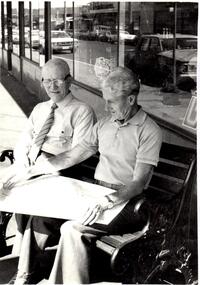
... Street Carnegie Georgiades Kaye Ford P. Glenhuntly Glen Huntly Glenhuntly Pavement Art Festival Truscott Vanessa Georgiades K. Caulfield Contact Theobold Gus Glenhuntly Shopping Centre Local Government Local Officials and Employees Associations Historical Societies Bowling Clubs Festivals and Celebrations Festivities Musical Ensembles Educational and Research Establishments Schools Business People Competitions Art Competitions Commercial Events and Activities Officer Workers Shows and Exhibitions Letter Glen Huntly Festivals ...This file contains five items: 1/An official programme for the Glenhuntly Traders Association’s Annual Christmas Festivals on 22/11/1986. 2/A handwritten letter from Vice President Kaye Georgiades of the Glenhuntly Traders Association to Mr. Balentine thanking him for photos lent. The letter is undated. 3/A typed letter from the Glenhuntly Traders Association to Mr. R. Ballantyne of the Caulfield Historical Society thanking him for helping and supporting the Festival and Payment Art Competition. Dated 30/10/1986. 4/Two typed letters from the Glenhuntly Traders Association to Mr. Ballantyne of the Caulfield Historical Society regarding planned activities for the 1986 and 1987 Christmas Festivals. 5/A black-and-white photograph of members of the Glenhuntly Traders Association, including Gus Theobold pictured on the left. The photo is undated and was published in the Caulfield Contact newspaper.glenhuntly traders, glenhuntly traders associations, caulfield festival, glenhuntly road, booran road, grange road, caulfield, watsons grove, glenhuntly newsagency, royal avenue, campbell j., farey j. mr., manchester grover, mayors, ryall m., caulfield historical society, glenhuntly bowling club, caulfield grammar band, caulfield baton twirlers, glenhuntly christmas festival, glenhuntly festival, truscott v., balentine mr., ballantyne r. mr., truscott v. mrs., neville street, carnegie, georgiades kaye, ford p., glenhuntly, glen huntly, glenhuntly pavement art festival, truscott vanessa, georgiades k., caulfield contact, theobold gus, glenhuntly shopping centre, local government, local officials and employees, associations, historical societies, bowling clubs, festivals and celebrations, festivities, musical ensembles, educational and research establishments, schools, business people, competitions, art competitions, commercial events and activities, officer workers, shows and exhibitions -
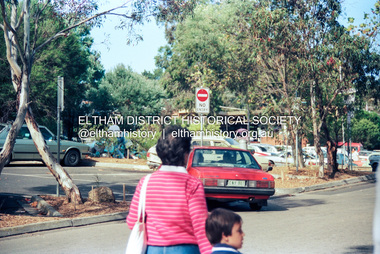 Eltham District Historical Society Inc
Photograph (Item) - Print, Fred Mitchell, For Freedom Law Is A Necessity, 1988
... It is a time capsule of life in the 1980s of this urban and rural municipality in Melbourne's north. shire of eltham archives Bicentennial Project Eltham Eltham Community Photographic Survey Eltham Photographic Survey Exhibition Series 34 Series 35 Arthur Street Commercial Place Eltham Shopping Centre Eltham Village Film - Kodak GA 100 5095 Fred Mitchell Safeway Carpark Scan - 35mm negative Front: Entrant No. and name on printed label Rear: Entrant No., name and address on printed label; also 'Series 34' and the 'Item No.' in pencil Colour print 20.5 x 25.5 cm mounted on card 25.4 x 30.4 cm Also corresponding negative (Series 35) Digital image scanned from negative (Series 35) For Freedom Law Is A Necessity Photograph Print Fred Mitchell ...Safeway carpark, Commercial Place, Eltham Fred Mitchell 1988 Entrant No. 5 Ref: Series 34, Items 3, 4, 46-49 SHIRE OF ELTHAM COMMUNITY PHOTOGRAPHIC SURVEY Photography is an artform which many of us practice, sometimes purely for artistic pursuit, sometimes to record the people and events in our lives. In 1988, as part of a local Bicentennial project, the Shire of Eltham conducted the Eltham Community Photographic Survey. Up to 100 entries were to be selected by a panel of photographers for entry into the Eltham Photographic Survey Exhibition. Entries had to be submitted by May 13, 1988. Entrants whose images were selected for the exhibition were contacted and requested to further submit an entry form providing entrant’s name, area of residence, age, and proposed captions. These details were then used to produce labels for the exhibition mounts. Where negatives had not been supplied, these were requested to support the display of printed enlargements mounted on 10” x 8” cardboard. The mounted prints were made available post exhibition for sale at $8.50 each for colour prints and $7.00 for B&W prints. Residents in the Shire were invited to collect a free roll of film and take a photograph of what they either liked or did not like about the area. A total of 160 entrants submitted multiple entries for the exhibition. Of those selected for exhibition, entrants ranged in age from 9 to 70 years. All custom colour and black and white printing for the exhibition was completed by Wattle Studios of Eltham. The Eltham Photographic Survey was jointly auspiced by the Shire of Eltham and Wattle Studios, of 953 Main Road, Eltham. The project was greatly assisted by: • David McRitchie, Media Studies Lecturer Victoria College, Rusden Campus. • Ian and Annette Toohill of Wattle Studios • Tracy Naughton, Eltham Community Arts Officer • Neville Emerson Pty. Ltd. • Superior Press, Eltham • Kodak Australasia Pty. Ltd. • Agfa Gevaert Ltd. • Townsend Colourtech Pty. Ltd. • The Australian Bicentennial Authority • Eleanor Bowers, Secretary, Eltham Arts Council The exhibition was placed on display in the Woolworths Arcade, Eltham between Monday June 6th and Saturday June 11, 1988. It was also intended to hold the exhibition at a venue in the Shire’s North Riding from Monday, June 20 to Friday June 24. It was then displayed at the Were Street Theatre, Montmorency from Friday, June 24 to Thursday, July 7. Series 34: Eltham Community Photographic Survey 1988 - Prints & Documentation Series consists of 117 photographs of Shire scenes taken by members of the community. Items I - 41 are larger photographs mounted on card, which were exhibited. Items 42 - 117 are unmounted copies, alternative takes and other entries. Corresponding negatives contained in Series 35: Eltham Community Photographic Survey 1988 – Negatives which consists of 267 colour and B&W negatives and one colour slide of Shire scenes taken by members of the community. The negatives are arranged by the entrant number of the photographer. The Eltham Community Photographic Survey collection is significant to the local community as it was curated by the local community - ordinary people of all ages - representing what they liked and did not like in the area where they lived. It represents an unfiltered representation of the Shire of Eltham as it was in 1988. It also represents one of many projects as part of the national programme of events and celebrations to commemorate the bicentenary. It is a time capsule of life in the 1980s of this urban and rural municipality in Melbourne's north. Front: Entrant No. and name on printed label Rear: Entrant No., name and address on printed label; also 'Series 34' and the 'Item No.' in pencilshire of eltham archives, bicentennial project, eltham, eltham community photographic survey, eltham photographic survey exhibition, series 34, series 35, arthur street, commercial place, eltham shopping centre, eltham village, film - kodak ga 100 5095, fred mitchell, safeway carpark, scan - 35mm negative -
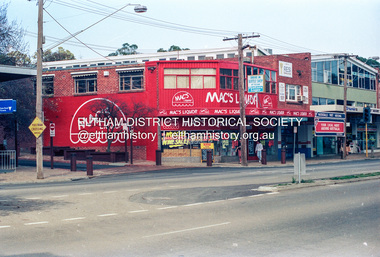 Eltham District Historical Society Inc
Photograph (Item) - Print, Harry Gilham, Who needs this type of commercial pollution?, 1988
... It is a time capsule of life in the 1980s of this urban and rural municipality in Melbourne's north. shire of eltham archives Bicentennial Project Eltham Eltham Community Photographic Survey Eltham Photographic Survey Exhibition Series 34 Series 35 Scan - 35mm negative Eltham Shops Film - Kodak GA 100 5095 Harry Gilham Mac's Liquor Main Road Midway Arcade Pryor Street State Bank of Victoria Front: Entrant No. and name on printed label Rear: Entrant No., name and address on printed label; also 'Series 34' and the 'Item No.' in pencil Colour print 20.5 x 25.5 cm mounted on card 25.4 x 30.4 cm Also corresponding negative (Series 35) Digital image scanned from negative (Series 35) Who needs this type of commercial pollution? ...Mac's Liquor Store painted in bright red on the corner of Main Road and Pryor Street. Note: Pryor Street and Luck Street were one-way at this time period. Harry Gilham 1988 Entrant No. 134 Ref: Series 34, Items 31, 32, 103, 104 SHIRE OF ELTHAM COMMUNITY PHOTOGRAPHIC SURVEY Photography is an artform which many of us practice, sometimes purely for artistic pursuit, sometimes to record the people and events in our lives. In 1988, as part of a local Bicentennial project, the Shire of Eltham conducted the Eltham Community Photographic Survey. Up to 100 entries were to be selected by a panel of photographers for entry into the Eltham Photographic Survey Exhibition. Entries had to be submitted by May 13, 1988. Entrants whose images were selected for the exhibition were contacted and requested to further submit an entry form providing entrant’s name, area of residence, age, and proposed captions. These details were then used to produce labels for the exhibition mounts. Where negatives had not been supplied, these were requested to support the display of printed enlargements mounted on 10” x 8” cardboard. The mounted prints were made available post exhibition for sale at $8.50 each for colour prints and $7.00 for B&W prints. Residents in the Shire were invited to collect a free roll of film and take a photograph of what they either liked or did not like about the area. A total of 160 entrants submitted multiple entries for the exhibition. Of those selected for exhibition, entrants ranged in age from 9 to 70 years. All custom colour and black and white printing for the exhibition was completed by Wattle Studios of Eltham. The Eltham Photographic Survey was jointly auspiced by the Shire of Eltham and Wattle Studios, of 953 Main Road, Eltham. The project was greatly assisted by: • David McRitchie, Media Studies Lecturer Victoria College, Rusden Campus. • Ian and Annette Toohill of Wattle Studios • Tracy Naughton, Eltham Community Arts Officer • Neville Emerson Pty. Ltd. • Superior Press, Eltham • Kodak Australasia Pty. Ltd. • Agfa Gevaert Ltd. • Townsend Colourtech Pty. Ltd. • The Australian Bicentennial Authority • Eleanor Bowers, Secretary, Eltham Arts Council The exhibition was placed on display in the Woolworths Arcade, Eltham between Monday June 6th and Saturday June 11, 1988. It was also intended to hold the exhibition at a venue in the Shire’s North Riding from Monday, June 20 to Friday June 24. It was then displayed at the Were Street Theatre, Montmorency from Friday, June 24 to Thursday, July 7. Series 34: Eltham Community Photographic Survey 1988 - Prints & Documentation Series consists of 117 photographs of Shire scenes taken by members of the community. Items I - 41 are larger photographs mounted on card, which were exhibited. Items 42 - 117 are unmounted copies, alternative takes and other entries. Corresponding negatives contained in Series 35: Eltham Community Photographic Survey 1988 – Negatives which consists of 267 colour and B&W negatives and one colour slide of Shire scenes taken by members of the community. The negatives are arranged by the entrant number of the photographer. The Eltham Community Photographic Survey collection is significant to the local community as it was curated by the local community - ordinary people of all ages - representing what they liked and did not like in the area where they lived. It represents an unfiltered representation of the Shire of Eltham as it was in 1988. It also represents one of many projects as part of the national programme of events and celebrations to commemorate the bicentenary. It is a time capsule of life in the 1980s of this urban and rural municipality in Melbourne's north. Front: Entrant No. and name on printed label Rear: Entrant No., name and address on printed label; also 'Series 34' and the 'Item No.' in pencilshire of eltham archives, bicentennial project, eltham, eltham community photographic survey, eltham photographic survey exhibition, series 34, series 35, scan - 35mm negative, eltham shops, film - kodak ga 100 5095, harry gilham, mac's liquor, main road, midway arcade, pryor street, state bank of victoria -
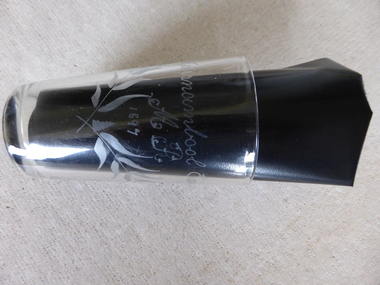 Warrnambool and District Historical Society Inc.
Souvenir - Tumbler etched glass Warrnambool exhibition 1896-7, 1897
... The Warrnambool Industrial and Art Exhibition of 1896-7 was held for three months in the Town Hall/Council Chambers/ Mechanics Institute buildings with additional temporary buildings placed on the Liebig and Timor Streets corner area. It was one of the biggest events ever held in Warrnambool with an estimated 70,000 attending. John Villiers, the owner of a glassware and crockery shop...The Warrnambool Industrial and Art Exhibition of 1896-7 was held for three months in the Town Hall/Council Chambers/ Mechanics Institute buildings with additional temporary buildings placed on the Liebig and Timor Streets corner area. It was one of the biggest events ever held in Warrnambool with an estimated 70,000 attending. John Villiers, the owner of a glassware and crockery shop ...The Warrnambool Industrial and Art Exhibition of 1896-7 was held for three months in the Town Hall/Council Chambers/ Mechanics Institute buildings with additional temporary buildings placed on the Liebig and Timor Streets corner area. It was one of the biggest events ever held in Warrnambool with an estimated 70,000 attending. John Villiers, the owner of a glassware and crockery shop in Liebig Street and a well-known theatrical performer, had a large display stand at the Exhibition. He displayed glassware items from Britain and Europe and sold souvenirs of the Exhibition. Villiers engaged Mr Bartholomew, a Melbourne engraving artist, and he gave engraving exhibitions at Villiers’ stall. Glass etching had not been seen in Warrnambool previous to this. No doubt many of his engraved objects were sold and this glass tumbler would be one of these. This is a valuable and significant item because:- 1. It is an important souvenir from the Warrnambool Industrial and Art Exhibition of 1896-7, the only one we have from Villiers’ stall. 2. It is an example of what is believed to be the first etching on glass to be done in Warrnambool. The identity of ‘M.R.’ is not known. This is an etched glass tumbler from the Warrnambool Industrial and Art Exhibition of 1896-7. It is plain glass with a solid base. A three branched frond of fern is on one side of the glass and a two-branched frond of leaves on the other. ‘Warrnambool Exhibition, M.R. 1897’ warrnambool, warrnambool industrial and art exhibition 1896-7, etched glass tumbler, john villiers 1896, warrnambool souvenirs, villiers -
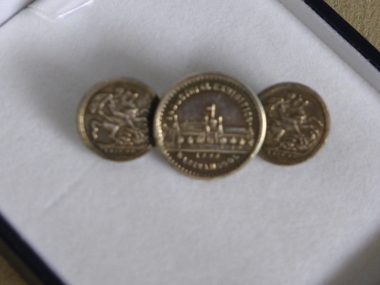 Warrnambool and District Historical Society Inc.
Tie Pin, Tie Pin half crown, Late 19th century
... exhibition was held in the Town Hall and Council Buildings and the Mechanics’ Institute and temporary buildings at the corner of Liebig and Timor Streets, Warrnambool. It was held over three months and attracted many visitors and featured concerts, sports events, industrial exhibits and a variety of competitions. This is an interesting and important item. It is one of the more unusual mementoes from the Warrnambool Industrial and Art Exhibition and shows the use made of souvenirs from exhibitions around the world. This tiepin was purchased in an antique shop ...This tie pin has as its centerpiece a souvenir medal from the Warrnambool Industrial and Art Exhibition of 1896-7. This exhibition was held in the Town Hall and Council Buildings and the Mechanics’ Institute and temporary buildings at the corner of Liebig and Timor Streets, Warrnambool. It was held over three months and attracted many visitors and featured concerts, sports events, industrial exhibits and a variety of competitions. This is an interesting and important item. It is one of the more unusual mementoes from the Warrnambool Industrial and Art Exhibition and shows the use made of souvenirs from exhibitions around the world. This tiepin was purchased in an antique shop in England in the 20th century. This is a metal tie pin with three circular coins, soldered together at the edges. In the middle is a souvenir medal of the Warrnambool Industrial and Art Exhibition of 1896-7 showing an image of the Exhibition buildings at the corner of Timor and Liebig Streets on one side and a Coat of Arms on the other side. The two smaller coins on each side are imitation British half crowns. The clip at the back is soldered on to the two smaller coins Medal: Industrial Exhibition, Warrnambool 1896 Coins: 1889-90 warrnambool industrial and art exhibition 1896-7, warrnambool, tie pin -
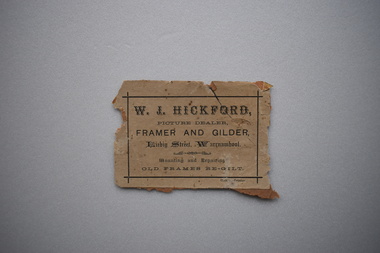 Warrnambool and District Historical Society Inc.
Label, Hickford, Early 20th century
... Exhibition of 1896-7. A skilled decorative artist, he carried out art work in private homes, businesses and churches. His shop in Liebig Street...Exhibition of 1896-7. A skilled decorative artist, he carried out art work in private homes, businesses and churches. His shop in Liebig Street ...Walter John Hickford, painter and businessman, was Mayor of Warrnambool 1895-6-7 and President of the Committee that organised the Warrnambool Industrial and Art Exhibition of 1896-7. A skilled decorative artist, he carried out art work in private homes, businesses and churches. His shop in Liebig Street supplied paint materials for households, tradesmen and artists. Hickford Parade is named after Walter Hickford. This is an original label from a picture frame and is of considerable interest, as Walter John Hickford was a prominent citizen and businessman in Warrnambool in the 1860sFaded brown rectangular label with black text and border adhered to a piece of brown paper.W.J.HICKFORD, picture dealer, framer and gilder. Liebig Street, Warrnambool. Mounting and Repairing. OLD FRAMES RE-GILTwalter john hickford, painter, hickford parade, warrnambool -
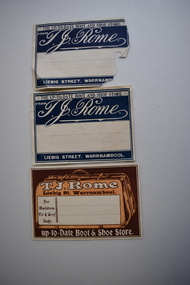 Warrnambool and District Historical Society Inc.
4x Labels, Rome, Early 20th Century
... shop at 115 Liebig Street in 1907. He retired in 1962. Tommy Rome was also important as the person who recorded songs and skits on an Edison phonograph at the Warrnambool Industrial and Art Exhibition in 1897. ...shop at 115 Liebig Street in 1907. He retired in 1962. Tommy Rome was also important as the person who recorded songs and skits on an Edison phonograph at the Warrnambool Industrial and Art Exhibition in 1897. ...Thomas (Tommy) Rome was a prominent Warrnambool citizen who came to Warrnambool in 1888 and established his footwear shop at 115 Liebig Street in 1907. He retired in 1962. Tommy Rome was also important as the person who recorded songs and skits on an Edison phonograph at the Warrnambool Industrial and Art Exhibition in 1897. These recordings survive today as the earliest surviving sound recordings in Australia.These are labels from a well known business in Warrnambool and so are of some significance..1Rectangular paper label with brown and yellow background, white and brown text and a space for writing. The reverse is adhesive. .2 Rectangular paper white label with dark blue sections, a space for writing and dark blue and white text. The reverse is adhesive. It is damaged. .3 Identical to .2 .4 Identical to .2 ..1 T.J.Rome Liebig St. Warrnambool For Gladstone, Kit & Brief Bags. up=to=date Boot & Shoe Store. .2, .3, .4 THE UP-TO-DATE BOOT AND SHOE STORE FROM, T.J. Rome LIEBIG STREET,WARRNAMBOOL .t.j.rome, boots and shoes, warrnambool -
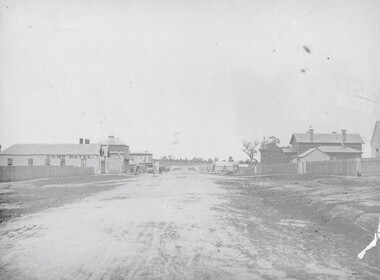 Stawell Historical Society Inc
Photograph, Longfield Street / Western Highway 1866
... Exhibition in Melbourne in 1866. Longfield Street Stawell (now the Western Highway) looking towards Sister Rocks and Ararat. Pleasant Creek Court House and Shire Hall are on the right, as is a shop on the corner of Seaby Street and Longfield streets. ...Exhibition in Melbourne in 1866. Longfield Street Stawell (now the Western Highway) looking towards Sister Rocks and Ararat. Pleasant Creek Court House and Shire Hall are on the right, as is a shop on the corner of Seaby Street and Longfield streets. ...Part of a collection of Photographs by Mr. O.G. Armstrong as commissioned by the Shire of Stawell for the Inter-colonial and Paris Exhibition in Melbourne in 1866. Longfield Street Stawell (now the Western Highway) looking towards Sister Rocks and Ararat. Pleasant Creek Court House and Shire Hall are on the right, as is a shop on the corner of Seaby Street and Longfield streets. On the left is the Camp Hotel, the Constitution Hotel and the Shamrock Hotel on the far Side of Seaby Street. stawell streetscape -
Clunes Museum
Painting - PAINTINGS, David Williams
... Thomas Aquinas Former Clunes Free Library Residence 25 Camp Street Monument 100 years of gold Clunes in Melb Monument Former butcher's shop Fraser Street Residence & shops 41-43 Fraser Street Clunes School of Mines Clunes War Memorial Residence 32 Leslie St Clunes Former suspension bridge Former St Paul's Vicarage 42 Service Street Former Police Office Former Police residence Portable Lock Up Former Dow Residence 9 Hill St Former Hall & Fire Station 2 Hill St St Paul's timber Church hall St Paul's Church Masonic Lodge 23 Service St St Paul's Pulpit Masonic Lodge interior Everhard cordial bottles Scythes in Clunes Museum Ascot Blacksmith shop Former Ascot hotel MIA Hall Ascot The Coghill Monument Former Methodist Church Coghills Creek Clunes Cemetery Chapel Maiden Hill Homestead shearing shed Beckworth Court stables Beckworth Cour shearer's quarters Former School Evansford Glengower Outbuilding Amerst Former Mortuary 46-50 Fraser Street Wood fired heater Beckworth court farm shed Gold mine trolley Servant's bells Maiden Hill cow bail Former South Clunes school 29 George Street 70 Fraser Street Former Post Office "Allowah" Clunes Street Ascot "Homestead" Beackwith Court "The Meat House" Beckwith Court "Shearing Sheds" Beckwith Court Evansford Community Hall Watercolour 2003 Exhibition BY DAVID WILLIAMS 54 watercolours remaining from the 2003 exhibition held at Clunes, all unframed, depicting Clunes and surrounds architecture and streetscapes. ...Images of; Horse Trough & Wagon Residence 94 Bailey Street Former Presbytery St. Thomas Aquinas Former Clunes Free Library Residence 25 Camp Street Monument 100 years of gold Clunes in Melb Monument Former butcher's shop Fraser Street Residence & shops 41-43 Fraser Street Clunes School of Mines Clunes War Memorial Residence 32 Leslie St Clunes Former suspension bridge Former St Paul's Vicarage 42 Service Street Former Police Office Former Police residence Portable Lock Up Former Dow Residence 9 Hill St Former Hall & Fire Station 2 Hill St St Paul's timber Church hall St Paul's Church Masonic Lodge 23 Service St St Paul's Pulpit Masonic Lodge interior Everhard cordial bottles Scythes in Clunes Museum Ascot Blacksmith shop Former Ascot hotel MIA Hall Ascot The Coghill Monument Former Methodist Church Coghills Creek Clunes Cemetery Chapel Maiden Hill Homestead shearing shed Beckworth Court stables Beckworth Cour shearer's quarters Former School Evansford Glengower Outbuilding Amerst Former Mortuary 46-50 Fraser Street Wood fired heater Beckworth court farm shed Gold mine trolley Servant's bells Maiden Hill cow bail Former South Clunes school 29 George Street 70 Fraser Street Former Post Office "Allowah" Clunes Street Ascot "Homestead" Beackwith Court "The Meat House" Beckwith Court "Shearing Sheds" Beckwith Court Evansford Community Hall 54 watercolours remaining from the 2003 exhibition held at Clunes, all unframed, depicting Clunes and surrounds architecture and streetscapes.BY DAVID WILLIAMSwatercolour, 2003 exhibition -
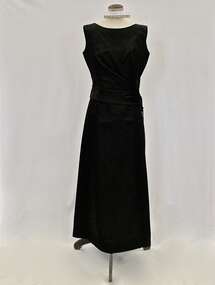 Brighton Historical Society
Evening dress and bag, 1950s
... The dress was purchased from Croyde, a Melbourne designer who had a small boutique shop in Collins Street near the Block Arcade, and the bag was bought for her in London by David. Dot recalled wearing the dress in the 1950s, in particular to a ball at the Royal Exhibition Buildings for Wesley College. ...The dress was purchased from Croyde, a Melbourne designer who had a small boutique shop in Collins Street near the Block Arcade, and the bag was bought for her in London by David. Dot recalled wearing the dress in the 1950s, in particular to a ball at the Royal Exhibition Buildings for Wesley College. ...This dress and bag belonged to Mrs Edith "Dot" Paroissien (nee Jackson, born 1916), who lived in Brighton with her husband David William Paroissien. The dress was purchased from Croyde, a Melbourne designer who had a small boutique shop in Collins Street near the Block Arcade, and the bag was bought for her in London by David. Dot recalled wearing the dress in the 1950s, in particular to a ball at the Royal Exhibition Buildings for Wesley College. She wore it with suede shoes with a medium heel with straps across the instep and long white kid gloves, and accessorised with a baguette choker and drop earrings.Black silk satin sleeveless full-length evening dress. The attached bodice floats over the top of the under-dress. Asymmetrical opening on bodice which features five large flat self-covered buttons. The black suede bag has chrome fittings and buttery cream coloured satin interior. .1 dress - Label, woven black on white acetate centre back: CROYDE / MELBOURNE .2 - bag - Label, printed, black on cream acetate, interior pocket: Susan / HANDBAGS / LONDON; Label, printed, copper on black metal, interior pocket: MADE IN ITALY / FOR SUSANevening dress, croyde, melbourne fashion, melbourne designers, handbag, royal exhibition building, 1950s, edith violetta paroissien, edith violetta jackson -
 Sunshine and District Historical Society Incorporated
Administrative record - City of Sunshine - Commissioner Mr Alexander Alex George Gillon Collection 1976 - 1982 - Notice of Ordinary Meeting 16th November 1982, City of Sunshine, 16th November 1982
... Exhibition Planning Permit Application Extensions to Existing Premises Corner Hampstead Road and Mitchell Street Maidstone Plan of Proposed Strata Subdivision 35 Washington Street St. Albans Plan of Proposed Transfer Hampton Avenue Plan of Subdivision Reid Street Sunshine Boral Resources (Previously Albion Reid Pty Ltd) Glendenning Street Traffic Problems Half Cost Footpath and Kerb And Channel Various Locations Traffic Signals Linking On Princes Highway West From Little Boundary Road to Sommerville Road Parking Restrictions At Municipal Offices Grade Separated Pedestrian Crossings Sunshine Centre Plaza Shopping Centre Traffic Control Items Bus Shelter At Stop 45 Ashley Street Maidstone Melbourne And Metropolitan Tramway Board Neale Road / Station Road Proposes Traffic Signals No Standing Prohibition Load Limits Various Roads Half Cost Fencing 11 Ravenna Street St. ...Exhibition Planning Permit Application Extensions to Existing Premises Corner Hampstead Road and Mitchell Street Maidstone Plan of Proposed Strata Subdivision 35 Washington Street St. Albans Plan of Proposed Transfer Hampton Avenue Plan of Subdivision Reid Street Sunshine Boral Resources (Previously Albion Reid Pty Ltd) Glendenning Street Traffic Problems Half Cost Footpath and Kerb And Channel Various Locations Traffic Signals Linking On Princes Highway West From Little Boundary Road to Sommerville Road Parking Restrictions At Municipal Offices Grade Separated Pedestrian Crossings Sunshine Centre Plaza Shopping Centre Traffic Control Items Bus Shelter At Stop 45 Ashley Street Maidstone Melbourne And Metropolitan Tramway Board Neale Road / Station Road Proposes Traffic Signals No Standing Prohibition Load Limits Various Roads Half Cost Fencing 11 Ravenna Street St. ...Ordinary meeting notice including reports from Council's officers Report of the Town Clerk's Department Report of the Town Clerk Accounts for Payment as at 25th October 1982 Statistical Report for Year October 1981 to September 1992 Proposed Discontinuance of Right of Way Beside 36 Clyde Street Maidstone Telephone Number Metropolitan Fire Brigade Acquisition Chaplin Reserve Community Facility Sunshine West United Nations Association of Australia Possible Membership Salvation Army Western Region Advisory Committee Council Representation Open Space Area Maribyrnong Valley Meeting Dates 1993 Proposal to Close Part of Service Street Sealing of General Rate Year Ending 30th September 1983 Use of Council Facilities Saturday 4th December 1982 Sunshine International Women's Year Action Group Discontinuance of Right of Way Between Lewin Street and Robinsons Road South Side of Ballarat Road Deer Park Discontinuance of Right of Way Between Hamilton Street, Burnside Street, Christie Street and Tulloch Street Deer Park Report of Chief Health Surveyor Registration of Premises Health Act Transfer of Premises Health Act Prosecution Proceedings Sunshine Magistrate Court Delivery of Advertising Material / Junk mail Health Act Registration Fees Report of the Medical Officer of Health Report of the Superintendent Traffic and By-Laws Dog Act Traffic and Parking Infringements Court Proceedings Proposed Procession Italian Festival Deer Park Parking Infringements Increase In Penalties Report of the Chief Librarian Children's Pre-Christmas workshops Report of the Co-Ordinator of Welfare Services Multi-Cultural Senior Citizens' Club of West Sunshine Registration and Maintenance Subsidy Showers Street Housing Commission Estate Furnishings Community Room Showers Street Housing Commission Estate Twin Tub Washing Machines Special Bus Emergency Foster Care Report of the City Engineer / Planner Western Suburbs Study Department of Planning Planning Permit Application Advertising Sign 35 Wright Street Planning Permit Application Extensions to Existing Abattoir Kalingra Road (Armbrook Siding) Brooklyn Melbourne Metropolitan Planning Scheme Amendment No 190 On Exhibition Planning Permit Application Extensions to Existing Premises Corner Hampstead Road and Mitchell Street Maidstone Plan of Proposed Strata Subdivision 35 Washington Street St. Albans Plan of Proposed Transfer Hampton Avenue Plan of Subdivision Reid Street Sunshine Boral Resources (Previously Albion Reid Pty Ltd) Glendenning Street Traffic Problems Half Cost Footpath and Kerb And Channel Various Locations Traffic Signals Linking On Princes Highway West From Little Boundary Road to Sommerville Road Parking Restrictions At Municipal Offices Grade Separated Pedestrian Crossings Sunshine Centre Plaza Shopping Centre Traffic Control Items Bus Shelter At Stop 45 Ashley Street Maidstone Melbourne And Metropolitan Tramway Board Neale Road / Station Road Proposes Traffic Signals No Standing Prohibition Load Limits Various Roads Half Cost Fencing 11 Ravenna Street St. Albans Thompson Hall Maidstone West Gate Bridge Charges City of Williamstown Report of the Building Surveyor Building Over Easement 26 Krambrook Street Sunshine West Building Over Easement 36 Summers Street Deer Park Building Over Easement 2 The Mews Ardeer Building Over Easement 18 Merrivale Avenue Sunshine West Building Over Easement 34 Summers Street Deer Park Building Over Easement 83 Tamar Drive St. Albans Building Over Easement 7 Salvia Street St. Albans Building Over Easement 28 Yallourn Street Ardeer Substandard Allotment Lot 62 Tulloch Street Deer Park Height of Fence 100 Ballarat Road Extension of Building Time 52B Forrest Street Sunshine Orders of the Day Planning Permit Application Restaurant and Take Away Food Ballarat Road Sunshine Planning Permit Application Consulting Rooms Main Road West St. Albans city of sunshine, alexander "alex" george gillon, clyde street, maidstone, chaplin reserve, anderson road, sunshine, maribyrnong valley, service street, ballarat road, deer park, lewin street, robinsons road, hamilton street, burnside street, christie street, tulloch street, multi-cultural senior citizens' club of west sunshine, showers street, braybrook, wright street, kalingra road, armbrook siding, tottenham, hampstead road, mitchell street, washington street, st. albans, hampton avenue, reid street, albion, boral resources, previously albion reid, glendenning street, princes highway, little boundary road, sommerville road, sunshine centre plaza shopping centre, hampshire road, ravenna street, thompson hall, krambrook street, summers street, the mews, ardeer, merrivale avenue, tamar drive, salvia street, yallourn street, forrest street -
 Vision Australia
Administrative record - Text, Royal Victorian Institute for the Blind annual report 1927, 1927
... Tanswell as head teacher, George Findlay is entering the final year of his degree and Donald Forbes is in his second year, thanks to Sir Baldwin Spencer for allowing the children to visit the National Museum and touch various items as he spoke about the various exhibits, George Findlay won the 3LO Exhibition for Pianoforte, the success of the Concert Party and the difficulty in securing halls large enough to hold concerts, placement of safety zones by the City of Melbourne and South Melbourne councils opposite the Institute, official opening of the hostel in Raleigh Street by the Lord Mayor, activities providing support for those not working at the Institute include teaching of home trades who manufactured goods will be purchased by the RVIB for sale in their shop, a wholesale tobacco and grocery store, use of the Pipe Organ, musical instruments, wireless set, study, writing, games, typewriting, showers and baths and dressing rooms for on-site use, a brief outline of the blind cricket playing ground and the boat house, the decision to provide free Wireless Sets to those who cannot afford them, H. ...Tanswell as head teacher, George Findlay is entering the final year of his degree and Donald Forbes is in his second year, thanks to Sir Baldwin Spencer for allowing the children to visit the National Museum and touch various items as he spoke about the various exhibits, George Findlay won the 3LO Exhibition for Pianoforte, the success of the Concert Party and the difficulty in securing halls large enough to hold concerts, placement of safety zones by the City of Melbourne and South Melbourne councils opposite the Institute, official opening of the hostel in Raleigh Street by the Lord Mayor, activities providing support for those not working at the Institute include teaching of home trades who manufactured goods will be purchased by the RVIB for sale in their shop, a wholesale tobacco and grocery store, use of the Pipe Organ, musical instruments, wireless set, study, writing, games, typewriting, showers and baths and dressing rooms for on-site use, a brief outline of the blind cricket playing ground and the boat house, the decision to provide free Wireless Sets to those who cannot afford them, H. ...Articles in this annual report include: 60th anniversary, approximately 1000 blind people in Victoria, hope that Government will increase it's support which has not varied for over 30 years and comparison of costs compared to the 50th anniversary, visits by Lady Stonehaven and Lord and Lady Somers, resignation of G. Dent and appointment of J. Tanswell as head teacher, George Findlay is entering the final year of his degree and Donald Forbes is in his second year, thanks to Sir Baldwin Spencer for allowing the children to visit the National Museum and touch various items as he spoke about the various exhibits, George Findlay won the 3LO Exhibition for Pianoforte, the success of the Concert Party and the difficulty in securing halls large enough to hold concerts, placement of safety zones by the City of Melbourne and South Melbourne councils opposite the Institute, official opening of the hostel in Raleigh Street by the Lord Mayor, activities providing support for those not working at the Institute include teaching of home trades who manufactured goods will be purchased by the RVIB for sale in their shop, a wholesale tobacco and grocery store, use of the Pipe Organ, musical instruments, wireless set, study, writing, games, typewriting, showers and baths and dressing rooms for on-site use, a brief outline of the blind cricket playing ground and the boat house, the decision to provide free Wireless Sets to those who cannot afford them, H. Foster (foreman of the Mat department) again played Father Xmas at the children's Christmas party, the Orchestra and Concert Party gave their annual free concert to the Tramways Board and employees in appreciation for the free passes for the blind, formation of a Central Auxiliary with representatives from each municipality to help bring the work of the Institute more predominantly to the general public across Victoria, and the passing of workers Margaret Cates, Tom Ginniff and Peter Stevens.1 volume bound with illustrations.royal victorian institute for the blind, annual report, lord somers, lady somers, g dent, j tanswell, george findlay, donald forbes, baldwin spencer, national museum of victoria, cricket, rowing, h foster, auxiliaries, wirths brothers circus, raleigh street hostel, margaret cates, tom ginniff, peter stevens, buildings -
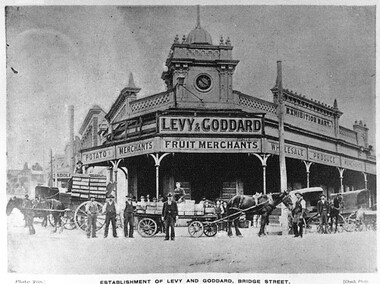 City of Ballarat Libraries
Postcard - Card Box Photographs, Establishment of Levy and Goddard, Bridge Street. Ballarat
... Exhibition Mart. Plate 267 Chuck Photo Series. Levy & Goddard Bridge Street Building Shop Persons Establishment of Levy and Goddard, Bridge Street. ...Fruit Merchant. Potato Merchant. Wholesale Produce. Exhibition Mart. Plate 267 Chuck Photo Series.levy & goddard, bridge street, building, shop, persons
