
Showing 759 items matching "styles family"
-
 Mont De Lancey
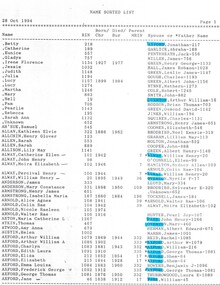
Document - Genealogy Index, 28.10.1994
... ...Styles Family...Index of Wandin family history names including their birth, death and marriage information and their spouse/parents, spanning 1807-1983 - only includes pages A-C and M-O Family trees Family History Clegg Family Overton Family Axford Family Ah'Sue Family Allan Family Allchin Family Allen Family Allison Family Alway Family Anderson Family Armstrong Family Arnold Family Aston Family Atkin Family Atwood Family Austin Family Bailey Family Baker Family Balle Family Barker Family Barkway Family Barr Family Bartlett Family Bawdon Benson Family Berry Family Berryman Family Bews Family Binding Family Bird Family Bishop Family Blood Family Blanksby Family Bolding Family Bonola Family Bosser Family Bott Family Bourke Family Bowers Family Brailsford Family Brandt Family Bray Family Brockenshire Family Brodribb Family Brown Family Bryant Family Burgess Family Burrell Family Burrett Family Burton Family Burwill Family Butterworth Family Byers Family Callaghan Family Carlson Family Carter Family Case Family Chamberlain Family Cherry Family Clarke Family Cocks Family Cole Family Collins Family Conder Family Connor Family Cook Family Coomes Family Cooper Family Cornell Family Cottee Family McKenna Family Meacham Family Mill Family Miller Family Mitchell Family Mits Family Montgomery Family Moodie Family Murray Family Musgrave Family Nagle Family Nall Family Nash Family Neely Family Neville Family Newport Family Norman Family Norton Family Notley Family O'Connell Family O'Mara Family Odgers Family Oliver Family Oneyes Family Orams Family Owen Family Pain Family Papworth Family Garlick Family Penthreath Family Green Family Hall Family Gough Family Byrne Family Smith Family Hodson Family Jinks Family Squires Family Graham Family Holton Family Hamilton Family Lloyd Family Tocknell Family Hunter Family Parr Family Herman Family Marsh Family Read Family Thurrowgood Family Hughes Family Wilson Family Rains Family Hurley Family Farqhuar Family Robinson Family Dennis Family Turner Family Rule Family Vine Family Whittaker Family Stevens Family Heywood Family Jones Family Styles Family Rouget Family Sargeant Family Withers Family Larking Family Keen Family White Family Francis Family Teague Family Fisher Family Winbanks Family Knight Family Vernon Family Wood Family Kennedy Family Crossland Family Upton Family McFarline Family Denman Family Elliot Family Thomas Family Davis Family Parker Family Sies Family Dohrmann Family Heffernan Family Duncan Family Foreman Family Saunders Family Wilmont Family Furphey Family Rawson Family Evans Family Field Family Ellis Family Laing Family Ezart Family Hoare Family Heritage Family Quirk Family Griffin Family Lowry Family Johnstone Family Grundy Family Stock Family Patterson Family Ralph Family Pilbrick Family Ussnig Family Leighman Family Underwood Family Lawrence Family Dawson Family Crossdale Family Shoo Family Lomax Family Paten Family 1800s 1810s 1820s 1830s 1840s 1850s 1860s 1870s 1880s 1890s 1900s 1910s 1920s 1930s 1940s 1950s 1960s 1970s 1980s 8 one sided A4 pages typed in black ink with yellow highlighter Document Genealogy Index ...Index of Wandin family history names including their birth, death and marriage information and their spouse/parents, spanning 1807-1983 - only includes pages A-C and M-O8 one sided A4 pages typed in black ink with yellow highlighterfamily trees, family history, clegg family, overton family, axford family, ah'sue family, allan family, allchin family, allen family, allison family, alway family, anderson family, armstrong family, arnold family, aston family, atkin family, atwood family, austin family, bailey family, baker family, balle family, barker family, barkway family, barr family, bartlett family, bawdon, benson family, berry family, berryman family, bews family, binding family, bird family, bishop family, blood family, blanksby family, bolding family, bonola family, bosser family, bott family, bourke family, bowers family, brailsford family, brandt family, bray family, brockenshire family, brodribb family, brown family, bryant family, burgess family, burrell family, burrett family, burton family, burwill family, butterworth family, byers family, callaghan family, carlson family, carter family, case family, chamberlain family, cherry family, clarke family, cocks family, cole family, collins family, conder family, connor family, cook family, coomes family, cooper family, cornell family, cottee family, mckenna family, meacham family, mill family, miller family, mitchell family, mits family, montgomery family, moodie family, murray family, musgrave family, nagle family, nall family, nash family, neely family, neville family, newport family, norman family, norton family, notley family, o'connell family, o'mara family, odgers family, oliver family, oneyes family, orams family, owen family, pain family, papworth family, garlick family, penthreath family, green family, hall family, gough family, byrne family, smith family, hodson family, jinks family, squires family, graham family, holton family, hamilton family, lloyd family, tocknell family, hunter family, parr family, herman family, marsh family, read family, thurrowgood family, hughes family, wilson family, rains family, hurley family, farqhuar family, robinson family, dennis family, turner family, rule family, vine family, whittaker family, stevens family, heywood family, jones family, styles family, rouget family, sargeant family, withers family, larking family, keen family, white family, francis family, teague family, fisher family, winbanks family, knight family, vernon family, wood family, kennedy family, crossland family, upton family, mcfarline family, denman family, elliot family, thomas family, davis family, parker family, sies family, dohrmann family, heffernan family, duncan family, foreman family, saunders family, wilmont family, furphey family, rawson family, evans family, field family, ellis family, laing family, ezart family, hoare family, heritage family, quirk family, griffin family, lowry family, johnstone family, grundy family, stock family, patterson family, ralph family, pilbrick family, ussnig family, leighman family, underwood family, lawrence family, dawson family, crossdale family, shoo family, lomax family, paten family, 1800s, 1810s, 1820s, 1830s, 1840s, 1850s, 1860s, 1870s, 1880s, 1890s, 1900s, 1910s, 1920s, 1930s, 1940s, 1950s, 1960s, 1970s, 1980s -
 Dandenong & District Historical Society
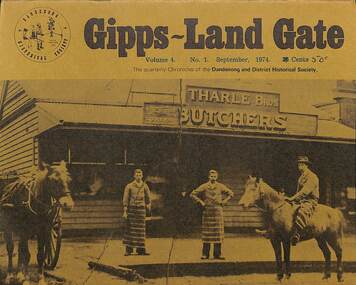
Journal, Dandenong & District Historical Society, Gipps-Land Gate Vol.4 No.1, 1974
... Keeping Posted Stately Homes Of Mornington "Harald Clapp's Railways" A New Look At The National Trust Turning Back The Pages 75 Years Local Government 1867 Roads Board Style Eraly Family Footprints ...Hotel history Early education in Dandenong Interesting Milestones Family Histories An interesting group of Early Dandenong Personalities, Places and Events A5 size publication of the Gipps-Land Gate, September 1974. 16 pages, featuring an old picture of Dandenong on the cover. Keeping Posted Stately Homes Of Mornington "Harald Clapp's Railways" A New Look At The National Trust Turning Back The Pages 75 Years Local Government 1867 Roads Board Style Eraly Family Footprints Gipps-Land Gate Vol.4 No.1 Journal Dandenong & District Historical Society ...An interesting group of Early Dandenong Personalities, Places and EventsA5 size publication of the Gipps-Land Gate, September 1974. 16 pages, featuring an old picture of Dandenong on the cover. Keeping Posted Stately Homes Of Mornington "Harald Clapp's Railways" A New Look At The National Trust Turning Back The Pages 75 Years Local Government 1867 Roads Board Style Eraly Family Footprints An interesting group of Early Dandenong Personalities, Places and Eventshotel history, early education in dandenong, interesting milestones, family histories -
 Dandenong & District Historical Society
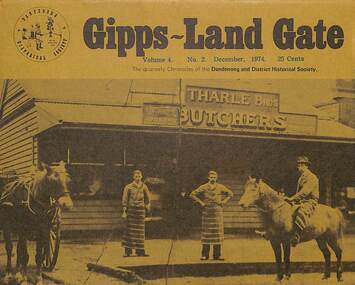
Journal, Dandenong & District Historical Society, Gipps-Land Gate Vol.4 No.2, 1974
... Keeping Posted The Story OF "WESTWOOD" And The Dawsons History Of Tooradin To Be Published Picturesque Atlas Of Australasia Well Worth A Look Dandenong Camera Club's Splendid Offer Turning Back The Pages 75 Years Local Government 1867-68 Roads Board Style Early Family Footprints ...Family Histories An interesting group of Early Dandenong Personalities, Places and Events A5 size publication of the Gipps-Land Gate, December 1974. 16 pages, featuring an old picture of Dandenong on the cover. Keeping Posted The Story OF "WESTWOOD" And The Dawsons History Of Tooradin To Be Published Picturesque Atlas Of Australasia Well Worth A Look Dandenong Camera Club's Splendid Offer Turning Back The Pages 75 Years Local Government 1867-68 Roads Board Style Early Family Footprints Gipps-Land Gate Vol.4 No.2 Journal Dandenong & District Historical Society ...An interesting group of Early Dandenong Personalities, Places and EventsA5 size publication of the Gipps-Land Gate, December 1974. 16 pages, featuring an old picture of Dandenong on the cover. Keeping Posted The Story OF "WESTWOOD" And The Dawsons History Of Tooradin To Be Published Picturesque Atlas Of Australasia Well Worth A Look Dandenong Camera Club's Splendid Offer Turning Back The Pages 75 Years Local Government 1867-68 Roads Board Style Early Family Footprints An interesting group of Early Dandenong Personalities, Places and Eventshotel history, early education in dandenong, interesting milestones, family histories -
 Mont De Lancey
Card - Greeting cards, Sharpes Classic, 1950's
... Five Christmas cards depicting English style winter scenes: birds, family, woman with umbrella, puppy at a window, a woman with holly. ...Five Christmas cards depicting English style winter scenes: birds, family, woman with umbrella, puppy at a window, a woman with holly. ...Colourful Christmas cards from the 1950's.Five Christmas cards depicting English style winter scenes: birds, family, woman with umbrella, puppy at a window, a woman with holly. One card of a family scene has a gold coloured satin ribbon on the left side.'To Netta and Neville from Mother Xmas 1954'. Three from Annette & Neville Lord. One from 'Effie M. Macdonald'. The card with the lady with a red parasol has 'Lord" crossed out.greeting cards, christmas cards -
 Sunshine and District Historical Society Incorporated
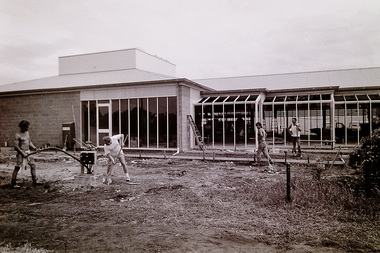
Photograph - Sunshine Sizzlers Under Construction 491 Ballarat Road Sunshine 1990 Photographs, C. McGee, 31st October 1990
... family restaurant chains. By 1992, the company operated 74 restaurants nationwide, including several locations across Victoria. The Sunshine restaurant formed part of this period of expansion, reflecting changing dining habits and the growing popularity of American-style casual family dining in Melbourne’s western suburbs. ...family restaurant chains. By 1992, the company operated 74 restaurants nationwide, including several locations across Victoria. The Sunshine restaurant formed part of this period of expansion, reflecting changing dining habits and the growing popularity of American-style casual family dining in Melbourne’s western suburbs. ...These photographs, taken by The Advocate in 1990, feature the Sunshine Sizzler Restaurant during the final stages of construction, with landscaping works underway shortly before the restaurant opened to the public. At the time, Sizzler was one of Australia’s most recognisable family restaurant chains. By 1992, the company operated 74 restaurants nationwide, including several locations across Victoria. The Sunshine restaurant formed part of this period of expansion, reflecting changing dining habits and the growing popularity of American-style casual family dining in Melbourne’s western suburbs. Despite the chain’s national success, the Sunshine restaurant operated for only a relatively short period before closing. The decline of the Sizzler brand in Australia saw restaurant numbers steadily reduce during the following decades, with no Victorian locations remaining by 2017. As of 2026, the former Sizzler building was occupied by the Gold Leaf Chinese Restaurant, demonstrating the ongoing evolution of Sunshine’s retail and dining landscape.These photographs document a brief but notable chapter in Sunshine’s commercial history, capturing the development of a major hospitality business at the moment it was entering the local community.6834.01 - Sunshine Sizzlers Under Construction 491 Ballarat Road Sunshine 1990 Photographs (Advocate 470.3).JPG 6834.02 - Sunshine Sizzlers Under Construction 491 Ballarat Road Sunshine 1990 Photographs (Advocate 470.3).JPG 6834.03 - Sunshine Sizzlers Under Construction 491 Ballarat Road Sunshine 1990 Photographs (Advocate 470.3).JPG 6834.04 - Sunshine Sizzlers Under Construction 491 Ballarat Road Sunshine 1990 Photographs (Advocate 470.3).JPGballarat road, sunshine, sizzlers -
 City of Greater Bendigo - Civic Collection
Souvenir - Album, Bolton Brothers Printers, Bendigo
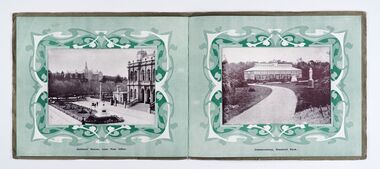
... Each photograph is surrounded by a decorative art nouveau style border. The Bolton family founded a printing business in Bendigo in 1885. ...Each photograph is surrounded by a decorative art nouveau style border. The Bolton family founded a printing business in Bendigo in 1885. ...A large souvenir publication containing photographic images depicting key attractions around Bendigo. Each photograph is surrounded by a decorative art nouveau style border. The Bolton family founded a printing business in Bendigo in 1885. Benjamin Bolton was a prominent businessman and on this death in 1901 William Bolton (Mayor 1936 -37) and his brothers took over the business. Bolton's remains a well known office and printing suppliers in Bendigo today.Sixteen page publication with black and white photographs of buildings, parks and gardens, statues and gold mines around Bendigo. Album has a green front and back cover. Title printed in gold ink.Bendigobolton brothers printers, city of bendigo tourism, making a nation exhibition, city of greater bendigo commerce, city of bendigo mayor, mayor bolton -
 Mission to Seafarers Victoria
Photograph - Photograph, Sepia, Mr and Mrs Gurney Goldsmith, Disabled French Barque: Towing up the Yarra from Monomeith Gardens Newport, 1906
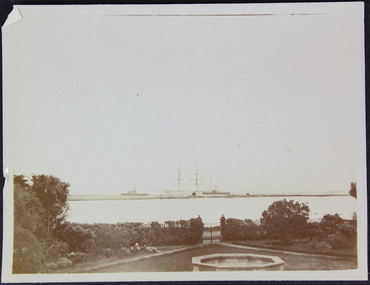
... It is his intention to establish a mission church and home near Victoria dock. Senator Styles and family will reside at Hawthorn." (Williamstown Advertiser, Saturday 2 September 1905, page 3) Monomeith has been housing the Westbourne Grammar School, Williamstown Campus, since it was leased from the Harbour Trust in 1956 then purchased by the school in 1972. ...It is his intention to establish a mission church and home near Victoria dock. Senator Styles and family will reside at Hawthorn." (Williamstown Advertiser, Saturday 2 September 1905, page 3) Monomeith has been housing the Westbourne Grammar School, Williamstown Campus, since it was leased from the Harbour Trust in 1956 then purchased by the school in 1972. monomeith newport french barque towing yarra river Handwritten in pencil on verso: 83 (?) ...Monomeith, located 67 the Strand, in Newport was built in 1887, and was the house of Senator James Styles. Reverend Gurney Goldsmith lived in Monomeith from 17 Octoberr 1905 to at least November 1907 (See Victorian Government Gazette: 14 November 1907) until he and his wife could move in the new central Seamen Institute open in December 1907. "Senator Styles' house, “Monomeith," Strand, has been leased to the Rev. A. Gurney Goldsmith, who has been sent to Victoria from England to establish a Church of England mission to seamen. Tho new tenant will enter into possession on October 17th and proposes to make it a rendezvous for seamen, and to get about the bay and river on an oil motor launch. It is his intention to establish a mission church and home near Victoria dock. Senator Styles and family will reside at Hawthorn." (Williamstown Advertiser, Saturday 2 September 1905, page 3) Monomeith has been housing the Westbourne Grammar School, Williamstown Campus, since it was leased from the Harbour Trust in 1956 then purchased by the school in 1972. Small monochrome photograph, view of ships from a parkHandwritten in pencil on verso: 83 (?) and a 3 in bottom right cornermonomeith, newport, french, barque, towing, yarra river -
 Mission to Seafarers Victoria
Photograph - Photograph, Sepia, Mr and Mrs Gurney Goldsmith, c. 1906-1907
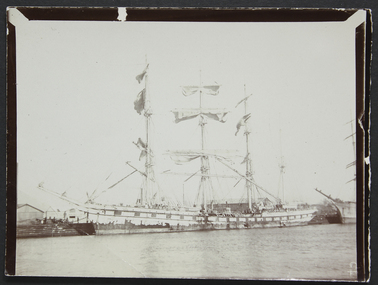
... It is his intention to establish a mission church and home near Victoria dock. Senator Styles and family will reside at Hawthorn." (Williamstown Advertiser, Saturday 2 September 1905, page 3) Monomeith has been housing the Westbourne Grammar School, Williamstown Campus, since it was leased from the Harbour Trust in 1956 then purchased by the school in 1972. ...It is his intention to establish a mission church and home near Victoria dock. Senator Styles and family will reside at Hawthorn." (Williamstown Advertiser, Saturday 2 September 1905, page 3) Monomeith has been housing the Westbourne Grammar School, Williamstown Campus, since it was leased from the Harbour Trust in 1956 then purchased by the school in 1972. ship melbourne. sailing ship 1900's french barque williamstown Disabled French Barque: Towing up the Yarra from Monomeith Gardens Newport Small monochrome photograph with a black border depicting a sailing ship berthed in docks. ...Possibly a photograph of a damaged vessel. The inscription at the back: Monomeith is a Victorian mansion, located on 67 the Strand in Williamstown. Monomeith, located 67 the Strand, in Newport was built in 1887, and was the house of Senator James Styles. Reverend Gurney Goldsmith lived in Monomeith from 17 Octoberr 1905 to at least November 1907 (See Victorian Government Gazette: 14 November 1907) until he and his wife could move in the new central Seamen Institute open in December 1907. "Senator Styles' house, “Monomeith," Strand, has been leased to the Rev. A. Gurney Goldsmith, who has been sent to Victoria from England to establish a Church of England mission to seamen. Tho new tenant will enter into possession on October 17th and proposes to make it a rendezvous for seamen, and to get about the bay and river on an oil motor launch. It is his intention to establish a mission church and home near Victoria dock. Senator Styles and family will reside at Hawthorn." (Williamstown Advertiser, Saturday 2 September 1905, page 3) Monomeith has been housing the Westbourne Grammar School, Williamstown Campus, since it was leased from the Harbour Trust in 1956 then purchased by the school in 1972. Small monochrome photograph with a black border depicting a sailing ship berthed in docks.Disabled French Barque: Towing up the Yarra from Monomeith Gardens Newportship, melbourne., sailing ship, 1900's, french, barque, williamstown -
 Hymettus Cottage & Garden Ballarat
Functional object - door, Cottage external door Hymettus cottage
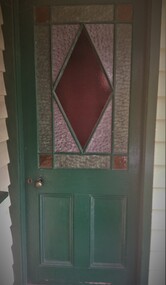
... A similar simple glass and two panel cottage door closes off the passage from main passageway to the kitchen and service end of the home so that the home presents as more simple in the service area fittings with more decorative features to the more important front rooms of the home reflecting the progression of style as the family had more money to spend on the home....A similar simple glass and two panel cottage door closes off the passage from main passageway to the kitchen and service end of the home so that the home presents as more simple in the service area fittings with more decorative features to the more important front rooms of the home reflecting the progression of style as the family had more money to spend on the home. ...This simple rear cottage door at Hymettus built 1900-1901 has been the back door since the early 1900s. Photos in the family collection however, reveal that it was originally the return front verandah door to the dining-room and the transition seems to have occurred about 1910 when a new door was installed for the front verandah to complement the art-nouveau lead light transom and surrounds to the main front entrance. A similar simple glass and two panel cottage door closes off the passage from main passageway to the kitchen and service end of the home so that the home presents as more simple in the service area fittings with more decorative features to the more important front rooms of the home reflecting the progression of style as the family had more money to spend on the home. -
 Flagstaff Hill Maritime Museum and Village
Domestic object - Cover
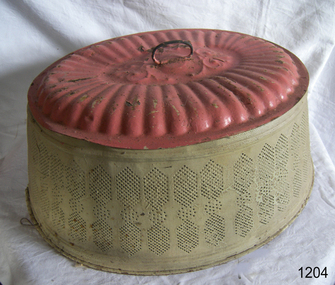
... Especially if you’re setting up a large buffet spread of dishes for a family-style meal outdoors, using mesh coverings takes a little bit of the pressure off when it comes to timing: just put the food out there, cloche it, and finish bringing everything else to the table. ...Especially if you’re setting up a large buffet spread of dishes for a family-style meal outdoors, using mesh coverings takes a little bit of the pressure off when it comes to timing: just put the food out there, cloche it, and finish bringing everything else to the table. ...For most people, a cloche—the dome-shaped covering for a dish that’s removed before serving—is only ever encountered on-screen, likely in the hands of a butler in an English period drama. Not only does the word itself sound haughty (it comes from the French word for bell), it is a fundamentally theatrical object, existing to conceal and reveal food—or on occasion, a severed head. Why, if you’re not an old-timey aristocrat or movie villain, would you have use for a cloche? The answer is bugs. If you’ve ever had the pleasure of eating outside, you’re probably aware that bugs exist, and they often want some of what you’re having. Particularly during the summer and warm weather entices people into alfresco dining, the presence of bugs can be a nuisance for which there’s rarely an elegant solution. Did somebody say elegant? Let’s bring in the cloche. Specifically, let’s talk about a mesh cloche, which is different from the glinting silver semi-sphere discussed earlier. Dome-shaped but made of stiff wire mesh or cloth, this cloche is far from frivolous and is an excellent tool for any outside dining plans. First and foremost, it can keep insects out of your food, saving you from sitting and swatting your hand over the salad to keep flies away. Especially if you’re setting up a large buffet spread of dishes for a family-style meal outdoors, using mesh coverings takes a little bit of the pressure off when it comes to timing: just put the food out there, cloche it, and finish bringing everything else to the table. Also, there’s no harm in keeping them on during the meal, as it’s easy to pick up the lid, serve yourself more food, then plop it back down, in comparison with wrap, foil, or cloth, which can blow away in the wind, fall into the food, or require two hands for proper recovering. https://www.epicurious.com/expert-advice/covering-your-food-with-a-cloche-is-dramatic-and-useful-articleThe cloche or food cover was, and still is, the perfect way to prevent insects and other small vermin from interfering with and compromising the condition of food, both inside and outdoors.Metal oval food cover with decorative pressed tin lid and perforated holes around the side. Metal handle on top. Painted pink on top and green on the side.None.flagstaff hill, warrnambool, shipwrecked-coast, flagstaff-hill, flagstaff-hill-maritime-museum, maritime-museum, shipwreck-coast, flagstaff-hill-maritime-village, cloche, food, cover -
 Narre Warren and District Family History Group
Book, Narre Warren & District Family History Group Inc, Casey Cardinia Collection - Pakenham Information File - Volume 1, 2014
... James 120th Anniversary 17 Nov 2004 Gwen Crouch – people in profile 23 Mar 2005 Ranald & Rae Webster Diamond Anniversary 19 May 2004 Curnow Farm, Henry Road 23 Jun 2004 Lottie Schultz – obituary 17 Dec 2003 Doris Kirkland – obituary 13 Oct 1993 Main Street 1947 08 Jan 2004 Toomuc Ridge – sale of property 24 Nov 1998 Berwick-Pakenham Historical Society 02 Aug 2002 Joseph Purves – obituary 19 Jan 1999 Pakenham Stockyards 27 Oct 2004 Artefacts halt pool dig 12 Oct 1999 Pakenham Library 10 Nov 2004 Joyce Parker – widow wages war against injustice Unknown John Chapman celebrates six decades at Pakenham Sale Yards 12 Sep 2007 Noel Gardner – obituary 21 Jul 2004 Mick Manestar – RSL top honour for war veteran 31 Mar 2004 William Bruce Ronald Reserve 08 Sep 2004 Muriel Gladys Treloar – obituary 02 May 2007 Anzac Day at Pakenham 23 Sep 1998 Lorna Anderson – people in profile 21 Apr 2004 Max & Toni Myers – organic apple orchard 14 May 2008 Lorna Jackson – moving 14 May 2008 Norma Jackson – people in profile 14 May 2008 Bill Shelton – me and my car 31 Jun 2007 Vandals Raid RSL 05 Mar 2008 Vicki Mantel – nee McLeod 31 Jan 2007 Sisters follow family style – Green family 08 Jun 2005 Alice Bould – 81st birthday 12 Jan 2011 Church Robbers 03 Dec 2008 Una’s 102 not out – Una Cafra 14 Nov 2007 Dot Murphy & the Pakenham Pool 04 Feb 2009 Jack Buckland 20 May 2003 It was apples at the orchard school 18 Feb 2009 Aaron Stewart McCann 18 Feb 2009 Ray Caldwell 29 Nov 2006 Una Cafra – people in profile 05 Dec 2007 Apples to the core – Priest Bros. ...James 120th Anniversary 17 Nov 2004 Gwen Crouch – people in profile 23 Mar 2005 Ranald & Rae Webster Diamond Anniversary 19 May 2004 Curnow Farm, Henry Road 23 Jun 2004 Lottie Schultz – obituary 17 Dec 2003 Doris Kirkland – obituary 13 Oct 1993 Main Street 1947 08 Jan 2004 Toomuc Ridge – sale of property 24 Nov 1998 Berwick-Pakenham Historical Society 02 Aug 2002 Joseph Purves – obituary 19 Jan 1999 Pakenham Stockyards 27 Oct 2004 Artefacts halt pool dig 12 Oct 1999 Pakenham Library 10 Nov 2004 Joyce Parker – widow wages war against injustice Unknown John Chapman celebrates six decades at Pakenham Sale Yards 12 Sep 2007 Noel Gardner – obituary 21 Jul 2004 Mick Manestar – RSL top honour for war veteran 31 Mar 2004 William Bruce Ronald Reserve 08 Sep 2004 Muriel Gladys Treloar – obituary 02 May 2007 Anzac Day at Pakenham 23 Sep 1998 Lorna Anderson – people in profile 21 Apr 2004 Max & Toni Myers – organic apple orchard 14 May 2008 Lorna Jackson – moving 14 May 2008 Norma Jackson – people in profile 14 May 2008 Bill Shelton – me and my car 31 Jun 2007 Vandals Raid RSL 05 Mar 2008 Vicki Mantel – nee McLeod 31 Jan 2007 Sisters follow family style – Green family 08 Jun 2005 Alice Bould – 81st birthday 12 Jan 2011 Church Robbers 03 Dec 2008 Una’s 102 not out – Una Cafra 14 Nov 2007 Dot Murphy & the Pakenham Pool 04 Feb 2009 Jack Buckland 20 May 2003 It was apples at the orchard school 18 Feb 2009 Aaron Stewart McCann 18 Feb 2009 Ray Caldwell 29 Nov 2006 Una Cafra – people in profile 05 Dec 2007 Apples to the core – Priest Bros. ...Folder containing a table of contents and various newspaper clippings and other information pertaining to the Pakenham area Volume 1. The date the articles were published, and title of articles are listed below. 10 Aug 2005 John McMillan honoured as Secretary of Pakenham Cemetery Trust 09 Feb 2005 Arch Munro – obituary 17 Nov 2004 St. James 120th Anniversary 17 Nov 2004 Gwen Crouch – people in profile 23 Mar 2005 Ranald & Rae Webster Diamond Anniversary 19 May 2004 Curnow Farm, Henry Road 23 Jun 2004 Lottie Schultz – obituary 17 Dec 2003 Doris Kirkland – obituary 13 Oct 1993 Main Street 1947 08 Jan 2004 Toomuc Ridge – sale of property 24 Nov 1998 Berwick-Pakenham Historical Society 02 Aug 2002 Joseph Purves – obituary 19 Jan 1999 Pakenham Stockyards 27 Oct 2004 Artefacts halt pool dig 12 Oct 1999 Pakenham Library 10 Nov 2004 Joyce Parker – widow wages war against injustice Unknown John Chapman celebrates six decades at Pakenham Sale Yards 12 Sep 2007 Noel Gardner – obituary 21 Jul 2004 Mick Manestar – RSL top honour for war veteran 31 Mar 2004 William Bruce Ronald Reserve 08 Sep 2004 Muriel Gladys Treloar – obituary 02 May 2007 Anzac Day at Pakenham 23 Sep 1998 Lorna Anderson – people in profile 21 Apr 2004 Max & Toni Myers – organic apple orchard 14 May 2008 Lorna Jackson – moving 14 May 2008 Norma Jackson – people in profile 14 May 2008 Bill Shelton – me and my car 31 Jun 2007 Vandals Raid RSL 05 Mar 2008 Vicki Mantel – nee McLeod 31 Jan 2007 Sisters follow family style – Green family 08 Jun 2005 Alice Bould – 81st birthday 12 Jan 2011 Church Robbers 03 Dec 2008 Una’s 102 not out – Una Cafra 14 Nov 2007 Dot Murphy & the Pakenham Pool 04 Feb 2009 Jack Buckland 20 May 2003 It was apples at the orchard school 18 Feb 2009 Aaron Stewart McCann 18 Feb 2009 Ray Caldwell 29 Nov 2006 Una Cafra – people in profile 05 Dec 2007 Apples to the core – Priest Bros. Orchards 14 Nov 2007 Pigeons take flight 25 Jul 2007 Oh how the town’s grown 26 Mar 2008 Historic hotel has new look – Pakenham Hotel 10 Dec 2008 Stock agent who called the shots – Roly Hewson 10 Dec 2008 Apple a day keeps orchardists aweigh – Hardings Orchard 06 Feb 2008 Service is in the can – Ray Coombs from Nestle Unknown It’s service with a smile – Charlie Rossetti 02 Apr 2008 The hell that was Gallipoli 05 Dec 2007 Una (Cafra) at 101 is unstoppable 05 Sep 2007 Neighbours for seven decades (Bill Shelton & Jack Buckland) 00 Dec 2008 Connectsus –newsletter of the Beaconhills College Alumni 19 Oct 2011 Historic Oak Journey Continues 19 Oct 2011 Beat is their guiding light 08 Sep 2010 Printz’s passion hits home 8 Apr 2015 Chuggs Tug at Heartstrings - Jean & Dennis Chugg 2 Sep 2015 Silence for a Good Man - John Goff 19 Oct 2016 Iconic Home is up for Sale 18 Jan 2017 A Great Blast from the Past - Pakenham East Cricket Club 23 Nov 2016 Her Caring Nature - Patricia Benyan 18 Jan 2017 Magical 100 Candles Lit - Mary Blundy 14 Oct 2015 Loyal Race Club Stalwarts Retire - Frances Knapp & Ron Carroll 17 Feb 2016 Pakenham Icon Passes - Gavan Bourke 17 Feb 2016 Pakenham Mourns a legend - Gavan Bourke 21 Sep 2016 Hughie Loved Community - Hughie Bourke 27 Jul 2016 It’s a Grant to Remember 1 Jun 2016 Principal Out of Trenches - St Patrick’s Primary School 150th 15 Jun 2016 Rotary was Charlie’s Life - Charlie Huyskens 31 Aug 2016 Man of Letters - John Murrell 20 Oct 2010 Hairdressing Win Career Highlight - Bronny Saunders 10 Feb 2016 Shut Down for Dore Milestone - John Dore 30 Apr 2008 Time for Reflection - Pakenham Cemetery Trust 5 Nov 2003 A Return to Glory Days for Former Shire Offices 23 Mar 1994 Ellie Ellett’s Memories of a Fortunate Life 23 Apr 2008 From Concrete to Soil - Roger & Chris McGill 21 Dec 2009 Joe is Fondly Remembered - Joe Russell 21 Dec 2009 Lorna’s Elegance Shone Through - Lorna Giles nee Ramage 16 Jan 2013 Johnny Appleseed - John Wiadrowski 13 Feb 2013 Treloar Makes Final Cut - Graham Treloar 13 Feb 2013 Pakenham as it was 17 Jun 2009 Learning Keeps Jean Young - Jean Ferguson 29 Oct 2014 Sweet Man with a Sweet Tooth - Keith Cook 22 May 2013 Machinery was Alan’s Game - Alan Porter 16 Sep 2015 Lucy’s Long, Loving Life - Lucy Rouse 22 Jul 2015 French Decoration - Jack Kane 13 Jan 2016 Athlete Marches Off - Sheldon Ronald 10 Feb 2016 Friends for Life - 60 Years not out - Bob & Kath Florance 10 Feb 2016 Newborn is Across the Generations - Nate Delphine 25 Apr 2012 Exhausted but Excited by Milestone Birthday - Ellen McKenzie 25 Aug 2005 Newspaper Pioneer Dies - Florrie Thomas 2010 Loss of Former Scout Leader - Joe Zaal 15 Jul 2015 Senior Citizens Celebrate Birthday 15 Jul 2015 Congrats Joan on OAM - Joan Vogels 26 May 2010 Cath is our Centenarian - Cath Marson 15 Sep 2021 Together 50 Golden Years - Alwyn & Terry Williams 10 Jun 2021 They Made the Regal List - Donald Duffy 12 Jun 2013 Zach’s Footy Dream Comes True - Zach Stephens 10 Jun 2015 Stableford a Welcome Relief 15 May 2013 Jackie Loves Scouting Life - Jackie Connelly 5 Aug 2009 Sisters in Arms - Thelma Rhein & Joan Hayles 11 Feb 2009 Death of a Soldier - Aaran McCann 18 Feb 2015 Poppy Plaque for Service 28 Jun 2017 Sports Carnival was a Gift 23 Sep 2015 Hardware Icon Unhooks - Hardys 28 Jun 2017 Norm’s Dedication to RSL - Norm Joseph 25 Nov 2009 Pottering Around - Robert Gordon Pottery 1 Oct 2014 Hardy’s Toasts 60 Years 27 May 2015 Sod Turns New Page in Family’s History - Webster 4 Aug 2021 Siren Goes for “Stinger” - Ian Murphy 24 May 2017 50th Anniversary - Pakenham Secondary School 22 Sep 2021 Trusting in our Future - PB Ronald Memorial Trust 16 Dec 2009 Spotlight on the Hoof and Hook 15 May 2013 Sporting Legend who Rode High in the Saddle of Life 7 Jan 2009 Jubilee Team Nod is Jewel in Crown - Lionel Sexton 12 Aug 2015 Papers Together - Dandenong Journal 12 Aug 2015 Dickson - a Doyen of Jounal(ism) - Greg Dickson 12 Aug 2015 Quiet Man had Depth of Strength - Harold Tulloch 8 Sep 2021 100 and More Birthdays - Hautie Crick & Sybil Hickman 5 Aug 2015 St James Marks Ruby 6 Oct 2021 Young Spirit Worth Bottling - Daryl Young 12 Aug 2015 Gwen Followed the Paper Trail - Gwen Jarvis 12 Aug 2015 We Loved Our Youthful Adventures - Sue Jarvis 13 Oct 2021 Pizza Queen’s Farewell - Rosa Santo 4 Feb 2009 Gaynor Goes it Alone as Family Spreads Wide - Rotteveel 25 Feb 2009 Hooves of History - Pakenham Show 19 Sep 2018 Uncertain Future for Post-War Pat - St James Village 19 Sep 2018 Do You Recognise These Soldiers? 26 Jul 2016 Beatrice Breaks Through the Glass Ceiling - Beatrice Thomas 25 Apr 2018 Navy Veteran Finds God - Ken Walton 27 Apr 2016 Light in the Darkness 23 Aug 2017 Memory Lives on in Trust - P.B. Ronald 19 Jul 2017 Les Answered Call to Duty - Les Futcher 11 Oct 2017 A Fortunate Life - Liz Jeavons 11 Jun 2014 No Stone is Left Unturned - Stone family 20 Jun 2018 Telling War Stories - Patrick Ferry 27 Sep 2017 Sybil Makes 100 - Sybil Hickman 20 Jul 2016 Save Our Storenon-fictionpakenham (vic.), john mcmillan -
 Flagstaff Hill Maritime Museum and Village
Instrument - Scale, 1900-1930
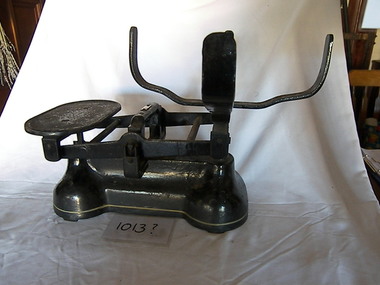
... style names like Snuff (the smallest) and Birmingham (the largest). Some counter scales were designed for measuring spices, others for weighing slices of cake. In the 18th century, spring scales began to appear and would use the resistance of spring to calculate weights, which are read automatically on the scale’s face. The ease of use of spring scales over balance scales. These scales are significant as they identify one of the basic preparation items for the weighing of foodstuff in the family ...The basic balance scale has been around for thousands of years and its accuracy has improved dramatically over the last several centuries, the principle behind this tool remains unchanged. Its parts include a fulcrum, a beam that balances on it, a pan at the end of the beam to hold the materials to be weighed, and a flat platform at the other for the counter-balancing weights. Balance scales that require equal weights on each side of the fulcrum have been used by everyone from apothecaries and assayers to jewellers and postal workers. Known as an unequal arm balance scale, this variety builds the counterweight into the device. Counter scales used in dry-goods stores and domestic kitchens often featured Japanned or (blackened) cast iron with bronze trims. Made by companies such as Howe and Fairbanks, the footed tin pans of these scales were often oblong, some encircled at one end so bulk items could be easily poured into a bag. Seamless pans were typically stamped from brass and given style names like Snuff (the smallest) and Birmingham (the largest). Some counter scales were designed for measuring spices, others for weighing slices of cake. In the 18th century, spring scales began to appear and would use the resistance of spring to calculate weights, which are read automatically on the scale’s face. The ease of use of spring scales over balance scales. These scales are significant as they identify one of the basic preparation items for the weighing of foodstuff in the family kitchen to prepare everyday meals. This item is significant as it gives a snapshot into domestic life within the average home in Australia around the turn of the twentieth century and is, therefore, an item with social relevance. Black cast iron, medium weighing scales, with a fulcrum which the beam that balances on, there is a scoop or large bowl at one end for the material to be weighted and a flat platform at the other end that holds the weights. Around the cast iron base is an embossed strip weight and bowl missing.flagstaff hill, warrnambool, shipwrecked-coast, flagstaff-hill, flagstaff-hill-maritime-museum, maritime-museum, shipwreck-coast, flagstaff-hill-maritime-village -
 Flagstaff Hill Maritime Museum and Village
Book - Reference/Bible, Rev. John Eadie, The Holy Bible (with the Commentaries of Scott and Henry 1862), 1862
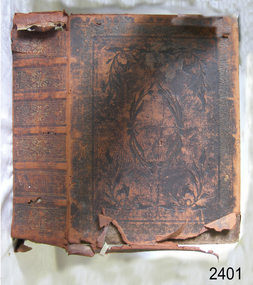
... family archive all in one. It also reflects the incredible advancements in mid-Victorian printing technology, specifically using stereotype plates which allowed McPhun to infinitely reprint the massive text cheaply and showcasing the early commercial rise of decorative plates and binding styles meant to look luxurious yet remain affordable. ...This specific 1862 Bible is a fascinating artifact from the height of 19th-century British industrial printing, combining massive theological authority with an effort to make large-scale Family Bibles accessible to the general public.The Holy Bible with the Commentaries of Scott and Henry 1862 Edited by Rev John Eadie Publisher: W R McPhun Date: 1862non-fictionThis specific 1862 Bible is a fascinating artifact from the height of 19th-century British industrial printing, combining massive theological authority with an effort to make large-scale Family Bibles accessible to the general public.flagstaff hill, warrnambool, shipwrecked-coast, flagstaff-hill, flagstaff-hill-maritime-museum, maritime-museum, shipwreck-coast, flagstaff-hill-maritime-village, book, bible, the holy bible, scott and henry -
 Flagstaff Hill Maritime Museum and Village
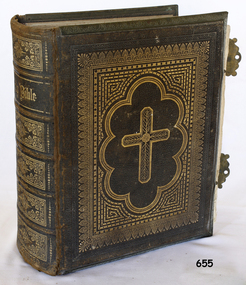
Book - Reference/ Religious Study, James Semple, The Holy Bible, Old & New Testaments, c. 1875
... The subject volume is a large, decorative family Bible. Bibles of this style were peak Victorian subscription publishing, and publishers like Semple typically issued these in unbound parts or sold them via travelling canvassers, bound in heavy, blind stamped or gilt leather meant to serve as a visual centerpiece in a Victorian home. ...This edition is part of what Bible bibliographers classify as the Haydock Quarto Series. It uses the Douay Rheims version (the standard English translation of the Latin Vulgate for Roman Catholics) and is heavily updated with extensive annotations. The subject volume is a large, decorative family Bible. Bibles of this style were peak Victorian subscription publishing, and publishers like Semple typically issued these in unbound parts or sold them via travelling canvassers, bound in heavy, blind stamped or gilt leather meant to serve as a visual centerpiece in a Victorian home.Hard cover book: Bible, Old & New Testaments Editor: Rev. George Leo Haydock Publisher: James Semple, 7 Stirling Road, Glasgow Date: 1875 Further Information: Brown leather bound with extensive gilt pattering to Spine and Front Board, Cross icon to front board and brass book clasps to corners.non-fictionThis edition is part of what Bible bibliographers classify as the Haydock Quarto Series. It uses the Douay Rheims version (the standard English translation of the Latin Vulgate for Roman Catholics) and is heavily updated with extensive annotations. The subject volume is a large, decorative family Bible. Bibles of this style were peak Victorian subscription publishing, and publishers like Semple typically issued these in unbound parts or sold them via travelling canvassers, bound in heavy, blind stamped or gilt leather meant to serve as a visual centerpiece in a Victorian home.flagstaff hill, warrnambool, shipwrecked-coast, flagstaff-hill, flagstaff-hill-maritime-museum, maritime-museum, shipwreck-coast, flagstaff-hill-maritime-village, the holy bible the old testament and the new testament, bible, book, religion, holy bible, rev geo leo haydock, latin vulgate, family bible -
 Flagstaff Hill Maritime Museum and Village
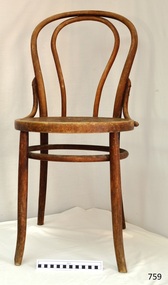
Furniture - Chair, Harnisch & Co, 1876-1918
... family went on designing and producing chairs. The No. 18 chair was produced in 1876, one of a group of chars with back inserts consisting of curves and loops of bentwood. The popularity of the Bentwood chair, even now, is due to its versatility and timeless quality. Its style ...The design of this pair (RN 758 & 759) is based on Thonet’s No. 18 chair, which was originally produced in 1876 by Thonet, and is still one of the best-selling designs for café and restaurant owners. It is elegant, sophisticated and durable. The label notes the design as “AUS MASSIV GEBOGENEM HOLZE vorm” which translates to “solid curved sandals shape”, a good description for the back of the chair. The chairs have marks, paper labels and symbols on them that show that the maker was Harnisch & Co., Neuschler (also called Banská Bystrica) Furniture Factory in Neuschol (Beszterczebanya), Hungary, privileged makers for the Imperial and Royal Austrian-Hungarian Empire 1867 – 1918. Bentwood chairs are made by a process of wetting wood in water, bending it into curved shapes, then allowing it to dry so that the shape becomes permanent. This process originated by Michael Thonet, who had been given the right to bend wood into desired curves by the Austrian Courts in 1842. In 1856 he was granted a 13 year patent to manufacture chairs and table legs of bent wood treated by steam or boiling water. In 1859 his company Gebruder Thonet produced his original design. Thonet’s early designs also featured hand carved or laminated wooden seats. His Model No. 14 produced in the 1850’s, was his most popular design. After Michael’s death in 1871 the family went on designing and producing chairs. The No. 18 chair was produced in 1876, one of a group of chars with back inserts consisting of curves and loops of bentwood. The popularity of the Bentwood chair, even now, is due to its versatility and timeless quality. Its style, whether varnished or painted, suits any room in the house. The lightweight chairs are also popular for café and restaurant seating, as well as for public gatherings. They can be easily moved around and grouped in a variety of ways to suit any occasion.Chair, bentwood, 'French Bistro Chair' with pattern carved in seat. Backrest has inverted U shape inside that extends to the seat. Supports on eitherside of backrest's base join to back of seat. Legs have a wooded bracing ring. Marks; pressed into rim under seat. Paper label, cream with black print, on rim. Right side of label has symbol of Heraldic Shield. Text on label. Made by Harnisch & Co.Marks; pressed into rim under seat is "3" and "4", and "Crown [over] N", Paper label, cream with black print, on rim; Left side has Mark “N inside circle under crown”. Right side has symbol of Heraldic Shield. Text on label “Trade – K.u.K.- Mark / NEUSOHLER FABRIK FUR MOBEL/ AUS MASSIV GEBOGENEM HOLZE, vorm. HARNISCH & Co / NEUSOHL (BESZTERCaZEBANYA) UNGARN ' Hand written under seat "T H" in black paint, "T H " in white chalk. flagstaff hill, flagstaff hill maritime museum and village, warrnambool, maritime museum, maritime village, great ocean road, shipwreck coast, bentwood chair, café chair, restaurant chair, meeting hall chair, thonet design chair, harnisch & co, k.u.k., neusohler fabrik fur nobel, approved manufacturer, neusohl (besztercazebanya) ungarn -
 Flagstaff Hill Maritime Museum and Village
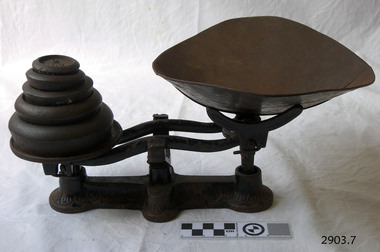
Instrument - Scale, Early 20th century
... style names like Snuff (the smallest) and Birmingham (the largest). Some counter scales were designed for measuring spices, others for weighing slices of cake. In the 18th century, spring scales began to appear and would use the resistance of spring to calculate weights, which are read automatically on the scale’s face. The ease of use of spring scales over balance scales. One of the most common types of spring scales was the kitchen scale also known as a family...style names like Snuff (the smallest) and Birmingham (the largest). Some counter scales were designed for measuring spices, others for weighing slices of cake. In the 18th century, spring scales began to appear and would use the resistance of spring to calculate weights, which are read automatically on the scale’s face. The ease of use of spring scales over balance scales. One of the most common types of spring scales was the kitchen scale also known as a family ...The basic balance scale has been around for thousands of years and its accuracy has improved dramatically over the last several centuries, the principle behind this tool remains unchanged. Its parts include a fulcrum, a beam that balances on it, a pan at the end of the beam to hold the materials to be weighed, and a flat platform at the other for the counter-balancing weights. Balance scales that require equal weights on each side of the fulcrum have been used by everyone from apothecaries and assayers to jewellers and postal workers. Known as an unequal arm balance scale, this variety builds the counterweight into the device. Counter scales used in dry-goods stores and domestic kitchens often featured Japanned or (blackened) cast iron with bronze trims. Made by companies such as Howe and Fairbanks, the footed tin pans of these scales were often oblong, some encircled at one end so bulk items could be easily poured into a bag. Seamless pans were typically stamped from brass and given style names like Snuff (the smallest) and Birmingham (the largest). Some counter scales were designed for measuring spices, others for weighing slices of cake. In the 18th century, spring scales began to appear and would use the resistance of spring to calculate weights, which are read automatically on the scale’s face. The ease of use of spring scales over balance scales. One of the most common types of spring scales was the kitchen scale also known as a family or dial scale. Designed for horizontal surfaces, these vintage kitchen scales used the weight of goods in a pan at the top of the scale to force the spring down rather than the balance system. Such scales were common in early 20th century households and were sold by many companies. Many had flat weighing surfaces but some were topped by shallow pans. Companies such as Salters, Chatillon, and Fairbanks were the most popular brands used. These scales are significant as they identify one of the basic preparation items for the weighing of foodstuff in the family kitchen to prepare everyday meals. This item is significant as it gives a snapshot into domestic life within the average home in Australia around the turn of the twentieth century and is, therefore, an item with social relevance. Black cast iron, medium weighing scales, with a fulcrum which the beam that balances on, there is as scoop at one end for the material to be weighted and a flat circular disc at the other end that holds the weights. Around the cast iron base is an embossed leaf pattern. All the weights have their weight embossed within the casting.There are 5 weights, marked 2 oz, 4 oz,8 oz,1 lb,2 lb, This scale does not have any visual markings on the arms to identify a maker or true balance. It is therefore assumed that these scales were made for domestic use only.flagstaff hill, warrnambool, shipwrecked-coast, flagstaff-hill, flagstaff-hill-maritime-museum, maritime-museum, shipwreck-coast, flagstaff-hill-maritime-village, spring scale, scale -
 Federation University Historical Collection
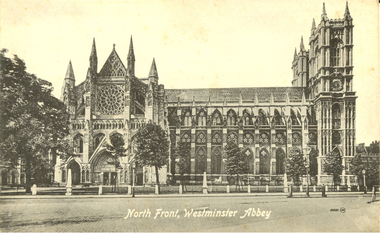
Postcard - black and white, North Front, Westminster Abbey, London, England, c198
... The north front of Westminster Abbey is built in Gothic Style. chatham-holmes family collection westminster abbey architecture church postcard Gothic Black and white postcard showing the architectural wonder of Westminster Abbey and its north front. ...The north front of Westminster Abbey is built in Gothic Style.Black and white postcard showing the architectural wonder of Westminster Abbey and its north front. chatham-holmes family collection, westminster abbey, architecture, church, postcard, gothic -
 Flagstaff Hill Maritime Museum and Village
Functional object - Music stand, Early 19th Century before 1860
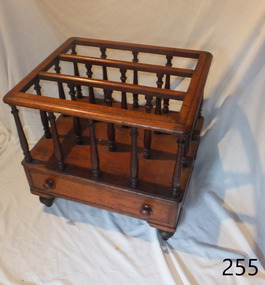
... And it was at this time that The Canterbury often accompanied the piano in the parlour with styles ranging from Georgian simplicity to Victorian exuberance. Social activities of colonial Victoria would have included evening gatherings of family and friends around the piano to enjoy performances or sing along together with from old and up-to-date music sheets. ...And it was at this time that The Canterbury often accompanied the piano in the parlour with styles ranging from Georgian simplicity to Victorian exuberance. Social activities of colonial Victoria would have included evening gatherings of family and friends around the piano to enjoy performances or sing along together with from old and up-to-date music sheets. ...Thomas Sheraton (1751-1806) appears to have been the first to record the written term “Canterbury” music or magazine stand. In his Cabinet Dictionary of 1803 he refers to “a small music stand” with divisions for holding loose sheet or bound volumes of music. The music stand designed to hold sheet music came into fashion in the late 18th Century in England and was often crafted from mahogany, rosewood or walnut. They were seen as status symbols since music was practiced exclusively by the upper classes of society. In a period when printed music was more widely available and disseminated due to more affordable printing techniques, modern sheet music was very popular and therefore storage for such favoured tunes became a luxury and an opportunity for innovative design by cabinet makers. The Classical period of music, from about 1750 to 1820 and the Romantic Period from around 1815-1910 was the golden age of classical music. And it was at this time that The Canterbury often accompanied the piano in the parlour with styles ranging from Georgian simplicity to Victorian exuberance. Social activities of colonial Victoria would have included evening gatherings of family and friends around the piano to enjoy performances or sing along together with from old and up-to-date music sheets. The Canterbury would also be an elegant and practical place to also store newspapers, magazines, posters and drawings from overseas. The news from ‘home’ would be enjoyed by all. THE INSCRIPTION “Jack Morse” Morse. In 2010 Mr Jack Morse was recognised as one of the “people who have contributed to the long term development of Flagstaff Hill Maritime Village”. He was a member of the Flagstaff hill Planning board and a Current Life Member and had been awarded a Certificate of Service and the provision of an Annual Family Membership for life by Flagstaff Hill. The Morse’s family business, Morse’s Engineering, closed in 2010. It was considered “One of Warrnambool’s longest operating businesses with roots dating to 1883 with the design and manufacture of coaches and buggies, progressing to automotive repairs and later specialising in under-vehicle work” The Canterbury appears to have been handmade prior to 1860 as the dovetails are handmade and there are no saw marks on the drawer sides or back as well the sides. Also the back has small nicks indicating a hand plane or drawer knife was used rather than a saw blade to size the material. Additional indications are that the spindles are slightly different in size meaning they were handmade individually not mass produced. From these indicators the writer believes that the item was made before 1860 as machinery was only used after this date to produce furniture. As yet no individual maker can be attributed to this item, however it is a significant piece historically and is quite valuable if a known maker can be associated with the Canterbury. The item highlights a time in our social history when music played an everyday part in people’s lives as the only entertainment families could enjoy together in their own homes. A Canterbury music stand, having three compartments consisting of twenty turned spindles supporting the slat dividers. A drawer, with two turned wooden handles, is fitted below. The music stand has turnip style turned feet. The drawer front and carcass of the stand are veneered rosewood over a mahogany carcass. The underlined words "Jack Morse" are handwritten underneath the drawer bottom.Hand written inscription on underneath the drawer bottom "Jack Morse".flagstaff hill, warrnambool, shipwrecked-coast, flagstaff-hill, flagstaff-hill-maritime-museum, maritime-museum, shipwreck-coast, flagstaff-hill-maritime-village, canterbury, music rack, magazine rack, music stand, magazine stand, 19th century furniture, occasional furniture, frederick cornwallis, jack morse, morse’s undercar, music, thomas sheraton, regency furniture, music canterbury -
 Flagstaff Hill Maritime Museum and Village
Domestic object - Wooden Rolling Pin, First half of 20th Century
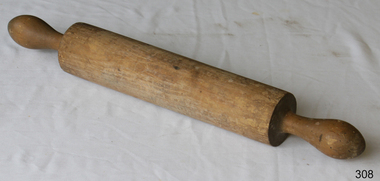
... Designs for most rolling pins follow long-established practices, although some unusual styles and materials are made and used. Within the family of wooden rolling pins, long and short versions are made as well as those that are solid cylinders (one-piece rolling pins) instead of the familiar style with handles. ...Designs for most rolling pins follow long-established practices, although some unusual styles and materials are made and used. Within the family of wooden rolling pins, long and short versions are made as well as those that are solid cylinders (one-piece rolling pins) instead of the familiar style with handles. ...A rolling pin is a simple tool used to flatten dough. The first civilisation known to have used the rolling pin was the Etruscans. Their advanced farming ability, along with a tendency to cultivate many plants and animals never before used as food and turn them into sophisticated recipes, were passed to invading Greeks, Romans, and Western Europeans. Thanks to the Etruscans, these cultures are associated with gourmet cooking. To prepare their inventive foods, the Etruscans also developed a wide range of cooking tools, including the rolling pin. Although written recipes did not exist until the fourth century B.C., the Etruscans documented their love of food and its preparation in murals, on vases, and on the walls of their tombs. Cooking wares are displayed with pride; rolling pins appear to have been used first to thin-roll pasta that was shaped with cutting wheels. They also used rolling pins to make bread (which they called puls) from the large number of grains they grew. Natives of the Americas used more primitive bread-making tools that are favoured and unchanged in many villages. Chefs who try to use genuine methods to preserve recipes are also interested in both materials and tools. Hands are used as "rolling pins" for flattening dough against a surface, but also for tossing soft dough between the cook's two hands until it enlarges and thins by handling and gravity. Tortillas are probably the most familiar bread made this way. Over the centuries, rolling pins have been made of many different materials, including long cylinders of baked clay, smooth branches with the bark removed, and glass bottles. As the development of breads and pastries spread from Southern to Western and Northern Europe, wood from local forests was cut and finished for use as rolling pins. The French perfected the solid hardwood pin with tapered ends to roll pastry that is thick in the middle; its weight makes rolling easier. The French also use marble rolling pins for buttery dough worked on a marble slab. Glass is still popular; in Italy, full wine bottles that have been chilled make ideal rolling pins because they are heavy and cool the dough. Countries known for their ceramics make porcelain rolling pins with beautiful decorations painted on the rolling surface; their hollow centres can be filled with cold water (the same principle as the wine bottle), and cork or plastic stoppers cap the ends. Designs for most rolling pins follow long-established practices, although some unusual styles and materials are made and used. Within the family of wooden rolling pins, long and short versions are made as well as those that are solid cylinders (one-piece rolling pins) instead of the familiar style with handles. Very short pins called mini rolling pins make use of short lengths of wood and are useful for one-handed rolling and popular with children and collectors. Mini pins ranging from 5 to 7 in (12.7-17.8 cm) in length are called texturing tools and are produced to create steam holes and decorations in pastry and pie crusts; crafters also use them to imprint clay for art projects. These mini pins are made of hardwoods (usually maple) or plastic. Wood handles are supplied for both wood and plastic tools, however. Blown glass rolling pins are made with straight walls and are solid or hollow. Ceramic rolling pins are also produced in hollow form, and glass and ceramic models can be filled with water and plugged with stoppers. Tapered glass rolling pins with stoppers were made for many centuries when salt imports and exports were prohibited or heavily taxed. The rolling pin containers disguised the true contents. The straight-sided cylinder is a more recent development, although tapered glass pins are still common craft projects made by cutting two wine bottles in half and sealing the two ends together so that the necks serve as handles at each end.Tiny rolling pins are also twisted into shape using formed wire. The pins will not flatten and smooth pastry, and the handles do not turn. The metal pins are popular as kitchen decorations and also to hang pots, pans, and potholders. https://www.encyclopedia.com/sports-and-everyday-life/food-and-drink/food-and-cooking/rolling-pinThe use of the rolling pin to make thin pastry or pasta.Wooden rolling pin with some damage on cylinder section.None.flagstaff hill, warrnambool, shipwrecked-coast, flagstaff-hill, flagstaff-hill-maritime-museum, maritime-museum, shipwreck-coast, flagstaff-hill-maritime-village, rolling pin, cooking, pastry -
 Flagstaff Hill Maritime Museum and Village
Domestic object - Can Opener, Bottle Opener & Corkscrew
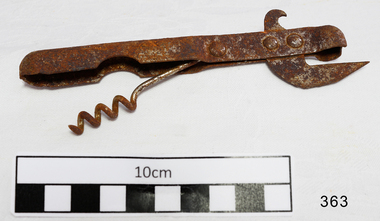
... family garage. Walter came up with the opener's blades and motor, and Elizabeth sculpted the outside. Their can opener was a free-standing unit that could sit on the kitchen counter. The Udico brand of the Union Die Casting Company put it on the market in time for Christmas in 1956 and had great success with it. Over the next few years it came out in different styles...family garage. Walter came up with the opener's blades and motor, and Elizabeth sculpted the outside. Their can opener was a free-standing unit that could sit on the kitchen counter. The Udico brand of the Union Die Casting Company put it on the market in time for Christmas in 1956 and had great success with it. Over the next few years it came out in different styles ...It took 15 years to invent the can. It took 100 more to invent a standard way to open it. In the 19th century, decades after the invention of canning, there were virtually no can openers. Canned food, such as sardines, came with its own "key" to peel back the tin lid. Birth of the can One of the oddest things about the can opener is that the can predates it by almost 150 years. Though common today, cans were once military-grade technology. In 1795, Napoleon, to whom the phrase "an army marches on its stomach" is attributed, offered 12,000 francs to anyone who could find a way to preserve food. Without any knowledge of bacteria or their role in food spoilage, scientists didn't even know where to begin. It took 15 years before a chef named Nicholas Appert claimed the prize after successfully jarring food. Soon after that, his countryman Philippe de Girard came up with a variant on Appert's method—metal tins—and sold the idea to the British. Spoiled food, and the sickness it caused, was a widespread problem. The public would have benefited from canned food, but for decades cans were almost exclusively for the army and the navy. The canning process, with its hours of boiling and steaming, its scrupulous cleanliness, its heated metal, and its need for a great deal of disposable material, made canned food far too expensive for anyone but the military. No can openers were needed or even possible. The metal of early cans was too thick to make openers practical. Soldiers and sailors had plenty of sharp objects on hand and made ample use of them when they wanted to eat. During the 19th century, the process of canning was refined and mechanised, and the metal wall of the average can slimmed down enough that a civilian could get it open—if that civilian had the right tool. No one had that tool yet, so early cans had to open themselves. In other words, they came with built-in openers. The result was a confusing but pleasing free-for-all, in terms of product engineering. Each type of food came with its own kind of can, and each kind of can came with its own kind of opener. Tinned fish and meat were often sold in rectangular cans. These cans were fitted with a "key" that would roll down the top of the can. Coffee, beans, and other types of meat were packaged in cylinders with metal strips that could be peeled back with their own kinds of built-in keys. Cans of milk, which didn't need to be completely opened, came with puncture devices. As tinned food became more common, its containers became more regular. A nice cylindrical can became the norm, and, as these cans filled kitchens, more engineers put their minds to finding a convenient way to open all of them. The first standalone can opener worked on a simple principle: point, stab, and pull. From the mid-19th century to the end of World War I, the typical can opener looked roughly like a wrench, if the lower 'jaw' of the wrench were replaced with a blade. People used the blade to puncture the top of the can near its edge, push the upper jaw against the side of the can, and drag the blade through the metal along the rim. Because meat was the first and most popular canned substance, these can openers were often shaped to look like cows and given the nickname 'bully beef can openers'. The bully beef can opener, popular in the mid-19th century, resulted in many lost fingers. Later, a corkscrew was added that was seated in the handle, and could be pulled out for use. Bully beef can openers were so common, effective, and sturdy that they are still frequently available on collectors' sites. Some are advertised as “still working,” and every last one of them is, without a doubt, soaked in the blood of our ancestors. Dragging a sharp blade along the edge of a can is certain to cause injury sooner or later. So once people got a reliable can shape and a reliable way to get the can open, the search was on for a reliable way to get a can open without the possibility of losing a finger. The answer came in 1925, from the Star Can Opener Company of San Francisco. This is probably the first can opener that resembles the one people have in their kitchens today. Instead of using a blade to pry open a metal can, buyers could clamp the edge of the can between two wheels and twist the handle of one of the wheels to move the blade around the lip. The Star can openers weren't perfect. Compared to the bully beef model, they were flimsy and breakable, but they probably prevented a few injuries. Six short years after the Star model came to market, the first electric can opener was invented. It was patented in 1931 by the Bunker Clancey Company of Kansas City, who had already been sued by the Star Can Opener Company for trying sell a double-wheeled can opener like the Star model (the case was dismissed). The electric can opener must have seemed like the wave of the future and a sure-fire seller, but it proved to be too far ahead of its time. In 1931 not that many households had electricity, and those that did weren't interested in buying can openers. The Bunker Clancey Company was subsequently bought by the Rival Company, which still makes small appliances like can openers today. It took another 25 years for electrically powered can openers to become practical. In the 1950s, Walter Hess Bodle and his daughter, Elizabeth Bodle, developed an electric can opener in the family garage. Walter came up with the opener's blades and motor, and Elizabeth sculpted the outside. Their can opener was a free-standing unit that could sit on the kitchen counter. The Udico brand of the Union Die Casting Company put it on the market in time for Christmas in 1956 and had great success with it. Over the next few years it came out in different styles and colours, and, like the bully beef can opener, has become a collector's item. Also like the bully beef model, Udico can openers often still work. They don't make 'em like they used to. Although there have been some design changes and refinements over the last sixty years, there have yet to be any more leaps forward in can opener technology. If you're resentfully opening a can, you are almost certainly doing it using the Star design, manually forcing the can between two wheels, or the Bodle design, clamping the can into a free-standing electrical opener. Whether or not you enjoy your holiday meals, at least you can be happy that you are not getting poisoned by your own food or cutting open your hand with the blade you use to get at it. That's something, right?The can opener, Bottle opener and the corkscrew are still very important and essential items in most kitchens.Metal can opener, chromed, with bottle opener, and a corkscrew seated in the handle.None.flagstaff hill, warrnambool, shipwrecked-coast, flagstaff-hill, flagstaff-hill-maritime-museum, maritime-museum, shipwreck-coast, flagstaff-hill-maritime-village, canning, can opener, corkscrew, bottle opener, kitchen equipment -
 Flagstaff Hill Maritime Museum and Village
Domestic object - Can Opener
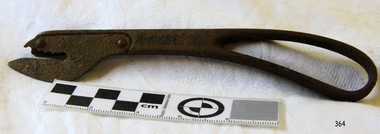
... family garage. Walter came up with the opener's blades and motor, and Elizabeth sculpted the outside. Their can opener was a free-standing unit that could sit on the kitchen counter. The Udico brand of the Union Die Casting Company put it on the market in time for Christmas in 1956 and had great success with it. Over the next few years it came out in different styles...family garage. Walter came up with the opener's blades and motor, and Elizabeth sculpted the outside. Their can opener was a free-standing unit that could sit on the kitchen counter. The Udico brand of the Union Die Casting Company put it on the market in time for Christmas in 1956 and had great success with it. Over the next few years it came out in different styles ...It took 15 years to invent the can. It took 100 more to invent a standard way to open it. In the 19th century, decades after the invention of canning, there were virtually no can openers. Canned food, such as sardines, came with its own "key" to peel back the tin lid. Birth of the can One of the oddest things about the can opener is that the can predates it by almost 150 years. Though common today, cans were once military-grade technology. In 1795, Napoleon, to whom the phrase "an army marches on its stomach" is attributed, offered 12,000 francs to anyone who could find a way to preserve food. Without any knowledge of bacteria or their role in food spoilage, scientists didn't even know where to begin. It took 15 years before a chef named Nicholas Appert claimed the prize after successfully jarring food. Soon after that, his countryman Philippe de Girard came up with a variant on Appert's method—metal tins—and sold the idea to the British. Spoiled food, and the sickness it caused, was a widespread problem. The public would have benefited from canned food, but for decades cans were almost exclusively for the army and the navy. The canning process, with its hours of boiling and steaming, its scrupulous cleanliness, its heated metal, and its need for a great deal of disposable material, made canned food far too expensive for anyone but the military. No can openers were needed or even possible. The metal of early cans was too thick to make openers practical. Soldiers and sailors had plenty of sharp objects on hand and made ample use of them when they wanted to eat. During the 19th century, the process of canning was refined and mechanised, and the metal wall of the average can slimmed down enough that a civilian could get it open—if that civilian had the right tool. No one had that tool yet, so early cans had to open themselves. In other words, they came with built-in openers. The result was a confusing but pleasing free-for-all, in terms of product engineering. Each type of food came with its own kind of can, and each kind of can came with its own kind of opener. Tinned fish and meat were often sold in rectangular cans. These cans were fitted with a "key" that would roll down the top of the can. Coffee, beans, and other types of meat were packaged in cylinders with metal strips that could be peeled back with their own kinds of built-in keys. Cans of milk, which didn't need to be completely opened, came with puncture devices. As tinned food became more common, its containers became more regular. A nice cylindrical can became the norm, and, as these cans filled kitchens, more engineers put their minds to finding a convenient way to open all of them. The first standalone can opener worked on a simple principle: point, stab, and pull. From the mid-19th century to the end of World War I, the typical can opener looked roughly like a wrench, if the lower 'jaw' of the wrench were replaced with a blade. People used the blade to puncture the top of the can near its edge, push the upper jaw against the side of the can, and drag the blade through the metal along the rim. Because meat was the first and most popular canned substance, these can openers were often shaped to look like cows and given the nickname 'bully beef can openers'. The bully beef can opener, popular in the mid-19th century, resulted in many lost fingers. Bully beef can openers were so common, effective, and sturdy that they are still frequently available on collectors' sites. Some are advertised as “still working,” and every last one of them is, without a doubt, soaked in the blood of our ancestors. Dragging a sharp blade along the edge of a can is certain to cause injury sooner or later. So once people got a reliable can shape and a reliable way to get the can open, the search was on for a reliable way to get a can open without the possibility of losing a finger. The answer came in 1925, from the Star Can Opener Company of San Francisco. This is probably the first can opener that resembles the one people have in their kitchens today. Instead of using a blade to pry open a metal can, buyers could clamp the edge of the can between two wheels and twist the handle of one of the wheels to move the blade around the lip. The Star can openers weren't perfect. Compared to the bully beef model, they were flimsy and breakable, but they probably prevented a few injuries. Six short years after the Star model came to market, the first electric can opener was invented. It was patented in 1931 by the Bunker Clancey Company of Kansas City, who had already been sued by the Star Can Opener Company for trying sell a double-wheeled can opener like the Star model (the case was dismissed). The electric can opener must have seemed like the wave of the future and a sure-fire seller, but it proved to be too far ahead of its time. In 1931 not that many households had electricity, and those that did weren't interested in buying can openers. The Bunker Clancey Company was subsequently bought by the Rival Company, which still makes small appliances like can openers today. It took another 25 years for electrically powered can openers to become practical. In the 1950s, Walter Hess Bodle and his daughter, Elizabeth Bodle, developed an electric can opener in the family garage. Walter came up with the opener's blades and motor, and Elizabeth sculpted the outside. Their can opener was a free-standing unit that could sit on the kitchen counter. The Udico brand of the Union Die Casting Company put it on the market in time for Christmas in 1956 and had great success with it. Over the next few years it came out in different styles and colours, and, like the bully beef can opener, has become a collector's item. Also like the bully beef model, Udico can openers often still work. They don't make 'em like they used to. Although there have been some design changes and refinements over the last sixty years, there have yet to be any more leaps forward in can opener technology. If you're resentfully opening a can, you are almost certainly doing it using the Star design, manually forcing the can between two wheels, or the Bodle design, clamping the can into a free-standing electrical opener. Whether or not you enjoy your holiday meals, at least you can be happy that you are not getting poisoned by your own food or cutting open your hand with the blade you use to get at it. That's something, right?The can opener is still a very important and essential item in most kitchens.Can opener, right handed, metal, upper blade section serrated, inscription 'Peerless Pat.Feb 11-90'.Peerless Pat.Feb 11-90flagstaff hill, warrnambool, shipwrecked-coast, flagstaff-hill, flagstaff-hill-maritime-museum, maritime-museum, shipwreck-coast, flagstaff-hill-maritime-village, cannning, can opener, kitchen equipment -
 Flagstaff Hill Maritime Museum and Village
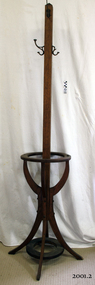
Coat rack
... Furnishings were selected not only to make it a useful place to hang a hat and coat, store an umbrella and leave a calling card but also to show family wealth, social position and knowledge of current styles. A hall stand or a hat rack was the most important piece of furniture in homes at this time. ...Furnishings were selected not only to make it a useful place to hang a hat and coat, store an umbrella and leave a calling card but also to show family wealth, social position and knowledge of current styles. A hall stand or a hat rack was the most important piece of furniture in homes at this time. ...A hat coat and umbrella stand is a device used to store hats and often coats on, and umbrellas within. Some catalogues in Europe marketed this furniture as a portmanteau from the French words Porter (carry) and Manteau (cloak). The front hall was the introduction to the house, and as such was an important part of the Victorian home. Furnishings were selected not only to make it a useful place to hang a hat and coat, store an umbrella and leave a calling card but also to show family wealth, social position and knowledge of current styles. A hall stand or a hat rack was the most important piece of furniture in homes at this time. New and more elaborate designs began to appear about 1840, as homes became larger and social visits became more structured. Usually made of wood and standing at least 1.5 meters tall, they have a single-pole making up most of the height, with a sturdy base to prevent toppling, and an array of lengthy pegs or hooks at the top for placement of hats. Smaller houses had smaller front halls, so a single-pole type as by the 1920s houses had become smaller. A household furniture item possibly from the 1920s that was common in houses from the early 1840s, it's significance is social, demonstrating how furniture trends change over time with the more elaborate the item the more social standing was attributed to the owners' position in society. even today persons association and ownership with inanimate objects tend to represent their social standing along with their financial and community acceptability. Coat rack with four curved legs, circular holder for umbrellas and walking sticks. Four metal hooks, screwed onto main column of stand. Condition: one curved leg broken. 2 hooks broken.Noneflagstaff hill, warrnambool, shipwrecked-coast, flagstaff-hill, flagstaff-hill-maritime-museum, maritime-museum, shipwreck-coast, flagstaff-hill-maritime-village -
 Flagstaff Hill Maritime Museum and Village
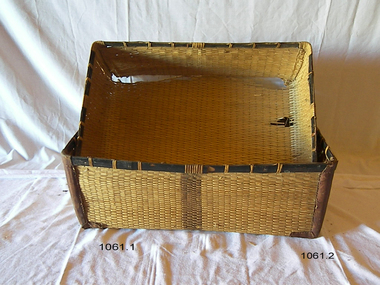
Domestic object - Basket, 1890-1920s
... family, the thin grasses of temperate regions, and broad-leaved tropical bromeliads each require a different method of twisting and braiding to be made into a basket. The practice of basket making has evolved into an art. Artistic freedom allows basket makers with a wide choice of colours, materials, sizes, patterns, and details. Before the advent of plastics (1907), the is now used for many different types and styles ...Before the invention of woven baskets, people used tree bark to make simple containers. These containers could be used to transport gathered food and other items but crumbled after only a few uses. Weaving strips of bark or other plant material to support the bark containers would be the next step, followed by entirely woven baskets. The last innovation appears to be baskets so tightly woven that they could hold water. Depending on soil conditions, baskets may or may not be preserved in the archaeological record. Sites in the Middle East show that weaving techniques were used to make mats and possibly also baskets, circa 8000 BCE. Twined baskets date back to 7000 in Oasisamerica. Baskets made with interwoven techniques were common at 3000 BCE. Baskets were originally designed as multi-purpose vessels to carry and store materials and to keep stray items about the home. The plant life available in a region affects the choice of material, which in turn influences the weaving technique. Rattan and other members of the Arecaceae or palm tree family, the thin grasses of temperate regions, and broad-leaved tropical bromeliads each require a different method of twisting and braiding to be made into a basket. The practice of basket making has evolved into an art. Artistic freedom allows basket makers with a wide choice of colours, materials, sizes, patterns, and details.Before the advent of plastics (1907), the is now used for many different types and styles of storage container rattan, wicker or cane was used to make containers with a lid for the storage of linens etc. The subject item was probability used at the end of the Victorian era and into the Edwardian period around the 1900s as a household storage facility. These types of wicker or cane containers started to go out of fashion due to their fragility around the 1920s into the 1940s due as well to the introduction of synthetic materials. Wicker cane rectangular shaped domestic storage container with reinforced leather pads on 4 corner sides. lid fits inside the other. Black cane piece around top edge.Noneflagstaff hill, warrnambool, shipwrecked-coast, flagstaff-hill, flagstaff-hill-maritime-museum, maritime-museum, shipwreck-coast, flagstaff-hill-maritime-village -
 The Beechworth Burke Museum
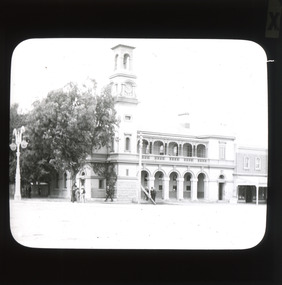
Photograph - Lantern Slide, c1900
... style building was completed. The Old Beechworth Post Office itself also holds significance due to its connection with one of Australia's most infamous families. ...style building was completed. The Old Beechworth Post Office itself also holds significance due to its connection with one of Australia's most infamous families. ...This glass slide presents an image of the Old Beechworth Post Office and was taken in the year 1900. The building displayed within the image is not that of the post office in its original form; the post office originally consisted of only a simple wooden building. With the establishment and growth of new towns across Victoria, as well as an increased need for more consistent communications with the City of Melbourne, this modest building was soon deemed inadequate. In 1858 it was brought into the style of the changing times, with the tall clock tower added in 1865. This transition aligned with a pattern of refurbishment and conversion of many Beechworth buildings (which could be seen during the 1860s-70s), aiding in the growth and prosperity of the town. Early makeshift homes were turned into more substantial dwellings, featuring elements such as weatherboard, brick, and granites materials, and gabled or hipped roofs with iron lacework fringing the verandah. These refurbishments were temporarily halted in March of 1867 when a fire swept through the town, damaging many buildings including the post office. This led to further reconstructions on the building, including heightening of the clock tower, and in 1870 the two-storey Italianate style building was completed. The Old Beechworth Post Office itself also holds significance due to its connection with one of Australia's most infamous families. It reportedly played an important role in communicating the news of the 1880 murders of police at Stringybark Creek by the Kelly Gang. Lantern slides, sometimes called 'magic lantern' slides, are glass plates on which an image has been secured for the purpose of projection. Glass slides were etched or hand-painted for this purpose from the Eighteenth Century but the process became more popular and accessible to the public with the development of photographic-emulsion slides used with a 'Magic Lantern' device in the mid-Nineteenth Century. Photographic lantern slides comprise a double-negative emulsion layer (forming a positive image) between thin glass plates that are bound together. A number of processes existed to form and bind the emulsion layer to the base plate, including the albumen, wet plate collodion, gelatine dry plate and woodburytype techniques. Lantern slides and magic lantern technologies are seen as foundational precursors to the development of modern photography and film-making techniques. This glass slide captures social and historical significance as it displays the Old Beechworth Post Office in 1900, a building that demonstrates the prosperity and growth of Beechworth as a town during this time period. This slide also holds a level of aesthetic significance due to the Italianate style building that is featured in its image; a style that became very popular during the nineteenth-century. Thin translucent sheet of glass with a square image printed on the front and framed in a black backing. It is held together by metal strips to secure the edges of the slide.Obverse: x / burke museum, beechworth, lantern slide, slide, glass slide, plate, burke museum collection, photograph, monochrome, beechworth post office, beechworth post office kelly gang, 1900, 1900 beechworth, growth of beechworth, 1867 beechworth fire, old beechworth post office, beechworth post office reconstructions, italianate style, italianate style buildings, italianate style beechworth post office -
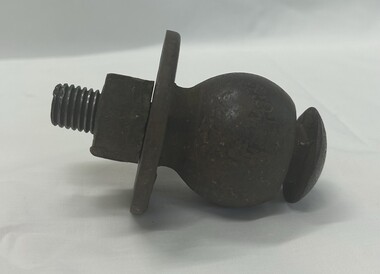 Greensborough Historical Society
Functional object - Tow Ball, Tow Ball - 2 1/4 inch
... Old Style Tow Ball used to attach to car for towing. Used by the Petts family of Greenhills....Old Style Tow Ball used to attach to car for towing. Used by the Petts family of Greenhills. tow ball motor vehicle accessory petts family Cast Iron tow ball with nut Tow Ball - 2 1/4 inch Functional object Tow Ball ...Old Style Tow Ball used to attach to car for towing. Used by the Petts family of Greenhills.Cast Iron tow ball with nuttow ball, motor vehicle accessory, petts family -
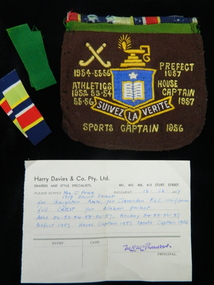 Ballarat Clarendon College
Blazer pocket
... family chose not to have the final embroidery for Aths 1957, Hockey 1957 added to the pocket - probably because these awards would have been identified at the end of Ann's final school year. Significant reflection of school focus and individual attainment ann-price ann-royal 1950s clarendon-presbyterian-ladies-college prefect house-captain sports-captain Authorisation receipt: Harry Davies & Co Pty. Ltd / Drapers and style ...This blazer pocket is from Ann (Price) Royal's Clarendon Presbyterian Ladies College blazer. Ann attended CPLC 1947 - 1957. Blazer pockets were embroidered with the school crest and additional embroidery was added during a student's years at College to reflect school colours and leadership roles. School colours were awarded for participation and leadership in various sport, house and academic pursuits. Ann's pocket, and the accompanying authorisation receipt reflect her receipt of the following awards: Athletics Colours (1952 - 1957), Hockey Colours (1954 - 1957) , Cairns House colours, school colours (1957) as well as leadership roles as Prefect (1957), House Captain (1957) and Sports Captain (1956). Students removed their pockets after graduation to keep as a momento of their school years. The authorisation receipt indicates that Ann's family chose not to have the final embroidery for Aths 1957, Hockey 1957 added to the pocket - probably because these awards would have been identified at the end of Ann's final school year. Significant reflection of school focus and individual attainmentBrown felt blazer pocket with braid across opening and embroidered crest and achievements; bottle green braid piece, multi-coloured braid piece; completed authorisation receipt for pocket embroidery made out to Harry Davies and Co Pty Ltd. Authorisation receipt: Harry Davies & Co Pty. Ltd / Drapers and style specialists 401, 403, 405, 413 STURT STREET 1719 Sturt Street Ballarat 13.12.1957 / Please supply Mrs J Price / for daughter ANN, for Clarendon P.L.C. uniform / full CREST for blazer pocket, Aths 52.53.54.55.56.57, Hockey 54,55,56,57 / Prefect 1957, House Captain 1957, Sports Captain 1956. / M H McPhersonann-price, ann-royal, 1950s, clarendon-presbyterian-ladies-college, prefect, house-captain, sports-captain -
 Flagstaff Hill Maritime Museum and Village
Functional object - Pill Cup
... This medicine cup or pill cup was donated to Flagstaff Hill Maritime Village by the family of Doctor William Roy Angus, Surgeon and Oculist. It is a standard style of medication cup. ...This medicine cup or pill cup was donated to Flagstaff Hill Maritime Village by the family of Doctor William Roy Angus, Surgeon and Oculist. It is a standard style of medication cup. ...This medicine cup or pill cup was donated to Flagstaff Hill Maritime Village by the family of Doctor William Roy Angus, Surgeon and Oculist. It is a standard style of medication cup. The lip at the top ensures that the pills placed in the cup can be transferred onto the middle of a curved tongue, and not lost somewhere before swallowing. The medicine cup is part of the “W.R. Angus Collection” that includes historical medical equipment, surgical instruments and material once belonging to Dr Edward Ryan and Dr Thomas Francis Ryan, (both of Nhill, Victoria) as well as Dr Angus’ own belongings. The Collection’s history spans the medical practices of the two Doctors Ryan, from 1885-1926 plus that of Dr Angus, up until 1969. ABOUT THE “W.R.ANGUS COLLECTION” Doctor William Roy Angus M.B., B.S., Adel., 1923, F.R.C.S. Edin.,1928 (also known as Dr Roy Angus) was born in Murrumbeena, Victoria in 1901 and lived until 1970. He qualified as a doctor in 1923 at University of Adelaide, was Resident Medical Officer at the Royal Adelaide Hospital in 1924 and for a period was house surgeon to Sir (then Mr.) Henry Simpson Newland. Dr Angus was briefly an Assistant to Dr Riddell of Kapunda, then commenced private practice at Curramulka, Yorke Peninsula, SA, where he was physician, surgeon and chemist. In 1926, he was appointed as new Medical Assistant to Dr Thomas Francis Ryan (T.F. Ryan, or Tom), in Nhill, Victoria, where his experiences included radiology and pharmacy. In 1927 he was Acting House Surgeon in Dr Tom Ryan’s absence. Dr Angus had become engaged to Gladys Forsyth and they decided he would take time to further his studies overseas in the UK in 1927. He studied at London University College Hospital and at Edinburgh Royal Infirmary and in 1928, was awarded FRCS (Fellow from the Royal College of Surgeons), Edinburgh. He worked his passage back to Australia as a Ship’s Surgeon on the on the Australian Commonwealth Line’s T.S.S. Largs Bay. Dr Angus married Gladys in 1929, in Ballarat. (They went on to have one son (Graham 1932, born in SA) and two daughters (Helen (died 12/07/1996) and Berenice (Berry), both born at Mira, Nhill ) Dr Angus was a ‘flying doctor’ for the A.I.M. (Australian Inland Ministry) Aerial Medical Service in 1928 . The organisation began in South Australia through the Presbyterian Church in that year, with its first station being in the remote town of Oodnadatta, where Dr Angus was stationed. He was locum tenens there on North-South Railway at 21 Mile Camp. He took up this ‘flying doctor’ position in response to a call from Dr John Flynn; the organisation was later known as the Flying Doctor Service, then the Royal Flying Doctor Service. A lot of his work during this time involved dental surgery also. Between 1928-1932 he was surgeon at the Curramulka Hospital, Yorke Peninsula, South Australia. In 1933 Dr Angus returned to Nhill where he’d previously worked as Medical Assistant and purchased a share of the Nelson Street practice and Mira hospital from Dr Les Middleton one of the Middleton Brothers, the current owners of what was once Dr Tom Ryan’s practice. Dr L Middleton was House Surgeon to the Nhill Hospital 1926-1933, when he resigned. [Dr Tom Ryan’s practice had originally belonged to his older brother Dr Edward Ryan, who came to Nhill in 1885. Dr Edward saw patients at his rooms, firstly in Victoria Street and in 1886 in Nelson Street, until 1901. The Nelson Street practice also had a 2 bed ward, called Mira Private Hospital ). Dr Edward Ryan was House Surgeon at the Nhill Hospital 1884-1902 . He also had occasions where he successfully performed veterinary surgery for the local farmers too. Dr Tom Ryan then purchased the practice from his brother in 1901. Both Dr Edward and Dr Tom Ryan work as surgeons included eye surgery. Dr Tom Ryan performed many of his operations in the Mira private hospital on his premises. He too was House Surgeon at the Nhill Hospital 1902-1926. Dr Tom Ryan had one of the only two pieces of radiology equipment in Victoria during his practicing years – The Royal Melbourne Hospital had the other one. Over the years Dr Tom Ryan gradually set up what was effectively a training school for country general-practitioner-surgeons. Each patient was carefully examined, including using the X-ray machine, and any surgery was discussed and planned with Dr Ryan’s assistants several days in advance. Dr Angus gained experience in using the X-ray machine there during his time as assistant to Dr Ryan. Dr Tom Ryan moved from Nhill in 1926. He became a Fellow of the Royal Australasian College of Surgeons in 1927, soon after its formation, a rare accolade for a doctor outside any of the major cities. He remained a bachelor and died suddenly on 7th Dec 1955, aged 91, at his home in Ararat. Scholarships and prizes are still awarded to medical students in the honour of Dr T.F. Ryan and his father, Dr Michael Ryan, and brother, John Patrick Ryan. ] When Dr Angus bought into the Nelson Street premises in Nhill he was also appointed as the Nhill Hospital’s Honorary House Surgeon 1933-1938. His practitioner’s plate from his Nhill surgery states “HOURS Daily, except Tuesdays, Fridays and Saturday afternoons, 9-10am, 2-4pm, 7-8pm. Sundays by appointment”. This plate is now mounted on the doorway to the Port Medical Office at Flagstaff Hill Maritime Village, Warrnambool. Dr Edward Ryan and Dr Tom Ryan had an extensive collection of historical medical equipment and materials spanning 1884-1926 and when Dr Angus took up practice in their old premises he obtained this collection, a large part of which is now on display at the Port Medical Office at Flagstaff Hill Maritime Village in Warrnambool. During his time in Nhill Dr Angus was involved in the merging of the Mira Hospital and Nhill Public Hospital into one public hospital and the property titles passed on to Nhill Hospital in 1939. In 1939 Dr Angus and his family moved to Warrnambool where he purchased “Birchwood,” the 1852 home and medical practice of Dr John Hunter Henderson, at 214 Koroit Street. (This property was sold in1965 to the State Government and is now the site of the Warrnambool Police Station. ). The Angus family was able to afford gardeners, cooks and maids; their home was a popular place for visiting dignitaries to stay whilst visiting Warrnambool. Dr Angus had his own silk worm farm at home in a Mulberry tree. His young daughter used his centrifuge for spinning the silk. Dr Angus was appointed on a part-time basis as Port Medical Officer (Health Officer) in Warrnambool and held this position until the 1940’s when the government no longer required the service of a Port Medical Officer in Warrnambool; he was thus Warrnambool’s last serving Port Medical Officer. (The duties of a Port Medical Officer were outlined by the Colonial Secretary on 21st June, 1839 under the terms of the Quarantine Act. Masters of immigrant ships arriving in port reported incidents of diseases, illness and death and the Port Medical Officer made a decision on whether the ship required Quarantine and for how long, in this way preventing contagious illness from spreading from new immigrants to the residents already in the colony.) Dr Angus was a member of the Australian Medical Association, for 35 years and surgeon at the Warrnambool Base Hospital 1939-1942, He served as a Surgeon Captain during WWII1942-45, in Ballarat, Victoria, and in Bonegilla, N.S.W., completing his service just before the end of the war due to suffering from a heart attack. During his convalescence he carved an intricate and ‘most artistic’ chess set from the material that dentures were made from. He then studied ophthalmology at the Royal Melbourne Eye and Ear Hospital and created cosmetically superior artificial eyes by pioneering using the intrascleral cartilage. Angus received accolades from the Ophthalmological Society of Australasia for this work. He returned to Warrnambool to commence practice as an ophthalmologist, pioneering in artificial eye improvements. He was Honorary Consultant Ophthalmologist to Warrnambool Base Hospital for 31 years. He made monthly visits to Portland as a visiting surgeon, to perform eye surgery. He represented the Victorian South-West subdivision of the Australian Medical Association as its secretary between 1949 and 1956 and as chairman from 1956 to 1958. In 1968 Dr Angus was elected member of Spain’s Barraquer Institute of Barcelona after his research work in Intrasclearal cartilage grafting, becoming one of the few Australian ophthalmologists to receive this honour, and in the following year presented his final paper on Living Intrasclearal Cartilage Implants at the Inaugural Meeting of the Australian College of Ophthalmologists in Melbourne In his personal life Dr Angus was a Presbyterian and treated Sunday as a Sabbath, a day of rest. He would visit 3 or 4 country patients on a Sunday, taking his children along ‘for the ride’ and to visit with him. Sunday evenings he would play the pianola and sing Scottish songs to his family. One of Dr Angus’ patients was Margaret MacKenzie, author of a book on local shipwrecks that she’d seen as an eye witness from the late 1880’s in Peterborough, Victoria. In the early 1950’s Dr Angus, painted a picture of a shipwreck for the cover jacket of Margaret’s book, Shipwrecks and More Shipwrecks. She was blind in later life and her daughter wrote the actual book for her. Dr Angus and his wife Gladys were very involved in Warrnambool’s society with a strong interest in civic affairs. Their interests included organisations such as Red Cross, Rostrum, Warrnambool and District Historical Society (founding members), Wine and Food Society, Steering Committee for Tertiary Education in Warrnambool, Local National Trust, Good Neighbour Council, Housing Commission Advisory Board, United Services Institute, Legion of Ex-Servicemen, Olympic Pool Committee, Food for Britain Organisation, Warrnambool Hospital, Anti-Cancer Council, Boys’ Club, Charitable Council, National Fitness Council and Air Raid Precautions Group. He was also a member of the Steam Preservation Society and derived much pleasure from a steam traction engine on his farm. He had an interest in people and the community He and his wife Gladys were both involved in the creation of Flagstaff Hill, including the layout of the gardens. After his death (28th March 1970) his family requested his practitioner’s plate, medical instruments and some personal belongings be displayed in the Port Medical Office surgery at Flagstaff Hill Maritime Village, and be called the “W. R. Angus Collection”. The W.R. Angus Collection is significant for still being located at the site it is connected with, Doctor Angus being the last Port Medical Officer in Warrnambool. The collection of medical instruments and other equipment is culturally significant, being an historical example of medicine from late 19th to mid-20th century. Dr Angus assisted Dr Tom Ryan, a pioneer in the use of X-rays and in ocular surgery. Pill cup, from the W.R. Angus Collection. Round, brown glass with lip around top.Inscription on bottom of cup stamped into the glass "M4 / A.G.M. / 5" flagstaff hill, warrnambool, shipwrecked coast, flagstaff hill maritime museum, maritime museum, shipwreck coast, flagstaff hill maritime village, great ocean road, dr w r angus, dr ryan, surgical instrument, t.s.s. largs bay, warrnambool base hospital, nhill base hospital, mira hospital, flying doctor, medical treatment, pill cup, medicine cup, medication -
 Flagstaff Hill Maritime Museum and Village
Container - Bottle, 1840s to 1910
... Items that come from several wrecks have since been donated to the Flagstaff Hill Maritime Village’s museum collection of shipwreck artefacts by his family, illustrating this item’s level of historical value. flagstaff hill warrnambool flagstaff hill maritime museum maritime museum shipwreck coast flagstaff hill maritime village great ocean road shipwreck artefact john chance glass bottle antique bottle gallon bottle 6 to the gallon bottle handmade dip mould mouth blown pontil mark blown bottle liquor bottle ale bottle double collar 19th century bottle collectable Embossed on base "6 TO THE GALLON" Bottle, brown glass, handmade. Tall slim Gallon style ...This handmade ‘gallon’ style of bottle was generally used for storing and transporting wine and ale. Many bottles similar to this one have their bases embossed with “6 TO THE GALLON”. It is one of many artefacts recovered from unidentified shipwrecks along Victoria’s coast between the late 1960s and the early 1970s. It is now part of the John Chance Collection. The capacity of this is one-sixth of a gallon (imperial measure), which is equal to 758 ml. (American bottles were often inscribed “5 TO THE GALLON”, which is one-fifth of an American gallon, equal to 757 ml.) Contemporary home brewers can purchase new ‘6 to gallon’ bottles that hold 750 ml. and are sold in cases of 36 bottles, which is equal to 6 gallons of wine. Glass was made thousands of years ago by heating together quartz-sand (Silica), lime and potash. Potash was obtained from burnt wood, but these days potash is mined. The natural sand had imperfections such as different forms of iron, resulting in ‘black’ glass, which was really dark green or dark amber colour. The ‘black’ glass was enhanced by residual carbon in the potash. Black glass is rarely used nowadays but most beer, wine, and liquors are still sold in dark coloured glass. Glass vessels were core-formed from around 1500 BC. An inner core with the vessel’s shape was formed around a rod using a porous material such as clay or dung. Molten glass was then modelled around the core and decorated. When the glass had cooled the vessel was immersed in water and the inner core became liquid and was washed out. Much more recently, bottlers were crafted by a glassblower using molten glass and a blow pipe together with other hand tools. Another method was using simple moulds, called dip moulds, that allowed the glass to be blown into the mould to form the base, then the glassblower would continue blowing free-form to shape the shoulders and neck. The bottle was then finished by applying a lip. These moulded bottles were more uniform in shape compared to the free-form bottles originally produced. English glassblowers in the mid-1800s were making some bottles with 2-piece and 3-piece moulds, some with a push-up style base, sometimes with embossing in the base as well. Improvements allowed the moulds to also have embossed and patterned sides, and straight sided shapes such as hexagons. Bottles made in full moulds usually displayed seam seams or lines. These process took skill and time, making the bottles valuable, so they were often recycled. By the early 20th century bottles were increasingly machine made, which greatly reduced the production time and cost. This bottle is historically significant as an example of a handmade, blown inscribed glass bottle manufactured in the mid-to-late 1800s for specific use as a liquor bottle with a set measurement of one-sixth of gallon. It is also historically significant as an example of liquor bottles imported into Colonial Victoria in the mid-to-late 1800s, giving a snapshot into history and social life that occurred during the early days of Victoria’s development, and the sea trade that visited the ports in those days. The bottle is also significant as one of a group of bottles recovered by John Chance, a diver in Victoria’s coastal waters in the late 1960s to early 1970s. Items that come from several wrecks have since been donated to the Flagstaff Hill Maritime Village’s museum collection of shipwreck artefacts by his family, illustrating this item’s level of historical value. Bottle, brown glass, handmade. Tall slim Gallon style liquor bottle. Applied, double collar lip; square upper with flared lower. Neck has seams and shoulder seam from 3-piece mould. Body with horizontal ripples tapers inwards to base. Push-up base with pontil mark and embossed inscription. Tape over wire around mouth. Cork remnants inside mouth. Embossed on base "6 TO THE GALLON"flagstaff hill, warrnambool, flagstaff hill maritime museum, maritime museum, shipwreck coast, flagstaff hill maritime village, great ocean road, shipwreck artefact, john chance, glass bottle, antique bottle, gallon bottle, 6 to the gallon bottle, handmade, dip mould, mouth blown, pontil mark, blown bottle, liquor bottle, ale bottle, double collar, 19th century bottle, collectable -
 Flagstaff Hill Maritime Museum and Village
Container - Bottle, 1840s to 1910
... Items that come from several wrecks have since been donated to the Flagstaff Hill Maritime Village’s museum collection of shipwreck artefacts by his family, illustrating this item’s level of historical value. flagstaff hill warrnambool flagstaff hill maritime museum maritime museum shipwreck coast flagstaff hill maritime village great ocean road shipwreck artefact john chance glass bottle antique bottle gallon bottle 6 to the gallon bottle handmade dip mould mouth blown pontil mark blown bottle liquor bottle ale bottle double collar 19th century bottle collectable Embossed on base "6 TO THE GALLON" Bottle, brown glass, handmade. Tall slim Gallon style ...This handmade ‘gallon’ style of bottle was generally used for storing and transporting wine and ale. Many bottles similar to this one have their bases embossed with “6 TO THE GALLON”. It is one of many artefacts recovered from unidentified shipwrecks along Victoria’s coast between the late 1960s and the early 1970s. It is now part of the John Chance Collection. The capacity of this is one-sixth of a gallon (imperial measure), which is equal to 758 ml. (American bottles were often inscribed “5 TO THE GALLON”, which is one-fifth of an American gallon, equal to 757 ml.) Contemporary home brewers can purchase new ‘6 to gallon’ bottles that hold 750 ml. and are sold in cases of 36 bottles, which is equal to 6 gallons of wine. Glass was made thousands of years ago by heating together quartz-sand (Silica), lime and potash. Potash was obtained from burnt wood, but these days potash is mined. The natural sand had imperfections such as different forms of iron, resulting in ‘black’ glass, which was really dark green or dark amber colour. The ‘black’ glass was enhanced by residual carbon in the potash. Black glass is rarely used nowadays but most beer, wine, and liquors are still sold in dark coloured glass. Glass vessels were core-formed from around 1500 BC. An inner core with the vessel’s shape was formed around a rod using a porous material such as clay or dung. Molten glass was then modelled around the core and decorated. When the glass had cooled the vessel was immersed in water and the inner core became liquid and was washed out. Much more recently, bottlers were crafted by a glassblower using molten glass and a blow pipe together with other hand tools. Another method was using simple moulds, called dip moulds, that allowed the glass to be blown into the mould to form the base, then the glassblower would continue blowing free-form to shape the shoulders and neck. The bottle was then finished by applying a lip. These moulded bottles were more uniform in shape compared to the free-form bottles originally produced. English glassblowers in the mid-1800s were making some bottles with 2-piece and 3-piece moulds, some with a push-up style base, sometimes with embossing in the base as well. Improvements allowed the moulds to also have embossed and patterned sides, and straight sided shapes such as hexagons. Bottles made in full moulds usually displayed seam seams or lines. These process took skill and time, making the bottles valuable, so they were often recycled. By the early 20th century bottles were increasingly machine made, which greatly reduced the production time and cost. This bottle is historically significant as an example of a handmade, blown inscribed glass bottle manufactured in the mid-to-late 1800s for specific use as a liquor bottle with a set measurement of one-sixth of gallon. It is also historically significant as an example of liquor bottles imported into Colonial Victoria in the mid-to-late 1800s, giving a snapshot into history and social life that occurred during the early days of Victoria’s development, and the sea trade that visited the ports in those days. The bottle is also significant as one of a group of bottles recovered by John Chance, a diver in Victoria’s coastal waters in the late 1960s to early 1970s. Items that come from several wrecks have since been donated to the Flagstaff Hill Maritime Village’s museum collection of shipwreck artefacts by his family, illustrating this item’s level of historical value. Bottle, brown glass, handmade. Tall slim Gallon style liquor bottle. Applied double collar lip; square upper with flared lower. Push-up base with pontil mark and embossed inscription. Base is uneven, glass composition has imperfections.Embossed on base "6 TO THE GALLON"flagstaff hill, warrnambool, flagstaff hill maritime museum, maritime museum, shipwreck coast, flagstaff hill maritime village, great ocean road, shipwreck artefact, john chance, glass bottle, antique bottle, gallon bottle, 6 to the gallon bottle, handmade, dip mould, mouth blown, pontil mark, blown bottle, liquor bottle, ale bottle, double collar, 19th century bottle, collectable -
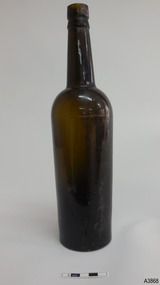 Flagstaff Hill Maritime Museum and Village
Container - Bottle, 1840s to 1910
... Items that come from several wrecks have since been donated to the Flagstaff Hill Maritime Village’s museum collection of shipwreck artefacts by his family, illustrating this item’s level of historical value. flagstaff hill warrnambool flagstaff hill maritime museum maritime museum shipwreck coast flagstaff hill maritime village great ocean road shipwreck artefact john chance glass bottle antique bottle gallon bottle 6 to the gallon bottle handmade dip mould mouth blown pontil mark blown bottle liquor bottle ale bottle double collar 19th century bottle collectable Embossed on base "6 TO THE GALLON" Bottle, brown glass, handmade. Tall slim Gallon style ...This handmade ‘gallon’ style of bottle was generally used for storing and transporting wine and ale. Many bottles similar to this one have their bases embossed with “6 TO THE GALLON”. It is one of many artefacts recovered from unidentified shipwrecks along Victoria’s coast between the late 1960s and the early 1970s. It is now part of the John Chance Collection. The capacity of this is one-sixth of a gallon (imperial measure), which is equal to 758 ml. (American bottles were often inscribed “5 TO THE GALLON”, which is one-fifth of an American gallon, equal to 757 ml.) Contemporary home brewers can purchase new ‘6 to gallon’ bottles that hold 750 ml. and are sold in cases of 36 bottles, which is equal to 6 gallons of wine. Glass was made thousands of years ago by heating together quartz-sand (Silica), lime and potash. Potash was obtained from burnt wood, but these days potash is mined. The natural sand had imperfections such as different forms of iron, resulting in ‘black’ glass, which was really dark green or dark amber colour. The ‘black’ glass was enhanced by residual carbon in the potash. Black glass is rarely used nowadays but most beer, wine, and liquors are still sold in dark coloured glass. Glass vessels were core-formed from around 1500 BC. An inner core with the vessel’s shape was formed around a rod using a porous material such as clay or dung. Molten glass was then modelled around the core and decorated. When the glass had cooled the vessel was immersed in water and the inner core became liquid and was washed out. Much more recently, bottlers were crafted by a glassblower using molten glass and a blow pipe together with other hand tools. Another method was using simple moulds, called dip moulds, that allowed the glass to be blown into the mould to form the base, then the glassblower would continue blowing free-form to shape the shoulders and neck. The bottle was then finished by applying a lip. These moulded bottles were more uniform in shape compared to the free-form bottles originally produced. English glassblowers in the mid-1800s were making some bottles with 2-piece and 3-piece moulds, some with a push-up style base, sometimes with embossing in the base as well. Improvements allowed the moulds to also have embossed and patterned sides, and straight sided shapes such as hexagons. Bottles made in full moulds usually displayed seam seams or lines. These process took skill and time, making the bottles valuable, so they were often recycled. By the early 20th century bottles were increasingly machine made, which greatly reduced the production time and cost. This bottle is historically significant as an example of a handmade, blown inscribed glass bottle manufactured in the mid-to-late 1800s for specific use as a liquor bottle with a set measurement of one-sixth of gallon. It is also historically significant as an example of liquor bottles imported into Colonial Victoria in the mid-to-late 1800s, giving a snapshot into history and social life that occurred during the early days of Victoria’s development, and the sea trade that visited the ports in those days. The bottle is also significant as one of a group of bottles recovered by John Chance, a diver in Victoria’s coastal waters in the late 1960s to early 1970s. Items that come from several wrecks have since been donated to the Flagstaff Hill Maritime Village’s museum collection of shipwreck artefacts by his family, illustrating this item’s level of historical value. Bottle, brown glass, handmade. Tall slim Gallon style liquor bottle. Applied double collar lip; square upper and flared lower. Neck has seams and shoulder seam from 3-piece mould. Body tapers towards base. Push-up base with pontil mark and embossed inscription. Base is uneven. Mouth has remnants of the seal in it and tape remnants around its outside. Embossed on base "6 TO THE GALLON"flagstaff hill, warrnambool, flagstaff hill maritime museum, maritime museum, shipwreck coast, flagstaff hill maritime village, great ocean road, shipwreck artefact, john chance, glass bottle, antique bottle, gallon bottle, 6 to the gallon bottle, handmade, dip mould, mouth blown, pontil mark, blown bottle, liquor bottle, ale bottle, double collar, 19th century bottle, collectable
