
Showing 121 items matching "textile college"
-
 National Wool Museum
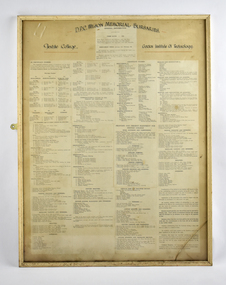
Photograph - Framed Printed Coursework, Gordon Institute of Technology, Textile College, 1950
... ...Textile College...Framed papers outlining the courses and coursework for the Textile College at the Gordon Institute of Technology in 1950. ...WILSON MEMORIAL BURSARIES. / Textile College / Gordon Institute of Technology. / GENERAL INFORMATION / TERM DATES 1950 ......Gordon Institute of Technology, Textile College...Framed papers outlining the courses and coursework for the Textile College at the Gordon Institute of Technology in 1950. ...Framed papers outlining the courses and coursework for the Textile College at the Gordon Institute of Technology in 1950. The courses include Woolcombing, Worsted Spinning, Woollen Yarn Manufacture, Designing, Weaving and Turning and Finishing. A digital copy of this item was made for the National Wool Museum Collection, with the original remaining with the donor. Digital TIFF file, 100 MB, showing image of framed printed paper. D.P.C. WILSON MEMORIAL BURSARIES. / Textile College / Gordon Institute of Technology. / GENERAL INFORMATION / TERM DATES 1950 ... courses, gordon institute of technology, textile college, geelong, woolclassing, weaving, spinning, coursework, 1950 -
 National Wool Museum
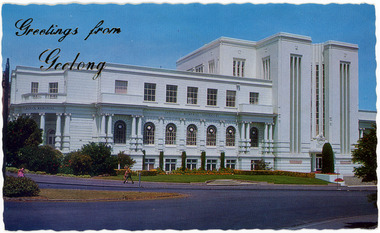
Postcard - The Bostock and Lascelles Memorial Textile College, Geelong, H. L. Chapman, 1960s
... The Bostock and Lascelles Memorial Textile College, Geelong...Bostock and Lascelles Memorial Textile College...Chapman / The Bostock and Lascelles Memorial Textile / College, Geelong, Victoria....Postcard The Bostock and Lascelles Memorial Textile College, Geelong H. L. Chapman Valentine's Australia ...Postcard featuring colour image on one side showing a view of a white art deco style building, with roads, footpaths, people and gardens in the foreground. The back features blue printed text. Front: [printed] Greetings from / Geelong Back: [printed] Valentine's / AUSTRALIA / POST / CARD / V.C.283 / Colour Photography by H. L. Chapman / The Bostock and Lascelles Memorial Textile / College, Geelong, Victoria. geelong, postcard, victoria, tourism, college, education, bostock and lascelles memorial textile college, textiles, buildings, wool, valentine's -
 Lakes Entrance Historical Society
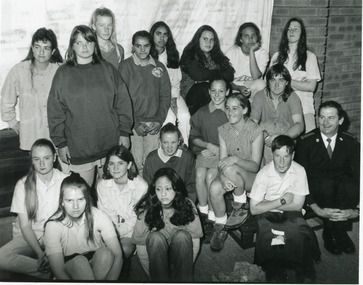
Photograph - Secondary College textile class Lakes Entrance 1993, Lakes Post Newspaper
... Secondary College textile class Lakes Entrance 1993...Black and white photograph group of students Secondary College textile class with Salvation Army Officer Mal McCann. ...Lakes Entrance Victoria Photograph Secondary College textile class Lakes Entrance 1993 Lakes Post Newspaper ...Textile class made windcheaters to donate to Salvation Army. Black and white photograph group of students Secondary College textile class with Salvation Army Officer Mal McCann. Lakes Entrance Victoria schools, students -
 National Wool Museum
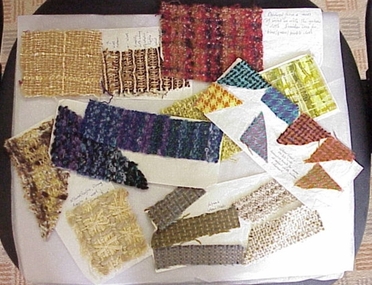
Sample, Textile
... Weaving samples sent from Mr FK Brodie from Gordon Institute of Technology Textile College to the Australian Wool Board, then returned, in 1963....Weaving samples sent from Mr FK Brodie from Gordon Institute of Technology Textile College to the Australian Wool Board, then returned, in 1963....Weaving samples sent from Mr FK Brodie from Gordon Institute of Technology Textile College to the Australian Wool Board, then returned, in 1963. ...Weaving samples sent from Mr FK Brodie from Gordon Institute of Technology Textile College to the Australian Wool Board, then returned, in 1963. Weaving samples sent from Mr FK Brodie from Gordon Institute of Technology Textile College to the Australian Wool Board, then returned, in 1963. weaving, brodie, mr fred k. - gordon institute of technology, textile department farnworth, mr arthur j - australian wool board -
 National Wool Museum
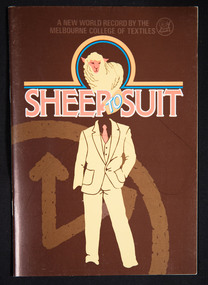
Booklet, Sheep to suit
... textile mills...melbourne college of textiles australian wool corporation sunbeam corporation limited..."Sheep to suit" -The Melbourne College of Textiles, 1984. The story of the Melbourne College of Textile's World Record of 1hr, 32 minutes, 33.52 sec on June 24, 1982, recorded by the Guinness Book of Records...This record was broken in 1987 by "The Melbourne College of Textiles" for the Japanese programme "These Wonderful People" Time 1 hour 27 Minutes 59.32 secs. ..."Sheep to suit" -The Melbourne College of Textiles, 1984. The story of the Melbourne College of Textile's World Record of 1hr, 32 minutes, 33.52 sec on June 24, 1982, recorded by the Guinness Book of Records textile production fashion shearing weaving sewing textile mills textile mills melbourne college of textiles australian wool corporation sunbeam corporation limited carding spinning highlights of the national wool museum: from sheep to suit - exhibition (22/09/2001 - 02/12/2001) textile production fashion shearing weaving sewing textile mills This record was broken in 1987 by "The Melbourne College of Textiles" for the Japanese programme "These Wonderful People" Time 1 hour 27 Minutes 59.32 secs. ..."Sheep to suit" -The Melbourne College of Textiles, 1984. The story of the Melbourne College of Textile's World Record of 1hr, 32 minutes, 33.52 sec on June 24, 1982, recorded by the Guinness Book of Records Booklet describing the 'Sheep to Suit' event for the Guiness Book of World Records. This record was broken in 1987 by "The Melbourne College of Textiles" for the Japanese programme "These Wonderful People" Time 1 hour 27 Minutes 59.32 secs. Time difference = 6 Minutes 04.13 secs textile production fashion shearing weaving sewing textile mills textile mills, melbourne college of textiles australian wool corporation sunbeam corporation limited, carding, spinning, highlights of the national wool museum: from sheep to suit - exhibition (22/09/2001 - 02/12/2001), textile production, fashion, shearing, weaving, sewing, textile mills -
 National Wool Museum
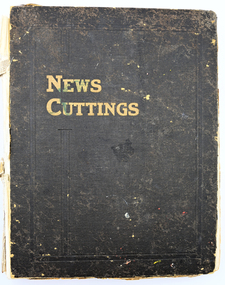
Book - Scrapbook, Geoffrey Lewis Hirst, 1934-1951
... ...Geelong College...Textile...Godfrey Hirst Lewis Hirst Geoffrey Lewis Hirst Travel Geelong Working Life Geelong College Textile Industry Woollen Mill Scrapbook Inscription: front [printed]: NEWS / CUTTINGS ; inside page [handwritten]: Geoffrey Lewis Hirst / 1939 Book containing news clippings, invitations, advertisements, photographs, letters, certificates and other documents, over 100 pages long. ...This scrapbook belonged to the donor’s father, Geoffrey Lewis Hirst. It was started for him by his mother, Dorothy Hirst, and he later collaborated on it. Geoffrey initially collected memorabilia from his grandfather’s travels (Lewis Hirst). Geoffrey and his siblings were placed at boarding school at Geelong College when Cedric (his father) and Dorothy went to Great Britain in 1947 to buy new machinery for the Godfrey Hirst mill, as the machines had been running solidly through the war making material for the uniforms and grey blankets. The book begins with a dinner invitation for Lewis Hirst dated April 1929, and ends with newspaper clippings announcing the passing of Lewis Hirst in April 1951. The book was a memento of family life at the time - of the mills, and Geelong life in general. Book containing news clippings, invitations, advertisements, photographs, letters, certificates and other documents, over 100 pages long. Inscription: front [printed]: NEWS / CUTTINGS ; inside page [handwritten]: Geoffrey Lewis Hirst / 1939 godfrey hirst, lewis hirst, geoffrey lewis hirst, travel, geelong, working life, geelong college, textile industry, woollen mill, scrapbook -
 Women's Art Register
Archive (Collection) - Constance Howard Artist Archive
... Goldsmiths' Textile Collection (Goldsmiths College...1910-2000 Constance Howard Gallery Goldsmiths' Textile Collection (Goldsmiths College London) International (UK) Textiles Embroidery Archive Constance Howard Artist Archive ...constance howard gallery, goldsmiths' textile collection (goldsmiths college, london), international (uk), textiles, embroidery constance howard gallery, goldsmiths' textile collection (goldsmiths college, london), international (uk), textiles, embroidery -
Women's Art Register
Archive (Series) - Constance Howard. Duplicate File 1
... Goldsmiths' Textile Collection (Goldsmiths College...Textiles Embroidery Constance Howard Gallery Goldsmiths' Textile Collection (Goldsmiths College London) International (UK) Foolscap manilla file Archive Constance Howard. ...Obituary textiles, embroidery, constance howard gallery, goldsmiths' textile collection (goldsmiths college, london), international (uk) textiles, embroidery, constance howard gallery, goldsmiths' textile collection (goldsmiths college, london), international (uk) -
Women's Art Register
Archive (Series) - Howard, Constance. Artist File 1
... Goldsmiths' Textile Collection (Goldsmiths College...Constance Howard Gallery Goldsmiths' Textile Collection (Goldsmiths College London) International (UK) Textiles Embroidery Foolscap white archival 4 flap folder or document wallet Archive Howard, Constance. ...Obituary constance howard gallery, goldsmiths' textile collection (goldsmiths college, london), international (uk), textiles, embroidery constance howard gallery, goldsmiths' textile collection (goldsmiths college, london), international (uk), textiles, embroidery -
 National Wool Museum
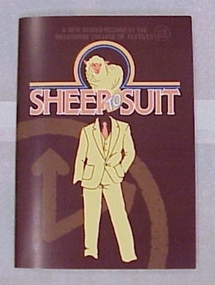
Booklet, Sheep to suit
... Textile Production Fashion Shearing Weaving Sewing...Melbourne College..."Sheep to suit" -The Melbourne College of Textiles, 1984. The story of the Melbourne College of Textile's World Record of 1hr, 32 minutes, 33.52 sec on June 24, 1982, recorded by the Guinness Book of Records..."Sheep to suit" -The Melbourne College of Textiles, 1984. The story of the Melbourne College of Textile's World Record of 1hr, 32 minutes, 33.52 sec on June 24, 1982, recorded by the Guinness Book of Records Textile Production Fashion Shearing Weaving Sewing Melbourne College of Textiles Australian Wool Corporation Sunbeam Corporation Limited Carding Spinning Highlights of the National Wool Museum: from Sheep to Suit - Exhibition (22/09/2001 - 02/12/2001) Textile Production Fashion Shearing Weaving Sewing Booklet describing the 'Sheep to Suit' event for the Guiness Book of World Records. ..."Sheep to suit" -The Melbourne College of Textiles, 1984. The story of the Melbourne College of Textile's World Record of 1hr, 32 minutes, 33.52 sec on June 24, 1982, recorded by the Guinness Book of Records Booklet describing the 'Sheep to Suit' event for the Guiness Book of World Records. textile production fashion shearing weaving sewing, melbourne college of textiles australian wool corporation sunbeam corporation limited, carding, spinning, highlights of the national wool museum: from sheep to suit - exhibition (22/09/2001 - 02/12/2001), textile production, fashion, shearing, weaving, sewing -
 National Wool Museum
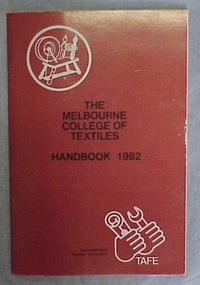
Booklet - Handbook, Melbourne College of Textiles, 1982
... Textile Industry - education...Melbourne College...Student handbook for the Melbourne College of Textiles, Pascoe Vale, 1982....Student handbook for the Melbourne College of Textiles, Pascoe Vale, 1982. Textile Industry - education Melbourne College of Textiles TAFE A5 size paper back book, red cover with black text and white logos. 46 pages. ...Student handbook for the Melbourne College of Textiles, Pascoe Vale, 1982. A5 size paper back book, red cover with black text and white logos. 46 pages. textile industry - education, melbourne college of textiles, tafe -
 National Wool Museum
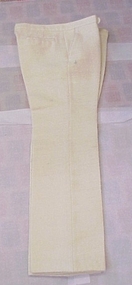
Trousers
... Textile Production Fashion Shearing Weaving Sewing...Melbourne College...Part of the three piece suit which set the "Sheep to suit" record by Melbourne College of Textiles in 1982...A product of the Clothing School, MELBOURNE COLLEGE OF TEXTILES/ PURE WOOL...Part of the three piece suit which set the "Sheep to suit" record by Melbourne College of Textiles in 1982 Textile Production Fashion Shearing Weaving Sewing Melbourne College of Textiles Australian Wool Corporation Sunbeam Corporation Limited Spinning Highlights of the National Wool Museum: from Sheep to Suit - Exhibition (22/09/2001 - 02/12/2001) Textile Production Fashion Shearing Weaving Sewing A product of the Clothing School, MELBOURNE COLLEGE OF TEXTILES/ PURE WOOL Part of the 'Sheep to Suit' event outfit. ...Suit pants, cream, natural, wool. Part of the three piece suit which set the "Sheep to suit" record by Melbourne College of Textiles in 1982 Part of the 'Sheep to Suit' event outfit. A product of the Clothing School, MELBOURNE COLLEGE OF TEXTILES/ PURE WOOL textile production fashion shearing weaving sewing, melbourne college of textiles australian wool corporation sunbeam corporation limited, spinning, highlights of the national wool museum: from sheep to suit - exhibition (22/09/2001 - 02/12/2001), textile production, fashion, shearing, weaving, sewing -
National Wool Museum
Certificate
... Textile Production Fashion Shearing Weaving Sewing...Melbourne College..."Record certificate" - Guinness Superlatives Limited, 1982 , awarded to the Melbourne College of Textiles for breaking the record for a "three piece suit from sheep to wearer"...GUINNESS SUPERLATIVES LIMITED/ RECORD CERTIFICATE/ This is to certify that...THE MELBOURNE COLLEGE OF TEXTILES/of...PASCOE VALE, MELBOUREN, VICTORIA, AUSTRALIA...did break the/...SHEEP TO SUIT...record this/24th day of...JUNE...1982/THREE PIECE SUIT FROM..."Record certificate" - Guinness Superlatives Limited, 1982 , awarded to the Melbourne College of Textiles for breaking the record for a "three piece suit from sheep to wearer" Textile Production Fashion Shearing Weaving Sewing Melbourne College of Textiles Australian Wool Corporation Sunbeam Corporation Limited Spinning Highlights of the National Wool Museum: from Sheep to Suit - Exhibition (22/09/2001 - 02/12/2001) Textile Production Fashion Shearing Weaving Sewing GUINNESS SUPERLATIVES LIMITED/ RECORD CERTIFICATE/ This is to certify that...THE MELBOURNE COLLEGE OF TEXTILES/of...PASCOE VALE, MELBOUREN, VICTORIA, AUSTRALIA...did break the/...SHEEP TO SUIT...record this/24th day of...JUNE...1982/THREE PIECE SUIT FROM Certificate ..."Record certificate" - Guinness Superlatives Limited, 1982 , awarded to the Melbourne College of Textiles for breaking the record for a "three piece suit from sheep to wearer" GUINNESS SUPERLATIVES LIMITED/ RECORD CERTIFICATE/ This is to certify that...THE MELBOURNE COLLEGE OF TEXTILES/of...PASCOE VALE, MELBOUREN, VICTORIA, AUSTRALIA...did break the/...SHEEP TO SUIT...record this/24th day of...JUNE...1982/THREE PIECE SUIT FROM textile production fashion shearing weaving sewing, melbourne college of textiles australian wool corporation sunbeam corporation limited, spinning, highlights of the national wool museum: from sheep to suit - exhibition (22/09/2001 - 02/12/2001), textile production, fashion, shearing, weaving, sewing -
 National Wool Museum
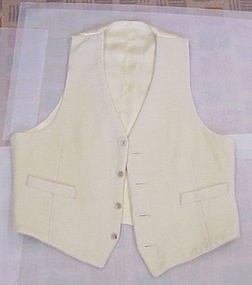
Vest
... Textile Production Fashion Shearing Weaving Sewing...Melbourne College...Part of the three piece suit which set the "Sheep to suit" record by Melbourne College of Textiles in 1982....Part of the three piece suit which set the "Sheep to suit" record by Melbourne College of Textiles in 1982. Textile Production Fashion Shearing Weaving Sewing Melbourne College of Textiles Australian Wool Corporation Sunbeam Corporation Limited Spinning Highlights of the National Wool Museum: from Sheep to Suit - Exhibition (22/09/2001 - 02/12/2001) Textile Production Fashion Shearing Weaving Sewing Part of the 'Sheep to Suit' event outfit. ...Suit vest, cream, natural, wool and cream silk. Part of the three piece suit which set the "Sheep to suit" record by Melbourne College of Textiles in 1982. Part of the 'Sheep to Suit' event outfit. textile production fashion shearing weaving sewing, melbourne college of textiles australian wool corporation sunbeam corporation limited, spinning, highlights of the national wool museum: from sheep to suit - exhibition (22/09/2001 - 02/12/2001), textile production, fashion, shearing, weaving, sewing -
 National Wool Museum
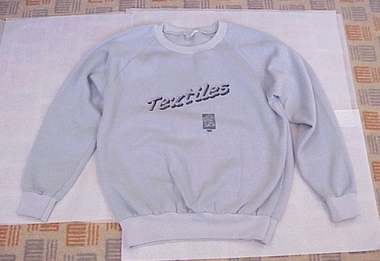
Jumper
... Textile Production Fashion Shearing Weaving Sewing...Melbourne College...Grey jumper, which formed part of the uniform for the 1987 Melbourne College of Textiles "Sheep to Suit" team and which was worn by John Hawthorne who took part in the event....Grey jumper, which formed part of the uniform for the 1987 Melbourne College of Textiles "Sheep to Suit" team and which was worn by John Hawthorne who took part in the event. ...Grey jumper, which formed part of the uniform for the 1987 Melbourne College of Textiles "Sheep to Suit" team and which was worn by John Hawthorne who took part in the event. Worn by participant in the 'Sheep to suit' event. Worn by participant in the 'Sheep to suit' event. Textiles/TAFE [Japanese characters] textile production fashion shearing weaving sewing, melbourne college of textiles, carding, spinning, highlights of the national wool museum: from sheep to suit - exhibition (22/09/2001 - 02/12/2001), textile production, fashion, shearing, weaving, sewing -
 National Wool Museum
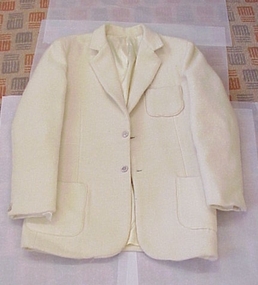
Jacket
... Textile Production Fashion Shearing Weaving Sewing...Melbourne College...Part of the three piece suit which set the "Sheep to suit" record by Melbourne College of Textiles in 1982...A product of the Clothing School, MELBOURNE COLLEGE OF TEXTILES/ PURE WOOL...Part of the three piece suit which set the "Sheep to suit" record by Melbourne College of Textiles in 1982 Textile Production Fashion Shearing Weaving Sewing Melbourne College of Textiles Australian Wool Corporation Sunbeam Corporation Limited Spinning Highlights of the National Wool Museum: from Sheep to Suit - Exhibition (22/09/2001 - 02/12/2001) Textile Production Fashion Shearing Weaving Sewing A product of the Clothing School, MELBOURNE COLLEGE OF TEXTILES/ PURE WOOL Part of the 'Sheep to Suit' event outfit. ...Suit jacket, cream, natural, wool and cream silk lining. Part of the three piece suit which set the "Sheep to suit" record by Melbourne College of Textiles in 1982 Part of the 'Sheep to Suit' event outfit. A product of the Clothing School, MELBOURNE COLLEGE OF TEXTILES/ PURE WOOL textile production fashion shearing weaving sewing, melbourne college of textiles australian wool corporation sunbeam corporation limited, spinning, highlights of the national wool museum: from sheep to suit - exhibition (22/09/2001 - 02/12/2001), textile production, fashion, shearing, weaving, sewing -
 National Wool Museum
Pants
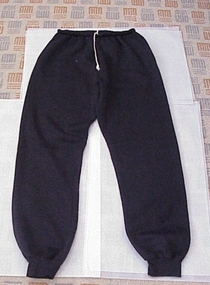
... Textile Production Fashion Shearing Weaving Sewing...Melbourne College...Black track pants, which formed part of the uniform for the 1987 Melbourne College of Textiles "Sheep to Suit" team and which were worn by John Hawthorne who took part in the event....Black track pants, which formed part of the uniform for the 1987 Melbourne College of Textiles "Sheep to Suit" team and which were worn by John Hawthorne who took part in the event. ...Black track pants, which formed part of the uniform for the 1987 Melbourne College of Textiles "Sheep to Suit" team and which were worn by John Hawthorne who took part in the event. Worn by participant in the 'Sheep to suit' event. textile production fashion shearing weaving sewing, melbourne college of textiles, carding, spinning, highlights of the national wool museum: from sheep to suit - exhibition (22/09/2001 - 02/12/2001), textile production, fashion, shearing, weaving, sewing -
National Wool Museum
T-shirt
... Textile Production Fashion Shearing Weaving Sewing...Melbourne College...White t-shirt, which formed part of the uniform for the 1982 Melbourne College of Textiles "Sheep to Suit" team and which was worn by Mr John Hawthorne who took part in the event....White t-shirt, which formed part of the uniform for the 1982 Melbourne College of Textiles "Sheep to Suit" team and which was worn by Mr John Hawthorne who took part in the event. ...White t-shirt, which formed part of the uniform for the 1982 Melbourne College of Textiles "Sheep to Suit" team and which was worn by Mr John Hawthorne who took part in the event. AUSTRALIA WORLD RECORD 1HR 34 MINS 33.42 SECS GUINNESS/ SHEEP/ TO/ SUIT/ 1982 textile production fashion shearing weaving sewing, melbourne college of textiles, carding, spinning, highlights of the national wool museum: from sheep to suit - exhibition (22/09/2001 - 02/12/2001), textile production, fashion, shearing, weaving, sewing -
 National Wool Museum
Document - Woven Textile Design Course for Melbourne College of Textiles, Ray Smith, 1996
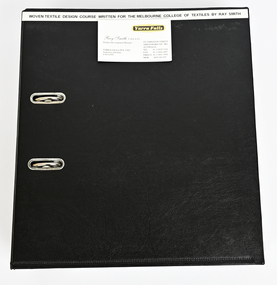
... Woven Textile Design Course for Melbourne College of Textiles...Textile Design Course...Coursework...Melbourne College...Over the next five decades, Ray furthered his education in textile design, weaving design, knitting and later computer aided design, including qualifications from Gordon Textile College, City and Guilds of London Institute, The Textile Institute, Melbourne Institute of Textiles and Royal Melbourne Institute of Technology (RMIT). ...Front [printed label]: WOVEN TEXTILE DESIGN COURSE WRITTEN FOR THE MELBOURNE COLLEGE OF TEXTILES BY RAY SMITH...Document Woven Textile Design Course for Melbourne College of Textiles Ray Smith ...Part of a collection of books, fabric samples and documents from the working life of Ray Smith. Ray began his career at the age of 15, working at the Albion Woollen Mills in Geelong in 1953. Over the next five decades, Ray furthered his education in textile design, weaving design, knitting and later computer aided design, including qualifications from Gordon Textile College, City and Guilds of London Institute, The Textile Institute, Melbourne Institute of Textiles and Royal Melbourne Institute of Technology (RMIT). After ten years at Albion Woollen Mills, Ray went on to hold fabric design positions at Prestige Fabrics and Yarra Falls, working up to management roles in both the Weaving and Fabric Design Divisions, and then as Product Development Manager at Yarra Falls until 2000. Ray shares some career highlights below: In 1977 and 1978 I won the Wool Corporation’s Celsius 30 Awards as Yarra Falls Designer. (See photos attached.) These awards came with study trips to the major Textile Centres and Trade Fairs around the world. This was proven to be beneficial and Yarra Falls sent me overseas every year for the next 22 years. On stopovers in Hong Kong we appointed an agent and took part in Textile Trade Fairs at Interstoff Asia and exhibited designs in 1991, 92, 93, 94. I created a pattern book for a chain of shops called “Kwun KeeTailors” for their customers to select our fabrics to be made up into suits for the tourists. I also had several trips to New York to try to export to America with some success. I was commissioned by the Melbourne College of Textiles to write a Woven Textile Design Course to be taught under the outreach program. This was eventually translated into Spanish to be used by developing textile industries in South America. Black two armed binder folder with over one hundred pages of typed paper in plastic sleeves. Documents contain details of sixty eight topics for Woven Textile Design Course. The folder has a label attached across the top edge, and a business card attached with tape to the front. Front [printed label]: WOVEN TEXTILE DESIGN COURSE WRITTEN FOR THE MELBOURNE COLLEGE OF TEXTILES BY RAY SMITH ray smith, yarra falls, mills, textile design, fabric design, product development, wool corporation, textile design course, coursework, melbourne college of textiles, study, students -
 National Wool Museum
Booklet - Celsius 30, Spring Summer Fabric Samples, Australian Wool Corporation, 1974
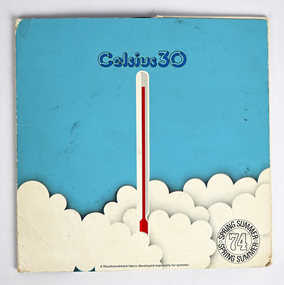
... Over the next five decades, Ray furthered his education in textile design, weaving design, knitting and later computer aided design, including qualifications from Gordon Textile College, City and Guilds of London Institute, The Textile Institute, Melbourne Institute of Textiles and Royal Melbourne Institute of Technology (RMIT). ...Over the next five decades, Ray furthered his education in textile design, weaving design, knitting and later computer aided design, including qualifications from Gordon Textile College, City and Guilds of London Institute, The Textile Institute, Melbourne Institute of Textiles and Royal Melbourne Institute of Technology (RMIT). ...Part of a collection of books, fabric samples and documents from the working life of Ray Smith. Ray began his career at the age of 15, working at the Albion Woollen Mills in Geelong in 1953. Over the next five decades, Ray furthered his education in textile design, weaving design, knitting and later computer aided design, including qualifications from Gordon Textile College, City and Guilds of London Institute, The Textile Institute, Melbourne Institute of Textiles and Royal Melbourne Institute of Technology (RMIT). After ten years at Albion Woollen Mills, Ray went on to hold fabric design positions at Prestige Fabrics and Yarra Falls, working up to management roles in both the Weaving and Fabric Design Divisions, and then as Product Development Manager at Yarra Falls until 2000. Ray shares some career highlights below: In 1977 and 1978 I won the Wool Corporation’s Celsius 30 Awards as Yarra Falls Designer. (See photos attached.) These awards came with study trips to the major Textile Centres and Trade Fairs around the world. This was proven to be beneficial and Yarra Falls sent me overseas every year for the next 22 years. On stopovers in Hong Kong we appointed an agent and took part in Textile Trade Fairs at Interstoff Asia and exhibited designs in 1991, 92, 93, 94. I created a pattern book for a chain of shops called “Kwun KeeTailors” for their customers to select our fabrics to be made up into suits for the tourists. I also had several trips to New York to try to export to America with some success. I was commissioned by the Melbourne College of Textiles to write a Woven Textile Design Course to be taught under the outreach program. This was eventually translated into Spanish to be used by developing textile industries in South America. Card folder featuring pale blue and white clouds and sky motifs, with a thermometer on the cover. Folder holds eleven circular black cards, eight have wool fabric samples attached. Front [printed]: Celsius 30 / SPRING SUMMER / 74 / SPRING SUMMER / A Woolblendmark fabric developed especially for summer. ray smith, yarra falls, mills, textile design, fabric design, product development, wool corporation, fabric samples, 1970s fashion -
 National Wool Museum
Map - The Tartan Map, John Bartholomew & Son Ltd, 1970s
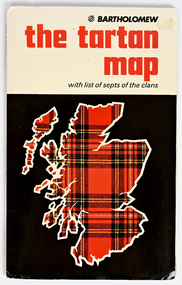
... Over the next five decades, Ray furthered his education in textile design, weaving design, knitting and later computer aided design, including qualifications from Gordon Textile College, City and Guilds of London Institute, The Textile Institute, Melbourne Institute of Textiles and Royal Melbourne Institute of Technology (RMIT). ...Over the next five decades, Ray furthered his education in textile design, weaving design, knitting and later computer aided design, including qualifications from Gordon Textile College, City and Guilds of London Institute, The Textile Institute, Melbourne Institute of Textiles and Royal Melbourne Institute of Technology (RMIT). ...Part of a collection of books, fabric samples and documents from the working life of Ray Smith. Ray began his career at the age of 15, working at the Albion Woollen Mills in Geelong in 1953. Over the next five decades, Ray furthered his education in textile design, weaving design, knitting and later computer aided design, including qualifications from Gordon Textile College, City and Guilds of London Institute, The Textile Institute, Melbourne Institute of Textiles and Royal Melbourne Institute of Technology (RMIT). After ten years at Albion Woollen Mills, Ray went on to hold fabric design positions at Prestige Fabrics and Yarra Falls, working up to management roles in both the Weaving and Fabric Design Divisions, and then as Product Development Manager at Yarra Falls until 2000. Ray shares some career highlights below: In 1977 and 1978 I won the Wool Corporation’s Celsius 30 Awards as Yarra Falls Designer. (See photos attached.) These awards came with study trips to the major Textile Centres and Trade Fairs around the world. This was proven to be beneficial and Yarra Falls sent me overseas every year for the next 22 years. On stopovers in Hong Kong we appointed an agent and took part in Textile Trade Fairs at Interstoff Asia and exhibited designs in 1991, 92, 93, 94. I created a pattern book for a chain of shops called “Kwun KeeTailors” for their customers to select our fabrics to be made up into suits for the tourists. I also had several trips to New York to try to export to America with some success. I was commissioned by the Melbourne College of Textiles to write a Woven Textile Design Course to be taught under the outreach program. This was eventually translated into Spanish to be used by developing textile industries in South America. Folded map attached inside a card folder, featuring a map of Scotland with tartan design and red and black text on the cover. Front [printed]: BARTHOLOMEW / the tartan map / with list of septs of the clans ray smith, yarra falls, mills, textile design, fabric design, product development, wool corporation, map, tartan, scotland -
 National Wool Museum
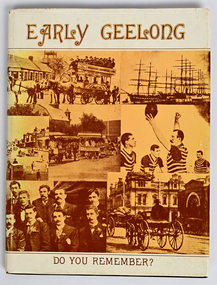
Book - Early Geelong, Do You Remember?, Solomons Pty Ltd, 1940s
... Over the next five decades, Ray furthered his education in textile design, weaving design, knitting and later computer aided design, including qualifications from Gordon Textile College, City and Guilds of London Institute, The Textile Institute, Melbourne Institute of Textiles and Royal Melbourne Institute of Technology (RMIT). ...Over the next five decades, Ray furthered his education in textile design, weaving design, knitting and later computer aided design, including qualifications from Gordon Textile College, City and Guilds of London Institute, The Textile Institute, Melbourne Institute of Textiles and Royal Melbourne Institute of Technology (RMIT). ...Part of a collection of books, fabric samples and documents from the working life of Ray Smith. Ray began his career at the age of 15, working at the Albion Woollen Mills in Geelong in 1953. Over the next five decades, Ray furthered his education in textile design, weaving design, knitting and later computer aided design, including qualifications from Gordon Textile College, City and Guilds of London Institute, The Textile Institute, Melbourne Institute of Textiles and Royal Melbourne Institute of Technology (RMIT). After ten years at Albion Woollen Mills, Ray went on to hold fabric design positions at Prestige Fabrics and Yarra Falls, working up to management roles in both the Weaving and Fabric Design Divisions, and then as Product Development Manager at Yarra Falls until 2000. Ray shares some career highlights below: In 1977 and 1978 I won the Wool Corporation’s Celsius 30 Awards as Yarra Falls Designer. (See photos attached.) These awards came with study trips to the major Textile Centres and Trade Fairs around the world. This was proven to be beneficial and Yarra Falls sent me overseas every year for the next 22 years. On stopovers in Hong Kong we appointed an agent and took part in Textile Trade Fairs at Interstoff Asia and exhibited designs in 1991, 92, 93, 94. I created a pattern book for a chain of shops called “Kwun KeeTailors” for their customers to select our fabrics to be made up into suits for the tourists. I also had several trips to New York to try to export to America with some success. I was commissioned by the Melbourne College of Textiles to write a Woven Textile Design Course to be taught under the outreach program. This was eventually translated into Spanish to be used by developing textile industries in South America. Fifty two page hard cover book featuring yellow and brown images and text on the front and back cover showing scenes from Geelong. The book features sepia toned printed photographs and brown text. Front [printed]: EARLY GEELONG / DO YOU REMEMBER? ray smith, yarra falls, mills, textile design, fabric design, geelong, geelong advertiser -
 National Wool Museum
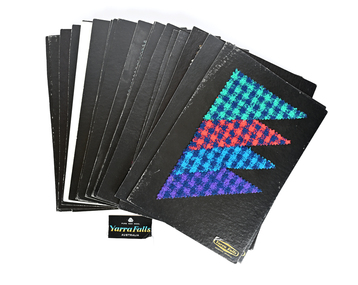
Textile - Fabric Samples, Yarra Falls Ltd, 1970s
... Over the next five decades, Ray furthered his education in textile design, weaving design, knitting and later computer aided design, including qualifications from Gordon Textile College, City and Guilds of London Institute, The Textile Institute, Melbourne Institute of Textiles and Royal Melbourne Institute of Technology (RMIT). ...Over the next five decades, Ray furthered his education in textile design, weaving design, knitting and later computer aided design, including qualifications from Gordon Textile College, City and Guilds of London Institute, The Textile Institute, Melbourne Institute of Textiles and Royal Melbourne Institute of Technology (RMIT). ...Part of a collection of books, fabric samples and documents from the working life of Ray Smith. Ray began his career at the age of 15, working at the Albion Woollen Mills in Geelong in 1953. Over the next five decades, Ray furthered his education in textile design, weaving design, knitting and later computer aided design, including qualifications from Gordon Textile College, City and Guilds of London Institute, The Textile Institute, Melbourne Institute of Textiles and Royal Melbourne Institute of Technology (RMIT). After ten years at Albion Woollen Mills, Ray went on to hold fabric design positions at Prestige Fabrics and Yarra Falls, working up to management roles in both the Weaving and Fabric Design Divisions, and then as Product Development Manager at Yarra Falls until 2000. Ray shares some career highlights below: In 1977 and 1978 I won the Wool Corporation’s Celsius 30 Awards as Yarra Falls Designer. (See photos attached.) These awards came with study trips to the major Textile Centres and Trade Fairs around the world. This was proven to be beneficial and Yarra Falls sent me overseas every year for the next 22 years. On stopovers in Hong Kong we appointed an agent and took part in Textile Trade Fairs at Interstoff Asia and exhibited designs in 1991, 92, 93, 94. I created a pattern book for a chain of shops called “Kwun KeeTailors” for their customers to select our fabrics to be made up into suits for the tourists. I also had several trips to New York to try to export to America with some success. I was commissioned by the Melbourne College of Textiles to write a Woven Textile Design Course to be taught under the outreach program. This was eventually translated into Spanish to be used by developing textile industries in South America. A collection of fabric samples from Yarra Falls, including twenty three sets of woollen fabric samples on black backing card, three sets of woollen fabric samples on white backing card and one Yarra Falls fabric label. PURE NEW WOOL / Yarra Falls / MELBOURNE AUSTRALIA ray smith, yarra falls, mills, textile design, fabric design, geelong, geelong advertiser, fabric samples -
 Ballarat Apron Festival
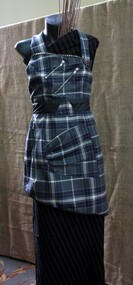
Apron, The Ballarat Apron, 2014
... Born in Ballarat, Schreenan attended Loreto College before studying fashion at Melbourne College of Textiles. She has worked extensively in Sydney, travelling to Paris, London and Los Angeles for work projects. ...Born in Ballarat, Schreenan attended Loreto College before studying fashion at Melbourne College of Textiles. She has worked extensively in Sydney, travelling to Paris, London and Los Angeles for work projects. ...This apron was designed for the Ballarat Apron Festival by local designer Clare Schreenan of Clasch Designs Ballarat. The tartan fabric was designed by Art Gallery of Ballarat for the 2014 exhibition “For Auld Lang Syne: Images of Scottish Australia, from the First Fleet to Federation”, and is officially registered with the Scottish Register of Tartans. The colours are highly significant: grey being chosen for the basalt plains on which Ballarat is built upon; Blue and white representing the Eureka Flag; and yellow for the gold that has made Ballarat so famous. Born in Ballarat, Schreenan attended Loreto College before studying fashion at Melbourne College of Textiles. She has worked extensively in Sydney, travelling to Paris, London and Los Angeles for work projects. She returned to Ballarat in 2006, launching Clash Design. Featuring the official, highly symbolic Ballarat tartan, and made by highly renowned local designer Clare Schreenan, this contemporary apron is of local significance to the Ballarat community. Grey, blue, white and yellow wool tartan fabric apron with asymmetrical design. Velco closures on back with zipper detailing. ballarat, tartan, apron -
 Ararat Gallery TAMA
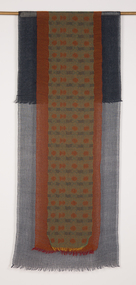
Jennifer Robertson, Forest near Norseman, 2005
... Jennifer Robertson obtained a BA Hons degree in Woven Textiles at West Surrey College and Art and Design. After migrating to Australia in 1986, she began researching the plant life in her new home to develop a language to present her experience of the Australian landscape. ...Jennifer Robertson obtained a BA Hons degree in Woven Textiles at West Surrey College and Art and Design. After migrating to Australia in 1986, she began researching the plant life in her new home to develop a language to present her experience of the Australian landscape. ...Jennifer Robertson obtained a BA Hons degree in Woven Textiles at West Surrey College and Art and Design. After migrating to Australia in 1986, she began researching the plant life in her new home to develop a language to present her experience of the Australian landscape. In the 1990s, Robertson received Australia Council funding to design and build a unique 32-shaft handloom. This complex loom has since become central to her internationally recognised practice, enabling her to explore the relationships between the natural environment, human experience, and the expressive possibilities of textile materiality. At the time this work was made, Robertson was working with Australian fine merino wool, often with contrasting spun qualities, to develop a form of weaving in three layers simultaneously, creating different woven patterns on both sides of the cloth. The artist said of this triple-layered cloth: “Metaphorically the three layers are the landscape, fine wool and the body.” -
 Ararat Gallery TAMA
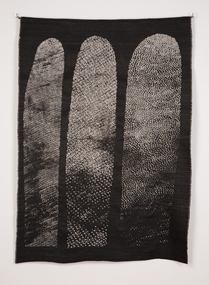
Jennifer Robertson, The Three Cones, 2004
... Jennifer Robertson obtained a BA Hons degree in Woven Textiles at West Surrey College and Art and Design. After migrating to Australia in 1986, she began researching the plant life in her new home to develop a language to present her experience of the Australian landscape. ...Jennifer Robertson obtained a BA Hons degree in Woven Textiles at West Surrey College and Art and Design. After migrating to Australia in 1986, she began researching the plant life in her new home to develop a language to present her experience of the Australian landscape. ...Jennifer Robertson obtained a BA Hons degree in Woven Textiles at West Surrey College and Art and Design. After migrating to Australia in 1986, she began researching the plant life in her new home to develop a language to present her experience of the Australian landscape. In the 1990s, Robertson received Australia Council funding to design and build a unique 32-shaft handloom. This complex loom has since become central to her internationally recognised practice, enabling her to explore the relationships between the natural environment, human experience, and the expressive possibilities of textile materiality. At the time this work was made, Robertson was working with Australian fine merino wool, often with contrasting spun qualities, to develop a form of weaving in three layers simultaneously, creating different woven patterns on both sides of the cloth. The artist said of this triple-layered cloth: “Metaphorically the three layers are the landscape, fine wool and the body.” -
 Ararat Gallery TAMA
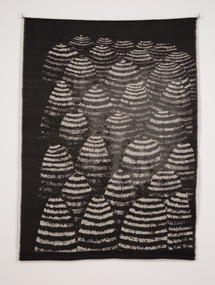
Jennifer Robertson, Landforms, Kimberley, 2004
... Jennifer Robertson obtained a BA Hons degree in Woven Textiles at West Surrey College and Art and Design. After migrating to Australia in 1986, she began researching the plant life in her new home to develop a language to present her experience of the Australian landscape. ...Jennifer Robertson obtained a BA Hons degree in Woven Textiles at West Surrey College and Art and Design. After migrating to Australia in 1986, she began researching the plant life in her new home to develop a language to present her experience of the Australian landscape. ...Jennifer Robertson obtained a BA Hons degree in Woven Textiles at West Surrey College and Art and Design. After migrating to Australia in 1986, she began researching the plant life in her new home to develop a language to present her experience of the Australian landscape. In the 1990s, Robertson received Australia Council funding to design and build a unique 32-shaft handloom. This complex loom has since become central to her internationally recognised practice, enabling her to explore the relationships between the natural environment, human experience, and the expressive possibilities of textile materiality. At the time this work was made, Robertson was working with Australian fine merino wool, often with contrasting spun qualities, to develop a form of weaving in three layers simultaneously, creating different woven patterns on both sides of the cloth. The artist said of this triple-layered cloth: “Metaphorically the three layers are the landscape, fine wool and the body.” -
 National Wool Museum
Textile - Orchid Tables, Dowel Jones, 2024
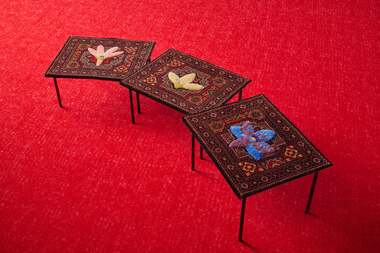
... This loom was operating at Brintons factory in Geelong from 1960 to 1975, and then at the Melbourne College of Textiles, until it was donated to the museum. ...This loom was operating at Brintons factory in Geelong from 1960 to 1975, and then at the Melbourne College of Textiles, until it was donated to the museum. ...The Orchid Tables were on display as part of the Ten Years of Dowel Jones exhibition at the National Wool Museum in 2024. The exhibition label reads: Sitting just outside this exhibition in the National Wool Museum is a 1910 Axminster Jacquard Carpet Loom. This loom was operating at Brintons factory in Geelong from 1960 to 1975, and then at the Melbourne College of Textiles, until it was donated to the museum. In the 1990's the museum commissioned an exclusive pattern called the Manor House Rug. Based on earlier designs from Brintons UK Persian Rug Archive Library, the museum continues to make this rug through the expertise of Loom Technician Michael Farquhar. The Manor House Rug features a central medallion with floral pattern. Working with illustrator Beci Orpin, and referencing Margaret MacDonald & Angair's book 'Orchids of the Anglesea District', we identified regional orchids. By a process of removal and addition, the original floral medallion was replaced with local species as decorative motif. Ten Year of Dowel Jones presents three altered Manor House Rugs, each with different orchids tufted in wool and placed in the centre of each rug. The rugs have been attached by cotton thread to three table frames at different heights to create the Orchid Tables. Three tables consisting of powder coated steel frames, with a woven carpet top. The table tops are made from wool with a jute backing, and feature a red, green, blue, black and cream floral design with an orchid in the centre. Each table is a different height. dowel jones, ten years of dowel jones, national wool museum, axminster loom, carpet, manor house rug, orchids, anglesea, design, art, furniture, beci orpin, brintons, geelong, melbourne college of textiles -
 National Wool Museum
Machine - Axminster Carpet Loom, Brintons Ltd (UK), c. 1910
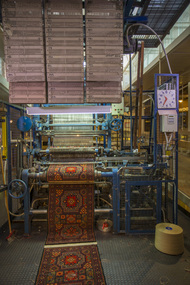
... When superseded in 1975 the loom was donated to the Melbourne College of Textiles for weaving training. The College has now donated the loom to the National Wool Museum and Brintons engineering staff has restored it to full working condition. ...When superseded in 1975 the loom was donated to the Melbourne College of Textiles for weaving training. The College has now donated the loom to the National Wool Museum and Brintons engineering staff has restored it to full working condition. ...The Axminster Carpet Loom has been set up as a focal point in the centre of the National Wool Museum. The loom was originally built by Brintons in England around 1910 and was initially operating in Geelong in 1960. Brintons designed and built most of their own looms and ancillary equipment. When superseded in 1975 the loom was donated to the Melbourne College of Textiles for weaving training. The College has now donated the loom to the National Wool Museum and Brintons engineering staff has restored it to full working condition. This loom is known as an Axminster gripper loom. The gripper system was invented by Brintons in 1890 and operates using a gripper shaped like a birds beak. This grips the yarn, the yarn is then cut and the gripper swings down to place the tuft into the woven backing. This particular loom also uses a jacquard system for weaving colours. In jacquard weaving, punched cards are used to instruct the loom as to which colour to use. The system was invented by Joseph Jacquard, a silk weaver from Lyon, and was introduced in 1804. It revolutionised pattern weaving as it had the capacity to create intricate patterns through the use of the cards. By 1833 there were approximately 100,000 power-looms used in Great Britain that had been influenced by Jacquards invention. Joseph Jacquard died in 1834. Charles Babbage was later to adapt Jacquards punch-card system to produce a calculator that was the forerunner of todays methods of computer programming Axminster carpet loom featuring over 1000 Jacquard punch cards and over 100 bobbins of different colours of wool. loom carpet wool, geelong woolbrokers' association, geelong, auction -
 National Wool Museum
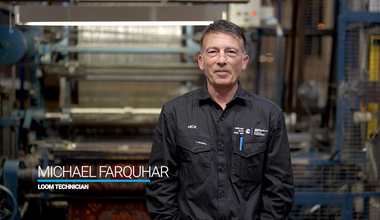
Film - Axminster Carpet Loom with Michael Farquhar, Streamline Media and Communications Group Pty Ltd, 2025
... When superseded in 1975 the loom was donated to the Melbourne College of Textiles for weaving training. The College has now donated the loom to the National Wool Museum and Brintons engineering staff has restored it to full working condition. ...When superseded in 1975 the loom was donated to the Melbourne College of Textiles for weaving training. The College has now donated the loom to the National Wool Museum and Brintons engineering staff has restored it to full working condition. ...This film features Loom Technician Michael Farquhar demonstrating how the Axminster Carpet Loom works, at the National Wool Museum. The Axminster Carpet Loom has been set up as a focal point in the centre of the National Wool Museum. The loom was originally built by Brintons in England around 1910 and was initially operating in Geelong in 1960. Brintons designed and built most of their own looms and ancillary equipment. When superseded in 1975 the loom was donated to the Melbourne College of Textiles for weaving training. The College has now donated the loom to the National Wool Museum and Brintons engineering staff has restored it to full working condition. This loom is known as an Axminster gripper loom. The gripper system was invented by Brintons in 1890 and operates using a gripper shaped like a bird's beak. This grips the yarn, the yarn is then cut and the gripper swings down to place the tuft into the woven backing. This particular loom also uses a jacquard system for weaving colours. In jacquard weaving, punched cards are used to instruct the loom as to which colour to use. The system was invented by Joseph Jacquard, a silk weaver from Lyon, and was introduced in 1804. It revolutionised pattern weaving as it had the capacity to create intricate patterns through the use of the cards. By 1833 there were approximately 100,000 power-looms used in Great Britain that had been influenced by Jacquard's invention. Joseph Jacquard died in 1834. Charles Babbage was later to adapt Jacquard's punch-card system to produce a calculator that was the forerunner of todays methods of computer programming. Digital film featuring colour footage, audio and animated graphics. michael farquhar, loom technician, axminster carpet loom, brintons, geelong, textile industry, machinery, weaving, restoration, gripper, jacquard, punch cards
