
Showing 102 items matching "the cold war"
-
 Bendigo Military Museum
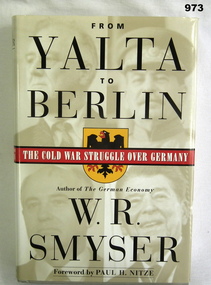
Book, From Yalta to Berlin. The Cold War Struggle over Germany, 1999
... From Yalta to Berlin. The Cold War Struggle over Germany.......cold war...books-military-history cold war Hand written on fly leaf "Donated by Bgo "y" mens club". ...Hard cover, plain light grey, title in gold on spine, dust jacket illustration of seaman. Emblem (black eagle on yellow shield, subtitle in white on red. 465 pages some with photos and maps. Hand written on fly leaf "Donated by Bgo "y" mens club". books-military-history, cold war -
 Monbulk RSL Sub Branch
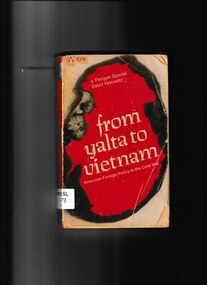
Book, David Horowitz, From Yalta to Vietnam: American foreign policy in the cold war, 1967
... From Yalta to Vietnam: American foreign policy in the cold war...united states - history - cold war...united states - foreign relations united states - history - cold war This book analyses the question: is America to blame for the cold war? ...This book analyses the question: is America to blame for the cold war?Bibliography, Imdex, notes, ill (maps), p.426.This book analyses the question: is America to blame for the cold war?united states - foreign relations, united states - history - cold war -
 Monbulk RSL Sub Branch
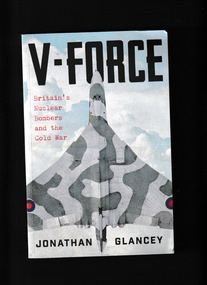
Book, Atlantic Books, V-Force: Britains nuclear bombers and the cold war, 2025
... V-Force: Britains nuclear bombers and the cold war...Cold war - History...Cold war - History Jet bombers - Development - Britain Britains cold war experience is seen through the lens of the development of the V-Force series of long distance bombers - the Valiants, Victors and Vulcans. ...Britains cold war experience is seen through the lens of the development of the V-Force series of long distance bombers - the Valiants, Victors and Vulcans.Ill, index, p.339.non-fictionBritains cold war experience is seen through the lens of the development of the V-Force series of long distance bombers - the Valiants, Victors and Vulcans.cold war - history, jet bombers - development - britain -
 National Vietnam Veterans Museum (NVVM)
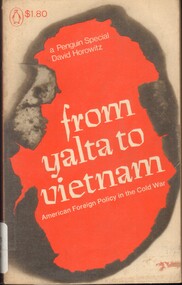
Book, Horowitz, David, From Yalta to Vietnam: American foreign policy in the Cold War
... From Yalta to Vietnam: American foreign policy in the Cold War....From Yalta to Vietnam: American foreign policy in the Cold War. Book Book Horowitz, David ...Is America largely to blame for the Cold War? That is the question posed by this dispassionate and closely documented analysis of American foreign policy since the death of Roosevelt.Is America largely to blame for the Cold War? That is the question posed by this dispassionate and closely documented analysis of American foreign policy since the death of Roosevelt.united states - foreign relations, vietnam -
 Moorabbin Air Museum
Book - United States Air Force, The History of the U.S. Air Force
... ...The Cold War...United States Air Force The pioneering years World War 2 The Cold War War in Southeast Asia Toward the 21st Century Historical overview & aircraft specifications of USAF, circa 1981 The History of the U.S. ...Historical overview & aircraft specifications of USAF, circa 1981non-fictionHistorical overview & aircraft specifications of USAF, circa 1981the pioneering years, world war 2, the cold war, war in southeast asia, toward the 21st century -
 Bendigo Military Museum
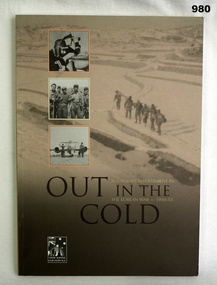
Book, Out in the Cold. Australia's in Korea War 1950 - 53, 2001
... Out in the Cold. Australia's in Korea War 1950 - 53....Front cover has three small photos of war time activities with a background of a photo of six men walking away from the camera along a snow covered terrace. Author - BEN EVANS. 94 pages. Out in the Cold ...Black and brown soft cover. Front cover has three small photos of war time activities with a background of a photo of six men walking away from the camera along a snow covered terrace. Author - BEN EVANS. 94 pages.Written on first page " Donated by Gillian Dearon". books-military-history, korea -
 Bendigo Military Museum
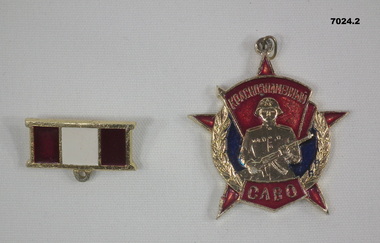
Medal - MEDALS, EASTERN EUROPEAN, unknown
... It has a red wedge at top and in centre is a cold war era East European soldier with AK47. ...It has a red wedge at top and in centre is a cold war era East European soldier with AK47. ...See Cat 7003.2 - Greenwood.1. This is a lightweight medal. It is based on a gold wreath. It has a red wedge at top and in centre is a cold war era East European soldier with AK47. He is wearing cold war vintage helmet. Cyrillic word above the soldier and with the letters "CABO" in a rectangle at bottom. It has 5 pointed star tips protruding, the top one has a holding ring. 2. A rectangular piece, it has gold borders with the inside divided into three sections. They have two red and one enamel fill ins It has a mounting clip on the rear and a mounting ring on the top border.east europe, badges, greenwood -
 Nhill Aviation Heritage Centre
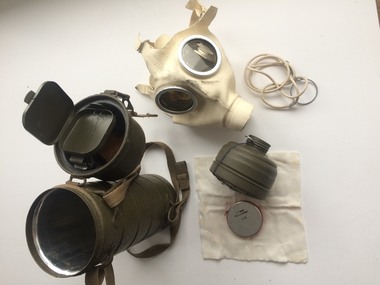
Gas Mask, c1950s 1960s
... The white rubber mask indicates it is a post war / cold war production....The white rubber mask indicates it is a post war / cold war production. Post war production item . ...The white rubber mask indicates it is a post war / cold war production.Post war production item . Commonly used as dress up or cosplay attire Gas Mask kit complete in carry canister. Includes screw on steel filter canister, cleaning rag. Mask is made from white rubber with glass eye pieces. Drager 65G -
 Ballarat Tramway Museum
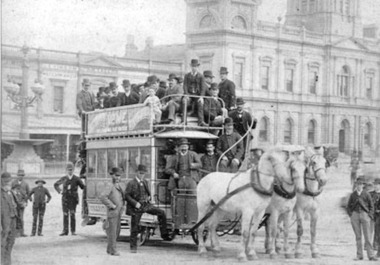
Newspaper, Herald & Weekly Times Ltd, The Sun 17/4/1953, Apr. 1953
... Front page - Melbourne Olympic Games - final decision by IOC and the Cold War....Front page - Melbourne Olympic Games - final decision by IOC and the Cold War. The Sun 17/4/1953 Newspaper Herald & Weekly Times Ltd. ...Yields information about Ballarat civic facilities and is history.Front and back page of "The Sun" Melbourne, Friday April 17, 1953. On page 2 has an articles re Ballarat : homes for aged, hospital, Civic hall, photos of horse trams (3 horses), Town Hall in background), 6 Ballarat Base Hospital Nurses. Front page - Melbourne Olympic Games - final decision by IOC and the Cold War.trams, tramways, horse trams, ballarat, melbourne olympic games, ballarat town hall -
 4th/19th Prince of Wales's Light Horse Regiment Unit History Room
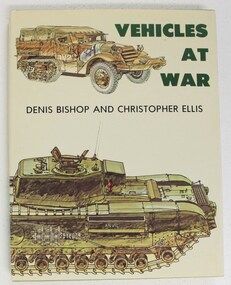
Book, Denis Bishop & Christopher Ellis: Vehicles at War, 1979 (exact)
... Examples are from many countries and theatres of war, from the Crimean War to the Cold War. Contains 225 colour illustrations and 261 in black & white. ...Examples are from many countries and theatres of war, from the Crimean War to the Cold War. Contains 225 colour illustrations and 261 in black & white. ...An account of vehicles which have made history in mechanised warfare. Ranging from tanks, armoured cars, personnel carriers, and gun carriers to vehicles such as jeeps, staff cars, ambulances, traction engines and motor cycles. Examples are from many countries and theatres of war, from the Crimean War to the Cold War. Contains 225 colour illustrations and 261 in black & white. ISBN 0-04-623012-2military history, tanks, armoured fighting vehicles, military vehicles, scout car, armoured cars, half track, military history, tanks, armoured fighting vehicles, military vehicles, scout car, armoured cars, half track -
 Montmorency–Eltham RSL Sub Branch
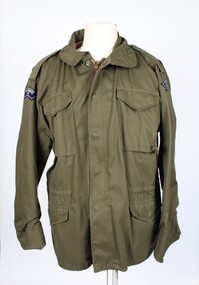
Uniform - Coat, US Cold Weather, M-65, US Cold Weather Coat
... ...cold war...In 1951 - in the context of the Cold War - the Menzies government established the 'National Service Act 1951', which called-up men for compulsory military training for a period of 176 days. ...The coat has historic significance in the wider context of Australia’s involvement in the Cold War (particularly in Vietnam) and in the establishment of a National Service Scheme. war army coat man's coat australian army military uniform national service scheme cold war vietnam war Two identical inscriptions on right and left shoulder - reading '14 National Service Battalion' Manufacturing details on the inside reading: Coat, Cold weather, Man's, Field M-65. ...In 1951 - in the context of the Cold War - the Menzies government established the 'National Service Act 1951', which called-up men for compulsory military training for a period of 176 days. The 14th Battallion was located in Victoria. The coat has historic significance in the wider context of Australia’s involvement in the Cold War (particularly in Vietnam) and in the establishment of a National Service Scheme. Olive green army man coat with four outside pockets - two on the chest, two at the bottom; each pocket has one metallic button attached. Coat has a metallic zip as well as metallic buttons; two velcro scratches at the wrist level. Extra removable padding inside, which is attached with plastic buttons. Two identical inscriptions on right and left shoulder reading '14 National Service Battalion'. Two identical inscriptions on right and left shoulder - reading '14 National Service Battalion' Manufacturing details on the inside reading: Coat, Cold weather, Man's, Field M-65. Olive green colour. Style 8120/8542 DSA 102-81-C1204. 1. Wear as outer garment or as under-layer in cold-dry climate. 2. Wear button-in liner for added insulation. 3. Adjust closures and drawcords to ventilate; avoid over-heating of body. 4. When hood is used, lower extension shall be worn over neck opening, preventing water. 5. Brush snow or frost from garments before entering opening. 6. For fast drying, remove liner from coat. 7. Do not expose to high temperature of a stove. 8. Lubricate slide fasteners with wax. 9. For cleaning and restoring of water repellency return to laundry for machine washing in accordance with established procedures for quarpel garments. 10. Do not starch. Do not remove this label. Black ink pen inscription on manufacturing label reading '3/715875' and 'N.Wain'war, army, coat, man's coat, australian army, military uniform, national service scheme, cold war, vietnam war -
Unions Ballarat
Perestroika: New thinking for our country and the world (Don Woodward Collection), Gorbachev, Mikhail, 1988
... ...cold war...He is particularly known for the policies of glasnost ("openness") and perestroika ("restructuring") and his reorientation of Soviet strategic aims that contributed to the end of the Cold War....BTLC Ballarat Trades Hall ballarat trades and labour council Gorbachev, Mikhail politics and government - USSR Glasnost Perestroika Soviet Union cold war foreign relations Book; 296 pages. ...Mikhail Gorbachev was the eighth leader of the Soviet Union from 1988 to 1991. He is particularly known for the policies of glasnost ("openness") and perestroika ("restructuring") and his reorientation of Soviet strategic aims that contributed to the end of the Cold War.History and politics of the former Soviet Union. Biographical interest - Mikhail Gorbachev.Book; 296 pages. Cover: blue background; colour photograph of Mikhail Gorbachev; yellow and white lettering; author's name and title.btlc, ballarat trades hall, ballarat trades and labour council, gorbachev, mikhail, politics and government - ussr, glasnost, perestroika, soviet union, cold war, foreign relations -
Unions Ballarat
The history of Britain Book IV: 1815 - Present Day (Don Woodward Collection), Carter, EH et al, 1960
... - The Machine Age - After Waterloo - The Reform Era - Palmerston's England - The Second British Empire - Gladstone and Disraeli - The Victorian Age - From Victoria to George V - The First World War - A Twenty Years' Crisis - Britain and the British Commonwealth - The Second World War - The Welfare State and the Cold War - From Steam to Atomic Energy ... - The Machine Age - After Waterloo - The Reform Era - Palmerston's England - The Second British Empire - Gladstone and Disraeli - The Victorian Age - From Victoria to George V - The First World War - A Twenty Years' Crisis - Britain and the British Commonwealth - The Second World War - The Welfare State and the Cold War - From Steam to Atomic Energy History - United Kingdom. ...History of Britain 1915-1958. - The Machine Age - After Waterloo - The Reform Era - Palmerston's England - The Second British Empire - Gladstone and Disraeli - The Victorian Age - From Victoria to George V - The First World War - A Twenty Years' Crisis - Britain and the British Commonwealth - The Second World War - The Welfare State and the Cold War - From Steam to Atomic Energy History - United Kingdom.Book; fourth book in the series. Cover: red background; black lettering; author's name and title. Underlining and notes in pencil and pen.btlc, ballarat trades hall, ballarat trades and labour council, military - world war i, military - world war ii, military - united kingdom, waterloo, history - united kingdom -
Unions Ballarat
"Was your dad a Russian spy?' : the personal story of the Combe/Ivanov affair, Blesing, Meena, 1986
... The story of the Petrov (spy) affair that happened in Australia during the Cold War. Petrov was a Third Secretary of the Soviet embassy in Canberra; the role was to recruit spies and ensure that none of his countrymen defected from the Soviet Union. ...The story of the Petrov (spy) affair that happened in Australia during the Cold War. Petrov was a Third Secretary of the Soviet embassy in Canberra; the role was to recruit spies and ensure that none of his countrymen defected from the Soviet Union. ...The story of the Petrov (spy) affair that happened in Australia during the Cold War. Petrov was a Third Secretary of the Soviet embassy in Canberra; the role was to recruit spies and ensure that none of his countrymen defected from the Soviet Union. It was Petrov's own intention to defect and the Petrovs were granted political asylum in Australia in exchange for providing information about Soviet spy activity in Australia.Relevant to the Cold War era in Australia and espionage activity.Paper; book. Front cover: white & red background; black and white photograph; black lettering. Front cover: title and author's name.btlc, ballarat trades hall, ballarat trades and labour council, petrov affair, soviet union, russia, petrov, vladimir, soviet embassy, canberra, spy activity, asio, political asylum, petrov, edvokia, ogpu, defection, communism, espionage -
 Diamond Valley Vietnam Veterans Sub-Branch
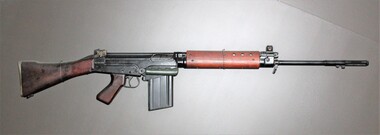
Weapon - L1A1 SLR Rifle, c2010
... L1A1 SLR (Self Loading Rifle) Type: Battle rifle Wars: Cold War, Vietnam War, Falklands War Designed: 1951 Manufacturer: Fabrique Nationale (FN) Number built: Over 1 million Weight: 4.0–4.96 kg (8.8–10.2 lb) Length: 1,090 mm (43 in) Barrel length: 533 mm (21 in) Cartridge: 7.62 mm NATO Rimless Calibre: 7.62 mm (.308 in) Action: Gas and return spring operated, tilting block Rate of fire: 20 rounds/min semi auto Muzzle velocity: 823 m/s (2,700 ft/s) Effective range: 600 m (656 yd) Feed system: 20-round detachable box magazine Sights: Aperture rear sight, hooded post front sight Accesaries bayonet, sling, grenade launcher, telescopic sights ...L1A1 SLR (Self Loading Rifle) Type: Battle rifle Wars: Cold War, Vietnam War, Falklands War Designed: 1951 Manufacturer: Fabrique Nationale (FN) Number built: Over 1 million Weight: 4.0–4.96 kg (8.8–10.2 lb) Length: 1,090 mm (43 in) Barrel length: 533 mm (21 in) Cartridge: 7.62 mm NATO Rimless Calibre: 7.62 mm (.308 in) Action: Gas and return spring operated, tilting block Rate of fire: 20 rounds/min semi auto Muzzle velocity: 823 m/s (2,700 ft/s) Effective range: 600 m (656 yd) Feed system: 20-round detachable box magazine Sights: Aperture rear sight, hooded post front sight Accesaries bayonet, sling, grenade launcher, telescopic sights Weapon L1A1 SLR Rifle ...The L1A1 SLR rifle was the first 'best friend' for infantry and other elements of the Australian Armed Forces; the rifle was the closest focus for troops during training and drill.The L1A1 SLR rifle was often the survival factor for troops in a combat situation hence it was treated reverently by the soldier and kept in best working order even in extreme circumstances.LiA1 SLR Rifle. Known as the L1A1 SLR (Self Loading Rifle) and is known for is straightforward fieldstripping and robust nature. The L1A1 is the British version of the Belgian FN FAL rifle. The L1A1 is a reliable, hard-hitting, gas-operated, magazine-fed semi-automatic rifle. The weapon was extensively used by the Australian Infantryman. The L1A1 SLR rifle was the initial general issue to infantrymen and other elements of the Armed Forces. L1A1 SLR (Self Loading Rifle) Type: Battle rifle Wars: Cold War, Vietnam War, Falklands War Designed: 1951 Manufacturer: Fabrique Nationale (FN) Number built: Over 1 million Weight: 4.0–4.96 kg (8.8–10.2 lb) Length: 1,090 mm (43 in) Barrel length: 533 mm (21 in) Cartridge: 7.62 mm NATO Rimless Calibre: 7.62 mm (.308 in) Action: Gas and return spring operated, tilting block Rate of fire: 20 rounds/min semi auto Muzzle velocity: 823 m/s (2,700 ft/s) Effective range: 600 m (656 yd) Feed system: 20-round detachable box magazine Sights: Aperture rear sight, hooded post front sight Accesaries bayonet, sling, grenade launcher, telescopic sights Serial No. AD8100176vietnam, vietnam war, diamond valley vietnam veterans sub branch -
 Mont De Lancey
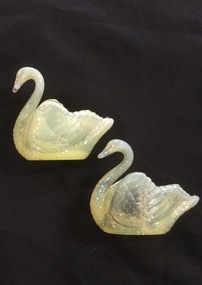
Glass - Ornament
... The proportion usually varies from trace levels to about 2% uranium by weight, although some 20th-century pieces were made with up to 25% uranium.[1][2] Uranium or Vaseline glass was once made into tableware and household items, but fell out of widespread use when the availability of uranium to most industries was sharply curtailed during the Cold War in the 1940s to 1990s. Most such objects are now considered antiques or retro-era collectibles, although there has been a minor revival in art glassware. ...The proportion usually varies from trace levels to about 2% uranium by weight, although some 20th-century pieces were made with up to 25% uranium.[1][2] Uranium or Vaseline glass was once made into tableware and household items, but fell out of widespread use when the availability of uranium to most industries was sharply curtailed during the Cold War in the 1940s to 1990s. Most such objects are now considered antiques or retro-era collectibles, although there has been a minor revival in art glassware. ...Gift to Hilda and Eva Sebire in 1905. Uranium glass is glass which has had uranium, usually in oxide diuranate form, added to a glass mix before melting for coloration. The proportion usually varies from trace levels to about 2% uranium by weight, although some 20th-century pieces were made with up to 25% uranium.[1][2] Uranium or Vaseline glass was once made into tableware and household items, but fell out of widespread use when the availability of uranium to most industries was sharply curtailed during the Cold War in the 1940s to 1990s. Most such objects are now considered antiques or retro-era collectibles, although there has been a minor revival in art glassware. Otherwise, modern uranium glass is now mainly limited to small objects like beads or marbles as scientific or decorative novelties.A pair of ornamental Vaseline or uranium milk glass yellow/green swans.glass, ornaments, swans -
 Supreme Court of Victoria Library
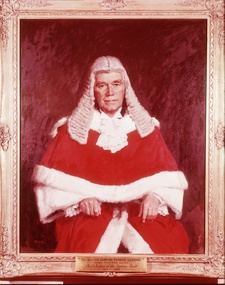
Portrait, Sir Edmund Herring, 1964
... Herring was also an outspoken social critic, between the wars he had been a member of the White Guard, who were a far right group acting against communism. During the Cold War period of the 1950s, Herring spoke out in favour of the British Empire and the American alliance. ...Herring was also an outspoken social critic, between the wars he had been a member of the White Guard, who were a far right group acting against communism. During the Cold War period of the 1950s, Herring spoke out in favour of the British Empire and the American alliance. ...The portrait of Chief Justice Sir Edmund Herring is significant because of whom it portrays and who painted it. Sir Edmund Herring (1892-1982), had a military career before becoming the Chief Justice of Victoria in 1944. Sir Edmund served as an artillery officer with the British Army in World War One and was awarded the Military Cross. While he returned to the Law between the wars, becoming Kings Counsel in 1936, he continued his military associations through the Australian Militia forces rising to colonel by the start of the Second World War. At the outset of World War Two Herring was appointed as Commander of the Royal Artillery for the Australian Sixth Division. Herring saw service in North Africa and Greece and was in charge of Australian Northern forces in 1942, afterwards working with General Blamey in Papua New Guinea. It was at this time that Herring confirmed the death sentences of 22 Papuans who had been found guilty of murder and treason. Sir Edmund was appointed Chief Justice, straight from his army command in 1944. As Chief Justice he quickly established the Law Reform Committee and after the war oversaw the extension of the Supreme Court buildings, with the creation of new Courts. He was considered an able administrator, but his refusal to appoint Joan Rosanove a Queen’s Counsel throughout the 1950s, did not sit well with many legal practitioners. After his retirement from the Bench, he continued in his many public activities, including trustee of the Shrine of Remembrance and the Australian War Memorial and a member of the Melbourne Grammar School Council, as well as Lieutenant Governor of the State of Victoria a position he held from 1945 to 1972. Herring was also an outspoken social critic, between the wars he had been a member of the White Guard, who were a far right group acting against communism. During the Cold War period of the 1950s, Herring spoke out in favour of the British Empire and the American alliance. The portrait of Chief Justice Sir Edmund Herring is significant because of whom it portrays and who painted it. The portrait of Sir Edmund Herring is the second one that Sir William Dargie (1912-2003), completed of Sir Edmund, his first effort in 1944/45 won the Archibald prize. Dargie won the Archibald prize a record eight times.Portrait in oils of Sir Edmund Herring, Chief Justice of the Supreme Court of Victoria (1944-1964). Sir Edmund is seated, this is a half portrait, dressed in his red judicial robes. The sitter takes up most of the frame and there is very little extra information in the picture. signed lower left "Dargie'. Plaque with the following details : Sir Edmund Francis Herring, KCMG, KBE, DSO, MC, ED. Chief Justice of the Supreme Court, 1944-1964.judges, herring -
 Supreme Court of Victoria Library
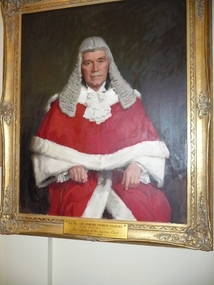
Portrait, Sir Edmund Herring, 1963
... Herring was also an outspoken social critic; between the wars he had been a member of the White Guard, who were a far right group acting against communism. During the Cold War period of the 1950s, Herring spoke out in favour of the British Empire and the American alliance. ...Herring was also an outspoken social critic; between the wars he had been a member of the White Guard, who were a far right group acting against communism. During the Cold War period of the 1950s, Herring spoke out in favour of the British Empire and the American alliance. ...Sir Edmund Herring had a military career before becoming the Chief Justice of Victoria in 1944. Sir Edmund served as an artillery officer with the British Army in World War One and was awarded the Military Cross. While he returned to the Law between the wars, becoming King's Counsel in 1936, he continued his military associations through Australian Militia Forces, rising to colonel by the start of the Second World War. At the outset of WWII Herring was appointed as Commander of the Royal Artillery for the Australian Sixth Division. Herring saw service in North Africa and Greece and was in charge of Australian Northern forces in 1942, afterwards working with General Blamey in Papua New Guinea. Sir Edmund was appointed Chief Justice, straight from his army command in 1944. As Chief Justice he quickly established the Law Reform Committee and after the war oversaw the extension of the Supreme Court buildings, with the creation of new Courts. He was considered an able administrator, but his refusal to appoint Joan Rosanove a Queen’s Counsel throughout the 1950s, did not sit well with many legal practitioners. After his retirement from the Bench, he continued in his many public activities, including trustee of the Shrine of Remembrance and the Australian War Memorial and a member of the Melbourne Grammar School Council, as well as Lieutenant Governor of the State of Victoria, a position he held from 1945 to 1972. Herring was also an outspoken social critic; between the wars he had been a member of the White Guard, who were a far right group acting against communism. During the Cold War period of the 1950s, Herring spoke out in favour of the British Empire and the American alliance. The portrait of Sir Edmund Herring is the second one that Sir William Dargie (1912-2003), completed of Sir Edmund; his first effort in 1944/45 won the Archibald prize. Dargie won the Archibald prize a record eight times. His fame as a portrait painter was not without controversy, as he was considered ‘safe’ and the favourite of conservative sitters, particularly as many of his Archibald winners were of ‘Captains of Industry’. While no Archibald prize was awarded for this portrait, it is an interesting counterpoint to Dargie’s 1944/45 portrait. The portrait of Sir Edmund Herring is significant because of whom it portrays and the artist William Dargie who painted it.Portait in oils of Sir Edmund Herring. This is a half portrait of Sir Edmund in his red judicial robes. Gold leaf frame, with plaque.Plaque reads "The Honourable Sir Edmund Francis Herring, KCMG, KBE, DSO, MC, ED. Chief Justice of the Supreme Court 1944-1964"edmund herring, william dargie -
 Sunshine and District Historical Society Incorporated
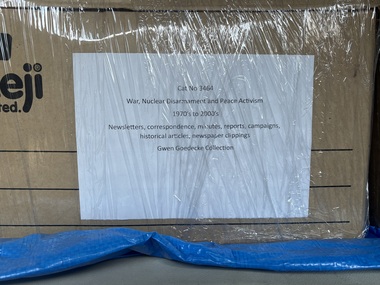
Archive - Gwen Goedecke Collection - War Peace Activism
... (April 2003) A.N.S.W.E.R Coalition response to President Bush's National TV address of September 7, 2003 |Peace andTerror World Peace Council Presidential Committee meeting, Stockholm (1975) (2 reports) 'Challenging the Cold War' - an analysis of the motivation and strategies of the Victorian Peace Council in the 1950's, by Nancy Florence Phillips B.A. ...(April 2003) A.N.S.W.E.R Coalition response to President Bush's National TV address of September 7, 2003 |Peace andTerror World Peace Council Presidential Committee meeting, Stockholm (1975) (2 reports) 'Challenging the Cold War' - an analysis of the motivation and strategies of the Victorian Peace Council in the 1950's, by Nancy Florence Phillips B.A. ...Gwyneth "Gwen" Goedecke collectionHiroshima|Historical articles, Hiroshima Day Speech (Rally 2007) Melbourne|Campaign for International Co-operation & Disarmament (CICD) - 40 years on - Commemoration (1985) |Nuclear Disarmament - People for Nuclear Disarmament (PND) including the Footscray Sunshine PND group|signed petition World Disarmament Campaign (1982) sponsored by the UN Association of Australia|Scottish Campaign for Nuclear Disarmament (post 2007) - Why the US is targeting Russia and Iran ...... Nuclear Primacy|publication of the Medical Association for Prevention of War (Australia) 2007 titled ' Understanding the Nuclear Non-Proliferation Treaty'|Australian Nuclear Free Zones Secretariat including minutes and correspondence - Sunshine Council|Non- Proliferation Legislation Amendment Bill 2003 (Australia) Uranium Mining - protest groups meetings, rally notices, newspaper articles, Atomic Energy in Australia magazines Volume 18, number 4 |Campaign for International Co-Operation and Disarmament (CICD) - Australia's longest runing peace movement, founded in 1959 by unionists, church leaders and peace activists (originally called World Congress for Disarmament and International Co-Operation) |United Nations - Australia and the United Nations Annual Report Card (2007) - report by Gwen Goedecke (1995) - 50th Anniversary Conference : The United Nations - Between Sovereignty and Global Governance - (La Trobe University)|UNITY - newsletters, publications of the UN Association of Australia -#274 (September 2001) AND #331 (March 2003) -compiled from Federal Parliamentary and other sources relevant to Australia's obligations to the UN | Arms Race/Spending: Newspaper clippings '70s to 2008 Senate Motion on National Missile Defence (200?) Submission re Australian involvement in Missile Defence dated? Defence White Paper Community Consultation Process and correspondence (July to September 2008) Exposing the Bare Essentials Behind the Arms Trade: Connecting Women's Rights & The Peace Process - by Yum Lee, Women's International League for Peace and Freedom (1995) Various articles on arms/disarmaments/national security/defence spending including Senate Questions (1994 &1995) Australian Controls on the Export of Defence & Related Goods - Guidelines for Exporters - Department of Defence (1992) World Action to Stop the Deadly Arms Race - report isssued by Alf Watt for the Australian Socialist Group NSW (post 1975) Anti US/Foreign bases in Australia - '80s to 2000 Anti US bases in Australia and the Paciic including PINE GAP newspaper - Oceania (1986) |East Timor Article by Vera Butler (PHD, Political Science, Uni of Melbourne) on Australia, East Timor and The Clinton Doctrine - September 1999 |Middle East List of UN Resolutions against Israel (1955-1992) Map of Middle East Theatre of War, from the Centre for Research on Globilisation, Canada (2003) Brief - Middle East highlights (1973) by Israel Press Ltd., Tel Aviv |Iraq War (1998-2004 Newspaper arlticles Flyers protesting the war, rally notices Reports, emails, correspondence, media releases, petitions, newsletters Socialist Worker pamphlet - 'Is the UN an alternative to the US Empire?' Report by Dr Carmen Laswrence MP - 'What War?' (April 2003) A.N.S.W.E.R Coalition response to President Bush's National TV address of September 7, 2003 |Peace andTerror World Peace Council Presidential Committee meeting, Stockholm (1975) (2 reports) 'Challenging the Cold War' - an analysis of the motivation and strategies of the Victorian Peace Council in the 1950's, by Nancy Florence Phillips B.A. (Oct 1986) Palm Sunday Peace Rally & Festival poster (1988) Media Report (2003 'Managing Terror in the Media', together with Gwen's notespeace -
 Lara RSL Sub Branch
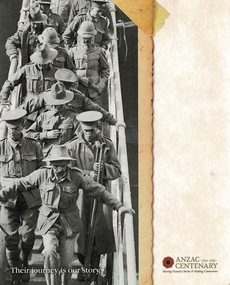
Book - ANZAC CENTENARY, Their journey is our story
... The battles of the Great Warhave become well known; from the tales of dry air and dust that enveloped our soldiers at Gallipoli,to the cold, muddy horrors of Fromelles and other small towns along the Western Front where the long battle for peace played out. World War ...The battles of the Great Warhave become well known; from the tales of dry air and dust that enveloped our soldiers at Gallipoli,to the cold, muddy horrors of Fromelles and other small towns along the Western Front where the long battle for peace played out.World War One (WW1)was one of the most significant events of the twentieth century, claiming the lives of more than 16 million people across the world.Rectangular shaped bookletANZAC CENTENARY.Sharing Stories & Making Connections.world war one history, victoria's world war one legacy, community resource guide -
 Federation University Historical Collection
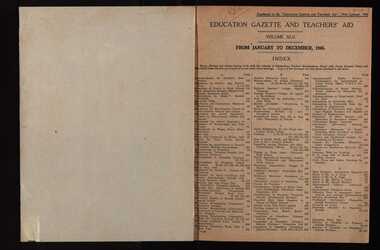
Book, Education Gazette, 1940s, 1940s
... Victorian Education Gazettes were sent to each Victorian school for the use of teachers. education gazette teaching drawing for secondary school first aid king's birthday pre-nursing gallipoli legion of anzacs scholarships creswick school of forestry swimming swimming and life-saving return accomodation for teachers ballarat teachers' college chemistry experiments war relief appeal needlework harold herbert obituary drawing school plantations forest week gould league heavy colds - exclusion pioneer's day school gardens scrap rubber bogong high school histories melbourne teachers' college art collections deaf children physical education education 10 black bound books with red spine. ...Victorian Education Gazettes were sent to each Victorian school for the use of teachers. 10 black bound books with red spine. They are bound education gazettes from the 1940seducation gazette, teaching, drawing for secondary school, first aid, king's birthday, pre-nursing, gallipoli legion of anzacs, scholarships, creswick school of forestry, swimming, swimming and life-saving return, accomodation for teachers, ballarat teachers' college, chemistry experiments, war relief appeal, needlework, harold herbert obituary, drawing, school plantations, forest week, gould league, heavy colds - exclusion, pioneer's day, school gardens, scrap rubber, bogong, high school histories, melbourne teachers' college art collections, deaf children, physical education, education -
City of Moorabbin Historical Society (Operating the Box Cottage Museum)
Newsletter - CMHS February 2014 pdf, February 2014
... ...cold war 1950...Jim Dale continued to produce the Newsletter in 2013 after Helen resigned. ity of moorabbin historical society stanley helen dale jim melbourne moorabbin brighton cheltenham ormond bentleigh market gardeners pioneers early settlers east bentleigh city of kingston vladimir mickalovick petrov evodika petrov michael thwaites maria allynson sven allynson kgb mvd asio ‘petrov affair’ darwin airport mascot airport col. charles spry cold war 1950 City of Moorabbin Historical Society Newsletter February 2014 5 x A4 paper pages printed on one side with colour photograph, Jim Dale, President, welcomes members to the February 23rd Meeting at Box Cottage and acknowledges Anne Caprackas as Secretary and Dr Bill Richardson is now Treasurer. ...The City of Moorabbin Historical Society was formed c 1960 by a group of Moorabbin area residents who were concerned that the history of the area should be preserved. A good response to a call for items related to the historical area of Moorabbin Shire brought donations of a wide variety of artefacts that are now preserved by the current members of CMHS at Box Cottage Museum. Helen Stanley, Secretary of CMHS, began producing a Newsletter for members in April 2007 to provide current information and well researched items of historical interest. Jim Dale continued to produce the Newsletter in 2013 after Helen resigned.5 x A4 paper pages printed on one side with colour photograph, Jim Dale, President, welcomes members to the February 23rd Meeting at Box Cottage and acknowledges Anne Caprackas as Secretary and Dr Bill Richardson is now Treasurer. Jim will have a Stall at the Moorabbin Primary School Fete in March. Jim went to a meeting to discus plans for 2015 Commemoration of the Great War in Glen Eira. Members Bill, David, Daryl Carol, Joan collected and installed a large Display Cabinet in the Dairy on December 19th and Dennis fitted castors to it in January. Jim was present on February 3rd when members of the Harry Hawker family presented a memento to the Victorian Governor, His Excellency Alex Churnov The next Meeting will be March 30th Jim Dale attached the Final Part of his report 'The Allynson's of East Bentleigh' about 'The Petrov Affair 1954'City of Moorabbin Historical Society Newsletter February 2014ity of moorabbin historical society, stanley helen, dale jim, melbourne, moorabbin, brighton, cheltenham, ormond, bentleigh, market gardeners, pioneers, early settlers, east bentleigh, city of kingston, vladimir mickalovick petrov, evodika petrov, michael thwaites, maria allynson, sven allynson, kgb, mvd, asio, ‘petrov affair’, darwin airport, mascot airport, col. charles spry, cold war 1950 -
 Montmorency–Eltham RSL Sub Branch
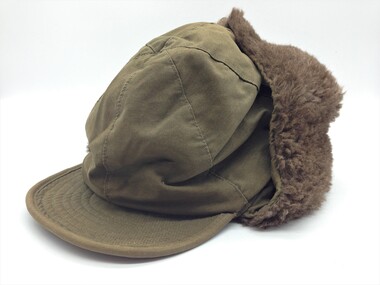
Uniform - Cap, US Army, Cold Weather, Korean War, Cap, US Army, Korean War, 1959
... Cap, US Army, Cold Weather, Korean War ...Typical US Army cold weather cap used in Korean War and post-Korea era...Cap, US Army, Korean War Uniform Cap, US Army, Cold Weather, Korean War Atlantic Highlands Manufacturing Company ...Typical US Army cold weather cap used in Korean War and post-Korea eraRepresentative US Army cap. This type of clothing was issued to Australian troops during the Korean War Olive Drab cotton and wool peaked Field Cap with imitation alpaca fold-down ear comforters, ends secured by cord. Cotton identification label sewn to liner. Wear instructions cotton label sewn to liner. CAP, FIELD, PILE, O.D., MQ-1 Size 7 ATLANTIC HIGHLANDS MFG. CO. Dated 13 Jan. 1951 Q.M. 9532-OI-10070 Pur.Desc. 1 Nov. 1950 Stock No. 73-C-16376-45 NYQMPA ALPACA 60% WOOL, 40% COTTON LINING 80% WOOL, 20% COTTON plus - wearing instructions "CAP, FIELD,PILE,OD, M-Q1" (sic) -
 Montmorency–Eltham RSL Sub Branch
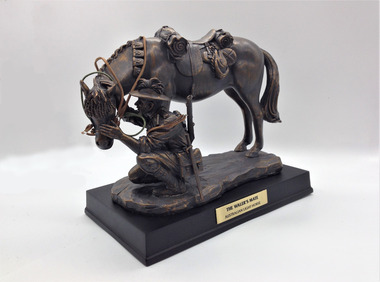
Sculpture - Australian Light Horse Figurine 'The Waler's Mate', Australian Light Horse Figurine. ‘The Waler’s Mate’, 2019
... Cold cast bronze figurine of an Australian Light horseman kneeling beside his "Waler" horse. Mounted on a wooden base with an engraved brass nameplate. Australian Light Horse Figurine. ‘The Waler’s Mate’ Sculpture Australian Light Horse Figurine 'The Waler's Mate' Australia in the Great War ...Although the 'Waler' was specifically bred for the Australian bush it proved a tough, reliable mount in the desert battles in the Middle East during WW1. Over 130,000 were sent overseas and of these 15,000 served with the Light Horse. None would return to Australia.Cold cast bronze figurine of an Australian Light horseman kneeling beside his "Waler" horse. Mounted on a wooden base with an engraved brass nameplate.THE WALER'S MATE AUSTRALIAN LIGHT HORSE -
 Montmorency–Eltham RSL Sub Branch
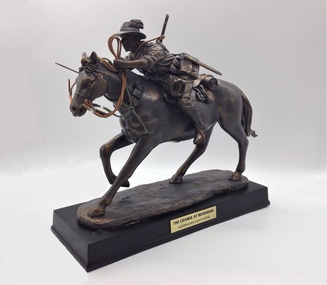
Sculpture - Australian Light Horse Figurine 'The Charge At Beersheba', Sculpture ‘The Charge At Beersheba’, 2019
... Cold cast bronze figurine of an Australian Light horseman charging on his "Waler" horse brandishing a bayonet. Mounted on a wooden base with a brass engraved nameplate. Sculpture ‘The Charge At Beersheba’ Sculpture Australian Light Horse Figurine 'The Charge At Beersheba' Australia in the Great War Australia in the Great War ...Remembers the famous cavalry charge of the 4th and 12th Light Horse Regiments who galloped across open ground (they were in fact Mounted Infantry, not Cavalry and normally fought dismounted) to capture Gaza, the Turkish stronghold that marked the southern end of the Turkish defensive line on 31 October 1917. Cold cast bronze figurine of an Australian Light horseman charging on his "Waler" horse brandishing a bayonet. Mounted on a wooden base with a brass engraved nameplate.THE CHARGE AT BEERSHEBA AUSTRALIAN LIGHT HORSE -
 Heidelberg Repatriation Hospital
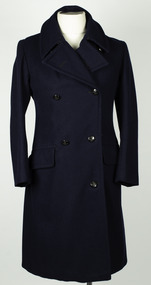
Uniform - Great Coat WWII Airforce, 1943
... World War II Air Force Great Coat. Standard issue uniform for cold weather....World War II Air Force Great Coat. Standard issue uniform for cold weather. WWII Clothing Eagle Great Coat - Airforce WWII 1943 Double breasted navy coat. ...World War II Air Force Great Coat. Standard issue uniform for cold weather.Great Coat - Airforce WWII 1943 Double breasted navy coat. Black plastic buttons with eagle motif.wwii, clothing, eagle -
 Bendigo Military Museum
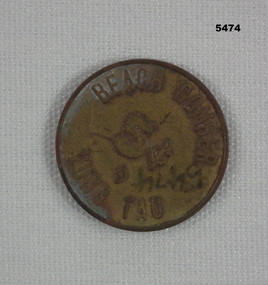
Coin - TOKEN, U.S. Army, 1962-1975
... The Americans sold cold beer in aluminium cans, the Aussie were still using steel cans. Vietnam War Vung Tau Beach Combers Around the edges “BEACH COMBERS VUNG TAU “ The centre 5 c in black ink 5474 is handwritten Token is round and brass colours has the same wording on both sides. ...The Beach Comber was an entertainment place on the beach at Vung TAA. It was outside Australia lines, but Aussie haunted the place anyway. The Americans sold cold beer in aluminium cans, the Aussie were still using steel cans.Token is round and brass colours has the same wording on both sides.Around the edges “BEACH COMBERS VUNG TAU “ The centre 5 c in black ink 5474 is handwritten vietnam war, vung tau, beach combers -
 Eltham District Historical Society Inc
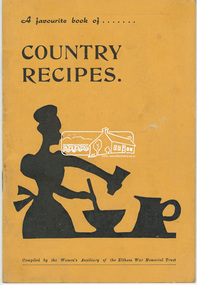
Book, Eltham War Memorial Trust, A favourite book of country recipes / compiled by the Women's Auxiliary of the Eltham War Memorial Trust, 1958
... cold comfort farm...commercial bank of australia...cook-book...cooking...d. garratt...d. richards...d. warner...d.g. wills...draffin bros pty ltd...e. egan...e. hoppner...e.i. rains...e.s. rothwell...eltham home supplies...eltham hotel...eltham motor garage...eltham real estate & business agency...eltham war...War Memorial. Contents: I. Fish, II. Meat, III. Puddings and desserts, IV. Bread and scones, V. Cakes and biscuits, VI. Jams, marmalades and chutneys, VII. Salads, dressings and sauces, VIII. Drinks. a. & s. davis pty ltd a. boyd-graham a. lyon a. mezner a. uglow a.m. lynes b. clark b. rothwell b. thomas b.j. brinkkotter b.m. gresford b.w. morrison betty p. metcalfe briar hill timber & trading c. may c. pelling c. smith cold comfort farm commercial bank of australia cook-book cooking d. garratt d. richards d. warner d.g. wills draffin bros pty ltd e. egan e. hoppner e.i. rains e.s. rothwell eltham home supplies eltham hotel eltham motor garage eltham real estate & business agency eltham war memorial trust f.j. burgoyne g.b. gresford gas and fuel corporation of victoria george lovitt & co pty ltd guest's biscuits h.w. downing heidelberg district bakery i. putnam j. & j. burgoyne j. kimber j.m. attiwill jack burgoyne kraft cheddar l. carter lyon bros garage M. ...46 page book produced by the women of the Shire of Eltham as a fundraising project for the construction of the WW2 Eltham War Memorial. Contents: I. Fish, II. Meat, III. Puddings and desserts, IV. Bread and scones, V. Cakes and biscuits, VI. Jams, marmalades and chutneys, VII. Salads, dressings and sauces, VIII. Drinks. 47 p. : ill., b&w., ; 19 cm. a. & s. davis pty ltd, a. boyd-graham, a. lyon, a. mezner, a. uglow, a.m. lynes, b. clark, b. rothwell, b. thomas, b.j. brinkkotter, b.m. gresford, b.w. morrison, betty p. metcalfe, briar hill timber & trading, c. may, c. pelling, c. smith, cold comfort farm, commercial bank of australia, cook-book, cooking, d. garratt, d. richards, d. warner, d.g. wills, draffin bros pty ltd, e. egan, e. hoppner, e.i. rains, e.s. rothwell, eltham home supplies, eltham hotel, eltham motor garage, eltham real estate & business agency, eltham war memorial trust, f.j. burgoyne, g.b. gresford, gas and fuel corporation of victoria, george lovitt & co pty ltd, guest's biscuits, h.w. downing, heidelberg district bakery, i. putnam, j. & j. burgoyne, j. kimber, j.m. attiwill, jack burgoyne, kraft cheddar, l. carter, lyon bros garage, m. banks, m. battye, m. black, m. erswell, m. foletta, m. johnson, m. roletta, m.h. bucknell, m.j. loosli, millett's foodland, n.h. baxter estate agent, n.h. baxter, new bridge building supplies, m. banks, m. battye, m. black, m. erswell, m. foletta, m. johnson, m. roletta, m.h. bucknell, m.j. loosli, millett's foodland, n.h. baxter estate agent, n.h. baxter, new bridge building supplies, o. holland, o.a. brown, p. moore, p. pease, p. peel, p. reece, presswell's eltham east auto service, r.j. scully, rains, recipes, research meat supply, research post office and general store, s. littlehales, stanley s addison, t. sawyer, t.e. & e.m. moran, v. addison, v. hughes, valley furniture, women's auxiliary, cookery, fundraising -
 Bendigo Military Museum
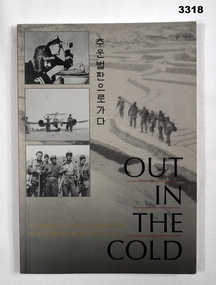
Book - BOOK, KOREA, Out in the Cold, 2000
... Out in the Cold - Australia's involvement in the Korean War 1950 - 1953....Out in the Cold - Australia's involvement in the Korean War 1950 - 1953. Books korea Military Soft cardboard cover, black white & gold print on front, spine & back. ...Out in the Cold - Australia's involvement in the Korean War 1950 - 1953.Soft cardboard cover, black white & gold print on front, spine & back. Front cover has 3 black & white photos - top navy, middle air force, bottom army; with a muted black & white photo of a group of soldiers in a single file in the background. Spine has dark gold background. Book is black, front end paper & fly leaf black & white photo. 92 pages, cut, plain, white. Illustrated black & white & colour photos & maps.books, korea, military -
 Eltham District Historical Society Inc
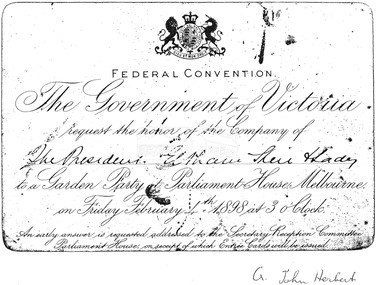
Document - Folder, Cr. John Herbert, Shire President, Eltham Shire, 1894-1906, 1898 to 1917
... Tell "Mum" I am quite well, but a bit cold, I remain yours sincerely, Will" AIF, Blair Athol, Councillors, Cr. John Herbert, Eltham Railway Station, Eltham Shire Council, Federal Convention, First World War, Flora Herbert, Government of Victoria, Heidelberg & Eltham Railway Construction Trust, Invitation, Nutfield, Opening Ceremony, Parliament House, Postcards, Shire President Photocopy A3 page; all three items on one page Cr. ...Cr. John Herbert served three terms as Eltham Shire President A3 photocopy of 3 documents with note at bottom of page - Cr. John Herbert 1. Federal Convention, The Government of Victoria request the honor of the Company of the The President, Eltham Shire & Lady to a Garden Party at Parliament House Melbourne on Friday February 4th 1898 at 3 o'clock. 2. Heidelberg & Eltham Railway Construction Trust, Ticket No. 87, Dinner in celebration of the opening of the Railway to Eltham, will be given in the Marquee on the Station Ground, Eltham on Thursday, 5th June, 190212.30 o'clock, H.J. Price, Secretary 3. Post card addressed to Miss Flora Herbert, "Blair Athol", Nutfield P.O., Victoria, Australia - France 12/12/17 - Dear Floss, Just a card to let you know I have not forgotten you. Tell "Mum" I am quite well, but a bit cold, I remain yours sincerely, Will"Photocopy A3 page; all three items on one page aif, blair athol, councillors, cr. john herbert, eltham railway station, eltham shire council, federal convention, first world war, flora herbert, government of victoria, heidelberg & eltham railway construction trust, invitation, nutfield, opening ceremony, parliament house, postcards, shire president
