
Showing 2 items matching "the kettling experience"
-
 Whitehorse Historical Society Inc.
Newsletter - Whitehorse Historical Society Newsletters 1981, 1981
... The Kettling Experience...Produced by Nunawading Historical Society in 1981 The Kettling Experience Victorian Villa Gardens Lions Den Op Shop Memories of Vermont Sydney Town Hall Snippets of History Know Your Railways Mitcham Station Newsletters published in 1981. ...Newsletters published in 1981. Featuring articles on: The Kettling Experience, tin kettling newlyweds Victorian Villa Gardens, garden styles, fences, beds, trees Lions Den Op Shop, Blackburn Memories of Vermont, Wallia, Laurie, Zerbie, Pannam, Rev. A B Rowed, Rev. Thomas McKeon, Rev. S Craig, Dr. Corbett, Dr. Carter, by Sidney and Shirley Jones? Sydney Town Hall, history/story -- From the "Daily Mirror," Sydney Snippets of History, Edward Wilson, J S Johnson, The Argus, The Herald, The Star by Doris Mattingley Know Your Railways, 1839-1857 Mitcham Station, Wal the CatTyped newsletters non-fiction Newsletters published in 1981. Featuring articles on: The Kettling Experience, tin kettling newlyweds Victorian Villa Gardens, garden styles, fences, beds, trees Lions Den Op Shop, Blackburn Memories of Vermont, Wallia, Laurie, Zerbie, Pannam, Rev. A B Rowed, Rev. Thomas McKeon, Rev. S Craig, Dr. Corbett, Dr. Carter, by Sidney and Shirley Jones? Sydney Town Hall, history/story -- From the "Daily Mirror," Sydney Snippets of History, Edward Wilson, J S Johnson, The Argus, The Herald, The Star by Doris Mattingley Know Your Railways, 1839-1857 Mitcham Station, Wal the Cat the kettling experience, victorian villa gardens, lions den op shop, memories of vermont, sydney town hall, snippets of history, know your railways, mitcham station -
 City of Moorabbin Historical Society (Operating the Box Cottage Museum)
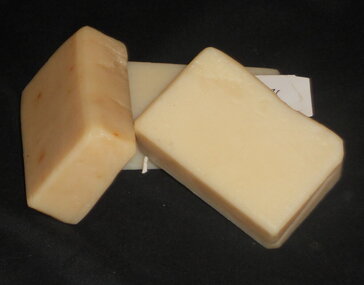
Domestic object - Kitchen Equipment, household soap, c1900
... In another large kettle or pot the fat was placed with an amount of lye solution ( known by experience ). ...In another large kettle or pot the fat was placed with an amount of lye solution ( known by experience ). ...Common soap was made from mixing animal fat with potash a form of the potassium based alkali present in plant and wood material. Early settlers, made their own soap from the waste fats and ashes they saved from their daily work. They did not then have to rely on waiting for soap to be shipped from England and waste their goods or money in trade for soap. In making soap the first ingredient required was a liquid solution of potash commonly called lye. Animal fat, when removed from the animals during butchering, must be rendered to remove all meat tissues and cooking residue before soap of any satisfactory quality can be made from it. To render, fats and waste cooking grease were placed in a large kettle with an equal amount of water. Then the kettle was placed over the open fire outdoors, because the smell from rendering the fats was too strong to wish in anyone's house. The mixture of fats and water were boiled until all the fats had melted. After a longer period of boiling to insure completion of melting the fats, the fire was stopped and into the kettle was placed another amount of water about equal to the first amount of water. The solution was allowed to cool down and left over night. By the next day the fats had solidified and floated to the top forming a layer of clean fat. All the impurities being not as light as the fat remained in water underneath the fat. In another large kettle or pot the fat was placed with an amount of lye solution ( known by experience ). This mixture was boiled until the soap was formed - 6-8 hours - a thick frothy mass, and a small amount placed on the tongue caused no noticeable "bite". The next day a brown jelly like slippery substance was in the kettle and this was 'soft soap' . To make hard soap, common salt was thrown in at the end of the boiling and a hard cake of soap formed in a layer at the top of the pot. But as salt was expensive most settlers used 'soft soap',. The soap could be scented with oils such as lavender for personal use. These 3 cakes of home-made soap are examples of the self sufficiency of the early settlers as they had to be self reliant ,growing food and making and mending their own farm equipment, tools and clothes while establishing their market gardens in Moorabbin Shire 3 cakes of home-made, white hard household soap. 1 cake of soap eaten by a brush tailed possum when he entered the Cottage via the chimney 27/4/2014 soap making, market gardeners, pioneers, early settlers, moorabbin, brighton, dendy's special survey 1841. kitchen equipment, laundry equipment, bentleigh
