
Showing 89 items matching "the monastery"
-
 Flagstaff Hill Maritime Museum and Village
Book - Fictional stories, Sir Walter Scott, Waverley Novels The Monastery- 2 Vol 19, 1837
... Waverley Novels The Monastery- 2 Vol 19......The Monastery...Waverley Novels Vol 19 The Monastery-2, Light brown hardcover lettering in black text. ...While the monastery itself becomes a battleground between old Catholic power and the new Protestant order. ...The subject volume of Waverley Novels Vol 19 published by Fisher Son & Co (1838) is part of a collected 48 volume set of Sir Walter Scott's works, containing various stories. Vol 19 in the 1836 Fisher edition reprints later entries from the fourth series, as these stories originally appeared in Scott's Magnum Opus 48 volume editions, the first from 1816. With the influential “Magnum Opus” editions from 1829–1833 by Robert Cadell, serving as the basis for later reprinted published sets like Fisher's. Volume 2 is linked to the earlier volume through its shared setting, families, and historical conflict, but it is not a direct continuation of the same protagonist’s journey. It follows the Glendinning brothers and Mary Avenel in the same Scottish Borders world of the Reformation, with the same abbey, the same political tensions, and the same supernatural “White Lady”. In Volume 1 of “The Monastery” the story sets up the core relationships and tensions between Halbert and Edward Glendinning as they grow up near Kennaquhair with Mary Avenel. While the monastery itself becomes a battleground between old Catholic power and the new Protestant order. The second volume picks up those same threads and pushes them toward resolution through Halbert’s rise, Mary’s marriage, and Edward’s shift toward monastic life.Waverley Novels Vol 19 The Monastery-2, Light brown hardcover lettering in black text. Author: Sir Walter Scott Publisher: Fisher Son & Co Date: 1837fictionThe subject volume of Waverley Novels Vol 19 published by Fisher Son & Co (1838) is part of a collected 48 volume set of Sir Walter Scott's works, containing various stories. Vol 19 in the 1836 Fisher edition reprints later entries from the fourth series, as these stories originally appeared in Scott's Magnum Opus 48 volume editions, the first from 1816. With the influential “Magnum Opus” editions from 1829–1833 by Robert Cadell, serving as the basis for later reprinted published sets like Fisher's. Volume 2 is linked to the earlier volume through its shared setting, families, and historical conflict, but it is not a direct continuation of the same protagonist’s journey. It follows the Glendinning brothers and Mary Avenel in the same Scottish Borders world of the Reformation, with the same abbey, the same political tensions, and the same supernatural “White Lady”. In Volume 1 of “The Monastery” the story sets up the core relationships and tensions between Halbert and Edward Glendinning as they grow up near Kennaquhair with Mary Avenel. While the monastery itself becomes a battleground between old Catholic power and the new Protestant order. The second volume picks up those same threads and pushes them toward resolution through Halbert’s rise, Mary’s marriage, and Edward’s shift toward monastic life. warrnambool, shipwrecked-coast, flagstaff-hill, flagstaff-hill-maritime-museum, maritime-museum, shipwreck-coast, flagstaff-hill-maritime-village, shipwrecked-artefact, book, waverley novels vol 46 tales of my landlord, sir walter scott, pattison collection, warrnambool library, warrnambool mechanics’ institute, ralph eric pattison, corangamite regional library service, warrnambool city librarian, mechanics’ institute library, victorian library board, warrnambool books and records, warrnambool children’s library, the monastery -
 Flagstaff Hill Maritime Museum and Village
Book - Fictional stories, Sir Walter Scott, Waverley Novels The Monastery- 1 Vol 18, 1838
... Waverley Novels The Monastery- 1 Vol 18...Waverley Novels Vol 18 The Monastery-1, Light brown hardcover lettering in black text. ...Author: Sir Walter Scott Publisher: Fisher Son & Co Date: 1837 Waverley Novels The Monastery- 1 Vol 18 Book Fictional stories Sir Walter Scott Fisher, Son & Co ...The subject volume of Waverley Novels Vol 18 published by Fisher Son & Co (1838) is part of a collected 48 volume set of Sir Walter Scott's works, containing various stories. Vol 18 in the 1836 Fisher edition reprints later entries from the fourth series, as these stories originally appeared in Scott's Magnum Opus 48 volume editions, the first from 1816. With the influential “Magnum Opus” editions from 1829–1833 by Robert Cadell, serving as the basis for later reprinted published sets like Fisher's. Scott’s “The Monastery” is a historical romance set in Scotland during the early Reformation, centred on Kennaquhair Abbey and the Glendinning family. The plot follows Halbert and Edward Glendinning, both in love with Mary Avenel, while religious conflict, local politics, and the eerie White Lady of Avenel shape the action.Waverley Novels Vol 18 The Monastery-1, Light brown hardcover lettering in black text. Author: Sir Walter Scott Publisher: Fisher Son & Co Date: 1837fictionThe subject volume of Waverley Novels Vol 18 published by Fisher Son & Co (1838) is part of a collected 48 volume set of Sir Walter Scott's works, containing various stories. Vol 18 in the 1836 Fisher edition reprints later entries from the fourth series, as these stories originally appeared in Scott's Magnum Opus 48 volume editions, the first from 1816. With the influential “Magnum Opus” editions from 1829–1833 by Robert Cadell, serving as the basis for later reprinted published sets like Fisher's. Scott’s “The Monastery” is a historical romance set in Scotland during the early Reformation, centred on Kennaquhair Abbey and the Glendinning family. The plot follows Halbert and Edward Glendinning, both in love with Mary Avenel, while religious conflict, local politics, and the eerie White Lady of Avenel shape the action.warrnambool, shipwrecked-coast, flagstaff-hill, flagstaff-hill-maritime-museum, maritime-museum, shipwreck-coast, flagstaff-hill-maritime-village, shipwrecked-artefact, book, waverley novels vol 46 tales of my landlord, sir walter scott, pattison collection, warrnambool library, warrnambool mechanics’ institute, ralph eric pattison, corangamite regional library service, warrnambool city librarian, mechanics’ institute library, victorian library board, warrnambool books and records, warrnambool children’s library, quentin durward, quinten durward -
 Flagstaff Hill Maritime Museum and Village
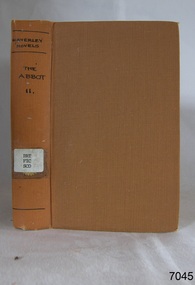
Book - Fictional stories, Sir Walter Scott, Waverley Novels Vol 21 The Abbot- 2 (Sequel to the Monastery), 1837
... Waverley Novels Vol 21 The Abbot- 2 (Sequel to the Monastery) ...Waverley Novels Vol 21 The Abbot- 2 (Sequel to the Monastery), Light brown hardcover lettering in black text. ...The Abbot is Walter Scott’s sequel to The Monastery, set in 1567–1568 during the turmoil around Mary, Queen of Scots. ...The subject volume “The Abbot- 2 (Sequel to the Monastery) Vol 21” published by Fisher Son & Co (1837) is part of a collected edition of Sir Walter Scott's works, containing stories from the "Tales of My Landlord" series. "Tales of My Landlord" forms a key subset of Scott's Waverley Novels, presented as fictional tales gathered by characters like Peter Pattieson from the landlord of the Wallace “Inn at Gandercleugh”. The series spans multiple books across four sub-series, including “The Black Dwarf” (1707 setting), “Old Mortality” (1679–1689), “The Heart of Midlothian” (1736), “The Bride of Lammermoor” (1709–1711), “A Legend of Montrose” (1644–1645), “Count Robert of Paris” (1097), and “Castle Dangerous” (1307). Vol 46 in the 1838 Fisher edition reprints later entries like “Count Robert of Paris” or “Castle Dangerous” from the fourth series, as these stories originally appeared in Scott's Magnum Opus collected volume editions, the first from 1816. With the influential 48-volume “Magnum Opus” edition from 1829–1833 by Robert Cadell, serving as the basis for later collected published sets like Fisher's. The Abbot is Walter Scott’s sequel to The Monastery, set in 1567–1568 during the turmoil around Mary, Queen of Scots. The story follows Roland Græme and other characters around Lochleven Castle, where Mary is imprisoned, and builds toward her escape attempt and the political crisis that ends with her defeat and flight to England. Part two follows Roland to Edinburgh and then to Lochleven, where he becomes involved in the events around Mary’s imprisonment. It includes Mary’s confrontation with the Lady of Lochleven, the delivery of the abdication papers, and the forced political outcome that strips Mary of power. From there, the story moves toward the escape attempt, the battle of Langside, and Mary’s flight to England.Waverley Novels Vol 21 The Abbot- 2 (Sequel to the Monastery), Light brown hardcover lettering in black text. Author: Sir Walter Scott Publisher: Fisher Son & Co Date: 1837fictionThe subject volume “The Abbot- 2 (Sequel to the Monastery) Vol 21” published by Fisher Son & Co (1837) is part of a collected edition of Sir Walter Scott's works, containing stories from the "Tales of My Landlord" series. "Tales of My Landlord" forms a key subset of Scott's Waverley Novels, presented as fictional tales gathered by characters like Peter Pattieson from the landlord of the Wallace “Inn at Gandercleugh”. The series spans multiple books across four sub-series, including “The Black Dwarf” (1707 setting), “Old Mortality” (1679–1689), “The Heart of Midlothian” (1736), “The Bride of Lammermoor” (1709–1711), “A Legend of Montrose” (1644–1645), “Count Robert of Paris” (1097), and “Castle Dangerous” (1307). Vol 46 in the 1838 Fisher edition reprints later entries like “Count Robert of Paris” or “Castle Dangerous” from the fourth series, as these stories originally appeared in Scott's Magnum Opus collected volume editions, the first from 1816. With the influential 48-volume “Magnum Opus” edition from 1829–1833 by Robert Cadell, serving as the basis for later collected published sets like Fisher's. The Abbot is Walter Scott’s sequel to The Monastery, set in 1567–1568 during the turmoil around Mary, Queen of Scots. The story follows Roland Græme and other characters around Lochleven Castle, where Mary is imprisoned, and builds toward her escape attempt and the political crisis that ends with her defeat and flight to England. Part two follows Roland to Edinburgh and then to Lochleven, where he becomes involved in the events around Mary’s imprisonment. It includes Mary’s confrontation with the Lady of Lochleven, the delivery of the abdication papers, and the forced political outcome that strips Mary of power. From there, the story moves toward the escape attempt, the battle of Langside, and Mary’s flight to England. warrnambool, shipwrecked-coast, flagstaff-hill, flagstaff-hill-maritime-museum, maritime-museum, shipwreck-coast, flagstaff-hill-maritime-village, shipwrecked-artefact, book, waverley novels vol 46 tales of my landlord, sir walter scott, pattison collection, warrnambool library, warrnambool mechanics’ institute, ralph eric pattison, corangamite regional library service, warrnambool city librarian, mechanics’ institute library, victorian library board, warrnambool books and records, warrnambool children’s library -
 Flagstaff Hill Maritime Museum and Village
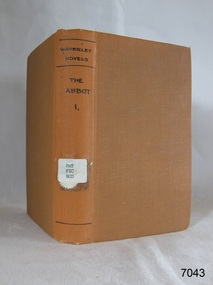
Book - Fictional stories, Sir Walter Scott, Waverley Novels Vol 20 The Abbot- 1 (Sequel to the Monastery), 1837
... Waverley Novels Vol 20 The Abbot- 1 (Sequel to the Monastery) ...Waverley Novels Vol 20 The Abbot- 1 Vol 20 (Sequel to the Monastery), Light brown hardcover lettering in black text. ...The Abbot is Walter Scott’s sequel to The Monastery, set in 1567–1568 during the turmoil around Mary, Queen of Scots. ...The subject volume “The Abbot- 1 (Sequel to the Monastery) Vol 20” published by Fisher Son & Co (1837) is part of a collected edition of Sir Walter Scott's works, containing stories from the "Tales of My Landlord" series. "Tales of My Landlord" forms a key subset of Scott's Waverley Novels, presented as fictional tales gathered by characters like Peter Pattieson from the landlord of the Wallace “Inn at Gandercleugh”. The series spans multiple books across four sub-series, including “The Black Dwarf” (1707 setting), “Old Mortality” (1679–1689), “The Heart of Midlothian” (1736), “The Bride of Lammermoor” (1709–1711), “A Legend of Montrose” (1644–1645), “Count Robert of Paris” (1097), and “Castle Dangerous” (1307). Vol 46 in the 1838 Fisher edition reprints later entries like “Count Robert of Paris” or “Castle Dangerous” from the fourth series, as these stories originally appeared in Scott's Magnum Opus collected volume editions, the first from 1816. With the influential 48-volume “Magnum Opus” edition from 1829–1833 by Robert Cadell, serving as the basis for later collected published sets like Fisher's. The Abbot is Walter Scott’s sequel to The Monastery, set in 1567–1568 during the turmoil around Mary, Queen of Scots. The story follows Roland Græme and other characters around Lochleven Castle, where Mary is imprisoned, and builds toward her escape attempt and the political crisis that ends with her defeat and flight to England. Like the other novels in the Waverley series it mixes historical events with fictional characters: Roland Græme, the Avenel household, and the mysterious “Abbot” figure are woven into the real struggle between Protestant and Catholic factions in Scotland. A central thread is Roland’s divided loyalties, his attraction to both the Catholic and Protestant worlds, and his involvement in helping Mary’s cause. The climax comes with Mary’s attempted escape from Lochleven, the fighting that follows, and her eventual loss of power in Scotland.Waverley Novels Vol 20 The Abbot- 1 Vol 20 (Sequel to the Monastery), Light brown hardcover lettering in black text. Author: Sir Walter Scott Publisher: Fisher Son & Co Date: 1837fictionThe subject volume “The Abbot- 1 (Sequel to the Monastery) Vol 20” published by Fisher Son & Co (1837) is part of a collected edition of Sir Walter Scott's works, containing stories from the "Tales of My Landlord" series. "Tales of My Landlord" forms a key subset of Scott's Waverley Novels, presented as fictional tales gathered by characters like Peter Pattieson from the landlord of the Wallace “Inn at Gandercleugh”. The series spans multiple books across four sub-series, including “The Black Dwarf” (1707 setting), “Old Mortality” (1679–1689), “The Heart of Midlothian” (1736), “The Bride of Lammermoor” (1709–1711), “A Legend of Montrose” (1644–1645), “Count Robert of Paris” (1097), and “Castle Dangerous” (1307). Vol 46 in the 1838 Fisher edition reprints later entries like “Count Robert of Paris” or “Castle Dangerous” from the fourth series, as these stories originally appeared in Scott's Magnum Opus collected volume editions, the first from 1816. With the influential 48-volume “Magnum Opus” edition from 1829–1833 by Robert Cadell, serving as the basis for later collected published sets like Fisher's. The Abbot is Walter Scott’s sequel to The Monastery, set in 1567–1568 during the turmoil around Mary, Queen of Scots. The story follows Roland Græme and other characters around Lochleven Castle, where Mary is imprisoned, and builds toward her escape attempt and the political crisis that ends with her defeat and flight to England. Like the other novels in the Waverley series it mixes historical events with fictional characters: Roland Græme, the Avenel household, and the mysterious “Abbot” figure are woven into the real struggle between Protestant and Catholic factions in Scotland. A central thread is Roland’s divided loyalties, his attraction to both the Catholic and Protestant worlds, and his involvement in helping Mary’s cause. The climax comes with Mary’s attempted escape from Lochleven, the fighting that follows, and her eventual loss of power in Scotland. warrnambool, shipwrecked-coast, flagstaff-hill, flagstaff-hill-maritime-museum, maritime-museum, shipwreck-coast, flagstaff-hill-maritime-village, shipwrecked-artefact, book, waverley novels vol 46 tales of my landlord, sir walter scott, pattison collection, warrnambool library, warrnambool mechanics’ institute, ralph eric pattison, corangamite regional library service, warrnambool city librarian, mechanics’ institute library, victorian library board, warrnambool books and records, warrnambool children’s library -
 Mrs Aeneas Gunn Memorial Library
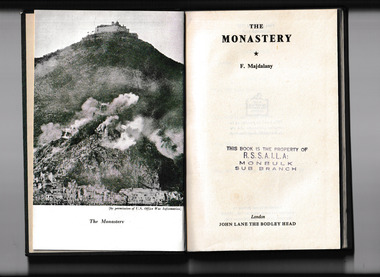
John Lane, The monastery, 1945
... The monastery ...World War 1939-1945 - Personal narratives - Britain Italy - Battle of Cassino An account of the battle of Cassino in Italy in 1944 Ill, p.115. The monastery John Lane F. Majdalany. ...An account of the battle of Cassino in Italy in 1944Ill, p.115.non-fictionAn account of the battle of Cassino in Italy in 1944world war 1939-1945 - personal narratives - britain, italy - battle of cassino -
 Whitehorse Historical Society Inc.
Document, Fr John McCristal, 1/05/1994 12:00:00 AM
... St Paschals Franciscan Monastery...Held at St Paschal's Franciscan Monastery, Albion Road, Box Hill....Order of service for Eucharistic celebration, Fr John McCristal, 1917 - 1994, at St Paschal's Franciscan Monastery, Albion Road, Box Hill....Held at St Paschal's Franciscan Monastery, Albion Road, Box Hill. McCristal John (Fr) St Paschals Franciscan Monastery Box Hill Order of service for Eucharistic celebration, Fr John McCristal, 1917 - 1994. ...Order of service for Eucharistic celebration, Fr John McCristal, 1917 - 1994.Order of service for Eucharistic celebration, Fr John McCristal, 1917 - 1994, at St Paschal's Franciscan Monastery, Albion Road, Box Hill.Order of service for Eucharistic celebration, Fr John McCristal, 1917 - 1994. mccristal, john (fr), st paschals franciscan monastery, box hill -
 Great Stupa of Universal Compassion
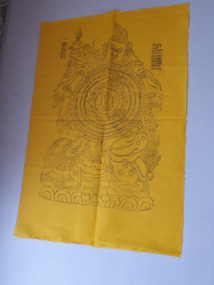
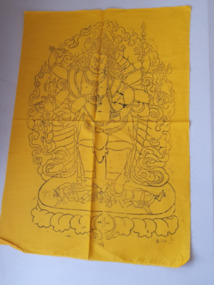
Print - Woodblock print of Jambhala, Tashilhunpo Monastery
... Woodblock printing in Tibet began to flourish from the 10th century onwards, driven by the high demand for Buddhist scriptures and images. Monasteries saw woodblock printing as a means to preserve and propagate authentic Buddhist teachings. ...Woodblock print of Jambhala on yellow cloth, created using an old wooden handcrafted printing board from Tashilhunpo Monastery in Tibet. ...Tashilhunpo Monastery...Woodblock printing Buddhist art Woodblock print of Jambhala on yellow cloth, created using an old wooden handcrafted printing board from Tashilhunpo Monastery in Tibet. Print Woodblock print of Jambhala Tashilhunpo Monastery ...Woodblock printing in Tibet began to flourish from the 10th century onwards, driven by the high demand for Buddhist scriptures and images. Monasteries saw woodblock printing as a means to preserve and propagate authentic Buddhist teachings. The durability of woodblocks made them ideal for creating lasting impressions of sacred texts, enabling mass production and wide dissemination. Jambhala is a Bodhisattva of material and spiritual wealth often invoked by practitioners seeking to eliminate poverty and remove obstacles and misfortunes.Woodblock print of Jambhala on yellow cloth, created using an old wooden handcrafted printing board from Tashilhunpo Monastery in Tibet. woodblock printing, buddhist art -
 Great Stupa of Universal Compassion
Print - Woodblock print of Vajrayogini, Tashilhunpo Monastery
... Woodblock printing in Tibet began to flourish from the 10th century onwards, driven by the high demand for Buddhist scriptures and images. Monasteries saw woodblock printing as a means to preserve and propagate authentic Buddhist teachings. ...Woodblock print of Vajrayogini on yellow cloth, created using an old wooden handcrafted printing board from Tashilhunpo Monastery in Tibet....Tashilhunpo Monastery...Woodblock printing Buddhist art Woodblock print of Vajrayogini on yellow cloth, created using an old wooden handcrafted printing board from Tashilhunpo Monastery in Tibet. Print Woodblock print of Vajrayogini Tashilhunpo Monastery ...Woodblock printing in Tibet began to flourish from the 10th century onwards, driven by the high demand for Buddhist scriptures and images. Monasteries saw woodblock printing as a means to preserve and propagate authentic Buddhist teachings. The durability of woodblocks made them ideal for creating lasting impressions of sacred texts, enabling mass production and wide dissemination.Vajrayogini is considered a female Buddha, embodying the ultimate state of enlightenment. She represents the union of wisdom and compassion and is known for her ability to transform strong passions into enlightened virtues.Woodblock print of Vajrayogini on yellow cloth, created using an old wooden handcrafted printing board from Tashilhunpo Monastery in Tibet.woodblock printing, buddhist art -
 Slovenian Association Melbourne
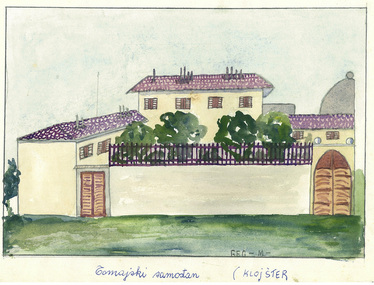
Painting, M. Bole: Tomaj Monastery 1925, 1925
... M. Bole: Tomaj Monastery 1925...A watercolour painting of the Monastery in Tomaj, now Slovenia...Marcela Gec, 1925 A watercolour painting of the Monastery in Tomaj, now Slovenia M. Bole: Tomaj Monastery 1925 Painting ...A watercolour painting of the Monastery in Tomaj, now SloveniaMarcela Gec, 1925 -
 Congregation of the Blessed Sacrament and St. Francis’ Church, Heritage Centre
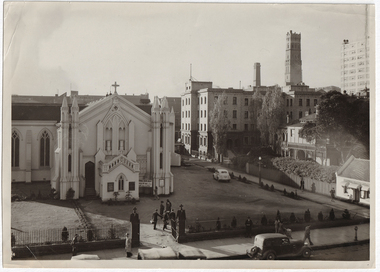
Photograph - St Francis' Church and new Monastery, c. 1938
... St Francis' Church and new Monastery...South side of St Francis' Church, from Lonsdale Street, with new Monastery to the right. Old St Francis' Presbytery is still standing in front of the Monastery. ...Church buildings St Francis' Church Monasteries Historic buildings South side of St Francis' Church, from Lonsdale Street, with new Monastery to the right. ...South side of St Francis' Church, from Lonsdale Street, with new Monastery to the right. Old St Francis' Presbytery is still standing in front of the Monastery. Photographer unknown.church buildings, st francis' church, monasteries, historic buildings -
 Great Stupa of Universal Compassion
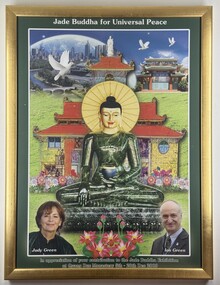
Poster (item) - Image of Jade Buddha with Judy and Ian Green in the foreground, Quang Duc Monastery, Melbourne, Australia, 20/12/2009
... Image of Jade Buddha with Judy and Ian Green in the foreground, Quang Duc Monastery, Melbourne, Australia...This framed poster, presented by Quang Duc Monastery in Melbourne, Australia, features the Jade Buddha with Judy and Ian Green in the foreground. ...The Jade Buddha for Universal Peace, the largest Buddha carved from gemstone-quality jade in the world, is the centerpiece of the Great Stupa of Universal Compassion in Bendigo, Australia. Standing 2.5 meters tall and weighing 4 tonnes, this priceless Buddhist statue toured over 120 cities across 20 countries from 2009 to 2018, inspiring peace in families, schools, and communities worldwide. After attracting an estimated 12 million visitors, it returned to the Great Stupa in May 2018, where it continues to be a potent symbol of peace.This framed poster, presented by Quang Duc Monastery in Melbourne, Australia, features the Jade Buddha with Judy and Ian Green in the foreground. It honours their contribution to the Jade Buddha Exhibition and expresses appreciation for their dedication to sharing its message of peace, unity, and spiritual enlightenment.jade buddha, memorabilia, great stupa archive -
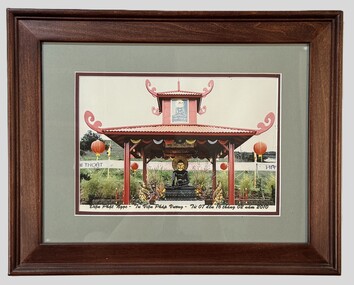 Great Stupa of Universal Compassion
Photograph (item) - Image of Jade Buddha at Phap Vuong Monastery, California, USA, 16/02/2010
... Image of Jade Buddha at Phap Vuong Monastery, California, USA...Framed image of Jade Buddha at Phap Vuong Monastery, Escondido with caption with the caption 'Temple of the Emerald Budda, Phap Vuong Monastery from July 7 to February 16 2010.'...Jade Buddha Memorabilia Great Stupa Archive Framed image of Jade Buddha at Phap Vuong Monastery, Escondido with caption with the caption 'Temple of the Emerald Budda, Phap Vuong Monastery from July 7 to February 16 2010.' ...The Jade Buddha for Universal Peace, the largest Buddha carved from gemstone-quality jade in the world, is the centerpiece of the Great Stupa of Universal Compassion in Bendigo, Australia. Standing 2.5 meters tall and weighing 4 tonnes, this priceless Buddhist statue toured over 120 cities across 20 countries from 2009 to 2018, inspiring peace in families, schools, and communities worldwide. After attracting an estimated 12 million visitors, it returned to the Great Stupa in May 2018, where it continues to be a potent symbol of peace.This framed photograph, presented on 16/02/2010 by Thich Nguyen Sieu at Phap Vuong Monastery in Escondido, California, symbolises the Jade Buddha’s message of compassion, mindfulness, and unity. Inscribed with 'Temple of the Emerald Buddha, Phap Vuong Monastery,' it stands as a visual tribute to peace and spiritual reflection.jade buddha, memorabilia, great stupa archive -
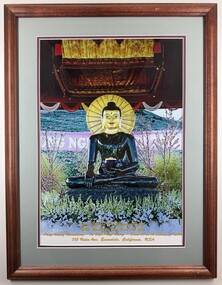 Great Stupa of Universal Compassion
Photograph (item) - Photograph of Jade Buddha at Phap Vuong Monastery, California, USA, 16/02/2010
... Photograph of Jade Buddha at Phap Vuong Monastery, California, USA ...Wooden framed photograph of the Jade Buddha displayed at Vuong Monastery....Jade Buddha Memorabilia Great Stupa Archive Wooden framed photograph of the Jade Buddha displayed at Vuong Monastery. Photograph Photograph of Jade Buddha at Phap Vuong Monastery, California, USA Great Stupa of Universal Compassion ...The Jade Buddha for Universal Peace, the largest Buddha carved from gemstone-quality jade in the world, is the centerpiece of the Great Stupa of Universal Compassion in Bendigo, Australia. Standing 2.5 meters tall and weighing 4 tonnes, this priceless Buddhist statue toured over 120 cities across 20 countries from 2009 to 2018, inspiring peace in families, schools, and communities worldwide. After attracting an estimated 12 million visitors, it returned to the Great Stupa in May 2018, where it continues to be a potent symbol of peace.This framed photograph of the Jade Buddha, presented on 16/02/2010 at Phap Vuong Monastery in Escondido, California, captures its presence during a significant moment in its global journey. The image stands as a visual tribute to the Buddha’s message of mindfulness, unity, and compassion, reflecting its profound impact on the local community.jade buddha, memorabilia, great stupa archive -
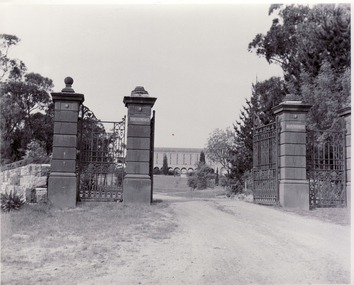 Whitehorse Historical Society Inc.
Photograph - Black and white photo, Whitefriars Seminary, 1980
... Black and white photo of Gateway to Seminary Monastery, Park Orchards...whitefriars seminary Black and white photo of Gateway to Seminary Monastery, Park Orchards Whitefriars Seminary Photograph Black and white photo ...Black and white photo of Gateway to Seminary Monastery, Park Orchardswhitefriars seminary -
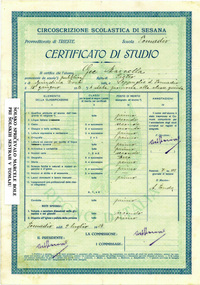 Slovenian Association Melbourne
School Certificate, Marcela Bole Gec Monastery School Tomaj School Certificate 1924
... Marcela Bole Gec Monastery School Tomaj School Certificate 1924...Marcela Bole Gec Monastery School Tomaj School Certificate from year 1924...Marcela Bole Gec Monastery School Tomaj School Certificate from year 1924 Marcela Bole Gec Monastery School Tomaj School Certificate 1924 School Certificate ...Marcela Bole Gec Monastery School Tomaj School Certificate from year 1924 -
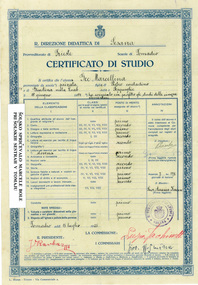 Slovenian Association Melbourne
School Certificate, Marcela Bole Gec Monastery School Tomaj School Certificate 1925
... Marcela Bole Gec Monastery School Tomaj School Certificate 1925......gec monastery school...Marcela Bole Gec Monastery School Tomaj School Certificate from year 1925...school certificate gec monastery school bole Marcela Bole Gec Monastery School Tomaj School Certificate from year 1925 Marcela Bole Gec Monastery School Tomaj School Certificate 1925 School Certificate ...Marcela Bole Gec Monastery School Tomaj School Certificate from year 1925school, certificate, gec monastery school, bole -
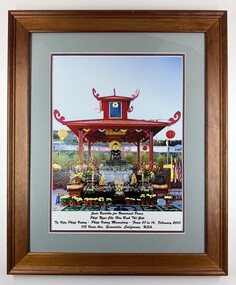 Great Stupa of Universal Compassion
Photograph (item) - Image of Jade Buddha at Tu Vien Phap Vuong, Phap Vuong Monastery, California, USA, 16/02/2010
... Image of Jade Buddha at Tu Vien Phap Vuong, Phap Vuong Monastery, California, USA...Image of Jade Buddha at Tu Vien Phap Vuong, Phap Vuong Monastery, California, USA...Jade Buddha Memorabilia Great Stupa Archive Image of Jade Buddha at Tu Vien Phap Vuong, Phap Vuong Monastery, California, USA Photograph Image of Jade Buddha at Tu Vien Phap Vuong, Phap Vuong Monastery, California, USA Great Stupa of Universal Compassion ...The Jade Buddha for Universal Peace, the largest Buddha carved from gemstone-quality jade in the world, is the centerpiece of the Great Stupa of Universal Compassion in Bendigo, Australia. Standing 2.5 meters tall and weighing 4 tonnes, this priceless Buddhist statue toured over 120 cities across 20 countries from 2009 to 2018, inspiring peace in families, schools, and communities worldwide. After attracting an estimated 12 million visitors, it returned to the Great Stupa in May 2018, where it continues to be a potent symbol of peace.This framed photograph, presented on 16/02/2010 at Phap Vuong Temple in San Diego, California, captures the Jade Buddha surrounded by offerings, reflecting the community’s reverence and devotion. It stands as a visual tribute to the Buddha’s message of peace, wisdom, and spiritual reflection.jade buddha, memorabilia, great stupa archive -
Kew Historical Society Inc
Archive (Sub-series) - Subject File, Carmelite Monastery (Stevenson Street), 1958
... Carmelite Monastery (Stevenson Street)...carmelite monastery - kew (vic.)...Archive file containing sundry newspaper articles/clippings relating to the Carmelite Monastery in Stevenson Street, Kew (Vic). One of the articles/clippings in the file from 1991 gives a brief history of the Monastery and notes that the architect was Mr. ...Connelly, and Massey Bros the builders. Carmelite Monastery (Stevenson Street) Archive Subject File ...Various partiesReference, Research, InformationSecondary Values (KHS Imposed Order)Subject file containing sundry newspaper articles/clippings relating to the Carmelite Monastery in Stevenson Street, Kew (Vic). One of the articles/clippings in the file from 1991 gives a brief history of the Monastery and notes that the architect was Mr. W.P. Connelly, and Massey Bros the builders.carmelite monastery - kew (vic.), carmelites - stevenson street - kew (vic), religion - kew (vic), religious orders - kew (vic)carmelite monastery - kew (vic.), carmelites - stevenson street - kew (vic), religion - kew (vic), religious orders - kew (vic) -
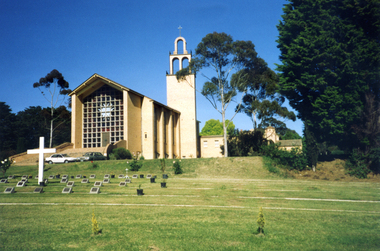 Whitehorse Historical Society Inc.
Photograph, St. Paschal's Chapel
... st. paschals franciscan monastery...Roman Catholic Franciscan Monastery....Roman Catholic Franciscan Monastery. St. Paschal's Chapel Photograph Photograph ...Coloured photo of St. Paschal's Chapel and Burial Ground Box Hill. Roman Catholic Franciscan Monastery.st. paschals franciscan monastery, box hill -
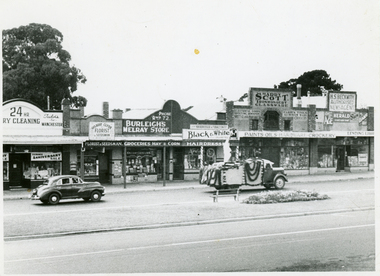 Whitehorse Historical Society Inc.
Photograph, Our Lady of Fatima
... Black and white photo of procession of Our Lady of Fatima on the way to Whitefriars Monastery, along Whitehorse Road, Looking north....whitefriars seminary our lady of fatima procession whitehorse road Black and white photo of procession of Our Lady of Fatima on the way to Whitefriars Monastery, along Whitehorse Road, Looking north. ...Black and white photo of procession of Our Lady of Fatima on the way to Whitefriars Monastery, along Whitehorse Road, Looking north.whitefriars seminary, our lady of fatima procession, whitehorse road -
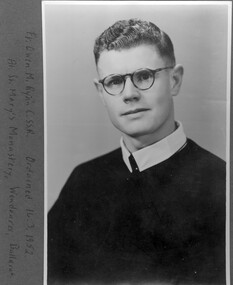 St Patrick's Old Collegians Association (SPOCA)
Photograph - Alumni, General
... 1952 Fr Owen M Ryan CSSR Ordained 16 Mar 1952 At St Mary's Monastery Wendouree Ballarat...1952 Fr Owen M Ryan CSSR Ordained 16 Mar 1952 At St Mary's Monastery Wendouree Ballarat Photograph Alumni, General ... -
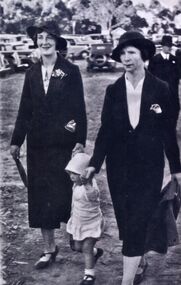 Whitehorse Historical Society Inc.
Photograph, Windsor Family, c1930s
... Black and white photograph of (left to right) Catherine Anne (Kitty), Patricia Janette and Catherine Anne Windsor in the grounds of the Doncaster Monastery....Windsor Catherine (Kitty) Windsor Patricia Janette Windsor Catherine Anne Black and white photograph of (left to right) Catherine Anne (Kitty), Patricia Janette and Catherine Anne Windsor in the grounds of the Doncaster Monastery. Windsor Family Photograph Photograph ...Black and white photograph of (left to right) Catherine Anne (Kitty), Patricia Janette and Catherine Anne Windsor in the grounds of the Doncaster Monastery.windsor catherine (kitty), windsor patricia janette, windsor catherine anne -
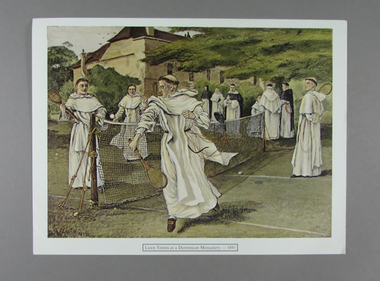 Tennis Australia
Print, Circa 1891
... A modern reproduction of a c.1891 illustration of Dominican monks playing lawn tennis within the grounds of their monastery. Materials: Paper, Ink...Tennis A modern reproduction of a c.1891 illustration of Dominican monks playing lawn tennis within the grounds of their monastery. Materials: Paper, Ink Print ...A modern reproduction of a c.1891 illustration of Dominican monks playing lawn tennis within the grounds of their monastery. Materials: Paper, Inktennis -
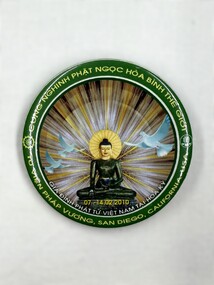 Great Stupa of Universal Compassion
Accessory (item) - Badge of Jade Buddha, San Diego, California, 14/02/2010
... WELCOME THE JADE BUDDHA FOR UNIVERSAL PEACE AT PHAP VUONG MONASTERY, SAN DIEGO, CALIFORNIA USA VIETNAMESE BUDDHIST FAMILIES IN THE USA 07-14.02.2010 ...This badge, presented to Mr Ian Green at Phap Vuong Monastery in San Diego, symbolises appreciation for his role in sharing the Jade Buddha’s message of peace and compassion during its international journey. ...The Jade Buddha for Universal Peace, the largest Buddha carved from gemstone-quality jade in the world, is the centerpiece of the Great Stupa of Universal Compassion in Bendigo, Australia. Standing 2.5 meters tall and weighing 4 tonnes, this priceless Buddhist statue toured over 120 cities across 20 countries from 2009 to 2018, inspiring peace in families, schools, and communities worldwide. After attracting an estimated 12 million visitors, it returned to the Great Stupa in May 2018, where it continues to be a potent symbol of peace.This badge, presented to Mr Ian Green at Phap Vuong Monastery in San Diego, symbolises appreciation for his role in sharing the Jade Buddha’s message of peace and compassion during its international journey.WELCOME THE JADE BUDDHA FOR UNIVERSAL PEACE AT PHAP VUONG MONASTERY, SAN DIEGO, CALIFORNIA USA VIETNAMESE BUDDHIST FAMILIES IN THE USA 07-14.02.2010 jade buddha, memorabilia, great stupa archive -
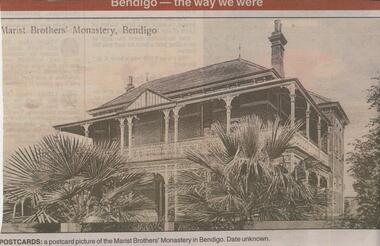 Bendigo Historical Society Inc.
Newspaper - JENNY FOLEY COLLECTION: POSTCARDS
... Postcards: a postcard picture of the Marist Brothers' Monastery in Bendigo. Date unknown. The clip is in a folder....Postcards: a postcard picture of the Marist Brothers' Monastery in Bendigo. Date unknown. The clip is in a folder. ...BHS CollectionBendigo Advertiser '' The way we were'' from 2001. Postcards: a postcard picture of the Marist Brothers' Monastery in Bendigo. Date unknown. The clip is in a folder.newspaper, bendigo advertiser, the way we were -
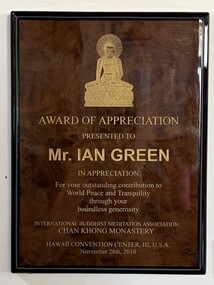 Great Stupa of Universal Compassion
Plaque (item) - Plaque to Ian Green from International Buddhist Meditation Association Chan Khong Monastery, Hawaii, USA, 28/11/2010
... Plaque to Ian Green from International Buddhist Meditation Association Chan Khong Monastery, Hawaii, USA...Plaque to Ian Green from International Buddhist Meditation Association Chan Khong Monastery in appreciation for the outstanding contribution to world peace and tranquility through boundless generosity....Plaque Plaque to Ian Green from International Buddhist Meditation Association Chan Khong Monastery, Hawaii, USA Great Stupa of Universal Compassion ...The Jade Buddha for Universal Peace, the largest Buddha carved from gemstone-quality jade in the world, is the centerpiece of the Great Stupa of Universal Compassion in Bendigo, Australia. Standing 2.5 meters tall and weighing 4 tonnes, this priceless Buddhist statue toured over 120 cities across 20 countries from 2009 to 2018, inspiring peace in families, schools, and communities worldwide. After attracting an estimated 12 million visitors, it returned to the Great Stupa in May 2018, where it continues to be a potent symbol of peace.This wooden plaque, presented to Ian Green on 28/11/2010 by the International Buddhist Meditation Association Chan Khong Monastery, honours his dedication to fostering peace and spiritual enlightenment. It symbolises gratitude for his generosity and his role in promoting the Jade Buddha’s message of compassion and unity.jade buddha, memorabilia, great stupa archive -
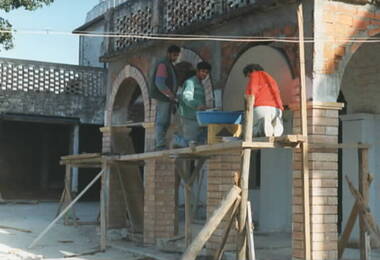 Ithacan Historical Society
Photograph, Panagias Monastery, Ithaca, Late
... Panagias Monastery, Ithaca...The workmen are doing repairs to the arched walkway entrance to the Monastery of Panagia Kathariotissa, a project which the Ithacan Philanthropic Society supported as the Monastery was in need of extensive repairs....The monastery of Panagia Katharon dates back to approx. 1696. ...The workmen are doing repairs to the arched walkway entrance to the Monastery of Panagia Kathariotissa, a project which the Ithacan Philanthropic Society supported as the Monastery was in need of extensive repairs.The monastery of Panagia Katharon dates back to approx. 1696. According to tradition, the monastery was thus named, because the icon of Virgin Mary was found untouched in burning “kathara”, dry vegetation, bushes, in the exact spot where the monastery was built. The bell tower, where one can view the most breathtaking view of the island and surrounds, was destroyed by the earthquakes of 1953 and was later rebuilt. A coloured photograph of three workmen standing on scaffolding while they lay bricks on an arched open walk way. -
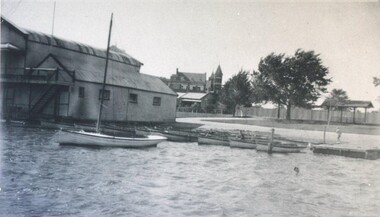 City of Ballarat Libraries
Photograph - Card Box Photographs, Boat shed, Lake Wendouree circa 1940
... ...Redemptorist Monastery...In the background is the Redemptorist Monastery....In the background is the Redemptorist Monastery. Boat Shed Lake Wendouree Redemptorist Monastery Building Vehicle Garden Boat shed, Lake Wendouree circa 1940. ...In the background is the Redemptorist Monastery.boat shed, lake wendouree, redemptorist monastery, building, vehicle, garden -
 Ringwood and District Historical Society
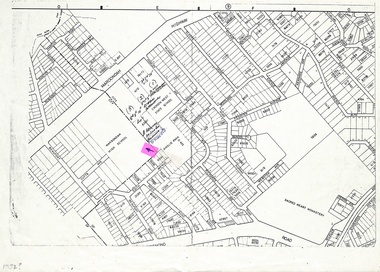
Document - Street Plan, Maroondah High School - Street Plan of Area including Cutts Ave, Ainslie Park etc. C 1972
... Photcopied Street Plan including Maroondah High School, Cutts Ave, Beaufort Rd, Ainslie Park, Sacred Heart Monastery etc. Source and date unknown but probably c1972. ...Photcopied Street Plan including Maroondah High School, Cutts Ave, Beaufort Rd, Ainslie Park, Sacred Heart Monastery etc. Source and date unknown but probably c1972. ...Photcopied Street Plan including Maroondah High School, Cutts Ave, Beaufort Rd, Ainslie Park, Sacred Heart Monastery etc. Source and date unknown but probably c1972. -
 Northern District School of Nursing. Managed by Bendigo Historical Society Inc.
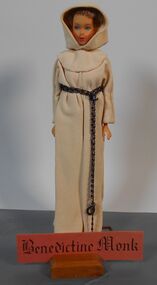
Education kit - Benedictine Monk - Miniature Doll, Nursing Though the Ages
... Benedictine Monk - From Christian times nursing was not a women's vocation. Hospitals and Monasteries cared for the sick and poor. In 529 an Italian Monk Benedictine set up Monasteries with his fellow monks and Christianity spread across Europe...Benedictine Monk - From Christian times nursing was not a women's vocation. Hospitals and Monasteries cared for the sick and poor. In 529 an Italian Monk Benedictine set up Monasteries with his fellow monks and Christianity spread across Europe Nursing Uniforms Nursing History Northern District School of Nursing Name tag - Benedictine Monk Miniature Doll - 30cm Dressed in long brown gown with chain belt around middle extending the full length of the gown. ...Benedictine Monk - From Christian times nursing was not a women's vocation. Hospitals and Monasteries cared for the sick and poor. In 529 an Italian Monk Benedictine set up Monasteries with his fellow monks and Christianity spread across EuropeMiniature Doll - 30cm Dressed in long brown gown with chain belt around middle extending the full length of the gown.Name tag - Benedictine Monknursing uniforms, nursing history, northern district school of nursing
