
Showing 295 items matching "the royal melbourne regiment"
-
 The 5th/6th Battalion Royal Victoria Regiment Historical Collection
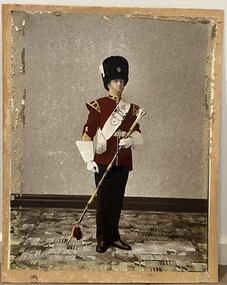
Photograph - Framed Photograph: Drum Major 6th Battalion, the Royal Melbourne Regiment c.1936-1960, Drum Major 6th Battalion, the Royal Melbourne Regiment c.1936-1960
... Framed Photograph: Drum Major 6th Battalion, the Royal Melbourne Regiment c.1936-1960. ...Drum Major 6th Battalion, the Royal Melbourne Regiment c.1936-1960. ......The Royal Melbourne Regiment...The Royal Melbourne Regiment was amalgamated into the Royal Victoria Regiment in 1960. ...Drum Major 6th Battalion, the Royal Melbourne Regiment c.1936-1960. ...The Royal Melbourne Regiment was amalgamated into the Royal Victoria Regiment in 1960. ...The image shows the Drum Major of the 6th Battalion, the Royal Melbourne Regiment between 1936-1960. He wears the uniform of the regiment which is similar to that of the Royal Fusiliers, with whom the 6th Battalion was affiliated. The Royal Melbourne Regiment was amalgamated into the Royal Victoria Regiment in 1960. RP5/6-00811-1 is the original coloured photograph printed on card (now fragile). RP5/6-00811-2 is a print of the digitally restored image what has been framed. Drum Major 6th Battalion, the Royal Melbourne Regiment c.1936-1960. drum major, 6th battalion, the royal melbourne regiment, australian army, australian army band, 5/6 rvr, 5th/6th battalion, rmr, royal victoria regiment, australian army full dress uniform -
 The 5th/6th Battalion Royal Victoria Regiment Historical Collection
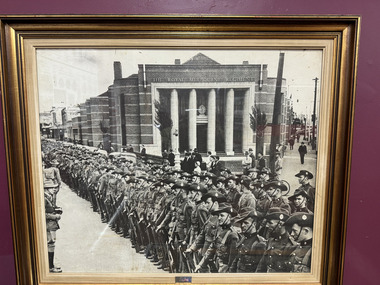
Photograph - Photograph of The Royal Melbourne Regiment, The Royal Melbourne Regiment on parade
... Photograph of The Royal Melbourne Regiment...The Royal Melbourne Regiment on parade...A photo of the Royal Melbourne Regiment when it was on parade before WWI, its been displayed in a wooden frame...A photo of the Royal Melbourne Regiment when it was on parade before WWI, its been displayed in a wooden frame The Royal Melbourne Regiment on parade Photograph Photograph of The Royal Melbourne Regiment ...A photo of the Royal Melbourne Regiment when it was on parade before WWI, its been displayed in a wooden frame -
 The 5th/6th Battalion Royal Victoria Regiment Historical Collection
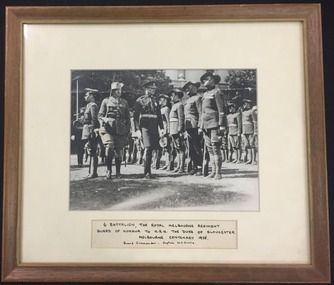
Photograph - Framed Photograph, 6 Battalion, The Royal Melbourne Regiment Guard of Honour to H.R.H. The Duke of Gloucester Melbourne Centenary 1935, 1935
... 6 Battalion, The Royal Melbourne Regiment Guard of Honour to H.R.H. ......Royal Melbourne Regiment...The Duke of Gloucester inspecting the guard of honour from the 6th Bn The Royal Melbourne Regiment at the Melbourne Centenary in 1935. ...6 Battalion, The Royal Melbourne Regiment Guard of Honour to H.R.H. The Duke of Gloucester Melbourne Centenary 1935 Guard Commander Captain W.C. ...6th BN Royal Melbourne Regiment Duke of Gloucester Wark VC Club 6 Battalion, The Royal Melbourne Regiment Guard of Honour to H.R.H. ...8" x10" Black and White photograph of H.R.H. The Duke of Gloucester inspecting the guard of honour from the 6th Bn The Royal Melbourne Regiment at the Melbourne Centenary in 1935. Framed in a Light timber and gold painted frame behind an off white backing board. 6 Battalion, The Royal Melbourne Regiment Guard of Honour to H.R.H. The Duke of Gloucester Melbourne Centenary 1935 Guard Commander Captain W.C. Currie6th bn, royal melbourne regiment, duke of gloucester, wark vc club -
 The 5th/6th Battalion Royal Victoria Regiment Historical Collection
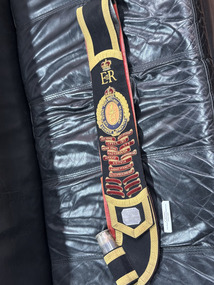
Ceremonial object - Banner Belt, The Royal Melbourne Regiment Banner Belt
... The Royal Melbourne Regiment Banner Belt...The original Royal Melbourne Regiment Banner Belt, it contains all of the units battle honour...The original Royal Melbourne Regiment Banner Belt, it contains all of the units battle honour The Royal Melbourne Regiment Banner Belt Ceremonial object Banner Belt ...The original Royal Melbourne Regiment Banner Belt, it contains all of the units battle honour -
 The 5th/6th Battalion Royal Victoria Regiment Historical Collection
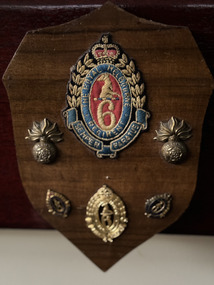
Plaque - The Royal Melbourne Regiment plaque
... The Royal Melbourne Regiment plaque...There are 5 metal symbol onto the wood plaque with the cloth fixed on the top part of the plaque Plaque The Royal Melbourne Regiment plaque ...There are 5 metal symbol onto the wood plaque with the cloth fixed on the top part of the plaque -
 The 5th/6th Battalion Royal Victoria Regiment Historical Collection
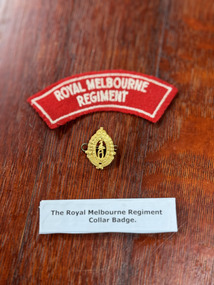
Badge - Royal Melbourne Regiment Collar Badge, The collar badge and shoulder label
... Royal Melbourne Regiment Collar Badge...The Royal Melbourne Regiment collar badge, its in red and gold colour...The Royal Melbourne Regiment collar badge, its in red and gold colour The collar badge and shoulder label Badge Royal Melbourne Regiment Collar Badge ...The Royal Melbourne Regiment collar badge, its in red and gold colour -
 The 5th/6th Battalion Royal Victoria Regiment Historical Collection
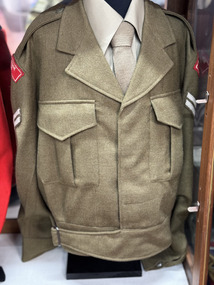
Clothing - Royal Melbourne Regiment Jacket, Royal Melbourne Regiment Jacket CPL
... Royal Melbourne Regiment Jacket...Royal Melbourne Regiment Jacket CPL...6th Battalion, The Royal Melbourne Regiment Battle Dress Jacket C.1950, ...6th Battalion, The Royal Melbourne Regiment Battle Dress Jacket C.1950, Royal Melbourne Regiment Jacket CPL Clothing Royal Melbourne Regiment Jacket ...6th Battalion, The Royal Melbourne Regiment Battle Dress Jacket C.1950, -
 Bendigo Military Museum
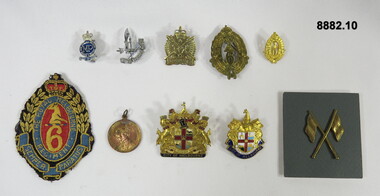
Badge - VARIOUS MILITARY BADGES, Unknown
... NZ Cadet Corps Hat. 4. 6 Battalion The Royal Melbourne Regiment Hat. 5. 6 Battalion The Royal Melbourne Regiment collar. 6. 6 Battalion The Royal Melbourne Regiment Coat Pocket. 7. ...NZ Cadet Corps Hat. 4. 6 Battalion The Royal Melbourne Regiment Hat. 5. 6 Battalion The Royal Melbourne Regiment collar. 6. 6 Battalion The Royal Melbourne Regiment Coat Pocket. 7. ...Military badges either gold, silver or brass colour with or without a backing mounting plate, pins, sizes vary.. 1. Royal N.Z. Military Police Collar. 2. NZ RF Cadets Hat. 3. NZ Cadet Corps Hat. 4. 6 Battalion The Royal Melbourne Regiment Hat. 5. 6 Battalion The Royal Melbourne Regiment collar. 6. 6 Battalion The Royal Melbourne Regiment Coat Pocket. 7. King George VI & Queen Elizabeth Medallion Victory in Europe-Pacific. (1945 City of Melbourne) 8. City of Melbourne Crest. 9. City of Melbourne Crest. 10. Army Signallers Qualification Arm. passchendaele barracks trust, 391to400, badges -
 The 5th/6th Battalion Royal Victoria Regiment Historical Collection
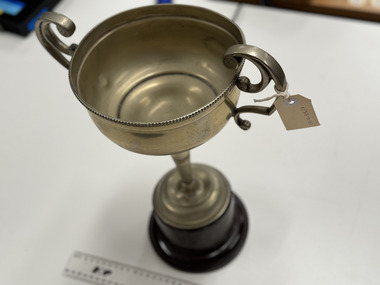
Award - Trophy Combined Sergeants Mess Ball 1936, 1936
... Combined Sergeants Mess Ball 1936 Presented to 6th Battalion (The Royal Melbourne Regiment) Sergeants Mess By Lieut Guyton MBE ...Awarded to anticedant unit 5/6 RVR Combined Sergeants Mess Ball 1936 Presented to 6th Battalion (The Royal Melbourne Regiment) Sergeants Mess By Lieut Guyton MBE Award Trophy Combined Sergeants Mess Ball 1936 ...Awarded to anticedant unitCombined Sergeants Mess Ball 1936 Presented to 6th Battalion (The Royal Melbourne Regiment) Sergeants Mess By Lieut Guyton MBE 5/6 rvr -
 The 5th/6th Battalion Royal Victoria Regiment Historical Collection
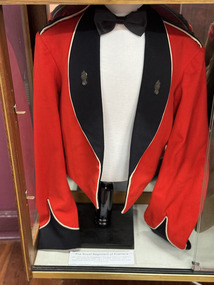
Clothing - Mess Jacket Red, 2LT Mess Jacket in Red
... The Royal Regiment of Fusiliers Mess dress, it was allied with the 6th Battalion, the Royal Melbourne Regiment and remains an allied unit of 5/6 RVR, Alliances meant Regimental customs and traditions were shared between units including dress....The Royal Regiment of Fusiliers Mess dress, it was allied with the 6th Battalion, the Royal Melbourne Regiment and remains an allied unit of 5/6 RVR, Alliances meant Regimental customs and traditions were shared between units including dress. 2LT Mess Jacket in Red Clothing Mess Jacket Red ...The Royal Regiment of Fusiliers Mess dress, it was allied with the 6th Battalion, the Royal Melbourne Regiment and remains an allied unit of 5/6 RVR, Alliances meant Regimental customs and traditions were shared between units including dress. -
 The 5th/6th Battalion Royal Victoria Regiment Historical Collection
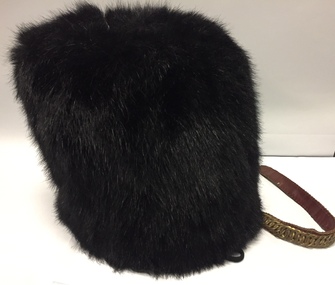
Uniform - Bearskin Hat
... wORN BY MEMBERS OF THE 6TH Battalion Royal Melbourne Regiment ...wORN BY MEMBERS OF THE 6TH Battalion Royal Melbourne Regiment Worn by an anticedent unit of the battalion bearskin hat no inscriptions or markings, white sticker with 'swan club'. ...wORN BY MEMBERS OF THE 6TH Battalion Royal Melbourne Regiment Worn by an anticedent unit of the battalion Black bearskin hat made from the skin of American Black Bears,with brown leather and metal chin strap, and black leather inside cap with drawstring. 12cm tear to top of bearskin. no inscriptions or markings, white sticker with 'swan club'. bearskin hat -
 The 5th/6th Battalion Royal Victoria Regiment Historical Collection
Memorabilia - Trench Art, Shell- Somme 1918, 1916
... ...Royal Melbourne Regiment...Case of 13 pdr shell fired on the somme france in 1918 presented to the officers mess the Royal Melbourne Regiment by Maj Gen Sir Julius Bruche KCB CMG Hon Col Dec 1952...Round fired at Somme in 1918 presented to the officers mess the Royal Melbourne Regiment by Maj Gen Sir Julius Bruche WW1 Regimental Property 5/6RVR RMR Royal Melbourne Regiment Trench Art Gong Case of 13 pdr shell fired on the somme france in 1918 presented to the officers mess the Royal Melbourne Regiment by Maj Gen Sir Julius Bruche KCB CMG Hon Col Dec 1952 Large 13 Pdr Shell casing- used as a gong for dinning in nights.. ...Large 13 Pdr Shell casing- used as a gong for dinning in nights. Round fired at Somme in 1918presented to the officers mess the Royal Melbourne Regiment by Maj Gen Sir Julius Bruche Large 13 Pdr Shell casing- used as a gong for dinning in nights.. Wooden base and brass stand arm to hold case with wooden hammer.Case of 13 pdr shell fired on the somme france in 1918 presented to the officers mess the Royal Melbourne Regiment by Maj Gen Sir Julius Bruche KCB CMG Hon Col Dec 1952ww1, regimental property, 5/6rvr, rmr, royal melbourne regiment, trench art, gong -
 The 5th/6th Battalion Royal Victoria Regiment Historical Collection
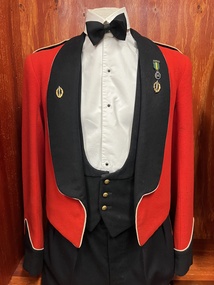
Uniform - 6th Battalion, the Royal Victoria Regiment Mess Dress Jacket
... ...Royal Melbourne Regiment...Royal Victoria Regiment Mess Dress Jacket. Traditional Fusiliers pattern mess dress inherited from the 6th Battalion, the Royal Melbourne Regiment (1918-1960) who were given the pattern by their allied regiment, the Royal Fusiliers (City of London Regiment) in 1936 as a token of friendship. ...Royal Victoria Regiment Mess Dress Jacket. Traditional Fusiliers pattern mess dress inherited from the 6th Battalion, the Royal Melbourne Regiment (1918-1960) who were given the pattern by their allied regiment, the Royal Fusiliers (City of London Regiment) in 1936 as a token of friendship. ...Royal Victoria Regiment Mess Dress Jacket. Traditional Fusiliers pattern mess dress inherited from the 6th Battalion, the Royal Melbourne Regiment (1918-1960) who were given the pattern by their allied regiment, the Royal Fusiliers (City of London Regiment) in 1936 as a token of friendship. ...6th Battalion, the Royal Victoria Regiment Mess Dress Jacket. Traditional Fusiliers pattern mess dress inherited from the 6th Battalion, the Royal Melbourne Regiment (1918-1960) who were given the pattern by their allied regiment, the Royal Fusiliers (City of London Regiment) in 1936 as a token of friendship. The Royal Victoria Regiment (RVR) was a late adopter of miniature RVR badges for collar badges and the Royal Australian Infantry Corps collar badges fitted indicate use after 1960 and likely at least into the 1980s when miniature RVR badges were adopted. The staybrite St Edward's Crown rank insignia to each epaulet also indicate use between 1960-1980s. Red body with white piping to Royal blue facings (to cuffs, epaulets and lapel/collar). Royal blue lapelled waistcoat with brass Australian Commonwealth Military Forces buttons. This mess jacket is significant because Australian Army Infantry units would normally wear the Infantry Corps pattern of mess dress. However, this pattern was worn by the 6th Battalion, the Royal Victoria Regiment (and likely also 5/6 RVR) right up to the late 1980s due to the unique and honoured customs and traditions of the 6th Battalion. It is a traditional Fusiliers pattern mess dress which was inherited from the 6th Battalion, the Royal Melbourne Regiment (1918-1960) who were the forebear to the Royal Victoria Regiment. They were given the pattern by their allied regiment, the Royal Fusiliers (City of London Regiment) in 1936 as a token of friendship. The use after 1960 (when the Royal Melbourne Regiment was amalgamated) is evidenced by unit held photos and by object itself which bears the Royal Australian Infantry Corps collar badges and staybrite St Edward's Crown rank insignia to each epaulet (for rank of Major).6th Battalion, the Royal Victoria Regiment Mess Dress Jacket. Traditional Fusiliers pattern mess dress inherited from the 6th Battalion, the Royal Melbourne Regiment (1918-1960) who were given the pattern by their allied regiment, the Royal Fusiliers (City of London Regiment) in 1936 as a token of friendship. The Royal Victoria Regiment (RVR) was a late adopter of miniature RVR badges for collar badges and the Royal Australian Infantry Corps collar badges fitted indicate use after 1960 and likely at least into the 1980s when miniature RVR badges were adopted. The staybrite St Edward's Crown rank insignia to each epaulet also indicate use between 1960-1980s. Red body with white piping to Royal blue facings (to cuffs, epaulets and lapel/collar). Royal blue lapelled waistcoat with brass Australian Commonwealth Military Forces buttons. 6th battalion, royal melbourne regiment, mess dress jacket, mess dress, mess jacket, australian army, royal australian infantry corps, rainf, rmr, 5th/6th battalion, royal victoria regiment, city of melbourne regiment, rvr, 5/6 rvr -
 The 5th/6th Battalion Royal Victoria Regiment Historical Collection
Domestic object - Broom, 1949
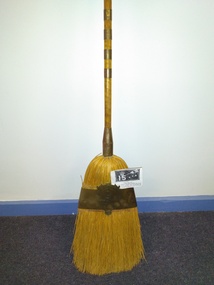
... Royal Melbourne Regiment..." The Royal Melbourne Regiment" "Semper Paratus" 'CAMP 1949 "A" &"D" COYS ' 'CAMP 1950 "A" COY' 'CAMP 1951 "B" COY' 'CAMP 1952 "B" COY' 'CAMP 1953 "SP" COY' 'CAMP 1954 "SP" COY' 'CAMP 1955 "B" COY' ...The Broom was won by the company which totalled the most points in the battalions annual camp Royal Melbourne Regiment 6th Battalion Wark VC Club " The Royal Melbourne Regiment" "Semper Paratus" 'CAMP 1949 "A" &"D" COYS ' 'CAMP 1950 "A" COY' 'CAMP 1951 "B" COY' 'CAMP 1952 "B" COY' 'CAMP 1953 "SP" COY' 'CAMP 1954 "SP" COY' 'CAMP 1955 "B" COY' Wooden handled straw broom with 7 inscribed brass bands on the handle, two bands connecting the straw head to the wooden handle and a 75mm thick brass band with a 6Bn the Melbourne Regt. badge engraved on it over the straw head. ...The Broom was won by the company which totalled the most points in the battalions annual campWooden handled straw broom with 7 inscribed brass bands on the handle, two bands connecting the straw head to the wooden handle and a 75mm thick brass band with a 6Bn the Melbourne Regt. badge engraved on it over the straw head. A small paper slip with the story of the broom has been slipped behind this band." The Royal Melbourne Regiment" "Semper Paratus" 'CAMP 1949 "A" &"D" COYS ' 'CAMP 1950 "A" COY' 'CAMP 1951 "B" COY' 'CAMP 1952 "B" COY' 'CAMP 1953 "SP" COY' 'CAMP 1954 "SP" COY' 'CAMP 1955 "B" COY' royal melbourne regiment, 6th battalion, wark vc club -
 Hymettus Cottage & Garden Ballarat
Badge - Hat Badge, Royal Victoria Regiment hat badge
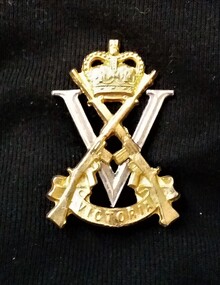
... Royal Melbourne Regiment, 6RVR, Hat badge, Victoria Street, Melbourne, Taffe,...Hat badge of Michael Taffe, 6 RVR at the Victoria St Barracks Melbourne in 1971. The 6th Battalion Royal Victoria Regiment was a militia (Citizens Military Forces) regiment formed in 1965 from what was earlier the Royal Melbourne Regiment. ...Hat badge of Michael Taffe, 6 RVR at the Victoria St Barracks Melbourne in 1971. The 6th Battalion Royal Victoria Regiment was a militia (Citizens Military Forces) regiment formed in 1965 from what was earlier the Royal Melbourne Regiment. ...Hat badge of Michael Taffe, 6 RVR at the Victoria St Barracks Melbourne in 1971. The 6th Battalion Royal Victoria Regiment was a militia (Citizens Military Forces) regiment formed in 1965 from what was earlier the Royal Melbourne Regiment. Crossed rifles surmounted by crown with scroll to base bearing the word Victoria in gilt on large V in softer gilt.royal melbourne regiment, 6rvr, hat badge, victoria street, melbourne, taffe, -
 8th/13th Victorian Mounted Rifles Regimental Collection
Document - Royal guard report, AAF A18 Guard Report, 2 March 1954
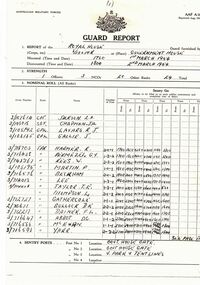
... regiment. The queen was resident at Government House Melbourne for nine days and during the time guard duties were shared by 1st Battalion Royal Australian Regiment, 3rd Division Royal Australian Artillery, 5th Infantry Battalion (Victorian Scottish), 6th Infantry Battalion (Royal Melbourne Regiment), 4th/19th Prince of Wales's Light Horse, 8th/13th Victorian Mounted Rifles, 2nd Medium Regiment, 22nd Field Regiment and Melbourne University Rifles. ...regiment. The queen was resident at Government House Melbourne for nine days and during the time guard duties were shared by 1st Battalion Royal Australian Regiment, 3rd Division Royal Australian Artillery, 5th Infantry Battalion (Victorian Scottish), 6th Infantry Battalion (Royal Melbourne Regiment), 4th/19th Prince of Wales's Light Horse, 8th/13th Victorian Mounted Rifles, 2nd Medium Regiment, 22nd Field Regiment and Melbourne University Rifles. ...The 8th/13th Victorian Mounted Rifles was raised as a regiment of the Royal Australian Armoured Corps on 1 May 1948 with Headquarters in Melbourne and squadrons in Sale, Benalla/Wangaratta and Albury. In 1955 Regimental Headquarters moved to Wangaratta and a second squadron was located at Albury. The Sale squadron transferred to 4th/19th Prince of Wales’s Light Horse. In 1977 8/13 VMR Regiment was reduced to an independent squadron A Squadron 8th/13th Victorian Mounted Rifles and in 1991 was linked with 4th/19th Prince of Wales’s Light Horse forming the VMR Squadron of that regiment. The queen was resident at Government House Melbourne for nine days and during the time guard duties were shared by 1st Battalion Royal Australian Regiment, 3rd Division Royal Australian Artillery, 5th Infantry Battalion (Victorian Scottish), 6th Infantry Battalion (Royal Melbourne Regiment), 4th/19th Prince of Wales's Light Horse, 8th/13th Victorian Mounted Rifles, 2nd Medium Regiment, 22nd Field Regiment and Melbourne University Rifles. Rare document relating to guard duty at Government House Melbourne mounted by a unit of the Citizen Military Forces from Victoria during a royal visit .Photocopy of a three page report prepared for period 1/2 March 1954 when 8th/13th Victorian Mounted Rifles Regiment provided the guard at Government House Melbourne during the visit of Her Majesty Queen Elizabeth II. The report lists the officer, 4 non commissioned officers and 20 other ranks comprising the guard together with timings and locations of the sentry posts. Also details of the guard duties, the general remarks at the conclusion of the guard period and the signatures of the Guard Commander, Captain LA Jackson 8th/13th Victorian Mounted Rifles and the Relieving Guard Commander Captain EJ King, 2nd Medium Regiment. queen elizabeth ii, royal visit 1954, government house, melbourne, guard, vmr -
 The 5th/6th Battalion Royal Victoria Regiment Historical Collection
Artwork, other - Portrait, Captain Oswald Birley M.C et al, King George V (Duke of Kent) 1935, c.1935
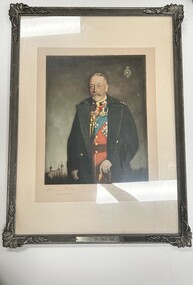
... ...Royal Melbourne Regiment...The Royal Fusiliers Dear Armstrong I am forwarding to you under a separate cover an engraving of a portrait of His Majesty, King George V, Colonel - in - Chief, the Royal Fusiliers, in the uniform of the Regiment, This portrait was painted by Captain Oswald Birley, M.C., late Royal Fusiliers, and presented to the Regiment by Lord Wakefield to commemorate the 250th anniversary of the raising of the Regiment of Fusiliers at the Tower of London in 1685. His Majesty has graciously signed this copy for presentation to your Regiment from the Corps of the Royal Fusiliers, and we trust that you will accept it as a token of friendship / and esteem .... and esteem we feel for our Allied Battalion, the 6th Battalion, the Royal Melbourne...Portrait of King George V (Duke of Kent) 1935 Presented to the 6th Battalion Royal Melbourne Regiment by an Allied Battalion the Royal Fusiliers as a toke of friendship and esteem. ...Portrait of King George V (Duke of Kent) 1935Presented to the 6th Battalion Royal Melbourne Regiment by an Allied Battalion the Royal Fusiliers as a toke of friendship and esteem. This Portrait would have hung pride of place in the officers mess from 1935-? The portarait is also signed by the artist, an M.C reciepient, as well as the the reigning monarch, and colonel in chief of the presenting unit. It is supported by a letter from the colonel of the Presenting unit, Maj Gen Hill CB.CMG.DSO, and as such is hghly provinanced Colour print of His Magesty King George V wearing the unaiform of the the Royal Fusilliers, Read coat with decorations and blue sash under a navy blue over coat. The print is signed in lead pencil by the artist and by King George V on the lower edge. A regimental badge is present in the top right of the image. The picture is framed in a pewter coloured frame with ornate leaf mouldings in the corners. On the lower edge of the frame is a plaque which states " From the Colonel and Officers of the Royal Fusilliers 1935" Also included with the portait is a letter on Royal Fusiliers letterhead dated October 23 1935 " From - Maj-Gen. W.P.H. Hill. CB. CMG. DSO., Colonel. The Royal Fusiliers Dear Armstrong I am forwarding to you under a separate cover an engraving of a portrait of His Majesty, King George V, Colonel - in - Chief, the Royal Fusiliers, in the uniform of the Regiment, This portrait was painted by Captain Oswald Birley, M.C., late Royal Fusiliers, and presented to the Regiment by Lord Wakefield to commemorate the 250th anniversary of the raising of the Regiment of Fusiliers at the Tower of London in 1685. His Majesty has graciously signed this copy for presentation to your Regiment from the Corps of the Royal Fusiliers, and we trust that you will accept it as a token of friendship / and esteem .... and esteem we feel for our Allied Battalion, the 6th Battalion, the Royal Melbourne Regiment Yours Sincerely W.F.H. Hill Lieutenant-Colonel C.E. Armstrong , Comdg. 6th Bn. The Royal Melbourne Regt., Carlton, Victoria, Australia" This letter is supported by framing card , which has some water damage on the lower right corner and right side signed by King George and the artist From the Colonel and Officers of the Royal Fusilliers 1935" 5/6 rvr, officer's / sergeant's mess, 6th battalion, royal melbourne regiment, king george v, royal fusiliers -
 Federation University Historical Collection
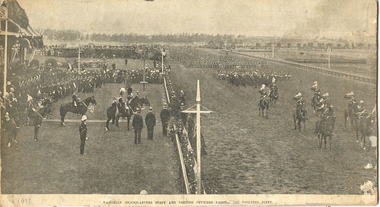
Image, Victorian Headquarters Staff and Visiting Officers, 1901
... regiments E.A. Daley George V toyal visit Victorian Headquarters staff and visiting officers passing the saluting point at Flemington Racecourse. This was part of the Royal Tour by Geaorge V to the British Colonies in 1901. The Duke and Duchess of Cornwall and York were in Melbourne ...Victorian Headquarters staff and visiting officers passing the saluting point at Flemington Racecourse. This was part of the Royal Tour by Geaorge V to the British Colonies in 1901. The Duke and Duchess of Cornwall and York were in Melbourne to open the first Parliament of the OCmmonwealth of Australia. armed services, boer war, cadets, volunteer regiments, e.a. daley, george v, toyal visit -
 Shepparton RSL Sub Branch
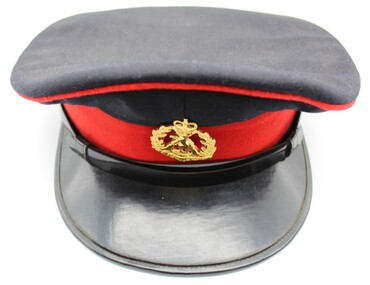
Uniform, Hat, Emerco
... Sticker reads “6 7/8”, and manufacturer’s label reads “MELBOURNE 36 1218/EMERCO/REG TRADE MARK/THIS IS YOUR GUARANTEE FOR QUALITY/MADE IN AUSTRALIA”. Badge reads “DUTY FIRST/ROYAL AUSTRALIAN REGIMENT”....royal australian regiment rar army uniform Sticker reads “6 7/8”, and manufacturer’s label reads “MELBOURNE 36 1218/EMERCO/REG TRADE MARK/THIS IS YOUR GUARANTEE FOR QUALITY/MADE IN AUSTRALIA”. ...Navy-black coloured peaked cap with red piping trim along peak. Red felt band encircles the band. Black patent leather chin strap is held in place with two gold buttons on either side, each depicting a crown above the map of Australia. Gold badge in centre depicts kangaroo in front of crossed rifles underneath a crown with oak leaves forming an arch eitehr side. Interior brim is green with black patent leather trim; brown leather sweatband with holes for air cirulation, tied at back with cream silk bow. Top of hat is covered with plastic layer, underneath which is the manufacturer’s label and a sticker for size.Sticker reads “6 7/8”, and manufacturer’s label reads “MELBOURNE 36 1218/EMERCO/REG TRADE MARK/THIS IS YOUR GUARANTEE FOR QUALITY/MADE IN AUSTRALIA”. Badge reads “DUTY FIRST/ROYAL AUSTRALIAN REGIMENT”.royal australian regiment, rar, army, uniform -
 Flagstaff Hill Maritime Museum and Village
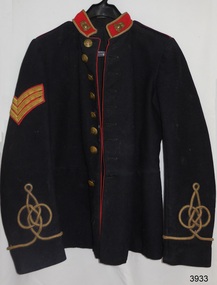
Uniform - Tunic, 1899-1903
... Regiment of the Royal Australian Artillery (RAA). Then prior to Federation, the RAA and the Permanent Artillery of South Australia, Western Australia and Tasmania all combined, becoming the Royal Australian Artillery Regiment with two Batteries of Field Artillery; Battery A from Sydney and Battery B from Melbourne....Regiment of the Royal Australian Artillery (RAA). Then prior to Federation, the RAA and the Permanent Artillery of South Australia, Western Australia and Tasmania all combined, becoming the Royal Australian Artillery Regiment with two Batteries of Field Artillery; Battery A from Sydney and Battery B from Melbourne. ...This original tunic or jacket is part of the full dress uniform of the pre-Federation Victorian Permanent Artillery regiment. Its owner had the rank of Sergeant, as indicated by the three inverted chevrons. The Artillery design of the badges and buttons indicate the date of the tunic to be from 1893 to 1903. However the maker of the tunic, W. Moncton, began manufacture in Melbourne in 1899, so this the tunic can be dated between 1899 and 1903. The donor's grandfather was given this tunic but not the name of the original owner. It has since been suggested to the family that the tunic was worn by a local Western District Light Horse member. This could very well have been the case because mounted troops were officially referred to as the Light Horse in the late 19th to early 20th century. Several local men were involved in the Light Horse during the First World War. The donor's grandfather wore this tunic in the local district when riding a penny farthing bicycle. The donor's father also wore the tunic when dressed as a 'Captain' hosting a local disco dance. BRIEF MILITARY HISTORY- The Crimean War began In 1854 and many people in colonial Australia were afraid of a Russian attack. Volunteer forces were established to strengthen the British Imperial troops posted here. A battery of artillery was raised in Victoria as well as in other Australian states. In 1870 Australia became responsible for its own naval and military defence. The Volunteer Corps and Victorian Navy shared the responsibility of defending the existing forts, assisted by volunteer coastal and mobile field batteries. The Permanent Victorian Artillery force was established. It was disbanded in 1880 then re-formed in 1882 as the Victorian Garrison Artillery Corps. In 1895 the Geelong, Warrnambool, Port Fairy and Portland Batteries became part of the Western District Garrison Artillery. Many of the volunteers who served in the Artillery were from rural areas. They belonged to rifle clubs and were experience horsemen as well. Australia's defence at this time relied on these mounted troops, or Light Horse men. In 1899 the Victorian Garrison Artillery Corps amalgamated with the New South Wales and Queensland Permanent Artillery to become the Victorian Regiment of the Royal Australian Artillery (RAA). Then prior to Federation, the RAA and the Permanent Artillery of South Australia, Western Australia and Tasmania all combined, becoming the Royal Australian Artillery Regiment with two Batteries of Field Artillery; Battery A from Sydney and Battery B from Melbourne.This original uniform tunic of the pre-Federation Victorian Permanent Artillery is significant for its association with Australia's military defence and the fortifications of our district, state and country. The tunic is also significant, representing part of the history and evolution of uniforms in the Australian military forces. The tunic is also significant in its representation of Australia's independence in forming its own defences. The tunic has local significance in its connection with local social events.Tunic or jacket, part of the full dress uniform of the pre-Federation Victorian Permanent Artillery operating from 1893 to 1903. Original, single-breasted tunic of dark blue wool, red piping trim, black cotton lining in body. Sleeves lined with blue striped, white cotton. Front closure has eight brass buttons. Red band-style collar with hook-and-eye closure has gold bullion braid trim and a brass badge pinned each side at the front. Upper right sleeve has three inverted chevrons on red fabric with gold bullion braid trim (rank of Sergeant). Both sleeves have gold bullion braid 'Austrian knot' emblems stitched onto lower arm, with ends finishing on the inner sleeve. Shoulder epaulettes have red piping and smaller brass buttons. Closed back vent has vertical scalloped design with six brass buttons, in two columns of three, and red piping trim. Brass belt hook is attached to the left back waist, close to the seam (right side has a mark indicating a previous similar clip). Inside left breast is a concealed pocket. Tunic has both machine and hand stitching. All brass shank-style buttons have matching Artillery emblems with inscriptions on the back. The two brass collar badges have additional artillery emblems of exploding grenade and star as well as an inscription. Buttons were made for W. Moncton, of Melbourne and marked with his name. He traded from 1899, dating the tunic to between 1899 and 1903.Button front: Artillery emblem on front (field cannon facing left, in front of a muzzle-loading ram rod). Button back: engraved "W. MONCTON . MELBOURNE ." Collar badges: Artillery emblem (field cannon facing right | stars | exploding grenade | "AUSTRALIA")flagstaff hill, warrnambool, shipwrecked coast, flagstaff hill maritime museum, maritime museum, shipwreck coast, flagstaff hill maritime village, great ocean road, uniform jacket, uniform tunic, garrison volunteer uniform, fortifications in victoria, victorian permanent artillery, pre-federation military uniform, sergeant's uniform, jacket, militia, victoria, victorian volunteer forces, victorian regiment, royal australian artillery, raa, field gun, sergeant, w. moncton, garrison, dress uniform, tunic, scarlet collar, red collar, scarlet piping, red piping, gold bullion, artillery emblem, light horse, artillery, mounted troops, victorian garrison artillery corps -
 Montmorency–Eltham RSL Sub Branch
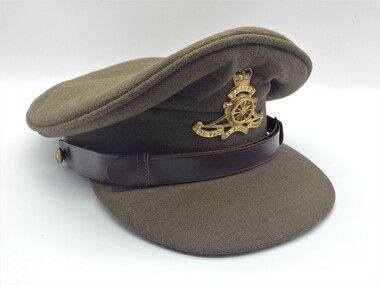
Cap, Peaked, Royal Australian Artillery, 1969
... Melbourne" red printing on white label. Overstamped "S56 6 7/8" in black ink Manufacturer's and Inspection stamp inside sweatband, partly indecipherable. No personal I.D. Khaki cloth peaked cap with Royal Regiment ...Standard RAA cap for 1950 / 1960 periodKhaki cloth peaked cap with Royal Regiment of Australian Artillery gilt cap badge (Queen's crown) with brown leather chin strap and gilt AMF 12mm diameter buttons. Brown leather sweat band and clear plastic liner. Manufacturer's label. Manufacturer's and Inspectors stamp inside sweat band. Manufacturer's Label "Commonwealth Government Clothing Factories, Melbourne" red printing on white label. Overstamped "S56 6 7/8" in black ink Manufacturer's and Inspection stamp inside sweatband, partly indecipherable. No personal I.D.headgear, cap -
 Montmorency–Eltham RSL Sub Branch
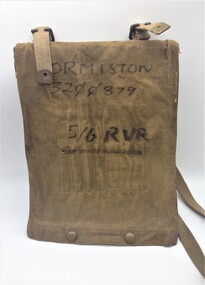
Equipment - Map Case No. 2, 1942
... This 1942-dated Map Case was still in use post-1982 when it was used by a member of the 5/6 Royal Victoria Regiment. This new Melbourne-based battalion was created on the 17 August 1982. ...This 1942-dated Map Case was still in use post-1982 when it was used by a member of the 5/6 Royal Victoria Regiment. This new Melbourne-based battalion was created on the 17 August 1982. ...This 1942-dated Map Case was still in use post-1982 when it was used by a member of the 5/6 Royal Victoria Regiment. This new Melbourne-based battalion was created on the 17 August 1982. Open-sided with a khaki canvas flap attached to a resin-impregnated board.. Hinged to the top edge is a celluloid cover. Four clips holds the cover (and any map) to the backing board. The flap is secured by a pair of Carr Australia press studs on the back. The underside of the flap has four loops for chinagraph pencils and a wider pocket and loop for a Protractor. Two brass buckles are provided for a web shoulder sling. C. G. Hartley & Co. 1942 ORMISTON 3200879 5/6 RVR -
 Bendigo Military Museum
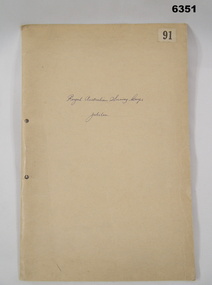
Letter - Royal Australian Survey Corps Jubilee, Department of Defence, Melbourne, 1965
... Royal Australian Survey Corps RASvy Fortuna Army Survey Regiment Army Svy Regt ASR No "91" Top right hand corner. "Royal Australian Survey Corps Jubilee" hand written on front cover Foolscap size manila Folder containing a number of letters held together by an ARNOS fastener. Royal Australian Survey Corps Jubilee Letter Royal Australian Survey Corps Jubilee Department of Defence, Melbourne ...The folder about the Royal Australian Survey Corps Jubilee, contains a number of very informative letters dealing with the formation of the Army Survey Corps. There is also some history as to how the Australian Survey Corps came into being. One letter lists the current units of the Royal Australian Survey Corps.Foolscap size manila Folder containing a number of letters held together by an ARNOS fastener.No "91" Top right hand corner. "Royal Australian Survey Corps Jubilee" hand written on front coverroyal australian survey corps, rasvy, fortuna, army survey regiment, army svy regt, asr -
 Bendigo Military Museum
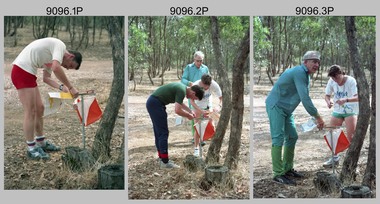
Photograph - Army Inter-area Orienteering Competition, Kimbolton State Forest, VIC, 1990
... Teams from Albury-Wodonga Bendigo, Broadmeadows, Melbourne Metropolitan, Puckapunyal and Watsonia participated in the annual competition. Bendigo’s Army Survey Regiment led by SGT Mick Minchin hosted the Orienteering events. Royal ...This set of 29 photographs was taken during Army’s Inter-area Orienteering competition held in the Kimbolton State Forest, near Lake Eppalock, Victoria in 1990. Teams from Albury-Wodonga Bendigo, Broadmeadows, Melbourne Metropolitan, Puckapunyal and Watsonia participated in the annual competition. Bendigo’s Army Survey Regiment led by SGT Mick Minchin hosted the Orienteering events. This set of 29 photographs was taken during Army’s Inter-area Orienteering competition held in Kimbolton State Forest, near Lake Eppalock, Victoria in 1990. The colour photographs are on 35mm negative film and were scanned at 2400 dpi. They are part of the Army Survey Regiment’s Collection. .1) to .4) - Photo, colour, 1990, unidentified competitors. .5) - Photo, colour, 1990, L to R: unidentified competitor, Bendigo’s Janet Murray. .6) - Photo, colour, 1990, L to R: unidentified official, Le-Anne (Smallshaw) Shirley, Bendigo’s Janet Murray, unidentified competitors (x2). .7) to .8) - Photo, colour, 1990, unidentified competitors. .9) - Photo, colour, 1990, L to R: unidentified official, Mick Minchin. .10) to .11) - Photo, colour, 1990, Mick Minchin. .12) to .13) - Photo, colour, 1990, Bendigo’s Team L to R: Rene van den Tol, Wolfgang Hofbauer, Mick Minchin, Harris Lee, unidentified competitor, Allan Blake, Janet Murray. .14) & .15) - Photo, colour, 1990, presentations L to R: Rene van den Tol, unidentified competitor. .16) to .19) - Photo, colour, 1990, unidentified competitors. .20) - Photo, colour, 1990, presentations L to R: Rene van den Tol, unidentified competitor. .21) - Photo, colour, 1990, presentations L to R: Rene van den Tol, unidentified competitor, Mick Minchin. .22) - Photo, colour, 1990, BBQ L to R: unidentified (x2), Jeff Rudd, Rene van den Tol, Mick Minchin, Neville Stone, Steve Cooper. .23) - Photo, colour, 1990, BBQ, Wolfgang Hofbauer. .24) - Photo, colour, 1990, BBQ, Janet Murray - in black jacket. .25) - Photo, colour, 1990, BBQ, all unidentified. .26) - Photo, colour, 1990, BBQ, Neville Stone - in green t-shirt, Rene van den Tol in red track suit, remainder unidentified. .27) - Photo, colour, 1990, BBQ L to R: unidentified (x4), Janet Murray, Le-Anne (Smallshaw) Shirley, remainder unidentified. .28) & .29) - Photo, colour, 1990, views of Lake Eppalock.There are no personnel identified. ‘Inter-Area Orienteering 1990’ annotated on negative sleevesroyal australian survey corps, rasvy, army survey regiment, army svy regt, fortuna -
 Bendigo Military Museum
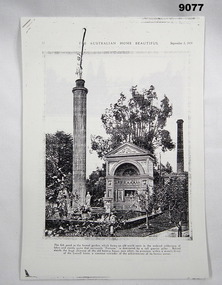
Newspaper - Fortuna Villa article, Australian Home Beautiful Magazine, Melbourne, 2 Sep 1929
... Royal Australian Survey Corps RASvy Fortuna Army Survey Regiment Army Svy Regt Six x A4 monochrome photocopied pages, stapled top left hand corner Fortuna Villa article Newspaper Fortuna Villa article Australian Home Beautiful Magazine, Melbourne ...This is an article from the Australian Beautiful Magazine and is about Fortuna Villa the building which was later occupied by the Royal Australian Survey Corps. The article includes two external building photos and five internal building photos.Six x A4 monochrome photocopied pages, stapled top left hand cornerroyal australian survey corps, rasvy, fortuna, army survey regiment, army svy regt -
 Bendigo Military Museum
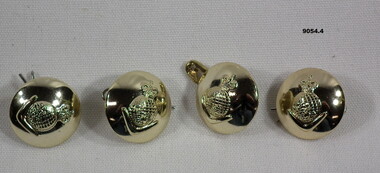
Uniform - BUTTONS ARMY, Stokes and sons Badges, Melbourne, Royal Australian Survey Corps Buttons, Circa 1970
... Donated by 317246 WO1 John Phillips (RASvy) who served in RASvy Corps 1974 - 1996 Royal Australian Survey Corps RASvy Fortuna Army Survey Regiment Army Svy Regt ASR Stokes and Sons, Melbourne 4 x medium sized bright shine gold military buttons with Royal Australian Survey Corps insignia on them. ...These bright shine Survey Corps buttons were used on ceremonial military uniforms by a member of the Royal Australian Survey Corps between 1974 and 1996. Donated by 317246 WO1 John Phillips (RASvy) who served in RASvy Corps 1974 - 19964 x medium sized bright shine gold military buttons with Royal Australian Survey Corps insignia on them. Each button has a slide clip at the rear to attach them to a uniform.Stokes and Sons, Melbourneroyal australian survey corps, rasvy, fortuna, army survey regiment, army svy regt, asr -
 Bendigo Military Museum
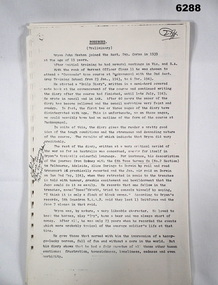
Journal - Bryan John Meehan - Daily Diary
... Melbourne and Adelaide. The Journey was with 6th Topo Survey Co. (No2 Section). Royal Australian Survey Corps RASvy Fortuna Army Survey Regiment Army Svy Regt ASR Page numbers have been altered from the original typed numbers. ...Daily Journal/Diary by Bryan John Meehan of his WW2 Service covering 7 Mar 1943 until 21 July 1943. The diary mainly covers Bryan's journey from Sydney to Darwin via Melbourne and Adelaide. The Journey was with 6th Topo Survey Co. (No2 Section).Paper Daily Diary, Foreward of 2 x pages, Foolscap sized pages, mostly hand numbered 13-35. Pages have been punched for plastic ring binder that is not fitted.Page numbers have been altered from the original typed numbers. Several hand annotations on front Foreward.royal australian survey corps, rasvy, fortuna, army survey regiment, army svy regt, asr -
 Bendigo Military Museum
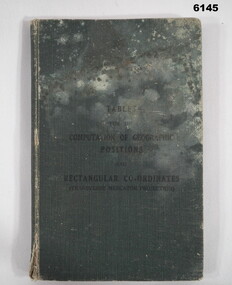
Manual - Mathematical Tables for the Computation of Geographic positions and Rectangular Coordinates, 1942
... Royal Australian Survey Corps RASvy Fortuna Army Survey Regiment Army Svy Regt ASR "? Slattery" , "Sgt RC Andrews. School Tac? Adm. Seymour" all crossed out, on 1st page inside cover. "Please Return to: Survey Directorate AHQ Victoria Barracks Melbourne ...Numerous mathematical tables for the computation of Geographical Positions and rectangular coordinatesHard covered Book, cloth covered, A5 in size, 169 pages, Title Page, contents Page, 5 x blank pages at front, 15 x blank pages at rear."? Slattery" , "Sgt RC Andrews. School Tac? Adm. Seymour" all crossed out, on 1st page inside cover. "Please Return to: Survey Directorate AHQ Victoria Barracks Melbourne" Front and rear pages.royal australian survey corps, rasvy, fortuna, army survey regiment, army svy regt, asr -
 Bendigo Military Museum
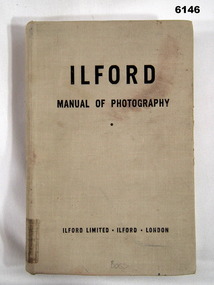
Manual - Ilford Manual of Photography, Ilford Limited, Henry Greenwood &Co. Ltd. & Percy Lund, Humphries & Co. Ltd, First Published in October 1942
... Inside front cover - "L33", stamp - "EXPENDABLE STORES" (twice), "Unreadable signature - QM 30/7/82", Stamp- "AHQ Survey Regiment, Royal Australian Survey Corps" Handwritten - Accession No 167 (and then crossed out), Stamp "29" First Page "15/-", Stamp "2 Topo Svy Coy, Powlett Street Training Depot (partly crossed out), Stamp Technical Book and Magazine Co, 295 -299 Swanston St. Opp Old Melbourne...Regiment, Bendigo, made extensive use of photographic processes. Royal Australian Survey Corps RASvy Fortuna Army Survey Regiment Army Svy Regt ASR Inside front cover - "L33", stamp - "EXPENDABLE STORES" (twice), "Unreadable signature - QM 30/7/82", Stamp- "AHQ Survey Regiment, Royal Australian Survey Corps" Handwritten - Accession No 167 (and then crossed out), Stamp "29" First Page "15/-", Stamp "2 Topo Svy Coy, Powlett Street Training Depot (partly crossed out), Stamp Technical Book and Magazine Co, 295 -299 Swanston St. Opp Old Melbourne ...Manual describing all facets of photography using Ilford Cameras and includes developing and printing of photographs. The map making production at the Army Survey Regiment, Bendigo, made extensive use of photographic processes.A5 sized book, Hard Covers front and back. 470 numbered glossy pages.Inside front cover - "L33", stamp - "EXPENDABLE STORES" (twice), "Unreadable signature - QM 30/7/82", Stamp- "AHQ Survey Regiment, Royal Australian Survey Corps" Handwritten - Accession No 167 (and then crossed out), Stamp "29" First Page "15/-", Stamp "2 Topo Svy Coy, Powlett Street Training Depot (partly crossed out), Stamp Technical Book and Magazine Co, 295 -299 Swanston St. Opp Old Melbourne Hospital cert 2041, Melbourne. Title Page - "Accession No16, stamp 2 Topo Svy Coy Powlett Street Training Depot, East Melbourne" Stamp - "AHQ Survey Regiment, Royal Australian Survey Corps" - Accession No 167 (faded). Back Cover - Stamp - "AHQ Survey Regiment, Royal Australian Survey Corps"royal australian survey corps, rasvy, fortuna, army survey regiment, army svy regt, asr -
 Bendigo Military Museum
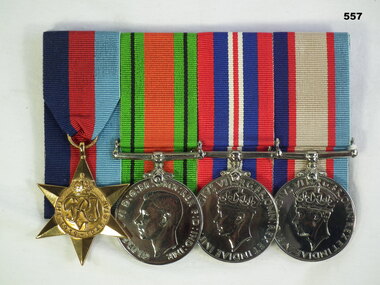
Award - MEDAL SET WW2, Post 1945
... Jack Smethurst (born South Melbourne, enlisted Caulfield) in the AIF on 2.7.40 in the 2/1st Australian Survey Regiment. The 2/1st Australian Survey Regiment was a Royal Australian Artillery Regiment. ...Jack Smethurst (born South Melbourne, enlisted Caulfield) in the AIF on 2.7.40 in the 2/1st Australian Survey Regiment. The 2/1st Australian Survey Regiment was a Royal Australian Artillery Regiment. ...Jack Smethurst (born South Melbourne, enlisted Caulfield) in the AIF on 2.7.40 in the 2/1st Australian Survey Regiment. The 2/1st Australian Survey Regiment was a Royal Australian Artillery Regiment. On discharge from the AIF 13.5.46 his rank was Staff Sergeant. (Artillery Surveyor) Refer 549.4, 550.2, an older brother who died in WW1. 558.6.Medals, court mounted, set of (4) re J Smethurst. 1. 1939-1945 Star 2. Defence Medal 3. War Medal 1939-1945 4. Australian Service Medal 1939 - 45"VX28896 J Smethurst"numismatics-medals-military, metalcraft, royal australian artillery
