
Showing 25 items matching "thursday island"
-
 Returned Nurses RSL Sub-branch
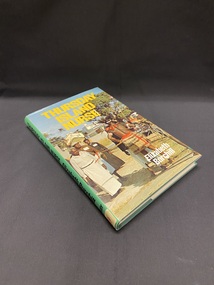
Book - Hardcover book, Elizabeth Burchill, Thursday Island Nurse, 1972
... Thursday Island Nurse......Thursday Island...The front shows a photographic image of a re-enactment of "The coming of light" (an annual commemoration of the arrival of the first missionaries on Thursday Island). The title is printed in large yellow letters across the top....Thursday Island Nurse Book Hardcover book Elizabeth Burchill Rigby ...Novelised account of the experiences of a nurse in the Torres Straits.Hardcover book with dustjacket. It has a green spine with black writing. The front shows a photographic image of a re-enactment of "The coming of light" (an annual commemoration of the arrival of the first missionaries on Thursday Island). The title is printed in large yellow letters across the top.non-fictionNovelised account of the experiences of a nurse in the Torres Straits.elizabeth burchill, history of nursing, thursday island, , missionaries, australian army nursing service -
 Eltham District Historical Society Inc
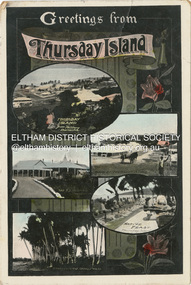
Photograph - Postcard, Postcard; Greetings from Thursday Island, c.1910s - c.1920s
... Postcard; Greetings from Thursday Island......Thursday Island...[Five views of Thursday Island, including] Thursday Island from Military Barracks, The T.S. ...[Five views of Thursday Island, including] Thursday Island from Military Barracks, The T.S. ...[Five views of Thursday Island, including] Thursday Island from Military Barracks, The T.S. Hospital, Darnley Island Torres Straits, Main Street, Native Feast, [ca. 1917-1920] See https://catalogue.nla.gov.au/catalog/3117659 Dear Mum A few lines to let you know I've arrived at the top end of Aussie safely & now on my way down the coast towards Sydney. I'll be over on leave about the eighth Sept cheer up dont forget to send the suitcase about the second of Seot it will give me time to pack it then remember me to all & best love to yourself and Dad, your son Bill.This item, a souvenir from Thursday Island from between the wars (circa 1923) was brought home to Research, Victoria by Bill Teagle who was serving in the Royal Australian Navy (1919-1945). According to Bill's neice Valerie Waller (nee Feldbauer, daughter of Violet and Theodore 'Curly' Feldbauer), her Uncle Bill would always bring some sort of souvenir home from his travels for family members. The item ( along with a series of postcards from Japan of the Great Kanto Earthquake of 1 September 1923) was possibly given by Bill Teagle to his sister Margaret Rose (formerly Ingram) who later married Richard Edward (Eddie) Fielding in early 1948. (Eddie had been engaged to someone else before he went to war, but his fiancée broke it off before his return to Australia.) It was cared for by the Teagle/Fielding family for approximately one hundred years. It is of particular significance given the family's connection to the Eltham War Memorial through 'Curly' Feldbauer and the significance of that memorial to the local community and represents that despite the horrors of war, former friends then foes can become friends again.tom fielding collection, postcard, thursday island -
 Victorian Aboriginal Corporation for Languages
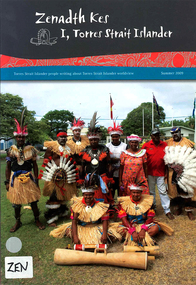
Book, Torres Strait Islander Free Thinking Symposium, Zenadth Kes : I, Torres Strait Islander : papers from the TorreTorres Strait Islander Free Thinking Symposium s Strait Islander Free Thinking Symposium held on Thursday Island, 2008, 2008
... Zenadth Kes : I, Torres Strait Islander : papers from the TorreTorres Strait Islander Free Thinking Symposium s Strait Islander Free Thinking Symposium held on Thursday Island, 2008...Torres Strait Islands congresses b&w photographs, colour photographs Zenadth Kes : I, Torres Strait Islander : papers from the TorreTorres Strait Islander Free Thinking Symposium s Strait Islander Free Thinking Symposium held on Thursday Island, 2008 Book Torres Strait Islander Free Thinking Symposium ...b&w photographs, colour photographstorres strait islands, congresses -
 Tatura Irrigation & Wartime Camps Museum
Clothing - Man's Vest
... ...thursday island internee...Army issue to Toshio Suzuki who wore this vest during his internment in Hay, Loveday and Tatura group.He was an internee from Thursday Island....Army issue to Toshio Suzuki who wore this vest during his internment in Hay, Loveday and Tatura group.He was an internee from Thursday Island. toshio suzuki loveday camp tatura group camp thursday island internee army issue clothing evelyn suzuki Hay camp V364 Made in Australia Size 1942 Wool and cotton. yellow and white short sleeve, round neck men's vest. ...Army issue to Toshio Suzuki who wore this vest during his internment in Hay, Loveday and Tatura group.He was an internee from Thursday Island.Wool and cotton. yellow and white short sleeve, round neck men's vest.V364 Made in Australia Size 1942toshio suzuki, loveday camp, tatura group camp, thursday island internee, army issue clothing, evelyn suzuki, hay camp -
Tatura Irrigation & Wartime Camps Museum
Clothing - Man's Vest
... ...thursday island internee...Army issue to Toshio Suzuki who wore this vest during his internment in Hay, Loveday and Tatura group.He was an internee from Thursday Island....Army issue to Toshio Suzuki who wore this vest during his internment in Hay, Loveday and Tatura group.He was an internee from Thursday Island. toshio suzuki loveday camp tatura group camp thursday island internee army issue clothing evelyn suzuki Hay camp V364 Made in Australia Size 1942 Wool and cotton yellow and white short sleeve, round neck vest. ...Army issue to Toshio Suzuki who wore this vest during his internment in Hay, Loveday and Tatura group.He was an internee from Thursday Island.Wool and cotton yellow and white short sleeve, round neck vest.V364 Made in Australia Size 1942toshio suzuki, loveday camp, tatura group camp, thursday island internee, army issue clothing, evelyn suzuki, hay camp -
Koorie Heritage Trust
Journal - Periodical, Barrett, Charles, Northern Australia
... ...Thursday island...Aborigines-Northern Australia Port Essington Northern Australia-Aborigines-Fishing Aboriginal Women-Northern Australia-Food gathering Goulburn Island Elcho Island Caledon Bay Milingimbi Wessel islands Thursday island Wyndham Broome. Aboriginal Art - cave paintings This book covers the far northern parts of Australia, from Queensland to the Kimberleys and the romantic ports of the north-west, where early navigators made landfalls. ...This book covers the far northern parts of Australia, from Queensland to the Kimberleys and the romantic ports of the north-west, where early navigators made landfalls. Tthe photographs, many of them unique, were taken on sea and land expeditions, the latest in 1939, when a 1200 miles' cruise was made in the mission boat Larrpan, from Darwin to the farthest east coast of Arnhem Land.pp40; illus; 27 cm.This book covers the far northern parts of Australia, from Queensland to the Kimberleys and the romantic ports of the north-west, where early navigators made landfalls. Tthe photographs, many of them unique, were taken on sea and land expeditions, the latest in 1939, when a 1200 miles' cruise was made in the mission boat Larrpan, from Darwin to the farthest east coast of Arnhem Land.aborigines-northern australia, port essington, northern australia-aborigines-fishing, aboriginal women-northern australia-food gathering, goulburn island, elcho island, caledon bay, milingimbi, wessel islands, thursday island, wyndham, broome., aboriginal art - cave paintings -
Tatura Irrigation & Wartime Camps Museum
Internet photograph, Oskar Speck
... Oskar Speck who kayacked from Germany to Australia, arriving at Thursday Island in September 1939, interned Camp 1....Oskar Speck who kayacked from Germany to Australia, arriving at Thursday Island in September 1939, interned Camp 1. ...Images obtained from internet. Oskar Speck who kayacked from Germany to Australia, arriving at Thursday Island in September 1939, interned Camp 1. -
 Tatura Irrigation & Wartime Camps Museum
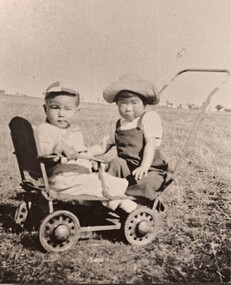
Photograph, David "Tanji" Nabeshima and Takeko Yamashita, 1942
... Black and white photograph of "David" Tanji Nabeshima on a little pusher and Takeko Yamashito interned with their parents and family, originally from Thursday Island. Their photo is on the dust cover of "Walls of Wire" and our Museum had the privileged of a visit from Takeko in 1994. ...Very significant camp 4 Tanji Nabeshima Takeko Yamashito Takeko Sheridan nee Yamashito Black and white photograph of "David" Tanji Nabeshima on a little pusher and Takeko Yamashito interned with their parents and family, originally from Thursday Island. Their photo is on the dust cover of "Walls of Wire" and our Museum had the privileged of a visit from Takeko in 1994. ...Very significantBlack and white photograph of "David" Tanji Nabeshima on a little pusher and Takeko Yamashito interned with their parents and family, originally from Thursday Island. Their photo is on the dust cover of "Walls of Wire" and our Museum had the privileged of a visit from Takeko in 1994. She is now Mrs Sheridan, London.camp 4, tanji nabeshima, takeko yamashito, takeko sheridan nee yamashito -
Tatura Irrigation & Wartime Camps Museum
List, New Caledonian Descendants, 2005
... Borrowed for copying to computer, during visit by a group of New Caledonian descendants of internees in Camp 4 and the donor who was interned from Thursday Island to Camp 4....Borrowed for copying to computer, during visit by a group of New Caledonian descendants of internees in Camp 4 and the donor who was interned from Thursday Island to Camp 4. documents reports New Caledonian Descendants List ...Borrowed for copying to computer, during visit by a group of New Caledonian descendants of internees in Camp 4 and the donor who was interned from Thursday Island to Camp 4.documents, reports -
 Tatura Irrigation & Wartime Camps Museum
Photograph, Oki family
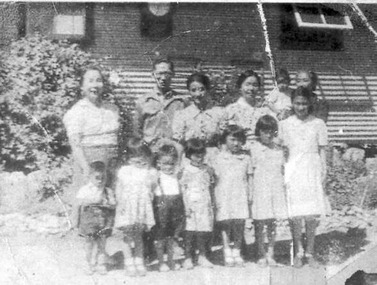
... Back row: Mrs Matsushita (from Thursday Island), Mr and Mrs Oki, Mrs Fukushima, Mrs Honda holding baby Melba Oki. ...Back row: Mrs Matsushita (from Thursday Island), Mr and Mrs Oki, Mrs Fukushima, Mrs Honda holding baby Melba Oki. ...Photograph 1: Oki family interned in Camp 4. Back row: Mrs Matsushita (from Thursday Island), Mr and Mrs Oki, Mrs Fukushima, Mrs Honda holding baby Melba Oki. Front row: R Yoshitaka Takemoto, Wendy and Ted Oki, Hirako Takemoto, Phyllis, Shirley and Joan Oki. Photograph 2: Oki family visited Museum c.1994. Mrs Oki and her family.2 photographs. 1 black and white photograph of a group of 13 people. 5 adults standing, one holding a child. 7 children standing in height order. Hut in background. 2nd photograph, colour, of 8 adults standing out the front of Tatura Museum under their WW2 sign. oki family, mrs matsushita, mrs fukushima, mrs honda, melba oki, r yoshitaka takemoto, hirako takemoto -
 Bendigo Military Museum
Document - ENEMY RAIDS ON AUSTRALIA, WW2, Post WW2
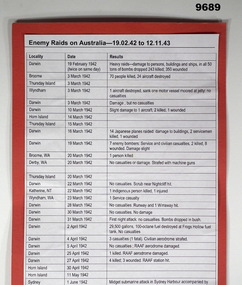
... "Locality" includes Darwin, Broome, Thursday Island, Wyndham, Horn Island, Derby WA, Katherine NT, Horn Island, Sydney, Newcastle, Townsville, Port Hedland, Mossman (90km north of Cairns), Milingimbi, Wessell Island, Exmouth Gulf, Fenton Aerodrome, Coomallie Fenton, Onslow, Drysdale Mission...."Locality" includes Darwin, Broome, Thursday Island, Wyndham, Horn Island, Derby WA, Katherine NT, Horn Island, Sydney, Newcastle, Townsville, Port Hedland, Mossman (90km north of Cairns), Milingimbi, Wessell Island, Exmouth Gulf, Fenton Aerodrome, Coomallie Fenton, Onslow, Drysdale Mission. ...Information printed on chart: "Enemy Raids on Australia 19.02.42 to 12.11.43" The document lists in chart form the Enemy raids on Australia under the headings "Locality", "Date", "Results". "Locality" includes Darwin, Broome, Thursday Island, Wyndham, Horn Island, Derby WA, Katherine NT, Horn Island, Sydney, Newcastle, Townsville, Port Hedland, Mossman (90km north of Cairns), Milingimbi, Wessell Island, Exmouth Gulf, Fenton Aerodrome, Coomallie Fenton, Onslow, Drysdale Mission.Chart - white colour paper adhered to red coloured cardboard for display purposes. Facsimile copy with black ink print. Unknown source.document, chart facsimile, ww2, australia -
 Warrnambool and District Historical Society Inc.
Booklet - Tourism Booklet, A.H.Powell (Powell Print Ballarat), Warrnambool - The Blue Ribbon Pleasure Resort, 1913
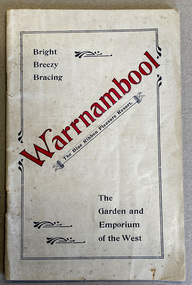
... His appendix burst and he died in a hospital on Thursday Island, northern Australia. He was aged 15. ...His appendix burst and he died in a hospital on Thursday Island, northern Australia. He was aged 15. ...This is a booklet by the Warrnambool Tourist Publication 1913This is a booklet of 62 pages. It has a white cover with red and blue printing on the front cover and a blue-toned photograph on the back cover. The pages contain printed text, advertisements and black and white photographs. The pages are stapled.non-fiction This is a booklet by the Warrnambool Tourist Publication 1913warrnambool tourism, visit to warrnambool 1915 by george mcdonald -
 Queenscliffe Maritime Museum
Functional object - Propeller
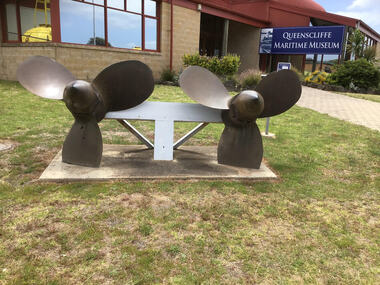
... The flotilla reached Thursday Island on 29 June, and Sydney on 10 July. ...The flotilla reached Thursday Island on 29 June, and Sydney on 10 July. ...HMS J3 (later HMAS J3) was a J-class submarine operated by the Royal Navy and later the Royal Australian Navy. After the war, the British Admiralty decided that the best way to protect the Pacific region was with a force of submarines and cruisers. To this end, they offered the six surviving submarines of the J-class to the Royal Australian Navy as gifts. J1 and her sisters were commissioned into the RAN in April 1919, and sailed for Australia on 9 April, in the company of the cruisers Sydney and Brisbane, and the tender Platypus. The flotilla reached Thursday Island on 29 June, and Sydney on 10 July. Because of the submarines' condition after the long voyage, they were immediately taken out of service for refits. Apart from local exercises and a 1921 visit to Tasmania, the submarines saw little use, and by June 1922, the cost of maintaining the boats and deteriorating economic conditions saw the six submarines decommissioned and marked for disposal.The wreck of JR can still be seen off Swan Bay2 propellers from the J3 submarine 'HMAS Reaper'j3, j class submarines, hmas reaper -
 Frankston RSL Sub Branch
Trench Art
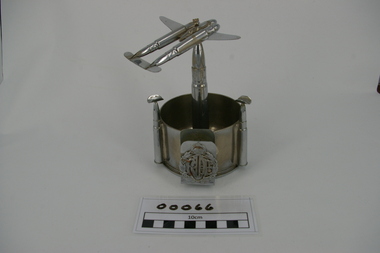
... This model was made during WW2 by Corporal Cyril 'Charlie' Dawes, RAAF service number 116777, from parts found whilst serving at Goodenough and Thursday Islands in the Torres Strait. The aircraft is supported by a 0.50 inch calibre bullet fixed to the inside of a section of an artillery case which forms the base. ...This model was made during WW2 by Corporal Cyril 'Charlie' Dawes, RAAF service number 116777, from parts found whilst serving at Goodenough and Thursday Islands in the Torres Strait. The aircraft is supported by a 0.50 inch calibre bullet fixed to the inside of a section of an artillery case which forms the base. ...Made by Cpl. Charlie Dawes 116777 R.A.A.F from parts got while serving at Goodenough and Thursday Isalnds WW2Miniature model of a WW2 era Lockheed P-38 Lightning twin engine aircraft mounted on a trench art ashtray made from various used munitions. This model was made during WW2 by Corporal Cyril 'Charlie' Dawes, RAAF service number 116777, from parts found whilst serving at Goodenough and Thursday Islands in the Torres Strait. The aircraft is supported by a 0.50 inch calibre bullet fixed to the inside of a section of an artillery case which forms the base. The base has three 0.303 inch calibre bullets attached vertically around the circumference and a metal matchbox holder with a RAAF hat badge insignia attached to the front. The items have been made from chromed metal materials. The RAAF was equipped with a small number of these aircraft, commencing in 1942, which were used for front line photographic reconnaissance duty. The first version of the Lockheed P-38 was introduced in 1941 by the USA Lockheed aircraft company as a heavy fighter.RAAF chrome cap badge (WW2 era with the kings crown)plane, trench art, ashtray -
 Mission to Seafarers Victoria
Photograph, George Schutze, Ship Carnarvon Bay wrecked King Island 15 September 1910 - R.J.N Filkin apprentice, c. 1910
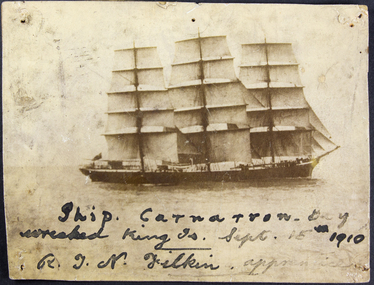
... The ship Carnarvon Bay bound from Liverpool to Sydney with a general cargo struck rocks off Stokes Point on the coast of King Island on Thursday 15 September 1910. On the day the crew used two lifeboats but were separated. ...The ship Carnarvon Bay bound from Liverpool to Sydney with a general cargo struck rocks off Stokes Point on the coast of King Island on Thursday 15 September 1910. On the day the crew used two lifeboats but were separated. ...The ship Carnarvon Bay bound from Liverpool to Sydney with a general cargo struck rocks off Stokes Point on the coast of King Island on Thursday 15 September 1910. On the day the crew used two lifeboats but were separated. One of them with Captain W. Griffith and 17 men was rescued by the SS Taracoola and brought back to Melbourne. Apprentice, R.J.N Filkin was amongst them (his name is listed on the Argus article relating the event (Monday 19 September 1910). In the article called "Welcome Shelter" it seems it was the first sea voyage for the young Filkin. The other boat with 15 men was lost for several hours. There was no casualties but the 3000 ton cargo was lost. The seamen were received at the Sailors Home then welcomed at the Mission by Reverend Haire as shown on a photograph publish in the Punch (22 September 1910). Reverend Gurney Goldsmith was in England at the time. The crew was invited to an evening of entertainment organised by artist Violet Teague at the Masonic Hall on the 19th of September. According to the article "Welcome Shelter" she was painting the "tableaux" at the Mission when the seamen were present, interviewed by the journalist. This evening organised by the Ladies Harbour Lights Guild was planned to raise funds for the Mission.Sepia photograph depicting the ship Carnarvon Bay at sea with a written inscription in black ink.Ship Carnarvon Bay wrecked King Island 15 September 1910 - R.J.N Filkin apprenticeshipwreck, apprentice, king island, carnarvon bay, captain griffith, violet teague, masonic hall, ss taracoola, crews and ships -
 Mission to Seafarers Victoria
Programme, Violet Teague, Mother and Lover of Men the Sea, 1910
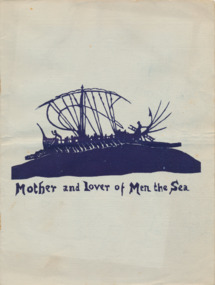
... "During the evening the Rev W F Haire, acting chaplain to the mission announced that among those present were the shipwrecked survivors of the Carnarvon Bay, which was wrecked at King Island on Thursday last The men, who bore no traces of the hardships they endured took their places on the platform, whilst the large audience cheered itself hoarse and sang "For They Are Jolly Good relics". ..."During the evening the Rev W F Haire, acting chaplain to the mission announced that among those present were the shipwrecked survivors of the Carnarvon Bay, which was wrecked at King Island on Thursday last The men, who bore no traces of the hardships they endured took their places on the platform, whilst the large audience cheered itself hoarse and sang "For They Are Jolly Good relics". ...On the 19th and 20th September 1910, the Mission organised a fundraising evening at the Masonic Hall on Collins Street. The "Tableaux vivants", called "Tennison's Dream of Fair Women" were arranged by artist Violet Teague. She arranged and painted the decors for the "tableaux vivants" in the Siddeley Mission. It's likely she also created the cover of this programme. "Mother and Lover of Men the Sea" is a verse form the poem: The Triumph of Time by Algernon Charles Swinburne While she was working, seamen from the Carnarvon Bay shipwreck were welcomed to the institute and subsequently invited to the evening. "They went through a large room, where a lady was standing on a scaffolding pointing a scene for the enter" tainment which is to take place this evening in the Masonic-hall. The lady was Miss Violet Teague, but she took her mind and her brush off the effects in marine blue sufficiently long to learn the main outlines of the story. " (Argus 19 September 1910). "During the evening the Rev W F Haire, acting chaplain to the mission announced that among those present were the shipwrecked survivors of the Carnarvon Bay, which was wrecked at King Island on Thursday last The men, who bore no traces of the hardships they endured took their places on the platform, whilst the large audience cheered itself hoarse and sang "For They Are Jolly Good relics". (Argus 20 September 1910) In 1935, Violet Teague was on the passengers on the C.B. Pedersen, one of the last windjammers. She Drew and painted during her voyage and exhibited the artworks in 1938.This rare programme is the last remaining testimony of the relationship between the Mission and famous artists of the time who provided illustrations for quotation calendars (Daryl Lyndsay, John Shirlow).12 pages programme. The cover is light blue paper with the design of the Greek ship printed in black ink.violet teague, tableaux vivants, 1910, fundraising, theatre, play, algernon charles swinburne, sponsors, advertising, carnarvon bay, shipwreck, una le souef, masonic hall, lady gibson-carmichael, willsmere certified milk and co, fry's cocoa, remington typewriter, hypol, lhlg, ladies harbour lights guild -
 City of Melbourne Libraries
Photograph, Bull, Hugh Jones, 1897-1993, Japanese woodblock prints
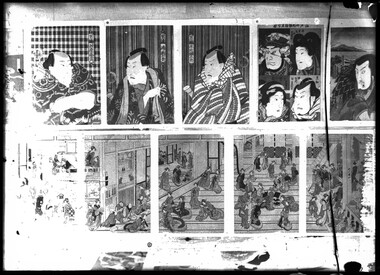
... Captain Takahata may have been quite the ambassador: adverts in Australian quarterly magazine, The Home, promoted regular cruises out of Melbourne and Sydney via Queensland, Thursday Island, Phillippines and Hong Kong to Japan at a cost of £90 for a round trip via Yokohama....Captain Takahata may have been quite the ambassador: adverts in Australian quarterly magazine, The Home, promoted regular cruises out of Melbourne and Sydney via Queensland, Thursday Island, Phillippines and Hong Kong to Japan at a cost of £90 for a round trip via Yokohama. ...A DECK GALLERY FOR JAPANESE PRINTS. A unique exhibition of Japanese Prints was opened yesterday on Japanese ship Kamo Maru.These pictures are the property of the captain of the Kamo Maru Captain T. Takahata, and are displayed in a specially arranged gallery on the deck of the ship now berthed at No. 13 Victoria Dock. A picture on board yesterday after noon. (Inset) - One of many fine works by Utaguard Toyokuni who died in 1825. Photographer notations on slide: "B21" Published: 23 February 1934 Published title: A DECK GALLERY FOR JAPANESE PRINTS. Published caption: A unique exhibition of Japanese Prints was opened yesterday on Japanese ship Kamo Maru.These pictures are the property of the captain of the Kamo Maru Captain T. Takahata, and are displayed in a specially arranged gallery on the deck of the ship now berthed at No. 13 Victoria Dock. A picture on board yesterday after noon. (Inset) - One of many fine works by Utaguard Toyokuni who died in 1825. Trove article identifier: http://nla.gov.au/nla.news-article203376863 Description: Japanese woodblock prints, probably belonging to Captain Takahata of the Japanese passenger and cargo ship Kamo Maru, who displayed his Japanese Woodblock prints in a special on-board gallery when it visited Melbourne during 1933 and 1934. Research by project volunteer, Louise McKenzie: Plate MCK025 shows a number of Japanese woodblock prints. Three are of traditional “samurai” or Kabuki-style Japanese men in traditional dress and hairstyle; one is a composite of four different prints: two men and two women (samurai/geisha) in traditional dress. There are also several prints appearing to depict traditional scenes of indoor and outdoor life in Japan in the Edo period. An article appeared in The Age in February 1934, covering the visit to Melbourne of Captain T Takahata on the Japanese ship the Kamo Maru. An accompanying photo shows several women, in coats and hats, and a man, closely inspecting a gallery hang of Japanese woodblocks. Inset is a single image of a Kabuki theatre performer, a detail from the full photograph as shown in our slide. This work is attributed to Utagawa Toyokuni (1769-1823), who was mostly known for his prints relating to kabuki theatre and the actors’ dramatic postures. Japanese Kabuki theatre features heavily stylised performances, glamorous, highly decorated costumes and elaborate make-up worn by its performers. It was particularly popular in the Edo period (1615-1868), as was woodblock printing, after its earlier introduction from China around 150 years earlier. Woodblock printing in Japan is a technique best known for its use in the ukiyo-e artistic genre of single sheet images (although books were also created) which flourished from the 17th through 19th centuries. Its artists produced woodblock prints and paintings of such subjects as female beauties; kabuki actors and sumo wrestlers; scenes from history and folk tales; travel scenes and landscapes; flora and fauna, and erotica. The term ukiyo-e translates as 'picture[s] of the floating world'. This expression could be confusingly translated as meaning ‘a world of sorrow and grief’, 'erotic’ or ‘stylish’, and later came to describe the hedonistic spirit of the lower classes of the 17th century. Asai Ryōi celebrated this spirit in the novel Ukiyo Monogatari (Tales of the Floating World), c. 1661: “[L]iving only for the moment, savouring the moon, the snow, the cherry blossoms, and the maple leaves, singing songs, drinking sake, and diverting oneself just in floating, unconcerned by the prospect of imminent poverty, buoyant and carefree, like a gourd carried along with the river current: this is what we call ukiyo.” (Wikipedia: 'Ukiyo-e') Mass production of woodblocks during the Edo period was due to high literacy rates: 100% for samurai and 50-60% for farmers. Consequently, cheaper books were produced in large numbers. In the 18th century, Suzuki Harunobu established the technique of multicolor woodblock printing called nishiki-e and greatly developed Japanese woodblock printing culture such as ukiyo-e. Ukiyo-e influenced European Japonisme and Impressionism. Yoshitoshi was called the last great ukiyo-e master, and his cruel depictions and fantastic expressions influenced later Japanese literature and anime. However today the best known exponents from the period are probably Hokusai and Hiroshige.The price of one ukiyo-e at that time was about 20 mon, and the price of a bowl of soba noodles was 16 mon, so the price of one ukiyo-e was several hundred yen to 1000 yen in today's currency. 'Wikipedia: Ukiyo-e' states: “Japanese art, and particularly ukiyo-e prints, came to influence Western art from the time of the early Impressionists. Early painter-collectors incorporated Japanese themes and compositional techniques into their works as early as the 1860s: the patterned wallpapers and rugs in Manet's paintings were inspired by the patterned kimono found in ukiyo-e pictures, and Whistler focused his attention on ephemeral elements of nature as in ukiyo-e landscapes. Van Gogh was an avid collector, and painted copies in oil of prints by Hiroshige and Eisen. Degas and Cassatt depicted fleeting, everyday moments in Japanese-influenced compositions and perspectives. ukiyo-e's flat perspective and unmodulated colours were a particular influence on graphic designers and poster makers. Toulouse-Lautrec's lithographs displayed his interest not only in ukiyo-e's flat colours and outlined forms, but also in their subject matter: performers and prostitutes. He signed much of this work with his initials in a circle, imitating the seals on Japanese prints. Other artists of the time who drew influence from ukiyo-e include Monet, La Farge, Gauguin, and Les Nabis members such as Bonnard and Vuillard. French composer Claude Debussy drew inspiration for his music from the prints of Hokusai and Hiroshige, most prominently in La mer (1905). Imagist poets such as Amy Lowell and Ezra Pound found inspiration in ukiyo-e prints; Lowell published a book of poetry called Pictures of the Floating World (1919) on oriental themes or in an oriental style.” An awareness of and interest in this style of art seems to have been well established by the time Captain Takahata brought his sailing gallery to Australia in the 1930s. The Age article “Colour Prints from Japan” on 22 February 1934 p. 13, consists predominantly of a sophisticated curatorial assessment of the woodblock style and detailed artist and style information, which is remarkable for its in-depth analysis. The writer even draws attention to the existence of female woodprint artists. It has been difficult to verify those noted in this article, but worth drawing attention to the work produced by the daughter of Hokusai, Katsushika Oi, which is documented and has gained attention within Japan and elsewhere. Captain Takahata may have been quite the ambassador: adverts in Australian quarterly magazine, The Home, promoted regular cruises out of Melbourne and Sydney via Queensland, Thursday Island, Phillippines and Hong Kong to Japan at a cost of £90 for a round trip via Yokohama.(The Home, 1 August 1936, pages 76 and 79). It is reported in one of the many newspapers articles printed during 1933/1934 about Captain Takahata and his collection, that he inherited it, and it was not for sale even at an offered £10,000. However, one article makes mention of him scouring antique shops in rural Japan to add to the collection! And even enlisting the help of his children in the hunt. The collection totalled 11,000 prints and apparently 1,500 travelled with him when he sailed. These numbers do differ between reports, but his collection was undoubtedly large, and Captain Takahata enjoyed lecturing on the subject, explaining that each print was handmade. It took painstaking work over months to create the delicate colour tones, with a block being created for each colour used, and transferred onto specially prepared paper. Many of the designs are symbolic, and even those representing figures and scenes have a narrative basis, or represent traditional incidents in the life and history of Japan. (See Japanese Prints, The Sydney Morning Herald, 14 July 1934). In Brisbane in October 1934, The Courier Mail noted that Captain Takahata, now on the Yusen Kaisha steamer ‘Atsuta Mam’ (a sister ship to Kamo Maru) arrived with another 100 prints in his possession, and that he spent his spare time mounting and cataloguing his treasures. One of his new additions dated from 1787 and Captain Takahata “said that it was the only woodcut to depict eyelashes, and with the aid of a magnifying glass, he showed the extremely fine lines around the eyes of the three Japanese ladies on the print.” References: COLOR PRINTS FROM JAPAN. (1934, February 22). The Age (Melbourne, Vic. : 1854 - 1954), p. 13. Retrieved February 29, 2024, from http://nla.gov.au/nla.news-article20338088 A DECK GALLERY FOR JAPANESE PRINTS. (1934, February 23). The Age (Melbourne, Vic. : 1854 - 1954), p. 11. Retrieved February 29, 2024, from http://nla.gov.au/nla.news-article203376863 JAPANESE WOOD-CUTS. (1934, July 14). Daily Commercial News and Shipping List (Sydney, NSW : 1891 - 1954), p. 4. Retrieved February 29, 2024, from http://nla.gov.au/nla.news-article161150580 JAPANESE PRINTS. (1934, July 14). The Sydney Morning Herald (NSW : 1842 - 1954), p. 12. Retrieved February 29, 2024, from http://nla.gov.au/nla.news-article28024038 RARE WOOD-PRINTS FROM JAPAN (1934, July 16). The Herald (Melbourne, Vic. : 1861 - 1954), p. 20. Retrieved March 2, 2024, from http://nla.gov.au/nla.news-article243171208 JAPANESE WOODPRINTS. (1934, July 14). The Sydney Morning Herald (NSW : 1842 - 1954), p. 16. Retrieved March 2, 2024, from http://nla.gov.au/nla.news-article28023902 11,000 RARE WOODCUTS (1934, October 11). The Courier-Mail (Brisbane, Qld. : 1933 - 1954), p. 18. Retrieved March 2, 2024, from http://nla.gov.au/nla.news-article35647690 A DECK GALLERY FOR JAPANESE PRINTS. (1934, February 23). The Age (Melbourne, Vic. : 1854 - 1954), p. 11. Retrieved March 2, 2024, from http://nla.gov.au/nla.news-article203376863 RARE JAPANESE PRINTS (1934, July 11). The Courier-Mail (Brisbane, Qld. : 1933 - 1954), p. 10. Retrieved March 2, 2024, from http://nla.gov.au/nla.news-article36723139 Wikipedia: 'Ukiyo-e', https://en.wikipedia.org/wiki/Ukiyo-e Wikipedia: 'Woodblock printing in Japan', https://en.wikipedia.org/wiki/Woodblock_printing_in_Japan Wikipedia: 'Utagawa Toyokuni', https://en.wikipedia.org/wiki/Utagawa_Toyokuni Wikipedia: 'Kabuki', https://en.wikipedia.org/wiki/Kabuki 'Digital Humanities and Japanese History',https://dh.japanese-history.org/2020-spring-women-in-japanese-history/japanese-women-artists-of-the-edo-period/ '25 Famous Painters in Japanese Art', https://dh.japanese-history.org/2020-spring-women-in-japanese-history/japanese-women-artists-of-the-edo-period/ 'Nyk Kamo Maru', https://blog.shipwatcher.com/index.php/nyk-kamo-maru/ The Home : an Australian quarterly Retrieved March 4, 2024, from http://nla.gov.au/nla.obj-386036987 : Volume 17, No. 8, 1 August 1936.Photographer notations on slide: "B21".japan, prints, ships, art -
 Phillip Island and District Historical Society Inc.
Article, "Island won greatest G-Final ever" 1951
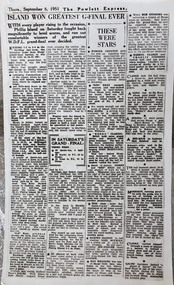
... The Powlett Express Thursday September 6, 1951. " Island won the greatest G-Final Island" "In Saturday's Grand-Final", "These were stars"...Historical Phillip Island Football Club 1951 Premiers joshua gliddon The Powlett Express 1951 Redda Claringbould Wagner Bill Jones The Powlett Express Thursday September 6, 1951. " Island won the greatest G-Final Island" "In Saturday's Grand-Final", "These were stars" Black and white photo of newspaper article "Island won greatest G-Final ever" 1951 Article ...The Powlett Express was based in Wonthaggi, precursor to The Sentinel Times. WDFL was the Wonthaggi and District Football League. Shops were Wonthaggi Shops team. This photo was prepared for inclusion in "Phillip Island in Picture and Story" by Gliddon but never used.HistoricalBlack and white photo of newspaper article The Powlett Express Thursday September 6, 1951. " Island won the greatest G-Final Island" "In Saturday's Grand-Final", "These were stars"phillip island football club 1951 premiers, joshua gliddon, the powlett express 1951, redda claringbould, wagner, bill jones -
 Bendigo Historical Society Inc.
Newspaper - VICTORIA QUARTZ - PHOTOGRAPHS OF MINING
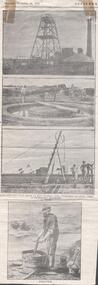
... Thursday, November 14, 1901. Top photo is a picture of the Victoria Quartz poppet legs, buildings and a large chimney. The second photo is a puddling machine. In the photo is a circular area with water in it and an island...Thursday, November 14, 1901. Top photo is a picture of the Victoria Quartz poppet legs, buildings and a large chimney. The second photo is a puddling machine. In the photo is a circular area with water in it and an island ...Four photographs from a Supplement dated Thursday, November 14, 1901. Top photo is a picture of the Victoria Quartz poppet legs, buildings and a large chimney. The second photo is a puddling machine. In the photo is a circular area with water in it and an island in the centre with a log across it. A horse is harnessed to one end of the log. There is a man behind the horse and a dray in the background. The third photo is a whip. It is a pole held at an angle by two smaller poles. At the top is a wheel. There is a rope over the wheel with a bucket on the end. There are two men to the right of the whip. The bottom picture is a man dollying. He has a half barrel and he is working the water with a short pole with a handle on each side. The barrel has a drainage pipe in the bottom. There is also a dish, two buckets and a shovel around the barrel. There are two photocopies of the page. One didn't get all the fourth picture copied.photo, victoria quartz, victoria quartz, photographs of mining, puddling machine, whip, dollying -
 Melbourne Legacy
Document - Minutes, Minutes of meeting of Boys’ Activities Committee held at “Legacy House” on Thursday, 4th October, 1979 at 7 p.m, 1979
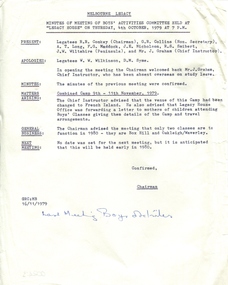
... Island on 11 November 1979, and anticipates only two classes to function in 1980. Classes were only at Box Hill and Oakleigh/Waverley. Records the end of organised activities for boys. boys' classes camp In blue pen at the bottom: “Last Meeting Boys Activities” Black typing on fading white quarto paper. Minutes of meeting of Boys’ Activities Committee held at “Legacy House” on Thursday ...Details of a camp to be held at French Island on 11 November 1979, and anticipates only two classes to function in 1980. Classes were only at Box Hill and Oakleigh/Waverley.Records the end of organised activities for boys. Black typing on fading white quarto paper.In blue pen at the bottom: “Last Meeting Boys Activities”boys' classes, camp -
Melbourne Tram Museum
Pamphlet, Public Transport Victoria (PTV), "Buses replace trams on route 96", Jan. 2020
... Issued for track work in Nicholson St Carlton as part of the the installation of centre island platform stops between stop 16 (Rose St) and Stop 25 (Albert St) during Thursday 2 January and Sunday 18 January 2020. ...Issued for track work in Nicholson St Carlton as part of the the installation of centre island platform stops between stop 16 (Rose St) and Stop 25 (Albert St) during Thursday 2 January and Sunday 18 January 2020. ...Issued for track work in Nicholson St Carlton as part of the the installation of centre island platform stops between stop 16 (Rose St) and Stop 25 (Albert St) during Thursday 2 January and Sunday 18 January 2020. A significant part of the project to make all route 96 platform stops. Gives details of the alternative bus routes. Produced by Yarra Trams and the PTV.Yields information about track work in Nicholson St Carlton 2020.Pamphlet - full colour DL 4 fold.trackwork, tramways, nicholson st, platform stops, carlton, route 96 -
 Returned Nurses RSL Sub-branch
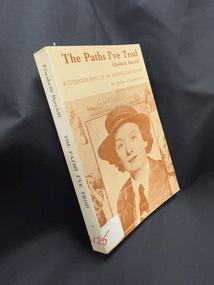
Book, Elizabeth Burchill, The paths I've trod, 1981
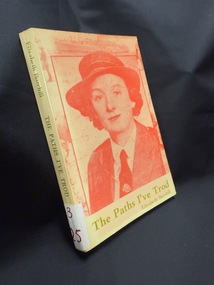
... Sister Burchill continued this work in Thursday Island and the Sepik District of New Guinea into the 1960s. ...'Dora Elizabeth Burchill was born in Hawthorn, Victoria and trained as a triple certificate nurse in Melbourne and London. Proving that nursing is the best passport for travel she subsequently travelled widely and became registered as a nurse in seven countries of the world. Cherishing the ideals of Florence Nightingale in peace and war, Sister Burchill volunteered to serve in Ethiopia during the Italian-Abyssinian War in 1936, nursed refugee children during the Spanish Civil War in 1937 and served with the 2nd AIF in Palestine and Egypt in 1940. Following six years as a member of the Australian Army Nursing Service, she took another challenging path, becoming involved in radio broadcasting [Working for 3SR Radio Station, Shepparton p185], writing and lecturing for the Commonwealth Institute in England. Six years later she returned to nursing and started the first full-time infant welfare clinic in Darwin for the Northern Territory Department of Health and remained in this important post of increasing development in post-war Darwin for five years. Sister Burchill continued this work in Thursday Island and the Sepik District of New Guinea into the 1960s. Many published articles in magazines and newspapers and five published books testify to her skill and determination as a factual writer. ?Innamincka?, is her best-known book. Seeking further worthwhile challenges in the 1970s, Sister Burchill studied for the Higher School Certificate which resulted in her earning a place in the Faculty of Arts, Monash University. She graduated as Bachelor of Arts in 1981. In 1986, she graduated as Bachelor of Letters at the University of Melbourne. Includes index. Bibliography: p. [249]-250. Medicine. Nursing. Burchill, Elizabeth, 1908-. Australia. Biographies (ANB/PRECIS SIN 0516392). Includes bibliographical references (pages 249-250) and index.' From TroveBook with green text on cover and spine and red image on coverfiction'Dora Elizabeth Burchill was born in Hawthorn, Victoria and trained as a triple certificate nurse in Melbourne and London. Proving that nursing is the best passport for travel she subsequently travelled widely and became registered as a nurse in seven countries of the world. Cherishing the ideals of Florence Nightingale in peace and war, Sister Burchill volunteered to serve in Ethiopia during the Italian-Abyssinian War in 1936, nursed refugee children during the Spanish Civil War in 1937 and served with the 2nd AIF in Palestine and Egypt in 1940. Following six years as a member of the Australian Army Nursing Service, she took another challenging path, becoming involved in radio broadcasting [Working for 3SR Radio Station, Shepparton p185], writing and lecturing for the Commonwealth Institute in England. Six years later she returned to nursing and started the first full-time infant welfare clinic in Darwin for the Northern Territory Department of Health and remained in this important post of increasing development in post-war Darwin for five years. Sister Burchill continued this work in Thursday Island and the Sepik District of New Guinea into the 1960s. Many published articles in magazines and newspapers and five published books testify to her skill and determination as a factual writer. ?Innamincka?, is her best-known book. Seeking further worthwhile challenges in the 1970s, Sister Burchill studied for the Higher School Certificate which resulted in her earning a place in the Faculty of Arts, Monash University. She graduated as Bachelor of Arts in 1981. In 1986, she graduated as Bachelor of Letters at the University of Melbourne. Includes index. Bibliography: p. [249]-250. Medicine. Nursing. Burchill, Elizabeth, 1908-. Australia. Biographies (ANB/PRECIS SIN 0516392). Includes bibliographical references (pages 249-250) and index.' From Trovenursing in warfare, elizabeth burchill, world war two, wwii, ww2, china-ethiopian war, spanish civil war, australian army nursing service -
 Returned Nurses RSL Sub-branch
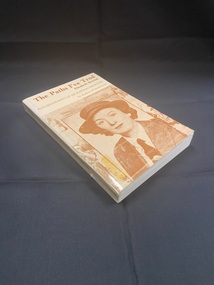
Book, Elizabeth Burchill, The paths I've trod, 1981
... Sister Burchill continued this work in Thursday Island and the Sepik District of New Guinea into the 1960s. ...'Dora Elizabeth Burchill was born in Hawthorn, Victoria and trained as a triple certificate nurse in Melbourne and London. Proving that nursing is the best passport for travel she subsequently travelled widely and became registered as a nurse in seven countries of the world. Cherishing the ideals of Florence Nightingale in peace and war, Sister Burchill volunteered to serve in Ethiopia during the Italian-Abyssinian War in 1936, nursed refugee children during the Spanish Civil War in 1937 and served with the 2nd AIF in Palestine and Egypt in 1940. Following six years as a member of the Australian Army Nursing Service, she took another challenging path, becoming involved in radio broadcasting [Working for 3SR Radio Station, Shepparton p185], writing and lecturing for the Commonwealth Institute in England. Six years later she returned to nursing and started the first full-time infant welfare clinic in Darwin for the Northern Territory Department of Health and remained in this important post of increasing development in post-war Darwin for five years. Sister Burchill continued this work in Thursday Island and the Sepik District of New Guinea into the 1960s. Many published articles in magazines and newspapers and five published books testify to her skill and determination as a factual writer. ?Innamincka?, is her best-known book. Seeking further worthwhile challenges in the 1970s, Sister Burchill studied for the Higher School Certificate which resulted in her earning a place in the Faculty of Arts, Monash University. She graduated as Bachelor of Arts in 1981. In 1986, she graduated as Bachelor of Letters at the University of Melbourne. Includes index. Bibliography: p. [249]-250. Medicine. Nursing. Burchill, Elizabeth, 1908-. Australia. Biographies (ANB/PRECIS SIN 0516392). Includes bibliographical references (pages 249-250) and index.' From TroveBook with brown text on cover and spine and brown image on coverfiction'Dora Elizabeth Burchill was born in Hawthorn, Victoria and trained as a triple certificate nurse in Melbourne and London. Proving that nursing is the best passport for travel she subsequently travelled widely and became registered as a nurse in seven countries of the world. Cherishing the ideals of Florence Nightingale in peace and war, Sister Burchill volunteered to serve in Ethiopia during the Italian-Abyssinian War in 1936, nursed refugee children during the Spanish Civil War in 1937 and served with the 2nd AIF in Palestine and Egypt in 1940. Following six years as a member of the Australian Army Nursing Service, she took another challenging path, becoming involved in radio broadcasting [Working for 3SR Radio Station, Shepparton p185], writing and lecturing for the Commonwealth Institute in England. Six years later she returned to nursing and started the first full-time infant welfare clinic in Darwin for the Northern Territory Department of Health and remained in this important post of increasing development in post-war Darwin for five years. Sister Burchill continued this work in Thursday Island and the Sepik District of New Guinea into the 1960s. Many published articles in magazines and newspapers and five published books testify to her skill and determination as a factual writer. ?Innamincka?, is her best-known book. Seeking further worthwhile challenges in the 1970s, Sister Burchill studied for the Higher School Certificate which resulted in her earning a place in the Faculty of Arts, Monash University. She graduated as Bachelor of Arts in 1981. In 1986, she graduated as Bachelor of Letters at the University of Melbourne. Includes index. Bibliography: p. [249]-250. Medicine. Nursing. Burchill, Elizabeth, 1908-. Australia. Biographies (ANB/PRECIS SIN 0516392). Includes bibliographical references (pages 249-250) and index.' From Trovenursing in warfare, elizabeth burchill, world war two, wwii, ww2, china-ethiopian war, spanish civil war, australian army nursing service -
 Returned Nurses RSL Sub-branch
Book, Elizabeth Burchill, The paths I've trod: autobigraphy of an Australian nurse, 1981
... Sister Burchill continued this work in Thursday Island and the Sepik District of New Guinea into the 1960s. ...'Dora Elizabeth Burchill was born in Hawthorn, Victoria and trained as a triple certificate nurse in Melbourne and London. Proving that nursing is the best passport for travel she subsequently travelled widely and became registered as a nurse in seven countries of the world. Cherishing the ideals of Florence Nightingale in peace and war, Sister Burchill volunteered to serve in Ethiopia during the Italian-Abyssinian War in 1936, nursed refugee children during the Spanish Civil War in 1937 and served with the 2nd AIF in Palestine and Egypt in 1940. Following six years as a member of the Australian Army Nursing Service, she took another challenging path, becoming involved in radio broadcasting [Working for 3SR Radio Station, Shepparton p185], writing and lecturing for the Commonwealth Institute in England. Six years later she returned to nursing and started the first full-time infant welfare clinic in Darwin for the Northern Territory Department of Health and remained in this important post of increasing development in post-war Darwin for five years. Sister Burchill continued this work in Thursday Island and the Sepik District of New Guinea into the 1960s. Many published articles in magazines and newspapers and five published books testify to her skill and determination as a factual writer. ?Innamincka?, is her best-known book. Seeking further worthwhile challenges in the 1970s, Sister Burchill studied for the Higher School Certificate which resulted in her earning a place in the Faculty of Arts, Monash University. She graduated as Bachelor of Arts in 1981. In 1986, she graduated as Bachelor of Letters at the University of Melbourne. Includes index. Bibliography: p. [249]-250. Medicine. Nursing. Burchill, Elizabeth, 1908-. Australia. Biographies (ANB/PRECIS SIN 0516392). Includes bibliographical references (pages 249-250) and index.' From TroveSepia toned paperback book with title and author details printed in brown text along spine and cover. Front cover shows a sepia photo of an Army Nurse overlaying an image of soldiers, camels and a ship.non-fiction'Dora Elizabeth Burchill was born in Hawthorn, Victoria and trained as a triple certificate nurse in Melbourne and London. Proving that nursing is the best passport for travel she subsequently travelled widely and became registered as a nurse in seven countries of the world. Cherishing the ideals of Florence Nightingale in peace and war, Sister Burchill volunteered to serve in Ethiopia during the Italian-Abyssinian War in 1936, nursed refugee children during the Spanish Civil War in 1937 and served with the 2nd AIF in Palestine and Egypt in 1940. Following six years as a member of the Australian Army Nursing Service, she took another challenging path, becoming involved in radio broadcasting [Working for 3SR Radio Station, Shepparton p185], writing and lecturing for the Commonwealth Institute in England. Six years later she returned to nursing and started the first full-time infant welfare clinic in Darwin for the Northern Territory Department of Health and remained in this important post of increasing development in post-war Darwin for five years. Sister Burchill continued this work in Thursday Island and the Sepik District of New Guinea into the 1960s. Many published articles in magazines and newspapers and five published books testify to her skill and determination as a factual writer. ?Innamincka?, is her best-known book. Seeking further worthwhile challenges in the 1970s, Sister Burchill studied for the Higher School Certificate which resulted in her earning a place in the Faculty of Arts, Monash University. She graduated as Bachelor of Arts in 1981. In 1986, she graduated as Bachelor of Letters at the University of Melbourne. Includes index. Bibliography: p. [249]-250. Medicine. Nursing. Burchill, Elizabeth, 1908-. Australia. Biographies (ANB/PRECIS SIN 0516392). Includes bibliographical references (pages 249-250) and index.' From Trovenursing in warfare, elizabeth burchill, world war two, wwii, ww2, china-ethiopian war, spanish civil war, australian army nursing service -
 Williamstown Historical Society Inc
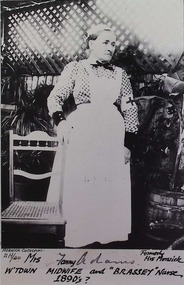
Photograph - Mrs Fanny Adams, Williamstown Midwife and "Brassey" Nurse, c.1890's
... Thursday at the great age of 92. She was twice married, Mr. Morwick, her first husband, having been lighthouse keeper on Gabo Island and afterwards at Cape Otway. ...Thursday at the great age of 92. She was twice married, Mr. Morwick, her first husband, having been lighthouse keeper on Gabo Island and afterwards at Cape Otway. ...Fanny Adams (nee Morwick) was born Fanny Higgs about 29 October 1836 in Surrey England and emigrated to Williamstown. She married George Morwick, in November 1857 and they had 7 children. Her husband worked as a boatman for the Pilot Service and as Assistant Light Keeper at Gabo Island and Cape Otway. Following George Morwick's death in 1872, she married William Adams in December 1873, and had two more children. She operated a hay, corn and fruit shop in Thompson Street which her first husband owned, until 1874, and then took it over again in 1883 until 1891. She also worked as a Midwife and Ladies Nurse. Lady Brassey, wife of Victoria's Governor , took first aid lessons from St John Ambulance tutors. In the late 1870-80s, she formed a female first aid corps known as "The Brassey Nurses" and Fanny Adams was a member of the corps. Fanny Adams died on the 1st August 1928 at the age of 92 years. An article in The Age on the 4 August 1928 reported that "Mrs. Fanny Adams, a resident of Williamstown for 73 years, died in her home there on Thursday at the great age of 92. She was twice married, Mr. Morwick, her first husband, having been lighthouse keeper on Gabo Island and afterwards at Cape Otway. There are 43 descendants, including Mr. G. F. Morwick, the well-known sailmaker and tug owner, and Mrs. Parkin, wife of Mr. Parkin, officer in charge of the Customs department at Williamstown." fanny adams, mrs morwick, williamstown hospital, 1890's
