
Showing 39 items matching "timber preservation"
-
 Federation University Historical Collection
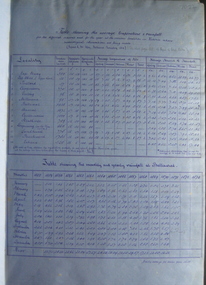
Book, Victorian Government Legislative Assembly, The Select Committee on Castlemaine and Sandhurst water supply, Report from the Select Committee on Castlemaine and Sandhurst Water Supply, together with the proceedings of the Committee, minutes of evidence and appendices, 19/5/1865 (exact)
... ...timber preservation...He was assistant engineer for the Ballaarat and Ballarat East Water Supply Committee and helped plan local reservoirs. water supply victoria castlemaine directories sandhurst directories ballarat directories james blackburn edward wardle daylesford water race c j taylor george avery fletcher bagge ohlfsen bagge george foote john h reilly ambrose johnson george francis timber preservation james forbes alfred surplice malcolm carmichael robert adams frederick hugh thomas h o christerpherson william downe thomas lawrence brown francis hadgson nixon strangways guildford maldon muckleford lauriston malmesbury franklinford walmer strathloddon downe ferdinand krause m7082 trentham castlemaine drummond metcalfe sutton grange lockwood ravenswood mandurang yandoit c.h. ohlfsen bagge moorabool reservoir gong gong reservoir harry beale's reservoir pincott reservoir frank pinkerton water A signature by "Ferdinand M. ...This book contains the report from the select committee on Castlemaine and Sandhurst water supply; with the proceedings of the committee, minutes of evidence and appendices. It also contains the report Of the Engineer-In-Chief of Railways, and reply of the Chief Engineer of Water Supply on the works constructed by the Victorian Water Supply Department, presented to both houses of parliament by His Excellency’s command. Ferdinand M. Krause, was a lecturer at the Ballarat School of Mines in Geology Mineralogy Mining Engineering and Surveying. He was a Fellow of the Geological Society and a Fellow of the Linnian Society. He was assistant engineer for the Ballaarat and Ballarat East Water Supply Committee and helped plan local reservoirs.A brown cloth hard cover, foolscap book with leather spine. Title is written in black on the title page. "Water Supply Reports" is engraved in gold on spine. It includes a table showing the monthly and yearly rainfall and shade temperature at Ballarat, 2nd February, 1885. It also includes two reports and two replies, a map No.7082.2 of Victorian Water Supply, Castlemaine and Sandhurst district general plan including lines of Aqueduct, Reservoirs. No. 7082.3 of Victorian Mining districts, Mining Divisions and The Gold Fields in 1866 - includes districts to be supplied under the Waterworks Act, 1965. It also includes: *Report of the Engineer-in-chief of Railways and Reply of the Chief Engineer of Water Supply on the works constructed by the Victorian Water Supply Department, 1869. * Coliban Water Scheme, 1864 * Ballarat and Ballarat East Water Supply (1869) including the Ballarat Water Supply List containing names of occupiers and nature of improvements on lands comprised within the proposed reserve of Gong Gong Reservoir, Ballaarat. At Warrenheip the names included: Honora McCallin, William Honan, C. McMahon, Patrick McMahon, J.P. Beach, J.H. Smith, Michael Nestor, Martin Quinn, Martin McIntyre, Robert Higgins, Coleman Kane, Robert Bond. At Ballarat: William Clarke, Richard White, John Hosking, Wesleyan Chapel, J. Hewitt, Robert McRobinson. At Bungaree: John Pullin, John Llewellyn. William Daw, Smith and Wynne, William Brough, A. Alexander. * Ballarat and Ballaarat East Water Supply report upon the advisability, or otherwise, of constructing a reservoir at the junction of the Yarrowee Creek and Gile's Creek, upon a site known as Gile's Reservoir (printed by Frank Pinkerton). This report has numerous notes written on it (most probably by Krause) and includes the capacity of Harry Beale's Reservoir, Pimcott's Reservoir and the Proposed Gong Gong Reservoir. * Statement as to the position of the Ballaarat and Ballaarat East Borough Councils in Connection with Water Supply, September 1869. * Ballarat and Ballaarat East Water Supply - General Statement upon the Ballaarat and Ballaarat east Scheme of Water Supply. Includes information on Moorabool reservoir, Harry Beale's Reservoir, Lal Lal Creek, Two Mile Creek, Beale's Dam, Yarrowee Creek, Gong Gong Reservoir, Kirk's Dam, Devil's Creek, Moorabool Creek. Additional handwritten notes (probably by Krause) * Engineer's Report on the resolution of the COmmittee of Water Supply, of the 7th July 1868. The report refers to the Country around Mount Warrenheip. Names mentioned are L. Abraham, Great North-West Gold Mining Company, Border Sawmills, Ferdinand Krause, Ohlfsen Bagge, W.H. Shaw, A signature by "Ferdinand M. Krause" at the top corner of the title page. A few pages have handwriting on the margins, it is believed to be his handwriting. water supply victoria, castlemaine directories, sandhurst directories, ballarat directories, james blackburn, edward wardle, daylesford water race, c j taylor, george avery fletcher, bagge, ohlfsen bagge, george foote, john h reilly, ambrose johnson, george francis, timber preservation, james forbes, alfred surplice, malcolm carmichael, robert adams, frederick hugh thomas, h o christerpherson, william downe, thomas lawrence brown, francis hadgson nixon, strangways, guildford, maldon, muckleford, lauriston, malmesbury, franklinford, walmer, strathloddon, downe, ferdinand krause, m7082, trentham, castlemaine, drummond, metcalfe, sutton grange, lockwood, ravenswood, mandurang, yandoit, c.h. ohlfsen bagge, moorabool reservoir, gong gong reservoir, harry beale's reservoir, pincott reservoir, frank pinkerton, water -
 Marysville & District Historical Society
Article (item) - Book Extract, Aboriginal History, Unknown
... preservation act 1972...camp jungai...rubicon...warrawa college...victorian archaeological survey...hume and hovell...molesworth...broadford...william hamilton...alexandra...mansfield...avenel...tallarook...worrough...john cotton...trawool valley...seymour...pyalong...gold mining...central victoria...strath creek...reedy creek...yea...jamieson...marysville...jordan goldfields...comet mine...wandong...melbourne-albury railway...rabbit plague...narbethong...lord kitchener...puckapunyal military camp...1944 decentralisation policy...eildon weir...hume freeway bypass...timber...The extract also covers current (1991) status of Aboriginal affairs and European settlement of the area. kulin nation woiworung taungurong bunurong watherong jajowrong wurrundjeri-willam waring-ilam-balluk goulburn valley acheron valley upper goulburn district eildon-thornton eildon homestead o'rourke thornton assistant protector thomas yarra valley kilmore mount william jt gellibrand william buckley major mitchell port phillip murray river yorta yorta yowung-illam-balluk waring-illam-balluk ngurai-illam-wurrung kurnai nation protectorate system victoria george robinson chief protector willam thomas james dredge edward parker charles sievewright central board for the protection of aborigines presbyterian mission anglican mission moravian mission wonga munnarin beaning murrin murrin parugean baruppin koo-gurrin acheron river little river acheron run peter snodgrass stephen jones barak dividing range black spur watts river badger creek healesville coranderrk victorian christmas bush aboriginal and torres strait islander heritage protection act 1984 archaelological and aboriginal relics preservation act 1972 camp jungai rubicon warrawa college victorian archaeological survey hume and hovell molesworth broadford william hamilton alexandra mansfield avenel tallarook worrough john cotton trawool valley seymour pyalong gold mining central victoria strath creek reedy creek yea jamieson marysville jordan goldfields comet mine wandong melbourne-albury railway rabbit plague narbethong lord kitchener puckapunyal military camp 1944 decentralisation policy eildon weir hume freeway bypass timber industry australian paper manufacturers mill An extract from a book regarding a brief history of the Kulin nation of the North Central district of Victoria. ...An extract from a book regarding a brief history of the Kulin nation of the North Central district of Victoria.An extract from a book regarding a brief history of the Kulin nation of the North Central district of Victoria. This history covered is both prior to European history and post-European history. The extract also covers current (1991) status of Aboriginal affairs and European settlement of the area.kulin nation, woiworung, taungurong, bunurong, watherong, jajowrong, wurrundjeri-willam, waring-ilam-balluk, goulburn valley, acheron valley, upper goulburn district, eildon-thornton, eildon homestead, o'rourke, thornton, assistant protector thomas, yarra valley, kilmore, mount william, jt gellibrand, william buckley, major mitchell, port phillip, murray river, yorta yorta, yowung-illam-balluk, waring-illam-balluk, ngurai-illam-wurrung, kurnai nation, protectorate system, victoria, george robinson, chief protector, willam thomas, james dredge, edward parker, charles sievewright, central board for the protection of aborigines, presbyterian mission, anglican mission, moravian mission, wonga, munnarin, beaning, murrin murrin, parugean, baruppin, koo-gurrin, acheron river, little river, acheron run, peter snodgrass, stephen jones, barak, dividing range, black spur, watts river, badger creek, healesville, coranderrk, victorian christmas bush, aboriginal and torres strait islander heritage protection act 1984, archaelological and aboriginal relics preservation act 1972, camp jungai, rubicon, warrawa college, victorian archaeological survey, hume and hovell, molesworth, broadford, william hamilton, alexandra, mansfield, avenel, tallarook, worrough, john cotton, trawool valley, seymour, pyalong, gold mining, central victoria, strath creek, reedy creek, yea, jamieson, marysville, jordan goldfields, comet mine, wandong, melbourne-albury railway, rabbit plague, narbethong, lord kitchener, puckapunyal military camp, 1944 decentralisation policy, eildon weir, hume freeway bypass, timber industry, australian paper manufacturers mill -
 Ringwood and District Historical Society
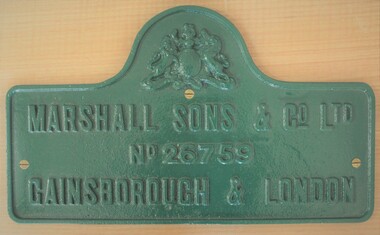
Plaque - Cast iron machine badge, Engine maker's plate from former Ringwood Coolstore (1911 - demolished 1963)
... Green cast iron engine plaque featuring maker's name mounted on varnished timber backing, retrieved by Ron Pullin for preservation by Ringwood Historical Society following demolition of Ringwood Coolstore in 1963....Marshall Sons & Co Ltd No 26759 Gainsborough & London Green cast iron engine plaque featuring maker's name mounted on varnished timber backing, retrieved by Ron Pullin for preservation by Ringwood Historical Society following demolition of Ringwood Coolstore in 1963. ...Green cast iron engine plaque featuring maker's name mounted on varnished timber backing, retrieved by Ron Pullin for preservation by Ringwood Historical Society following demolition of Ringwood Coolstore in 1963.Marshall Sons & Co Ltd No 26759 Gainsborough & London -
 Flagstaff Hill Maritime Museum and Village
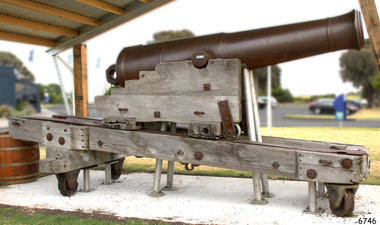
Weapon - Cannon, 1861
... timber (regarded as being Burmese teak) have helped to preserve these carriages in Australia. This particular carriage and traversing slide would have been manufactured about the same time as the gun (in 1861) in the Royal Carriage Department of the Royal Gun Factory in Woolwich, England. The gun would then have been assembled on the traversing slide of the carriage, then despatched as a unit. The wooden slide compressor mechanism that belongs to the cannon was used to limit the recoil when the cannon was fired. It is now stored separately for purposes of preservation...timber (regarded as being Burmese teak) have helped to preserve these carriages in Australia. This particular carriage and traversing slide would have been manufactured about the same time as the gun (in 1861) in the Royal Carriage Department of the Royal Gun Factory in Woolwich, England. The gun would then have been assembled on the traversing slide of the carriage, then despatched as a unit. The wooden slide compressor mechanism that belongs to the cannon was used to limit the recoil when the cannon was fired. It is now stored separately for purposes of preservation ...The artillery piece of the cannon was cast at the Low Moor foundry in England in 1861. It is a 68 pound muzzle loading cannon, capable of firing a 68 pound weight projectile. The arrow on the top of the barrel is the symbol of government ownership. It is probably one of the artillery pieces purchased by the Victorian government in response to the 1863 report by Captain Scratchley, which recommended 19 such artillery pieces be bought for the defence of Hobsons Bay, (Williamstown, Melbourne) (Billets p.12). It was possibly brought to Warrnambool in the late 1860s or the 1870s, to be used for training purposes by volunteers and local militia. The wrought iron runners were probably added to the slides at a later date. This model of carriage had been manufactured since 1855, and the traversing slide since 1860. The traversing slide of the wooden carriage absorbs the recoil when the gun is then returns to the gun to its original position for loading and re-firing. The properties of the timber (regarded as being Burmese teak) have helped to preserve these carriages in Australia. This particular carriage and traversing slide would have been manufactured about the same time as the gun (in 1861) in the Royal Carriage Department of the Royal Gun Factory in Woolwich, England. The gun would then have been assembled on the traversing slide of the carriage, then despatched as a unit. The wooden slide compressor mechanism that belongs to the cannon was used to limit the recoil when the cannon was fired. It is now stored separately for purposes of preservation. It is extremely rare, as it is the only one surviving in this group of South Western Victorian cannons.This 68 pdr cannon, mounted with its original wooden carriage, is part of the South Western Victoria collection of surviving 19th Century artillery pieces, item number W/F/02. It is rated as EXTREMELY RARE on a State, National and World level. The 68 pound smooth bore cannon of this period are not particularly rare either in Australia or overseas; its significance lies in its Victorian provenance and as an element in a major collection of 19th century cannon. The number of surviving carriages with traversing slides in this group in South Western Victoria is unique in Australia and probably in the World. Out of 10 such platforms surviving in Australia, the South Western Victorian group has half. Several survive around the world but probably not in such a large group. The wooden sliding compressor mechanism belonging to this cannon is extremely rare, and the only one in this South Western Victorian group of Guns and Cannons. As a whole, this cannon has undergone very little restoration or modification, giving it a high level of integrity.Warrnambool Garrison Cannon. 68pdr smoothbore, muzzle-loading, cast-iron cannon. Manufactured in Low Moor, 1861, No. 10310. Mounted on the wooden carriage with wrought iron traversing slide and wrought iron runners and fittings. The cannon's Cascabel is cast with a loop. The wooden slide Compressor Mechanism, or Recoil Mechanism, is extremely rare. This mechanism comprises two equal-sized sections of wood, one on each side of the centre, joined by metal rods. In the centre of this wooden platform, with openings, top and bottom is a 15cm diameter metal cylinder with two cusps on the edge of the top (this wood has split over time). Two parallel sides each have two 1cm thick metal "L' plates attached 15cm long and 8.5cm wide. With the unit is ‘ L’ bracket, curved bracket and bolt head.Cannon trunnion "LOW MOOR / 10310 / 1861" Top of the barrel "7045, (symbol of an arrow pointing up), 95 – 3 – 14, 1861, 209" Cascabel "CV / N / C" The rear of left-hand slide " "OD” “JW” “No 33” Side chock – “JW” twice. flagstaff hill, warrnambool, shipwrecked-coast, flagstaff-hill, flagstaff-hill-maritime-museum, maritime-museum, shipwreck-coast, flagstaff-hill-maritime-village, muzzle loading cannon, 68 pound cannon, low moor foundry, royal gun factory, warrnambool militia, warrnambool garrison volunteers, warrnambool fortifications, wooden sliding compression mechanism, carriage and traversing slide, 19th century cannon, traversing platform, garrison sliding carriage, 68 pounder -
 Eltham District Historical Society Inc
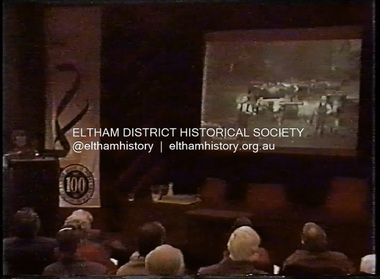
Film - Video (DVD), Melbourne and Metropolitan Board of Works, Yarra River Conference Proceedings; a Board of Works centenary event, 13-16 April 1991
... Tape 2 ( 1 1/2 hours) 1892-1934: People Begin to See Beauty and Romance to the River Henley-on-Yarra; realignment of the Yarra; MMBW is responsible for a sewerage system; new docks to cope with increased overseas trade; development of recreational parks; new reservoirs; timber production and timber tramways; bushfire; flood of 1934. 1935-1970: The River is Neglected Still, Except When it Proves Useful Bushfirs of 1939; the end of many sawmills; birth of tourism; increased interest in conservation and preservation of land for open space; further augmentation of water supply system; birth of containerisation changes the port; environmental concerns gain momentum. ...Tape 2 ( 1 1/2 hours) 1892-1934: People Begin to See Beauty and Romance to the River Henley-on-Yarra; realignment of the Yarra; MMBW is responsible for a sewerage system; new docks to cope with increased overseas trade; development of recreational parks; new reservoirs; timber production and timber tramways; bushfire; flood of 1934. 1935-1970: The River is Neglected Still, Except When it Proves Useful Bushfirs of 1939; the end of many sawmills; birth of tourism; increased interest in conservation and preservation of land for open space; further augmentation of water supply system; birth of containerisation changes the port; environmental concerns gain momentum. ...Yarra River Conference History Segment [Noted on VHS tape jackets "Due to unavoidable circumstances, the quality of these tapes in some setions is less than desired."] The Yarra River Conference, organised by the Board of Works as part of the Centenary Celebrations, was held in the Board's Head Office Theatrette from 13-16 April, 1991. A segment of the Conference focussed on the role that the Yarra River has played in relation to the historical development of Melbourne. Conceived and presented by a group of prominent historians as a chronological 'trip down the river in time', and profusely illustrated with slides, this segment traced the various impacts that urban and rural growth, development of marine commerce, recreational uses, and environmental problems have had on the Yarra during a century and a half of European occupation. As no formal written paper of this combined presentation is available, these two video-tapes provide a record for anyone who has an interest in tis fascinating aspect of the Yarra's history. The speakers who combined to present this segment are identified on the cover of Tape 2. Tape 1 (2 hours) 1838-1863 Deputy ?? to Utility Early navigators of the Yarra River; developing the port of Melbourne; the gold rush and its effect on the new colony; punts and bridges; water supply; pollution of the Yarra; the discovery of gold and early settlement of the Yarra valley; floods of 1839 and 1863. 1863-1891 Formation of the Harbour Trust; Coode Canal; pollution of the Yarra by industry; aborigines, gold miners, timber getters in the Upper Yarra areas; bridges; the flood of 1891. Tape 2 ( 1 1/2 hours) 1892-1934: People Begin to See Beauty and Romance to the River Henley-on-Yarra; realignment of the Yarra; MMBW is responsible for a sewerage system; new docks to cope with increased overseas trade; development of recreational parks; new reservoirs; timber production and timber tramways; bushfire; flood of 1934. 1935-1970: The River is Neglected Still, Except When it Proves Useful Bushfirs of 1939; the end of many sawmills; birth of tourism; increased interest in conservation and preservation of land for open space; further augmentation of water supply system; birth of containerisation changes the port; environmental concerns gain momentum. Speakers Dr Tony Dingle *, Department of Economic History, Monash University Dr Carolyn Rasmussen *, History Consultant Prof. Graeme Davison, History Department, Monash University Mr. Tom Griffiths, Lecturer in Public History, Monash Uiversity Mr. Patrick Miller, History Consultant Mr. Colin Jones, Author and Historian * Co-authors of the Board's history, 'Vital Connections'.video recording, yarra river, conference proceedings -
 Eltham District Historical Society Inc
Slide, Joh Ebeli, The old Baker's house prior to demolition, corner of York Street and Main Road, Eltham, c.Sep. 1979
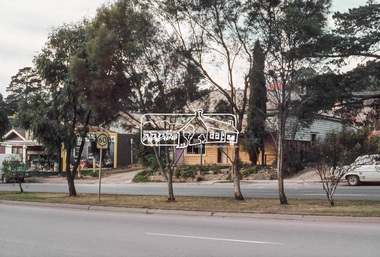
... timber verandah deck which directly fronted the Main Road footpath. At the rear is a brick building of much later date which was for many years used for the bakery. The buildings were demolished for flat construction. Publicity at the time was oriented toward moves to preserve the weatherboard building which came from a number of individuals including members of this society. The society had no official connection with any proposal to retain the building or any part of it on any other site. The issues involved were part of a wider consideration of the matter of preservation...timber verandah deck which directly fronted the Main Road footpath. At the rear is a brick building of much later date which was for many years used for the bakery. The buildings were demolished for flat construction. Publicity at the time was oriented toward moves to preserve the weatherboard building which came from a number of individuals including members of this society. The society had no official connection with any proposal to retain the building or any part of it on any other site. The issues involved were part of a wider consideration of the matter of preservation ...Photo taken immediately prior to the demolition of the old baker's shop on the corner of Main Road and York Street, Eltham. Joh Ebeli and Elwers Howard endeavoured to preserve some parts of the house. The old weatherboard building, possibly dating from the 1860s, comprised a dwelling with a shop in the front room opening off a timber verandah deck which directly fronted the Main Road footpath. At the rear is a brick building of much later date which was for many years used for the bakery. The buildings were demolished for flat construction. Publicity at the time was oriented toward moves to preserve the weatherboard building which came from a number of individuals including members of this society. The society had no official connection with any proposal to retain the building or any part of it on any other site. The issues involved were part of a wider consideration of the matter of preservation of historic buildings. In this case the Society and in particular the committee had been aware for some years of the impending demolition. The possibility of the preservation of the building had been canvassed on a number of occasions. The Society’s view was that whilst the baker’s shop was an interesting old building which contributed to the character of Main Road, it was not of sufficient importance to wage an organised campaign for its preservation. It considered that if the building were to be preserved for historical reasons it would be far more feasible to retain it in its present location than to re-build it on another site.35 mm colour positive transparency Mount - Agfachrome Professional black (Germany) 4 dotsmain road, old eltham bakery, york street -
 Eltham District Historical Society Inc
Slide, Joh Ebeli, The old Baker's house prior to demolition, corner of York Street and Main Road, Eltham, c.Sep. 1979
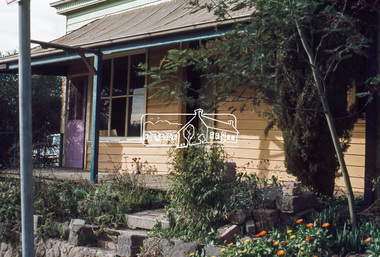
... timber verandah deck which directly fronted the Main Road footpath. At the rear is a brick building of much later date which was for many years used for the bakery. The buildings were demolished for flat construction. Publicity at the time was oriented toward moves to preserve the weatherboard building which came from a number of individuals including members of this society. The society had no official connection with any proposal to retain the building or any part of it on any other site. The issues involved were part of a wider consideration of the matter of preservation...timber verandah deck which directly fronted the Main Road footpath. At the rear is a brick building of much later date which was for many years used for the bakery. The buildings were demolished for flat construction. Publicity at the time was oriented toward moves to preserve the weatherboard building which came from a number of individuals including members of this society. The society had no official connection with any proposal to retain the building or any part of it on any other site. The issues involved were part of a wider consideration of the matter of preservation ...Photo taken immediately prior to the demolition of the old baker's shop on the corner of Main Road and York Street, Eltham. Joh Ebeli and Elwers Howard endeavoured to preserve some parts of the house. The old weatherboard building, possibly dating from the 1860s, comprised a dwelling with a shop in the front room opening off a timber verandah deck which directly fronted the Main Road footpath. At the rear is a brick building of much later date which was for many years used for the bakery. The buildings were demolished for flat construction. Publicity at the time was oriented toward moves to preserve the weatherboard building which came from a number of individuals including members of this society. The society had no official connection with any proposal to retain the building or any part of it on any other site. The issues involved were part of a wider consideration of the matter of preservation of historic buildings. In this case the Society and in particular the committee had been aware for some years of the impending demolition. The possibility of the preservation of the building had been canvassed on a number of occasions. The Society’s view was that whilst the baker’s shop was an interesting old building which contributed to the character of Main Road, it was not of sufficient importance to wage an organised campaign for its preservation. It considered that if the building were to be preserved for historical reasons it would be far more feasible to retain it in its present location than to re-build it on another site.35 mm colour positive transparency Mount - Agfachrome Professional black (Germany) 4 dotsmain road, old eltham bakery, york street -
 Glen Eira Historical Society
Album - Album page, Lucan Street, 7, Circa 1972
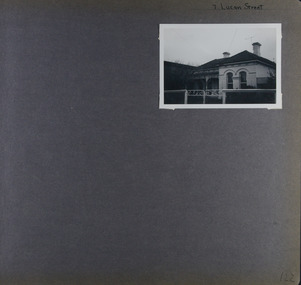
... preservation. The album is related to a Survey the Caulfield Historical Society developed in collaboration with the National Trust of Australia (Victoria) and Caulfield City Council to identify historic buildings within the City of Caulfield that warranted the protection of a National Trust Classification. Principal photographer thought to be Trevor Hart, member of Caulfield Historical Society. Most photographs were taken between 1966-1972 with a small number of photographs being older and from unknown sources. All photographs are black and white except where stated, with 386 photographs over 198 pages. trevor hart caulfield north villa residence verandah terraces timber ...This photograph is part of the Caulfield Historical Album 1972. This album was created in approximately 1972 as part of a project by the Caulfield Historical Society to assist in identifying buildings worthy of preservation. The album is related to a Survey the Caulfield Historical Society developed in collaboration with the National Trust of Australia (Victoria) and Caulfield City Council to identify historic buildings within the City of Caulfield that warranted the protection of a National Trust Classification. Principal photographer thought to be Trevor Hart, member of Caulfield Historical Society. Most photographs were taken between 1966-1972 with a small number of photographs being older and from unknown sources. All photographs are black and white except where stated, with 386 photographs over 198 pages. Page 122 of Photograph Album with one landscape photograph of a house at 7 Lucan Street.Handwritten: 7 Lucan Street [top right] / 122 [bottom right]trevor hart, caulfield north, villa residence, verandah, terraces, timber roof brackets, gables, cast iron ridging, ornate plasterwork, arched windows, curved windows, chimneys, lucan street, victorian style, cast iron work, houses -
 Otway Districts Historical Society
Photograph, Ray Jude, Beech Forest: engine leaving balloon loop, 1959, 21 November 1959
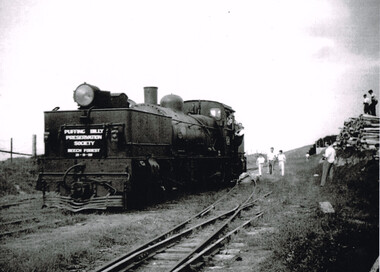
... Engine G41, showing the sign "Puffing Billy Preservation Society, Beech Forest, 21-11-59", leaves the balloon loop at Beech Forest Railway Station, with guard and child hanging from the engine. A number of people are in the area, particularly two on top of a stack of timber. ...Engine G41, showing the sign "Puffing Billy Preservation Society, Beech Forest, 21-11-59", leaves the balloon loop at Beech Forest Railway Station, with guard and child hanging from the engine. A number of people are in the area, particularly two on top of a stack of timber. ...B/W. Engine G41, showing the sign "Puffing Billy Preservation Society, Beech Forest, 21-11-59", leaves the balloon loop at Beech Forest Railway Station, with guard and child hanging from the engine. A number of people are in the area, particularly two on top of a stack of timber. beech forest; railways; -
 Port of Echuca
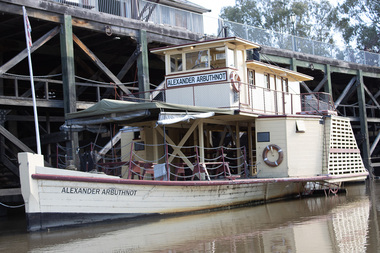
Functional object - Paddlesteamer, P.S. Alexander Arbuthnot
... timber. She was later owned by Evans Bros and then Barmah Charcoal Ltd. She sank at Yeilima, re-floated in 1973, placed on a low loader and taken to Shepparton for preservation. ...timber. She was later owned by Evans Bros and then Barmah Charcoal Ltd. She sank at Yeilima, re-floated in 1973, placed on a low loader and taken to Shepparton for preservation. ...The P.S. Alexander Arbuthnot was the last of the paddle steamers built at Koondrook, for the river trade in 1923. Owned by the Arbuthnot Sawmills. She was used to bring timber in from the forest to the sawmills to be processed from logs to timber. She was later owned by Evans Bros and then Barmah Charcoal Ltd. She sank at Yeilima, re-floated in 1973, placed on a low loader and taken to Shepparton for preservation. Echuca city council bought her for the Port of Echuca in April 1989. She was bought to Echuca in December 1991 to complete her restoration by shipwright Kevin Hutchinson. She is now used as a passenger vessel and is licensed to carry 47 passengers. The P.S. Alexander Arbuthnot is a reminder of the past life on the river. Being the last paddle steamer built for the river trade in 1923, the Alexander Arbuthnot is a reminder of the past life on the river. Licensed to now carry 47 passengers, she was used by the saw mills to bring timber in from the forests to the sawmills. A timber planked, monohull, side wheeled paddlesteamer with a 8hp horizontal Ruston Hornby steam engine. It has a flat bottom and mutiple decks. Currently painted cream with burgandy trim.Alexander Arbuthnot signage on wheelhouse and port and starboard bowp.s. alexander arbuthnot -
 Puffing Billy Railway
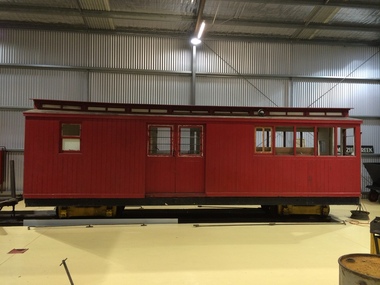
6NBC, Combined Passenger and Guards Van. 2'6" Gauge, 1906
... Preservation Society and moved to Menzies Creek in 1959 Utilised as a ticket office and kiosk for the Museum from 1965 to 2010. Service History : NBDBD 6.VA - 26/ 5/1905 NWS Built new - circa 1910 - To NBC 6.VA - *NBC 6.VA - circa 1910 - Reference Photo SL20 p25 /12/1927 - Modified AC Malco BO 19/ 1/1951 - Scrapped Historic - Victorian Railways - Narrow Gauge Rolling Stock - NBC 2nd Class Passenger Car and Guard's Van puffing billy railway, pbr, 6nbc - victorian railways nbc class combined passenger and guards van. 2'6" gauge 6NBC Timber body (Painted) Steel Chassis (painted) Brass Fittings (Raw) Steel Fittings (Painted) Combined Passenger and Guards Van. 2'6" Gauge 6NBC Victorian Railways - Newport Workshop ...NBC COMBINED SECOND-CLASS PASSENGER CAR AND GUARD'S VAN. Six cars, numbered 1-6, were built during 1898-1905 and originally classed NBDBD. The repeat of the 'BD' lettering in the classification signified that the vehicle was carried on bogie wheels. At the time the letter D was the letter code for Brakevans / Guard's Vans, but this was changed to C when the double-letter code was simplified in 1910. The letter C now being used to describe that a guards compartment was included in the bogie vehicle. On the narrow gauge, the vehicle numbers were retained. A final NBC numbered 7 was added to the fleet in 1910 Between 1926 and 1929 the cars were converted to autocoupler operation. 6NBC Used on the Upper Ferntree Gully, Wangaratta and Colac narrow gauge railways. Withdrawn from service 1951 and used as a workman's hut at Pakenham. Purchased by the Puffing Billy Preservation Society and moved to Menzies Creek in 1959 Utilised as a ticket office and kiosk for the Museum from 1965 to 2010. Service History : NBDBD 6.VA - 26/ 5/1905 NWS Built new - circa 1910 - To NBC 6.VA - *NBC 6.VA - circa 1910 - Reference Photo SL20 p25 /12/1927 - Modified AC Malco BO 19/ 1/1951 - Scrapped Historic - Victorian Railways - Narrow Gauge Rolling Stock - NBC 2nd Class Passenger Car and Guard's VanTimber body (Painted) Steel Chassis (painted) Brass Fittings (Raw) Steel Fittings (Painted)6NBCpuffing billy railway, pbr, 6nbc - victorian railways nbc class combined passenger and guards van. 2'6" gauge -
 Puffing Billy Railway
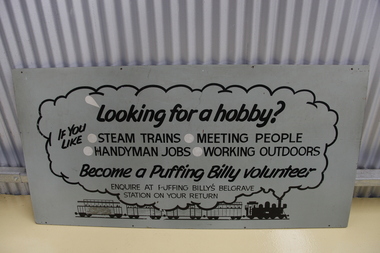
Carriage Sign - Early Puffing Billy Volunteer Advertising, 1970s
... Carriage Sign - Early Puffing Billy Preservation Society Volunteer Advertising Grey timber sign with black painted text....Historic - Puffing Billy Railway Carriage Sign - Early Puffing Billy Volunteer Advertising puffing billy nbh advertising Looking for a Hobby if you like - steam trains - meeting people - handy man jobs - working outdoors Become a Puffing Billy Volunteer Enquire at Puffing Billy's Belgrave Station on your return Carriage Sign - Early Puffing Billy Preservation Society Volunteer Advertising Grey timber sign with black painted text. ...Carriage Sign - Early Puffing Billy Volunteer Advertising These signs were fitted to NBH style carriages. Historic - Puffing Billy Railway Carriage Sign - Early Puffing Billy Volunteer AdvertisingCarriage Sign - Early Puffing Billy Preservation Society Volunteer Advertising Grey timber sign with black painted text.Looking for a Hobby if you like - steam trains - meeting people - handy man jobs - working outdoors Become a Puffing Billy Volunteer Enquire at Puffing Billy's Belgrave Station on your return puffing billy, nbh, advertising -
 Puffing Billy Railway
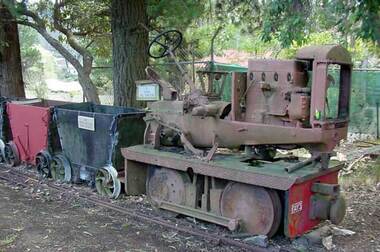
Day's Petrol Rail Tractor, Petrol Rail Tractor Gauge 2'0", circa 1926 - 1940
... Today, only two survive, a complete example at the Puffing Billy Railway Museum at Menzies Creek, and one at Alexandra Timber Tramway Museum This 2-ft gauge 4wPM locomotive is believed to have been one of two Day's Petrol Rail tractors formerly used by Cheetham Salt, possibly at the Moolap works near Geelong. Service History :owned by Cheetham Salt, Moolap ( dates unknown ) Geelong Steam Preservation...Today, only two survive, a complete example at the Puffing Billy Railway Museum at Menzies Creek, and one at Alexandra Timber Tramway Museum This 2-ft gauge 4wPM locomotive is believed to have been one of two Day's Petrol Rail tractors formerly used by Cheetham Salt, possibly at the Moolap works near Geelong. Service History :owned by Cheetham Salt, Moolap ( dates unknown ) Geelong Steam Preservation ...Rail tractors were popular with Victorian sawmillers. They were generally cheaper than a steam locomotive, required no special qualifications to drive, and used proven power plants for which spares were available locally. The tractor was constructed by Day’s Engineering of South Melbourne which, although better known for its pumping equipment, built more than fifty rail tractors for Victorian sawmillers and other industrial tramway users. W. Day & Sons is believed to have constructed its first light railway locomotive in 1926. From then until the mid 1940s, the firm appears to have built at least fifty locomotives at its premises in South Melbourne, of which roughly half were four-wheel locomotives and roughly half were six-wheel locomotives like the restored Day’s rail tractor formerly operated by Ruoak Timbers. Of the four-wheel locomotives, ten were 2-ft (610mm) gauge locomotives similar to this one. Today, only two survive, a complete example at the Puffing Billy Railway Museum at Menzies Creek, and one at Alexandra Timber Tramway Museum This 2-ft gauge 4wPM locomotive is believed to have been one of two Day's Petrol Rail tractors formerly used by Cheetham Salt, possibly at the Moolap works near Geelong. Service History :owned by Cheetham Salt, Moolap ( dates unknown ) Geelong Steam Preservation Society , Belmont 1973 ? Puffing Billy Steam Museum , Menzies Creek Historic - Industrial Narrow gauge Railway - Rail Tractor used by Cheetham Salt Company works at Laverton, Moolap and Geelong, Victoria , Australia Petrol Rail Tractor made of Iron , wrought iron, steel puffing billy, industrial narrow gauge railway, rail tractor, days engineering, cheetham salt,, petrol rail tractor -
 Puffing Billy Railway
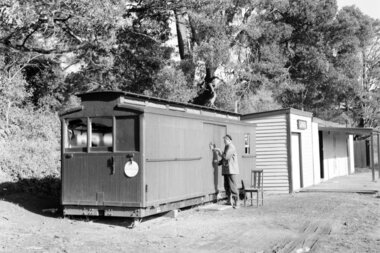
6 NC - Victorian Railways Full Guard's Van, 1919
... 6 NC Brake Van (4 ton capacity) Service History Purchased by the Puffing Billy Preservation Society (Body & underframe only): NC 6 Brake Van (4 ton capacity) - Awaiting restoration *NC 6.VA - 17/12/1919 NWS Built new - /11/1928 - Modified AC Malco BO 5/10/1934 NWS Into Workshops - 9/10/1934 NWS Out of Workshops (5 days) 17/ 3/1955 - Scrapped Historic - Victorian Railways - narrow gauge rolling stock - NC Class Full Guard's Van 6 NC puffing billy nc van narrow gauge victorian railways 6nc guards van narrow gauge rolling stock Timber Guards Van wrought iron frame 6 NC - Victorian Railways Full Guard's Van Victorian Railways - Newport Workshop ...6 NC Brake Van (4 ton capacity) Service History Purchased by the Puffing Billy Preservation Society (Body & underframe only): NC 6 Brake Van (4 ton capacity) - Awaiting restoration *NC 6.VA - 17/12/1919 NWS Built new - /11/1928 - Modified AC Malco BO 5/10/1934 NWS Into Workshops - 9/10/1934 NWS Out of Workshops (5 days) 17/ 3/1955 - Scrapped Historic - Victorian Railways - narrow gauge rolling stock - NC Class Full Guard's Van 6 NCTimber Guards Van wrought iron framepuffing billy, nc van, narrow gauge, victorian railways, 6nc, guards van, narrow gauge rolling stock -
 Puffing Billy Railway
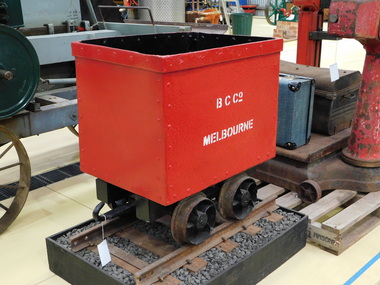
Benwerrin Coal Company Coal Skip, circa 1899 - 1904
... Preservation of this coal truck came as a result of interest by the Tramway Museum Society of Victoria (TMSV) in the Barlow or Box type rails that it ran on. These rails had originally come from the Beaumaris Horse Tramway and were obtained by the Benwerrin Coal Company from Hayden Bros’ abandoned timber tramway at nearby Barwon Downs. ...Preservation of this coal truck came as a result of interest by the Tramway Museum Society of Victoria (TMSV) in the Barlow or Box type rails that it ran on. These rails had originally come from the Beaumaris Horse Tramway and were obtained by the Benwerrin Coal Company from Hayden Bros’ abandoned timber tramway at nearby Barwon Downs. ...BENWERRIN COAL COMPANY SKIP This quarter ton coal truck or skip was used at a small mine situated at Benwerrin near Deans Marsh in Victoria’s Otway Ranges. The mine first opened in 1899 and closed in 1904. With the fuel shortages due to World War 2, the Benwerrin Coal Company reopened the mine in 1941. The coal was loaded into skips and winched out of Box’s Creek valley on a narrow gauge incline to a loading point that was close to the Deans Marsh-Lorne Road. It was then taken by road to the Deans Marsh Railway station. The average gradient of the tramway was 1 in 4 over a length of just under 500 metres (1600 feet). The gauge of the tramway has often been referred to as 375mm (or 15 inches) as shown on the map opposite taken from “Sawdust and Steam”. However, actual measurements of the wheels show the gauge to be 400mm (or 16 inches), which is quite unusual as is the small size of the skip itself. The mine produced up to 30 tonnes of brown coal each week until it closed in 1949 and the incline tramway and its skips were abandoned. Preservation of this coal truck came as a result of interest by the Tramway Museum Society of Victoria (TMSV) in the Barlow or Box type rails that it ran on. These rails had originally come from the Beaumaris Horse Tramway and were obtained by the Benwerrin Coal Company from Hayden Bros’ abandoned timber tramway at nearby Barwon Downs. Members of the TMSV visited the mine in the 1960s only to find that most of the tramway had recently been recovered for scrap. There remained a significant number of relics around the mine adits including most of the skips. One of these remained in good condition and it was recovered for preservation in May 1967. It was restored but never displayed and a second restoration took place by the author over 2012/13 so that it could be placed in the Menzies Creek Museum where it was delivered in February 2013. Little remains of the mine today with trestles and sleepers destroyed in the “Ash Wednesday” Bushfires in 1983. References: Houghton, N (1975), Sawdust and Steam, Light Railway Research Society of Australia. Historic - Industrial Narrow Gauge Railway - Benwerrin Coal Company , Benwerrin , Victoria, AustraliaCoal Skip - made of Iron sheet and wrought iron frame & wheelsB,C.Co Melbournepuffing billy, coal skip, benwerrin coal company, narrow gauge -
 Puffing Billy Railway
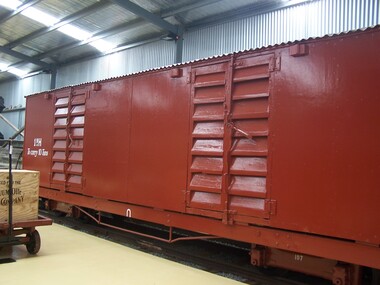
1 NH, Powder & General Goods Van, June 1910
... Preservation Society. Vehicle Length 25 feet 2 inches ( 7671 mm) Coupled Length 27 feet 4 inches (8330 mm) Width 6 feet 3 inches (1905 mm) Weight 7 tons Capacity 10 tons Built 1910 Number Built 1 In use - Static display Historic - Victorian Railways - narrow gauge rolling stock - Powder & General Goods Van Victorian Heritage Register (VHR) Number H2187 Puffing Billy Locomotives and Rolling Stock Collection puffing billy powder & general goods van nh1 nh1 powder & general goods van victorian railways narrow gauge rolling stock NH1 To carry 10 tons 1 NH - Powder & General Goods Van Made of Timber - wood, wrought iron and metal sheet There were two compartments: a 10ft 8¾ inch (3,270 mm) section for explosives and a 13 ft 7 in (4,140 mm) section for general goods. ...V.R. Powder & General Goods Van NH1 Gauge 2'6" The NH Powder and Goods van was built in 1910. Its purpose was to carry explosives and general goods, Originally classed as NPH. There were two compartments: a 10ft 8¾ inch (3,270 mm) section for explosives and a 13 ft 7 in (4,140 mm) section for general goods. The sides, ends and doors were covered in sheet metal. With the closing of the mines at Walhalla the need to carry explosives ended and both compartments were used for general goods. The doors were replaced with NU type louvre doors for ventilation. NH1 Covered Truck Service History : NPH NPH 1 was built and issued to traffic June 1910. It was a bogie boxvan set up for general goods and the transportation of explosives. It could carry 6 tons of goods and 4 tons of explosives. No doubt the van was stationed on the Moe - Walhalla line. Walhalla was a gold mining town and the rail line had been built from Moe to provide a faster means of transportation than bullock teams from the sailing boats from Melbourne to Port Albert/Sale via Heyfield. In 1911 the van was converted to all goods transport and recoded to NH. NH The van was fitted with autocouplers in 1928. It was scrapped in 1954. By 1968, the vehicle body had been found and was placed into the Museum at Menzies Creek. Body donated to the Puffing Billy Preservation Society. Vehicle Length 25 feet 2 inches ( 7671 mm) Coupled Length 27 feet 4 inches (8330 mm) Width 6 feet 3 inches (1905 mm) Weight 7 tons Capacity 10 tons Built 1910 Number Built 1 In use - Static displayHistoric - Victorian Railways - narrow gauge rolling stock - Powder & General Goods Van Victorian Heritage Register (VHR) Number H2187 Puffing Billy Locomotives and Rolling Stock Collection1 NH - Powder & General Goods Van Made of Timber - wood, wrought iron and metal sheet There were two compartments: a 10ft 8¾ inch (3,270 mm) section for explosives and a 13 ft 7 in (4,140 mm) section for general goods. The sides, ends covered in sheet metal with NU type louvre doors for ventilation. NH1 To carry 10 tonspuffing billy, powder & general goods van nh1, nh1, powder & general goods van, victorian railways, narrow gauge rolling stock -
 Puffing Billy Railway
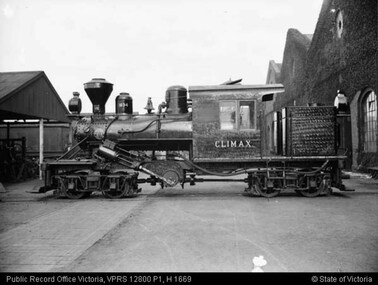
Climax - Geared Steam Locomotive No. 1694, 1928
... Preservation Society for its Steam Museum, it was taken to Menzies Creek in 1965 where it remained until 1982 when the Emerald Tourist Railway Board bought it and transferred it to Belgrave for restoration. It was returned to service for special use on the Belgrave to Gembrook line in 1988 painted in its original all-over black livery, except that the word “Climax” on the sides of the cab was now painted in the style of the Climax Manufacturing Co., a style that this locomotive had never carried. Historical - Industrial railway - Forests Commission of Victoria, Timber ...Climax geared locomotive No. 1694 in active service on special occasions - stored at Emerald Station A Miraculous Survivor Climax locomotive No.1694 is a miraculous survivor of a rare breed of steam locomotive. For about 100 years from the mid-1850s sawn timber was carted from Victorian sawmills to the nearest railway station by timber tramway. These tramways were generally very rough, steeply graded, sharply curved, and of narrow gauge. Many had wooden rails, and horses provided haulage. The better ones used steam locomotives. In all about fifty steam locomotives are known to have worked on Victorian timber tramways. These locomotives were usually somewhat peculiar - made to cope with arduous, rough conditions, rather than speed. Climax locomotive No.1694 is the only one of these locomotives to survive intact. It was built in 1928 by the Climax Manufacturing Company, Corry, Pennsylvania, USA, for the Forests Commission of Victoria. The distinctive feature of the Climax locomotive is that the cylinders do not directly connect to the driving wheels. Instead they drive a cross shaft near the centre of the locomotive. From there the drive is transmitted to the small driving wheels through rotating shafts, universal joints, and bevel gears. The driving wheels are mounted in two four-wheel bogies so that they can easily follow sharp curves in the track. None of these features are found in normal steam locomotives. The result is a locomotive that is extremely powerful for its size, and that will cope with sharp curves and steep grades with ease. But this is at the cost of speed, Climax locomotive No.1694 is just about flat-out at 13 km/h (8 mph). Climax Locomotive Built in 1928 for the Forests Commission of Victoria and painted all-over black with the name CLIMAX painted on the sides of the cab in white block letters, this locomotive was issued to the Tyers Valley tramway which branched off the Moe to Walhalla line at Collins Siding. This locomotive was withdrawn from service in 1949 following the closure of the tramway and in 1950 it travelled from Tyers Junction to Collins Siding to Erica where it remained stored until 1965. Loaned to the Puffing Billy Preservation Society for its Steam Museum, it was taken to Menzies Creek in 1965 where it remained until 1982 when the Emerald Tourist Railway Board bought it and transferred it to Belgrave for restoration. It was returned to service for special use on the Belgrave to Gembrook line in 1988 painted in its original all-over black livery, except that the word “Climax” on the sides of the cab was now painted in the style of the Climax Manufacturing Co., a style that this locomotive had never carried.Historical - Industrial railway - Forests Commission of Victoria, Timber Logging Climax Locomotive Climax geared Steam locomotive made of steel and wrought iron Climax 1694climax locomotive works, climax, geared steam locomotive, puffing billy, climax locomotive no. 1694, steam locomotive -
 Puffing Billy Railway
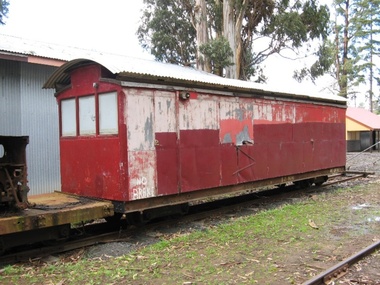
14NB - Compartment Passenger Carriage, 16/12/1912
... Preservation Society from Pakenham. Historic - Victorian Railways Narrow Gauge - Passenger Rolling Stock: NB Passenger carriage Victorian Heritage Register (VHR) Number H2187 The Puffing Billy Rolling Stock Collection puffing billy 14nb nb passenger carriage 2'6" guage victorian railways narrow gauge passenger rolling stock 14NB Passenger Rolling Stock: Passenger carriage 14NB - Carriage (NB 2nd series) 5 compartments - Made of Timber on a Wrought iron frame Awaiting restoration 14NB - Compartment Passenger Carriage Victorian Railways - Newport Workshop ...14NB - Carriage (NB 2nd series) 6 compartments (40) Awaiting restoration NB There were three types: -Nos. 1-6 were Saloon cars having end platforms and a ladies toilet, and were built from 1899-1904. Nos. 7-23 were 5-compartment side loading cars, built from 1906-1915. Nos. 24-27 were the former NAB class cars mentioned previously and were also side loading, having 6 compartments and two ladies toilets. VR Service History *NB 14.VA - 16/12/1912 NWS Built new - / 5/1926 - Modified AC Malco 15/ 7/1931 NWS Into Workshops - 20/10/1931 NWS Out of Workshops (98 days) 5/ 8/1936 NWS Into Workshops - 6/11/1936 NWS Out of Workshops (94 days) 26/ 2/1951 - Scrapped - Body and underframe purchased by the Puffing Billy Preservation Society from Pakenham.Historic - Victorian Railways Narrow Gauge - Passenger Rolling Stock: NB Passenger carriage Victorian Heritage Register (VHR) Number H2187 The Puffing Billy Rolling Stock Collection Passenger Rolling Stock: Passenger carriage 14NB - Carriage (NB 2nd series) 5 compartments - Made of Timber on a Wrought iron frame Awaiting restoration14NBpuffing billy, 14nb, nb passenger carriage, 2'6" guage, victorian railways, narrow gauge passenger rolling stock -
 Puffing Billy Railway
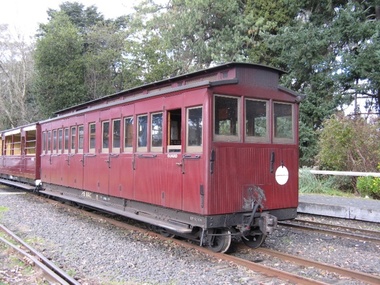
26 NAC - Passenger carriage, 1/ 7/1907
... Preservation Society as a body & underframe. Historic - Victorian Railways Narrow Gauge - Passenger Rolling Stock: Passsenger carriage Victorian Heritage Register (VHR) Number H2187 The Puffing Billy Rolling Stock Collection puffing billy 26 nac nac passenger carriage victorian railways narrow gauge passenger rolling stock 2'6" guage 26 NAC Passenger Rolling Stock: 26 NAC - Passenger carriage - Made of Timber on a Wrought iron frame 3 compartments and van (No. 26) 26 NAC - Passenger carriage Victorian Railways - Newport Workshop ...NB Class - Number Built (1st Series) 6 - Number Built (2nd Series) 17 - Number Built (3rd Series) 4 26 NAC - Former NB Class (3rd Series) - Carriage 3 compartments and van (24 pass.) In Active Service - Belgrave Station Yard NAC COMBINED NB PASSENGER CAR AND GUARD'S VAN. A compartment NB which has had a guard's compartment temporarily added in one end. Due to the temporary nature of the guard's compartment, this vehicle retains its number in the NB numbering sequence, but has been classed NAC to differentiate it from the standard NBC. The use of the A is a recognition of the car's original NAB classification. VR Service History NABAB 2.VA - 1/ 7/1907 NWS Built new - circa 1910 - To NAB 2.VA - *NAB 2.VA - circa 1910 - Reference Photo SL20 p20 20/ 8/1923 FTG To NB 26.VA - NB 26.VA - /12/1927 - Modified AC Malco BO 27/ 9/1934 NWS Into Workshops - 30/10/1934 NWS Out of Workshops (34 days) 17/12/1954 - Scrapped Body to Eng. Spcl Works, RS55/707 Purchased by the Puffing Billy Preservation Society as a body & underframe. Historic - Victorian Railways Narrow Gauge - Passenger Rolling Stock: Passsenger carriage Victorian Heritage Register (VHR) Number H2187 The Puffing Billy Rolling Stock Collection Passenger Rolling Stock: 26 NAC - Passenger carriage - Made of Timber on a Wrought iron frame 3 compartments and van (No. 26)26 NAC puffing billy, 26 nac, nac passenger carriage, victorian railways, narrow gauge passenger rolling stock, 2'6" guage -
 Puffing Billy Railway
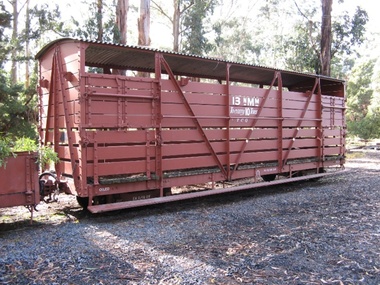
13 NMM, 5/ 6/1917
... "An NM (13) and pulpwood wagon .... for displayat Museum.....scrap value to be charged direct to the PBPS." 19/ 4/1967 BEL Sold (to) Puffing Billy Preservation Society Historic - Victorian Railways - Narrow Gauge Rolling Stock - Livestock Van - Cattle Truck Victorian Heritage Register (VHR) Number H2187 - The Puffing Billy Rolling Stock Collection puffing billy railway puffing billy victorian railways nmm cattle truck 13 nmm 13 NMM 13 NMM Livestock Van - Cattle Truck made of wrought iron and timber 13 NMM - Victorian Railways - Newport Workshop ...13 NMM ( 13 NM ) Livestock Van - Cattle Truck In traffic NMM CATTLE TRUCK. Four of these were built during 1899-1901 and eleven more were built during 1909 and 1917, a total of 15. They were numbered 1-15. VR Service History : NMM 13.VA - 5/ 6/1917 NWS Built new - / /1926 - To NM 13.VA - *NM 13.VA - / 8/1928 - Modified AC Malco Purchased by Puffing Billy Preservation Society. Sec 65/2711. RS 65/6012. "An NM (13) and pulpwood wagon .... for displayat Museum.....scrap value to be charged direct to the PBPS." 19/ 4/1967 BEL Sold (to) Puffing Billy Preservation SocietyHistoric - Victorian Railways - Narrow Gauge Rolling Stock - Livestock Van - Cattle Truck Victorian Heritage Register (VHR) Number H2187 - The Puffing Billy Rolling Stock Collection 13 NMM Livestock Van - Cattle Truck made of wrought iron and timber13 NMMpuffing billy railway, puffing billy, victorian railways, nmm cattle truck, 13 nmm -
 Puffing Billy Railway
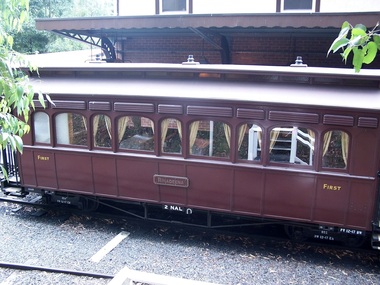
Equipment - Railway carriage (pbr Rinadeena No.2nal) ( Mt. Lyell Mining & Railway Company No.02), 1901–1902
... Location Note NAL 1 Lancaster Railway Carriage and Wagon Co Saloon 1901 Mt Lyell Railway Named Mt Lyell NAL 2 Lancaster Railway Carriage and Wagon Co Saloon 1901 Mt Lyell Railway Named Rinadeena NAL 3 Lancaster Railway Carriage and Wagon Co Saloon 1901 Mt Lyell Railway Named Teepookana NAL 4 Lancaster Railway Carriage and Wagon Co Saloon 1901 Mt Lyell Railway Named Dubbil Barril The Rinadeena is a stunning example of a classic narrow gauge 1st Class Saloon Carriage, used as a luxury edition to train travel in the late 1800s and the 2NAL within Puffing Billy's collection was purchased by the Puffing Billy Preservation Society in the 1960s, where it underwent restoration to become part of the railway's historic transport collection. railway carriages first class saloon narrow gauge rinadeena mt lyell transport travel leisure luxury 2 NAL - Rinadeena A timber and iron saloon car - painted in crimson with a name plate 'Rinadeena' attached to the centre of the carriage and the words '2 NAL' painted in white directly below. ...2 NAL - Rinadeena - (Mt. Lyell) O 2; 2 NBL - 1st. class saloon car (20) NAL FIRST-CLASS SALOON CAR. Four saloon end-platform cars originally built during 1901–1902 by the Lancaster Railway Carriage and Wagon Company Ltd. for the 3'6" gauge Mt. Lyell Mining & Railway Company in Tasmania and classed O. Converted for use as second-class cars on the 2'6" gauge Puffing Billy Railway during 1965–1966, these cars were reclassified NBL and numbered 1–4. The L recognises their Mt. Lyell origin, No. 1 was kept for use as the Railway's VIP car and was reconditioned to a higher standard. No. 2 was similarly upgraded in 1985 for use on special occasions. In 1989 No. 3 was similarly reconditioned with No. 4 receiving similar treatment in 1995. These cars were re-classified NAL in recognition of their new first-class nature. The Mt Lyell Railway was closed in 1963 and subsequently dismantled, but fortunately several of the locomotives and carriages passed into preservation. Purchased by the Puffing Billy Preservation Society from the Mount Lyell Mining & Railway Company in the 1960's and converted to 2' 6" gauge. It has since given many years of service on the Puffing Billy Railway. TASMANIAN CARRIAGES & GUARDS VANS No. Builder Type Year built Ex. Location Note NAL 1 Lancaster Railway Carriage and Wagon Co Saloon 1901 Mt Lyell Railway Named Mt Lyell NAL 2 Lancaster Railway Carriage and Wagon Co Saloon 1901 Mt Lyell Railway Named Rinadeena NAL 3 Lancaster Railway Carriage and Wagon Co Saloon 1901 Mt Lyell Railway Named Teepookana NAL 4 Lancaster Railway Carriage and Wagon Co Saloon 1901 Mt Lyell Railway Named Dubbil BarrilThe Rinadeena is a stunning example of a classic narrow gauge 1st Class Saloon Carriage, used as a luxury edition to train travel in the late 1800s and the 2NAL within Puffing Billy's collection was purchased by the Puffing Billy Preservation Society in the 1960s, where it underwent restoration to become part of the railway's historic transport collection.A timber and iron saloon car - painted in crimson with a name plate 'Rinadeena' attached to the centre of the carriage and the words '2 NAL' painted in white directly below. The word 'FIRST' is painted in gold at both ends of the carriage. The car has nine windows on either side of the carriage and a wrought iron ballastrade upon entry at eiether end of the carriage as well as iron steps to ascend. Inside the carriage are 10 bench seats made of wood and leather and ten tables for dining. The windows are adorned with cream cloth fabric and above each bench are wrought iron luggae racks. The ceiling is covered in cloth and features two suspended ornate glass and metal light fixtures. A wooden door with two glass panels can be found at both ends of the carriage.2 NAL - Rinadeenarailway carriages, first class saloon, narrow gauge, rinadeena, mt lyell, transport, travel, leisure, luxury -
 Puffing Billy Railway
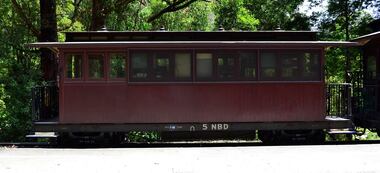
5 NBD, June 1901
... Preservation Society 1975. In July 2006 work commenced on 5 NB to make it a temporary kitchen car for the luncheon/dinner train. It has had the seating removed from the saloon and kitchen equipment installed. Plans are for a kitchen car to be constructed and 5 NB restored to carry passengers. Historic - Victorian Railways Narrow Gauge - Passenger Rolling Stock: Passenger and Guard's Van carriage 5 NBD - converted into Catering Car and Guards van victorian railways narrow gauge rolling stock 5nbd - catering car and van puffing billy 5NBD Made of Timber and steel 5 NBD Victorian Railways - Newport Workshop ...NBD This is a Puffing Billy Railway reclassification of the first series of NB carriages. COMBINED NB PASSENGER CAR AND GUARD'S VAN. A saloon or end platform NB which has had a guard's compartment temporarily added in one end. Due to the temporary nature of this conversion, this vehicle also retains its original number in the NB numbering sequence but is classed NBD to differentiate it from the standard NBC and the NAC. The use of the letter 'D' in the classification is recognising the code for guard's vans prior to 1910. NB Class - Number Built (1st Series) 6 - Number Built (2nd Series) 17 - Number Built (3rd Series) 4 NB (1st series) NB 5 was equipped with a vertical hand brake at one end to enable it to be used as the last vehicle of a train. Body Length 20 feet 6 inches ( 6248 mm) Vehicle Length 25 feet 2 inches ( 7671 mm) Coupled Length 27 feet 4 inches (8330 mm) Width 6 feet 3 inches (1905 mm) Height 9 feet 5 inches (2870 mm) Weight 8 tons Capacity 16 passengers Built 1898 - 1904 Number Built 6 In use NBD 1, 2, 5 NB - Puffing Billy Railway classed these as NBD to indicate their use as a trailing vehicle with guard's accommodation. 5 NBD Victorian Railways Service History NBB 5. ( it's original number ) Built new - - / 6/1901 Newport Workshops 4/ 2/1902 - In Service "Commenced running" circa 1910 - renumbered To NB 5 *NB 5. - / 6/1926 - Modified AC Malco 5/ 2/1951 - Scrapped - Body and underframe purchased by Puffing Billy Preservation Society from Pakenham. Restored by the Puffing Billy Preservation Society 1975. In July 2006 work commenced on 5 NB to make it a temporary kitchen car for the luncheon/dinner train. It has had the seating removed from the saloon and kitchen equipment installed. Plans are for a kitchen car to be constructed and 5 NB restored to carry passengers.Historic - Victorian Railways Narrow Gauge - Passenger Rolling Stock: Passenger and Guard's Van carriage 5 NBD - converted into Catering Car and Guards vanMade of Timber and steel 5NBDvictorian railways, narrow gauge rolling stock, 5nbd - catering car and van, puffing billy -
 Puffing Billy Railway
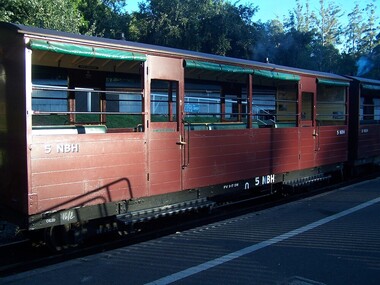
5 NBH - Passenger Carriage - Excursion Car, 1975
... Historic - Puffing Billy Railways Narrow Gauge - Passenger Rolling Stock: Excursion Car puffing billy 5nbh 5nbh - excursion car 5NBH 5 NBH -Passenger Carriage - Excursion Car made of wrought iron and timber 5 NBH - Passenger Carriage - Excursion Car Puffing Billy Preservation Society (Body only) ...5NBH - Excursion Car Replica body built by Puffing Billy Preservation Society, Emerald – 1975. Puffing Billy Service History or Notes : Oct 2009 - In for repairs and a lift. Oct 2016 - In for repairs and repaint. Nov 2016 - Repainted NBH SECOND-CLASS EXCURSION CAR. The H was recognising their use for "Holiday" traffic. 15 of these cars were built in 1919 and numbered 1-15. Two more were built in 1981, and numbered 16 & 17. Two extended versions for wheelchair passengers were built in 1981 & 1983. These were numbered 51 & 52 - a separate number series due to the different type of vehicle. Six, numbered 18-23, were built in 1997-98. These had steel frames, padded seats, and a wide "window sill". At first glance they look the same as the previous NBHs. There are other minor construction differences due to the use of steel framing. 18NBH entered traffic 19/4/1997; 19NBH on 5/12/1997; 20NBH on 19/12/1997, the others added in 1998. Historic - Puffing Billy Railways Narrow Gauge - Passenger Rolling Stock: Excursion Car 5 NBH -Passenger Carriage - Excursion Car made of wrought iron and timber5NBHpuffing billy, 5nbh, 5nbh - excursion car -
 Puffing Billy Railway
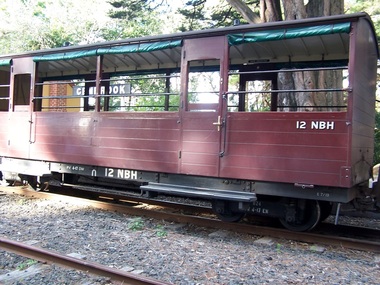
12 NBH, Passenger Carriage - Excursion Car, 1976
... Historic - Puffing Billy Railways Narrow Gauge - Passenger Rolling Stock: Excursion Car Puffing Billy Railway 12NBH Made of timber and steel Passenger Carriage - Excursion Car 12 NBH Puffing Billy Preservation Society (Body only) ...12NBH - Excursion Car Replica body built by Puffing Billy Preservation Society, Emerald - 1976. Puffing Billy Service History or Notes May 2016 - Lifted NBH SECOND-CLASS EXCURSION CAR. The H was recognising their use for "Holiday" traffic. 15 of these cars were built in 1919 and numbered 1-15. Two more were built in 1981, and numbered 16 & 17. Two extended versions for wheelchair passengers were built in 1981 & 1983. These were numbered 51 & 52 - a separate number series due to the different type of vehicle. Six, numbered 18-23, were built in 1997-98. These had steel frames, padded seats, and a wide "window sill". At first glance they look the same as the previous NBHs. There are other minor construction differences due to the use of steel framing. 18NBH entered traffic 19/4/1997; 19NBH on 5/12/1997; 20NBH on 19/12/1997, the others added in 1998.Historic - Puffing Billy Railways Narrow Gauge - Passenger Rolling Stock: Excursion CarMade of timber and steel12NBHpuffing billy railway -
 Puffing Billy Railway
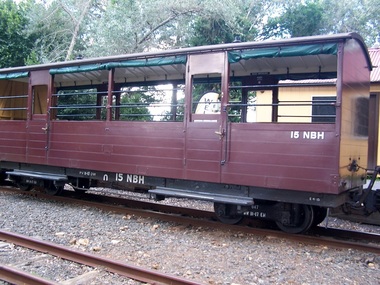
15 NBH, Passenger Carriage - Excursion Car, July 1976
... Preservation Society 1976. Puffing Billy Service History or Notes 8 Dec 1919 - Nos 7 to 15 NBH (new) delivered to UPPER FERN TREE GULLY after this date. Historic - Victorian Railways Narrow Gauge - Passenger Rolling Stock: Excursion Car victorian railways Puffing billy railway 15NBH 15 NBH - Passenger Carriage - Excursion Car made of steel and timber Passenger Carriage - Excursion Car 15 NBH Puffing Billy Preservation Society (Body only) ...15NBH - Excursion Car Body built by Puffing Billy Preservation Society 1976. NBH - SECOND CLASS EXCURSION CAR. The H was recognising their use for "Holiday" traffic. Originally 15 of these cars were built in 1919 and numbered 1-15. Four were broken up prior to 1962, and replaced with new vehicles in 1975-76. Two more were built in 1981, and numbered 16 & 17. Two extended versions for wheelchair passengers were built in 1981 & 1983. These were numbered 51 & 52 - a separate number series due to the different type of vehicle. Six, numbered 18-23, were built in 1997-98. These had steel frames, padded seats, and a wide "window sill". At first glance they look the same as the previous NBHs. There are other minor construction differences due to the use of steel framing. 18NBH entered traffic 19/4/1997; 19NBH on 5/12/1997; 20NBH on 19/12/1997, the others added in 1998. VR Service History 8/12/1919 NWS Built new *NBH 15.VA - 8/12/1919 NWS Built new - / 3/1928 - Modified AC Malco BO circa 1955 - Condemned - 1/ 7/1962 - Scrapped. Replica body built by Puffing Billy Preservation Society 1976. Puffing Billy Service History or Notes 8 Dec 1919 - Nos 7 to 15 NBH (new) delivered to UPPER FERN TREE GULLY after this date.Historic - Victorian Railways Narrow Gauge - Passenger Rolling Stock: Excursion Car 15 NBH - Passenger Carriage - Excursion Car made of steel and timber15NBHvictorian railways, puffing billy railway -
 Puffing Billy Railway
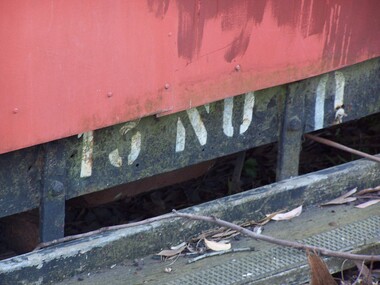
13 NUU - Louvred Truck, 15/ 7/1911
... Preservation Society. Puffing Billy Service History or Notes Historic - Victorian Railways Narrow Gauge - Rolling Stock - Louvered Van puffing billy railway, pbr, rolling stock , 13 nuu puffing billy louvered van 13 nuu - louvered van victorian railways 2'6" gauge narrow gauge rolling stock 13 NU Wooden Louvered Van - Made of Timber on a Wrought iron frame - current condition Untrafficable 13 NUU - Louvred Truck Victorian Railways - Newport Workshop ...Van 13 NUU - Louvred Truck (11) Untrafficable - Menzies Creek Station Yard VR Service History 15/ 7/1911 NWS Built new Vehicle Length 25 feet 2 inches ( 7671 mm) Coupled Length 27 feet 4 inches (8330 mm) Width 6 feet 3 inches (1905 mm) Weight 7 tons Capacity 10 tons Built 1898 - 1911 Number Built 14 In use 5 To be restored None *NUU 13.VA - 15/ 7/1911 NWS Built new - / /1926 - To NU 13.VA - NU 13.VA - / 6/1926 - Modified AC Malco /10/1954 CKT Sold (to) by Stores Branch to P.B.P.S. Purchased by Puffing Billy Preservation Society from Cockatoo for 20 pounds ($40.00). First complete railway truck owned by the Puffing Billy Preservation Society. Puffing Billy Service History or Notes Historic - Victorian Railways Narrow Gauge - Rolling Stock - Louvered VanWooden Louvered Van - Made of Timber on a Wrought iron frame - current condition Untrafficable13 NUpuffing billy railway, pbr, rolling stock , 13 nuu, puffing billy, louvered van, 13 nuu - louvered van, victorian railways, 2'6" gauge, narrow gauge rolling stock -
 Puffing Billy Railway
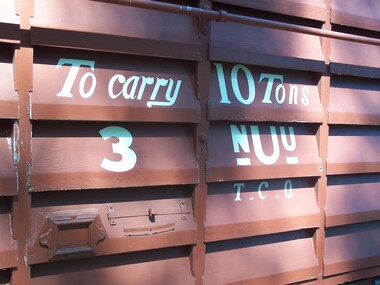
3 NUU - Louvred Truck, 3/12/1900
... Preservation Society. In 1977, the remaining vans 3, 10 and 14 were handed over to the Emerald Tourist Railway Board, and removed from Victorian Railways records. The Puffing Billy Railway now posesses vans 3, 8, 10, 13 and 14. Historic - Victorian Railways Narrow Gauge - Rolling Stock - Louvered Van puffing billy 3 nuu louvered van 2'6" guage victorian railways narrow gauge rolling stock 3 NUU Wooden Louvered Van - Made of Timber on a Wrought iron frame 3 NUU - Louvred Truck Victorian Railways - Newport Workshop ...Van 3 NUU - Louvred Truck (11) VR Service History 3/12/1900 NWS Built new Vehicle Length 25 feet 2 inches ( 7671 mm) Coupled Length 27 feet 4 inches (8330 mm) Width 6 feet 3 inches (1905 mm) Weight 7 tons Capacity 10 tons Built 1898 - 1911 Number Built 14 In use 5 To be restored None *NUU 3.VA - 3/12/1900 NWS Built new - / /1926 - To NU 3.VA - NU 3.VA - circa 1926 - Modified AC Malco 1/10/1977 - Off Register To ETRB Sec76/3630 RS77/4223 NUU The standard louvre van design for the Victorian narrow-gauge lines, the NUU vehicles were constructed in three batches; the first seven from 1899 to 1901, an eighth in 1906 and the last six in 1911, for a total class of fourteen. They looked very similar to the U vans of the Broad Gauge, although two photographs[1][2] of NUU 1 show that its body may have been white for some time. NU In 1926 the class was relettered to simply NU, with no changes to numbers. NU 4 was scrapped in 1938, but otherwise the class remained intact until 1954, when seven members (2, 5, 7, 8, 9, 11 and 12) were sold to Coulston & Hyder, who dispersed the wagons among locations on the Wangarrata to Whitfield line. As of 1996, vans 7 and 12 were at Moyhu, while van 11 was destroyed by fire in 1978. Wagons 6 and 1 were scrapped in 1957 and 1958 respectively, while in 1954 van 13 was recorded as being sold to the Puffing Billy Preservation Society. In 1977, the remaining vans 3, 10 and 14 were handed over to the Emerald Tourist Railway Board, and removed from Victorian Railways records. The Puffing Billy Railway now posesses vans 3, 8, 10, 13 and 14. Historic - Victorian Railways Narrow Gauge - Rolling Stock - Louvered VanWooden Louvered Van - Made of Timber on a Wrought iron frame3 NUUpuffing billy, 3 nuu, louvered van, 2'6" guage, victorian railways, narrow gauge rolling stock -
Broadmeadows Historical Society & Museum
Furniture (collection) - Shire Chairs
... timber, rich red leather, and brass fittings—reflects the period’s aesthetic and the importance placed on civic furnishings. The donation of these chairs by A.C. Gibb may have been intended to honour his father’s service and to contribute to the enduring heritage of the Broadmeadows Shire. Their preservation...timber, rich red leather, and brass fittings—reflects the period’s aesthetic and the importance placed on civic furnishings. The donation of these chairs by A.C. Gibb may have been intended to honour his father’s service and to contribute to the enduring heritage of the Broadmeadows Shire. Their preservation ...Collection of chairs donated to Shire of BroadmeadowsNo order or sequence.Furniture from the Shire of Broadmeadowsshire council, broadmeadows, furniture, alexander coupar gibbshire council, broadmeadows, furniture, alexander coupar gibb -
 Harcourt Valley Heritage & Tourist Centre
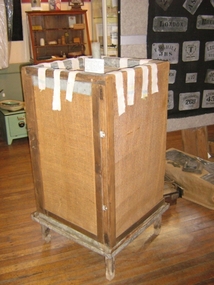
Coolgardie safe, 1925
... A pioneering response to the problem of preservation of foodstuffs in hot climates A timber framed hessian covered cabinet with metal tray at the top and metal guttering cooled by the evaporation of water. ...A pioneering response to the problem of preservation of foodstuffs in hot climatesA timber framed hessian covered cabinet with metal tray at the top and metal guttering cooled by the evaporation of water. Used to preserve cheese, butter, cream and meat and to set jellies. Invented circa 1900 at Coolgardie, W.A. and was in use until electric refrigeration became available. -
 Mornington Railway Preservation Society Inc.
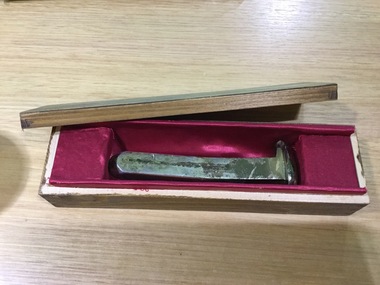
Ceremonial Dog Spike, 1991
... Only one ever produced specifically for MRPS. mrps mornington railway preservation society moorooduc station opening ceremony 14-sept-1991 rail dog pin No inscriptions of memorial plates. Striking marks and withrawing marks present with mild tarnishing. Stained timber ...Used at the Moorooduc Station opening ceremony 14th Septembers 1991. Shire Presidant Councillor Pat Leech perfomed the striking of the Pin. The Pin was later removed for posterity and to be re-used when the line is re-opened to Baxter.Only one ever produced specifically for MRPS.Stained timber box of 200x40x50mm with maroon silk lining containing a gold plated rail dog spike/pin.No inscriptions of memorial plates. Striking marks and withrawing marks present with mild tarnishing.mrps, mornington railway preservation society, moorooduc station opening ceremony, 14-sept-1991, rail dog pin
