
Showing 140 items matching "tom long"
-
 Flagstaff Hill Maritime Museum and Village
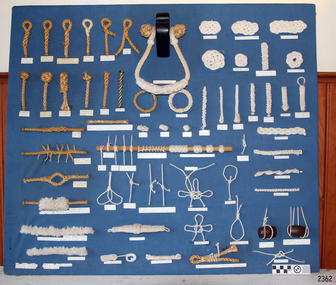
Education kit - Knot Board, Tom Long, DSM (Member of International Guild of Knot Tyers), ca 1975 to 1986
... ...Tom Long...Tom Long more recently lived in a suburb of Melbourne. ...Tom Long, DSM (Member of International Guild of Knot Tyers) ...Tom Long more recently lived in a suburb of Melbourne. ...The Display Board of Konts was handmade in Kings Lynn, Devon, England, by Tom Long DSM, a member of the International Guild of Knot Tyers. Tom Long more recently lived in a suburb of Melbourne. This display board shows the knots and joins used in ropework performed by a sailmaker and other skilled knot tyers and ropeworkers. It demonstrates the uses of some of the knots, such as knobs and handles, suspending lengths of wood, reinforcing spliced rope and even for decorative work. The sailmakers, travelling as part of the ship’s crew, stored their tool kit in a canvas ditty bag. It contained needles, awls, a sailmaker’s leather-palmed glove with a heavily reinforced palm, a shuttle to mend and make nets, fids, knives, mallets, brushes, rulers, and rope gauges. Sailmakers used their ropework and knot-making skills for various purposes and chose the type of rope fibre for its particular properties. For example, Italian hemp rope was preferred for the light line used in shore-to-ship rescues because it was lightweight, not easily knotted, and absorbed less water. A supply of various types of rope was a commodity on board a ship and on land in the new colonies. It was flexible, easily stored, and could be worked to create an endless variety of objects on its own or with other materials like wood. An example is a simple rope ladder. Lengths could be combined to make various thicknesses, and pieces could be skilfully joined together by splicing. The importance of knots in seafaring cannot be overestimated. When ships relied on only the wind for power and speed, there were a huge number of various ropes in use, particularly about the sails and rigging. Seafarers would be judged on their ability to tie knots speedily and correctly. A mounted display of authentic seamen's knots is on a board covered in blue fabric. Various rope grades and fibres were used to work numerous knots and splices. Some of the uses are familiar, such as the toggle, the pineapple knot, and the Turk’s head. A selection of rope grades and fibres was used to work numerous knots and splices. Some of the uses are familiar, such as the toggle, the pineapple knot, and the Turk’s head. The name or purpose of the knot is on the label below it. Labels below each knot give its name or use.flagstaff hill, warrnambool, maritime museum, maritime village, great ocean road, shipwreck coast, knot display, knot making, ropework, marine technology, sailmaker's work, sailor's knots, ship's rigging, seamen's knots, handmade, rope craft, knots, splices, display board of knots, knot board, tom long, sailmaker's knots, mariner's knots -
 Moorabbin Air Museum
Document (Item) - Research at Woomera Lithgow Salisbury Long Tom missile Fatigue testing Small arms Chemicals Explosives Mirage construction Textiles for military Marine diesels Tank transporters, Australian defence equipment research testing and supply
... Research at Woomera Lithgow Salisbury Long Tom missile Fatigue testing Small arms Chemicals Explosives Mirage construction Textiles for military Marine diesels Tank transporters...Australian defence equipment research testing and supply Document Research at Woomera Lithgow Salisbury Long Tom missile Fatigue testing Small arms Chemicals Explosives Mirage construction Textiles for military Marine diesels Tank transporters ... -
 Linton and District Historical Society Inc
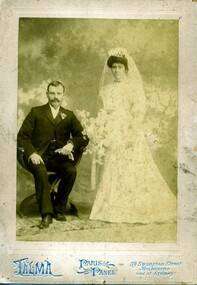
Photograph, Talma, Paris Panel 119 Swanston St, Melbourne, Wedding photograph of Mr and Mrs Tom Cunningham
... "Mr and Mrs Tom Cunningham (long Tom)"...Mr and Mrs Tom Cunningham Weddings "Mr and Mrs Tom Cunningham (long Tom)" Sepia photograph of a man wearing suit, seated with hands on thighs, and lady in wedding long gown and veil holding bouquet in right hand, left hand by her side standing beside him. ...Sepia photograph of a man wearing suit, seated with hands on thighs, and lady in wedding long gown and veil holding bouquet in right hand, left hand by her side standing beside him."Mr and Mrs Tom Cunningham (long Tom)"mr and mrs tom cunningham, weddings -
 National Vietnam Veterans Museum (NVVM)
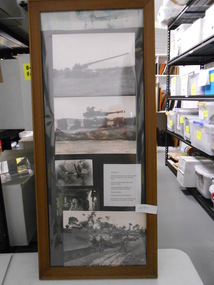
Photograph, US Forces
... ...Long tom...Collage of five Photograph showing US Artillery Pieces and Weaponry. 1. Long Tom Artillery 2. Radar controlled self loading tank gun. 3. ...Photograph Armoured Personnel Carrier Tank Long tom US Army Star Timber Framed Collage of Black and White Photograph. ...Timber Framed Collage of Black and White Photograph. Collage of five Photograph showing US Artillery Pieces and Weaponry. 1. Long Tom Artillery 2. Radar controlled self loading tank gun. 3. Weapon Training 4. Camp Communications at Ben Huh 5. APC running along railway tracksUS Army Starphotograph, armoured personnel carrier, tank, long tom -
 Bendigo Historical Society Inc.
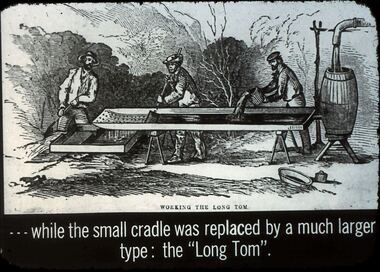
Slide - DIGGERS & MINING. GETTING THE GOLD, c1850s
... Slide: Working The Long Tom. . . . .while the small cradle was replaced by a much larger type: the ''Long Tom''. ...Slide: Working The Long Tom. . . . .while the small cradle was replaced by a much larger type: the ''Long Tom''. ...Diggers & Mining. Getting the Gold. Slide: Working The Long Tom. . . . .while the small cradle was replaced by a much larger type: the ''Long Tom''. Picture shows 2 men working the Long Tom. Markings: 44 994.LIF:4. Used as a teaching aid.hanimounteducation, tertiary, goldfields -
Running Rabbits Military Museum operated by the Upwey Belgrave RSL Sub Branch
Firearm
... Lee Enfield .303 Mark 1 No 2 British SN A23205 Bolt MURC1. Known as Long Tom....Weapon Boer War Army Lee Enfield .303 Mark 1 No 2 British SN A23205 Bolt MURC1. Known as Long Tom. Firearm ...Lee Enfield .303 Mark 1 No 2 British SN A23205 Bolt MURC1. Known as Long Tom.weapon, boer war, army -
 Greensborough Historical Society
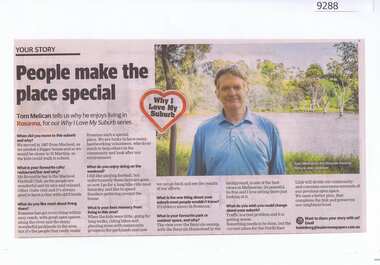
Article - Newspaper Clipping, Heidelberg Leader, People make the place special, 2024
... Article about Tom Melican and "why I love my suburb" - Rosanna. Tom is a long serving Banyule councillor....Article about Tom Melican and "why I love my suburb" - Rosanna. Tom is a long serving Banyule councillor. tom melican rosanna banyule councillors Black text and colour photo People make the place special Article Newspaper Clipping Heidelberg Leader ...Article about Tom Melican and "why I love my suburb" - Rosanna. Tom is a long serving Banyule councillor.Black text and colour phototom melican, rosanna, banyule councillors -
 National Vietnam Veterans Museum (NVVM)
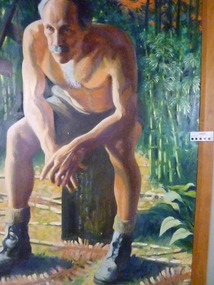
Painting, Bodaan, Jan, Portrait of Tom Goode, 1/12/2000 12:00:00 AM
... Oil painting of Vietnam Veteran Tom Goode seated on a log in front of bamboo, helicopter in sky in the background. Depicts Tom Goode 'No Longer 19 reflecting back' Plain wooden frame...Tom Goode 9 RAR Painting Signed 'Bodaan' Oil painting of Vietnam Veteran Tom Goode seated on a log in front of bamboo, helicopter in sky in the background. Depicts Tom Goode 'No Longer 19 reflecting back' Plain wooden frame Portrait of Tom Goode Painting Painting Bodaan, Jan ...Painting of Tom Goode whilst he was serving in Vietnam. Oil painting of Vietnam Veteran Tom Goode seated on a log in front of bamboo, helicopter in sky in the background. Depicts Tom Goode 'No Longer 19 reflecting back' Plain wooden frameSigned 'Bodaan'tom goode, 9 rar, painting -
 Bendigo Historical Society Inc.
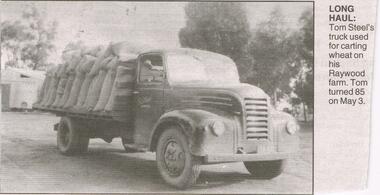
Newspaper - JENNY FOLEY COLLECTION: LONG HAUL
... Bendigo Advertiser "The way we were" from Monday, May 24, 2004. Long haul: Tom Steel's truck used for carting wheat on his Raywood farm....NEWSPAPER Bendigo advertiser the way we were Bendigo Advertiser "The way we were" from Monday, May 24, 2004. Long haul: Tom Steel's truck used for carting wheat on his Raywood farm. ...Bendigo Advertiser "The way we were" from Monday, May 24, 2004. Long haul: Tom Steel's truck used for carting wheat on his Raywood farm.newspaper, bendigo advertiser, the way we were -
 Bendigo Historical Society Inc.
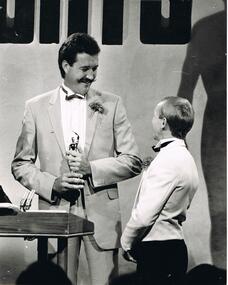
Photograph - BENDIGO ADVERTISER COLLECTION: SPORTS STAR AWARDS PRESENTATIONS
... Black and white photograph, multiple people, photograph of Tom Flavin accepting the September Oscar on behalf of Mel Dalgleish. Bendigo Advertiser description on back of photo: Long & Short Tom Flavin accepts September Oscar on ????...RECREATIONS Sports Awards Black and white photograph, multiple people, photograph of Tom Flavin accepting the September Oscar on behalf of Mel Dalgleish. Bendigo Advertiser description on back of photo: Long & Short Tom Flavin accepts September Oscar on ???? ...Black and white photograph, multiple people, photograph of Tom Flavin accepting the September Oscar on behalf of Mel Dalgleish. Bendigo Advertiser description on back of photo: Long & Short Tom Flavin accepts September Oscar on ????(hard to read) of Mel Dalgleish who was in Canberra.recreations, sports, awards -
 City of Moorabbin Historical Society (Operating the Box Cottage Museum)
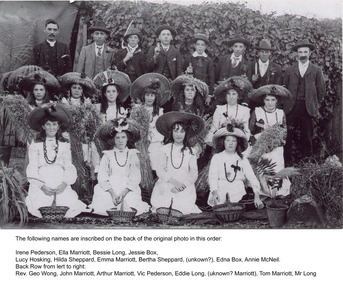
Photograph, Black & White,Methodist Youth 'Harvest Festival' East Bentleigh c1910, original c1910
... George Wong, John Marriott, Arthur Marriott, Vic Pederson, Eddie Long, ? Marriott,, Tom Marriott, Mr Long ...George Wong, John Marriott, Arthur Marriott, Vic Pederson, Eddie Long, ? Marriott,, Tom Marriott, Mr Long Black and White photograph showing the Bentleigh Methodist Youth Group on Harvest Thanksgiving Sunday c1910 in front of R.Smith's shed in Tucker Road East Bentleigh re-digitised by H.Stanley CMHS 2005 Photograph, Black & White,Methodist Youth 'Harvest Festival' East Bentleigh c1910 possibly Vic Smith ...Early settlers established market gardens, farms and business in the East Brighton ( East Bentleigh) area of Henry Dendy's Special Survey 1841 Brighton. The small communities established Churches and Schools. Stephen Charman, 1821-1906 a market gardener, donated land for the first Methodist Chapel, Cemetery and School in Charman Rd Cheltenham 1855. The East Bentleigh settlers built a Methodist Church in Tucker Road and established the Sunday School and Youth group which organised social and sporting events and picnics.Early settlers established market gardens, farms and business in the East Brighton ( East Bentleigh) area of Henry Dendy's Special Survey 1841 Brighton. The small communities established Churches and Schools. Black and White photograph showing the Bentleigh Methodist Youth Group on Harvest Thanksgiving Sunday c1910 in front of R.Smith's shed in Tucker Road East Bentleigh re-digitised by H.Stanley CMHS 2005Back Handwritten Names on Original photograph Front row Irene Pederson, Ella Marriott, Bessie Long, Jessie Box, Lucy Hosking, Middle row Hilda Sheppard, Emma Marriott, Bertha Sheppard, ? , Edna Box, Annie McNeil Back row Rev. George Wong, John Marriott, Arthur Marriott, Vic Pederson, Eddie Long, ? Marriott,, Tom Marriott, Mr Long methodist youth group bentleigh c1910, marriott emma, marriott ella, hosking lucy, marriott john, box jessie, pederson vic, long bessie, wong george, shephard hilda, mcneil annie, smith j l; smith mary ann, stanley helen, smith vic, smith harry redvers, chaff cutter, horse drawn carts, toll gates brighton, motor cars 1900, steam engines, early settlers, bentleigh, mckinnon, parish of moorabbin, city of moorabbin, county of bourke, moorabbin roads board, shire of moorabbin, henry dendy's special survey 1841, were j.b.; bent thomas, o'shannassy john, king richard, charman stephen, highett william, ormond francis, maynard dennis, market gardeners, vineyards, orchards -
 Flagstaff Hill Maritime Museum and Village
Letter
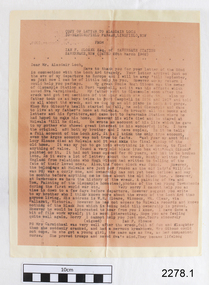
... tom pearce glenample homestead A photographic copy of a typed letter-transcript. The original letter was written to Alasdair Loch, Lindfield NSW, and is from Ian F. Sloane Esq. of Savernake Station NSW. It is dated 28 March 1962 and is two pages long ...This letter is a photographed copy of a typed transcript of an original. It is dated 28 March 1962 and was written by Ian F. Sloane Esq. of Savernake Station, NSW. Sloane’s great uncle, Hugh Gibson, was the owner of Glenample Station, Vic., where Eva Carmichael stayed to recuperate from her ordeal as the only female survivor of the LOCH ARD shipwreck in 1878. The letter is in reply to an earlier inquiry for information about the LOCH ARD tragedy from Alasdair Loch, 10 Beaconsfield Parade, Lindfield NSW. Most of the letter consists of tantalising asides: about trips to Glenample in 1916 and 1917 and the digging up of an old piano at Loch Ard Gorge; the possession of his uncle’s personal account of the shipwreck and its aftermath; the existence of a painting of Eva when she was staying at the Glenample homestead in 1878; and the disputed ownership of “a very old black iron box” containing letters from relatives of the shipwreck victims (who Hugh Gibson had written to advising of their unhappy fate). Unfortunately the letter, written in haste prior to Sloane’s departure overseas, contains no substantive information. However it concludes with an interesting footnote concerning Eva’s emotional recovery at Glenample. Sloane’s postscript states: “Miss Carmichael was very well after the wreck, full of fun and laughter, until she suddenly cracked, and had a nervous breakdown…Mrs Gibson…got a young girl, the same age as Eva, as her companion[…She] proved trumps and saved Eva’s mind. They became lifelong friends. Both wrote to my aunt till they died. Miss Carmichael stayed about 6 months at Glenample I think.” The shipwreck of the LOCH ARD is of State significance ― Victorian Heritage Number S417A photographic copy of a typed letter-transcript. The original letter was written to Alasdair Loch, Lindfield NSW, and is from Ian F. Sloane Esq. of Savernake Station NSW. It is dated 28 March 1962 and is two pages long.flagstaff hill, warrnambool, shipwrecked-coast, flagstaff-hill, flagstaff-hill-maritime-museum, maritime-museum, shipwreck-coast, flagstaff-hill-maritime-village, letter, alasdair loch, ian f sloane, sloane, loch ard, hugh gibson, eva carmichael, glenample station, tom pearce, glenample homestead -
Federation University Historical Collection
Documents - Reports, Unidentified Large Cat Sightings in Maryborough
... Tom Davies...Len farthing...Barry rinaldi...Edward stone...brian Stone...Judith tranter...Alan Poole...Shane Long...Australian Animal Folklore Collection cat ferral cat puma mountain lion Maryborough Maryborough Victoria DS Saunders bryan walters bernie Mall peter chapple. graham george Australian Cougar felid pamela Parker alan Foskett Daisy Hill panther john dix ray elliott dennis wiley police sightings graham hunt Brian Douglas Stuart Mill graeme grant A. venes avoca julie hobbs greg gallagher taltarni moonambel fred beach majorca Michael rayner Chateau Remy John Robb Wayne Irvine Brian anderson Peter Davies talbot Joyce Davies Tom Davies Len farthing Barry rinaldi Edward stone brian Stone Judith tranter Alan Poole Shane Long Jim Smith Lloyd Forge Carisbrook Murray Henderson Doug Grose John Higgins footprint Cast Australian dasyurids felis concolor lioness lion Shane Long Wareek koo-jar hill american troops betley cat daisy hill cat phelan road cat amherst cat john higgin angus Reynolds betley Tiger tim clark walters cougar catcher identification chart David Towler bob carr rare fauna research society lancefield cat bernie mace robert pattison Bryan de lacy romsey murray henderson brian collinson neil grummett grummett kenneth Lamont Lamont foskett hobbs rinaldi poole forge henderson grant elliott anderson stone irvine douglas stewart long mythical myth folklore australian mythical animals collection david waldron Land Protection d.s. saunders judith henke ravenswood wedderburn feral cat laanecoorie shellbourne barru rinaldi lan poole dorothy smith amherst cemetery graham grant maryborough advertiser Central victorian cat st arnaud Kyneton Shane one Wareek lack of fossil evidence koo-jat hill cougar hill plaster casts lummis goldsborough Ian Lummis Hamilton Swan hill wodonga A number of A4 printouts relating to large cat sightings in the Maryborough (Vic) area, many reported by the Marlborough Advertiser. ...The folder or correspondence is the result of a Freedom of Informaition request made to the Department of Primary Industries in 2011. The folder was collected for research being conducted by David Waldron. John Higgins, managing editor of the Maryborough Advertiser was interested in sightings of what some suggested to be a puma or mountain lion in Central Victoria. A number of A4 printouts relating to large cat sightings in the Maryborough (Vic) area, many reported by the Marlborough Advertiser. The large cat referred to is often referred to as a Puma or Mountain Lion. (.7) Profile of Central Victorian Cat Australian Animal Folklore Collectionaustralian animal folklore collection, cat, ferral cat, puma, mountain lion, maryborough, maryborough victoria, ds saunders, bryan walters, bernie mall, peter chapple. graham george, australian cougar, felid, pamela parker, alan foskett, daisy hill, panther, john dix, ray elliott, dennis wiley, police sightings, graham hunt, brian douglas, stuart mill, graeme grant, a. venes, avoca, julie hobbs, greg gallagher, taltarni, moonambel, fred beach, majorca, michael rayner, chateau remy, john robb, wayne irvine, brian anderson, peter davies, talbot, joyce davies, tom davies, len farthing, barry rinaldi, edward stone, brian stone, judith tranter, alan poole, shane long, jim smith, lloyd forge, carisbrook, murray henderson, doug grose, john higgins, footprint cast, australian dasyurids, felis concolor, lioness, lion, shane long, wareek, koo-jar hill, american troops, betley cat, daisy hill cat, phelan road cat, amherst cat, john higgin, angus reynolds, betley tiger, tim clark, walters cougar catcher, identification chart, david towler, bob carr, rare fauna research society, lancefield cat, bernie mace, robert pattison, bryan de lacy, romsey, murray henderson, brian collinson, neil grummett, grummett, kenneth lamont, lamont, foskett, hobbs, rinaldi, poole, forge, henderson, grant, elliott, anderson, stone, irvine, douglas, stewart, long, mythical, myth, folklore, australian mythical animals collection, david waldron, land protection, d.s. saunders, judith henke, ravenswood, wedderburn, feral cat, laanecoorie, shellbourne, barru rinaldi, lan poole, dorothy smith, amherst cemetery, graham grant, maryborough advertiser, central victorian cat, st arnaud, kyneton, shane one wareek, lack of fossil evidence, koo-jat hill, cougar hill, plaster casts, lummis, goldsborough, ian lummis, hamilton, swan hill, wodonga -
 Federation University Historical Collection
Booklet - Magazine, Extra Muros, 1958, 1958
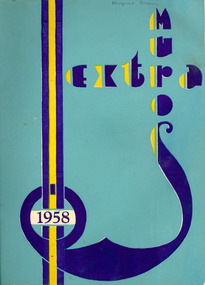
... tom turner...p.r. burgess...bob croft...howard pattenden...alan sonsee...mavis canty...mary egan...jack roach...w.h. ellwood prize...michael long...Walpole, Monica Miller ballarat teachers' college kevin o'neill barry withers v. la franchi john teschendorr victoria street hostel student residences gillies street hostel beaufort house sturt street hostel camp street hostel lois hayne verna rogers joan bates lorna anderson margaret brown gillies street campus tom turner p.r. burgess bob croft howard pattenden alan sonsee mavis canty mary egan jack roach w.h. ellwood prize michael long kevin o'neil grampians excursion Signed on frank cover 'Margaret Brown'. ...In 1958 the Ballarat Teachers' College moved to a new site in Gillies Street. The 1958 Students' Representative Council were M. Hines, B. Rickard, D. Eldridge, N. Turnball, B. English, K. O'Neill, P. Burgess, M. Almeida, ed Doney, J. Rae, P. Wise, W. Crocker. The 1958 staff were J. Bourke, A. Linton, Ed Doney, S. McKaskill, Howard Pattenden, D. Chandler, A. Stafford, Bob Croft, Arch Cuthbertson, R. Reed, A. Sonsee, J. Lacy, F. Ryan, C. Rodger, Mary Egan, J. Hill, Tom Turner, Mavis Canty, J. Blair, E. Walpole, Monica MillerSoft covered booklet of 48 pages. Articles include: Teaching Rounds, Art and Craft, Victoria Street Hostel, Gillies Street Hostel, Grampians Trip, Camp St Hostel Beaufort House, Spring is Spring, A Windy Night, What are Sculptors? Photographs include: Aerial photograph of the new college in Gillies Street, Students' Representative Council, staff photo, class photosSigned on frank cover 'Margaret Brown'. Signed in back 'Verna Rogers Natimuk' "Lorna G. Anderson Gold House Riddells B.T.C. 1958" "E. Joan Bates Lakeside Murtoa Vic"ballarat teachers' college, kevin o'neill, barry withers, v. la franchi, john teschendorr, victoria street hostel, student residences, gillies street hostel, beaufort house, sturt street hostel, camp street hostel, lois hayne, verna rogers, joan bates, lorna anderson, margaret brown, gillies street campus, tom turner, p.r. burgess, bob croft, howard pattenden, alan sonsee, mavis canty, mary egan, jack roach, w.h. ellwood prize, michael long, kevin o'neil, grampians excursion -
 Federation University Historical Collection
Document - Correspondence, Richard Squire Mining Correspondence
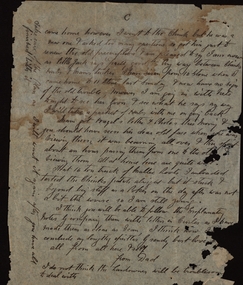
... long area and a dam. His Capital is 300 pounds and the supposition is that he wants to 'unwater' the leads, dated Frid 20th April. .96) A one page letter regarding the continued work in the tunnel and how his suppositions seemed to be correct, dated Thur 27th April 33. .97) A three page letter thanking Tom for Ned's cheque of 6 pounds 7 shillings and 6 pence. ...long area and a dam. His Capital is 300 pounds and the supposition is that he wants to 'unwater' the leads, dated Frid 20th April. .96) A one page letter regarding the continued work in the tunnel and how his suppositions seemed to be correct, dated Thur 27th April 33. .97) A three page letter thanking Tom for Ned's cheque of 6 pounds 7 shillings and 6 pence. ...Seems that Tom pays Ned's wages. Numerous bores were sunk , some were opened out and driven in the direction of the reef. Numerous Cross cuts were also made from the main tunnel.Unless otherwise stated the letters are from Dad (Richard Squire) to Tom, Hazel & Kiddies all. .1) Handwritten two page letter from Richard Squire to 'Tom & Hazel & little men' with information regarding the Leigh River Tunnel at Mount Mercer, dated 6/8/28. .2) Handwritten three page letter with information regarding mining operations dated 27.6.29. .3) Handwritten three page letter from Richard Squire to 'Tom & Hazel & Flock' with queries regarding the health of one of their children, other personal information and information regarding mining operations dated 18/7/29. .4) Handwritten one page letter from Richard Squire to 'Tom' dated 20/7/29, regarding the enclosed handwritten receipt with stamp for Call of two shares costing 8 pounds 7 shillings and 2 pence in Leigh River Tunnel Syndicate from Richard Squire dated 13th July 1927. .5) Handwritten two page letter from Richard Squire to 'Tom & Hazel & Pinchers' regarding his health, other personal information and information about the four page report of position of work at 'Leigh River Tunnel' enclosed. The letter is dated 29/11/29 and the report dated Nov 28th 29. .6) Handwritten two page letter with personal information and a suggestion that Tom learn to swim dated 13th Jan 30. .7) Handwritten two page report by Richard Squire regarding Leigh River Tunnel Syndicate plus a one page 'Rough Section' drawing of the tunnel dated 29th April 1930. .8) Typed one page report by Richard Squire regarding Leigh River Tunnel Syndicate and the findings of a new shaft dated 9th December 30. .9) Handwritten one page letter by Richard Squire to 'Tom' regarding mining operations and four handwritten receipts for payment of Calls from Richard Squire and Mr H McLeod and Mr E McLeod with stamps. .10) Handwritten two page letter regarding a meeting he had with the Secretary for Mines, Mr Whitehead dated 22 Feb 1931. .11) Handwritten two page letter regarding the difficulties in financing the mining operation occasioned by the interference of the government department dated 12th Mar 31. .12) Handwritten one page letter regarding the delay in the submission of his letter to the Gold Committee and with details of plans he had sent to Tom separately, dated 1st April 31. .13) Handwritten two page letter by Richard Squire to 'Tom' regarding personal matters including his health and also information regarding Tunnel work, dated May 11th 31. .14) Handwritten two page letter regarding the mine work, how his new employee, Ned, was going and also his health, dated Thur 21st May 31. .15) Handwritten two page letter regarding the Tunnel progress and financial matters dated Tue 26th May. .16) Handwritten three page letter regarding the Tunnel progress dated Thur June 11th. .17) Handwritten two page letter regarding the Tunnel progress, an issue relating to Ned's taxation assessment and his own health, dated 28th June 31. .18) Handwritten three page letter with detailed information on the Tunnel progress and information regarding his health, dated Thur July 23rd. .19) Handwritten two page letter regarding the Tunnel progress and some personal greetings, dated Thur July 30th 31. .20) Handwritten two page letter regarding the Tunnel progress, an agreement with Messrs Read & Peers? and a renaming of a Prospect as Lawaluk instead of Mount Mercer, dated Sun 2nd Aug 31. .21) Handwritten three page letter regarding the Tunnel progress, the lease agreement on Mr Read's property at Mount Mercer which he had been unable to pay and a parsley root remedy which a Ballarat Chinese herbalist had prescribed for his catarrh and had been effective, dated Thur 13th Aug 31. .22) Handwritten two page letter regarding the efficacy of the parsley (root) water in healing his catarrh and detailed progress report on the Tunnel which showed a little gold in the uncovered 'wash', dated Mon 24th Aug. .23) Handwritten three page letter regarding the progress of the Tunnel and one of the bores sunk also mentions his health, dated Mon Sept 7th. .24) Handwritten three page letter regarding the Tunnel progress in detail and an account of his illness, dated Thur 24th Sept. .25) Handwritten two page letter regarding the Tunnel progress in detail and his health which had been poor, dated Thur Oct 8th 31. .26) Handwritten four page letter regarding the Tunnel progress in detail, dated Thur Oct 22. .27) Handwritten four page letter regarding a detailed report of the Tunnel progress including the news of some show of gold and other personal matters including advising Tom not to drive there when he would have to drive home in the dark because of the accidents caused by 'Boosy Drivers', dated Thur Nov 19th 31. .28) Handwritten two page letter regarding the continued promising Tunnel progress, dated Thur Nov 26th. .29) Handwritten two page letter regarding Tunnel progress and personal matters relating to the coming Christmas visit, dated Thur Dec 3rd 1931. .30) Handwritten two page letter regarding Tunnel progress and personal matters regarding the impending visit by the family, dated Sun Dec 6th 31. .31) Handwritten two page letter regarding his health and the treatment proscribed by a Chinese herbalist and also some information about his expenses, dated Sunday 25/1/32. .32) Handwritten four page letter regarding Tunnel progress including a small diagram and further information on his health, dated Thur 25th Feb 32. .33) Handwritten three page letter regarding Tunnel progress and some personal and family information, dated Mon 21st 32. .34) Handwritten one page letter regarding some personal matters and information about the Tunnel progress, dated Thus 31st Mar. .35) Handwritten two page letter regarding detailed information about the Tunnel as well as a one page diagram of the Drives being excavated, dated Sun night 3rd April. .36). Handwritten three page letter from his home in Prahran regarding a mixture of personal matters and matters relating to the Tunnel, dated 18/4/32. .37) Handwritten one page letter regarding enclosed three shares which were to be placed as he was very short of funds, dated 19-4-32. .38) Handwritten two page letter from his home in Prahran regarding work carried out by Ned at the Tunnel and family matters, dated 6/5/32. .39) Handwritten one page letter from his home in Prahran regarding work carried out by Ned at the Tunnel, dated 10/5/32 plus an attached one page letter written by Ned (E. Woodlook) to 'Mr Squire' regarding regarding Tunnel progress, dated Saturday. .40) Handwritten two page letter from his home in Prahran regarding Tunnel progress and some personal matters, dated 27/5/32 plus an attached one page letter written by Ned to 'Mr Squire' regarding Tunnel progress and with the information that the rats were bad in Richard's hut, dated Friday. .41) Handwritten two page letter from his home in Prahran regarding Tunnel progress, dated 3/6/32 plus a two page letter written by E.Woodlock to 'Mr Squire' regarding Tunnel progress as well as person matters regarding his health, dated Friday (27th May 32 written in pencil by Richard). .42) Handwritten three page letter from his home in Prahran regarding tunnel progress and financial matters, also detailed information about the Madison's Tunnel, dated 8/6/32, plus a one page letter from E. Woodlock (Ned) to 'Mr Squire' regarding Tunnel progress dated Saturday (4 June, 32). .43) Handwritten three page letter from his home Prahran regarding a sketch he had made of Madison's Tunnel and the Mercer Shaft (not present) and the similarity of other mines with barely Payable gold, dated 13/6/32. plus a one page letter from E. Woodlock to 'Mr Squire' regarding Tunnel progress dated Saturday. .44) Handwritten one page letter by Richard Squire to 'Tom' from his home in Prahran with some personal information as well as the hope to return to Mt Mercer as he felt he was now well, not dated, plus a two page letter from E. Woodlock to 'Mr Squire' regarding duty stamps sent and Tunnel progress dated Saturday. .45) Handwritten two page letter from his home in Prahran regarding the progress of the Tunnel, dated 21/6/32, plus a one page letter from E. Woodlock regarding the progress of the Tunnel work, dated Monday (20/6/32). .46) Handwritten three page letter from his home in Prahran regarding the price of gold and the effect that mining Payable gold in the Madison Tunnel could have, dated 27/6/32. .47) Handwritten three page letter by Richard Squire to Tom, Hazel & Kiddies all' from his home in Prahran regarding his thoughts on the Madison Tunnel at Piggoreet, dated Mon 4th July 32, plus two one page letters by E Woodlock to 'Mr Squire' regarding the Tunnel work and more personal things, dated Wednesday (June 29th 32) and Saturday (July 2nd). .48) Handwritten two page letter from his home in Prahran regarding his intention to return to the diggings in a small car procured for his use and his intention to re-peg the Leigh River Lease in another name, dated Sun 17/7/32, plus a two page and a one page letter by E Woodlock to 'Mr Squire' regarding progress at the Tunnel dated Thursday (7th July) and Tuesday (12th July 32). .49) Handwritten one page letter by E Woodlock to Mr Squire detailing the tunnel work and other work related details dated Saturday (16th July 32), plus a one page letter by 'Dad' (Richard Squire) to 'Tom, Hazel & Kiddies all' regarding the letter sent by Ned (E Woodlock) and the ongoing work. He also talks about the health of Mam, his wife, dated 19th July 32. .50) Handwritten one page letter regarding the work at the tunnel and with the information that he was to finally return to the mine, dated 22/7/32, plus a one page letter by E Woodlock to Mr Squire about the ongoing work, dated Wednesday (20th July). .51) Handwritten two page letter written from Mt Mercer, regarding the works in the Mt Mercer Tunnel (mentioning South Cockloft). He also details that the drive from town (Melbourne) took 4 gallons of petrol, dated Thur 28th July 32. .52) Handwritten 3 page letter detailing the work carried on at the tunnels and with the information that underground gas had halted work temporarily. He was keen that Tom should visit one weekend soon, dated Sat 6th Aug 1932. .53) Handwritten four page letter detailing the work and new bore holes near Madisons Tunnel. The No 1 tunnel work had to be suspended due to continued gas filling the diggings every time the barometric pressure dropped. On the last page was a rough sketch of the area which was being worked, dated 19th Aug 32. .54) Handwritten two page letter regarding Tom's proposed visit to the site and some plans that he should bring with him. He also spoke of a pup that he was housing till Tom came, dated 21/8/32. .55) Handwritten one page letter encouraging Tom to bring skid chains for his vehicle as the road was muddy when he came on the weekend. He gave a brief account of the work and of the pup's progress, dated 25/8/32 .56) Handwritten three page letter regarding the weather and the relief he felt at knowing Tom and his companions had arrived safely home. He also thanked Tom for the cheques for Ned and detailed a little of the work at the tunnel and the need for more explosives as well as the fact that they had had to put a lock on the door of the hut to stop intruders, dated Sun Sept 4th 32. .57) Handwritten one page letter regarding the ongoing work at the tunnel, dated Thur Sept 8/32. .58) Handwritten two page letter written from Prahran, regarding his trip home, work at the tunnel and with information about the enclosed receipts, dated 16/9/32. Also included was a one page letter from E Woodlock to Mr Squire regarding the work at the tunnel, dated Wednesday. .59) Handwritten one page letter from Dad (Richard Squire) to 'Tom, Hazel & Kiddies all' written from Mt Mercer, regarding the work at the tunnel and the effect that 2 inches of rain had on the work, dated Wed Sept 20th 32. .60) Handwritten two page letter regarding the work at the tunnel and with the information that Mr Read who owned the property where the tunnel was located, had a serious accident in Melbourne, dated Thur 29th Sept 30 (this 1930 date is a mistake as the information contained in this letter follows on from his previous letter dated 20th Sept 32). .61) Handwritten one page letter regarding the work at the tunnel with the encouraging information that flecks of gold were found in about half a dish (mining pan), dated Thur Sept 22nd. .62) Handwritten two page letter regarding the progress at the tunnel and the difficulties of the work and thanks for Ned's cheque. Also mentioned was the information that Mr Read had a fractured pelvis and would be in hospital for two months, so Mrs Read with her father was looking after the shearing, dated Thur 6th Oct. .63) Handwritten two page letter with a third page of a diagram of a cross section of the Leigh River Tunnel, including the new tunnel and Madisons tunnel, with detailed description of the work in the tunnel, dated Sat 8th Oct. .64) Handwritten two page letter written from Prahran, giving detailed information of the tunnel and the expected outcome of the work. He also commented that he was to visit Mr Read in hospital, dated 14/10/32. .65) Handwritten two page letter written from Mt Mercer, giving information about the work in the tunnel and his visit to Mr Read, dated Wed 19th Oct. Enclosed also was a one page letter from E Woodlock to Mr Squire giving an account of his work in the tunnel, dated Thursday. .66) Handwritten one page letter regarding the work in the tunnel, dated Sun Oct 23/32. .67) Handwritten two page letter from Dad & Jim (Richard Squire) to 'Tom, Hazel & Kiddies all' regarding the receipt of Ned's wages cheque and the insurance of Ned's person as well as a detailed description of the tunnel and its relationship to Madisons Tunnel. He also gives some indication of his health, dated Tue Nov 1st 32. .68) Handwritten on page letter written from Prahran, giving a small amount of information about the tunnel work as well as his visit to see Mr Read and some personal information, undated. Enclosed also is a one page letter by E Woodlock to Mr Squire about the work in the tunnel, dated Thursday. .69) Handwritten one page letter with little information, dated 11/11/32. Also enclosed is a one page letter from E Woodlock to Mr Squire about the work in the tunnel, dated Thursday. .70) Handwritten three page letter with detailed information about the tunnel work and an aside about Jim's help and the he suffered from "Imaginitis imagines he sees a speck of gold in every bit of gravel met", dated 10/11/32. .71) Handwritten two page letter with detailed information on the work as their tunnel crossed with the old Madison Tunnel, dated Thur 17th Nov. .72) Handwritten three page letter detailing information on an application for a 500 acre lease which was posted at the Grenville Post Office and how it would impact on their lease. The upshot was that their leases would need to be re-pegged and the fee to publish a Notice of Application on their Leigh River claim was necessary to pay and he wondered if one of their investors would pay the 10 pounds necessary to secure the claim. He also spoke of perhaps forming a Company to put a plant on their Mt Mercer shaft as he felt that the gold would be of a payable quantity, dated Sunday 20th Nov, Also included was a note written by Ned (Edward Woodlock) who had copied the Notice of Application. .73) Handwritten two page letter detailing information found in Madison's Tunnel as it related to their own tunnels, particularly No 2 tunnel and how far he felt he would need to tunnel to reach an improvement in the 'wash', dated Thur 24th Nov. .74) Handwritten one page letter thanking him for the cheque the investor, Mr Wilkinson had provided for the Notice of Application for the Mt Mercer old Lease of 828 acres. He also gave some information about how it was originally farm labourers who only worked this lease and only when they had no other work. He also gave some personal information about Mam's birthday, dated Mon Nov 28th 32. .75) Handwritten two page letter by Dad (Richard Squire) to 'Tom, Hazel & Kiddies 3' written from Prahran, telling them that they had received Ned Cheque and that that Jim and He had come home. He also detailed an incident that Jim had had with a tyre blowout whilst on his way to get explosives and post the Notice of Application in the Warden's Office in Ballarat. The stub axle had bent and Jim had to ride a bike to get a new one and after changing the inner tube of the tyre they were able to drive back to Melbourne and were in the process on having the tyre re-treaded, dated 6/12/32. .76) Handwritten one page letter explaining how he and Mam had contracted colds and that his kidneys had some of their of trouble. He hoped to return to Mt Mercer on the weekend, dated 18th Jan 33. Also included was a handwritten two page letter by E Woodlock to Mr Squire giving information about the tunnel work, an injury to his hand and the fact that he had only 3 picks that were any good. He also asked for some vegetables, tomatoes and bacon when Richard returned, dated Saturday. .77) Handwritten one page letter written from Mt Mercer, giving information about the tunnel work, now 97'6" in and how he had expected to have already come upon the Madison's gold bearing gravel wash, dated Wed 25th Jan 33. .78) Handwritten two page letter with detailed information about how the tunnel had cut across a second Madison's tunnel and the prospects in this tunnel looked more promising. He also stated that he had not been well the last few days, dated Frid 27th 33 .79) Handwritten one page letter with information about the shotty gold found and the tunnel work and that he would test the value of the wash where the gold was found, dated Mon 30th Jan. .80) Handwritten short note of one page giving sketchy information about the tunnel work, dated Tue 31st Jan 33. .81) Handwritten two page letter giving information about his dealings with the Secretary for Mines relating to the fact that because the application for lease was identical to the old lease, they therefore should not need to pay for a full survey costing 7 pounds, just an inspection. He also detailed the workings and asks for more parsley roots to be sent to him, dated Thur Feb 9th 33. .82) Handwritten one page letter stating that he had received Ned's cheque and information about the workings, the coarse gold found and the fact they were going home for fresh food, dated Tue 14th 33. .83) Handwritten two page letter giving detailed information on the progress of the tunnelling as well as the information that Len and Max had come to visit the site and that Len had brought with him Keating, who he detested and pondered the reason for his bringing the man. As they were leaving Max "told Ned he thought they were going down to Ice Mam". Richard was worried about paying the 7 pounds ten shillings for the Department of Mines survey and was loath to put in another 20 pounds for another share of the mine to pay for it. He gave his thanks for a parcel of parsley he'd received , dated Tue 21st Feb 33. .84) Handwritten two page letter written saying that he had received Ned's cheque (for wages) and giving detailed information on the progress and for the need to timber the drive and have the bottom stoped up. He had no timber or laths left and was concerned about the cost necessary to satisfy the Mines Department. He mentions the possibility of insolvency. Fine gold had been found but not like the Madison's tunnel, dated Tue 28th Feb 33. .85) Handwritten two page letter written giving detailed information of the progress in the tunnel and with the expectation that they would soon meet the same wash which was in Madison's Tunnel. He also personal information about his health. the parsley roots received and the apples which Jim had "burgled", dated Sun 5th Mar 33. .86) Handwritten four page letter by with a very detailed account of the progress of the tunnelling and the reason why the expected intersection with the Madison wash did not occur, but with the hope that this intersection would soon occur, then they would be able to meet expenses. He also talked about not being able to pay for the lease but had the hope they they would not be too rigid in their case. He added some personal information about Jim not having the makings of a miner, catching rabbits "for the pot" and the fact that Mr Read was so much better that he was able to ride his horse, dated Sat 11th Mar 33. .87) Handwritten one page letter written from Prahran, acknowledging the receipt of Ned's cheque, a note about the work at the tunnel and some personal information, dated 21/3/33. .88) Handwritten one page letter written from Mt Mercer, saying that there was little change in the tunnel but that he was would open a cross cut north, dated Thur 23 March 33. .89) Handwritten note of a half page telling them that he had cross cut the tunnel, dated Sat 25th Mar. .90) Handwritten one page letter with progress of the tunnelling and where it is in relation to Madison's Tunnel, dated Thur 30th Mar 33. .91) Handwritten three page letter with the first part of the letter talking about the personal and financial worries he and his family had with travelling and mining expenses as well as Ned's wages which could not have been managed without Judy's little car, Jim's help and the payment of Ned's wages by Tom. He went on to give detailed information of the tunnelling and then talked about a letter received by the Department of Mines regarding the non payment of the lease and that a Notice of Abandonment would be published if not paid. Lastly he talked about the struggle he had had with this process and that it was only because of Tom's help that he had been able to continue this far, dated Sun 2/4/33. .92) A one page letter with information about the progress as well as the information that he had not heard from the Mines Department regarding the lease, and the the 1000 sq ft Miners Right Claim was secure, dated Thur 6th April. .93) A three page letter with detailed information about the work in the tunnel and also detailed explanation of the leases he has pegged and repegged. He also thanked Tom for paying the balance which was owed to the Department and informed Tom that he was going home, dated Tues 11th April 33. .94) A four page letter written from Prahran, thanking Tom for Ned's cheque and with information about the work still being carried on by Ned. He also talked about the pegging of the Mt Mercer claim and the cost of the advertisement and application and survey fees to secure the site as well as his opinion of the probable value of the gold from this site. He also stated that he really needed more investment from those who had initially invested with him or from new investors, dated 17/4/33. Included was a one page letter from Edward Woodlock (Ned) to Mr Squire regarding the work he was carrying out at the tunnel, dated Saturday. .95) A three page letterwritten from Mt Mercer, regarding the work in the tunnel and the quality of the gold found and the direction they will take. He also stated that he was posting letters to the original investors to see if they would contribute to the cost of the lease and also talked about another man who had a Notice of Application posted at Grenville for the water rights for a 25 miles long area and a dam. His Capital is 300 pounds and the supposition is that he wants to 'unwater' the leads, dated Frid 20th April. .96) A one page letter regarding the continued work in the tunnel and how his suppositions seemed to be correct, dated Thur 27th April 33. .97) A three page letter thanking Tom for Ned's cheque of 6 pounds 7 shillings and 6 pence. He also gave detailed information about the tunneling and the type of ground found and his next intentions. He also gave further information about the Notice of Application at Grenville which was posted by B Ryan, Agent for Western Deep Leads Coy Limited for 6000 acres, dated Sun 30th April 33. As well is a note detailing the information copied from the Notice. .98) A two page handwritten letter detailing the work being carried out as well as a complaint that he had not heard from the men he had written to, dated Thur 4th May 33. .99) A one page handwritten letter regarding the tunnel work and informing Tom that the gold found is shotty, dated Sat 6th May 33. .100) A four page handwritten letter written from Prahran, detailing the tunnel work and informing that the gold prospects were better in no.1 cross cut south and there was also payable fair gold where they were currently working, if worked in bulk. He also talked about the possibility of new investors as the old ones had not responded to his letter and the necessity of securing the leases, dated 11th May 1933. .101) A one page handwritten letter by E. Woodlock (Ned) to Mr Squire regarding the work going on, dated Thursday. .102) A six page handwritten letter written from Prahran historically detailing the acquisition of the two leases at Mt Mercer, 35 years earlier, with M C Donnely/Donney and Jas Clements, including Madisons. He goes on to clarify Tom's suggestion regarding the Leases and the Companies to be floated, then details the the shafts, bores, tunnels and Deep Leads held in the leases and then goes on to say what his next steps would be, dated 13th May 33. .103) A two page letter written from Mt Mercer detailing the continued work in the tunnel with the added information that because of the incline it was taking two men to push the truck up the tunnel. Richard also told of the need to take more parsley water for his condition, dated Thur 18th 33. .104) A three page letter with a very detailed description of the work in the tunnel. Richard also told that he had run out of metal rails and was having to use timber as a substitute. He was also to re-peg the North and South Leases in the morning, dated Sun 21st May 33. .105) A two page letter detailing the work in the tunnel and saying that there was a hundred feet of rail locked in by a fall in the No.2 Tunnel and he was hoping to get them out to replace the wooden rails as they made for heavy work on the inclines. He also said that he had a letter from the Department telling him to communicate with the Surveyor in Ballarat, dated Wed 24th May. .106) A three page letter acknowledging Ned's cheque as well as information about the work in the tunnel, including that he had been able to retrieve 45 feet of rail and would get more when needed. He said he was pleased that Tom and Mr Wilkinson were making a trip on Saturday to see him. He talked of the weather and the fact that the bread was a week old, so to bring enough to last till the Monday. Among other things he also spoke of Tom revising the Plans and also having a Share book printed and the name was to be the Ballarat Deep Leads Extension for which there could possibly be 3 Companies, dated Sun 28th May. .107) A one page letter with information about the work in the tunnel and also a weather update and the best way to come, dated Wed 31 May 33. .108) A two page letter written from Prahran, explaining a visit to the Leigh River Shaft to get whim rope, whip wheels and sundry items. He shifted some equipment and built a new forge and was to fix and mount a windlass and rope to enable Ned to get the truck up the incline of the tunnel. He also spoke of the work being undertake by Ned then when on to more personal correspondence about a birthday present for one of Tom's boys, dated 9/6/33. .109) A two page letter acknowledging receipt of the 'Prospectus of the Ballarat Deep Leads Extension Syndicate' and 'Share Certificate'. The No.1 Lease was in Ned's name and the No.2 Lease was in Jim's name to avoid inquisitive interest. Jim logged a Notice of Application and paid the fees. Richard acknowledged receipt of Ned's cheque and asked for 5 pounds as his finances were 'rather tight', dated 14/6/33. Included was a 1 page letter from Ned to Mr Squire regarding the work in the mine, dated Saturday. .110) A one page letter written from Mt Mercer giving information about what was happening in the new x cut N near the mouth of the tunnel, dated Friday 16/6/33. .111) A one page letter telling about the work and that he had fixed an old shed of Mr Reads for the forge. Mr Read and Mr Cameron visited and Richard was hopeful that Mr Cameron, the owner of the land in the North Lease would be easy as regards an agreement, dated June 22/33. .112) A two page letter which talked about his health, the mine, the local J.P. who had lost his eye in a shearing accident and the surveyors visit, He also spoke about contacting the Gold Mines Ltd and the Berry Leads Company, dated Tue 27th 33. Also included was a letter to the Mines Department and a receipt from the Mines Department for the sum of 7 pounds 10 shillings as well as the Lease Applications from the newspaper dated June 13th 1933. .113) A two page letter complaining of the charge made by the Mines Department for a Surveyors Inspection. He also wrote of trying to set up a float for the mine which he would do when he returned home.He also explained the current findings at the mine, dated Sun 2nd July 1933. .114) A one page note written from Prahran informing Tom that he had not yet heard from Gold Mines Ltd and also that there was a hitch with the lease on the house, but this was to hopefully be fixed the following day. He also spoke of Tom's trip home (completed in tow), dated 18/7/33. .115) A two page letter recounting some of the difficulties they were having with the new owners of the house they leased in Prahran. He also spoke of the fact that the Mines Department had requested another 10 pounds although they had not yet completed the survey on either mine, dated 21/7/1933. Also included was a one page letter from E. Woodlock (Ned) to Mr Squire about the workings, dated Tuesday and a letter from the Gold Mines of Australia Limited saying that the information he had supplied was now with their engineers, dated 20th July, 1933. .116) A three page letter written from Armidale saying that Mam (his wife) was fretting with the move to this house. He also told of the rejection by the Gold Mines of Australia Limited of his proposal to invest in his Mt Merser Mine, stating that he believed that Jim Clements who had been the manager when the mine had previously been opened, had most likely "thrown all the cold water he could" on the proposal. He spoke at length about how this man had run the mine into the ground and his own involvement with the winding up of the company. He went on to say that he would approach Ryall to see if he was interested in investing, dated 28/7/33. Included was the letter from Gold Mines of Australia Limited, dated 26th July, 1933. .117) A two page letter written from Prahran telling of the move to another house where Mam was quite settled. He also wrote of the work Ned was carrying out at the mine as well as personal and family news. He wrote that as he had not heard from Ryall, he would visit him the following day, dated 6/8/33. Also included was a two page letter from E Woodlock to Mr Squire giving detailed information of the progress at the tunnel, as well as asking for a new pair of boots as the ground was so wet his were letting in the water, dated Thursday. .118) A two page letter explaining about a letter he received from Mr Cameron who believed he had found gold as well as some personal information and his health, dated 8/8/33. Also included was a one page letter from Neil W Cameron to R B Squire telling about some specks of gold he'd found in a post hole, dated July 31st 33. Thirdly was a one page letter from Ned to Mr Squire explaining the work he was doing in the tunnel, dated Saturday. .119) A one page note saying that he did not like the enclosed 2 copies of the typed Agreement of the Leigh River Gold Mining Company with William Ryall, but asked Tom's advice. dated 9/8/33. .120) A two page letter dealing mainly about the work going on at the new house and the settling in process. He also wrote about the proposed Agreement with Ryall, dated 11/8/33. Also included was a one page letter from Mr Ryall to R B Squire from which part of the left hand side had been severed, dated 10th August 1933. .121) A one page note from R B Squire to W Ryall dated 14/8/33, with attached one page of information and figures. Also attached a one page letter from R B Squire to W Ryall asking if Ryall would be interested viewing the plans for an alluvial mining proposition, dated 27/7/33. .122) A three page letter mainly about the visit to Ryall and a Mr Cundy about the proposed agreement with his concerns about the language and terms of the agreement, dated Sun 21st 33. Also included was a letter from Ned to Mr Squire about the continued work in the tunnel and the fact that two of the pick heads had cracked and would have to be fixed, dated Thursday. .123) A two page letter dealing with a meeting had with Ryall and others in a private office regarding the interest in investing in the mining proposition, dated 23/8/33. .124) A four page letter dealing mainly with the work at the tunnel and exploratory diggings at the spot Mr Cameron had written about as well as the damage done to the car on the way to the workings, dated 29/8/33. .125) A one page letter telling of a proposed meeting with Mr Taylor and a Mr Bowler, who may turn out to be Alan Bowler who he knew, regarding the Mr Mercer Float scheduled for the following day, dated 30/8/33. .126) A five page letter explaining the content of the meeting held with Mr Bowler, who represented an English consortium which was interested in the Mt Mercer site. He explained the terms that the consortium would offer if they went ahead, This included 25 % shares in the mine but no money, which he bemoaned because of the shortness of their cash reserves. He went on to detail the 4 distinct deposits of wash in this field, which he believed were unique in the Ballarat district. He also stated that he had not heard from Mr Ryall. He closed by talking about the water levels in the mine, dated 1/9/33. .127) A two page letter saying that he had written an 11 page report on the Mt Mercer field for the English consortium as well as a private letter for the chairman.He also reported that he had been to see Ryall. Neither party knew that he was talking to the other. added was some personal information, dated 6/9/33. .128) A one page letter telling of a meeting with Mr Bowler and Mr Tayler who carefully went through his report. It was then being typed. He believed he had two strong supporters, dated 7/9/33. Also included was a 2 page note from A Bowler to R B Squire asking him to bring the report into the office the following day to be perused and typed, dated Sept 6th 33. .129) A two page letter with personal encouragement for one of the children. The letter then goes on with more information about the meeting with Mr Tayler and Bowler and his impressions of their interest. He also talked about the one of the experts who was to examine the site and also about the report which was now typed and a copy sent to Tom, dated 8/9/33. .130) A one page letter keeping him informed of progress. The expert was away but would be briefed on his return. He also thanked Tom for a cheque, which was used to get the car 'Liz' back in order for the trip to be made with the experts at a later date. He informed Tom of his intention to return to Mt Mercer, dated 13/9/33. .131) A one page letter written from Mt Mercer telling of the trip from Melbourne and the weather. He spoke of what was happening in the tunnel and that he had not yet heard from any of the interested parties, dated Tue 19th Sept. .132) A five page letter written from Prahran with detailed information about the tunnels, the washes and the shows. He also detailed his meeting with Bryant 38 years ago at the No 1 at Carisbrook and how he had given him assistance at that time and subsequently as well as giving his version of a potted history of Bryant, dated 29/9/33. .133) A two page letter with information about the arrival of the chairman of the English group and that Ned had shown Mr Kermode around the site, dated 6/10/33. Also included was a cutting from the Age about the arrival of Mr F W Baker, representing a large English financial group interested in Victorian deep lead propositions, dated Oct 6th. As well were two, one page letters from Ned (E Woodlock) to Tom, regarding the work in the tunnels, the bad air and the hopes of a successful float, dated Tuesday and Wednesday. .134) A one page letter thanking them for the gift of eggs and parsley. He also talked about a letter from Bowler regarding the business of the experts and that their leases would be seen in due course, dated 10/10/33. Included was a one page letter from A Bowler to P B Squires saying that Mt Mercer site was receiving attention but that no decision had as yet been made, dated Oct 9th 1933. .135) A three page letter written from Prahran giving information about Richards visit and conversation with Mr Ryall, who indicated that no decision had as yet been made regarding his proposal. He also included some personal information about members of the family, dated 18/10/33. Included was a one page letter from Ned (E Woodlock) to Tom with information about the tunnelling progress in no.2 tunnel and the bad air that drove them out for a time, dated Saturday. .136) A one page letter containing a brief update on the state of affairs , dated 20/10/33. Included was a one page letter from Ned to Mr Squire with an information on the progress at the tunnel and with the information that his hands were cracked so badly that he was wearing two socks on each hand, dated Saturday. .137) A one page letter which family news and a paragraph about the figures in his calculations, dated 21/10/33. On the back side was a letter from E Squire (his wife) to Tom, Hazel & boys again with family and personal information, dated 22nd 10/33. .138) A three page letter with the disappointing news that the English consortium would not take up the option on the Mt Mercer lease and gave his opinion that it was self interest that stopped it going ahead. He then gave two options as to the way forward, dated 24/10/33. Also included was a typed one page letter from W C Tayler to R B Squire informing him of a letter stating that the proposal had been turned down, dated 23rd October 1933. .139) A three page letter informing of further developments with Mr Tayler who asked for the plans to be left at the office till the following week as there was another company who may yet be interested to take up the option, dated 27/10/33. .140) A one page letter asking for 9 copies of the old agreement to be typed for the 3 Syndicate members, Rice, Cameron and McNaughton, dated 5/11/33. .141) A three page letter regarding the decision by the Syndicate to reopen the LRG shaft and the practical issues of timber acquisition and probable costs. He then went on to talk about Mam's indisposition and treatment by the herbalist, Goon, dated 8/11/33. Also included was a newspaper clipping from the Age entitled 'Inquiries for properties at Ballarat'. .142) A three page letter giving all the news regarding the agreements, the costs and the way forward. He also spoke of his wife's improvement and other personal information, dated 11/11/33. .143) A two page letter written from Mt Mercer regarding the difficulties in obtaining the timbers and tanks needed to reopen the shaft and the state of all the existing fittings and what would be needed to get the site operational again. His agreement with Mr Read had duly been signed, dated Thurs 16th 33. .144) A two page letter with further information about the progress with acquiring and repairing the shaft site, dated Mon Nov 20th 33. .145) A three page letter informing that the timber for the whim & shaft were being delivered and the area had been cleared out for the poppet heads. The top of the shaft had been cleared ready for re-framing and other work had been carried out. Liz, the car had broken down and Jim was in the process of fixing her. He concluded with information about his and his wife's health, dated Sun 26th Nov 33. .146) A four page letter with news of Mam's health, the problems associated with fixing the car and the floods which stopped Jim from going to Ballarat and washed away the Gary Bridge which affected the mail and had halted work at the shaft, as well as delaying the second delivery of timber, dated Sun Dec 3rd. .147) richard squire, william ryall, jim clements, gold mines of australia limited, e woodlock, ned woodlock, neil w cameron, alan bowler, mr cundy, don mcnaughton, mr rice -
 Federation University Historical Collection
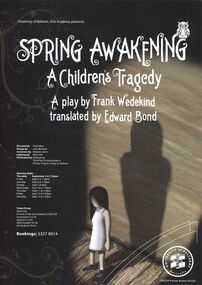
Poster - Advertisment, Spring Awakening, 15375.1 - 2002; 15375.2 - 2014
... Tom Haley...David Piper...Anna -Francesca Armenia...Cody Arthur...Prudence Bell...Robbie Bennett...Jamie Bray...Shelley Cocker...Tamara Cohen...Ryan Hawke...Ben Hodges...Eden Holmes...Josh Kerr...Lauren Marshal...Shaly McComas...Grace Sabbatucci...Josh Sanders...Regan Schmidt...Christopher Southall...Sharon Wills...Kylie Baker...Robbie Bennet...Isabella Bevan...Chloe Bruer-Jones...Darcy Dann...Louisa Fitzhardinge...Kirsty Gayther...Rebecca Koroneos...Stephanie Long...Spring Awakening Frank Wedekind Edward Bond Fiona Blair Rob Irwin University of Ballarat The University of Ballarat Arts Academy PO Box Theatre Steven Sater Duncan Sheik Tom Haley David Piper Anna -Francesca Armenia Cody Arthur Prudence Bell Robbie Bennett Jamie Bray Shelley Cocker Tamara Cohen Ryan Hawke Ben Hodges Eden Holmes Josh Kerr Lauren Marshal Shaly McComas Grace Sabbatucci Josh Sanders Regan Schmidt Christopher Southall Sharon Wills Kylie Baker Robbie Bennet Isabella Bevan Chloe Bruer-Jones Darcy Dann Louisa Fitzhardinge Kirsty Gayther Rebecca Koroneos Stephanie Long Vanessa Menjivar Elizabeth Sahlstrom 15375.1 Original Poster 15375.2 A paper flyer Spring Awakening Poster Advertisment ...15375.1 The poster is an advertisement for the performance presented by University of Ballarat Arts Academy, Third Year Acting Students, 2002, for the play 'Spring Awakening A Children's Tragedy'. A play by Frank Wedekin translated by Edward Bond. Director - Fiona Blair; Design - John Bennett; Costumes - Melanie Liertz; Lighting - Rob Irwin. It was performed at PO Box Theatre from Thursday September 4th - Saturday September 13th, all performances at 7.30pm except Sunday 7th at 6pm. Ticket prices: Adult $22, Friends of the Arts Academy (FAA) $20, Concession $15.50, Student $12, UBSA Student $7.50, AA Students $5. 15375.2 A flyer advertising a performance by Faculty of Education and Arts, Arts Academy 2014 Graduating Music Theatre Company of 'Spring Awakening A New Musical'. Book and Lyrics by Steven Sater; Music by Duncan Sheik. Based on the Original Play by Frank Wedekind. Director - Tom Healey, Music Direction - David Piper. This production of Spring Awakening has been double cast: Austria Cast and Germany Cast. (See Media for names). The musical was performed at Helen MacPherson Theatre from Wednesday 9th April to Tuesday 15th April and with four Austria and Four Germany productions. There were two performances on Saturday 12th ( 2pm & 7.30 pm) and a 4pm performance on Sunday 13th. All other performances were at 7.30. Spring Awakening is a coming-of-age rock musical with music by Duncan Sheik and a book and lyrics by Steven Sater. It is based on the 1891 German play Spring Awakening by Frank Wedekind. Set in late 19th-century Germany, the musical tells the story of teenagers discovering the inner and outer tumult of adolescent sexuality. In the musical, alternative rock is employed as part of the folk-infused rock score.15375.1 Original Poster 15375.2 A paper flyerspring awakening, frank wedekind, edward bond, fiona blair, rob irwin, university of ballarat, the university of ballarat arts academy, po box theatre, steven sater, duncan sheik, tom haley, david piper, anna -francesca armenia, cody arthur, prudence bell, robbie bennett, jamie bray, shelley cocker, tamara cohen, ryan hawke, ben hodges, eden holmes, josh kerr, lauren marshal, shaly mccomas, grace sabbatucci, josh sanders, regan schmidt, christopher southall, sharon wills, kylie baker, robbie bennet, isabella bevan, chloe bruer-jones, darcy dann, louisa fitzhardinge, kirsty gayther, rebecca koroneos, stephanie long, vanessa menjivar, elizabeth sahlstrom -
 Federation University Historical Collection
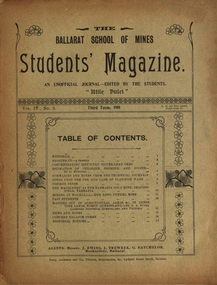
Booklet, Ballarat School of Mines, Student Magazine, Third Term, 1901, 1901
... long tunnel mine...vine lands, north queensland...r. a. suter...photography class...boer war...alumni...thomas vincent...basil sawyer...o. e. jager...a. s. burdekin...t. phillipson...glen macpherson...tom...Licensed surveyor, Queensland and Victoria), News and notes, Concert balance sheet, Editorial notices. silver-lead ores estimation of chlorine bromine and iodine (by d.runting) platinum ware tasmania gold mine beaconsfield, tasmania mining at walhalla long tunnel mine vine lands, north queensland r. a. suter photography class boer war alumni thomas vincent basil sawyer o. e. jager a. s. burdekin t. phillipson glen macpherson tom uthwatt marcus marks r. j. allen cecil eales cecil wakley adam morton e.p. lewers harry leggo jack hill berk nickolls h. burrows percy osborne j. brangan chris evans adamson alford r. evans arthur "thomas" atkins charles campbell hardy a. basil reid h. l. krause k. grant m. gray a.b. reid h. alston playford j. a. reid s. b. vial f. a. marriott f. lush c. whyte karl moore r. robin w. j. lakeland e. trend h. l. giles r. mccracken k. bryron moore Soft covered magazine of 16 pages. ...Articles include: Concentrating difficult silver-lead ores, Estimation of chlorine, bromine and iodine (by D.Runting. Summaries and notes from the technical journals, Notes upon the use and care of platinum ware, Common sense, The machinery at the Tasmania gold mine, Beacons-Field, Tasmanina, Mining at Walhalla - The long tunnel mine, Past students, Mapping out of agricultural areas &c., in dense vine lands, North Queensland (by R. A. Suter. Licensed surveyor, Queensland and Victoria), News and notes, Concert balance sheet, Editorial notices.Soft covered magazine of 16 pages. silver-lead ores, estimation of chlorine, bromine and iodine (by d.runting), platinum ware, tasmania gold mine, beaconsfield, tasmania, mining at walhalla, long tunnel mine, vine lands, north queensland, r. a. suter, photography class, boer war, alumni, thomas vincent, basil sawyer, o. e. jager, a. s. burdekin, t. phillipson, glen macpherson, tom uthwatt, marcus marks, r. j. allen, cecil eales, cecil wakley, adam morton, e.p. lewers, harry leggo, jack hill, berk, nickolls, h. burrows, percy osborne, j. brangan, chris evans, adamson, alford, r. evans, arthur "thomas" atkins, charles campbell, hardy, a. basil reid, h. l. krause, k. grant, m. gray, a.b. reid, h. alston, playford, j. a. reid, s. b. vial, f. a. marriott, f. lush, c. whyte, karl moore, r. robin, w. j. lakeland, e. trend, h. l. giles, r. mccracken, k. bryron moore -
 Federation University Historical Collection
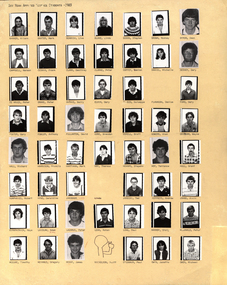
Photographs - black and white, Ballarat College of Advanced Education: 1st Year Applied Science Students, 1983, 1983
... long, paul...markby, craig...mcdonald, peter...mceuna, timothy...mcinnes, gregory...mckay, james...nicholson, scott...o'connor, paul...owen, janette...owen, michael...pear, zlatko...picorrillo, john...pilkington, john...potter, steven...prendergast, maurice...roberts, barry...ryan, marie...schwarz, peter...seeary, adrian...shiells, jane...stevenson, michael...tan, simon...taylor, catherine...turkuile, marianne...thomas, rosemarie...twyford, keith...vorstenbosch, mark...walker, paul...ward, jennifer...warner, gary...wheeler, stuart...winter, anthony...wood, mark...yee, arthur...zentgraf, mark...bowie, ?...davies, ronald...mckay, ?...maclean, andrew...cramer, geoff...page, stuart...firth, barry...fry, b...hennesy, tom...e/f guiseppe flanagan, denise ford, gary foster, gary fowler, anthony fullarton, david gore, brendan gorell, brett gowers, alan grinham, wayne hall, richard harrison, francis hartmann, mark hay, theresa hovard,stephen hoy, terrance hull, grant humphries, robert hynd,geraldine jakubans, linda jarecki, ted jeffreys, andrew johns, alvin kirkpatrick, kaye laidlaw, gary lazarus, peter lean, rohan long, paul markby, craig mcdonald, peter mceuna, timothy mcinnes, gregory mckay, james nicholson, scott o'connor, paul owen, janette owen, michael pear, zlatko picorrillo, john pilkington, john potter, steven prendergast, maurice roberts, barry ryan, marie schwarz, peter seeary, adrian shiells, jane stevenson, michael tan, simon taylor, catherine turkuile, marianne thomas, rosemarie twyford, keith vorstenbosch, mark walker, paul ward, jennifer warner, gary wheeler, stuart winter, anthony wood, mark yee, arthur zentgraf, mark bowie, ? davies, ronald mckay, ? maclean, andrew cramer, geoff page, stuart firth, barry fry, b hennesy, tom ...Individual images of students in 1st Year Applied Science Course. The names of the student is written under the photo - in alphabetical order. Some spaces have no photo. Some names have been crossed out. In total there are 91 names (55 on one and 36 on the other). Of this number there are only 16 girls in the course for this year.Two beige cards with small black and white photographs - photographer's proofsName of student under photo - alphabetical orderapplied science, 1st year, barker, alison, baxter, mark, beamish, lisa, blake, linda, bodon, stephen, brown, rodney, byron, dean, campbell, noreen, cesnik, frank, clark, geoffrey, clarke, peter, coffey, damien, daniel, michelle, desnoy,gary, de vries, peter, drake, peter, duthie, barry, elkin, gary, ? e/f guiseppe, flanagan, denise, ford, gary, foster, gary, fowler, anthony, fullarton, david, gore, brendan, gorell, brett, gowers, alan, grinham, wayne, hall, richard, harrison, francis, hartmann, mark, hay, theresa, hovard,stephen, hoy, terrance, hull, grant, humphries, robert, hynd,geraldine, jakubans, linda, jarecki, ted, jeffreys, andrew, johns, alvin, kirkpatrick, kaye, laidlaw, gary, lazarus, peter, lean, rohan, long, paul, markby, craig, mcdonald, peter, mceuna, timothy, mcinnes, gregory, mckay, james, nicholson, scott, o'connor, paul, owen, janette, owen, michael, pear, zlatko, picorrillo, john, pilkington, john, potter, steven, prendergast, maurice, roberts, barry, ryan, marie, schwarz, peter, seeary, adrian, shiells, jane, stevenson, michael, tan, simon, taylor, catherine, turkuile, marianne, thomas, rosemarie, twyford, keith, vorstenbosch, mark, walker, paul, ward, jennifer, warner, gary, wheeler, stuart, winter, anthony, wood, mark, yee, arthur, zentgraf, mark, bowie, ?, davies, ronald, mckay, ?, maclean, andrew, cramer, geoff, page, stuart, firth, barry, fry, b, hennesy, tom, hoell, nicholas, evans, michael -
 Flagstaff Hill Maritime Museum and Village
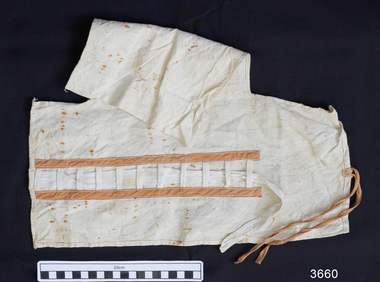
Instrument - Surgical Instrument Roll, C early 1900's
... long ties would be tied up to create a secure kit. The 'roll' would be very portable and could also keep the instruments together whilst being sterilised. it is most probable that it belonged to Dr. Tom...long ties would be tied up to create a secure kit. The 'roll' would be very portable and could also keep the instruments together whilst being sterilised. it is most probable that it belonged to Dr. Tom ...This surgical instrument roll has loops into which various surgical instruments would be placed. The flaps of the fabric would then be folded inwards over the instruments, then rolled up, then the long ties would be tied up to create a secure kit. The 'roll' would be very portable and could also keep the instruments together whilst being sterilised. it is most probable that it belonged to Dr. Tom Ryan and was later handed on to Dr. Angus, dating the roll then to the late 1800's. This instrument roll was donated to Flagstaff Hill Maritime Village by the family of Doctor William Roy Angus, Surgeon and Oculist. It is part of the “W.R. Angus Collection” that includes historical medical equipment, surgical instruments and material once belonging to Dr Edward Ryan and Dr Thomas Francis Ryan, (both of Nhill, Victoria) as well as Dr Angus’ own belongings. The Collection’s history spans the medical practices of the two Doctors Ryan, from 1885-1926 plus that of Dr Angus, up until 1969. ABOUT THE “W.R.ANGUS COLLECTION” Doctor William Roy Angus M.B., B.S., Adel., 1923, F.R.C.S. Edin.,1928 (also known as Dr Roy Angus) was born in Murrumbeena, Victoria in 1901 and lived until 1970. He qualified as a doctor in 1923 at University of Adelaide, was Resident Medical Officer at the Royal Adelaide Hospital in 1924 and for a period was house surgeon to Sir (then Mr.) Henry Simpson Newland. Dr Angus was briefly an Assistant to Dr Riddell of Kapunda, then commenced private practice at Curramulka, Yorke Peninsula, SA, where he was physician, surgeon and chemist. In 1926, he was appointed as new Medical Assistant to Dr Thomas Francis Ryan (T.F. Ryan, or Tom), in Nhill, Victoria, where his experiences included radiology and pharmacy. In 1927 he was Acting House Surgeon in Dr Tom Ryan’s absence. Dr Angus had become engaged to Gladys Forsyth and they decided he would take time to further his studies overseas in the UK in 1927. He studied at London University College Hospital and at Edinburgh Royal Infirmary and in 1928, was awarded FRCS (Fellow from the Royal College of Surgeons), Edinburgh. He worked his passage back to Australia as a Ship’s Surgeon on the on the Australian Commonwealth Line’s T.S.S. Largs Bay. Dr Angus married Gladys in 1929, in Ballarat. (They went on to have one son (Graham 1932, born in SA) and two daughters (Helen (died 12/07/1996) and Berenice (Berry), both born at Mira, Nhill ) Dr Angus was a ‘flying doctor’ for the A.I.M. (Australian Inland Ministry) Aerial Medical Service in 1928 . The organisation began in South Australia through the Presbyterian Church in that year, with its first station being in the remote town of Oodnadatta, where Dr Angus was stationed. He was locum tenens there on North-South Railway at 21 Mile Camp. He took up this ‘flying doctor’ position in response to a call from Dr John Flynn; the organisation was later known as the Flying Doctor Service, then the Royal Flying Doctor Service. A lot of his work during this time involved dental surgery also. Between 1928-1932 he was surgeon at the Curramulka Hospital, Yorke Peninsula, South Australia. In 1933 Dr Angus returned to Nhill where he’d previously worked as Medical Assistant and purchased a share of the Nelson Street practice and Mira hospital from Dr Les Middleton one of the Middleton Brothers, the current owners of what was once Dr Tom Ryan’s practice. Dr L Middleton was House Surgeon to the Nhill Hospital 1926-1933, when he resigned. [Dr Tom Ryan’s practice had originally belonged to his older brother Dr Edward Ryan, who came to Nhill in 1885. Dr Edward saw patients at his rooms, firstly in Victoria Street and in 1886 in Nelson Street, until 1901. The Nelson Street practice also had a 2 bed ward, called Mira Private Hospital ). Dr Edward Ryan was House Surgeon at the Nhill Hospital 1884-1902 . He also had occasions where he successfully performed veterinary surgery for the local farmers too. Dr Tom Ryan then purchased the practice from his brother in 1901. Both Dr Edward and Dr Tom Ryan work as surgeons included eye surgery. Dr Tom Ryan performed many of his operations in the Mira private hospital on his premises. He too was House Surgeon at the Nhill Hospital 1902-1926. Dr Tom Ryan had one of the only two pieces of radiology equipment in Victoria during his practicing years – The Royal Melbourne Hospital had the other one. Over the years Dr Tom Ryan gradually set up what was effectively a training school for country general-practitioner-surgeons. Each patient was carefully examined, including using the X-ray machine, and any surgery was discussed and planned with Dr Ryan’s assistants several days in advance. Dr Angus gained experience in using the X-ray machine there during his time as assistant to Dr Ryan. Dr Tom Ryan moved from Nhill in 1926. He became a Fellow of the Royal Australasian College of Surgeons in 1927, soon after its formation, a rare accolade for a doctor outside any of the major cities. He remained a bachelor and died suddenly on 7th Dec 1955, aged 91, at his home in Ararat. Scholarships and prizes are still awarded to medical students in the honour of Dr T.F. Ryan and his father, Dr Michael Ryan, and brother, John Patrick Ryan. ] When Dr Angus bought into the Nelson Street premises in Nhill he was also appointed as the Nhill Hospital’s Honorary House Surgeon 1933-1938. His practitioner’s plate from his Nhill surgery states “HOURS Daily, except Tuesdays, Fridays and Saturday afternoons, 9-10am, 2-4pm, 7-8pm. Sundays by appointment”. This plate is now mounted on the doorway to the Port Medical Office at Flagstaff Hill Maritime Village, Warrnambool. Dr Edward Ryan and Dr Tom Ryan had an extensive collection of historical medical equipment and materials spanning 1884-1926 and when Dr Angus took up practice in their old premises he obtained this collection, a large part of which is now on display at the Port Medical Office at Flagstaff Hill Maritime Village in Warrnambool. During his time in Nhill Dr Angus was involved in the merging of the Mira Hospital and Nhill Public Hospital into one public hospital and the property titles passed on to Nhill Hospital in 1939. In 1939 Dr Angus and his family moved to Warrnambool where he purchased “Birchwood,” the 1852 home and medical practice of Dr John Hunter Henderson, at 214 Koroit Street. (This property was sold in1965 to the State Government and is now the site of the Warrnambool Police Station. ). The Angus family was able to afford gardeners, cooks and maids; their home was a popular place for visiting dignitaries to stay whilst visiting Warrnambool. Dr Angus had his own silk worm farm at home in a Mulberry tree. His young daughter used his centrifuge for spinning the silk. Dr Angus was appointed on a part-time basis as Port Medical Officer (Health Officer) in Warrnambool and held this position until the 1940’s when the government no longer required the service of a Port Medical Officer in Warrnambool; he was thus Warrnambool’s last serving Port Medical Officer. (The duties of a Port Medical Officer were outlined by the Colonial Secretary on 21st June, 1839 under the terms of the Quarantine Act. Masters of immigrant ships arriving in port reported incidents of diseases, illness and death and the Port Medical Officer made a decision on whether the ship required Quarantine and for how long, in this way preventing contagious illness from spreading from new immigrants to the residents already in the colony.) Dr Angus was a member of the Australian Medical Association, for 35 years and surgeon at the Warrnambool Base Hospital 1939-1942, He served as a Surgeon Captain during WWII 1941-45, in Ballarat, Victoria, and in Bonegilla, N.S.W., completing his service just before the end of the war due to suffering from a heart attack. During his convalescence he carved an intricate and ‘most artistic’ chess set from the material that dentures were made from. He then studied ophthalmology at the Royal Melbourne Eye and Ear Hospital and created cosmetically superior artificial eyes by pioneering using the intrascleral cartilage. Angus received accolades from the Ophthalmological Society of Australasia for this work. He returned to Warrnambool to commence practice as an ophthalmologist, pioneering in artificial eye improvements. He was Honorary Consultant Ophthalmologist to Warrnambool Base Hospital for 31 years. He made monthly visits to Portland as a visiting surgeon, to perform eye surgery. He represented the Victorian South-West subdivision of the Australian Medical Association as its secretary between 1949 and 1956 and as chairman from 1956 to 1958. In 1968 Dr Angus was elected member of Spain’s Barraquer Institute of Barcelona after his research work in Intrasclearal cartilage grafting, becoming one of the few Australian ophthalmologists to receive this honour, and in the following year presented his final paper on Living Intrasclearal Cartilage Implants at the Inaugural Meeting of the Australian College of Ophthalmologists in Melbourne In his personal life Dr Angus was a Presbyterian and treated Sunday as a Sabbath, a day of rest. He would visit 3 or 4 country patients on a Sunday, taking his children along ‘for the ride’ and to visit with him. Sunday evenings he would play the pianola and sing Scottish songs to his family. One of Dr Angus’ patients was Margaret MacKenzie, author of a book on local shipwrecks that she’d seen as an eye witness from the late 1880’s in Peterborough, Victoria. In the early 1950’s Dr Angus, painted a picture of a shipwreck for the cover jacket of Margaret’s book, Shipwrecks and More Shipwrecks. She was blind in later life and her daughter wrote the actual book for her. Dr Angus and his wife Gladys were very involved in Warrnambool’s society with a strong interest in civic affairs. Their interests included organisations such as Red Cross, Rostrum, Warrnambool and District Historical Society (founding members), Wine and Food Society, Steering Committee for Tertiary Education in Warrnambool, Local National Trust, Good Neighbour Council, Housing Commission Advisory Board, United Services Institute, Legion of Ex-Servicemen, Olympic Pool Committee, Food for Britain Organisation, Warrnambool Hospital, Anti-Cancer Council, Boys’ Club, Charitable Council, National Fitness Council and Air Raid Precautions Group. He was also a member of the Steam Preservation Society and derived much pleasure from a steam traction engine on his farm. He had an interest in people and the community He and his wife Gladys were both involved in the creation of Flagstaff Hill, including the layout of the gardens. After his death (28th March 1970) his family requested his practitioner’s plate, medical instruments and some personal belongings be displayed in the Port Medical Office surgery at Flagstaff Hill Maritime Village, and be called the “W. R. Angus Collection”. The W.R. Angus Collection is significant for still being located at the site it is connected with, Doctor Angus being the last Port Medical Officer in Warrnambool. The collection of medical instruments and other equipment is culturally significant, being an historical example of medicine from late 19th to mid-20th century. Dr Angus assisted Dr Tom Ryan, a pioneer in the use of X-rays and in ocular surgery. Surgical instrument roll, part of the W.R. Angus Collection. Cloth fabric, custom made with loops and ties for organising and storing surgical instruments, making them easily carried and accessed.flagstaff hill, warrnambool, shipwrecked coast, flagstaff hill maritime museum, maritime museum, shipwreck coast, flagstaff hill maritime village, great ocean road, dr w r angus, dr ryan, surgical instrument, t.s.s. largs bay, warrnambool base hospital, nhill base hospital, mira hospital, flying doctor, medical treatment, medical history, surgical instrument roll, fabric case for holding surgical instruments, portable surgical instrument container -
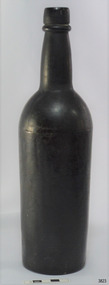 Flagstaff Hill Maritime Museum and Village
Container - Bottle, 1840s to 1878
... The shipwreck is one of the worst, and best known, shipwrecks in Victoria’s history. flagstaff hill warrnambool flagstaff hill maritime museum maritime museum shipwreck coast flagstaff hill maritime village great ocean road shipwreck artefact loch ard mutton bird island eva carmichael tom pearce john chance bottle black glass antique bottle bulge neck bottle handmade dip mould mouth blown pontil base blown bottle liquor bottle ale bottle Bottle, black glass. Thick matt body, with slightly bumpy texture, areas with sheen, colour imperfections. Mouth has cork seal. Tooled cork-top finish with ring below, slightly bulged neck. Shoulder has a line with a long ...This handmade black glass bottle was recovered between the late 1960s to early 1970s from the wreck of the sailing ship Loch Ard. The ship was wrecked in 1878 and its remains are located at Mutton Bird Island, near Port Campbell, Victoria and bottles of liquor were listed as part of the Loch Ard’s cargo. This bottle is now part of the John Chance collection. Black glass is one of the oldest bottle colours and dates back to the early 17th century. In the 1840s to late-1870s black glass bottles were mainly used for liquor and ale. All glass is made from silica, which is found in quartz sand. The naturally occurring sand has impurities, such as iron, that determine the colour of the glass. Residual iron leads to green or amber coloured glass, and carbon in the sand makes that glass appear as ‘black’. A strong light behind the glass will show its colour as dark green or dark amber. This handmade bottle appears to have been made in a dip mould, with the molten glass blown into a seamless shoulder-height mould to give the body a uniform symmetrical shape and size. After the body is blown, the glass blower continues blowing free-form (without the mould) to form the shoulder and neck, then the base is pushed up with a tool, and the finish for the mouth is added with his tools. The dip mould gives the body a slightly textured surface, with the free blown shoulders and neck being smoother and shinier. There is usually a line around the shoulder where the mould of the body meets the shoulder, and a lump or mark in the centre of the base, called a pontil mark, where the push-up tool was removed. The ship Loch Ard was built on the River Clyde in Scotland in 1873 for the prestigious Loch Line of colonial clipper ships, designed for the Australian run. It sailed from England on 1 March 1878 carrying 37 crew, 17 passengers and a diverse general cargo ranging from luxury items to bulk railway iron. On 1 June 1878, emerging from fog and hearing too late the sound of breakers against the tall limestone cliffs, the vessel struck the southern foot of Mutton Bird Island and sank in 23 metres of water. Of the fifty-four people on board only two survived, one young male crewman, Tom Pearce, and one young female passenger, Eva Carmichael. This bottle is historically significant as an example of liquor bottles imported into to Colonial Victoria in the mid-1800s to early-1900s. Its significance is increased by also being an artefact recovered by John Chance, a diver from the wreck of the Loch Ard and other wrecks in the late-1960s to early-1970s. Items that come from several wrecks along Victoria's coast have since been donated to the Flagstaff Hill Maritime Village’s museum collection by his family, illustrating this item’s level of historical value. The bottle is also significant for being part of Flagstaff Hill’s collection of artefacts from the Loch Ard, which is significant for being one of the largest collections of artefacts from this shipwreck in Victoria. The collection is significant for its association with the shipwreck, which is on the Victorian Heritage Register (VHR S417. The collection has additional significance because of the relationship between the objects, as together they have a high potential to interpret the story of the Loch Ard. The Loch Ard collection is archaeologically significant as the remains of a large international passenger and cargo ship. The Loch Ard collection is historically significant for representing aspects of Victoria’s shipping history and its potential to interpret sub-theme 1.5 of Victoria’s Framework of Historical Themes (living with natural processes). The shipwreck is one of the worst, and best known, shipwrecks in Victoria’s history.Bottle, black glass. Thick matt body, with slightly bumpy texture, areas with sheen, colour imperfections. Mouth has cork seal. Tooled cork-top finish with ring below, slightly bulged neck. Shoulder has a line with a long bump where shoulder meets body. Body tapers inwards to base. Pushed up base has pontil mark. Handmade, dip mould. No inscriptions.flagstaff hill, warrnambool, flagstaff hill maritime museum, maritime museum, shipwreck coast, flagstaff hill maritime village, great ocean road, shipwreck artefact, loch ard, mutton bird island, eva carmichael, tom pearce, john chance, bottle, black glass, antique bottle, bulge neck bottle, handmade, dip mould, mouth blown, pontil base, blown bottle, liquor bottle, ale bottle -
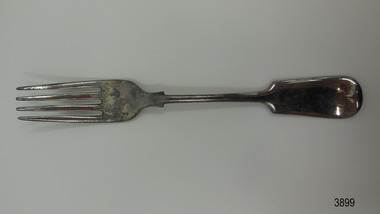 Flagstaff Hill Maritime Museum and Village
Domestic object - Fork, c. 1878
... The Gibsons, owners of nearby Glenample Homestead, cared for Tom, and for Eva who stayed longer before returning to Ireland. ...The Gibsons, owners of nearby Glenample Homestead, cared for Tom, and for Eva who stayed longer before returning to Ireland. ...This fork was recovered from the wreck of the Loch Ard. It is the Old English design that has been very popular since the 19th century. It has been restored to resemble its original state prior to the disaster in 1878. The for was originally plated with silver, which is when a base metal such as nickel or nickel alloy with copper and/or zinc has been plated or coated with a thin layer of silver. Wear on the metal will cause the base metals to appear through the silver plating. Some manufacturers gave a warranty that the cutlery was ‘white throughout’ but didn’t necessarily say it was solid silver. LOCH ARD 1873-1878 – The Scottish-built clipper ship Loch Ard was bound for Melbourne in 1878 with 54 people on board. The mixed cargo it carried included items for the 1880 International Exhibition in Melbourne, one of which was the now famous Majorca ware Minton ‘Peacock’ statue. The Loch Ard was wrecked on June 1st when the ship crashed into Mutton Bird Island, east of Port Campbell. The only survivors were Tom Pearce, a crew member, and Eva Carmichael, a young passenger who was rescued by Pearce. The Gibsons, owners of nearby Glenample Homestead, cared for Tom, and for Eva who stayed longer before returning to Ireland. The wreck of the Loch Ard was discovered in 1967, before the introduction of the Victorian historic shipwreck legislation. In 1969 it was decided that all recovered material should be lodged with the Receiver of Wrecks. In 1980 Flagstaff Hill Maritime Museum Divers received a permit to recover artefacts from the wreck to safeguard them from looters. In 1982 the site was listed as a Historic Shipwreck, and the Maritime Archaeology Unit recovered loose artefact material. The fork is recognised as being historically significant as an example of cutlery either as part of the flatware service of the ship ‘Loch Ard’ or part of the ship’s cargo, imported for use in Colonial Victoria in the 19th to early 20th century. Flagstaff Hill’s collection of artefacts from LOCH ARD is significant for being one of the largest collections of artefacts from this shipwreck in Victoria. It is significant for its association with the shipwreck, which is on the Victorian Heritage Register (VHR S417). The collection is significant because of the relationship between the objects, as together they have a high potential to interpret the story of the LOCH ARD. The LOCH ARD collection is archaeologically significant as the remains of a large international passenger and cargo ship. The LOCH ARD collection is historically significant for representing aspects of Victoria’s shipping history and its potential to interpret sub-theme 1.5 of Victoria’s Framework of Historical Themes (living with natural processes). The collection is also historically significant for its association with the LOCH ARD, which was one of the worst and best known shipwrecks in Victoria’s history. Fork; silver plated. The fork is the Old English design and is embossed with several marks. it has recently been restored. Shipwreck artefact from the Loch Ard. 3 letters within an oval (- - S) 4 letters within circles (E) (P) (N) (S) 1 letter within a shield appears to be a [B] flagstaff hill, warrnambool, shipwrecked coast, flagstaff hill maritime museum, maritime museum, shipwreck coast, flagstaff hill maritime village, great ocean road, shipwreck artefact, loch ard, victoria, eva carmichael, tom pearce, cutlery, silver flatware, silver plate, antique, old english flatware pattern, eating utensil, fork, silverware, dining utensil -
 Flagstaff Hill Maritime Museum and Village
Functional object - Light Fitting, c. 1878
... The Gibsons, owners of nearby Glenample Homestead, cared for Tom, and for Eva who stayed longer before returning to Ireland. ...The Gibsons, owners of nearby Glenample Homestead, cared for Tom, and for Eva who stayed longer before returning to Ireland. ...This light hanging mechanism could have been used for an adjustable chandelier with candle holders. It would likely be attached to the ceiling by its long stem to suspend the light fitting. A chain would have been threaded around each pulley, with one end joined to the top of the light fitting and the other end joined to a counter weight. The four counter weights would allow the light fitting to be raised or lowered to the desired height with little effort, to allow for lighting the candles or change the intensity of the light. This light fitting was once installed on the famous sailing ship, the Loch Ard, which was built in 1873 and tragically wrecked in 1878.The fitting was recovered from the wreck almost 100 years later, at the time it was discovered. LOCH ARD 1873-1878 – The Scottish-built clipper ship Loch Ard was bound for Melbourne in 1878 with 54 people on board. The mixed cargo it carried included items for the 1880 International Exhibition in Melbourne, one of which was the now famous Majorca ware Minton ‘Peacock’ statue. The Loch Ard was wrecked on June 1st when the ship crashed into Mutton Bird Island, east of Port Campbell. The only survivors were Tom Pearce, a crew member, and Eva Carmichael, a young passenger who was rescued by Pearce. The Gibsons, owners of nearby Glenample Homestead, cared for Tom, and for Eva who stayed longer before returning to Ireland. The wreck of the Loch Ard was discovered in 1967, before the introduction of the Victorian historic shipwreck legislation. In 1969 it was decided that all recovered material should be lodged with the Receiver of Wrecks. In 1980 Flagstaff Hill Maritime Museum Divers received a permit to recover artefacts from the wreck to safeguard them from looters. In 1982 the site was listed as a Historic Shipwreck, and the Maritime Archaeology Unit recovered loose artefact material. The light fitting is recognised as being historically significant as an example of lighting either as part of the ship ‘Loch Ard’ or part of the ship’s cargo, imported for use in Colonial Victoria in the 19th to early 20th century. Flagstaff Hill’s collection of artefacts from LOCH ARD is significant for being one of the largest collections of artefacts from this shipwreck in Victoria. It is significant for its association with the shipwreck, which is on the Victorian Heritage Register (VHR S417). The collection is significant because of the relationship between the objects, as together they have a high potential to interpret the story of the LOCH ARD. The LOCH ARD collection is archaeologically significant as the remains of a large international passenger and cargo ship. The LOCH ARD collection is historically significant for representing aspects of Victoria’s shipping history and its potential to interpret sub-theme 1.5 of Victoria’s Framework of Historical Themes (living with natural processes). The collection is also historically significant for its association with the LOCH ARD, which was one of the worst and best known shipwrecks in Victoria’s history. Light fitting; hanging mechanism with simple pulley wheels for pendant light. Metal pipe, closed and hooked at one end, stem has three decorative rings, and open end has a short narrower metal pipe inserted. Narrow pipe has a three tiered, scallop-edged dome attached to the end. The dome encloses remnants of broken chain length and is attached to a set of four pulley wheels arrayed in a circle with their edge sat right angles to each other. The light fitting was recovered from the wreck of the Loch Ard.flagstaff hill, warrnambool, shipwrecked coast, flagstaff hill maritime museum, maritime museum, shipwreck coast, flagstaff hill maritime village, great ocean road, shipwreck artefact, loch ard, victoria, eva carmichael, tom pearce, lighting, lidht fitting, pendant light, chandelier, pulley light, adjustable height light -
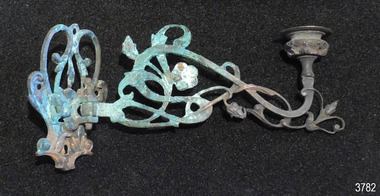 Flagstaff Hill Maritime Museum and Village
Domestic object - Candle Bracket, c. 1878
... The Gibsons, owners of nearby Glenample Homestead, cared for Tom, and for Eva who stayed longer before returning to Ireland. ...The Gibsons, owners of nearby Glenample Homestead, cared for Tom, and for Eva who stayed longer before returning to Ireland. ...This candle bracket was recovered from the wreck of the sailing ship Loch Ard after the to the disaster in 1878. The bracket has been hand forged into a pleasing shape and design. The candle holder on the arm of the bracket cn swivel from side to side allowing the light to be adjusted. LOCH ARD 1873-1878 – The Scottish-built clipper ship Loch Ard was bound for Melbourne in 1878 with 54 people on board. The mixed cargo it carried included items for the 1880 International Exhibition in Melbourne, one of which was the now famous Majorca ware Minton ‘Peacock’ statue. The Loch Ard was wrecked on June 1st when the ship crashed into Mutton Bird Island, east of Port Campbell. The only survivors were Tom Pearce, a crew member, and Eva Carmichael, a young passenger who was rescued by Pearce. The Gibsons, owners of nearby Glenample Homestead, cared for Tom, and for Eva who stayed longer before returning to Ireland. The wreck of the Loch Ard was discovered in 1967, before the introduction of the Victorian historic shipwreck legislation. In 1969 it was decided that all recovered material should be lodged with the Receiver of Wrecks. In 1980 Flagstaff Hill Maritime Museum Divers received a permit to recover artefacts from the wreck to safeguard them from looters. In 1982 the site was listed as a Historic Shipwreck, and the Maritime Archaeology Unit recovered loose artefact material. The candle bracket is an example of light fittings from the ship ‘Loch Ard’ or from part of the ship’s cargo, imported for use in Colonial Victoria in the 19th to early 20th century. Flagstaff Hill’s collection of artefacts from LOCH ARD is significant for being one of the largest collections of artefacts from this shipwreck in Victoria. It is significant for its association with the shipwreck, which is on the Victorian Heritage Register (VHR S417). The collection is significant because of the relationship between the objects, as together they have a high potential to interpret the story of the LOCH ARD. The LOCH ARD collection is archaeologically significant as the remains of a large international passenger and cargo ship. The LOCH ARD collection is historically significant for representing aspects of Victoria’s shipping history and its potential to interpret sub-theme 1.5 of Victoria’s Framework of Historical Themes (living with natural processes). The collection is also historically significant for its association with the LOCH ARD, which was one of the worst and best known shipwrecks in Victoria’s history. Candle bracket, bronze with fancy floral design. Bracket has been hand wrought with varying widths of flat iron. Bracket’s arm swivels on a pin front of bracket. Bracket was recovered from the wreck of the Loch Ard. flagstaff hill, warrnambool, shipwrecked coast, flagstaff hill maritime museum, maritime museum, shipwreck coast, flagstaff hill maritime village, great ocean road, shipwreck artefact, loch ard, victoria, eva carmichael, tom pearce, antique, candle holder, candle bracket, candlestick holder, lighting, ship lighting, ship hardware -
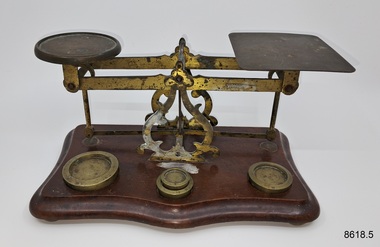 Flagstaff Hill Maritime Museum and Village
Equipment - Postal Scales, Unknown
... longer needed to weigh the item first and then refer to a separate chart to determine the required postage for that particular weight. The W.R. Angus Collection is significant for still being located at the site it is connected with, Doctor Angus being the last Port Medical Officer in Warrnambool. The collection of medical instruments and other items and equipment is culturally significant, being an historical example of medicine from late 19th to mid-20th century. Dr Angus assisted Dr Tom ...Before 1851, letters sent through the mail were charged by the number of sheets it contained and the distance it travelled. For example, a letter consisting of one sheet of paper was charged the single rate; a double letter, that is two sheets, was charged double the single rate, a treble letter, was charged three times the single rate, and so on. In other words, each additional sheet of paper increased the charge by one rate. In Great Britain. Sealing a letter in an envelope effectively put an end to postal clerks' ability to count the number of sheets in a letter and an alternative method of determining the postage had to be found. Overweight mailings had previously required the items to be weighed but with the introduction of the Uniform Penny Postage act of 1839, the public could mail a letter not exceeding a half-ounce in weight within the United Kingdom for one penny if prepaid, or two pence if paid on delivery. These postal scales belonged to Dr.William Roy Angus, Surgeon and Oculist. They were donated to Flagstaff Hill Maritime Village by his daughter, Bernice McDade. They are part of the “W.R. Angus Collection” that includes historical medical equipment, surgical instruments and material once belonging to Dr Edward Ryan and Dr Thomas Francis Ryan, (both of Nhill, Victoria) as well as Dr Angus’ own belongings. The Collection’s history spans the medical practices of the two Doctors Ryan, from 1885-1926 plus that of Dr Angus, up until 1969. ABOUT THE “W.R.ANGUS COLLECTION” Doctor William Roy Angus M.B., B.S., Adel., 1923, F.R.C.S. Edin.,1928 (also known as Dr Roy Angus) was born in Murrumbeena, Victoria in 1901 and lived until 1970. He qualified as a doctor in 1923 at University of Adelaide, was Resident Medical Officer at the Royal Adelaide Hospital in 1924 and for a period was house surgeon to Sir (then Mr.) Henry Simpson Newland. Dr Angus was briefly an Assistant to Dr Riddell of Kapunda, then commenced private practice at Curramulka, Yorke Peninsula, SA, where he was physician, surgeon and chemist. In 1926, he was appointed as new Medical Assistant to Dr Thomas Francis Ryan (T.F. Ryan, or Tom), in Nhill, Victoria, where his experiences included radiology and pharmacy. In 1927 he was Acting House Surgeon in Dr Tom Ryan’s absence. Dr Angus had become engaged to Gladys Forsyth and they decided he further his studies overseas in the UK in 1927. He studied at London University College Hospital and at Edinburgh Royal Infirmary and in 1928, was awarded FRCS (Fellow from the Royal College of Surgeons), Edinburgh. He worked his passage back to Australia as a Ship’s Surgeon on the on the Australian Commonwealth Line’s T.S.S. Largs Bay. Dr Angus married Gladys in 1929, in Ballarat. (They went on to have one son (Graham 1932, born in SA) and two daughters (Helen (died 12/07/1996) and Berenice (Berry), both born at Mira, Nhill ) According to Berry, her mother Gladys made a lot of their clothes. She was very talented and did some lovely embroidery including lingerie for her trousseau and beautifully handmade baby clothes. Dr Angus was a ‘flying doctor’ for the A.I.M. (Australian Inland Ministry) Aerial Medical Service in 1928 . Its first station was in the remote town of Oodnadatta, where Dr Angus was stationed. He was locum tenens there on North-South Railway at 21 Mile Camp. He took up this ‘flying doctor’ position in response to a call from Dr John Flynn; the organisation was later known as the Flying Doctor Service, then the Royal Flying Doctor Service. A lot of his work during this time involved dental surgery also. Between 1928-1932 he was surgeon at the Curramulka Hospital, Yorke Peninsula, South Australia. In 1933 Dr Angus returned to Nhill and purchased a share of the Nelson Street practice and Mira hospital (a 2 bed ward at the Nelson Street Practice) from Dr Les Middleton one of the Middleton Brothers, the current owners of what previously once Dr Tom Ryan’s practice. Dr Tom and his brother had worked as surgeons included eye surgery. Dr Tom Ryan performed many of his operations in the Mira private hospital on his premises. He had been House Surgeon at the Nhill Hospital 1902-1926. Dr Tom Ryan had one of the only two pieces of radiology equipment in Victoria during his practicing years – The Royal Melbourne Hospital had the other one. Over the years Dr Tom Ryan had gradually set up what was effectively a training school for country general-practitioner-surgeons. Each patient was carefully examined, including using the X-ray machine, and any surgery was discussed and planned with Dr Ryan’s assistants several days in advance. Dr Angus gained experience in using the X-ray machine there during his time as assistant to Dr Ryan. When Dr Angus bought into the Nelson Street premises in Nhill he was also appointed as the Nhill Hospital’s Honorary House Surgeon 1933-1938. His practitioner’s plate from his Nhill surgery is now mounted on the doorway to the Port Medical Office at Flagstaff Hill Maritime Village, Warrnambool. When Dr Angus took up practice in the Dr Edward and Dr Tom Ryan’s old premises he obtained their extensive collection of historical medical equipment and materials spanning 1884-1926. A large part of this collection is now on display at the Port Medical Office at Flagstaff Hill Maritime Village in Warrnambool. In 1939 Dr Angus and his family moved to Warrnambool where he purchased “Birchwood,” the 1852 home and medical practice of Dr John Hunter Henderson, at 214 Koroit Street. (This property was sold in1965 to the State Government and is now the site of the Warrnambool Police Station. and an ALDI sore is on the land that was once their tennis court). The Angus family was able to afford gardeners, cooks and maids; their home was a popular place for visiting dignitaries to stay whilst visiting Warrnambool. Dr Angus had his own silk worm farm at home in a Mulberry tree. His young daughter used his centrifuge for spinning the silk. Dr Angus was appointed on a part-time basis as Port Medical Officer (Health Officer) in Warrnambool and held this position until the 1940’s when the government no longer required the service of a Port Medical Officer in Warrnambool; he was thus Warrnambool’s last serving Port Medical Officer. (Masters of immigrant ships arriving in port reported incidents of diseases, illness and death and the Port Medical Officer made a decision on whether the ship required Quarantine and for how long, in this way preventing contagious illness from spreading from new immigrants to the residents already in the colony.) Dr Angus was a member of the Australian Medical Association, for 35 years and surgeon at the Warrnambool Base Hospital 1939-1942, He served as a Surgeon Captain during WWII1942-45, in Ballarat, Victoria, and in Bonegilla, N.S.W., completing his service just before the end of the war due to suffering from a heart attack. During his convalescence he carved an intricate and ‘most artistic’ chess set from the material that dentures were made from. He then studied ophthalmology at the Royal Melbourne Eye and Ear Hospital and created cosmetically superior artificial eyes by pioneering using the intrascleral cartilage. Angus received accolades from the Ophthalmological Society of Australasia for this work. He returned to Warrnambool to commence practice as an ophthalmologist, pioneering in artificial eye improvements. He was Honorary Consultant Ophthalmologist to Warrnambool Base Hospital for 31 years. He made monthly visits to Portland as a visiting surgeon, to perform eye surgery. He represented the Victorian South-West subdivision of the Australian Medical Association as its secretary between 1949 and 1956 and as chairman from 1956 to 1958. In 1968 Dr Angus was elected member of Spain’s Barraquer Institute of Barcelona after his research work in Intrasclearal cartilage grafting, becoming one of the few Australian ophthalmologists to receive this honour, and in the following year presented his final paper on Living Intrasclearal Cartilage Implants at the Inaugural Meeting of the Australian College of Ophthalmologists in Melbourne In his personal life Dr Angus was a Presbyterian and treated Sunday as a Sabbath, a day of rest. He would visit 3 or 4 country patients on a Sunday, taking his children along ‘for the ride’ and to visit with him. Sunday evenings he would play the pianola and sing Scottish songs to his family. One of Dr Angus’ patients was Margaret MacKenzie, author of a book on local shipwrecks that she’d seen as an eye witness from the late 1880’s in Peterborough, Victoria. In the early 1950’s Dr Angus, painted a picture of a shipwreck for the cover jacket of Margaret’s book, Shipwrecks and More Shipwrecks. She was blind in later life and her daughter wrote the actual book for her. Dr Angus and his wife Gladys were very involved in Warrnambool’s society with a strong interest in civic affairs. He had an interest in people and the community They were both involved in the creation of Flagstaff Hill, including the layout of the gardens. After his death (28th March 1970) his family requested his practitioner’s plate, medical instruments and some personal belongings be displayed in the Port Medical Office surgery at Flagstaff Hill Maritime Village, and be called the “W. R. Angus Collection”. At about the same time that the adhesive postage stamps and envelopes made their appearance, postal administrations began to experiment with strategically placed street letter boxes, known as pillar boxes because of their round, pillar-like shape, that permitted the public to mail letters from a place other than from a post office. For all these reasons, the use of postal scales became the nucleus of every post office. Scales had been in use since ancient Egyptian times so their use for everyday commerce was not unusual in the 1800s. What was new in 1840 was their ubiquitous use throughout the postal system. No post office could function effectively without one. Although the earliest scales used in post offices did not differ markedly from the ones in general use as time went on they were adapted specifically for postal use. For example, a paper sleeve, also known as a weight sticker, was attached that showed the applicable rate of postage for any given weight. This innovation was quite a time saver as postal clerks no longer needed to weigh the item first and then refer to a separate chart to determine the required postage for that particular weight.The W.R. Angus Collection is significant for still being located at the site it is connected with, Doctor Angus being the last Port Medical Officer in Warrnambool. The collection of medical instruments and other items and equipment is culturally significant, being an historical example of medicine from late 19th to mid-20th century. Dr Angus assisted Dr Tom Ryan, a pioneer in the use of X-rays and in ocular surgery.Postal scales with weights,. Balance scale has brass fittings and is mounted on a rectangular wooden stand, with depressions for brass weights. Weights measure 1oz, 2oz, 4oz and 8oz.'Warranteed Accurate'flagstaff hill maritime museum and village, great ocean road, shipwreck coast, scales, post -
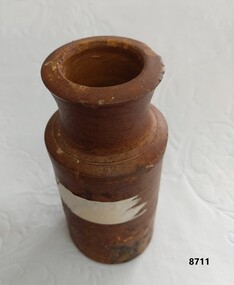 Flagstaff Hill Maritime Museum and Village
Ceramic - Ink Pot, circa 1870's
... Of the fifty-four people on board only two survived, one young male crewman, Tom Pearce, and one young female passenger, Eva Carmichael. This ink bottle was given to George Shields - a member of the Shields family who have had a long association with the wreck of the Loch Ard. ...Of the fifty-four people on board only two survived, one young male crewman, Tom Pearce, and one young female passenger, Eva Carmichael. This ink bottle was given to George Shields - a member of the Shields family who have had a long association with the wreck of the Loch Ard. ...This is a Victorian salt glazed stoneware ink bottle. These types of bottles were mass produced in England by potteries such as Bourne Denby or Lovatt and Lovatt (both of Derbyshire). Unfortunately, this bottle doesn't have a maker's mark. Pen and ink has been in use for handwriting from about the seventh century up until the mid-20th century. Up until around the mid-19th century a quill pen made from a bird’s feather was used. In the 1850s the steel point pen was invented and could be manufactured on machines in large quantities. In the 1880s a successful portable fountain pen was designed, giving a smooth flowing ink and ease of use replacing the quill or dip pen. It was salvaged from the Loch Ard along with many smaller versions called "penny ink wells". The ship Loch Ard was built on the River Clyde in Scotland in 1873 for the prestigious Loch Line of colonial clipper ships, designed for the Australian run. It sailed from England on 1 March 1878 carrying 37 crew, 17 passengers and a diverse general cargo ranging from luxury items to bulk railway iron. On 1 June 1878, emerging from fog and hearing too late the sound of breakers against the tall limestone cliffs, the vessel struck the southern foot of Mutton Bird Island and sank in 23 metres of water. Of the fifty-four people on board only two survived, one young male crewman, Tom Pearce, and one young female passenger, Eva Carmichael. This ink bottle was given to George Shields - a member of the Shields family who have had a long association with the wreck of the Loch Ard. In 1878, following the wreck of the Loch Ard and the subsequent rescue of Eva Carmichael, Eva was taken to Glenample station (near Princetown) to recuperate. It was during this period that Eva became great friends with Jane Shields (an Aunt of George Shields) - a friendship that continued throughout their lives. At that time, Jane was a young woman living in Princetown with her parents and siblings. Many of the Shields family continued to have a great interest in the Loch Ard and several generations of the family are buried in the Loch Ard cemetery.This ink well is historically significant as it represents methods of hand written communication that were still common up until the mid-20th century, when fountain pens and ballpoint pens took over in popularity and convenience. The shipwreck of the Loch Ard is of significance for Victoria and is registered on the Victorian Heritage Register ( S 417). Flagstaff Hill has a varied collection of artefact's from Loch Ard and its collection is significant for being one of the largest accumulation of artefact's from this notable Victorian shipwreck of which the subject items are a small part. The collection's objects give us a snapshot of how we can interpret the story of this tragic event. The collection is also archaeologically significant as it represents aspects of Victoria's shipping history that allows us to interpret Victoria's social and historical themes of the time. Through is associated with the worst and best-known shipwreck in Victoria's history.Brown, cylindrical shaped, salt glazed stoneware ink bottle with straight sides and a slightly fluted neck and round opening. The bottle has a thin raised circular line in the middle of the shoulder and two parallel lines (about 23 mm from the shoulder) around the body of the vessel. Another line (about 10 mm from the parallel lines) appear to be for the placement of a label. There is a remnant of masking tape attached to the back of the bottle and some flaking and chipping on the stoneware. No maker's mark can be seen.flagstaff hill maritime museum and village, warrnambool, great ocean road, shipwreck coast, loch ard, shields family, jane shields, ink well, ink bottle, stoneware, stone glazed ink bottle, loch ard artefact -
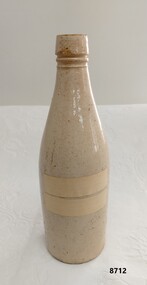 Flagstaff Hill Maritime Museum and Village
Container - Stone Ware Bottle, Port Dundas Pottery, Circa early 1870's
... Of the fifty-four people on board only two survived, one young male crewman, Tom Pearce, and one young female passenger, Eva Carmichael. This ink bottle was given to George Shields - a member of the Shields family who have had a long association with the wreck of the Loch Ard. ...Of the fifty-four people on board only two survived, one young male crewman, Tom Pearce, and one young female passenger, Eva Carmichael. This ink bottle was given to George Shields - a member of the Shields family who have had a long association with the wreck of the Loch Ard. ...This bottle was made at the Dundas Pottery Works, in Glasgow, Scotland and recovered from the shipwreck of the Loch Ard. Stoneware bottles similar to this one were in common use during the mid-to-late 19th century. They were used to store and transport beverages like ginger beer, porter or stout. The bottles were handmade using either a potter's wheel or in moulds such as a plaster mould, which gave the bottles uniformity in size and shape. The bottle would then be fired and glazed in a hot kiln. Makers often identified their bottles with the impression of a small symbol or adding a colour to the mouth. The manufacturer usually stamped their bottles with their name and logo, and sometimes a message that the bottle remained their property and should be returned to them. The bottles could then be cleaned and refilled. DUNDAS POTTERY WORKS - The Dundas Pottery works were established in 1828 by William Johnstone in partnership with John Forsyth and John Mc Coll. Located where the Forth and Clyde Canal joined the Monkland Canal, North of Glasgow. Johnstone sold the pottery in 1835 to Robert Cochran and James Couper. Mc Coll was retained as manager until 1837when in 1839 Cochran & Couper sold the pottery and purchased the St Rollex Glass Works. George Duncan took over briefly but died in 1841, with the pottery possibly being run by his widow Helen and a potter named Alexander Paul. James Miller was the manager at the time and he bought the pottery in 1856, in partnership with John Moody. Miller's long and careful stewardship of the pottery saw success from the export market which allowed him to purchase the North British pottery in 1867 until 1874 when it was sold. In 1875, Miller, in partnership with John Young, leased part of Caledonian Pottery, naming it Crown Pottery, however, it burned down in 1879. In the early 1880s, Young extended the pottery and named it Milton Pottery. Miller’s son, James W., became a partner in Milton pottery in 1905. James Miller Snr died in 1905 and the company continued as a limited liability company, being sold to the Borax Consolidation Ltd in 1929, but it was unsuccessful and Possil pottery purchased some of the company's equipment before it finally closed in 1932. From 1828 until the James Miller period of circa 1856, the pottery produced salt-glazed stoneware for the local industrial trade; mainly bottles and drain pipes. James Miller produced various bottles, whisky and acid jars, casks, butter crocks, jam jars and domestic wares in Bristol glaze. He streamlined the water filter manufacturing, which had become a specialty of the pottery, and a dedicated section of the pottery was created solely for their production, which was exported worldwide. It was salvaged from the Loch Ard. The ship Loch Ard was built on the River Clyde in Scotland in 1873 for the prestigious Loch Line of colonial clipper ships, designed for the Australian run. It sailed from England on 1 March 1878 carrying 37 crew, 17 passengers and a diverse general cargo ranging from luxury items to bulk railway iron. On 1 June 1878, emerging from fog and hearing too late the sound of breakers against the tall limestone cliffs, the vessel struck the southern foot of Mutton Bird Island and sank in 23 metres of water. Of the fifty-four people on board only two survived, one young male crewman, Tom Pearce, and one young female passenger, Eva Carmichael. This ink bottle was given to George Shields - a member of the Shields family who have had a long association with the wreck of the Loch Ard. In 1878, following the wreck of the Loch Ard and the subsequent rescue of Eva Carmichael, Eva was taken to Glenample station (near Princetown) to recuperate. It was during this period that Eva became great friends with Jane Shields (an Aunt of George Shields) - a friendship that continued throughout their lives. At that time, Jane was a young woman living in Princetown with her parents and siblings. Many of the Shields family continued to have a great interest in the Loch Ard and several generations of the family are buried in the Loch Ard cemetery.This stoneware bottle is historically significant for its manufacture and use in trade and transport in the late 19th to the early 20th century. This bottle is historically significant for its connection with the well-known stoneware manufacturers, Dundas Pottery of Glasgow, Scotland. The shipwreck of the Loch Ard is of significance for Victoria and is registered on the Victorian Heritage Register ( S 417). Flagstaff Hill has a varied collection of artefact's from Loch Ard and its collection is significant for being one of the largest accumulation of artefact's from this notable Victorian shipwreck of which the subject items are a small part. The collection's objects give us a snapshot of how we can interpret the story of this tragic event. The collection is also archaeologically significant as it represents aspects of Victoria's shipping history that allows us to interpret Victoria's social and historical themes of the time. Through is associated with the worst and best-known shipwreck in Victoria's history.A beige coloured,salt glazed stoneware bottle with gently tapered sides and a speckled finish. It has two narrow channels around the neck and is missing a stopper. Two 8.5 centimetre pieces of tape, with very faded writing, are stuck horizontally on the side of the bottle. The bottom of the bottle has brown discolouration. It has an oval shaped stamp with a makers' name and location on bottom side of bottle.On tape - "STONE BOTTLE SALVAGED / FROM WRECK OF LOCH ARD/ SUNK NEAR PORT CAMPBELL/ ? 1878" "1624 TNS SAILING SHIP / ONLY 2 SURVIVORS OUT OF / 54 PEOPLE ON BOARD/ NOW KNOWN AS LOCH ARD GORGE" Stamp - "PORT DUNDAS POTTERY / GLASGOW" Symbol - Stamp square with "D"flagstaff hill maritime museum and village, warrnambool, great ocean road, shipwreck coast, loch ard, stoneware bottle, port dundas pottery, shields family, ginger beer bottle, loch ard salvage, loch ard artefact -
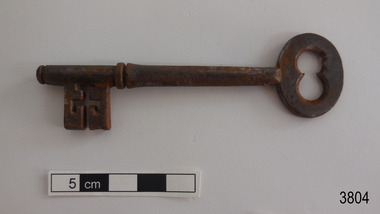 Flagstaff Hill Maritime Museum and Village
Functional object - Key, circa 1866
... The owners, Hugh Hamilton Gibson and Peter McArthur, were involved in the rescue and recovery of Eva Carmichael and Tom Pearce, the only two survivors, as well as overseeing the salvage of items from the shipwreck and the burial of those who lost their lives. Eva first met Jane Shields at Glenample and they became long...The owners, Hugh Hamilton Gibson and Peter McArthur, were involved in the rescue and recovery of Eva Carmichael and Tom Pearce, the only two survivors, as well as overseeing the salvage of items from the shipwreck and the burial of those who lost their lives. Eva first met Jane Shields at Glenample and they became long ...The key is one of a collection of seven 1860s keys once belonged to the Glenample Homestead near Princetown. They are all keyed with different bits and would have opened the external panelled doors of the Georgian building. The keys would now be around 150 years old. The keys are now part of the John Chance Collection. Locksmiths became a recognised trade by the middle of the 19th century, doing work that blacksmiths and gunsmiths would have done. They were craftsmen and trained apprentices for their trade. The local community and businesses relied on them for making a wide variety of precision objects such as locks and keys, knives, ornamental and decorative latticework, fine instruments, accurate tools and hardware items. Glenample Homestead became famous after the disastrous wreck of the sailing ship Loch Ard on June 1, 1878. The owners, Hugh Hamilton Gibson and Peter McArthur, were involved in the rescue and recovery of Eva Carmichael and Tom Pearce, the only two survivors, as well as overseeing the salvage of items from the shipwreck and the burial of those who lost their lives. Eva first met Jane Shields at Glenample and they became long-time friends. The keys are significant as an example of mid-19th century locksmith hardware, and for their connection with Glenample Homestead, and for their connection to the history of the Loch Ard shipwreck’s only two survivors. The set of keys also hold significance as they were discovered by John Chance, who was also a diver from the wreck of the Loch Ard in the 1960s-70s. Items that come from several wrecks along Victoria's coast have since been donated to the Flagstaff Hill Maritime Village’s museum collection by his family, illustrating this item’s level of historical value. Glenample Homestead is of historical, social and architectural significance to the State of Victoria and is listed on the Victorian Heritage Register (VHR H0392). It is a historical example of early settlement and development of a run in the coastal land of South West Victoria, and it is constructed from locally quarried sandstone but doesn’t take away from its Georgian design. Glenample Homestead is of State significance through its unique connection with the wreck of the ship Loch Ard and the connection to its owners, Hugh and Lavinia Gibson and Peter McArthur, played a historically and socially significant role in the rescue and care of the survivors, the salvage of goods and the burial of those who lost their lives. The shipwreck of the Loch Ard itself is of significance for Victoria and is registered on the Victorian Heritage Register (S417). Key; steel domestic door key. Flat open bow with 'figure 8' space, round shank that flares out slightly above the collar on the bit. The rectangular bit has internal notches and grooves. There is a rounded pin on the end.flagstaff hill, warrnambool, flagstaff hill maritime museum, maritime museum, shipwreck coast, flagstaff hill maritime village, great ocean road, glenample homestead, victorian heritage register vhr h0392, georgian homestead, loch ard, princetown, jane shields, eva carmichael, tom pearce, blue china tea set, antique door key, glenample photographs, john chance -
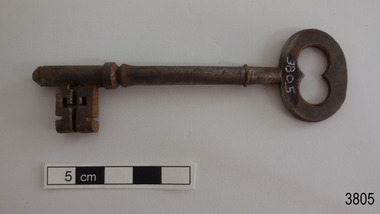 Flagstaff Hill Maritime Museum and Village
Functional object - Key, circa 1866
... The owners, Hugh Hamilton Gibson and Peter McArthur, were involved in the rescue and recovery of Eva Carmichael and Tom Pearce, the only two survivors, as well as overseeing the salvage of items from the shipwreck and the burial of those who lost their lives. Eva first met Jane Shields at Glenample and they became long...The owners, Hugh Hamilton Gibson and Peter McArthur, were involved in the rescue and recovery of Eva Carmichael and Tom Pearce, the only two survivors, as well as overseeing the salvage of items from the shipwreck and the burial of those who lost their lives. Eva first met Jane Shields at Glenample and they became long ...The key is one of a collection of seven 1860s keys once belonged to the Glenample Homestead near Princetown. They are all keyed with different bits and would have opened the external panelled doors of the Georgian building. The keys would now be around 150 years old. The keys are now part of the John Chance Collection. Locksmiths became a recognised trade by the middle of the 19th century, doing work that blacksmiths and gunsmiths would have done. They were craftsmen and trained apprentices for their trade. The local community and businesses relied on them for making a wide variety of precision objects such as locks and keys, knives, ornamental and decorative latticework, fine instruments, accurate tools and hardware items. Glenample Homestead became famous after the disastrous wreck of the sailing ship Loch Ard on June 1, 1878. The owners, Hugh Hamilton Gibson and Peter McArthur, were involved in the rescue and recovery of Eva Carmichael and Tom Pearce, the only two survivors, as well as overseeing the salvage of items from the shipwreck and the burial of those who lost their lives. Eva first met Jane Shields at Glenample and they became long-time friends. The keys are significant as an example of mid-19th century locksmith hardware, and for their connection with Glenample Homestead, and for their connection to the history of the Loch Ard shipwreck’s only two survivors. Glenample Homestead is of historical, social and architectural significance to the State of Victoria and is listed on the Victorian Heritage Register (VHR H0392). It is a historical example of early settlement and development of a run in the coastal land of South West Victoria, and it is constructed from locally quarried sandstone but doesn’t take away from its Georgian design. Glenample Homestead is of State significance through its unique connection with the wreck of the ship Loch Ard and the connection to its owners, Hugh and Lavinia Gibson and Peter McArthur, played a historically and socially significant role in the rescue and care of the survivors, the salvage of goods and the burial of those who lost their lives. The shipwreck of the Loch Ard itself is of significance for Victoria and is registered on the Victorian Heritage Register (S417). Key; steel domestic door key. Flat open bow with 'figure 8' space, collar on shank, close to the bow. Round shank flares out slightly above the collar on the bit. The rectangular bit has internal and external notches and grooves. There is a rounded pin on the end.flagstaff hill, warrnambool, flagstaff hill maritime museum, maritime museum, shipwreck coast, flagstaff hill maritime village, great ocean road, glenample homestead, victorian heritage register vhr h0392, georgian homestead, loch ard, princetown, jane shields, eva carmichael, tom pearce, blue china tea set, antique door key, glenample photographs, john chance -
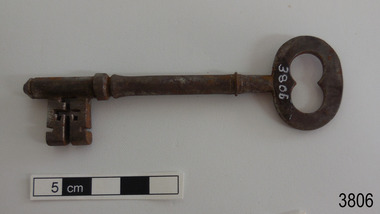 Flagstaff Hill Maritime Museum and Village
Functional object - Key, circa 1866
... The owners, Hugh Hamilton Gibson and Peter McArthur, were involved in the rescue and recovery of Eva Carmichael and Tom Pearce, the only two survivors, as well as overseeing the salvage of items from the shipwreck and the burial of those who lost their lives. Eva first met Jane Shields at Glenample and they became long...The owners, Hugh Hamilton Gibson and Peter McArthur, were involved in the rescue and recovery of Eva Carmichael and Tom Pearce, the only two survivors, as well as overseeing the salvage of items from the shipwreck and the burial of those who lost their lives. Eva first met Jane Shields at Glenample and they became long ...The key is one of a collection of seven 1860s keys once belonged to the Glenample Homestead near Princetown. They are all keyed with different bits and would have opened the external panelled doors of the Georgian building. The keys would now be around 150 years old. The keys are now part of the John Chance Collection. Locksmiths became a recognised trade by the middle of the 19th century, doing work that blacksmiths and gunsmiths would have done. They were craftsmen and trained apprentices for their trade. The local community and businesses relied on them for making a wide variety of precision objects such as locks and keys, knives, ornamental and decorative latticework, fine instruments, accurate tools and hardware items. Glenample Homestead became famous after the disastrous wreck of the sailing ship Loch Ard on June 1, 1878. The owners, Hugh Hamilton Gibson and Peter McArthur, were involved in the rescue and recovery of Eva Carmichael and Tom Pearce, the only two survivors, as well as overseeing the salvage of items from the shipwreck and the burial of those who lost their lives. Eva first met Jane Shields at Glenample and they became long-time friends.The keys are significant as an example of mid-19th century locksmith hardware, and for their connection with Glenample Homestead, and for their connection to the history of the Loch Ard shipwreck’s only two survivors. The set of keys also hold significance as they were discovered by John Chance, who was also a diver from the wreck of the Loch Ard in the 1960s-70s. Items that come from several wrecks along Victoria's coast have since been donated to the Flagstaff Hill Maritime Village’s museum collection by his family, illustrating this item’s level of historical value. Glenample Homestead is of historical, social and architectural significance to the State of Victoria and is listed on the Victorian Heritage Register (VHR H0392). It is a historical example of early settlement and development of a run in the coastal land of South West Victoria, and it is constructed from locally quarried sandstone but doesn’t take away from its Georgian design. Glenample Homestead is of State significance through its unique connection with the wreck of the ship Loch Ard and the connection to its owners, Hugh and Lavinia Gibson and Peter McArthur, played a historically and socially significant role in the rescue and care of the survivors, the salvage of goods and the burial of those who lost their lives. The shipwreck of the Loch Ard itself is of significance for Victoria and is registered on the Victorian Heritage Register (S417). Key; steel domestic door key. Flat open bow with 'figure 8' space, narrow collar on shank, close to the bow. Round shank flares out slightly above the collar on the bit. The rectangular bit has internal and external notches and grooves. There is a rounded pin on the end.flagstaff hill, warrnambool, flagstaff hill maritime museum, maritime museum, shipwreck coast, flagstaff hill maritime village, great ocean road, glenample homestead, victorian heritage register vhr h0392, georgian homestead, loch ard, princetown, jane shields, eva carmichael, tom pearce, blue china tea set, antique door key, glenample photographs, john chance -
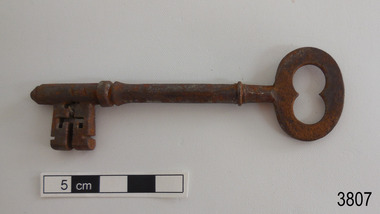 Flagstaff Hill Maritime Museum and Village
Functional object - Key, circa 1866
... The owners, Hugh Hamilton Gibson and Peter McArthur, were involved in the rescue and recovery of Eva Carmichael and Tom Pearce, the only two survivors, as well as overseeing the salvage of items from the shipwreck and the burial of those who lost their lives. Eva first met Jane Shields at Glenample and they became long...The owners, Hugh Hamilton Gibson and Peter McArthur, were involved in the rescue and recovery of Eva Carmichael and Tom Pearce, the only two survivors, as well as overseeing the salvage of items from the shipwreck and the burial of those who lost their lives. Eva first met Jane Shields at Glenample and they became long ...The key is one of a collection of seven 1860s keys once belonged to the Glenample Homestead near Princetown. They are all keyed with different bits and would have opened the external panelled doors of the Georgian building. The keys would now be around 150 years old. The keys are now part of the John Chance Collection. Locksmiths became a recognised trade by the middle of the 19th century, doing work that blacksmiths and gunsmiths would have done. They were craftsmen and trained apprentices for their trade. The local community and businesses relied on them for making a wide variety of precision objects such as locks and keys, knives, ornamental and decorative latticework, fine instruments, accurate tools and hardware items. Glenample Homestead became famous after the disastrous wreck of the sailing ship Loch Ard on June 1, 1878. The owners, Hugh Hamilton Gibson and Peter McArthur, were involved in the rescue and recovery of Eva Carmichael and Tom Pearce, the only two survivors, as well as overseeing the salvage of items from the shipwreck and the burial of those who lost their lives. Eva first met Jane Shields at Glenample and they became long-time friends. The keys are significant as an example of mid-19th century locksmith hardware, and for their connection with Glenample Homestead, and for their connection to the history of the Loch Ard shipwreck’s only two survivors. The set of keys also hold significance as they were discovered by John Chance, who was also a diver from the wreck of the Loch Ard in the 1960s-70s. Items that come from several wrecks along Victoria's coast have since been donated to the Flagstaff Hill Maritime Village’s museum collection by his family, illustrating this item’s level of historical value. Glenample Homestead is of historical, social and architectural significance to the State of Victoria and is listed on the Victorian Heritage Register (VHR H0392). It is a historical example of early settlement and development of a run in the coastal land of South West Victoria, and it is constructed from locally quarried sandstone but doesn’t take away from its Georgian design. Glenample Homestead is of State significance through its unique connection with the wreck of the ship Loch Ard and the connection to its owners, Hugh and Lavinia Gibson and Peter McArthur, played a historically and socially significant role in the rescue and care of the survivors, the salvage of goods and the burial of those who lost their lives. The shipwreck of the Loch Ard itself is of significance for Victoria and is registered on the Victorian Heritage Register (S417). Key; steel domestic door key. Flat open bow with 'figure 8' space, narrow collar on shank, close to the bow. Round shank flares out slightly above the collar on the bit. The Rectangular bit has internal and external notches and grooves. There is a rounded pin on the end.flagstaff hill, warrnambool, flagstaff hill maritime museum, maritime museum, shipwreck coast, flagstaff hill maritime village, great ocean road, glenample homestead, victorian heritage register vhr h0392, georgian homestead, loch ard, princetown, jane shields, eva carmichael, tom pearce, blue china tea set, antique door key, glenample photographs, john chance
