
Showing 37 items matching "trains - literature"
-
 Victorian Railway History Library
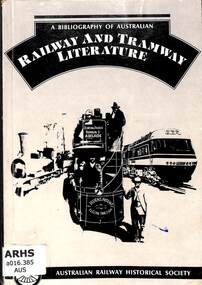
Book, Australian Railway Historical Society (ACT Division), A Bibliography of Australian Railway and Tramway Literature, 1984
... Trains - literature...Trains - literature Trams - literature A Bibliography of books Australian Railway and Tramway Literature including books and magazines. index, ill, p.127. ...A Bibliography of books Australian Railway and Tramway Literature including books and magazines.index, ill, p.127.non-fictionA Bibliography of books Australian Railway and Tramway Literature including books and magazines.trains - literature, trams - literature -
 Flagstaff Hill Maritime Museum and Village
Book - Ancient Political Speeches/Reference, William Tegg, Select Orations of Cicero, 1853
... They shaped the study of rhetoric, law, and Latin literature for two millennia and heavily influenced the political philosophies of the American and French revolutions. This specific volume, as an antique book, holds value as a fascinating artifact of Victorian education. It shows how the 19th-century elite were trained ...This book is not regarded as a novel rather as an educational anthology of classical political and legal speeches. Select Orations of Cicero is a curated collection of speeches delivered by the famous Roman statesman, orator, and philosopher Marcus Tullius Cicero during the 1st century BCE. Instead of just presenting the raw Latin text, this specific volume features an extensive English commentary, explanatory footnotes, and historical, geographical, and legal indexes compiled by Charles Anthon. It was designed primarily as a prestigious schoolbook and university textbook, helping 19th-century students translate the Latin while fully understanding the complex political backstabbing and legal systems of ancient Rome. Some of Cicero's orations include his famous exposure of a conspiracy to overthrow the Roman government, his prosecution of the notoriously corrupt governor of Sicily, and a masterclass in legal defense regarding a high-profile political murder.The Select Orations of Cicero Author: Charles Anthon Publisher: William Tegg & Co Date: 1853 Further Information: Olive green cloth hardcover with a spine lettering in gold . The spine has a label with an Library inscription.non-fictionThis book is not regarded as a novel rather as an educational anthology of classical political and legal speeches. Select Orations of Cicero is a curated collection of speeches delivered by the famous Roman statesman, orator, and philosopher Marcus Tullius Cicero during the 1st century BCE. Instead of just presenting the raw Latin text, this specific volume features an extensive English commentary, explanatory footnotes, and historical, geographical, and legal indexes compiled by Charles Anthon. It was designed primarily as a prestigious schoolbook and university textbook, helping 19th-century students translate the Latin while fully understanding the complex political backstabbing and legal systems of ancient Rome. Some of Cicero's orations include his famous exposure of a conspiracy to overthrow the Roman government, his prosecution of the notoriously corrupt governor of Sicily, and a masterclass in legal defense regarding a high-profile political murder.flagstaff hill, warrnambool, shipwrecked coast, flagstaff hill maritime museum, maritime museum, shipwreck coast, flagstaff hill maritime village, great ocean road, book, pattison collection, warrnambool library, warrnambool mechanics’ institute, ralph eric pattison, corangamite regional library service, warrnambool city librarian, mechanics’ institute library, victorian library board, warrnambool books and records, warrnambool children’s library, select orations of cicero, thomas tegg, cicero -
 Flagstaff Hill Maritime Museum and Village
Book - Fictional Stories, Thomas Hardy, A Group of Noble Dames, 1894
... literature, famously straddling the worlds of both tragic prose and profound poetry. He was born in Higher Bockhampton, Dorset the heart of what would become his fictional "Wessex." Hardy, the son of a stonemason, initially trained...literature, famously straddling the worlds of both tragic prose and profound poetry. He was born in Higher Bockhampton, Dorset the heart of what would become his fictional "Wessex." Hardy, the son of a stonemason, initially trained ...The subject novel A Group of Noble Dames is a collection of ten historical short stories bound together by a classic frame narrative. The premise is that to escape the boredom of a rainy day, ten male members of the "Wessex Field and Antiquarian Club" gather together. To pass the time, each member including a local historian, an old surgeon, a rural dean, and a churchwarden takes a turn telling a scandalous, tragic, or ironic tale about a high-born lady from the local aristocracy of the 17th and 18th centuries. Unlike Hardy's deeply somber major novels, he categorized these stories as "Romances and Fantasies." However, they still contain classic Hardyan cynicism.A Group of Noble Dames Author: Thomas Hardy Publisher: Macmillan And Co Date: 1894 Further Information: Olive hardcover and spine with spine lettering in gold. The spine has a Library label with inscription.non-fictionThe subject novel A Group of Noble Dames is a collection of ten historical short stories bound together by a classic frame narrative. The premise is that to escape the boredom of a rainy day, ten male members of the "Wessex Field and Antiquarian Club" gather together. To pass the time, each member including a local historian, an old surgeon, a rural dean, and a churchwarden takes a turn telling a scandalous, tragic, or ironic tale about a high-born lady from the local aristocracy of the 17th and 18th centuries. Unlike Hardy's deeply somber major novels, he categorized these stories as "Romances and Fantasies." However, they still contain classic Hardyan cynicism.flagstaff hill, warrnambool, shipwrecked coast, flagstaff hill maritime museum, maritime museum, shipwreck coast, flagstaff hill maritime village, great ocean road, book, pattison collection, warrnambool library, warrnambool mechanics’ institute, ralph eric pattison, corangamite regional library service, warrnambool city librarian, mechanics’ institute library, victorian library board, warrnambool books and records, warrnambool children’s library, a group of noble dames, thomas hardy -
 Flagstaff Hill Maritime Museum and Village
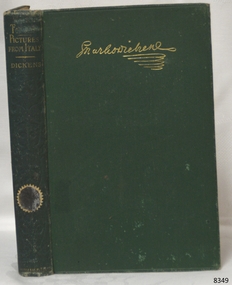
Book - A Travel & Political Critique, Charles Dickens, Hard Times and Pictures from Italy, 1866-1870’s
... train crash in 1865 worsened his health, leading to his death at age 58 while writing “The Mystery of Edwin Drood”. Buried in Westminster Abbey, his vivid characters and social commentary remain influential. The first part “Hard Times” is one of Dickens’s most overtly political novels, a critique of utilitarianism and the dehumanizing effects of industrial capitalism. It remains a staple in studies of Victorian literature ...Charles Dickens (1812–1870) was one of the great English novelists of the Victorian era, famous for vivid characters, social criticism, and stories that were first published in serial form. He began as a journalist, rose to enormous popularity during his lifetime, and wrote major works such as Oliver Twist, David Copperfield, and Great Expectations. Pictures from Italy first published 1846 is a travelogue describing Dickens’s 1844 journey through Italy with his family that included Rome, Venice, Florence, and other cities. It mixes vivid descriptions of art, landscape, and carnival life with his characteristic observations on social inequality and political fragmentation in pre unification Italy. Together this combined volume offers both a major insight on Victorian industrial England and a lighter, more personal travel narrative showing Dickens from two sides, the social reformer and the acute observer tourist.Hard Cover edition, Hard Times and Pictures for Italy. Author: Charles Dickens. Publisher: Chapman & Hall Ltd, London. Date: 1866-1870’s first published in book form 1846 (See note section this document for more information on Edition). Green cloth hardcover, Spine black has Author and Title in gold lettering. The spine has a Library label and no Volume information.non-fictionCharles Dickens (1812–1870) was one of the great English novelists of the Victorian era, famous for vivid characters, social criticism, and stories that were first published in serial form. He began as a journalist, rose to enormous popularity during his lifetime, and wrote major works such as Oliver Twist, David Copperfield, and Great Expectations. Pictures from Italy first published 1846 is a travelogue describing Dickens’s 1844 journey through Italy with his family that included Rome, Venice, Florence, and other cities. It mixes vivid descriptions of art, landscape, and carnival life with his characteristic observations on social inequality and political fragmentation in pre unification Italy. Together this combined volume offers both a major insight on Victorian industrial England and a lighter, more personal travel narrative showing Dickens from two sides, the social reformer and the acute observer tourist.book, the old curiosity shop, charles dickens, shipwrecked-coast, flagstaff-hill, flagstaff-hill-maritime-museum, warrnambool, maritime-museum, flagstaff-hill-maritime-village, pattison collection, warrnambool library, warrnambool mechanics’ institute, ralph eric pattison, corangamite regional library service, warrnambool city librarian, mechanics’ institute library, victorian library board, warrnambool books and records, warrnambool children’s library, great ocean road, hard times for these times -
 Flagstaff Hill Maritime Museum and Village
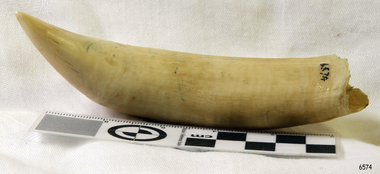
Animal specimen - Whale Tooth, Probably 19th century
... Whales occasionally feature in literature and film, as in the great white sperm whale of Herman Melville's Moby-Dick. Small odontocetes, mainly dolphins, are kept in captivity and trained to perform tricks. ...Whales occasionally feature in literature and film, as in the great white sperm whale of Herman Melville's Moby-Dick. Small odontocetes, mainly dolphins, are kept in captivity and trained to perform tricks. ...The toothed whales (also called odontocetes, systematic name Odontoceti) are a parvorder of cetaceans that includes dolphins, porpoises, and all other whales possessing teeth, such as the beaked whales and sperm whales. Seventy-three species of toothed whales are described. They are one of two living groups of cetaceans, the other being the baleen whales (Mysticeti), which have baleen instead of teeth. The two groups are thought to have diverged around 34 million years ago (mya). Toothed whales range in size from the 4.5 ft (1.4 m) and 120 lb (54 kg) vaquita to the 20 m (66 ft) and 55 t (61-short-ton) sperm whale. Several species of odontocetes exhibit sexual dimorphism, in that there are size or other morphological differences between females and males. They have streamlined bodies and two limbs that are modified into flippers. Some can travel at up to 20 knots. Odontocetes have conical teeth designed for catching fish or squid. They have well-developed hearing, that is well adapted for both air and water, so much so that some can survive even if they are blind. Some species are well adapted for diving to great depths. Almost all have a layer of fat, or blubber, under the skin to keep warm in the cold water, with the exception of river dolphins. Toothed whales consist of some of the most widespread mammals, but some, as with the vaquita, are restricted to certain areas. Odontocetes feed largely on fish and squid, but a few, like the killer whale, feed on mammals, such as pinnipeds. Males typically mate with multiple females every year, but females only mate every two to three years, making them polygynous. Calves are typically born in the spring and summer, and females bear the responsibility for raising them, but more sociable species rely on the family group to care for calves. Many species, mainly dolphins, are highly sociable, with some pods reaching over a thousand individuals. Once hunted for their products, cetaceans are now protected by international law. Some species are attributed with high levels of intelligence. At the 2012 meeting of the American Association for the Advancement of Science, support was reiterated for a cetacean bill of rights, listing cetaceans as nonhuman persons. Besides whaling and drive hunting, they also face threats from bycatch and marine pollution. The baiji, for example, is considered functionally extinct by the IUCN, with the last sighting in 2004, due to heavy pollution to the Yangtze River. Whales occasionally feature in literature and film, as in the great white sperm whale of Herman Melville's Moby-Dick. Small odontocetes, mainly dolphins, are kept in captivity and trained to perform tricks. Whale watching has become a form of tourism around the world. Reference: https://en.wikipedia.org/wiki/Toothed_whaleWhale teeth were much prized for use in scrimshaw work.Whale tooth. Significant staining and yellowing. Broken at base, and missing the root.Noneflagstaff hill, warrnambool, shipwrecked-coast, flagstaff-hill, flagstaff-hill-maritime-museum, maritime-museum, shipwreck-coast, flagstaff-hill-maritime-village, whale tooth, whaling, whaling industry, whales -
 Eltham District Historical Society Inc
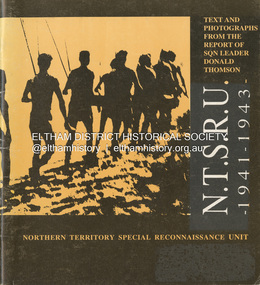
Folder, Thomson, Donald
... trained and led them; list of names of members of the Unit; mention of Caledon Bay killings. Title N.T.S.R.U. : 1941 - 1943 / [text and photographs from the report of SQN Leader Donald Thomson : Michael Christie, Steve Fox, Nawunggurr, Yunupingu]. Author Thomson, Donald F. (Donald Fergusson), 1901-1970. Other Authors Christie, Michael. Fox, Steve. Yunupingu, Charles Nawunggurr. Published [Nhulunbuy]:Yirrkala Literature...trained and led them; list of names of members of the Unit; mention of Caledon Bay killings. Title N.T.S.R.U. : 1941 - 1943 / [text and photographs from the report of SQN Leader Donald Thomson : Michael Christie, Steve Fox, Nawunggurr, Yunupingu]. Author Thomson, Donald F. (Donald Fergusson), 1901-1970. Other Authors Christie, Michael. Fox, Steve. Yunupingu, Charles Nawunggurr. Published [Nhulunbuy]:Yirrkala Literature ...1. Book: N.T.S.R.U., 1941-1943 : Northern Territory Special Reconnaissance Unit / text and photographs from the report of Sqn Leader, Donald Thomson [Foreward: Michael Christie, Steve Fox, Nawunggurr, Yunupingu] Summary Work of the Yolngu reconnaissance patrol in the Northern Territory during Second World War as described in the report by Donald Thomson who trained and led them; list of names of members of the Unit; mention of Caledon Bay killings. Title N.T.S.R.U. : 1941 - 1943 / [text and photographs from the report of SQN Leader Donald Thomson : Michael Christie, Steve Fox, Nawunggurr, Yunupingu]. Author Thomson, Donald F. (Donald Fergusson), 1901-1970. Other Authors Christie, Michael. Fox, Steve. Yunupingu, Charles Nawunggurr. Published [Nhulunbuy]:Yirrkala Literature Production Centre , 1992. Carrier Types volume Physical Description 31 p.; ill., map, ports. Notes Cover subtitle; Northern Territory Special Reconnaissance Unit; Foreword in Yolngu text, parallel English translation. Language English Identifiers ISBN 0864093055Folder of information on Donald Thomsondonald thomson -
 Uniting Church Archives - Synod of Victoria
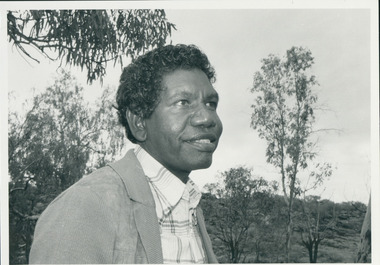
Photograph, Rev. Djiniyini Gondarra, 1986
... In 1969 he trained as a Minister in Papua New Guinea and the Solomon Islands under the Uniting Church, before returning to Arnhemland to minister his own people at the Galiwin’ku parish, firstly as a lay pastor (1971-1972) and then as a Minister from 1976-1982. In 1983-84, Rev Djiniyini worked as a Lecturer in Theology at Nungalinya College, Darwin. He was honoured with a Diploma of Theology (Honorary) from there in 1984, and in 1991 received a Cultural Doctorate in Literature...In 1969 he trained as a Minister in Papua New Guinea and the Solomon Islands under the Uniting Church, before returning to Arnhemland to minister his own people at the Galiwin’ku parish, firstly as a lay pastor (1971-1972) and then as a Minister from 1976-1982. In 1983-84, Rev Djiniyini worked as a Lecturer in Theology at Nungalinya College, Darwin. He was honoured with a Diploma of Theology (Honorary) from there in 1984, and in 1991 received a Cultural Doctorate in Literature ...Rev Dr Djiniyini Gondarra OAM, was born in Milingimbi, eastern Arnhemland in 1945. He was educated at Milingimbi Mission School and pursued his theological education as a youth leader and Sunday School teacher through the Methodist Church, before attending college in Brisbane. In 1969 he trained as a Minister in Papua New Guinea and the Solomon Islands under the Uniting Church, before returning to Arnhemland to minister his own people at the Galiwin’ku parish, firstly as a lay pastor (1971-1972) and then as a Minister from 1976-1982. In 1983-84, Rev Djiniyini worked as a Lecturer in Theology at Nungalinya College, Darwin. He was honoured with a Diploma of Theology (Honorary) from there in 1984, and in 1991 received a Cultural Doctorate in Literature (Honorary) from the World University, Roundtable, Arizona USA. Rev Djiniyini was awarded the Order of Australia Medal (OAM) in 1995. As well as being the Chairman of ALPA since 1993, Rev Djiniyini is currently the Director of Duduy’ngu Pty Ltd, which provides consultancy and cross-cultural services. He is also Director of Yirrkala Business Enterprises. Over the years, Rev Djiniyini has served on many committees and councils including: Member of the Steering Committee of the Australian Indigenous Cultural Network (1998-2001), CEO of Aboriginal Resource and Development Services Inc (1998-2001), CEO of the Northern Regional Council of the Uniting Aboriginal and Islander Christian Congress (1998-2001), Director of Reconciliation Australia Limited (2000-2001), Member of Council for Aboriginal Reconciliation (1998-2000), Chairman of Uniting Aboriginal and Islander Christian Congress (1995-2000 & 1990-1993), Member of Central Committee of the World Council of Churches (1991-1994), Moderator of Northern Synod, Uniting Church in Australia (1985-1987), Secretary of newly formed Aboriginal Presbytery, Northern Synod, Uniting Church in Australia (1985), and Vice-President of Uniting Aboriginal and Islander Christian Congress Uniting Church in Australia (1983-1987). Rev Dr Djiniyini Gondarra OAM has also been extensively published, and his works include: • Information Papers (co authored), Aboriginal Resource and Development Services: • Confusion Between Cultures (1998) • MHead & Shoulders of Djiniyini Gondarra facing right of picture."Rev. Djiniyini Gondarra 1986. Moderator Northern Synod and Vice President of Uniting Aboriginal and Islander Christian Conference."gondarra, djiniyini, uaicc, northern synod uca -
 Uniting Church Archives - Synod of Victoria
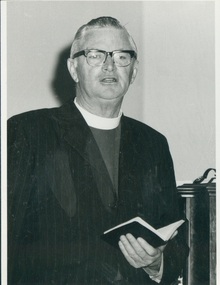
BW photo, Undated
... Then in Dodoma he had established the Central Tanganyika Press in order to promote the publication and distribution of Christian literature at all levels. He had marked out Kevin Engel, trained him, and launched him on the international scene. ...Then in Dodoma he had established the Central Tanganyika Press in order to promote the publication and distribution of Christian literature at all levels. He had marked out Kevin Engel, trained him, and launched him on the international scene. ...STANWAY, ALFRED (b. 9 Sept 1908; d. Melbourne, Vic, 27 June 1989). Anglican bishop, missionary. Stanway grew up in the Wimmera district of western Victoria, and left school when 14 years old. He found work in Melbourne, trained as an accountant, and at the age of 20, held a responsible position with a publishing company. This background, allied with an uncommon flair for figures and finance, was to stand him in good stead throughout his life. But he had little knowledge and no experience of the grace of God until 29 July 1928. At the Evening Service in the parish church of Fairfield on 29 July, he heard the Rev C H Nash (q.v.) preach a sermon which led to his conversion. Within two years he made up his mind to become a missionary and began night studies in order to matriculate. He entered Ridley College in March 1932 to prepare for ordination undertaking week-end duties as a catechist at Deer Park and St Albans. He joined the CMS League of Youth, became chairman, and gathered a fine band of young people many of whom were to become missionaries. He was closely involved with the Belgrave Heights Convention (then at Upwey) and established a League of Youth camp on the site. All his energies were thrown into the task of building up its members in personal holiness and vigorous evangelism. Stanway was ordained in St Paul's Cathedral, Melbourne on St Thomas Day 1934 and was placed in charge of the Old Mission Church of St James and St John, Melbourne. The duties were light enough to allow him to enrol in the Melbourne Teachers College and to complete the Diploma in Teaching. On 26 January 1937, he sailed for Africa to become a missionary in the Anglican Diocese of Mombasa, which at that time embraced the whole of Kenya. He was sent to the hot coastal town of Kaloleni as principal of a Secondary Boys School. Before he left Melbourne, he had become engaged to Marjory Harrison: she followed him to Africa and their marriage took place in Mombasa Cathedral in June 1939. He remained at Kaloleni until 1944 when he was transferred to the inland station of Maseno where all his gifts were to be deployed as rural dean of Nyanza. His oversight of some 500 village churches as well as a widespread primary school system was so efficient that in 1948 he was appointed archdeacon of Kenya with his home and office in Nairobi. As secretary of the African Church Council and of the African Education Board, he was responsible for all African work in the diocese. His contacts with government ministers and public servants were of first class significance at the time when the cry of Uhuru and the demand for independence was travelling throughout the colonial world. On 2 Feb 1951, Alfred Stanway was consecrated in Westminster Abbey as the third Anglican Bp of Central Tanganyika. This Diocese was the special sphere of the CMS Australia, and he already knew most of the missionary personnel. He brought with him the understanding and experience of one who had fully shared the lot and problems of a district missionary, but he came to the diocese at a time when it had yet to recover from its losses in personnel and finance as a result of the war. His immediate task was to provide the impetus of fresh leadership and a long-term overall policy. His aim from-the outset was to build up a strong autonomous church with its own indigenous pastorate. With the whole-hearted confidence of the home base, he was able to enlist the service of new missionaries. He saw a great increase in the number of African clergy and he encouraged village evangelists to open new fields of work. Simple structures were built as new churches at the rate of two a week, week in and week out, year by year. He worked hard to meet the need for Christian literature, bookshops, adult literacy and theological training. He opened Bible schools for village evangelists and sent suitable clergy overseas for further studies. He encouraged initiative in others, helped them to find and use their talents, and gave them his unstinted confidence and support. Fresh finance was required for new ventures. This led him to travel widely in Germany and America, where he raised large funds for these projects. Mackay House was built in Dodoma as the central administrative base for the diocese, hospitals such as those at Mvumi and Hombolo were modernised or established, schools were built and upgraded. In keeping with his vision for ultimate leadership by African personnel, he consecrated Yohana Omari in 1955 as his assistant, he was the first national to become a bp in East Africa. Bp Stanway then set on foot the long and complicated process for the division of his sprawling diocese. In 1963, the diocese of Victoria Nyanza came into being; in 1965, that of Morogoro; in 1966, that of Western Tanganyika. Yet in 1971, his own diocese of Central Tanganyika, though greatly reduced in size, had more churches and more clergy than in its undivided state in 195 l. Stanway then played a leading part in the formation of the Province of Tanzania in 1970, with an African abp as metropolitan. A year later, after 35 years in East Africa and 20 years as bishop of Central Tanganyika, he resigned. His leadership and achievements throughout those years had placed him in the front rank as a great missionary statesman. Stanway had returned to Melbourne at the time when his resignation took effect in August 1971. His early love for Ridley College reasserted itself and he went into residence as deputy principal under the Rev Dr Leon Morris. He was put in charge of chapel worship and the pastoral oversight of the students. All his gifts and experience were called into play as he sought to guide and encourage those who were on the threshold of their ministry. The whole bent of his heart was to foster the spiritual life and missionary calling of those whose hearts the Lord had touched. It was during those years that his life-long zeal for the spread of the gospel through Christian literature had its ultimate flowering. It had begun in his Nairobi days with a small church bookstall, this had developed into a major book-shop in the heart of the city. Then in Dodoma he had established the Central Tanganyika Press in order to promote the publication and distribution of Christian literature at all levels. He had marked out Kevin Engel, trained him, and launched him on the international scene. Hence it was natural that in Melbourne he and Kevin Engel should found the Australian Christian Literature Society. But his time at Ridley College was not to last. Unknown to him, the Rev J R W Stott had put his name forward as that of a person who could head a new school of theology in the United States to provide a sound training for evangelical ordinands. Such a task would have been formidable enough for a younger man who had grown up in America. How could an Australian who had spent half his life in Africa hope to succeed in a venture of that kind in America? How could one who had been a missionary, not a theologian, found a new school to train men for ordination? Nevertheless he rose to the challenge. In Sept 1975, he and Mrs Stanway left Melbourne for Sewickly, an outer suburb of Pittsburg, with the promise of three years' service. He had to start from scratch. He found a house to live in, but there was no land for the school, no funds in hand, no staff yet appointed, no students, and no buildings. His drive, his infections enthusiasm, and his flair for practical enterprise carried the day. One by one, obstacles were overcome and support grew in volume and strength. Twelve months after his arrival, in Sept 1976, the Trinity Episcopal School for Ministry was opened with three staff members, seventeen students, and the goodwill of the whole American Episcopal Church to win. During the next two years, the school took shape and was firmly established. Bp Stanway left an indelible stamp on every aspect of its life and work, its spiritual tone and ideals, its financial and administrative principles. He had inspired widespread support among evangelical episcopalians and had imparted a strong sense of divine guidance and purpose. The council would gladly have extended his term in office beyond three years, but at 75 years of age he knew that his health had begun to fail. When he finally relinquished his office in Nov 1978, he could look back on those three years as the crown of his ministry. It is not too much to say that his name was even more highly honoured and revered in the Trinity School of Ministry than in his own dearly loved Africa. His return to Melbourne led to quiet retirement at Mount Waverley where he settled down to a long battle with the ever worsening effects of Parkinson's Disease. The slow loss of physical capacity and the ultimate failure in powers of speech were a great trial, but he never complained. His faith was summed up in his brief reply when he was asked why he had not prayed for healing: 'What God allows, I accept'. That acceptance was without reserve; his testimony was never brighter. His mental powers were undiminished and his spiritual concerns were as wide as ever. He kept in touch with CMS, he went to church, he met with missionaries, he led Bible studies in his home as long as he was able. Africa was always in his heart, news from Sewickly always gave him great pleasure. He had left a mark for God on three great continents and his death left sad but thankful hearts in them all. It was the close of a life in which he had felt that he could never do enough for God who had done so much for him. One of Bp Stanway's sayings was 'when the Holy Spirit takes hold of you, anything can happen'. So it was in his case. He was very human, with his full share of human foibles and frailties. He had a great zest for life and an endless fund of stories drawn from his own experience. He was himself the subject of many stories, some true, others legendary. His vibrant personality always seemed to fill the house where he was, his presence could not be overlooked. His own home was one in which Mrs Stanway had a paramount influence. She was a trained teacher, a skilled artist, a born hostess and a first-class linguist. They had no children of their own, but were devoted Godparents and always deeply interested in the children of missionaries. Home life allowed him to relax in a serene and contented atmosphere and to exercise his gifts for friendship and hospitality. He was always on the watch for souls, a person-to-person evangelist par excellence. He was a man of faith and prayer who dared to believe in the God of the impossible. His love for Africa, his total dedication as a missionary; his gifts as a soulwinner; his genius for finance; his shrewd practical initiatives, and his statesmanlike vision were outstanding characteristics. But great or small, all his gifts were laid out in the service of the gospel, and that service marked him out as one of the most remarkable Australian missionaries of his generation. M L Loane, Men to Remember (Sydney, 1987) Rev. Alfred Stanway is standing with open book in hand, dressed in clerical garb.Bishop Alfred Stanwaybishop alfred stanway -
 Ballarat RSL Sub-Branch Inc.
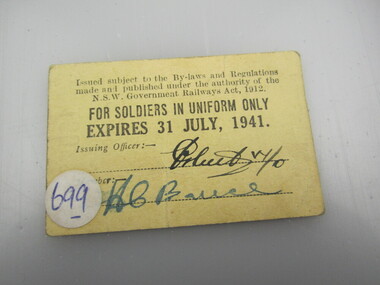
Ticket - Train
... Second World War (WW2) 1939 - 1945 Literature Ballarat RSL Ballarat Military fortnightly ticket (NSW) Ticket - Train ...Military fortnightly ticket (NSW)second world war (ww2), 1939 - 1945, literature, ballarat rsl, ballarat -
 Wodonga & District Historical Society Inc
Album - Ringer's River by Des Martin - Plate 26 - Erin learns of Police party arriving
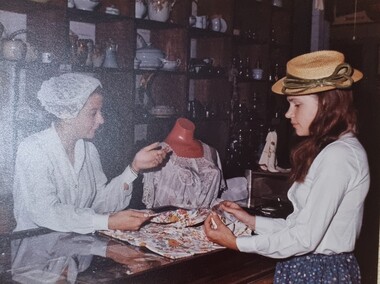
... Erin O'Hara is buying material at Rosenthal's store in Overton when she learns that a special police party has come off the afternoon train to trap Daylight and Keiran with the mob of cattle they are bringing across the river that day. Margaret Wehner as Miss. Rosenthal. The album and images are significant because they document literature written by a prominent member of the Wodonga community. ...Erin O'Hara is buying material at Rosenthal's store in Overton when she learns that a special police party has come off the afternoon train to trap Daylight and Keiran with the mob of cattle they are bringing across the river that day. Margaret Wehner as Miss. Rosenthal.The album and images are significant because they document literature written by a prominent member of the Wodonga community. The presentation of this precis was supported by several significant district families and individuals.Ringer's River Album Coloured photo Plate 26des martin, many a mile, ringer's river, northeast victoria stories -
 Wodonga & District Historical Society Inc
Album - Ringer's River by Des Martin - Plate 23 - Plans for a ring-in at Nuggety track
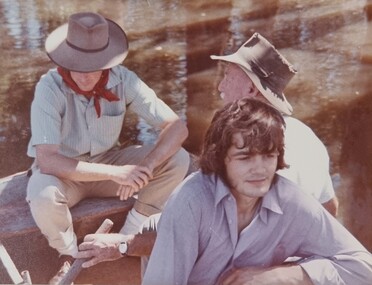
... train him. Their intention is to ring Grapeshot in for Smokey at the Nuggety Flat meeting where Klinberg will punt him well. Des Martin as Byrne. Lt. Col. Tony Hammett as Klinberg. The album and images are significant because they document literature ...Keiran, Artie Klinberg, and an old horse trainer named Tim Byrne combine to make friends with Grapeshot. Nightly they row across the river, feed him on oats, and train him. Their intention is to ring Grapeshot in for Smokey at the Nuggety Flat meeting where Klinberg will punt him well. Des Martin as Byrne. Lt. Col. Tony Hammett as Klinberg.The album and images are significant because they document literature written by a prominent member of the Wodonga community. The presentation of this precis was supported by several significant district families and individuals.Ringer's River Album Coloured photo Plate 23des martin, many a mile, ringer's river, northeast victoria stories -
 Wodonga & District Historical Society Inc
Album - Ringer's River by Des Martin - Plate 4 - O'Day's appointment announced
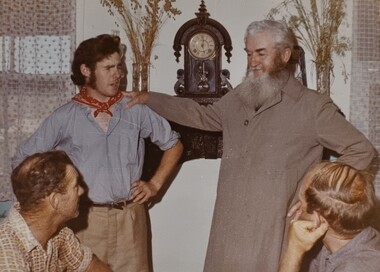
... train to the city. The album and images are significant because they document literature written by a prominent member of the Wodonga community. ...Back at the station MacLough announces to the assembled men that O'Day is now manager of Gooloora, with absolute power to hire, fire, buy, or sell, until he personally decides otherwise. He then has O'Day drive him to Overton where he repeats this to the bank manager, and arranges ample credit for the 20 year old executive before catching his train to the city.The album and images are significant because they document literature written by a prominent member of the Wodonga community. The presentation of this precis was supported by several significant district families and individuals.Ringer's River Album Coloured photo Plate 4 Back at the station MacLough announces to the assembled men that O'Day is now manager of Gooloora, with absolute power to hire, fire, buy, or sell, until he personally decides otherwise. He then has O'Day drive him to Overton where he repeats this to the bank manager, and arranges ample credit for the 20 year old executive before catching his train to the city.des martin, many a mile, ringer's river, northeast victoria stories -
 Wodonga & District Historical Society Inc
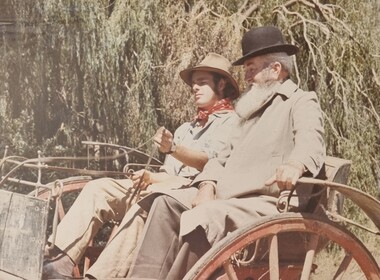
Album - Ringer's River by Des Martin - Plate 1 - Sean O'Day, Horse Breaker at "Gooloora" discusses his future
... MacLough nods assent, but, instead of leaving on the train, books a room for the night and a livery gig for the morrow, and drives himself to Gooloora early next morning. D.J. Martin as O'Day, H.S. Diffey as MacLough. The album and images are significant because they document literature ...On a summer's day in 1891 Sean O'Day, Horse Breaker on James MacLough's "Gooloora" Station, is driving the Scots pastoralist in to the railhead at Overton after his annual inspection of that property. Silent and mature for his age, Sean was born in a dray while it was crossing the river during a flood, and has remained at home in it. Because he is always moving by dawn he is known in the borderland as Daylight O'Day. When MacLough asks him what he will be doing on the morrow O'Day replies that he will be manager. Questioned, he suggests that MacLough realises the background to his joke in that the station hands will, that night, celebrate the passing of the Boss's inspection. As they will have hangovers tomorrow all the work will naturally fall to himself, a teetotaller. MacLough nods assent, but, instead of leaving on the train, books a room for the night and a livery gig for the morrow, and drives himself to Gooloora early next morning. D.J. Martin as O'Day, H.S. Diffey as MacLough.The album and images are significant because they document literature written by a prominent member of the Wodonga community. The presentation of this precis was supported by several significant district families and individuals.Ringer's River Album Coloured photo Plate 1des martin, many a mile, ringer's river, northeast victoria stories -
 Victorian Railway History Library
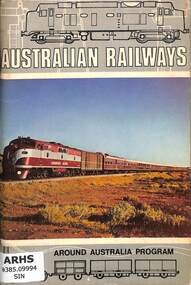
Book, Singleton, C.C, Australian Railway - Around Australia Program, 1967
... literature...Railroad trains -- Australia -- History -- Pictorial works....Railroads -- Australia -- History -- Juvenile literature Railroad trains -- Australia -- History -- Pictorial works. ...Illustrated aspects of railways in Australia up to 1967index, ill, p.64/non-fictionIllustrated aspects of railways in Australia up to 1967railroads -- australia -- history -- juvenile literature, railroad trains -- australia -- history -- pictorial works. -
 Flagstaff Hill Maritime Museum and Village
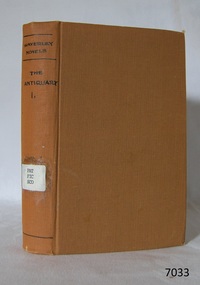
Book - Fictional stories, Sir Walter Scott, Waverley Novels Vol 5 The Antiquary-1, 1836
... Born in Edinburgh, he trained in law, became sheriff depute of Selkirk, and clerk to the Court of Session while writing anonymously until 1827. His works, including poems like “Marmion” (1808), influenced global literature; he revised them for the “Magnum Opus” edition of his works before his death. ...Born in Edinburgh, he trained in law, became sheriff depute of Selkirk, and clerk to the Court of Session while writing anonymously until 1827. His works, including poems like “Marmion” (1808), influenced global literature; he revised them for the “Magnum Opus” edition of his works before his death. ...The subject volume of Waverley Novels Vol 5 published by Fisher Son & Co (1836) is part of a collected 48 volume set of Sir Walter Scott's works, containing various stories. Vol 5 in the 1836 Fisher edition reprints later entries from the fourth series, as these stories originally appeared in Scott's Magnum Opus collected 48 volume editions, the first from 1816. With the influential “Magnum Opus” editions from 1829–1833 by Robert Cadell, serving as the basis for later reprinted published sets like Fisher's. The Antiquary is one of Sir Walter Scott’s best known Scottish novels of the set, first published in 1816, and it mixes social comedy, mystery, romance, and historical atmosphere. It centres on Jonathan Oldbuck, an obsessive collector of antiquities, and follows a tangled story involving old family secrets, financial trouble, buried treasure schemes, and questions of identity. The story is set in late 18th century Scotland, mainly around Fairport and nearby estates, and brings together several linked families.Scott uses the novel to explore the tension between the past and the present, showing how antiquarian obsession can be both comic and revealing. He also deals with inheritance, class, old guilt, false appearances, and the way history shapes personal lives.Waverley Novels Vol 5 The Antiquary-1, Light brown hardcover lettering in black text. Author: Sir Walter Scott Publisher: Fisher Son & Co Date: 1838fictionThe subject volume of Waverley Novels Vol 5 published by Fisher Son & Co (1836) is part of a collected 48 volume set of Sir Walter Scott's works, containing various stories. Vol 5 in the 1836 Fisher edition reprints later entries from the fourth series, as these stories originally appeared in Scott's Magnum Opus collected 48 volume editions, the first from 1816. With the influential “Magnum Opus” editions from 1829–1833 by Robert Cadell, serving as the basis for later reprinted published sets like Fisher's. The Antiquary is one of Sir Walter Scott’s best known Scottish novels of the set, first published in 1816, and it mixes social comedy, mystery, romance, and historical atmosphere. It centres on Jonathan Oldbuck, an obsessive collector of antiquities, and follows a tangled story involving old family secrets, financial trouble, buried treasure schemes, and questions of identity. The story is set in late 18th century Scotland, mainly around Fairport and nearby estates, and brings together several linked families.Scott uses the novel to explore the tension between the past and the present, showing how antiquarian obsession can be both comic and revealing. He also deals with inheritance, class, old guilt, false appearances, and the way history shapes personal lives.warrnambool, shipwrecked-coast, flagstaff-hill, flagstaff-hill-maritime-museum, maritime-museum, shipwreck-coast, flagstaff-hill-maritime-village, shipwrecked-artefact, book, waverley novels vol 46 tales of my landlord, sir walter scott, pattison collection, warrnambool library, warrnambool mechanics’ institute, ralph eric pattison, corangamite regional library service, warrnambool city librarian, mechanics’ institute library, victorian library board, warrnambool books and records, warrnambool children’s library -
 Flagstaff Hill Maritime Museum and Village
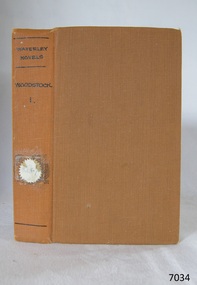
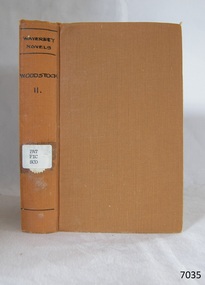
Book - Fictional stories, Sir Walter Scott, Waverley Novels Vol 39 Woodstock or The Cavalier, 1838
... Born in Edinburgh, he trained in law, became sheriff depute of Selkirk, and clerk to the Court of Session while writing anonymously until 1827. His works, including poems like “Marmion” (1808), influenced global literature; he revised them for the “Magnum Opus” edition of his works before his death. ...Born in Edinburgh, he trained in law, became sheriff depute of Selkirk, and clerk to the Court of Session while writing anonymously until 1827. His works, including poems like “Marmion” (1808), influenced global literature; he revised them for the “Magnum Opus” edition of his works before his death. ...The subject volume of Waverley Novels Vol 39 published by Fisher Son & Co (1838) is part of a collected 48 volume set of Sir Walter Scott's works, containing various stories. Vol 39 in the 1836 Fisher edition reprints later entries from the fourth series, as these stories originally appeared in Scott's Magnum Opus 48 volume editions, the first from 1816. With the influential “Magnum Opus” editions from 1829–1833 by Robert Cadell, serving as the basis for later reprinted published sets like Fisher's. Scott's "Woodstock," or “The Cavalier” is a historical novel originally published in 1826 as the 22nd in the Waverley series. Set in 1651 at Woodstock Manor during the English Commonwealth after the Battle of Worcester, it dramatises Charles II's daring escape from Cromwell's forces. The story is about a royalist Sir Henry Lee and his daughter Alice, they lose their Woodstock home to Colonel Markham Everard, a sympathetic round head relative, who seeks protection for them from Cromwell, who suspects the site as a hideout for fugitive Charles II (disguised as a royal page "Louis Kerneguy"). Charles as the page courts Alice, sparking jealousy with Everard, amid duels, haunting in secret passages, and Cromwell's siege. Charles escapes with help from allies like Wildrake and Albert Lee, who impersonates him. The key themes to this novel are that it contrasts Cavalier loyalty and Puritan zeal, loyalty across divides, romance amid politics, and supernatural folklore masking intrigue. In the Fisher Son & Co edition, it reprints this story from Scott's revised collected original work in 1826.Waverley Novels Vol 39 Woodstock or the Cavalier, Light brown hardcover lettering in black text. Author: Sir Walter Scott Publisher: Fisher Son & Co Date: 1838fictionThe subject volume of Waverley Novels Vol 39 published by Fisher Son & Co (1838) is part of a collected 48 volume set of Sir Walter Scott's works, containing various stories. Vol 39 in the 1836 Fisher edition reprints later entries from the fourth series, as these stories originally appeared in Scott's Magnum Opus 48 volume editions, the first from 1816. With the influential “Magnum Opus” editions from 1829–1833 by Robert Cadell, serving as the basis for later reprinted published sets like Fisher's. Scott's "Woodstock," or “The Cavalier” is a historical novel originally published in 1826 as the 22nd in the Waverley series. Set in 1651 at Woodstock Manor during the English Commonwealth after the Battle of Worcester, it dramatises Charles II's daring escape from Cromwell's forces. The story is about a royalist Sir Henry Lee and his daughter Alice, they lose their Woodstock home to Colonel Markham Everard, a sympathetic round head relative, who seeks protection for them from Cromwell, who suspects the site as a hideout for fugitive Charles II (disguised as a royal page "Louis Kerneguy"). Charles as the page courts Alice, sparking jealousy with Everard, amid duels, haunting in secret passages, and Cromwell's siege. Charles escapes with help from allies like Wildrake and Albert Lee, who impersonates him. The key themes to this novel are that it contrasts Cavalier loyalty and Puritan zeal, loyalty across divides, romance amid politics, and supernatural folklore masking intrigue. In the Fisher Son & Co edition, it reprints this story from Scott's revised collected original work in 1826. warrnambool, shipwrecked-coast, flagstaff-hill, flagstaff-hill-maritime-museum, maritime-museum, shipwreck-coast, flagstaff-hill-maritime-village, shipwrecked-artefact, book, waverley novels vol 46 tales of my landlord, sir walter scott, pattison collection, warrnambool library, warrnambool mechanics’ institute, ralph eric pattison, corangamite regional library service, warrnambool city librarian, mechanics’ institute library, victorian library board, warrnambool books and records, warrnambool children’s library -
 Flagstaff Hill Maritime Museum and Village
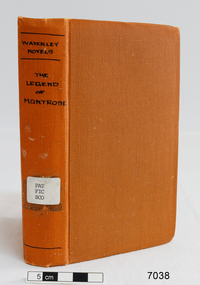
Book - Fictional stories, Sir Walter Scott, Waverley Novels Vol 40 Woodstock or the Cavalier-2, 1838
... Born in Edinburgh, he trained in law, became sheriff depute of Selkirk, and clerk to the Court of Session while writing anonymously until 1827. His works, including poems like “Marmion” (1808), influenced global literature; he revised them for the “Magnum Opus” edition of his works before his death. ...Born in Edinburgh, he trained in law, became sheriff depute of Selkirk, and clerk to the Court of Session while writing anonymously until 1827. His works, including poems like “Marmion” (1808), influenced global literature; he revised them for the “Magnum Opus” edition of his works before his death. ...The subject volume of Waverley Novels Vol 40 published by Fisher Son & Co (1838) is part of a collected 48 volume set of Sir Walter Scott's works, containing various stories. Vol 40 in the 1838 Fisher edition reprints later entries from the fourth series, as these stories originally appeared in Scott's Magnum Opus 48 volume editions, the first from 1816. With the influential “Magnum Opus” editions from 1829–1833 by Robert Cadell, serving as the basis for later reprinted published sets like Fisher's. Scott's "Woodstock," or “The Cavalier” is a historical novel originally published in 1826 as the 22nd in the Waverley series. Volume 40 continues Woodstock, or The Cavalier from Vol 39 in the Fisher Son & Co edition. It picks up the 1651 story line at Woodstock Manor, where disguised Charles II hides amid escalating tension with Cromwell's forces. The plot continues with Cromwell storming the lodge after suspecting Charles's presence disguised as "Louis Kerneguy", arresting Colonel Everard and searching secret passages haunted by "ghosts". Albert Lee impersonates the king to aid his escape, while Alice guides Charles away; dramatic confrontations ensue with duels, revelations, and Cromwell's rage continuing. As in volume 39 the tale resolves family divisions, loyalty, and supernatural folklore masking political intrigue during the Commonwealth era. This split-volume format is standard in collected 1830 s editions like Fisher's, reprinting of Scott's 1826 original with revisions.Waverley Novels Vol 40 Woodstock or the Cavalier-2, Light brown hardcover lettering in black text. Author: Sir Walter Scott Publisher: Fisher Son & Co Date: 1838fictionThe subject volume of Waverley Novels Vol 40 published by Fisher Son & Co (1838) is part of a collected 48 volume set of Sir Walter Scott's works, containing various stories. Vol 40 in the 1838 Fisher edition reprints later entries from the fourth series, as these stories originally appeared in Scott's Magnum Opus 48 volume editions, the first from 1816. With the influential “Magnum Opus” editions from 1829–1833 by Robert Cadell, serving as the basis for later reprinted published sets like Fisher's. Scott's "Woodstock," or “The Cavalier” is a historical novel originally published in 1826 as the 22nd in the Waverley series. Volume 40 continues Woodstock, or The Cavalier from Vol 39 in the Fisher Son & Co edition. It picks up the 1651 story line at Woodstock Manor, where disguised Charles II hides amid escalating tension with Cromwell's forces. The plot continues with Cromwell storming the lodge after suspecting Charles's presence disguised as "Louis Kerneguy", arresting Colonel Everard and searching secret passages haunted by "ghosts". Albert Lee impersonates the king to aid his escape, while Alice guides Charles away; dramatic confrontations ensue with duels, revelations, and Cromwell's rage continuing. As in volume 39 the tale resolves family divisions, loyalty, and supernatural folklore masking political intrigue during the Commonwealth era. This split-volume format is standard in collected 1830 s editions like Fisher's, reprinting of Scott's 1826 original with revisions.warrnambool, shipwrecked-coast, flagstaff-hill, flagstaff-hill-maritime-museum, maritime-museum, shipwreck-coast, flagstaff-hill-maritime-village, shipwrecked-artefact, book, waverley novels vol 46 tales of my landlord, sir walter scott, pattison collection, warrnambool library, warrnambool mechanics’ institute, ralph eric pattison, corangamite regional library service, warrnambool city librarian, mechanics’ institute library, victorian library board, warrnambool books and records, warrnambool children’s library -
 Flagstaff Hill Maritime Museum and Village
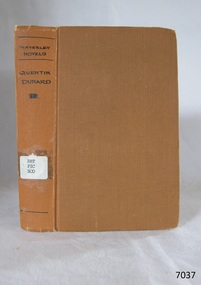
Book - Fictional stories, Sir Walter Scott, A Legend of Montrose Vol 15, 1837
... Born in Edinburgh, he trained in law, became sheriff depute of Selkirk, and clerk to the Court of Session while writing anonymously until 1827. His works, including poems like “Marmion” (1808), influenced global literature; he revised them for the “Magnum Opus” edition of his works before his death. ...Born in Edinburgh, he trained in law, became sheriff depute of Selkirk, and clerk to the Court of Session while writing anonymously until 1827. His works, including poems like “Marmion” (1808), influenced global literature; he revised them for the “Magnum Opus” edition of his works before his death. ...The subject volume of Waverley Novels Vol 15 published by Fisher Son & Co (1837) is part of a collected 48 volume set of Sir Walter Scott's works, containing various stories. Vol 15 in the 1836 Fisher edition reprints later entries from the fourth series, as these stories originally appeared in Scott's Magnum Opus 48 volume editions, the first from 1816. With the influential “Magnum Opus” editions from 1829–1833 by Robert Cadell, serving as the basis for later reprinted published sets like Fisher's. The story is a historical novel set in Scotland in the 1640s, during the wars of the three Kingdoms. Its main story follows Allan M’Aulay, his friend the Earl of Menteith, and Annot Lyle, against the backdrop of Montrose’s Royalist campaign and clan feuds in the Highlands. The plot combines romance, revenge, and civil war. Annot, who was raised by the M’Aulays after being taken during a clan feud, becomes the focus of a love triangle between Allan M’Aulay and Menteith; The mystery of Annot's birth holds both back from pressing their claims buy eventually her marriage to Menteith is made possible But Allan’s jealousy drives him to attack the groom. A large subplot follows with Dugald Dalgetty, a comic professional soldier whose practical, mercenary outlook contrasts with the passions and loyalties of the other characters.Waverley Novels Vol 15 A Legend of Montrose, Light brown hardcover lettering in black text. Author: Sir Walter Scott Publisher: Fisher Son & Co Date: 1837fictionThe subject volume of Waverley Novels Vol 15 published by Fisher Son & Co (1837) is part of a collected 48 volume set of Sir Walter Scott's works, containing various stories. Vol 15 in the 1836 Fisher edition reprints later entries from the fourth series, as these stories originally appeared in Scott's Magnum Opus 48 volume editions, the first from 1816. With the influential “Magnum Opus” editions from 1829–1833 by Robert Cadell, serving as the basis for later reprinted published sets like Fisher's. The story is a historical novel set in Scotland in the 1640s, during the wars of the three Kingdoms. Its main story follows Allan M’Aulay, his friend the Earl of Menteith, and Annot Lyle, against the backdrop of Montrose’s Royalist campaign and clan feuds in the Highlands. The plot combines romance, revenge, and civil war. Annot, who was raised by the M’Aulays after being taken during a clan feud, becomes the focus of a love triangle between Allan M’Aulay and Menteith; The mystery of Annot's birth holds both back from pressing their claims buy eventually her marriage to Menteith is made possible But Allan’s jealousy drives him to attack the groom. A large subplot follows with Dugald Dalgetty, a comic professional soldier whose practical, mercenary outlook contrasts with the passions and loyalties of the other characters. warrnambool, shipwrecked-coast, flagstaff-hill, flagstaff-hill-maritime-museum, maritime-museum, shipwreck-coast, flagstaff-hill-maritime-village, shipwrecked-artefact, book, waverley novels vol 46 tales of my landlord, sir walter scott, pattison collection, warrnambool library, warrnambool mechanics’ institute, ralph eric pattison, corangamite regional library service, warrnambool city librarian, mechanics’ institute library, victorian library board, warrnambool books and records, warrnambool children’s library, quentin durward, quinten durward -
 Flagstaff Hill Maritime Museum and Village
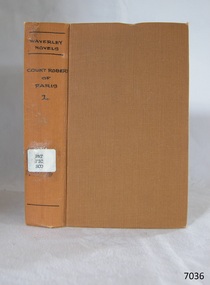
Book - Fictional stories, Sir Walter Scott, Waverley Novels Quentin Durward Vol 32, 1838
... Born in Edinburgh, he trained in law, became sheriff depute of Selkirk, and clerk to the Court of Session while writing anonymously until 1827. His works, including poems like “Marmion” (1808), influenced global literature; he revised them for the “Magnum Opus” edition of his works before his death. ...Born in Edinburgh, he trained in law, became sheriff depute of Selkirk, and clerk to the Court of Session while writing anonymously until 1827. His works, including poems like “Marmion” (1808), influenced global literature; he revised them for the “Magnum Opus” edition of his works before his death. ...The subject volume of Waverley Novels Vol 32 published by Fisher Son & Co (1838) is part of a collected 48 volume set of Sir Walter Scott's works, containing various stories. Vol 32 in the 1836 Fisher edition reprints later entries from the fourth series, as these stories originally appeared in Scott's Magnum Opus 48 volume editions, the first from 1816. With the influential “Magnum Opus” editions from 1829–1833 by Robert Cadell, serving as the basis for later reprinted published sets like Fisher's. Quentin Durward, often listed as volume 32 in some Waverley Novels editions, is a historical novel set in 15th century France and Burgundy. Its story follows a young Scottish archer who gets drawn into the power struggle between Louis XI and Charles the Bold, while also escorting the Burgundian heiress Isabelle de Croye and eventually winning her hand. The story centres around Quentin arriving in France seeking service, he joins Louis XI’s Scottish Guard, and is pulled into court intrigue, kidnapping plots, and the violent conflict around Liege. The novel’s main historical drama is Louis XI using covert politics to weaken Burgundy, while Quentin’s personal plot tracks loyalty, danger, and romance.Waverley Novels Vol 32 Quentin Durward, Light brown hardcover lettering in black text. Author: Sir Walter Scott Publisher: Fisher Son & Co Date: 1838fictionThe subject volume of Waverley Novels Vol 32 published by Fisher Son & Co (1838) is part of a collected 48 volume set of Sir Walter Scott's works, containing various stories. Vol 32 in the 1836 Fisher edition reprints later entries from the fourth series, as these stories originally appeared in Scott's Magnum Opus 48 volume editions, the first from 1816. With the influential “Magnum Opus” editions from 1829–1833 by Robert Cadell, serving as the basis for later reprinted published sets like Fisher's. Quentin Durward, often listed as volume 32 in some Waverley Novels editions, is a historical novel set in 15th century France and Burgundy. Its story follows a young Scottish archer who gets drawn into the power struggle between Louis XI and Charles the Bold, while also escorting the Burgundian heiress Isabelle de Croye and eventually winning her hand. The story centres around Quentin arriving in France seeking service, he joins Louis XI’s Scottish Guard, and is pulled into court intrigue, kidnapping plots, and the violent conflict around Liege. The novel’s main historical drama is Louis XI using covert politics to weaken Burgundy, while Quentin’s personal plot tracks loyalty, danger, and romance.warrnambool, shipwrecked-coast, flagstaff-hill, flagstaff-hill-maritime-museum, maritime-museum, shipwreck-coast, flagstaff-hill-maritime-village, shipwrecked-artefact, book, waverley novels vol 46 tales of my landlord, sir walter scott, pattison collection, warrnambool library, warrnambool mechanics’ institute, ralph eric pattison, corangamite regional library service, warrnambool city librarian, mechanics’ institute library, victorian library board, warrnambool books and records, warrnambool children’s library, quentin durward, quinten durward -
 Flagstaff Hill Maritime Museum and Village
Book - Fictional stories, Sir Walter Scott, Waverley Novels Vol 47 Count Robert of Paris-2, 1838
... Born in Edinburgh, he trained in law, became sheriff depute of Selkirk, and clerk to the Court of Session while writing anonymously until 1827. His works, including poems like “Marmion” (1808), influenced global literature; he revised them for the “Magnum Opus” edition of his works before his death. ...Born in Edinburgh, he trained in law, became sheriff depute of Selkirk, and clerk to the Court of Session while writing anonymously until 1827. His works, including poems like “Marmion” (1808), influenced global literature; he revised them for the “Magnum Opus” edition of his works before his death. ...The subject volume of the Waverley Novels Vol 47 published by Fisher Son & Co (1838) is part of a collected 48 volume set of Sir Walter Scott's works, containing various stories. Vol 47 in the 1838 Fisher edition reprints later entries from the fourth series, as these stories originally appeared in Scott's Magnum Opus 48 volume editions, the first from 1816. With the influential “Magnum Opus” editions from 1829–1833 by Robert Cadell, serving as the basis for later reprinted published sets like Fisher's. Volume 47 "Count Robert of Paris-2" completes the novel in the Fisher Son & Co edition. It continues the 1097 Constantinople intrigue from Vol 47's first part (or prior volume), resolving crusader-Byzantine clashes. The plot concludes with Count Robert freed by Hereward, fights in Brenhilda's duel against Nicephorus. Hereward reunites with Bertha (Brenhilda's attendant), regains English lands via Robert's influence, and joins him in Palestine as a vassal; crusaders depart after Alexius out maneuvers various plots. Volume 47 often splits Count Robert of Paris Part two before starting Castle Dangerous part one, matching 1830 s collected formats like Fisher's revisions of Scott's 1832 original.Blending chivalry, conspiracy, and cultural satire.Waverley Novels Vol 47 Count Robert of Paris- 2, Light brown hardcover lettering in black text. Author: Sir Walter Scott Publisher: Fisher Son & Co Date: 1838fictionThe subject volume of the Waverley Novels Vol 47 published by Fisher Son & Co (1838) is part of a collected 48 volume set of Sir Walter Scott's works, containing various stories. Vol 47 in the 1838 Fisher edition reprints later entries from the fourth series, as these stories originally appeared in Scott's Magnum Opus 48 volume editions, the first from 1816. With the influential “Magnum Opus” editions from 1829–1833 by Robert Cadell, serving as the basis for later reprinted published sets like Fisher's. Volume 47 "Count Robert of Paris-2" completes the novel in the Fisher Son & Co edition. It continues the 1097 Constantinople intrigue from Vol 47's first part (or prior volume), resolving crusader-Byzantine clashes. The plot concludes with Count Robert freed by Hereward, fights in Brenhilda's duel against Nicephorus. Hereward reunites with Bertha (Brenhilda's attendant), regains English lands via Robert's influence, and joins him in Palestine as a vassal; crusaders depart after Alexius out maneuvers various plots. Volume 47 often splits Count Robert of Paris Part two before starting Castle Dangerous part one, matching 1830 s collected formats like Fisher's revisions of Scott's 1832 original.Blending chivalry, conspiracy, and cultural satire.warrnambool, shipwrecked-coast, flagstaff-hill, flagstaff-hill-maritime-museum, maritime-museum, shipwreck-coast, flagstaff-hill-maritime-village, shipwrecked-artefact, book, waverley novels vol 46 tales of my landlord, sir walter scott, pattison collection, warrnambool library, warrnambool mechanics’ institute, ralph eric pattison, corangamite regional library service, warrnambool city librarian, mechanics’ institute library, victorian library board, warrnambool books and records, warrnambool children’s library -
 Flagstaff Hill Maritime Museum and Village
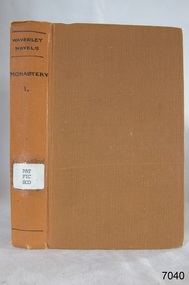
Book - Fictional stories, Sir Walter Scott, Waverley Novels The Monastery- 1 Vol 18, 1838
... Born in Edinburgh, he trained in law, became sheriff depute of Selkirk, and clerk to the Court of Session while writing anonymously until 1827. His works, including poems like “Marmion” (1808), influenced global literature; he revised them for the “Magnum Opus” edition of his works before his death. ...Born in Edinburgh, he trained in law, became sheriff depute of Selkirk, and clerk to the Court of Session while writing anonymously until 1827. His works, including poems like “Marmion” (1808), influenced global literature; he revised them for the “Magnum Opus” edition of his works before his death. ...The subject volume of Waverley Novels Vol 18 published by Fisher Son & Co (1838) is part of a collected 48 volume set of Sir Walter Scott's works, containing various stories. Vol 18 in the 1836 Fisher edition reprints later entries from the fourth series, as these stories originally appeared in Scott's Magnum Opus 48 volume editions, the first from 1816. With the influential “Magnum Opus” editions from 1829–1833 by Robert Cadell, serving as the basis for later reprinted published sets like Fisher's. Scott’s “The Monastery” is a historical romance set in Scotland during the early Reformation, centred on Kennaquhair Abbey and the Glendinning family. The plot follows Halbert and Edward Glendinning, both in love with Mary Avenel, while religious conflict, local politics, and the eerie White Lady of Avenel shape the action.Waverley Novels Vol 18 The Monastery-1, Light brown hardcover lettering in black text. Author: Sir Walter Scott Publisher: Fisher Son & Co Date: 1837fictionThe subject volume of Waverley Novels Vol 18 published by Fisher Son & Co (1838) is part of a collected 48 volume set of Sir Walter Scott's works, containing various stories. Vol 18 in the 1836 Fisher edition reprints later entries from the fourth series, as these stories originally appeared in Scott's Magnum Opus 48 volume editions, the first from 1816. With the influential “Magnum Opus” editions from 1829–1833 by Robert Cadell, serving as the basis for later reprinted published sets like Fisher's. Scott’s “The Monastery” is a historical romance set in Scotland during the early Reformation, centred on Kennaquhair Abbey and the Glendinning family. The plot follows Halbert and Edward Glendinning, both in love with Mary Avenel, while religious conflict, local politics, and the eerie White Lady of Avenel shape the action.warrnambool, shipwrecked-coast, flagstaff-hill, flagstaff-hill-maritime-museum, maritime-museum, shipwreck-coast, flagstaff-hill-maritime-village, shipwrecked-artefact, book, waverley novels vol 46 tales of my landlord, sir walter scott, pattison collection, warrnambool library, warrnambool mechanics’ institute, ralph eric pattison, corangamite regional library service, warrnambool city librarian, mechanics’ institute library, victorian library board, warrnambool books and records, warrnambool children’s library, quentin durward, quinten durward -
 Flagstaff Hill Maritime Museum and Village
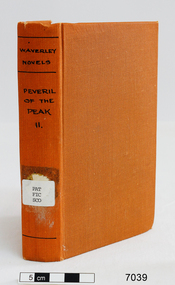
Book - Fictional stories, Sir Walter Scott, Waverley Novels Peveril of the Peak- 2 Vol 29, 1838
... Born in Edinburgh, he trained in law, became sheriff depute of Selkirk, and clerk to the Court of Session while writing anonymously until 1827. His works, including poems like “Marmion” (1808), influenced global literature; he revised them for the “Magnum Opus” edition of his works before his death. ...Born in Edinburgh, he trained in law, became sheriff depute of Selkirk, and clerk to the Court of Session while writing anonymously until 1827. His works, including poems like “Marmion” (1808), influenced global literature; he revised them for the “Magnum Opus” edition of his works before his death. ...The subject volume of Waverley Novels part 2 Vol 29 published by Fisher Son & Co (1838) is part of a collected 48 volume set of Sir Walter Scott's works, containing various stories. Vol 32 in the 1836 Fisher edition reprints later entries from the fourth series, as these stories originally appeared in Scott's Magnum Opus 48 volume editions, the first from 1816. With the influential “Magnum Opus” editions from 1829–1833 by Robert Cadell, serving as the basis for later reprinted published sets like Fisher's. Scott’s Peveril of the Peak is a historical novel set around the popish plot of 1678, and it follows tensions between Cavalier and Puritan families in Derbyshire, London intrigue, and a romance involving Sir Geoffrey Peveril’s son Julian, Alice Bridgenorth, and the mysterious Fenella Zara. In broad terms, it is about political suspicion, religious conflict, mistaken identities, and how private loyalties get entangled with public upheaval.Waverley Novels Peveril of the Peak- 2 Vol 29, Light brown hardcover lettering in black text. Author: Sir Walter Scott Publisher: Fisher Son & Co Date: 1838fictionThe subject volume of Waverley Novels part 2 Vol 29 published by Fisher Son & Co (1838) is part of a collected 48 volume set of Sir Walter Scott's works, containing various stories. Vol 32 in the 1836 Fisher edition reprints later entries from the fourth series, as these stories originally appeared in Scott's Magnum Opus 48 volume editions, the first from 1816. With the influential “Magnum Opus” editions from 1829–1833 by Robert Cadell, serving as the basis for later reprinted published sets like Fisher's. Scott’s Peveril of the Peak is a historical novel set around the popish plot of 1678, and it follows tensions between Cavalier and Puritan families in Derbyshire, London intrigue, and a romance involving Sir Geoffrey Peveril’s son Julian, Alice Bridgenorth, and the mysterious Fenella Zara. In broad terms, it is about political suspicion, religious conflict, mistaken identities, and how private loyalties get entangled with public upheaval. warrnambool, shipwrecked-coast, flagstaff-hill, flagstaff-hill-maritime-museum, maritime-museum, shipwreck-coast, flagstaff-hill-maritime-village, shipwrecked-artefact, book, waverley novels vol 46 tales of my landlord, sir walter scott, pattison collection, warrnambool library, warrnambool mechanics’ institute, ralph eric pattison, corangamite regional library service, warrnambool city librarian, mechanics’ institute library, victorian library board, warrnambool books and records, warrnambool children’s library, quentin durward, quinten durward -
 Flagstaff Hill Maritime Museum and Village
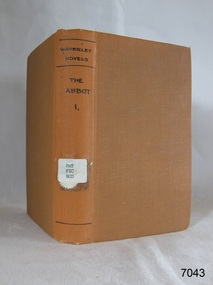
Book - Fictional stories, Sir Walter Scott, Waverley Novels Vol 20 The Abbot- 1 (Sequel to the Monastery), 1837
... Born in Edinburgh, he trained in law, became sheriff depute of Selkirk, and clerk to the Court of Session while writing anonymously until 1827. His works, including poems like “Marmion” (1808), influenced global literature; he revised them for the “Magnum Opus” edition of his works before his death. ...Born in Edinburgh, he trained in law, became sheriff depute of Selkirk, and clerk to the Court of Session while writing anonymously until 1827. His works, including poems like “Marmion” (1808), influenced global literature; he revised them for the “Magnum Opus” edition of his works before his death. ...The subject volume “The Abbot- 1 (Sequel to the Monastery) Vol 20” published by Fisher Son & Co (1837) is part of a collected edition of Sir Walter Scott's works, containing stories from the "Tales of My Landlord" series. "Tales of My Landlord" forms a key subset of Scott's Waverley Novels, presented as fictional tales gathered by characters like Peter Pattieson from the landlord of the Wallace “Inn at Gandercleugh”. The series spans multiple books across four sub-series, including “The Black Dwarf” (1707 setting), “Old Mortality” (1679–1689), “The Heart of Midlothian” (1736), “The Bride of Lammermoor” (1709–1711), “A Legend of Montrose” (1644–1645), “Count Robert of Paris” (1097), and “Castle Dangerous” (1307). Vol 46 in the 1838 Fisher edition reprints later entries like “Count Robert of Paris” or “Castle Dangerous” from the fourth series, as these stories originally appeared in Scott's Magnum Opus collected volume editions, the first from 1816. With the influential 48-volume “Magnum Opus” edition from 1829–1833 by Robert Cadell, serving as the basis for later collected published sets like Fisher's. The Abbot is Walter Scott’s sequel to The Monastery, set in 1567–1568 during the turmoil around Mary, Queen of Scots. The story follows Roland Græme and other characters around Lochleven Castle, where Mary is imprisoned, and builds toward her escape attempt and the political crisis that ends with her defeat and flight to England. Like the other novels in the Waverley series it mixes historical events with fictional characters: Roland Græme, the Avenel household, and the mysterious “Abbot” figure are woven into the real struggle between Protestant and Catholic factions in Scotland. A central thread is Roland’s divided loyalties, his attraction to both the Catholic and Protestant worlds, and his involvement in helping Mary’s cause. The climax comes with Mary’s attempted escape from Lochleven, the fighting that follows, and her eventual loss of power in Scotland.Waverley Novels Vol 20 The Abbot- 1 Vol 20 (Sequel to the Monastery), Light brown hardcover lettering in black text. Author: Sir Walter Scott Publisher: Fisher Son & Co Date: 1837fictionThe subject volume “The Abbot- 1 (Sequel to the Monastery) Vol 20” published by Fisher Son & Co (1837) is part of a collected edition of Sir Walter Scott's works, containing stories from the "Tales of My Landlord" series. "Tales of My Landlord" forms a key subset of Scott's Waverley Novels, presented as fictional tales gathered by characters like Peter Pattieson from the landlord of the Wallace “Inn at Gandercleugh”. The series spans multiple books across four sub-series, including “The Black Dwarf” (1707 setting), “Old Mortality” (1679–1689), “The Heart of Midlothian” (1736), “The Bride of Lammermoor” (1709–1711), “A Legend of Montrose” (1644–1645), “Count Robert of Paris” (1097), and “Castle Dangerous” (1307). Vol 46 in the 1838 Fisher edition reprints later entries like “Count Robert of Paris” or “Castle Dangerous” from the fourth series, as these stories originally appeared in Scott's Magnum Opus collected volume editions, the first from 1816. With the influential 48-volume “Magnum Opus” edition from 1829–1833 by Robert Cadell, serving as the basis for later collected published sets like Fisher's. The Abbot is Walter Scott’s sequel to The Monastery, set in 1567–1568 during the turmoil around Mary, Queen of Scots. The story follows Roland Græme and other characters around Lochleven Castle, where Mary is imprisoned, and builds toward her escape attempt and the political crisis that ends with her defeat and flight to England. Like the other novels in the Waverley series it mixes historical events with fictional characters: Roland Græme, the Avenel household, and the mysterious “Abbot” figure are woven into the real struggle between Protestant and Catholic factions in Scotland. A central thread is Roland’s divided loyalties, his attraction to both the Catholic and Protestant worlds, and his involvement in helping Mary’s cause. The climax comes with Mary’s attempted escape from Lochleven, the fighting that follows, and her eventual loss of power in Scotland. warrnambool, shipwrecked-coast, flagstaff-hill, flagstaff-hill-maritime-museum, maritime-museum, shipwreck-coast, flagstaff-hill-maritime-village, shipwrecked-artefact, book, waverley novels vol 46 tales of my landlord, sir walter scott, pattison collection, warrnambool library, warrnambool mechanics’ institute, ralph eric pattison, corangamite regional library service, warrnambool city librarian, mechanics’ institute library, victorian library board, warrnambool books and records, warrnambool children’s library -
 Flagstaff Hill Maritime Museum and Village
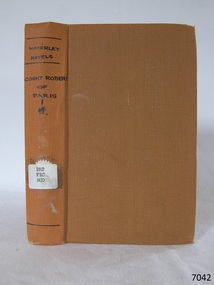
Book - Fictional stories, Sir Walter Scott, Waverley Novels Vol 46-1 Tales of My Landlord, 1838
... Born in Edinburgh, he trained in law, became sheriff depute of Selkirk, and clerk to the Court of Session while writing anonymously until 1827. His works, including poems like “Marmion” (1808), influenced global literature; he revised them for the “Magnum Opus” edition of his works before his death. ...Born in Edinburgh, he trained in law, became sheriff depute of Selkirk, and clerk to the Court of Session while writing anonymously until 1827. His works, including poems like “Marmion” (1808), influenced global literature; he revised them for the “Magnum Opus” edition of his works before his death. ...The subject volume “Waverley Novels Vol 46” published by Fisher Son & Co (1838) is part of a collected edition of Sir Walter Scott's works, containing stories from the "Tales of My Landlord" series. "Tales of My Landlord" forms a key subset of Scott's Waverley Novels, presented as fictional tales gathered by characters like Peter Pattieson from the landlord of the Wallace “Inn at Gandercleugh”. The series spans multiple books across four sub-series, including “The Black Dwarf” (1707 setting), “Old Mortality” (1679–1689), “The Heart of Midlothian” (1736), “The Bride of Lammermoor” (1709–1711), “A Legend of Montrose” (1644–1645), “Count Robert of Paris” (1097), and “Castle Dangerous” (1307). Vol 46 in the 1838 Fisher edition reprints later entries like “Count Robert of Paris” or “Castle Dangerous” from the fourth series, as these stories originally appeared in Scott's Magnum Opus collected volume editions, the first from 1816. With the influential 48-volume “Magnum Opus” edition from 1829–1833 by Robert Cadell, serving as the basis for later collected published sets like Fisher's.Waverley Novels Vol 46 Tales of My Landlord, Light brown hardcover lettering in black text. Author: Sir Walter Scott Publisher: Fisher Son & Co Date: 1838fictionThe subject volume “Waverley Novels Vol 46” published by Fisher Son & Co (1838) is part of a collected edition of Sir Walter Scott's works, containing stories from the "Tales of My Landlord" series. "Tales of My Landlord" forms a key subset of Scott's Waverley Novels, presented as fictional tales gathered by characters like Peter Pattieson from the landlord of the Wallace “Inn at Gandercleugh”. The series spans multiple books across four sub-series, including “The Black Dwarf” (1707 setting), “Old Mortality” (1679–1689), “The Heart of Midlothian” (1736), “The Bride of Lammermoor” (1709–1711), “A Legend of Montrose” (1644–1645), “Count Robert of Paris” (1097), and “Castle Dangerous” (1307). Vol 46 in the 1838 Fisher edition reprints later entries like “Count Robert of Paris” or “Castle Dangerous” from the fourth series, as these stories originally appeared in Scott's Magnum Opus collected volume editions, the first from 1816. With the influential 48-volume “Magnum Opus” edition from 1829–1833 by Robert Cadell, serving as the basis for later collected published sets like Fisher's. warrnambool, shipwrecked-coast, flagstaff-hill, flagstaff-hill-maritime-museum, maritime-museum, shipwreck-coast, flagstaff-hill-maritime-village, shipwrecked-artefact, book, waverley novels vol 46 tales of my landlord, sir walter scott, pattison collection, warrnambool library, warrnambool mechanics’ institute, ralph eric pattison, corangamite regional library service, warrnambool city librarian, mechanics’ institute library, victorian library board, warrnambool books and records, warrnambool children’s library -
 Flagstaff Hill Maritime Museum and Village
Book - Fictional stories, Sir Walter Scott, Waverley Novels The Monastery- 2 Vol 19, 1837
... Born in Edinburgh, he trained in law, became sheriff depute of Selkirk, and clerk to the Court of Session while writing anonymously until 1827. His works, including poems like “Marmion” (1808), influenced global literature; he revised them for the “Magnum Opus” edition of his works before his death. ...Born in Edinburgh, he trained in law, became sheriff depute of Selkirk, and clerk to the Court of Session while writing anonymously until 1827. His works, including poems like “Marmion” (1808), influenced global literature; he revised them for the “Magnum Opus” edition of his works before his death. ...The subject volume of Waverley Novels Vol 19 published by Fisher Son & Co (1838) is part of a collected 48 volume set of Sir Walter Scott's works, containing various stories. Vol 19 in the 1836 Fisher edition reprints later entries from the fourth series, as these stories originally appeared in Scott's Magnum Opus 48 volume editions, the first from 1816. With the influential “Magnum Opus” editions from 1829–1833 by Robert Cadell, serving as the basis for later reprinted published sets like Fisher's. Volume 2 is linked to the earlier volume through its shared setting, families, and historical conflict, but it is not a direct continuation of the same protagonist’s journey. It follows the Glendinning brothers and Mary Avenel in the same Scottish Borders world of the Reformation, with the same abbey, the same political tensions, and the same supernatural “White Lady”. In Volume 1 of “The Monastery” the story sets up the core relationships and tensions between Halbert and Edward Glendinning as they grow up near Kennaquhair with Mary Avenel. While the monastery itself becomes a battleground between old Catholic power and the new Protestant order. The second volume picks up those same threads and pushes them toward resolution through Halbert’s rise, Mary’s marriage, and Edward’s shift toward monastic life.Waverley Novels Vol 19 The Monastery-2, Light brown hardcover lettering in black text. Author: Sir Walter Scott Publisher: Fisher Son & Co Date: 1837fictionThe subject volume of Waverley Novels Vol 19 published by Fisher Son & Co (1838) is part of a collected 48 volume set of Sir Walter Scott's works, containing various stories. Vol 19 in the 1836 Fisher edition reprints later entries from the fourth series, as these stories originally appeared in Scott's Magnum Opus 48 volume editions, the first from 1816. With the influential “Magnum Opus” editions from 1829–1833 by Robert Cadell, serving as the basis for later reprinted published sets like Fisher's. Volume 2 is linked to the earlier volume through its shared setting, families, and historical conflict, but it is not a direct continuation of the same protagonist’s journey. It follows the Glendinning brothers and Mary Avenel in the same Scottish Borders world of the Reformation, with the same abbey, the same political tensions, and the same supernatural “White Lady”. In Volume 1 of “The Monastery” the story sets up the core relationships and tensions between Halbert and Edward Glendinning as they grow up near Kennaquhair with Mary Avenel. While the monastery itself becomes a battleground between old Catholic power and the new Protestant order. The second volume picks up those same threads and pushes them toward resolution through Halbert’s rise, Mary’s marriage, and Edward’s shift toward monastic life. warrnambool, shipwrecked-coast, flagstaff-hill, flagstaff-hill-maritime-museum, maritime-museum, shipwreck-coast, flagstaff-hill-maritime-village, shipwrecked-artefact, book, waverley novels vol 46 tales of my landlord, sir walter scott, pattison collection, warrnambool library, warrnambool mechanics’ institute, ralph eric pattison, corangamite regional library service, warrnambool city librarian, mechanics’ institute library, victorian library board, warrnambool books and records, warrnambool children’s library, the monastery -
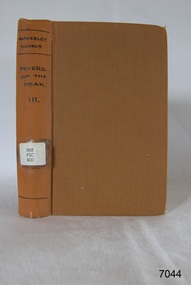 Flagstaff Hill Maritime Museum and Village
Book - Fictional stories, Sir Walter Scott, Waverley Novels Peveril of the Peak- 3 Vol 30, 1838
... Born in Edinburgh, he trained in law, became sheriff depute of Selkirk, and clerk to the Court of Session while writing anonymously until 1827. His works, including poems like “Marmion” (1808), influenced global literature; he revised them for the “Magnum Opus” edition of his works before his death. ...Born in Edinburgh, he trained in law, became sheriff depute of Selkirk, and clerk to the Court of Session while writing anonymously until 1827. His works, including poems like “Marmion” (1808), influenced global literature; he revised them for the “Magnum Opus” edition of his works before his death. ...The subject volume “Waverley Novels Vol 30” published by Fisher Son & Co (1838) is part of a collected edition of Sir Walter Scott's works, containing stories from the "Tales of My Landlord" series. "Tales of My Landlord" forms a key subset of Scott's Waverley Novels, presented as fictional tales gathered by characters like Peter Pattieson from the landlord of the Wallace “Inn at Gandercleugh”. The series spans multiple books across four sub-series, including “The Black Dwarf” (1707 setting), “Old Mortality” (1679–1689), “The Heart of Midlothian” (1736), “The Bride of Lammermoor” (1709–1711), “A Legend of Montrose” (1644–1645), “Count Robert of Paris” (1097), and “Castle Dangerous” (1307). Vol 46 in the 1838 Fisher edition reprints later entries like “Count Robert of Paris” or “Castle Dangerous” from the fourth series, as these stories originally appeared in Scott's Magnum Opus collected volume editions, the first from 1816. With the influential 48-volume “Magnum Opus” edition from 1829–1833 by Robert Cadell, serving as the basis for later collected published sets like Fisher's. Peveril of the Peak is Walter Scott's longest novel, published in 1823 and set during the late 17th century amid the Popish plot hysteria under Charles II. It follows young Cavalier Julian Peveril's forbidden romance with Alice Bridgenorth a Puritan's daughter. The story covers political intrigue, family feuds, and conspiracies drawing the characters into events spanning Derbyshire's Peak District, the Isle of Man, and London. The story continues on the Peveril family's royalist loyalties clashing with the Bridgenorths' Puritan resentment, fuelled by past Civil War grievances like the execution of William Christian. Julian and Alice's love is tested when Julian's parents face Popish Plot accusations with subplots involving a scheming dwarf, the Countess of Derby, and court figures like the Duke of Buckingham. It resolves with royal intervention, exposing intrigues and eventually uniting the lovers.Waverley Novels Peveril of the Peak- 3 Vol 30, Light brown hardcover lettering in black text. Author: Sir Walter Scott Publisher: Fisher Son & Co Date: 1838fictionThe subject volume “Waverley Novels Vol 30” published by Fisher Son & Co (1838) is part of a collected edition of Sir Walter Scott's works, containing stories from the "Tales of My Landlord" series. "Tales of My Landlord" forms a key subset of Scott's Waverley Novels, presented as fictional tales gathered by characters like Peter Pattieson from the landlord of the Wallace “Inn at Gandercleugh”. The series spans multiple books across four sub-series, including “The Black Dwarf” (1707 setting), “Old Mortality” (1679–1689), “The Heart of Midlothian” (1736), “The Bride of Lammermoor” (1709–1711), “A Legend of Montrose” (1644–1645), “Count Robert of Paris” (1097), and “Castle Dangerous” (1307). Vol 46 in the 1838 Fisher edition reprints later entries like “Count Robert of Paris” or “Castle Dangerous” from the fourth series, as these stories originally appeared in Scott's Magnum Opus collected volume editions, the first from 1816. With the influential 48-volume “Magnum Opus” edition from 1829–1833 by Robert Cadell, serving as the basis for later collected published sets like Fisher's. Peveril of the Peak is Walter Scott's longest novel, published in 1823 and set during the late 17th century amid the Popish plot hysteria under Charles II. It follows young Cavalier Julian Peveril's forbidden romance with Alice Bridgenorth a Puritan's daughter. The story covers political intrigue, family feuds, and conspiracies drawing the characters into events spanning Derbyshire's Peak District, the Isle of Man, and London. The story continues on the Peveril family's royalist loyalties clashing with the Bridgenorths' Puritan resentment, fuelled by past Civil War grievances like the execution of William Christian. Julian and Alice's love is tested when Julian's parents face Popish Plot accusations with subplots involving a scheming dwarf, the Countess of Derby, and court figures like the Duke of Buckingham. It resolves with royal intervention, exposing intrigues and eventually uniting the lovers. warrnambool, shipwrecked-coast, flagstaff-hill, flagstaff-hill-maritime-museum, maritime-museum, shipwreck-coast, flagstaff-hill-maritime-village, shipwrecked-artefact, book, waverley novels vol 46 tales of my landlord, sir walter scott, pattison collection, warrnambool library, warrnambool mechanics’ institute, ralph eric pattison, corangamite regional library service, warrnambool city librarian, mechanics’ institute library, victorian library board, warrnambool books and records, warrnambool children’s library -
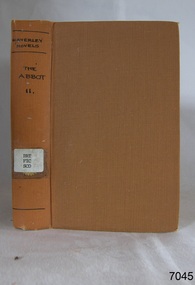 Flagstaff Hill Maritime Museum and Village
Book - Fictional stories, Sir Walter Scott, Waverley Novels Vol 21 The Abbot- 2 (Sequel to the Monastery), 1837
... Born in Edinburgh, he trained in law, became sheriff depute of Selkirk, and clerk to the Court of Session while writing anonymously until 1827. His works, including poems like “Marmion” (1808), influenced global literature; he revised them for the “Magnum Opus” edition of his works before his death. ...Born in Edinburgh, he trained in law, became sheriff depute of Selkirk, and clerk to the Court of Session while writing anonymously until 1827. His works, including poems like “Marmion” (1808), influenced global literature; he revised them for the “Magnum Opus” edition of his works before his death. ...The subject volume “The Abbot- 2 (Sequel to the Monastery) Vol 21” published by Fisher Son & Co (1837) is part of a collected edition of Sir Walter Scott's works, containing stories from the "Tales of My Landlord" series. "Tales of My Landlord" forms a key subset of Scott's Waverley Novels, presented as fictional tales gathered by characters like Peter Pattieson from the landlord of the Wallace “Inn at Gandercleugh”. The series spans multiple books across four sub-series, including “The Black Dwarf” (1707 setting), “Old Mortality” (1679–1689), “The Heart of Midlothian” (1736), “The Bride of Lammermoor” (1709–1711), “A Legend of Montrose” (1644–1645), “Count Robert of Paris” (1097), and “Castle Dangerous” (1307). Vol 46 in the 1838 Fisher edition reprints later entries like “Count Robert of Paris” or “Castle Dangerous” from the fourth series, as these stories originally appeared in Scott's Magnum Opus collected volume editions, the first from 1816. With the influential 48-volume “Magnum Opus” edition from 1829–1833 by Robert Cadell, serving as the basis for later collected published sets like Fisher's. The Abbot is Walter Scott’s sequel to The Monastery, set in 1567–1568 during the turmoil around Mary, Queen of Scots. The story follows Roland Græme and other characters around Lochleven Castle, where Mary is imprisoned, and builds toward her escape attempt and the political crisis that ends with her defeat and flight to England. Part two follows Roland to Edinburgh and then to Lochleven, where he becomes involved in the events around Mary’s imprisonment. It includes Mary’s confrontation with the Lady of Lochleven, the delivery of the abdication papers, and the forced political outcome that strips Mary of power. From there, the story moves toward the escape attempt, the battle of Langside, and Mary’s flight to England.Waverley Novels Vol 21 The Abbot- 2 (Sequel to the Monastery), Light brown hardcover lettering in black text. Author: Sir Walter Scott Publisher: Fisher Son & Co Date: 1837fictionThe subject volume “The Abbot- 2 (Sequel to the Monastery) Vol 21” published by Fisher Son & Co (1837) is part of a collected edition of Sir Walter Scott's works, containing stories from the "Tales of My Landlord" series. "Tales of My Landlord" forms a key subset of Scott's Waverley Novels, presented as fictional tales gathered by characters like Peter Pattieson from the landlord of the Wallace “Inn at Gandercleugh”. The series spans multiple books across four sub-series, including “The Black Dwarf” (1707 setting), “Old Mortality” (1679–1689), “The Heart of Midlothian” (1736), “The Bride of Lammermoor” (1709–1711), “A Legend of Montrose” (1644–1645), “Count Robert of Paris” (1097), and “Castle Dangerous” (1307). Vol 46 in the 1838 Fisher edition reprints later entries like “Count Robert of Paris” or “Castle Dangerous” from the fourth series, as these stories originally appeared in Scott's Magnum Opus collected volume editions, the first from 1816. With the influential 48-volume “Magnum Opus” edition from 1829–1833 by Robert Cadell, serving as the basis for later collected published sets like Fisher's. The Abbot is Walter Scott’s sequel to The Monastery, set in 1567–1568 during the turmoil around Mary, Queen of Scots. The story follows Roland Græme and other characters around Lochleven Castle, where Mary is imprisoned, and builds toward her escape attempt and the political crisis that ends with her defeat and flight to England. Part two follows Roland to Edinburgh and then to Lochleven, where he becomes involved in the events around Mary’s imprisonment. It includes Mary’s confrontation with the Lady of Lochleven, the delivery of the abdication papers, and the forced political outcome that strips Mary of power. From there, the story moves toward the escape attempt, the battle of Langside, and Mary’s flight to England. warrnambool, shipwrecked-coast, flagstaff-hill, flagstaff-hill-maritime-museum, maritime-museum, shipwreck-coast, flagstaff-hill-maritime-village, shipwrecked-artefact, book, waverley novels vol 46 tales of my landlord, sir walter scott, pattison collection, warrnambool library, warrnambool mechanics’ institute, ralph eric pattison, corangamite regional library service, warrnambool city librarian, mechanics’ institute library, victorian library board, warrnambool books and records, warrnambool children’s library -
 Flagstaff Hill Maritime Museum and Village
Book - Fictional stories, Sir Walter Scott, Waverley Novels St Ronans Well-2 Vol 34, 1838
... Born in Edinburgh, he trained in law, became sheriff depute of Selkirk, and clerk to the Court of Session while writing anonymously until 1827. His works, including poems like “Marmion” (1808), influenced global literature; he revised them for the “Magnum Opus” edition of his works before his death. ...Born in Edinburgh, he trained in law, became sheriff depute of Selkirk, and clerk to the Court of Session while writing anonymously until 1827. His works, including poems like “Marmion” (1808), influenced global literature; he revised them for the “Magnum Opus” edition of his works before his death. ...The subject volume of Waverley Novels St Ronans Well-2 Vol 34 published by Fisher Son & Co (1838) is part of a collected 48 volume set of Sir Walter Scott's works, containing various stories. Vol 34 in the 1836 Fisher edition reprints later entries from the fourth series, as these stories originally appeared in Scott's Magnum Opus 48 volume editions, the first from 1816. With the influential “Magnum Opus” editions from 1829–1833 by Robert Cadell, serving as the basis for later reprinted published sets like Fisher's. St. Ronan's Well Volume 2 advances the central rivalries and intrigues at the Scottish spa. Originally published in 1824 as part of Sir Walter Scott's novel, it spans chapters 14-26, escalating tensions between half brothers Francis Tyrrel and the Earl of Etherington over Clara Mowbray. After Tyrrel misses a duel and vanishes, innkeeper Meg Dods fears murder and consults solicitor Bindloose; wealthy traveller Peregrine Touchwood arrives, criticising modern changes and staying at the Cleikum Inn. Etherington gambles with John Mowbray, proposes to Clara citing his uncle's will requiring a Mowbray marriage, and duels Tyrrel secretly, wounding him. Theatricals at Shaw's Castle, anonymous warnings, and Clara's rejections heighten drama, with Etherington revealing their sham marriage past in letters to Captain Jekyl.Waverley Novels St Ronans Well-2 Vol 34, Light brown hardcover lettering in black text. Author: Sir Walter Scott Publisher: Fisher Son & Co Date: 1838fictionThe subject volume of Waverley Novels St Ronans Well-2 Vol 34 published by Fisher Son & Co (1838) is part of a collected 48 volume set of Sir Walter Scott's works, containing various stories. Vol 34 in the 1836 Fisher edition reprints later entries from the fourth series, as these stories originally appeared in Scott's Magnum Opus 48 volume editions, the first from 1816. With the influential “Magnum Opus” editions from 1829–1833 by Robert Cadell, serving as the basis for later reprinted published sets like Fisher's. St. Ronan's Well Volume 2 advances the central rivalries and intrigues at the Scottish spa. Originally published in 1824 as part of Sir Walter Scott's novel, it spans chapters 14-26, escalating tensions between half brothers Francis Tyrrel and the Earl of Etherington over Clara Mowbray. After Tyrrel misses a duel and vanishes, innkeeper Meg Dods fears murder and consults solicitor Bindloose; wealthy traveller Peregrine Touchwood arrives, criticising modern changes and staying at the Cleikum Inn. Etherington gambles with John Mowbray, proposes to Clara citing his uncle's will requiring a Mowbray marriage, and duels Tyrrel secretly, wounding him. Theatricals at Shaw's Castle, anonymous warnings, and Clara's rejections heighten drama, with Etherington revealing their sham marriage past in letters to Captain Jekyl.warrnambool, shipwrecked-coast, flagstaff-hill, flagstaff-hill-maritime-museum, maritime-museum, shipwreck-coast, flagstaff-hill-maritime-village, shipwrecked-artefact, book, waverley novels vol 46 tales of my landlord, sir walter scott, pattison collection, warrnambool library, warrnambool mechanics’ institute, ralph eric pattison, corangamite regional library service, warrnambool city librarian, mechanics’ institute library, victorian library board, warrnambool books and records, warrnambool children’s library, waverley novels -
 Flagstaff Hill Maritime Museum and Village
Book - Fictional stories, Sir Walter Scott, Waverley Novels St Ronans Well-1 Vol 33, 1838
... Born in Edinburgh, he trained in law, became sheriff depute of Selkirk, and clerk to the Court of Session while writing anonymously until 1827. His works, including poems like “Marmion” (1808), influenced global literature; he revised them for the “Magnum Opus” edition of his works before his death. ...Born in Edinburgh, he trained in law, became sheriff depute of Selkirk, and clerk to the Court of Session while writing anonymously until 1827. His works, including poems like “Marmion” (1808), influenced global literature; he revised them for the “Magnum Opus” edition of his works before his death. ...The subject volume of Waverley Novels St Ronans Well-1 Vol 33 published by Fisher Son & Co (1838) is part of a collected 48 volume set of Sir Walter Scott's works, containing various stories. Vol 33 in the 1836 Fisher edition reprints later entries from the fourth series, as these stories originally appeared in Scott's Magnum Opus 48 volume editions, the first from 1816. With the influential “Magnum Opus” editions from 1829–1833 by Robert Cadell, serving as the basis for later reprinted published sets like Fisher's. St. Ronan's Well centres on rivalry between half brothers Valentine Bulmer (Earl of Etherington) and Francis Tyrrel, both pursuing Clara Mowbray amid secrets from a sham marriage and inheritance schemes at a fashionable Scottish spa town. The story is set in the early 19th century at the fictional St. Ronan's spa in the Scottish Borders, the story unfolds across three volumes originally published in 1824. Tyrrel returns to the area, reconnects with Clara (whom he once loved), and clashes with locals like Sir Bingo Binks, while Etherington schemes to wed her for her family name to secure his title. Tensions escalate through duels, gambling debts, and revelations about their past, culminating in tragedy with Clara's death and a fatal confrontation.Waverley Novels St Ronans Well-1 Vol 33, Light brown hardcover lettering in black text. Author: Sir Walter Scott Publisher: Fisher Son & Co Date: 1838fictionThe subject volume of Waverley Novels St Ronans Well-1 Vol 33 published by Fisher Son & Co (1838) is part of a collected 48 volume set of Sir Walter Scott's works, containing various stories. Vol 33 in the 1836 Fisher edition reprints later entries from the fourth series, as these stories originally appeared in Scott's Magnum Opus 48 volume editions, the first from 1816. With the influential “Magnum Opus” editions from 1829–1833 by Robert Cadell, serving as the basis for later reprinted published sets like Fisher's. St. Ronan's Well centres on rivalry between half brothers Valentine Bulmer (Earl of Etherington) and Francis Tyrrel, both pursuing Clara Mowbray amid secrets from a sham marriage and inheritance schemes at a fashionable Scottish spa town. The story is set in the early 19th century at the fictional St. Ronan's spa in the Scottish Borders, the story unfolds across three volumes originally published in 1824. Tyrrel returns to the area, reconnects with Clara (whom he once loved), and clashes with locals like Sir Bingo Binks, while Etherington schemes to wed her for her family name to secure his title. Tensions escalate through duels, gambling debts, and revelations about their past, culminating in tragedy with Clara's death and a fatal confrontation.warrnambool, shipwrecked-coast, flagstaff-hill, flagstaff-hill-maritime-museum, maritime-museum, shipwreck-coast, flagstaff-hill-maritime-village, shipwrecked-artefact, book, waverley novels vol 46 tales of my landlord, sir walter scott, pattison collection, warrnambool library, warrnambool mechanics’ institute, ralph eric pattison, corangamite regional library service, warrnambool city librarian, mechanics’ institute library, victorian library board, warrnambool books and records, warrnambool children’s library, waverley novels -
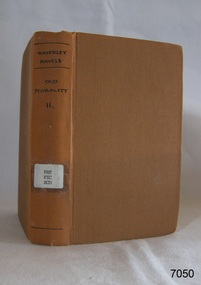 Flagstaff Hill Maritime Museum and Village
Book - Fictional stories, Sir Walter Scott, Waverley Novels Tales of My Landlord-5 Vol 13, 1836
... Born in Edinburgh, he trained in law, became sheriff depute of Selkirk, and clerk to the Court of Session while writing anonymously until 1827. His works, including poems like “Marmion” (1808), influenced global literature; he revised them for the “Magnum Opus” edition of his works before his death. ...Born in Edinburgh, he trained in law, became sheriff depute of Selkirk, and clerk to the Court of Session while writing anonymously until 1827. His works, including poems like “Marmion” (1808), influenced global literature; he revised them for the “Magnum Opus” edition of his works before his death. ...The subject volume “Waverley Novels Vol 13” published by Fisher Son & Co (1836) is part of a collected edition of Sir Walter Scott's works, containing stories from the "Tales of My Landlord" series. "Tales of My Landlord" forms a key subset of Scott's Waverley Novels, presented as fictional tales gathered by characters like Peter Pattieson from the landlord of the Wallace “Inn at Gandercleugh”. The series spans multiple books across four sub-series, including “The Black Dwarf” (1707 setting), “Old Mortality” (1679–1689), “The Heart of Midlothian” (1736), “The Bride of Lammermoor” (1709–1711), “A Legend of Montrose” (1644–1645), “Count Robert of Paris” (1097), and “Castle Dangerous” (1307). Vol 46 in the 1838 Fisher edition reprints later entries like “Count Robert of Paris” or “Castle Dangerous” from the fourth series, as these stories originally appeared in Scott's Magnum Opus collected volume editions, the first from 1816. With the influential 48-volume “Magnum Opus” edition from 1829–1833 by Robert Cadell, serving as the basis for later collected published sets like Fisher's. "Tales of My Landlord" set five of vol 13 is part of a series of historical novels by Sir Walter Scott, published in four series between 1816 and 1832 as part of his Waverley Novels. They are framed as stories collected by a fictional landlord at the Wallace Inn in Gandercleugh, edited by "Jedediah Cleishbotham." The series includes major works like The Black Dwarf and Old Mortality (1st series, 1816), The Heart of Midlothian (2nd series, 1818), The Bride of Lammermoor and A Legend of Montrose (3rd series, 1819), and Count Robert of Paris with Castle Dangerous (4th series, 1832). Themes of this volume cover Scottish Lowland life, justice, and Presbyterian fervour post 1736. Alternatively, in 3rd series tales like “The Bride of Lammermoor”, advances the Gothic romance of Edgar Ravenswood and Lucy Ashton. Slowly building towards tragedy over family feuds and inheritance.Waverley Novels Vol 46 Tales of My Landlord, Light brown hardcover lettering in black text. Author: Sir Walter Scott Publisher: Fisher Son & Co Date: 1836fictionThe subject volume “Waverley Novels Vol 13” published by Fisher Son & Co (1836) is part of a collected edition of Sir Walter Scott's works, containing stories from the "Tales of My Landlord" series. "Tales of My Landlord" forms a key subset of Scott's Waverley Novels, presented as fictional tales gathered by characters like Peter Pattieson from the landlord of the Wallace “Inn at Gandercleugh”. The series spans multiple books across four sub-series, including “The Black Dwarf” (1707 setting), “Old Mortality” (1679–1689), “The Heart of Midlothian” (1736), “The Bride of Lammermoor” (1709–1711), “A Legend of Montrose” (1644–1645), “Count Robert of Paris” (1097), and “Castle Dangerous” (1307). Vol 46 in the 1838 Fisher edition reprints later entries like “Count Robert of Paris” or “Castle Dangerous” from the fourth series, as these stories originally appeared in Scott's Magnum Opus collected volume editions, the first from 1816. With the influential 48-volume “Magnum Opus” edition from 1829–1833 by Robert Cadell, serving as the basis for later collected published sets like Fisher's. "Tales of My Landlord" set five of vol 13 is part of a series of historical novels by Sir Walter Scott, published in four series between 1816 and 1832 as part of his Waverley Novels. They are framed as stories collected by a fictional landlord at the Wallace Inn in Gandercleugh, edited by "Jedediah Cleishbotham." The series includes major works like The Black Dwarf and Old Mortality (1st series, 1816), The Heart of Midlothian (2nd series, 1818), The Bride of Lammermoor and A Legend of Montrose (3rd series, 1819), and Count Robert of Paris with Castle Dangerous (4th series, 1832). Themes of this volume cover Scottish Lowland life, justice, and Presbyterian fervour post 1736. Alternatively, in 3rd series tales like “The Bride of Lammermoor”, advances the Gothic romance of Edgar Ravenswood and Lucy Ashton. Slowly building towards tragedy over family feuds and inheritance.warrnambool, shipwrecked-coast, flagstaff-hill, flagstaff-hill-maritime-museum, maritime-museum, shipwreck-coast, flagstaff-hill-maritime-village, shipwrecked-artefact, book, waverley novels vol 46 tales of my landlord, sir walter scott, pattison collection, warrnambool library, warrnambool mechanics’ institute, ralph eric pattison, corangamite regional library service, warrnambool city librarian, mechanics’ institute library, victorian library board, warrnambool books and records, warrnambool children’s library
