Showing 4 items matching "tribunal results"
-
Marysville & District Historical SocietyTHE TRIANGLE NEWS-VOL 2 NO 16-JUNE 10 1977
... ...tribunal results...Marysville & District Historical Society 39 Darwin Street Marysville yarra-valley-and-the-dandenong-ranges marysville victoria australia farewell kings crossways red cross marysville uniting church golf news snow damage at kooringa senior citizens community care centre footy club narbethong primary school mothers' club lions tribunal results found heifers rainfall congratulations alexandra football league marysville indoor bowls club THE TRIANGLE NEWS-VOL 2 NO 16-JUNE 10 1977 ...marysville, victoria, australia, farewell kings crossways, red cross, marysville uniting church, golf news, snow damage at kooringa, senior citizens, community care centre, footy club, narbethong primary school, mothers' club, lions, tribunal results, found heifers, rainfall, congratulations alexandra football league, marysville indoor bowls club -
Federation University Historical CollectionDocument, History of the Ballarat Technology Park, Oakbank
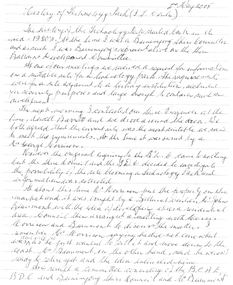
... result a committee consisting of the B.C.A.E., B.D.C. and Buninyong Shire Council (and Mr Beaumont) was formed to plan the development and rezone the area to technology park. It was previously zoned residential land and would seem to have been suitable for sub-division and residential development - its close proximity to the College being a major factor in its favour. The point of this is if Mr Beaumont had insisted on pursuing his original plan and had opposed the rezoning, I am quite confident he would have won an appeal at the A.A.T . (Administrative Appeals Tribunal...result a committee consisting of the B.C.A.E., B.D.C. and Buninyong Shire Council (and Mr Beaumont) was formed to plan the development and rezone the area to technology park. It was previously zoned residential land and would seem to have been suitable for sub-division and residential development - its close proximity to the College being a major factor in its favour. The point of this is if Mr Beaumont had insisted on pursuing his original plan and had opposed the rezoning, I am quite confident he would have won an appeal at the A.A.T . (Administrative Appeals Tribunal ...The Ballarat Technology Park is associated with Federation University Australia. The first stage commenced on 03 August 1989 when the first sod was turned by Hon, David White, Minister for Industry, Technology and Resources. John Beaumont was the Director of the Ballarat Technology Research and Development Park in 1989.Twenty items relating to the History of the Ballarat Technology Park as collected by John Parkin. .1) Handwritten notes by John Parkin on the history of the Ballarat Technology Park .2) Letter from A.E. Helyar (Shire of Buninyong Secretary), 08 March 1988 .3) Shire of Buninyong Minutes 07 June 1988 .4) Development of High Technology Activity by Jack Barker .5) Definition of a Technology Park by Derek Woolley .6) Shire of Buninyong minutes 28 June 1988 .7) Shire of Buninyong minutes 19 July 1988 .8) Invitation to a reception to commemorate the inauguration of the Ballarat Technology Park (John Parkin) by Shire of Buninyong President Cr Judith Coull to be held on 03 August 1989. .9) Invitation to a reception to the Ballarat Technology Park (John Beaumont) .10) Ballarat Courier article 04 August 1989 .11) Draft letter to Professor Geoffrey Blainey from John Parkin .12) Letter to the Editor from John Parkin, 18 December 2000 .13) University of Ballarat Development Appeal, 04 November 1994 .14 & .15) Invitation to installment dinner to celebrate the installation of Professor Geoffrey Blainey as Chancellor of the University of Ballarat to be held in the Union Building (now Albert Coates Building), Mt Helen campus .16) Letter to the editor from John Parkin .17) Letter from John Beaumont, 25 November 1994 .18) Invitation to the opening of the ISSC Southern Region Data Centre to be held on 24 November 1995. .19) Letter from Barry Traynor, 13 December 1995 .20) Planning Scheme information relating to the LaTrobe Research and Development Zone. .1) 2nd May 2005 History of Technology Park (I.T. centre) The history of the Technology Park started back in the mid-1980s. At the time I was a Buninyong Shire Councilor and as such I was Buninyong's representative on the then Ballarat Development Committee. At one of our meetings we received a request for information on a suitable site for a technology park. The requirements were for a site adjacent to a tertiary institution, secluded for security purposes and large enough to contain such a development. The next morning I contacted our Shire Engineer at the time, Newell Barrett and we drove around the area we both agreed that the current site was the most suitable we saw to meet the requirements. At the time it was owned by George Morrison. however the original enquiry to the B.D.C. came to nothing but the Shire Council and the B.D.C. decided to investigate the possibility of the site becoming a technology Park and information was collected. At about this time Mr Morrison put the property on the market and it was bought by a Ballarat builder, Mr John Beaumont, with the idea of developing it as a residential area. Council then arranged a meeting with Messrs Morrison and Beaumont to discuss the matter. I remember Mr Morrison saying he did not care what was done with it he just wanted to sell it and move down to the coast. Mr Beaumont, on the other hand, said he wasn't ready to retire yet and the idea interested him. As a result a committee consisting of the B.C.A.E., B.D.C. and Buninyong Shire Council (and Mr Beaumont) was formed to plan the development and rezone the area to technology park. It was previously zoned residential land and would seem to have been suitable for sub-division and residential development - its close proximity to the College being a major factor in its favour. The point of this is if Mr Beaumont had insisted on pursuing his original plan and had opposed the rezoning, I am quite confident he would have won an appeal at the A.A.T . (Administrative Appeals Tribunal - forerunner of V.C.A.T.) and the I.T. centre would not have got off the ground and the area would be covered with houses. But Mr Beaumont did go into the project with enthusiasm and the first stage was commenced on the 3rd August 1989 when the first sod was turned by Hon. David White, the Minister for Industry, Technology and resources (See the Courier 4th August 1989) Mr Beaumont went overseas to study similar parks and look for tenants. Unfortunately government did not support the project as they have now and apparently Mr Beaumont was ahead of his time for the private sector so Mr Beaumont could not continue the development and the site eventually passed to the College. I personally think more could have been done ... The work done by the Buninyong Shire Council and Ballarat Development Committee seems to have been forgotten as according to the Courier December 21, 2000 we are told the Park opened in 1995 as a joint venture between the City and the University. As a former Councillor said to me on the day "What happened to the plaque David White unveiled in 1989!" If there is any other information you want, please contact me. You may use my file for reference. Kind regards John Parkin PS I always felt a bit guilty that I encouraged John Beaumont and he was left in the lurch. ballarat technology park, parkin, john parkin, helyar, barker, woolley, shire of buninyong, beaumont, blainey, geoffrey blainey, southern region data centre, greenhill enterprise centre, stan jeffrey, jeffrey, john beaumont, david white -

Returned Nurses RSL Sub-branchBook - Illustrated paperback book, Lower Tweed River Historical Society, Three minutes of time: the torpedoing of the Australian Hospital Ship "Centaur", 1991
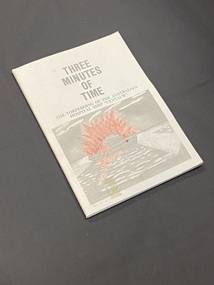
... resulted in public outrage as it was considered to be a war crime. Protests were made by the Australian and British governments to Japan and efforts were made to discover the people responsible so they could be tried at a war crimes tribunal. ..."A compelling account of the sinking of the Australian Hospital Ship Centaur during World War II. Australian Hospital Ship (AHS) Centaur was a hospital ship which was attacked and sunk by a Japanese submarine off the coast of Queensland, Australia, on 14 May 1943. Of the 332 medical personnel and civilian crew aboard, 268 were killed. The Scottish-built vessel was launched in 1924 as a combination passenger liner/freighter and operated a trade route between Western Australia and Singapore via Indonesia, carrying passengers, cargo, and livestock. Centaur served in both civilian and military capabilities during her career, and she was involved in recovering German survivors of the engagement between Kormoran and HMAS Sydney. Following her early-1943 conversion to a hospital ship, Centaur served as a medical transport between New Guinea and Australia. Before dawn on 14 May 1943, while on her second voyage, Centaur was torpedoed and sunk by a Japanese submarine off North Stradbroke Island, Queensland. The majority of the 332 aboard died in the attack; the 64 survivors had to wait for 36 hours before they were rescued. The attack resulted in public outrage as it was considered to be a war crime. Protests were made by the Australian and British governments to Japan and efforts were made to discover the people responsible so they could be tried at a war crimes tribunal. Despite this, it was not until the 1970s that identity of the attacking submarine, I-177, became public. The reason for the attack is unknown, and the events surrounding the sinking of Centaur are controversial because it has been attested that she may have been in breach of the international conventions that should have protected her. Claims of discovery were made in 1995, but the wreck was later proven to be another ship. The wreck of Centaur was found on 20 December 2009. " (https://regimental-books.com.au/product/three-minutes-of-time-the-torpedoing-of-the-australian-hospital-ship-centaur/)Thin grey paperback book. Front cover has the title printed in dark grey text in the centre of the top half of the page, followed by the sub-title in smaller print. The lower half of the page has a square box with a light and dark grey illustration of a ship in the ocean. The ship has a stark red hospital cross on the front and is surrounded by red to sigify an explosion, which is also reflected in the water.non-fiction "A compelling account of the sinking of the Australian Hospital Ship Centaur during World War II. Australian Hospital Ship (AHS) Centaur was a hospital ship which was attacked and sunk by a Japanese submarine off the coast of Queensland, Australia, on 14 May 1943. Of the 332 medical personnel and civilian crew aboard, 268 were killed. The Scottish-built vessel was launched in 1924 as a combination passenger liner/freighter and operated a trade route between Western Australia and Singapore via Indonesia, carrying passengers, cargo, and livestock. Centaur served in both civilian and military capabilities during her career, and she was involved in recovering German survivors of the engagement between Kormoran and HMAS Sydney. Following her early-1943 conversion to a hospital ship, Centaur served as a medical transport between New Guinea and Australia. Before dawn on 14 May 1943, while on her second voyage, Centaur was torpedoed and sunk by a Japanese submarine off North Stradbroke Island, Queensland. The majority of the 332 aboard died in the attack; the 64 survivors had to wait for 36 hours before they were rescued. The attack resulted in public outrage as it was considered to be a war crime. Protests were made by the Australian and British governments to Japan and efforts were made to discover the people responsible so they could be tried at a war crimes tribunal. Despite this, it was not until the 1970s that identity of the attacking submarine, I-177, became public. The reason for the attack is unknown, and the events surrounding the sinking of Centaur are controversial because it has been attested that she may have been in breach of the international conventions that should have protected her. Claims of discovery were made in 1995, but the wreck was later proven to be another ship. The wreck of Centaur was found on 20 December 2009. " (https://regimental-books.com.au/product/three-minutes-of-time-the-torpedoing-of-the-australian-hospital-ship-centaur/) ahs centaur, australian hospital ship centaur, hospital ship -
Bendigo Historical Society Inc.Letter - Michele Matthews Collection: PHD Research - Relief during the great depression, April 1934
... The Committee explains that grievances raised by men employed on sustenance have been resolved satisfactorily in the past without the need for a tribunal or any formally recognised representative body. As a result, it concludes that existing methods of handling complaints are adequate and that no additional mechanism should be introduced. ...The Committee explains that grievances raised by men employed on sustenance have been resolved satisfactorily in the past without the need for a tribunal or any formally recognised representative body. As a result, it concludes that existing methods of handling complaints are adequate and that no additional mechanism should be introduced. ...Dr Michele Matthews has been a local and social historian for nearly three decades since she first used correspondence held by the then Bendigo City Council for her Honours thesis. She is an ardent advocate for the use of local history records to tell Victorian and Australian history from a grassroots perspective. Michele’s MA thesis, ‘A forgotten “Father” of Federation: Sir John Quick 1852‑1911’ (2003), and her PhD thesis, ‘Survivors, schemes, Samaritans and shareholders: the impact of the Great Depression on Bendigo and District 1925‑1935’ (2007), both drew heavily on Bendigo and district records. Michele Matthews Collection: PHD Research - Relief during the great depression This item includes the following documents: 8672.71a The document is a formal letter dated 26 April 1934 from the Public Assistance Committee to the Officer in Charge of the Sustenance Branch, Department of Labour, Melbourne. The letter responds to an earlier communication dated 23 April (reference B102). After considering the request, the Committee states that it sees no benefit in granting special recognition to any particular organisation, specifically mentioning the Bennigoe (or similarly spelled) Act as Counsel for men working on sustenance who have grievances. The Committee believes that establishing or recognising such a body is unnecessary. The Committee explains that grievances raised by men employed on sustenance have been resolved satisfactorily in the past without the need for a tribunal or any formally recognised representative body. As a result, it concludes that existing methods of handling complaints are adequate and that no additional mechanism should be introduced. The letter closes formally with "Yours faithfully" and is signed by the Town Clerk, acting as Honorary Secretary to the Committeebendigo, michele matthews collection, letters seeking support in bendigo during the great depression 1932 to 1934