Flagstaff Hill Maritime Museum and Village
Book - Reference Fossils/Science, John Hill, A General Natural History, 1748
... Plants (1751), Hill covers botany, describing the appearance, geographic range, and medicinal uses of various native and exotic plants (like the coffee tree, cacti, and various herbs).
Volume Three concentrates on various animals and is called An History of Animals (1752). It's a zoological survey that starts with microscopic organisms before moving on to insects, marine life, reptiles, birds, and mammals. The book focused not just on describing these specimens, but also on outlining their "virtues and uses" in medicine and mechanics. The label on spine cover with typed ...
A General Natural History is a massive, ambitious three-volume compendium written to survey the natural world. It is divided into three distinct parts, which were published sequentially between 1748 and 1752.
Volume One contains The History of Fossils (1748). Despite the modern name, "fossils" back then referred to anything dug out of the earth. This volume focuses heavily on mineralogy, gemstones, rocks, and minerals, mapping them out based on a microscopic examination.
In Volume Two, A History of Plants (1751), Hill covers botany, describing the appearance, geographic range, and medicinal uses of various native and exotic plants (like the coffee tree, cacti, and various herbs).
Volume Three concentrates on various animals and is called An History of Animals (1752). It's a zoological survey that starts with microscopic organisms before moving on to insects, marine life, reptiles, birds, and mammals. The book focused not just on describing these specimens, but also on outlining their "virtues and uses" in medicine and mechanics.
A General Natural History
Author: John Hill
Publisher: Thomas Osborne
Date: 1748
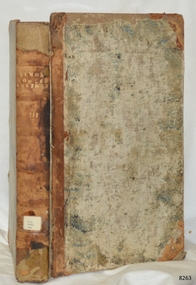
Badly damaged light brown hardcover with a damaged spine and lettering in gold. The spine has a Library label with an inscription.non-fictionA General Natural History is a massive, ambitious three-volume compendium written to survey the natural world. It is divided into three distinct parts, which were published sequentially between 1748 and 1752.
Volume One contains The History of Fossils (1748). Despite the modern name, "fossils" back then referred to anything dug out of the earth. This volume focuses heavily on mineralogy, gemstones, rocks, and minerals, mapping them out based on a microscopic examination.
In Volume Two, A History of Plants (1751), Hill covers botany, describing the appearance, geographic range, and medicinal uses of various native and exotic plants (like the coffee tree, cacti, and various herbs).
Volume Three concentrates on various animals and is called An History of Animals (1752). It's a zoological survey that starts with microscopic organisms before moving on to insects, marine life, reptiles, birds, and mammals. The book focused not just on describing these specimens, but also on outlining their "virtues and uses" in medicine and mechanics.flagstaff hill, warrnambool, shipwrecked coast, flagstaff hill maritime museum, maritime museum, shipwreck coast, flagstaff hill maritime village, great ocean road, book, pattison collection, warrnambool library, warrnambool mechanics’ institute, ralph eric pattison, corangamite regional library service, warrnambool city librarian, mechanics’ institute library, victorian library board, warrnambool books and records, warrnambool children’s library, a general natural history, john hill

 Friends of Ballarat Botanical Gardens History Group
 Flagstaff Hill Maritime Museum and Village