
Showing 23 items matching "unemployed people"
-
 Whitehorse Historical Society Inc.
Article, Job chance for three, 1996
... used the employment Company Smart Partnership to employ three long term unemployed people....Allardice Graphics of Blackburn used the employment Company Smart Partnership to employ three long term unemployed people....used the employment Company Smart Partnership to employ three long term unemployed people. Unemployment Allardice Graphics The Smart Partnership Australia. ...Allardice Graphics of Blackburn .Allardice Graphics of Blackburn used the employment Company Smart Partnership to employ three long term unemployed people.Allardice Graphics of Blackburn .unemployment, allardice graphics, the smart partnership, australia. department of employment, education and training, white, david, paton, bob, adamson, sarah, maneveldt, renee -
Whitehorse Historical Society Inc.
Article, Giving hope to the unemployed, 1993
... To help long term unemployed people gain work experience....City of Nunawading will take part in Federal Government's Jobskills Program to help long term unemployed people gain work experience....To help long term unemployed people gain work experience. Unemployment City of Nunawading Australian Government Jobskills Program City of Nunawading will take part in Federal Government's Jobskills Program City of Nunawading will take part in Federal Government's Jobskills Program to help long term unemployed people gain work experience. ...City of Nunawading will take part in Federal Government's Jobskills ProgramCity of Nunawading will take part in Federal Government's Jobskills Program to help long term unemployed people gain work experience.City of Nunawading will take part in Federal Government's Jobskills Program unemployment, city of nunawading, australian government, jobskills program -
Whitehorse Historical Society Inc.
Article, Work for co-operative, 1993
... Has set up a co-operative to give young unemployed people work doing odd jobs in the community....Blackburn Baptist Church's Supported Housing and Accommodation (SHAC) has set up a co-operative to give young unemployed people work doing odd jobs in the community....Has set up a co-operative to give young unemployed people work doing odd jobs in the community. ...Blackburn Baptist Church's Supported Housing and Accommodation (SHAC)Blackburn Baptist Church's Supported Housing and Accommodation (SHAC) has set up a co-operative to give young unemployed people work doing odd jobs in the community.Blackburn Baptist Church's Supported Housing and Accommodation (SHAC) unemployment, blackburn baptist church. supported housing and accommodation, youth services, barker, ajay, harris, david -
Whitehorse Historical Society Inc.
Article, Firm will help find work, 1992
... Cr Kevin Abbott and former Jaycee National President Peter McPhee have formed a company to help young unemployed people find work....Two former mayors of Nunawading, Wal Riddell and Cr Bruce Artkinson, Cr Kevin Abbott and former Jaycee National President Peter McPhee have formed a company to help young unemployed people find work....Cr Kevin Abbott and former Jaycee National President Peter McPhee have formed a company to help young unemployed people find work. Unemployment Riddell Wal Atkinson Bruce Abbott Kevin McPhee Peter Two former mayors of Nunawading, Wal Riddell and Cr Bruce Artkinson Cr Kevin Abbott and former Jaycee National President Peter McPhee have formed a company to help young unemployed people find work. ...Two former mayors of Nunawading, Wal Riddell and Cr Bruce Artkinson Cr Kevin Abbott and former Jaycee National President Peter McPhee have formed a company to help young unemployed people find work.Two former mayors of Nunawading, Wal Riddell and Cr Bruce Artkinson, Cr Kevin Abbott and former Jaycee National President Peter McPhee have formed a company to help young unemployed people find work.Two former mayors of Nunawading, Wal Riddell and Cr Bruce Artkinson Cr Kevin Abbott and former Jaycee National President Peter McPhee have formed a company to help young unemployed people find work.unemployment, riddell, wal, atkinson, bruce, abbott, kevin, mcphee, peter -
Whitehorse Historical Society Inc.
Document, Papermaker's Collective, 1982
... ...Unemployed people...Papermaker's Collective Mourney Hazel City of Nunawading Unemployed people Youth services Papers and correspondence relating to the 'Papermaker's Collective', a training program for unemployed youth coordinated by Hazel Mourney and supported by the City of Nunawading in 1982 Papers and correspondence relating to the 'Papermaker's Collective', a training program for unemployed youth coordinated by Hazel Mourney and supported by the City of Nunawading in 1982. ...Papers and correspondence relating to the 'Papermaker's Collective', a training program for unemployed youth coordinated by Hazel Mourney and supported by the City of Nunawading in 1982Papers and correspondence relating to the 'Papermaker's Collective', a training program for unemployed youth coordinated by Hazel Mourney and supported by the City of Nunawading in 1982.Papers and correspondence relating to the 'Papermaker's Collective', a training program for unemployed youth coordinated by Hazel Mourney and supported by the City of Nunawading in 1982papermaker's collective, mourney, hazel, city of nunawading, unemployed people, youth services -
Federation University Historical Collection
Book - Book - Scrapbook, Ballarat School of MInes: Scrapbook of Newspaper Cuttings, Book 8, March 1980 to August 1980
... smb practical training for unemployed young people...The papers concerned are The Courier, Ballarat, The Australian, The Age over the period of 01/03/1980 to 08/08/1980 staffing advertisements courses available goldfields learning is new theme $3million projects for smb advice on what's cooking $956700 amenities building smb helps unemployed youth renaissance dancing at workshop at smb shield to smb tafe colleges sports foundry for students host farm seminar at smb build activity on campus life be in it games new scheme for chippies memorial to guides at creswick camp richards medal presentation richard richards principal antarctis explorer wendouree rotary apprentice award move for archaeological society smb awards presented tippett prise goes to wendouree fitter malcolm rodgers signing contract for $1.8 million building development at smb new scheme for apprentices off-campus study of tertiary education management course at smb ballarat students win welding awards mark spencer wins craftsmanship certificate aboriginal art exhibition examination in woolclassing robert featherstone smb farm apprentice student smb land lab ballarat has proud tradition in education smb practical training for unemployed young people Book with white cover - front, spiral bound. ...Collection of newspaper articles related to Ballarat School Of Mines.They cover activities and advertisements for staff. The papers concerned are The Courier, Ballarat, The Australian, The Age over the period of 01/03/1980 to 08/08/1980Book with white cover - front, spiral bound. staffing advertisements, courses available, goldfields learning is new theme, $3million projects for smb, advice on what's cooking, $956700 amenities building, smb helps unemployed youth, renaissance dancing at workshop at smb, shield to smb tafe colleges sports, foundry for students, host farm seminar at smb, build activity on campus, life be in it games, new scheme for chippies, memorial to guides at creswick camp, richards medal presentation, richard richards principal, antarctis explorer, wendouree rotary apprentice award, move for archaeological society, smb awards presented, tippett prise goes to wendouree fitter malcolm rodgers, signing contract for $1.8 million building development at smb, new scheme for apprentices, off-campus study of tertiary education, management course at smb, ballarat students win welding awards, mark spencer wins craftsmanship certificate, aboriginal art exhibition, examination in woolclassing, robert featherstone smb farm apprentice student, smb land lab, ballarat has proud tradition in education, smb practical training for unemployed young people -
Whitehorse Historical Society Inc.
Article, Company to Tackle Youth Unemployment, 1992
... Two former Mayors, a Councillor and a local Business Man have formed a Company to help unemployed people between 16 and 21. The Company will be registered with the Australian Securities Commission and will develop work opportunities, training and personal development....Youth Services Atkinson Bruce Riddell Wal Abbott Kevin McPhee Peter Unemployment Two former Mayors, a Councillor and a local Business Man have formed a Company to help unemployed people between 16 and 21. Two former Mayors, a Councillor and a local Business Man have formed a Company to help unemployed people between 16 and 21. ...Two former Mayors, a Councillor and a local Business Man have formed a Company to help unemployed people between 16 and 21.Two former Mayors, a Councillor and a local Business Man have formed a Company to help unemployed people between 16 and 21. The Company will be registered with the Australian Securities Commission and will develop work opportunities, training and personal development.Two former Mayors, a Councillor and a local Business Man have formed a Company to help unemployed people between 16 and 21. youth services, atkinson, bruce, riddell, wal, abbott, kevin, mcphee, peter, unemployment -
Unions Ballarat
Collingwood Coke, Freeman, Harry, 1984
... Set in the Great Depression. About unemployed people living in Collingwood and the role of the Methodist mission in caring for poor people in the area....Set in the Great Depression. About unemployed people living in Collingwood and the role of the Methodist mission in caring for poor people in the area. ...Set in the Great Depression. About unemployed people living in Collingwood and the role of the Methodist mission in caring for poor people in the area.Relevant to Australian history in the Great Depression, particularly in Collingwood.Paper; book. Front cover: brown theme/background; picture of houses and a cobblestone street; brown lettering.Front cover: author's name and title.btlc, ballarat trades hall, ballarat trades and labor council, collingwood, the great depression, unemployment, methodist mission, methodist church, city missions, missionaries, history, social history -
Whitehorse Historical Society Inc.
Article, Exclusive Green Thumbs, 1993
... A Nursery Practices Course is helping unemployed people in Nunawading to get back to the workforce. ...A Nursery Practices Course is helping unemployed people in Nunawading to get back to the workforce. ...A Nursery Practices Course is helping unemployed people in Nunawading to get back to the workforce.A Nursery Practices Course is helping unemployed people in Nunawading to get back to the workforce. Nunawading/Wantirna Skillshare Course is sponsored by Harrison Youth Services. Conjara is a wholesale based program course and the new Skillshare Nursery, Harvest Herbs, teaches retail nursery practices.A Nursery Practices Course is helping unemployed people in Nunawading to get back to the workforce. nursery workers, townson, bernard, dunnell, karen, harrison youth services, nunawading/wantirna skillshare, harvest herbs nursery, conjara nursery -
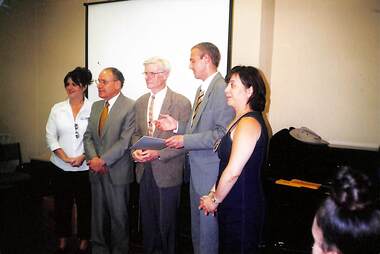 Sunshine and District Historical Society Incorporated
Photograph - Sunshine and District Historical Society DVD Video Launch March 2004
... The DVD Video on the history of Sunshine and District Historical Society and its activities was made by the Sunshine and District Historical Society, Victorian University of Technology and a group of unemployed people. The project was funded by the Department of Employment and Workplace Relations in partnership with the Sunshine and District Historical Society and the Victorian University Community Initiatives Program (VUCIP). ...The DVD Video on the history of Sunshine and District Historical Society and its activities was made by the Sunshine and District Historical Society, Victorian University of Technology and a group of unemployed people. The project was funded by the Department of Employment and Workplace Relations in partnership with the Sunshine and District Historical Society and the Victorian University Community Initiatives Program (VUCIP). ...The DVD Video on the history of Sunshine and District Historical Society and its activities was made by the Sunshine and District Historical Society, Victorian University of Technology and a group of unemployed people. The project was funded by the Department of Employment and Workplace Relations in partnership with the Sunshine and District Historical Society and the Victorian University Community Initiatives Program (VUCIP). These photographs are from the launch of the DVD.Sunshine and District Historical Society March 2004 919.01 - Sunshine & District Historical Society Launch Of DVD Video Photographs.jpg L-R Unknown, Mayor Cr. Sam David, Frank Ford (SDHS), Unknown, Cr. Margaret Giudice 919.02 - Sunshine & District Historical Society Launch Of DVD Video Photographs.jpg Frank Ford (SDHS) 919.03 - Sunshine & District Historical Society Launch Of DVD Video Photographs.jpg L-R Unknown, Unknown, Cr. Margaret Giudice, Mayor Cr. Sam David, Frank Ford (SDHS) 919.04 - Sunshine & District Historical Society Launch Of DVD Video Photographs.jpg L-R Unknown, Unknown, Cr. Margaret Giudice, Mayor Cr. Sam David, Frank Ford (SDHS)sunshine and district historical society, margaret giudice, sam david, frank ford -
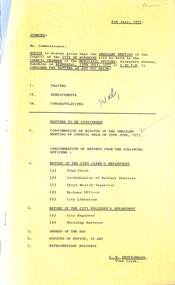 Sunshine and District Historical Society Incorporated
Administrative record - City of Sunshine - Commissioner Mr Alexander Alex George Gillon Collection 1976 - 1982 - Notice of ordinary meeting of the council of the City of Sunshine to be held on 13th July 1977, City of Sunshine, 6th July 1977
... Notice of Ordinary Meeting of the Council of the City of Sunshine to be held on 13th July 1977 Report of the Town Clerk's Department Report of the Town Clerk Financial Statements The Hub Operating Statement, Municipal Tip Operating Statement & Statement of Receipts & Expenditure Rates, Sanitary and Interest Abandonments for 1976/1977 Assistance to Unemployed Young People Protean Holdings Ltd Appeal Against Issue of Permit Land Transfer from the Council to Boral Resources (Vic) Pty Ltd Bon Thomas Reserve Proposed Development Legal Action to Recover Outstanding Account From The council for Soil from the Works at the new Monsanto Factory to More Park Sunshine Baseball Club Request for Extension to Lease Pavilion Dempster Park Use Dempster Park For Tennis Surrender of lease 23C Northumberland Road Swimming Pools Sunshine & Deer Park Payment of Wages by Cheque Course in Financial Management Diamond Reserve Shared Use of Education Department and Council Facilities Steers Street Group Part Private Street Scheme Involving Underground Drainage Only Financial Statement Year Ended 30th September 1976 and Auditor's Report Report of the Co-Ordinator of Welfare Services Welfare Officer Subsides Report of the Chief Health Inspector Report of Weights and Measures Inspector National Conference Health Surveyors Perth October 1977 Ardeer Infant Welfare Centre Dumping of Rubbish Burke Street, Duke Street, Evans Street & Maribyrnong River Riverbank Braybrook Report of the By-Laws Officer By-Laws Officers Course Report of the City Librarian Application for Library Council of Victoria (Public Libraries Division) Special Projects Grant 1977-78 Australian Library Week 16th to 24th September 1977 Report of the City Engineer Land Use Permit Application Flats Chifley Drive Land Use Permit Application Conversion of Existing Petrol Filling Station to Self Service North East Corner of Ballarat Road and Station Road Land Use Permit Application Single Service Premises South West Corner Tinto Close and Allandale Drive Deer Park Land Use Permit Application Consulting Rooms Dental Surgery Lot 173 Fairbairn Road Land Use Permit Application Extension to Existing Place of Worship Sunshine Congregation of Jehovah's Witnesses Corner Wilkinson Street and Islington Street Melbourne Metropolitan Planning Scheme Amendments Land Use Permit Application Display Home and Information Store Lots 69 & 70 Tamar Drive Land Use Permit Application Extension to Existing Factory Lots 56 & 57 Marshall Street Land Use Permit Application Factory Lot 208 Cromer Avenue Land Use Permit Application Addition to School St. ...Albans Dickson Street Boundary Road Corio Street Wiltshire Street Sunshine North Technical School Verdun Street Maidstone Stonemark Street Clyde Street Albion North Pre-School Centre House of Sunshine Deer Park Hall Ainsworth Reserve Child Care Centre Vernon Street Marsh Street Emu Road Notice of Ordinary Meeting of the Council of the City of Sunshine to be held on 13th July 1977 Report of the Town Clerk's Department Report of the Town Clerk Financial Statements The Hub Operating Statement, Municipal Tip Operating Statement & Statement of Receipts & Expenditure Rates, Sanitary and Interest Abandonments for 1976/1977 Assistance to Unemployed Young People Protean Holdings Ltd Appeal Against Issue of Permit Land Transfer from the Council to Boral Resources (Vic) Pty Ltd Bon Thomas Reserve Proposed Development Legal Action to Recover Outstanding Account From The council for Soil from the Works at the new Monsanto Factory to More Park Sunshine Baseball Club Request for Extension to Lease Pavilion Dempster Park Use Dempster Park For Tennis Surrender of lease 23C Northumberland Road Swimming Pools Sunshine & Deer Park Payment of Wages by Cheque Course in Financial Management Diamond Reserve Shared Use of Education Department and Council Facilities Steers Street Group Part Private Street Scheme Involving Underground Drainage Only Financial Statement Year Ended 30th September 1976 and Auditor's Report Report of the Co-Ordinator of Welfare Services Welfare Officer Subsides Report of the Chief Health Inspector Report of Weights and Measures Inspector National Conference Health Surveyors Perth October 1977 Ardeer Infant Welfare Centre Dumping of Rubbish Burke Street, Duke Street, Evans Street & Maribyrnong River Riverbank Braybrook Report of the By-Laws Officer By-Laws Officers Course Report of the City Librarian Application for Library Council of Victoria (Public Libraries Division) Special Projects Grant 1977-78 Australian Library Week 16th to 24th September 1977 Report of the City Engineer Land Use Permit Application Flats Chifley Drive Land Use Permit Application Conversion of Existing Petrol Filling Station to Self Service North East Corner of Ballarat Road and Station Road Land Use Permit Application Single Service Premises South West Corner Tinto Close and Allandale Drive Deer Park Land Use Permit Application Consulting Rooms Dental Surgery Lot 173 Fairbairn Road Land Use Permit Application Extension to Existing Place of Worship Sunshine Congregation of Jehovah's Witnesses Corner Wilkinson Street and Islington Street Melbourne Metropolitan Planning Scheme Amendments Land Use Permit Application Display Home and Information Store Lots 69 & 70 Tamar Drive Land Use Permit Application Extension to Existing Factory Lots 56 & 57 Marshall Street Land Use Permit Application Factory Lot 208 Cromer Avenue Land Use Permit Application Addition to School St. ...Notice of Ordinary Meeting of the Council of the City of Sunshine to be held on 13th July 1977 Report of the Town Clerk's Department Report of the Town Clerk Financial Statements The Hub Operating Statement, Municipal Tip Operating Statement & Statement of Receipts & Expenditure Rates, Sanitary and Interest Abandonments for 1976/1977 Assistance to Unemployed Young People Protean Holdings Ltd Appeal Against Issue of Permit Land Transfer from the Council to Boral Resources (Vic) Pty Ltd Bon Thomas Reserve Proposed Development Legal Action to Recover Outstanding Account From The council for Soil from the Works at the new Monsanto Factory to More Park Sunshine Baseball Club Request for Extension to Lease Pavilion Dempster Park Use Dempster Park For Tennis Surrender of lease 23C Northumberland Road Swimming Pools Sunshine & Deer Park Payment of Wages by Cheque Course in Financial Management Diamond Reserve Shared Use of Education Department and Council Facilities Steers Street Group Part Private Street Scheme Involving Underground Drainage Only Financial Statement Year Ended 30th September 1976 and Auditor's Report Report of the Co-Ordinator of Welfare Services Welfare Officer Subsides Report of the Chief Health Inspector Report of Weights and Measures Inspector National Conference Health Surveyors Perth October 1977 Ardeer Infant Welfare Centre Dumping of Rubbish Burke Street, Duke Street, Evans Street & Maribyrnong River Riverbank Braybrook Report of the By-Laws Officer By-Laws Officers Course Report of the City Librarian Application for Library Council of Victoria (Public Libraries Division) Special Projects Grant 1977-78 Australian Library Week 16th to 24th September 1977 Report of the City Engineer Land Use Permit Application Flats Chifley Drive Land Use Permit Application Conversion of Existing Petrol Filling Station to Self Service North East Corner of Ballarat Road and Station Road Land Use Permit Application Single Service Premises South West Corner Tinto Close and Allandale Drive Deer Park Land Use Permit Application Consulting Rooms Dental Surgery Lot 173 Fairbairn Road Land Use Permit Application Extension to Existing Place of Worship Sunshine Congregation of Jehovah's Witnesses Corner Wilkinson Street and Islington Street Melbourne Metropolitan Planning Scheme Amendments Land Use Permit Application Display Home and Information Store Lots 69 & 70 Tamar Drive Land Use Permit Application Extension to Existing Factory Lots 56 & 57 Marshall Street Land Use Permit Application Factory Lot 208 Cromer Avenue Land Use Permit Application Addition to School St. John's College 204 Churchill Avenue Braybrook Land Use Permit Application Light Industrial (Bakery) Addition to Existing Shop 133 South Road Braybrook Land Use Permit Application St Bernadette's Primary School & Church Presbytery Addition to Existing Church and School Land Bounded by Suffolk Road, Westmoreland Road, Rufford Street & Willey Street Land Use Permit Application Sale and Distribution of Floor Coverings, Builders Hardware, Electrical Domestic Appliances and Furniture Land Bounded by Halstead Street and Ashley Street Land Use Permit Application Store & Building Materials and Crane Hampton Avenue The Melbourne Bikeway Plan Strata Subdivision 50 Middle Road Strata Subdivision 17 Mayne Street Strata Subdivision 1 Grandview Avenue Strata Subdivision 52A Forrest Street Strata Subdivision 10 Dunlop Street Westerngate North Estate Subdivision Amendment to Sealed Plan Stage 6A Nickson's Estate The Lower Yarra Crossing The Case Against The Toll Western Region Commission Meeting with City of Williamstown Relating to Disposal of Garbage Sunshine Tip Membership of Australian Conservation Foundation Certificate of Completion Glengala Stage 111 Private Street Scheme Inquiry into Goods Movements and Access to Services in the Metropolitan Area of Victoria Quotations Received for Fencing / Fencing Materials Garfield Street Watermain State Emergency Service Provisionof Footpath Dickson Street Flooding Boundary Road / Fairbairn Road Access Road Corio Street to Business Premises Request for Closure of Part of Northumberland Road Between Wiltshire Street and Suffolk Road by Sunshine North Technical School Engineering Vacation Employment University of Melbourne and R.M.I.T. Report of the Building Surveyor Building Office Public Relations Application Outbuilding 29 Verdun Street Maidstone Installation of Underground Tank B.P. Service Station Corner Ballarat Road and Stonemark Street Building Permit Lot 7 Clyde Street Maribyrnong The Hub Repairs Quotation Albion North Pre-School Centre House of Sunshine Repairs Quotation Deer Park Hall Repairs Quotation Ainsworth Reserve Child Care Centre / Pavilion Orders of the Day Proposal to Close A Road Between Marsh Street and Emu Road Maidstone Proposal to Construct The Steers Street Group Part Private Street Scheme Confirmation of Making A By-law In Connection with By-Law No 123 Garbage Receptacles city of sunshine, alexander "alex" george gillon, northumberland road, sunshine north, sunshine swimmng pool, deer park swimming pool, station road, deer park, kennedy street, the hub, sun crescent, sunshine, bon thomas reserve, quinn street, monsanto, footscray west, more park, ardeer, sunshine baseball club, talmage street, dempster park, phoenix street, diamond reserve, albanvale, steers street, burke street, duke street, evans street, maribyrnong river, braybrook, chifley drive, maribyrnong, ballarat road, tinto close, allandale drive, fairbairn road, sunshine west, sunshine congregation of jehovah's witnesses, wilkinson street, islington street, tamar drive, marshall street, st. john's college, churchill avenue, south road, bernadette's primary school, suffolk road, westmoreland road, rufford street, willey street, ashley street, halstead street, hampton avenue, middle road, mayne street, grandview avenue, forrest street, dunlop street, sunshine tip, garfield street, st. albans, dickson street, boundary road, corio street, wiltshire street, sunshine north technical school, verdun street, maidstone, stonemark street, clyde street, albion north pre-school centre, house of sunshine, deer park hall, ainsworth reserve child care centre, vernon street, marsh street, emu road -
 Sunshine and District Historical Society Incorporated
Administrative record - City of Sunshine - Commissioner Mr Alexander Alex George Gillon Collection 1976 - 1982 - Minutes of the ordinary meeting of council held on 13th July 1977, City of Sunshine, 13th July 1977
... Minutes of the Ordinary Meeting of Council held on 13th July 1977 Report of the Town Clerk's Department Report of the Town Clerk Financial Statements The Hub Operating Statement, Municipal Tip Operating Statement & Statement of Receipts & Expenditure Rates, Sanitary and Interest Abandonments for 1976/1977 Assistance to Unemployed Young People Protean Holdings Ltd Appeal Against Issue of Permit Land Transfer from the Council to Boral Resources (Vic) Pty Ltd Bon Thomas Reserve Proposed Development Legal Action to Recover Outstanding Account From The council for Soil from the Works at the new Monsanto Factory to More Park Sunshine Baseball Club Request for Extension to Lease Pavilion Dempster Park Use Dempster Park For Tennis Surrender of lease 23C Northumberland Road Swimming Pools Sunshine & Deer Park Payment of Wages by Cheque Course in Financial Management Diamond Reserve Shared Use of Education Department and Council Facilities Steers Street Group Part Private Street Scheme Involving Underground Drainage Only Financial Statement Year Ended 30th September 1976 and Auditor's Report Report of the Co-Ordinator of Welfare Services Welfare Officer Subsides Report of the Chief Health Inspector Report of Weights and Measures Inspector National Conference Health Surveyors Perth October 1977 Ardeer Infant Welfare Centre Dumping of Rubbish Burke Street, Duke Street, Evans Street & Maribyrnong River Riverbank Braybrook Report of the By-Laws Officer By-Laws Officers Course Report of the City Librarian Application for Library Council of Victoria (Public Libraries Division) Special Projects Grant 1977-78 Australian Library Week 16th to 24th September 1977 Report of the City Engineer Land Use Permit Application Flats Chifley Drive Land Use Permit Application Conversion of Existing Petrol Filling Station to Self Service North East Corner of Ballarat Road and Station Road Land Use Permit Application Single Service Premises South West Corner Tinto Close and Allandale Drive Deer Park Land Use Permit Application Consulting Rooms Dental Surgery Lot 173 Fairbairn Road Land Use Permit Application Extension to Existing Place of Worship Sunshine Congregation of Jehovah's Witnesses Corner Wilkinson Street and Islington Street Melbourne Metropolitan Planning Scheme Amendments Land Use Permit Application Display Home and Information Store Lots 69 & 70 Tamar Drive Land Use Permit Application Extension to Existing Factory Lots 56 & 57 Marshall Street Land Use Permit Application Factory Lot 208 Cromer Avenue Land Use Permit Application Addition to School St. ...Albans Dickson Street Boundary Road Corio Street Wiltshire Street Verdun Street Maidstone Clyde Street Albion North Pre-School Centre Deer Park Hal Vernon Street Sunshine West Marsh Street Emu Road Ainsworth Reserve Child Care Centre Stonemark Street Minutes of the Ordinary Meeting of Council held on 13th July 1977 Report of the Town Clerk's Department Report of the Town Clerk Financial Statements The Hub Operating Statement, Municipal Tip Operating Statement & Statement of Receipts & Expenditure Rates, Sanitary and Interest Abandonments for 1976/1977 Assistance to Unemployed Young People Protean Holdings Ltd Appeal Against Issue of Permit Land Transfer from the Council to Boral Resources (Vic) Pty Ltd Bon Thomas Reserve Proposed Development Legal Action to Recover Outstanding Account From The council for Soil from the Works at the new Monsanto Factory to More Park Sunshine Baseball Club Request for Extension to Lease Pavilion Dempster Park Use Dempster Park For Tennis Surrender of lease 23C Northumberland Road Swimming Pools Sunshine & Deer Park Payment of Wages by Cheque Course in Financial Management Diamond Reserve Shared Use of Education Department and Council Facilities Steers Street Group Part Private Street Scheme Involving Underground Drainage Only Financial Statement Year Ended 30th September 1976 and Auditor's Report Report of the Co-Ordinator of Welfare Services Welfare Officer Subsides Report of the Chief Health Inspector Report of Weights and Measures Inspector National Conference Health Surveyors Perth October 1977 Ardeer Infant Welfare Centre Dumping of Rubbish Burke Street, Duke Street, Evans Street & Maribyrnong River Riverbank Braybrook Report of the By-Laws Officer By-Laws Officers Course Report of the City Librarian Application for Library Council of Victoria (Public Libraries Division) Special Projects Grant 1977-78 Australian Library Week 16th to 24th September 1977 Report of the City Engineer Land Use Permit Application Flats Chifley Drive Land Use Permit Application Conversion of Existing Petrol Filling Station to Self Service North East Corner of Ballarat Road and Station Road Land Use Permit Application Single Service Premises South West Corner Tinto Close and Allandale Drive Deer Park Land Use Permit Application Consulting Rooms Dental Surgery Lot 173 Fairbairn Road Land Use Permit Application Extension to Existing Place of Worship Sunshine Congregation of Jehovah's Witnesses Corner Wilkinson Street and Islington Street Melbourne Metropolitan Planning Scheme Amendments Land Use Permit Application Display Home and Information Store Lots 69 & 70 Tamar Drive Land Use Permit Application Extension to Existing Factory Lots 56 & 57 Marshall Street Land Use Permit Application Factory Lot 208 Cromer Avenue Land Use Permit Application Addition to School St. ...Minutes of the Ordinary Meeting of Council held on 13th July 1977 Report of the Town Clerk's Department Report of the Town Clerk Financial Statements The Hub Operating Statement, Municipal Tip Operating Statement & Statement of Receipts & Expenditure Rates, Sanitary and Interest Abandonments for 1976/1977 Assistance to Unemployed Young People Protean Holdings Ltd Appeal Against Issue of Permit Land Transfer from the Council to Boral Resources (Vic) Pty Ltd Bon Thomas Reserve Proposed Development Legal Action to Recover Outstanding Account From The council for Soil from the Works at the new Monsanto Factory to More Park Sunshine Baseball Club Request for Extension to Lease Pavilion Dempster Park Use Dempster Park For Tennis Surrender of lease 23C Northumberland Road Swimming Pools Sunshine & Deer Park Payment of Wages by Cheque Course in Financial Management Diamond Reserve Shared Use of Education Department and Council Facilities Steers Street Group Part Private Street Scheme Involving Underground Drainage Only Financial Statement Year Ended 30th September 1976 and Auditor's Report Report of the Co-Ordinator of Welfare Services Welfare Officer Subsides Report of the Chief Health Inspector Report of Weights and Measures Inspector National Conference Health Surveyors Perth October 1977 Ardeer Infant Welfare Centre Dumping of Rubbish Burke Street, Duke Street, Evans Street & Maribyrnong River Riverbank Braybrook Report of the By-Laws Officer By-Laws Officers Course Report of the City Librarian Application for Library Council of Victoria (Public Libraries Division) Special Projects Grant 1977-78 Australian Library Week 16th to 24th September 1977 Report of the City Engineer Land Use Permit Application Flats Chifley Drive Land Use Permit Application Conversion of Existing Petrol Filling Station to Self Service North East Corner of Ballarat Road and Station Road Land Use Permit Application Single Service Premises South West Corner Tinto Close and Allandale Drive Deer Park Land Use Permit Application Consulting Rooms Dental Surgery Lot 173 Fairbairn Road Land Use Permit Application Extension to Existing Place of Worship Sunshine Congregation of Jehovah's Witnesses Corner Wilkinson Street and Islington Street Melbourne Metropolitan Planning Scheme Amendments Land Use Permit Application Display Home and Information Store Lots 69 & 70 Tamar Drive Land Use Permit Application Extension to Existing Factory Lots 56 & 57 Marshall Street Land Use Permit Application Factory Lot 208 Cromer Avenue Land Use Permit Application Addition to School St. John's College 204 Churchill Avenue Braybrook Land Use Permit Application Light Industrial (Bakery) Addition to Existing Shop 133 South Road Braybrook Land Use Permit Application St Bernadette's Primary School & Church Presbytery Addition to Existing Church and School Land Bounded by Suffolk Road, Westmoreland Road, Rufford Street & Willey Street Land Use Permit Application Sale and Distribution of Floor Coverings, Builders Hardware, Electrical Domestic Appliances and Furniture Land Bounded by Halstead Street and Ashley Street Land Use Permit Application Store & Building Materials and Crane Hampton Avenue The Melbourne Bikeway Plan Strata Subdivision 50 Middle Road Strata Subdivision 17 Mayne Street Strata Subdivision 1 Grandview Avenue Strata Subdivision 52A Forrest Street Strata Subdivision 10 Dunlop Street Westerngate North Estate Subdivision Amendment to Sealed Plan Stage 6A Nickson's Estate The Lower Yarra Crossing The Case Against The Toll Western Region Commission Meeting with City of Williamstown Relating to Disposal of Garbage Sunshine Tip Membership of Australian Conservation Foundation Certificate of Completion Glengala Stage 111 Private Street Scheme Inquiry into Goods Movements and Access to Services in the Metropolitan Area of Victoria Quotations Received for Fencing / Fencing Materials Garfield Street Watermain State Emergency Service Provisionof Footpath Dickson Street Flooding Boundary Road / Fairbairn Road Access Road Corio Street to Business Premises Request for Closure of Part of Northumberland Road Between Wiltshire Street and Suffolk Road by Sunshine North Technical School Engineering Vacation Employment University of Melbourne and R.M.I.T. Report of the Building Surveyor Building Office Public Relations Application Outbuilding 29 Verdun Street Maidstone Installation of Underground Tank B.P. Service Station Corner Ballarat Road and Stonemark Street Building Permit Lot 7 Clyde Street Maribyrnong The Hub Repairs Quotation Albion North Pre-School Centre House of Sunshine Repairs Quotation Deer Park Hall Repairs Quotation Ainsworth Reserve Child Care Centre / Pavilion Orders of the Day Proposal to Close A Road Between Marsh Street and Emu Road Maidstone Proposal to Construct The Steers Street Group Part Private Street Scheme Confirmation of Making A By-law In Connection with By-Law No 123 Garbage Receptacles city of sunshine, alexander "alex" george gillon, protean holdings pty ltd, bon thomas reserve, quinn street, deer park, deer park swimming pool, station road, sunshine swimming pool, sunshine baseball club, boral resources, dempster park, phoenix street, sunshine north, sunshine, sunshine north tennis club, diamond avenue, albansvale, steers street, kennedy street, the hub, sun crescent, sunshine tip, monsanto, more park, talmage street, albion, north sunshine tennis club, northumberland road, ardeer infant welfare centre, burke street, duke street, evans street, maribyrnong river, chifley drive, maribyrnong, ballarat road, tinto clos, allandale driv, fairbairn road, wilkinson street, islington street, tamar drive, marshall street, cromer avenue, st. john's college, sunshine congregation of jehovah's witnesse, churchill avenue, braybrook, south road, st bernadette's primary school, suffolk road, westmoreland road, rufford street, willey street, halstead street, ashley street, hampton avenue, middle road, mayne street, grandview avenue, forrest street, dunlop street, garfield street, st. albans, dickson street, boundary road, corio street, wiltshire street, verdun street, maidstone, clyde street, albion north pre-school centre, deer park hal, vernon street, sunshine west, marsh street, emu road, ainsworth reserve child care centre, stonemark street -
Healesville Sanctuary Heritage Centre
Newspaper - Cutting, Lilydale & Yarra Valley Express, Grant means 5 jobs, 7 June 1983
... 1980s 5 long term unemployed people are creating fire breaks and tracks through the sanctuary under a ministry grant original x 1 Grant means 5 jobs Newspaper Cutting Lilydale & Yarra Valley Express ...5 long term unemployed people are creating fire breaks and tracks through the sanctuary under a ministry grantoriginal x 1non-fiction5 long term unemployed people are creating fire breaks and tracks through the sanctuary under a ministry grant1980s -
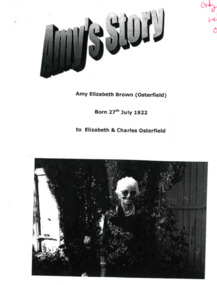 Bendigo Historical Society Inc.
Audio - The 1930s Depression Tapes - Amy Elizabeth Brown, 2005
... The questions covered sixteen relevant subjects: • Introduction and housing • Social activities, swimming, cinemas, school and games played with friends • Organizations such as the RSL, Relief Committees etc. and any effect they had on family life • The life of the single woman • Unemployment and Employment • Government Assistance • Charities Aid • Self-help • People Power, e.g. boycotts or protests • Politics • Trouble or crime • Family Health, Medical and Diet • Education • General memories of, and hardships encountered, during the Depression history Bendigo Michele Matthews Collection The 1930s Depression Tapes Amy Brown Audio tape interview with Amy Brown (Nee Osterfield). Amy was born in 1922. In 1942 she married Allan Stanley Brown. Her father, Charles Osterfield was a wood cutter before becoming unemployed ...In 2005 Michele Matthews interviewed current and former residents of Bendigo for her thesis on the 1930s Depression as part of her PhD Research, with the University of Melbourne Faculty of Arts, History Department. Michele interviewed fifteen members of prominent Bendigonian families. The thesis was titled: "How Depressing?: The impact of the Great Depression on Bendigo and District 1925-1935". The Michele Matthews Collection contains fourteen audio cassette tape recordings and one written transcript. The tapes are each approximately 1 hour and 45 minutes duration. The questions presented to the interviewees explore everyday experiences they would have lived through at the time of the Depression. The questions covered sixteen relevant subjects: • Introduction and housing • Social activities, swimming, cinemas, school and games played with friends • Organizations such as the RSL, Relief Committees etc. and any effect they had on family life • The life of the single woman • Unemployment and Employment • Government Assistance • Charities Aid • Self-help • People Power, e.g. boycotts or protests • Politics • Trouble or crime • Family Health, Medical and Diet • Education • General memories of, and hardships encountered, during the DepressionAudio tape interview with Amy Brown (Nee Osterfield). Amy was born in 1922. In 1942 she married Allan Stanley Brown. Her father, Charles Osterfield was a wood cutter before becoming unemployed. She never attended school. The tape has been converted to a sound file. The 150 minute interview can be listened to, and the notes viewed, at the Bendigo Historical Society. By appointment only. Also included is Amy's memories of her childhood - Amy's Story. This is a 26 page document available here to read.history, bendigo, michele matthews collection, the 1930s depression tapes, amy brown -
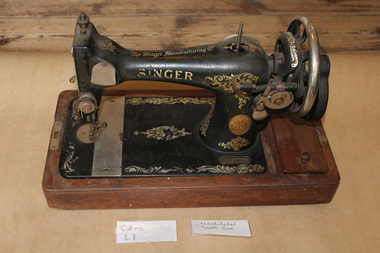 Coal Creek Community Park & Museum
Singer Sewing Machine, Singer, Circa 1927
... The unemployed’ home-made, designed, knitted, painted and created things like pegs, pincushions, soaps, kitchen utensils and Pokerwork art, to sell door-to-door or in the streets. ‘Make Do and Mend’ was the mantra of the time. Making and mending clothing at home became a means to save money and an income offering services mending, altering or making clothes for the working people. ...The unemployed’ home-made, designed, knitted, painted and created things like pegs, pincushions, soaps, kitchen utensils and Pokerwork art, to sell door-to-door or in the streets. ‘Make Do and Mend’ was the mantra of the time. Making and mending clothing at home became a means to save money and an income offering services mending, altering or making clothes for the working people. ...In May 1931 the Australian government announced a 20% reduction in expenditure, cuts to wages and pensions, and increased taxation. Despite workers striking, wages were reduced and working hours increased. The economy plunged into depression. Workers blamed the hardships on greedy bankers and the rich elite. The unemployed’ home-made, designed, knitted, painted and created things like pegs, pincushions, soaps, kitchen utensils and Pokerwork art, to sell door-to-door or in the streets. ‘Make Do and Mend’ was the mantra of the time. Making and mending clothing at home became a means to save money and an income offering services mending, altering or making clothes for the working people. Making over garments had been a time-honoured tradition since pioneer days. During the Depression clothes were a luxury and new fashions were created by altering old clothes. A best dress became a housedress, a church suit became a mine suit. Old shirts became new aprons, old trousers became new hats. Magazines and newspapers published Instructions on making and mending clothing and these became curriculums for sewing classes. Darning, mending, patching, saving fabric for rags, patches or upcycling became a necessity. Having a Sewing machine like this 1927 Singer housed in Oliver Gilpin’s store at Coal Creek Community Park and Museum could be the difference between survival and starvation The popularity of publications such as ‘Make do and mend’ lasted through the Second World War and into the 20th Century. Hand operated Singer sewing machine with wooden cover, circa 1927Y4476618 -
 Uniting Church Archives - Synod of Victoria
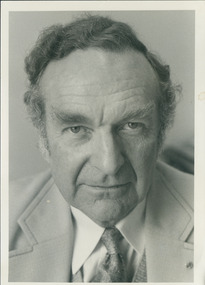
Photograph, David Jamieson, editor of Ringwood Parish quarterly magazine "Insight", 06/1984
... unemployed. No mention is made of excessive wage demands by highly paid people who are pressuring for bigger flow-ons. ….. ...unemployed. No mention is made of excessive wage demands by highly paid people who are pressuring for bigger flow-ons. ….. ...Jamieson's comments appear in an article surveying the Uniting Church, 7 years after union. "One member who disagrees with the church presents social justice issues is David Jamieson, who has been editor of the Ringwood parish quarterly magazine "Insight" since union. Mr Jamieson says he knows scores of people who find it very hard to accept what he considers is a bias in the presentation of social justice issues. 'I know a lot of people who are becoming alienated because they feel their side of the story is not being presented by the church. They feel only the radical side of justice issues is being hammered. I think the more conservative side has validity. My main concern is the flood of study booklets and material on social justice issues which look at them from only one angle. The bias is on greed, excessive profits and most unworthy aspects of the multi-nationals compared with the most humanitarian concerns of the left. No mention is made of humanitarian concern by big business or the extremes of the left — such as unwarranted industrial action and the effect that this has on the poor and unemployed. No mention is made of excessive wage demands by highly paid people who are pressuring for bigger flow-ons. ….. I do not believe the church should be neutral on political issues. In fact I agree with nearly all of its stands. But we should look at both sides before making up our minds. Only then should we be vocal in a political sense, no matter how one-sided."Full face, looking intently at the camera.C&N identification.jamieson, david, church union 7th anniversary, social justice -
Unions Ballarat
Weevils at work : what's happening to work in Australia : an oral record, Lowenstein, Wendy, 1997
... unemployed men and women across many industries. Includes interviews across rural and urban Australia. A companion book to Weevils in the Flour. Relevant to Australian workplace issues. btlc ballarat trades hall ballarat trades and labour council oral history workplace relations unemployment employment interviews rural people urban people weevils in the flour Front cover: title and author's name. ...An oral history: interviews with working and unemployed men and women across many industries. Includes interviews across rural and urban Australia. A companion book to Weevils in the Flour. Relevant to Australian workplace issues.Paper; book. Front cover: green background; colour picture of urban industrial area with smoking chimneys; yellow and white lettering.Front cover: title and author's name.btlc, ballarat trades hall, ballarat trades and labour council, oral history, workplace relations, unemployment, employment, interviews, rural people, urban people, weevils in the flour -
Whitehorse Historical Society Inc.
Article, Jobs dry up, 1991
... An estimated 3687 people in Nunawading are unemployed....An estimated 3687 people in Nunawading are unemployed....An estimated 3687 people in Nunawading are unemployed. Recession has meant thousands of public service positions have been axed. ...Recession has meant thousands of public service positions have been axed. An estimated 3687 people in Nunawading are unemployed.Recession has meant thousands of public service positions have been axed. An estimated 3687 people in Nunawading are unemployed.Recession has meant thousands of public service positions have been axed. An estimated 3687 people in Nunawading are unemployed.unemployment, recession -
Kew Historical Society Inc
Journal, Kewriosity : September 1992
... publications -- city of kew (vic.) kewriosity council newsletters community newsletters Opportunity for employers & unemployed young people / p1.Kew Festival and education / p1. ...Opportunity for employers & unemployed young people / p1.Kew Festival and education / p1. Kew's Community Bus / p1. Chief Executive's Column [Influences on rates and charges for 1992/93]; City of Kew Streetscaping Committee / Malcolm Hutchinson p2. Mayor's Comment / Cr Roger Streeton p3. Diary Dates for September/October [1992] / p4. Municipal Health Plan have your say? / p5. Volunteer wanted [Kew Cottges] / p5. Work at home as a family day care giver / p5. Nutrition information win prizes / p6. Holiday fun for children & teenagers / p7. What do women at mid-life want? / p7. Be wise with medicines month / p7. 12 month trials of multi-dwelling development code / p7. Pictures of Kew [Mrs June Stratford, Head of Carey Junior School; Octagonal shelter, Boroondara Cemetery; St Anthony's Home for Children 1922-76; The Hartwell Players] / p8.Kewriosity was a local newsletter combining Kew Council and community news. It was published between November 1983 and June 1994, replacing an earlier Kewriosity [broad] Sheet (1979-84). In producing Kewriosity, Council aimed to provide a range of interesting and informative articles covering its deliberations and decision making, together with items of general interest and importance to the Kew community and information not generally available through daily media outlets.non-fictionOpportunity for employers & unemployed young people / p1.Kew Festival and education / p1. Kew's Community Bus / p1. Chief Executive's Column [Influences on rates and charges for 1992/93]; City of Kew Streetscaping Committee / Malcolm Hutchinson p2. Mayor's Comment / Cr Roger Streeton p3. Diary Dates for September/October [1992] / p4. Municipal Health Plan have your say? / p5. Volunteer wanted [Kew Cottges] / p5. Work at home as a family day care giver / p5. Nutrition information win prizes / p6. Holiday fun for children & teenagers / p7. What do women at mid-life want? / p7. Be wise with medicines month / p7. 12 month trials of multi-dwelling development code / p7. Pictures of Kew [Mrs June Stratford, Head of Carey Junior School; Octagonal shelter, Boroondara Cemetery; St Anthony's Home for Children 1922-76; The Hartwell Players] / p8. publications -- city of kew (vic.), kewriosity, council newsletters, community newsletters -
Kew Historical Society Inc
Journal, The Kewriosity Sheet Vol.1 No.4 : September 1979
... people bicycle rally / p1. Kew Historical Society: Schools / p2. That school holiday feeling! [poem] / p2. How many young unemployed ...What's doing in Kew for September / p1. A to Z of Road Safety: Safety for the children / p1. APECS-PLAN Pedal for people bicycle rally / p1. Kew Historical Society: Schools / p2. That school holiday feeling! [poem] / p2. How many young unemployed / p2. Athletics [Kew-Camberwell District Amateur Athletic Club]/ p2. Youth Accommodation Services Programme / p2. After School activities / p2. Are you a busy woman? / p2. Parent support [Kew Pre-School Support Group] / p2. Council News [Elections - Max Sartori; Peter Wallinga; Jim McCue; Bill Cook; Walter Haldun; Bob Pritchard; Joe Omando] / p2. Rotoractors celebrate / p2. Kew Girl Guides / p2. F.A.C.S. [Family and Community Services Program] / p2. Helping the community /p2.The Kewriosity Sheet (1979-83) was first published in the City of Kew (Victoria) in June 1979 as a two-sided 'community newssheet'. It aimed to: 'share news about Kew happenings and Kew people, and to exchange ideas about living in Kew'. Later issues gradually evolved into a 4-page, quarto sized publication. The Kewriosity Sheet was superseded by the Kew Council publication 'Kewriosity' (1983-1994).non-fictionWhat's doing in Kew for September / p1. A to Z of Road Safety: Safety for the children / p1. APECS-PLAN Pedal for people bicycle rally / p1. Kew Historical Society: Schools / p2. That school holiday feeling! [poem] / p2. How many young unemployed / p2. Athletics [Kew-Camberwell District Amateur Athletic Club]/ p2. Youth Accommodation Services Programme / p2. After School activities / p2. Are you a busy woman? / p2. Parent support [Kew Pre-School Support Group] / p2. Council News [Elections - Max Sartori; Peter Wallinga; Jim McCue; Bill Cook; Walter Haldun; Bob Pritchard; Joe Omando] / p2. Rotoractors celebrate / p2. Kew Girl Guides / p2. F.A.C.S. [Family and Community Services Program] / p2. Helping the community /p2. community publications --- kew (vic.), the kewriosity sheet, newsletters - kew (vic.) -
 Royal District Nursing Service (now known as Bolton Clarke)
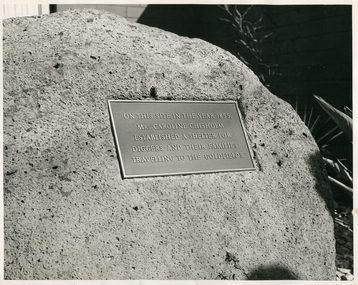
Photograph - Photograph, black and white, 30 08 1967
... unemployed migrant women and families. This work was extended when she arranged employment for assisted immigrant women and families into the countryside, many times travelling with groups of young women to check their employment conditions. In seven years she placed 11,000 people ...The rock and attached plaque to Caroline Chisholm stand in front of the Royal District Nursing Service (RDNS) Essendon Centre. It was unveiled at the opening of the Centre on the 30 August 1967.The plaque has a deep silver colour background, light silver colour writing with gold coloured edging.Caroline Chisholm visited the goldfields of Victoria in 1854 and was horrified by the conditions en-route. The Memorial plaque to Caroline Chisholm, in front of the RDNS Essendon Centre which is situated on Crown Land, is in recognition for her work in establishing, with Government assistance, shelter sheds about a days walk apart, to enable the prospectors and their families heading for the goldfields shelter on their way. Caroline Chisholm, a Philanthropist, began her work in Madras in 1834 founding a Female School of Industry for the daughters of European soldiers. They were taught to read, write, cook, keep house and were given instructions in nursing. After coming to Sydney in 1838, she set up accommodation for poor young unemployed migrant women and families. This work was extended when she arranged employment for assisted immigrant women and families into the countryside, many times travelling with groups of young women to check their employment conditions. In seven years she placed 11,000 people in homes and employment. On her return to England she fought for, and won, free passage to Australia for wives and children of former convicts, and for children left behind in England by circumstances, when the family migrated. She established the Family Colonisation Loan Society in 1849, which set up a saving scheme for emigrants, and later loaned them half of their passage to Australia. The Society's Agents found them employment on arrival, and the loan was paid back within two years by a humane payment scheme. At first they used emigrant ships, but then the Society provided ships with much improved conditions, and this led to the upgrading of the passenger Act.. The Chisholm's lived in Kyneton for several years, returning to Sydney for health reasons, before going back to England where Caroline died, aged 68 years, on the 25th of March 1877.Black and white photograph of the Memorial plaque to Caroline Chisholm. The rectangular plaque sits on a rough light grey rock, and has light colour writing and edging, on a dark grey background. The inscription on the plaque is in five lines and reads: "On this site in the year 1855"/, "Mrs Caroline Chisholm"/, "Established a Shelter for"/, "Diggers and their families"/ "Travelling to the Goldfields"/.Photographers stamp. Quote No. GJ 56rdns, royal district nursing service, rdns centre, caroline chisholm, memorial plaque -
 Royal District Nursing Service (now known as Bolton Clarke)
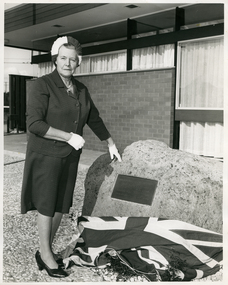
Photograph - Photograph, black and white, 30 08 1967
... unemployed migrant women and families. This work was extended when she arranged employment in the countryside for assisted immigrant women and families, many times travelling with groups of young women to check their employment conditions. In seven years she placed 11,000 people ...Mrs. R. Gordon is the President of the Victorian branch of the National Council of Women. The Memorial plaque to Caroline Chisholm stands on a rock in front of the Royal District Nursing Service (RDNS) Essendon Centre, and was unveiled at the time of the opening of the Centre on the 30th of August 1967.Caroline Chisholm visited the goldfields of Victoria in 1854 and was horrified by the conditions en-route. The Memorial plaque to Caroline Chisholm, in front of the RDNS Essendon Centre, is in recognition for her work in establishing, with Government assistance, shelter sheds about a days walk apart, to enable the prospectors and their families shelter whilst heading to the goldfields. Caroline Chisholm, a Philanthropist, began her work in Madras in 1834, founding a Female School of Industry for the daughters of European soldiers. They were taught to read, write, cook, keep house and were given instructions in nursing. After coming to Sydney in 1838, she set up accommodation for poor young unemployed migrant women and families. This work was extended when she arranged employment in the countryside for assisted immigrant women and families, many times travelling with groups of young women to check their employment conditions. In seven years she placed 11,000 people in homes and employment. On her return to England she fought for, and won, free passage to Australia for wives and children of former convicts, and for children left behind in England by circumstances, when the family migrated. She established the Family Colonisation Loan Society in 1849, which set up a saving scheme for emigrants, and later loaned them half of their passage to Australia. The Society's Agents found them employment on arrival, and the loan was paid back within two years by a humane payment scheme. At first they used emigrant ships for passage, but then the Society provided ships with much improved conditions, and this led to the upgrading of the passenger Act.. The Chisholm's lived in Kyneton for several years, returning to Sydney for health reasons, before going back to England where Caroline died, aged 68 years, on the 25th of March 1877.Black and white photograph of Mrs. R, Gordon, wearing a dark coloured coat, black shoes, and a beret style white and black hat, pointing with her left hand to the unveiled Memorial plaque to Caroline Chisholm. The dark oblong plaque is adhered to a large rock.The British Flag can be seen in the foreground. Part of a building can be seen in the background; short glass windows can be seen above the brickwork on the left, with dark fascia above, and part of a large glass window to the right.Photographers stamp. Quote No. GJ 58rdns, royal district nursing service, rdns centre, essendon centre, memorial plaque, mrs r. gordon, caroline chisholm -
 Royal District Nursing Service (now known as Bolton Clarke)
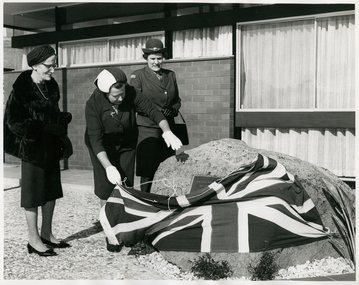
Photograph - Photograph, black and white, 30 08 1967
... unemployed migrant women and families. This work was extended when she arranged employment in the countryside for assisted immigrant women and families, many times travelling with groups of young women to check their employment conditions. In seven years she placed 11,000 people ...Mrs. R. Gordon is the President of the Victorian branch of the National Council of Women and is unveiling the Memorial plaque to Caroline Chisholm. The plaque stands on a rock in front of the Royal District Nursing Service (RDNS) Essendon Centre, and was unveiled on the same day the Centre opened on the 30th of August 1967. Mrs. E.G. Wilson is President of the Royal District Nursing Service. Miss Mary Evans is the Director of Nursing of the Royal District Nursing Service and is wearing her dark grey Director's uniform.Caroline Chisholm visited the goldfields of Victoria in 1854 and was horrified by the conditions en-route. The Memorial plaque to Caroline Chisholm, in front of the RDNS Essendon Centre, is in recognition for her work in establishing, with Government assistance, shelter sheds about a days walk apart, to enable the prospectors and their families shelter whilst heading for the goldfields. Caroline Chisholm, a Philanthropist, began her work in Madras in 1834 founding a Female School of Industry for the daughters of European soldiers. They were taught to read, write, cook, keep house and were given instructions in nursing. After coming to Sydney in 1838, she set up accommodation for poor young unemployed migrant women and families. This work was extended when she arranged employment in the countryside for assisted immigrant women and families, many times travelling with groups of young women to check their employment conditions. In seven years she placed 11,000 people in homes and employment. On her return to England she fought for, and won, free passage to Australia for wives and children of former convicts, and for children left behind in England by circumstances, when the family migrated. She established the Family Colonisation Loan Society in 1849, which set up a saving scheme for emigrants, and later loaned them half of their passage to Australia. The Society's Agents found them employment on arrival, and the loan was paid back within two years by a humane payment scheme. At first they used emigrant ships for passage, but then the Society provided ships with much improved conditions, and this led to the upgrading of the passenger Act.. The Chisholm's lived in Kyneton for several years, returning to Sydney for health reasons, before going back to England where Caroline died, aged 68 years, on the 25th of March 1877.Black and white photograph showing Mrs. R. Gordon, wearing a black coat and black and white beret style hat, with her left hand on a rock and her right hand on the British Flag, whilst unveiling the Memorial plaque to Caroline Chisholm. Mrs. R. Gordon stands between Mrs. E.G. Wilson, who is to her left, and is wearing glasses and a black coat, hat and shoes. Miss Mary Evans, who is wearing her RDNS uniform of a dark grey skirt and jacket and brimmed hat, and with a handbag looped over her left arm, is to the right.. Part of a building is seen in the background; short glass windows can be seen above the brickwork to the left and a large glass window to the right.Photographers stamp and 'Quote No. GJ 60'rdns, royal district nursing service, essendon centre, caroline chisholm, memorial plaque, mrs r. gordon, miss mary evans, mrs e.g. (hazel janet) wilson
