
Showing 9 items matching "uses of medicinal plants"
-
 Friends of Ballarat Botanical Gardens History Group
Work on paper - Plants as Medicines, History Part 1, Plants as Medicines Part 2
... ...Uses of Medicinal Plants...There are plants in the Ballarat Botanical Gardens that are medicinal especially in the Sensory Garden section. The background to plants used by people from earliest times is outlined, as well plants used for medicinal purposes. ...There are plants in the Ballarat Botanical Gardens that are medicinal especially in the Sensory Garden section.The background to plants used by people from earliest times is outlined, as well plants used for medicinal purposes. How these plants were used is valuable information, in terms of the plants already found in the Gardens and any future planting.Part 1 consists of 3 pages printed in black ink with green sub-headings. Part 2 consists of 8 pages printed in black ink with headings in red, sub-headings in green; in italics on gloss paper.Nonejohn garner, doctor, ballarat botanical gardens, history of medicinal plants, medicinal plants, plants as medicines, sensory garden, types of medicinal plants, uses of medicinal plants, john garner collection, ballarat, friends of the ballarat botanical gardens -
 Flagstaff Hill Maritime Museum and Village
Book - Reference Fossils/Science, John Hill, A General Natural History, 1748
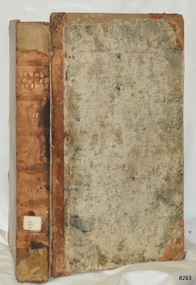
... In Volume Two, A History of Plants (1751), Hill covers botany, describing the appearance, geographic range, and medicinal uses of various native and exotic plants (like the coffee tree, cacti, and various herbs). ...A General Natural History is a massive, ambitious three-volume compendium written to survey the natural world. It is divided into three distinct parts, which were published sequentially between 1748 and 1752. Volume One contains The History of Fossils (1748). Despite the modern name, "fossils" back then referred to anything dug out of the earth. This volume focuses heavily on mineralogy, gemstones, rocks, and minerals, mapping them out based on a microscopic examination. In Volume Two, A History of Plants (1751), Hill covers botany, describing the appearance, geographic range, and medicinal uses of various native and exotic plants (like the coffee tree, cacti, and various herbs). Volume Three concentrates on various animals and is called An History of Animals (1752). It's a zoological survey that starts with microscopic organisms before moving on to insects, marine life, reptiles, birds, and mammals. The book focused not just on describing these specimens, but also on outlining their "virtues and uses" in medicine and mechanics.A General Natural History Author: John Hill Publisher: Thomas Osborne Date: 1748 Badly damaged light brown hardcover with a damaged spine and lettering in gold. The spine has a Library label with an inscription.non-fictionA General Natural History is a massive, ambitious three-volume compendium written to survey the natural world. It is divided into three distinct parts, which were published sequentially between 1748 and 1752. Volume One contains The History of Fossils (1748). Despite the modern name, "fossils" back then referred to anything dug out of the earth. This volume focuses heavily on mineralogy, gemstones, rocks, and minerals, mapping them out based on a microscopic examination. In Volume Two, A History of Plants (1751), Hill covers botany, describing the appearance, geographic range, and medicinal uses of various native and exotic plants (like the coffee tree, cacti, and various herbs). Volume Three concentrates on various animals and is called An History of Animals (1752). It's a zoological survey that starts with microscopic organisms before moving on to insects, marine life, reptiles, birds, and mammals. The book focused not just on describing these specimens, but also on outlining their "virtues and uses" in medicine and mechanics.flagstaff hill, warrnambool, shipwrecked coast, flagstaff hill maritime museum, maritime museum, shipwreck coast, flagstaff hill maritime village, great ocean road, book, pattison collection, warrnambool library, warrnambool mechanics’ institute, ralph eric pattison, corangamite regional library service, warrnambool city librarian, mechanics’ institute library, victorian library board, warrnambool books and records, warrnambool children’s library, a general natural history, john hill -
 Orbost & District Historical Society
bottle, JGB Siebert & Sons, 1930's
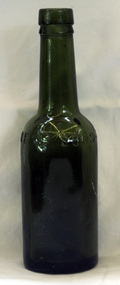
... plants of the region for his cures. In 1824, he began to produce the bitters product which was originally used for medicinal purposes....plants of the region for his cures. In 1824, he began to produce the bitters product which was originally used for medicinal purposes. angostura siegert-jgb bottle bitters Around shoulder and on base - JGB Siegert & Sons. ...Johann Gottlieb Benjamin Siegert (1796 - 1870) was born at GroB-Walditz in Silesia, Germany. He studied medicine at the University of Berlin, then the capital of Prussia. The young doctor joined the 2nd Regiment of the Prussian army, one among the allies who fought against the French Emperor Napoleon Bonaparte. He saw active service as army surgeon under the command of General von Blücher. . Dr. Siegert relied on the herbs and plants of the region for his cures. In 1824, he began to produce the bitters product which was originally used for medicinal purposes.A dark green bottle with a long neck which possibly had a waxed cork stopper.Around shoulder and on base - JGB Siegert & Sons. DRangostura siegert-jgb bottle bitters -
 Orbost & District Historical Society
bottle, Probably WW11
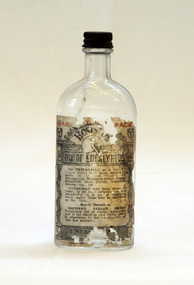
... medicinal properties of Australian plants. As a result of the collaboration with von Meuller the essential oil industry of Australia began in 1852, when Bosisto commenced operations in a small, rudely constructed still at Dandenong Creek, Victoria, using the leaves of a form of E. radiata (then known as E. amygdalina) which grew profusely in the district. ...medicinal properties of Australian plants. As a result of the collaboration with von Meuller the essential oil industry of Australia began in 1852, when Bosisto commenced operations in a small, rudely constructed still at Dandenong Creek, Victoria, using the leaves of a form of E. radiata (then known as E. amygdalina) which grew profusely in the district. ...Joseph Bosisto was a Yorkshireman who had qualified as a Pharmacist in Leeds and London. He arrived in Adelaide in 1848 at the age of 21. In 1851 he moved to Victoria in search of gold, but instead opened a pharmacy in Richmond, where he built a laboratory to investigate the chemical and medicinal properties of Australian plants. As a result of the collaboration with von Meuller the essential oil industry of Australia began in 1852, when Bosisto commenced operations in a small, rudely constructed still at Dandenong Creek, Victoria, using the leaves of a form of E. radiata (then known as E. amygdalina) which grew profusely in the district. Bosisto soon built other distilleries at Emerald, Menzies Creek and Macclesfield. World War II soldiers packed it in their mess kits to keep foot fungus in the tropics at bay. Small clear glass Eucalyptus Oil bottle with metal screw lid and large label on front.Front Label - War Time Pack Back - This bottle remains property of J Bosisto &Co Pty Ltd Richmond Victoria Bottom-F1196bottle eucalyptus-oil bosisto-joseph -
 Bendigo Historical Society Inc.
Document - PETER ELLIS COLLECTION: A GUIDE FOR DRIVERS ON THE WHIPSTICK TOUR
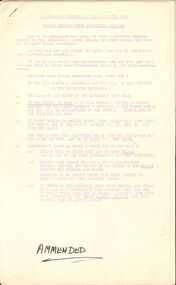
... Plants, Birds & Mammals, and areas of State Forest and Southern State Forest with Mallee Scrub area noted. Also State Forest & Crown Lands Total Area and a map scale. The Bendigo Whipstick mentions area, suggestions of where the name Whipstick came from, shrubs and flowers with their flowering times, descriptions of some of them and some information on the Mallee Fowl. The Eucalyptus Oil Industry paragraph mentions the beginnings of the industry. Mentioned are the different uses of oils (perfumery, industrial and medicinal...Plants, Birds & Mammals, and areas of State Forest and Southern State Forest with Mallee Scrub area noted. Also State Forest & Crown Lands Total Area and a map scale. The Bendigo Whipstick mentions area, suggestions of where the name Whipstick came from, shrubs and flowers with their flowering times, descriptions of some of them and some information on the Mallee Fowl. The Eucalyptus Oil Industry paragraph mentions the beginnings of the industry. Mentioned are the different uses of oils (perfumery, industrial and medicinal ...A Guide for Drivers on the Whipstick Tour. First page gives assembly area, driving in convoy and negotiating water or boggy patches across the road. Amended written at the end of the page. Directions with mileage and items of interest for the tour on Sunday September 9th (no year). A Whipstick Map 1971 showing State Forest, Crown Lands, Uncleared Mallee - Private (shown in different colours) Water Reserve and Roads. Noted are Flora and Fauna - Plants, Birds & Mammals, and areas of State Forest and Southern State Forest with Mallee Scrub area noted. Also State Forest & Crown Lands Total Area and a map scale. The Bendigo Whipstick mentions area, suggestions of where the name Whipstick came from, shrubs and flowers with their flowering times, descriptions of some of them and some information on the Mallee Fowl. The Eucalyptus Oil Industry paragraph mentions the beginnings of the industry. Mentioned are the different uses of oils (perfumery, industrial and medicinal) and the different species of eucalypt used for each and various products. Also notes on the growing, harvesting and refining of eucalyptus. P Ellis at the end of the page. The next two and a half pages mentions reserves, and at the end acknowledgements. Includes a spare copy of 'The Bendigo Whipstick' by P Ellis.bendigo, history, early bendigo, peter ellis collection, a guide for drivers on the whipstick tour, the whipstick 1971 map, shire of marong, shire of east loddon, shire of huntly, borough of eaglehawk, city of bendigo, shire of strathfieldsaye, the bendigo whipstick, eucalyptus oil industry, eaglehawk town hall, lightning hill lookout, eaglehawk rifle range, new moon mines, blue jacket reservoir, maggetti's wine hall, camp hotel (ex), skylark dam, eucalyptus oil production, eucalyptus factory, whipstick eucalyptus farm, ruedin's eucalyptus factory, dutch bowls, governor philip, sir joseph banks, john white, baron von mueller, joseph bosisto, commonwealth government, perfumery oils, industrial oils, medicinal oils, p ellis, dr frith, csiro wildlife division, harley webster, forests commission, vincent serventy, victorian national parks association, bendigo field naturalists club -
 Victorian Aboriginal Corporation for Languages
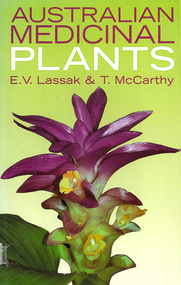
Book, Erich V Lassak et al, Australian medicinal plants, 2001
... Outlines the Aboriginal use of native plants as well as how early European settlers learned from Aboriginal people about their medicinal value. ...medicinal plants plant identification Colour illustrations, colour photographs Outlines the Aboriginal use of native plants as well as how early European settlers learned from Aboriginal people about their medicinal value. ...Outlines the Aboriginal use of native plants as well as how early European settlers learned from Aboriginal people about their medicinal value. Chapters arranged according to ailments and their treatment.Colour illustrations, colour photographsmedicinal plants, plant identification -
 Victorian Aboriginal Corporation for Languages
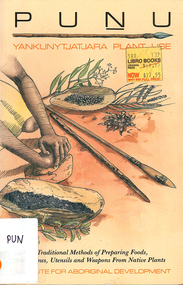
Book, Pun?u : Yankunytjatjara plant use : traditional methods of preparing foods, medicines, utensils and weapons from native plants, 1988
... medicinal plants (Punu ngangkari)...language...stories...plant use...Climate landforms vegetation vegetable food (mai) fruits seeds roots greens galls fungi nectars sweet secretions gums medicinal plants (Punu ngangkari) language stories plant use trees shrubs subshrubs grasses vines succulents mistletoes plant parts habitat plant processing Yankunytjatjara Central Australia B&w illustrations, colour illustrations, word lists Encyclopedia style entries for 27 plants with standard scientific description plus description, science and stories in Yankunytjatjara with translations. ...Encyclopedia style entries for 27 plants with standard scientific description plus description, science and stories in Yankunytjatjara with translations. Includes general and linguistic introduction, and extensive glossaries of botanical names, plant parts, processes etc, all Yankunytjatjara and English (and Latin as appropriate)B&w illustrations, colour illustrations, word listsclimate, landforms, vegetation, vegetable food (mai), fruits, seeds, roots, greens, galls, fungi, nectars, sweet secretions, gums, medicinal plants (punu ngangkari), language, stories, plant use, trees, shrubs, subshrubs, grasses, vines, succulents, mistletoes, plant parts, habitat, plant processing, yankunytjatjara, central australia -
Ballarat Heritage Services
Document, Zena Cumpston, Indigenous Plant Use: A booklet on the medicinal, nutritional and technological use of indigenous plants, 2020
... Indigenous Plant Use: A booklet on the medicinal, nutritional and technological use of indigenous plants...Indiginous plants koori food botany river mint Kulin National Plant List Nardoo murnong Indigenous Plant Use: A booklet on the medicinal, nutritional and technological use of indigenous plants Document Zena Cumpston ...non-fictionindiginous plants, koori food, botany, river mint, kulin national plant list, nardoo, murnong -
 Emerald Museum & Nobelius Heritage Park
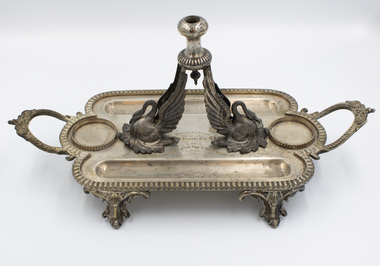
Decorative object - Pen and Inkstand, c.1880s
... In addition to his lifetime interest in plants and their medicinal uses, Joseph Bosisto was committed to public service and represented Richmond in the Legislative Assembly from 1874 till 1889. ...In addition to his lifetime interest in plants and their medicinal uses, Joseph Bosisto was committed to public service and represented Richmond in the Legislative Assembly from 1874 till 1889. ...The desk set does not have a maker’s mark so it is unclear where or by whom it was made. The employees of the Public Parks and Gardens presented the desk set to Bosisto in 1882 as a token of gratitude. This is most probably because Bosisto successfully campaigned for gardeners employed at public parks and gardens to receive retirement allowances in the years immediately prior, which all other public servants were entitled to (Geelong Advertiser 1880:3). In addition to his lifetime interest in plants and their medicinal uses, Joseph Bosisto was committed to public service and represented Richmond in the Legislative Assembly from 1874 till 1889. Bosisto was the mayor of Richmond 1865-1867 and Commissioner of the Melbourne International Exhibition 1880-1881. This is the only known presentation swan desk set of its type. The Museum of Applied Arts and Sciences in Sydney has a collection of presentation inkstands. These range from rare gold inkstands to small silver and plated sets; the most similar to this example is noted to be part of a collection of national standing. Related to this item, the Emerald Museum collection also includes vintage Bosisto oil bottles, as well as Camden wollybutt (Eucaplytus macarthuri) live plantings, which are remnants of Bosisto’s eucalyptus distillery industry that operated approximately 500 metres from the former nursery. Both Butterfield Park (past Bosisto eucalyptus oil distillery) in Emerald and the Bosisto factory/depot in Oakleigh are interested in these collection items. The desk set belonged to Melville Lober and originally came from the family's engraving / engineering business, Max Lober P/L, in Bridge Road Richmond, not far from Bosisto Street. Melville's daughter, Mirren Alenson, is not sure if it was given to her father or grandfather to restore and then was not wanted, or if it was left in the Richmond property by the previous owner. The desk set is of historic, social and aesthetic significance. It is the only surviving presentation piece owned by Joseph Bosisto (1824-1898), a prominent chemist, inventor and public figure in Melbourne and nationally. His particular significance for the Emerald area is that he set up eucalyptus distilleries at Emerald, Menzies Creek, and Macclesfield in 1882. Made from silver and electroplated silver (base), this desk set features two cast figures of swans in blackened silver finish, each sitting on a stylised acanthus leaf. The swans support and elevate the central candle stand with their outstretched wings, while flanking a gilt inscription engraved in the center of a rectangular base with curved sides and an applied gadrooned rim. At front and back there is a recess to hold pens, and the sides have a circular recess for ink glass-bottles (missing). The whole rests on four cast acanthus feet and the two cast side handles feature a scroll-and-palmette motif. The inkwell is not marked, and the maker is not known; it was probably imported from England or assembled in Australia from imported components.On inkstand inscribed: ‘PRESENTED TO/ Joseph Bosisto Esq. MLA/ BY/ THE EMPLOYEES OF THE PUBLIC PARKS AND GARDENS/ 1882’.bosisto, eucalyptus distilleries
