
Showing 26 items matching "victorian railways freight services"
-
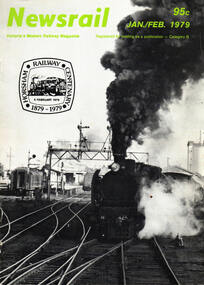 Victorian Railway History Library
Journal - Newsrail January-February 1979, Brendan O'Leary and Bruce McLean, Seymour-Mansfield Goods and The Mildura-Yelta Railway, 1979
... Victorian Railways Freight Services...Seymour-Mansfield Goods and The Mildura-Yelta Railway Victorian Railways Freight Services Victorian Railways Country Railways Index,Ill, p.24. ...Index,Ill, p.24. non-fiction victorian railways freight services, victorian railways country railways -
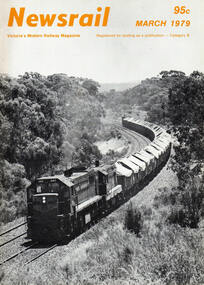 Victorian Railway History Library
Journal - Newsrail March 1979, Geoff Bainbridge and N. Houghton, The 1978/79 Wheat Harvest and Wheat Land Inspection, 1979
... Victorian Railways Freight Services...The 1978/79 Wheat Harvest and Wheat Land Inspection Victorian Railways Freight Services Victorian Railways Country Railways Index,Ill, p.24. ...Index,Ill, p.24. non-fiction victorian railways freight services, victorian railways country railways -
 Eltham District Historical Society Inc
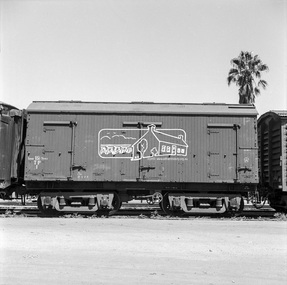
Photograph, Iced Van TP-1, Mildura c.1962, 1962c
... Vans 1, 2 and 3 were out of service by 1983, and vans 4 and 5 followed the year after. https://en.wikipedia.org/wiki/Victorian_Railways_iced_vans Victorian Railways . Net TP-1 was scrapped at Totenham in 1979 http://www.victorianrailways.net/freight/freight%20pages/tp/tp.html...Vans 1, 2 and 3 were out of service by 1983, and vans 4 and 5 followed the year after. https://en.wikipedia.org/wiki/Victorian_Railways_iced_vans Victorian Railways . Net TP-1 was scrapped at Totenham in 1979 http://www.victorianrailways.net/freight/freight%20pages/tp/tp.html Mildura railway station, george coop collection, iced van, tp-1, victorian railways, wagon Digital TIFF file Scan of 120 format 6x6 [no brand identification] black and white negative transparency Iced Van TP-1, Mildura c.1962 Photograph Photograph George Coop George Coop ...Victorian Railways iced vans TP vans In 1958 two wagons, T 297 and 283, had passenger bogies added and were renumbered to TP 1 and 2, for express running from Melbourne to Mildura on the "fruity". In 1959, a further three wagons (393, 381 and 356) were converted to TP 3 through 5. At time of conversion, TPs 1, 2 and 3 had single-width doors added at each end of both sides, but TPs 4 and 5 retained only the centre doors provided on regular T vans. In the late 1970s the vans were fitted with "FOOD TRANSPORT ONLY" signs as health regulations required. The vans were intended to become the VRPY class in the 1979 recoding, but this never happened despite being indicted as such in the 1983 Working Time Table. Vans 1, 2 and 3 were out of service by 1983, and vans 4 and 5 followed the year after. https://en.wikipedia.org/wiki/Victorian_Railways_iced_vans Victorian Railways . Net TP-1 was scrapped at Totenham in 1979 http://www.victorianrailways.net/freight/freight%20pages/tp/tp.html Digital TIFF file Scan of 120 format 6x6 [no brand identification] black and white negative transparency mildura railway station, george coop collection, iced van, tp-1, victorian railways, wagon -
 Eltham District Historical Society Inc
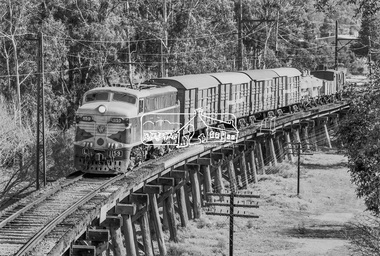
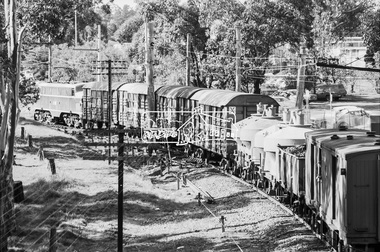
Photograph, George Coop, Victorian Railways electric locomotive L1159 and freight cars traversing the Eltham Railway Trestle bridge, 23 August 1983, 1983
... service 12 August 1953 and withdrawn 27 April 1987. It was scrapped January 1988. Source: [email protected] https://vicsig.net/index.php?page=locomotives&number=1159&class=L&type=Electric%20(1500V%20DC)&orgstate=V eltham trestle bridge, freight train, l class electric locomotive, l1159 Digital TIFF file Scan of 35mm Kodak Safety 5062 black and white transparency Victorian Railways electric locomotive L1159 and freight cars traversing the Eltham Railway Trestle bridge, 23 August 1983 Photograph George Coop ...L series electric locomotive L1159 was introduced into service 12 August 1953 and withdrawn 27 April 1987. It was scrapped January 1988. Source: [email protected] https://vicsig.net/index.php?page=locomotives&number=1159&class=L&type=Electric%20(1500V%20DC)&orgstate=V Digital TIFF file Scan of 35mm Kodak Safety 5062 black and white transparency eltham trestle bridge, freight train, l class electric locomotive, l1159 -
 Eltham District Historical Society Inc
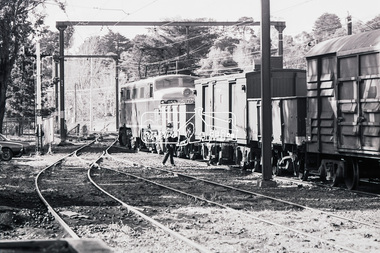
Photograph, George Coop, Victorian Railways electric locomotive L1159 at Eltham Railway Station, 23 August 1983, 1983
... service 12 August 1953 and withdrawn 27 April 1987. It was scrapped January 1988. Source: [email protected] https://vicsig.net/index.php?page=locomotives&number=1159&class=L&type=Electric%20(1500V%20DC)&orgstate=V eltham railway station, eltham shire office, freight train, l class electric locomotive, l1159 Digital TIFF file Scan of 35mm Kodak Safety 5062 black and white transparency Victorian Railways electric locomotive L1159 at Eltham Railway Station, 23 August 1983 Photograph George Coop ...Eltham Shire Council offices in background L series electric locomotive L1159 was introduced into service 12 August 1953 and withdrawn 27 April 1987. It was scrapped January 1988. Source: [email protected] https://vicsig.net/index.php?page=locomotives&number=1159&class=L&type=Electric%20(1500V%20DC)&orgstate=V Digital TIFF file Scan of 35mm Kodak Safety 5062 black and white transparency eltham railway station, eltham shire office, freight train, l class electric locomotive, l1159 -
 Eltham District Historical Society Inc
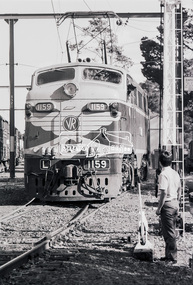
Photograph, George Coop, Victorian Railways electric locomotive L1159 at Eltham Railway Station, 23 August 1983, 1983
... service 12 August 1953 and withdrawn 27 April 1987. It was scrapped January 1988. Source: [email protected] https://vicsig.net/index.php?page=locomotives&number=1159&class=L&type=Electric%20(1500V%20DC)&orgstate=V eltham railway station, eltham shire office, freight train, l class electric locomotive, l1159 Digital TIFF file Scan of 35mm Kodak Safety 5062 black and white transparency Victorian Railways electric locomotive L1159 at Eltham Railway Station, 23 August 1983 Photograph George Coop ...Eltham Shire Council offices in background L series electric locomotive L1159 was introduced into service 12 August 1953 and withdrawn 27 April 1987. It was scrapped January 1988. Source: [email protected] https://vicsig.net/index.php?page=locomotives&number=1159&class=L&type=Electric%20(1500V%20DC)&orgstate=V Digital TIFF file Scan of 35mm Kodak Safety 5062 black and white transparency eltham railway station, eltham shire office, freight train, l class electric locomotive, l1159 -
 Eltham District Historical Society Inc
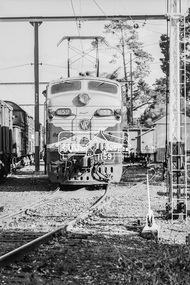
Photograph, George Coop, Victorian Railways electric locomotive L1159 at Eltham Railway Station, 23 August 1983, 1983
... service 12 August 1953 and withdrawn 27 April 1987. It was scrapped January 1988. Source: [email protected] https://vicsig.net/index.php?page=locomotives&number=1159&class=L&type=Electric%20(1500V%20DC)&orgstate=V eltham railway station, freight train, l class electric locomotive, l1159 Digital TIFF file Scan of 35mm Kodak Safety 5062 black and white transparency Victorian Railways electric locomotive L1159 at Eltham Railway Station, 23 August 1983 Photograph George Coop ...L series electric locomotive L1159 was introduced into service 12 August 1953 and withdrawn 27 April 1987. It was scrapped January 1988. Source: [email protected] https://vicsig.net/index.php?page=locomotives&number=1159&class=L&type=Electric%20(1500V%20DC)&orgstate=V Digital TIFF file Scan of 35mm Kodak Safety 5062 black and white transparency eltham railway station, freight train, l class electric locomotive, l1159 -
 Eltham District Historical Society Inc
Photograph, George Coop, Victorian Railways electric locomotive L1159 at Eltham Railway Station, 23 August 1983, 1983
... service 12 August 1953 and withdrawn 27 April 1987. It was scrapped January 1988. Source: [email protected] https://vicsig.net/index.php?page=locomotives&number=1159&class=L&type=Electric%20(1500V%20DC)&orgstate=V eltham railway station, freight train, l class electric locomotive, l1159 Digital TIFF file Scan of 35mm Kodak Safety 5062 black and white transparency Victorian Railways electric locomotive L1159 at Eltham Railway Station, 23 August 1983 Photograph George Coop ...L series electric locomotive L1159 was introduced into service 12 August 1953 and withdrawn 27 April 1987. It was scrapped January 1988. Source: [email protected] https://vicsig.net/index.php?page=locomotives&number=1159&class=L&type=Electric%20(1500V%20DC)&orgstate=V Digital TIFF file Scan of 35mm Kodak Safety 5062 black and white transparency eltham railway station, freight train, l class electric locomotive, l1159 -
 Eltham District Historical Society Inc
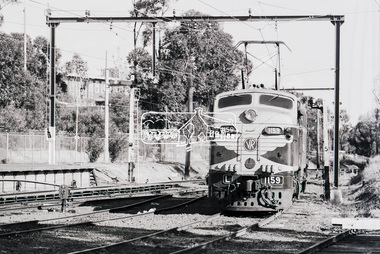
Photograph, George Coop, Victorian Railways electric locomotive L1159 at Eltham Railway Station, 23 August 1983, 1983
... service 12 August 1953 and withdrawn 27 April 1987. It was scrapped January 1988. Source: [email protected] https://vicsig.net/index.php?page=locomotives&number=1159&class=L&type=Electric%20(1500V%20DC)&orgstate=V eltham railway station, eltham shire office, freight train, l class electric locomotive, l1159 Digital TIFF file Scan of 35mm Kodak Safety 5062 black and white transparency Victorian Railways electric locomotive L1159 at Eltham Railway Station, 23 August 1983 Photograph George Coop ...Eltham Shire Council offices in background L series electric locomotive L1159 was introduced into service 12 August 1953 and withdrawn 27 April 1987. It was scrapped January 1988. Source: [email protected] https://vicsig.net/index.php?page=locomotives&number=1159&class=L&type=Electric%20(1500V%20DC)&orgstate=V Digital TIFF file Scan of 35mm Kodak Safety 5062 black and white transparency eltham railway station, eltham shire office, freight train, l class electric locomotive, l1159 -
 Eltham District Historical Society Inc
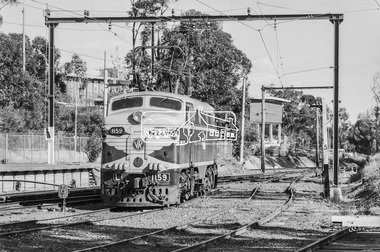
Photograph, George Coop, Victorian Railways electric locomotive L1159 at Eltham Railway Station, 23 August 1983, 1983
... service 12 August 1953 and withdrawn 27 April 1987. It was scrapped January 1988. Source: [email protected] https://vicsig.net/index.php?page=locomotives&number=1159&class=L&type=Electric%20(1500V%20DC)&orgstate=V eltham railway station, eltham shire office, freight train, l class electric locomotive, l1159 Digital TIFF file Scan of 35mm Kodak Safety 5062 black and white transparency Victorian Railways electric locomotive L1159 at Eltham Railway Station, 23 August 1983 Photograph George Coop ...Eltham Shire Council offices in background L series electric locomotive L1159 was introduced into service 12 August 1953 and withdrawn 27 April 1987. It was scrapped January 1988. Source: [email protected] https://vicsig.net/index.php?page=locomotives&number=1159&class=L&type=Electric%20(1500V%20DC)&orgstate=V Digital TIFF file Scan of 35mm Kodak Safety 5062 black and white transparency eltham railway station, eltham shire office, freight train, l class electric locomotive, l1159 -
 Eltham District Historical Society Inc
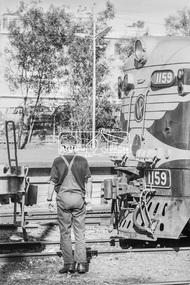
Photograph, George Coop, Victorian Railways electric locomotive L1159 at Eltham Railway Station, 23 August 1983, 1983
... service 12 August 1953 and withdrawn 27 April 1987. It was scrapped January 1988. Source: [email protected] https://vicsig.net/index.php?page=locomotives&number=1159&class=L&type=Electric%20(1500V%20DC)&orgstate=V eltham railway station, freight train, l class electric locomotive, l1159 Digital TIFF file Scan of 35mm Kodak Safety 5062 black and white transparency Victorian Railways electric locomotive L1159 at Eltham Railway Station, 23 August 1983 Photograph George Coop ...L series electric locomotive L1159 was introduced into service 12 August 1953 and withdrawn 27 April 1987. It was scrapped January 1988. Source: [email protected] https://vicsig.net/index.php?page=locomotives&number=1159&class=L&type=Electric%20(1500V%20DC)&orgstate=V Digital TIFF file Scan of 35mm Kodak Safety 5062 black and white transparency eltham railway station, freight train, l class electric locomotive, l1159 -
 Eltham District Historical Society Inc
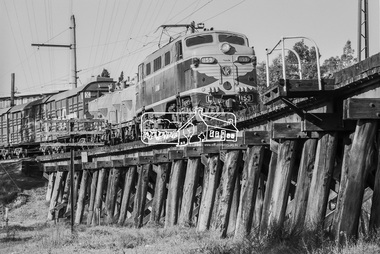
Photograph, George Coop, Victorian Railways electric locomotive L1159 and freight cars traversing the Eltham Railway Trestle bridge, 23 August 1983, 1983
... service 12 August 1953 and withdrawn 27 April 1987. It was scrapped January 1988. Source: [email protected] https://vicsig.net/index.php?page=locomotives&number=1159&class=L&type=Electric%20(1500V%20DC)&orgstate=V eltham shire office, eltham trestle bridge, freight train, l class electric locomotive, l1159 Digital TIFF file Scan of 35mm Kodak Safety 5062 black and white transparency Victorian Railways electric locomotive L1159 and freight cars traversing the Eltham Railway Trestle bridge, 23 August 1983 Photograph George Coop ...Eltham Shire Council offices in background L series electric locomotive L1159 was introduced into service 12 August 1953 and withdrawn 27 April 1987. It was scrapped January 1988. Source: [email protected] https://vicsig.net/index.php?page=locomotives&number=1159&class=L&type=Electric%20(1500V%20DC)&orgstate=V Digital TIFF file Scan of 35mm Kodak Safety 5062 black and white transparency eltham shire office, eltham trestle bridge, freight train, l class electric locomotive, l1159 -
 Eltham District Historical Society Inc
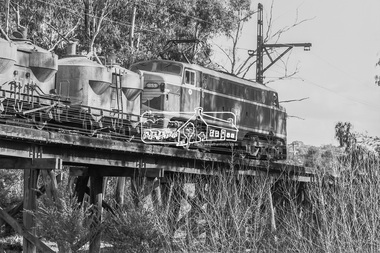
Photograph, George Coop, Victorian Railways electric locomotive L1159 and freight cars traversing the Eltham Railway Trestle bridge, 23 August 1983, 1983
... service 12 August 1953 and withdrawn 27 April 1987. It was scrapped January 1988. Source: [email protected] https://vicsig.net/index.php?page=locomotives&number=1159&class=L&type=Electric%20(1500V%20DC)&orgstate=V eltham trestle bridge, freight train, l class electric locomotive, l1159 Digital TIFF file Scan of 35mm Kodak Safety 5062 black and white transparency Victorian Railways electric locomotive L1159 and freight cars traversing the Eltham Railway Trestle bridge, 23 August 1983 Photograph George Coop ...L series electric locomotive L1159 was introduced into service 12 August 1953 and withdrawn 27 April 1987. It was scrapped January 1988. Source: [email protected] https://vicsig.net/index.php?page=locomotives&number=1159&class=L&type=Electric%20(1500V%20DC)&orgstate=V Digital TIFF file Scan of 35mm Kodak Safety 5062 black and white transparency eltham trestle bridge, freight train, l class electric locomotive, l1159 -
 Puffing Billy Railway
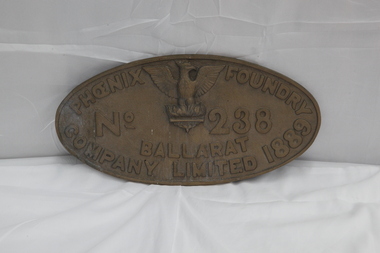
Phoenix Foundry Plate
... Victorian Railways were clearly impressed with these machines, with both purchased after the exhibition and becoming the patterns for new standard locomotive types. Thirty examples of the 0-6-0 heavy freight design were ordered from the Phoenix Foundry, Ballarat, becoming the Y-class for main line heavy freight duties, while the 2-4-2T design became the E-class for Melbourne suburban passenger duties (represented by preserved locomotive E 236). The Y-class prove successful in service...Victorian Railways were clearly impressed with these machines, with both purchased after the exhibition and becoming the patterns for new standard locomotive types. Thirty examples of the 0-6-0 heavy freight design were ordered from the Phoenix Foundry, Ballarat, becoming the Y-class for main line heavy freight duties, while the 2-4-2T design became the E-class for Melbourne suburban passenger duties (represented by preserved locomotive E 236). The Y-class prove successful in service ...Phoenix Foundry Plate - replica Made about 2010 cast off original from locomotive Y112 The Phoenix Foundry (1857-1906) fabricated iron and brass products - including engines and pumping gear for the mining industry, locomotives, steam rollers, water pipes, water gauges and diverse small items. Throughout its operation the business was located at premises on Armstrong Street, Ballarat . Background In 1852, at the age of thirty-three and after a year of operating his own engineering business at Williamstown, Lancashire-born blacksmith and engineer George Threlfall (1819-1897) arrived on the Sebastopol gold plain and immediately undertook blacksmith work repairing picks and tools for the miners. Little did he know that this fledgling business would be the genesis of the most iconic business of nineteenth-century Ballarat. At approximately thirty-nine years of age, English mechanical engineer Richard Carter (c1814-1883) came to Australia on board the Arrogant - arriving in Melbourne on 19 April 1853. He soon travelled to the Ballarat goldfields. Born in the year 1830 in Belfast (Ireland), mechanical engineer William Henry Shaw (1830-1896) arrived in Australia in October 1853. He worked briefly with George Threlfall at Sebastopol, then moved to Geelong to manage the small foundry of Frederick Moore. Twenty-four year old English-born iron moulder Robert Holden (c1831-?) left his home in Belfast (Ireland) in late 1854 and travelled from Liverpool to Melbourne on board the James Baines - arriving in February 1855. Afterwards he joined his brother-in-law William Henry Shaw in Ballarat. History Foundation to Incorporation In March 1857 George Threlfall joined in business with Richard Carter, William Henry Shaw and Robert Holden. They relocated Threlfall's successful engineering enterprise from Sebastopol to new premises in Armstrong Street, Ballarat. This business was then known variously as the Phoenix Iron Works Company, Phoenix Foundry or Messrs Carter and Co. By 15 April 1857 they were advertising that they were open for business as engineers, millwrights, boiler makers, smiths, iron founders and brass founders. In January 1858 George Threlfall left the partnership. Incorporation to 1889 1890 to Closing locomotive Y112 Builder: Phoenix Foundry, Ballarat Builder’s Number & Year: 238 of 1889 Designer: Kitson & Co Wheel Arrangement: 0-6-0 No. in class: 31 Entered Service: 24 July 1889 Taken off Register: 11 May 1961 The origins of the Victorian Railways Y-class lay with the decision by Kitson & Co, Leeds to place a 0-6-0 freight locomotive on display at the Centennial International Exhibition, Melbourne in 1888, together with a 2-4-2T suburban passenger locomotive. This marketing initiative proved successful as the Victorian Railways were clearly impressed with these machines, with both purchased after the exhibition and becoming the patterns for new standard locomotive types. Thirty examples of the 0-6-0 heavy freight design were ordered from the Phoenix Foundry, Ballarat, becoming the Y-class for main line heavy freight duties, while the 2-4-2T design became the E-class for Melbourne suburban passenger duties (represented by preserved locomotive E 236). The Y-class prove successful in service and accrued high mileages. They were inevitably superseded by more modern and powerful steam locomotives and a number cascaded into shunting and yard pilot duties, often with the addition of shunters steps along both locomotive and tender. Y 112 was one of the last in service when withdrawn in 1961. Fortunately it was saved for preservation and plinthed in central Ballarat, ostensibly in commemoration of Phoenix Foundry. I understand it is owned by the Sovereign Hill Museums Association. During the 1980’s, Y 112 was leased to Steamrail Victoria and restored to operation at an industrial site in Ballarat. Y 112 features an attractive lined apple green livery and has performed various rail tours around Victoria since restoration. It is normally based at the Steamrail depot in Ballarat East. Y 112 is the only 19th century design in operational condition in Victoria and as such is one of the oldest working steam locomotive in Victoria . Historic - Phoenix Foundry Plate - replica Made about 2010 cast off original from locomotive Y112 Phoenix Foundry Plate Oval shaped plate with an image of a phoenix centered at the top with lettering surrounding it. Phoenix Foundry No 238 Ballarat Company Limited 1889. puffing billy, phoenix foundry, ballarat, locomotive y112, phoenix foundry plate - replica -
 Wodonga & District Historical Society Inc
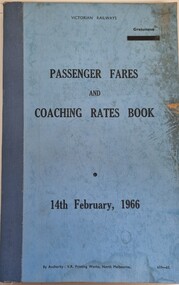
Manual - Passenger fares and coaching rates book, V. R. Printing Works, 1966
... Victorian railways services. It was donated to our collection by a former engine driver from Wodonga. Victorian Railways Victorian Railways -- Rules and practice. Public transport Victoria Victorian Railways fares and rates This is a manual issued by the Victorian Railways to all railway stations to outline changes made to passenger and freight rates to operate in Victoria as of 14th February 1966. ...This is a manual issued by the Victorian Railways to all railway stations to outline changes made to passenger and freight rates to operate in Victoria as of 14th February 1966. These changes were significant as it itemised the first rates after the introduction of decimal currency to Australia.A blue covered document published on white paper outlining changes to rates on Victorian Railways non-fiction This is a manual issued by the Victorian Railways to all railway stations to outline changes made to passenger and freight rates to operate in Victoria as of 14th February 1966. These changes were significant as it itemised the first rates after the introduction of decimal currency to Australia. victorian railways, victorian railways -- rules and practice., public transport victoria, victorian railways fares and rates -
 Wodonga & District Historical Society Inc
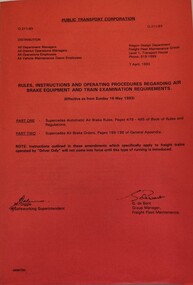
Manual - Public Transport Corporation Memo 7541, Public Transport Corporation Victoria, 1993
... freight trains, trams and bus services. This booklet is significant as it reflects safety standards and instructions regulating locomotive drivers in Victoria in the mid 1990s. Locomotive manuals Victorian Railways ...The Public Transport Corporation (PTC) was a Victoria State Government owned statutory authority formed under the Transport Act 1983 which operated passenger and freight trains, trams and bus services. It was established on 1 July 1989. This memo was effective as from Sunday 16th May, 1993 and pertained to rules instructions and operating procedures regarding air brake equipment and train examination requirements. As noted on the cover: "Part One - Supersedes Automatic air brake rules, pages 479-495 of Book of rules and regulations. -- Part Two - Supersedes Air brake orders, pages 189-198 of General appendix." The cover bears the signatures of M. Digging, Safeworking Superintendent and G. De Bont, Group Manager, Freight Fleet Maintenance.A booklet with a red cover and black print. There are extensive instructions on the cover which include distribution details and dates on which these instructions came into effect, fiction The Public Transport Corporation (PTC) was a Victoria State Government owned statutory authority formed under the Transport Act 1983 which operated passenger and freight trains, trams and bus services. It was established on 1 July 1989. This memo was effective as from Sunday 16th May, 1993 and pertained to rules instructions and operating procedures regarding air brake equipment and train examination requirements. As noted on the cover: "Part One - Supersedes Automatic air brake rules, pages 479-495 of Book of rules and regulations. -- Part Two - Supersedes Air brake orders, pages 189-198 of General appendix." The cover bears the signatures of M. Digging, Safeworking Superintendent and G. De Bont, Group Manager, Freight Fleet Maintenance. locomotive manuals, victorian railways, public transport corporation victoria, victorian railways -- rules and practice. -
 Wodonga & District Historical Society Inc
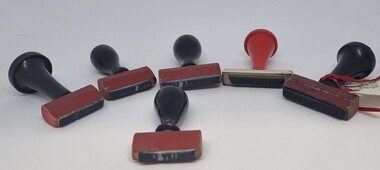
Functional object - Railway Station stamps Cudgewa Line
... service from Wodonga to Tallangatta ran on 30 September 1961. The turntable and passenger platform at Cudgewa were abolished in 1976. Cudgewa rail line Victorian Railways Closed Victorian Railways On individual stamps: 1. TALLANGATTA 1476 2. BULLIOH 1477 3. BEETOOMBA 1484 4. KOETONG 1480 5. SHELLEY 1482 6. CORRYONG 1487 6 Rubber and wood stamps used in the stations along the Cudgewa Line. The stamps were primarily used to acknowledge receipt of small freight ...Cudgewa Line -The Cudgewa railway line opened in stages between 1889 and 1921. The first section from Wodonga to Huon opened on 10 September 1889. It was extended to Bolga on 18 July 1890, Tallangatta on 24 July 1891 and then to Shelley on 13 June 1916. Shelley was the highest station in Victoria. It extended further on to Beetomba on 10 April 1919 and finally reached Cudgewa on 5 May 1921. The line had 1 in 30 grades and trestle bridges that have been heritage listed. In 1919, the line was used to carry materials for the construction of Hume Weir, and three years later a spur line connecting Ebden to the weir was opened. In the 1960s, Cudgewa became the railhead of materials for the Snowy Mountains Scheme. The last passenger service from Wodonga to Tallangatta ran on 30 September 1961. The turntable and passenger platform at Cudgewa were abolished in 1976. 6 Rubber and wood stamps used in the stations along the Cudgewa Line. The stamps were primarily used to acknowledge receipt of small freight items carried on the Cudgewa Line On individual stamps: 1. TALLANGATTA 1476 2. BULLIOH 1477 3. BEETOOMBA 1484 4. KOETONG 1480 5. SHELLEY 1482 6. CORRYONG 1487 cudgewa rail line, victorian railways, closed victorian railways -
 Wodonga & District Historical Society Inc
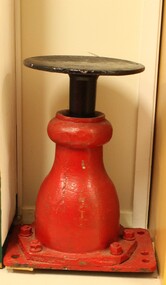
Functional object - NSW T- Wagon Buffer Stop
... These stops were attached to both ends of the wagon as part of the coupling system and to absorb any impact between wagons or carriages, This item is significant as it was typical of systems on locomotives used on the New South Wales and Victorian passenger and freight trains which serviced the northeast region of Victoria. railways buffer shock absorbers vintage trains New South Wales trains A large rigid metal Buffer stop from a NSW T class wagon. ...These stops were attached to both ends of the wagon as part of the coupling system and to absorb any impact between wagons or carriages, This item is significant as it was typical of systems on locomotives used on the New South Wales and Victorian passenger and freight trains which serviced the northeast region of Victoria. A large rigid metal Buffer stop from a NSW T class wagon. railways, buffer shock absorbers, vintage trains, new south wales trains -
 Wodonga & District Historical Society Inc
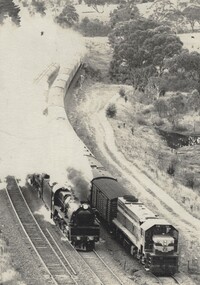
Photograph - Fred Rochow Railways Collection - Locomotives at Broadford, 15 April 1972
... Driver Vic Zeinert, Fireman C.Symes The X class were a class of mainline diesel locomotives built by Clyde Engineering for Victorian Railways between 1966 and 1976. X32 entered service on 8 September 1966. The V/Line Freight business was purchased from the Victorian government in 1999. ...railway services in Wodonga and throughout Northeast Victoria. The railways played a critical role in opening up Victoria and connecting Australia for trade, business, social communication and transport. Railways Wodonga Fred Rochow Wodonga Railwaymen X class diesel locomotive Locomotive R761 On front of locomotive on left "R761" On front of locomotive on right "X32" Locomotives at Broadford. Driver Vic Zeinert, Fireman C.Symes The X class were a class of mainline diesel locomotives built by Clyde Engineering for Victorian Railways between 1966 and 1976. X32 entered service on 8 September 1966. The V/Line Freight ...The Fred Rochow Railways Collection incorporates photos related to the operation of the Wodonga Railway Station including different types of trains and railways staff C. 1930 – 1990. It was donated to the Wodonga Historical Society by Fred Rochow, a railwayman who spent many years based in Wodonga. He joined the Victorian Railways on 17th June l947 and retired in 1988. For some time, he was a member of the Australian Federated Union of Locomotive Enginemen and served a term as a member of the Trades Hall Council. He had an extensive knowledge of the struggles that took place to achieve better conditions for railway workers. Fred worked for many years as a fireman and then worked his way up the ranks to driver, experiencing many changes from the days of steam locomotives through to diesel trains, locomotives and even the modern XPT train. He worked throughout Victoria at different stages of his career, with his final working years focused on the northeast of Victoria and the Albury to Melbourne line. After his retirement, Fred continued to share his love of steam miniature trains with the community. This collection has local and statewide significance as it captures images of trains, locomotives and personnel who operated the railway services in Wodonga and throughout Northeast Victoria. The railways played a critical role in opening up Victoria and connecting Australia for trade, business, social communication and transport. Locomotives at Broadford. Driver Vic Zeinert, Fireman C.Symes The X class were a class of mainline diesel locomotives built by Clyde Engineering for Victorian Railways between 1966 and 1976. X32 entered service on 8 September 1966. The V/Line Freight business was purchased from the Victorian government in 1999. Freight Australia was then sold to Pacific National in August 2004. Locomotive X32 was rebuilt as Locomotive XR555 and resumed service in October 2004 repainted in Pacific National blue and yellow livery. R761 - The R761 arrived in Victoria on the 28th February 1952 upon the ship ‘Helenus’ and entered service on the 9th April 1952. R761 spent long periods in storage and occasionally saw service until it was withdrawn. In 1970 R761 was overhauled and was made available for use on special trains. It became the final R class to run in VR service on the 5th September 1974, ending 120 years of mainline steam operation in Victoria. After years of debate about its future, on the 30th March 1985 the loco was officially returned to service, hauling special trains to celebrate the years of steam locomotives. On front of locomotive on left "R761" On front of locomotive on right "X32" railways wodonga, fred rochow, wodonga railwaymen, x class diesel locomotive, locomotive r761 -
 Wodonga & District Historical Society Inc
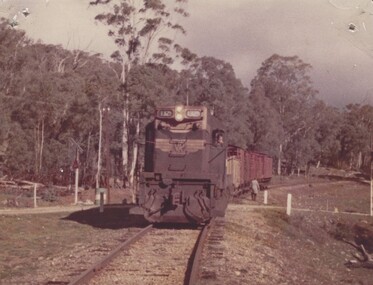
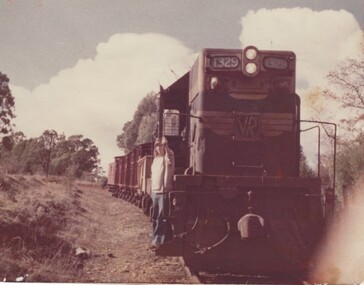
Photograph - Fred Rochow Railways Collection - Engine Instructor Geoff Williams
... Victorian Railways between 1955 and 1968. Locomotive T329 was part of the first order completed and entered service in June 1956. At that time, they became the most numerous diesel loco in Victoria. In 1984, the 13 first series T class locomotives were sent back to Clyde Engineering Plant at Somerton in Victoria for a complete rebuild after which they became the P class numbered P11 to P23. This included locomotive T329 which became Locomotive P12. The P Class have proven to be a reliable and dependable class, seeing service across the state in both passenger and freight...Victorian Railways between 1955 and 1968. Locomotive T329 was part of the first order completed and entered service in June 1956. At that time, they became the most numerous diesel loco in Victoria. In 1984, the 13 first series T class locomotives were sent back to Clyde Engineering Plant at Somerton in Victoria for a complete rebuild after which they became the P class numbered P11 to P23. This included locomotive T329 which became Locomotive P12. The P Class have proven to be a reliable and dependable class, seeing service across the state in both passenger and freight ...The Fred Rochow Railways Collection incorporates photos related to the operation of the Wodonga Railway Station including different types of trains and railways staff C. 1930 – 1990. It was donated to the Wodonga Historical Society by Fred Rochow, a railwayman who spent many years based in Wodonga. He joined the Victorian Railways on 17th June l947 and retired in 1988. For some time, he was a member of the Australian Federated Union of Locomotive Enginemen and served a term as a member of the Trades Hall Council. He had an extensive knowledge of the struggles that took place to achieve better conditions for railway workers. Fred worked for many years as a fireman and then worked his way up the ranks to driver, experiencing many changes from the days of steam locomotives through to diesel trains, locomotives and even the modern XPT train. He worked throughout Victoria at different stages of his career, with his final working years focused on the northeast of Victoria and the Albury to Melbourne line. After his retirement, Fred continued to share his love of steam miniature trains with the community. This collection has local and statewide significance as it captures images of trains, locomotives and personnel who operated the railway services in Wodonga and throughout Northeast Victoria. The railways played a critical role in opening up Victoria and connecting Australia for trade, business, social communication and transport. Engine Instructor Geoff Williams walking beside Locomotive 1329 to lift the hand brakes. The T class were a class of diesel locomotives built by Clyde Engineering, Granville, NSW for the Victorian Railways between 1955 and 1968. Locomotive T329 was part of the first order completed and entered service in June 1956. At that time, they became the most numerous diesel loco in Victoria. In 1984, the 13 first series T class locomotives were sent back to Clyde Engineering Plant at Somerton in Victoria for a complete rebuild after which they became the P class numbered P11 to P23. This included locomotive T329 which became Locomotive P12. The P Class have proven to be a reliable and dependable class, seeing service across the state in both passenger and freight duties. They often operated in push-pull mode, with a locomotive at each end of the train. The P class locomotives ceased being used for regular passenger operations in November 2012. Although locomotive P12 (T329) is primarily in storage it is still operational and can be hired for special events and as recently as 2017 was also used as an infrastructure maintenance train. At top of train between headlights "T329" In centre Victoria Railways logo "VR" fred rochow, victorian railways wodonga, locomotive 1329 -
 Wodonga & District Historical Society Inc
Photograph - Fred Rochow Railways Collection - Fireman Ian Sandford
... Victorian Railways between 1955 and 1968. Locomotive T329 was part of the first order completed and entered service in June 1956. At that time, they became the most numerous diesel loco in Victoria. In 1984, the 13 first series T class locomotives were sent back to Clyde Engineering Plant at Somerton in Victoria for a complete rebuild after which they became the P class numbered P11 to P23. This included locomotive T329 which became Locomotive P12. The P Class have proven to be a reliable and dependable class, seeing service across the state in both passenger and freight...Victorian Railways between 1955 and 1968. Locomotive T329 was part of the first order completed and entered service in June 1956. At that time, they became the most numerous diesel loco in Victoria. In 1984, the 13 first series T class locomotives were sent back to Clyde Engineering Plant at Somerton in Victoria for a complete rebuild after which they became the P class numbered P11 to P23. This included locomotive T329 which became Locomotive P12. The P Class have proven to be a reliable and dependable class, seeing service across the state in both passenger and freight ...The Fred Rochow Railways Collection incorporates photos related to the operation of the Wodonga Railway Station including different types of trains and railways staff C. 1930 – 1990. It was donated to the Wodonga Historical Society by Fred Rochow, a railwayman who spent many years based in Wodonga. He joined the Victorian Railways on 17th June l947 and retired in 1988. For some time, he was a member of the Australian Federated Union of Locomotive Enginemen and served a term as a member of the Trades Hall Council. He had an extensive knowledge of the struggles that took place to achieve better conditions for railway workers. Fred worked for many years as a fireman and then worked his way up the ranks to driver, experiencing many changes from the days of steam locomotives through to diesel trains, locomotives and even the modern XPT train. He worked throughout Victoria at different stages of his career, with his final working years focused on the northeast of Victoria and the Albury to Melbourne line. After his retirement, Fred continued to share his love of steam miniature trains with the community. This collection has local and statewide significance as it captures images of trains, locomotives and personnel who operated the railway services in Wodonga and throughout Northeast Victoria. The railways played a critical role in opening up Victoria and connecting Australia for trade, business, social communication and transport. Fireman Ian Sandford on steps of Locomotive T329. He is moving into position to apply the hand brakes. The T class were a class of diesel locomotives built by Clyde Engineering, Granville, NSW for the Victorian Railways between 1955 and 1968. Locomotive T329 was part of the first order completed and entered service in June 1956. At that time, they became the most numerous diesel loco in Victoria. In 1984, the 13 first series T class locomotives were sent back to Clyde Engineering Plant at Somerton in Victoria for a complete rebuild after which they became the P class numbered P11 to P23. This included locomotive T329 which became Locomotive P12. The P Class have proven to be a reliable and dependable class, seeing service across the state in both passenger and freight duties. They often operated in push-pull mode, with a locomotive at each end of the train. The P class locomotives ceased being used for regular passenger operations in November 2012. Although locomotive P12 (T329) is primarily in storage it is still operational and can be hired for special events and as recently as 2017 was also used as an infrastructure maintenance train. At top of train between headlights "T329" In centre Victoria Railways logo "VR" fred rochow, victorian railways wodonga, locomotive 1329 -
 Wodonga & District Historical Society Inc
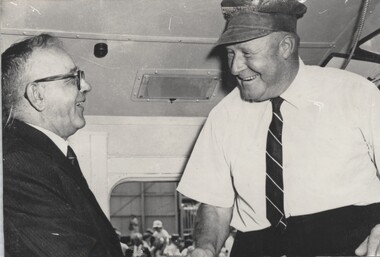
Photograph - Fred Rochow Railways Collection - Harry Binder on Locomotive S315, 3 January 1962
... S Class Diesel Locomotives The eighteen members of the S Class were ordered in two batches by the Victorian Railways from Clyde Engineering for express passenger and freight workings, with the final eight locomotives ordered specifically to work the North-East standard gauge line. Many were named after prominent Victorians. S315 entered service...S Class Diesel Locomotives The eighteen members of the S Class were ordered in two batches by the Victorian Railways from Clyde Engineering for express passenger and freight workings, with the final eight locomotives ordered specifically to work the North-East standard gauge line. Many were named after prominent Victorians. S315 entered service ...The Fred Rochow Railways Collection incorporates photos related to the operation of the Wodonga Railway Station including different types of trains and railways staff C. 1930 – 1990. It was donated to the Wodonga Historical Society by Fred Rochow, a railwayman who spent many years based in Wodonga. He joined the Victorian Railways on 17th June l947 and retired in 1988. For some time, he was a member of the Australian Federated Union of Locomotive Enginemen and served a term as a member of the Trades Hall Council. He had an extensive knowledge of the struggles that took place to achieve better conditions for railway workers. Fred worked for many years as a fireman and then worked his way up the ranks to driver, experiencing many changes from the days of steam locomotives through to diesel trains, locomotives and even the modern XPT train. He worked throughout Victoria at different stages of his career, with his final working years focused on the northeast of Victoria and the Albury to Melbourne line. After his retirement, Fred continued to share his love of steam miniature trains with the community. S Class Diesel Locomotives The eighteen members of the S Class were ordered in two batches by the Victorian Railways from Clyde Engineering for express passenger and freight workings, with the final eight locomotives ordered specifically to work the North-East standard gauge line. Many were named after prominent Victorians. S315 entered service on 16 October 1961 and was named after Sir Charles Gavan Duffy who was an Irish poet and journalist, Young Irelander and tenant-rights activist. After emigrating to Australia in 1856 he entered the politics of Victoria on a platform of land reform, and in 1871-72 served as the colony's 8th Premier. The S315 pulled the first goods train to travel straight through from Sydney to Melbourne on 3 January 1962. The S315 was withdrawn from service on 22 August 1988 and scrapped in April 1992. This collection has local and statewide significance as it captures images of trains, locomotives and personnel who operated the railway services in Wodonga and throughout Northeast Victoria. The railways played a critical role in opening up Victoria and connecting Australia for trade, business, social communication and transport. Harry Binder being congratulated by Commissioner Edgar Brownbill on the arrival of the first standard gauge goods train at North Dynon Terminal, The Fireman was John Wortmann. railways wodonga, fred rochow, wodonga railway men, harry binder, s class locomotive -
 Wodonga & District Historical Society Inc
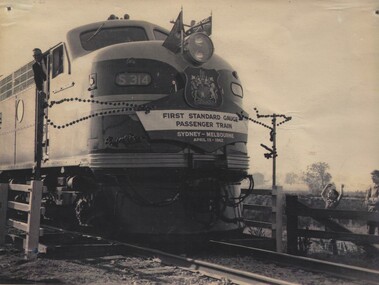
Photograph - Fred Rochow Railways Collection - First standard gauge passenger train from Sydney to Melbourne, 13 April 1962
... S Class Locomotives - The eighteen members of the S Class were ordered in two batches by the Victorian Railways from Clyde Engineering for express passenger and freight workings, with the final eight locomotives ordered specifically to work the North-East standard gauge line. Many were named after prominent Victorians. This collection has local and statewide significance as it captures images of trains, locomotives and personnel who operated the railway services ...The Fred Rochow Railways Collection incorporates photos related to the operation of the Wodonga Railway Station including different types of trains and railways staff C. 1930 – 1990. It was donated to the Wodonga Historical Society by Fred Rochow, a railwayman who spent many years based in Wodonga. He joined the Victorian Railways on 17th June l947 and retired in 1988. For some time, he was a member of the Australian Federated Union of Locomotive Enginemen and served a term as a member of the Trades Hall Council. He had an extensive knowledge of the struggles that took place to achieve better conditions for railway workers. Fred worked for many years as a fireman and then worked his way up the ranks to driver, experiencing many changes from the days of steam locomotives through to diesel trains, locomotives and even the modern XPT train. He worked throughout Victoria at different stages of his career, with his final working years focused on the northeast of Victoria and the Albury to Melbourne line. After his retirement, Fred continued to share his love of steam miniature trains with the community. S Class Locomotives - The eighteen members of the S Class were ordered in two batches by the Victorian Railways from Clyde Engineering for express passenger and freight workings, with the final eight locomotives ordered specifically to work the North-East standard gauge line. Many were named after prominent Victorians. This collection has local and statewide significance as it captures images of trains, locomotives and personnel who operated the railway services in Wodonga and throughout Northeast Victoria. The railways played a critical role in opening up Victoria and connecting Australia for trade, business, social communication and transport. The first standard gauge passenger train from Sydney to Melbourne pulled by Locomotive S314. This was made possible when part of Australia's gauge problem was solved with the construction of a new standard gauge line. The new line was a 317 km long line running from Albury, NSW, parallel to the existing broad gauge line to Melbourne, connecting Australia's two largest cities by standard gauge. S314 entered service on 24 April 1961 and was named after Sir John O'Shannassy who was the second Premier of Victoria. The S314 pulled the first passenger train to travel straight through from Sydney to Melbourne on 13 April 1962. On the morning of 7th February 1969, the southbound Southern Aurora collided head-on with a northbound goods train near Violet Town, Victoria. The Locomotive S314 was hauling the goods train and was destroyed by the impact of the collision. On front of locomotive "S314" On banner below Coat of Arms "FIRST STANDARD GAUGE PASSENGER TRAIN / SYDNEY - MELBOURNE/ APRIL 13 - 1962" railways wodonga, fred rochow, walker rail motor vehicles, wodonga to tallangatta rail service -
 Wodonga & District Historical Society Inc
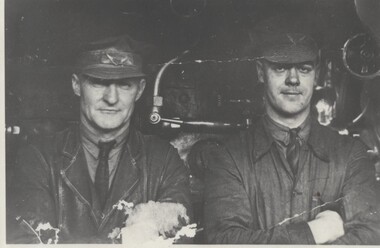
Photograph - Fred Rochow Railways Collection - Driver Ray Murphy and Fireman Bill Welsh, 1942
... railway services in Wodonga and throughout Northeast Victoria. The railways played a critical role in opening up Victoria and connecting Australia for trade, business, social communication and transport. Railways Wodonga Fred Rochow Wodonga Railwaymen Ray Murphy Bill Welsh Driver Ray Murphy and Fireman Bill Welsh in S-class Locomotive cab at Spencer Street Station, Melbourne. S Class Diesel Locomotives The eighteen members of the S Class were ordered in two batches by the Victorian Railways from Clyde Engineering for express passenger and freight ...The Fred Rochow Railways Collection incorporates photos related to the operation of the Wodonga Railway Station including different types of trains and railways staff C. 1930 – 1990. It was donated to the Wodonga Historical Society by Fred Rochow, a railwayman who spent many years based in Wodonga. He joined the Victorian Railways on 17th June l947 and retired in 1988. For some time, he was a member of the Australian Federated Union of Locomotive Enginemen and served a term as a member of the Trades Hall Council. He had an extensive knowledge of the struggles that took place to achieve better conditions for railway workers. Fred worked for many years as a fireman and then worked his way up the ranks to driver, experiencing many changes from the days of steam locomotives through to diesel trains, locomotives and even the modern XPT train. He worked throughout Victoria at different stages of his career, with his final working years focused on the northeast of Victoria and the Albury to Melbourne line. After his retirement, Fred continued to share his love of steam miniature trains with the community. This collection has local and statewide significance as it captures images of trains, locomotives and personnel who operated the railway services in Wodonga and throughout Northeast Victoria. The railways played a critical role in opening up Victoria and connecting Australia for trade, business, social communication and transport. Driver Ray Murphy and Fireman Bill Welsh in S-class Locomotive cab at Spencer Street Station, Melbourne. S Class Diesel Locomotives The eighteen members of the S Class were ordered in two batches by the Victorian Railways from Clyde Engineering for express passenger and freight workings, with the final eight locomotives ordered specifically to work the North-East standard gauge line. Many were named after prominent Victorians. railways wodonga, fred rochow, wodonga railwaymen, ray murphy, bill welsh -
 Wodonga & District Historical Society Inc
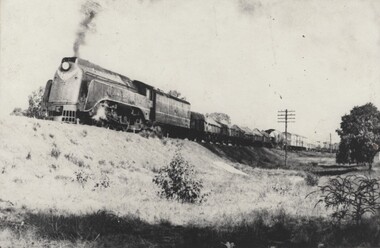
Photograph - Fred Rochow Railways Collection - S Class Locomotive, C. 1960s
... S Class Diesel Locomotives The eighteen members of the S Class were ordered in two batches by the Victorian Railways from Clyde Engineering for express passenger and freight workings, with the final eight locomotives ordered specifically to work the North-East standard gauge line. Many were named after prominent Victorians. They were introduced into service...railway services in Wodonga and throughout Northeast Victoria. The railways played a critical role in opening up Victoria and connecting Australia for trade, business, social communication and transport. Railways Wodonga Fred Rochow Wodonga Railwaymen S Class Locomotive An S Class locomotive pulling a goods train into Wodonga in its last days before being scrapped. S Class Diesel Locomotives The eighteen members of the S Class were ordered in two batches by the Victorian Railways from Clyde Engineering for express passenger and freight ...The Fred Rochow Railways Collection incorporates photos related to the operation of the Wodonga Railway Station including different types of trains and railways staff C. 1930 – 1990. It was donated to the Wodonga Historical Society by Fred Rochow, a railwayman who spent many years based in Wodonga. He joined the Victorian Railways on 17th June l947 and retired in 1988. For some time, he was a member of the Australian Federated Union of Locomotive Enginemen and served a term as a member of the Trades Hall Council. He had an extensive knowledge of the struggles that took place to achieve better conditions for railway workers. Fred worked for many years as a fireman and then worked his way up the ranks to driver, experiencing many changes from the days of steam locomotives through to diesel trains, locomotives and even the modern XPT train. He worked throughout Victoria at different stages of his career, with his final working years focused on the northeast of Victoria and the Albury to Melbourne line. After his retirement, Fred continued to share his love of steam miniature trains with the community. This collection has local and statewide significance as it captures images of trains, locomotives and personnel who operated the railway services in Wodonga and throughout Northeast Victoria. The railways played a critical role in opening up Victoria and connecting Australia for trade, business, social communication and transport. An S Class locomotive pulling a goods train into Wodonga in its last days before being scrapped. S Class Diesel Locomotives The eighteen members of the S Class were ordered in two batches by the Victorian Railways from Clyde Engineering for express passenger and freight workings, with the final eight locomotives ordered specifically to work the North-East standard gauge line. Many were named after prominent Victorians. They were introduced into service about 1957 railways wodonga, fred rochow, wodonga railwaymen, s class locomotive -
 Victorian Railway History Library
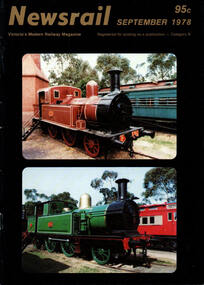
Journal - Newsrail September 1978, Australian Railway Historical Society, Victorian Division, Gippsland Line Electrification Part 2 and Regional Freight Centres, 1978
... Electric Railways Victoria Freight Services Victoria Gippsland Line Electrification Part 2 and Regional Freight Centres Index, ill, p. 24. Gippsland Line Electrification Part 2 and Regional Freight Centres Journal Newsrail September 1978 Australian Railway Historical Society, Victorian Division C. ...Gippsland Line Electrification Part 2 and Regional Freight CentresIndex, ill, p. 24. non-fiction Gippsland Line Electrification Part 2 and Regional Freight Centres electric railways victoria, freight services victoria
