
Showing 1290 items matching "victorian student"
-
 Creswick Campus Historical Collection - University of Melbourne
Document, Victorian School of Forestry. Student Duty Statements 1980, 1980
... Victorian School of Forestry. Student Duty Statements 1980...Document Victorian School of Forestry. Student Duty Statements 1980 Document ...Document -
 Flagstaff Hill Maritime Museum and Village
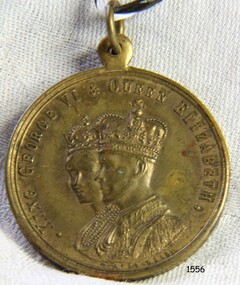
Medal - Commemorative Medal, Stokes & Sons, 1937
... ...Victorian student...Flagstaff Hill Flagstaff Hill Maritime Museum and Village Warrnambool Maritime Museum Maritime Village Great Ocean Road Shipwreck Coast medallion medal commemorative King George VI and Elizabeth 1937 12-05-1937 students in Victoria Schools in Victoria 7-5-1937 Victoria's Coat of Arms Peace & Prosperity British monarch British throne British Commonwealth numesmatics coil student Victorian student Obverse, around the circle: "KING GEORGE VI & QUEEN ELIZABETH" Reverse, around the circle: "TO COMMEMORATE THEIR MAJESTIES' CORONATION / MAY 12TH 1937" Reverse, within the Coat of Arms: "VICTORIA" "PEACE & PROSPERITY" Medal or medallion, bgilt rass, with claw and ring on top. ...This medal commemorates the coronation of King George VI and Elizabeth as monarchs on the British throne, to be held on May 12th, 1937. The medal is one of over 300,000 distributed to school children as a memento of the occasion. The obverse shows the busts of King George VI and Elizabeth facing left. The reverse shows Victoria's Coat of Arms, the official heraldic symbol, with the Southern Cross on a shield, above it is a kangaroo facing left and holding a crown. The supporting figure on the left holds an olive branch of 'peace' and the supporter on the right holds a cornucopia horn of 'plenty', together representing the text on the ribbon between them 'Peace & Planty' symbol of 'prosperity'. On May 7th, 1937 each school child in Victoria, Australia, received a medal commemorating the upcoming coronation of King George VI and Elizabeth, to be held on May 12th, 1937. medals totalling 318,200 were distributed to scholars in 2,781 Victorian schools. Each school received a letter from the Governor, Lord Humingfield, detailing the significance of the occasion. Lessons on the day focused on the meaning behind the medal, and children recited their Allegiance to the King, saluted the flag bearing the Union Jack and Southern Cross, and sang Australila's then National Anthem "God Save the King", which today is sung as the Royal Anthem. The medal is significant for connecting Victoria, and Australia, to the British Commonwealth and the sovereignty of the British throne, in Australia's post-Federation years. It shows the importance placed by the Government of Australia in educating the generation of students in 1937 about Australia's place in the Commonwealth and the history of Australia. The history of the medal is socially and politically significant, reflecting the evolution of changes in Australian society.Medal or medallion, bgilt rass, with claw and ring on top. The obverse has the bust of a female and male, co-joined, and the reverse has the Coat of arms of the State of Victoria, which includes a kangaroo above a shield and a supporting figure on either side of the shield. Inscriptions are on both sides of the medal. The medal commemorates the coronation of their Majesties, King George VI and Queen Elizabeth, on May 12th 1937.Obverse, around the circle: "KING GEORGE VI & QUEEN ELIZABETH" Reverse, around the circle: "TO COMMEMORATE THEIR MAJESTIES' CORONATION / MAY 12TH 1937" Reverse, within the Coat of Arms: "VICTORIA" "PEACE & PROSPERITY" flagstaff hill, flagstaff hill maritime museum and village, warrnambool, maritime museum, maritime village, great ocean road, shipwreck coast, medallion, medal, commemorative, king george vi and elizabeth, 1937, 12-05-1937, students in victoria, schools in victoria, 7-5-1937, victoria's coat of arms, peace & prosperity, british monarch, british throne, british commonwealth, numesmatics, coil, student, victorian student -
Federation University Historical Collection
Book - Book - Scrapbook, Ballarat College of Advanced Education: Scrapbook of newspaper cutting, Book 17; February 1986 to June 1986
... ...victorian student union...Mention of the Solutions Data Bank developed within the VIOSH program conducted at Ballarat College of Advanced Education. . employment advertisements application for enrolment outline of courses ballarat college of advanced education bcae dr ray watson psychologist moneghetti for world events musical cultural exchange annie begonia queen "cool burn" may save animals wombat state forest trainees at queen elizabeth centre course will benefit sport council president to national organisation dr don watts engineering study awards ricky calvert barry walker indian brewer returns n c mohan ram metallurgy medal to ian mckee political desert images geoff bonney jack coman garry kinnane lecturer biography of george johnston mayor crebbins graduates education for the nation degrees for dad and daughter paul hotchin a busy man robert morrow mining engineer the flab kids speech problems rife brett sinclair wins $1000 roderick ramsay top geology student pro david klein revisits merit for geologist filipino academic at bcae method to assess skills student nurses meet patients schools compete for environment awards students set to join vsu victorian student union first for local sculpture students adrian thomas head of perfoming arts key role in inventions head questions government plans saga of survival on the ice dick richards dr jim thyer physics lecturer old u s defence 'secret' safety solutions data bank dennis else Book with beige cover, front. ...Newspaper cuttings relating to Ballarat College of Advanced Education. These are from various newspapers and include The Age, Ballarat Courier, The Australian, The Herald. The cuttings cover the period from 15 February 1986 to 28 June 1986. Mention of the Solutions Data Bank developed within the VIOSH program conducted at Ballarat College of Advanced Education. . Book with beige cover, front. Spiral bound.employment advertisements, application for enrolment, outline of courses, ballarat college of advanced education, bcae, dr ray watson psychologist, moneghetti for world events, musical cultural exchange, annie begonia queen, "cool burn" may save animals, wombat state forest, trainees at queen elizabeth centre, course will benefit sport, council president to national organisation, dr don watts, engineering study awards, ricky calvert, barry walker, indian brewer returns, n c mohan ram, metallurgy medal to ian mckee, political desert images, geoff bonney, jack coman, garry kinnane lecturer, biography of george johnston, mayor crebbins graduates, education for the nation, degrees for dad and daughter, paul hotchin a busy man, robert morrow mining engineer, the flab kids, speech problems rife, brett sinclair wins $1000, roderick ramsay top geology student, pro david klein revisits, merit for geologist, filipino academic at bcae, method to assess skills, student nurses meet patients, schools compete for environment awards, students set to join vsu, victorian student union, first for local sculpture students, adrian thomas, head of perfoming arts, key role in inventions, head questions government plans, saga of survival on the ice, dick richards, dr jim thyer physics lecturer, old u s defence 'secret', safety solutions data bank, dennis else -
 Department of Energy, Environment and Climate Action
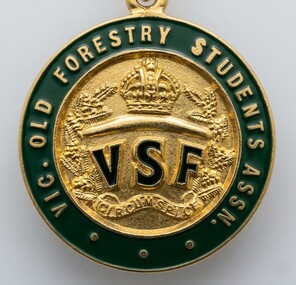
Victorian Old Forestry Students Association Medallion
... The graduates of the School formed the Victorian Old Forestry Students Association and produced an annual magazine Sylvanite, from 1920. ...Medallion with Victorian Old Forestry Students Association emblem...The graduates of the School formed the Victorian Old Forestry Students Association and produced an annual magazine Sylvanite, from 1920. ...The graduates of the School formed the Victorian Old Forestry Students Association and produced an annual magazine Sylvanite, from 1920. The Association aimed to preserve the school spirit, personal contacts and close friendships. The magazine was a means of not only maintaining contact between the foresters after graduation but also serving as a technical journal. But the Association and the magazine seem to have fizzled out by 1930, which helps to date this medallion. In 1934, the first issue of The Victorian Forester was published. This was replaced in 1953 with the Victorian State Foresters Association Newsletter which continued until demise of the Forests Commission in the mid-1980s. Both publications aimed share information about technical, social and other matters to all forestry staff. The Forests Commission Retired Personnel Association (FCRPA) was formed in 1979 and continues to this day with over 150 members. Medallion with Victorian Old Forestry Students Association emblemCIRCUMSPICEvictorian school of forestry (vsf) -
 Federation University Historical Collection
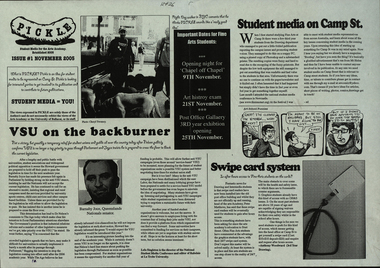
Newsletter, Pickle: Student Media for the Arts Academy, Issue 1, November 2005, 11/2005
... ...victorian students union...student...The Arts Academy is the Camp Street campus of Federation University Australia, and was established in 2005 arts academy camp street barnaby joyce victorian students union student media art school funnies swipe card system post office gallery exhibition anthony woodward lefa singleton A3 newsletter covering items of interest to the newly established Arts Academy, Camp Street Campus. ...The Arts Academy is the Camp Street campus of Federation University Australia, and was established in 2005A3 newsletter covering items of interest to the newly established Arts Academy, Camp Street Campus. arts academy, camp street, barnaby joyce, victorian students union, student media, art school funnies, swipe card system, post office gallery exhibition, anthony woodward, lefa singleton -
 Kiewa Valley Historical Society
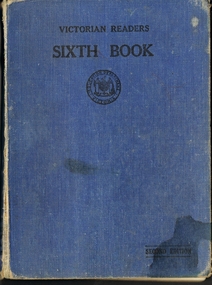
Book - English Reader, Victorian Readers Sixth Book, 1940
... This book is a sixth grade reader which all Victorian students would have read during the 1940's. ...This book is a sixth grade reader which all Victorian students would have read during the 1940's. ...This book is a sixth grade reader which all Victorian students would have read during the 1940's. The book is made up of poems and stories, some which are still known and told today. Some pages have drawings that relate to the story of poems. This is historically significant due to showing what children read during the 1940's in schools across Victoria. Also it is a good comparison to what grade six children read now. Therefore it has good interpretation value and would be good in local school exhibitions. The names on the book indicate that this book came from a local famil, the Johnson and was read to two children of that family which gives this good social history. Some of the pages have had their pictured colored in by the student and words that have been underlined. These could have been harder words for the students to learn and seem advanced for grade six children to read. Book has a blue coverVICTORIAN READERS SIXTH BOOK, second edition, Victorian education stamp on front cover, SIXTH BOOK and EDUCATION DEPARTMENT VICTORIA ON SPIN. Inside cover has the names, Lorraine Margaret Johnson, Allan Johnson and Alice Payork? but that name has been crossed out and John with the son crossed out. All these names hand written in ink pen. book, school, reader, grade 6, department of education. children, stories, poems. -
 City of Moorabbin Historical Society (Operating the Box Cottage Museum)
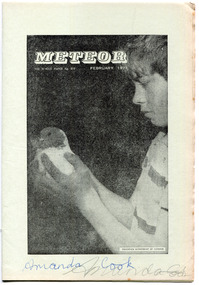
Magazine - Meteor The School Paper 1971 - 11 Editions, Albert J Mullett Government Printer for Education Dept Victoria, 1971
... Issue no 807 - 828 of The School Paper Feb 1970 - 11 Editions issued for Victorian State School students by Education Department of Victoria ....Issue no 807 - 828 of The School Paper Feb 1970 - 11 Editions issued for Victorian State School students by Education Department of Victoria . ...Issue no 807 - 828 of The School Paper Feb 1970 - 11 Editions issued for Victorian State School students by Education Department of Victoria .Issued by the Education Department of Victoria, printed A. C. Brooks, Government Printer, MelbourneMagazines distributed by the Education Department of Victoria to State School Children.METEOR / The School Paper / February 1971 to December 1971 Education Dept of Victoria Signed Amanda Cook education, victoria, australian history, victorian education department -
 City of Moorabbin Historical Society (Operating the Box Cottage Museum)
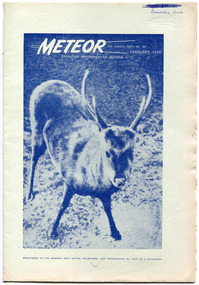
Magazine - Meteor The School Paper 1970 - 11 Editions, Albert J Mullett Government Printer for Education Dept Victoria, 1970
... Issue no 807 - 828 of The School Paper Feb 1970 - Dec 1970, 11 Editions issued for Victorian State School students by Education Department of Victoria ....Issue no 807 - 828 of The School Paper Feb 1970 - Dec 1970, 11 Editions issued for Victorian State School students by Education Department of Victoria . ...Issue no 807 - 828 of The School Paper Feb 1970 - Dec 1970, 11 Editions issued for Victorian State School students by Education Department of Victoria .Issued by the Education Department of Victoria, printed A. C. Brooks, Government Printer, MelbourneMagazines distributed by the Education Department of Victoria to State School Children.METEOR / The School Paper / No. 807 February 1970 to No. 817 December 1970 Education Dept of Victoria Signed Amanda Cook education, victoria, australian history, victorian education department -
 University of Melbourne, Burnley Campus Archives
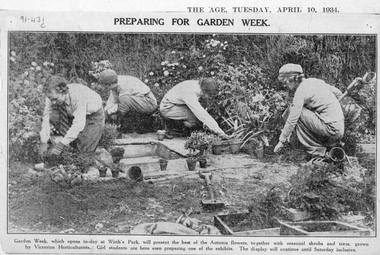
Newspaper - Newspaper Cutting, The Age, Preparing for Garden Week, 1934
... Students are: Evelyn Yule (1932), Betty Holmes (1932), Margaret Doherty (1932) and Alice Gascodine (1933) in no particular order although Alice Glascodine probably on right.. 2 copies. Text below the photo: "Garden week, which opens today at Wirth's Park, will present the best of the Autumn flowers, together with seasonal shrubs and trees, grown by Victorian horticulturalists. ...Students are: Evelyn Yule (1932), Betty Holmes (1932), Margaret Doherty (1932) and Alice Gascodine (1933). 2 copies. Text below the photo: "Garden week, which opens today at Wirth's Park, will present the best of the Autumn flowers, together with seasonal shrubs and trees, grown by Victorian horticulturalists. ...Students are: Evelyn Yule (1932), Betty Holmes (1932), Margaret Doherty (1932) and Alice Gascodine (1933) in no particular order although Alice Glascodine probably on right.. 2 copies. Text below the photo: "Garden week, which opens today at Wirth's Park, will present the best of the Autumn flowers, together with seasonal shrubs and trees, grown by Victorian horticulturalists. ...Students are: Evelyn Yule (1932), Betty Holmes (1932), Margaret Doherty (1932) and Alice Gascodine (1933) in no particular order although Alice Glascodine probably on right.. 2 copies. Text below the photo: "Garden week, which opens today at Wirth's Park, will present the best of the Autumn flowers, together with seasonal shrubs and trees, grown by Victorian horticulturalists. Girl students are here seen preparing one of the exhibits. The display will continue until Saturday inclusive." 1. The Age, April 10, 1934. Newspaper cutting of b/w photograph of four female students preparing a garden display for Garden Week at Wirth's Circus. Students are: Evelyn Yule (1932), Betty Holmes (1932), Margaret Doherty (1932) and Alice Gascodine (1933). 2 copies. Text below the photo: "Garden week, which opens today at Wirth's Park, will present the best of the Autumn flowers, together with seasonal shrubs and trees, grown by Victorian horticulturalists. Girl students are here seen preparing one of the exhibits. The display will continue until Saturday inclusive." 2. "Garden Week Preparations," newspaper article The Sun News-Pictorial 10 April, 1934. 3. "While Remember" by "Annette" The Herald 11 April, 1934. 4. "Garden Week Opens," The Age 11 April. 1934 female students, evelyn yule, betty holmes, margaret doherty, alice gascodine, garden week 1934, wirth's park -
 Orbost & District Historical Society
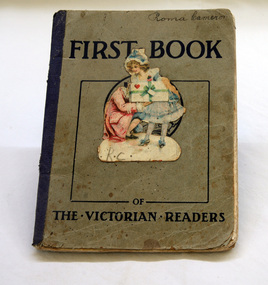
school reader, 1928
... This book is an early reader which all Victorian students would have read during the 1930's. ...This book is an early reader which all Victorian students would have read during the 1930's. ...This book is an early reader which all Victorian students would have read during the 1930's. The book is made up of poems and stories. The Victorian Readers, one for each of the grades that then comprised the primary school, were first published by the Victorian Education Department between 1927 and 1930. Much of content of these readers was British in origin but there was an attempt to add the works of some Australian authors. This book was owned and used by Roma Cameron. Roma Cameron was the daughter of Harry Purchase Cameron and Lilian Gladys (nee Harding). Roma married Ronald Richard Smith in 1944 and is the mother of Lorraine (Mrs Peter Coulton) and Margaret Smith. Harry's father, James Cameron, came to Bellagoogan on Majors Creek in 1882. Bellagoogan was on Majors Creek near Orbost and was the site of the first race course. Like many others at the time, the Camerons bred race horses.Harry died in 1964 aged 75. Roma was the youngest of three siblings: Jean (Mrs John Gavin (Jack) Ralston) and James (Jim) (m. Joan Hosack). This is historically significant showing what young children were reading during the 1920's and 30's in schools across Victoria. It is vastly different to readers used in schools today. The Victorian Readers provide an insight into the teaching of reading in Victoria and offer an overview of the values and behaviours that were taught and reinforced in schools in the first half of the 20th century.A small grey covered book of 98pp. It is titled "First Book of The Victorian Readers". A picture has been pasted over the original b/w drawing of a young boy reading,on front cover: Roma Cameroneducation reader cameron -
 Hume City Civic Collection
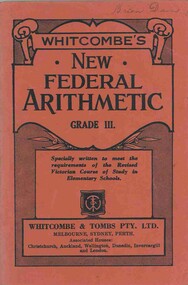
Booklet, Whitcombe's New Federal Arithmetic, Grade III, 1944
... Whitcombe,s publishing company produced a number of school textbooks in many subjects which were used by students in Victorian Schools. This one covered skills covered in Grade 3. ...Whitcombe,s publishing company produced a number of school textbooks in many subjects which were used by students in Victorian Schools. This one covered skills covered in Grade 3. ...The book has been written to cover all aspects of the teaching of arithmetic in the course of study for Victorian Schools.A soft cover school textbook covering the Grade 3 Arithmetic course for primary schools. The orange cardboard cover is bound on the spine with two staples and the printing on the inside and outside cover is black. non-fictionThe book has been written to cover all aspects of the teaching of arithmetic in the course of study for Victorian Schools.arithmetic, grade 3, victorian schools -
 Hume City Civic Collection
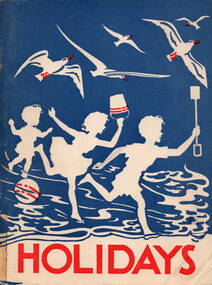
Book - School Reader, Victorian Education Department, Holidays, 1953
... An official school reader for Grade 2 students throughout Victorian Schools from 1953 until the late 1970s and published by the Education Department. ...An official school reader for Grade 2 students throughout Victorian Schools from 1953 until the late 1970s and published by the Education Department. ...A book with 104 pages and a cardboard cover, bound with two staples along the spine. The back and front covers feature a blue and white silhouette drawing of three children at the beach with seagulls flying overhead and the title ' Holidays' in red.non-fictionvictorian education department, school readers, pllaymates. -
 Warrnambool and District Historical Society Inc.
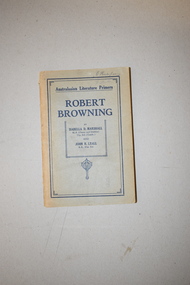
Book - Australasian Literature Primers, Whitcombe & Tombs Pty Ltd, Robert Browning, 1940s
... This is a school literature text book for senior students in Victorian schools in the early to mid 20th century. ...This is a school literature text book for senior students in Victorian schools in the early to mid 20th century. ...This is a school literature text book for senior students in Victorian schools in the early to mid 20th century. The editors are Isabella Marshall and John Lyall. Text books such as this one were mass produced and focus on the poems to be studied with a cheap and unattractive format. No information is available on the owner of the book, Ben Knapsey.This book is a good example of the texts used by senior students in Victorian schools in the early to mid 20th century and is retained to be included in our library collection of vintage school text books.This is a soft cover book of 132 pages. It is a school text book for senior classes. It has a blue cover, now faded, with dark blue printing. The pages contain a preface, an introduction, selections of Robert Browning’s poetry, and notes and questions. There are some advertisements for other school text books.Ben Knapsey Form 1Vschool texts in the mid 20th century, history of warrnambool -
 Linton and District Historical Society Inc
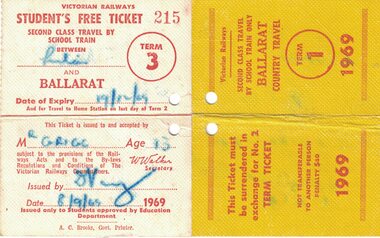
Ticket, Victorian Railways "Student's Free Ticket", 1968-1971
... Inside has the words "Victorian Railways / Student's Free Ticket" and the ticket number, the student's name and age, signature of issuer, date of issue and expiry date. ...On the inside of the ticket the date has been altered. Victorian Railways "Student's Free Ticket", 1968-1971 Ticket ...A collection of five tickets which were issued to Chris Grigg of Linton between 1968 and 1971 for travel on the Linton-Ballarat school train. Tickets were issued for each term of the school year. They consist of a small card designed to fold in two, to be stored in wallet or similar. Outside of folded ticket is yellow, with year and term number. On the front, printed in red, the words "Victorian Railways /Second class travel by school train only / Ballarat country travel", and on the back, the year, and the words: "This Ticket must be surrendered to Stationmaster on expiry / Not transferrable to another person / Penalty $40". Inside has the words "Victorian Railways / Student's Free Ticket" and the ticket number, the student's name and age, signature of issuer, date of issue and expiry date. Note: the ticket issued for Term 2, 1971, is actually a ticket printed for 1969. On the inside of the ticket the date has been altered.victorian railways, linton school train, tickets, chris grigg -
 Federation University Historical Collection
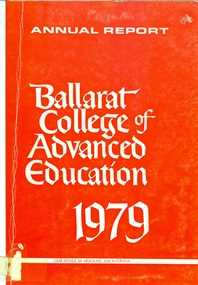
Book, Ballarat College of Advanced Education Annual Report, 1979, 1979
... Contents include: Courses, student numbers, Victorian School of Forestry, financial statement, Education Building (T Building) completed, Gillies Street Campus, Art building under construction, Great Hall (1870s Founders Hall) completion date expected to be mid 1980, Centenary Appeal, E.J. ...Contents include: Courses, student numbers, Victorian School of Forestry, financial statement, Education Building (T Building) completed, Gillies Street Campus, Art building under construction, Great Hall (1870s Founders Hall) completion date expected to be mid 1980, Centenary Appeal, E.J. ...In 1980 the President was M.B. John. In 1980 the administration staff moved out of the lower level of the library and the space was converted for teaching use. Extensive alterations were made to the lower level of the mechanical/Civil Engineering wing for the housing of Applied Geology and Environmental Science. Car parking facilities were extended at Mt Helen.Orange soft covered book of 35 pages. Contents include: Courses, student numbers, Victorian School of Forestry, financial statement, Education Building (T Building) completed, Gillies Street Campus, Art building under construction, Great Hall (1870s Founders Hall) completion date expected to be mid 1980, Centenary Appeal, E.J. Barker Library, Computer Centre, bookshop . ballarat college of advanced education, bcae, mt helen, mount helen, library computer -
 Flagstaff Hill Maritime Museum and Village
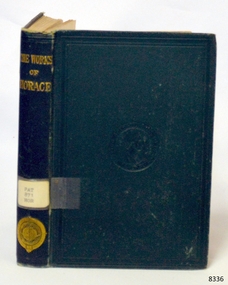
Book - Lyrical Poems, Samuel Lee (Translator), The Works of Horace, 1890
... Instead, Lee and Lonsdale provided clean, running prose analyses, introductions, and historical notes that allowed Victorian readers and students to understand exactly what the original Latin text stated, line by line....Instead, Lee and Lonsdale provided clean, running prose analyses, introductions, and historical notes that allowed Victorian readers and students to understand exactly what the original Latin text stated, line by line. ...The original author of this work was Quintus Horatius Flaccus, one of the leading Roman lyric poets during the time of Augustus Caesar (1st century BCE). This volume features the complete surviving works of Horace, rendered entirely into English prose. It includes his famous Odes, or lyrical poems, as well as his earlier poems on politics and social issues of the time. It also features his Satires, which offer humorous commentaries on Roman life, and his Epistles, or letters in verse, which include his highly influential work on literary criticism, the Ars Poetica (or The Art of Poetry).The Works of Horace Author: James Lonsdale and Samuel Lee Publisher: Macmillan And Co Date: 1890 Further Information: non-fictionThe original author of this work was Quintus Horatius Flaccus, one of the leading Roman lyric poets during the time of Augustus Caesar (1st century BCE). This volume features the complete surviving works of Horace, rendered entirely into English prose. It includes his famous Odes, or lyrical poems, as well as his earlier poems on politics and social issues of the time. It also features his Satires, which offer humorous commentaries on Roman life, and his Epistles, or letters in verse, which include his highly influential work on literary criticism, the Ars Poetica (or The Art of Poetry).flagstaff hill, warrnambool, shipwrecked coast, flagstaff hill maritime museum, maritime museum, shipwreck coast, flagstaff hill maritime village, great ocean road, book, pattison collection, warrnambool library, warrnambool mechanics’ institute, ralph eric pattison, corangamite regional library service, warrnambool city librarian, mechanics’ institute library, victorian library board, warrnambool books and records, warrnambool children’s library, the works of horace, samuel lee, james lonsdale, latin translated text -
 Warrnambool and District Historical Society Inc.
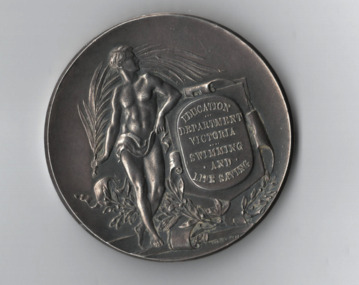
Medallion, Education Department Victoria
... The award was given to students in Victorian schools for advanced prowess in swimming and lifesaving. ...The award was given to students in Victorian schools for advanced prowess in swimming and lifesaving. ...This medallion was awarded to Mirth Marfell for swimming. The award was given to students in Victorian schools for advanced prowess in swimming and lifesaving. Mirth Marfell was a student at Warrnambool High School in 1935 when she received the medallion. Warrnambool High School was established as an Agricultural High School in 1907 and, after a merger with Warrnambool North Technical School, it is known today as Warrnamboool College. Mirth Marfell, the daughter of Henry and Helena Marfell, was born in Warrnambool in 1919. Her grandfather, John Marfell, a Warrnambool hay and corn dealer and miller connected to the Warrnambool Co-operative Milling Company, was prominent in community and civic affairs in the town. Mirth Marfell completed her nursing training at the Warrnambool Base Hospital and served in the Australian Army Nursing Service in World War Two for five years. She then became the first Australian nursing organizer for the Victorian Royal College of Nursing. This medallion is of interest, firstly as an example of the medallion given to students for swimming achievements in the 1930s in Victorian schools and secondly because it was awarded to Mirth Marfell, a Warrnambool person who had a distinguished nursing career.Circular metal medallion . Obverse features raised semi naked figure holding a cloth across the lower torso with one hand and a palm like branch in the other hand, an oval shield with text and decorative sprays of leaves. The reverse features the back of a naked female figure with long hair and a trident holding the hand of a child half immersed in the sea, another child"s head is raised above the sea. A lighthouse is featured on the distant shore. MIRTH MARFELL 1933. 34 on rim EDUCATION DEPARTMENT VICTORIA SWIMMING AND LIFE SAVINGmirth marfell, warrnambool co-operative milling company, australian army nursing service, history of warrnambool -
 Warrnambool and District Historical Society Inc.
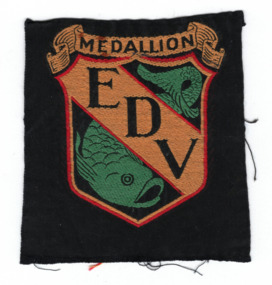
Cloth badge, Swimming award
... The award was given to students in Victorian schools for advanced prowess in swimming and lifesaving. ...The award was given to students in Victorian schools for advanced prowess in swimming and lifesaving. ...This badge was awarded to Mirth Marfell for a swimming award (Medallion - Education Department of Victoria). The award was given to students in Victorian schools for advanced prowess in swimming and lifesaving. Mirth Marfell was a student at Warrnambool High School in 1935 when she received the cloth badge for attaching to a blazer or other item of clothing. Warrnambool High School was established as an Agricultural High School in 1907 and, after a merger with Warrnambool North Technical School, it is known today as Warrnamboool College. Mirth Marfell, the daughter of Henry and Helena Marfell, was born in Warrnambool in 1919. Her grandfather, John Marfell, a Warrnambool hay and corn dealer and miller connected to the Warrnambool Co-operative Milling Company, was prominent in community and civic affairs in the town. Mirth Marfell completed her nursing training at the Warrnambool Base Hospital and served in the Australian Army Nursing Service in World War Two for five years. She then became the first Australian nursing organizer for the Victorian Royal College of Nursing. This cloth badge is of interest, firstly as an example of the badge given to students for swimming achievements in the 1930s in Victorian schools and secondly because it was awarded to Mirth Marfell, a Warrnambool person who had a distinguished nursing career.Rectangular machine embroidered cloth badge.. The front features a gold colored scroll with text, a red and gold bordered shield, a diagonal red bordered slash with text bisecting an emerald green fish on a black background. MEDALLION E D V mirth marfell, warrnambool high school, agricultural high school, warrnamboool college, warrnambool north technical school, history of warrnambool -
 City of Melbourne Libraries
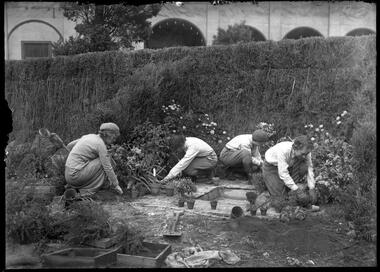
Photograph, Bull, Hugh Jones, 1897-1993, Burnley Ex-Students' Association preparing for Garden Week display, South Melbourne
... Retrieved February 2, 2026, from http://nla.gov.au/nla.news-article203840965 Caption: "Garden Week, which opens to-day at Wirth's Park, will present the best of the Autumn flowers, together with seasonal shrubs and trees, grown by Victorian Horticulturists. Girl students are here seen preparing one of the exhibits. ...Retrieved February 2, 2026, from http://nla.gov.au/nla.news-article203840965 Caption: "Garden Week, which opens to-day at Wirth's Park, will present the best of the Autumn flowers, together with seasonal shrubs and trees, grown by Victorian Horticulturists. Girl students are here seen preparing one of the exhibits. ...Photographer notations on slide: B21 Published: 10 April 1934 Published title and caption: Preparing for Garden Week Reference: PREPARING FOR GARDEN WEEK. (1934, April 10). The Age (Melbourne, Vic. : 1854 - 1954), p. 11. Retrieved February 2, 2026, from http://nla.gov.au/nla.news-article203840965 Caption: "Garden Week, which opens to-day at Wirth's Park, will present the best of the Autumn flowers, together with seasonal shrubs and trees, grown by Victorian Horticulturists. Girl students are here seen preparing one of the exhibits. The display will continue until Saturday inclusive." Description: Female gardeners from the School of Horticulture, Burley, preparing an exhibit for Autumn Garden Week located at Wirth's Park on the site of the current Melbourne Arts Centre. A horticultural training establishment commenced at Burnley in 1891. Women were allowed to attend from 1899 under the enlightened leadership of Charles Luffman. By 1934, following the tragic impacts of World War One, women were both required and determined to earn a living and to be paid landscape architects, designers and managers. Wearing trousers and overalls was an outward indicator that should they wish, they could be horticulturalists, not just gardeners. Garden Week was billed as one of the most important floral displays held in Australia, showcasing flowers, fruit and vegetables, bulbs, succulents, garden ornaments, practical appliances and garden literature. There were large display halls and model gardens - designed to provide inspiration to the amateur gardener and showcase Victorian producers. Featured in "Newsworthy: Melbourne in photographs 1933-1936" exhibition at East Melbourne Library, October to December 2023. Exhibition caption by project volunteer, Louise McKenzie. In January 2026, volunteer Fiona Collyer contacted Burnley Campus Archives at University of Melbourne to share the image. Jane Wilson, Manager of the Burnley Campus Archives, University of Melbourne, supplied the following information: "I find that we actually have that photograph as a newspaper cutting, sent in from a former student. This is some additional information: Students are: Evelyn Yule (1932), Betty Holmes (1932), Margaret Doherty (1932) and Alice Glascodine (later Mrs. Tucker) (1933). Alice sent us the newspaper cutting." Alice didn't specify who was who in the photograph but noted: "An earlier cataloguer had thought Alice was the one on the right, but I’m not sure."Photographer notations on slide: "B21".gardens, events, 1930-1939, horticulture, world war 1, gardening, women gardeners, jodhpurs, clothing and dress, burnley horticultural college -
Federation University Historical Collection
Programme, Programme for the Official Opening of the Mt Helen Campus, 10/1970
... student amenities. Over the next two years a further four buildings, costing about $2,500,000, will be erected, and a further major portion of the Institute will move to Mt Helen. these buildings, in addition to one for direct teaching work, will include a Library, a Union and the first stage of a Hall of Residence." university of ballarat ballarat school of mines biae mount helen mt helen campus mb john jack barker e.j. barker rolly parfenovics parfenovics nigel bown campus. victorian institute of colleges m.b. john White, folded, paper programme printed on the occasion of the official opening of the Ballarat Institute of Advanced Education (BIAE) Mount Helen Campus on the occasion of the centenary of the Ballarat School of Mines Programme for the Official Opening of the Mt Helen Campus Programme Waller and Chester ...The first building at the Mt Helen Campus was opened in October 1970. Students first starting using the campus in the same year. The programme includes the following historical information: "On 26th October, 1870, Sir Redmond Barry officially opened the first venture into formal technical education in Australia - the Ballarat School of Mines. Over the preceding year a small group of Ballarat citizens interested in mining had conceived and brought into being the idea of creating such a school. They leased a derelict Court House next to the Ballarat Gaol in Lydiard St., at a nominal rental for15 years, and started classes with 4 students and an honorary lecturer. The School developed its courses beyond the initially intended range of studies related to mining, increased in enrolments, took over neighbouring properties and buildings and developed three levels of education - tertiary, trade and secondary. From the latter part of the 19th Century, even though remaining under the control of its own autonomous Council, it developed close links with the State Education Department. From the earliest times the School achieved widespread recognition and a particularly high reputation, and its graduates spread across Australia and the world. For several years it was affiliated with Melbourne University. In the last decade its scope has been further broadened by the introduction of new tertiary courses. During 1965 the State Government created the Victoria Institute of Colleges - a non-teaching body empowered to award degrees and directed towards the task of co-ordinating and developing tertiary education in Victorian in institutions other than universities. the tertiary division of the School became affiliated with the V.I.C. at the end of that same year. Subsequently the Council of the School decided that, whilst retaining for the whole establishment the time honoured title - The School of Mines and Industries, Ballarat - it should more distinctly sub-title the three divisions. the tertiary division then became known as the Ballarat Institute of Advanced Education. On receipt of substantial Commonwealth-State Grants, made to it as a college of advanced education, the Council was enabled at the start of 1967, to purchase for the Institute the 20 acre campus at Mt Helen. A master plan has been produced to develop this beautiful and spacious site as a tertiary institution enrolling, in due course, some 3000 full time students. the first sod was turned, to initiate this development, by the then Governor General of Australia, The Right Honourable Lord Casey, on 19th October, 1967. The first building group, now completed and occupied, has involved an expenditure approaching $1,000,000. It contains the departments of Mechanical, Civil and Mining Engineering, Metallurgy and Geology. it also contains the Computer Centre, a temporary Library and temporary student amenities. Over the next two years a further four buildings, costing about $2,500,000, will be erected, and a further major portion of the Institute will move to Mt Helen. these buildings, in addition to one for direct teaching work, will include a Library, a Union and the first stage of a Hall of Residence."White, folded, paper programme printed on the occasion of the official opening of the Ballarat Institute of Advanced Education (BIAE) Mount Helen Campus on the occasion of the centenary of the Ballarat School of Minesuniversity of ballarat, ballarat school of mines, biae, mount helen, mt helen campus, mb john, jack barker, e.j. barker, rolly parfenovics, parfenovics, nigel bown, campus. victorian institute of colleges, m.b. john -
 Federation University Historical Collection
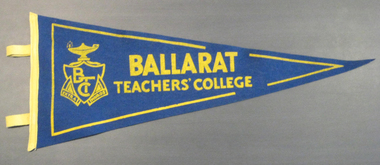
Flag - Pennant, Ballarat Teachers' College Pennant
... The Ballarat Teachers' College was established after the Victorian State Government and the State Education Department decided to establish two provincial teachers' colleges, at Ballarat and Bendigo. On 04 May 1926 W.H. Ellwood (Principal), Miss A. Bouchier, and Mr A.B. Jones, welcomed the first enrolment of 61 students...The Ballarat Teachers' College was established after the Victorian State Government and the State Education Department decided to establish two provincial teachers' colleges, at Ballarat and Bendigo. On 04 May 1926 W.H. Ellwood (Principal), Miss A. Bouchier, and Mr A.B. Jones, welcomed the first enrolment of 61 students ...The Ballarat Teachers' College was established after the Victorian State Government and the State Education Department decided to establish two provincial teachers' colleges, at Ballarat and Bendigo. On 04 May 1926 W.H. Ellwood (Principal), Miss A. Bouchier, and Mr A.B. Jones, welcomed the first enrolment of 61 students to undertake the one year course. In 1927 the College moved to the former Ballarat East Town Hall in Barkly Street, which was remodelled for their use. It closed in December 1931 due to the Great Depression. In 1946 Ballarat Teachers' College reopened and relocated to the Dana Street State School. It was originally planned to open as a women's college, for whom the residence at 130 Victoria Street was purchased, but the decision was made to admit resident men from Ballarat. Mr T.W. Turner was appointed as Principal in 1951 and directed the introduction of a two year course for the Trained Primary Teachers' Certificate. The former one year course was terminated at the end of 1951. In 1958 the College was relocated to a custom built facility at Gillies Street, in close proximity to the Ballarat Botanical Gardens. Numbers increased with the introduction of the Trained Infant Teachers' Certificate course under the guidance of Mary Egan. With the introduction of a three year Diploma Course in 1968 accommodation became cramped. The introduction of the Diploma of Teaching (Primary) led to the Trained Infant Teachers' Certificate being discontinued in 1969, and the end of the Trained Primary Teachers' Certificate in 1969. Secondary Art and Craft students began studies at Ballarat Teachers' College in 1969 under Mr Ted Doney. In 1971 Mr D. Watson was appointed Principal. The State College of Victoria was proclaimed by Order in Council on 24 July 1973, and Ballarat Teachers' College became a constituent college of the State College of Victoria, and was known as State College of Victoria, Ballarat. By 1975 the College moved to Mount Helen as part of the Ballarat College of Advanced Education. Pre service teachers currently undertake their studies on the Mount Helen Campus of Federation University. ("Ruffians Attempted to Carry of the School Tent: A History of State Education in Ballarat", 1974, p73-4.) Blue Pennant with yellow screened writing 'Ballarat Teachers' College.'ballarat teachers' college, pennant, textiles, herbert werner frederick de nully -
 Federation University Historical Collection
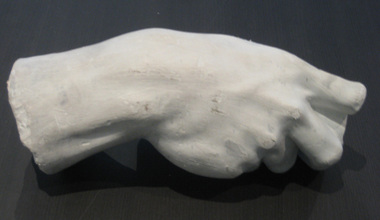
Equipment - Object, Otto Waschatz, Cast of Hand, Plaster Cast Drawing Prop
... The Victorian Education Department courses required art students to create studies based on ancient sculptures so copies of famous works were purchased as teaching aids. ...The Victorian Education Department courses required art students to create studies based on ancient sculptures so copies of famous works were purchased as teaching aids. ...The Ballarat Technical Art School boasted a well-stocked Antique Room replete with plaster copies of classical, Renaissance and Gothic sculptural examples, which were used as drawing props by students. The school inherited some casts from its predecessor institutions, and further consignments were purchased during the 1920s, including full length, bust and relief figures, as well as dozens of ornamental and architectural casts. Unfortunately, much of the collection was lost or destroyed in the late 1950s. This is one of the few surviving pieces, with TAFE students reportedly drawing from it into the twenty-first century. This plaster hand is inscribed “Waschatz, Modeller, Melbourne.” Otto Waschatz was a German plasterer who opened a plaster business in the Melbourne suburb of Richmond, and was responsible for the invention of the first true fibrous plaster - using a layer of hemp laid between plaster to create light and strong panels. By 1912 Waschatz's Lottoid Pty Ltd was a thriving and creative business, and possessed over 5,000 moulds for all kinds of plasterwork. The business closed in 1915, as the result of anti-German sentiment during World War One. Plaster cast of a hand used as a teaching aid at the Ballarat Technical Art School. The Victorian Education Department courses required art students to create studies based on ancient sculptures so copies of famous works were purchased as teaching aids. Among these courses were 'Drawing the Human Figure from Cast' and ‘Drawing from the Antique’. Waschatz, Modeller, Melbourneballarat school of mines, art, arts academy, ballarat technical art school, vikki nash, plaster cast, otto waschatz, lattoid pty ltd, school of mines, plaster copy, drawing from the antique, drawing the human figure from cast -
 Federation University Historical Collection
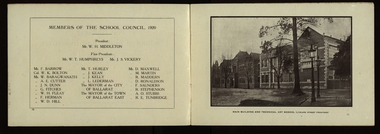
Booklet, The Ballarat School of Mines and Industries 1870-1920 Jubilee Booklet, 1920 (estimated)
... students after passing through the Junior School go straight to employment, continuing perhaps to attend the evening trade classes, while others move on to the senior School. In a review of the work of the School of Mines mention must be made of a series of industrial research carried out under supervision of the Principal. One in particular, regarding the suitability of the local ores for the manufacture of pigments attracted much attention, while the experiemtns on the manufacture of white potery from Victorian...students after passing through the Junior School go straight to employment, continuing perhaps to attend the evening trade classes, while others move on to the senior School. In a review of the work of the School of Mines mention must be made of a series of industrial research carried out under supervision of the Principal. One in particular, regarding the suitability of the local ores for the manufacture of pigments attracted much attention, while the experiemtns on the manufacture of white potery from Victorian ...The first school of Mines in Australia was established at Ballarat in 1870. At the time of its jubilee (1930) the following people were members of the School Council: W.H. Middleton (President), W.T. Humphreys (VP), J.S. Vickery (VP), F. Barrow, Col. W.K. Bolton, William Baragwanath, A.E. Cutter, J.N. Dunn, G. Fitches, W.H. Fleay, F. Herman. W.D. Hill, T. Hurley, K. Kean. J. Kelly, L. Lederman, Mayor of Ballarat, Mayour of Ballarat East, D. Maxwell, M. Martin, R. Maddern, D. Ronaldson, F. Saunders, R. Stephenson, A.O. Stubbs, R.E. Tunbridge. The School Staff in 1920 comprised: Herbert H. Smith, Walter Rowbotham, Reginald L. Cutter, M.C. Young, Hilda Wardle, M. Wiliamson, P.S. Richards, L.H. Archibald, J. Woods, Ken Moss, W. Kenneth, Mrs McIlvena. B. Robinson, S. Rowe, E. Hope-Jones, Miss Abrams, L.St.G.P. Austin, Alfred Mica Smith, J.R. Pound, Herbert R. Murphy, N.H. Junner, Maurice Copland, L.H. Archibald, E.J.A. McConnon, Newton King, D.m. Hull, T.R. Gordon, John M. Sutherland, T.K. Jebb, Dick Richards, C. Tonkin, A.W. Steane, J. Paterson, H.W. Malin, R.V. Maddison, S.M. Mayo, F.A. King, W.H. Steane, T.R. Gordon, T.A. Williams, H. Waldron, G. Black, E.J. McConnon, R.V. Duncan. R. Cutter, E.G. Vawdrey, Hilda WardleWhite stapled booklet - landscape format - 20pp + soft covers with blue writing. Includes an historical sketch of the Ballarat School of Mines. Contains images of the school from around 1920. The history outlined in the booklet follows: 'Ballarat has helped to influence the life and destinies of Australia in many ways, the recital of which would perhaps prove tedious to the citizens of less favoured localities! However, it can be said, without much fear of contradiction, that only less known thought Australia than its fame as a gold field is the reputation won for it by its school of Mines, ... Ballarat was still quite a new place when the School was founded, but a very propserous and popular place all the same, with a go-ahead lot of citizens brim full of the spirit of enterprise which seemsto animate mining populations generally. Money was plentiful, and they launched out into ventures, which later, were to develop and take the place of the gold mines, while what is more to the point, they understood the value of education. the old digging days were passing away. So far as Ballarat itself was concerned the day of the cradle and tin dish had already passed into an antiquity "as dead and distant as the age of the Tubal Caon," said dir redmond Barry on declaring the School open. Mining had become a serious business, and the mining engineer, the metallurgist, and the geologist had become a power in the land. In these circumstances the suggestions to found a School of Mines met with ready acceptance. The late Mr James M. Bickett had the honor of bringing forward the proposition at a meeting of the Ballarat Mining Board in October, 1869. it was agreed to, and the Government, having been approached for assistance, granted a lease of the old Supreme Court buildings at a nominal reantal. A modest sum, including 100 pounds from the Borough Council of Ballarat West, was subscribed by a number of sympathisers, and on the 26th October, 1870, the inaugural address was delivered by Sir Redmond Barry, the first President of the School. Classes were commenced on the 23rd January, 1871. The students at first were mostly adults. They were chiefly men emloyed at the mines, who had the wisdom and energy to devote their spare time to study, and, though their attendance was somewhat irregular, they made very good progress. Old prints which have been preserved show them at work at furnaces, big bearded men of the old-fashioned type of miner. It is interesting to note that among those who gave evidence and encouragement was Sir Roderick Murchison, who many years before had advised Cornish miners to emigrate to Australia to search for gold, and who in 1848 was in possession of gold ore sent from this country. Sir Roderick sent a parcel of books for the library, and gave useful advice as to the curriculum which should be adopted. The Museum, which now contains a most valuable collection of minerals, was one of the first things attended to, and the reports presented to the Council from time to time speak of additions being made from all parts of the world. New equipment was constantly being added to the School, a good deal of assay work was done, and some specimens were sent from the East Indies for examination as far back as 1873. By this time there was a difficulty in providing accomodation for the students who wished to enrol, and the number of instructors had grown from two to four. In 1882 the first building was being erected on what was then part of the gaol reserve. A little more than ten years afterwards a buildnig formerly serving as a Methodist Church was absorbed, while later on, the demand for accomodation increasing, the attack upon the gaol was renewed. The School continued to grow in reputation and size, and became the science centre of the district, and in 1889 a learge new building was opened by Sir Alexander Peacock. Students came from over seas as well as from all the States of Australia, and after going through their courses they took with them the name and fame of the old School to all parts of the globe. School of Mines boys have played a great part in developing the mining fields of Western Australia, South Australia, and africa, while old students who have made a name in their profession are constantly dropping in to see how the old place is getting along. It was not to be expected, however, that the Ballarat School would be left without rivals, its very success inspiring competition. Mining Schools were started in other parts of Australia, and, at the same time, Victoria ceased to hold first place as a mining state. On the other hand there was a great advance in manufacturing, and the demand for technicaly trained men became a great and as insistent as ever it had been for trained mining men. The Council was quick to adapt the school to the new conditions, and the result is seen in the institution, which is one of Ballarat's proudest possession. Instruction is given in all branches of technical work, and the classes are filled with students who are building up for Ballarat a reputation as an industrial centre, which promises to equal that which it formerly held as a mining town. Owing to its bracing climate, its abundant opportunities for recreations, and its accessibilty, Ballarat as a city is an ideal place for educational purposed, and is yearly becoming more and more appreciated throughout the State. The chairman of one of Ballarat's biggests industries claims that the workman can do twice the day's work here that he can do in Melbourne. he was a little enthusiastic over it, perhaps, but it is a well-known fact that the healthy and invigourating Ballarat climate is conducive to both physical and mental activity, and the records of the School provide ample proof of it. One of the most interesting and successful branches of the School of Mines and Industries - if the name be enlarged with the enlargement of its scope - is the Technical Art School. "The City of Statues" has from its earliest days been a stronghold of art. Art schools have flourised here, and in 1905 the Education Department came to the conclusion that the best thing to do with them was to place them under the management of the School of Mines Council. A magnificent new Technical Art School was built at a cost of some 12,000 pounds on the site of the old Supreme Court building, and was formally opened on the 23rd July, 1915. The results have not only been justified but surpassed all anticipations. The most comprehensive list of subjects is taught, and this list is constantly added to. Students have flocked to the art School, which may be said to occupy a unique position in Australia, and its record of success is really astonishing. Its students supply art teachers for the newer schools that are being built, and many occupy leading positinos in important business houses. So well is its reputation known that orders are constantly being received, not only from Victoria, but from other States, for honor boards and challenge shields to be designed and made. The most recent addition to the School of Mines and Industries is the Junior Technical School, for which a new building is now being erected on a portion of the gaol site, transferred to the School of Mines Counci by the Government. At the present moment temporary quarters are being occupied. Some students after passing through the Junior School go straight to employment, continuing perhaps to attend the evening trade classes, while others move on to the senior School. In a review of the work of the School of Mines mention must be made of a series of industrial research carried out under supervision of the Principal. One in particular, regarding the suitability of the local ores for the manufacture of pigments attracted much attention, while the experiemtns on the manufacture of white potery from Victorian clayes were considered of sufficient importance by the Federal Advisory Council of Science and Industry to warrant the appointment of a special investigator. The results of these have been most encouraging, and may have far-reaching consequences. The vocational training of returned soldiers also should not be overlooked. The work was taken in hand from the first, before the Repatriation Department gave assistance, and now with the help of the department of the School has become one of the largest vocational training centres in Victoria outside of Melbourne. The soldiers, trained in a variety of occupations, have made remarkable progress, and already considerable numbers have found employment in local workshops and factories. To sum up, the School is divided into the following departments, each well staffed and equipped: - The School of Mines, science, and Engineering; the Techncial Art School, the Boys' Junior Technical School, the Girl's Preparatory Technical Classes, Trade Classes, and the Commercial School. The school of Mines, science and Engineering, comprises the following branches: - Mining, Metallurgy, Geology, Electrical Engineering, Civil Engineering, Mechanical Engineering, Applied Chemistry, and Pharmacy. Battery treatments, Cyanide Testing, Smelting, Assays, and Clay Testing from a regular part of the School's work. Students gaining qualifications obtain concession in their courses at the university, should they proceed there to continue their studies. The technical Art school curriculum includes training in all branches of pictorial and applied art, an Architectural Diploma Course, a Draughtman's Course, technical Art teachers' Course, Photography,Ticket Writing, Art Metal Work, Woodcarving, Needlework, and Leather work. The Trade Classes give instruction in Telephone Mechanics, telegraphy, Carpentry, Cabinet Making, Plumbing, Blacksmithing, Fitting, Electric Wiring, and Printing. Numerous Scholarships are offered every year, and altogether students will find few places to equal the Ballarat School of Mines and Industries as a training place for their life's work. One of the first in the continent to be established, its Jubilee finds it still in the front rank, keeping pace with the times, and offering to the youths of this country the means of taking advantage of Australia's teeming opportunities. william, battery, smith, herbert, drawing from the antique, ballarat school of mines botanical gardens, ballarat school of mines, redmond barry, alfred mica smith, james bickett, museum, dick richards, ballarat junior technical school, s m b, ballarat school of mines and industries, ballarat technical art school, model mine, james m bickett, j m bickett, roderick murchison, vocational training rooms, wesley church, methodist church, alexander peacock, lathes, repatriation, repatriatin department, war service, school council, baragwanath, gold mining, mining laboratory, plaster cast, r.w. richards, anniversary, jubilee -
 Federation University Historical Collection
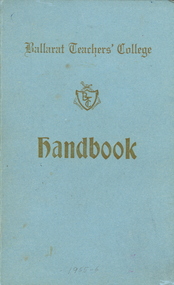
Booklet, Ballarat Teachers' College Handbook and Song Book
... Students at the Ballarat Teachers' College would sing the songs in the songbook regularly. The Ballarat Teachers' College was established after the Victorian State Government and the State Education Department decided to establish two provincial teachers' colleges, at Ballarat and Bendigo. ...Students at the Ballarat Teachers' College would sing the songs in the songbook regularly. The Ballarat Teachers' College was established after the Victorian State Government and the State Education Department decided to establish two provincial teachers' colleges, at Ballarat and Bendigo. ...Students at the Ballarat Teachers' College would sing the songs in the songbook regularly. The Ballarat Teachers' College was established after the Victorian State Government and the State Education Department decided to establish two provincial teachers' colleges, at Ballarat and Bendigo. On 04 May 1926 W.H. Ellwood (Principal), Miss A. Bouchier, and Mr A.B. Jones, welcomed the first enrolment of 61 students to undertake the one year course. In 1927 the College moved to the former Ballarat East Town Hall in Barkly Street, which was remodelled for their use. It closed in December 1931 due to the Great Depression. In 1946 Ballarat Teachers' College reopened and relocated to the Dana Street State School. The building used by the Teachers' College was the original bluestone building facing Doveton Street South. It was originally planned to open as a women's college, for whom the residence at 130 Victoria Street was purchased, but the decision was made to admit resident men from Ballarat. Mr T.W. Turner was appointed as Principal in 1951 and directed the introduction of a two year course for the Trained Primary Teachers' Certificate. The former one year course was terminated at the end of 1951. In 1958 the College was relocated to a custom built facility at Gillies Street, in close proximity to the Ballarat Botanical Gardens. Numbers increased with the introduction of the Trained Infant Teachers' Certificate course under the guidance of Mary Egan. With the introduction of a three year Diploma Course in 1968 accommodation became cramped. The introduction of the Diploma of Teaching (Primary) led to the Trained Infant Teachers' Certificate being discontinued in 1969, and the end of the Trained Primary Teachers' Certificate in 1969. Secondary Art and Craft students began studies at Ballarat Teachers' College in 1969 under Mr Ted Doney. In 1971 Mr D. Watson was appointed Principal. The State College of Victoria was proclaimed by Order in Council on 24 July 1973, and Ballarat Teachers' College became a constituent college of the State College of Victoria, and was known as State College of Victoria, Ballarat. By 1975 the College moved to Mount Helen as part of the Ballarat College of Advanced Education. Pre service teachers currently undertake their studies on the Mount Helen Campus of Federation University. ("Ruffians Attempted to Carry of the School Tent: A History of State Education in Ballarat", 1974, p73-4.) 2 blue covered Ballarat Teachers' College Books, 1) Handbook of rules and songs. 2) Songbook.Inside front cover 'Monica Miller' autographs in inside book pages from the reunion on 1. 9. 1960 of BTC 1930ballarat teachers college, monica miller, extra muros, w h ellwood, entertainment, ellwood, ballarat teachers' college, music -
 Federation University Historical Collection
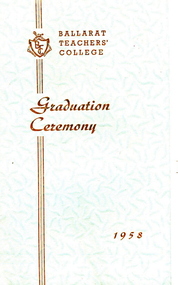
Programme, Ballarat Teachers' College Graduation Ceremony, 1958, 1958 (exact)
... The Ballarat Teachers' College was established after the Victorian State Government and the State Education Department decided to establish two provincial teachers' colleges, at Ballarat and Bendigo. On 04 May 1926 W.H. Ellwood (Principal), Miss A. Bouchier, and Mr A.B. Jones, welcomed the first enrolment of 61 students...The Ballarat Teachers' College was established after the Victorian State Government and the State Education Department decided to establish two provincial teachers' colleges, at Ballarat and Bendigo. On 04 May 1926 W.H. Ellwood (Principal), Miss A. Bouchier, and Mr A.B. Jones, welcomed the first enrolment of 61 students ...The Ballarat Teachers' College was established after the Victorian State Government and the State Education Department decided to establish two provincial teachers' colleges, at Ballarat and Bendigo. On 04 May 1926 W.H. Ellwood (Principal), Miss A. Bouchier, and Mr A.B. Jones, welcomed the first enrolment of 61 students to undertake the one year course. In 1927 the College moved to the former Ballarat East Town Hall in Barkly Street, which was remodelled for their use. It closed in December 1931 due to the Great Depression. In 1946 Ballarat Teachers' College reopened and relocated to the Dana Street State School. It was originally planned to open as a women's college, for whom the residence at 130 Victoria Street was purchased, but the decision was made to admit resident men from Ballarat. Mr T.W. Turner was appointed as Principal in 1951 and directed the introduction of a two year course for the Trained Primary Teachers' Certificate. The former one year course was terminated at the end of 1951. In 1958 the College was relocated to a custom built facility at Gillies Street, in close proximity to the Ballarat Botanical Gardens. Numbers increased with the introduction of the Trained Infant Teachers' Certificate course under the guidance of Mary Egan. With the introduction of a three year Diploma Course in 1968 accommodation became cramped. The introduction of the Diploma of Teaching (Primary) led to the Trained Infant Teachers' Certificate being discontinued in 1969, and the end of the Trained Primary Teachers' Certificate in 1969. Secondary Art and Craft students began studies at Ballarat Teachers' College in 1969 under Mr Ted Doney. In 1971 Mr D. Watson was appointed Principal. The State College of Victoria was proclaimed by Order in Council on 24 July 1973, and Ballarat Teachers' College became a constituent college of the State College of Victoria, and was known as State College of Victoria, Ballarat. By 1975 the College moved to Mount Helen as part of the Ballarat College of Advanced Education. Pre service teachers currently undertake their studies on the Mount Helen Campus of Federation University. ("Ruffians Attempted to Carry of the School Tent: A History of State Education in Ballarat", 1974, p73-4.) Gold printing on green card paper, 7 page stapled.ballarat teachers college, ceaviney canty, mavis canty -
 Federation University Historical Collection
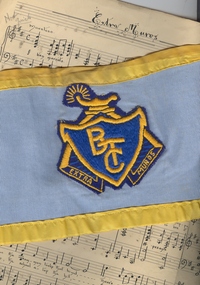
Book - Music Book, Ballarat Teachers' College Music Book
... The Ballarat Teachers' College was established after the Victorian State Government and the State Education Department decided to establish two provincial teachers' colleges, at Ballarat and Bendigo. On 04 May 1926 W.H. Ellwood (Principal), Miss A. Bouchier, and Mr A.B. Jones, welcomed the first enrolment of 61 students...The Ballarat Teachers' College was established after the Victorian State Government and the State Education Department decided to establish two provincial teachers' colleges, at Ballarat and Bendigo. On 04 May 1926 W.H. Ellwood (Principal), Miss A. Bouchier, and Mr A.B. Jones, welcomed the first enrolment of 61 students ...Monica Miller was a greatly loved music lecturer at the Ballarat Teachers' College lecturer Monica Miller. The Ballarat Teachers' College was established after the Victorian State Government and the State Education Department decided to establish two provincial teachers' colleges, at Ballarat and Bendigo. On 04 May 1926 W.H. Ellwood (Principal), Miss A. Bouchier, and Mr A.B. Jones, welcomed the first enrolment of 61 students to undertake the one year course. In 1927 the College moved to the former Ballarat East Town Hall in Barkly Street, which was remodelled for their use. It closed in December 1931 due to the Great Depression. In 1946 Ballarat Teachers' College reopened and relocated to the Dana Street State School. It was originally planned to open as a women's college, for whom the residence at 130 Victoria Street was purchased, but the decision was made to admit resident men from Ballarat. Mr T.W. Turner was appointed as Principal in 1951 and directed the introduction of a two year course for the Trained Primary Teachers' Certificate. The former one year course was terminated at the end of 1951. In 1958 the College was relocated to a custom built facility at Gillies Street, in close proximity to the Ballarat Botanical Gardens. Numbers increased with the introduction of the Trained Infant Teachers' Certificate course under the guidance of Mary Egan. With the introduction of a three year Diploma Course in 1968 accommodation became cramped. The introduction of the Diploma of Teaching (Primary) led to the Trained Infant Teachers' Certificate being discontinued in 1969, and the end of the Trained Primary Teachers' Certificate in 1969. Secondary Art and Craft students began studies at Ballarat Teachers' College in 1969 under Mr Ted Doney. In 1971 Mr D. Watson was appointed Principal. The State College of Victoria was proclaimed by Order in Council on 24 July 1973, and Ballarat Teachers' College became a constituent college of the State College of Victoria, and was known as State College of Victoria, Ballarat. By 1975 the College moved to Mount Helen as part of the Ballarat College of Advanced Education. Pre service teachers currently undertake their studies on the Mount Helen Campus of Federation University. ("Ruffians Attempted to Carry of the School Tent: A History of State Education in Ballarat", 1974, p73-4.) A spiral bound music book with music hand written by Ballarat Teachers' College lecturer Monica Miller. Songs include Extra Muros, Ballarat the Beautiful, Home to Ballarat, We Want Every-body Happy, Toujours, a Banjo Song and Rounds. ballarat, ballarat teachers college, monica miller, extra muros, the beautiful, home to ballarat, we want every body happy, banjo, entertainment, music, sheet music -
 Federation University Historical Collection
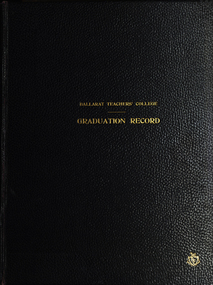
Book, Ballarat Teachers' College, Ballarat Teachers' College Graduation Record, 1955-1976
... The Ballarat Teachers' College was established after the Victorian State Government and the State Education Department decided to establish two provincial teachers' colleges, at Ballarat and Bendigo. On 04 May 1926 W.H. Ellwood (Principal), Miss A. Bouchier, and Mr A.B. Jones, welcomed the first enrolment of 61 students...The Ballarat Teachers' College was established after the Victorian State Government and the State Education Department decided to establish two provincial teachers' colleges, at Ballarat and Bendigo. On 04 May 1926 W.H. Ellwood (Principal), Miss A. Bouchier, and Mr A.B. Jones, welcomed the first enrolment of 61 students ...This book contains the names and signatures of all graduates from the Ballarat Teachers' College from 1955 to 1976. The Ballarat Teachers' College was established after the Victorian State Government and the State Education Department decided to establish two provincial teachers' colleges, at Ballarat and Bendigo. On 04 May 1926 W.H. Ellwood (Principal), Miss A. Bouchier, and Mr A.B. Jones, welcomed the first enrolment of 61 students to undertake the one year course. In 1927 the College moved to the former Ballarat East Town Hall in Barkly Street, which was remodelled for their use. It closed in December 1931 due to the Great Depression. In 1946 Ballarat Teachers' College reopened and relocated to the Dana Street State School. It was originally planned to open as a women's college, for whom the residence at 130 Victoria Street was purchased, but the decision was made to admit resident men from Ballarat. Mr T.W. Turner was appointed as Principal in 1951 and directed the introduction of a two year course for the Trained Primary Teachers' Certificate. The former one year course was terminated at the end of 1951. In 1958 the College was relocated to a custom built facility at Gillies Street, in close proximity to the Ballarat Botanical Gardens. Numbers increased with the introduction of the Trained Infant Teachers' Certificate course under the guidance of Mary Egan. With the introduction of a three year Diploma Course in 1968 accommodation became cramped. The introduction of the Diploma of Teaching (Primary) led to the Trained Infant Teachers' Certificate being discontinued in 1969, and the end of the Trained Primary Teachers' Certificate in 1969. Secondary Art and Craft students began studies at Ballarat Teachers' College in 1969 under Mr Ted Doney. In 1971 Mr D. Watson was appointed Principal. The State College of Victoria was proclaimed by Order in Council on 24 July 1973, and Ballarat Teachers' College became a constituent college of the State College of Victoria, and was known as State College of Victoria, Ballarat. By 1975 the College moved to Mount Helen as part of the Ballarat College of Advanced Education. Pre service teachers currently undertake their studies on the Mount Helen Campus of Federation University. ("Ruffians Attempted to Carry of the School Tent: A History of State Education in Ballarat", 1974, p73-4.) Large book with dark blue vinyl cover. Ballarat Teachers' College Record signed by gratuates from 1955 to 1976.btc, ballarat teachers college, graduation record, keith hamilton -
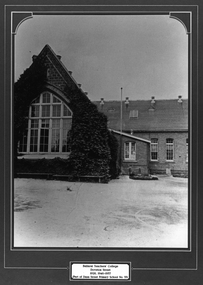 Federation University Historical Collection
Photograph - Framed Photograph, Ballarat Teachers' College
... The Ballarat Teachers' College was established after the Victorian State Government and the State Education Department decided to establish two provincial teachers' colleges, at Ballarat and Bendigo. On 04 May 1926 W.H. Ellwood (Principal), Miss A. Bouchier, and Mr A.B. Jones, welcomed the first enrolment of 61 students...The Ballarat Teachers' College was established after the Victorian State Government and the State Education Department decided to establish two provincial teachers' colleges, at Ballarat and Bendigo. On 04 May 1926 W.H. Ellwood (Principal), Miss A. Bouchier, and Mr A.B. Jones, welcomed the first enrolment of 61 students ...These images were hung in the corridor of the University of Ballarat School of Education (Mount Helen). It most probably dates from around the time of the transfer of the College. The Ballarat Teachers' College was established after the Victorian State Government and the State Education Department decided to establish two provincial teachers' colleges, at Ballarat and Bendigo. On 04 May 1926 W.H. Ellwood (Principal), Miss A. Bouchier, and Mr A.B. Jones, welcomed the first enrolment of 61 students to undertake the one year course. In 1927 the College moved to the former Ballarat East Town Hall in Barkly Street, which was remodelled for their use. It closed in December 1931 due to the Great Depression. In 1946 Ballarat Teachers' College reopened and relocated to the Dana Street State School. The building used by the Teachers' College was the original bluestone building facing Doveton Street South. It was originally planned to open as a women's college, for whom the residence at 130 Victoria Street was purchased, but the decision was made to admit resident men from Ballarat. Mr T.W. Turner was appointed as Principal in 1951 and directed the introduction of a two year course for the Trained Primary Teachers' Certificate. The former one year course was terminated at the end of 1951. In 1958 the College was relocated to a custom built facility at Gillies Street, in close proximity to the Ballarat Botanical Gardens. Numbers increased with the introduction of the Trained Infant Teachers' Certificate course under the guidance of Mary Egan. With the introduction of a three year Diploma Course in 1968 accommodation became cramped. The introduction of the Diploma of Teaching (Primary) led to the Trained Infant Teachers' Certificate being discontinued in 1969, and the end of the Trained Primary Teachers' Certificate in 1969. Secondary Art and Craft students began studies at Ballarat Teachers' College in 1969 under Mr Ted Doney. In 1971 Mr D. Watson was appointed Principal. The State College of Victoria was proclaimed by Order in Council on 24 July 1973, and Ballarat Teachers' College became a constituent college of the State College of Victoria, and was known as State College of Victoria, Ballarat. By 1975 the College moved to Mount Helen as part of the Ballarat College of Advanced Education. Pre service teachers currently undertake their studies on the Mount Helen Campus of Federation University. ("Ruffians Attempted to Carry of the School Tent: A History of State Education in Ballarat", 1974, p73-4.) Framed black and white photograph of: .1) the former Ballarat East Town Hall .2) the old Dana Street Primary School during the era it was used as the Ballarat Teachers' College. The photographed is surrounded by a green matboard. .3) Ballarat Teachers' College, Gillies Street.Plaque under photo "Ballarat Teachers' College Doveton Street 1926, 1946-1957 (Part of Dana Street Primary School No. 33)ballaratteachers college, dana street primary school, teacher education, 00607 -
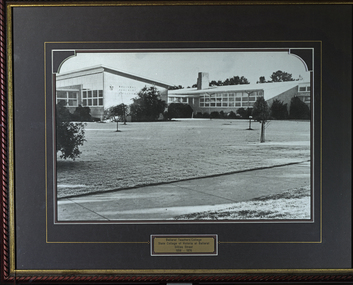 Federation University Historical Collection
Photograph - Framed photograph, Ballarat Teachers' College Gillies Street
... The Ballarat Teachers' College was established after the Victorian State Government and the State Education Department decided to establish two provincial teachers' colleges, at Ballarat and Bendigo. On 04 May 1926 W.H. Ellwood (Principal), Miss A. Bouchier, and Mr A.B. Jones, welcomed the first enrolment of 61 students...The Ballarat Teachers' College was established after the Victorian State Government and the State Education Department decided to establish two provincial teachers' colleges, at Ballarat and Bendigo. On 04 May 1926 W.H. Ellwood (Principal), Miss A. Bouchier, and Mr A.B. Jones, welcomed the first enrolment of 61 students ...These images were hung in the corridor of the University of Ballarat School of Education (Mount Helen). It most probably dates from around the time of the transfer of the College. The Ballarat Teachers' College was established after the Victorian State Government and the State Education Department decided to establish two provincial teachers' colleges, at Ballarat and Bendigo. On 04 May 1926 W.H. Ellwood (Principal), Miss A. Bouchier, and Mr A.B. Jones, welcomed the first enrolment of 61 students to undertake the one year course. In 1927 the College moved to the former Ballarat East Town Hall in Barkly Street, which was remodelled for their use. It closed in December 1931 due to the Great Depression. In 1946 Ballarat Teachers' College reopened and relocated to the Dana Street State School. The building used by the Teachers' College was the original bluestone building facing Doveton Street South. It was originally planned to open as a women's college, for whom the residence at 130 Victoria Street was purchased, but the decision was made to admit resident men from Ballarat. Mr T.W. Turner was appointed as Principal in 1951 and directed the introduction of a two year course for the Trained Primary Teachers' Certificate. The former one year course was terminated at the end of 1951. In 1958 the College was relocated to a custom built facility at Gillies Street, in close proximity to the Ballarat Botanical Gardens. Numbers increased with the introduction of the Trained Infant Teachers' Certificate course under the guidance of Mary Egan. With the introduction of a three year Diploma Course in 1968 accommodation became cramped. The introduction of the Diploma of Teaching (Primary) led to the Trained Infant Teachers' Certificate being discontinued in 1969, and the end of the Trained Primary Teachers' Certificate in 1969. Secondary Art and Craft students began studies at Ballarat Teachers' College in 1969 under Mr Ted Doney. In 1971 Mr D. Watson was appointed Principal. The State College of Victoria was proclaimed by Order in Council on 24 July 1973, and Ballarat Teachers' College became a constituent college of the State College of Victoria, and was known as State College of Victoria, Ballarat. By 1975 the College moved to Mount Helen as part of the Ballarat College of Advanced Education. Pre service teachers currently undertake their studies on the Mount Helen Campus of Federation University. ("Ruffians Attempted to Carry of the School Tent: A History of State Education in Ballarat", 1974, p73-4.) This image was hung in the corridor of the University of Ballarat School of Education (Mount Helen). It most probably dates from around the time of the transfer of the Ballarat Teachers' College from Gillies Street to the Mount Helen Campus of the Ballarat College of Advanced Educaiton. The building used by the Teachers' College was the original bluestone building facing Doveton Street South.Framed black and white photography with green mount. The photo shows the Ballarat Teachers' College Gillies Street building. ON plaque 'Ballarat Teachers' College, State College of Victoria at Ballarat, Gillies Street, 1958-1976education, ballarat teachers college, gillies street, 00607 -
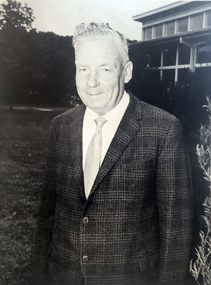 Federation University Historical Collection
Magazine, Extra Muros, 1972, 1972
... The Ballarat Teachers' College was established after the Victorian State Government and the State Education Department decided to establish two provincial teachers' colleges, at Ballarat and Bendigo. On 04 May 1926 W.H. Ellwood (Principal), Miss A. Bouchier, and Mr A.B. Jones, welcomed the first enrolment of 61 students...The Ballarat Teachers' College was established after the Victorian State Government and the State Education Department decided to establish two provincial teachers' colleges, at Ballarat and Bendigo. On 04 May 1926 W.H. Ellwood (Principal), Miss A. Bouchier, and Mr A.B. Jones, welcomed the first enrolment of 61 students ...The Ballarat Teachers' College was established after the Victorian State Government and the State Education Department decided to establish two provincial teachers' colleges, at Ballarat and Bendigo. On 04 May 1926 W.H. Ellwood (Principal), Miss A. Bouchier, and Mr A.B. Jones, welcomed the first enrolment of 61 students to undertake the one year course. In 1927 the College moved to the former Ballarat East Town Hall in Barkly Street, which was remodelled for their use. It closed in December 1931 due to the Great Depression. In 1946 Ballarat Teachers' College reopened and relocated to the Dana Street State School. The building used by the Teachers' College was the original bluestone building facing Doveton Street South. It was originally planned to open as a women's college, for whom the residence at 130 Victoria Street was purchased, but the decision was made to admit resident men from Ballarat. Mr T.W. Turner was appointed as Principal in 1951 and directed the introduction of a two year course for the Trained Primary Teachers' Certificate. The former one year course was terminated at the end of 1951. In 1958 the College was relocated to a custom built facility at Gillies Street, in close proximity to the Ballarat Botanical Gardens. Numbers increased with the introduction of the Trained Infant Teachers' Certificate course under the guidance of Mary Egan. With the introduction of a three year Diploma Course in 1968 accommodation became cramped. The introduction of the Diploma of Teaching (Primary) led to the Trained Infant Teachers' Certificate being discontinued in 1969, and the end of the Trained Primary Teachers' Certificate in 1969. Secondary Art and Craft students began studies at Ballarat Teachers' College in 1969 under Mr Ted Doney. In 1971 Mr D. Watson was appointed Principal. The State College of Victoria was proclaimed by Order in Council on 24 July 1973, and Ballarat Teachers' College became a constituent college of the State College of Victoria, and was known as State College of Victoria, Ballarat. By 1975 the College moved to Mount Helen as part of the Ballarat College of Advanced Education. Pre service teachers currently undertake their studies on the Mount Helen Campus of Federation University. ("Ruffians Attempted to Carry of the School Tent: A History of State Education in Ballarat", 1974, p73-4.) Green soft covered magazine of the Ballarat Teachers' College. Includes black and white images of class groups and teachers. Art Lecturers of the Ballarat Teachers' College, 1972 Standing left to right: John Crump, Miss Brock, Ian Page, Gareth Sansom. Seated left to right: Ian Neilson, Greg Binns, Geoff Wallis mary vines, peter fryar, mary egan, alan sonsee, rod lindsay, pauline walker, sue kite, dave hughes, merran fisher, terry doran, frank howman, ian page, gareth sansom, greg binns, geoff wallis, barbara crump, ian nielson, bob croft, john crump, john mildren, genny binns, geoff hendy, ballarat teachers' college, rolf lindsay, graeme drendel, dennis spielvogel, ray woolard
