
Showing 190 items matching "visual history"
-
 City of Moorabbin Historical Society (Operating the Box Cottage Museum)
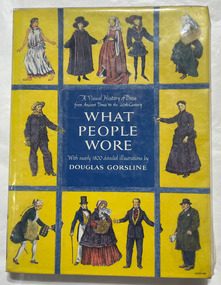
Book, Gorslien, Douglas W, What people wore : a visual history of dress from ancient times to twentieth-century America, 1978
... What people wore : a visual history of dress from ancient times to twentieth-century America.... ; What people wore : a visual history of dress from ancient times to twentieth-century America Book Gorslien, Douglas W. ...xiii, 269 p. : ill. ; non-fictionperiod dress, costumes -
 Phillip Island and District Historical Society Inc.
Book, Sale Regional Arts Centre, Getting there 1835-1920 : a visual history of early transport in Victoria, 1985
... Getting there 1835-1920 : a visual history of early transport in Victoria...Manson Jamieson, 'Kenloch', 33 Beach St., Cowes, Phillip Island, Vic., 3922' Getting there 1835-1920 : a visual history of early transport in Victoria Book Sale Regional Arts Centre ...Stamped 'J. Manson Jamieson, 'Kenloch', 33 Beach St., Cowes, Phillip Island, Vic., 3922'sale regional arts centre, exhibitions -
 Tatura Irrigation & Wartime Camps Museum
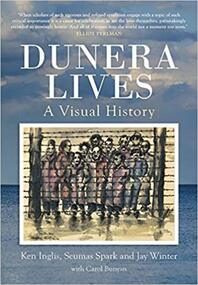
Book, Dunera Lives. Volume 1 A Visual History, 2018
... Dunera Lives. Volume 1 A Visual History....Dunera Lives. Volume 1 A Visual History. Book Monash University Publishing Professor Ken Inglis Dr. ...A remarkable, thoroughly researched and detailed record of "Dunera" internee artists with examples of their varied styles of water and colour paintings, sketches and cartoons. Vivid reminders of the whole experience of internment in Australia during World War 2 for these men. Launched at the Jewish Museum in St Kilda, Sunday July 8th and Monday July 9th at Readings Books in Melbourne.Visual history of camp life of the Dunera boysBlue soft cover, with front cover painting by Emil Wittenberg. Painted at Tatura on 23rd May 1941, depicts a group of Dunera internees behind barbed wire. B/W and colour photos, sketches, paintings and watercolour.To the memory of Amirah Inglis. A photograph of Kenneth Stanley Inglis, 7 October 1929 - 1 December 2017dunera boys -
 Returned Nurses RSL Sub-branch
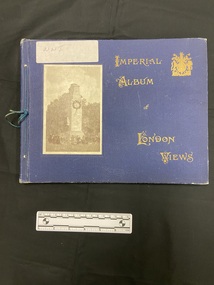
Album - Photograph album, Imperial Album of London Views: WW1, [1930?]
... ...visual history...history, and daily life of Britain's capital. Produced as a large-format souvenir album, it showcases many of London's most celebrated landmarks, streets, and public spaces, preserving a visual record of the city at a time when horse-drawn vehicles, early motor traffic, and Edwardian architecture still dominated the urban landscape. ...The photographs offer a fascinating glimpse into a London that was rapidly modernising while retaining much of its Victorian character. " [taken from Antique Books Australia] London Pictorial London 1930s visual history 'WWI' [handwritten in blue ink on the sticker label on the front cover] 'Presented to / Returned Army Nurses Club / by E.M.Hall / 4th [?] ..." Imperial Album of London Views is a charming pictorial record of London during the early twentieth century, presenting a collection of photographic views that capture the grandeur, history, and daily life of Britain's capital. Produced as a large-format souvenir album, it showcases many of London's most celebrated landmarks, streets, and public spaces, preserving a visual record of the city at a time when horse-drawn vehicles, early motor traffic, and Edwardian architecture still dominated the urban landscape. The photographs offer a fascinating glimpse into a London that was rapidly modernising while retaining much of its Victorian character. " [taken from Antique Books Australia] Blue album with a blue thread tied through the left edge. Gold writing on the cover and a black and white photograph of a stone memorial surrounded by people with heads bowed. There is a white sticker label in the top left corner with WWI handwritten. Album contains brown card pages with protective page between each. The right side pages contain one 6x8 photograph on each. The verso of each protective page displays a text box of print in brown ink.'WWI' [handwritten in blue ink on the sticker label on the front cover] 'Presented to / Returned Army Nurses Club / by E.M.Hall / 4th [?] 1st A.I.F. / 1949' [handwritten in black ink on the inside front cover.]london, pictorial london 1930s, visual history -
 Kiewa Valley Historical Society
DVD SEC Victoria Promotional, Kiewa Capers Compilation, circa 1990
... visual...kiewa history...The additional resources provided by the State Electricity Commission of Victoria of "alpine bush" fire control and management, together with an ongoing educational scheme for school children in learning about what constitutes the Alpine country's unique environment, are a very important offshoot, benefitting to both the communitie audio visual kiewa history educational The DVD is nestled within a formed inner structure (case), which not only prevents the disc from moving to and fro but also unnecessary intrusion of foreign particles.This DVD is a TDK data/video recordable single sided 4.7 GB disc.It is a 1-16x speed. ...The construction and development of the Kiewa Hydro scheme showing its construction and the people in work and play during its duration. It also shows the development of Mt Beauty and Bogong townships. The films were used as News Reels, Tourist Information and Entertainment.This VHS is a snap shot in time (1990) when the Kiewa Valley was still relatively under populated and holiday houses owned by city bound workers was still relatively insignificant. As more and more holiday makers retire to a small but friendly region(Kiewa Valley and Mount Beauty) the increase in visitor numbers will affect the local rural bush scene more and more. The changes that will occur (in time) can be measured against the scenes presented in this video. The additional resources provided by the State Electricity Commission of Victoria of "alpine bush" fire control and management, together with an ongoing educational scheme for school children in learning about what constitutes the Alpine country's unique environment, are a very important offshoot, benefitting to both the communitieThe DVD is nestled within a formed inner structure (case), which not only prevents the disc from moving to and fro but also unnecessary intrusion of foreign particles.This DVD is a TDK data/video recordable single sided 4.7 GB disc.It is a 1-16x speed.audio visual, kiewa history, educational -
Port Melbourne Historical & Preservation Society
Photograph - CD-ROM, prominent Port Melbourne figures
... A visual history of Australian Rules football teams and political figures in Port Melbourne...A visual history of Australian Rules football teams and political figures in Port Melbourne Local Government Recreation Sport - Cricket Sport - Australian Rules Football Societies Clubs Unions and other Organisations James Peter CRICHTON William HOWE A MURDOCH William Henry PROHASKY Phillip Melville SALMON George SANGSTER Thomas SWALLOW George Samuel WALTER Alexander ROGERS George Alexander ROGERS Herbert Charles EDWARDS Charles Edward SMITH A photographic collection of prominent Port Melbourne figures. ...A visual history of Australian Rules football teams and political figures in Port MelbourneA photographic collection of prominent Port Melbourne figures. Port Melbourne Football Club and also political figures.local government, recreation, sport - cricket, sport - australian rules football, societies clubs unions and other organisations, james peter crichton, william howe, a murdoch, william henry prohasky, phillip melville salmon, george sangster, thomas swallow, george samuel walter, alexander rogers, george alexander rogers, herbert charles edwards, charles edward smith -
 Bendigo Military Museum
Newspaper - NEWSPAPERS - CDs, 1915
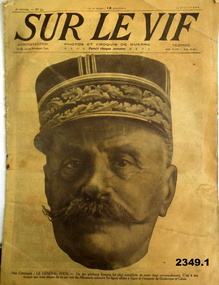
... audio-visual technology - military history...documents - newspapers audio-visual technology - military history Original French Newspapers from WWI, titled Sur Le Vif containing many war photos & news. .1) No 37 dated 20.7.1915 .2) No 54 dated 20.11.1915 .3) No 40 dated 14.8.1915 .4) No 55 dated 27.11.1915 .5) - .8) CDs in cases re .1) - .4) put on them .9) USB stick with same on Newspaper NEWSPAPERS - CDs ...Original French Newspapers from WWI, titled Sur Le Vif containing many war photos & news. .1) No 37 dated 20.7.1915 .2) No 54 dated 20.11.1915 .3) No 40 dated 14.8.1915 .4) No 55 dated 27.11.1915 .5) - .8) CDs in cases re .1) - .4) put on them .9) USB stick with same ondocuments - newspapers, audio-visual technology - military history -
 Bendigo Military Museum
Audio - DVD's WW1, Jamie Roberts, 1) The Last Man from Dunnolly .2) The ANZACS of Eaglehawk, Possibly post 2000
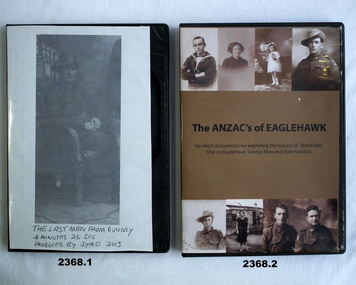
... audio-visual technology...military history...audio-visual technology military history - army DVD .1) DVD titled The Last Man from Dunnolly. ....1) DVD titled The Last Man from Dunnolly. Front has a black & white photograph of a soldier sitting in a chair. Written under title in pen is 4 mins 26 sec, Produced by Synio 2013. .2) DVD titled The ANZACS of Eaglehawk. Front & rear covers have photographs of soldiers & loved ones. 6 short documentaries exploring the impact of war on men & families.audio-visual technology, military history - army, dvd -
 Queen Victoria Women's Centre
CD-Rom, Victorian Women Vote, c. 2008
... white matte finish CD-rom on which is a visual presentation of the history of Women's participation in democracy in Victoria...Videos sufferage feminist movement voting white matte finish CD-rom on which is a visual presentation of the history of Women's participation in democracy in Victoria Victorian Women Vote CD-Rom ...white matte finish CD-rom on which is a visual presentation of the history of Women's participation in democracy in Victoriavideos, sufferage, feminist movement, voting -
Broadmeadows Historical Society & Museum
Photograph - Group Photograph, Jacana Primary School: Grade 6, 1986
... This photograph is part of a broader visual history that helps preserve the memory of Jacana Primary School’s role in shaping young lives and fostering a strong sense of local identity. ...This photograph is part of a broader visual history that helps preserve the memory of Jacana Primary School’s role in shaping young lives and fostering a strong sense of local identity. ...Jacana Primary School, located in Melbourne’s northern suburbs, served the local community for several decades before its closure. By 1986, the school had become a reflection of the area’s growing cultural diversity and suburban development. The mid-1980s were a time of significant change in Australian education, with increasing emphasis on inclusive learning, student leadership, and community engagement. Grade 6 marked a pivotal year for students, often representing the culmination of their primary education and preparation for the transition to secondary school. Class photographs from this period not only document the students and staff but also capture broader social and cultural trends—such as the fashion, hairstyles, and classroom dynamics of the era. This photograph is part of a broader visual history that helps preserve the memory of Jacana Primary School’s role in shaping young lives and fostering a strong sense of local identity. It stands as a reminder of the friendships, learning experiences, and community spirit that defined the school during the 1980s.This 1986 Grade 6 class photograph from Jacana Primary School is a valuable historical record that captures a moment in time within a now-closed educational institution. It reflects the school’s strong sense of community, cultural diversity, and commitment to nurturing young learners during a formative stage of their development. The image also offers a glimpse into the fashion, hairstyles, and social atmosphere of the mid-1980s, making it a meaningful artefact for past students, staff, and the wider Jacana community. Preserving this photograph helps honour the legacy of the school and its role in shaping local identity and childhood experiences.A colour photograph on Matte photograph paperBack: Top left Corner: PH-2127 (blue label) Manufacturer's Mark: Fujicolor Paperjacana primary school, photograph, school photograph, education, 1986, r darren d'angelo, bobbie glen, paul harris, gavin so., clinton paine, ada chong, kelly smith, tabitha headrick, helen papaevangelou, leonie green., annette robinson, deborah lamont, stephen kalenjuk, paul knostenbergs, sharon montebello, stale kasmski, neomi baxter, martin cera, elian jeffrie, david jeffrie, mr. james carlin -
 Broadmeadows Historical Society & Museum
Photograph - Class Photograph, Jacana Primary School: Students and Staff, 1996, 1996
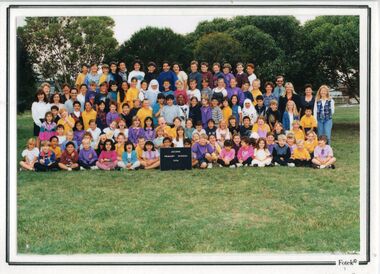
... As part of the school’s visual history, this image helps illustrate how public education contributed to shaping community identity, fostering social cohesion, and influencing the lives of generations of children and their families....As part of the school’s visual history, this image helps illustrate how public education contributed to shaping community identity, fostering social cohesion, and influencing the lives of generations of children and their families. ...This 1996 class photo of students and their teachers at Jacana Primary School offers a vivid glimpse into suburban school life in Melbourne during a period of significant social and urban change. Founded in 1959, Jacana Primary played a central role in the community, serving as both an educational institution and a gathering place until its closure in the early 2000s. It was more than just a school—it was a space where students and staff built a strong sense of identity, connection, and shared experience. The photograph highlights the school’s dedication to creating an inclusive and nurturing environment for young learners. It also quietly captures the increasing cultural diversity of Jacana in the late 20th century, as suburban expansion brought together families from varied backgrounds. As part of the school’s visual history, this image helps illustrate how public education contributed to shaping community identity, fostering social cohesion, and influencing the lives of generations of children and their families.This 1996 class photograph from Jacana Primary School holds historical, social, and cultural significance as a visual record of suburban education in Melbourne during a time of dynamic transformation. Capturing students and their teacher, the image reflects the school’s role as a cornerstone of community life from its founding in 1959 until its closure in the early 2000s. The photograph is a testament to the inclusive and supportive learning environment fostered at Jacana Primary, illustrating the school’s commitment to nurturing young minds and promoting a sense of belonging. It also serves as a subtle yet powerful document of the increasing cultural diversity in Melbourne’s northern suburbs, shaped by post-war migration and urban development. As part of the school’s visual archive, this image contributes to a broader understanding of how public education helped shape local identity, foster social cohesion, and influence the lives of generations of children and families. It stands as a meaningful artifact of community memory and educational heritage.Colour Photograph mounted on white card, and laminatedBack: Top Left Corner: (Blue Label): PH-1221jacana primary school, education, photograph, group photograph, class photograph, 1996 -
Port Melbourne Historical & Preservation Society
Film - Video Recording - Digital, Tim Allen, What Lies Beneath Port Phillip Bay, 27 Apr 2021
... history, and its underwater values are largely unknown to most. And the Port Phillip Bay of today is very changed from the Bay at the time of white settlement. So, what of its future? Tim ALLEN's talk delves beneath the Bay’s surface veneer, to uncover stories of lost sharks and oyster beds, scallop wars, sewerage, and shipping; a visual potted history of key points in time....history, and its underwater values are largely unknown to most. And the Port Phillip Bay of today is very changed from the Bay at the time of white settlement. So, what of its future? Tim ALLEN's talk delves beneath the Bay’s surface veneer, to uncover stories of lost sharks and oyster beds, scallop wars, sewerage, and shipping; a visual potted history of key points in time. ...Digital video recording of PMHPS meeting held on 27 April 2021. We all know Port Phillip Bay – or we think we do. It’s the beach on our back doorstep and our outdoor playground. But the Bay’s natural history, and its underwater values are largely unknown to most. And the Port Phillip Bay of today is very changed from the Bay at the time of white settlement. So, what of its future? Tim ALLEN's talk delves beneath the Bay’s surface veneer, to uncover stories of lost sharks and oyster beds, scallop wars, sewerage, and shipping; a visual potted history of key points in time.port phillip bay, natural environment - beaches and foreshore, tim allen -
Federation University Historical Collection
Magazine - Newsletter, FEAtures: Faculty of Education and Arts, 2017, 2017
... Topics/people include lifelong living archives, history enrichment, visual and performing arts, awards, Jonathan Larson, John McDonald, Bryce Ives, CAFs history project, Keir Reeves, Jacqui Wilson, Cath Crowley, Angela Campbell, Monica Green, David Waldron, Ruby Pilven, John O'Loughlin, Sarah McMaster, Rebecca Mahoney, Prem Nath Chakarvarty, Sadie Arida. .2) December 2017. ...Topics/people include lifelong living archives, history enrichment, visual and performing arts, awards, Jonathan Larson, John McDonald, Bryce Ives, CAFs history project, Keir Reeves, Jacqui Wilson, Cath Crowley, Angela Campbell, Monica Green, David Waldron, Ruby Pilven, John O'Loughlin, Sarah McMaster, Rebecca Mahoney, Prem Nath Chakarvarty, Sadie Arida. .2) December 2017. ...Two Eight page information newsletters from the Federation University Faculty of Education and Arts. .1) June 2017. Topics/people include lifelong living archives, history enrichment, visual and performing arts, awards, Jonathan Larson, John McDonald, Bryce Ives, CAFs history project, Keir Reeves, Jacqui Wilson, Cath Crowley, Angela Campbell, Monica Green, David Waldron, Ruby Pilven, John O'Loughlin, Sarah McMaster, Rebecca Mahoney, Prem Nath Chakarvarty, Sadie Arida. .2) December 2017. Topics/people include New Colombo Plan Scholarship, Helpmann Award Nomnees, John McDonald, Sarah Hamilton, Nathan Curnow, Sarah Morrison, Josh Piterman, Jacqueline Wilson, Pearl Goodwin-Burns, Robyn Brandenburg, Kathryn Glasswell, Melita Jones, Margaret Plunkett, Drew Fraser, Clemente Program, Ann Gervasoni, Martin Andanarjonathan larson, john mcdonald, bryce ives, cafs history project, keir reeves, jacqui wilson, cath crowley, angela campbell, monica green, david waldron, ruby pilven, john o'loughlin, sarah mcmaster, rebecca mahoney, prem nath chakarvarty, sadie arida, new colombo plan scholarship, helpmann award nomnees, sarah hamilton, nathan curnow, sarah morrison, josh piterman, jacqueline wilson, pearl goodwin-burns, robyn brandenburg, kathryn glasswell, melita jones, margaret plunkett, drew fraser, clemente program, ann gervasoni, martin andanar, alumni, jeanette rein, gregory young, richard hammond, adam baker, linda zibell, joan luxemburg, kat barrand, annette chappell, rodney nettle, chloe benson, sara weuffen, nicola cousen, donna ludvigsen, sivesan sivanandamoorthy, ross hall, katrina griffiths -
 Flagstaff Hill Maritime Museum and Village
Functional object - Crucible, The Patent Plumbago Crucible Company, circa 1878
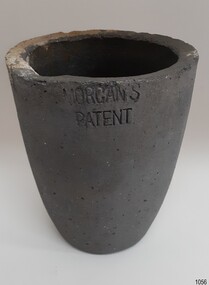
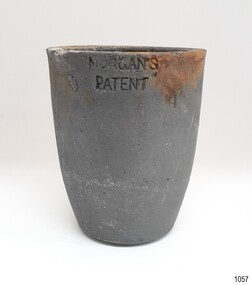
... None of the six is of the same size from a visual appraisal. A brief history of the Loch Ard (1873-1878): - The sailing ship Loch Ard was one of the famous Loch Line of ships that sailed the long voyage from England to Australia. ...None of the six is of the same size from a visual appraisal. A brief history of the Loch Ard (1873-1878): - The sailing ship Loch Ard was one of the famous Loch Line of ships that sailed the long voyage from England to Australia. ...This crucible was raised from the wreck of the LOCH ARD. It is one of six similar relics, in a range of sizes, now in the Flagstaff Hill collection. All bear markings to indicate their manufacture by the Morgan brothers of Battersea, trading as the Patent Plumbago Crucible Co. A crucible is a container used for purifying and melting metals so that they can be cast in a mould to a predetermined shape and use. They must withstand extremely high temperatures, and abrupt cooling, and shed their contents with minimal adherence. The addition of graphite to the traditional firing clays greatly enhanced the durability of industrial crucibles in mid-Victorian Britain, a significant technological advance at a time of great activity in foundries and expansion of demand for refined metals. The Morgans first noticed the advantages of graphite crucibles at the Great Exhibition held in London in 1851. Initially, they contracted to be sole selling agents for the American-made products of Joseph Dixon and Co. from New Jersey, but in 1856 they obtained that firm’s manufacturing rights and began producing their own graphite crucibles from the South London site. The Morgans imported crystalline graphite in 4-5 cwt casks from the British colony of Ceylon (now Sri Lanka) and mixed it with conventional English (Stourbridge) clays to be fired in kilns. Their products were purchased by the Royal Mints in London and India, and exported to official mints in France and Germany. They were successful exhibitors of their crucibles and furnaces at the London Exhibition held in 1861 (Class 1, Mining, quarrying, metallurgy and mineral products, Exhibit 265, Patent Plumbago Crucible Co). The range of sizes represented by the six crucibles retrieved from the LOCH ARD, suggests they may have been part of a sample shipment intended for similar promotion in the Australian colonies ― at Melbourne’s International Exhibition to be held in 1880. The summary of the LOCH ARD cargo manifest, by Don Charlwood in ‘Wrecks and Reputations’, does not mention any crucibles, implying that they were not a large consignment of uniform items. A newspaper account of an 1864 tour of the Morgan brothers’ ‘Black Potteries’ at Battersea indicates: “All the pots were numbered according to their contents, each number standing for one kilogram, or a little over two pounds; a No. 2 crucible contains two kilogrammes; a No. 3, three kilogrammes, and so on.” These numbers are obscured by marine sediment on three of the crucibles in the Flagstaff Hill collection, but those legible on the remaining three are 5, 6, and 8. None of the six is of the same size from a visual appraisal. A brief history of the Loch Ard (1873-1878): - The sailing ship Loch Ard was one of the famous Loch Line of ships that sailed the long voyage from England to Australia. Barclay, Curdle and Co. built the three-masted iron vessel in Glasgow in 1873. It had sailed three trips to Australia and one trip to Calcutta before its fateful voyage. Loch Ard left England on March 2, 1878, under the command of recently married, 29-year-old Captain Gibbs. It was bound for Melbourne with a crew of 37, plus 17 passengers. The general cargo reflected the affluence of Melbourne at the time. Onboard were straw hats, umbrellas, perfumes, clay pipes, pianos, clocks, confectionery, linen and candles, and a heavier load of railway irons, cement, lead and copper. Other cargo included items intended for display in the Melbourne International Exhibition of 1880. The Loch Ard had been sailing for three months and was close to its destination on June 1, 1878. Captain Gibbs had expected to see land at about 3 am but the Loch Ard ran into a fog that greatly reduced visibility and there was no sign of land or the Cape Otway lighthouse. The fog lifted at 4 am and the sheer cliffs of Victoria's west coast were much closer to them than Captain Gibbs expected. He tried to manage the vessel but failed and the ship struck a reef at the base of Mutton Bird Island, near Port Campbell. The top deck loosened from the hull, and the masts and rigging crashed down, knocking passengers and crew overboard. The lifeboat was launched by Tom Pearce but crashed into the side of Loch Ard and capsized. He clung onto its overturned hull and sheltered under it. He drifted out to sea and the tide brought him back to what is now called Loch Ard Gorge. He swam to shore and found a cave for shelter. A passenger, Eva Carmichael, had raced onto the deck to find out what was happening and was confronted by towering cliffs above the ship. She was soon swept off the ship by a huge wave. Eva saw Tom Pearce on a small rocky beach and yelled to attract his attention. He swam out and dragged her to the shelter of the cave. He revived her with a bottle of brandy from a case that had washed up on the beach. Tom scaled a cliff in search of help and followed some horse hoof prints. He came from two men from Glenample Station, three and a half miles away. He told the men of the tragedy and then returned to the gorge while the two men rode back to the station to get help. They reached Loch Ard Gorge and took the two shipwreck survivors to Glenample Station to recover. Eva stayed at the station for six weeks before returning to Ireland by steamship. In Melbourne, Tom Pearce received a hero's welcome and was presented with a medal and some money. Of the 54 crew members and passengers on board, only two survived: the apprentice, Tom Pearce and the young woman passenger, Eva Carmichael, who lost her family in the tragedy. The shipwreck of the LOCH ARD is of State significance ― Victorian Heritage Register S417. Flagstaff Hill’s collection of artefacts from LOCH ARD is significant for being one of the largest collections of artefacts from this shipwreck in Victoria. It is significant for its association with the shipwreck, which is on the Victorian Heritage Register (VHR S417). The collection is significant because of the relationship between the objects, as together they have a high potential to interpret the story of the LOCH ARD. The LOCH ARD collection is archaeologically significant as the remains of a large international passenger and cargo ship. The LOCH ARD collection is historically significant for representing aspects of Victoria’s shipping history and its potential to interpret sub-theme 1.5 of Victoria’s Framework of Historical Themes (living with natural processes). The collection is also historically significant for its association with the LOCH ARD, which was one of the worst and best-known shipwrecks in Victoria’s history.A Morgan’s Patent graphite crucible No.8 (i.e. 8kgs capacity), one of a set. It was recovered from the wreck of the LOCH ARD. It is in its original grey colouring with minimal sediment accretion on the top rim. It rises in a slight curve from a flat circular base to a wider rim with a pouring lip. Maker’s marks on the side of the container clearly identify the manufacturer. The maker's details are stamped into the base around and within a circle. A white sticker is attached. Made by the Patent Plumbago Crucible Company at the Battersea Works in London. Number “8”. Letters “MORGAN’S PATENT”. Details on the base "MORGAN'S PATENT" "THE PATENT PLUMBAGO CRUCIBLE COMPANY" Symbol [8] above "BATTERSEA WORKS LONDON" Handwritten on a white sticker in black pen "LA/89"flagstaff hill, warrnambool, maritime museum, shipwreck coast, great ocean road, loch line, loch ard, captain gibbs, eva carmichael, tom pearce, glenample station, mutton bird island, loch ard gorge, graphite crucible, plumbago crucible, morgans crucible company, flagstaff hill maritime museum and village, fluxing pots, crucible, morgan’s patent, morgan brothers, patent plumbago crucible co, battersea works, london, port campbell -
 Flagstaff Hill Maritime Museum and Village
Functional object - Crucible, The Patent Plumbago Crucible Company, circa 1878
... None of the six is of the same size from a visual appraisal. A brief history of the Loch Ard (1873-1878): - The sailing ship Loch Ard was one of the famous Loch Line of ships that sailed the long voyage from England to Australia. ...None of the six is of the same size from a visual appraisal. A brief history of the Loch Ard (1873-1878): - The sailing ship Loch Ard was one of the famous Loch Line of ships that sailed the long voyage from England to Australia. ...This crucible was raised from the wreck of the LOCH ARD. It is one of six similar relics, in a range of sizes, now in the Flagstaff Hill collection. All bear markings to indicate their manufacture by the Morgan brothers of Battersea, trading as the Patent Plumbago Crucible Co. A crucible is a container used for purifying and melting metals so that they can be cast in a mould to a predetermined shape and use. They must withstand extremely high temperatures, and abrupt cooling, and shed their contents with minimal adherence. The addition of graphite to the traditional firing clays greatly enhanced the durability of industrial crucibles in mid-Victorian Britain, a significant technological advance at a time of great activity in foundries and expansion of demand for refined metals. The Morgans first noticed the advantages of graphite crucibles at the Great Exhibition held in London in 1851. Initially, they contracted to be sole selling agents for the American-made products of Joseph Dixon and Co. from New Jersey, but in 1856 they obtained that firm’s manufacturing rights and began producing their own graphite crucibles from the South London site. The Morgans imported crystalline graphite in 4-5 cwt casks from the British colony of Ceylon (now Sri Lanka) and mixed it with conventional English (Stourbridge) clays to be fired in kilns. Their products were purchased by the Royal Mints in London and India, and exported to official mints in France and Germany. They were successful exhibitors of their crucibles and furnaces at the London Exhibition held in 1861 (Class 1, Mining, quarrying, metallurgy and mineral products, Exhibit 265, Patent Plumbago Crucible Co). The range of sizes represented by the six crucibles retrieved from the LOCH ARD, suggests they may have been part of a sample shipment intended for similar promotion in the Australian colonies ― at Melbourne’s International Exhibition to be held in 1880. The summary of the LOCH ARD cargo manifest, by Don Charlwood in ‘Wrecks and Reputations’, does not mention any crucibles, implying that they were not a large consignment of uniform items. A newspaper account of an 1864 tour of the Morgan brothers’ ‘Black Potteries’ at Battersea indicates: “All the pots were numbered according to their contents, each number standing for one kilogram, or a little over two pounds; a No. 2 crucible contains two kilogrammes; a No. 3, three kilogrammes, and so on.” These numbers are obscured by marine sediment on three of the crucibles in the Flagstaff Hill collection, but those legible on the remaining three are 5, 6, and 8. None of the six is of the same size from a visual appraisal. A brief history of the Loch Ard (1873-1878): - The sailing ship Loch Ard was one of the famous Loch Line of ships that sailed the long voyage from England to Australia. Barclay, Curdle and Co. built the three-masted iron vessel in Glasgow in 1873. It had sailed three trips to Australia and one trip to Calcutta before its fateful voyage. Loch Ard left England on March 2, 1878, under the command of recently married, 29-year-old Captain Gibbs. It was bound for Melbourne with a crew of 37, plus 17 passengers. The general cargo reflected the affluence of Melbourne at the time. Onboard were straw hats, umbrellas, perfumes, clay pipes, pianos, clocks, confectionery, linen and candles, and a heavier load of railway irons, cement, lead and copper. Other cargo included items intended for display in the Melbourne International Exhibition of 1880. The Loch Ard had been sailing for three months and was close to its destination on June 1, 1878. Captain Gibbs had expected to see land at about 3 am but the Loch Ard ran into a fog that greatly reduced visibility and there was no sign of land or the Cape Otway lighthouse. The fog lifted at 4 am and the sheer cliffs of Victoria's west coast were much closer to them than Captain Gibbs expected. He tried to manage the vessel but failed and the ship struck a reef at the base of Mutton Bird Island, near Port Campbell. The top deck loosened from the hull, and the masts and rigging crashed down, knocking passengers and crew overboard. The lifeboat was launched by Tom Pearce but crashed into the side of Loch Ard and capsized. He clung onto its overturned hull and sheltered under it. He drifted out to sea and the tide brought him back to what is now called Loch Ard Gorge. He swam to shore and found a cave for shelter. A passenger, Eva Carmichael, had raced onto the deck to find out what was happening and was confronted by towering cliffs above the ship. She was soon swept off the ship by a huge wave. Eva saw Tom Pearce on a small rocky beach and yelled to attract his attention. He swam out and dragged her to the shelter of the cave. He revived her with a bottle of brandy from a case that had washed up on the beach. Tom scaled a cliff in search of help and followed some horse hoof prints. He came from two men from Glenample Station, three and a half miles away. He told the men of the tragedy and then returned to the gorge while the two men rode back to the station to get help. They reached Loch Ard Gorge and took the two shipwreck survivors to Glenample Station to recover. Eva stayed at the station for six weeks before returning to Ireland by steamship. In Melbourne, Tom Pearce received a hero's welcome and was presented with a medal and some money. Of the 54 crew members and passengers on board, only two survived: the apprentice, Tom Pearce and the young woman passenger, Eva Carmichael, who lost her family in the tragedy. The shipwreck of the LOCH ARD is of State significance ― Victorian Heritage Register S417 Flagstaff Hill’s collection of artefacts from LOCH ARD is significant for being one of the largest collections of artefacts from this shipwreck in Victoria. It is significant for its association with the shipwreck, which is on the Victorian Heritage Register (VHR S417). The collection is significant because of the relationship between the objects, as together they have a high potential to interpret the story of the LOCH ARD. The LOCH ARD collection is archaeologically significant as the remains of a large international passenger and cargo ship. The LOCH ARD collection is historically significant for representing aspects of Victoria’s shipping history and its potential to interpret sub-theme 1.5 of Victoria’s Framework of Historical Themes (living with natural processes). The collection is also historically significant for its association with the LOCH ARD, which was one of the worst and best-known ahipwrecks in Victoria’s history.A Morgan’s Patent graphite crucible No.4 (i.e. 4kgs capacity), one of a set of three. It was recovered from the wreck of the LOCH ARD. It is in its original grey colouring with minimal sediment accretion on the top rim. It rises in a slight curve from a flat circular base to a wider rim with a pouring lip. Maker’s marks on the side of the container clearly identify the manufacturer. The maker's details are stamped into the base around and within a circle. A white sticker is attached. Made by the Patent Plumbago Crucible Company at the Battersea Works in London.Number or. Letters “MORGAN’S PATENT”. Details on the base "MORGAN'S PATENT" "THE PATENT PLUMBAGO CRUCIBLE COMPANY" Symbol [4] above "BATTERSEA WORKS LONDON" Handwritten on a white sticker in black pen "L89"flagstaff hill, warrnambool, flagstaff hill maritime museum, maritime museum, shipwreck coast, flagstaff hill maritime village, great ocean road, loch line, loch ard, captain gibbs, eva carmichael, tom pearce, glenample station, mutton bird island, loch ard gorge, graphite crucible, plumbago crucible, morgan's crucible company, flagstaff hill maritime museum and village, fluxing pots, crucible, morgan’s patent, morgan brothers, patent plumbago crucible co, battersea works, london, port campbell -
 Flagstaff Hill Maritime Museum and Village
Textile - Tapestry, Mary O'Brien, Gerda Shanley, Judith Stewart, Beryl Conlan (crafts people), 1988
... It shows a visual display of a thousand years of Warrnambool's history, connecting the land and sea to people and events. ...This creative tapestry, woven in 1988, documents a thousand years of Warrnambool history. It hangs in the Great Circle Gallery at Flagstaff Hill and complements the theme of the display. Three local women, with the help of Museum staff, researched and designed the tapestry, which was woven in 1988 from wool and cotton. It is ten meters long and seventy centimetres high. The beautiful creation took seven months to create. The tapestry introduces the seafaring theme of Flagstaff Hill Maritime Museum and Village, and illustrates a timeline of events dating back to the arrival of Europeans in the Warrnambool area. It begins with the settlement of the area by Europeans and travels back in time as you walk further into the gallery, depicting shipwrecks along the coast, whaling in the area, early exploration by Europeans James Grant and Nicholas Baudin, back to the indigenous settlement of the area, represented by middens and indigenous symbols. Interestingly, before being hung in the gallery, the tapestry was originally hung with the intention of being framed from right to left. All materials in the cotton and wool tapestry, including dyed wool, were prepared for a cost of $33,000. The project was supported by local philanthropic groups.The tapestry is a hand worked creation by local women. It shows a visual display of a thousand years of Warrnambool's history, connecting the land and sea to people and events.Tapestry of the early history of the Warrnambool area, rectangular in shape. Materials include cotton and wool, some of the wool being hand-dyed. Handmade in 1988 by local women.A plaque accompanies the Tapestry "Flagstaff Hill Maritime Tapestry / 1989 / Tapestry: Woven Cotton and Wool / Mary O'Brien Gerda Shanley / Judith Stewart Beryl Conlan"flagstaff hill, flagstaff hill maritime museum and village, warrnambool, maritime museum, maritime village, great ocean road, shipwreck coast, tapestry, warrnambool history, warrnambool textiles, wall hanging, weave, south west victoria history, south west victoria timeline, indigenous people, early settlement, whaling, james grant, nicholas baudin, cotton, wool, dyed yarn, handmade, hand-dyed yarn -
 Mission to Seafarers Victoria
Book - Reference book, Jill Barnard et al, Welcome and Farewell: The Story of Station Pier, 2004
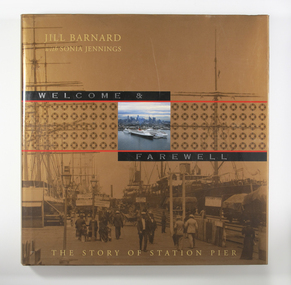
... history: at moments of celebration and commemoration, during economic booms and depressions, during times of war and peace. It has also won a place in the hearts of ordinary individuals affected by the welcomes and farewells they have experienced there: those for visiting royalty and celebrities, for servicemen and medical personnel off to war or returning home, for migrants from distant countries and refugees from war zones, for friends and family travelling for personal, professional or cultural reasons. Welcome & Farewell thoughtfully examines Station Pier’s significance and offers a splendid visual ...In the mid-nineteenth century, Victoria’s primitive maritime infrastructure was not coping with the volume of passenger and cargo traffic arriving in and departing from the burgeoning gold-fevered colony. However, the opening of Railway Pier at Port Melbourne in 1854 greatly improved the situation. Railway Pier serviced the steamships, which plied Port Phillip Bay and the Victorian coastal waters beyond, and also offered berths for vessels on the regular runs to other Australian colonies and to overseas destinations. However, as the larger and more powerful steamships of the early twentieth century found berthing increasingly difficult at Railway Pier, the need for a more modern pier became apparent. By 1930, the new Station Pier had replaced its predecessor. Itself extended and upgraded several times including during the past decade, Station pier still offers every contemporary convenience to shipping services using its busy facilities, just as did its predecessor Railway Pier, 150 years ago. The Victorian Government commissioned Welcome & Farewell to celebrate the 150 years since the opening of the Railway Pier. In doing so, it was mindful that the story of the site is not limited to its contribution to national and state economies, or to its physical development. The Government wanted a history that would also speak to ordinary Victorians, and other Australians, of their own experiences of this significant place. For indeed the Station Pier site has played its part in almost every milestone or phase in our history: at moments of celebration and commemoration, during economic booms and depressions, during times of war and peace. It has also won a place in the hearts of ordinary individuals affected by the welcomes and farewells they have experienced there: those for visiting royalty and celebrities, for servicemen and medical personnel off to war or returning home, for migrants from distant countries and refugees from war zones, for friends and family travelling for personal, professional or cultural reasons. Welcome & Farewell thoughtfully examines Station Pier’s significance and offers a splendid visual panorama of the experiences lived out there between 1854 and 2004.Illustrated large-format book with 224 pages [36] p. of plates. : ill., maps, ports.Bibliography: p. 199-201non-fictionIn the mid-nineteenth century, Victoria’s primitive maritime infrastructure was not coping with the volume of passenger and cargo traffic arriving in and departing from the burgeoning gold-fevered colony. However, the opening of Railway Pier at Port Melbourne in 1854 greatly improved the situation. Railway Pier serviced the steamships, which plied Port Phillip Bay and the Victorian coastal waters beyond, and also offered berths for vessels on the regular runs to other Australian colonies and to overseas destinations. However, as the larger and more powerful steamships of the early twentieth century found berthing increasingly difficult at Railway Pier, the need for a more modern pier became apparent. By 1930, the new Station Pier had replaced its predecessor. Itself extended and upgraded several times including during the past decade, Station pier still offers every contemporary convenience to shipping services using its busy facilities, just as did its predecessor Railway Pier, 150 years ago. The Victorian Government commissioned Welcome & Farewell to celebrate the 150 years since the opening of the Railway Pier. In doing so, it was mindful that the story of the site is not limited to its contribution to national and state economies, or to its physical development. The Government wanted a history that would also speak to ordinary Victorians, and other Australians, of their own experiences of this significant place. For indeed the Station Pier site has played its part in almost every milestone or phase in our history: at moments of celebration and commemoration, during economic booms and depressions, during times of war and peace. It has also won a place in the hearts of ordinary individuals affected by the welcomes and farewells they have experienced there: those for visiting royalty and celebrities, for servicemen and medical personnel off to war or returning home, for migrants from distant countries and refugees from war zones, for friends and family travelling for personal, professional or cultural reasons. Welcome & Farewell thoughtfully examines Station Pier’s significance and offers a splendid visual panorama of the experiences lived out there between 1854 and 2004.port melbourne, station pier -
 Federation University Historical Collection
Booklet - Exhibition Catalogue, Final Exhibition 1993, Ballarat University College, Visual Arts, 1993
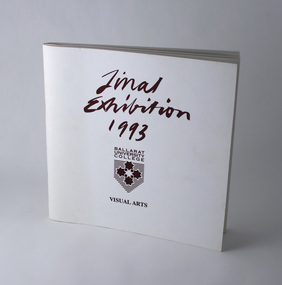
... Visual Art...Ceramics...Drawing...Graphic Design...Painting...Photography...Printmaking...Sculpture...Art History...Visual and Performing Arts, Ballarat University College. List of subject areas and staff names. Ceramics, Drawing, Graphic Design, Painting, Photography, Printmaking, Sculpture, Art History / Art Theory. ...Visual and Performing Arts, Ballarat University College. List of subject areas and staff names. Ceramics, Drawing, Graphic Design, Painting, Photography, Printmaking, Sculpture, Art History / Art Theory. ...Booklet to accompany third year student exhibition of Bachelor of Visual Arts students. Includes staff list, individual student names and photographs within their studio spaces at the Mt Helen Campus. It also includes student contact details and some artist statements. Introduction by Associate Professor Ian Hemingway, Head, School of Visual and Performing Arts, Ballarat University College. List of subject areas and staff names. Ceramics, Drawing, Graphic Design, Painting, Photography, Printmaking, Sculpture, Art History / Art Theory. At this time, the School offered the three-year Bachelor of Arts, Visual Arts; Bachelor of Arts, Performing Arts, a one year Graduate Diploma of Visual Arts and a one year Graduate Diploma of Music Education.Saddle-stitched book. 68pp cover black and white text pages on gloss stock, plus 4pp single colour cover on textured card.ballarat university college, buc, ballarat college of advanced education, bcae, university of ballarat, ub, federation university, visual art, ceramics, drawing, graphic design, painting, photography, printmaking, sculpture, art history / art theory, mt helen campus -
Federation University Historical Collection
Booklet - Gazette, Education Gazette and Teachers' Aid. General Course of Study for Elementary Schools 1934, 1949
... Visual Aids...Secondary Schools...Horticulture...Calendar...Music...Spanish...history...Relates to the history of the Ballarat Teachers College victoria education gazette and teachers' aid minister of public instruction english courses of study Vacancies Visual Aids Secondary Schools Horticulture Calendar Music Spanish history Gazette is made of ink on white paper with some yellowing, for the year 1949 Education Gazette and Teachers' Aid. ...Relates to the history of the Ballarat Teachers CollegeGazette is made of ink on white paper with some yellowing, for the year 1949victoria education gazette and teachers' aid, minister of public instruction, english, courses of study, vacancies, visual aids, secondary schools, horticulture, calendar, music, spanish, history -
 Flagstaff Hill Maritime Museum and Village
Book - Reference Book Victorian Flora, Ferdinand Mueller, The Plants Indigenous To The Colony of Victoria Vol 2, 1864-1865
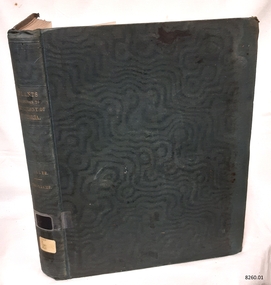
... history was still being systematically documented. The work helped establish authoritative botanical knowledge for Victoria and reflects Mueller’s central role in building Australian botany. The book is also important because it combines descriptive botany with visual ...The Plants Indigenous to the Colony of Victoria is a landmark botanical work by Australia’s prominent colonial botanist, Baron Ferdinand von Mueller. However, there is a common point of confusion in Australian botanical bibliography regarding the "volumes" of this specific work. To understand what Volume 1 and the other three volumes are about, and how they differ from each other in the four-book set, it helps to look at exactly how Mueller’s project was published. Volume 1 represents Mueller's highly detailed, beautifully illustrated standalone success covering the Thalamiflorae. It differs from the subsequent "volumes" because Volume 2 was abandoned as a rare, 40-page unfinished fragment, and Volumes 3 and 4 were never written, as Mueller pivoted to assist with the broader Flora Australiensis.The Plants Indigenous To The Colony of Victoria Vol 2 Author: Ferdinand Mueller Publisher: John Ferres Government Printer Melbourne Date: 1864-1865 Further Information: Blue patterned front cover and spine with gilt lettering to spine and Library labels non-fictionThe Plants Indigenous to the Colony of Victoria is a landmark botanical work by Australia’s prominent colonial botanist, Baron Ferdinand von Mueller. However, there is a common point of confusion in Australian botanical bibliography regarding the "volumes" of this specific work. To understand what Volume 1 and the other three volumes are about, and how they differ from each other in the four-book set, it helps to look at exactly how Mueller’s project was published. Volume 1 represents Mueller's highly detailed, beautifully illustrated standalone success covering the Thalamiflorae. It differs from the subsequent "volumes" because Volume 2 was abandoned as a rare, 40-page unfinished fragment, and Volumes 3 and 4 were never written, as Mueller pivoted to assist with the broader Flora Australiensis.flagstaff hill, warrnambool, shipwrecked coast, flagstaff hill maritime museum, maritime museum, shipwreck coast, flagstaff hill maritime village, great ocean road, book, pattison collection, warrnambool library, warrnambool mechanics’ institute, ralph eric pattison, corangamite regional library service, warrnambool city librarian, mechanics’ institute library, victorian library board, warrnambool books and records, warrnambool children’s library -
 Flagstaff Hill Maritime Museum and Village
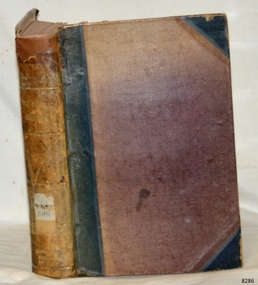
Book - Literary Work, John Bunyan, The Pilgrims Progress, 1850
... history's most celebrated religious authors. The publisher, George Virtue (1794–1868), was a powerhouse 19th-century London publisher based out of Ivy Lane and Paternoster Row. He established himself in the "numbers trade", a publishing strategy where massive, high-end works were released in affordable, sequential pamphlets via subscription. Virtue was legendary for his commitment to visual...history's most celebrated religious authors. The publisher, George Virtue (1794–1868), was a powerhouse 19th-century London publisher based out of Ivy Lane and Paternoster Row. He established himself in the "numbers trade", a publishing strategy where massive, high-end works were released in affordable, sequential pamphlets via subscription. Virtue was legendary for his commitment to visual ...Written in 1678, The Pilgrim's Progress is a deeply influential Christian allegory that tracks the spiritual journey of a man named Christian. Weighed down by a crushing burden on his back (representing his sins), Christian flees his home in the "City of Destruction", after reading a holy book. Guided by the evangelist Evangelist, he embarks on a perilous trek toward the Celestial City (Heaven). Along the way, his journey brings him face-to-face with a cast of characters who personify spiritual triumphs and trials, such as Faithful, Hopeful, Mr Worldly Wiseman, and Giant Despair. He must navigate legendary, treacherous obstacles like the Slough of Despond, the temptations of Vanity Fair, and a terrifying battle with the demon Apollyon. The narrative is structured as a dream sequence experienced by the narrator. Because the second half follows Christian's wife, Christiana, and their children on the same path, it functions as both an adventure tale and a road map for the Puritan concept of salvation. It should be noted that the 1850 George Virtue printing is a classic example of a mid-Victorian luxury reprint. It is highly notable because it was curated by the popular non-conformist minister and author Rev. Robert Philip.The Pilgrims Progress Author: John Bunyan Curated By: Rev. Robert Philip Publisher: George Virtue Date: 1850 Further Information: Red hardcover with a red spine and reinforced corners, lettering in gilt. The spine has a Library label with an inscription.fictionWritten in 1678, The Pilgrim's Progress is a deeply influential Christian allegory that tracks the spiritual journey of a man named Christian. Weighed down by a crushing burden on his back (representing his sins), Christian flees his home in the "City of Destruction", after reading a holy book. Guided by the evangelist Evangelist, he embarks on a perilous trek toward the Celestial City (Heaven). Along the way, his journey brings him face-to-face with a cast of characters who personify spiritual triumphs and trials, such as Faithful, Hopeful, Mr Worldly Wiseman, and Giant Despair. He must navigate legendary, treacherous obstacles like the Slough of Despond, the temptations of Vanity Fair, and a terrifying battle with the demon Apollyon. The narrative is structured as a dream sequence experienced by the narrator. Because the second half follows Christian's wife, Christiana, and their children on the same path, it functions as both an adventure tale and a road map for the Puritan concept of salvation. It should be noted that the 1850 George Virtue printing is a classic example of a mid-Victorian luxury reprint. It is highly notable because it was curated by the popular non-conformist minister and author Rev. Robert Philip. flagstaff hill, warrnambool, shipwrecked coast, flagstaff hill maritime museum, maritime museum, shipwreck coast, flagstaff hill maritime village, great ocean road, book, pattison collection, warrnambool library, warrnambool mechanics’ institute, ralph eric pattison, corangamite regional library service, warrnambool city librarian, mechanics’ institute library, victorian library board, warrnambool books and records, warrnambool children’s library, the pilgrims progress, john bunyan -
 Flagstaff Hill Maritime Museum and Village
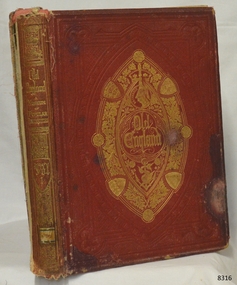
Book - Illustrated compendium of Lithographs/History, Charles Knight, Old England Vol 1, 1864
... histories and descriptions covering architecture and ruins, such as castles, cathedrals, abbeys, and ancient town halls. There is also extensive coverage of daily life and material culture, including historical costumes, armour, coins, and furniture, along with everyday social customs. There are a number of visual...histories and descriptions covering architecture and ruins, such as castles, cathedrals, abbeys, and ancient town halls. There is also extensive coverage of daily life and material culture, including historical costumes, armour, coins, and furniture, along with everyday social customs. There are a number of visual ...The full title of the work is ‘Old England: A Pictorial Museum of Regal, Ecclesiastical, Baronial, Municipal, and Popular Antiquities’. Edited by Charles Knight, this book serves as a massive, richly illustrated compendium of British social, architectural, and cultural history. It traces the development of England from prehistoric and Roman times, through the Middle Ages, and up to the 18th century.Old England Vol 1 Edited by Charles Knight Publisher: James Sangster & Co Date: 1864 Further Information: Red highly embossed hardcover with spine and lettering in gilt. Title to front cover in a egg shaped lozenge patterned in gilt. The spine has a Library label with an inscription.non-fictionThe full title of the work is ‘Old England: A Pictorial Museum of Regal, Ecclesiastical, Baronial, Municipal, and Popular Antiquities’. Edited by Charles Knight, this book serves as a massive, richly illustrated compendium of British social, architectural, and cultural history. It traces the development of England from prehistoric and Roman times, through the Middle Ages, and up to the 18th century.flagstaff hill, warrnambool, shipwrecked coast, flagstaff hill maritime museum, maritime museum, shipwreck coast, flagstaff hill maritime village, great ocean road, book, pattison collection, warrnambool library, warrnambool mechanics’ institute, ralph eric pattison, corangamite regional library service, warrnambool city librarian, mechanics’ institute library, victorian library board, warrnambool books and records, warrnambool children’s library, old england vol 1, chromolithographs -
 Flagstaff Hill Maritime Museum and Village
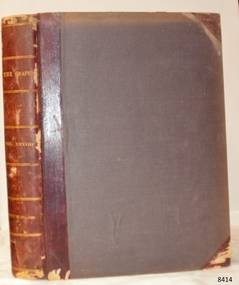
Newspaper - Bound Compilation of Newspapers July to December 1888, R. Clay, Sons, & Taylor, The Graphic Illustrated Newspaper Vol 38, 1888
... It is also significant to literary history because it serialized famous novels before they were published as standalone books. For historians, these volumes are goldmines, offering an unmatched, highly visual look into how the British public viewed the world at the close of the 19th century. ...To understand exactly what this item is, it helps to clear up a common misconception: it is not a book, nor is it a traditional literary novel. Instead, it is a bound volume of The Graphic, a weekly British newspaper that ran from 1869 to 1932. Because newspapers back then were flimsy, readers or libraries would collect six months' worth of weekly issues and have them custom-bound into a hardback volume for preservation.Bound Compilation, The Graphic Illustrated Newspaper Vol 38 Author: Various, Publisher: Edward Joseph Mansfield 1888 Date: 1888 Reddish hardcover with a damaged browns spine, reinforced corners to hardcover gold edging to spine. non-fictionTo understand exactly what this item is, it helps to clear up a common misconception: it is not a book, nor is it a traditional literary novel. Instead, it is a bound volume of The Graphic, a weekly British newspaper that ran from 1869 to 1932. Because newspapers back then were flimsy, readers or libraries would collect six months' worth of weekly issues and have them custom-bound into a hardback volume for preservation.flagstaff hil, warrnambool, flagstaff hill maritime museum, maritime museum, shipwreck coast, flagstaff hill maritime village, great ocean road, book, pattison collection, warrnambool library, warrnambool mechanics’ institute, ralph eric pattison, corangamite regional library service, warrnambool city librarian, mechanics’ institute library, victorian library board, warrnambool books and records, warrnambool children’s library, the graphic illustrated newspaper vol 38, edward joseph mansfield -
 Flagstaff Hill Maritime Museum and Village
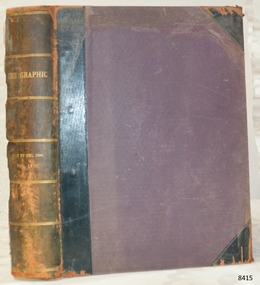
Newspaper - Bound Compilation of Newspapers July to December 1898, Edward Joseph Mansfield, Publisher, The Graphic Illustrated Newspaper Vol 58, 1898
... It is also significant to literary history because it serialized famous novels before they were published as standalone books. For historians, these volumes are goldmines, offering an unmatched, highly visual look into how the British public viewed the world at the close of the 19th century. ...To understand exactly what this item is, it helps to clear up a common misconception: it is not a book, nor is it a traditional literary novel. Instead, it is a bound volume of The Graphic, a weekly British newspaper that ran from 1869 to 1932. Because newspapers back then were flimsy, readers or libraries would collect six months' worth of weekly issues and have them custom-bound into a hardback volume for preservation.Bound Compilation, The Graphic Illustrated Newspaper Vol 58 Author: Various, Publisher: Edward Joseph Mansfield 1898 Date: 1898 Reddish hardcover with a damaged browns spine, reinforced corners to hardcover gold edging to spine. non-fictionTo understand exactly what this item is, it helps to clear up a common misconception: it is not a book, nor is it a traditional literary novel. Instead, it is a bound volume of The Graphic, a weekly British newspaper that ran from 1869 to 1932. Because newspapers back then were flimsy, readers or libraries would collect six months' worth of weekly issues and have them custom-bound into a hardback volume for preservation.flagstaff hil, warrnambool, flagstaff hill maritime museum, maritime museum, shipwreck coast, flagstaff hill maritime village, great ocean road, book, pattison collection, warrnambool library, warrnambool mechanics’ institute, ralph eric pattison, corangamite regional library service, warrnambool city librarian, mechanics’ institute library, victorian library board, warrnambool books and records, warrnambool children’s library, the graphic illustrated newspaper vol 58, edward joseph mansfield -
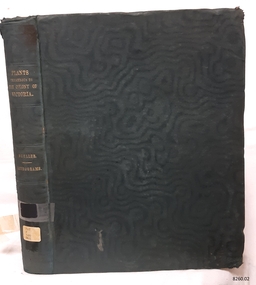 Flagstaff Hill Maritime Museum and Village
Book - Reference Book Victorian Flora, Ferdinand Mueller, The Plants Indigenous To The Colony of Victoria Vol 1, 1864-1865
... history was still being systematically documented. The work helped establish authoritative botanical knowledge for Victoria and reflects Mueller’s central role in building Australian botany. The book is also important because it combines descriptive botany with visual ...The Plants Indigenous to the Colony of Victoria is a landmark botanical work by Australia’s prominent colonial botanist, Baron Ferdinand von Mueller. However, there is a common point of confusion in Australian botanical bibliography regarding the "volumes" of this specific work. To understand what Volume 1 and the other three volumes are about, and how they differ from each other in the four-book set, it helps to look at exactly how Mueller’s project was published. Volume 1 represents Mueller's highly detailed, beautifully illustrated standalone success covering the Thalamiflorae. It differs from the subsequent "volumes" because Volume 2 was abandoned as a rare, 40-page unfinished fragment, and Volumes 3 and 4 were never written, as Mueller pivoted to assist with the broader Flora Australiensis.The Plants Indigenous To The Colony of Victoria Vol 1 Author: Ferdinand Mueller Publisher: John Ferres Government Printer Melbourne Date: 1864-1865 Further Information: Blue patterned front cover and spine with gilt lettering to spine and Library labels non-fictionThe Plants Indigenous to the Colony of Victoria is a landmark botanical work by Australia’s prominent colonial botanist, Baron Ferdinand von Mueller. However, there is a common point of confusion in Australian botanical bibliography regarding the "volumes" of this specific work. To understand what Volume 1 and the other three volumes are about, and how they differ from each other in the four-book set, it helps to look at exactly how Mueller’s project was published. Volume 1 represents Mueller's highly detailed, beautifully illustrated standalone success covering the Thalamiflorae. It differs from the subsequent "volumes" because Volume 2 was abandoned as a rare, 40-page unfinished fragment, and Volumes 3 and 4 were never written, as Mueller pivoted to assist with the broader Flora Australiensis.flagstaff hill, warrnambool, shipwrecked coast, flagstaff hill maritime museum, maritime museum, shipwreck coast, flagstaff hill maritime village, great ocean road, book, pattison collection, warrnambool library, warrnambool mechanics’ institute, ralph eric pattison, corangamite regional library service, warrnambool city librarian, mechanics’ institute library, victorian library board, warrnambool books and records, warrnambool children’s library -
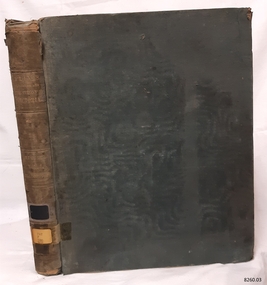 Flagstaff Hill Maritime Museum and Village
Book - Reference Book Victorian Flora, Ferdinand Mueller, The Plants Indigenous To The Colony of Victoria Vol 3, 1864-1865
... history was still being systematically documented. The work helped establish authoritative botanical knowledge for Victoria and reflects Mueller’s central role in building Australian botany. The book is also important because it combines descriptive botany with visual ...The Plants Indigenous to the Colony of Victoria is a landmark botanical work by Australia’s prominent colonial botanist, Baron Ferdinand von Mueller. However, there is a common point of confusion in Australian botanical bibliography regarding the "volumes" of this specific work. To understand what Volume 1 and the other three volumes are about, and how they differ from each other in the four-book set, it helps to look at exactly how Mueller’s project was published. Volume 1 represents Mueller's highly detailed, beautifully illustrated standalone success covering the Thalamiflorae. It differs from the subsequent "volumes" because Volume 2 was abandoned as a rare, 40-page unfinished fragment, and Volumes 3 and 4 were never written, as Mueller pivoted to assist with the broader Flora Australiensis.The Plants Indigenous To The Colony of Victoria Vol 1 Author: Ferdinand Mueller Publisher: John Ferres Government Printer Melbourne Date: 1864-1865 Further Information: Blue patterned front cover and spine with gilt lettering to spine and Library labels non-fictionThe Plants Indigenous to the Colony of Victoria is a landmark botanical work by Australia’s prominent colonial botanist, Baron Ferdinand von Mueller. However, there is a common point of confusion in Australian botanical bibliography regarding the "volumes" of this specific work. To understand what Volume 1 and the other three volumes are about, and how they differ from each other in the four-book set, it helps to look at exactly how Mueller’s project was published. Volume 1 represents Mueller's highly detailed, beautifully illustrated standalone success covering the Thalamiflorae. It differs from the subsequent "volumes" because Volume 2 was abandoned as a rare, 40-page unfinished fragment, and Volumes 3 and 4 were never written, as Mueller pivoted to assist with the broader Flora Australiensis.flagstaff hill, warrnambool, shipwrecked coast, flagstaff hill maritime museum, maritime museum, shipwreck coast, flagstaff hill maritime village, great ocean road, book, pattison collection, warrnambool library, warrnambool mechanics’ institute, ralph eric pattison, corangamite regional library service, warrnambool city librarian, mechanics’ institute library, victorian library board, warrnambool books and records, warrnambool children’s library -
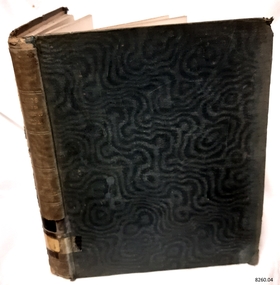 Flagstaff Hill Maritime Museum and Village
Book - Reference Book Victorian Flora, Ferdinand Mueller, The Plants Indigenous To The Colony of Victoria Vol 4, 1864-1865
... history was still being systematically documented. The work helped establish authoritative botanical knowledge for Victoria and reflects Mueller’s central role in building Australian botany. The book is also important because it combines descriptive botany with visual ...The Plants Indigenous to the Colony of Victoria is a landmark botanical work by Australia’s prominent colonial botanist, Baron Ferdinand von Mueller. However, there is a common point of confusion in Australian botanical bibliography regarding the "volumes" of this specific work. To understand what Volume 1 and the other three volumes are about, and how they differ from each other in the four-book set, it helps to look at exactly how Mueller’s project was published. Volume 1 represents Mueller's highly detailed, beautifully illustrated standalone success covering the Thalamiflorae. It differs from the subsequent "volumes" because Volume 2 was abandoned as a rare, 40-page unfinished fragment, and Volumes 3 and 4 were never written, as Mueller pivoted to assist with the broader Flora Australiensis.The Plants Indigenous To The Colony of Victoria Vol 1 Author: Ferdinand Mueller Publisher: John Ferres Government Printer Melbourne Date: 1864-1865 Further Information: Blue patterned front cover and spine with gilt lettering to spine and Library labels non-fictionThe Plants Indigenous to the Colony of Victoria is a landmark botanical work by Australia’s prominent colonial botanist, Baron Ferdinand von Mueller. However, there is a common point of confusion in Australian botanical bibliography regarding the "volumes" of this specific work. To understand what Volume 1 and the other three volumes are about, and how they differ from each other in the four-book set, it helps to look at exactly how Mueller’s project was published. Volume 1 represents Mueller's highly detailed, beautifully illustrated standalone success covering the Thalamiflorae. It differs from the subsequent "volumes" because Volume 2 was abandoned as a rare, 40-page unfinished fragment, and Volumes 3 and 4 were never written, as Mueller pivoted to assist with the broader Flora Australiensis.flagstaff hill, warrnambool, shipwrecked coast, flagstaff hill maritime museum, maritime museum, shipwreck coast, flagstaff hill maritime village, great ocean road, book, pattison collection, warrnambool library, warrnambool mechanics’ institute, ralph eric pattison, corangamite regional library service, warrnambool city librarian, mechanics’ institute library, victorian library board, warrnambool books and records, warrnambool children’s library -
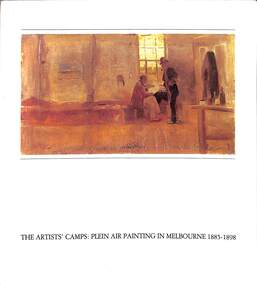 Ringwood and District Historical Society
Book, Helen Tolpliss, The Artists Camps: Plein Air Painting In Melbourne 1885-1898, 1984
... Visual Arts, Monash University. The paintings of the 'Heidelberg school" are the best loved group of works in Australian art. The affection is linked in the national mind with a recognition that the authentic Australian landscape had been discovered and colonial bonds broken. The painting activity of the 1880s and 1890s was by no means confined to Heidelberg. Helen Topliss painstakingly presents the variety of sites around Melbourne, in the bush and on the coast, reconstructing their original character and the history...Visual Arts, Monash University. The paintings of the 'Heidelberg school" are the best loved group of works in Australian art. The affection is linked in the national mind with a recognition that the authentic Australian landscape had been discovered and colonial bonds broken. The painting activity of the 1880s and 1890s was by no means confined to Heidelberg. Helen Topliss painstakingly presents the variety of sites around Melbourne, in the bush and on the coast, reconstructing their original character and the history ...Image of a Charles Conder painting on front of soft covered book titled The Artists' Camps: Plein Air Painting In Melbourne 1885-1898. FOREWORD by Margaret Plant - Department of Visual Arts, Monash University. The paintings of the 'Heidelberg school" are the best loved group of works in Australian art. The affection is linked in the national mind with a recognition that the authentic Australian landscape had been discovered and colonial bonds broken. The painting activity of the 1880s and 1890s was by no means confined to Heidelberg. Helen Topliss painstakingly presents the variety of sites around Melbourne, in the bush and on the coast, reconstructing their original character and the history of their accessibility. The major figures are well known — Roberts, McCubbin, Streeton and Conder — but there were a number of 'minor' artists associated with the various painting spots that have been too long neglected. A research programme is here initiated in the hope that some of these figures might be more fully returned to us. The restoration of the sites provokes a more extensive roll-call of artists involved in the plein air phenomenon. Various expressions of nationalism in the late nineteenth century have been accorded attention: the painters contributed in varying degrees. But it is, finally, the quality of the painting, the freshness, the particularity of nuance, the calculated aesthetic angles that have governed response and inspired affection. The elegant relaxation themes of many of the paintings have in fact been overlooked in the intellectualization of the quest for 'national identity'. The orchards and the beaches, the ladies promenading a la mode on the beach at Mentone or in the grasses of Box Hill are as important to our artistic tradition and social history as the shearers of rams. -
Phillip Island and District Historical Society Inc.
Book, BLOEMEN, Anne, Hedland voices : a visual and oral record celebrating the first hundred years of the town of Port Hedland 1896-1996, 1997
... Port Hedland western australia history northwestern pilbara local Inscribed 'To Phillip Island Historical Society from Port Hedland Historical Society, Liam R. Clayton Hedland voices : a visual ...Inscribed 'To Phillip Island Historical Society from Port Hedland Historical Society, Liam R. Claytonport hedland, western australia, history, northwestern, pilbara, local -
 Greensborough Historical Society
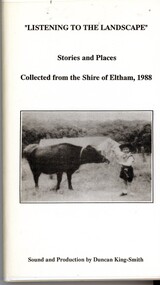
Audio - Audio Cassette, Duncan King-Smith, Listening to the landscape: stories and places collected from the Shire of Eltham 1988, 1988
... Part of the John Ramsdale collection of slides and audio visual material. eltham shire of eltham oral histories "Listening to the landscape: stories and places collected from the Shire of Eltham 1988" 3 audio tapes in plastic folder. ...Audio recordings of Eltham residents discussing life in Eltham and surrounding areas over the years. Part of the John Ramsdale collection of slides and audio visual material.3 audio tapes in plastic folder."Listening to the landscape: stories and places collected from the Shire of Eltham 1988"eltham, shire of eltham, oral histories
