
Showing 32 items matching "waaaf"
-
 Bendigo Military Museum
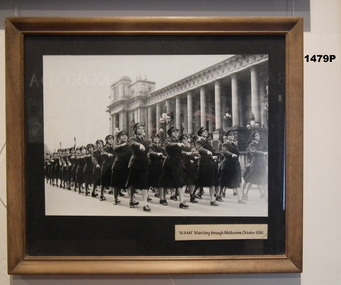
Photograph - PHOTOGRAPH, FRAMED, Photograph of WAAAF marching through Melbourne October 1941
... Photograph of WAAAF marching through Melbourne October 1941...Framed photograph of "WAAAF Marching through Melbourne October 1941" Photograph - copy of black and white photograph depicting the" WAAAF (in uniform) marching through Melbourne October 1941". ...Printed label in mount below photograph "WAAAF (in uniform) marching through Melbourne October 1941"...frame accessories military history - airforce women photography WW2 Printed label in mount below photograph "WAAAF (in uniform) marching through Melbourne October 1941" Framed photograph of "WAAAF Marching through Melbourne October 1941" Photograph - copy of black and white photograph depicting the" WAAAF (in uniform) marching through Melbourne October 1941". ...Framed photograph of "WAAAF Marching through Melbourne October 1941" Photograph - copy of black and white photograph depicting the" WAAAF (in uniform) marching through Melbourne October 1941". Frame - Timber, mid brown colour stain, glass front. Mount - black cardboard.Printed label in mount below photograph "WAAAF (in uniform) marching through Melbourne October 1941"frame accessories, military history - airforce, women, photography, ww2 -
 Chiltern Athenaeum Trust
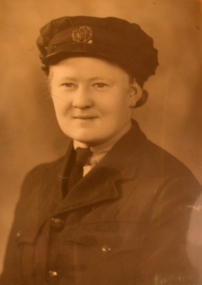
WW2 WAAAF Photograph and Personnel ID Tags : A.M. Dyson, Circa 1940-1945
... WW2 WAAAF : Women's Australian Auxiliary Air Force WW2 Air Force - Australia Ann Marion Dyson...1 sepia coloured Photograph of Ann Marion Dyson WW2 WAAAF 2 ID tags : 1 x round and 1 x octagonal in shape. ...Dog Tags : Ann Marion Dyson 105057, WAAAF and R.C. ...WW2 WAAAF : Women's Australian Auxiliary Air Force WW2 Air Force - Australia Ann Marion Dyson WW2 WAAAF 1940-1945. ann marion dyson ww2 waaaf australian air force ww2 Dog Tags : Ann Marion Dyson 105057, WAAAF and R.C. 1 sepia coloured Photograph of Ann Marion Dyson WW2 WAAAF 2 ID tags : 1 x round and 1 x octagonal in shape. ...WW2 WAAAF : Women's Australian Auxiliary Air Force WW2 Air Force - Australia Ann Marion DysonWW2 WAAAF 1940-1945.1 sepia coloured Photograph of Ann Marion Dyson WW2 WAAAF 2 ID tags : 1 x round and 1 x octagonal in shape. Round on a silver (stainless steel chain) and octagonal on a copper nickel chain. Both tags made of corrosion resistant metal such as nickel alloy. Tags depict Name Ann Marion Dyson, service number 105057, service WAAAF, and religion. Dog Tags : Ann Marion Dyson 105057, WAAAF and R.C. ann marion dyson, ww2 waaaf, australian air force ww2 -
 Moorabbin Air Museum
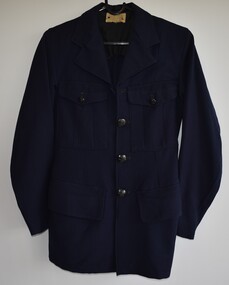
Uniform (item) - Women's Auxiliary Australian Air Force (WAAAF) Dress Jacket
... Women's Auxiliary Australian Air Force (WAAAF) Dress Jacket....Women's Auxiliary Australian Air Force (WAAAF) Dress Jacket, as worn by Aircraftwomen Madge Charlotte Bramley Service No.110952. ...Women's Auxiliary Australian Air Force (WAAAF) Dress Jacket. Uniform Women's Auxiliary Australian Air Force (WAAAF) Dress Jacket. ... -
 Lake Boga Flying Boat Museum
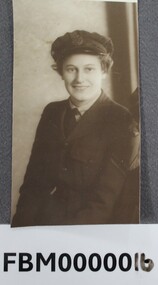
Photograph
... ...WAAAF...sepia photograph of Lois Baird in WAAAF uniform...Sergeant Lois Baird WAAAF married Bob Miles, Catalina Squadron member. ...Bob Miles enlisted in the Royal Australian Air Force in May 1940. He trained as a Fitter in 1941, then as an Air Gunner in 1942. He was in 11 Squadron and 20 Squadron. Both Squadrons flew Catalinas on special missions dropping sea mines into enemy controlled harbors. These Catalinas were painted black for night missions and were known as the Black Cats. The Black Cat Catalina flying boats were serviced at the No 1 Flying Boat Repair Depot, Lake Boga, during World War II.Sergeant Lois Baird WAAAF married Bob Miles, Catalina Squadron member.sepia photograph of Lois Baird in WAAAF uniformon back of photograph: Sergeant - W.A.A.A.F./Lois Baird/Brisbane 1942/(Married Robert/George Miles/1947/(Malvern Meth. Church)catalina, waaaf, wwii, bob miles -
 Bendigo Military Museum
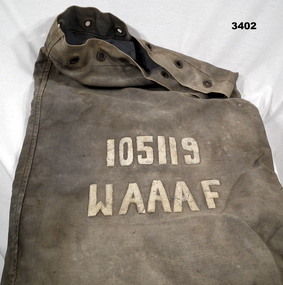
Equipment - KIT BAG WAAF WW2, 1939 - 45
... ...waaaf...Painted on side & bottom: “105119 WAAAF”...Equipment kit bag waaaf Painted on side & bottom: “105119 WAAAF” Kit Bag, faded dark blue, 12 brass eyelets. ...Item issued to Mavis Irene KEILLOR No 105119 WAAF, (born Mildura, enlisted Melbourne) 30.12.1942 age 22 years. Discharged with the rank of Aircraftwoman Laverton Transit Departure and Reception Centre on 6.12.1945. Mavis (Trew) was a member of the Bendigo Ex Service Women’s Association. Kit Bag, faded dark blue, 12 brass eyelets. Appears to have been dyed dark blue over the original khaki colour.Painted on side & bottom: “105119 WAAAF”equipment, kit bag, waaaf -
 Warrnambool RSL Sub Branch
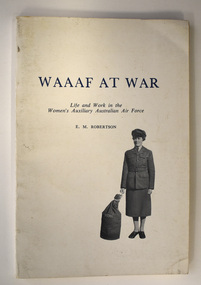
Book, BOOK: WAAAF at War - Life and Work in the Women's Auxiliary Australian Air Force
... BOOK: WAAAF at War - Life and Work in the Women's Auxiliary Australian Air Force...Robertson; PUBLISHER: Mullaya Publications; 1974 BOOK: WAAAF at War - Life and Work in the Women's Auxiliary Australian Air Force Book ... -
 Warrnambool and District Historical Society Inc.
Book - War Experiences Book, E. M. Robertson, WAAAF at War, 1974
... WAAAF at War...The pages contain printed text and black and white photographs. WAAAF at War Book War Experiences Book E. M. ...This book tells of the WW2 experiences of an Australian service womanThis is a book of 112 pages. The cover is white with black printing and there is a black and white photograph on the front cover. The pages contain printed text and black and white photographs.non-fictionThis book tells of the WW2 experiences of an Australian service woman world war two in australia, australia women serving in world war two -
 Lilydale RSL Sub Branch
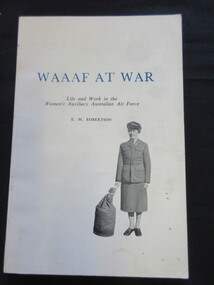
Book - Book Soft cover, E M Robertson, WAAAF AT WAR, 1974
... WAAAF AT WAR...Life and Work in the Women's Auxiliary Australian Air Force Book WAAAF AT WAR Book Book Soft cover E M Robertson Mullaya Publications Humphrey & Formula Press ...Life and Work in the Women's Auxiliary Australian Air ForceBooknon-fictionLife and Work in the Women's Auxiliary Australian Air Force -
 Lilydale RSL Sub Branch
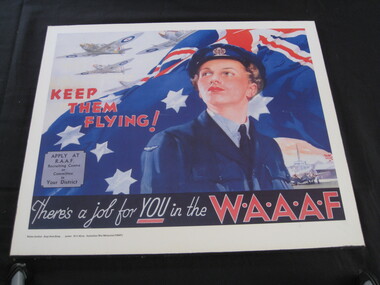
Print - Framed Print, Australian War Memorial, WAAAF Recruitment Poster
... WAAAF Recruitment Poster...Evelyn. Framed Poster WAAAF Recruitment Poster Print Framed Print Australian War Memorial ...Framed PosterDonation details on back of frame -Donated to Lilydale RSL in Memory of Harry Clarence Mitchell 1907-1967 VX530562 2/4 Australian Army Field Workshop and Nancy Jean Mitchell 1913-2004 RAAF 95020. Former residents of Mooroolbark and Mt. Evelyn. -
 Nhill Aviation Heritage Centre
Memorabilia - Muriel Holly collection, 1944
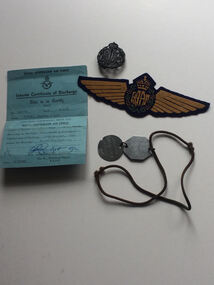
... ...WAAAF...WAAAF 11474, Discharge certificate 16/8/46...Muriel Holly 114774 dog tag discharge certificate WAAAF badge WAAAF 11474, Discharge certificate 16/8/46 1 Service Dog Tags 2 of 2 Cap badge RAAF 3 Uniform cloth badge RAAF wing $ Itnerim Certificate or Dicharge Memorabilia Muriel Holly collection ...1 Service Dog Tags 2 of 2 Cap badge RAAF 3 Uniform cloth badge RAAF wing $ Itnerim Certificate or DichargeWAAAF 11474, Discharge certificate 16/8/46muriel holly, 114774, dog tag, discharge certificate, waaaf, badge -
 Whitehorse Historical Society Inc.
Newspaper - Article, Special launch, 29/03/1991
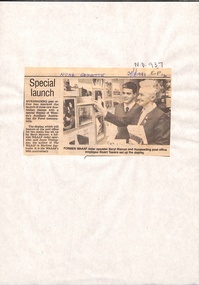
... ...WAAAF...The display was set up by an ex WAAAF radar operator and Joyce Thompson, author of 'The WAAAF in Wartime Australia'....The display was set up by an ex WAAAF radar operator and Joyce Thompson, author of 'The WAAAF in Wartime Australia'. ...Article in Nunawading Gazette about a display at Nunawading Post Office of Women's Auxiliary Australian Air Force memorabilia at the time of the launch of three new Australian stamps. It was the W.A.A.A..F.'s 50th anniversary. The display was set up by an ex WAAAF radar operator and Joyce Thompson, author of 'The WAAAF in Wartime Australia'.postal services, waaaf, mainon, beryl, thompson, joyce, nunawading post office, travers, stuart -
 Running Rabbits Military Museum operated by the Upwey Belgrave RSL Sub Branch
ID Tags
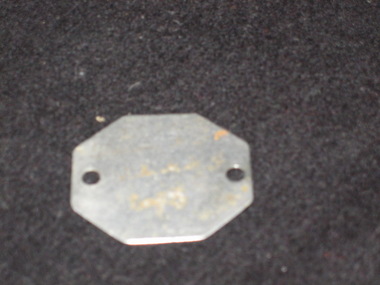
... Women's Auxiliary Australian Air Force (WAAAF)174223...Women's Auxiliary Australian Air Force (WAAAF)174223 ID Tags ...Glaum A. F. Women's Auxiliary Australian Air Force (WAAAF)174223equipment, ww2, raaf -
 Returned Nurses RSL Sub-branch
Newspaper - Photocopy of a newspaper clipping, The Argus, [19420919 - original]
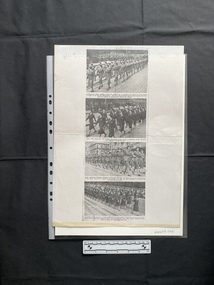
... ...WAAAF...Other photos depict Voluntary Aid Detachment (VAD), Women's Auxiliary Service (AWAS) and Women's Auxiliary Australian Air Force (WAAAF)....Other photos depict Voluntary Aid Detachment (VAD), Women's Auxiliary Service (AWAS) and Women's Auxiliary Australian Air Force (WAAAF). WWII World War Two WW2 AANS VAD Voluntary Aid Detachments Women's Auxiliary Service AWAS Australian Women's Auxiliary Service WAAAF Women's Auxiliary Australian Air Force Fundraising march A photocopy of a narrow newspaper clipping comprised of four black and white photos with captions. ...The clipping is a set of photos of Melbourne's National Shilling Drive March. The first photo's caption states that the Australian Army Nurses, who had returned from active service overseas were given the position of honour at the head of the column. Other photos depict Voluntary Aid Detachment (VAD), Women's Auxiliary Service (AWAS) and Women's Auxiliary Australian Air Force (WAAAF).A photocopy of a narrow newspaper clipping comprised of four black and white photos with captions. The photos depict four different groups of women, all marching in an paradewwii, world war two, ww2, aans, vad, voluntary aid detachments, women's auxiliary service, awas, australian women's auxiliary service, waaaf, women's auxiliary australian air force, fundraising march -
 Returned Nurses RSL Sub-branch
Newspaper - Newspaper clipping, The Argus, 19420919
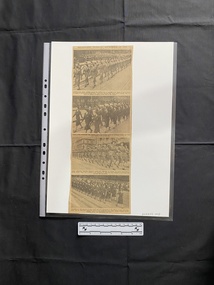
... ...WAAAF...Other photos depict Voluntary Aid Detachment (VAD), Women's Auxiliary Service (AWAS) and Women's Auxiliary Australian Air Force (WAAAF). On reverse of clipping is a partial article about 'a striking evidence of the way in which Australia has transformed itself into a nation at war, instead of being merely a nation involved in war.'...Other photos depict Voluntary Aid Detachment (VAD), Women's Auxiliary Service (AWAS) and Women's Auxiliary Australian Air Force (WAAAF). On reverse of clipping is a partial article about 'a striking evidence of the way in which Australia has transformed itself into a nation at war, instead of being merely a nation involved in war.' ...The clipping is a set of photos of Melbourne's National Shilling Drive March. The first photo's caption states that the Australian Army Nurses, who had returned from active service overseas were given the position of honour at the head of the column. Other photos depict Voluntary Aid Detachment (VAD), Women's Auxiliary Service (AWAS) and Women's Auxiliary Australian Air Force (WAAAF). On reverse of clipping is a partial article about 'a striking evidence of the way in which Australia has transformed itself into a nation at war, instead of being merely a nation involved in war.'A narrow newspaper clipping of four black and white photos with captions. The photos depict four different groups of uniformed women, all marching in an parade.'NC9' [blue ink, back of clipping, centre, top]wwii, world war two, ww2, aans, vad, voluntary aid detachments, women's auxiliary service, awas, australian women's auxiliary service, waaaf, women's auxiliary australian air force, fundraising march -
 Nhill Aviation Heritage Centre
Telephone, c1940
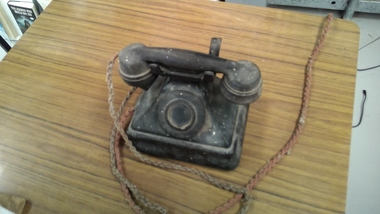
... This phone was used by Gwen Mulhallen whilst serving as a WAAAF at the Nhill Air School ...This phone was used by Gwen Mulhallen whilst serving as a WAAAF at the Nhill Air School Actual item retained from days of service at Nhill Air School PMG AWA-36No. 162MAC Bakerlite phone base and handset no dialer Telephone ...This phone was used by Gwen Mulhallen whilst serving as a WAAAF at the Nhill Air School Actual item retained from days of service at Nhill Air SchoolBakerlite phone base and handset no dialerPMG AWA-36No. 162MAC -
 Bendigo Military Museum
Book - WAAAF BOOK, Honor Darling and Clare Stevenson, "THE W.A.A.A.F BOOK", 1984
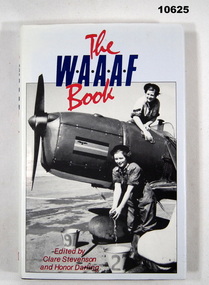
... ...WAAAF...Book Publication Military History WAAAF WW2 Inside front cover written "B. Conway, 1984 $34-" Hardcover book. ...Covers stories and personal histories of members of the service. Collated and Edited by Honor Darling and Clare Stevenson.Hardcover book. Pale blue cover with picture of two women on front cleaning a WW2 Fighter plane. The cover was plastic and hard cover inside was black. A description of the two editors (Clare Stevenson and Honor Darling). On the back plus a blurb outlining the contents of the book. Inside is 287 pages of many small chapters outlining the experience of many of the members.Inside front cover written "B. Conway, 1984 $34-"book, publication, military history, waaaf, ww2 -
 Bendigo Military Museum
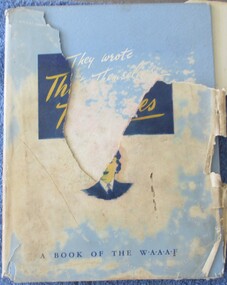
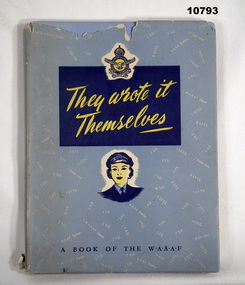
Book - W.A.A.A.F., WWII, W.A.A.A.F, "THEY WROTE IT THEMSELVES", 1946 (First Edition)
... ...WAAAF...Publications Books Military History RAAF WAAAF WWII Handwritten - black ink pen. "Jean I. ..."A BOOK OF THE W.A.A.A.F."Hard cover book with dustcover. Hard cover - cardboard with mid blue colour paper. White print on front and spine. Dustcover - mid blue colour paper with yellow and blue colour print on front and spine. Front Illustration: RAAF Badge with Kings Crown and Flying Eag;e. Words "ROYAL AUSTRALIAN AIR FORCE/ PER AUSTRA ARDUA-AD". 72 pages, cut plain, off white paper. Illustrated with black and white photographs and sketches. Front end paper - handwritten owner details.Handwritten - black ink pen. "Jean I. Hutcheson/ June 1946".publications, books, military history, raaf, waaaf, wwii -
 Bendigo Military Museum
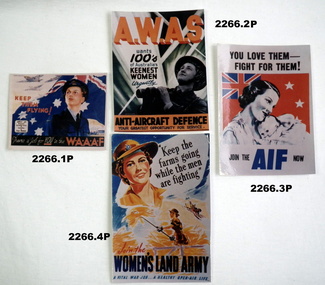
Photograph - POSTER PHOTOGRAPHS, 1960
... Set of photos of women's service posters WW2. .1) WAAAF Recruiting poster coloured photo .2) AWAS recruiting poser photo for AA defence in colour .3) Recruiting poster for AIF showing mother and child. .4) Recruiting poster photo for womens land army .5) Recruiting poster photo women to join red cross. 2 shillings membership in colour. .6) Recruiting poster for women to be a victory job. in colour. .7) Welcome back poster photo displaying woman with red cross badge in colour. ...Posters photographs Recruiting Set of photos of women's service posters WW2. .1) WAAAF Recruiting poster coloured photo .2) AWAS recruiting poser photo for AA defence in colour .3) Recruiting poster for AIF showing mother and child. .4) Recruiting poster photo for womens land army .5) Recruiting poster photo women to join red cross. 2 shillings membership in colour. .6) Recruiting poster for women to be a victory job. in colour. .7) Welcome back poster photo displaying woman with red cross badge in colour. ...These are copies of original posters reproduced on Photograph paper.Set of photos of women's service posters WW2. .1) WAAAF Recruiting poster coloured photo .2) AWAS recruiting poser photo for AA defence in colour .3) Recruiting poster for AIF showing mother and child. .4) Recruiting poster photo for womens land army .5) Recruiting poster photo women to join red cross. 2 shillings membership in colour. .6) Recruiting poster for women to be a victory job. in colour. .7) Welcome back poster photo displaying woman with red cross badge in colour. posters, photographs, recruiting -
 Melbourne Tram Museum
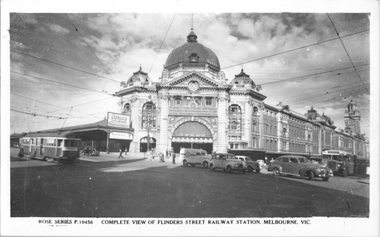
Postcard, Rose Stereograph Co, "Complete view of Flinders Street Railway Station, Melbourne", early 1940s
... There is an advertisement on the station for the Women's Auxiliary Australian Air Force (WAAAF) this organisation was founded in 1941....There is an advertisement on the station for the Women's Auxiliary Australian Air Force (WAAAF) this organisation was founded in 1941. ...Rose Series postcard P.10456, titled "Complete view of Flinders Street Railway Station, Melbourne", looking from St Paul's Cathedral steps. Two W2 class trams in Swanston Street, one fitted with a white dash panel under the driver's windows indicating a wartime black-out precautions era. There is an MMTB TS8c or TS11c bus eastbound in Flinders Street bound for "Kew" (Kew Junction). There are some cars waiting to complete their hook turns into Flinders Street. There is an advertisement on the station for the Women's Auxiliary Australian Air Force (WAAAF) this organisation was founded in 1941.Yields information about Flinders St station early 1940s.Postcard - printed real photograph with Rose Stereograph Co. name on the rear.trams, tramways, w2 class, swanston st, flinders st station, flinders st, buses, mmtb buses, ts8c class, world war ii, leyland, rose series -
 Lake Boga Flying Boat Museum
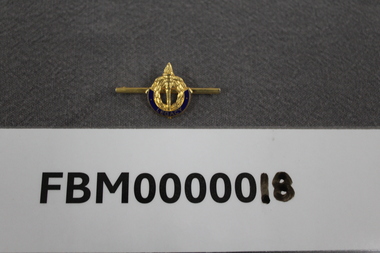
Badge - Pin
... Bob married Lois Baird WAAAF in 1947. When Bob passed in 1969 Lois was awarded a War Widows Pension and received the Legacy Badge....Bob married Lois Baird WAAAF in 1947. When Bob passed in 1969 Lois was awarded a War Widows Pension and received the Legacy Badge. ...Bob Miles enlisted in the Royal Australian Air Force in May 1940. He trained as a Fitter in 1941, then as an Air Gunner in 1942. He was in 11 Squadron and 20 Squadron. Both Squadrons flew Catalinas on special missions dropping sea mines into enemy controlled harbors. These Catalinas were painted black for night missions and were known as the Black Cats. The Black Cat Catalina flying boats were serviced at the No 1 Flying Boat Repair Depot, Lake Boga, during World War II. Bob married Lois Baird WAAAF in 1947. When Bob passed in 1969 Lois was awarded a War Widows Pension and received the Legacy Badge.Lois Baird served in WWII in the WAAAF. Her husband Robert George (Bob) Miles served in the RAAF, a member of 20 Squadron, flying the Catalinas.Gold lapel pin, round emblem with gold torch and wreath, blue scroll with textLegacywwii, catalina, legacy, lois miles, bob miles -
 Returned Nurses RSL Sub-branch
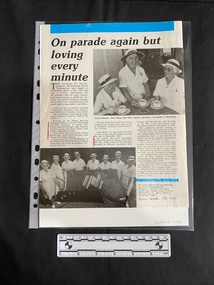
Magazine - Magazine clipping, Bowls in Victoria, On parade again but loving every minute, September 1988
... Lorna Gorman, 79, who has received the Life Member of Melbourne WAAAF Branch, Royal Australian Air Force Association, Victoria Division award for services rendered over many years. ...Lorna Gorman, 79, who has received the Life Member of Melbourne WAAAF Branch, Royal Australian Air Force Association, Victoria Division award for services rendered over many years. ...The Victorian Ex Servicewomen's Bicentennial Bowls Tournament was also a celebration for the bowlers who, 45 years earlier were contributing to Australia's war effort. Lorna Gorman, 79, who has received the Life Member of Melbourne WAAAF Branch, Royal Australian Air Force Association, Victoria Division award for services rendered over many years. Joan Wicks, 72, was on the first ship to leave Australia, after Japan entered the war in 1941, and joined the 2/1st Australian General Hospital at Gaza. After serving throughout the war she was awarded the Florence Nightingale Scholarship and on completion took up the position of Matron of the Eye and Ear Hospital in Melbourne. Olive Jepson joined the Royal Australian Nursing Service in early 1942 and was attached to the 2/11th Australian General Hospital in Bonegilla. A page from a magazine consisting of two large black and white photos of women in bowls uniforms and three columns of text. The upper photo is of three women having a cup of tea and a laugh, with the lower photo depicting eight women holding the Bicentennial flag.[red ink line down the left side of a paragraph of text, left side, middle] [red ink line down the left side of a paragraph of text, middle, lower] 'Archie Webster 580 1815' [blue ink, bottom right]mckinnon bowls club, joan norton, jack smith, eileen mclean memorial plaque, jess whitehead, vi smith, may johnson, edna myers, ww2, wwii, middle east, western australia, new guinea, bouganville, heidelberg military hospital, buna, joy livingston, heather hall, betty craft, cath nimon, nance pownall, audrie webster, jeanne mathews, joan flower -
 Bendigo Military Museum
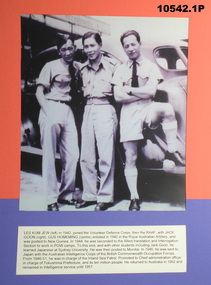
Photograph - AUSTRALIAN CHINESE SERVICEMEN/WOMEN, WW2, Bendigo & District RSL Club, Unknown
... Her sister, VALDA (top right) worked as a radar plotter with the WAAAF, and her brother MAX (bottom right) went with the British Commonwealth Occupation Forces to Japan after the War. 3. ...Her sister, VALDA (top right) worked as a radar plotter with the WAAAF, and her brother MAX (bottom right) went with the British Commonwealth Occupation Forces to Japan after the War. 3. ...Australian Chinese Servicemen from WW2 photographs - Exhibition held at the Bendigo & District RSL, post 2010.1.2.3. Photographs on photographic paper, enlarged black and white portraits. Mount - red and blue colour cardboard, double mount with top area containing the photograph, lower area printed information. 1. Three servicemen in informal group. 2. Two servicewomen, one serviceman and a civilian - group portrait. 3. Five servicemen and one service woman in uniform - collection of small portraits.Printed information - black ink print. 1. LES KUM JEW (left)- in 1942, joined the Volunteer Defence Corps, then the RAAF, with JACK GOON (right). GUS HOMEMING (centre) enlisted in 1942 in the Royal Australian Artillery, and was posted to New Guinea. In 1944, he was seconded to the Allied translation and Interrogation Section to work in POW camps. To this end, and with other students including Jack Goon, he learned Japanese at Sydney University. He was then posted to Morotai. In 1946, he was sent to Japan with the Australian Intelligence Corps of the British Commonwealth Occupation Forces. From 1946-51, he was in charge of the Inland Sea Patrol. Promoted to Chief Administration Officer in charge of Tokushima Prefecture and its ten million people. He returned to Australia in 1952 and remained in Intelligence service until 1957. 2. EUNICE LEONG (top left) worked from 1940 as a wireless operator for the Army in Melbourne, Sydney and Alice Springs, and as a signals instructor at Bonegilla. Her sister, VALDA (top right) worked as a radar plotter with the WAAAF, and her brother MAX (bottom right) went with the British Commonwealth Occupation Forces to Japan after the War. 3. PETER MOO (top right) served with the Australian Army in the Northern Territory, his brother FRANK MOO (top centre) served with the Australian Imperial Force in Rabaul and Bougainville, Frank's children CLARENCE MOO (top right) served with the Royal Australian Engineers and then transferred to the Royal Australian Air Force HARRY MOO (bottom left) served with the Royal Australian Air Force's 31 Beaufighter Squadron in Darwin and Morotai, MAVIS MOO (bottom centre) served with the Australian Army Medical Women's Service and ARTHUR MOO (bottom right) served with the Australian Army and later the Royal Australian Air Force. photographs, chinese/australians, ww2 -
 Bendigo Military Museum
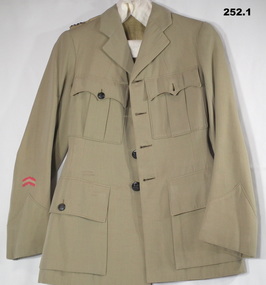
Uniform - JACKET AND SKIRT, WAAAF, WWII
... Uniform belonging to Catherine Winifred Sewell, Born Creswick) Regt No 96270 F.O Women’s Australian Auxillary Air Force (W.A.A.A.F) Female Uniforms WWII WAAF .1) Jacket summer dress, cotton khaki, Epaulettes, lower right sleeve has 2 red chevrons denoting years of service .2) Skirt summer dress, cotton Khaki Uniform JACKET AND SKIRT, WAAAF ...Uniform belonging to Catherine Winifred Sewell, Born Creswick) Regt No 96270 F.O Women’s Australian Auxillary Air Force (W.A.A.A.F) .1) Jacket summer dress, cotton khaki, Epaulettes, lower right sleeve has 2 red chevrons denoting years of service .2) Skirt summer dress, cotton Khakifemale, uniforms, wwii, waaf -
 Bendigo Military Museum
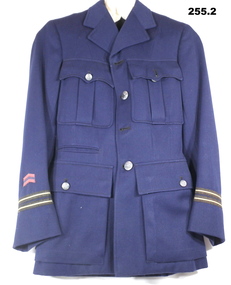
Uniform - JACKET AND SKIRT, WAAAF, C.1939 - 45
... Refer Cat No 252.2 Uniforms Womens RAAF WW2 JACKET - CHEVRON LOWER SLEEVE(L) RANK BAND BOTTOM OF EACH SLEEVE .1) Jacket, Heavy Cotton, Navy, Black Buttons .2) Skirt, Heavy Cotton, Navy Uniform JACKET AND SKIRT, WAAAF ...Uniform re F.O Catherine W Sewell WAAF. Refer Cat No 252.2.1) Jacket, Heavy Cotton, Navy, Black Buttons .2) Skirt, Heavy Cotton, NavyJACKET - CHEVRON LOWER SLEEVE(L) RANK BAND BOTTOM OF EACH SLEEVEuniforms, womens, raaf, ww2 -
 Waverley RSL Sub Branch
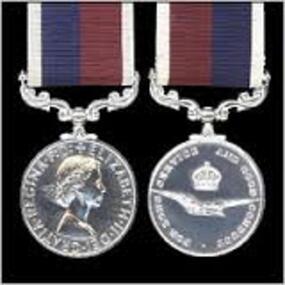
R.A.A.F. Long Service Medal
... Towards the end of the War, a course was held with WAAAF trainees to train them as Mechanics. ...Awarded to Alan Bowers (A236814) who was a R.A.A.F. dental mechanic who serverd during WWII including service in Darwin, and then continued in the R.A.A.F. for some years after the end of WWII The Royal Australian Air Force (and all Commonwealth Air Forces) Long Service and Good Conduct Medal: Awarded to NCOs and ORs of the RAAF (RAF, RCAF etc) for 15 years service. A cupro-nickel plated medal, the obverse features the sovereign's head, the reverse features the crown and eagle emblem of the RAAF (and RAF). Officers are eligible for the award provided they have served a minimum 12 years in the ranks. The riband is dark blue and maroon with white edges. This medal ceased to be awarded in Australia in 1975 when it was replaced by the National Medal (and sbsequently the DFSM and DLSM) in the Australian system of honours and awards. http://www.heritagemedals.com.au/medals-1/service-long-service/air-force-long-service-and-good-conduct-medal.html History of the RAAF Dental Branch It took six years following the formation of the RAAF in 1921 for the first Dental Clinic to be established at Point Cook, Victoria. On 10th June 1927 Flying Officer James Carl Rosenbrock commenced work as an RAAF Dental Officer for the FlyingTraining School at Point Cook. As personnel numbers were still relatively small, Rosenbrock was also responsible for the dental care of all Victorian RAAF units, which involved treating members at 1AD Laverton, as well as Air Force Headquarters at Victoria Barracks in Melbourne. As Army Dental Officers were currently caring for RAAF personnel at Richmond, NSW, the Senior Dental Officer of the 3rd Military District in Victoria (SDO 3MD) requested through the military board that a similar arrangement be established, where that the newly appointed RAAF Dentist provide part time dental services to the Army units stationed at Queenscliff. This was seen as an effective reciprocal arrangement, with both units having a Dental Officer in attendance for, in total, around 3-4 weeks a year. Rosenbrock continued to serve as the sole RAAF Dental Officer until the middle of 1933, when the Air Board asked for his service to be terminated following ‘behaviour unbecoming of a RAAF officer'. He had borrowed several sums of money, of around 40 Pounds or so, from junior ranks on base (as well as from the Regimental Sergeant Major) and had failed to pay the money back. He was replaced by a fellow Victorian, FLGOFF Norman Henry Andrews, on the 18th Sep 1933, who went on to become our first Director of Dental Services, and was instrumental in establishing the organisations and conditions of the Branch that are still present today. Through a fair amount of persistence and hard work on the part of Norman Andrews, the RAAF Dental Branch began to expand from 1937, with the introduction of 2 additional positions, at RAAF station Richmond, and at the FlyingTraining School at Point Cook. This gave the RAAF 3 uniformed Dental Officers, which was expanded to 5 in the months leading up to WW2. 4 of these Dental Officers were based in Victoria and 1 at Richmond, with the other two RAAF units being cared for by the Army (as in the case of Pearce in WA) or by civilians (as in Darwin). With the sudden increase in RAAF personnel required at the outbreak of WW2, the number of RAAF Dental Officers increased dramatically, from 5 in 1939, 28 in 1940, 64 in 1941, 147 in 1942, 193 in 1943, 219 in 1944, and peaking at 227 in 1945. RAAF Dental Officers were required to work in a variety of locations, both in and out of Australia. Between 1940 and 1942 a massive construction programme occurred, with new dental clinics being established around Australia. Priority was given to aircrew training units in order to get these personnel dentally fit for operational deployment, but Dental Officers could equally find themselves posted to recruit depots, fixed stations, medical clearance stations, mobile dental sections, and RAAF and civilian hospitals. RAAF Dental Officers were posted to the large dental centres at Ascot Vale (Vic) and Bradfield Park (NSW) when first appointed, where they received military and clinical training, before being deployed to their needed location. Mobile Dental Units When Japan entered the war in 1941, the rapid deployment of troops to northern operational areas with less than ideal dental fitness was extremely high. As a result, the RAAF deployed a range of mobile dental units, either alone or with medical sections, to support the increasing number of isolated deployed personnel within Australia and overseas. There were three types of mobile unit used: a. Mobile Dental Unit – relied on using either a semi-trailer to get around or by building a surgery directly on to the truck chassis, and installing hydraulic chairs, units, x-rays, and laboratory equipment. They were able to move around between small units, such as RAAF radar stations, where they could plug into the local power supply and work immediately. b. Transportable Dental Units – used for stops of longer duration, where field equipment was carried in panniers from one unit to another by road or rail and housed in whatever accommodation was available at the destination. They were often carried within Australia on Tiger Moths and Dakota aircraft. c. Itinerant Dental Units – in some areas, the dental equipment was installed at the RAAF unit and the Dental Officer and their staff would travel from unit to unit, using the equipment available at each location. RAAF Dental BadgeAs the war developed in Europe, it soon became obvious that the RAF Dental support was not capable of supporting the increasing numbers of RAAF aircrew that were being sent for service with the RAF, with only enough Dental Officers available to provide one to every 2000 men ( instead of the preferred 1 to 600). As a result, the RAAF provided a mobile dental unit, fitted out in a caravan and pulled by a Ford V8 Coupe, to travel around England in support of RAAF personnel at various squadrons. Some degree of tact was needed to ensure that the RAF did not take this as a comment on the treatment they were providing, but it proved successful in maintaining a satisfactory state of dental fitness in RAAF personnel, and a second mobile unit was soon dispatched. They were also set up with a laboratory on board as well as the surgery, which was a major difference between the RAF and RAAF, as the RAF did not provide dentures for their troops (the RAAF would, providing they had served for 6 years). In 1943 the RAF was no longer able to provide Dental support to Australian troops in the Middle East, which resulted in the need for a transportable dental unit to be deployed from Australia. It functioned in a similar manner to the RAF, by moving from one squadron to another. It served in the Middle East and Africa, from Cairo across North Africa, to Italy, and eventually back to England to treat returned prisoners of war. GPCAPT Norman Andrews The growth and development of the RAAF Dental Branch owes a debt to one man in particular, GPCAPT Norman Andrews. As the second RAAF Dental Officer to enlist on 18 Sep 1933, Andrews became the principal architect of the structure and organisation of the RAAF Dental Branch leading up to and during WW2. Until early 1940, the RAAF Dental Branch was administered by the Director of Medical Services (Air), which placed it under the control of the Army Medical staff. The Army would provide their Inspector of Dental Services for advice whenever needed. In April 1940, the RAAF Medical service separated from the Army, resulting in the control of the RAAF Dental Branch shifting back to the RAAF. Andrews became the first Director of Dental Services, when the position was created in 1943 as recognition of the higher profile the Dental Branch was now playing in the RAAF Medical service. Until this time, Andrews's title had been as the Dental Staff Officer to the RAAF Medical Service. Andrews was responsible for the establishment of the war-time structure of the Dental service, establishing new dental centres at all major bases, creating mobile and transportable dental units, ensuring the continual growth of the Branch, maintaining professional development of staff through the establishment of a professional journal, and by organising renowned lecturers to speak at RAAF bases. He also believed in visiting as many dental units as possible to see for himself what conditions were like and to talk first-hand to staff in remote units. His itinerary during the war years, both in and out of Australia, shows a large number of trips in a variety of modes of transport in order to reach remote areas where units were serving. He was promoted to GPCAPT in July 1944, as the numbers of Dental Officers soon peaked at 227 towards the end of the war (1 GPCAPT, 9 WGCDRs, 60 SQNLDRs, and 157 FLTLTs). After the war, with the reduction in RAAF personnel required in uniform, the Dental Branch also reduced its numbers significantly. By 1947 there were only 18 Dental Officers serving (many part-time), with 1 GPCAPT, 1 WGCDR, 10 SQNLDRs, and 6 FLTLTs, and only 13 by 1950. With the decrease in Branch personnel numbers, the ‘powers to be' saw fit to reduce the Director of Dental Service rank to WGCDR, and as a result Norman Andrews found that in order to continue serving in the RAAF he would have to wear a reduced rank. This appears to have been a contributing factor in his decision to discharge at the relatively early age of 43 and accept an administrative job as Director of the Victorian Government's School Dental Service. Norman Andrews holds the proud honour of being the founder of the RAAF Dental Branch, which during the war was instrumental in educating servicemen of the importance of dental health and maintaining the dental fitness of troops in a variety of areas. Dental Orderlies (Assistants) The dental orderly mustering was first introduced in 1937. Until that time, medical orderlies were assigned to assist the Dental officer with their duties. As early as 1931 it had been noted by both RAAF and Army Dental Officers working in Victoria and Richmond that a lot of the troubles they were having would be solved by appointing a permanent Dental Orderly. Often they would find that the medical orderly they were assigned was a different one each day, and as a result the administration and work in general was very inefficient. By 1937, with the increase in Dental Officers to 3, it was realised that a Dental Orderly mustering needed to be created. Dental Mechanics/Technicians Before WW2, dental laboratory work was provided by civilian laboratories, as most RAAF units were stationed around metropolitan areas. At this time, service personnel were still required to pay for their own dentures, unless they had served for six years or had their dentures damaged during performance of their duties. In July 1940, mainly in response to the development of more remote RAAF dental units and the increasing demand for dental prostheses, the Dental Mechanic mustering was established. Unfortunately there was a very limited pool of civilian dental mechanics to recruit from, and as a result the RAAF set up a training school at Laverton (which was later moved to Ascot Vale) in June 1941 which conducted an intensive 6 month course in Dental mechanics. Dental mechanics were quickly in demand. In all fixed and mobile dental units at least 1 Mechanic was supplied for each Dental Officer, and indeed the RAAF supplied Dental Mechanics throughout all its deployments, something the RAF were unwilling, or unable, to do. Two grades of dental mechanic existed: the Senior Mechanic (with the rank of NCO), who was competent in all phases of laboratory work; and the Junior Mechanic, who could only handle routine work and not more advanced denture work. The progression to Senior required a further trade test in techniques including setting up, clasp-forming, casting and backing teeth. During the course of the War, two special courses were held for Mechanics. The first, directed at senior mechanics so that they could instruct others, was in 1942 when Acrylic Resin was first introduced as a denture base material, as an alternative to the current option of vulcanite. Later, towards the end of the War, a ‘refresher' course was provided for those that had served for the greatest period of time in order to allow them retraining in techniques that they had not practised during their service and which were common in civilian life. This included cast base dentures, crowns and bridges, partial dentures, and retainers. Towards the end of the War, a course was held with WAAAF trainees to train them as Mechanics. However, as the War was soon to end they never had the opportunity to progress within the mustering to become Senior Mechanics. The RAAF Dental Branch has survived 75 years of turbulence, with reviews of its viability occurring regularly every few years from as early as 1937. The Branch continues to provide excellent service to the ADF community and, despite reduced manpower, will continue to play an important role in Air Force Health operations. http://www.defence.gov.au/health/about/docs/RAAFDental.pdf40cm cupro-nickel plated medal, the obverse features the sovereign's head, the reverse features the crown and eagle emblem of the RAAF (and RAF). A23814 BOWERS.A. A. F.r.a.a.f long service medal, r.a.a.f good conduct, r.a.a.f. dental service medal -
 Warrnambool RSL Sub Branch
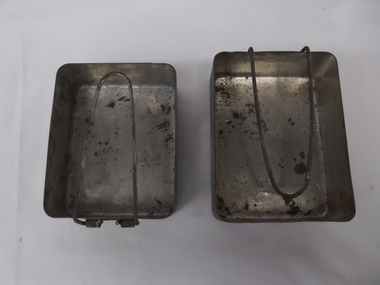
WW2 Mess tin, 1943
... Standard issue mess tin for Commonwealth Forces during WW2 This Mess tin belonged to a local lady who served in the WAAAF during WW2 On the small section Malley 1943 D^D ^AD On the larger tin ^TM 1943 D^D Squire Mess tin in two sections,one fits inside the other for easy storage and to carry. ...Standard issue mess tin for Commonwealth Forces during WW2This Mess tin belonged to a local lady who served in the WAAAF during WW2Squire Mess tin in two sections,one fits inside the other for easy storage and to carry. They both have a wire handle which is attached at the ends of the tins and can be folded for storage. This particular tin comes with a cover.On the small section Malley 1943 D^D ^AD On the larger tin ^TM 1943 D^D -
 Monbulk RSL Sub Branch
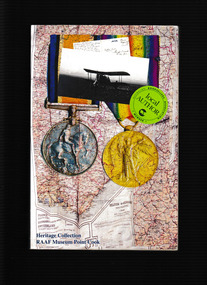
Book, Bruce Anderson, Ploughshares and propellers, 2008
... Royal Australian Air Force - History Royal Australian Air Force - Biographies The Australian Flying Corps (AFC), RAAF and WAAAF have attracted into their ranks many young men and women from the old Shires of Kerang, Cohuna, East Loddon and Gordon in north central Victoria and Wakool in the western Riverina district of New South Wales. ...The Australian Flying Corps (AFC), RAAF and WAAAF have attracted into their ranks many young men and women from the old Shires of Kerang, Cohuna, East Loddon and Gordon in north central Victoria and Wakool in the western Riverina district of New South Wales. This book tells some of their stories and exploits from 1914-1918, 1939-1945 and onwards to the 1990s.Ill, p.560.non-fictionThe Australian Flying Corps (AFC), RAAF and WAAAF have attracted into their ranks many young men and women from the old Shires of Kerang, Cohuna, East Loddon and Gordon in north central Victoria and Wakool in the western Riverina district of New South Wales. This book tells some of their stories and exploits from 1914-1918, 1939-1945 and onwards to the 1990s. royal australian air force - history, royal australian air force - biographies -
 Moorabbin Air Museum
Book - RAAF air bases, Air Base Richmond The Story of the RAAF base on the Hawkesbury
... RAAF bases Early days Enter the RAAF The squadrons arrive Early thirties Expansion War declared The early war years The WAAAF The paratroopers The war continues Aftermath of war On to the nineties Bicentennial air show Historical overview of RAAF base Richmond, circa 1991 Air Base Richmond The Story of the RAAF base on the Hawkesbury Book RAAF air bases ...Historical overview of RAAF base Richmond, circa 1991non-fictionHistorical overview of RAAF base Richmond, circa 1991early days, enter the raaf, the squadrons arrive, early thirties, expansion, war declared, the early war years, the waaaf, the paratroopers, the war continues, aftermath of war, on to the nineties, bicentennial air show -
 Greensborough Historical Society
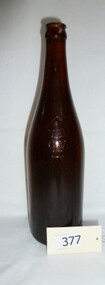
Container - Bottle, MBCV brown beer bottle, circa 1930s, 1930s
... Found near the former WW2 WAAAF base, north west of Greensborough. beer bottle mbcv world war ii glass spade mark MBCV (Manufacturers Bottle Company of Victoria) Brown glass bottle, 26 fluid ounce capacity. ...Made as bitter ale container in the 1930s to 1940s, World War 11 era.Found near the former WW2 WAAAF base, north west of Greensborough.Brown glass bottle, 26 fluid ounce capacity. MBCV in small spade on shoulder, Carlton "C" on base.MBCV (Manufacturers Bottle Company of Victoria)beer bottle, mbcv, world war ii, glass, spade mark -
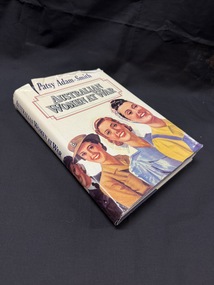 Returned Nurses RSL Sub-branch
Book - Illustrated hardback book, Patsy Adam-Smith, Australian women at war, 1984
... She knew thr comradeship and the heartbreak of war, and has spoken to enlisted and civilian women: the AWAS, WAAAF, WRANS, VADs, the nursing services, the Red Cross and all the women who worked, laughed, worried and prayed while Australia was at war. ...Australian women at war is a history of how women have responded to war, from 1900, when the first nurses sailed to the Boer War, to 1945 and its aftermath. ... Patsy Adam-Smith enlisted as a VAD and served in orthopaedic hospitals in northern Australia. She knew thr comradeship and the heartbreak of war, and has spoken to enlisted and civilian women: the AWAS, WAAAF, WRANS, VADs, the nursing services, the Red Cross and all the women who worked, laughed, worried and prayed while Australia was at war. (excerpts from inside dustjacket)Hardback book with torn dust jacket. Dust jacket has colour illustrations of women wearing various clothing or uniforms associated with wartime.non-fictionAustralian women at war is a history of how women have responded to war, from 1900, when the first nurses sailed to the Boer War, to 1945 and its aftermath. ... Patsy Adam-Smith enlisted as a VAD and served in orthopaedic hospitals in northern Australia. She knew thr comradeship and the heartbreak of war, and has spoken to enlisted and civilian women: the AWAS, WAAAF, WRANS, VADs, the nursing services, the Red Cross and all the women who worked, laughed, worried and prayed while Australia was at war. (excerpts from inside dustjacket)australian nurses, patsy adam-smith, boer war, world war one, wwi, ww1, world war two, wwii, ww2, women in war
