
Showing 26 items matching "walkie-talkie"
-
 4th/19th Prince of Wales's Light Horse Regiment Unit History Room
Radio BC-611-C, Galvin Mfg Corp, abt early 1940's
... ...walkie-talkie...VHF hand held transmitter/receiver (Walkie/Talkie) Operates in frequency range of 3500 to 6000 kcs Transmitting range of up to 1 mile...radio walkie-talkie d'atri No 6628 VHF hand held transmitter/receiver (Walkie/Talkie) Operates in frequency range of 3500 to 6000 kcs Transmitting range of up to 1 mile Radio BC-611-C Galvin Mfg Corp ...VHF hand held transmitter/receiver (Walkie/Talkie) Operates in frequency range of 3500 to 6000 kcs Transmitting range of up to 1 mileNo 6628radio, walkie-talkie, d'atri -
 Ringwood and District Historical Society
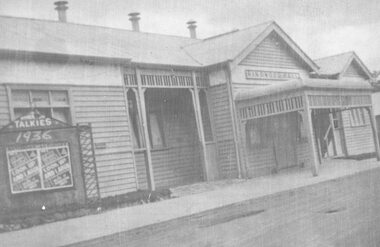
Photograph, Maroondah Highway Central, Ringwood. Ringwood Hall fronting Melbourne Street, Ringwood - 1936
... Taken 1936, advertising the Talkies, Melbourne St fronting, "look up and laugh"...Advertising board at front reads- Talkies, 1936. "Look Up and Laugh"....Advertising board at front reads- Talkies, 1936. "Look Up and Laugh". Taken 1936, advertising the Talkies, Melbourne St fronting, "look up and laugh" Maroondah Highway Central, Ringwood. ...Taken 1936, advertising the Talkies, Melbourne St fronting, "look up and laugh"Written on backing sheet, "Ringwood Hall - later demolished and replaced by the Town Hall. Taken in 1936." Advertising board at front reads- Talkies, 1936. "Look Up and Laugh". -
 Stawell Historical Society Inc
Memorabilia - Realia
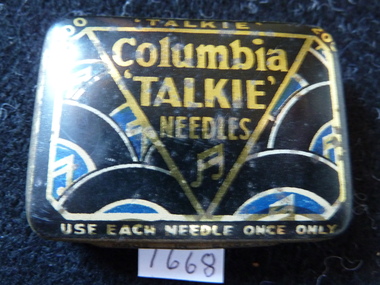
... Columbia 'Talkie' Gramophone Needles (one tin of)...Stawell Columbia 'Talkie' Gramophone Needles (one tin of) Memorabilia Realia ...Columbia 'Talkie' Gramophone Needles (one tin of)stawell -
 Melbourne Athenaeum Archives
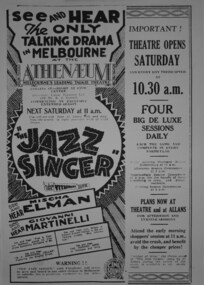
Poster, The Jazz Singer (film with sound), a film by Warner Brothers shown at the Athenaeum Theatre on the 2nd of February 1929
... Framed black and white poster for the first ''talkie'' film shown at the Athenaeum Theatre in 1929....In the file are copies of newspaper advertisements The Jazz Singer was the first sound movie shown in Victoria. the jazz singer athenaeum theatre warner brothers Framed black and white poster for the first ''talkie'' film shown at the Athenaeum Theatre in 1929. ...The Poster hangs in the theatre foyer, part of an exhibition ''The Melbourne Athenaeum in pictures ''. In the file are copies of newspaper advertisementsThe Jazz Singer was the first sound movie shown in Victoria.Framed black and white poster for the first ''talkie'' film shown at the Athenaeum Theatre in 1929.the jazz singer, athenaeum theatre, warner brothers -
 Heyfield & Districts Historical Society
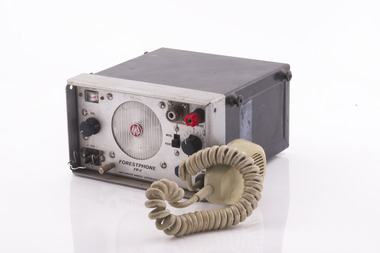
Equipment - AWA FORESTPHONE FP-1 portable transmitter-receiver, Amalgamated Wireless Australasia (AWA), AWA FP-1
... The set also had to be capable of being used as a walkie-talkie, as well as being suitable for use in a vehicle The FP-1 is a single channel radio that has a crystal for each channel, and an IF frequency of 45 5khz. ...The set also had to be capable of being used as a walkie-talkie, as well as being suitable for use in a vehicle The FP-1 is a single channel radio that has a crystal for each channel, and an IF frequency of 45 5khz. ...In the mid 1960s, Amalgamated Wireless Australasia (AWA) was asked to design a solid-state replacement for the PYE TRP-1 in collaboration with the FCV. The new transceiver was to be more powerful than the TRP-1, with an output power of about 10-12W (compared to 1.5-2W). The set also had to be capable of being used as a walkie-talkie, as well as being suitable for use in a vehicle The FP-1 is a single channel radio that has a crystal for each channel, and an IF frequency of 45 5khz. The receive crystal is 455khz higher than the transmit crystal. It is completely transistorised, and uses AWA and RCA brand transistors. A later version was called the FP5 and had five channels. Introduced to the FCV in the mid 1960sTransmitter-receiver Forest Phone FP-1 TYPE No 1N63609 SER. No 550 AMALGAMATED WIRELESS (AUSTRALASIA) LTD.radios, forests commission victoria (fcv) -
Kadimah Jewish Cultural Centre and National Library
Programme, The Green Fields; 1951
... Talkie comedy with music illustrations performed by Jewish schools Melbourne...Talkie comedy with music illustrations performed by Jewish schools Melbourne Dovid Herman Theatre Helen Beverlen Leah Naomi Lazar Freed David Opatoshu Izidor Kashir The Green Fields; 1951 Programme ...Talkie comedy with music illustrations performed by Jewish schools Melbournedovid herman theatre, helen beverlen, leah naomi, lazar freed, david opatoshu, izidor kashir -
Tatura Irrigation & Wartime Camps Museum
Programme, Deanna Durbin, 1939
... Programmes printed regularly at this time when "Talkies" were only about 10 years old....Programmes printed regularly at this time when "Talkies" were only about 10 years old. Tatura entertainment Special programme for 20 and 27 May 1939 for Tatura, with a feature about Deanna Durbin. ...Programmes printed regularly at this time when "Talkies" were only about 10 years old.Special programme for 20 and 27 May 1939 for Tatura, with a feature about Deanna Durbin. Includes many pictures of her in various films. Films advertised are "That Certain Age", "Air Devils", "The Sky's the Limit", "Treasure Island" and "Edge of the World". 4 pages.tatura entertainment -
Glenelg Shire Council Cultural Collection
Booklet - Cinema Program, 'Observer' Print Portland, Star Cinema Program, 1935
... Green card (folded) Cinema Program for 'Star Talkies' for weeks ending January 26 and February 2, 1935. ...Star Cinema Green card (folded) Cinema Program for 'Star Talkies' for weeks ending January 26 and February 2, 1935. ...The Star Theatre opened on 7th November 1925, with 991 seats located in orchestra and balcony levels. It was rebuilt to the plans of architect Geoffrey S. Richards, opening of 27th October 1937. In 2011, there was a small Star Cinema operating in the former balcony area. The main orchestra floor has been in use as a plumbers merchants, but is unused. The Star Cinema was closed in 2015 and is now in use as a church.Green card (folded) Cinema Program for 'Star Talkies' for weeks ending January 26 and February 2, 1935. Includes list of films, admission prices, where to buy tickets and whether the films are suitable or not suitable for a general audience.star cinema -
 Cinema and Theatre Historical Society of Australia Inc.
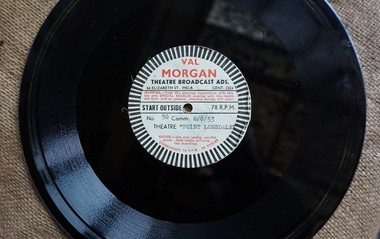
Val Morgan Theatre Advertising Record, 1953
... VAL MORGAN Theatre Advertising Point Lonsdale Theatre 8-8-1953 The theatre advertising record contained the spoken commentary which accompanied what were generally referred to as "Talkie Slides" which were frequently screened in theatres in the 1950s and 60s. ...VAL MORGAN Theatre Advertising Point Lonsdale Theatre 8-8-1953 The theatre advertising record contained the spoken commentary which accompanied what were generally referred to as "Talkie Slides" which were frequently screened in theatres in the 1950s and 60s. ...78 RPM recordVAL MORGAN Theatre Advertising Point Lonsdale Theatre 8-8-1953 The theatre advertising record contained the spoken commentary which accompanied what were generally referred to as "Talkie Slides" which were frequently screened in theatres in the 1950s and 60s. The two main companies for advertising at the time were Val Morgan and Chas E. Blanks. -
 Box Hill RSL Inc.
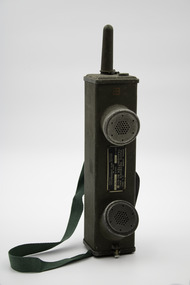
Memorabilia - Walkie Talkie- USA, Galvin Manufacturing Co, c. 1942
... The SCR-536 was an extremely popular set and was colloquially known as a "Handie-Talkie". It consisted of a five-valve, low-power, battery operated, AM (HF) transceiver that was designed for portability and ease of operation. ...(not original) Memorabilia Walkie Talkie- USA Galvin Manufacturing Co. ...From the Imperial War Museums website (IWM UK): Second World War period transceiver set widely used by US, and Allied, Armed Forces in Italy, N W Europe, and the Pacific. The US Signal Corps developed the SCR-536 early in the Second World War, It was produced from 1942 onwards by the Galvin Manufacturing Co. By 1945 130,000 had been produced. The SCR-536 was an extremely popular set and was colloquially known as a "Handie-Talkie". It consisted of a five-valve, low-power, battery operated, AM (HF) transceiver that was designed for portability and ease of operation. It featured a single channel crystal control between 3.5 and 6Mc/s, and it had an R/T communication range of 1 mile over land and 3 miles over salt water. The set was switched into a receiving mode by extending the telescopic aerial, and to transmit the press-to-talk switch was depressed. The aerial was protected by a connected cover. The set was well-engineered and designed and could be held in one hand, hence "Handie-Talkie" . It was used virtually everywhere in the world, weighed only 2kg, and was proofed against fungi and moisture.The SCR-536 was also modified for use in military gliders under the designation SCR-585.Short range portable transceiver. A large green-painted metal box with perforated small round holes in the shape of hexagons (original perforated round black earpiece and mouthpiece missing). On the back is a long green webbing carrying strap. (not original)Between the earpiece and mouthpiece is a plaque that reads "SIGNAL CORPS US ARMY RADIO RECEIVER AND TRANSMITTER BC-611-C. SERIAL NUMBER: 3017. ORDER NUMBER: 1345-WF-43. MADE BY GALVIN MFG CORPORATION CHICAGO ILLINOIS. On label : FREQUENCY 3996 Kev/ CHANNEL/ BAT. DATE Red square stamp walkie talkie, handie talkie, telecommunication, ww2, world war 2, american, wireless equipment, signal corps, us army, transceiver, bc 611 c -
 Federation University Historical Collection
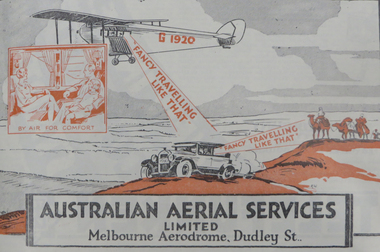
Magazine, Popular Radio and Aviation, 1929, 01/03/1929
... Vol. 1., No 10, 67 page magazine including articles - Aviation Developes New Guinea Gold Fields, Radio on the High Seas, Radio and the Weather, Aircraft Building in Australia, Along the Short Waves, Secrets of the Talkies, The Growth of Radio in Aviation, Progress in Aviatin, Some New Radio Patents, Complete List of Australian Call Signs. ...radio aeroplane avro tiger moth Vol. 1., No 10, 67 page magazine including articles - Aviation Developes New Guinea Gold Fields, Radio on the High Seas, Radio and the Weather, Aircraft Building in Australia, Along the Short Waves, Secrets of the Talkies, The Growth of Radio in Aviation, Progress in Aviatin, Some New Radio Patents, Complete List of Australian Call Signs. ...Vol. 1., No 10, 67 page magazine including articles - Aviation Developes New Guinea Gold Fields, Radio on the High Seas, Radio and the Weather, Aircraft Building in Australia, Along the Short Waves, Secrets of the Talkies, The Growth of Radio in Aviation, Progress in Aviatin, Some New Radio Patents, Complete List of Australian Call Signs. Includes images and advertisements, Rod McGregor, Richard Berry, Wireless operator, Zepplins, De Havilland Tiger Moth, Avro aeroplane, Spartan Light Plane, Mrs S.C. Elliott-Lynn.radio, aeroplane, avro, tiger moth -
Emerald Museum & Nobelius Heritage Park
Photograph - Teasdales's House, c1950s, 1950
... Based in Emerald "Teasdale Talkies" took Warner Bros films to people who could not otherwise access "movies"....Based in Emerald "Teasdale Talkies" took Warner Bros films to people who could not otherwise access "movies". ...The Teasdale family were shop proprietors in the 1940s and 1950s in Emerald. Kevin Teasdale has written extensively about Emerald in that period. His writings are stored with photographs in his family folder in Filing Cabinet 6C. They are a valuable addition to understanding Emerald's history in the mid-20th century.Black and white rectangular photograph printed on matte photographic paper. Photograph of the house of Bill Teasdale and his family c1950. The house was known as 'Glendale'. A Ford VS Panel Van is parked outside.Botton of front of photograph: "Glendale" Emerald. On back of photograph, written in biro: The Teasdale's "Glendale" apartment house c1950 - previously known as Nottingham House. The Ford VS Panel Van carried fruit and vegetables from the Victoria Market to the people of Emerald for a decade from 1940. It then carried 32m film projection equipment around Victoria. Based in Emerald "Teasdale Talkies" took Warner Bros films to people who could not otherwise access "movies".kevin teasdale, 1950s, glendale, nottingham house -
Glen Eira Historical Society
Article - Alma, Will
... Transcript of article TOURING IN AUSTRALIA BEFORE THE TALKIES by Will Alma, publication details unknown. ...Transcript of article TOURING IN AUSTRALIA BEFORE THE TALKIES by Will Alma, publication details unknown. ...This file contains seven items. Transcript of article WHY I HATE CARD TRICKS by Will Alma in THE LINKING RING, Vol. 48, No. 10, year unknown. Transcript of article TOURING IN AUSTRALIA BEFORE THE TALKIES by Will Alma, publication details unknown. Includes WHAT WAS ON IN MELBOURNE THE DAY I WAS BORN on 04/11/1904 Transcript of article A DREADFUL REMINISCENCE by Will Alma, publication dates unknown. Transcript of Will Alma’s script for Joan Stuart’s Radio Session on 3DB IWANT TO BE in 1940. Will Alma’s personal Correspondence with THE MAGIC CIRCLE between 1954 and 1958 in transcript form. Transcripts of a letter from Otago Magical Society to Will Alma dated 06/07/1938 confirming his membership of that society. Extract from letter in the WORLD’S FAIR of 12/05/1972 to its AMONG MAGICIANS column editor, Bayard Grimshaw, concerning George Waldo Heller.alma will, magicians, entertainers, the linking ring, entertainment, the magic circle -
 Vision Australia
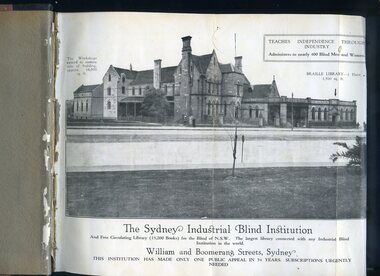
Administrative record - Text, Sydney Industrial Blind Institution: Fifty-Fifth Report 1935, 1936
... Articles in the annual report include: the provision of braille and Moon books to lepers, an address by Arthur McCredie, the awarding of an MBE to Henry Hedger (past superintendent), resignation of Herbert Tranter, a grant received from the NSW State Government to build additional storage, new floor added in Basket shop and paddock has now been fenced in, a ceremony on the Roof Garden where workers presented Robert McDonald a sea-grass chair to thank him for reading to them during their lunch hour for the past 25 years, a brief history of the library, the importation of the first Talkie Books from AFB, photograph and outline of the work undertaken by Roy Kippax and Ethel Campbell, the progress of pupils by music teacher Gordon Lavers, Annual Picnic and Sports Day, the suggestion to the government that blind children should be compulsorily educated just as sighted children are required to be under law, and the decline of some activities by various branches of the Women's Auxiliary....Articles in the annual report include: the provision of braille and Moon books to lepers, an address by Arthur McCredie, the awarding of an MBE to Henry Hedger (past superintendent), resignation of Herbert Tranter, a grant received from the NSW State Government to build additional storage, new floor added in Basket shop and paddock has now been fenced in, a ceremony on the Roof Garden where workers presented Robert McDonald a sea-grass chair to thank him for reading to them during their lunch hour for the past 25 years, a brief history of the library, the importation of the first Talkie Books from AFB, photograph and outline of the work undertaken by Roy Kippax and Ethel Campbell, the progress of pupils by music teacher Gordon Lavers, Annual Picnic and Sports Day, the suggestion to the government that blind children should be compulsorily educated just as sighted children are required to be under law, and the decline of some activities by various branches of the Women's Auxiliary. ...Articles in the annual report include: the provision of braille and Moon books to lepers, an address by Arthur McCredie, the awarding of an MBE to Henry Hedger (past superintendent), resignation of Herbert Tranter, a grant received from the NSW State Government to build additional storage, new floor added in Basket shop and paddock has now been fenced in, a ceremony on the Roof Garden where workers presented Robert McDonald a sea-grass chair to thank him for reading to them during their lunch hour for the past 25 years, a brief history of the library, the importation of the first Talkie Books from AFB, photograph and outline of the work undertaken by Roy Kippax and Ethel Campbell, the progress of pupils by music teacher Gordon Lavers, Annual Picnic and Sports Day, the suggestion to the government that blind children should be compulsorily educated just as sighted children are required to be under law, and the decline of some activities by various branches of the Women's Auxiliary.1 printed booklet with illustrations in bound sydney industrial blind institution, annual report, arthur mccredie, herbert tranter, robert mcdonald, herbert thompson, jean currie, roy kippax, ethel campbell, gordon lavers -
Bendigo Historical Society Inc.
Document - ROYAL PRINCESS THEATRE COLLECTION: EIGHT FIRST BIRTHDAY SOUVENIR PROGRAMME, c1955
... It was Easter, 1930, that the first talkie, 'The Desert Song,' was screened and then followed coloured films, and now in 1955 the latest in film development - Cinemascope has been installed. ...It was Easter, 1930, that the first talkie, 'The Desert Song,' was screened and then followed coloured films, and now in 1955 the latest in film development - Cinemascope has been installed. ...Royal Princess Theatre Eight First Birthday Souvenir Programme, 31st August, 1955. 1874 - 1955. Manager: Don Vincent. Price - Sixpence. Proceeds: Cinematograph Trade Benevolent Fund. The Royal Princess Theatre. In May, 1874, the late John Crowley, at a cost of 12,000 pounds the Royal Princess Theatre. It was opened on 31st August, 1874, on which occasion the 'Grand Duchess of Gerolstein' was performed. It was in January, 1904, that the Theatre was closed until April, 1905, for re-construction at a cost of 5,000 pounds. Further alterations were made I 1936 when the old circle and the gallery was converted into the present circle and loge, the cost on this occasion was 14,000 pounds. At the Royal Princess has been seen every form of entertainment known in the world. Operas, including Gilbert and Sullivan, Shakespearean plays, Minstrels, Pantomime, Circus (Wirth's making their first appearance in1887), Drama, Revues, Magicians, and the latest medium of entertainment Ice Revue. Of the many shows presented on stage of the theatre, I feel none has survived as long, or as well, as 'Charley's Aunt.' The companies to present their performances have been many and varied, but among an imposing list, the names of Charles Holloway, The Royal English Opera Company, J. C. Williamson Co., and Royal Comic Opera Coy., will long be remembered. The line of notable personalities who have appeared on the stage is long also, and includes such names as John McCormack, Clara Butt, Harry Lauder, Peter Dawson and more recently Jessie Mathews and John Calvert. But of all these and many others, I am sure none can ever compare with the wonderful performances by the late Dame Nellie Melba, who gave her farewell performance in September, 1921. It is interesting to note that Dame Nellie Melba, gave two farewell performances. The first was in February, 1886, when she made a last appearance as Mrs Armstrong, to later become Madame Melba. The first competition of the Austral Society was held in the Theatre in May, 1897, and the first living pictures were seen in August, 1899. The London Bioscope Co. presented 'Struck Oil,' with Maggie Moore, in February, 1901 (Maggie Moore had appeared in the stage play or the same name many times earlier). However, it was not until 1910 that the Royal Princess was mainly used for pictures, and of course, since that year, that has been the principle form of entertainment presented. It was Easter, 1930, that the first talkie, 'The Desert Song,' was screened and then followed coloured films, and now in 1955 the latest in film development - Cinemascope has been installed. This installation caused, for the first time in many years, alterations to the back stage to enable the large 30ft. Screen to be quickly removed ready for any 'live' performances. In 1937 the Royal Princess came under the Management of Northern Amusements Pty. Ltd., a unit of the Woodrow Corporation Ltd., whose policy it is to bring in entertainment to Bendigo, and I, as their representative will carry on the traditions of the past, and make the Royal Princess truly a Home of Entertainment. Don Vincent, Manager. Wednesday, 31st August, 1955 on the stage. Eagelhawk Brass Band. Official cutting of the Bithday Cake and its presentation to the Matron of the Benoevolent Home by His Worship the Mayor of Bendigo (The cake kindly donated by Friedrich & Bassemir). Presentation of the Travel Voucher for a 10 day Luxury Coach Tour on behalf of Pioneer Coaches Ltd., to the licky couple winning the recent 25th Wedding Anniversary Contest, by His Worship the Mayor of Eaglehawk. 'Progress of Fashion by Bendigo Fashion House including A Tableaux of 7 Bridal Ensembles. Miss 1874 Gertrude Perry, Misses 1955 Rosemary Lorenz, Lorraine Foley, Joan Pinder, Pauline Kim, Shirley Morgan, Pat Ferrari, Wilma Breerton. Make - up by Helen Lang Beauty Salon. 81st Birthday Performance on the screen. Newsreels, Cartoons, Shorts, Seven Brides for Seven Brothers. Photograph: The Staff of the Royal Princess, under the Management of Mr Don Vincent, who are at your service. Hearing Aids are now installed in all parts of the Theatre, Doctors or Nurses on call may leave their names at the pay-box. Advertisements for Bendigo businesses: Radio Taxis, Kings Dry Cleaners, John V. Schenck Art Florist, Morley Johnsons everything for the home, Ron Meurer fridges, The Melody Bar, music. Program comprises of two sheets of paper.program, theatre, royal princess theatre, royal princess theatre eight first birthday souvenir programme, 31st august, 1955. 1874 - 1955. manager: don vincent. price - sixpence. proceeds: cinematograph trade benevolent fund. the royal princess theatre. in may, 1874, the late john crowley, at a cost of 12, 000 pounds the royal princess theatre. opened on 31st august, 1874, 'grand duchess of gerolstein' was performed. 1904, the theatre was closed until 1905, for re-construction. further alterations 1936 when the old circle and the gallery was converted into the present circle and loge, 14, 000 pounds. seen every form of entertainment known in the world. operas, including gilbert and sullivan, shakespearean plays, minstrels, pantomime, circus (wirth's making their first appearance in1887), drama, revues, magicians, and the latest medium of entertainment ice revue. 'charley's aunt.' the companies have been many and varied, charles holloway, the royal english opera company, j. c. williamson co., and royal comic opera coy., john mccormack, clara butt, harry lauder, peter dawson and more recently jessie mathews and john calvert. dame nellie melba, who gave her farewell performance in september, 1921. it is interesting to note that dame nellie melba, gave two farewell performances. the first was in february, 1886, when she made a last appearance as mrs armstrong, to later become madame melba. the first competition of the austral society was held in the theatre in may, 1897, the first living pictures in august, 1899. the london bioscope co. presented 'struck oil, ' with maggie moore, in february, 1901 (maggie moore had appeared in the stage play or the same name many times earlier). by1910 that the royal princess was mainly used for pictures, has been the principle form of entertainment presented. it was easter, 1930, that the first talkie, 'the desert song, ' was screened and then coloured films, now 1955 the latest in film development - cinemascope has been installed, alterations to the back stage to enable the large 30ft. screen to be quickly removed 'live' performances. in 1937 the management of northern amusements pty. ltd., a unit of the woodrow corporation ltd., 1955. eagelhawk brass band. official cutting of the bithday cake and its presentation to the matron of the benoevolent home by his worship the mayor of bendigo (the cake kindly donated by friedrich & bassemir). presentation of the travel voucher for a 10 day luxury coach tour on behalf of pioneer coaches ltd., to the licky couple winning the recent 25th wedding anniversary contest, by his worship the mayor of eaglehawk. 'progress of fashion by bendigo fashion house including a tableaux of 7 bridal ensembles. miss 1874 gertrude perry, misses 1955 rosemary lorenz, lorraine foley, joan pinder, pauline kim, shirley morgan, pat ferrari, wilma breerton. make - up by helen lang beauty salon. 81st birthday performance on the screen. newsreels, cartoons, shorts, seven brides for seven brothers. photograph: the staff of the royal princess, under the management of mr don vincent, who are at your service. hearing aids are now installed in all parts of the theatre, doctors or nurses on call may leave their names at the pay-box. advertisements for bendigo businesses: radio taxis, kings dry cleaners, john v. schenck art florist, morley johnsons everything for the home, ron meurer fridges, the melody bar, music. royal princess theatre eight first birthday souvenir programme, 31st august, 1955. 1874 - 1955. manager: don vincent. price - sixpence. proceeds: cinematograph trade benevolent fund. the royal princess theatre. in may, 1874, the late john crowley, at a cost of 12, 000 pounds the royal princess theatre. opened on 31st august, 1874, 'grand duchess of gerolstein' was performed. 1904, the theatre was closed until 1905, for re-construction. further alterations 1936 when the old circle and the gallery was converted into the present circle and loge, 14, 000 pounds. seen every form of entertainment known in the world. operas, including gilbert and sullivan, shakespearean plays, minstrels, pantomime, circus (wirth's making their first appearance in1887), drama, revues, magicians, and the latest medium of entertainment ice revue. 'charley's aunt.' the companies have been many and varied, charles holloway, the royal english opera company, j. c. williamson co., and royal comic opera coy., john mccormack, clara butt, harry lauder, peter dawson and more recently jessie mathews and john calvert. dame nellie melba, who gave her farewell performance in september, 1921. it is interesting to note that dame nellie melba, gave two farewell performances. the first was in february, 1886, when she made a last appearance as mrs armstrong, to later become madame melba. the first competition of the austral society was held in the theatre in may, 1897, the first living pictures in august, 1899. the london bioscope co. presented 'struck oil, ' with maggie moore, in february, 1901 (maggie moore had appeared in the stage play or the same name many times earlier). by1910 that the royal princess was mainly used for pictures, has been the principle form of entertainment presented. it was easter, 1930, that the first talkie, 'the desert song, ' was screened and then coloured films, now 1955 the latest in film development - cinemascope has been installed, alterations to the back stage to enable the large 30ft. screen to be quickly removed 'live' performances. in 1937 the management of northern amusements pty. ltd., a unit of the woodrow corporation ltd., 1955. eagelhawk brass band. official cutting of the bithday cake and its presentation to the matron of the benoevolent home by his worship the mayor of bendigo (the cake kindly donated by friedrich & bassemir). presentation of the travel voucher for a 10 day luxury coach tour on behalf of pioneer coaches ltd., to the licky couple winning the recent 25th wedding anniversary contest, by his worship the mayor of eaglehawk. 'progress of fashion by bendigo fashion house including a tableaux of 7 bridal ensembles. miss 1874 gertrude perry, misses 1955 rosemary lorenz, lorraine foley, joan pinder, pauline kim, shirley morgan, pat ferrari, wilma breerton. make - up by helen lang beauty salon. 81st birthday performance on the screen. newsreels, cartoons, shorts, seven brides for seven brothers. photograph: the staff of the royal princess, under the management of mr don vincent, who are at your service. hearing aids are now installed in all parts of the theatre, doctors or nurses on call may leave their names at the pay-box. advertisements for bendigo businesses: radio taxis, kings dry cleaners, john v. schenck art florist, morley johnsons everything for the home, ron meurer fridges, the melody bar, music. -
 City of Melbourne Libraries
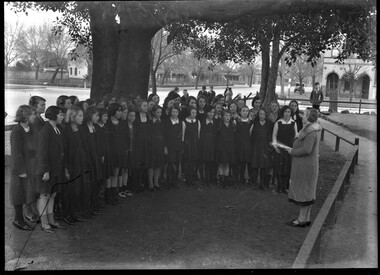
Photograph (item), Bull, Hugh Jones, 1897-1993, Miss Ida Park conducts the North Fitzroy State School Choir
... From 1934, Temperance Hall was fitted out as a cinema and renamed the Imperial Theatre, showing popular Hollywood films, before closing in 1939 for renovations and reopening as the Savoy Theatre, Melbourne’s first “Continental” talkies cinema. At this time, Australian cinema programming was dominated by American and British films. ...From 1934, Temperance Hall was fitted out as a cinema and renamed the Imperial Theatre, showing popular Hollywood films, before closing in 1939 for renovations and reopening as the Savoy Theatre, Melbourne’s first “Continental” talkies cinema. At this time, Australian cinema programming was dominated by American and British films. ...The pupils of Falconer Street Central School No.3918 in North Fitzroy rehearse with conductress Miss Ida Park for their performance at the Temperance Hall, Russell Street Melbourne with proceeds going to the Lord Mayor’s Fund. The house on the right of the photograph is Jubilee House, 126 Michael Street North Fitzroy and is extant. Photographer notations on slide: Choir At Fitzroy State School 1933 B5 While this photograph appears not to have been published, a photograph taken from a different angle of the same event was published in The Age 21 July 1933. SCHOOL CHILDREN SING IN THE OPEN AIR. “A choir of children at North Fitzroy practise their songs for a Pantomime, to be given in the Temperance Hall for the Lord Mayor's Fund on Wednesday next. On the extreme left is the conductress of the Choir (Miss Ida Park).” Reference: http://nla.gov.au/nla.news-article204368572 Research by project volunteer, Fiona Collyer: Children of The Falconer Street Central School Choral Society, trained by conductress Miss Ida Park, along with dance and gymnastics pupils of Misses Dorothy Gibb and Inez Ellis, performed in the “Cinderella” pantomime at the Temperance Hall in Russell Street, Melbourne on 26 July, 1933. The proceeds went to the Lord Mayor’s Fund. Conductress Miss Ida Park (1904- 1952) lived in the North Fitzroy and Clifton Hill area all her life. She was immersed in the music world of Melbourne and was a member of the Musical Society of Victoria. Ida graduated from Melbourne University Conservatorium with a Bachelor of Music degree in 1929 before departing for London where she studied piano and organ at the Royal Academy of Music. Ida returned to Melbourne in 1931, and billed as “The Gifted Young Australian Pianist”, held pianoforte recitals of classical music at Assembly Hall, Collins Street. She also played the organ for services at St Paul’s Independent Church in Delbridge Street, North Fitzroy and later St Luke’s, North Fitzroy. Ida conducted the children of the Falconer Street Central School Choral Society as they competed in the State School Choral Championships and the 85 children of the Fitzroy City Centenary Choir who sang at Melbourne’s Centenary celebrations of 1934/35. In 1945, Ida married Charles Hazeldine, a tenor and returned digger who had served in two world wars. The pair performed together in many concerts over the years. Tragically, both Ida and Charles were badly injured when struck by a car while crossing Queens Parade Clifton Hill in June 1952, with Ida dying from head injuries at St Vincent’s Hospital soon after. She was 48 years old. Charles wrote on Ida’s death notice - “Called home.” The choir were pupils of Falconer Street Central School No. 3918 in North Fitzroy which was built in 1915 to provide upper primary education for grades 5 to 8 for the area. In 1957 it became Fitzroy High School. In 1992, the Kennett Government swept to power, embarking on a program of fiscal austerity and privatisation of government services. 390 government schools were closed, with the land proposed to be sold to developers. 7000 teachers were sacked: 10% of Victoria’s public school teachers. Auxiliary school staff also lost their jobs. Amongst the first to close was Fitzroy High School. Fearful that the land would be sold, hundreds of students, parents, teachers and local residents occupied the building around-the-clock in four hour shifts and overnight for 14 months, sleeping on gym mats in the principal’s office and administrators’ wing. The blockade was lifted when a arrangement was reached to allow Kangan Batman TAFE to use the school from 1993 until 1998. With the election of the Bracks Government in 1999, and construction of new buildings, Fitzroy High School was reopened in 2004 after a 12 year battle. Temperance Hall, at 172 Russell Street, where the children performed “Cinderella”, was built in 1872 by the Melbourne Total Abstinence Society as a venue for lectures, meetings and alcohol-free community concerts and events. From 1934, Temperance Hall was fitted out as a cinema and renamed the Imperial Theatre, showing popular Hollywood films, before closing in 1939 for renovations and reopening as the Savoy Theatre, Melbourne’s first “Continental” talkies cinema. At this time, Australian cinema programming was dominated by American and British films. The lessees, Continental Film Art Theatre began negotiating for theatre properties in Melbourne, Sydney, Adelaide, Brisbane, Perth and Auckland to screen foreign language films, hoping to present the finest productions from France, Germany, Holland and Italy. At the cost of £6000, the theatre was fitted with the latest Mirrophonic sound and projection system and enlarged to seat 800 patrons with luxurious, ultra modern fittings and furnishings in a colour palette of rust and beige. Instead of usherettes, General Manager Peter Dawson, hoping to bring a sophisticated European atmosphere to the theatre, employed attractive, multilingual “Continental hostesses” to assist guests (not patrons) and answer queries relating to the films. Collectively the hostesses spoke English, French, Dutch, German, Russian and Italian. The Age 20 May 1939- “Atmosphere is a very important part of the theatre's scheme. Ushers in the ordinary sense will not be employed; hostesses will look upon patrons as guests. They will be dressed in full evening dress, and the only indication that they are not guests is the little medallion pinned to their evening dress, on which their names are inscribed.” The hostesses were dressed in evening gowns of olive-green velvet, the full skirts embroidered with gold loops, wine velvet bolero jackets and long white kid gloves with silvery tiaras in their hair. For guests worried that they may not understand the plot, the management assured patrons that- “By means of superimposed English translations on the bottom of the screen, the dialogue is perfectly understandable and the whole witty story can be followed with ease.” The Gala opening of the Savoy Theatre, on 31 May 1939 was attended by a “who’s who” of Melbourne Society, the women wearing beautiful gowns, headdresses and furs. Amongst the guests were former premier Sir Stanley Argyle and Lady Argyle, former Lord Mayor Sir Harold Gengoult-Smith and his wife Cynthia, Field Marshall Thomas Blamey and Lady Blamey and Miss Jessie Brookes. The Vice Consul for France, Monsieur Frank Puaux and his wife attended, Madame Puaux dressed in a black satin gown and a musquash fur cape. She was presented with a beautiful bouquet of scarlet carnations and lily of the valley tied with the tricolour of France. In his speech Monsieur Puaux stated that “from the cultural, linguistic and artistic points of view it was excellent that the Australian public should have an opportunity to see foreign film in the original language.” “Letty” writing in Table Talk magazine described the atmosphere of “Continental” gaiety that had permeated Melbourne - “The Letters of Letty”, Table Talk 8 June 1939 “The “foreign influence” is definitely obtruding itself into the even tenor of Melbourne life these days…. but in the pleasantest manner possible! Included in the great number of Continental people who have recently made their homes here, we have stars of the Russian ballet settling in our midst…. and now… we have been presented with our own Continental picture theatre in the attractive shape of The Savoy, which opened its doors on Wednesday night for the exclusive release of foreign films. One could hardly recognise the old Temperance Hall in its adaptation to the smart, comfortable and thoroughly-intriguing Savoy Theatre. Where once this rather draughty old building stood in Russell Street there now greets us an unmistakable “Continental” edifice, living up to its exterior by sustaining within its walls its overseas’ atmosphere. Indeed, one feels as though one has crossed the threshold into a European city, stepping out of the unmistakably Australian street that is Russell into The Savoy lounge to be greeted by polite “messieurs” from the attractive, Continental-looking usherettes and to gaze upon a film as delightfully French in story and presentation as “La Kermesse Heroique.” But successful though “La Kermesse Heroique” proved on its initial presentation inside the theatre, the debut was no more triumphal than that made by the winning and pretty little French lass who had charge of the booking office outside in the foyer. With her attractive accent and Continental flair for making one “feel at home” she was undoubtedly one of the hits of the night-especially with the susceptible males, who spent very much longer in the lounge than is customary, racking their brains for excuses for making conversation with the attractive Parisienne! Those French girls certainly have a way with them!” The opening film, the 1935 French comedy “La Kermesse Heroique”, (The Heroic Sex) starring Francoise Rosay and Jean Murat (film now called “Carnival in Flanders”) was the winner of the Grand Prix du Cinema Francais as the finest picture of 1936 and described in the advertisement as “The Gay French Comedy of Laughter and Romance” The film is set during the 17th century Spanish occupation of Flanders in the Flemish town of Boom at the time of their annual festival. Hearing news of a pending visit to Boom by the commander, the Duke of Olivares and his army, and fearing rape and pillage, the boorish burgomaster feigns his own death, hoping the Spaniards will bypass the grieving town out of respect. The army arrives and the cowardly men of the town flee. The womenfolk decide on a different approach. Lead by the burgomaster’s beautiful wife Cornelia, they set out to to preserve the peace with grace and hospitality only to find the Spaniards attractive and virile, unlike their own husbands. The Sun newspaper described the film as “Mellow as a Stilton cheese, and as ripely suited to adult taste.” Preceding “La Kermesse Heroique” was a Gaumont British newsreel of King George VI and Queen Elizabeth departing for a tour of Canada and the Soviet documentary “Nine Months on a Drifting Ice Floe” During the war “Continental” films became difficult to source, so the Savoy screened Hollywood movies and held fund raisers for the war effort. After World War Two, the Savoy continued to screen “Continental” films, catering to post-war immigrants from Europe and bohemian Melburnians. In 1953, the Savoy had a wildly popular season with queues winding around the block to see Swedish summer romance “One Summer of Happiness” (Hon dansade en sommar) with its nude swimming scenes. The Chief Commonwealth Censor declined to cut the film on the grounds that although it displayed nudity, it was genuinely artistic. According to Wikipedia, film director Fred Schepisi was first exposed to European films such as “Bicycle Thieves”, “Rocco and His Brothers” and “The Wages of Fear” at the Savoy as a teenager, leading to his long career in filmmaking. In 1955, in response to the massive rise in car ownership, the Melbourne City Council recommended that parking stations be built on every block. The Savoy Theatre and adjacent buildings, which included the Golden Fleece Hotel were demolished in 1963 and replaced with Total House, a Brutalist commercial building consisting of a seven storey car park crowned by a four storey office block, shops at street level, and a basement theatre which housed the Lido Theatre Restaurant-Cabaret from 1965. The building was designed by architectural firm Bogle & Banfield Associates and named for the original tenant of the offices, French oil company, Total Oil Products P/L. The Lido Theatre Restaurant was managed by former Tivoli dancer and promoter David Hamilton McIlwraith, presenting dinner and a glamorous cabaret floor show of showgirls, (some topless) to accompany variety acts by local and international actors, singers, comedians and magicians. The interior of the Lido was opulently decorated in deep, lush green with old world gold trim and chandeliers. Handily, patrons could enter and leave via an elevator, straight from the building’s own car park! A four course gourmet dinner with show and dancing cost $8.00 in 1968. The Lido advertised in 1966 that “Every visitor to Melbourne soon discovers the brightest entertainment spot in the Southern Hemisphere with its million dollar decor, dining delights and spectacular stage productions.” Australian Jewish News - 21 April 1967 - “Superb decor and atmosphere, cuisine and service have been readily recognised as the contributing factors to the excellence of stage presentations, staging, costumes, decor and, of course, the actual choice of artists.” The bedazzling ensemble of 40 high-kicking, feathered and sequinned showgirls were advertised as the “Fabulous Lido girls and the controversial Baretop Lido Goddesses” who were described as “Statuesque Beauty as Nature intended” and “…a host of glamorous gals whose favourite shade is flesh pink.” Some of the acts who performed at the Lido were- -Broken Hill’s own - opera singer June Bronhill -1967. -Versatile singer Lovelace Watkins known as “Black Sinatra - 1967. -“Queen of the five-fingered boogie", honky-tonk and rollicking rag-time pianist, Winifred Atwell - 1967. -New Zealand pop duo, Bill and Boyd -1968. -American actress and soprano Kathryn Grayson -1968. -Denise Drysdale in “Say It With Music” -1968. -“Catwoman” Eartha Kitt -1969. -Internationally recognised female impersonator, Sydneysider Tracey Lee, (Maxwell Richie) billed as "controversial impressionist and singing personality from the famous Carousel Nightspot in Paris". -Frances Faye, American comedienne and show-tune singer and pianist-1969. -“Cry Guy” histrionic singer Johnnie Ray -1970. -Risqué revue “Oh Calcutta!” with some segments and the “four letter” words removed-1970. In 1970, under new management, the Lido was renovated with claret and gold wallpaper, midnight blue ceiling and a computerised fountain with fairy lights and relaunched by “The Tigress from Tiger Bay”, Shirley Bassey. The relaunch was short lived however, as later that year the venue became El Toro Espana, a Spanish restaurant and nightclub offering a four course meal for $4.50 while you watched the floorshow. The venue then briefly became the Red Garter Music Hall Theatre from 1972, then in 1974 the site became the 600 seat Total Theatre comprising of a cinema with a stage for live acts. There were also three bars to choose from - the Crush Bar, the Bleachers and the Snake Pit. Total Theatre had the unusual concept of a live music act, or plays, musicals and magicians followed by a film. In 1975 soprano Suzanne Steele featured, followed by the film “The Voyage” starring Sophia Loren and Richard Burton. In 1975, the Total held a rock film festival showing a Jimi Hendrix documentary, “Monterey Pop Festival”, “Pink Floyd in Pompeii” and more. In 1976, 17 year old Chrissy Amphlett, later of rock band Divinyls, played the role of Linda Lips for nine months in the Australian stage production of R-rated “sexual musical”, “Let My People Come” at the Total Theatre. The Total Theatre closed in 1979 and from 1980 to 2014 the venue became Billboard Nightclub, hosting local and international acts, including INXS, Tina Turner and John Farnham, and in 2009, 18 year old Taylor Swift. The venue is now called 170 Russell and presents hundreds of live local and international acts every year. In 2014, after being under threat of demolition, Total House was listed on the Victorian Heritage Register as “a landmark of post-World War II modernist design and…one of the earliest and best expressions of Brutalist architecture in Victoria”. References: RICHARD CROOKS ARRIVES SCHOOL AGAIN VENUE OF ROYAL VISIT (1939, May 31). The Age (Melbourne, Vic. : 1854 - 1954), p. 17. Retrieved November 21, 2025, from http://nla.gov.au/nla.news-article205629696 AMUSEMENTS. (1933, July 27). The Age (Melbourne, Vic. : 1854 - 1954), p. 12. Retrieved September 19, 2025, from http://nla.gov.au/nla.news-article204378853 https://larzra.wordpress.com/origins/ CONTINENTAL HOSTESSES, (1939, May 31). The Sun News-Pictorial (Melbourne, Vic. : 1922 - 1954; 1956), p. 27. Retrieved November 21, 2025, from http://nla.gov.au/nla.news-article278189387 The Letters of Letty (1939, June 8). Table Talk (Melbourne, Vic. : 1885 - 1939), p. 12. Retrieved October 29, 2025, from http://nla.gov.au/nla.news-article149320966 SAVOY THEATRE (1939, June 1). The Age (Melbourne, Vic. : 1854 - 1954), p. 7. Retrieved September 19, 2025, from http://nla.gov.au/nla.news-article205639035 NEW THEATRE OPENED (1939, June 1). The Argus (Melbourne, Vic. : 1848 - 1957), p. 8. Retrieved September 21, 2025, from http://nla.gov.au/nla.news-article12134234 https://en.wikipedia.org/wiki/Total_House Page [?] TOUCH OF SPAIN (1970, December 18). The Australian Jewish News (Melbourne, Vic. : 1935 - 1999), p. 35. Retrieved September 23, 2025, from http://nla.gov.au/nla.news-article262493757 No title (1935, June 11). The Herald (Melbourne, Vic. : 1861 - 1954), p. 27. Retrieved September 29, 2025, from http://nla.gov.au/nla.news-article244840169 Dine, wine, and watch a stage show (1966, November 16). The Australian Women's Weekly (1933 - 1982), p. 6. Retrieved November 9, 2025, from http://nla.gov.au/nla.news-article44025050 http://jonathanbollen.net/2011/02/26/tracey-lee/ LIDO ‘ART’ (1967, April 21). The Australian Jewish News (Melbourne, Vic. : 1935 - 1999), p. 8. Retrieved November 9, 2025, from http://nla.gov.au/nla.news-article263003136 THE FABULOUS LIDO (1965, October 22). The Australian Jewish News (Melbourne, Vic. : 1935 - 1999), p. 17. Retrieved November 9, 2025, from http://nla.gov.au/nla.news-article262983995 No title (1939, May 31). The Argus (Melbourne, Vic. : 1848 - 1957), p. 6. Retrieved November 21, 2025, from http://nla.gov.au/nla.news-article12134144 #NEW THEATRE OPENED (1939, June 1). The Argus (Melbourne, Vic. : 1848 - 1957), p. 8. Retrieved September 29, 2025, from http://nla.gov.au/nla.news-article12134234 https://en.wikipedia.org/wiki/Tracey_Lee_(female_impersonator) https://citycollection.melbourne.vic.gov.au/35b-40h-image-of-a-model-for-the-total-house-offices-and-car-park-on-russell-street/ https://www.theage.com.au/national/victoria/from-the-archives-1990-s-hundreds-of-school-closures-hit-victoria-20190801-p52cwj.html http://jonathanbollen.net/2011/05/29/the-lido-melbourne/Photographer notations on slide: primary schools, schools, music, education, choirs, fitzroy, cars, theatre restaurants, venues, films -
 Marysville & District Historical Society
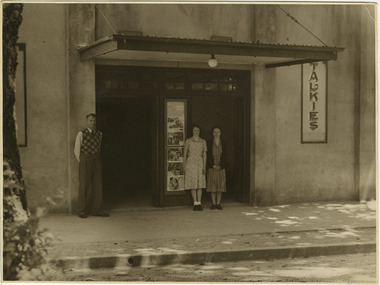
Photograph (Item) - Black and white photograph, 1940s
... Jim and another well-known local, Clarrie Smith, had spoken about showing the 'talkies' in the local hall and then subsequently had local builder, Harold Cuzens, build the Marysville Theatre in 1932. ...A black and white photograph of three members of the Wallace Family standing in front of the Marysville Theatre in Marysville in Victoria in the 1940s.A black and white photograph of three members of the Wallace Family standing in front of the Marysville Theatre in Marysville in Victoria in the 1940s. Jim Wallace was born in Dumfries in Scotland and emigrated to Australia with his family at age 6. He arrived and settled in Marysville in 1922 and ended up working for the Barton Brothers looking after their touring cars and their garage. He met Marj in 1928 and they married in 1930. Jim and another well-known local, Clarrie Smith, had spoken about showing the 'talkies' in the local hall and then subsequently had local builder, Harold Cuzens, build the Marysville Theatre in 1932. The Marysville Theatre was located on Murchison Street. The solid concrete building was used as a Theatre from 1932 to 1970. The building was then purchased by The Darmody Family and was used as an Arts and Crafts Centre for two years from 1975. The building was then purchased by Norman and Rosemary Fiske in 1977 and converted into a restaurant called The Pumpernickel. This building, along with most of the town, was destroyed in the 2009 Black Saturday bushfires.Front of Theatre, with Dad, Mum & Marie/ Taken in '40's.marysville theatre, marysville, victoria, harold cuzens, jim wallace, darmody family, norman fiske, rosemary fiske, the pumpernickel, 2009 black saturday bushfires, marj wallace, marie wallace, jill wallace, barton brothers, clarrie smith -
Marysville & District Historical Society
Document (Item), Mountain News, The Wallaces Leave Marysville, 07-05-1980
... Jim and another well-known local, Clarrie Smith, had spoken about showing the 'talkies' in the local hall and then subsequently had local builder, Harold Cuzens, build the Marysville Theatre in 1932. ...A document outlining the departure of The Wallaces from Marysville in Victoria.A document outlining the departure of The Wallaces from Marysville in Victoria. Jim Wallace was born in Dumfries in Scotland and emigrated to Australia with his family at age 6. He arrived and settled in Marysville in 1922 and ended up working for the Barton Brothers looking after their touring cars and their garage. He met Marj in 1928 and they married in 1930. Jim and another well-known local, Clarrie Smith, had spoken about showing the 'talkies' in the local hall and then subsequently had local builder, Harold Cuzens, build the Marysville Theatre in 1932. The Marysville Theatre was located on Murchison Street. The solid concrete building was used as a Theatre from 1932 to 1970. The building was then purchased by The Darmody Family and was used as an Arts and Crafts Centre for two years from 1975. The building was then purchased by Norman and Rosemary Fiske in 1977 and converted into a restaurant called The Pumpernickel. This building, along with most of the town, was destroyed in the 2009 Black Saturday bushfires. The Wallaces departed Marysville in 1980 for a new life in Ringwood, Victoria.marysville theatre, marysville, victoria, harold cuzens, jim wallace, darmody family, norman fiske, rosemary fiske, the pumpernickel, 2009 black saturday bushfires, marj wallace, marie wallace, jill wallace, barton brothers, clarrie smith -
 Marysville & District Historical Society
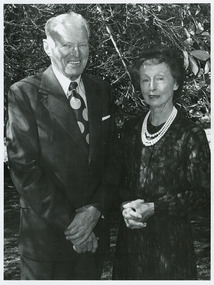
Photograph (Item) - Black and white photograph, 1980
... Jim and another well-known local, Clarrie Smith, had spoken about showing the 'talkies' in the local hall and then subsequently had local builder, Harold Cuzens, build the Marysville Theatre in 1932. ...A black and white photograph of Jim and Marj Wallace from Marysville in Victoria.A black and white photograph of Jim and Marj Wallace from Marysville in Victoria. Jim Wallace was born in Dumfries in Scotland and emigrated to Australia with his family at age 6. He arrived and settled in Marysville in 1922 and ended up working for the Barton Brothers looking after their touring cars and their garage. He met Marj in 1928 and they married in 1930. Jim and another well-known local, Clarrie Smith, had spoken about showing the 'talkies' in the local hall and then subsequently had local builder, Harold Cuzens, build the Marysville Theatre in 1932. The Marysville Theatre was located on Murchison Street. The solid concrete building was used as a Theatre from 1932 to 1970. The building was then purchased by The Darmody Family and was used as an Arts and Crafts Centre for two years from 1975. The building was then purchased by Norman and Rosemary Fiske in 1977 and converted into a restaurant called The Pumpernickel. This building, along with most of the town, was destroyed in the 2009 Black Saturday bushfires. The Wallaces departed Marysville in 1980 for a new life in Ringwood, Victoria.Jim and Marj Wallace 1980marysville theatre, marysville, victoria, harold cuzens, jim wallace, darmody family, norman fiske, rosemary fiske, the pumpernickel, 2009 black saturday bushfires, marj wallace, marie wallace, jill wallace, barton brothers, clarrie smith -
 Marysville & District Historical Society
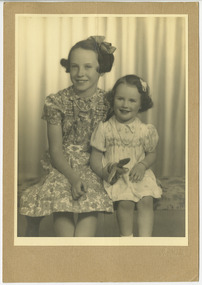
Photograph (Item) - Black and white photograph, Unknown
... Jim and another well-known local, Clarrie Smith, had spoken about showing the 'talkies' in the local hall and then subsequently had local builder, Harold Cuzens, build the Marysville Theatre in 1932. ...A black and white photograph of Jill and Marie Wallace from Marysville in Victoria.A black and white photograph of Jill and Marie Wallace from Marysville in Victoria. Jim Wallace was born in Dumfries in Scotland and emigrated to Australia with his family at age 6. He arrived and settled in Marysville in 1922 and ended up working for the Barton Brothers looking after their touring cars and their garage. He met Marj in 1928 and they married in 1930. Jim and another well-known local, Clarrie Smith, had spoken about showing the 'talkies' in the local hall and then subsequently had local builder, Harold Cuzens, build the Marysville Theatre in 1932. The Marysville Theatre was located on Murchison Street. The solid concrete building was used as a Theatre from 1932 to 1970. The building was then purchased by The Darmody Family and was used as an Arts and Crafts Centre for two years from 1975. The building was then purchased by Norman and Rosemary Fiske in 1977 and converted into a restaurant called The Pumpernickel. This building, along with most of the town, was destroyed in the 2009 Black Saturday bushfires. The Wallaces departed Marysville in 1980 for a new life in Ringwood, Victoria. Jill and Marie Wallace/ Marysville.marysville theatre, marysville, victoria, harold cuzens, jim wallace, darmody family, norman fiske, rosemary fiske, the pumpernickel, 2009 black saturday bushfires, marj wallace, marie wallace, jill wallace, barton brothers, clarrie smith -
 Marysville & District Historical Society
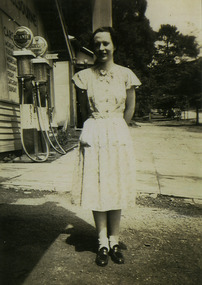
Photograph (Item) - Black and white photograph, 1950s
... Jim and another well-known local, Clarrie Smith, had spoken about showing the 'talkies' in the local hall and then subsequently had local builder, Harold Cuzens, build the Marysville Theatre in 1932. ...A black and white photograph of Jill Wallace in Marysville in Victoria.A black and white photograph of Jill Wallace in Marysville in Victoria. Jim Wallace was born in Dumfries in Scotland and emigrated to Australia with his family at age 6. He arrived and settled in Marysville in 1922 and ended up working for the Barton Brothers looking after their touring cars and their garage. He met Marj in 1928 and they married in 1930. Jim and another well-known local, Clarrie Smith, had spoken about showing the 'talkies' in the local hall and then subsequently had local builder, Harold Cuzens, build the Marysville Theatre in 1932. The Marysville Theatre was located on Murchison Street. The solid concrete building was used as a Theatre from 1932 to 1970. The building was then purchased by The Darmody Family and was used as an Arts and Crafts Centre for two years from 1975. The building was then purchased by Norman and Rosemary Fiske in 1977 and converted into a restaurant called The Pumpernickel. This building, along with most of the town, was destroyed in the 2009 Black Saturday bushfires. The Wallaces departed Marysville in 1980 for a new life in Ringwood, Victoria.Jill Wallace/ early 1950s/ Oldest daughter of/ Jim + Marjorie Wallace Outside/ McKenzies/ Tourist Depot/ Main Streetmarysville theatre, marysville, victoria, harold cuzens, jim wallace, darmody family, norman fiske, rosemary fiske, the pumpernickel, 2009 black saturday bushfires, marj wallace, marie wallace, jill wallace, barton brothers, clarrie smith -
 Marysville & District Historical Society
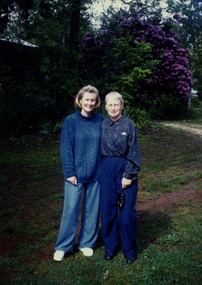
Photograph (Item) - Colour photograph, Unknown
... Jim and another well-known local, Clarrie Smith, had spoken about showing the 'talkies' in the local hall and then subsequently had local builder, Harold Cuzens, build the Marysville Theatre in 1932. ...A colour photograph of Marie and Jill Wallace in Marysville in Victoria.A colour photograph of Marie and Jill Wallace in Marysville in Victoria. Jim Wallace was born in Dumfries in Scotland and emigrated to Australia with his family at age 6. He arrived and settled in Marysville in 1922 and ended up working for the Barton Brothers looking after their touring cars and their garage. He met Marj in 1928 and they married in 1930. Jim and another well-known local, Clarrie Smith, had spoken about showing the 'talkies' in the local hall and then subsequently had local builder, Harold Cuzens, build the Marysville Theatre in 1932. The Marysville Theatre was located on Murchison Street. The solid concrete building was used as a Theatre from 1932 to 1970. The building was then purchased by The Darmody Family and was used as an Arts and Crafts Centre for two years from 1975. The building was then purchased by Norman and Rosemary Fiske in 1977 and converted into a restaurant called The Pumpernickel. This building, along with most of the town, was destroyed in the 2009 Black Saturday bushfires. The Wallaces departed Marysville in 1980 for a new life in Ringwood, Victoria.Marie + Jill Standing/ in front of our old home.marysville theatre, marysville, victoria, harold cuzens, jim wallace, darmody family, norman fiske, rosemary fiske, the pumpernickel, 2009 black saturday bushfires, marj wallace, marie wallace, jill wallace, barton brothers, clarrie smith -
 Marysville & District Historical Society
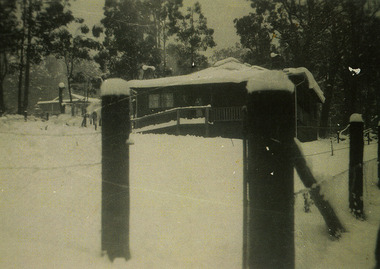
Photograph (Item) - Black and white photograph, Unknown
... Jim and another well-known local, Clarrie Smith, had spoken about showing the 'talkies' in the local hall and then subsequently had local builder, Harold Cuzens, build the Marysville Theatre in 1932. ...A black and white photograph of the Wallace house in Marysville in Victoria during winter.A black and white photograph of the Wallace house in Marysville in Victoria during winter. Jim Wallace was born in Dumfries in Scotland and emigrated to Australia with his family at age 6. He arrived and settled in Marysville in 1922 and ended up working for the Barton Brothers looking after their touring cars and their garage. He met Marj in 1928 and they married in 1930. Jim and another well-known local, Clarrie Smith, had spoken about showing the 'talkies' in the local hall and then subsequently had local builder, Harold Cuzens, build the Marysville Theatre in 1932. The Marysville Theatre was located on Murchison Street. The solid concrete building was used as a Theatre from 1932 to 1970. The building was then purchased by The Darmody Family and was used as an Arts and Crafts Centre for two years from 1975. The building was then purchased by Norman and Rosemary Fiske in 1977 and converted into a restaurant called The Pumpernickel. This building, along with most of the town, was destroyed in the 2009 Black Saturday bushfires. The Wallaces departed Marysville in 1980 for a new life in Ringwood, Victoria.Snow in Marysvillemarysville theatre, marysville, victoria, harold cuzens, jim wallace, darmody family, norman fiske, rosemary fiske, the pumpernickel, 2009 black saturday bushfires, marj wallace, marie wallace, jill wallace, barton brothers, clarrie smith -
 Marysville & District Historical Society
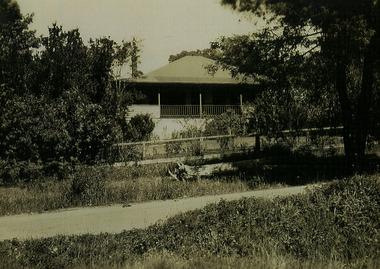
Photograph (Item) - Black and white photograph, Unknown
... Jim and another well-known local, Clarrie Smith, had spoken about showing the 'talkies' in the local hall and then subsequently had local builder, Harold Cuzens, build the Marysville Theatre in 1932. ...A black and white photograph of the Wallace Family home in Marysville in Victoria.A black and white photograph of the Wallace Family home in Marysville in Victoria. Jim Wallace was born in Dumfries in Scotland and emigrated to Australia with his family at age 6. He arrived and settled in Marysville in 1922 and ended up working for the Barton Brothers looking after their touring cars and their garage. He met Marj in 1928 and they married in 1930. Jim and another well-known local, Clarrie Smith, had spoken about showing the 'talkies' in the local hall and then subsequently had local builder, Harold Cuzens, build the Marysville Theatre in 1932. The Marysville Theatre was located on Murchison Street. The solid concrete building was used as a Theatre from 1932 to 1970. The building was then purchased by The Darmody Family and was used as an Arts and Crafts Centre for two years from 1975. The building was then purchased by Norman and Rosemary Fiske in 1977 and converted into a restaurant called The Pumpernickel. This building, along with most of the town, was destroyed in the 2009 Black Saturday bushfires. The Wallaces departed Marysville in 1980 for a new life in Ringwood, Victoria.Wallace Homemarysville theatre, marysville, victoria, harold cuzens, jim wallace, darmody family, norman fiske, rosemary fiske, the pumpernickel, 2009 black saturday bushfires, marj wallace, marie wallace, jill wallace, barton brothers, clarrie smith -
 Running Rabbits Military Museum operated by the Upwey Belgrave RSL Sub Branch
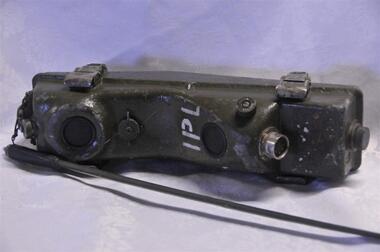
Walkie Talkie
... Equipment Korea Army As shown in the MASH TV Series Walkie Talkie ...As shown in the MASH TV Seriesequipment, korea, army -
 Melbourne Athenaeum Archives
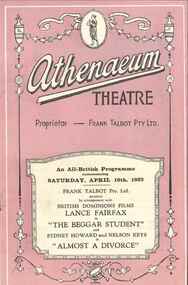
Theatre Program, The Beggar Student (1931 film starring Lance Fairfax) plus Almost a Divorce (film 1931 starring Sydney Howard and Nelson Keys) screened at the Athenaeum Theatre commencing 16 April 1932, 1932
... The first full-feature film shown in Australia was "The Story of the Kelly Gang" in 1906 at the Athenaeum Theatre and the first talkie to be shown in Victoria, "The Jazz Singer" shown in 1928. ...A rare program from the time when films were shown at the Athenaeum Theatre while Frank Talbot leased the theatre. The program has a managerial announcement from Talbot announcing the new policy: "under which the theatre will be devoted exclusively to English and Australian pictures". The company supplying the British films was called British Dominion Films Ltd. Talbot also stated: "It will be part of the managerial policy to screen such Australian films as may be available". The films were preceded by "The Herald" news reel and "The Daily Dozen at the Zoo". The theatre orchestra, playing before and during interval was conducted by Mr J Kost. The music included "Tales of Vienna Woods by Johann Strauss and selections from Sullivan's "The Pirates of Penzance". The program represents a time when films were shown at the Athenaeum Theatre. Records indicate that graphic entertainments started with magic lantern slides in the 1890s and continued with silent movies. The first full-feature film shown in Australia was "The Story of the Kelly Gang" in 1906 at the Athenaeum Theatre and the first talkie to be shown in Victoria, "The Jazz Singer" shown in 1928. Later when Hoyts took over the lease, Cinemascope films were exhibited completing a history of film shown at this one theatre. paper program; 10 pages; coloured front page.
