
Showing 58 items matching "war declared"
-
 Moorabbin Air Museum
Book - RAAF air bases, Air Base Richmond The Story of the RAAF base on the Hawkesbury
... ...War declared...RAAF bases Early days Enter the RAAF The squadrons arrive Early thirties Expansion War declared The early war years The WAAAF The paratroopers The war continues Aftermath of war On to the nineties Bicentennial air show Historical overview of RAAF base Richmond, circa 1991 Air Base Richmond The Story of the RAAF base on the Hawkesbury Book RAAF air bases ...Historical overview of RAAF base Richmond, circa 1991non-fictionHistorical overview of RAAF base Richmond, circa 1991early days, enter the raaf, the squadrons arrive, early thirties, expansion, war declared, the early war years, the waaaf, the paratroopers, the war continues, aftermath of war, on to the nineties, bicentennial air show -
 Kew Historical Society Inc
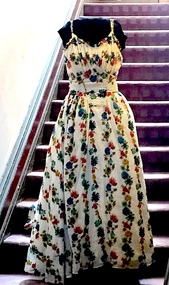
Clothing - Evening dress, 1939
... Very full floral cotton skirt.Worn by Frieda Hambrook in 1939 on the day that Australia declared war on Axis Pact members in 1939....The dress was inherited by Frieda's daughter, Kew Historical Society member, Margaret Robinson, and donated to the Society in 2023. evening dresses Fashion -- 1930s Frieda Ellen Hambrook Very full floral cotton skirt.Worn by Frieda Hambrook in 1939 on the day that Australia declared war on Axis Pact members in 1939. Clothing Evening dress ...This dress was made for Frieda Ellen Hambrook, by a friend who lived at 'Overton' in Kew. Frieda, a teacher, wore the dress to a ball which took place, coincidentally, on 3 November 1939. The dress was inherited by Frieda's daughter, Kew Historical Society member, Margaret Robinson, and donated to the Society in 2023.Very full floral cotton skirt.Worn by Frieda Hambrook in 1939 on the day that Australia declared war on Axis Pact members in 1939.evening dresses, fashion -- 1930s, frieda ellen hambrook -
Tatura Irrigation & Wartime Camps Museum
Photograph - copy, 1989 copy
... They were evacuated from Palestine when war was declared and sent to Australia on board the Queen Elizabeth....They were evacuated from Palestine when war was declared and sent to Australia on board the Queen Elizabeth. ...The Decker family lived at Camp 3, Rushworth, for 6 years. They were evacuated from Palestine when war was declared and sent to Australia on board the Queen Elizabeth.Black and white photograph. Grave of J. Decker. Inscription on the cross at the head of the grave reads "Templar. J. Decker 3-9-46"camp 3 rushworth, decker, internment camp 3 -
 Bendigo Historical Society Inc.
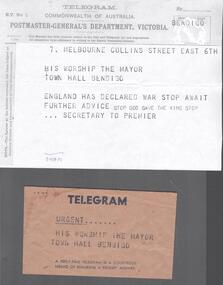
Document - BHS RE-ENACTMENT COLLECTION: TELEGRAM
... His Worship the Mayor Town Hall Bendigo. England has declared war stop await further advice stop God Save the King stop Secretary of the Premier....His Worship the Mayor Town Hall Bendigo. England has declared war stop await further advice stop God Save the King stop Secretary of the Premier. ...Brown telegram envelope, on the front: Urgent…..His Worship the Mayor Town Hall Bendigo. Inside a copy of a telegram: 7. Melbourne Collins Street East 6th. His Worship the Mayor Town Hall Bendigo. England has declared war stop await further advice stop God Save the King stop Secretary of the Premier.bendigo, history, centenary of ww1 -
 Beechworth RSL Sub-Branch
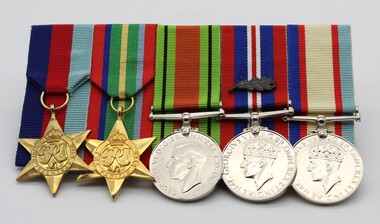
Medal - WWII Replica Medals Court Mounted, Medal issued to Pte Clarence H Howe
... This replica set is representational of the medal awarded for service in a declared war area. 1939-45 Star, Pacific Star, Defence Medal, War Medal 1939-45, and Australian Service Medal 1939-45...This replica set is representational of the medal awarded for service in a declared war area. 1939-45 Star, Pacific Star, Defence Medal, War Medal 1939-45, and Australian Service Medal 1939-45 The Howe family brothers (5) all served during WWII ww2 world war 2 medals Court Mounted Medals Replica court mounted medals Oak Leaf Replica set of WWII medals, court mounted, comprising 5 medals in order of precedence; 1939-45 Star, The Pacific Star, Australian Defence Medal, War Medal 1939-45 with Oak Leaf, and Australian Service Medal 1939-45. ...This replica set is representational of the medal awarded for service in a declared war area. 1939-45 Star, Pacific Star, Defence Medal, War Medal 1939-45, and Australian Service Medal 1939-45The Howe family brothers (5) all served during WWII Replica set of WWII medals, court mounted, comprising 5 medals in order of precedence; 1939-45 Star, The Pacific Star, Australian Defence Medal, War Medal 1939-45 with Oak Leaf, and Australian Service Medal 1939-45. ww2, world war 2, medals, court mounted medals, replica court mounted medals, oak leaf -
 Narre Warren and District Family History Group
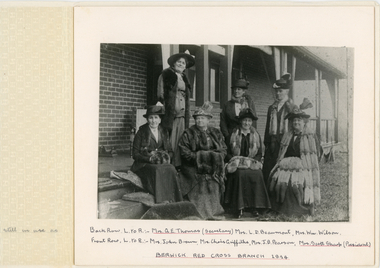
Photograph - Berwick Red Cross Branch 1914
... Australia's Red Cross was formed 9 days after war was declared in 1914. Seven ladies gathered at the home of Mrs J.B. ...Australia's Red Cross was formed 9 days after war was declared in 1914. Seven ladies gathered at the home of Mrs J.B. ...Australia's Red Cross was formed 9 days after war was declared in 1914. Seven ladies gathered at the home of Mrs J.B. Pearson in Berwick shortly after and decided to form the Berwick Branch of the Australian Red Cross. Mrs Scott Sharp became the first president and Mrs A.E. Thomas, the first secretary of the branch. The other 5 founding members were Mrs L.D. Beaumont, Mrs William Wilson, Mrs John Brown, Mrs Chris Griffiths and Mrs Pearson. An 18.5 x 12.5 cm black and white photograph of seven ladies on the steps of a building. Three ladies are standing behind four ladies sitting. The lady at the front left appears to be sitting on the steps, the others look to be sitting on chairs. The photo appears to have been taken during the colder months as all ladies are wearing coats and/or furs and hats. The photo is mounted on a board behind interleaving in a white patterned paper folder.Inside front cover in black pen: This photo was taken on the steps of Mrs. Pearson's home, still in use as part of present St. Margaret's School - 1984. Below photograph in same handwriting and pen: Back Row, L to R:- Mrs A.E. Thomas (Secretary) Mrs. L.D. Beaumont, Mrs. Wm Wilson. Front Row, L to R:- Mrs. John Brown, Mrs. Chris Griffiths, Mrs. J.B. Pearson, Mrs Scott Sharp (President). BERWICK RED CROSS BRANCH 1914berwick red cross, berwick (vic.) -
 Mission to Seafarers Victoria
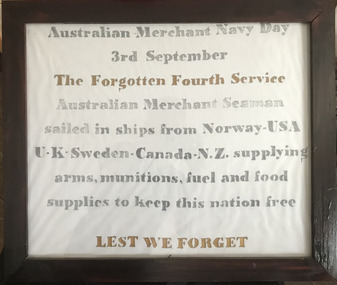
Artwork, other - Screenprint, P.J. Murphy, Australian Merchant Navy Day, c. 2014
... September 3rd is the day chosen to honour all those seafarers who sailed, and died, in commercial vessels in times of war in memory of September 3rd, 1939 when the transatlantic passenger liner, Athenia, was torpedoed and sank just hours after World War II was declared....September 3rd is the day chosen to honour all those seafarers who sailed, and died, in commercial vessels in times of war in memory of September 3rd, 1939 when the transatlantic passenger liner, Athenia, was torpedoed and sank just hours after World War II was declared. merchant navy day lest we forget ww2 ww1 Written in ink on verso: "Rachel / SOLD Y" Framed artwork printed on textile Australian Merchant Navy Day Artwork, other Screenprint P.J. ...September 3rd is the day chosen to honour all those seafarers who sailed, and died, in commercial vessels in times of war in memory of September 3rd, 1939 when the transatlantic passenger liner, Athenia, was torpedoed and sank just hours after World War II was declared.Framed artwork printed on textileWritten in ink on verso: "Rachel / SOLD Y"merchant navy day, lest we forget, ww2, ww1 -
 St Kilda Historical Society
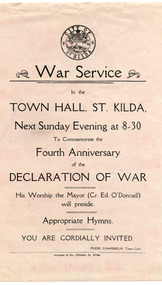
Ephemera - Flyer, War Service for Fourth Anniversary of the Declaration of War, 1918
... War I. The poster does not give a full date of the event, referring only to 'next Sunday evening', but it could well have been held on Sunday 4 August 1918. Britain declared...War I. The poster does not give a full date of the event, referring only to 'next Sunday evening', but it could well have been held on Sunday 4 August 1918. Britain declared ...Commemoration of the 4th anniversary of the declaration of World War I. The poster does not give a full date of the event, referring only to 'next Sunday evening', but it could well have been held on Sunday 4 August 1918. Britain declared war on 4 August 1914.Single sheet of white paper that has discoloured with age, printed in blackcity of st kilda, wwi -
 Narre Warren and District Family History Group
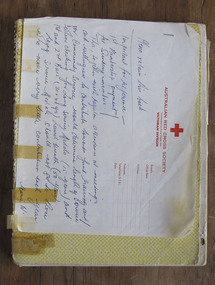
Book - Berwick/Upper Beaconsfield Red Cross Unit Membership Book, Berwick/Upper Beaconsfield Red Cross Unit, c1969
... Australia's Red Cross was formed 9 days after war was declared in 1914. Seven ladies gathered at the home of Mrs J.B. ...Australia's Red Cross was formed 9 days after war was declared in 1914. Seven ladies gathered at the home of Mrs J.B. ...Australia's Red Cross was formed 9 days after war was declared in 1914. Seven ladies gathered at the home of Mrs J.B. Pearson in Berwick shortly after and decided to form the Berwick Branch of the Australian Red Cross. Mrs Scott Sharp became the first president and Mrs A.E. Thomas, the first secretary of the branch. The other 5 founding members were Mrs L.D. Beaumont, Mrs William Wilson, Mrs John Brown, Mrs Chris Griffiths and Mrs Pearson. Minute books for the Great War years, 1920s and 30s were destroyed in a house fire. School Note book with blue lines. Starting in 1969, each page has membership, raffle, Door Knock and donation information to 1984.red cross berwick/upper beaconsfield, membership records, upper beaconsfield (vic.), berwick (vic.) -
 Narre Warren and District Family History Group
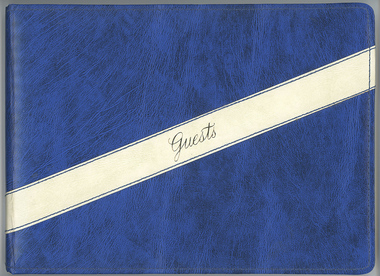
Book - Berwick/Upper Beaconsfield Red Cross Unit Anniversary Guest Book, 1989
... Australia's Red Cross was formed 9 days after war was declared in 1914. Seven ladies gathered at the home of Mrs J.B. ...Australia's Red Cross was formed 9 days after war was declared in 1914. Seven ladies gathered at the home of Mrs J.B. ...Australia's Red Cross was formed 9 days after war was declared in 1914. Seven ladies gathered at the home of Mrs J.B. Pearson in Berwick shortly after and decided to form the Berwick Branch of the Australian Red Cross. Mrs Scott Sharp became the first president and Mrs A.E. Thomas, the first secretary of the branch. The other 5 founding members were Mrs L.D. Beaumont, Mrs William Wilson, Mrs John Brown, Mrs Chris Griffiths and Mrs Pearson. Minute books for the Great War years, 1920s and 30s were destroyed in a house fire.Blue vinyl padded covers with silver embossed 'Guests' on a diagonal white stripe across the cover. Inside pages contain guest lists for the Unit's 70th, 75th, 80th and 90th anniversary functions.Donated by Mrs. Helen Hudson. Berwick/Upper Beaconsfield Unit. Celebrating 70 years of Red Cross 1914- 1984. red cross berwick/upper beaconsfield, guest book -
 Moorabbin Air Museum
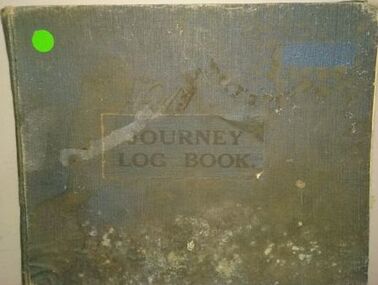
Journal (item) - Journey Log Book, DH Fox Moth VH-UQM Holyman Airways Pty Ltd
... And we think it was one of the first planes destroyed in WW2, when it was lost in the hangar fire in Broken Hill just after war was declared. It was believed to have been sabotaged by Italian or German workers at Broken Hill at the time. ...And we think it was one of the first planes destroyed in WW2, when it was lost in the hangar fire in Broken Hill just after war was declared. It was believed to have been sabotaged by Italian or German workers at Broken Hill at the time. ...VH-UQM (Miss Currie) was the second commercial plane to operate out of Western Junction (after Miss Flinders), the first owned by the Holyman Brothers, which eventually become ANA etc. And we think it was one of the first planes destroyed in WW2, when it was lost in the hangar fire in Broken Hill just after war was declared. It was believed to have been sabotaged by Italian or German workers at Broken Hill at the time. It also was part of the early Flying Doctor service in NSW. Item currently held in Archives Australian National Aviation Museum (ANAM) September 2021 -
 Whitehorse Historical Society Inc.
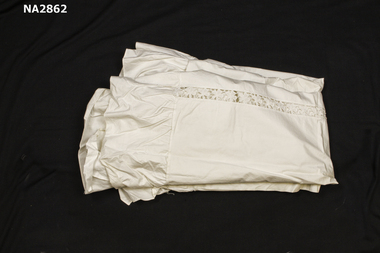
Textile - Bedspread, C1914
... They arrived on Show Day, 1914 on the last ship to leave England before the First World War was declared. She lived at 26 Nelson Road Box Hill now the site of the Box Hill R.S.L. ...They arrived on Show Day, 1914 on the last ship to leave England before the First World War was declared. She lived at 26 Nelson Road Box Hill now the site of the Box Hill R.S.L. ...The bedspread and apron (NA2863) were owned by Maria Austin (born 25 August 1867 Buried at Box Hill Cemetery 15 November 1955)and used when she worked as a 'Nanny' in England. Many of the children she cared for kept in touch with her after she came to Australia with her family in 1914. They arrived on Show Day, 1914 on the last ship to leave England before the First World War was declared. She lived at 26 Nelson Road Box Hill now the site of the Box Hill R.S.L. Maria was born 25 August in 18?? and died in 1952 and is buried in the Box Hill Cemetery. She was the Great Aunt of the donor.White cotton bedspread with a 18cm deep frill around edge and a 4cm deep insertion of lace on a shamrock design 48 cm from top of bedspread.manchester, bedding -
 Whitehorse Historical Society Inc.
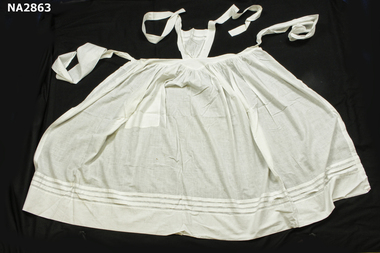
Clothing - Apron - Nanny
... They arrived on Show Day, 1914 on the last ship to leave England before the First World War was declared. She lived at 26 Nelson Road Box Hill now the site of the Box Hill R.S.L. ...They arrived on Show Day, 1914 on the last ship to leave England before the First World War was declared. She lived at 26 Nelson Road Box Hill now the site of the Box Hill R.S.L. ...The bedspread (NA2862) and apron were owned by Maria Austin (born 25 August 1867 Buried at Box Hill Cemetery 15 November 1955) and used when she worked as a 'Nanny' in England. Many of the children she cared for kept in touch with her after she came to Australia with her family in 1914. They arrived on Show Day, 1914 on the last ship to leave England before the First World War was declared. She lived at 26 Nelson Road Box Hill now the site of the Box Hill R.S.L. Maria was born 25 August in 18?? and died in 1952 and is buried in the Box Hill Cemetery. She was the Great Aunt of the donor.White bib front apron with ties to back of neck - wide waist band ties - 12 cm hem line - also three 2cm pin tucks above hem line - two 12cm pin tucks at top of bib front. Pocket on right hand side.M Austin. 1.2.1901|Laundry mark in red 59costume, female working -
 Returned Nurses RSL Sub-branch
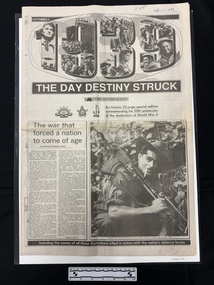
Newspaper - Newspaper liftout, Alan Howe et al, 'The day destiny struck', 'The war that forced a nation to come of age', 'The week before the world went mad', '1939 - 1945 An Australian perspective', 'The Australians killed in action in World War II : while serving with the nation's defence forces' & 'Curtin's turn to America and the reshaping of Australia...', 19890902
... 'The week before the world went mad' (article & photos p2) - Six sections on what was happening that week prior to war declared in Sydney, Melbourne, Adelaide, Brisbane, Perth and Hobart. '1939 - 1945 An Australian perspective' (article & timeline with captioned images and photos p3-8) - by Christine McGee - Article provides timeline of events at a personal/local through to national and international, influences and politics, statistics, and information on various fronts of battle from 03/09/1939 - 02/09/1945. ...'The week before the world went mad' (article & photos p2) - Six sections on what was happening that week prior to war declared in Sydney, Melbourne, Adelaide, Brisbane, Perth and Hobart. '1939 - 1945 An Australian perspective' (article & timeline with captioned images and photos p3-8) - by Christine McGee - Article provides timeline of events at a personal/local through to national and international, influences and politics, statistics, and information on various fronts of battle from 03/09/1939 - 02/09/1945. ...Newspaper lift-out commemorating 50 years since the declaration of WWII. 'The war that forced a nation to come of age' (article p1 and continued on p22) - by Professor Manning Clark - Article provides political background within Australia to armed forces and WWII. 'The week before the world went mad' (article & photos p2) - Six sections on what was happening that week prior to war declared in Sydney, Melbourne, Adelaide, Brisbane, Perth and Hobart. '1939 - 1945 An Australian perspective' (article & timeline with captioned images and photos p3-8) - by Christine McGee - Article provides timeline of events at a personal/local through to national and international, influences and politics, statistics, and information on various fronts of battle from 03/09/1939 - 02/09/1945. Nursing mentioned on p6, there is a photo of a group of women in uniform walking towards the camera and the caption mentions the sinking of the Centaur, loss of 11 of 12 nurses aboard, and how 55 nurses were decorated and 82 mentioned in dispatches. 'The Australians killed in action in World War II : while serving with the nation's defence forces' (roll of honour list p9-21) - Official roll of honour for those who died between 3 September 1929 and 30 June 1947. Includes amendments. People are listed with their units surname followed by initials. 'Curtin's turn to America and the reshaping of Australia...' (article p22) - by Paul Kelly - Article looks at the circumstances and key people involved in the moving of ties away from Britain towards the United States. A large black and white newspaper lift-out with the cover showing the numerals 1939 filled with photos collaged together, several large headlines and subtitles, one article with two columns and a large captioned photo of a man in uniform with a gun on his shoulder, cigarette in his mouth, wearing a hat. Inside is a mix of articles, a timeline with photos and captions, a list of those who died with the unit they served and more photos and articles on the back cover.'WWII' [blue ink top of cover] 'Sept.2.3 1989' [blue ink top of cover]world war two, wwii, ww2, commemorative, timeline, australia -
 Returned Nurses RSL Sub-branch
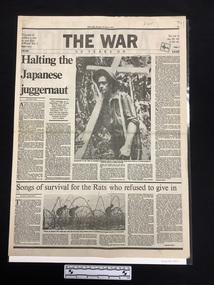
Newspaper - Newspaper liftout, Alan Howe, 'The War : 50 years on', 'Halting the Japanese juggernaut', 'Songs of survival for the Rats who refused to give in', 'A chronicle of conflict', 'Death, glory and faulty strategies in the fight for supremacy at sea', 'The day the horror hit home' & 'The vital build-up in air power', 19890902
... 'The week before the world went mad' (article & photos p2) - Six sections on what was happening that week prior to war declared in Sydney, Melbourne, Adelaide, Brisbane, Perth and Hobart. '1939 - 1945 An Australian perspective' (article & timeline with captioned images and photos p3-8) - by Christine McGee - Article provides timeline of events at a personal/local through to national and international, influences and politics, statistics, and information on various fronts of battle from 03/09/1939 - 02/09/1945. ...'The week before the world went mad' (article & photos p2) - Six sections on what was happening that week prior to war declared in Sydney, Melbourne, Adelaide, Brisbane, Perth and Hobart. '1939 - 1945 An Australian perspective' (article & timeline with captioned images and photos p3-8) - by Christine McGee - Article provides timeline of events at a personal/local through to national and international, influences and politics, statistics, and information on various fronts of battle from 03/09/1939 - 02/09/1945. ...Newspaper lift-out commemorating 50 years since the declaration of WWII. 'The war that forced a nation to come of age' (article p1 and continued on p22) - by Professor Manning Clark - Article provides political background within Australia to armed forces and WWII. 'The week before the world went mad' (article & photos p2) - Six sections on what was happening that week prior to war declared in Sydney, Melbourne, Adelaide, Brisbane, Perth and Hobart. '1939 - 1945 An Australian perspective' (article & timeline with captioned images and photos p3-8) - by Christine McGee - Article provides timeline of events at a personal/local through to national and international, influences and politics, statistics, and information on various fronts of battle from 03/09/1939 - 02/09/1945. Nursing mentioned on p6, there is a photo of a group of women in uniform walking towards the camera and the caption mentions the sinking of the Centaur, loss of 11 of 12 nurses aboard, and how 55 nurses were decorated and 82 mentioned in dispatches. 'The Australians killed in action in World War II : while serving with the nation's defence forces' (roll of honour list p9-21) - Official roll of honour for those who died between 3 September 1929 and 30 June 1947. Includes amendments. People are listed with their units surname followed by initials. 'Curtin's turn to America and the reshaping of Australia...' (article p22) - by Paul Kelly - Article looks at the circumstances and key people involved in the moving of ties away from Britain towards the United States. A large black and white newspaper lift-out with the cover showing the numerals 1939 filled with photos collaged together, several large headlines and subtitles, one article with two columns and a large captioned photo of a man in uniform with a gun on his shoulder, cigarette in his mouth, wearing a hat. Inside is a mix of articles, a timeline with photos and captions, a list of those who died with the unit they served and more photos and articles on the back cover.'WWII' [blue ink top of cover] 'Sept.2.3 1989' [blue ink top of cover]world war two, wwii, ww2, commemorative, timeline, australia -
Tatura Irrigation & Wartime Camps Museum
Print - Painting - watercolour - photocopy, Fritz Gruen
... At the outbreak of war her was declared an enemy alien by English authorities and in 1940 was sent to Australia on the Dunera. ...At the outbreak of war her was declared an enemy alien by English authorities and in 1940 was sent to Australia on the Dunera. ...Fritz (Fred) Gruen was born in Austria in 1921 and undertook schooling in England. At the outbreak of war her was declared an enemy alien by English authorities and in 1940 was sent to Australia on the Dunera. He was interned in Hay, Orange and the Tatura. In 1942 Fred volunteered and enlisted in the 8th Employment Company. He picked fruit, worked on the Melbourne docks and later worked for the Army Education Unit. Repatriated in 1946, he completed a Bachelor of Commerce Degree. In 1973 h4 was appointed by the Whitlam Government to act as an economic consultant to the Prime Minister's Department.Gruen 1941 E. Fabiangruen, dunera, whitlam, 8th employment company -
 Wangaratta RSL Sub Branch
Photograph, c1944
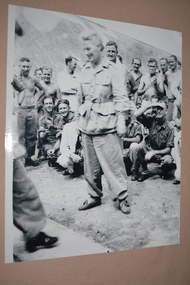
... When World War II was declared and whilst recovering from surgery she threw herself into her work and signed up for the Entertainments National Service Association (ENSA). ...When World War II was declared and whilst recovering from surgery she threw herself into her work and signed up for the Entertainments National Service Association (ENSA). ...Dame Gracie Fields, DBE (born Grace Stansfield; 9 January 1898 – 27 September 1979) was an English actress, singer and comedienne and star of both cinema and music hall. When World War II was declared and whilst recovering from surgery she threw herself into her work and signed up for the Entertainments National Service Association (ENSA). Fields travelled to France to entertain the troops in the midst of air-raids, performing on the backs of open lorries and in war-torn areas. She performed many times for Allied troops, travelling as far as New Guinea, where she received an enthusiastic response from Australian personnel. In late 1945 she toured the South Pacific Islands. In 1979, seven months before her death, she was invested a Dame by Queen Elizabeth II for services to the entertainment industry.Reproduced black and white photograph of female wearing army jacket with soldiers kneeling and standing in background. Handwritten on rear - Gracie Fields in Pacificgracie fields, ww2, new guinea, 1945, south pacific islands -
 Lara RSL Sub Branch
Photograph, John Leslie Shepherdson, W W 1
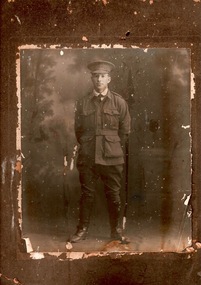
... John's military number 857. Australia declared war on Germany on the 4th August. Wounded (shot in the head) landing on the beaches at Gallipoli, 25th April 1915, John recuperated in hospital and rejoined 7th Battalion 25th July 1915. ...John's military number 857. Australia declared war on Germany on the 4th August. Wounded (shot in the head) landing on the beaches at Gallipoli, 25th April 1915, John recuperated in hospital and rejoined 7th Battalion 25th July 1915. ...John Leslie Shepherdson joined as a private on 31st August 1914 from Tatura, Victoria. His father lived at Birregurra, Victoria. John's military number 857. Australia declared war on Germany on the 4th August. Wounded (shot in the head) landing on the beaches at Gallipoli, 25th April 1915, John recuperated in hospital and rejoined 7th Battalion 25th July 1915. Just in time for Lone Pine where he was wounded a second time 9th August 1915. While recovering was promoted to Sergeant and sent to 7th Battalion headquarters as part of 3rd Echelon B.E.F. This unit was reinforcements and returning wounded/sick who could not go back to active service due to wounds. He remained at headquarters as a clerk until the end of the war and was promoted to Lieutenant on recommendation of Secretary of State for valuable services rendered to Australia. John returned to Australia via America (at his own expense) in 1919. He left 7th Battalion Headquarters 26th October 1918.This picture is of national significance as it is a photo of a World War 1 Gallipoli veteran, wounded twice.Private John L Shepherdson of Birregurra- wounded at GallipoliYeoman & Co.....Bourke St.Melbourne .7th battalion, world war 1, ww1, gallipoli, lone pine, wounded -
 Wodonga & District Historical Society Inc
Memorabilia - Boer War Peace Medallion
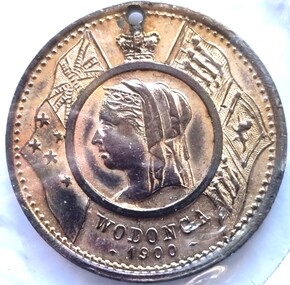
... In 1899 the Boers, descendants of Dutch settlers, declared war on the British forces. Enthusiastic civilians throughout the Australian colonies volunteered for service, supported by their respective colonial governments. ...In 1899 the Boers, descendants of Dutch settlers, declared war on the British forces. Enthusiastic civilians throughout the Australian colonies volunteered for service, supported by their respective colonial governments. ...In 1899 the Boers, descendants of Dutch settlers, declared war on the British forces. Enthusiastic civilians throughout the Australian colonies volunteered for service, supported by their respective colonial governments. After Federation Commonwealth units were also mobilised. Others who were unable to join Colonial or Commonwealth units enlisted in forces raised by other nations including Britain and South Africa. The first joint colonial regiment, the Australian Regiment, was formed from companies representing Victoria, South Australia, Western Australia and Tasmania. The British gradually wore down Boer resistance, and peace was declared on 31 May 1902. Over 15,000 Australians served in the Boer War. Australian casualties totalled about 1400, with 518 killed. Six Australians were awarded the Victoria Cross for their bravery. Children in schools around the different colonies of Australia (this was prior to Federation) raised money to hold Peace picnics. Wodonga's Peace picnic was held at the racecourse. Only about 70 of these medallions were struck. They were presented to the children who raised the most money for the Peace picnic in each area.This artefact has local, national and international significance as it recognises the first major international conflict in which Australian colonial soldiers were involved,A small medallion issued in commemoration of peace at the end of the Boer War. There is a hole through the top so that it can be attached to a chain or clip.OBVERSE SIDE: At centre within line circle veiled head of Queen Victoria facing left, at top of circle, crown, at sides Australian and Royal flags; below, WODONGA 1900 REVERSE SIDE: Within wreath, IN / COMMEMORATION / OF / PEACE / BRITISH BOER / WAR / "LEST WE FORGET"australian commemorative medals, boer war 1899 - 1902, boer war peace medallion -
 Bendigo Historical Society Inc.
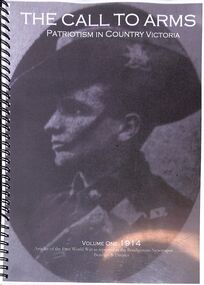
Book - "The Call to Arms. Patriotism in Country Victoria. Volume 1.", 2011
... war on 28 July, upon which the Russian Empire mobilised in Serbia's defence. In early August, Germany declared war on Russia and France; the United Kingdom entered the war after Germany invaded Belgium. ... war on 28 July, upon which the Russian Empire mobilised in Serbia's defence. In early August, Germany declared war on Russia and France; the United Kingdom entered the war after Germany invaded Belgium. ...World War one began in 1914, and ended in 1918. World War I or the First World War (28 July 1914 – 11 November 1918), also known as the Great War, was a global conflict between two coalitions: the Allies (or Entente) and the Central Powers. One of the deadliest conflicts in history, World War I resulted in an estimated 15 to 22 million deaths, including those in war crimes and genocides. The war also helped spread the Spanish flu pandemic. The conflict saw important developments in weaponry, including the first large-scale use of machine guns, artillery, aircraft, chemical weapons, and tanks. The causes of World War I included the rise of the German Empire, which disturbed the long-standing balance of power in Europe, and the exacerbation of imperial rivalries, as reflected in new alliances and an arms race between the great powers. Tensions in the Balkans reached a breaking point on 28 June 1914 when Gavrilo Princip, a Bosnian Serb, assassinated Franz Ferdinand, the heir to the Austro-Hungarian throne. Austria-Hungary blamed Serbia and declared war on 28 July, upon which the Russian Empire mobilised in Serbia's defence. In early August, Germany declared war on Russia and France; the United Kingdom entered the war after Germany invaded Belgium. Germany's strategy in 1914 was to quickly defeat France, but its advance was halted in September, and the Western Front solidified into a near-continuous line of fortified trenches from the English Channel to Switzerland. The Eastern Front was more dynamic, but neither side gained a decisive advantage, despite costly offensives. The Ottoman Empire joined the Central Powers in November, which was followed by a failed Allied campaign at Gallipoli. Japan and Italy also joined the Allies. Major battles, including those at Verdun, the Somme, and Passchendaele, failed to break the stalemate on the Western Front. In April 1917, the United States joined the Allies after Germany resumed unrestricted submarine warfare against Atlantic shipping. Later that year, the Bolsheviks seized power in Russia in the October Revolution; Soviet Russia signed an armistice with the Central Powers in December, followed by a separate peace in March 1918. That month, Germany launched a spring offensive in the west, which despite initial successes left the German Army exhausted and demoralised. The Allied Hundred Days Offensive, beginning in August 1918, caused a collapse of the German front line. By early November, the Allies had signed armistices with the Ottomans and with Austria-Hungary, leaving Germany isolated. Facing a revolution at home, Kaiser Wilhelm II abdicated on 9 November, and the war ended with the Armistice of 11 November 1918. Metal spiral bound book. Plastic clear cover, and black cardboard back cover. Soft cover. Cover has an image of a black and white image of the bust of a soldier looking to the left. Titles in white. 121 pages. Contains articles of the First World War as reported in the 'Bendigonian Newspaper'. Contains a timeline of significant events during WW1. Has index. Transcribed by Pamela Houston. Printed by Bendigo Copy Centre, Bendigo. Volume one deals with 1914.world war one, soldiers, bendigonian newspapaper -
 Flagstaff Hill Maritime Museum and Village
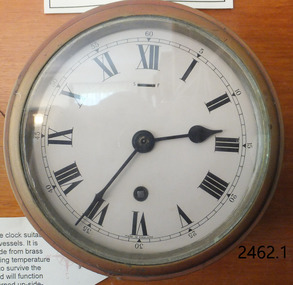
Instrument - Clock, 1950
... Elliott's started to produce clocks for the armed forces when war was declared in 1939, together with test gear and apparatus for the Rolls-Royce engines used in the RAF planes. ...Elliott's started to produce clocks for the armed forces when war was declared in 1939, together with test gear and apparatus for the Rolls-Royce engines used in the RAF planes. ...In 1865, James Jones Elliott of 156 Cheapside in the City of London, was apprenticed to a clockmaker, "Bateman" of 82 St John Street, Smithfield, London, to learn the art of clock making. Initially, J J Elliott specialised in producing pinions and balance shafts for clocks. He eventually progressed to making and patenting a weight-driven movement that had chimes on tubes. This clock was very successful and resulted in considerable trade with America. James Elliott's son, Frank Westcombe Elliott, who at the age of 17 years, went into business with his father after his father had bought a partnership with a jeweller called “Walden” of Brompton Road, London. In 1904, JJ Elliott died and Frank succeeded his father in clock clock-making business. In 1909 company of JJ Elliott amalgamated with Grimshaw Baxter, and the factory moved to Greys Inn Lane, London, in 1911, followed by a further move, in 1917, to larger premises in St Ann’s Road, Tottenham, London. In 1921, the partnership with Grimshaw Baxter was dissolved, and Frank Elliott joined a well-known firm of Bell Founders and Clockmakers, Gillett and Johnson Ltd, in Croydon. In 1923, two years later, he took over their clock factory and formed the famous company of F.W. Elliott Ltd. He was joined by his two sons, Leonard and Horace Elliott, who had served their apprenticeships in the trade. The third son, Ronald, joined the company in 1929. Elliott's started to produce clocks for the armed forces when war was declared in 1939, together with test gear and apparatus for the Rolls-Royce engines used in the RAF planes. In 1944, Frank Elliott died at the age of 69, and Horace Elliott assumed the role of Managing Director. Whilst Horace controlled sales from a showroom in Hatton Garden. In 1952, Horace Elliott was elected Chairman of the British Horological Institute in the same year as Tony, one of Horace's sons, joined the company after he had completed training as a cabinet maker. Ronald Elliott died suddenly in 1966, at the age of 54. His son Peter continued to manage the company until 1998, when it ceased trading. An item that is now regarded as vintage, sought by horology collector’s worldwide and is in excellent condition. The item is unique in that it was made specifically for ships by a well-known British clock manufacture. Its provenance is well established as the serial numbers on the clock indicate it was made in 1950. Production by F.W Elliott for this design of ships clock ceased in 1959. Clock has a gold color case with a 150 mm white painted dial and Roman numerals. The movement has a balance wheel escapement and a slow-fast timekeeping adjuster to the top of the dial. The back of the clock is stamped “made by F W Elliott Ltd of Croydon” and a serial number 21B/829, an additional number 994 is also stamped on the back casing. Thsi model clock finished production in 1959. flagstaff hill, warrnambool, shipwrecked-coast, flagstaff-hill, flagstaff-hill-maritime-museum, maritime-museum, shipwreck-coast, flagstaff-hill-maritime-village, clock, f w elliott, maritime clock, horology, time keeping, english clock -
 City of Ballarat
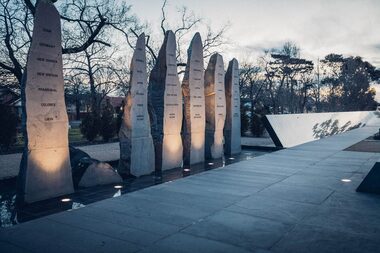
Artwork, other - Public Artwork, Ex-Prisoners of War Memorial by Peter Blizzard, 2004
... The paving is shaped like railway sleepers in recognition of the role that railways and railway journeys were relevant to many prisoners of war. The Memorial was declared the first military memorial of national significance located outside Canberra in 2008. ...The paving is shaped like railway sleepers in recognition of the role that railways and railway journeys were relevant to many prisoners of war. The Memorial was declared the first military memorial of national significance located outside Canberra in 2008. ...This memorial designed by Peter Blizzard is dedicated to more than 36,000 Australian men and women were held captive as prisoners by the enemy during the Boer War, World War 1, World War 2 and the Korean War. This memorial honours and names them, the names are etched into the black granite wall adjacent to the pathway. Water springs from beneath the 'Lest We Forget' stone then flows down the wall into the narrow watercourse in front of the first group of names and into the reflective pool, then continues past the second group of names. Finally it disappears under the pathway, returning to its source under the 'Lest We Forget' stone to start the journey again. Water symbolizes the essential nature of man, sacrifice, suffering, spirituality, healing, cleansing, birth and re-birth. The memorial is created from natural materials and is designed to be in harmony with the Ballarat Botanical Gardens, and to create a sense of timeless, dignity and respect. The long pathway of the monument is designed to create a visual perspective of the large distances that Australians travelled to the various conflicts. The paving is shaped like railway sleepers in recognition of the role that railways and railway journeys were relevant to many prisoners of war. The Memorial was declared the first military memorial of national significance located outside Canberra in 2008. Dedication services are held at the memorial on the Sunday closest to 6th of February, ANZAC day and on Remembrance Day. The memorial is of historical and aesthetic importance to the people of BallaratMonument made from carved bluestone, water feature and flagsInscribed with the names of 36,000 Australian men and women were held captive as prisoners by the enemy during the Boer War, World War 1, World War 2 and the Korean War. The listing is by surname and initials and shown by war.prisoners of war, boer war, world war 1, world war 2, korean war, lest we forget, peter blizzard -
 Surrey Hills Historical Society Collection
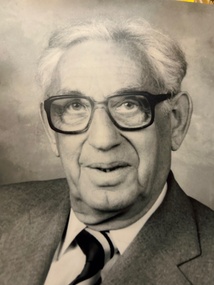
Work on paper - Black and White Photograph, Dr Norman Rose
... When World War 2 was declared, Norman enlisted in the army. ...When World War 2 was declared, Norman enlisted in the army. He was attached to the 2/13th Field Ambulance (AIF). ...Dr Rose was a member of the Surrey Hills Medical Centre for approximately 50 years. Norman was the son of Maurice Rose (1889-1963) and Gertrude nee Gordon (1891-1972) and was born in Birkenhead, Cheshire, UK, on 15 September 1916. Norman had an older sister, Irene. As with many migrant families, Maurice departed from London for Melbourne on 27 October 1927 on the ‘Ballarat’ ahead of his family, who sailed on the ‘Bendigo’ on 8 May, 1928. Norman was 12 years old. The family lived in a number of locations including St Kilda, Balaclava and later Elwood. Norman attended Wesley College, following which he enrolled at the University of Melbourne, where he studied medicine, graduating MB BS in 1939. For unknown reasons, post-graduation Norman moved to Perth in March 1940. It was at the Fremantle General Hospital that he met his future wife, Helen Beatrice (Betty) Mackie, and began training in anaesthetics. When World War 2 was declared, Norman enlisted in the army. He was attached to the 2/13th Field Ambulance (AIF). He served in the Middle East and Borneo. Upon their return to Melbourne after the end of the war, Norman completed hospital rotations as a Resident Medical Officer at the Alfred Hospital (1946-1947) and at the Royal Women’s Hospital in 1948. Norman was a close friend of Dr Bill Vorrath, which probably explains how he came to join the Surrey Hills Medical Centre in either 1948 or 1949. Although technically a General Practitioner, Dr Rose focused on Anaesthetics. He was often on call for the Emergency Department at Box Hill Hospital and he also taught many students how to administer an epidural. In 1972, under the so-called ‘Grandfather Clause’, he was registered as a Specialist Practitioner in Anaesthesia. Dr Rose’s long service to Box Hill Hospital was recognised with the award of Life Governorship of the Hospital in 1978. Dr Rose married for a second time after his first wife Betty died in 1997. He retired in 1998 or 1999 and died in 2010 in his 94th year. Dr Norman Rose worked at Surrey Hills Medical Centre as a General Practitioner / Anaesthetist for 50 years, and thus had a significant role in and influence on this community.A formal head and shoulders portrait photo of a man with greying hair, wearing glasses and jacket and striped tie.norman rose, general practitioner, doctor, anaesthetist, surrey hills medical centre, box hill hospital, fremantle general hospital, 2/13th field ambulance aif, alfred hospital, royal women's hospital, bill vorrath, helen beatrice mackie, betty mackie, betty rose -
 Narre Warren and District Family History Group
Book, Narre Warren & District Family History Group Inc, Casey Cardinia Collection - Berwick Information File - Volume 1, 2021
... 20 Aug 1992 Hovell was our First Explorer 23 Sep 2003 People Power Wins - Old Berwick Primary School UNKNOWN New Building for Berwick Bush Nursing Hospital UNKNOWN Berwick Hospital Two Days After War Declared 7 Jul 1998 A Time Warp in our City - Berwick Library 4 Feb 1953 An Etching Holiday 2 Dec 2002 Literally, She’s a Late Bloomer - Joy Adams 23 Feb 2005 Cricket’s Other Don Offers High Interest - Don Moyes 5 Nov 2003 He Died At Peace - George Wilson 15 Dec 2003 Berwick’s Shelf Life - Berwick Library 29 Oct 1992 They Had a Mighty Good Time on the Gippsland Line 20 May 1993 Almost 150 Years Since the Wilson Family Came to Berwick 30 Jul 1992 Berwick was Once a Quarry Town 27 Sep 1993 The Way We Were UNKNOWN Wilson Botanic Park - pamphlet 11 Nov 2003 Trust’s Honourable Plea - avenue of Honours 15 Jul 2004 “Lions of Athens” Remembered in Print - Edwin Flack Jun 1992 Farm to Quarry to Park - Wilson Botanic Park 5 Sep 2001 Holy Cow! ...20 Aug 1992 Hovell was our First Explorer 23 Sep 2003 People Power Wins - Old Berwick Primary School UNKNOWN New Building for Berwick Bush Nursing Hospital UNKNOWN Berwick Hospital Two Days After War Declared 7 Jul 1998 A Time Warp in our City - Berwick Library 4 Feb 1953 An Etching Holiday 2 Dec 2002 Literally, She’s a Late Bloomer - Joy Adams 23 Feb 2005 Cricket’s Other Don Offers High Interest - Don Moyes 5 Nov 2003 He Died At Peace - George Wilson 15 Dec 2003 Berwick’s Shelf Life - Berwick Library 29 Oct 1992 They Had a Mighty Good Time on the Gippsland Line 20 May 1993 Almost 150 Years Since the Wilson Family Came to Berwick 30 Jul 1992 Berwick was Once a Quarry Town 27 Sep 1993 The Way We Were UNKNOWN Wilson Botanic Park - pamphlet 11 Nov 2003 Trust’s Honourable Plea - avenue of Honours 15 Jul 2004 “Lions of Athens” Remembered in Print - Edwin Flack Jun 1992 Farm to Quarry to Park - Wilson Botanic Park 5 Sep 2001 Holy Cow! ...Folder containing a table of contents and various newspaper clippings and other information pertaining to the Berwick area Volume 1. The date the articles were published, and title of articles are listed below. 12 Aug 1992 Beaumont Farm - one of Berwick’s oldest 23 Dec 1992 Berwick’s First Post Master’s Pay was 20 Pound Per Annum 26 May 2004 Roger’s Life was Full of Adventure - Roger Mason 4 Feb 2004 The Bush Man of Berwick - Marcell Fakhry 2 Feb 2005 Ern Bowls for Berwick - Ern Green 10 Nov 2004 Doctor “A Tireless Local Campaigner” - Dr Noel Stephenson 14 May 2008 RSL Paves the Way for memorial Changes 15 Sep 2004 Unit Celebrates 90 Years of History - Red Cross 8 Sep 2004 Red Cross Celebrates 90 Years 4 Aug 2004 Milestone Call from Red Cross 6 Dec 2007 Stalwart Killed in Crash - Murray Guille 13 Dec 2006 Clock Builds Head of Steam - Berwick Steam Clock 5 Aug 1998 Watchdogs of our Heritage - National Trust 6 Sep 2006 Madge’s Magic Number - Madge Dunn 101 18 Apr 2007 A Page of Berwick History - Mechanics Institute 7 Dec 2006 First Wedding in Pioneers Park 7 Dec 2006 Sale of “Kinross” 24 Jun 1993 Fond Recollections of Berwick Grammar School 8 Nov 2006 Historic Property to Join Parkland - Grasmere 20 Feb 1999 In Days of Gold - Edwin Flack 25 Jul 2012 Golden Oldie’s Legend Status - Bob Lay 20 Apr 2004 Prestige Award for Site Saviour - Old Berwick Primary School 20 Apr 2004 Saving School Site for Enterprising Resident - Bill Hudsaon 28 Jun 2000 Edwin Flack: a name on everyone’s lips 24 Mar 1998 Set For Year Ahead - Edwin Flack statue UNKNOWN Games Hero Honored - Edwin Flack 3 Nov 1998 Torch to Light Up Berwick - Olympic torch 3 Nov 1998 “Lion of Athens” Steals the Show - Edwin Flack 3 Nov 1998 Gold Rower’s Precious Metal - Michael Aikman 21 Mar 1991 Whatever Happened to the Evans Sisters? 18 Feb 2002 Darwin is Still Unforgettable - Bombing of Darwin 30 Jul 1992 Governor -General tells of exciting plans for Wilson Botanic Park 17 Nov 1998 Lizzie’s Headstone Now in Safe Hands - Lizzie McMullen 20 Oct 2010 Baby Makes Five Generations - Luke Sheean UNKNOWN Mary’s Memorial Garden - Mary Loveridge 31 jan 2001 Mod Cons Shelved at Library - Berwick Mechanics Library 10 Sep 1992 They Read for a Penny at the Berwick Library 14 Feb 2005 Generations of Generosity Pay Off - Berwick Bowling Club 30 Nov 2000 Homestead Celebrates - Edrington Park 20 Jan 2005 Rotary Gives Cemetery a Facelift - Berwick Cemetery 14 Feb 2005 Club Bowled Over by Anniversary Event - Bowling Club 23 Nov 2000 Library Ahead of the Pack 15 Jan 2001 Memorials Documented 7 Jun 2000 Grave Fears Gone - Berwick Cemetery 11 Feb 1993 Dr Percy Langmore a Dedicated Medico to the People 4 Feb 1993 Dr Langmore Used All Modes of Transport to Service Berwick 23 Dec 2003 Cheers All Round for a Special Gift - Old Berwick Primary School 29 Jul 1993 Was Inglis Road the Best Site? 20 Aug 1992 Hovell was our First Explorer 23 Sep 2003 People Power Wins - Old Berwick Primary School UNKNOWN New Building for Berwick Bush Nursing Hospital UNKNOWN Berwick Hospital Two Days After War Declared 7 Jul 1998 A Time Warp in our City - Berwick Library 4 Feb 1953 An Etching Holiday 2 Dec 2002 Literally, She’s a Late Bloomer - Joy Adams 23 Feb 2005 Cricket’s Other Don Offers High Interest - Don Moyes 5 Nov 2003 He Died At Peace - George Wilson 15 Dec 2003 Berwick’s Shelf Life - Berwick Library 29 Oct 1992 They Had a Mighty Good Time on the Gippsland Line 20 May 1993 Almost 150 Years Since the Wilson Family Came to Berwick 30 Jul 1992 Berwick was Once a Quarry Town 27 Sep 1993 The Way We Were UNKNOWN Wilson Botanic Park - pamphlet 11 Nov 2003 Trust’s Honourable Plea - avenue of Honours 15 Jul 2004 “Lions of Athens” Remembered in Print - Edwin Flack Jun 1992 Farm to Quarry to Park - Wilson Botanic Park 5 Sep 2001 Holy Cow! That’s an Awful Lot of Beef - Peter & Chris Wenn 20 Feb 1991 A Brief History of the Show - Berwick Show 25 Feb 1993 Berwick’s Annual Show is Victoria’s Oldest UNKNOWN Berwick Post Office - illustration UNKNOWN Enthusiastic Op Shop Ladies Sold George’s Clothes 12 Jan 2000 Reserve Honors First Settler - Terence O’Connor 17 Sep 2008 From the Past - Berwick Post Office 21 Jul 2004 Simon “a Berwick Icon” - Barry Simon 20 Jul 2004 Mallaby Mourned - George Mallaby 7 Aug 2000 Olympic Torch Relay - pamphlet 22 Jul 2004 Television Favourite Farewelled - George Mallaby UNKNOWN Church Devotee Leaves Powerful Legacy - Olive Ada Meyer 28 Nov 2007 Booked in for Life - Carol Goddard 19 Dec 2007 From the Past - Berwick CFA 22 Oct 2008 Avenue of Heroes Gets a Facelift - Beaconsfield Avenue of Honour 13 Feb 2008 Wilson Park a Berwick Treasure 2 Apr 2008 Time to Restore Our Avenues of Honour 2 Apr 2008 Diggers Finally Able to March with their Medals 5 Sep 2007 Berwick Man Logs 50 Years as Mason - Bruce Luxford 14 Jan 2009 Veteran Volunteer is up for Award - Bert Ainge 25 Feb 2009 A Gem of a Team - Jim & Kay Drysdale 14 Nov 2007 History of Military Action 17 Jan 2007 Club Provides a Legacy for the Ages - Berwick Rotary 18 June 2008 Casey’s “Oldest Resident” Loves a Cup of Tea - Ella Stevens 20 Jun 2006 Council Plans Casey Tribute - Lord & Lady Casey 8 Jul 1993 The Birth of Local Government in 1862 21 Jan 2004 RSL President Hangs up his Slouch Hat - Brain Hetherton 25 Apr 2012 Anzac Spirit Award UNKNOWN Significant Stage in Village Development 23 Mar 2011 Dog’s Crash Course in Values - Doug Nicholls 7 Jan 2004 New Park Reflects the Pioneer Spirit - Pioneer Park 7 Jan 2004 Casey Chief Acquires a Good Reputation - Mike Tyler 7 Jan 2004 Facility is a Tribute to People - Pioneer Park UNKNOWN Former Township Comes of Age - Berwick 31 Mar 2004 Berwick Loses Champion - Ellis Loveridge 30 Jan 2008 Pioneer Honoured - Bruce Greenland 25 Feb 2009 Good Grounds for 90 Years - Cyril Molyneux 3 Dec 2007 Casey Mourns Stella Couple - Murray & Nancy Guille 8 Nov 2004 Tribute to a Local Tennis Ace - Abel Kay 20 Apr 2004 Preserving History 13 Feb 2008 After 40 Years, Les is Still Cutting it Fine - Les Jones 19 Oct 2011 Berwick Library’s Darling - Pam Darling 6 Apr 2011 Sign of the Times - Bank Plaque UNKNOWN Berwick Celebrates Twenty Years - photographic display UNKNOWN Homestead - Cheese Factory - illustration 28 Jan 1993 Time to Reflect - George Pritchard Wilson 14 Apr 2003 A Time to Remember - Horry Heathcote 3 Mar 2003 School is Out for Plans to Buy Site - Berwick Primary School 6 Mar 2003 Barometer Keeps Climbing - Berwick Primary School 23 Jun 2004 Courage to a Tee - Annabel Ford UNKNOWN Old Church of Christ - illustration UNKNOWN Severance Sees Two Municipalities Formed - Berwick/Pakenham 15 Sep 2004 Unit Celebrates 90 Years of History - Red Cross 30 Jan 2008 Life and Times of Akoonah Park 12 May 2010 Teaching with a Twist - John Twist 26 Apr 1969 Lord Casey - the end of an era 30 Aug 1968 78 and He’ll Never Quit - Lord Casey 8 Oct 2003 District Loses a Real Star - Esther Johnson 23 Feb 2005 Tireless Community Worker - Helen Hudson 24 Feb 2005 Helen a Loss to the Community - Helen Hudson Mar 2005 Nursing a Special Affection - RDNS 1 Mar 2005 Nurses Mark 120 Years - RDNS 14 Sep 2005 Old Courthouse Sold 23 Mar 2005 Plaque Recognises the Work of Doctor - Dr Noel Stephenson 30 Nov 2005 Mr Doveton Tells All - Syd Pargeter 28 Nov 2005 Birth of a City - Syd Pargeter 1 Oct 1992 From Cheese to Art to Preserve Our Heritage 15 Feb 2001 Cheese Factory Records Long History UNKNOWN Berwick Old Cheese Factory - pamphlet 4 Jun 2008 Between a Rock and a Hard Place - Wilson Botanic Parknon-fictionberwick (vic.) -
 Royal Brighton Yacht Club
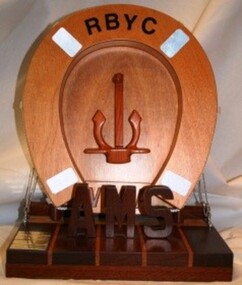
Life Ring, Vega Trophy (Mounted Wooden Life Ring)
... Bedlington 2005/06 Vega – Further historical background Early in the Second World War Jersey was declared “unarmed” and the German military took over, taking quite a few lives in the process, through strafing the main harbour and a few other places which they needlessly considered threatening. ...Bedlington 2005/06 Vega – Further historical background Early in the Second World War Jersey was declared “unarmed” and the German military took over, taking quite a few lives in the process, through strafing the main harbour and a few other places which they needlessly considered threatening. ...Vega Trophy (Mounted Wooden Life Ring) Donor: Graham Noel During World War II when the Germans occupied the Channel Islands the local people went through very severe food rationing and were on the verge of starvation. Near the end of the war, the Swedish ship Vega was allowed by the Germans to deliver several shipments of food to the civilian population, easing the critical shortages of food on the islands. Further background detail can be found below. Graham Noel was born on the Islands and lived there during this harsh period. The trophy is awarded to the winner of the Combined Division AMS Aggregate Series. First Winner: Under Capricorn, P. Bedlington 2005/06 Vega – Further historical background Early in the Second World War Jersey was declared “unarmed” and the German military took over, taking quite a few lives in the process, through strafing the main harbour and a few other places which they needlessly considered threatening. A considerable number of locals evacuated to England before the Germans arrived, but more than 60% of the population remained and endured 5 years of very strict and difficult conditions. Not only was the population unable to contact relatives in the UK or elsewhere, but very quickly they found themselves subject to harsh curfews, strictly rationed foodstuffs, no fuel for vehicles, radios confiscated, and homes and hotels commandeered by the military. The military demanded first pick of all foodstuffs and kept meticulous records of all livestock forcing farmers even to show newborn calves and piglets to them, then claiming the new arrivals for their dinner tables. However there are many stories of farmers outwitting their masters when twin calves or suchlike arrived! Lawbreakers were quickly dealt with, mostly with lengthy prison terms in Jersey, but the more serious crimes were punished by being sent to some horrible French prisons, or even some of the notorious German concentration camps. All local Jews were dispatched to concentration camps, and even English born families were similarly shipped through France and on to Germany. Sadly, a considerable number of those deported did not make it back safely to Jersey. In June 1944 the locals were delighted to hear that the Allies had invaded Normandy and very soon they could hear the battles as the Allies worked their way along the French coast. Little did they know they would still have to wait another 11 months for freedom, having to put up with a very demanding German occupation force which was still determined to obey Hitler’s order to “Defend the Channel Islands to the death”. Now that France was in Allied Hands the local military commanders were unable to supplement their food supplies from France and even harsher demands were made on the local population to ensure that all branches of their still very substantial military force were reasonably well fed. As well as the military, Jersey farmers had to provide food for the Allied POWs and the many “forced labourers”, mainly of Russian, Polish and Italian backgrounds who had been directed to the island to build all the concrete bunkers. This included an underground hospital, all this complying with Hitler’s orders to ensure that the Channel Islands would never again be part of Britain. Many requests by the Jersey authorities for Red Cross assistance were rejected, but finally in December 1944 they agreed and on 30th December the Red Cross vessel “Vega” (Swedish Registry) arrived and delivered parcels to the civilian population. These parcels contained a variety of foodstuffs supplied mainly by Canadian authorities, desperately needed medical supplies, flour, oils and soaps, as well as tobacco from New Zealand. Vega made a further 3 or 4 trips and most certainly eased the desperate situation being faced by the locals. In fact, it resulted in the locals having slightly better food supplies than the military and many local farmers tell stories of having to protect their stock from marauding soldiers. Understandably Churchill was reluctant to send in an invading force to retake the Channel Islands, but by May 1945 it was clear that the Third Reich was finished and on May 9th the German Military surrendered, without a fight, to a large British landing force. On a slightly lighter note … in January 1945 Jersey stonemasons were seen in the main town square repairing flagstones … the Germans had never noticed that the name “Vega” had been formed in those flagstones! As a side note Vega is the name of the brightest star in the universe. Furthermore, throughout the occupation, despite German law that demanded confiscation of all radio sets, punishable by long prison terms or deportation to Germany, there were still many sets being listened to. The locals had a well refined news system for the dissemination of news of what was happening in the outside world. vega, graham noel, ams, combined division, aggregate -
 Flagstaff Hill Maritime Museum and Village
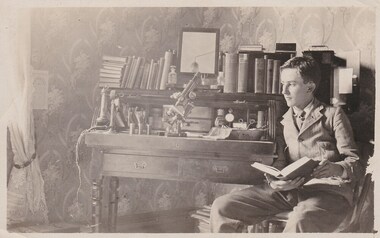
Photograph - Portrait, William Roy Angus, c. 1920's
... Dr Angus was a member of the Australian Medical Association, for 35 years and a surgeon at the Warrnambool Base Hospital from 1939-1942, Soon after his move to Warrnambool, war was declared. Dr Angus joined the Australian Department of Defence as a Surgeon Captain during WWII 1942-45, in Ballarat, Victoria, and in Bonegilla, N.S.W., at 106 A.G.H., completing his service just before the end of the war due to suffering from a heart attack. ...Dr Angus was a member of the Australian Medical Association, for 35 years and a surgeon at the Warrnambool Base Hospital from 1939-1942, Soon after his move to Warrnambool, war was declared. Dr Angus joined the Australian Department of Defence as a Surgeon Captain during WWII 1942-45, in Ballarat, Victoria, and in Bonegilla, N.S.W., at 106 A.G.H., completing his service just before the end of the war due to suffering from a heart attack. ...This is a photograph of (William) Roy Angus, at his desk as a medical student in Adelaide, South Australia. It was donated to Flagstaff Hill Maritime Museum and Village by the family. He later qualified as Doctor William Roy Angus, Surgeon and Oculist. It is part of the “W.R. Angus Collection” which includes historical medical equipment, surgical instruments and materials once belonging to Dr Edward Ryan and Dr Thomas Francis Ryan, (both of Nhill, Victoria) as well as Dr Angus’ own belongings. The Collection’s history spans the medical practices of the two Doctors Ryan, from 1885-1926 plus that of Dr Angus, up until 1969. ABOUT THE “W.R. ANGUS COLLECTION” updated 20-01-2023 Doctor William Roy Angus M.B., B.S., Adel., 1923, F.R.C.S. Edin.,1928 (also known as Dr Roy Angus) was born in Murrumbeena, Victoria on 28th June 1901 and lived until 1970. He qualified as a doctor, M.B.B.S. (Bachelor of Medicine-Bachelor of Surgery) in the 1923 at University of Adelaide, was Resident Medical Officer at the Royal Adelaide Hospital in 1924 and for a period was house surgeon to Sir (then Mr.) Henry Simpson Newland, from whom he acquired his interest in plastic surgery. He was also House Surgeon to Dr J.J. O’Grady, under whom he did his early Ophthalmological training. Dr Angus was briefly an Assistant to Dr Riddell of Kapunda, then commenced private practice at Curramulka, Yorke Peninsula, SA, where he was a physician, surgeon and chemist. In 1926, he was appointed as the new Medical Assistant to Dr Thomas Francis Ryan (T.F. Ryan, or Tom), in Nhill, Victoria, whose practice had been established by his brother, Dr Edward Ryan. Consequently, a considerable amount of eye work was done. Dr Angus’ experiences included radiology and pharmacy. In 1927 he was Acting House Surgeon in Dr Tom Ryan’s six-month trip abroad. Dr Angus had become engaged to Gladys Forsyth and they decided he further his studies overseas in the UK in 1927, sailing in the ship SS Banffshire. He studied at London University College Hospital and at Edinburgh Royal Infirmary and in 1928, was awarded FRCS (Fellow from the Royal College of Surgeons), Edinburgh, Scotland. He worked his passage back to Australia as a Ship’s Surgeon on the Australian Commonwealth Line T.S.S. Largs Bay, which was purchased by the White Star Line in 1928. He returned to South Australia, where he practised general surgery 1928-1932. He was a surgeon at the Curramulka Hospital, Yorke Peninsula, South Australia. Dr Angus was a ‘flying doctor’ for the A.I.M. (Australian Inland Ministry) Aerial Medical Service in 1928. Its first station was in the remote town of Oodnadatta, where Dr Angus was stationed. He was locum tenens there on North-South Railway at 21 Mile Camp. He took up this ‘flying doctor’ position in response to a call from Dr John Flynn; the organisation was later known as the Flying Doctor Service, then the Royal Flying Doctor Service. His work during this time involved general surgery, eye work, plastic surgery, radiology, pathology and even dental surgery. Dr Angus married Gladys in 1929, in Ballarat. (They went on to have one son (Graham 1932, born in SA) and two daughters (Helen (died 12/07/1996) and Berenice (Berry), both born at Mira, Nhill ). According to Berry, her mother Gladys made a lot of their clothes. She was very talented and did some lovely embroidery including lingerie for her trousseau and beautifully handmade baby clothes. In 1933 Dr Angus returned to Nhill and purchased a share of the Nelson Street practice and Mira hospital (a 2-bed ward at the Nelson Street Practice) from Dr Les Middleton one of the Middleton Brothers, the current owners of what previously once Dr Tom Ryan’s practice, where Dr Angus was previously Medical Assistant. Dr Tom and his brother had worked as surgeons including in eye surgery. Dr Tom Ryan performed many of his operations in the Mira private hospital on his premises. He had been House Surgeon at the Nhill Hospital from 1902-1926. Dr Tom Ryan had one of the only two pieces of radiology equipment in Victoria during his practicing years – The Royal Melbourne Hospital had the other one. Over the years Dr Tom Ryan had gradually set up what was effectively a training school for country general-practitioner-surgeons. Each patient was carefully examined, including using the X-ray machine, and any surgery was discussed and planned with Dr Ryan’s assistants several days in advance. Dr Angus gained experience in using the X-ray machine there during his time as assistant to Dr Ryan. The doctors Ryan were related to the Ryan Eye Doctors in Melbourne. When Dr Angus bought into the Nelson Street premises in Nhill he was also appointed as the Nhill Hospital’s Honorary House Surgeon 1933-1938. His practitioner’s plate from his Nhill surgery is now mounted on the doorway to the Port Medical Office at Flagstaff Hill Maritime Village, Warrnambool. When Dr Angus took up practice in Dr Edward and Dr Tom Ryan’s old premises, he obtained their extensive collection of historical medical equipment and materials spanning 1884-1926. A large part of this collection is now on display at the Port Medical Office at Flagstaff Hill Maritime Village in Warrnambool. In 1939 Dr Angus and his family moved to Warrnambool where he purchased “Birchwood,” the 1852 home and medical practice of Dr John Hunter Henderson, at 214 Koroit Street. (This property was sold in1965 to the State Government and is now the site of the Warrnambool Police Station. and an ALDI store is on the land that was once their tennis court). The Angus family could afford gardeners, cooks and maids; their home was a popular place for visiting dignitaries to stay whilst visiting Warrnambool. Dr Angus had his own silkworm farm at home in a Mulberry tree. His young daughter used his centrifuge for spinning the silk. Dr Angus was appointed on a part-time basis as Port Medical Officer (Health Officer) in Warrnambool and held this position until the 1940s when the government no longer required the service of a Port Medical Officer in Warrnambool; he was thus Warrnambool’s last serving Port Medical Officer. (Masters of immigrant ships arriving in port reported incidents of diseases, illness and death and the Port Medical Officer made a decision on whether the ship required Quarantine and for how long, in this way preventing contagious illness from spreading from new immigrants to the residents already in the colony.) Dr Angus was a member of the Australian Medical Association, for 35 years and a surgeon at the Warrnambool Base Hospital from 1939-1942, Soon after his move to Warrnambool, war was declared. Dr Angus joined the Australian Department of Defence as a Surgeon Captain during WWII 1942-45, in Ballarat, Victoria, and in Bonegilla, N.S.W., at 106 A.G.H., completing his service just before the end of the war due to suffering from a heart attack. During his twelve moth convalescence and rehabilitation, he carved an intricate and ‘most artistic’ chess set from the material that dentures were made from. He returned to Warrnambool to commence practice as an ophthalmologist, pioneering artificial eye improvements. He was an Honorary Consultant Ophthalmologist at Warrnambool Base Hospital for 31 years. He made monthly visits to Portland as a visiting surgeon, to perform eye surgery. He represented the Victorian South-West subdivision of the Australian Medical Association as its secretary between 1949 and 1956 and as chairman from 1956 to 1958. Altogether he had interests in nine various medical organisations. In his personal life, Dr Angus was a Presbyterian and treated Sunday as a Sabbath, a day of rest. He would visit 3 or 4 country patients on a Sunday, taking his children along ‘for the ride’ and visiting with him. Sunday evenings he would play the pianola or piano and sing Scottish songs to his family. He loved Scottish music. He owned a farm in the Heytesbury district, where he found his hobbies of metalwork and carpentry useful in the workshop. He also enjoyed painting, mainly watercolour, and took part in many exhibitions. One of Dr Angus’ patients was Margaret MacKenzie, author of a book on local shipwrecks that she’d seen as an eyewitness from the late 1880’s in Peterborough, Victoria. In the early 1950’s Dr Angus, painted a picture of a shipwreck for the cover jacket of Margaret’s book, Shipwrecks and More Shipwrecks. She was blind in later life and her daughter wrote the actual book for her. Dr Angus and his wife Gladys were very involved in Warrnambool’s society with a strong interest in civic affairs. He had an interest in people and the community They were both involved in the creation of Flagstaff Hill, including the layout of the gardens. After serving in the Army, Dr Angus studied ophthalmology and became a Clinical Assistant at the Royal Melbourne Eye and Ear Hospital. He had been interested in an article on cartilage grafting by Dr Lyndon Peer of St. Barnabas Medical Centre, New Jersey, U.S., which he happened to see in a dental journal. After thought and research, Dr Angus decided to try his idea of living intrascleral implants and was able to present a paper on his results at the Combined Scientific Meeting of the O.S.A. at Surfers’ Paradise in 1962. This was followed by a further report on the results of the different methods used, given in Adelaide at the O.S.A. meeting in 1965. In 1967, during an extended holiday abroad, he was invited to spend time at the Barraquer Institute in Barcelona. While there, showed a film of his operation with slides and, translated by Professor Barraquer, gave an abridged lecture. He was elected as a member of the Instituto Barraquer, one of only a few Australians to receive the honour. He received many requests for copies of his paper. He was also invited to lecture and show the films in England and at the St Barnabas Medical Centre in New Jersey. He completed his work on Living Intrascleral Implants and gave his final paper and film Inaugural Meeting of the Australian College of Ophthalmologists in Melbourne in October 1969. Angus received accolades from the Ophthalmological Society of Australasia for this work. Two weeks after presenting his paper in Melbourne in 1969 Dr Angus became critically ill. He died on 28th March 1970. His family requested his practitioner’s plate, medical instruments and some personal belongings to be displayed in the Port Medical Office surgery at Flagstaff Hill Maritime Village, and be called the “W. R. Angus Collection”. The W.R. Angus Collection is significant for still being located at the site it is connected with, Doctor Angus being the last Port Medical Officer in Warrnambool. The collection of medical instruments and other equipment is culturally significant, being a historical example of medicine from the late 19th to mid-20th century. Dr Angus assisted Dr Tom Ryan, a pioneer in the use of X-rays and in ocular surgery. Photograph, black and white, of (William) Roy Angus as a student at his desk in his study, pre 1923. Part of the W.R. Angus Collection.flagstaff hill, warrnambool, shipwrecked coast, flagstaff hill maritime museum, maritime museum, shipwreck coast, flagstaff hill maritime village, great ocean road, dr w r angus, dr ryan, surgical instrument, t.s.s. largs bay, warrnambool base hospital, nhill base hospital, mira hospital, flying doctor, roy angus photograph, roy angus student, photographic history, w.r. angus collection, w.r. angus biography, pianola, piano, scotland, scottish music -
 Flagstaff Hill Maritime Museum and Village
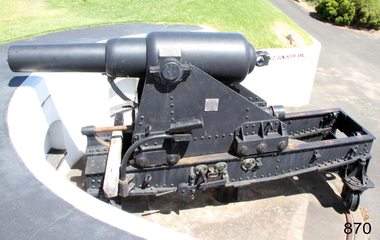
Weapon - Cannon, 1866
... When the Fortifications were declared obsolete, the two 80 Pounder RML were relocated to Cannon Hill in 1910. On the outbreak of World War One the 4.7 inch guns were recalled to Melbourne, and the Battery was disbanded. ...When the Fortifications were declared obsolete, the two 80 Pounder RML were relocated to Cannon Hill in 1910. On the outbreak of World War One the 4.7 inch guns were recalled to Melbourne, and the Battery was disbanded. ...In the years following the Crimean War (1854-1857J) there was a great concern in the Colony that Imperial Russia would attempt an invasion. Coastal defences in the colony of Victoria were greatly strengthened by the Government as a result. Warrnambool was originally protected by cannons at Cannon Hill, approximately 1 kilometer west of the Flagstaff Hill Fortifications. These cannons included two 1866 guns, both 80 Pound Rifled Muzzle Loaders (RML) purchased by Victoria’s Colonial Government. They were part of a shipment of 26 such guns sent from England in December 1866. They are registered as No. 23 (80cwt-2qr-0lbs) - Gun 1, and No.13 (81cwt-1qr-12lbs) - Gun 2. They were cast at the Royal Gun Factory, Woolwich Arsenal, in 1866 and have a 6.3 inch bore. Both barrels carry the Royal Cypher of Queen Victoria, Insignia of the Royal Engineers, within the Garter and Motto surmounted by the Crown, with the Royal Cypher of Queen Victoria within the Garter (letters in centre “VR”, motto “HONI SOIT QUI MAL Y PENSE”, "Shame be to him who thinks evil of it."). The guns were originally supplied with wooden carriages. (The Royal Arsenal at Woolwich, England, was established eleven years after the Restoration of King Charles II. It was the principal supplier of armaments to the British and Empire Governments. At the height of its operations during World War One the factory covered 1300 acres and employed very nearly 80,000 workers. Woolwich was the Headquarters of the Royal Artillery since the raising of that Regiment in 1716. The Arsenal was closed in the late 1960’s.) These two cannons were transferred to the Warrnambool Garrison Artillery Battery Fortifications erected at Flagstaff Hill in 1887 as part of Victoria’s Coastal Defences. The original wooden carriages were subsequently replaced with the present iron garrison carriages in 1888. They are a “C” pivot. The ‘racers’ or curved track set into the floor of the gun emplacement (which enabled the guns to be traversed more quickly) are as specified for guns up to 10 inch, being of wrought iron 2.78 inches wide. A temporary third gun, now no longer on Flagstaff Hill’s site, was a 5 inch Rifled Breech Loading (BL) Armstrong gun mounted on an Elswick hydro pneumatic disappearing carriage It was faster to load and fire than the 80 pound RMLs and its arrival spelt the end of the older 80 pound guns’ useful life, apart from being used for practice sessions. The 5 inch BL gun was the main defensive weapon of the Warrnambool Battery until the Battery was downgraded in importance and the gun was recalled to Melbourne in 1910. The State of Victoria took over the ownership of the guns at the time of Australian Federation in 1901. In about 1901/1902 the Garrison Battery was converted to the Warrnambool Battery of the Australian Field Artillery (No 4 Field Battery). It was equipped with 4.7 inch naval guns mounted on field carriages. They were now a mobile unit but continued to use the Warrnambool Garrison area at Flagstaff Hill for practice. When the Fortifications were declared obsolete, the two 80 Pounder RML were relocated to Cannon Hill in 1910. On the outbreak of World War One the 4.7 inch guns were recalled to Melbourne, and the Battery was disbanded. Most of the personnel probably re-enlisted in the local 4th Australian Light Horse Regiment. The two 80 Pounder RML were moved back to the Fortifications in 1973. They were both fully restored by Army First Year Apprentices at the Ordinance Factory in Bendigo in time for the centenary year of the fortifications in 1987. The guns are capable of firing 80 pound (32.3kg) armour piercing exploding shells 3.65kms out to sea. They were original manned by volunteers before a paid Garrison was established. Now the Guns are again fired by volunteers on Special Event days. Since restoration the Gun Number 1 had been fired on a regular basis but Gun Number 2 hadn’t been fired since the mid 1990’s. In April 2015 Gun Number 2 was serviced in preparation for the firing of both cannons on the ANZAC Centenary commemorations on April 25th 2015. Other guns from the original Cannon Hill location were obsolete by the time the 1887 Warrnambool Garrison Artillery Battery was built. These guns are (1) a 32 Pounder Muzzle Loading Smooth Bore (SB) cast in 1813 at the famous Carron Foundry, number 80837 and now located in the Warrnambool Botanic Gardens (2) a 68 Pounder Muzzle Loading Smooth Bore cast in 1861 at the equally august Low Moor Foundry, number 10310 and now located on the lawn area at the entrance to Flagstaff Hill Maritime Village. Both of these guns are mounted on their original wooden garrison carriages. There are only seven 32 Pounder SB made by Carron and fifteen 68 Pounder SB made at Low Moor known to exist in the State of Victoria. Funding was received to repair Cannon No.2 and its iron carriage. After completion, both Cannon No 1 and No. 2 were 'fired' in a public re-enactment on April 4th, 2026. (Conservation Management Plan for Victorian Guns and Cannon, South Western Victoria, May 2008, ref W/F/05)The Warrnambool Garrison has been added to the Victorian Heritage Register H1250 “for its intact battery and guns, a strong reminder of Victoria’s wealth and determination to protect itself from the perceived threat of invasion in the 1880’s.” The City of Warrnambool is one of several custodians of a collection of artillery pieces of heritage significance at a state, national and international level. These pieces are directly related to the defence of south-west Victoria in the 19th century. The care and preservation come under the Heritage Act 1995. Cannon. 80 Pound Rifled Muzzle Loading (RML) Gun on iron carriage and slide, installed in the Battery at Flagstaff Hill’s Fortifications. Made in 1866 at the Royal Gun Factory (R-G-F), Woolich, England. Gun Reg No 13. Flagstaff Hill Garrison Gun 2 (Gun No. 2). Insignia of the Royal Engineers, and the weight of the gun, stamped on top of the gun’s barrel. There is a brass plate on the side of the gun with the details of 1987 restoration.Stamped into the metal on top of the barrel, Insignia of the Royal Engineers; Garter and Motto “HONI SOIT QUI MAL Y PENSE”, surmounted by the Crown, with the Royal Cypher of Queen Victoria “VR” within the Garter. Also stamped on top of the gun are 2 inward pointing arrows above the weight ”81-1-12”. Brass plate “RESTORATION / BY / FIRST YEAR / APPRENTICES / ORDANANCE FACTORY / BENDIGO 1987”flagstaff hill, warrnambool, shipwrecked coast, flagstaff hill maritime museum, maritime museum, shipwreck coast, flagstaff hill maritime village, great ocean road, colonial defences, victoria’s coastal defences, warrnambool fortification, warrnambool garrison battery, warrnambool volunteer corps, ordinance, armaments, cannon hill fortifications, 4th australian light horse regiment, no 4 field battery, 80 pound cannon rifled muzzle loaders (rml), victorian colonial government, royal gun factory england, woolwich arsenal, royal cypher of queen victoria, garrison gun -
 Flagstaff Hill Maritime Museum and Village
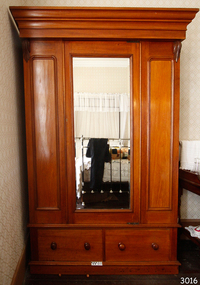
Furniture - Wardrobe, Late 19th to early 20th Century
... declared a City (1918). William's father, William Swinton Snr. (c.1831-1901) arrived in Warrnambool in 1854 from Edinburgh, Scotland. He established the Swinton store in Timor Street in 1865 where it is still located. William Snr's grand-daughter, Doris Swinton (1904-1986) was one of Australia's most highly decorated nurses of World War...declared a City (1918). William's father, William Swinton Snr. (c.1831-1901) arrived in Warrnambool in 1854 from Edinburgh, Scotland. He established the Swinton store in Timor Street in 1865 where it is still located. William Snr's grand-daughter, Doris Swinton (1904-1986) was one of Australia's most highly decorated nurses of World War ...The original owner of the beautiful wardrobe was William Swinton Jr. (1860-1929) and was later given to a friend of the Giles family. It is part of the Giles Collection. William Swinton Jnr. was a Warrnambool Councilor 1903-20 and Mayor 1917-19, during which time Warrnambool declared a City (1918). William's father, William Swinton Snr. (c.1831-1901) arrived in Warrnambool in 1854 from Edinburgh, Scotland. He established the Swinton store in Timor Street in 1865 where it is still located. William Snr's grand-daughter, Doris Swinton (1904-1986) was one of Australia's most highly decorated nurses of World War 2 and for 16 years matron of the Warrnambool and District Base Hospital. There is a street in Warrnambool named after the Swinton family. The Giles Collection: There are many 19th century items of furniture, linen, and crockery donated to Flagstaff Hill Maritime Village by Vera and Aurelin Giles. The items are associated with the Giles Family and are known as the "Giles Collection". These items mostly came from the simple home of Vera's parents-in-law, Henry Giles and his wife Mary Jane (nee Freckleton), whose photos are in the parlour. They married in 1880. Henry Giles was born at Tower Hill in 1858. He was a labourer on the construction of the Breakwater before leaving in 1895 to build bridges in N.S.W. for about seven years. Mary Jane was born in 1860 at Cooramook. She attended Mailor's Flat State School where she was also a student teacher before, as a family legend has it, she became a governess at "Injemiara" where her grandfather, Francis Freckleton, once owned land. Henry and Mary’s family of six, some of whom were born at Mailor’s Flat and later children at Wangoom, lived with their parents at Wangoom and Purnim west, where Henry died in 1933 and Mary Jane in 1940. The wardrobe is also significant for its association with early Warrnambool history, being owned by William Swinton Jnr. who was a Warrnambool Councilor and Warrnambools first Mayor (1917-19) the son of an early colonial family, arriving in Warrnambool in 1854. The Giles family collection also has social significance at a local level, because it illustrates the level of material support the Warrnambool community gave to Flagstaff Hill when the Maritime Museum was established.Wardrobe, colonial, made of cedar wood. The doors of the wardrobe have a mirrored door between them and there are two large drawers below the doors, each drawer has two round wooden handles. The wardrobe was once owned by a William Swinton Jnr. It is now part of the Giles Collection.Noneflagstaff hill, warrnambool, shipwrecked-coast, maritime-museum, shipwreck-coast, flagstaff-hill-maritime-village, wardrobe, bedroom furniture, domestic furniture, william swinton jnr., warrnambool's first mayor, warrnambool mayor, giles collection, henry giles, tower hill, cooramook, warrnambool breakwater, mailor’s flat, wangoom, 19th century furniture, doris swinton, swinton street warrnambool -
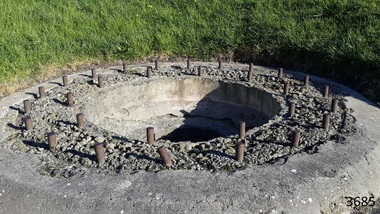 Flagstaff Hill Maritime Museum and Village
Gun Emplacement, 1890's
... When the Fortifications were declared obsolete the two 80 Pounder RML were relocated to Cannon Hill in 1910. On the outbreak of World War One the 4.7 inch guns were recalled to Melbourne, and the Battery was disbanded. ...When the Fortifications were declared obsolete the two 80 Pounder RML were relocated to Cannon Hill in 1910. On the outbreak of World War One the 4.7 inch guns were recalled to Melbourne, and the Battery was disbanded. ...The Warrnambool Battery on Flagstaff Hill has embankments for 3 guns. Those on the left and right still have cannon in place but in the centre is an empty embankment, apart from this concrete ring with metal threaded studs. In 1898 a 5 inch breech loading gun (BL) was installed here. The gun had a hydro-pneumatic disappearing carriage (hence the sign on the concrete wall "5" BL HP").. This type of gun was faster to load and fire that the 80 pound RML’s installed on either side of it. Its arrival spelt the end of the 80 pound RML guns’ useful life, although they continued to be used for practice sessions. The 5 inch BL was the main defensive weapon of the Warrnambool Battery until the Battery was downgraded in importance. It was removed in 1904 and recalled to Melbourne in 1910. The gun emplacement ring is all that remains of the mounting for a 5 inch Armstrong rifled breech loading gun. HISTOR of the WARRNAMBOOL GUNS & CANNON In the years following the Crimean War (1854-1857J) there was a great concern in the Colony that Imperial Russia would attempt an invasion. Coastal defences in the colony of Victoria were greatly strengthened by the Government as a result. Warrnambool was originally protected by cannons at Cannon Hill, approximately 1 kilometer west of the Flagstaff Hill Fortifications. The cannons included two 1866 guns, both 80 Pound Rifled Muzzle Loaders (RML) purchased by Victoria’s Colonial Government. They were part of a shipment of 26 such guns sent from England in December 1866. They are registered as No. 23 (80cwt-2qr-0lbs) - Gun 1, and No.13 (81cwt-1qr-12lbs) - Gun 2. They were cast at the Royal Gun Factory, Woolwich Arsenal, in 1866 and have a 6.3 inch bore. Both barrels carry the Royal Cypher of Queen Victoria, Insignia of the Royal Engineers, within the Garter and Motto surmounted by the Crown, with the Royal Cypher of Queen Victoria within the Garter (letters in centre “VR”, motto “HONI SOIT QUI MAL Y PENSE”, "Shame be to him who thinks evil of it."). The guns were originally supplied with wooden carriages. (The Royal Arsenal at Woolwich, England, was established eleven years after the Restoration of King Charles II. It was the principal supplier of armaments to the British and Empire Governments. At the height of its operations during World War One the factory covered 1300 acres and employed very nearly 80,000 workers. Woolwich was the Headquarters of the Royal Artillery since the raising of that Regiment in 1716. The Arsenal was closed in the late 1960’s.) These two 80pdr cannons were transferred to the Warrnambool Garrison Artillery Battery Fortifications erected at Flagstaff Hill in 1887 as part of Victoria’s Coastal Defences. The original wooden carriages were subsequently replaced with the present iron garrison carriages in 1888. They are a “C” pivot. The ‘racers’ or curved track set into the floor of the gun emplacement (which enabled the guns to be traversed more quickly) are as specified for guns up to 10 inch, being of wrought iron 2.78 inches wide. A temporary third gun, now no longer on Flagstaff Hill’s site, was the 5 inch Rifled Breech Loading (BL) Armstrong gun mounted on an Elswick hydro pneumatic disappearing carriage and installed in this very concrete base or pad. The State of Victoria took over the ownership of the guns at the time of Australian Federation in 1901. In about 1901/1902 the Garrison Battery was converted to the Warrnambool Battery of the Australian Field Artillery (No 4 Field Battery). It was equipped with 4.7 inch naval guns mounted on field carriages. They were now a mobile unit but continued to use the Warrnambool Garrison area at Flagstaff Hill for practice. When the Fortifications were declared obsolete the two 80 Pounder RML were relocated to Cannon Hill in 1910. On the outbreak of World War One the 4.7 inch guns were recalled to Melbourne, and the Battery was disbanded. Most of the personnel probably re-enlisted in the local 4th Australian Light Horse Regiment. The two 80 Pounder RML were moved back to the Fortifications in 1973. They were both fully restored by Army First Year Apprentices at the Ordinance Factory in Bendigo in time for the centenary year of the fortifications in 1987. The guns are capable of firing 80 pound (32.3kg) armour piercing exploding shells 3.65kms out to sea. They were originally manned by volunteers before a paid Garrison was established. Now the Guns are again fired by volunteers on Special Event days. Since restoration the Gun Number 1 had been fired on a regular basis but Gun Number 2 hadn’t been fired since the mid 1990’s. In April 2015 Gun Number 2 was serviced in preparation for the firing of both cannons on the ANZAC Centenary commemorations on April 25th 2015. Other guns from the original Cannon Hill location were obsolete by the time the 1887 Warrnambool Garrison Artillery Battery was built. These guns are (1) a 32 Pounder Muzzle Loading Smooth Bore (SB) cast in 1813 at the famous Carron Foundry, number 80837 and now located in the Warrnambool Botanic Gardens. It is now mounted on a replica carriage due to the original carriage being in a fragile condition (the original carriage stored under cover at Flagstaff Hill). (2) a 68 Pounder Muzzle Loading Smooth Bore cast in 1861 at the equally august Low Moor Foundry, number 10310 and now located on the lawn area at the entrance to Flagstaff Hill Maritime Village. It is still mounted on its original wooden garrison carriage. Its wooden slide compressor mechanism is fragile and now kept in Flagstaff Hill’s storage. There are only seven 32 Pounder SB made by Carron and fifteen 68 Pounder SB made at Low Moor known to exist in the State of Victoria [references; Flagstaff Hill Maritime Village interpretation boards, information sheets and other documents; South Western Victoria Guns and Cannon report, May 2008, ref W/F/08] The Gun embankment is contained within the heritage listed Lady Bay Lighthouse Comples, on the Victorian Heritage Register VHR H1520. The gun emplacement base is evidence of the last defences installed on this stretch of coastline. The Warrnambool Garrison has been added to the Victorian Heritage Register H1250 “for its intact battery and guns, a strong reminder of Victoria’s wealth and determination to protect itself from the perceived threat of invasion in the 1880’s.” The City of Warrnambool is one of several custodians of a collection of artillery pieces of heritage significance at a state, national and international level. These pieces are directly related to the defence of south-west Victoria in the 19th century. The care and preservation come under the Heritage Act 1995. Gun emplacement; the remains of the mounting platform of a temporary third gun installed in 1898 in the centre of the battery. This consists of a circular concrete well or sump surrounded by two rings of mounting bolts, the inner of 10 and the outer of 20. The base once held a 5 inch Armstrong rifled breech loading gun with hydro-pneumatic disappearing. In the centre of the ring on the ground is a keyhole shaped space. The gun was removed in 1904. flagstaff hill, warrnambool, shipwrecked coast, flagstaff hill maritime museum, maritime museum, shipwreck coast, flagstaff hill maritime village, great ocean road, colonial defences, victoria’s coastal defences, warrnambool fortification, warrnambool garrison battery, warrnambool volunteer corps, ordinance, armaments, cannon hill fortifications, flagstaff hill fortifications, 4th australian light horse regiment, garrison gun, 5 inch breech loading gun, emplacement for hydro-pneumatic disappearing carriage, gun emplacement -
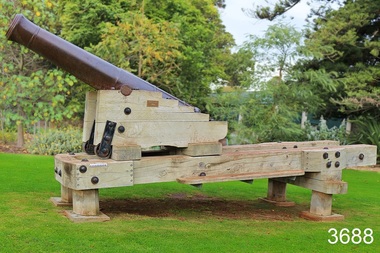 Flagstaff Hill Maritime Museum and Village
Weapon - Cannon, 1813
... declared obsolete. HISTORIC INFORMATION ABOUT THE CANNON IN THE WARRNAMBOOL AREA In the years following the Crimean War (1854-1857J) there was a great concern in the Colony that Imperial Russia would attempt an invasion. ...declared obsolete. HISTORIC INFORMATION ABOUT THE CANNON IN THE WARRNAMBOOL AREA In the years following the Crimean War (1854-1857J) there was a great concern in the Colony that Imperial Russia would attempt an invasion. ...This 1813 cannon is classified as a carronade, having been made by the Carron Ironworks foundry in Stirling, Scotland in 1813. It is a large calibre, short range, gun mainly used on ships. The carronade model of cannon was first used when introduced into the British Royal Navy in the American War of the Revolution (1775-1883). This cannon was originally a 28pdr, 48cwt, 8ft gun. The date ‘1837’ on the barrel probably indicates the date that the Board of Ordinance accepted the change in size to a 32pdr. It may originally have been a naval gun and the conversion undertaken when it was brought ashore. It is very probably one of the 15 guns that are known to have constituted the defences of Victoria in 1860. This group of 32pdrs was the shorter model of the 4800width and 8ft length cannon and as such are different from the 32pdrs found in NSW. It was originally located on Cannon Hill in Warrnambool when it was the site of the Warrnambool Battery Western Artillery, formed in 1866. It was obsolete by the time of the 1887 fortifications, and was moved from the Warrnambool Fortifications to the Botanic Gardens in 1910, when the Fortifications were declared obsolete. HISTORIC INFORMATION ABOUT THE CANNON IN THE WARRNAMBOOL AREA In the years following the Crimean War (1854-1857J) there was a great concern in the Colony that Imperial Russia would attempt an invasion. Coastal defences in the colony of Victoria were greatly strengthened by the Government as a result. Warrnambool was originally protected by cannons at Cannon Hill, approximately 1 kilometer west of the Flagstaff Hill Fortifications. The cannons included two 1866 guns, both 80 Pound Rifled Muzzle Loaders (RML) purchased by Victoria’s Colonial Government. They were part of a shipment of 26 such guns sent from England in December 1866. They are registered as No. 23 (80cwt-2qr-0lbs) - Gun 1, and No.13 (81cwt-1qr-12lbs) - Gun 2. They were cast at the Royal Gun Factory, Woolwich Arsenal, in 1866 and have a 6.3 inch bore. Both barrels carry the Royal Cypher of Queen Victoria, Insignia of the Royal Engineers, within the Garter and Motto surmounted by the Crown, with the Royal Cypher of Queen Victoria within the Garter (letters in centre “VR”, motto “HONI SOIT QUI MAL Y PENSE”, "Shame be to him who thinks evil of it."). The guns were originally supplied with wooden carriages. (The Royal Arsenal at Woolwich, England, was established eleven years after the Restoration of King Charles II. It was the principal supplier of armaments to the British and Empire Governments. At the height of its operations during World War One the factory covered 1300 acres and employed very nearly 80,000 workers. Woolwich was the Headquarters of the Royal Artillery since the raising of that Regiment in 1716. The Arsenal was closed in the late 1960’s.) The two 80pdr cannons were transferred to the Warrnambool Garrison Artillery Battery Fortifications erected at Flagstaff Hill in 1887 as part of Victoria’s Coastal Defences. The original wooden carriages were subsequently replaced with the present iron garrison carriages in 1888. They are a “C” pivot. The ‘racers’ or curved track set into the floor of the gun emplacement (which enabled the guns to be traversed more quickly) are as specified for guns up to 10 inch, being of wrought iron 2.78 inches wide. A temporary third gun, now no longer on Flagstaff Hill’s site, was a 5 inch Rifled Breech Loading (BL) Armstrong gun mounted on an Elswick hydro pneumatic disappearing carriage It was faster to load and fire than the 80 pound RMLs and its arrival spelt the end of the older 80 pound guns’ useful life, apart from being used for practice sessions. The 5 inch BL gun was the main defensive weapon of the Warrnambool Battery until the Battery was downgraded in importance and the gun was recalled to Melbourne in 1910. The gun emplacement still remains in place set between the 2 80pdr cannon. The State of Victoria took over the ownership of the guns at the time of Australian Federation in 1901. In about 1901/1902 the Garrison Battery was converted to the Warrnambool Battery of the Australian Field Artillery (No 4 Field Battery). It was equipped with 4.7 inch naval guns mounted on field carriages. They were now a mobile unit but continued to use the Warrnambool Garrison area at Flagstaff Hill for practice. When the Fortifications were declared obsolete the two 80 Pounder RML were relocated to Cannon Hill in 1910. On the outbreak of World War 1 the 4.7 inch guns were recalled to Melbourne, and the Battery was disbanded. Most of the personnel probably re-enlisted in the local 4th Australian Light Horse Regiment. The two 80 Pounder RML were moved back to the Fortifications in 1973. They were both fully restored by Army First Year Apprentices at the Ordinance Factory in Bendigo in time for the centenary year of the fortifications in 1987. The guns are capable of firing 80 pound (32.3kg) armour piercing exploding shells 3.65kms out to sea. They were original manned by volunteers before a paid Garrison was established. Now the Guns are again fired by volunteers on Special Event days. Since restoration the Gun Number 1 had been fired on a regular basis but Gun Number 2 hadn’t been fired since the mid 1990’s. In April 2015 Gun Number 2 was serviced in preparation for the firing of both cannons on the ANZAC Centenary commemorations on April 25th 2015. Other guns from the original Cannon Hill location were obsolete by the time the 1887 Warrnambool Garrison Artillery Battery was built. These guns are (1) a 32 Pounder Muzzle Loading Smooth Bore (SB) cast in 1813 at the famous Carron Foundry, number 80837 and now located in the Warrnambool Botanic Gardens. It is now mounted on a replica carriage due to the original carriage being in a fragile condition (the original carriage stored under cover at Flagstaff Hill). (2) a 68 Pounder Muzzle Loading Smooth Bore cast in 1861 at the equally august Low Moor Foundry, number 10310 and now located on the lawn area at the entrance to Flagstaff Hill Maritime Village. It is still mounted on its original wooden garrison carriage. Its wooden slide compressor mechanism is fragile and now kept in Flagstaff Hill’s storage. There are only seven 32 Pounder SB made by Carron and fifteen 68 Pounder SB made at Low Moor known to exist in the State of Victoria Plaque attached to the carriage “This replica carriage was constructed by the Warrnambool Tritan Woodworkers club in conjunction with the generosity of local businesses and the Warrnambool community. The original carriage (circa 1860) was removed for restoration and is now located at Flagstaff Hill Maritime Village. The timber used for the replica carriage is Monterey Cypress, which was an early planting in the gardens. 2010 marked the centenary of the cannon’s relocation in the Warrnambool Botanic Gardens.” (Reference; Victorian Guns and Cannons, South Western Victoria Assessment, May 2008, item W/B/01; Flagstaff Hill Maritime Village datasheets and archives). There are only seven 32 Pounder SB made by Carron known to exist in the State of Victoria and this is one of them. On a world level, this cannon represents a high level of rarity. Further, as it has been modified (bored up) it is representative of the historical process of amending artillery in order to ensure a longer usefulness of each piece despite rapidly advancing artillery technology. The number of surviving carriages with traversing slides in this group in South Western Victoria is unique in Australia and probably in the World. Out of 10 such platforms surviving in Australia, the South Western Victorian group has half. Several survive around the world but probably not in such a large group. The wooden sliding compressor mechanism belonging to this cannon is extremely rare, and the only one in this South Western Victorian group of Guns and Cannons. As a whole, this cannon has undergone very little restoration or modification, giving it a high level of integrity. The City of Warrnambool is one of several custodians of a collection of artillery pieces of heritage significance at a state, national and international level. These pieces are directly related to the defence of south-west Victoria in the 19th century. The care and preservation come under the Heritage Act 1995. (Reference; Victorian Guns and Cannons, South Western Victoria Assessment, May 2008).Cannon, or carronade, 32pdr with wheels. Muzzle loading smooth bore (SB) cannon. Cannon has original wooden Burmese Teak carriage and slide with wrought iron fittings and iron wheels. Manufactured by Carron in Scotland, in 1813. It has been converted from a 28pdr. There is a loop for a rope on the cascabel, which was part of the original casting. Re-bored in 1837. Marks include Serial Number, Royal Cypher of King George III, broad arrow of proofing, and numbers to represent the weight. NOTE: The cannon is displayed in the Warrnambool Botanic Gardens and is mounted on a replica wooden carriage; the original wooden carriage is now stored under cover at Flagstaff Hill Maritime Village. This carriage has 4 wheels on swivel attachments and a central gear that allows the wheels to turn on rails. Pressed into left trunnion “80837 / CARRON / 1813”, cast on barrel“symbol (Royal Cypher of King George III”, “symbol (broad arrow of proofing)” and numbers “45-3-24 / 1837” . Cascable “CV” and marks with gradations from nought to three in quarters on each side, On the carriage the end of one of the main slide members carries the mark “W symbol (broad arrow) D” incised into the timber. Plaque attached to the carriage by the Warrnambool Tritan Woodworkers club, 2010, marking the centenary of the cannon’s relocation in the Warrnambool Botanic Gardens and the addition of the replica carriage. flagstaff hill, warrnambool, shipwrecked coast, flagstaff hill maritime museum, maritime museum, shipwreck coast, flagstaff hill maritime village, great ocean road, victoria’s coastal defences, warrnambool fortification, warrnambool garrison battery, ordinance, armaments, cannon hill fortifications, victorian colonial government, carron ironwroks foundary, 32pdr smooth bore cannon, 28pdr smooth bore cannon, 1813 cannon, carronade
