
Showing 27 items matching "war service benefits"
-
 National Vietnam Veterans Museum (NVVM)
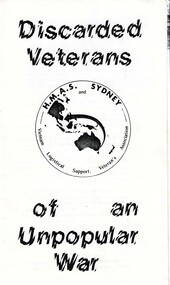
Document - A Copy of Discarded Veterans of An Unpopular War: H.M.A.S. Sydney
... ...War Service Benefits...Sydney and her escorts, Jeparit and Bonaroo were discriminated against in eligibility for War Service Benefits because they were not allotted "Special Duty" during the Vietnam War....Sydney and her escorts, Jeparit and Bonaroo were discriminated against in eligibility for War Service Benefits because they were not allotted "Special Duty" during the Vietnam War....Sydney and her escorts, Jeparit and Bonaroo were discriminated against in eligibility for War Service Benefits because they were not allotted "Special Duty" during the Vietnam War. ...Jeparit and Bonaroo Pamphlet discussing the fact that the crew on H.M.A.S. Sydney and her escorts, Jeparit and Bonaroo were discriminated against in eligibility for War Service Benefits because they were not allotted "Special Duty" during the Vietnam War.Pamphlet discussing the fact that the crew on H.M.A.S. Sydney and her escorts, Jeparit and Bonaroo were discriminated against in eligibility for War Service Benefits because they were not allotted "Special Duty" during the Vietnam War.hmas sydney, hmas jeparit, hmas boonaroo, war service benefits, vung tau, ran clearance divers, hmas hobart, us patrol boats, vung tau harbour -
 Federation University Historical Collection
Photograph - Colour, Memorial to Francis Davis in the grounds of Federation University, SMB Campus, 2012, 20/09/2012
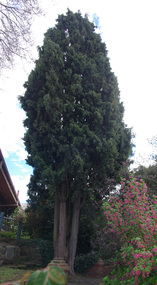
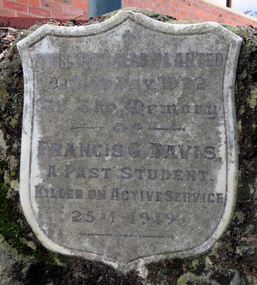
... benefit of humanity. The last post was then sounded by Mr. H. Green. ... (Ballarat Courier, 19 June 1922) ballarat school of mines ballarat junior secondary school world war one memorial marble plaque marble memorial tree memorial tree davis francis davis A number of photographs of a tree and marble plaque in the grounds of the Ballarat School of Mines. It was a memorial to Francis Davis, a former student of the Ballarat Junior Technical School, who died on active service ...Francis Gordon Davis was born in Ballarat on 09 August 1899. He is the only former student of the Ballarat Junior Technical School who was killed on service during World War One. Davis enlisted into the Australian Flying Corps, Laverton, on 12 April 1918 at which time he was 18 and 8 months and served as a second class Air Mechanic. His service number was 3310. He died accidentally from shock resulting from an accident resulting from skidding a Leyland Motor Lorry at Leighterton, Tetbury, Gloucester, England on 28 January 1919 and is buried in Grave 6 in the Soldiers Corner of the Leighterton Cemetery. Francis Davis was accorded a full military funeral, firing party, bugler and pallbearers. The coffin was draped in the Union Jack and surmounted in several beautiful wreathes sent from his brother 2/A.M. E.H. Davis (A.F.C Leighterton), officer of the A.F.C. Leighterton, Gloucester, Cadets of A.F.C. and many other personal friends of the deceased. The "Last Post" was sounded at the graveside, and the Rev. Major K.D. Norman C. of E. A.I.F. officiated. The grave was to be turfed and an oak cross erected by the A.I.F. London. Administrative Headquarters A.I.F. London were represented at the funeral. (http://bih/index.php/Francis_G._Davis) In June 1922 Alfred Davis, the father of Francis Davis, planted a tree in the grounds of the Ballarat Junior Technical School in honour of hos son. It was the first tree of six planted in the grounds of the Ballarat School of Mines on Arbor Day 1922. Speaking of the planting of the tree by Mr Davis the Chief Secretary (Mr M. Baird M.L.A.), said he trusted the memory would ever remain green at the school. Had he and others not given their lives nothing that we could have done to-day could have retrieved the time. Australians had indeed done splendidly, but they should take a wider outlook than Australia, and reading the history of the Genoa Conference he had been struck by what had been done ... We should honor such men as he in whose memory that tree was planted, and the schools that sent them out to fight for us. He hoped the empire would always be able to produce such men, so that the Empire would always be able to lead the World's struggle for the benefit of humanity. The last post was then sounded by Mr. H. Green. ... (Ballarat Courier, 19 June 1922)A number of photographs of a tree and marble plaque in the grounds of the Ballarat School of Mines. It was a memorial to Francis Davis, a former student of the Ballarat Junior Technical School, who died on active service during World War One.ballarat school of mines, ballarat junior secondary school, world war one, memorial, marble plaque, marble memorial, tree, memorial tree, davis, francis davis -
 Federation University Historical Collection
Photograph, Clare Gervasoni, Memorial to Francis Davis in the grounds of Federation University, SMB Campus, 2019, 20/01/2019
... benefit of humanity. The last post was then sounded by Mr. H. Green. ... (Ballarat Courier, 19 June 1922) ballarat school of mines ballarat junior secondary school world war one memorial marble plaque marble memorial tree memorial tree davis francis davis centenary A number of photographs of a tree and marble plaque in the grounds of the Ballarat School of Mines. It was a memorial to Francis Davis, a former student of the Ballarat Junior Technical School, who died on active service ...Francis Gordon Davis was born in Ballarat on 09 August 1899. He is the only former student of the Ballarat Junior Technical School who was killed on service during World War One. Davis enlisted into the Australian Flying Corps, Laverton, on 12 April 1918 at which time he was 18 and 8 months and served as a second class Air Mechanic. His service number was 3310. He died accidentally from shock resulting from an accident resulting from skidding a Leyland Motor Lorry at Leighterton, Tetbury, Gloucester, England on 28 January 1919 and is buried in Grave 6 in the Soldiers Corner of the Leighterton Cemetery. Francis Davis was accorded a full military funeral, firing party, bugler and pallbearers. The coffin was draped in the Union Jack and surmounted in several beautiful wreathes sent from his brother 2/A.M. E.H. Davis (A.F.C Leighterton), officer of the A.F.C. Leighterton, Gloucester, Cadets of A.F.C. and many other personal friends of the deceased. The "Last Post" was sounded at the graveside, and the Rev. Major K.D. Norman C. of E. A.I.F. officiated. The grave was to be turfed and an oak cross erected by the A.I.F. London. Administrative Headquarters A.I.F. London were represented at the funeral. (http://bih/index.php/Francis_G._Davis) In June 1922 Alfred Davis, the father of Francis Davis, planted a tree in the grounds of the Ballarat Junior Technical School in honour of hos son. It was the first tree of six planted in the grounds of the Ballarat School of Mines on Arbor Day 1922. Speaking of the planting of the tree by Mr Davis the Chief Secretary (Mr M. Baird M.L.A.), said he trusted the memory would ever remain green at the school. Had he and others not given their lives nothing that we could have done to-day could have retrieved the time. Australians had indeed done splendidly, but they should take a wider outlook than Australia, and reading the history of the Genoa Conference he had been struck by what had been done ... We should honor such men as he in whose memory that tree was planted, and the schools that sent them out to fight for us. He hoped the empire would always be able to produce such men, so that the Empire would always be able to lead the World's struggle for the benefit of humanity. The last post was then sounded by Mr. H. Green. ... (Ballarat Courier, 19 June 1922)A number of photographs of a tree and marble plaque in the grounds of the Ballarat School of Mines. It was a memorial to Francis Davis, a former student of the Ballarat Junior Technical School, who died on active service during World War One.ballarat school of mines, ballarat junior secondary school, world war one, memorial, marble plaque, marble memorial, tree, memorial tree, davis, francis davis, centenary -
 Flagstaff Hill Maritime Museum and Village
Functional object - Spectacles and case, c. 1969
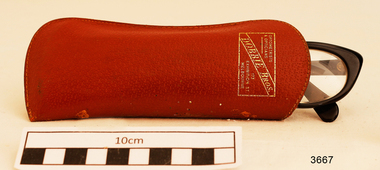
... Twentieth century spectacles Spectacle wearing continued to become more widespread, key developments being the supply of spectacles to troops in the First World War, cheaper spectacles being subsidised through insurance schemes arranged by friendly societies, and the beginning of the National Health Service in 1948, when free spectacles were made available to all who might benefit from them. ...Twentieth century spectacles Spectacle wearing continued to become more widespread, key developments being the supply of spectacles to troops in the First World War, cheaper spectacles being subsidised through insurance schemes arranged by friendly societies, and the beginning of the National Health Service in 1948, when free spectacles were made available to all who might benefit from them. ...The history of spectacles The earliest form of spectacles are generally agreed to have been invented in Northern Italy in the thirteenth century. Over hundreds of years of innovation and refinement, they have been perfected into the stylish and functional designs you see today worn by millions of people to correct their eyesight. Here's a look at the key moments that defined the history of spectacles. Thirteenth century - Rivet spectacles The earliest form of spectacles was simply two mounted lenses riveted together at the handle ends. They had no sides and were secured to the face by clamping the nose between the rims, some of which had notches which may have been intended to improve the grip. Even then the wearer could only keep them in place by remaining relatively still and would normally support them with the hand. These spectacles contained convex lenses for the correction of presbyopic long-sightedness and were generally suited only to those few who lived beyond their forties and had the ability to read. Sixteenth century - Nose spectacles Nose spectacles were in more common use by the early sixteenth century. These often had a bow-shaped continuous bridge, almost of a modern appearance, that was sometimes flexible depending upon the material, for example leather or whalebone. The bridge was as much an area to be gripped as to rest on the nose. Spectacles were still usually held in place with the hand whilst being used temporarily for a brief period of reading or close inspection. By now the lenses could be used to correct both long and short sight. The general design changed little through the seventeenth century, though certain refinements increased the flexibility and comfort for some wearers. In some localised areas, notably in Spain, people experimented with ear loops made of string. This allowed them to walk around with their spectacles on. Eighteenth century - Temple glasses Only in the eighteenth century did the first modern eyewear, or ‘glasses’ as we would understand them, start to appear. The lenses might be glass, rock crystal or any other transparent mineral substance and were prone to smashing if the spectacles fell off, so there was an impetus to develop frames that could be worn continuously and would stay in place. London optician Edward Scarlett is credited with developing the modern style of spectacles which were kept in place with arms, known as ‘temples’. These were made of iron or steel and gripped the side of the head but did not yet hook over the ears because often the ears were concealed beneath a powdered wig, such as was fashionable at the time. As temples developed they were made with wide ring ends through which the wearer could pass a ribbon, thus tying the spectacles securely to the head. As spectacles were no longer primarily for use in sedentary activities, people began to be noticed out and about in their spectacles and might come to be identified as a ‘spectacle wearer’. By the end of the eighteenth century, people who needed correction for both distance and near could choose bifocals. Nineteenth century - Pince-nez Pince-nez were a nineteenth century innovation that literally translates as ‘pinching the nose’. They had a spring clip to retain the item in place under its own tension. Sometimes this clip was too tight and the wearer struggled to breathe. If it was too loose the pince-nez could fall off so, for safety and security, they were often connected to the wearer's clothing by a cord or a chain to avoid them being dropped or lost. Pince-nez were sometimes chosen by people who felt that large spectacles were too prominent and drew attention to a physical defect. They were also suitable for mounting lenses that could correct astigmatism. Twentieth century spectacles Spectacle wearing continued to become more widespread, key developments being the supply of spectacles to troops in the First World War, cheaper spectacles being subsidised through insurance schemes arranged by friendly societies, and the beginning of the National Health Service in 1948, when free spectacles were made available to all who might benefit from them. This normalised spectacle wearing and led to a significant increase in the scale of production. Entirely separate categories of women’s spectacles and sports eyewear both emerged in the 1930s. The latter half of the twentieth century saw spectacles become more fashionable and stylish as frames with different shapes, materials, and colours became available. Plastics frames, in particular, allowed a greater choice of colours and textured finishes. Plastic lenses were more durable and could be made lighter and thinner than glass, spurring a renewed interest in rimless designs. Designer eyewear bearing popular high-street brand names encouraged patients to regard spectacles as a desirable commodity, even as a fashion accessory, not just a disability aid. https://www.college-optometrists.org/the-british-optical-association-museum/the-history-of-spectacles These spectacles and case were used by Dr. Angus in his surgery in Warrnambool to test patients' eye sight. They were donated to Flagstaff Hill Maritime Village by the family of Doctor William Roy Angus, Surgeon and Oculist. It is part of the “W.R. Angus Collection” that includes historical medical equipment, surgical instruments and material once belonging to Dr Edward Ryan and Dr Thomas Francis Ryan, (both of Nhill, Victoria) as well as Dr Angus’ own belongings. The Collection’s history spans the medical practices of the two Doctors Ryan, from 1885-1926 plus that of Dr Angus, up until 1969. ABOUT THE “W.R.ANGUS COLLECTION” Doctor William Roy Angus M.B., B.S., Adel., 1923, F.R.C.S. Edin.,1928 (also known as Dr Roy Angus) was born in Murrumbeena, Victoria in 1901 and lived until 1970. He qualified as a doctor in 1923 at University of Adelaide, was Resident Medical Officer at the Royal Adelaide Hospital in 1924 and for a period was house surgeon to Sir (then Mr.) Henry Simpson Newland. Dr Angus was briefly an Assistant to Dr Riddell of Kapunda, then commenced private practice at Curramulka, Yorke Peninsula, SA, where he was physician, surgeon and chemist. In 1926, he was appointed as new Medical Assistant to Dr Thomas Francis Ryan (T.F. Ryan, or Tom), in Nhill, Victoria, where his experiences included radiology and pharmacy. In 1927 he was Acting House Surgeon in Dr Tom Ryan’s absence. Dr Angus had become engaged to Gladys Forsyth and they decided he would take time to further his studies overseas in the UK in 1927. He studied at London University College Hospital and at Edinburgh Royal Infirmary and in 1928, was awarded FRCS (Fellow from the Royal College of Surgeons), Edinburgh. He worked his passage back to Australia as a Ship’s Surgeon on the on the Australian Commonwealth Line’s T.S.S. Largs Bay. Dr Angus married Gladys in 1929, in Ballarat. (They went on to have one son (Graham 1932, born in SA) and two daughters (Helen (died 12/07/1996) and Berenice (Berry), both born at Mira, Nhill ) Dr Angus was a ‘flying doctor’ for the A.I.M. (Australian Inland Ministry) Aerial Medical Service in 1928 . The organisation began in South Australia through the Presbyterian Church in that year, with its first station being in the remote town of Oodnadatta, where Dr Angus was stationed. He was locum tenens there on North-South Railway at 21 Mile Camp. He took up this ‘flying doctor’ position in response to a call from Dr John Flynn; the organisation was later known as the Flying Doctor Service, then the Royal Flying Doctor Service. A lot of his work during this time involved dental surgery also. Between 1928-1932 he was surgeon at the Curramulka Hospital, Yorke Peninsula, South Australia. In 1933 Dr Angus returned to Nhill where he’d previously worked as Medical Assistant and purchased a share of the Nelson Street practice and Mira hospital from Dr Les Middleton one of the Middleton Brothers, the current owners of what was once Dr Tom Ryan’s practice. Dr L Middleton was House Surgeon to the Nhill Hospital 1926-1933, when he resigned. [Dr Tom Ryan’s practice had originally belonged to his older brother Dr Edward Ryan, who came to Nhill in 1885. Dr Edward saw patients at his rooms, firstly in Victoria Street and in 1886 in Nelson Street, until 1901. The Nelson Street practice also had a 2 bed ward, called Mira Private Hospital ). Dr Edward Ryan was House Surgeon at the Nhill Hospital 1884-1902 . He also had occasions where he successfully performed veterinary surgery for the local farmers too. Dr Tom Ryan then purchased the practice from his brother in 1901. Both Dr Edward and Dr Tom Ryan work as surgeons included eye surgery. Dr Tom Ryan performed many of his operations in the Mira private hospital on his premises. He too was House Surgeon at the Nhill Hospital 1902-1926. Dr Tom Ryan had one of the only two pieces of radiology equipment in Victoria during his practicing years – The Royal Melbourne Hospital had the other one. Over the years Dr Tom Ryan gradually set up what was effectively a training school for country general-practitioner-surgeons. Each patient was carefully examined, including using the X-ray machine, and any surgery was discussed and planned with Dr Ryan’s assistants several days in advance. Dr Angus gained experience in using the X-ray machine there during his time as assistant to Dr Ryan. Dr Tom Ryan moved from Nhill in 1926. He became a Fellow of the Royal Australasian College of Surgeons in 1927, soon after its formation, a rare accolade for a doctor outside any of the major cities. He remained a bachelor and died suddenly on 7th Dec 1955, aged 91, at his home in Ararat. Scholarships and prizes are still awarded to medical students in the honour of Dr T.F. Ryan and his father, Dr Michael Ryan, and brother, John Patrick Ryan. ] When Dr Angus bought into the Nelson Street premises in Nhill he was also appointed as the Nhill Hospital’s Honorary House Surgeon 1933-1938. His practitioner’s plate from his Nhill surgery states “HOURS Daily, except Tuesdays, Fridays and Saturday afternoons, 9-10am, 2-4pm, 7-8pm. Sundays by appointment”. This plate is now mounted on the doorway to the Port Medical Office at Flagstaff Hill Maritime Village, Warrnambool. Dr Edward Ryan and Dr Tom Ryan had an extensive collection of historical medical equipment and materials spanning 1884-1926 and when Dr Angus took up practice in their old premises he obtained this collection, a large part of which is now on display at the Port Medical Office at Flagstaff Hill Maritime Village in Warrnambool. During his time in Nhill Dr Angus was involved in the merging of the Mira Hospital and Nhill Public Hospital into one public hospital and the property titles passed on to Nhill Hospital in 1939. In 1939 Dr Angus and his family moved to Warrnambool where he purchased “Birchwood,” the 1852 home and medical practice of Dr John Hunter Henderson, at 214 Koroit Street. (This property was sold in1965 to the State Government and is now the site of the Warrnambool Police Station. ). The Angus family was able to afford gardeners, cooks and maids; their home was a popular place for visiting dignitaries to stay whilst visiting Warrnambool. Dr Angus had his own silk worm farm at home in a Mulberry tree. His young daughter used his centrifuge for spinning the silk. Dr Angus was appointed on a part-time basis as Port Medical Officer (Health Officer) in Warrnambool and held this position until the 1940’s when the government no longer required the service of a Port Medical Officer in Warrnambool; he was thus Warrnambool’s last serving Port Medical Officer. (The duties of a Port Medical Officer were outlined by the Colonial Secretary on 21st June, 1839 under the terms of the Quarantine Act. Masters of immigrant ships arriving in port reported incidents of diseases, illness and death and the Port Medical Officer made a decision on whether the ship required Quarantine and for how long, in this way preventing contagious illness from spreading from new immigrants to the residents already in the colony.) Dr Angus was a member of the Australian Medical Association, for 35 years and surgeon at the Warrnambool Base Hospital 1939-1942, He served as a Surgeon Captain during WWII 1941-45, in Ballarat, Victoria, and in Bonegilla, N.S.W., completing his service just before the end of the war due to suffering from a heart attack. During his convalescence he carved an intricate and ‘most artistic’ chess set from the material that dentures were made from. He then studied ophthalmology at the Royal Melbourne Eye and Ear Hospital and created cosmetically superior artificial eyes by pioneering using the intrascleral cartilage. Angus received accolades from the Ophthalmological Society of Australasia for this work. He returned to Warrnambool to commence practice as an ophthalmologist, pioneering in artificial eye improvements. He was Honorary Consultant Ophthalmologist to Warrnambool Base Hospital for 31 years. He made monthly visits to Portland as a visiting surgeon, to perform eye surgery. He represented the Victorian South-West subdivision of the Australian Medical Association as its secretary between 1949 and 1956 and as chairman from 1956 to 1958. In 1968 Dr Angus was elected member of Spain’s Barraquer Institute of Barcelona after his research work in Intrasclearal cartilage grafting, becoming one of the few Australian ophthalmologists to receive this honour, and in the following year presented his final paper on Living Intrasclearal Cartilage Implants at the Inaugural Meeting of the Australian College of Ophthalmologists in Melbourne In his personal life Dr Angus was a Presbyterian and treated Sunday as a Sabbath, a day of rest. He would visit 3 or 4 country patients on a Sunday, taking his children along ‘for the ride’ and to visit with him. Sunday evenings he would play the pianola and sing Scottish songs to his family. One of Dr Angus’ patients was Margaret MacKenzie, author of a book on local shipwrecks that she’d seen as an eye witness from the late 1880’s in Peterborough, Victoria. In the early 1950’s Dr Angus, painted a picture of a shipwreck for the cover jacket of Margaret’s book, Shipwrecks and More Shipwrecks. She was blind in later life and her daughter wrote the actual book for her. Dr Angus and his wife Gladys were very involved in Warrnambool’s society with a strong interest in civic affairs. Their interests included organisations such as Red Cross, Rostrum, Warrnambool and District Historical Society (founding members), Wine and Food Society, Steering Committee for Tertiary Education in Warrnambool, Local National Trust, Good Neighbour Council, Housing Commission Advisory Board, United Services Institute, Legion of Ex-Servicemen, Olympic Pool Committee, Food for Britain Organisation, Warrnambool Hospital, Anti-Cancer Council, Boys’ Club, Charitable Council, National Fitness Council and Air Raid Precautions Group. He was also a member of the Steam Preservation Society and derived much pleasure from a steam traction engine on his farm. He had an interest in people and the community He and his wife Gladys were both involved in the creation of Flagstaff Hill, including the layout of the gardens. After his death (28th March 1970) his family requested his practitioner’s plate, medical instruments and some personal belongings be displayed in the Port Medical Office surgery at Flagstaff Hill Maritime Village, and be called the “W. R. Angus Collection”. The W.R. Angus Collection is significant for still being located at the site it is connected with, Doctor Angus being the last Port Medical Officer in Warrnambool. The collection of medical instruments and other equipment is culturally significant, being an historical example of medicine from late 19th to mid-20th century. Dr Angus assisted Dr Tom Ryan, a pioneer in the use of X-rays and in ocular surgery. Spectacles and case, from the W.R. Angus Collection and used by Dr. Angus for testing the sight of his patients. Black rimmed spectacles in tan, open ended pouch. Inscription is stamped into frame and printed in gold lettering on the case. c. 1969 Inscriptions read on spectacles;“52 (square) 18” and “RODENSTOCK > ELBA < 130“ and printed in gold lettering on the pouch “DOBBIE BROS. / OPTOMETRISTS & OPTICIANS / 173 EXHIBITION ST. MELBOURNE”flagstaff hill, warrnambool, shipwrecked coast, flagstaff hill maritime museum, maritime museum, shipwreck coast, flagstaff hill maritime village, great ocean road, dr w r angus, dr ryan, surgical instrument, t.s.s. largs bay, warrnambool base hospital, nhill base hospital, mira hospital, flying doctor, medical treatment, spectacles and case, optical testing, optometrist examination, dobbie bros melbourne -
 Flagstaff Hill Maritime Museum and Village
Functional object - Spectacles and Case, 1930s - 1960s
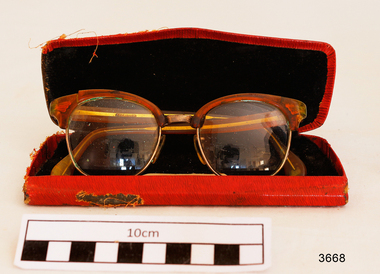
... Twentieth century spectacles Spectacle wearing continued to become more widespread, key developments being the supply of spectacles to troops in the First World War, cheaper spectacles being subsidised through insurance schemes arranged by friendly societies, and the beginning of the National Health Service in 1948, when free spectacles were made available to all who might benefit from them. ...Twentieth century spectacles Spectacle wearing continued to become more widespread, key developments being the supply of spectacles to troops in the First World War, cheaper spectacles being subsidised through insurance schemes arranged by friendly societies, and the beginning of the National Health Service in 1948, when free spectacles were made available to all who might benefit from them. ...The history of spectacles The earliest form of spectacles are generally agreed to have been invented in Northern Italy in the thirteenth century. Over hundreds of years of innovation and refinement, they have been perfected into the stylish and functional designs you see today worn by millions of people to correct their eyesight. Here's a look at the key moments that defined the history of spectacles. Thirteenth century - Rivet spectacles The earliest form of spectacles was simply two mounted lenses riveted together at the handle ends. They had no sides and were secured to the face by clamping the nose between the rims, some of which had notches which may have been intended to improve the grip. Even then the wearer could only keep them in place by remaining relatively still and would normally support them with the hand. These spectacles contained convex lenses for the correction of presbyopic long-sightedness and were generally suited only to those few who lived beyond their forties and had the ability to read. Sixteenth century - Nose spectacles Nose spectacles were in more common use by the early sixteenth century. These often had a bow-shaped continuous bridge, almost of a modern appearance, that was sometimes flexible depending upon the material, for example leather or whalebone. The bridge was as much an area to be gripped as to rest on the nose. Spectacles were still usually held in place with the hand whilst being used temporarily for a brief period of reading or close inspection. By now the lenses could be used to correct both long and short sight. The general design changed little through the seventeenth century, though certain refinements increased the flexibility and comfort for some wearers. In some localised areas, notably in Spain, people experimented with ear loops made of string. This allowed them to walk around with their spectacles on. Eighteenth century - Temple glasses Only in the eighteenth century did the first modern eyewear, or ‘glasses’ as we would understand them, start to appear. The lenses might be glass, rock crystal or any other transparent mineral substance and were prone to smashing if the spectacles fell off, so there was an impetus to develop frames that could be worn continuously and would stay in place. London optician Edward Scarlett is credited with developing the modern style of spectacles which were kept in place with arms, known as ‘temples’. These were made of iron or steel and gripped the side of the head but did not yet hook over the ears because often the ears were concealed beneath a powdered wig, such as was fashionable at the time. As temples developed they were made with wide ring ends through which the wearer could pass a ribbon, thus tying the spectacles securely to the head. As spectacles were no longer primarily for use in sedentary activities, people began to be noticed out and about in their spectacles and might come to be identified as a ‘spectacle wearer’. By the end of the eighteenth century, people who needed correction for both distance and near could choose bifocals. Nineteenth century - Pince-nez Pince-nez were a nineteenth century innovation that literally translates as ‘pinching the nose’. They had a spring clip to retain the item in place under its own tension. Sometimes this clip was too tight and the wearer struggled to breathe. If it was too loose the pince-nez could fall off so, for safety and security, they were often connected to the wearer's clothing by a cord or a chain to avoid them being dropped or lost. Pince-nez were sometimes chosen by people who felt that large spectacles were too prominent and drew attention to a physical defect. They were also suitable for mounting lenses that could correct astigmatism. Twentieth century spectacles Spectacle wearing continued to become more widespread, key developments being the supply of spectacles to troops in the First World War, cheaper spectacles being subsidised through insurance schemes arranged by friendly societies, and the beginning of the National Health Service in 1948, when free spectacles were made available to all who might benefit from them. This normalised spectacle wearing and led to a significant increase in the scale of production. Entirely separate categories of women’s spectacles and sports eyewear both emerged in the 1930s. The latter half of the twentieth century saw spectacles become more fashionable and stylish as frames with different shapes, materials, and colours became available. Plastics frames, in particular, allowed a greater choice of colours and textured finishes. Plastic lenses were more durable and could be made lighter and thinner than glass, spurring a renewed interest in rimless designs. Designer eyewear bearing popular high-street brand names encouraged patients to regard spectacles as a desirable commodity, even as a fashion accessory, not just a disability aid. https://www.college-optometrists.org/the-british-optical-association-museum/the-history-of-spectacles The company Optical Prescription Spectacle Makers (OPSM ) was formed in Sydney in 1932 and publically listed in 1953. These spectacles and case were used by Dr. Angus when testing patients' eyes. The spectacles and case were donated to Flagstaff Hill Maritime Village by the family of Doctor William Roy Angus, Surgeon and Oculist. It is part of the “W.R. Angus Collection” that includes historical medical equipment, surgical instruments and material once belonging to Dr Edward Ryan and Dr Thomas Francis Ryan, (both of Nhill, Victoria) as well as Dr Angus’ own belongings. The Collection’s history spans the medical practices of the two Doctors Ryan, from 1885-1926 plus that of Dr Angus, up until 1969. ABOUT THE “W.R.ANGUS COLLECTION” Doctor William Roy Angus M.B., B.S., Adel., 1923, F.R.C.S. Edin.,1928 (also known as Dr Roy Angus) was born in Murrumbeena, Victoria in 1901 and lived until 1970. He qualified as a doctor in 1923 at University of Adelaide, was Resident Medical Officer at the Royal Adelaide Hospital in 1924 and for a period was house surgeon to Sir (then Mr.) Henry Simpson Newland. Dr Angus was briefly an Assistant to Dr Riddell of Kapunda, then commenced private practice at Curramulka, Yorke Peninsula, SA, where he was physician, surgeon and chemist. In 1926, he was appointed as new Medical Assistant to Dr Thomas Francis Ryan (T.F. Ryan, or Tom), in Nhill, Victoria, where his experiences included radiology and pharmacy. In 1927 he was Acting House Surgeon in Dr Tom Ryan’s absence. Dr Angus had become engaged to Gladys Forsyth and they decided he would take time to further his studies overseas in the UK in 1927. He studied at London University College Hospital and at Edinburgh Royal Infirmary and in 1928, was awarded FRCS (Fellow from the Royal College of Surgeons), Edinburgh. He worked his passage back to Australia as a Ship’s Surgeon on the on the Australian Commonwealth Line’s T.S.S. Largs Bay. Dr Angus married Gladys in 1929, in Ballarat. (They went on to have one son (Graham 1932, born in SA) and two daughters (Helen (died 12/07/1996) and Berenice (Berry), both born at Mira, Nhill ) Dr Angus was a ‘flying doctor’ for the A.I.M. (Australian Inland Ministry) Aerial Medical Service in 1928 . The organisation began in South Australia through the Presbyterian Church in that year, with its first station being in the remote town of Oodnadatta, where Dr Angus was stationed. He was locum tenens there on North-South Railway at 21 Mile Camp. He took up this ‘flying doctor’ position in response to a call from Dr John Flynn; the organisation was later known as the Flying Doctor Service, then the Royal Flying Doctor Service. A lot of his work during this time involved dental surgery also. Between 1928-1932 he was surgeon at the Curramulka Hospital, Yorke Peninsula, South Australia. In 1933 Dr Angus returned to Nhill where he’d previously worked as Medical Assistant and purchased a share of the Nelson Street practice and Mira hospital from Dr Les Middleton one of the Middleton Brothers, the current owners of what was once Dr Tom Ryan’s practice. Dr L Middleton was House Surgeon to the Nhill Hospital 1926-1933, when he resigned. [Dr Tom Ryan’s practice had originally belonged to his older brother Dr Edward Ryan, who came to Nhill in 1885. Dr Edward saw patients at his rooms, firstly in Victoria Street and in 1886 in Nelson Street, until 1901. The Nelson Street practice also had a 2 bed ward, called Mira Private Hospital ). Dr Edward Ryan was House Surgeon at the Nhill Hospital 1884-1902 . He also had occasions where he successfully performed veterinary surgery for the local farmers too. Dr Tom Ryan then purchased the practice from his brother in 1901. Both Dr Edward and Dr Tom Ryan work as surgeons included eye surgery. Dr Tom Ryan performed many of his operations in the Mira private hospital on his premises. He too was House Surgeon at the Nhill Hospital 1902-1926. Dr Tom Ryan had one of the only two pieces of radiology equipment in Victoria during his practicing years – The Royal Melbourne Hospital had the other one. Over the years Dr Tom Ryan gradually set up what was effectively a training school for country general-practitioner-surgeons. Each patient was carefully examined, including using the X-ray machine, and any surgery was discussed and planned with Dr Ryan’s assistants several days in advance. Dr Angus gained experience in using the X-ray machine there during his time as assistant to Dr Ryan. Dr Tom Ryan moved from Nhill in 1926. He became a Fellow of the Royal Australasian College of Surgeons in 1927, soon after its formation, a rare accolade for a doctor outside any of the major cities. He remained a bachelor and died suddenly on 7th Dec 1955, aged 91, at his home in Ararat. Scholarships and prizes are still awarded to medical students in the honour of Dr T.F. Ryan and his father, Dr Michael Ryan, and brother, John Patrick Ryan. ] When Dr Angus bought into the Nelson Street premises in Nhill he was also appointed as the Nhill Hospital’s Honorary House Surgeon 1933-1938. His practitioner’s plate from his Nhill surgery states “HOURS Daily, except Tuesdays, Fridays and Saturday afternoons, 9-10am, 2-4pm, 7-8pm. Sundays by appointment”. This plate is now mounted on the doorway to the Port Medical Office at Flagstaff Hill Maritime Village, Warrnambool. Dr Edward Ryan and Dr Tom Ryan had an extensive collection of historical medical equipment and materials spanning 1884-1926 and when Dr Angus took up practice in their old premises he obtained this collection, a large part of which is now on display at the Port Medical Office at Flagstaff Hill Maritime Village in Warrnambool. During his time in Nhill Dr Angus was involved in the merging of the Mira Hospital and Nhill Public Hospital into one public hospital and the property titles passed on to Nhill Hospital in 1939. In 1939 Dr Angus and his family moved to Warrnambool where he purchased “Birchwood,” the 1852 home and medical practice of Dr John Hunter Henderson, at 214 Koroit Street. (This property was sold in1965 to the State Government and is now the site of the Warrnambool Police Station. ). The Angus family was able to afford gardeners, cooks and maids; their home was a popular place for visiting dignitaries to stay whilst visiting Warrnambool. Dr Angus had his own silk worm farm at home in a Mulberry tree. His young daughter used his centrifuge for spinning the silk. Dr Angus was appointed on a part-time basis as Port Medical Officer (Health Officer) in Warrnambool and held this position until the 1940’s when the government no longer required the service of a Port Medical Officer in Warrnambool; he was thus Warrnambool’s last serving Port Medical Officer. (The duties of a Port Medical Officer were outlined by the Colonial Secretary on 21st June, 1839 under the terms of the Quarantine Act. Masters of immigrant ships arriving in port reported incidents of diseases, illness and death and the Port Medical Officer made a decision on whether the ship required Quarantine and for how long, in this way preventing contagious illness from spreading from new immigrants to the residents already in the colony.) Dr Angus was a member of the Australian Medical Association, for 35 years and surgeon at the Warrnambool Base Hospital 1939-1942, He served as a Surgeon Captain during WWII 1941-45, in Ballarat, Victoria, and in Bonegilla, N.S.W., completing his service just before the end of the war due to suffering from a heart attack. During his convalescence he carved an intricate and ‘most artistic’ chess set from the material that dentures were made from. He then studied ophthalmology at the Royal Melbourne Eye and Ear Hospital and created cosmetically superior artificial eyes by pioneering using the intrascleral cartilage. Angus received accolades from the Ophthalmological Society of Australasia for this work. He returned to Warrnambool to commence practice as an ophthalmologist, pioneering in artificial eye improvements. He was Honorary Consultant Ophthalmologist to Warrnambool Base Hospital for 31 years. He made monthly visits to Portland as a visiting surgeon, to perform eye surgery. He represented the Victorian South-West subdivision of the Australian Medical Association as its secretary between 1949 and 1956 and as chairman from 1956 to 1958. In 1968 Dr Angus was elected member of Spain’s Barraquer Institute of Barcelona after his research work in Intrasclearal cartilage grafting, becoming one of the few Australian ophthalmologists to receive this honour, and in the following year presented his final paper on Living Intrasclearal Cartilage Implants at the Inaugural Meeting of the Australian College of Ophthalmologists in Melbourne In his personal life Dr Angus was a Presbyterian and treated Sunday as a Sabbath, a day of rest. He would visit 3 or 4 country patients on a Sunday, taking his children along ‘for the ride’ and to visit with him. Sunday evenings he would play the pianola and sing Scottish songs to his family. One of Dr Angus’ patients was Margaret MacKenzie, author of a book on local shipwrecks that she’d seen as an eye witness from the late 1880’s in Peterborough, Victoria. In the early 1950’s Dr Angus, painted a picture of a shipwreck for the cover jacket of Margaret’s book, Shipwrecks and More Shipwrecks. She was blind in later life and her daughter wrote the actual book for her. Dr Angus and his wife Gladys were very involved in Warrnambool’s society with a strong interest in civic affairs. Their interests included organisations such as Red Cross, Rostrum, Warrnambool and District Historical Society (founding members), Wine and Food Society, Steering Committee for Tertiary Education in Warrnambool, Local National Trust, Good Neighbour Council, Housing Commission Advisory Board, United Services Institute, Legion of Ex-Servicemen, Olympic Pool Committee, Food for Britain Organisation, Warrnambool Hospital, Anti-Cancer Council, Boys’ Club, Charitable Council, National Fitness Council and Air Raid Precautions Group. He was also a member of the Steam Preservation Society and derived much pleasure from a steam traction engine on his farm. He had an interest in people and the community He and his wife Gladys were both involved in the creation of Flagstaff Hill, including the layout of the gardens. After his death (28th March 1970) his family requested his practitioner’s plate, medical instruments and some personal belongings be displayed in the Port Medical Office surgery at Flagstaff Hill Maritime Village, and be called the “W. R. Angus Collection”. The W.R. Angus Collection is significant for still being located at the site it is connected with, Doctor Angus being the last Port Medical Officer in Warrnambool. The collection of medical instruments and other equipment is culturally significant, being an historical example of medicine from late 19th to mid-20th century. Dr Angus assisted Dr Tom Ryan, a pioneer in the use of X-rays and in ocular surgery. Spectacles and case, from the W.R. Angus Collection and used by Dr. Angus testing the sight of his patients. Metal case covered in red leather, black velvet lining. Tan rimmed spectacles. Maker is OPSM. Inscriptions on case, inside case and on spectacle rim.Inscribed on spectacle arms “CONTORA”. Inscription on case in gold print “OPSM Optical Prescription Spectacle Makers Pty Ltd”. Inscription on white oval label inside case is illegible. flagstaff hill, warrnambool, shipwrecked coast, flagstaff hill maritime museum, maritime museum, shipwreck coast, flagstaff hill maritime village, great ocean road, dr w r angus, spectacles and case, optical testing, optometrist examination, opsm optical prescription spectacle makers -
 Flagstaff Hill Maritime Museum and Village
Functional object - Spectacles and Case, Mid 20th Century
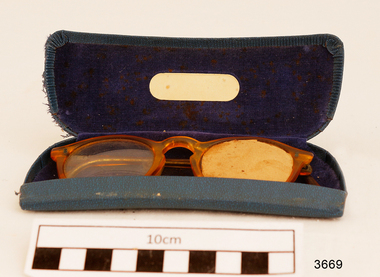
... Twentieth century spectacles Spectacle wearing continued to become more widespread, key developments being the supply of spectacles to troops in the First World War, cheaper spectacles being subsidised through insurance schemes arranged by friendly societies, and the beginning of the National Health Service in 1948, when free spectacles were made available to all who might benefit from them. ...Twentieth century spectacles Spectacle wearing continued to become more widespread, key developments being the supply of spectacles to troops in the First World War, cheaper spectacles being subsidised through insurance schemes arranged by friendly societies, and the beginning of the National Health Service in 1948, when free spectacles were made available to all who might benefit from them. ...The history of spectacles The earliest form of spectacles are generally agreed to have been invented in Northern Italy in the thirteenth century. Over hundreds of years of innovation and refinement, they have been perfected into the stylish and functional designs you see today worn by millions of people to correct their eyesight. Here's a look at the key moments that defined the history of spectacles. Thirteenth century - Rivet spectacles The earliest form of spectacles was simply two mounted lenses riveted together at the handle ends. They had no sides and were secured to the face by clamping the nose between the rims, some of which had notches which may have been intended to improve the grip. Even then the wearer could only keep them in place by remaining relatively still and would normally support them with the hand. These spectacles contained convex lenses for the correction of presbyopic long-sightedness and were generally suited only to those few who lived beyond their forties and had the ability to read. Sixteenth century - Nose spectacles Nose spectacles were in more common use by the early sixteenth century. These often had a bow-shaped continuous bridge, almost of a modern appearance, that was sometimes flexible depending upon the material, for example leather or whalebone. The bridge was as much an area to be gripped as to rest on the nose. Spectacles were still usually held in place with the hand whilst being used temporarily for a brief period of reading or close inspection. By now the lenses could be used to correct both long and short sight. The general design changed little through the seventeenth century, though certain refinements increased the flexibility and comfort for some wearers. In some localised areas, notably in Spain, people experimented with ear loops made of string. This allowed them to walk around with their spectacles on. Eighteenth century - Temple glasses Only in the eighteenth century did the first modern eyewear, or ‘glasses’ as we would understand them, start to appear. The lenses might be glass, rock crystal or any other transparent mineral substance and were prone to smashing if the spectacles fell off, so there was an impetus to develop frames that could be worn continuously and would stay in place. London optician Edward Scarlett is credited with developing the modern style of spectacles which were kept in place with arms, known as ‘temples’. These were made of iron or steel and gripped the side of the head but did not yet hook over the ears because often the ears were concealed beneath a powdered wig, such as was fashionable at the time. As temples developed they were made with wide ring ends through which the wearer could pass a ribbon, thus tying the spectacles securely to the head. As spectacles were no longer primarily for use in sedentary activities, people began to be noticed out and about in their spectacles and might come to be identified as a ‘spectacle wearer’. By the end of the eighteenth century, people who needed correction for both distance and near could choose bifocals. Nineteenth century - Pince-nez Pince-nez were a nineteenth century innovation that literally translates as ‘pinching the nose’. They had a spring clip to retain the item in place under its own tension. Sometimes this clip was too tight and the wearer struggled to breathe. If it was too loose the pince-nez could fall off so, for safety and security, they were often connected to the wearer's clothing by a cord or a chain to avoid them being dropped or lost. Pince-nez were sometimes chosen by people who felt that large spectacles were too prominent and drew attention to a physical defect. They were also suitable for mounting lenses that could correct astigmatism. Twentieth century spectacles Spectacle wearing continued to become more widespread, key developments being the supply of spectacles to troops in the First World War, cheaper spectacles being subsidised through insurance schemes arranged by friendly societies, and the beginning of the National Health Service in 1948, when free spectacles were made available to all who might benefit from them. This normalised spectacle wearing and led to a significant increase in the scale of production. Entirely separate categories of women’s spectacles and sports eyewear both emerged in the 1930s. The latter half of the twentieth century saw spectacles become more fashionable and stylish as frames with different shapes, materials, and colours became available. Plastics frames, in particular, allowed a greater choice of colours and textured finishes. Plastic lenses were more durable and could be made lighter and thinner than glass, spurring a renewed interest in rimless designs. Designer eyewear bearing popular high-street brand names encouraged patients to regard spectacles as a desirable commodity, even as a fashion accessory, not just a disability aid. https://www.college-optometrists.org/the-british-optical-association-museum/the-history-of-spectacles These spectacles and case from F.G. and R.G. Bennett of Warrnambool were used by Dr. Angus to test his patients' eye sight. They were donated to Flagstaff Hill Maritime Village by the family of Doctor William Roy Angus, Surgeon and Oculist. It is part of the “W.R. Angus Collection” that includes historical medical equipment, surgical instruments and material once belonging to Dr Edward Ryan and Dr Thomas Francis Ryan, (both of Nhill, Victoria) as well as Dr Angus’ own belongings. The Collection’s history spans the medical practices of the two Doctors Ryan, from 1885-1926 plus that of Dr Angus, up until 1969. ABOUT THE “W.R.ANGUS COLLECTION” Doctor William Roy Angus M.B., B.S., Adel., 1923, F.R.C.S. Edin.,1928 (also known as Dr Roy Angus) was born in Murrumbeena, Victoria in 1901 and lived until 1970. He qualified as a doctor in 1923 at University of Adelaide, was Resident Medical Officer at the Royal Adelaide Hospital in 1924 and for a period was house surgeon to Sir (then Mr.) Henry Simpson Newland. Dr Angus was briefly an Assistant to Dr Riddell of Kapunda, then commenced private practice at Curramulka, Yorke Peninsula, SA, where he was physician, surgeon and chemist. In 1926, he was appointed as new Medical Assistant to Dr Thomas Francis Ryan (T.F. Ryan, or Tom), in Nhill, Victoria, where his experiences included radiology and pharmacy. In 1927 he was Acting House Surgeon in Dr Tom Ryan’s absence. Dr Angus had become engaged to Gladys Forsyth and they decided he would take time to further his studies overseas in the UK in 1927. He studied at London University College Hospital and at Edinburgh Royal Infirmary and in 1928, was awarded FRCS (Fellow from the Royal College of Surgeons), Edinburgh. He worked his passage back to Australia as a Ship’s Surgeon on the on the Australian Commonwealth Line’s T.S.S. Largs Bay. Dr Angus married Gladys in 1929, in Ballarat. (They went on to have one son (Graham 1932, born in SA) and two daughters (Helen (died 12/07/1996) and Berenice (Berry), both born at Mira, Nhill ) Dr Angus was a ‘flying doctor’ for the A.I.M. (Australian Inland Ministry) Aerial Medical Service in 1928 . The organisation began in South Australia through the Presbyterian Church in that year, with its first station being in the remote town of Oodnadatta, where Dr Angus was stationed. He was locum tenens there on North-South Railway at 21 Mile Camp. He took up this ‘flying doctor’ position in response to a call from Dr John Flynn; the organisation was later known as the Flying Doctor Service, then the Royal Flying Doctor Service. A lot of his work during this time involved dental surgery also. Between 1928-1932 he was surgeon at the Curramulka Hospital, Yorke Peninsula, South Australia. In 1933 Dr Angus returned to Nhill where he’d previously worked as Medical Assistant and purchased a share of the Nelson Street practice and Mira hospital from Dr Les Middleton one of the Middleton Brothers, the current owners of what was once Dr Tom Ryan’s practice. Dr L Middleton was House Surgeon to the Nhill Hospital 1926-1933, when he resigned. [Dr Tom Ryan’s practice had originally belonged to his older brother Dr Edward Ryan, who came to Nhill in 1885. Dr Edward saw patients at his rooms, firstly in Victoria Street and in 1886 in Nelson Street, until 1901. The Nelson Street practice also had a 2 bed ward, called Mira Private Hospital ). Dr Edward Ryan was House Surgeon at the Nhill Hospital 1884-1902 . He also had occasions where he successfully performed veterinary surgery for the local farmers too. Dr Tom Ryan then purchased the practice from his brother in 1901. Both Dr Edward and Dr Tom Ryan work as surgeons included eye surgery. Dr Tom Ryan performed many of his operations in the Mira private hospital on his premises. He too was House Surgeon at the Nhill Hospital 1902-1926. Dr Tom Ryan had one of the only two pieces of radiology equipment in Victoria during his practicing years – The Royal Melbourne Hospital had the other one. Over the years Dr Tom Ryan gradually set up what was effectively a training school for country general-practitioner-surgeons. Each patient was carefully examined, including using the X-ray machine, and any surgery was discussed and planned with Dr Ryan’s assistants several days in advance. Dr Angus gained experience in using the X-ray machine there during his time as assistant to Dr Ryan. Dr Tom Ryan moved from Nhill in 1926. He became a Fellow of the Royal Australasian College of Surgeons in 1927, soon after its formation, a rare accolade for a doctor outside any of the major cities. He remained a bachelor and died suddenly on 7th Dec 1955, aged 91, at his home in Ararat. Scholarships and prizes are still awarded to medical students in the honour of Dr T.F. Ryan and his father, Dr Michael Ryan, and brother, John Patrick Ryan. ] When Dr Angus bought into the Nelson Street premises in Nhill he was also appointed as the Nhill Hospital’s Honorary House Surgeon 1933-1938. His practitioner’s plate from his Nhill surgery states “HOURS Daily, except Tuesdays, Fridays and Saturday afternoons, 9-10am, 2-4pm, 7-8pm. Sundays by appointment”. This plate is now mounted on the doorway to the Port Medical Office at Flagstaff Hill Maritime Village, Warrnambool. Dr Edward Ryan and Dr Tom Ryan had an extensive collection of historical medical equipment and materials spanning 1884-1926 and when Dr Angus took up practice in their old premises he obtained this collection, a large part of which is now on display at the Port Medical Office at Flagstaff Hill Maritime Village in Warrnambool. During his time in Nhill Dr Angus was involved in the merging of the Mira Hospital and Nhill Public Hospital into one public hospital and the property titles passed on to Nhill Hospital in 1939. In 1939 Dr Angus and his family moved to Warrnambool where he purchased “Birchwood,” the 1852 home and medical practice of Dr John Hunter Henderson, at 214 Koroit Street. (This property was sold in1965 to the State Government and is now the site of the Warrnambool Police Station. ). The Angus family was able to afford gardeners, cooks and maids; their home was a popular place for visiting dignitaries to stay whilst visiting Warrnambool. Dr Angus had his own silk worm farm at home in a Mulberry tree. His young daughter used his centrifuge for spinning the silk. Dr Angus was appointed on a part-time basis as Port Medical Officer (Health Officer) in Warrnambool and held this position until the 1940’s when the government no longer required the service of a Port Medical Officer in Warrnambool; he was thus Warrnambool’s last serving Port Medical Officer. (The duties of a Port Medical Officer were outlined by the Colonial Secretary on 21st June, 1839 under the terms of the Quarantine Act. Masters of immigrant ships arriving in port reported incidents of diseases, illness and death and the Port Medical Officer made a decision on whether the ship required Quarantine and for how long, in this way preventing contagious illness from spreading from new immigrants to the residents already in the colony.) Dr Angus was a member of the Australian Medical Association, for 35 years and surgeon at the Warrnambool Base Hospital 1939-1942, He served as a Surgeon Captain during WWII 1941-45, in Ballarat, Victoria, and in Bonegilla, N.S.W., completing his service just before the end of the war due to suffering from a heart attack. During his convalescence he carved an intricate and ‘most artistic’ chess set from the material that dentures were made from. He then studied ophthalmology at the Royal Melbourne Eye and Ear Hospital and created cosmetically superior artificial eyes by pioneering using the intrascleral cartilage. Angus received accolades from the Ophthalmological Society of Australasia for this work. He returned to Warrnambool to commence practice as an ophthalmologist, pioneering in artificial eye improvements. He was Honorary Consultant Ophthalmologist to Warrnambool Base Hospital for 31 years. He made monthly visits to Portland as a visiting surgeon, to perform eye surgery. He represented the Victorian South-West subdivision of the Australian Medical Association as its secretary between 1949 and 1956 and as chairman from 1956 to 1958. In 1968 Dr Angus was elected member of Spain’s Barraquer Institute of Barcelona after his research work in Intrasclearal cartilage grafting, becoming one of the few Australian ophthalmologists to receive this honour, and in the following year presented his final paper on Living Intrasclearal Cartilage Implants at the Inaugural Meeting of the Australian College of Ophthalmologists in Melbourne In his personal life Dr Angus was a Presbyterian and treated Sunday as a Sabbath, a day of rest. He would visit 3 or 4 country patients on a Sunday, taking his children along ‘for the ride’ and to visit with him. Sunday evenings he would play the pianola and sing Scottish songs to his family. One of Dr Angus’ patients was Margaret MacKenzie, author of a book on local shipwrecks that she’d seen as an eye witness from the late 1880’s in Peterborough, Victoria. In the early 1950’s Dr Angus, painted a picture of a shipwreck for the cover jacket of Margaret’s book, Shipwrecks and More Shipwrecks. She was blind in later life and her daughter wrote the actual book for her. Dr Angus and his wife Gladys were very involved in Warrnambool’s society with a strong interest in civic affairs. Their interests included organisations such as Red Cross, Rostrum, Warrnambool and District Historical Society (founding members), Wine and Food Society, Steering Committee for Tertiary Education in Warrnambool, Local National Trust, Good Neighbour Council, Housing Commission Advisory Board, United Services Institute, Legion of Ex-Servicemen, Olympic Pool Committee, Food for Britain Organisation, Warrnambool Hospital, Anti-Cancer Council, Boys’ Club, Charitable Council, National Fitness Council and Air Raid Precautions Group. He was also a member of the Steam Preservation Society and derived much pleasure from a steam traction engine on his farm. He had an interest in people and the community He and his wife Gladys were both involved in the creation of Flagstaff Hill, including the layout of the gardens. After his death (28th March 1970) his family requested his practitioner’s plate, medical instruments and some personal belongings be displayed in the Port Medical Office surgery at Flagstaff Hill Maritime Village, and be called the “W. R. Angus Collection”. The W.R. Angus Collection is significant for still being located at the site it is connected with, Doctor Angus being the last Port Medical Officer in Warrnambool. The collection of medical instruments and other equipment is culturally significant, being an historical example of medicine from late 19th to mid-20th century. Dr Angus assisted Dr Tom Ryan, a pioneer in the use of X-rays and in ocular surgery. Spectacles and case, from the W.R. Angus Collection and used by Dr. Angus testing the sight of his patients. Metal case covered in blue leather, blue velvet lining. Orange/yellow rimmed spectacles, one lens covered with cardboard. White oval label inside case. Inscription on case with maker’s details in gold print.Inscription on case reads “F. G. & R. G. BENNETT / WARRNAMBOOL”. flagstaff hill, warrnambool, shipwrecked coast, flagstaff hill maritime museum, maritime museum, shipwreck coast, flagstaff hill maritime village, great ocean road, dr w r angus, spectacles and case, optical testing, optometrist examination, f.g. and r.g. bennett of warrnambool -
 Bendigo Military Museum
Flyer - BOOKLETS, DOCUMENTS, REPATRIATION, Commonwealth of Australia, 1) October 1959, .2) November 1952, .7) & .8) 1953
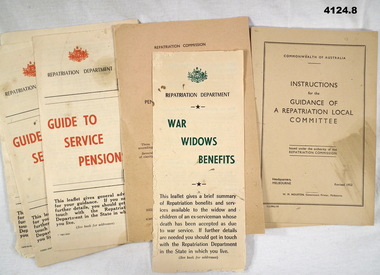
... This is actually 3 documents all the same but have been glued together like a pamphlet, two on white paper, one on blue paper. .2) Document 8 pages, light brown colour, stapled from the Repatriation Commission, amendments on pensions, medical treatment and other benefits. .3) Document, folds into 3, yellowish paper printed in green and black relating to War Widows benefits from the Australian Repatriation Dept, no date but benefits are in pounds, schillings and pence, pre 1966. .4) .5) & .6) Documents, folds into 3, yellowish paper, red and black printing from the Repatriation Dept of Australia, details a a guide to Service pensions, means test, rates of pensions, property etc. .7) & .8) Booklets, 53 pages, off white colour from the Commonwealth of Australia with instructions for the guidance of a repatriation local committee, issued by the Repatriation Commission....This is actually 3 documents all the same but have been glued together like a pamphlet, two on white paper, one on blue paper. .2) Document 8 pages, light brown colour, stapled from the Repatriation Commission, amendments on pensions, medical treatment and other benefits. .3) Document, folds into 3, yellowish paper printed in green and black relating to War Widows benefits from the Australian Repatriation Dept, no date but benefits are in pounds, schillings and pence, pre 1966. .4) .5) & .6) Documents, folds into 3, yellowish paper, red and black printing from the Repatriation Dept of Australia, details a a guide to Service pensions, means test, rates of pensions, property etc. .7) & .8) Booklets, 53 pages, off white colour from the Commonwealth of Australia with instructions for the guidance of a repatriation local committee, issued by the Repatriation Commission. ...The Dept of Repatriation of the Commonwealth of Australia is now The Dept of veterans Affairs..1) Document 14 pages, re repatriation benefits, pensions and Allowances from the Commonwealth of Australia Repatriation Dept. This is actually 3 documents all the same but have been glued together like a pamphlet, two on white paper, one on blue paper. .2) Document 8 pages, light brown colour, stapled from the Repatriation Commission, amendments on pensions, medical treatment and other benefits. .3) Document, folds into 3, yellowish paper printed in green and black relating to War Widows benefits from the Australian Repatriation Dept, no date but benefits are in pounds, schillings and pence, pre 1966. .4) .5) & .6) Documents, folds into 3, yellowish paper, red and black printing from the Repatriation Dept of Australia, details a a guide to Service pensions, means test, rates of pensions, property etc. .7) & .8) Booklets, 53 pages, off white colour from the Commonwealth of Australia with instructions for the guidance of a repatriation local committee, issued by the Repatriation Commission.repatriation, pensions, allowances -
 Eltham District Historical Society Inc
Photograph - Digital Photograph, Marguerite Marshall, Rice House, 69 Ryans Road, Eltham, 27 March 2007
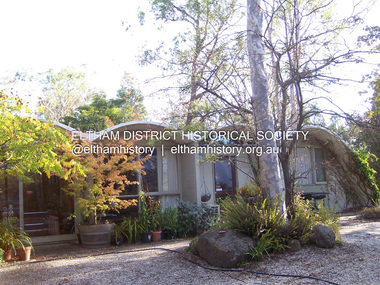
... Service from 1947 to 1953. This was partly an expression of late-Modernism and also necessitated by the post-war shortage of building materials. In Eltham, the post-war shortage of building materials largely resulted in mud-brick houses. Examples of Borland’s public work include contributions to the Olympic Swimming Pool in Melbourne and the Preshil Junior School in Kew. After more than 50 years of living in the house, Harrie and Lorna Rice still love it. Facing north-east with large windows overlooking the garden and two courtyards, it is well lit and benefits...Service from 1947 to 1953. This was partly an expression of late-Modernism and also necessitated by the post-war shortage of building materials. In Eltham, the post-war shortage of building materials largely resulted in mud-brick houses. Examples of Borland’s public work include contributions to the Olympic Swimming Pool in Melbourne and the Preshil Junior School in Kew. After more than 50 years of living in the house, Harrie and Lorna Rice still love it. Facing north-east with large windows overlooking the garden and two courtyards, it is well lit and benefits ...Built in 1953, the Rice House was leading Melbourne architect Kevin Borland's first commssion and was one of two houses of its kind. The design of the shell-like structure was inspired by the Arch of Ctesiphon, built in the second century south of Baghdad. Cement with a waterproofing agent was applied in layers to a form of regularly spaced timber arches covered in hessian. This ctesiphon system was developed in the United Kingdom by engineer J.H. de Waller in 1947. Commissioned in 1951 by Harrie and Lorna Rice, after Harrie, then an art student, met Borland at The Age Small Homes Service. Borland suggested they buy land in Eltham because at that time it was the only council in Melbourne that would grant a permit for such an innovative house. Covered under Victorian Heritage. Inspired by an ancient arch in Iraq, a house stands on top of a hill in a private position, off Ryans Road, Eltham. One of only two houses of its kind, it was leading Melbourne architect Kevin Borland’s first commissioned house, which he built in 1953. The shell-like structure, partially screened by giant trees and cacti, was inspired by the Arch of Ctesiphon south of Baghdad, built in the second century.1 Cement with a waterproofing agent was applied in layers to a form of regularly spaced timber arches tightly covered by hessian. This ctesiphon system was developed in the United Kingdom by engineer J H de Waller in 1947. This house was the first of three such structures built in Victoria, of which only one other remains, although substantially altered.2 It is the Wood House and supermarket, at the corner of Cleveland Road and High Street Road, Ashwood, designed by Robin Boyd in 1952. The Rice House demonstrates Kevin Borland’s innovative and experimental work. It is an outstanding example of the post-war period of experimentation in domestic architecture in Melbourne – by Robin Boyd, Kevin Borland and others – for The Age Small Homes Service from 1947 to 1953. This was partly an expression of late-Modernism and also necessitated by the post-war shortage of building materials. In Eltham, the post-war shortage of building materials largely resulted in mud-brick houses. Examples of Borland’s public work include contributions to the Olympic Swimming Pool in Melbourne and the Preshil Junior School in Kew. After more than 50 years of living in the house, Harrie and Lorna Rice still love it. Facing north-east with large windows overlooking the garden and two courtyards, it is well lit and benefits from a through breeze. The couple commissioned the extraordinary house after Harrie, then an art student, met Borland in 1951 at The Age Small Homes Service. Harrie was so impressed by the recently graduated Borland’s enthusiasm, that he asked him to design them an interesting house for a low budget. The unusual design presented several hurdles for the young couple before they could construct it. Borland suggested that they buy land in Eltham, because at that time it had the only council in Melbourne that would allow such an innovative house. Another hurdle was to gain finance for this remarkable house. The State Savings Bank Manager refused finance on the grounds that it was ‘unliveable’ and a ‘disgrace’. Fortunately, through a family connection, the couple borrowed money from the National Bank. But they discovered years later, that the bank’s evaluation stated the two ‘concrete sheds’ were of no value! The house built in off-white concrete, consists of two sections. The main house has four arches supported by brick and concrete walls that create a series of inter-connected rooms. Inside, the ceiling follows the roofline. Originally this section was only ten square metres, because of building restrictions at the time. But in 1973 Borland added two rooms and a carport. The second structure of two arches was originally a garage and a studio for art teacher Harrie Rice. To accommodate the growing family, in the mid 1950s, Borland converted the second structure into two children’s bedrooms, a kitchenette, a bathroom and a living room. The two structures were originally linked by a covered way of suspended draped-concrete, but this collapsed in the 1980s. The design has several maintenance problems. Cracks developed where two halves of the shells were joined. Then the material sprayed over the cracks became brittle, causing leaks. Fortunately Harrie found another material he could use. The valleys between the arches collect water, requiring annual painting with a waterproof material to prevent leaking. Lorna framed the house with native and exotic plants, which provide privacy and as a bonus, the garden attracted the rare Eltham Copper Butterfly. Published: Nillumbik Now and Then / Marguerite Marshall 2008; photographs Alan King with Marguerite Marshall.; p157 Comments about the Rice House on Lost Eltham page on Facebook June 2018 https://www.facebook.com/Lost-Eltham-1535993463348408/ Kate Borland: My dad designed this house. It is the Rice house and it is being renovated to its original glory as we speak.... Katherine Fox: I remember Harry and Lorna's, there was a secret room...! And the best loo with a view as I recall. Katherine Fox: Love this house! Wish I'd known it was up for sale. Looking forward to seeing progress if possible...If I recall correctly, the concrete swag over the walk-way collapsed at some stage. Marcus Skipper: In our little green Landrover, my dad and Alister Knox drove up dirt roads, a dirt track through the bush and finally to the ridge to check out this joint in about 1960. After the war at some time, they were all together at RMIT studying building design. Alister was the only one to graduate. A situation that resulted, my father would joke, in Alister having a career wherein his qualifications exceeded his talent. World Peace had broken out and all were hip to the ‘People’s’ century. Kevin went with the Modernist’s concrete, Alister went with the peasant’s mudbrick. “If this is the future,” my dad said,”I don’t like it.” And we drove back to medieval Montsalvat.This collection of almost 130 photos about places and people within the Shire of Nillumbik, an urban and rural municipality in Melbourne's north, contributes to an understanding of the history of the Shire. Published in 2008 immediately prior to the Black Saturday bushfires of February 7, 2009, it documents sites that were impacted, and in some cases destroyed by the fires. It includes photographs taken especially for the publication, creating a unique time capsule representing the Shire in the early 21st century. It remains the most recent comprehenesive publication devoted to the Shire's history connecting local residents to the past. nillumbik now and then (marshall-king) collection, eltham, rice house, ryans road, kevin borland -
 Warrnambool RSL Sub Branch
Badge - Tin Hat Badge, Tin Hat Appeal
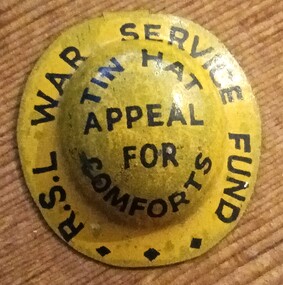
... benefit returned soldiers who had fallen on hard times after the war and during the Great Depression. It continued during WW2 and into the 1950s. Fundraising Badges & Buttons Obverse: Black Writing on Yellow ground: ‘Tin Hat Appeal For Comforts. RSL War Service ...The "Tin Hat Appeal" was established in 1922 after the end of WWI. It raised funds to benefit returned soldiers who had fallen on hard times after the war and during the Great Depression. It continued during WW2 and into the 1950s.Oval, domed with flattened brim ( like a miniature soldiers helmet). 25mmx27mmObverse: Black Writing on Yellow ground: ‘Tin Hat Appeal For Comforts. RSL War Service Fund.’ Reverse: Unmarked with Metal fold-over tag as fastener fundraising, badges & buttons -
 Bendigo Military Museum
Manual - RE - ESTABLISHMENT BENEFITS, Commonwealth of Australia, Ministry of Post War Reconstruction. Imperial Print, 1948
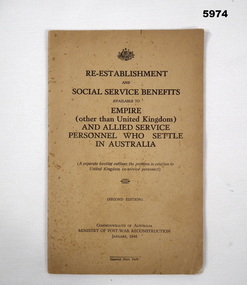
... "RE-ESTABLISHMNET/AND/SOCIAL SERVICE BENEFITS/AVAILABLE TO/EMPIRE/ (other than United Kingdom)/AND ALLIED SERVICE/ PERSONNEL WHO SETTLE/ IN AUSTRALIA. (A Separate booklet outlines the position in relation to/ United Kingdom ex-service personnel). (SECOND EDITION). COMMONWEALTH OF AUSTRALIA/ MINISTRY OF POST WAR..."RE-ESTABLISHMNET/AND/SOCIAL SERVICE BENEFITS/AVAILABLE TO/EMPIRE/ (other than United Kingdom)/AND ALLIED SERVICE/ PERSONNEL WHO SETTLE/ IN AUSTRALIA. (A Separate booklet outlines the position in relation to/ United Kingdom ex-service personnel). (SECOND EDITION). COMMONWEALTH OF AUSTRALIA/ MINISTRY OF POST WAR ...From front cover. "RE-ESTABLISHMNET/AND/SOCIAL SERVICE BENEFITS/AVAILABLE TO/EMPIRE/ (other than United Kingdom)/AND ALLIED SERVICE/ PERSONNEL WHO SETTLE/ IN AUSTRALIA. (A Separate booklet outlines the position in relation to/ United Kingdom ex-service personnel). (SECOND EDITION). COMMONWEALTH OF AUSTRALIA/ MINISTRY OF POST WAR RECONSTRUCTION/ JANUARY 1948"Booklet. Cover - lightweight cardboard. light brown colour. Black print on front cover. 16 pages - cut, plain, off white colour paper. No illustrations. Instruction manual - Social Service Benefits.booklets, manuals, social service benefits -
 Monbulk RSL Sub Branch
Book, GL Kristtianson, The politics of patriotism : the pressure group activities of the Returned Servicemen's League, 1966
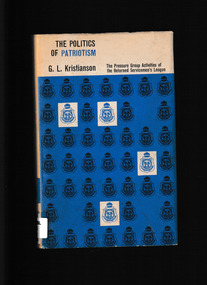
... He describes the constant approaches to the government on pensions, medical benefits, war service homes, soldier settlement, employment preference, and gratuities, as well as on such controversial subjects as defence and anti-communism, all of which serve to mark the R.S.L. as one of Australia’s most active pressure groups. ...s Australia's largest veterans' organization, the R.S.L. has been the subject of bitter controversy. The League has often been attacked, and as frequently defended, but it has never been examined in depth by an impartial observer. This book is the first detailed and dispassionate examination. It is not an 'official', or even an authorized account of the R.S.L.'s pressure group activities - while the League provided unrestricted access to its files and records, the organization's leaders exercised no censorship or control over the final results. The author examines the R.S.L.'s attempts to influence the Commonwealth government against a background of continual internal conflict over tactics. He describes the constant approaches to the government on pensions, medical benefits, war service homes, soldier settlement, employment preference, and gratuities, as well as on such controversial subjects as defence and anti-communism, all of which serve to mark the R.S.L. as one of Australia’s most active pressure groups. The book also points to the danger implicit in the R.S.L.'s attempt to monopolize the virtues which it claims are uniquely Australian. In its rigid enforcement of the exclusiveness of Anzac Day, it is argued, lie both the League's peculiar strength and its greatest problems.Index, ill, p.286.non-fictions Australia's largest veterans' organization, the R.S.L. has been the subject of bitter controversy. The League has often been attacked, and as frequently defended, but it has never been examined in depth by an impartial observer. This book is the first detailed and dispassionate examination. It is not an 'official', or even an authorized account of the R.S.L.'s pressure group activities - while the League provided unrestricted access to its files and records, the organization's leaders exercised no censorship or control over the final results. The author examines the R.S.L.'s attempts to influence the Commonwealth government against a background of continual internal conflict over tactics. He describes the constant approaches to the government on pensions, medical benefits, war service homes, soldier settlement, employment preference, and gratuities, as well as on such controversial subjects as defence and anti-communism, all of which serve to mark the R.S.L. as one of Australia’s most active pressure groups. The book also points to the danger implicit in the R.S.L.'s attempt to monopolize the virtues which it claims are uniquely Australian. In its rigid enforcement of the exclusiveness of Anzac Day, it is argued, lie both the League's peculiar strength and its greatest problems. australia - politics and government, pressure groups - australia -
 Port Melbourne Historical & Preservation Society
Document - Papers, Handwritten notes recording Nott Street School Old Boys who served in WWI, Port families, 1917 - 1920
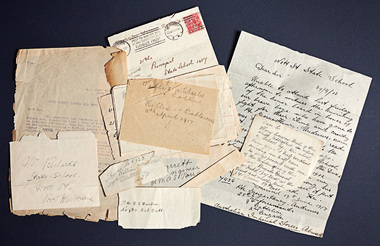
... War - World War I Education - Primary Schools Nott Street State School Eleanor HOPKINS Nott Street Old Boys Honour (Honor) Roll: Several dozen notes handwritten on various slips of paper and sent by families of boys who served in WWI, to the school for inclusion into 1931.01 and .03. Some give details of medals, deaths etc. Among these are .05 - a letter from Miss HOPKINS and tickets for .06- State School benefit and .07 - "A Picture Show" and a scribbled order of service ...Information from these notes is entered into 1931.03, temporary Honor Roll, but not into the larger (.01) Roll of Honor Book - apparently an unfinished project. This material was hidden within the large wooden Honor Board now in the foyer of Port Melbourne Town Hall.Nott Street Old Boys Honour (Honor) Roll: Several dozen notes handwritten on various slips of paper and sent by families of boys who served in WWI, to the school for inclusion into 1931.01 and .03. Some give details of medals, deaths etc. Among these are .05 - a letter from Miss HOPKINS and tickets for .06- State School benefit and .07 - "A Picture Show" and a scribbled order of service.war - world war i, education - primary schools, nott street state school, eleanor hopkins -
 Alfred Hospital Nurses League - Nursing History Collection
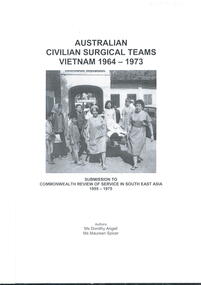
Document - Illustrated document, Dorothy Angell et al, Australian Civilian Surgical Teams Vietnam: submission to Commonwealth review of service in South East Asia 1955-1975, 1995
... Former members of Australian civilian surgical and medical teams who served in Vietnam perceived that their service should attract repatriation benefits similar to ADF personnel and designated civilians serving in Vietnam during the same period. Of significance to the AHNL as the submission was written by two members who served with the Alfred Surgical teams in Vietnam. Vietnam War ...Australian Civilian Surgical Teams Vietnam 1964-1973 submission to Commonwealth review of service in South East Asia 1955-1975 held in 1999.Illustrated document with clear plastic cover. Front page has title and authors names printed in black along with a black and white photograph of four nurses carrying a patient on a stretcher in a street with several bystanders (the two Australian nurses are Dot Angell and Pam Martenson, Alfred surgical team members at Bien Hoa).non-fictionAustralian Civilian Surgical Teams Vietnam 1964-1973 submission to Commonwealth review of service in South East Asia 1955-1975 held in 1999.vietnam war 1961-1975-medical care, australian civilian surgical teams-vietnam-1964-1973 -
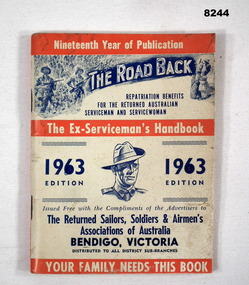 Bendigo Military Museum
Booklet - R.S.S.A.I.L.A BENDIGO 1963, William A Cooney Pty Ltd, C.1962
... This comprehensive booklet covers every aspect of benefits and Repatriation entitlements and payments available to ex Servicemen and Women, War Service homes and loans, listing of all Repatriation Hospitals and Clinics in all States except NT. ...This comprehensive booklet covers every aspect of benefits and Repatriation entitlements and payments available to ex Servicemen and Women, War Service homes and loans, listing of all Repatriation Hospitals and Clinics in all States except NT. ...This comprehensive booklet covers every aspect of benefits and Repatriation entitlements and payments available to ex Servicemen and Women, War Service homes and loans, listing of all Repatriation Hospitals and Clinics in all States except NT. Items re RSL Appeals, precedent of wearing medals and awards, listings of major Military events.Booklet card covers, front is in red, blue and white titled "The Road Back", the rear has an image of the Soldiers Memorial Institute Bendigo with the Post Office behind. There are 64 numbered pages, center of the booklet is a B & W photo of the Queen and next page the Duke of Edinburgh, there are pages of advertisements in blue and others in B & W of Bendigo Businesses.booklet, repatriation, benefits, brsl, smirsl -
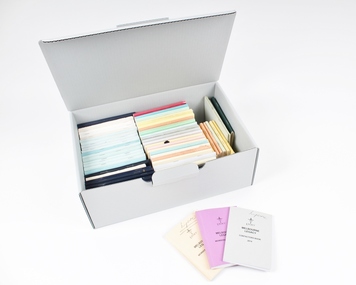 Melbourne Legacy
Booklet - Document, set of handbooks, Melbourne Legacy Diary / Contactors Book, 1966-2014
... Finance Huntingdale (Golf Club) Intermediate Legacy Liaison Personnel Committee Programme Committee Dealing with the Junior Legacy Committee: Boys' Group Camps and holidays Christmas party Contact Cultural and Library Dental Demonstration Education Employment Firewood Girls' Group Housing and accomodation Legal Longbank (holiday home for widows in need of a rest) Medical Newsletter Older widows Optometrists Pensions Probation Residences Special cases Welfare Appendix A Allowances for school requisites Appendix B Scholarships Appendix C Pensions / War widows pensions / Commonwealth widows pensions / Immediate assistance SCTF Appendix D Repatriation Department Appendix E Commonwealth Social Services Appendix F CWD - Children's Welfare Department Appendix G Hospital and medical benefits for Legacy Widows and their dependants Appendix H AMF Relief Trust Fund Appendix I SCTF - Services Canteen Trust Fund Appendix J Sir Samuel McCaughey Bequest Appendix K Various sources of assistance available (eg clothing, blankets, POW associations, RSL, conveyance allowances.)...Finance Huntingdale (Golf Club) Intermediate Legacy Liaison Personnel Committee Programme Committee Dealing with the Junior Legacy Committee: Boys' Group Camps and holidays Christmas party Contact Cultural and Library Dental Demonstration Education Employment Firewood Girls' Group Housing and accomodation Legal Longbank (holiday home for widows in need of a rest) Medical Newsletter Older widows Optometrists Pensions Probation Residences Special cases Welfare Appendix A Allowances for school requisites Appendix B Scholarships Appendix C Pensions / War widows pensions / Commonwealth widows pensions / Immediate assistance SCTF Appendix D Repatriation Department Appendix E Commonwealth Social Services Appendix F CWD - Children's Welfare Department Appendix G Hospital and medical benefits for Legacy Widows and their dependants Appendix H AMF Relief Trust Fund Appendix I SCTF - Services Canteen Trust Fund Appendix J Sir Samuel McCaughey Bequest Appendix K Various sources of assistance available (eg clothing, blankets, POW associations, RSL, conveyance allowances.) ...The Melbourne Legacy Diary/Contactor handbooks were produced annually by Melbourne Legacy. The books supply Legatees with many useful details and regulations. They include lists of current Legatees and contact details. A handbook is issued to all Legatees to assist them with their work with the legacy widows; eg childrens' education, welfare, accommodation, health. A quick easy guide to services provided by Melbourne Legacy such as bursaries, medical care, financial assistance etc for Legatees use. It was reissued annually for many years prior to keeping this information electronically. Many issues are held at 00305. Chapters of the book might include the following (taken from the 1956 edition), many of which are Legacy committees: Administration Anzac Day Observance Comradeship. 'Comradeship is an integral and important part of Legacy. This committee's function is primarily to arrange social and other activities which bring members together so that they become known to each other on an intimate and friendly basis; and so that when a member strikes a problem, he immediately knows with whom he might get into touch to discuss it in then spirit of mutual assistance.' Finance Huntingdale (Golf Club) Intermediate Legacy Liaison Personnel Committee Programme Committee Dealing with the Junior Legacy Committee: Boys' Group Camps and holidays Christmas party Contact Cultural and Library Dental Demonstration Education Employment Firewood Girls' Group Housing and accomodation Legal Longbank (holiday home for widows in need of a rest) Medical Newsletter Older widows Optometrists Pensions Probation Residences Special cases Welfare Appendix A Allowances for school requisites Appendix B Scholarships Appendix C Pensions / War widows pensions / Commonwealth widows pensions / Immediate assistance SCTF Appendix D Repatriation Department Appendix E Commonwealth Social Services Appendix F CWD - Children's Welfare Department Appendix G Hospital and medical benefits for Legacy Widows and their dependants Appendix H AMF Relief Trust Fund Appendix I SCTF - Services Canteen Trust Fund Appendix J Sir Samuel McCaughey Bequest Appendix K Various sources of assistance available (eg clothing, blankets, POW associations, RSL, conveyance allowances.)A record of Legacy compiling information for use by the Legatees in their work with widows and junior legatees.62 small books of various colours, and some covered in black plastic. Issues from between 1966 and 2014.regulations, objectives, rules -
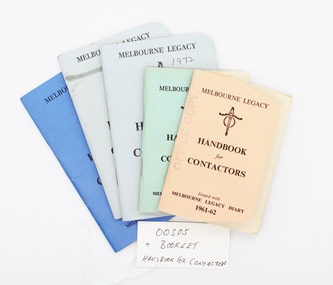 Melbourne Legacy
Booklet, Handbook for Contactors, 1x1959, 1x1961, 1x1996, 2x1972
... Finance Huntingdale (Golf Club) Intermediate Legacy Liaison Personnel Committee Programme Committee Dealing with the Junior Legacy Committee: Boys' Group Camps and holidays Christmas party Contact Cultural and Library Dental Demonstration Education Employment Firewood Girls' Group Housing and accomodation Legal Longbank (holiday home for widows in need of a rest) Medical Newsletter Older widows Optometrists Pensions Probation Residences Special cases Welfare Appendix A Allowances for school requisites Appendix B Scholarships Appendix C Pensions / War widows pensions / Commonwealth widows pensions / Immediate assistance SCTF Appendix D Repatriation Department Appendix E Commonwealth Social Services Appendix F CWD - Children's Welfare Department Appendix G Hospital and medical benefits for Legacy Widows and their dependants Appendix H AMF Relief Trust Fund Appendix I SCTF - Services Canteen Trust Fund Appendix J Sir Samuel McCaughey Bequest Appendix K Various sources of assistance available (eg clothing, blankets, POW associations, RSL, conveyance allowances.)...Finance Huntingdale (Golf Club) Intermediate Legacy Liaison Personnel Committee Programme Committee Dealing with the Junior Legacy Committee: Boys' Group Camps and holidays Christmas party Contact Cultural and Library Dental Demonstration Education Employment Firewood Girls' Group Housing and accomodation Legal Longbank (holiday home for widows in need of a rest) Medical Newsletter Older widows Optometrists Pensions Probation Residences Special cases Welfare Appendix A Allowances for school requisites Appendix B Scholarships Appendix C Pensions / War widows pensions / Commonwealth widows pensions / Immediate assistance SCTF Appendix D Repatriation Department Appendix E Commonwealth Social Services Appendix F CWD - Children's Welfare Department Appendix G Hospital and medical benefits for Legacy Widows and their dependants Appendix H AMF Relief Trust Fund Appendix I SCTF - Services Canteen Trust Fund Appendix J Sir Samuel McCaughey Bequest Appendix K Various sources of assistance available (eg clothing, blankets, POW associations, RSL, conveyance allowances.) ...A handbook is issued to all Legatees to assist them with their work with the legacy widows; eg childrens' education, welfare, accommodation, health. A quick easy guide to services provided by Melbourne Legacy such as bursaries, medical care, financial assistance etc for Legatees use. It was reissued annually for many years prior to keeping this information electronically. Many issues are held at 00002 and 01080. Chapters of the book include the following, many of which are committees: Administration Anzac Day Observance Comradeship. 'Comradeship is an integral and important part of Legacy. This committee's function is primarily to arrange social and other activities which bring members together so that they become known to each other on an intimate and friendly basis; and so that when a member strikes a problem, he immediately knows with whom he might get into touch to discuss it in then spirit of mutual assistance.' Finance Huntingdale (Golf Club) Intermediate Legacy Liaison Personnel Committee Programme Committee Dealing with the Junior Legacy Committee: Boys' Group Camps and holidays Christmas party Contact Cultural and Library Dental Demonstration Education Employment Firewood Girls' Group Housing and accomodation Legal Longbank (holiday home for widows in need of a rest) Medical Newsletter Older widows Optometrists Pensions Probation Residences Special cases Welfare Appendix A Allowances for school requisites Appendix B Scholarships Appendix C Pensions / War widows pensions / Commonwealth widows pensions / Immediate assistance SCTF Appendix D Repatriation Department Appendix E Commonwealth Social Services Appendix F CWD - Children's Welfare Department Appendix G Hospital and medical benefits for Legacy Widows and their dependants Appendix H AMF Relief Trust Fund Appendix I SCTF - Services Canteen Trust Fund Appendix J Sir Samuel McCaughey Bequest Appendix K Various sources of assistance available (eg clothing, blankets, POW associations, RSL, conveyance allowances.)This booklet assisted legatees locating services available to widows and children from within Legacy or government departments.Five copies of the Handbook for Contactors. Different covers from different dates, 1 green, 1 apricot, 2 grey, 1 blue.2 x Melbourne Legacy, Legacy logo, Handbook for Contactors, Issued with Melbourne Legacy Diary 1959/1961-62. 2 x Melbourne Legacy, Legacy logo Handbook for Contactors, For use in conjunction with Melbourne Legacy Diary 1972. 1 x Melbourne Legacy, Legacy logo, Handbook for Contactors, For use in conjunction with Melbourne Legacy Diary 1966.regulations, objectives, rules, register -
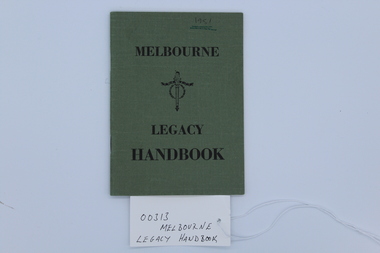 Melbourne Legacy
Booklet, Melbourne Legacy Handbook, 1951
... Finance Huntingdale (Golf Club) Intermediate Legacy Liaison Personnel Committee Programme Committee Dealing with the Junior Legacy Committee: Boys' Group Camps and holidays Christmas party Contact Cultural and Library Dental Demonstration Education Employment Firewood Girls' Group Housing and accomodation Legal Longbank (holiday home for widows in need of a rest) Medical Newsletter Older widows Optometrists Pensions Probation Residences Special cases Welfare Appendix A Allowances for school requisites Appendix B Scholarships Appendix C Pensions / War widows pensions / Commonwealth widows pensions / Immediate assistance SCTF Appendix D Repatriation Department Appendix E Commonwealth Social Services Appendix F CWD - Children's Welfare Department Appendix G Hospital and medical benefits for Legacy Widows and their dependants Appendix H AMF Relief Trust Fund Appendix I SCTF - Services Canteen Trust Fund Appendix J Sir Samuel McCaughey Bequest Appendix K Various sources of assistance available (eg clothing, blankets, POW associations, RSL, conveyance allowances.)...Finance Huntingdale (Golf Club) Intermediate Legacy Liaison Personnel Committee Programme Committee Dealing with the Junior Legacy Committee: Boys' Group Camps and holidays Christmas party Contact Cultural and Library Dental Demonstration Education Employment Firewood Girls' Group Housing and accomodation Legal Longbank (holiday home for widows in need of a rest) Medical Newsletter Older widows Optometrists Pensions Probation Residences Special cases Welfare Appendix A Allowances for school requisites Appendix B Scholarships Appendix C Pensions / War widows pensions / Commonwealth widows pensions / Immediate assistance SCTF Appendix D Repatriation Department Appendix E Commonwealth Social Services Appendix F CWD - Children's Welfare Department Appendix G Hospital and medical benefits for Legacy Widows and their dependants Appendix H AMF Relief Trust Fund Appendix I SCTF - Services Canteen Trust Fund Appendix J Sir Samuel McCaughey Bequest Appendix K Various sources of assistance available (eg clothing, blankets, POW associations, RSL, conveyance allowances.) ...A guide to help Legatees understand their responsibilities. These handbooks are updated periodically. Also known and the Contactors Handbook. A handbook is issued to all Legatees to assist them with their work with the legacy widows; eg childrens' education, welfare, accommodation, health. A quick easy guide to services provided by Melbourne Legacy such as bursaries, medical care, financial assistance etc for Legatees use. It was reissued annually for many years prior to keeping this information electronically. Many issues are held at 00002 and 00305. Chapters of the book include the following (taken from the 1956 edition), many of which are committees: Administration Anzac Day Observance Comradeship. 'Comradeship is an integral and important part of Legacy. This committee's function is primarily to arrange social and other activities which bring members together so that they become known to each other on an intimate and friendly basis; and so that when a member strikes a problem, he immediately knows with whom he might get into touch to discuss it in then spirit of mutual assistance.' Finance Huntingdale (Golf Club) Intermediate Legacy Liaison Personnel Committee Programme Committee Dealing with the Junior Legacy Committee: Boys' Group Camps and holidays Christmas party Contact Cultural and Library Dental Demonstration Education Employment Firewood Girls' Group Housing and accomodation Legal Longbank (holiday home for widows in need of a rest) Medical Newsletter Older widows Optometrists Pensions Probation Residences Special cases Welfare Appendix A Allowances for school requisites Appendix B Scholarships Appendix C Pensions / War widows pensions / Commonwealth widows pensions / Immediate assistance SCTF Appendix D Repatriation Department Appendix E Commonwealth Social Services Appendix F CWD - Children's Welfare Department Appendix G Hospital and medical benefits for Legacy Widows and their dependants Appendix H AMF Relief Trust Fund Appendix I SCTF - Services Canteen Trust Fund Appendix J Sir Samuel McCaughey Bequest Appendix K Various sources of assistance available (eg clothing, blankets, POW associations, RSL, conveyance allowances.)A helpful booklet for Legatees in carrying out their duties.Printed paperback book with olive green cover, white pages and black type. Front cover, Melbourne Legacy Handbook and Legacy logo printed in black ink, 1951 handwritten in black biro and underlined twice in green pencil. Cover and pages stapled together. Page 4, alterations handwritten in blue ink, one alteration made by hand held stamp.regulations, objectives, rules -
 Expression Australia
Book, Aural Rehabilitation Course - Submission to TAFE Accreditation Board for Accreditation
... The Aural Rehabilitation Certificate course was instituted at Burwood in 1976, this submission September 1985 Amended July 1986 This course is significant as at the time government services for hearing impaired people was provided through the National Acoustics Laboratories, however only those people under 21, over pensionable age meeting the asset test, war veterans, or those bearing full health benefit cards were eligible to receive services and all others needed to find their own way to assistance. ...The Aural Rehabilitation Certificate course was instituted at Burwood in 1976, this submission September 1985 Amended July 1986This course is significant as at the time government services for hearing impaired people was provided through the National Acoustics Laboratories, however only those people under 21, over pensionable age meeting the asset test, war veterans, or those bearing full health benefit cards were eligible to receive services and all others needed to find their own way to assistance. The Victorian Government recognised this deficiency and provided funding through the Health Commission for all those not previously eligible. It was recognised that to get maximum value from the funds it was essential that personnel administering its use be properly trained.Spiral bound, 29.5cmHx21cmW, 53 pages -
 Mont De Lancey
Book, Hodder & Stoughton, The Times' Red Cross Story Book, 1915
... Published during World War I by Hodder and Stoughton for The Times Fund for the Sick and Wounded, the volume showcased writing by active duty service members to benefit war relief. ...The Times' Red Cross Story Book is a 1915 anthology of 18 short tales, featuring contributions by A.A. Milne, A.E.W. Mason, and Sir Arthur Quiller-Couch. Published during World War I by Hodder and Stoughton for The Times Fund for the Sick and Wounded, the volume showcased writing by active duty service members to benefit war relief.A red cloth covered book with the title printed in black with silhouettes of two soldiers standing each side of a wreath which has a crossed sword and nib quill pen behind. The publisher is printed below. The spine has the same details. There is a Contents page followed by the stories. On the right front end paper and on the next page are handwritten inscriptions. Black and white illustrations are throughout the book. Pp.192.fictionThe Times' Red Cross Story Book is a 1915 anthology of 18 short tales, featuring contributions by A.A. Milne, A.E.W. Mason, and Sir Arthur Quiller-Couch. Published during World War I by Hodder and Stoughton for The Times Fund for the Sick and Wounded, the volume showcased writing by active duty service members to benefit war relief. children's books, children's fiction, ww1 -
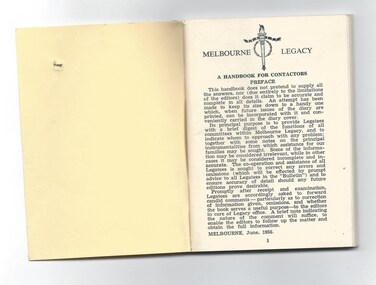 Melbourne Legacy
Booklet, Handbook for Contactors
... Finance Huntingdale (Golf Club) Intermediate Legacy Liaison Personnel Committee Programme Committee Dealing with the Junior Legacy Committee: Boys' Group Camps and holidays Christmas party Contact Cultural and Library Dental Demonstration Education Employment Firewood Girls' Group Housing and accomodation Legal Longbank (holiday home for widows in need of a rest) Medical Newsletter Older widows Optometrists Pensions Probation Residences Special cases Welfare Appendix A Allowances for school requisites Appendix B Scholarships Appendix C Pensions / War widows pensions / Commonwealth widows pensions / Immediate assistance SCTF Appendix D Repatriation Department Appendix E Commonwealth Social Services Appendix F CWD - Children's Welfare Department Appendix G Hospital and medical benefits for Legacy Widows and their dependants Appendix H AMF Relief Trust Fund Appendix I SCTF - Services Canteen Trust Fund Appendix J Sir Samuel McCaughey Bequest Appendix K Various sources of assistance available (eg clothing, blankets, POW associations, RSL, conveyance allowances.)...Finance Huntingdale (Golf Club) Intermediate Legacy Liaison Personnel Committee Programme Committee Dealing with the Junior Legacy Committee: Boys' Group Camps and holidays Christmas party Contact Cultural and Library Dental Demonstration Education Employment Firewood Girls' Group Housing and accomodation Legal Longbank (holiday home for widows in need of a rest) Medical Newsletter Older widows Optometrists Pensions Probation Residences Special cases Welfare Appendix A Allowances for school requisites Appendix B Scholarships Appendix C Pensions / War widows pensions / Commonwealth widows pensions / Immediate assistance SCTF Appendix D Repatriation Department Appendix E Commonwealth Social Services Appendix F CWD - Children's Welfare Department Appendix G Hospital and medical benefits for Legacy Widows and their dependants Appendix H AMF Relief Trust Fund Appendix I SCTF - Services Canteen Trust Fund Appendix J Sir Samuel McCaughey Bequest Appendix K Various sources of assistance available (eg clothing, blankets, POW associations, RSL, conveyance allowances.) ...A handbook is issued to all Legatees to assist them with their work with the legacy widows; eg childrens' education, welfare, accommodation, health. A quick easy guide to services provided by Melbourne Legacy such as bursaries, medical care, financial assistance etc for Legatees use. It was reissued annually for many years prior to keeping this information electronically. Many issues are held at 00305. Chapters of the book include the following, many of which are committees: Administration Anzac Day Observance Comradeship. 'Comradeship is an integral and important part of Legacy. This committee's function is primarily to arrange social and other activities which bring members together so that they become known to each other on an intimate and friendly basis; and so that when a member strikes a problem, he immediately knows with whom he might get into touch to discuss it in then spirit of mutual assistance.' Finance Huntingdale (Golf Club) Intermediate Legacy Liaison Personnel Committee Programme Committee Dealing with the Junior Legacy Committee: Boys' Group Camps and holidays Christmas party Contact Cultural and Library Dental Demonstration Education Employment Firewood Girls' Group Housing and accomodation Legal Longbank (holiday home for widows in need of a rest) Medical Newsletter Older widows Optometrists Pensions Probation Residences Special cases Welfare Appendix A Allowances for school requisites Appendix B Scholarships Appendix C Pensions / War widows pensions / Commonwealth widows pensions / Immediate assistance SCTF Appendix D Repatriation Department Appendix E Commonwealth Social Services Appendix F CWD - Children's Welfare Department Appendix G Hospital and medical benefits for Legacy Widows and their dependants Appendix H AMF Relief Trust Fund Appendix I SCTF - Services Canteen Trust Fund Appendix J Sir Samuel McCaughey Bequest Appendix K Various sources of assistance available (eg clothing, blankets, POW associations, RSL, conveyance allowances.)This booklet assisted legatees locating services available to widows and children from within Legacy or government departments.Cover, cardboard, colour pale yellow, pages paper, colour white. Black print. Corners of cover cut off at an angle.Melbourne Legacy, Legacy symbol, Handbook for Contactors, issued with Melbourne Legacy Diary 1960. regulations, objectives, rules, register -
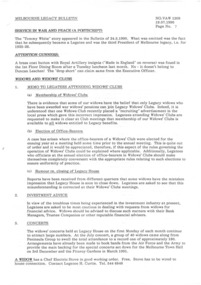 Melbourne Legacy
Document, Melbourne Legacy Bulletin 19/7/1990, page 7 & 8, 1990
... The paragraph titled "Service In War and Peace" refer to item 01037 in the archives. A Melbourne Legacy publication, available to Legatees, online or by post. Published for the benefit ...Two pages from a Melbourne Legacy Bulletin it discusses several administration issues with regard to widows clubs, but it is not clear why these pages were kept seperate. Melbourne Legacy Bulletin is now published on a monthly basis and keeps Legatees informed and up to date of Legacy events, past, present and future. The Bulletin is now available online to Legatees. The paragraph titled "Service In War and Peace" refer to item 01037 in the archives.A Melbourne Legacy publication, available to Legatees, online or by post. Published for the benefit of all associated with Melbourne Legacy.White A4 paper with black type of pages 7 and 8 of the Melbourne Legacy Bulletin in 1990. Triangular hole punched in top left hand corner.widows club, widows -
 Melbourne Legacy
Document - Speech, Commemorative Address - Sir Stanley Savige K.B.E. Federal Conference of Legacy Clubs, Canberra, 10/1954
... wars made him a most welcome pioneer and many new Clubs and Groups resulted from his efforts. He founded, and I doubt whether any one else could have done so, the Club in the great Capital of our Empire. His reputation and obvious sincerity surmounted obstacles that might well have daunted lesser man. Legacy’s debt to him visibly increased. But he was ever a simple man, with a great love and understanding of his fellow men and a true Legatee at heart. Much that he did will never be known or recognised, save by those who benefitted. His service...wars made him a most welcome pioneer and many new Clubs and Groups resulted from his efforts. He founded, and I doubt whether any one else could have done so, the Club in the great Capital of our Empire. His reputation and obvious sincerity surmounted obstacles that might well have daunted lesser man. Legacy’s debt to him visibly increased. But he was ever a simple man, with a great love and understanding of his fellow men and a true Legatee at heart. Much that he did will never be known or recognised, save by those who benefitted. His service ...After the death of Stan Savige this address was given at the Canberra Conference in October 1954. It is tribute to his life. Sir Stanley Savige KBE : Commemorative Address Federal Conference of Legacy Clubs, Canberra : October 1954. On the 15th of May this year Legacy learned to its enduring sorrow of the death of its Founder, Lieut. General Stanley George Savige KBE, CB, CBE, DSO, MC, ED, for more than 30 years affectionately known to us all as Legatee Stan Savige. He was the embodiment of all those things for which Legacy stands, and each one of us who knew him and worked with him feels a great and abiding sense of personal loss. It is proper, therefore, that those of us at this Conference, the first after his passing, representative of Legacy throughout the Commonwealth, and comprising so many who were his friends, so many who knew the depth of his love for Legacy, should acknowledge our debt to our Founder and ensure, so far as we may, that the inspiration of his life and work in this Cause shall not be lost to those who follow after. It was not ordained that Stanley George Savige - should enjoy a long life, but it was to prove a life of outstanding service. Born at Morwell in Victoria some 63 years ago, he received with his brothers and sisters such education as was then available to a lad in a mining district. He had no particular opportunities of advancement, but from his early days he cherished a strong ambition to make a success of his life, and with this in view he lost no opportunity of adding to his knowledge. Always a lover of the open country, a good bushman and a fine shot, he became as a young man, a Scoutmaster with a keen following of boys. Even in those early days he attracted youth and showed undoubted promise of the quality of leadership which later was to make him famous. Opportunity came with the first World War, and he took his place as a private soldier in the original 24th Battalion AIF. Followed Gallipoli and Anzac where his marksmanship and bush craft stood him in good stead. Conscious that his early training was not sufficient to secure the promotion he desired, he set himself to enlarge it. Only a man of fine fibre and rare determination could apply himself to study on that war torn Peninsula, where our men, hitherto untested, suffered every known hardship and no man knew, from hour to hour, whether he would survive. But Savige achieved it. Himself then a Corporal he found another Corporal who was a former Schoolmaster and learned from him all that he had to teach. Savige was on his way. He was commissioned on the Field and allotted the heroic task of leading the last party off that desperate coast during the famous evacuation. In France he became the Adjutant of his Battalion and one of the best known officers in the 6th Brigade. He won the Military Cross and was mentioned in despatches. Early in 1918 he received a signal distinction, He was included in a small but distinguished band of Officers and Non-Commissioned Officers from the British and Dominion Forces most carefully selected for individual courage and proved qualities of leadership, and was sent to Persia, under the command of Major-General Dunsterville, Kipling’s famous Stalky, to assist and mobilise the friendly tribes with a view to protecting the road to India, left wide open by the withdrawal of Russia. The story of the Dunsterforce, its suffering and achievements in the face of incredible hardships and difficulties, was later to be told by Savige in his book “Stalky’s Forlorn Hope”. He emerged, finally, unscathed, despite his active participation in several of the bloodiest battles of all time, with the rank of Captain and a DSO and MC to his credit, to say nothing of three mentions in despatches. In later years, further decorations were to be conferred upon him, but I believe he valued none of these so highly as his awards for outstanding personal bravery won in the Field when he was an Officer of comparatively junior rank. Such was the man who in August 1923, at the instance of his former Commander, Major-General Sir John Gellibrand, gathered around him a handful of men who had fought and laughed with him over four well remembered years. This small band adopted the name of “Legacy”, but its purpose then was, in the main, to assist in safeguarding the interests of ex-servicemen in this country. Worthy although the case undoubtedly was, the conception and ideal which was to distinguish Legacy from all kindred post-war movements did not emerge until two years later. The torch had not been lit. Legacy had not yet found its soul. What has been achieved since then is known to you all. The Legacy ideal, unique in its conception, with no known counterpart elsewhere, is now accepted, welcomed and honoured throughout the Commonwealth and abroad. But in those early days the achievements of our Founder in the face of all manner of difficulties and frustrations are worthy of our lasting memory and thankfulness. As the source of every river lies in the hills, so must the inspiration from which stems a great conceptions of service to one’s fellow men be lofty and above reproach. Savige was the embodiment of this new expression of comradeship, as he was the central figure and driving force of the little group that sponsored it. But for his zeal, his faith and determination, it is likely that the flame, newly kindled, might have flickered and died. The idea of men returned from active service pledging for the sake of their former comradeship, their personal assistance to the widows, and above all, to the children of those who had fought beside them and paid the full price of War, was so completely new and unexpected that it was by no means readily accepted. There were no funds, no precedents to guide the new adventurers, only the clear bright flame of an ideal just envisaged, and the conviction that the Cause was unassailable. Nor were there lacking many who said that the community held no place for Legacy, that it was born of sentiment only, and would quickly pass. The scoffers are gone and one since forgotten, but the torch remains and burns brighter than ever. Down the years of Legacy there are many names deserving of honour, men from all States and all stations of life, but no name stands out in such clear and bold relief as does the name of our Founder. By his works you shall know him. He was, in truth, the Soul of Legacy. He sought no office and preferred to work as one of the team. Six years went by before he accepted the Presidency of Melbourne Club, and then only because his fellows would book no further delay. “The Spirit of Legacy is Service” - so runs the Charter, and that was Savige’s Creed. By virtue of his attainments he was called upon to take a leading part in the administration of Legacy, first within his own club and later, as Chairman of the Co-ordinating Council of Legacy in Australia. But always it was the essentially human character of the work which enthralled and upheld him, and the tasks which gave him most joy were those which brought him into close personal contact with the youngsters and their home life. Like their elders they recognised his goodwill and his leadership and responded to it. It was Savige who made possible the first camps held for the boys and girls by Melbourne Club. These were erected on his own seaside property, and were originally conducted under his personal direction and largely with the aid of funds he had collected. There was hardly an important post in his own Club that Savige did not at some time occupy and adorn. He was happiest in the company of those men with whom he had served in the field, and cherished always the comradeship born of active service which is of the essence of Legacy. He was a man of strong convictions but attentive always to another’s point of view. As a Legatee he played a leading part in bringing hope and encouragement to many a mother on whom the whole responsibility of a young family had been suddenly and tragically laid; in the attainment of the ambitions of many an orphan child, which not so long since had seemed to him or her to be mere dreams, impossible of realisation. Comfort for the bereaved, new hope for the children’s physical and educational welfare, assistance with the home, aid for the sick, money for the needy and a new courage to face a future that hitherto had held no promise, all these facets of Legacy endeavour combine to present a living and enduring memorial to the man we honour as our Founder today. Between the two World Wars in addition to establishing himself successfully in civilian life and answering the constant calls of Legacy on his energy and time, Savige maintained an active association with the Army. He was convinced that a Second AIF would one day be urgently called upon, and as a Battalion Commander he spared no effort to train the Officers under his charge during the uneasy years of peace for the trial that he felt must come. These men have all subsequently had distinguished military careers, their names are well known and many of the serve in Legacy today. When the second crisis came, Savige himself was one of the first to offer, and although his youth was spent, he proudly carried the number VX13 throughout the terrible years that followed. This time he was to command, first the 17th Australian Infantry Brigade in the first action of the Second AIF against the enemy at Barida, and subsequently at Tobruk and Derna - all famous names now. It was his patrols which gave the warning - unheeded at the time - that Rommel’s reinforcements were reaching North Africa far earlier than was expected. Then followed the grim days of Greece and Crete when the fine qualities of his leadership were put to the utmost test. I have been told by those who were closest to him it was typical of Savige that when his convoys were on the move back and were being blasted from the air by the unopposed Luftwaffe, he should sit by the side of the open road, wearing his red banded cap, to steady the morale of men who had then no chance of hitting back at the enemy. Unorthodox no doubt, but here was a man indeed. Throughout the whole campaign and later when he commended the 3rd division in New Guinea and later still when with the rank of Lieutenant-General he became a Corps Commander in New Guinea and Bouganville, it was at all times characteristic of him that he should see for himself the situation in the forward areas. He dealt personally with his subordinate commanders whenever it was possible to do so. No one says his G.S.O. 1. understood better than he did the importance of front line troops seeing their G.O.C. frequently, and knowing that he was aware of and prepared to share their hardships and dangers. He took many risks that he should not have taken, exhausted himself physically and mentally times without number, and considered himself not at all in order to secure the success of his operations. Finally, in Bouganville, he brought his campaign to a victorious conclusion and accepted the personal surrender of the Japanese Commander. Savige is known as one of Australia’s most human military leaders, but let no one believe that he did not ask and receive the utmost of his men. He trained them in a hard school but he was ever conscious of their needs and observant and thoughtful of their welfare. Fearless and untiring under conditions which brought younger men down, he asked nothing that he was not himself prepared to give and do. The close of the Second World War left him with the same brave heart; but a vitality greatly impaired. He was called up again and again to perform important national tasks, notably that of Co-ordinator of Demobilisation and Dispersal. But his interest in Legacy never flagged it was in fact more personal than ever, for under his command many junior legatees, sons of former comrades had proved themselves worthy of their Fathers in war and in peace. In the bearing and achievements of the young men of the Second A.I.F. he took a particular and justifiable pride. He applied himself to the Extension of Legacy to areas where it had not previously been practicable to operate. His record of service and close personal contact with the men of both wars made him a most welcome pioneer and many new Clubs and Groups resulted from his efforts. He founded, and I doubt whether any one else could have done so, the Club in the great Capital of our Empire. His reputation and obvious sincerity surmounted obstacles that might well have daunted lesser man. Legacy’s debt to him visibly increased. But he was ever a simple man, with a great love and understanding of his fellow men and a true Legatee at heart. Much that he did will never be known or recognised, save by those who benefitted. His service in Legacy ranged from the humble kitchen of cottage and farm to our representation in Westminster Abbey itself. A knighthood set the seal upon an outstanding career. None the less when upon the death of Field Marshall Sir Thomas Blamey, Lieut. General Sir Stanley Savige became the Patron of the Melbourne Club, he retained at his own express desire, the title of Legatee Savige, and when on that final day we bade him farewell, when the Flags he had served so well were lowered and the guns which had formed a grim final salute, it was apparent to all who had eyes to see that this great and simple man had won such a place in the hearts and affection of his fellow country men as is given to few men indeed. From the packed Cathedral, escorted by his fellow Generals, followed by men of his own Units, by Legatees and a great company of others who had cause to honour and esteem him, he made his last journey. But that is not the end. His voice and presence are lost to us but his memory and inspiration must ever remain. As he has bequeathed to the National War Memorial yonder his diaries, records and battle plans, so he has bequeathed to us his fellow Legatees his greatest achievement and his trust, Legacy itself. Never was the Torch passed by worthier hands. Now it is ours to hold it high. Whatever material memorial the future many hold for him, Legacy owes its Founder a livelier recompense. It is within our power to implement what I believe to be his greatest wish, that Legacy and its ideal of comradeship and service shall flourish and endure. Let each one of us then resolve that we shall, within our Clubs, in all tasks to which we are assigned, both great and small, keep in our minds the life and spirit of Stanley George Savige, so that we may be proud at all times to say of Legacy to those who follow after - “If you would see his memorial - Look around you”.The tribute to Stanley Savige shows how greatly he was regarded by the Legatees.Off white quarto paper with black type, address given about Stan Savige to the Canberra Conference, x 12 pages.savige, speech, obituary -
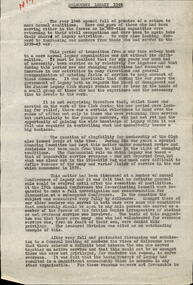 Melbourne Legacy
Document, History of Legacy 1946 (H19), 1946
... service overseas' was clear cut in the case of the 1914-1918 war 'but much more difficult to define in the many and varied fields of service in the war which commenced in 1939'. Discussions were continued through the war at Annual Conferences. Many members believed that membership should be open to 'any male person who served as a member of the Forces of the British Empire irrespective of whether or not overseas service was involved'. And a resolution was passed at the 18th Annual Conference in Adelaide in 1946. Similar discussions of eligibility of Junior Legacy benefits...service overseas' was clear cut in the case of the 1914-1918 war 'but much more difficult to define in the many and varied fields of service in the war which commenced in 1939'. Discussions were continued through the war at Annual Conferences. Many members believed that membership should be open to 'any male person who served as a member of the Forces of the British Empire irrespective of whether or not overseas service was involved'. And a resolution was passed at the 18th Annual Conference in Adelaide in 1946. Similar discussions of eligibility of Junior Legacy benefits ...A document summarising events significant to Legacy in the year 1946. With the return to peacetime the question of eligibility arose. The fundamental rule on which Legacy was based 'that of honourable service overseas' was clear cut in the case of the 1914-1918 war 'but much more difficult to define in the many and varied fields of service in the war which commenced in 1939'. Discussions were continued through the war at Annual Conferences. Many members believed that membership should be open to 'any male person who served as a member of the Forces of the British Empire irrespective of whether or not overseas service was involved'. And a resolution was passed at the 18th Annual Conference in Adelaide in 1946. Similar discussions of eligibility of Junior Legacy benefits was also discussed and definitions evolved. There was an increased need to help young widows with young children. First mention of the need to have a 'toddler home' for children from age 3 to 8. A property was acquired in Balcombe road with donation from the Trustees of 'Blamey House' - a war time hostel for servicemen which was being wound up and balance of funds being donated to Legacy. (Property acquired was 'Mossgiel' in Balcombe rd but renamed Blamey house due to the terms of the donation). Also the former Red Cross property of 'Stanhope' was made ready for the first residents welcomed in December 1946. Dureau House was under 'constant consideration'. (It seems the Dental Clinic was transferred here and there other part made available to the Melbourne Technical College - but in the 1950s it was still not suitable for Legacy's headquarters and sold). Classes during the war had been difficult to find suitable halls, and 43 Market St was still being used by the Air Force. A superannuation scheme was instituted for the Legacy staff. The notation H18 in red pen shows that it was part of the archive project that was trying to capture the history of Legacy. A report covering the main work of Legacy in 1946.White foolscap paper with black type x 5 pages of the achievements of Legacy in 1946.Handwritten 'H19' in red pen.history, annual summary -
 Melbourne Legacy
Document, Eligibility for JLC (H24), 1949
... War Legacy understood there was a need to redefine the criteria of people that they help. There was discussions about whether the deceased serviceman had to have served overseas or whether they could have served in any capacity. Legatee Cremor proposed the motion at the General Meeting on 9 May 1949. The motion was: 'That the eligibility rules of JLC be amended to provide that the dependents of any deceased member who was attested for service in the Armed Forces of the 1939-45 War be eligible for Legacy benefits...War Legacy understood there was a need to redefine the criteria of people that they help. There was discussions about whether the deceased serviceman had to have served overseas or whether they could have served in any capacity. Legatee Cremor proposed the motion at the General Meeting on 9 May 1949. The motion was: 'That the eligibility rules of JLC be amended to provide that the dependents of any deceased member who was attested for service in the Armed Forces of the 1939-45 War be eligible for Legacy benefits ...After the second World War Legacy understood there was a need to redefine the criteria of people that they help. There was discussions about whether the deceased serviceman had to have served overseas or whether they could have served in any capacity. Legatee Cremor proposed the motion at the General Meeting on 9 May 1949. The motion was: 'That the eligibility rules of JLC be amended to provide that the dependents of any deceased member who was attested for service in the Armed Forces of the 1939-45 War be eligible for Legacy benefits.' He also prepared a two page document of the arguments for the changes. A second document lays out the arguments against the motion. A file copy of a 2 page letter to the President supports Legatee Cremor's motion, the signature is indistinct so it's not known who wrote it. The arguments against included that the extension of eligibility would greatly increase Legacy's workload and budget required would increase 10 fold. They estimated that the men of the '1914 War' would be retired by 1965, and that there weren't enough men from the '1939 War' to make the decision. The notation H24 in red pen shows that it was part of the archive project that was trying to capture the history of Legacy. Documents that showed Legacy redefined the criteria of who they helped after the second World War.White paper x 5 pages with black type of the discussions for eligibility in 1949.Handwritten H24 in red pen.history, rules, membership -
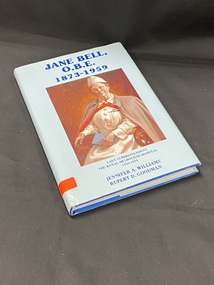 Returned Nurses RSL Sub-branch
Book - Hardcover book, Rupert D. Goodman et al, Jane Bell, O.B.E. (1873-1959) : Lady Superintendent The Royal Melbourne Hospital (1910-1934), 1988
... War II" - from dustjacket. Jane Bell Royal Melbourne Hospital Nurse administrators Nurses The story of Jane Bell, "a pioneer nurse-administrator and teacher, who was dedicated to achieving standards of excellence. Acknowledged as "The Nurses' Statesman" her influence was to benefit the Australian nursing profession over a lengthy span of years. - from dustjacket. 'B146' [Handwritten in black ink on an orange sticker attched to the spine] 'B146' [Handwritten in pencil on the first page] '16.9.97 / It gives me great pleasure / to donate this book to the /Returned Nurses and Services ...The story of Jane Bell, "a pioneer nurse-administrator and teacher, who was dedicated to achieving standards of excellence. Acknowledged as "The Nurses' Statesman" her influence was to benefit the Australian nursing profession over a lengthy span of years. - from dustjacket.Royal blue hardcover book with a light blue dustjacket. The title and authors are printed in blue along the spine. At the base of the spine is an orange sticker with 'B 146' handwritten on it. The front shows a large portrait of Jane Bell, The title is printed in dark blue above the image, below the image (in smaller text) is the sub-heading and author's names.non-fiction The story of Jane Bell, "a pioneer nurse-administrator and teacher, who was dedicated to achieving standards of excellence. Acknowledged as "The Nurses' Statesman" her influence was to benefit the Australian nursing profession over a lengthy span of years. - from dustjacket. jane bell, royal melbourne hospital, nurse administrators, nurses -
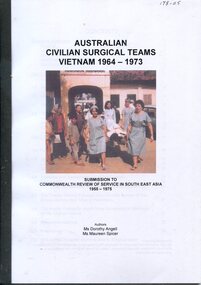 Alfred Hospital Nurses League - Nursing History Collection
Document - Illustrated document, Dorothy Angell et al, Australian Civilian Surgical Teams Vietnam: submission to Commonwealth review of service in South East Asia 1955-1975, 1995
... Former members of Australian civilian surgical and medical teams who served in Vietnam perceived that their service should attract repatriation benefits similar to ADF personnel and designated civilians serving in Vietnam during the same period. Of significance to the AHNL as the submission was written by two members who served with the Alfred Surgical teams in Vietnam. Vietnam War ...Australian Civilian Surgical Teams Vietnam 1964-1973 submission to Commonwealth review of service in South East Asia 1955-1975 held in 1999.Illustrated document with clear plastic cover and black spine. Front page has title and authors names printed in black along with a coloured photograph of four nurses carrying a patient on a stretcher in a street with several bystanders (the two Australian nurses are Dot Angell and Pam Martenson, Alfred surgical team members at Bien Hoa).non-fictionAustralian Civilian Surgical Teams Vietnam 1964-1973 submission to Commonwealth review of service in South East Asia 1955-1975 held in 1999.vietnam war 1961-1975-medical care, australian civilian surgical teams-vietnam-1964-1973 -
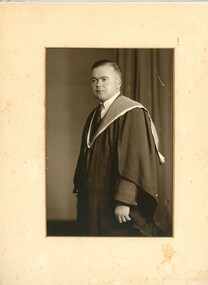 Emerald Museum & Nobelius Heritage Park
Photograph - Graduation photograph of Dr Ian Stephen MacLeod Murphy
... War 2 and was involved with the Rats of Tobruk and the evacuation of Crete. Dr Murphy went on to become Emerald's first GP. Dr Murphy was Emerald's first and much-loved GP. His work for the community over 34 years was of immense benefit. He was awarded the British Empire Medal in 1977 for his service ...This is a studio photograph of Dr Ian 'Spud' MacLeod Murphy c1930s. Dr Murphy graduated from Melbourne College with a Medical Degree in 1937. Dr Murphy served as a navy surgeon during World War 2 and was involved with the Rats of Tobruk and the evacuation of Crete. Dr Murphy went on to become Emerald's first GP.Dr Murphy was Emerald's first and much-loved GP. His work for the community over 34 years was of immense benefit. He was awarded the British Empire Medal in 1977 for his service to the health of the community.Black and white studio photograph of Dr Murphy - head and torso in graduation gown.Printed on the bottom right of the photograph: "Richards & Co / Ballarat"dr ian macleod murphy, spud murphy, doctor, emerald, 1960s
