
Showing 28 items matching "warramunga"
-
 Waverley RSL Sub Branch
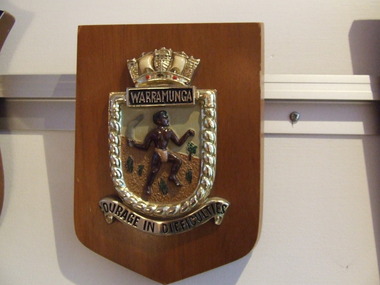
Plaque H.M.A.S Warramunga, H.M.A.S Warramunga
... H.M.A.S Warramunga ...HMAS Warramunga (I44), a Tribal class destroyer commissioned in 1942. ...Wooden Plaque 15cm x 13cm with insignia of H.M.A.S Warramunga ...H.M.A.S Warramunga ...HMAS Warramunga (I44), a Tribal class destroyer commissioned in 1942. ...HMAS Warramunga (I44), a Tribal class destroyer commissioned in 1942. The ship fought during the latter half of World War II, and in the Korean War. She was decommissioned in 1959, and sold for scrap. HMAS Warramunga (FFH 152), an Anzac class frigate commissioned in 2001 and in active service as of 2012Wooden Plaque 15cm x 13cm with insignia of H.M.A.S Warramunga H.M.A.S Warramunga -
 Waverley RSL Sub Branch
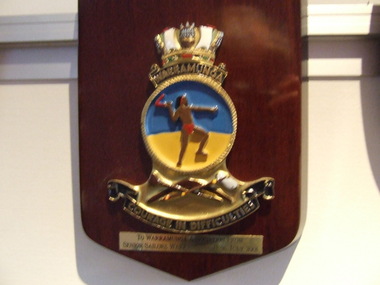
Plaque H.M.A.S Warramunga, H.M.A.S Warramunga
... H.M.A.S Warramunga ...HMAS Warramunga (I44), a Tribal class destroyer commissioned in 1942. ...Wooden Plaque 15cm x 13cm with insignia of H.M.A.S Warramunga ...H.M.A.S Warramunga ...HMAS Warramunga (I44), a Tribal class destroyer commissioned in 1942. ...HMAS Warramunga (I44), a Tribal class destroyer commissioned in 1942. The ship fought during the latter half of World War II, and in the Korean War. She was decommissioned in 1959, and sold for scrap. HMAS Warramunga (FFH 152), an Anzac class frigate commissioned in 2001 and in active service as of 2012Wooden Plaque 15cm x 13cm with insignia of H.M.A.S Warramunga H.M.A.S Warramunga -
 Waverley RSL Sub Branch
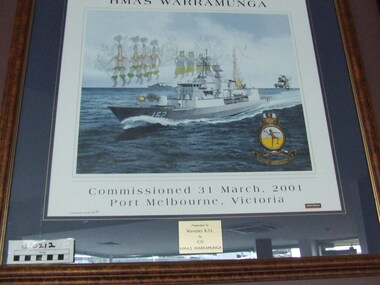
Commisioning Poster, H.M.A.S. WARRAMUNGA
... H.M.A.S. WARRAMUNGA...H.M.A.S. Warramunga...H.M.A.S. Warramunga...H.M.A.S. Warramunga H.M.A.S. WARRAMUNGA Commisioning Poster ...Poster in wooden frame under glass H.M.A.S. Warramunga Commissioned 31st March 2001 Port Melbourne Victoria Presented to Waverley R.S.L. by Co. H.M.A.S. WarramungaH.M.A.S. Warramunga Commissioned 31st March 2001 Port Melbourne Victoria Presented to Waverley R.S.L. by Co. H.M.A.S. Warramunga -
 Waverley RSL Sub Branch
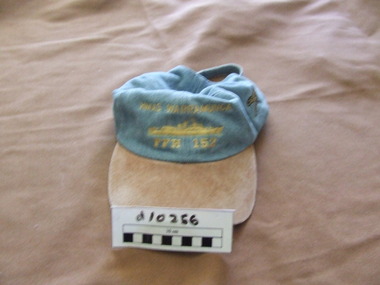
Cap, H.M.A.S. Warramunga
... H.M.A.S. Warramunga...Base ball style cap with H.M.A.S. Warramunga and F F H 152 embroidered on front with an image of the ship...F F H Warramunga...H.M.A.S. Warramunga F F H 152 F F H Warramunga Base ball style cap with H.M.A.S. ...Base ball style cap with H.M.A.S. Warramunga and F F H 152 embroidered on front with an image of the shipF F H Warramungah.m.a.s. warramunga, f f h 152 -
 Waverley RSL Sub Branch
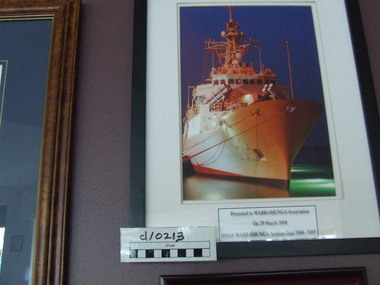
Print H.M.A.S. Warramunga Arabian Gulf 2006 - 2007, H.M.A.S. Warramunga Arabian Gulf 2006 - 2007
... H.M.A.S. Warramunga Arabian Gulf 2006 - 2007...Print in wooden frame under glass H.M.A.S. Warramunga Arabian Gulf 2006 - 2007...Presented to th Warramunga Association 0n 29th March 2008...Warramunga Arabian Gulf 2006 - 2007 H.M.A.S. Warramunga Arabian Gulf 2006 - 2007 Print H.M.A.S. ...Print in wooden frame under glass H.M.A.S. Warramunga Arabian Gulf 2006 - 2007Presented to th Warramunga Association 0n 29th March 2008 -
 Waverley RSL Sub Branch
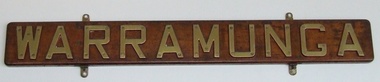
Name Plate Warramunga, Warramunga
... Warramunga...Warramunga...Wooden Name Plate from H.M.A.S. Warramunga with the name of the ship in Brass Lettering Was mounted on the Superstructure just aft of the second funnel ...Type Improved Tribal Class Destroyer Laid down 10 February 1940 Launched 7 February 1942 by Mrs Forde, wife of the Minister for the Arm Builder Cockatoo Docks and Engineering Co Ltd, Sydney Commissioned 23 November 1942 Displacement 1,970 tons Length 377 feet114.91 m 11,490.96 cm 0.115 km 0.0714 mi 4,524 in Beam 36 feet 6 inches Draught 9 feet (mean) Armament Original 6 x 4.7-inch guns 2 x 4-inch guns Anti-aircraft guns As Modernised 1955 4 x 4.7-inch guns 2 x 4-inch guns 8 x 40mm anti-aircraft guns Torpedo Tubes: 4 x 21-inch torpedo tubes A/S Weapon: Squid triple barrelled depth charge mortar Warramunga Wooden Name Plate from H.M.A.S. Warramunga with the name of the ship in Brass Lettering Was mounted on the Superstructure just aft of the second funnel Warramunga Name Plate Warramunga ...Type Improved Tribal Class Destroyer Laid down 10 February 1940 Launched 7 February 1942 by Mrs Forde, wife of the Minister for the Arm Builder Cockatoo Docks and Engineering Co Ltd, Sydney Commissioned 23 November 1942 Displacement 1,970 tons Length 377 feet114.91 m 11,490.96 cm 0.115 km 0.0714 mi 4,524 in Beam 36 feet 6 inches Draught 9 feet (mean) Armament Original 6 x 4.7-inch guns 2 x 4-inch guns Anti-aircraft guns As Modernised 1955 4 x 4.7-inch guns 2 x 4-inch guns 8 x 40mm anti-aircraft guns Torpedo Tubes: 4 x 21-inch torpedo tubes A/S Weapon: Squid triple barrelled depth charge mortarWooden Name Plate from H.M.A.S. Warramunga with the name of the ship in Brass Lettering Was mounted on the Superstructure just aft of the second funnel warramunga -
 Bendigo Military Museum
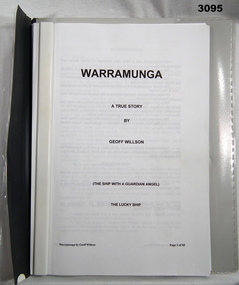
Booklet - BOOKLET, RAN, Warramunga
... Warramunga...Soft clear plastic & grey covered file with dark grey reinforced spine, hole punched. 83 typed photocopied pages. Warramunga was a tribal class destroyer of British design & built in Australia. ..."Warramunga a true story by Geoff Willson", "The Ship with a Guardian Angel", "The Lucky Ship"...Warramunga was a tribal class destroyer of British design & built in Australia. ...Soft clear plastic & grey covered file with dark grey reinforced spine, hole punched. 83 typed photocopied pages. Warramunga was a tribal class destroyer of British design & built in Australia. Booklet contains author's recollections of her part in naval operations in the Pacific theatre of WWII."Warramunga a true story by Geoff Willson", "The Ship with a Guardian Angel", "The Lucky Ship"military history-navy, ran, hmas -
 Waverley RSL Sub Branch
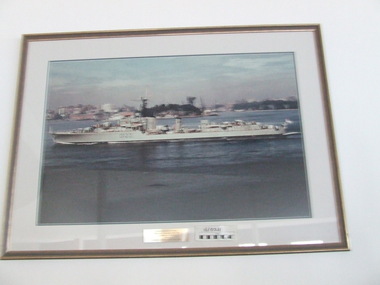
Print H.M.A.S. WARRAMUNGA, H.M.A.S. WARRAMUNGA
... H.M.A.S. WARRAMUNGA...Print in wooden frame under glass H.M.A.S. WARRAMUNGA...WARRAMUNGA H.M.A.S. WARRAMUNGA Print H.M.A.S. ...Print in wooden frame under glass H.M.A.S. WARRAMUNGAProudly presented Waverley RSL by John Allison Monkhousehmas warramunga -
 Waverley RSL Sub Branch
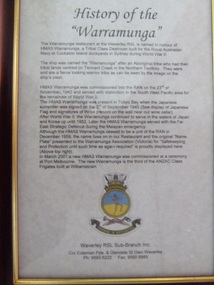
Scroll History of the Warramunga, History of the Warramunga
... History of the Warramunga...Scroll detailing the service of H.M.A.S. Warramunga from Commissioning November 1942 until it was de-commissioned December 1959 ...Scroll detailing the service of H.M.A.S. Warramunga from Commissioning November 1942 until it was de-commissioned December 1959 History of the Warramunga Scroll History of the Warramunga ...Scroll detailing the service of H.M.A.S. Warramunga from Commissioning November 1942 until it was de-commissioned December 1959 -
 Tramways/East Melbourne RSL Sub Branch - RSL Victoria Listing id: 27511
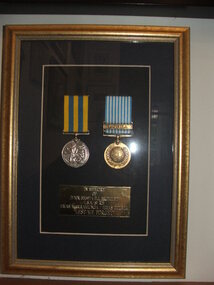
Memorabilia - Service Medals, In Memory of D/MX853974 P.J. Bromley LSA(S)RN HMAS Warramunga, HMAS Culgoa. "Lest We Forget", 1950 - 1954
... Bromley LSA(S)RN HMAS Warramunga, HMAS Culgoa. "Lest We Forget"...Bromley LSA(S)RN HMAS Warramunga, HMAS Culgoa. "Lest We Forget"...Bromley LSA(S)RN HMAS Warramunga, HMAS Culgoa. "Lest We Forget" 2 round service medals encased in a gold frame. ...Korea Medal - Qualifying period from July 1950 - July 1953 United Nations Service Medal (Korea) - Qualifying period from June 1950 - July 19542 round service medals encased in a gold frame. Korea Medal is a bronze round medal with a ribbon 4 dark blue and 3 Yellow vertical stripes United Nations Service Medal (Korea) is a silver round medal with a bronze bar with the word Korea and a ribbon of 9 blue and 8 White vertical stripesIn Memory of D/MX853974 P.J. Bromley LSA(S)RN HMAS Warramunga, HMAS Culgoa. "Lest We Forget"medal, korea medal, united nations service medal korea -
 Bendigo Military Museum
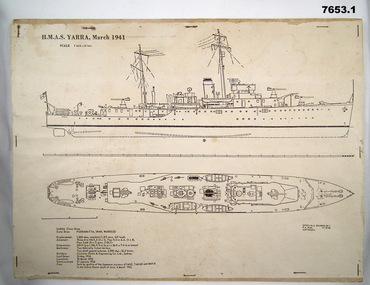
Drawing - DESIGN DRAWING, NAVAL
... Second ship was HMAS WARRAMUNGA, a Tribal Class Destroyer Commissioned No. 42 and scrapped Jan 1963....Includes description of all details of ship. 2, Drafting drawing of HMAS WARRAMUNGA March 1943 with side profile and top down profile....Headed 'HMAS YARRA March '41: Scale 1 inch = 16 feet. 2. Headed 'HMAS WARRAMUNGA" March '43: Scale 1 inch = 24 feet....Headed 'HMAS WARRAMUNGA" March '43: Scale 1 inch = 24 feet. 1. ...Schematics and details of Navy ships manufactured during WW2. First HMAS YARRA which was a Yarra Class sloop, commissioned Jan 1936 and sunk by Japanese on 4th March 1942. Second ship was HMAS WARRAMUNGA, a Tribal Class Destroyer Commissioned No. 42 and scrapped Jan 1963.1. Drafting drawing of HMAS YARRA March 1941 from side profile and top down profile on white paper stapled to cardboard. Includes description of all details of ship. 2, Drafting drawing of HMAS WARRAMUNGA March 1943 with side profile and top down profile.1. Headed 'HMAS YARRA March '41: Scale 1 inch = 16 feet. 2. Headed 'HMAS WARRAMUNGA" March '43: Scale 1 inch = 24 feet.hmas yarra, hmas warramunga -
 Waverley RSL Sub Branch
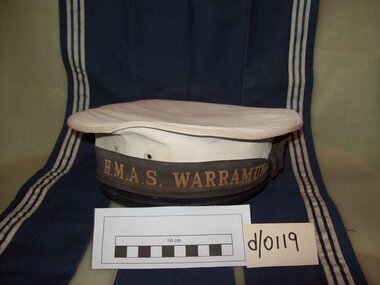
Sailors cap & collar
... Cap worn by Bob Curwen on the H.M.A.S. Warramunga Circa 1945...White cap with black band,printed "Warramunga" Black headband on inner. Collar,Navy blue with 3 white bands around it. ...Cap worn by Bob Curwen on the H.M.A.S. Warramunga Circa 1945 White cap with black band,printed "Warramunga" Black headband on inner. ...Cap worn by Bob Curwen on the H.M.A.S. Warramunga Circa 1945White cap with black band,printed "Warramunga" Black headband on inner. Collar,Navy blue with 3 white bands around it. Width 30cm,Length 62cm. Lower made into 3 strips Length 44cm. Width 10cm. Issued to B. Curwen -
 Running Rabbits Military Museum operated by the Upwey Belgrave RSL Sub Branch
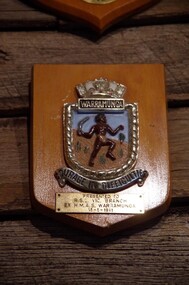
Plaque HMAS Warramunga
... HMAS Warramunga...Plaque 1981 RAN HMAS Warramunga Plaque HMAS Warramunga ...HMAS Warramungaplaque, 1981, ran -
 Running Rabbits Military Museum operated by the Upwey Belgrave RSL Sub Branch
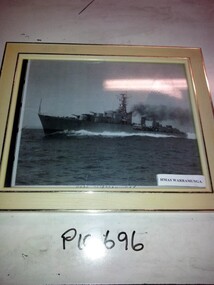
HMAS WARRAMUNGA
... Picture of HMAS Warramunga...ww2 ran Picture of HMAS Warramunga HMAS WARRAMUNGA ...Picture of HMAS Warramungaww2, ran -
 Running Rabbits Military Museum operated by the Upwey Belgrave RSL Sub Branch
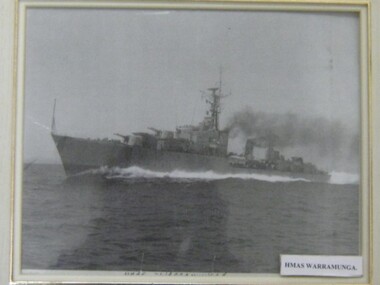
Photo HMAS Warramunga
... HMAS "Warramunga" at sea...Photo Korea RAN HMAS "Warramunga" at sea Photo HMAS Warramunga ...HMAS "Warramunga" at seaphoto, korea, ran -
 Running Rabbits Military Museum operated by the Upwey Belgrave RSL Sub Branch
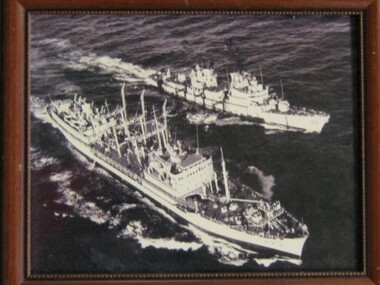
Photo HMAS Supply and Warramunga
... HMAS Supply and HMAS Warramunga...Photo RAN HMAS Supply and HMAS Warramunga Photo HMAS Supply and Warramunga ...HMAS Supply and HMAS Warramungaphoto, ran -
 Running Rabbits Military Museum operated by the Upwey Belgrave RSL Sub Branch
Photo HMAS Sydney, Supply & Warramunga
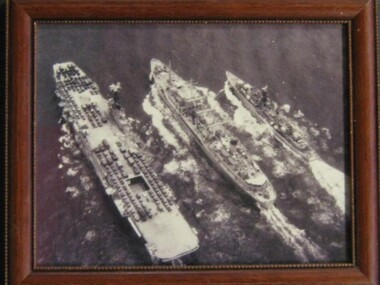
... Photo HMAS Sydney, Supply & Warramunga...Photo RAN Photo HMAS Sydney, Supply & Warramunga Photo HMAS Sydney, Supply & Warramunga ...Photo HMAS Sydney, Supply & Warramungaphoto, ran -
 Wangaratta RSL Sub Branch
Memorabilia - Cane Woven Basket Tray, The Invasion of the Philippines, c1945
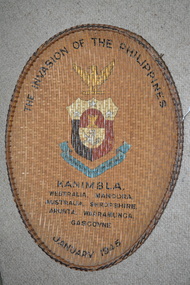
... The Kanimbla, Manoora and Westralia again transported American troops for the landings and once again the escorts included the cruisers Shropshire and Australia – the latter had undergone repair – and the destroyers Arunta and Warramunga. Whist not confirmed, this large cane woven oval tray with The Philippines Coat of Arms in the centre above list of Royal Australian Navy ships that were involved in the liberation of the Philippines, is believed to have belonged to Robert Hamilton Hutchieson PM 4802 who served on HMAS Westralia as a landing craft coxswain in the Southwest Pacific Campaign 1942 to 1945. ... The Invasion of the Philippines Image of Coat of Arms Commonwealth of the Philippines Kanimbla, Westralia, Manoura, Australia, Shropshire, Arunta, Warramunga, Gascoyne January 1945...The Kanimbla, Manoora and Westralia again transported American troops for the landings and once again the escorts included the cruisers Shropshire and Australia – the latter had undergone repair – and the destroyers Arunta and Warramunga. Whist not confirmed, this large cane woven oval tray with The Philippines Coat of Arms in the centre above list of Royal Australian Navy ships that were involved in the liberation of the Philippines, is believed to have belonged to Robert Hamilton Hutchieson PM 4802 who served on HMAS Westralia as a landing craft coxswain in the Southwest Pacific Campaign 1942 to 1945. ww2 invasion of the philippines 1945 hmas westralia hmas kanimbla The Invasion of the Philippines Image of Coat of Arms Commonwealth of the Philippines Kanimbla, Westralia, Manoura, Australia, Shropshire, Arunta, Warramunga, Gascoyne January 1945 Large oval shaped cane woven basket tray The Invasion of the Philippines Memorabilia Cane Woven Basket Tray ...In early January 1945, Australian warships took part in their next big naval action of the campaign when American forces were landed at Lingayen Gulf for the invasion of Luzon Island. Their objective was the capital, Manila. The frigates Gascoyne and Warrego carried out survey tasks and escort duties, coming under artillery fire and also attacks from aircraft. The Kanimbla, Manoora and Westralia again transported American troops for the landings and once again the escorts included the cruisers Shropshire and Australia – the latter had undergone repair – and the destroyers Arunta and Warramunga. Whist not confirmed, this large cane woven oval tray with The Philippines Coat of Arms in the centre above list of Royal Australian Navy ships that were involved in the liberation of the Philippines, is believed to have belonged to Robert Hamilton Hutchieson PM 4802 who served on HMAS Westralia as a landing craft coxswain in the Southwest Pacific Campaign 1942 to 1945. Large oval shaped cane woven basket tray The Invasion of the Philippines Image of Coat of Arms Commonwealth of the Philippines Kanimbla, Westralia, Manoura, Australia, Shropshire, Arunta, Warramunga, Gascoyne January 1945ww2, invasion of the philippines, 1945, hmas westralia, hmas kanimbla -
 Waverley RSL Sub Branch
Painting Warramunga Tribal Elder
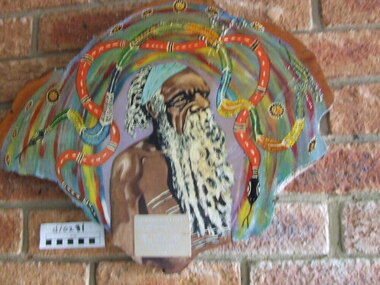
... Painting on section of tree trunk / branch showing a Warramunga Tribal Elder...Painting on section of tree trunk / branch showing a Warramunga Tribal Elder Painting Warramunga Tribal Elder ...Painting on section of tree trunk / branch showing a Warramunga Tribal Elder -
 Waverley RSL Sub Branch
Replica Japanese Flag From H.M.A.S. Warramunga
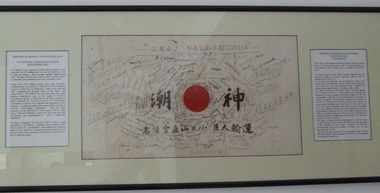
... Mounted Japanese flag made from signal bunting on the H.M.A.S. Warramunga and signed by ships crew with history mounted in frame under glass...Warramunga ...Mounted Japanese flag made from signal bunting on the H.M.A.S. Warramunga and signed by ships crew with history mounted in frame under glass -
 Waverley RSL Sub Branch
Sight for 40 Cal Deck Gun
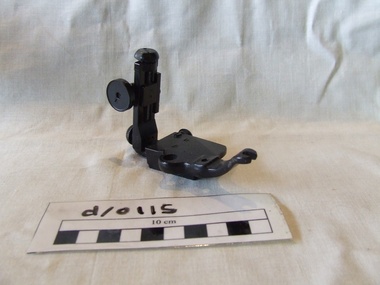
... On 2nd July 1955 Warramunga and Arunta became the first RAN Ships to join the force countering communism during The Malayan Emergency. ...On 2nd July 1955 Warramunga and Arunta became the first RAN Ships to join the force countering communism during The Malayan Emergency. ...On 2nd July 1955 Warramunga and Arunta became the first RAN Ships to join the force countering communism during The Malayan Emergency. Other ships which served during the emergency were HMA Ships Quickmatch, Queenborough, Anzac, Tobruk, Vampire, Vendetta, Voyager, Melbourne and Quadrant. Some of which took part in Bombardments against the CT's in Johore State.Identified by Barry McKilop ex RANBlack painted metal object with 4 thumb screws adjustments and 2 vernier scales. Mounting has one cut out and 2 screw or pin guide holesParkerdale England Mk VII PH5Agun sight, deck gun -
 Wangaratta RSL Sub Branch
Print - Framed Print
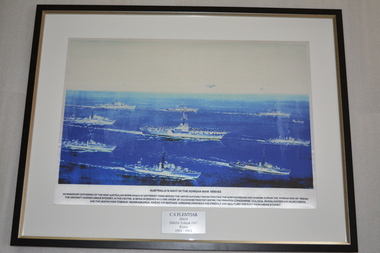
... The aircraft carrier HMAS Sydney, in the centre, is being screened in close order by (clockwise from top centre) the frigates Condamine, Culgoa, Shoalhaven and Murchison, and the destroyers Tobruk, Warramunga, Anzac and Bataan. Airborne overhead are Firefly and Sea Fury aircraft from HMAS Sydney. ...The aircraft carrier HMAS Sydney, in the centre, is being screened in close order by (clockwise from top centre) the frigates Condamine, Culgoa, Shoalhaven and Murchison, and the destroyers Tobruk, Warramunga, Anzac and Bataan. Airborne overhead are Firefly and Sea Fury aircraft from HMAS Sydney. ...An imaginary gathering of the nine Australian Ships which at different times served the United Nations Forces fighting the North Koreans and Chinese during the Korean War of 1950-53. The item belonged to Clarence Stanley FLENTJAR R38429 who enlisted in the Royal Australian Navy. He served on HMAS Cerebus, Tobruk and Melville and a veteran of the Korean War. The Korean War was a war fought between North Korea and South Korea from 25 June 1950 to 27 July 1953. The war began on 25 June 1950 when North Korea invaded South Korea following clashes along the border and rebellions in South Korea.North Korea was supported by China and the Soviet Union while South Korea was supported by the United Nations, principally the United States. The fighting ended with an armistice on 27 July 1953.Black frame with cream mount containing a screen print on silk depicting 9 naval ships and 4 airborne aircraft at sea Australia's Navy in the Korean War 1950-53 An imaginary gathering of the nine Australian Ships which at different times served the United Nations Forces fighting the North Koreans and Chinese during the Korean War of 1950-53. The aircraft carrier HMAS Sydney, in the centre, is being screened in close order by (clockwise from top centre) the frigates Condamine, Culgoa, Shoalhaven and Murchison, and the destroyers Tobruk, Warramunga, Anzac and Bataan. Airborne overhead are Firefly and Sea Fury aircraft from HMAS Sydney. White Plaque - mounted on glass - C S FLENTJAR 38429 HMAS Tobruk D37 Korea 1951-1952ran, korean war, hmas tobruk, hmas cerebus, hmas melville -
 Bendigo Military Museum
Photograph - PHOTOGRAPHS, KOREA, 1950-1953
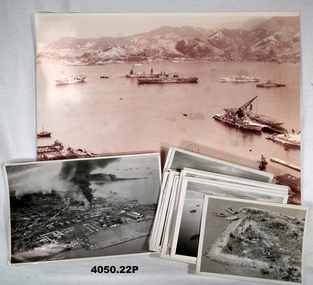
... On rear most photos are written on in blue pen. .2) INCHON landings Walmi-Do in background and landing barges - could be one I was driving. .3) Island - Walmi-Do - US landing craft. .4) INCHON landings. .5) US landing craft. .6) INCHON oil tanks and military targets on fire. .7) Grounded coaster after an air attack. .8) Two North Korean supply ships hit by rockets. .9) Korean supply vessels camouflaged. .10) Rocket attack on Korean supply vessel. .11) Sunken coaster that was carrying arms and food. .12) Sunken coaster in harbour. .13) & .14) North Korean armour taken from an observation flight. .15) & .16) Chinese tanks and armour. .17) HMS BELFAST, Fleet Oiler, HMAS WARRAMUNGA .18) Targets from rocket attacks. .19), .20) & .21) "Seafires" coming to land on HMS TRIUMPH. .22) Rearming cannon and rockets on a "Seafire'. ...On rear most photos are written on in blue pen. .2) INCHON landings Walmi-Do in background and landing barges - could be one I was driving. .3) Island - Walmi-Do - US landing craft. .4) INCHON landings. .5) US landing craft. .6) INCHON oil tanks and military targets on fire. .7) Grounded coaster after an air attack. .8) Two North Korean supply ships hit by rockets. .9) Korean supply vessels camouflaged. .10) Rocket attack on Korean supply vessel. .11) Sunken coaster that was carrying arms and food. .12) Sunken coaster in harbour. .13) & .14) North Korean armour taken from an observation flight. .15) & .16) Chinese tanks and armour. .17) HMS BELFAST, Fleet Oiler, HMAS WARRAMUNGA .18) Targets from rocket attacks. .19), .20) & .21) "Seafires" coming to land on HMS TRIUMPH. .22) Rearming cannon and rockets on a "Seafire'. ...The photos are a collection held by T. J. IRELAND C/K853677 P.O. STOKER MECHANIC RN while serving on HMS TRIUMPH, Korea 1950-53. Many are of the landings at INCHON, Sept. 1950. .1) Kure Harbour, Japan 1950. Ships assembling for the landings at INCHON, Korea. Ships across the top, left to right: HMAS SYDNEY, Fleet Oiler, VSS ANTIETAM, Hospital Ship & Japanese Coaster. In the foreground on the right, HMS BELFAST, HMS TRIUMPH, HMS CONSORT. On rear most photos are written on in blue pen. .2) INCHON landings Walmi-Do in background and landing barges - could be one I was driving. .3) Island - Walmi-Do - US landing craft. .4) INCHON landings. .5) US landing craft. .6) INCHON oil tanks and military targets on fire. .7) Grounded coaster after an air attack. .8) Two North Korean supply ships hit by rockets. .9) Korean supply vessels camouflaged. .10) Rocket attack on Korean supply vessel. .11) Sunken coaster that was carrying arms and food. .12) Sunken coaster in harbour. .13) & .14) North Korean armour taken from an observation flight. .15) & .16) Chinese tanks and armour. .17) HMS BELFAST, Fleet Oiler, HMAS WARRAMUNGA .18) Targets from rocket attacks. .19), .20) & .21) "Seafires" coming to land on HMS TRIUMPH. .22) Rearming cannon and rockets on a "Seafire'. Photos not written on, information was supplied by T.J. IRELAND. The "Seafire" was a naval adaption of the Supermarine Spitfire for carrier use..1) Photo, sepia tone, aerial view over a harbour with warships, bomb damage foreground, hills and buildings in the distance. .2) Photo, black & white, aerial view of harbour, city with several fires from shelling. .3) Photo, black & white, aerial view of island with landing craft. .4) Photo, black & white, aerial view over ships and harbour. .5) Photo, black & white, aerial view over four landing craft. .6) Photo, black & white, aerial view over city and fires. .7) Photo, black & white, aerial view over islands, boat .... small island. .8) Photo, black & white, aerial view over harbour with two boats on fire. .9) Photo, black & white, aerial view over structures covered. .10) Photo, black & white, aerial view over ship being attacked. .11) Photo, black & white, aerial view over harbour with sunken ship. .12) Photo, black & white, aerial view showing harbour, fire and sunken ship. .13) Photo, black & white, aerial view, five tanks along a road. .14) Photo, black & white, aerial view, same area as .13) showing a wider area. .15) Photo, black & white, aerial view showing tanks and armour. .16) Photo, black & white, aerial view road with armour, vehicles, people and smoke in distance. .17) Photo, black & white, aerial view showing three ships together. .18) Photo, black & white, aerial view showing a road control with targets either side on fire. .19) Photo, black & white, aerial view with aeroplane coming onto the deck of a carrier. .20) Photo, black & white, aerial view of a fighter plane. .21) Photo, black & white, on deck of a carrier. .22) Photo, black & white, rearming a plane with ammunition on carrier deck. Photos are various sizes.photos, korea, rn, inchon -
 City of Melbourne Libraries
Photograph (item), Bull, Hugh Jones, 1897-1993, Unloading timber at Victoria Dock, 1933
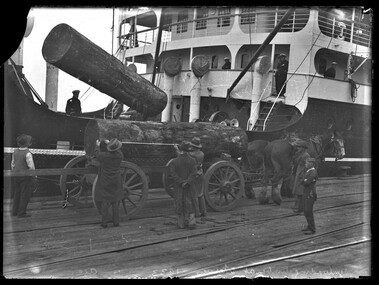
... No formal recovery process was instigated, however a distress signal went out. 32 survivors were picked up by the Australian destroyer HMAS Warramunga (on patrol nearby), a passing US vessel found 2 more, and local Zhoushan fishermen retrieved others. ...No formal recovery process was instigated, however a distress signal went out. 32 survivors were picked up by the Australian destroyer HMAS Warramunga (on patrol nearby), a passing US vessel found 2 more, and local Zhoushan fishermen retrieved others. ...Photographer notations on slide: "Unloading Timber at Wharves 1933 Age B5" Published: Age (Melbourne, Vic.: 1854- ), Tuesday 15 August 1933 MAHOGANY FROM MANILA. (1933, August 15). The Age (Melbourne, Vic. : 1854 - 1954), p. 11. Retrieved January 16, 2026, from http://nla.gov.au/nla.news-article204377024 Published title: MAHOGANY FROM MANILA Published Caption: Age Tue 15 Aug 1933 Caption: Unloading Mahogany Logs brought from Manila, Philippine Islands, by the steamer Taiping, which berthed yesterday at Victoria Dock. The vessel discharged twenty logs, each weighing three tons, the first shipment of this type of timber landed in Melbourne. Research by Project Volunteer, Louise McKenzie: This photograph in many ways epitomises Melbourne in the 1930s. It is a time of enormous growth, development and change. But before delving into that, the photo itself is very powerful. The huge mahogany logs being unloaded appear to be so heavy that the ship itself seems to list to port as they are craned over the side. They are being levered into a cart to which two large and sturdy Clydesdale horses are hitched. In contrast to the traditional horses, the wharf is crisscrossed with modern railway tracks. Unloading is both mechanical and manual, and the scene is one of intense interest to a young boy bystander. The ship appears to be squat and solid, but the whole image also gives a feeling of movement and intensity. The mahogany being delivered to Melbourne would be intended for high quality furniture. In the 1930s Australia actually had a growing timber industry, but much of the eucalyptus wood was being utilised for mass produced furniture, and much of this furniture would then have had a veneer applied to it. The fact that it was economic to import this timber from the “Philippine Islands” – not a traditional trading market for Australia – reflects a Victorian economy that was strong enough to support a growing demand for good quality furniture Mahogany was described as a classic, strong hardwood, often used for dark opulent furniture. In the 1930s the importation of timber from Manila (Philippines) to Australia was a notable trade, particularly in Philippine Lauan (often referred to as Philippine Mahogany), which was used as a cheaper alternative to other hardwoods. 1930s furniture, dominated by the art deco style, used a mix of luxurious exotic woods like mahogany, macassar and ebony for high-end pieces, often veneered over less expensive woods such as walnut, birch and poplar, and with plywood, chrome and lacquer also popular for more practical, streamlined designs during the Depression era. By the mid 1930s timber mills were being relocated away from the immediate dock area, but the fact that these logs were being transported by horse-drawn cart implies that the load would not have had to be taken too far for milling. 1885 the Melbourne Harbour Trust Commissioners had decided that land in or near the city was far too valuable to be used as timber yards. Furthermore, large stacks of timber posed a fire risk. The Trust asked the Victorian Government to reserve a site on the east side of the Yarra River opposite Yarraville and Spotswood. Here, in 1889, the Trust began building six jetties and a wharf specifically for the landing of timber. Clydesdale horses were initially brought to Victoria from Tasmania in the 1830s, and with the 1850s gold rush they were imported direct from Scotland. Melbourne was from its earliest years an important centre of horse-breeding from both imported and colonial-bred stock, providing the well-built draught horse for pulling heavily loaded wagons, the harness horse for delivery work and drawing coaches, and the saddle-horse used for riding. Stud breeding facilities were advertised from the early 1840s. By the 1870s the horse export trade was thriving, and the Port of Melbourne was the country's busiest exporter of horses to Indian, Asian and New Zealand markets. Kirk's Melbourne Horse and Carriage Bazaar in Bourke Street first advertised for business in 1840, and by the 1850s Bourke Street West was famed for its horse bazaars and saleyards. The Victorian Clydesdale Horse Society reports that Clydesdale working horses were a vital part of Melbourne's infrastructure and agricultural industry in the 1930s, when they reached the peak of their popularity despite the increasing competition from mechanization. Their main roles and usage at this time were: • City Delivery: Clydesdales were a common sight for metropolitan deliveries, particularly for breweries (such as Carlton & United Breweries), milk runs, and bread deliveries. • Industrial Work: They were heavily used for hauling cargo at the docks, in construction, and at specialized sites like the Truganina Explosives Reserve, where they pulled wagons. • Agriculture: In surrounding rural areas, they were the primary power source for ploughing and agricultural machinery. • Specialization: By the 1930s, the Clydesdale was smaller and more compact than the Shire or Percheron breeds, making them ideal for navigation in urban environments. After the 1930s their numbers decreased due to the onset of WWI and mechanisation. Wartime petrol rationing led to a brief revival for the working horse, as suburban tradesmen, now used to motor delivery, took their old jinkers out of mothballs. By 1947, however, only 1.5% of city traffic was horse-drawn. In 1952 the large horse cartage company A. Kellet Pty Ltd sold its 250 horses and converted its Richmond stables to storage. In the 1950s at Station and Princes piers, wharf labourers refused to work with the six draught horses still being used to haul trolleys and which were soon superseded by the fork lift, semi-trailer and mobile crane. Where carefully trained horses had once shunted trains in city goods yards, a few hundred a week were now being killed at the abattoirs for pet and human consumption. The last MCC dray horse was withdrawn from service in 1958, but some of the few remaining working animals are used by the mounted police for crowd control at demonstrations and football games. The death knell had also sounded for the associated trades of farrier, saddler and blacksmith. Our photo, therefore, showing the wharf with both the haulage Clydesdales and the rail lines, is a strong visual summary of the social and economic changes experienced in Victoria in the 1930s and on towards the 1950s. Our photo is located at Victoria Dock (also known as Victoria Harbour) which is still an active component of Melbourne’s port system. In 1892 the West Melbourne Dock (later Victoria Dock) was opened, downstream and immediately west of the Spencer Street railway shunting yards. It contained a swing basin for ships, replacing the one which had been provided on the south side of the river, later to be the Duke and Orr dry dock, west of the Charles Grimes Bridge. Further west was the South Wharf along the river bank. The history of Victoria Dock is extremely well described by Ashley Smith in his 2 March 2022 article in Docklands News, and its accompanying aerial photo of the Dock taken in 1934. He writes: "In the early 1930s Victoria Dock was one of the biggest sites for trade and export in Melbourne. A constant queue of ships sailed in, unloaded their cargo, recharged and reloaded, then left for the next port. Around the time this photo was taken (found in a 1934 photo book), the trapezium-shaped basin had been through some changes since its construction in the 1890s. The 497-metre-long Central Pier, finished in 1919, now featured six sheds to house the ever-increasing volume of cargo. The entrance had also been widened in the 1920s to allow better access. Some of the berths featured three-ton jib electric cranes to help with loading cargo and a rail network connected to the State Railway service. By the time construction was completed, the dock was 39 hectares and hailed as the second-largest dock in the world (behind Cavendish Dock, Barrow-in-Furness). To further save costs, excavations were dug to a more reasonable seven metres below low water, instead of British engineer Sir John Coode’s recommended 8.3 metres. Even then, the costs were still around £900,000. It was envisaged, with the extra wharfage, that around thirty 90-metre ships could berth inside. On March 22, 1892, Victoria Dock was opened by Victoria’s Governor, the Earl of Hopetoun (later Australia’s first Governor-General) who opened the sluice to let the Yarra in. It took six days to fill the basin with The Leader newspaper estimating that it would take another six months to completely fill (March 26, 1892). In the end, it took nearly a year before the first ship was allowed to enter on February 20, 1893, when the steamer Hubbuck sailed in to unload 1200 tonnes of cargo in 15 hours. The Argus (February 23, 1893) reported that the ship’s captain, J. R. Brodie, called the Yarra “better than the Thames”, and compared Victoria Dock favourably to the Albert Dock (Liverpool)." This would be a good time to move our focus on to the Taiping, which is the transporter of these giant mahogany logs. The Taiping was a steel-hulled, single-screw passenger-cargo Chinese steamer, which today has the dubious legacy of being involved in a collision headlined as “The Chinese Titanic”. It was constructed by the Hong Kong and Shampoa Dock Company at its facility in Hong Kong, with completion in 1926 for service under the Australia Oriental Line. Her gross register tonnage measured 4,324 tons, reflecting her design for inter-island and coastal trade routes, accommodating both passengers and freight. She operated routes connecting Australian ports with East Asian destinations. As World War II approached, Taiping continued predominantly working the trade routes between China and Australia, until December 1941, when she evacuated women and children from Hong Kong to Manila just before Japanese forces overran the region. She then safely reached Australia despite enemy air raids. Taiping was then requisitioned by the Royal Navy and repurposed as a victualling stores issuing ship for the Eastern Fleet, supporting logistical needs in the Pacific and Indian oceans. Returned to the Australian Oriental Line in 1947, she underwent refitting and by mid-1948 was chartered to the Shanghai Shipping Company, and modified for greater passenger accommodation – approximately 500 passengers. In 1948/49 the Chinese Civil War took place. The Taiping departed Shanghai on 26 January 1949 as one of the final vessels evacuating civilians from to Keelung Harbour in Taiwan. Reports indicate that the Taiping carried double the rated capacity of passengers i.e. 1000. The ship carried families, military personnel, civilians, carrying personal belongings, gold and valuables in hope of resettlement in Nationalist Taiwan. It also held heavy cargo in the form of silver and gold bullion loaded by the Central Bank of China. Because of the risk of patrols, and to conserve fuel, the Captain took the ship away from the usual open-sea passage, and instead navigated along the coast. He also extinguished navigation lights to avoid detection. Shortly after midnight on 27 January 1949 the Taiping collided with the smaller cargo steamer Chien Yuan in the East China Sea near the Zhoushan Archipelago. The Chien Yuan was also operating in darkness. The subsequent collision was catastrophic. The Chien Yuan sank with in 5 minutes, with the loss of 72 of its 74 crew. The Taiping sustained severe structural compromise from the broadside strike and initially remained afloat, then made a swift descent into the freezing water, with no attempt at an organised evacuation. No formal recovery process was instigated, however a distress signal went out. 32 survivors were picked up by the Australian destroyer HMAS Warramunga (on patrol nearby), a passing US vessel found 2 more, and local Zhoushan fishermen retrieved others. In the end, only 37 people survived. The event is remembered as a poignant moment in the mass migration to Taiwan, with families tragically separated. A memorial to the disaster exists at the Keelung Harbour naval base on Taiwan. With its total of over 1,500 deaths, it constituted one of the worst peacetime maritime losses. It is sometimes referred to as the “Oriental Titanic” because of the similarly large loss of life and speed of demise with the RMS Titanic in 1912. A fictional depiction of this event appears in the John Woo movies “The Crossing (Part 1) (2014), and The Crossing II (2015), known in Chinese as “Taiping Wheel”. The narrative weaves a story around pre-disaster romances and wartime turmoil among passengers, culminating in the ship’s rapid sinking. “The production, a high-budget Sino-Taiwanese-Hong Kong co-effort, portrays the event as a microcosm of the 1940s Sino-Japanese and civil war legacies, though critics noted the melodramatic style prioritizing spectacle over historical precision.” In conclusion, it is nice to return to our photo, and observe the people involved in this moment. The dockworkers are, so typical of the 1930s, dressed in what looks to us like formal clothing – dark suits or coats, white shirts, and black hats. I am particularly drawn to the young boy, bare-headed, arms crossed, and so intent on the unloading process. He too is wearing a white shirt, black trousers and jacket, and black shoes. This is 1933 Melbourne – but the haircut he is sporting is now very “hipster” and modern in 2026 Melbourne. References: MAHOGANY FROM MANILA. (1933, August 15). The Age (Melbourne, Vic. : 1854 - 1954), p. 11. Retrieved January 30, 2026, from http://nla.gov.au/nla.news-article204377024 Wikipedia, Taiping steamer, https://en.wikipedia.org/wiki/Taiping_(steamer) Wikipedia, Victoria Dock, https://en.wikipedia.org/wiki/Victoria_Dock_(Melbourne) Docklands News, Ashley Smith, 2 Mar 2022, https://www.docklandsnews.com.au/victoria-dock/ Living Histories: Heritage Council of Victoria, Jill Barnard, 2008, Jetties and Piers, https://livinghistories.net.au/wp-content/uploads/2015/11/Jetties-ONL-intro_Part-1.pdf eMelbourne, Wharves and Docks, https://www.emelbourne.net.au/biogs/EM01612b.htm Australian Academy of Technological Sciences – Harvesting Wood, https://www.austehc.unimelb.edu.au/tia/225.html Old Treasury Building, On the Water – The Docks, https://tinyurl.com/3wkbk66m Old Treasury Building, On The Road, https://tinyurl.com/dw44yr3t Port of Melbourne, Victorian Places, https://www.victorianplaces.com.au/port-of-melbourne Docklands Heritage Study - Environmental History, https://mvga-prod-files.s3.ap-southeast-4.amazonaws.com/public/2024-05/docklands-heritage-review-thematic-environmental-history-1991.pdf eMelbourne, Horses, https://www.emelbourne.net.au/biogs/EM00723b.htm Victorian Clydesdale Horse Society, https://www.clydesdalesvic.org.au/history The Crossing, https://letterboxd.com/film/the-crossing-i/Photographer notations on slide: "Unloading Timber at Wharves 1933 Age B5"ships, shipping, timber industry, shipwrecks, horses, docks, wharves, 1930-1939, wars, docklands -
 Lara RSL Sub Branch
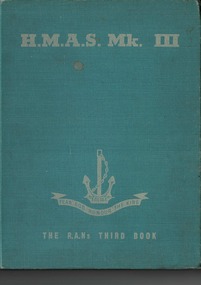
Book, HMAS MK III - The RAN's Third Book, 1951
... This volume is a further unfolding of the story of WWII which because of its nature as a world wide conflict, is so largely the story of sea power and its influence on the final outcome wwii royal australian navy sea power germans europe japanese communications rear admiral v.a.c. crutchley, v.c., d.s.c destroyers corvettes frigates escort duties motor launches aircraft carriers battleships battle cruisers cruises armed merchant cruisers sloops submarine sweepers mediterranean warspite valiant pacific american forces dneiper bend solomon islands makin tarawa h.m.a australia h.m.a shropshire h.m.a arunta h.m.a warramunga h.m.a.s westralia arctic h.m. jamaica h.m.saumarez u.s. marines h.m.a.s benalla h.m.a.s shepparton royal australian navy reserves Tribute - Grey she is and stately Young alive and shapely Lissome, yes, and graceful, With perfect lines of elegance and dignity Her noble, lovely head She nods and shakes, With confidence to face Whatever may come. ...This book tells of the mounting sea power of the Allies told by men of the RAN who with their ships have added the weight of their blows to the common effort. It tells stories of which the Royal Australian Navy may be proud.This volume is a further unfolding of the story of WWII which because of its nature as a world wide conflict, is so largely the story of sea power and its influence on the final outcome HMAS MK III - The RAN's Third Book. Green hardcover with black text and Navy insignia on front cover, text on spine. Inside front and back cover green sepia drawing of a fleet of Navy ships. Graphs, drawings, photographs, maps, poems.Tribute - Grey she is and stately Young alive and shapely Lissome, yes, and graceful, With perfect lines of elegance and dignity Her noble, lovely head She nods and shakes, With confidence to face Whatever may come. She nurses me And nourishes; Shields me, gives me courage. Alone I have been with her, when afraid. And in a crowd of friends, both hers and mine. Through conflict tense, with element or foe; through danger from above and from below. Through anguish keen Of loss, of death, of pain. Through gaiety, through joy victorious and safe She is my life, my only love, My ship.wwii, royal australian navy, sea power, germans, europe, japanese, communications, rear admiral v.a.c. crutchley, v.c., d.s.c, destroyers, corvettes, frigates, escort duties, motor launches, aircraft carriers, battleships, battle cruisers, cruises, armed merchant cruisers, sloops, submarine sweepers, mediterranean, warspite, valiant, pacific, american forces, dneiper bend, solomon islands, makin, tarawa, h.m.a australia, h.m.a shropshire, h.m.a arunta, h.m.a warramunga, h.m.a.s westralia, arctic, h.m. jamaica, h.m.saumarez, u.s. marines, h.m.a.s benalla, h.m.a.s shepparton, royal australian navy reserves -
 Port Melbourne Historical & Preservation Society
Photograph - Naval vessels, Station Pier, Port Melbourne, Ron Laing, 1986 - 1999
... Donated to the PMH&PS by the photographer. piers and wharves - station pier ron laing hmas darwin hmas melbourne hmas torrens mhas sydney hmas warramunga hmas arunda hmnzs te kaha uscg polar sea uss ford uss benfold uss david r ray uss rainier uss curts uss fife uss antietam uss reid uss russel hmcg ottawa luigi durand de la penne bersagliere la moqueme shiki shima - japanese coast guard A set of 51 colour photographs of various Australian and overseas Naval vessels visiting Melbourne and laying at Station Pier. 1990s Photograph Naval vessels, Station Pier, Port Melbourne Ron Laing ...Part of Ron Laing's collection of photographs recording Port Melbourne over a thirteen year period. Donated to the PMH&PS by the photographer.A set of 51 colour photographs of various Australian and overseas Naval vessels visiting Melbourne and laying at Station Pier. 1990spiers and wharves - station pier, ron laing, hmas darwin, hmas melbourne, hmas torrens, mhas sydney, hmas warramunga, hmas arunda, hmnzs te kaha, uscg polar sea, uss ford, uss benfold, uss david r ray, uss rainier, uss curts, uss fife, uss antietam, uss reid, uss russel, hmcg ottawa, luigi durand de la penne, bersagliere, la moqueme, shiki shima - japanese coast guard -
Port Melbourne Historical & Preservation Society
Photograph - Shipping at Station Pier and Webb Dock, Port Melbourne, 2001
... further updates from the collection of Ron Laing great coverage of Port Melbourne photographs donated to the Society transport - shipping piers and wharves - station pier pacific sky regal princess seven seas navigator tasmanian achiever - brambles ro ro hmas darwin hmas adelaide hmas anzac hmas warramunga n z tekaha hmas wallaroo 11 colour photographs of shipping at Station Pier and nearby Webb Dock, cruise and naval vessels (.11 currently absent March 2014) Photograph Shipping at Station Pier and Webb Dock, Port Melbourne ...further updates from the collection of Ron Laing great coverage of Port Melbourne photographs donated to the Society11 colour photographs of shipping at Station Pier and nearby Webb Dock, cruise and naval vessels (.11 currently absent March 2014)transport - shipping, piers and wharves - station pier, pacific sky, regal princess, seven seas navigator, tasmanian achiever - brambles ro ro, hmas darwin, hmas adelaide, hmas anzac, hmas warramunga, n z tekaha, hmas wallaroo -
Port Melbourne Historical & Preservation Society
Photograph - Royal Australian Navy vessels at Station Pier, Port Melbourne, Ron Laing, c. 2000
... Further updates of Ron Laing's photographic coverage of Port Melbourne piers and wharves - station pier hmas darwin hmas adelaide hmas anzac hmas warramunga hmna te kaha hmas wallaroo hmas bandicoot hmas fremantle Four colour photographs of various Royal Australian Navy vessels which have visited Station Pier. ...Further updates of Ron Laing's photographic coverage of Port MelbourneFour colour photographs of various Royal Australian Navy vessels which have visited Station Pier.piers and wharves - station pier, hmas darwin, hmas adelaide, hmas anzac, hmas warramunga, hmna te kaha, hmas wallaroo, hmas bandicoot, hmas fremantle
