
Showing 7 items matching "water density"
-
 Federation University Historical Collection
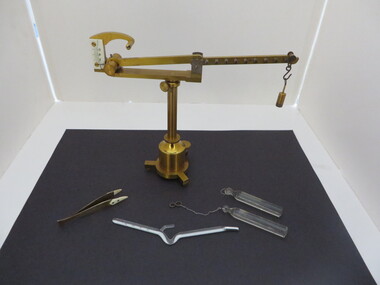
Instrument - Scientific Instrument, Westphal Balance
... ...water density...A beam Balance, provided with a submersible body at one end, for determining density of water at different temperatures. Housed in a polished wood box....The Westphal Balance was used in the Science Department at the University of Ballarat, Victoria westphal balance water density liquids science department university of ballarat Calibration table, hand written, inside the box. ...The Westphal Balance was used in the Science Department at the University of Ballarat, VictoriaA beam Balance, provided with a submersible body at one end, for determining density of water at different temperatures. Housed in a polished wood box.Calibration table, hand written, inside the box.westphal, balance, water density, liquids, science department, university of ballarat -
 Federation University Historical Collection
Book - Exercise Book, Exercise Book of P.J. McCarthy, 1946
... density of water...McCarthy, covering experiments such as: the absolute density of water, focal length of concave mirror, law of repulsion between magnetic poles, fortin barmometer, Verniers, vaporization of steam, etc;...Ballarat School of Mines density of water focal length of concave mirror law of repulsion fortin barometer verniers Ballarat SChool of Mines P.J. ...Ballarat School of MinesBlack hard covered exercise book, contains index in front of book, written by P.J. McCarthy, covering experiments such as: the absolute density of water, focal length of concave mirror, law of repulsion between magnetic poles, fortin barmometer, Verniers, vaporization of steam, etc;density of water, focal length of concave mirror, law of repulsion, fortin barometer, verniers, ballarat school of mines, p.j. mccarthy -
 Flagstaff Hill Maritime Museum and Village
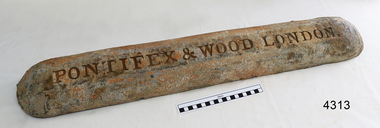
Functional object - Lead Ingot, circa 1878
... In the nineteenth century lead was valued for its density (high ratio of weight to volume), flexibility (relative softness for working into shape), and durability (corrosion resistant and waterproofing properties). It was used for pipes and water...In the nineteenth century lead was valued for its density (high ratio of weight to volume), flexibility (relative softness for working into shape), and durability (corrosion resistant and waterproofing properties). It was used for pipes and water ...This lead ingot was donated to Flagstaff Hill Maritime Village in January 2015 by local residents who discovered the ingot in their garden after they purchased the property about 12 months ago The LOCH ARD cargo manifest lists “Pig lead 50 tons” comprising “944 pig and 37 rolls”. Subsequent classification has rendered this section of cargo as “Lead Ballast”. This could be true. The international price per ton of lead ore plunged from a high point of £17 in 1853 to a low of £8 in 1882. The cheaper price of lead at the time of the vessel’s loading in early 1878 may have meant it was considered as an alternative to other ballast material (traditionally stone) for the journey to Melbourne. Loch Line ships generally returned to Britain laden with Australian wool. Even though wool bales were “screwed in” to the hold to less than half their “pressed weight”, they still made an awkwardly light cargo for the passage around the Horn. The concentrated weight of lead pigs along the keel line would help steady and centre the ship, and perhaps the artefacts in this case were to be retained for this purpose, rather than being sold on to the ready colonial market. However this is conjecture. Demand for building materials in the gold and wool rich Colony of Victoria was high in the 1870s, and much of the LOCH ARD cargo was intended for the Melbourne International Exhibition in 1880, which was another example of buoyant economic conditions. In the nineteenth century lead was valued for its density (high ratio of weight to volume), flexibility (relative softness for working into shape), and durability (corrosion resistant and waterproofing properties). It was used for pipes and water tanks, roof flashing and guttering, window sealing and internal plumbing. Many large private residences and new public buildings were at planning or construction stage in the colony during this period. The LOCH ARD lead ingots could equally have been destined for this ready market. HISTORY OF THE LOCH ARD The LOCH ARD belonged to the famous Loch Line which sailed many ships from England to Australia. Built in Glasgow by Barclay, Curdle and Co. in 1873, the LOCH ARD was a three-masted square rigged iron sailing ship. The ship measured 262ft 7" (79.87m) in length, 38ft (11.58m) in width, 23ft (7m) in depth and had a gross tonnage of 1693 tons. The LOCH ARD's main mast measured a massive 150ft (45.7m) in height. LOCH ARD made three trips to Australia and one trip to Calcutta before its final voyage. LOCH ARD left England on March 2, 1878, under the command of Captain Gibbs, a newly married, 29 year old. She was bound for Melbourne with a crew of 37, plus 17 passengers and a load of cargo. The general cargo reflected the affluence of Melbourne at the time. On board were straw hats, umbrella, perfumes, clay pipes, pianos, clocks, confectionary, linen and candles, as well as a heavier load of railway irons, cement, lead and copper. There were items included that intended for display in the Melbourne International Exhibition in 1880. The voyage to Port Phillip was long but uneventful. At 3am on June 1, 1878, Captain Gibbs was expecting to see land and the passengers were becoming excited as they prepared to view their new homeland in the early morning. But LOCH ARD was running into a fog which greatly reduced visibility. Captain Gibbs was becoming anxious as there was no sign of land or the Cape Otway lighthouse. At 4am the fog lifted. A man aloft announced that he could see breakers. The sheer cliffs of Victoria's west coast came into view, and Captain Gibbs realised that the ship was much closer to them than expected. He ordered as much sail to be set as time would permit and then attempted to steer the vessel out to sea. On coming head on into the wind, the ship lost momentum, the sails fell limp and LOCH ARD's bow swung back. Gibbs then ordered the anchors to be released in an attempt to hold its position. The anchors sank some 50 fathoms - but did not hold. By this time LOCH ARD was among the breakers and the tall cliffs of Mutton Bird Island rose behind the ship. Just half a mile from the coast, the ship's bow was suddenly pulled around by the anchor. The captain tried to tack out to sea, but the ship struck a reef at the base of Mutton Bird Island, near Port Campbell. Waves broke over the ship and the top deck was loosened from the hull. The masts and rigging came crashing down knocking passengers and crew overboard. When a lifeboat was finally launched, it crashed into the side of LOCH ARD and capsized. Tom Pearce, who had launched the boat, managed to cling to its overturned hull and shelter beneath it. He drifted out to sea and then on the flood tide came into what is now known as LOCH ARD Gorge. He swam to shore, bruised and dazed, and found a cave in which to shelter. Some of the crew stayed below deck to shelter from the falling rigging but drowned when the ship slipped off the reef into deeper water. Eva Carmichael had raced onto deck to find out what was happening only to be confronted by towering cliffs looming above the stricken ship. In all the chaos, Captain Gibbs grabbed Eva and said, "If you are saved Eva, let my dear wife know that I died like a sailor". That was the last Eva Carmichael saw of the captain. She was swept off the ship by a huge wave. Eva saw Tom Pearce on a small rocky beach and yelled to attract his attention. He dived in and swam to the exhausted woman and dragged her to shore. He took her to the cave and broke open case of brandy which had washed up on the beach. He opened a bottle to revive the unconscious woman. A few hours later Tom scaled a cliff in search of help. He followed hoof prints and came by chance upon two men from nearby Glenample Station three and a half miles away. In a state of exhaustion, he told the men of the tragedy. Tom returned to the gorge while the two men rode back to the station to get help. By the time they reached LOCH ARD Gorge, it was cold and dark. The two shipwreck survivors were taken to Glenample Station to recover. Eva stayed at the station for six weeks before returning to Ireland, this time by steamship. In Melbourne, Tom Pearce received a hero's welcome. He was presented with the first gold medal of the Royal Humane Society of Victoria and a £1000 cheque from the Victorian Government. Concerts were performed to honour the young man's bravery and to raise money for those who lost family in the LOCH ARD disaster. Of the 54 crew members and passengers on board, only two survived: the apprentice, Tom Pearce and the young woman passenger, Eva Carmichael, who lost all of her family in the tragedy. Ten days after the LOCH ARD tragedy, salvage rights to the wreck were sold at auction for £2,120. Cargo valued at £3,000 was salvaged and placed on the beach, but most washed back into the sea when another storm developed. The wreck of LOCH ARD still lies at the base of Mutton Bird Island. Much of the cargo has now been salvaged and some was washed up into what is now known as LOCH ARD Gorge. Cargo and artefacts have also been illegally salvaged over many years before protective legislation was introduced. One of the most unlikely pieces of cargo to have survived the shipwreck was a Minton porcelain peacock - one of only nine in the world. The peacock was destined for the Melbourne International Exhibition in 1880. It had been well packed, which gave it adequate protection during the violent storm. Today, the Minton peacock can be seen at the Flagstaff Hill Maritime Museum in Warrnambool. From Australia's most dramatic shipwreck it has now become Australia's most valuable shipwreck artefact and is one of very few 'objects' on the Victorian State Heritage Register. The shipwreck of the LOCH ARD is of State significance ― Victorian Heritage Register S417 Flagstaff Hill’s collection of artefacts from LOCH ARD is significant for being one of the largest collections of artefacts from this shipwreck in Victoria. It is significant for its association with the shipwreck, which is on the Victorian Heritage Register (VHR S417). The collection is significant because of the relationship between the objects, as together they have a high potential to interpret the story of the LOCH ARD. The LOCH ARD collection is archaeologically significant as the remains of a large international passenger and cargo ship. The LOCH ARD collection is historically significant for representing aspects of Victoria’s shipping history and its potential to interpret sub-theme 1.5 of Victoria’s Framework of Historical Themes (living with natural processes). The collection is also historically significant for its association with the LOCH ARD, which was one of the worst and best known shipwrecks in Victoria’s history. Lead ingots (sometimes referred to as ‘lead ballast’ or ‘lead pigs), salvaged from the wreck of the LOCH ARD. Grey metal bars with flat base, rising in a curved moulded shape to form a smooth rounded upper face. The imprint of the maker runs along the upper surface in clearly legible capital lettering (height 3cm). Durable and heavy, with some marine staining, but in good condition. Stamped along curved surface, within oval border, "PONTIFEX & WOOD LONDON."flagstaff hill, warrnambool, shipwrecked coast, flagstaff hill maritime museum, maritime museum, shipwreck coast, flagstaff hill maritime village, great ocean road, loch line, loch ard, captain gibbs, eva carmichael, tom pearce, glenample station, mutton bird island, loch ard gorge, lead pigs, lead ingots, lead ballast, pontifex and wood, london, lead smelters -
 Eltham District Historical Society Inc
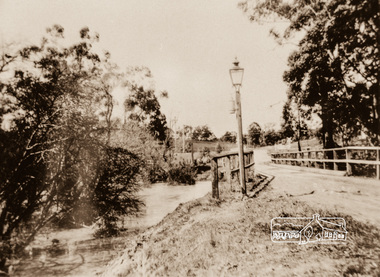
Photograph, Diamond Creek Bridge, Eltham North, c.1920
... density to build large gasworks. When the commercial production of calcium carbide became viable around 1900, it offered a quantum leap in brightness over traditional kerosene streetlamps. Acetylene gas burned with an intense, crisp white flame—significantly brighter than oil or candles. Many rural towns used self-contained lampposts. A lamplighter had to climb each post daily to manually place calcium carbide pellets in a lower chamber and fill an upper chamber with water...density to build large gasworks. When the commercial production of calcium carbide became viable around 1900, it offered a quantum leap in brightness over traditional kerosene streetlamps. Acetylene gas burned with an intense, crisp white flame—significantly brighter than oil or candles. Many rural towns used self-contained lampposts. A lamplighter had to climb each post daily to manually place calcium carbide pellets in a lower chamber and fill an upper chamber with water ...View looking east across the Glen Park Bridge and the railway crossing towards Main Road circa 1920. The bridge was originally built as a replacement for an older private bridge built by a man named Foley around 1880. In 1911 Heidelberg and Eltham agreed to share the costs to build a new bridge (the Diamond Creek was the border between the two). Construction began in June 1915 and it was officially opened by Cr. Taylor on Cup Day, November 1915. This photo, dated around 1920, is of the Glen Park Bridge crossing over the Diamond Creek about 50 metres north of the present-day Wattletree tree Road Bridge. Glen Park Road intersected Main Rain Road along an alignment following present day Coleman Cresent. In this this picture we see the narrow wooden bridge over a high flowing Diamond Creek at Glen Park, now Eltham North. In the background is a railway crossing sign. There is a self-contained carbide streetlamp situated in front of the bridge. In the early 1900s, carbide (acetylene gas) streetlamps emerged as a lighting technology for regional towns across Victoria, Australia, before municipal electricity grids were widely established. During the late Victorian and early Edwardian eras, major hubs like Melbourne relied on centralized coal-gas infrastructure. However, small regional Victorian shires lacked the funds or population density to build large gasworks. When the commercial production of calcium carbide became viable around 1900, it offered a quantum leap in brightness over traditional kerosene streetlamps. Acetylene gas burned with an intense, crisp white flame—significantly brighter than oil or candles. Many rural towns used self-contained lampposts. A lamplighter had to climb each post daily to manually place calcium carbide pellets in a lower chamber and fill an upper chamber with water. The water dripped onto the carbide, producing acetylene gas to feed the burner. Lamplighters carefully measured the fuel amounts so the chemical reaction would naturally exhaust itself and "turn off" around midnight. While carbide streetlights provided unparalleled visibility for early motorists, cyclists, and pedestrians, they were incredibly labour-intensive and inherently volatile. The gas was highly explosive, prone to leaks, and left behind a pungent, sulphur-like odour. By the end of World War I, local Victorian councils rapidly phased out acetylene infrastructure in favour of safer, independent electric powerhouse generators. In the context of Eltham's local history, the Eltham Shire and surrounding Yarra Valley region actively relied on carbide streetlamps and kerosene lighting during the early 20th century before the expansion of the Melbourne electric grid. Eltham was an outer-rural, heavily timbered farming and orchard district at the turn of the century, it faced unique civic infrastructure challenges. In rural Eltham, early streetlamps were exceptionally sparse. The community relied heavily on "innkeeper laws" which dictated local hotels—such as the historic Eltham Hotel—were legally required to keep external oil, kerosene, or acetylene lamps burning through the night to illuminate the main roads for travellers and coaches. The volatile carbide and kerosene lamps on Eltham's main thoroughfares were progressively phased out during the 1920s. The district steadily transitioned to electricity, which allowed for developments like the installation of modern electrical wiring at the local fire station on Arthur Street by 1928. The Glen Park Bridge was a low structure and subject to flooding readily. In 1959 Eltham Council erected a new crossing over the Diamond Creek and realigned the road to the present-day Wattletree Road Bridge. Construction was not fully complete when on Sunday, 20 September 1959, heavy flooding occurred in the stream and at 3:53 pm the old bridge was washed away forever. - Research by Peter Pidgeon, EDHS, June 2026Photograph copy eltham north, wattletree road, coleman crescent, bridges, diamond creek (creek), bridge, carbide streetlamp, floodwater, glen park bridge, street lamp, glen park road, glen park estate -
 Sunshine and District Historical Society Incorporated
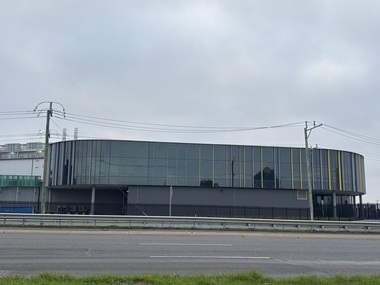
Photograph - Data Centre Photographs
... density figures. In 2025, Melbourne’s live data centre capacity grew by 37%, the fastest growth of any major Australian market. The data centres located in the City of Brimbank City, but only a small number, are in Deer Park, Derrimut and Brooklyn. They were built on repurposed industry or farmland including the former Deer Park ICI Explosive Storage site and the State Electricity of Victoria Brooklyn Store site. These data centres provided significant long term financial investment in Brimbank, electricity and water...density figures. In 2025, Melbourne’s live data centre capacity grew by 37%, the fastest growth of any major Australian market. The data centres located in the City of Brimbank City, but only a small number, are in Deer Park, Derrimut and Brooklyn. They were built on repurposed industry or farmland including the former Deer Park ICI Explosive Storage site and the State Electricity of Victoria Brooklyn Store site. These data centres provided significant long term financial investment in Brimbank, electricity and water ...During the mid 2020’s, Victoria experienced one of the fastest data centre growth surges in the Asia Pacific region, driven by AI, cloud, hyperscale demand, and government backed planning reforms. This increase was measured by capacity, number of facilities, investment volume, and rack density figures. In 2025, Melbourne’s live data centre capacity grew by 37%, the fastest growth of any major Australian market. The data centres located in the City of Brimbank City, but only a small number, are in Deer Park, Derrimut and Brooklyn. They were built on repurposed industry or farmland including the former Deer Park ICI Explosive Storage site and the State Electricity of Victoria Brooklyn Store site. These data centres provided significant long term financial investment in Brimbank, electricity and water infrastructure upgrades and employment during construction and on-going employment for their operations. They however did bring controversy, the massive size of the buildings, the noise and heat generated, and the electricity and water requirements. The construction of these data centres attracted significant media coverage and sustained public interest. These photographs are of the data centres built in the City of Brimbank.6602.01 - Geelong Road 594 Brooklyn - CDC Brooklyn Data Centre 2024 Photo 01.JPG 6602.02 - Geelong Road 594 Brooklyn - CDC Brooklyn Data Centre 2024 Photo 02.JPG 6602.03 - Geelong Road 594 Brooklyn - CDC Brooklyn Data Centre 2024 Photo 03.JPG 6602.04 - Radnor Drive 72 Deer Park - Digital Realty Data Centre 2026 Photo 01.JPGradnor drive, deer park, geelong road, brooklyn -
Kew Historical Society Inc
Journal, Kewriosity : August 1991
... density housing] / p1. Diary dates for August / p2. Free self-defence and relaxation classes / p2. Anonymous house [house numbering requirements] / p2. Tom's incredible Spider Ring! ['The Spider Ring' by Track Players] / p2. Commentary / Cr Daryl Oldaker p3. Chief Executive's Column [Property valuations] / p3. Looking down rat holes [storm water ...The greening of Kew [Street Tree Masterplan] / p1. Free mulching of prunings / p1. Looming threat to the character of Kew [Victorian Government plans for medium-density housing] / p1. Diary dates for August / p2. Free self-defence and relaxation classes / p2. Anonymous house [house numbering requirements] / p2. Tom's incredible Spider Ring! ['The Spider Ring' by Track Players] / p2. Commentary / Cr Daryl Oldaker p3. Chief Executive's Column [Property valuations] / p3. Looking down rat holes [storm water drain audit] / p4. Waste plans not half baked [120 Litre Mobile Bin Recycling Trial] / p4. Lower your gas and electricity bills [Kew Community House workshops] / p4. Tribute to John Fleet Maughan 1898-1991 [City Engineer 1924-63] / p4. Indoor celebration of parkland [opening of Burke Road to High Street section of Outer Circle Linear Park] / p5. Forward planning for youth [survey] / p5. Kew saves an endangered species [Studley Park Red Gum - E.Studleyensis] / p5. Compliments, criticism and complaints [Kew Library Comments Book] / p6. Life in East Kew / Mr Tony de Clifford p6. New face [Pierrette Boustany, Outside School Hours Co-ordinator] / p6. New face [Lisa Gaffney, Public Relations Officer] / p6. Kewriosity deadlines / p6. Advertising [charges] / p6. Thankyou to the volunteers of Kew / p7. Another Anniversaire [Count Francoise de la Perouse] / p7. Heartfelt thanks [donation by East Kew Synagogue congregation to Kew Citizens' Advice Bureau] / p7. Kew Rotary Club good works / p7. Cinema to expand [Balwyn Cinema] / p7. Winter Song [Brian Hansford performs 'Winterreise at St John's Hall, Camberwell] / p8. Come to Cameron Country [Donald Cameron et al at Kew Gallery] / p8. You be the Gypsy [Victor Herbert's 'Gipsy Lady' by Viola Musical Comedy Society] / p8. Classical music in Kew [Kew Philharmonic Society] / p8.Kewriosity was a local newsletter combining Kew Council and community news. It was published between November 1983 and June 1994, replacing an earlier Kewriosity [broad] Sheet (1979-84). In producing Kewriosity, Council aimed to provide a range of interesting and informative articles covering its deliberations and decision making, together with items of general interest and importance to the Kew community and information not generally available through daily media outlets.non-fictionThe greening of Kew [Street Tree Masterplan] / p1. Free mulching of prunings / p1. Looming threat to the character of Kew [Victorian Government plans for medium-density housing] / p1. Diary dates for August / p2. Free self-defence and relaxation classes / p2. Anonymous house [house numbering requirements] / p2. Tom's incredible Spider Ring! ['The Spider Ring' by Track Players] / p2. Commentary / Cr Daryl Oldaker p3. Chief Executive's Column [Property valuations] / p3. Looking down rat holes [storm water drain audit] / p4. Waste plans not half baked [120 Litre Mobile Bin Recycling Trial] / p4. Lower your gas and electricity bills [Kew Community House workshops] / p4. Tribute to John Fleet Maughan 1898-1991 [City Engineer 1924-63] / p4. Indoor celebration of parkland [opening of Burke Road to High Street section of Outer Circle Linear Park] / p5. Forward planning for youth [survey] / p5. Kew saves an endangered species [Studley Park Red Gum - E.Studleyensis] / p5. Compliments, criticism and complaints [Kew Library Comments Book] / p6. Life in East Kew / Mr Tony de Clifford p6. New face [Pierrette Boustany, Outside School Hours Co-ordinator] / p6. New face [Lisa Gaffney, Public Relations Officer] / p6. Kewriosity deadlines / p6. Advertising [charges] / p6. Thankyou to the volunteers of Kew / p7. Another Anniversaire [Count Francoise de la Perouse] / p7. Heartfelt thanks [donation by East Kew Synagogue congregation to Kew Citizens' Advice Bureau] / p7. Kew Rotary Club good works / p7. Cinema to expand [Balwyn Cinema] / p7. Winter Song [Brian Hansford performs 'Winterreise at St John's Hall, Camberwell] / p8. Come to Cameron Country [Donald Cameron et al at Kew Gallery] / p8. You be the Gypsy [Victor Herbert's 'Gipsy Lady' by Viola Musical Comedy Society] / p8. Classical music in Kew [Kew Philharmonic Society] / p8. publications -- city of kew (vic.), kewriosity, council newsletters, community newsletters -
 Sunshine and District Historical Society Incorporated
Archive - Data Centre Documents
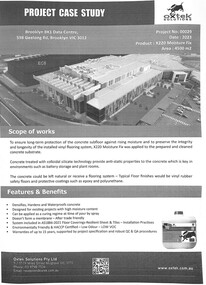
... density figures. In 2025, Melbourne’s live data centre capacity grew by 37%, the fastest growth of any major Australian market. The data centres located in the City of Brimbank City, but only a small number, are in Deer Park, Derrimut and Brooklyn. They were built on repurposed industry or farmland including the former Deer Park ICI Explosive Storage site and the State Electricity of Victoria Brooklyn Store site. These data centres provided significant long term financial investment in Brimbank, electricity and water...density figures. In 2025, Melbourne’s live data centre capacity grew by 37%, the fastest growth of any major Australian market. The data centres located in the City of Brimbank City, but only a small number, are in Deer Park, Derrimut and Brooklyn. They were built on repurposed industry or farmland including the former Deer Park ICI Explosive Storage site and the State Electricity of Victoria Brooklyn Store site. These data centres provided significant long term financial investment in Brimbank, electricity and water ...During the mid 2020’s, Victoria experienced one of the fastest data centre growth surges in the Asia Pacific region, driven by AI, cloud, hyperscale demand, and government backed planning reforms. This increase was measured by capacity, number of facilities, investment volume, and rack density figures. In 2025, Melbourne’s live data centre capacity grew by 37%, the fastest growth of any major Australian market. The data centres located in the City of Brimbank City, but only a small number, are in Deer Park, Derrimut and Brooklyn. They were built on repurposed industry or farmland including the former Deer Park ICI Explosive Storage site and the State Electricity of Victoria Brooklyn Store site. These data centres provided significant long term financial investment in Brimbank, electricity and water infrastructure upgrades and employment during construction and on-going employment for their operations. They however did bring controversy, the massive size of the buildings, the noise and heat generated, and the electricity and water requirements.The construction of these data centres attracted significant media coverage and sustained public interest. These documents are examples of the media coverage, documents released by the data centres and their contractors.6603.01 - Geelong Road 594 Brooklyn - CDC Brooklyn Data Centre Oxtek Solutions Project Case Study.jpg 6603.01 - Geelong Road 594 Brooklyn - CDC Brooklyn Data Centre Oxtek Solutions Project Case Study.pdf 6603.02 - Geelong Road 594 Brooklyn - CDC Brooklyn Data Centre Vector Alliance Preliminary Safety Strategy 11th December 2025.jpg 6603.02 - Geelong Road 594 Brooklyn - CDC Brooklyn Data Centre Vector Alliance Preliminary Safety Strategy 11th December 2025.PDF 6603.03 - Geelong Road 594 Brooklyn - CDC Brooklyn Data Centre CDC Hosts Melbourne Data Centre Site Visit 9th April 2025.jpg 6603.03 - Geelong Road 594 Brooklyn - CDC Brooklyn Data Centre CDC Hosts Melbourne Data Centre Site Visit 9th April 2025.pdf 6603.04 - Brimbank Airs Data Centre Concerns - Star Weekly 25th June 2026 Page 1.jpg 6603.04 - Brimbank Airs Data Centre Concerns - Star Weekly 25th June 2026 Page 2.jpg 6603.04 - Brimbank Airs Data Centre Concerns - Star Weekly 25th June 2026.pdf 6603.05 - Call For Data Centre Forum - Star Weekly 29th June 2026.pdf 6603.06 - Data Centre Concerns Grow - Star Weekly 7th July 2026 Page 2.pdf 6603.07 - Brimbank Flags Data Centre Concerns Among Local Council - Star Weekly 7th July 2026 Page 3.pdf 6603.08 - Ongoing Questions Over Data Centres In Brimbank - Star Weekly 28th July 2026 Page 5.jpggeelong road, brooklyn, radnor drive, deer park
