
Showing 18 items matching "waterlilies"
-
 University of Melbourne, Burnley Campus Archives
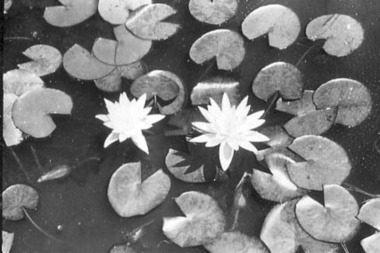
Photograph - Black and white photograph, E.M. Gibson, Waterlilies, March/April 1942
... Waterlilies...waterlilies...Black and white photograph of waterlilies in the Luffmann/Lily ponds...waterlilies luffmann ponds lily ponds 1/9 Black and white photograph of waterlilies in the Luffmann/Lily ponds Waterlilies Photograph Black and white photograph E.M. ...1/9waterlilies, luffmann ponds, lily ponds -
 University of Melbourne, Burnley Campus Archives
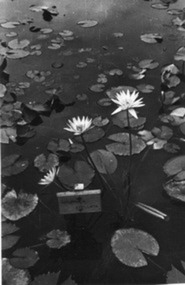
Photograph - Black and white print, E.M. Gibson, Waterlilies in Lily Pond, February 1947
... Waterlilies in Lily Pond......waterlilies...Label, Nymphaea stellata in the lily pond. Waterlilies in Lily Pond Photograph Black and white print E.M. ...Black and white photograph of waterliolies in the Luffmann/Lily ponds. Label, Nymphaea stellata in the lily pond. 4/10nymphaea stellata, lily pond, e. m. gibson collection, luffmann ponds, waterlilies -
 University of Melbourne, Burnley Campus Archives
Photograph, James Leslie Provan, Burnley 1942 Album Page 1, 1942
... waterlilies...Waterlilies...waterlilies flowers burnley 1942 j.l. provan Waterlilies Burnley 1942 Album Page 1 Photograph James Leslie Provan ...Waterlilieswaterlilies, flowers, burnley, 1942, j.l. provan -
University of Melbourne, Burnley Campus Archives
Photograph, James Leslie Provan, Burnley 1942 Album Page 2, 1942-1943
... waterlilies...Waterlilies....waterlilies flowers burnley 1942 j.l. provan Waterlilies. ...Waterlilies.waterlilies, flowers, burnley, 1942, j.l. provan -
 University of Melbourne, Burnley Campus Archives
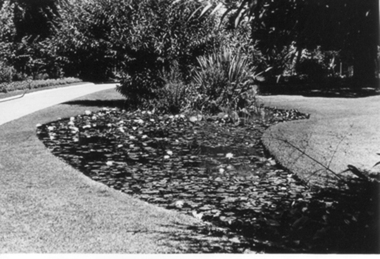
Photograph - Black and white photograph, E.M. Gibson, Early 1940's
... ...waterlilies...Black and white photograph of the Luffmann/Lily Ponds with waterlilies in flower. ...Luffmann ponds lily ponds waterlilies 3/8a Black and white photograph of the Luffmann/Lily Ponds with waterlilies in flower. ...3/8aluffmann ponds, lily ponds, waterlilies -
 University of Melbourne, Burnley Campus Archives
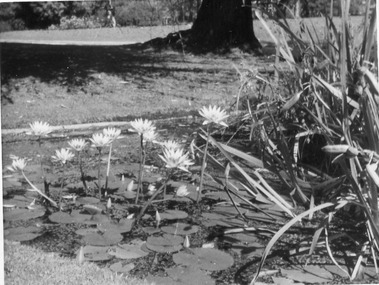
Photograph - Black and white print, Helen Dudley, Lily Pond, 1944-1945
... Lily Pond with waterlilies in flower....Lily Pond with waterlilies in flower. Lily Pond Photograph Black and white print Helen Dudley ...Black and white photograph. Lily Pond with waterlilies in flower.On reverse, "1944-1945 Blue lilies in Ponds under Willows."water lilies, ponds, helen dudley, 1991, centenary, lily ponds, luffmann ponds -
 Whitehorse Historical Society Inc.
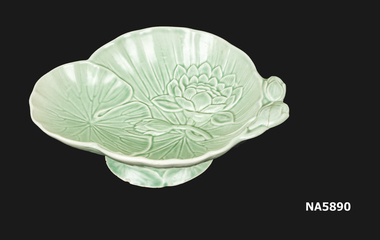
Domestic object - Waterlily bowl, Carlton Ware, C 1950's
... Carlton ware ceramic bowl - Waterlily design - light green colour...Made in England "Trademark" Registered, Australian design Registration applied for Carlton ware ceramic bowl - Waterlily design - light green colour Domestic object Waterlily bowl Carlton Ware ...- Domestic China - Popular in C 1950's - Utility dishCarlton ware ceramic bowl - Waterlily design - light green colourCarlton ware. Made in England "Trademark" Registered, Australian design Registration applied fortableware, ceramics -
 Embroiderers Guild, Victoria
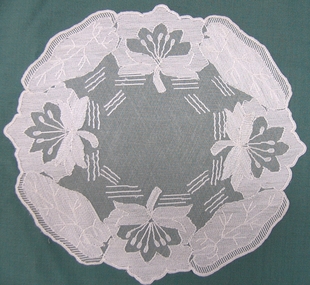
Textile - Net Darning Mat, c. 1900
... Fine cotton net with a design of waterlilies in closely worked net darning....Embroidery Mats Net darning 1900-20 Fine cotton net with a design of waterlilies in closely worked net darning. Textile Net Darning Mat ...Fine cotton net with a design of waterlilies in closely worked net darning.embroidery, mats, net darning, 1900-20 -
 Embroiderers Guild, Victoria
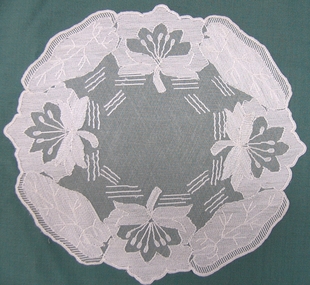
Textile - Net Darning Mat, c. 1900
... Fine cotton net with a design of waterlilies in closely worked net darning....Embroidery Mats Net darning 1900-20 Fine cotton net with a design of waterlilies in closely worked net darning. Textile Net Darning Mat ...Fine cotton net with a design of waterlilies in closely worked net darning.embroidery, mats, net darning, 1900-20 -
 Flagstaff Hill Maritime Museum and Village
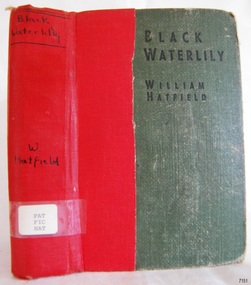
Book, Black Waterlily
... Black Waterlily Author: William Hatfield Publisher: Angus & Robertson Date: 1935 ...Shipwrecked-coast Flagstaff-Hill Flagstaff-Hill-Maritime-Museum Warrnambool Maritime-Museum Shipwreck-coast Flagstaff-Hill-Maritime-Village Shipwrecked-artefact Book Pattison Collection Warrnambool Library Warrnambool Mechanics’ Institute Ralph Eric Pattison Corangamite Regional Library Service Warrnambool City Librarian Mechanics’ Institute Library Victorian Library Board Warrnambool books and records Warrnambool Children’s Library black waterlily william hatfield The label on the spine with the typed text PAT FIC HAT Pastedown front endpaper has a sticker from Warrnambool Mechanics Institute and Free Library covered by a sticker from Corangamite Regional Library Service Front loose endpaper has a stamp from Corangamite Regional Library Service Front loose endpaper has a stamp from Warrnambool Mechanics Institute Black Waterlily Author: William Hatfield Publisher: Angus & Robertson Date: 1935 Black Waterlily Book ...Pattison Collection This item is from the ‘Pattison Collection’, a collection of books and records that was originally owned by the Warrnambool Mechanics’ Institute, which was founded in Warrnambool in 1853. By 1886 the Warrnambool Mechanics’ Institute (WMI) had grown to have a Library, Museum and Fine Arts Gallery, with a collection of “… choice productions of art and valuable specimens in almost every branch and many wonderful national curiosities are now to be seen there, including historic relics of the town and district.” It later included a School of Design. Although it was very well patronised, the lack of financial support led the WMI in 1911 to ask the City Council to take it over. In 1935 Ralph Pattison was appointed as City Librarian to establish and organise the Warrnambool Library as it was then called. When the WMI building was pulled down in 1963 a new civic building was erected on the site and the new Warrnambool Library, on behalf of the City Council, took over all the holdings of the WMI. At this time some of the items were separated and identified as the ‘Pattison Collection’, named after Ralph Pattison. Eventually, the components of the WMI were distributed from the Warrnambool Library to various places, including the Art Gallery, Historical Society and Flagstaff Hill. Later some were even distributed to other regional branches of Corangamite Regional Library and passed to and fro. It is difficult now to trace just where all of the items have ended up. The books at Flagstaff Hill Maritime Village generally display stamps and markings from Pattison as well as a variety of other institutions including the Mechanics’ Institute itself. RALPH ERIC PATTISON Ralph Eric Pattison was born in Rockhampton, Queensland, in 1891. He married Maude Swan from Warrnambool in 1920 and they set up home in Warrnambool. In 1935 Pattison accepted a position as City Librarian for the Warrnambool City Council. His huge challenge was to make a functional library within two rooms of the Mechanics’ Institute. He tirelessly cleaned, cleared and sorted a disarrayed collection of old books, jars of preserved specimens and other items reserved for exhibition in the city’s museum. He developed and updated the library with a wide variety of books for all tastes, including reference books for students; a difficult task to fulfil during the years following the Depression. He converted all of the lower area of the building into a library, reference room and reading room for members and the public. The books were sorted and stored using a cataloguing and card index system that he had developed himself. He also prepared the upper floor of the building and established the Art Gallery and later the Museum, a place to exhibit the many old relics that had been stored for years for this purpose. One of the treasures he found was a beautiful ancient clock, which he repaired, restored and enjoyed using in his office during the years of his service there. Ralph Pattison was described as “a meticulous gentleman whose punctuality, floorless courtesy and distinctive neat dress were hallmarks of his character, and ‘his’ clock controlled his daily routine and his opening and closing of the library’s large heavy doors to the minute.” Pattison took leave from 1942 to 1945 to serve in the Royal Australian Navy, Volunteer Reserve as Lieutenant. A few years later he converted one of the Museum’s rooms into a Children’s Library, stocking it with suitable books for the younger generation. This was an instant success. In the 1950’s he had the honour of being appointed to the Victorian Library Board and received more inspiration from the monthly conferences in Melbourne. He was sadly retired in 1959 after over 23 years of service, due to the fact that he had gone over the working age of council officers. However, he continued to take a very keen interest in the continual development of the Library until his death in 1969. WARRNAMBOOL MECHANICS’ INSTITUTE Warrnambool's Mechanics' Institute (or Institution as it was sometimes called) was one of the earliest in Victoria. On 17th October 1853, a meeting was held where it was resolved to request the Lieutenant Governor of the Colony to grant land for the erection of a Mechanics' Institutes building. A committee was formed at the meeting and Richard Osburne chaired the first meeting of this committee. The land on the North West corner of Banyan and Merri Streets was granted but there were no funds to erect the building. The Formal Rights of the Warrnambool Mechanics' Institute's encompassed its aims and these were officially adopted in1859; "This Institution has for its object the diffusion of literary, scientific, and other useful knowledge amongst its members, excluding all controversial subjects, religious or political. These objects are sought to be obtained by means of a circulating library, a reading room, the establishment of classes, debates, and the occasional delivery of lectures on natural and experimental philosophy, mechanics, astronomy, chemistry, natural history, literature, and the useful and ornamental arts, particularly those which have a more immediate reference to the colony." The Warrnambool Mechanics' Institute opened its first reading room in November 1884 in the National School building at the corner of Banyan and Timor Streets. The Institute was funded by member subscription, payable on a quarterly, half-yearly or yearly basis. Samuel Hannaford, the Manager of the Warrnambool Bank of Australasia, was the first Honorary Secretary of the Mechanics' Institutes, and an early President and Vice-President. He also gave several of the early lectures in the Reading Room. Another early Secretary, Librarian and lecturer was Marmaduke Fisher, the teacher at the National School. Lecture topics included The Poets and Poetry of Ireland', 'The Birth and Development of the Earth', 'The Vertebrae - with Remarks on the pleasures resulting from the study of Natural History' and 'Architecture'. In 1856 the Reading Room was moved to James Hider's shop in Timor Street, and by 1864 it was located in the bookshop of Davies and Read. In the 1860's the Mechanics' Institute struggled as membership waned but in 1866, after a series of fundraising efforts, the committee was able to purchase land in Liebig Street, on a site then called Market Square, between the weighbridge and the fire station. A Mechanics' Institute building was opened at this site in August 1871. The following year four more rooms were added to the main Reading Room and in 1873 the Artisan School of Design was incorporated into the Institute. The same year Joseph Archibald established a Museum; however, it deteriorated when he was transferred to Bendigo in 1877. In 1880, with Archibald's return to Warrnambool, the Museum was re-established, and in 1885 a new building was built at the back of the Institute to accommodate the re-created School of Design, the Art Gallery and the Museum. In 1887 the Museum section was moved to the former courthouse in Timor Street (for some time the walls of the building formed part of the TAFE cafeteria but all is now demolished)). In 1911 the Museum was transferred back to the original building and the management of the Mechanics' Institute was handed over to the Warrnambool City Council. The Museum and Art Gallery became one and housed many fine works of art, and the Library continued to grow. The building was well patronised, with records showing that at the beginning of the 20th century there were between 500 and 800 visitors. During World War One the monthly figures were in the thousands, with 3,400 people visiting in January 1915. The Museum was a much - loved Institution in Warrnambool until the contents of the Museum and Art Gallery were removed to make room for the Warrnambool City Council Engineers' Department. The contents were stored but many of the items were scattered or lost. When the original building was demolished the site became occupied by the Civic Centre, which included the new City Library. (The library was temporarily located in the old Palais building in Koroit Street.) In the process of reorganisation the Collection was distributed amongst the community groups: -The new City Library took some of the historical books and some important documents, historic photographs and newspapers. -The Art Gallery kept the 19th Century art collection and some of the artefacts from the museum. -The Historical Society has some items -The State Museum has some items -Some items were destroyed -Flagstaff Hill Maritime Village has old newspapers, Government Gazettes, most of the Mechanics' Institute Library, ledgers and documents connected to the Mechanics' Institute Library, some framed and unframed artworks and some photographs. The Warrnambool Mechanics' Institute Library book collection is deemed to be of great importance because it is one of the few collections in an almost intact state, and many of the books are now very rare and of great value. The Pattison Collection, along with other items at Flagstaff Hill Maritime Village, was originally part of the Warrnambool Mechanics' Institute’s collection. The Warrnambool Mechanics’ Institute Collection is primarily significant in its totality, rather than for the individual objects it contains. Its contents are highly representative of the development of Mechanics' Institute libraries across Australia, particularly Victoria. A diversity of publications and themes has been amassed, and these provide clues to our understanding of the nature of and changes in the reading habits of Victorians from the 1850s to the middle of the 20th century. The collection also highlights the Warrnambool community’s commitment to the Mechanics’ Institute, reading, literacy and learning in the regions, and proves that access to knowledge was not impeded by distance. These items help to provide a more complete picture of our community’s ideals and aspirations. The Warrnambool Mechanics Institute book collection has historical and social significance for its strong association with the Mechanics Institute movement and the important role it played in the intellectual, cultural and social development of people throughout the latter part of the nineteenth century and the early twentieth century. The collection of books is a rare example of an early lending library and its significance is enhanced by the survival of an original collection of many volumes. The Warrnambool Mechanics' Institute’s publication collection is of both local and state significance. Black Waterlily Author: William Hatfield Publisher: Angus & Robertson Date: 1935 The label on the spine with the typed text PAT FIC HAT Pastedown front endpaper has a sticker from Warrnambool Mechanics Institute and Free Library covered by a sticker from Corangamite Regional Library Service Front loose endpaper has a stamp from Corangamite Regional Library Service Front loose endpaper has a stamp from Warrnambool Mechanics Institute shipwrecked-coast, flagstaff-hill, flagstaff-hill-maritime-museum, warrnambool, maritime-museum, shipwreck-coast, flagstaff-hill-maritime-village, shipwrecked-artefact, book, pattison collection, warrnambool library, warrnambool mechanics’ institute, ralph eric pattison, corangamite regional library service, warrnambool city librarian, mechanics’ institute library, victorian library board, warrnambool books and records, warrnambool children’s library, black waterlily, william hatfield -
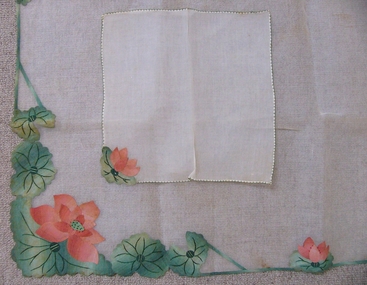 Embroiderers Guild, Victoria
Textile - Organdie Applique Cloth
... The serviettes have a small waterlily in one corner, and a rolled buttonholed edge....The serviettes have a small waterlily in one corner, and a rolled buttonholed edge. ...Cream organza supper cloth and 4 matching serviettes. Cloth has a hand appliqued design of waterlilies in salmon pinks and greens in each corner. The serviettes have a small waterlily in one corner, and a rolled buttonholed edge.Label: Made in Chinaembroidery, tablecloths, napkins, china, applique -
University of Melbourne, Burnley Campus Archives
Photograph - colour prints, Kodak, Plants, Unknown
... A duck, irises and waterlilies in the Luffmann Ponds. 2. Labelled, "Quercus cerris." 3. ...A duck, irises and waterlilies in the Luffmann Ponds. 2. Labelled, "Quercus cerris." 3. ...luffmann ponds, lily ponds, irises, quercus cerris, p. cuneata, ducks -
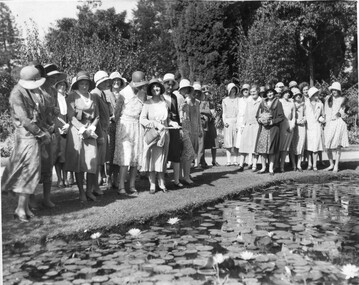 University of Melbourne, Burnley Campus Archives
Photograph - Black and white print, Garden Party for Students, 1926-1941
... Large group of female students with Mrs.Jessep standing beside the ponds full of waterlilies. The petite woman in the front holding her handbag looks like "Tuppence" from the photographs in Mrs. ...Large group of female students with Mrs.Jessep standing beside the ponds full of waterlilies. The petite woman in the front holding her handbag looks like "Tuppence" from the photographs in Mrs. ...Donated by Julieanne Webster, Mrs. Jessep's great niece.Black and white photograph. Large group of female students with Mrs.Jessep standing beside the ponds full of waterlilies. The petite woman in the front holding her handbag looks like "Tuppence" from the photographs in Mrs. Jessep's Album.On reverse, "Garden Party for the students at School of Horticulture Burnley. 2/- Unmounted 3/- Art Mounted."garden party, female students, mrs. jessep, ponds, julieanne webster, school of horticulture burnley, tuppence, luffmann ponds, recreation -
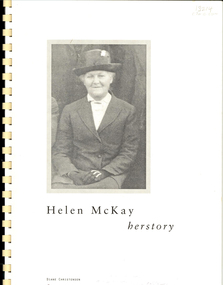 Federation University Historical Collection
Booklet, Helen McKay Herstory, 1997
... The Eureka Stockade Memorial Park comprised a monument to those killed in the Battle of Eureka in 3 December 1854, gardens, swimming pool, waterlily pond, hall and memorial gates. The gateway, on Stawell Street Ballarat, is dedicated to Helen McKay. ...The Eureka Stockade Memorial Park comprised a monument to those killed in the Battle of Eureka in 3 December 1854, gardens, swimming pool, waterlily pond, hall and memorial gates. The gateway, on Stawell Street Ballarat, is dedicated to Helen McKay. ...Helen McKay was a foundation member of the Eureka Stockade Progress Association, and later a life member. The Eureka Stockade Memorial Park comprised a monument to those killed in the Battle of Eureka in 3 December 1854, gardens, swimming pool, waterlily pond, hall and memorial gates. The gateway, on Stawell Street Ballarat, is dedicated to Helen McKay. Helen Maria (Helen) Reddie was the first Australian born child of William Reddie and his wife Christiana. Before emigrating to Australia they had lived in Kilcaldy, Fifeshire, Scotland.49 page A4 booklet with plastic cover and plastic binding with information relating to Helen McKay. eureka, eureka stockade, eureka stockade progress association, eureka memorial, mckay, helen mckay, scotland, scottish, george main, buninyong, thomas hiscock, trial mills, di christensen -
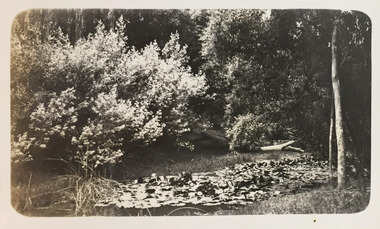 Kew Historical Society Inc
Photograph - Macauley's, Kew, 1924
... The photograph is of waterlilies planted at Macauley's boat sheds on the Yarra River at Kew. ...The photograph is of waterlilies planted at Macauley's boat sheds on the Yarra River at Kew. ...Henry Beater Christian (1886-1962) , was a descendant of one of the earliest settler families in Kew. Employed at the Kew Asylum as a 'public servant', he was a skilled amateur photographer, photographing numerous scenes in Kew and on his travels around Victoria. The majority of his photographs date from 1916 to 1929. His finest photographs are housed in two photograph albums. Digital copy of a photograph from page 2 of the 47-page photograph album containing 261 gelatinous silver images, loaned by Diane Washfold with permission given to digitise and hold a copy in our collection. The photograph is of waterlilies planted at Macauley's boat sheds on the Yarra River at Kew. The boat sheds were located at the west end of Molesworth Street. "Macauley’s Kew"henry beater christian (1886-1962), landscape photography, kew (vic.) — yarra river, christian-washfold collection, photograph albums, macauley's boat sheds -
 University of Melbourne, Burnley Campus Archives
Album - Black and white and colour slides, Gnome, Burnley Views, 1947-1955
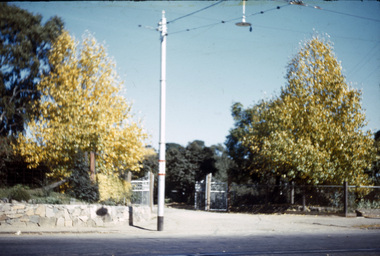
... (72) Inside a glasshouse b/w. (73) Entrance sign- Department of Agriculture Burnley Gardens, School of Horticulture & Primary Agriculture, Plant Research laboratory, Agrostology Branch, Fruit Preserving Branch c. (74) Plant Research Laboratory b/w. (75) Students on an excursion c. (76) Glasshouses b/w. (77) Garden view b/w. (78) Kniphophia c. (79) Hibiscus c. (80) Garden view c. (81) Dairy, Silo and dog b/w. (82) Irrigation in then Orchard b/w. (83) Garden view with magnolia c. (84) Flower plots in the Orchard c. (85) Pruning demonstration b/w. (86) Administration Building under construction c. (87) Rock Point c. (88) Mrs Kneen and Magnolia c. (89) Glasshouses c. (90) Sequoia sempervirens b/w. (91) Inside Administration Building c. (92) Luffmann Ponds b/w. (93) Sequoia sempervirend, Mrs Kneen and child c. (94) Garden bed in front of Sequoian sempervirens c. (95) Principals Residence b/w. (96) Poultry pens b/w. 1947 (97) Principals Residence b/w. (98) Student picking fruit from netted tree b/w. (99) Rock Point and Long Border c. (100) Administration Building under construction c. (101) Greenhouse b/w. (102) Rock Point c. (103) Flowers in the Orchard c. (104) Waterlilies in the Pond c. (105) Blossom tree c. (106) Hilda Kirkhope Rockery c. (107) Long Border c. (108) Plant Research Institute with flower border along drive c....Kneen children playing c. (51) (52) Cinerarias (now Pericallis x hybrida) in pots c. (53) Temporary building where the Grey Garden is now b/w. (54) Garden view b/w. (55) Unknown building b/w. (56) Person pruning in the Orchard c. (57) Students working in the Orchard c. (58) Swan Street with recently completed rock wall constructed by the Public Works Department b/w. (59) Lagoon paddock b/w. (60,62) Pavilion and new Administration Building before the Pavilion was removed b/w. (61) As (60) but viewed from a different direction c. (63) Plant c. (64) View through a window on the stairs in the Administration Building c. (65) Plant c. (66) Garden view of trees c. (67) Garden View b/w. (68) Blossom tree c. (69 )Garden view along path to Principal's Residence c. (70) Lagoon Paddock c. (71) Lagoon Paddock with cows b/w. (72) Inside a glasshouse b/w. (73) Entrance sign- Department of Agriculture Burnley Gardens, School of Horticulture & Primary Agriculture, Plant Research laboratory, Agrostology Branch, Fruit Preserving Branch c. (74) Plant Research Laboratory b/w. (75) Students on an excursion c. (76) Glasshouses b/w. (77) Garden view b/w. (78) Kniphophia c. (79) Hibiscus c. (80) Garden view c. (81) Dairy, Silo and dog b/w. (82) Irrigation in then Orchard b/w. (83) Garden view with magnolia c. (84) Flower plots in the Orchard c. (85) Pruning demonstration b/w. (86) Administration Building under construction c. (87) Rock Point c. (88) Mrs Kneen and Magnolia c. (89) Glasshouses c. (90) Sequoia sempervirens b/w. (91) Inside Administration Building c. (92) Luffmann Ponds b/w. (93) Sequoia sempervirend, Mrs Kneen and child c. (94) Garden bed in front of Sequoian sempervirens c. (95) Principals Residence b/w. (96) Poultry pens b/w. 1947 (97) Principals Residence b/w. (98) Student picking fruit from netted tree b/w. (99) Rock Point and Long Border c. (100) Administration Building under construction c. (101) Greenhouse b/w. (102) Rock Point c. (103) Flowers in the Orchard c. (104) Waterlilies in the Pond c. (105) Blossom tree c. (106) Hilda Kirkhope Rockery c. (107) Long Border c. (108) Plant Research Institute with flower border along drive c. ...Contributor: T.H. KneenCardboard box of 108 35mm glass slides in metal frames made by "Gnome." Box labelled "Burnley Gardens Slides." Also 16 unused slides (1) Swan Street entrance c. (2) Orchid? b/w. (3) Nursery b/w. (4) Pasture area with man working b/w. (5) Draught horse working in the Orchard b/w. (6) Crop of corn in the Orchard c. (7) Magnolia c. (Magnolia x soulangeana). (8) Display of orange flowers c. (9) Lemon tree in the Orchard c. (10) Sign advertising 'Fruit Tree Pruning Demonstarion Sat. 2nd July (1949) c. (11) Jersey cow c. (12) Rock Point c. (13) Dahlias in the Orchard c. (14) Foundation Stone '28th August, 1946' c. (15) Felled Cypress tree 1951 b/w. (16) School truck in front of glasshouses and cacti b/w. (17)Administration Building completed but surrounded by rubble C.1949 c. (18) Plant Research Institute c. (19) Inside a glasshouse. c. (20) Administration Building c. (21) Group of female students dressed up for a function c. (22) Solenostemon (Syn. Coleus) in a glasshouse. (23, 24)Stock Matthiola incana. (25) Blossom in the Orchard c. (26) Orchard c. (27) Picking fruit in the Orchard c. (28) 2 female students holdong large bunches of poppies c. (29) Flowers growing in the Orchard c. (30) House - not Burnley c. (31) Students on an excursion c. (32) Staff member with Gladioli c. (33) Garden view - not Burnley? c. (34) Administration Building c. (35) Roses c. (36) Flowers in the Orchard c. (37) Draught horse working in the Orchard c. (38) Staff member amongst flowers in the Orchard c. (39) Garden view c. ((40) Blossom in the Orchard c. (41) Orchard c. (42) Flowers inside glasshouse c. (43) Mesembryanthemums in pots possibly in the nursery c. (44) Tree b/w. (45) Garden bed c. (46) Sign, 'Agrostology Branch, pasture Plant Research Field,' c. (47) Path to Principal's Residence c. (48) Irrigation in the Orchard b/w. (49) Cactus flowers b/w. (50) Garden view with T.H. Kneen children playing c. (51) (52) Cinerarias (now Pericallis x hybrida) in pots c. (53) Temporary building where the Grey Garden is now b/w. (54) Garden view b/w. (55) Unknown building b/w. (56) Person pruning in the Orchard c. (57) Students working in the Orchard c. (58) Swan Street with recently completed rock wall constructed by the Public Works Department b/w. (59) Lagoon paddock b/w. (60,62) Pavilion and new Administration Building before the Pavilion was removed b/w. (61) As (60) but viewed from a different direction c. (63) Plant c. (64) View through a window on the stairs in the Administration Building c. (65) Plant c. (66) Garden view of trees c. (67) Garden View b/w. (68) Blossom tree c. (69 )Garden view along path to Principal's Residence c. (70) Lagoon Paddock c. (71) Lagoon Paddock with cows b/w. (72) Inside a glasshouse b/w. (73) Entrance sign- Department of Agriculture Burnley Gardens, School of Horticulture & Primary Agriculture, Plant Research laboratory, Agrostology Branch, Fruit Preserving Branch c. (74) Plant Research Laboratory b/w. (75) Students on an excursion c. (76) Glasshouses b/w. (77) Garden view b/w. (78) Kniphophia c. (79) Hibiscus c. (80) Garden view c. (81) Dairy, Silo and dog b/w. (82) Irrigation in then Orchard b/w. (83) Garden view with magnolia c. (84) Flower plots in the Orchard c. (85) Pruning demonstration b/w. (86) Administration Building under construction c. (87) Rock Point c. (88) Mrs Kneen and Magnolia c. (89) Glasshouses c. (90) Sequoia sempervirens b/w. (91) Inside Administration Building c. (92) Luffmann Ponds b/w. (93) Sequoia sempervirend, Mrs Kneen and child c. (94) Garden bed in front of Sequoian sempervirens c. (95) Principals Residence b/w. (96) Poultry pens b/w. 1947 (97) Principals Residence b/w. (98) Student picking fruit from netted tree b/w. (99) Rock Point and Long Border c. (100) Administration Building under construction c. (101) Greenhouse b/w. (102) Rock Point c. (103) Flowers in the Orchard c. (104) Waterlilies in the Pond c. (105) Blossom tree c. (106) Hilda Kirkhope Rockery c. (107) Long Border c. (108) Plant Research Institute with flower border along drive c.burnley gardens, flower, nursery, pasture, draught horse, orchard, crops, magnolia, chicken coops, egg laying competition, glass slide -
 City of Stonnington
Malaluba Gumana, Garrimala, 2014
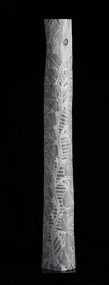
... Stonnington contemporary art collection First Peoples First Nations Indigenous Aboriginal Torres Strait Islander Painting Malaluba Gumana Waterlily Rainbow Filesnake Olive python Rainbow Serpent Natural environment Cultural heritage Garrimala Malaluba Gumana ...Malaluba Gumana dedicates most of her artworks to portraying her mother Marratj Gurruwiwi’s Gälpu clan designs of dhatam (waterlilly), djari (rainbow), djaykun (filesnake) and wititj (olive python or rainbow serpent). Gumana demonstrates a very fine ‘marwat’, a cross hatching technique that utilises a fine brush of human hair, applied to bark and memorial poles. The title 'Garrimala' refers to a billabong close to Malaluba’s homeland of Gängan. Dominating this work are realistic representations of dhatam, the waterlily plant. The Gälpu clan miny’tji – the sacred clan design behind the lillies – represents djari (rainbows) and the power of the lightning within them. It also refers to the force of the storm created by the python Wititj, living amongst the waterlilies causing ripples and rainbows on the surface of the water. The dynamic diagonal lines symbolise trees that have been knocked down as Wititj moves from place to place. Ceremonial hollow log poles Arnhem Land, Northern Territory The people of Central and Eastern Arnhem Land refer to themselves collectively as Yolngu, meaning human beings. The Yolngu traditionally use logs naturally hollowed out by termites in a funerary and ceremonial functions, principally as an ossuary. In an Australian contemporary art context however hollow log sculptures are purely memorial in function and made explicitly for public display. In Arnhem Land hollow logs are known as larrakitj; hollow logs known by other names are used in burial practices by a number of Aboriginal peoples in the north of Australia. The logs can also represent the deceased person, as the designs applied are the same as those painted on the body during the burial rites. All Yolngu clans belong to a moiety, one of two complementary halves of society: Dhuwa and Yirritja. All such affiliations play a part in Aboriginal artists' inherited right to paint an established set of designs belonging to their social group; this inheritance is, in fact, the artist's copyright over imagery. stonnington contemporary art collection, first peoples, first nations, indigenous, aboriginal torres strait islander, painting, malaluba gumana, waterlily, rainbow, filesnake, olive python, rainbow serpent, natural environment, cultural heritage -
 Embroiderers Guild, Victoria
Accessory - Neck piece, Jean Goldberg, Waterlily, 1988
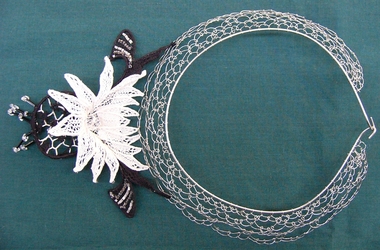
... Flower has a crystal bead centre. Waterlily Accessory Neck piece Jean Goldberg ...Acquired for Collection.Needlelace stainless steel wire, silk flower (white) and black leaves and black base with beads. Flower has a crystal bead centre.needle lace, australia, 1980-2000, accessories
