
Showing 81 items matching "wellers restaurant"
-
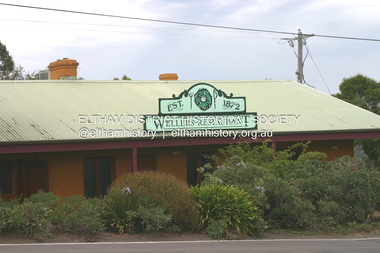 Eltham District Historical Society Inc
Photograph - Digital Photograph, Alan King, Wellers Restaurant, 150 Eltham-Yarra Glen Road, Kangaroo Ground, 23 January 2008
... Wellers Restaurant, 150 Eltham-Yarra Glen Road, Kangaroo Ground......Wellers Restaurant...Weller. The hotel was delicensed in 1909 and converted to a private residence. Around 1920 William Pitman bought the property, succeeded by his son Vernon who coined the term Pittman's Corner. Vernon and Isabel Pitman owned the house form 1945-1973. Following Vernon's death, Isabel remained there till her death in 1983. The property was converted to a restaurant...Nillumbik Now and Then (Marshall-King) Collection Eltham-Yarra Glen Road Fondata 1872 Kangaroo Ground Wellers Restaurant Billy Thorpe Brian Cadd Craig Jones Daryl Barithwaite Edward Weller Gregory Anderson hotels James Reyne Kath Hendry Mary Weller Restaurants Robert Hendry Shawn Wolfe Stephanie Wolfe Steve Gist Born digital image file Wellers Restaurant, 150 Eltham-Yarra Glen Road, Kangaroo Ground Photograph Digital Photograph Alan King Alan King Marguerite Marshall ...Originally Wellers Hotel, it was constructed by Edward Weller in 1872. Following his death in 1883 it was taken over by his widow, Mary Weller. The hotel was delicensed in 1909 and converted to a private residence. Around 1920 William Pitman bought the property, succeeded by his son Vernon who coined the term Pittman's Corner. Vernon and Isabel Pitman owned the house form 1945-1973. Following Vernon's death, Isabel remained there till her death in 1983. The property was converted to a restaurant in 1984 by owners Robert and Kath Hendry who undertook extensive renovations in 1988. Shawn and Stephanie Wolfe purchased the property from the Hendrys in 2003 and introduced live entertainment with many famous bands and entertainers from the 1960s, 1970s and 1980s performing there, including James Reyne, Daryl Barithwaite, Brian Cadd and Billy Thorpe. In 2014 the Wolfe's sold the property and the entire contents were sold at auction. New (local ) owners Gregory Anderson, Craig Jones and Steve Gist refurbished the property and relaunched it as Fondata 1872 in 2017. Covered under Heritage Overlay, Nillumbik Planning Scheme. Published: Nillumbik Now and Then / Marguerite Marshall 2008; photographs Alan King with Marguerite Marshall.; p87 A low-lying brick building at a turn on the main road, on the way to Kangaroo Ground, was once a welcome resting place for travellers. In the late 19th century Weller’s Pub, as it was called then, provided a store and an overnight stopping place and changing post for Cobb & Co coaches. The coaches were bound for the Caledonia Goldfields, near Queenstown (now St Andrews) and the Woods Point gold mines.1 Builder Edward Weller constructed the hotel and store on three acres (1.2 ha) in 1872 and after he died in 1883, his widow, Mary, continued to run the hotel, which was delicensed in 1909. This was not the first enterprise Weller ran in the district. In about 1866, he came to Kangaroo Ground and rented a general store and nine acres (3.6 ha) of land. The store, opposite the present school, was on the site of the present store and Weller also acted as the postmaster there. Mrs Weller was born in Scotland in 1841 and came to Victoria with her parents in about 1852. After two years in Melbourne the family moved to the Caledonia Goldfields where they remained for several years during which time she married Weller. The couple subsequently had five sons and five daughters. Weller’s Pub was made of handmade bricks fired from clay dug on the property. The pub must have been a haven on hot days with its 40cm thick walls throughout. One quaint reminder of its early use is that every room except the dining room has an outside door. Inside, the pub was converted to a home with extra doors connecting the inside rooms. There is no trace of the original bar room in the present dining room, where the steps leading to the cellar were bricked in. An unusual feature is the pressed metal which lines the ceilings, yet with moulding and white paint, looks like plaster. The main road once passed the back of the building and wound up to the top of the hill through a cutting. This steep hill was known to the bullock drivers in the early days, as Salvation Hill, because they were always very glad to reach its peak. After the hotel was delicensed it was converted to a private residence and extensive renovations were made, changing much of its design from a Victorian to an Edwardian style.2 Between 1912 and 1915, Gordon Cameron, a Cobb & Co coach driver and his wife rented the former hotel. Mr Cameron was related to the parliamentarian Ewen Cameron of Pigeon Bank, Kangaroo Ground, and his wife was related to Albert Pepper who owned Pigeon Bank from 1916 to 1919, when Gordon Cameron bought it. About 1920 William Pitman bought the property, which in turn was owned by his son, Vernon, who coined the name Pitman’s Corner. He and his wife Isabel owned the house from 1945 to 1973. Then as a widow Isabel Pitman lived there until her death in 1983.3 In 1984 the property was converted to a restaurant by owners P A Tribe, a barrister, his wife Sharon, and Robert and Kath Hendry. Extensive renovations maximised the splendid views of the Dandenong Ranges and the Yarra Valley.This collection of almost 130 photos about places and people within the Shire of Nillumbik, an urban and rural municipality in Melbourne's north, contributes to an understanding of the history of the Shire. Published in 2008 immediately prior to the Black Saturday bushfires of February 7, 2009, it documents sites that were impacted, and in some cases destroyed by the fires. It includes photographs taken especially for the publication, creating a unique time capsule representing the Shire in the early 21st century. It remains the most recent comprehenesive publication devoted to the Shire's history connecting local residents to the past. nillumbik now and then (marshall-king) collection, eltham-yarra glen road, fondata 1872, kangaroo ground, wellers restaurant, billy thorpe, brian cadd, craig jones, daryl barithwaite, edward weller, gregory anderson, hotels, james reyne, kath hendry, mary weller, restaurants, robert hendry, shawn wolfe, stephanie wolfe, steve gist -
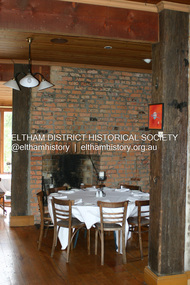 Eltham District Historical Society Inc
Photograph - Digital Photograph, Alan King, Wellers Restaurant, 150 Eltham-Yarra Glen Road, Kangaroo Ground, 23 January 2008
... Wellers Restaurant, 150 Eltham-Yarra Glen Road, Kangaroo Ground......Wellers Restaurant...Weller. The hotel was delicensed in 1909 and converted to a private residence. Around 1920 William Pitman bought the property, succeeded by his son Vernon who coined the term Pittman's Corner. Vernon and Isabel Pitman owned the house form 1945-1973. Following Vernon's death, Isabel remained there till her death in 1983. The property was converted to a restaurant...Nillumbik Now and Then (Marshall-King) Collection Eltham-Yarra Glen Road Fondata 1872 Kangaroo Ground Wellers Restaurant Billy Thorpe Brian Cadd Craig Jones Daryl Barithwaite Edward Weller Gregory Anderson hotels James Reyne Kath Hendry Mary Weller Restaurants Robert Hendry Shawn Wolfe Stephanie Wolfe Steve Gist Born digital image file Wellers Restaurant, 150 Eltham-Yarra Glen Road, Kangaroo Ground Photograph Digital Photograph Alan King Alan King Marguerite Marshall ...Originally Wellers Hotel, it was constructed by Edward Weller in 1872. Following his death in 1883 it was taken over by his widow, Mary Weller. The hotel was delicensed in 1909 and converted to a private residence. Around 1920 William Pitman bought the property, succeeded by his son Vernon who coined the term Pittman's Corner. Vernon and Isabel Pitman owned the house form 1945-1973. Following Vernon's death, Isabel remained there till her death in 1983. The property was converted to a restaurant in 1984 by owners Robert and Kath Hendry who undertook extensive renovations in 1988. Shawn and Stephanie Wolfe purchased the property from the Hendrys in 2003 and introduced live entertainment with many famous bands and entertainers from the 1960s, 1970s and 1980s performing there, including James Reyne, Daryl Barithwaite, Brian Cadd and Billy Thorpe. In 2014 the Wolfe's sold the property and the entire contents were sold at auction. New (local ) owners Gregory Anderson, Craig Jones and Steve Gist refurbished the property and relaunched it as Fondata 1872 in 2017. Covered under Heritage Overlay, Nillumbik Planning Scheme. Published: Nillumbik Now and Then / Marguerite Marshall 2008; photographs Alan King with Marguerite Marshall.; p87This collection of almost 130 photos about places and people within the Shire of Nillumbik, an urban and rural municipality in Melbourne's north, contributes to an understanding of the history of the Shire. Published in 2008 immediately prior to the Black Saturday bushfires of February 7, 2009, it documents sites that were impacted, and in some cases destroyed by the fires. It includes photographs taken especially for the publication, creating a unique time capsule representing the Shire in the early 21st century. It remains the most recent comprehenesive publication devoted to the Shire's history connecting local residents to the past. nillumbik now and then (marshall-king) collection, eltham-yarra glen road, fondata 1872, kangaroo ground, wellers restaurant, billy thorpe, brian cadd, craig jones, daryl barithwaite, edward weller, gregory anderson, hotels, james reyne, kath hendry, mary weller, restaurants, robert hendry, shawn wolfe, stephanie wolfe, steve gist -
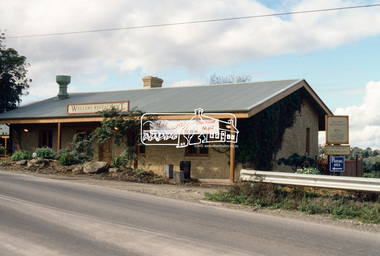 Eltham District Historical Society Inc
Photograph, Wellers Restaurant, 150 Eltham-Yarra Glen Road, Kangaroo Ground, c.May 1988
... Wellers Restaurant, 150 Eltham-Yarra Glen Road, Kangaroo Ground......Wellers Restaurant...Eltham-Yarra Glen Road Kangaroo Ground Wellers Wellers Restaurant Fondata 1872 Process Date MAY 88M 35mm colour positive transparency (1 of 25) Mount - Kodak Ektachrome Wellers Restaurant, 150 Eltham-Yarra Glen Road, Kangaroo Ground Photograph Photograph ...35mm colour positive transparency (1 of 25) Mount - Kodak EktachromeProcess Date MAY 88Meltham-yarra glen road, kangaroo ground, wellers, wellers restaurant, fondata 1872 -
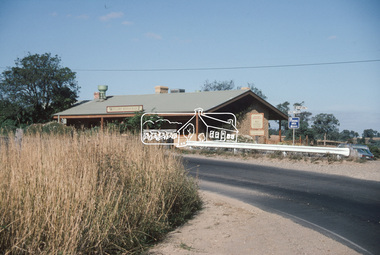 Eltham District Historical Society Inc
Slide - Photograph, Wellers Restaurant, Eltham-Yarra Glen Road, Kangaroo Ground, c.Mar. 1989
... Wellers Restaurant, Eltham-Yarra Glen Road, Kangaroo Ground......Wellers Restaurant...Eltham-Yarra Glen Road Kangaroo Ground Wellers Restaurant Process Date MAR 89M 35mm colour positive transparency (1 of 28) Mount - Kodak Kodachrome Wellers Restaurant, Eltham-Yarra Glen Road, Kangaroo Ground Slide Photograph ...35mm colour positive transparency (1 of 28) Mount - Kodak KodachromeProcess Date MAR 89Meltham-yarra glen road, kangaroo ground, wellers restaurant -
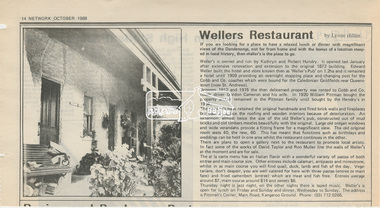 Eltham District Historical Society Inc
Newsclipping, Wellers Restaurant by Lynne Hillier, Network, October 1988, p14, 1988
... Wellers Restaurant by Lynne Hillier, Network, October 1988, p14...Wellers Restaurant by Lynne Hillier, Network, October 1988, p14 Newsclipping ...Restaurant reviewDigital file only - Digitised by EDHS from a scrapbook on loan from Beryl Bradbury (nee Stokes), daughter of Frank Stokes.beryl bradbury (nee stokes) collection, weller's hotel -
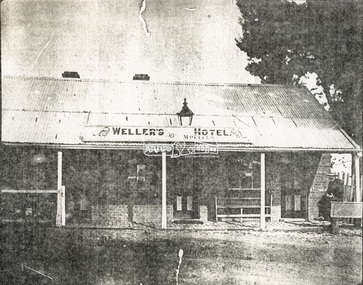 Eltham District Historical Society Inc
Document - Folder, Wellers of Kangaroo Ground, 1984-2017
... ...Wellers Restaurant...Article: History of Wellers Restaurant by Sandra Cahir, revised 2017. 7 pages 2. ...Article: History of Wellers Restaurant by Sandra Cahir, revised 2017. 7 pages 2. ...Wellers of Kangaroo Ground Vertical File Contents: 1. Article: History of Wellers Restaurant by Sandra Cahir, revised 2017. 7 pages 2. Article: Weller’s Hotel of Kangaroo Ground (final draft) by Jim Allan, 1 June 2017, including feedback email from Sandra Cahir (7 May 2017). 3. Printout of online image - Kangaroo Ground landholders from 1841, Kangaroo Ground Presbyterian Church. (2022, June 29). Retrieved from https://kgpc.pcvic.org.au/images/history_images/Kangaroo-Ground-landholders.jpg 4. Folder of printouts of historical newspaper articles referencing the hotel 1866-1911 https://trove.nla.gov.au/list/163201 5. Printouts (various versions) from Victorian Heritage Database (National Trust and Nillumbik Shire) https://vhd.heritagecouncil.vic.gov.au/ 6. Collection of research notes, copies of records from various publications including EDHS Chronology of Events and Kangaroo Ground: The Highland Taken by Mick Woiwod, pp90, 180-181 (EDHS_01618). 7. Report: Request for ministerial amendment to use the property as a restaurant, includes existing conditions and plan for development, 1 November 1984 8. Papers donated by Diana and Peter Bassett-Smith including: a. Photocopy of Weller’s Hotel, Licensee M. Weller b. Letter: Shire of Eltham to Office of the Secretary for Planning and Environment, 23 Feb 1984 - Information regarding inclusion of Wellers Hotel into the Historic Buildings Register c. Letter: Historic Buildings Council letter to Peter Bassett-Smith seeking historical information on Wellers Hotel, 10 Jan 1985 d. Memo: Peter Bassett-Smith to Robert N. Hendrey on history of Wellers Hotel, 28 Jan 1985 - Includes extract of information about Mary Weller, Dept. of Crown Lands and Survey Map NILLUMBIK showing properties of John Weller and E. Weller and a Diamond Valley News article from 10 April 1973, p11, "Eltham on old coach route" 9. Information about the Weller family including family trees from various sources a. Edward Weller, Pioneer Families in Victoria, http://mepnab.netau.net/w/w09.html, 1 Jan 2017 (link broken) b. The WELLER family tree. (2017, January 1), 2 pages. Retrieved from https://www.weller.org.uk/cgi-bin/FamilyTree/ShowFamily.pl? and 27 pages Retrieved from https://www.weller.org.uk/cgi-bin/FamilyTree/ShowFamily.pl?ListAllPeople=A c. Edward WELLER on the WELLER family tree. (2017, January 1), 1 page. Retrieved from https://www.weller.org.uk/cgi-bin/FamilyTree/ShowFamily.pl?PersonID=516 d. Photograph (print copy), believed to be Edward Weller, 1836-1883 e. Photograph (print copy), Gravestone of Weller family at Kangaroo Cemetery f. Wellers of Kangaroo Ground, 1 page, possibly from History, http://www.wellers.com.au (broken) c.2016 g. Edward and Mary Weller miscellaneous biographical research notes (by Jim Allen?) including from Ancestry.com, and extracts from Chappel file (EDHS_04448) with relevant names highlighted h. Information about the Vernon Pitman family from Ancestry.com 10. Newspaper articles: a. Cobb & Co called here by Marguerite Marshall; Diamond Valley News, May 4, 1982, p2 b. Rich is history, 30 August 1983 (very similar to previous article) c. Weller’s Pub - restaurant, craft store or art gallery? Diamond Valley News, October 22, 1985, p3 d. Despite years of neglect a magical charm lies waiting, Diamond Valley News, October 29, 1985 e. Old pub fate still in doubt, Diamond Valley News, (?) 29 October 1985 f. Renovated Weller’s Pub to begin its new stage of life, DVN 26 January 1988 g. Wellers Restaurant, Lynne Hillier, Network, October 1988, p14 h. Revolution at Wellers, Nillumbik Mail, December 20, 2000 i. Wellers brings on good times, Valley Weekly, June 22, 2005 j. Dine in with ideal outlook, Valley News, 10 August 2005 k. Advertisement: Wellers of Kangaroo Ground, Enjoy lunch, afternoon tea and dinner at Wellers from Tuesday to Sunday, Valley Weekly, Wednesday, August 31, 2005 l. Advertisement: Wellers of Kangaroo Ground, Appearing live; Normie Rowe Fri 24 Feb, Diamond Valley Leader February 22, 2006, p11 m. Advertisement: Wellers of Kangaroo Ground, Lunch Special, Diamond Valley Leader March 27, 2010 n. Braithwaite abounds to Kangaroo Ground, Gig Guide, The Age, Friday, October 8, 2010, p14 o. History up for grabs, Diamond Valley Leader, March 28, 2012 p. Advertisement: Wellers Restaurant, Freehold only for sale, Morrison Kleeman, Diamond Valley Leader, March 28, 2012 q. Restaurant’s crash course, Megan Bailey, Diamond Valley Leader, January 1, 2014, p3. Also accessible online - Staff praised after car crashes through Kangaroo Ground eatery. (2022, June 29). Retrieved from https://www.heraldsun.com.au/leader/north/staff-praised-after-car-crashes-through-kangaroo-ground-eatery/news-story/021c896a1ab6d76bd6b73f2e57dc1854 r. Eatery set for revival, Brittany Shanahan, Diamond Valley Leader 15 February 2017; Also, online as Much-loved Wellers of Kangaroo Ground to be relaunched as Italian restaurant Fondata 1872. (2022, June 29). Retrieved from https://www.heraldsun.com.au/leader/north/muchloved-wellers-in-kangaroo-ground-to-be-relaunched-as-italian-restaurant-fondata-1872/news-story/665777fb347584ef483867ae2b536a8f s. Fondata 1872 proves a big hit with food, Diamond Valley Leader 3 May 2017, p3 11. Wellers of Kangaroo Restaurant Bar Entertainment Functions, tri-fold brochure promotional brochure 12. Website Printout: Wellers Restaurant, Live Guide, (2017, January 5). Retrieved from http://www.liveguide.com.au/Restaurants_Bars/VIC/Kangaroo_Ground/Food_Styles/3... 13. Website Printout: Wellers of Kangaroo Ground, Only Melbourne (2017, January 30). Retrieved from http://www.onlymelbourne.com.au/wellers-of-kangaroo-ground 14. Printouts from Fondata 1872 website and Facebook page including colour photograph of sign in front and business card (2017). Related EDHS Collection items • Wellers Hotel of Kangaroo Ground by Jim Allen, Part 1, Newsletter No. 235, Eltham District Historical Society, August 2017. Retrieved from https://elthamhistory.files.wordpress.com/2017/08/edhs-nl-235-aug-2017.pdf • Wellers Hotel of Kangaroo Ground by Jim Allen, Part 2, Newsletter No. 236, Eltham District Historical Society, October 2017. Retrieved from https://elthamhistory.files.wordpress.com/2017/10/edhs-nl-236-oct-2017.pdf • EDHS_03997 - Slide, Wellers Hotel, Pitmans Corner, Eltham-Yarra Glen Road, Kangaroo Ground, c.1975 https://victoriancollections.net.au/items/5e59e36221ea671798ac40eb • EDHS_03998 - Slide, Wellers Hotel, Pitmans Corner, Eltham-Yarra Glen Road, Kangaroo Ground, c.1975 https://victoriancollections.net.au/items/5e59e39e21ea671798ac9c27 • EDHS_03999 - Slide, Wellers Hotel, Pitmans Corner, Eltham-Yarra Glen Road, Kangaroo Ground, c.1975 https://victoriancollections.net.au/items/5e59e3c721ea671798acd2ef • EDHS_04000 - Slide, Wellers Hotel, Pitmans Corner, Eltham-Yarra Glen Road, Kangaroo Ground, c.1975 https://victoriancollections.net.au/items/5e59e3e021ea671798acfd68 • EDHS_04066-18 - Photograph, Wellers Restaurant, Eltham-Yarra Glen Road, Kangaroo Ground, c.Mar. 1989 https://victoriancollections.net.au/items/610f4dafa346aadcee7ac79c • EDHS_04041-26 - Photograph, Wellers Restaurant, 150 Eltham-Yarra Glen Road, Kangaroo Ground, c.May 1988 https://victoriancollections.net.au/items/610e2f4a7d65e7c945a35e69 • EDHS_04437 – Newsclipping, Renovated Weller's Pub to begin its new stage of life by Linley Hartley, Diamond Valley News, 26 January 1988 https://victoriancollections.net.au/items/5de4913921ea6710a46a85c7 • EDHS_04438 - Newsclipping, Wellers Restaurant by Lynne Hillier, Network, October 1988, p14 https://victoriancollections.net.au/items/5de4916f21ea6710a46aea0f • ArtStreams magazine (from Volume 9, 2004) ‘partnered' with Wellers in promoting and supporting the arts and culture. Various advertisements throughout, particular with live performance acts. Numerous references throughout to art and music performances on site. • Stephen Cummings and Joe Camilleri at Wellers Kangaroo Ground, ArtStreams, Vol. 9, No. 4, Sep/Oct 2004, p17 EDHS_04406 - Journal, ArtStreams: Whittlesea, Banyule, Darebin, Manningham, Nillumbik, Yarra; Vol. 9, No. 4, Sep-Oct 2004 https://victoriancollections.net.au/items/5bcc086021ea6804a82a92a9 • Daryl Braithwaite rocks up at Wellers, Fiona Sievers, ArtStreams, Vol.10 No.2, 2005, pp6-7 EDHS_04409 - Journal, ArtStreams: Vol. 10, No. 2, 2005 https://victoriancollections.net.au/items/60f5416ab06f0c13a9419541 • Ephemeral Sculpture by Peter Dougherty, ArtStreams, Vol.10 No.3, 2005, pp7-9. About sculptures created in or on the grounds of culinary establishments throughout the Shire. - Denise Keele-Bedford constructed ‘Ou Well’ at Wellers Restaurant and Vicky Shukuroglou, also at Wellers set up cotton banners printed and painted with natural dyes from onion skins, spinach, radish beetroot, turmeric and charcoal. EDHS_04410 - Journal, ArtStreams: Vol. 10, No. 3, 2005 https://victoriancollections.net.au/items/60f5436db06f0c13a941ae19 • Music at Wellers Restaurant, ArtStreams, Vol.10 No.4, 2005, p23 EDHS_04411 - Journal, ArtStreams: Vol. 10, No. 4, 2005 https://victoriancollections.net.au/items/60f543e4b06f0c13a941b059 • Weller’s Pub, Diamond Valley sketchbook / text by Brian McKinlay ; drawings by Graham Hawley, 1973, pp42-43 EDHS_00856 - https://victoriancollections.net.au/items/590852edd0ce7b14e8177da3 • Gold Field Coaches Stopped Here, Nillumbik now and then / Marguerite Marshall; photographs Alan King with Marguerite Marshall, 2008, pp86-87 EDHS_00977 - https://victoriancollections.net.au/items/5935f315d0cdd42c80f9cc52 External Links: • Historic Kangaroo Ground venue comes up for rare sale. (2022, June 29). Retrieved from https://www.smh.com.au/business/companies/historic-kangaroo-ground-venue-comes-up-for-rare-sale-20120325-1vshw.html • Wellers, Kangaroo Ground property sold with leaseback. (2022, June 29). Retrieved from https://www.urban.com.au/expert-insights/investing/37735-wellers-kangaroo-ground-property-sold-with-leaseback • Wellers, Kangaroo Ground | With Mark Seymour, at one of his …. (2022, June 29). Retrieved from https://www.flickr.com/photos/robertmilesdesign/4564390893/ • 2016 Notice of proposed deregistration - WELLERS OF KANGAROO GROUND PTY LTD 124 435 409. (2022, June 29). Retrieved from https://publishednotices.asic.gov.au/browsesearch-notices/notice-details/WELLERS-OF-KANGAROO-GROUND-PTY-LTD-124435409/35d43b89-159a-4435-963f-daec688a61ca • Search results for: Websites (archived). (2022, June 29). Retrieved from https://trove.nla.gov.au/search/category/websites?keyword=%22wellers%20restaurant%22 29 June 2022 edward weller, wellers of kangaroo ground, wellers hotel, wellers restaurant, mary weller, pittmans corner, fondata 1812 at wellers, historic buildings register, hotels, john weller, kangaroo ground, pitman's corner, bassett-smith collection -
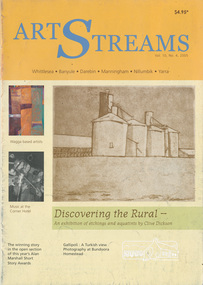 Eltham District Historical Society Inc
Journal, Peter Doughtery, ArtStreams: Vol. 10, No. 4, 2005
... Middlemost 10 Short Story by Emilie Anita Teear 12 Gallipoli : A Turkish view Photography at Bundoora Homestead 13 Musicians who answered the call 16 Book reviews 18 Australian landscape Conference 2005 by Kate Herd 20 Threads that bind the CSA and CWA 22 Music at Wellers Restaurant 23 Music reviews 24 The Snakes in Eden by John Jenkins 27 Artin' About 29 Wining & Dining 30 Listings 32...Middlemost 10 Short Story by Emilie Anita Teear 12 Gallipoli : A Turkish view Photography at Bundoora Homestead 13 Musicians who answered the call 16 Book reviews 18 Australian landscape Conference 2005 by Kate Herd 20 Threads that bind the CSA and CWA 22 Music at Wellers Restaurant 23 Music reviews 24 The Snakes in Eden by John Jenkins 27 Artin' About 29 Wining & Dining 30 Listings 32 "Peter Dougherty has been involved in the local art scene for many years. ...Vol. 10, No. 4, Sep-Oct 2005 CONTENTS Short story In Shadows by Bill Collopy 3 Discovery of the rural by Clive Dickson 7 Wagga based artists by Thomas A. Middlemost 10 Short Story by Emilie Anita Teear 12 Gallipoli : A Turkish view Photography at Bundoora Homestead 13 Musicians who answered the call 16 Book reviews 18 Australian landscape Conference 2005 by Kate Herd 20 Threads that bind the CSA and CWA 22 Music at Wellers Restaurant 23 Music reviews 24 The Snakes in Eden by John Jenkins 27 Artin' About 29 Wining & Dining 30 Listings 32"Peter Dougherty has been involved in the local art scene for many years. As publisher and editor of the arts magazine Artstreams, his comments on the various branches of the arts are widely respected. His "The Arts" column in the Diamond Valley Leader presents a brief summary for a much wider cross section of the local community. Peter also operates his own gallery and the Artstreams Cafe at the St Andrews market. Peter has a wealth of knowledge about present day and historical aspects of local art and artists." - Eltham District Historical Society Newsletter No. 161, March 2005Colour front and back cover with feature articles and literary pieces with photographs and advertisements printed in black and white. 32 pages, 30 cm. Vol. 1, no. 1 (Nov. 1996) - Vol. 10, no. 5 (summer ed. 2005/06) art streams, art streams magazine, silos, australian landscape conference 2005, bill collopy, bundoora homestead, click here to add keywords, clive dickson, emilie anita teear, gallipoli, john jenkins, kate herd, the snakes in eden, thomas a. middlemost, wagga based artists -
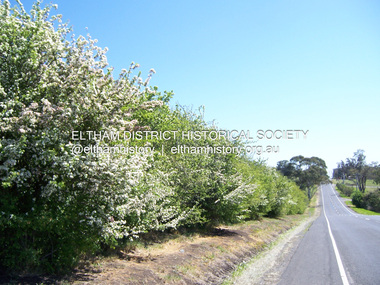 Eltham District Historical Society Inc
Photograph - Digital Photograph, Marguerite Marshall, Hawthorn hedges, Eltham-Yarra Glen Road, Kangaroo Ground, 3 October 2006
... Until 1921, the Eltham-Yarra Glen Road beside Wellers Restaurant, ‘dipped down into the upper reaches of Stony Creek’.4 Later some corners were compulsorily cut for the increasing motor traffic. ...Until 1921, the Eltham-Yarra Glen Road beside Wellers Restaurant, ‘dipped down into the upper reaches of Stony Creek’.4 Later some corners were compulsorily cut for the increasing motor traffic. ...Hawthorn hedges are important reminders of Kangaroo Ground's Scottish heritage. They are Registered on the Victorian Heritage Register. They are "historically significant because the planting of hawthorn hedges reflects the adoption of Eurorpean farming techniques by the Kangaroo Ground population in the period following settlement and because the grid pattern of paddocks that the Hawthorn hedges define is very different to today's farm landscapes." Covered under Heritage Overlay, Nillumbik Planning Scheme. Published: Nillumbik Now and Then / Marguerite Marshall 2008; photographs Alan King with Marguerite Marshall.; p21 Hawthorn hedges bordering Kangaroo Ground’s gently rolling farmlands are important reminders of its Scottish heritage and are rare so close to Melbourne.1 As early as the 1840s newly arrived farmers from Scotland planted hawthorn hedges around their properties, to protect crops from the numerous kangaroos and wallabies. Many of these hedges survive today. These farmers had the good fortune to settle some of the most fertile land available for cropping in the Colony of Victoria. At that time the black volcanic soil could sustain an amazing two crops a year. By the mid 1850s, 500 acres (202ha) of wheat were growing in Kangaroo Ground. But the crops were threatened by kangaroos, which were so plentiful, that Surveyor-General, Robert Hoddle, named the district Kangaroo Ground in 1838. As post-and-rail fences proved inadequate barriers for the bounding kangaroos, the Scots planted hawthorn hedgerows as they had done in Scotland. Some also used the hedges to net birds, presumably for the table. Interestingly the farmers in the bordering townships of Panton Hill and Christmas Hills, did not plant hawthorn hedges around their properties. Perhaps it was because by the time they settled in the 1860s and 1870s most of the wildlife had been gunned down by residents.2 The canny Scots planted the hedges on public land outside their own farms, as the hedgerows could spread to about five yards (five m) in width. With this impenetrable barrier Kangaroo Ground’s industrious farmers flourished to gain the economic power that saw the Shire of Eltham governed from Kangaroo Ground for 79 years (1858-1937). The Scots jealously guarded their land, so hard to get in Scotland. That is why they refused to release any of it ‘for local roads to follow easier grades as was the case in surrounding districts where roads generally followed ridgelines or streams’.3 Instead the roads were built in accordance with the magnetic bearings of their first survey in 1847 whether that suited the steep topography or not. This could force traffic to diverge when wet through Greensborough and Diamond Creek. Until 1921, the Eltham-Yarra Glen Road beside Wellers Restaurant, ‘dipped down into the upper reaches of Stony Creek’.4 Later some corners were compulsorily cut for the increasing motor traffic. As late as the 1960s, corners were cut to form sweeping curves above and alongside the Kangaroo Ground Cemetery and opposite the Emergency Operations Centre. In the latter case, the farmers – understanding their hedgerows as important heritage – insisted upon their reinstatement to conform to the altered road alignment. Kangaroo Ground’s ancient manna gums also point to the district’s history and to that of the hedgerows. The Aboriginal people had transformed the original forests into grasslands with the fires they lit to attract kangaroos, (which the Scots were to exclude by planting hedgerows). But the Wurundjeri hunters left the gums (Eucalyptus vimminalis cygnetensis), on the grasslands as ‘stalking trees’ to hunt kangaroos. The hawthorn hedges in Kangaroo Ground were neglected for around 60 years from about the middle of the 20th century. Bushfires had created gaps and the hedgerows were not trimmed. Then in late 2005, local historian Mick Woiwod, formed a group to lobby the Nillumbik Shire to restore the hedges, which could last for many centuries. Some hedges in parts of Britain date back to AD 800.5 Although the original Scottish farmers have gone, the hedges are a reminder of when they flourished in the district, which has changed little in 150 years.This collection of almost 130 photos about places and people within the Shire of Nillumbik, an urban and rural municipality in Melbourne's north, contributes to an understanding of the history of the Shire. Published in 2008 immediately prior to the Black Saturday bushfires of February 7, 2009, it documents sites that were impacted, and in some cases destroyed by the fires. It includes photographs taken especially for the publication, creating a unique time capsule representing the Shire in the early 21st century. It remains the most recent comprehenesive publication devoted to the Shire's history connecting local residents to the past. nillumbik now and then (marshall-king) collection, eltham-yarra glen road, hawthorn hedgerow, kangaroo ground -
 Flagstaff Hill Maritime Museum and Village
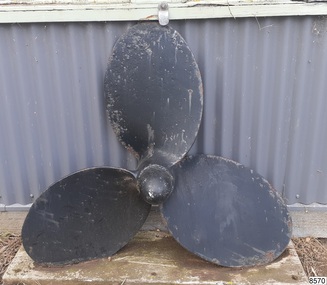
Functional object - Propeller, Purdon & Featherstone, 1909
... well as along the southern coast of Australia. The ship had served as a freighter, an army supply ship, a luxury charter ferry and a floating restaurant as well as a prawn boat at Lakes Entrance. ...well as along the southern coast of Australia. The ship had served as a freighter, an army supply ship, a luxury charter ferry and a floating restaurant as well as a prawn boat at Lakes Entrance. ...This is an original propeller belonging to the steamer Rowitta. It was included with the 1909 ferry when it was purchased and installed at Flagstaff Hill in 1975. The Rowitta exhibit was enjoyed by many visitors for over 40 years. The wooden steam ferry Rowitta was built from 1909 to 1910 at Battery Point, Hobart, by Purdon & Featherstone using planks of Huon and Karri timber. It was owned and operated by the Tamar Trading Company and navigated the Tamar River from Launceston to George Town for many years. The ferry trip became a favourite activity for sightseeing passengers along Tasmania’s Tamar and Derwent rivers for 30 years. Rowitta also worked as a coastal trading vessel between Devonport and Melbourne as well as along the southern coast of Australia. The ship had served as a freighter, an army supply ship, a luxury charter ferry and a floating restaurant as well as a prawn boat at Lakes Entrance. It was also previously named the Sorrento by Port Phillip Ferries Pty Ltd of Melbourne and had at one time carried the name Tarkarri. The ferry was originally purchased by the Flagstaff Hill Museum in 1974 for converting into the historic and significant sailing ship the Speculant, but this didn’t eventuate due to the unavailability of funding. It was renovated it and renamed as the original Rowitta, to be used as an exhibit.The propeller represents a step in the evolution of ways that vessels were powered. It is also a record of the Rowitta, a large exhibit at Flagstaff Hill Maritime Village from the museum’s early beginnings until the vessel’s end of life 40 years later. The Rowitta represents the importance of coastal traders to transport, trade and communication along the coast of Victoria, between states, and in Australia before rail and motor vehicles. The vessel was an example of a ferry built in the early 20th century and serving many different purposes over its lifetime of over 100 years. Propeller: three metal blades that meet in a central boss fitting with a pointed cap. The blades have rounded edges and tips. This is an original propeller from the 1909-1910 steam ferry, ROWITTA, built in Hobart, Tasmania.flagstaff hill, warrnambool, maritime village, maritime museum, liverpool, ss rowitta, navigation, marine technology, steam driven, propeller, hobart, tasmania, devonport, tasmanian-built, ferry, steam ferry, steamer, 1909, early 20th century, passenger vessel, tamar trading company, tamar river, launceston, george town, tarkarri, speculant, port phillip ferries pty ltd, melbourne, coastal trader, timber steamer, huon, karri, freighter, supply ship, charter ferry, floating restaurant, prawn boat, lakes entrance, sorrento -
 Flagstaff Hill Maritime Museum and Village
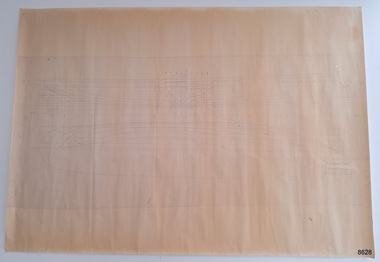
Plan - Lines Plan, S.S. Rowitta, ca 1909
... She also served as a freighter, an army supply ship, a luxury charter ferry and a floating restaurant as well as a prawn boat at Lakes Entrance. ...She also served as a freighter, an army supply ship, a luxury charter ferry and a floating restaurant as well as a prawn boat at Lakes Entrance. ...The lines plan was drawn for the building of the steamship S.S. Rowitta, a passenger steam ferry built in Hobart for use in Tasmania's rivers, the Derwent and the Tamar. It is a copy of the original lines plan. The S.S. Rowitta was built by Purdon & Featherstone, at Battery Point, Hobart (Tasmania) in 1909 from Huon Pine and Kauri planking. Her final configuration included three masts and a ship rig. S.S. Rowitta took its first voyage from Hobart to Launceston in 1909 and operated for 30 years as a passenger ferry on the Tamar and Derwent Rivers. She also served as a freighter, an army supply ship, a luxury charter ferry and a floating restaurant as well as a prawn boat at Lakes Entrance. (She has also been named “Sorrento” and “Tarkarri”.). In the very early days of Flagstaff Hill ‘Rowitta’ was purchased from Lakes Entrance by Warrnambool City Council and the Victorian State Government for $20,000. The Rowitta had a hull configuration very similar to a local boat named the SPECULANT, which played a key role in the Port of Warrnambool in the early 1900s. The Speculant was the largest ship ever registered with Warrnambool as her home port. Local owner and trader P J McGennan & Co, (Peter McGennan) used her as a freight carrier to Melbourne and timber trader between New Zealand and Victoria. She sunk at Cape Otway in 1911 on a voyage to Melbourne. In 1974 Rowitta was delivered to Port Fairy and then later sailed to Warrnambool’s Breakwater where she was lifted out of Lady Bay and loaded onto the back of a long transport truck and slowly and carefully driven along Pertobe Road, through the Surfside Caravan Park and over the railway line, into Flagstaff Hill’s Maritime Village. Transfer arrangements were coordinated by Jack Morse, of Morse Engineering, a member of the Flagstaff Hill Planning Board, and Ken Goyen, a local crane operator. The ‘Rowitta’ was originally acquired to be rebuilt to match the original SPECULANT. When finances became tight in 1976 a review of all plans ended in the decision to restore the “Rowitta” to her original configuration. She was then restored, renamed the original name of “Rowitta” and installed in the Village’s Harbour Lake to become one of the popular vessels on display for visitors to enjoy. It was the decision of the Advisory Committee to Flagstaff Hill to have Rowitta demolished in April 2015 due to extensive deterioration. Items associated with the Rowitta continue to be held in Flagstaff Hill Maritime Village’s Collection.The lines plan of the passenger ferry S.S. Rowitta.is significant for its association with Tasmanian history from the early to mid-1900s. It is also connected to the history of the Rowitta, which was a large exhibit on display at Flagstaff Hill Maritime Village from the museum’s early beginnings until the vessel’s end of life 40 years later. The Rowitta represents the importance of coastal traders to transport, trade and communication along the coast of Victoria, between states, and in Australia before rail and motor vehicles. The vessel was an example of a ferry built in the early 20th century that served many different roles over its lifetime of over 100 years. Lines Plan, copy, of the steamship S.S. Rowitta. Rectangular drawing paper with copy of the hand drawn lines plan showing several profiles of the vessel. The vessel was built in 1909 by Purdon & Featherstone, Hobart. On the revers is handwritten inscription, and a white label with a handwritten number.Printed on the plan: "S.S. ROWITTA / LINES PLAN / SCALE 1/4" TO 12" " Blue ink writing on the back: "Rowitta" Blue ink on label: "56"flagstaff hill, warrnambool, shipwrecked-coast, flagstaff-hill, flagstaff-hill-maritime-museum, maritime-museum, shipwreck-coast, flagstaff-hill-maritime-village, photograph, s.s. rowitta, charles street wharf,, launceston., purdon & featherstone, rowitta, tarkarri, speculant, purdon & featherstone of hobart, passenger ferry 1909, sorrento, lines drawing, ship's plan, lines plan, line plan, shipbuilding, ferry -
 Flagstaff Hill Maritime Museum and Village
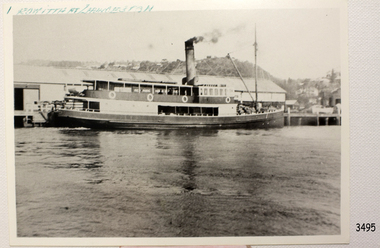
Photograph - Vessel, Steam Ship, S.S. Rowitta, Early 20th century
... She also served as a freighter, an army supply ship, a luxury charter ferry and a floating restaurant as well as a prawn boat at Lakes Entrance. ...She also served as a freighter, an army supply ship, a luxury charter ferry and a floating restaurant as well as a prawn boat at Lakes Entrance. ...The subject of this photograph is the S.S.Rowilla, a passenger steam ferry built in Hobart for use in Tasmania's rivers, the Derwent and the Tamar. The photograph shows her docked at the Charles Street Wharf in Launceston. The S.S. Rowitta was built by Purdon & Featherstone, at Battery Point, Hobart (Tasmania) in 1909 from Huon Pine and Kauri planking. Her final configuration included three masts and a ship rig. S.S. Rowitta took its first voyage from Hobart to Launceston in 1909 and operated for 30 years as a passenger ferry on the Tamar and Derwent Rivers. She also served as a freighter, an army supply ship, a luxury charter ferry and a floating restaurant as well as a prawn boat at Lakes Entrance. (She has also been named “Sorrento” and “Tarkarri”.). In the very early days of Flagstaff Hill ‘Rowitta’ was purchased from Lakes Entrance by Warrnambool City Council and the Victorian State Government for $20,000. The Rowitta had a hull configuration very similar to a local boat named the SPECULANT, which played a key role in the Port of Warrnambool in the early 1900s. The Speculant was the largest ship ever registered with Warrnambool as her home port. Local owner and trader P J McGennan & Co, (Peter McGennan) used her as a freight carrier to Melbourne and timber trader between New Zealand and Victoria. She sunk at Cape Otway in 1911 on a voyage to Melbourne. In 1974 Rowitta was delivered to Port Fairy and then later sailed to Warrnambool’s Breakwater where she was lifted out of Lady Bay and loaded onto the back of a long transport truck and slowly and carefully driven along Pertobe Road, through the Surfside Caravan Park and over the railway line, into Flagstaff Hill’s Maritime Village. Transfer arrangements were coordinated by Jack Morse, of Morse Engineering, a member of the Flagstaff Hill Planning Board, and Ken Goyen, a local crane operator. The ‘Rowitta’ was originally acquired to be rebuilt to match the original SPECULANT. When finances became tight in 1976 a review of all plans ended in the decision to restore the “Rowitta” to her original configuration. She was then restored, renamed the original name of “Rowitta” and installed in the Village’s Harbour Lake to become one of the popular vessels on display for visitors to enjoy. It was the decision of the Advisory Committee to Flagstaff Hill to have Rowitta demolished in April 2015 due to extensive deterioration. Items associated with the Rowitta continue to be held in Flagstaff Hill Maritime Village’s Collection.The photograph of the passenger ferry S.S. Rowitta.is significant for its association with Tasmanian history from the early to mid-1900s. It is also connected to the history of the Rowitta, which was a large exhibit on display at Flagstaff Hill Maritime Village from the museum’s early beginnings until the vessel’s end of life 40 years later. The Rowitta represents the importance of coastal traders to transport, trade and communication along the coast of Victoria, between states, and in Australia before rail and motor vehicles. The vessel was an example of a ferry built in the early 20th century that served many different roles over its lifetime of over 100 years. Black and white photograph of the steamship S.S. Rowitta at Charles Street Wharf, Launceston. It shows the vessel docked at the Charles Street Wharf in Launceston. Smoke is coming from its funnel and there are people on board. There is a handwritten inscription on the top edge of the photograph. The vessel was built in 1909 by Purdon & Featherstone, Hobart. Blue-green handwriting on top left margin "ROWITTA AT LAUNCESTON"flagstaff hill, warrnambool, shipwrecked-coast, flagstaff-hill, flagstaff-hill-maritime-museum, maritime-museum, shipwreck-coast, flagstaff-hill-maritime-village, photograph, s.s. rowitta, charles street wharf,, launceston., purdon & featherstone, rowitta, tarkarri, speculant, purdon & featherstone of hobart, passenger ferry 1909, sorrento -
 Wodonga & District Historical Society Inc
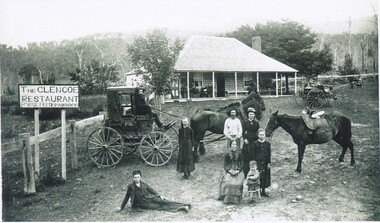
Photograph - Glencoe Restaurant, Tallandoon, c1890
... Combining a little cultivation with grazing, and adding to his income by means of the restaurant as well as by affording accommodation to the Snowy Creek and Wodonga coach, which changes horses here, our host seems to be thriving apace, and need not fear that his old age will experience any of the vicissitudes of fortune which marked his younger and struggling days.” ...Combining a little cultivation with grazing, and adding to his income by means of the restaurant as well as by affording accommodation to the Snowy Creek and Wodonga coach, which changes horses here, our host seems to be thriving apace, and need not fear that his old age will experience any of the vicissitudes of fortune which marked his younger and struggling days.” ...Glencoe Restaurant on Lockhart's Gap Road, Tallandoon, Victoria was owned by the family of William McDonald and his wife Helen nee Beattie. They migrated from Scotland in the early 1860s and settled in the Wahgunyah and Rutherglen area where their children were born. C1876 they took up a selection at Tallandoon, Victoria which they named “Glencoe” after their home in Scotland. The house was made of mud brick and measured approximately 18 feet by 10 feet. The roof was later replaced with tin. To supplement their farming income the McDonalds operated as Glencoe Restaurant and their hospitality was known far and wide. Three times a week, Crawford & Co coaches travelled from Wodonga to Glencoe via Kiewa over Lockhart’s Gap, changed horses at Glencoe and then went on to Mitta Mitta. An Extract from “Leader of Melbourne, Saturday 14 May 1887” relates the story of a visit to Glencoe. THE TRAVELLER MY EASTER EXCURSION by GIRVAN “From the top of Lockhart's Gap we caught our first glimpse of the Mitta Mitta River, winding like a silver thread through the flats below. A descent of some 3 or 4 miles brought us to the first settlement on the eastern side of the Gap, and a board serving as a rustic sign announcing this to be the " Glencoe Restaurant”. We resolved to rest here for the night, and, entering the cottage of sun-dried we were made welcome and received every attention at the hands of the hostess. A hardy old Highlander, lineally descended from the old clan of the McDonalds of Glencoe, the proprietor, bidding good-bye to his native vale, had sought to woo Fortune in the Australian bush, and followed the avocation of a gold miner for many years with but indifferent success and at length, renouncing this precarious method of " gathering gear," took up a selection in this valley and named his farm Glencoe, in memory of his native place. May this peaceful valley, never witness such deeds of blood as did the original home of this worthy old man. Combining a little cultivation with grazing, and adding to his income by means of the restaurant as well as by affording accommodation to the Snowy Creek and Wodonga coach, which changes horses here, our host seems to be thriving apace, and need not fear that his old age will experience any of the vicissitudes of fortune which marked his younger and struggling days.” In July 1919, “Glencoe” was sold to Mr C. A. Franks but he died immediately after and so the property was sold again in September 1919, this time being purchased by the Peters family. It was sold again to Alan Beer in 1957. Helen McDonald died on 13th November 1914 and William died on 12th March 1920.A black and white image of the McDonald family at the front of their home at Tallandoon, Victoria. The family members in this image are William McDonald Senior standing with Williamina (Minnie) (18), Helen (William’s wife) seated, Margaret (Maggie) and Hannah standing beside Helen, Barbara (13) standing in front of the coach and William Junior reclining.On sign post - The GLENCOE RESTAURANT / Horse Feed Paddocksmcdonalds of tallandoon, pioneer families of the upper murray -
 Flagstaff Hill Maritime Museum and Village
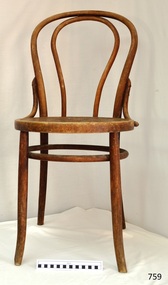
Furniture - Chair, Harnisch & Co, 1876-1918
... The lightweight chairs are also popular for café and restaurant seating, as well as for public gatherings. ...The design of this pair (RN 758 & 759) is based on Thonet’s No. 18 chair, which was originally produced in 1876 by Thonet, and is still one of the best-selling designs for café and restaurant owners. It is elegant, sophisticated and durable. The label notes the design as “AUS MASSIV GEBOGENEM HOLZE vorm” which translates to “solid curved sandals shape”, a good description for the back of the chair. The chairs have marks, paper labels and symbols on them that show that the maker was Harnisch & Co., Neuschler (also called Banská Bystrica) Furniture Factory in Neuschol (Beszterczebanya), Hungary, privileged makers for the Imperial and Royal Austrian-Hungarian Empire 1867 – 1918. Bentwood chairs are made by a process of wetting wood in water, bending it into curved shapes, then allowing it to dry so that the shape becomes permanent. This process originated by Michael Thonet, who had been given the right to bend wood into desired curves by the Austrian Courts in 1842. In 1856 he was granted a 13 year patent to manufacture chairs and table legs of bent wood treated by steam or boiling water. In 1859 his company Gebruder Thonet produced his original design. Thonet’s early designs also featured hand carved or laminated wooden seats. His Model No. 14 produced in the 1850’s, was his most popular design. After Michael’s death in 1871 the family went on designing and producing chairs. The No. 18 chair was produced in 1876, one of a group of chars with back inserts consisting of curves and loops of bentwood. The popularity of the Bentwood chair, even now, is due to its versatility and timeless quality. Its style, whether varnished or painted, suits any room in the house. The lightweight chairs are also popular for café and restaurant seating, as well as for public gatherings. They can be easily moved around and grouped in a variety of ways to suit any occasion.Chair, bentwood, 'French Bistro Chair' with pattern carved in seat. Backrest has inverted U shape inside that extends to the seat. Supports on eitherside of backrest's base join to back of seat. Legs have a wooded bracing ring. Marks; pressed into rim under seat. Paper label, cream with black print, on rim. Right side of label has symbol of Heraldic Shield. Text on label. Made by Harnisch & Co.Marks; pressed into rim under seat is "3" and "4", and "Crown [over] N", Paper label, cream with black print, on rim; Left side has Mark “N inside circle under crown”. Right side has symbol of Heraldic Shield. Text on label “Trade – K.u.K.- Mark / NEUSOHLER FABRIK FUR MOBEL/ AUS MASSIV GEBOGENEM HOLZE, vorm. HARNISCH & Co / NEUSOHL (BESZTERCaZEBANYA) UNGARN ' Hand written under seat "T H" in black paint, "T H " in white chalk. flagstaff hill, flagstaff hill maritime museum and village, warrnambool, maritime museum, maritime village, great ocean road, shipwreck coast, bentwood chair, café chair, restaurant chair, meeting hall chair, thonet design chair, harnisch & co, k.u.k., neusohler fabrik fur nobel, approved manufacturer, neusohl (besztercazebanya) ungarn -
 Federation University Historical Collection
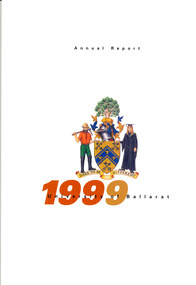
Book, University of Ballarat Annual Report, 1999, 1999
... well being of the people and communities of Western Victoria and beyond. In fulfilling its mission the University will: * have a regional focus by think and act globally; * utilise the full potential of information and communication technologies to enhance teaching, learning and administration; * establish partnerships regionally, nationally and internationally for mutual benefit and enriched learning opportunity. university of ballarat camp street horsham stawell ararat caro coat of arms david caro david james camp street precinct horsham campus stawell campus ararat campus jacaranda training restaurant cheryll henry White soft covered book with the university of Ballarat heraldic device on the cover: Contents include: mission, strategic focus, David Caro, David James, Mt Helen Administration Building, microwave tower, Mt Helen School of Nursing Building, Camp Street Precinct, Horsham Campus, SMB Brewery Complex, Ararat Campus, Stawell CampusJacaranda Training Restaurant, drought aid. ...In 1999 the University of Ballarat Mission Statement was: The University of Ballarat provides education, training and scholarship of international standing to promote the growth and well being of the people and communities of Western Victoria and beyond. In fulfilling its mission the University will: * have a regional focus by think and act globally; * utilise the full potential of information and communication technologies to enhance teaching, learning and administration; * establish partnerships regionally, nationally and internationally for mutual benefit and enriched learning opportunity. White soft covered book with the university of Ballarat heraldic device on the cover: Contents include: mission, strategic focus, David Caro, David James, Mt Helen Administration Building, microwave tower, Mt Helen School of Nursing Building, Camp Street Precinct, Horsham Campus, SMB Brewery Complex, Ararat Campus, Stawell CampusJacaranda Training Restaurant, drought aid. IBM Global Services, Jodie Lowe, Institute of Food & Crop Science, Year 2000 compliance.university of ballarat, camp street, horsham, stawell, ararat, caro, coat of arms, david caro, david james, camp street precinct, horsham campus, stawell campus, ararat campus, jacaranda training restaurant, cheryll henry -
 Mission to Seafarers Victoria
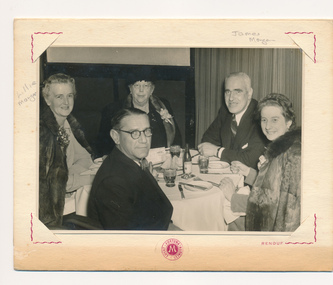
Photograph - Gelatin silver photograph, c. 1960
... restaurant in Carlton, Melbourne. The ladies are wearing finery and corsages which suggests that this may have been a post-marriage celebration following the wedding of Lillie and James Morgan. Their marriage certificate records the date as 26th of April, 1969. This is a photograph of social and historic significance, being part of a sub-collection of material that provides a snapshot of the type of individuals involved in the Ladies Harbour Lights Guild and the activities carried out by that organisation. The image is also an insight into fashions of the time as well ...The photograph shows five seated individuals dining at Marios' restaurant in Carlton, Melbourne. The ladies are wearing finery and corsages which suggests that this may have been a post-marriage celebration following the wedding of Lillie and James Morgan. Their marriage certificate records the date as 26th of April, 1969.This is a photograph of social and historic significance, being part of a sub-collection of material that provides a snapshot of the type of individuals involved in the Ladies Harbour Lights Guild and the activities carried out by that organisation. The image is also an insight into fashions of the time as well as into the relationship between Lillie and James.A professional photograph of Lillie Morgan (nee Duncan) and husband James Morgan dining at Marios' restaurant in Melbourne with three unidentified friends. The printed image is professionally mounted in a Marios' display folder.The front of the display folder reads "Greetings from Marios' Continental Restaurant Melbourne - Australia" Insignia of the restaurant is printed beneath the photograph and the photographer's name 'Renouf' is printed alongside. On the reverse "Fully air-conditioned" and "Photography by Renouf of Marios'" is printed in red ink. There is also a sketch in blue biro of a cat and a horse and rider.lillie duncan, lillie morgan, james morgan, marios', 1960s -
 Marysville & District Historical Society
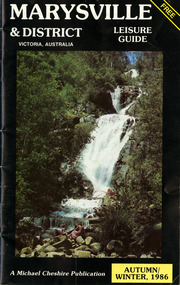
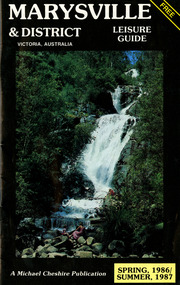
Booklet (Item) - Leisure guide, Michael Chesire & Associates Pty. Ltd, MARYSVILLE & DISTRICT LEISURE GUIDE-AUTUMN/WINTER, 1986, 1986
... well...taggerty river recreation area...athols abbey...phantom falls...keppel falls...the beeches walking track...marylyn guest house...kufstein inn motel...the cumberland...marysville tourist & progress association...marysville newsagency & general store...crossways restaurant...A free leisure guide to Marysville and the surrounding district published for Autumn and Winter, 1986. marysville victoria australia leisure guide michael cheshire & associates pty ltd marysville golf club blackwood lodges sir colin mackenzie fauna park lake eildon fraser national park yarra valley wineries marysville coach tours kooringa marylands guest house lady talbot forest drive wishing well taggerty river recreation area athols abbey phantom falls keppel falls the beeches walking track marylyn guest house kufstein inn motel the cumberland marysville tourist & progress association marysville newsagency & general store crossways restaurant & motel beauty spot walk tree fern gully walk michaeldene track keppel track woods lookout track marysville hotel motel lake mountain ski hire marysville recreation and fun park mytanta horseback safaris upper big river valley the big culvert marysville mountain view horse hire maryton park amber view holiday lodges cathedral restaurant the top shop tower motel menzes garage beauty spot nursery marysville ski hire lake mountain ski school faraway forest scenic motel buxton trout farm marysville hardware timbertop steakhouse marysville trout farm healesville sanctuary buxton hotel motel nanda binya lodge buxton antique and furniture mart the black spur inn hotel alexandra lake mountain geoffrey pope & associates A free leisure guide to Marysville and the surrounding district published for Autumn and Winter, 1986. ...A free leisure guide to Marysville and the surrounding district published for Autumn and Winter, 1986. This was produced by Michael Cheshire as a free publication to promote tourism in Marysville and the surrounding district. It includes maps of the Big River Valley, Cumberland Valley, Lady Talbot Forest Drive, the Marysville area, and the township of Marysville. It was released in the autumn of 1986 and was sponsored by the Marysville Tourist & Progress Association. The Association was formed in November 1907 to promote tourism within the area. This included the physical creation of signage, parklands, roads, and walks to various attractions. A free leisure guide to Marysville and the surrounding district published for Autumn and Winter, 1986.marysville, victoria, australia, leisure guide, michael cheshire & associates pty ltd, marysville golf club, blackwood lodges, sir colin mackenzie fauna park, lake eildon, fraser national park, yarra valley wineries, marysville coach tours, kooringa, marylands guest house, lady talbot forest drive, wishing well, taggerty river recreation area, athols abbey, phantom falls, keppel falls, the beeches walking track, marylyn guest house, kufstein inn motel, the cumberland, marysville tourist & progress association, marysville newsagency & general store, crossways restaurant & motel, beauty spot walk, tree fern gully walk, michaeldene track, keppel track, woods lookout track, marysville hotel motel, lake mountain ski hire, marysville recreation and fun park, mytanta horseback safaris, upper big river valley, the big culvert, marysville mountain view horse hire, maryton park, amber view holiday lodges, cathedral restaurant, the top shop, tower motel, menzes garage, beauty spot nursery, marysville ski hire, lake mountain ski school, faraway forest, scenic motel, buxton trout farm, marysville hardware, timbertop steakhouse, marysville trout farm, healesville sanctuary, buxton hotel motel, nanda binya lodge, buxton antique and furniture mart, the black spur inn hotel, alexandra, lake mountain, geoffrey pope & associates -
 Marysville & District Historical Society
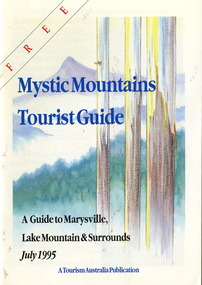
Ephemera (Item) - Tourist Guide, Graeme Haycraft, Mystic Mountains Tourist Guide July 1995, 07-1995
... restaurant...olde yarra track shoppe...danish coffee gardens...oscars take-away...country touch pottery studio & gallery...cumberland memorial scenic reserve...cathedral range state park...lady talbot forest drive...wishing well...A tourist guide outlining services, accommodation, activities and places of interest to visit in and around Marysville, Lake Mountain and the local district. marysville victoria australia tourist guide mystic mountains lake mountain tourism australia graeme haycraft magic creek nursery missing links miniature golf phelps bakery blackwood cottages marysville hotel motel tower motel kerami house marylands guest house lomatia lodge willowbank at taggerty barree mud brick cottages scenic motel somerled mountain retreat dalrymples guest cottages nanda binya lodge mathilde's of marysville country guest house the birches resort mystic mountains tourist information marysville caravan park the cumberland igloo roadhouse top shop pancake parlour the silver birch restaurant steavenson's restaurant olde yarra track shoppe danish coffee gardens oscars take-away country touch pottery studio & gallery cumberland memorial scenic reserve cathedral range state park lady talbot forest drive wishing well taggerty river picnic area taggerty river phantom falls keppels falls the beeches walking track mount sugarloaf maryton park holiday cottages snowviews esa camping & conference centre wirreanda festival marysville post shop hidden talent craft gallery marysville automotive repairs geoffrey pope & associates beauty spot walk tree fern gully walk michaeldene track marysville riding school gerraty's ski centre marysville holiday cottages marysville triangle taxi service fruit salad farm lake mountain alpine resort marysville ski hire lake mountain ski school cross country ski hire lake mountain ski hire marysville country club Acknowledgements/ Mystic Mountains Tourism Association, Marysville Office of the Dept. of Conser/ vation & Natural Resources, Mrs Elaine Postlethwaite, Ms Sue Henry & every/ advertiser without whose support this Guide would not have been possible. ...A tourist guide outlining services, accommodation, activities and places of interest to visit in and around Marysville, Lake Mountain and the local district.A tourist guide outlining services, accommodation, activities and places of interest to visit in and around Marysville, Lake Mountain and the local district.Acknowledgements/ Mystic Mountains Tourism Association, Marysville Office of the Dept. of Conser/ vation & Natural Resources, Mrs Elaine Postlethwaite, Ms Sue Henry & every/ advertiser without whose support this Guide would not have been possible.marysville, victoria, australia, tourist guide, mystic mountains, lake mountain, tourism australia, graeme haycraft, magic creek nursery, missing links miniature golf, phelps bakery, blackwood cottages, marysville hotel motel, tower motel, kerami house, marylands guest house, lomatia lodge, willowbank at taggerty, barree mud brick cottages, scenic motel, somerled mountain retreat, dalrymples guest cottages, nanda binya lodge, mathilde's of marysville country guest house, the birches resort, mystic mountains tourist information, marysville caravan park, the cumberland, igloo roadhouse, top shop pancake parlour, the silver birch restaurant, steavenson's restaurant, olde yarra track shoppe, danish coffee gardens, oscars take-away, country touch pottery studio & gallery, cumberland memorial scenic reserve, cathedral range state park, lady talbot forest drive, wishing well, taggerty river picnic area, taggerty river, phantom falls, keppels falls, the beeches walking track, mount sugarloaf, maryton park holiday cottages, snowviews, esa camping & conference centre, wirreanda festival, marysville post shop, hidden talent craft gallery, marysville automotive repairs, geoffrey pope & associates, beauty spot walk, tree fern gully walk, michaeldene track, marysville riding school, gerraty's ski centre, marysville holiday cottages, marysville triangle taxi service, fruit salad farm, lake mountain alpine resort, marysville ski hire, lake mountain ski school, cross country ski hire, lake mountain ski hire, marysville country club -
 Marysville & District Historical Society
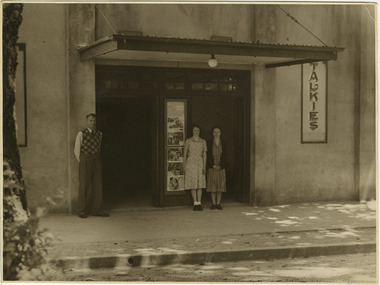
Photograph (Item) - Black and white photograph, 1940s
... well-known local, Clarrie Smith, had spoken about showing the 'talkies' in the local hall and then subsequently had local builder, Harold Cuzens, build the Marysville Theatre in 1932. The Marysville Theatre was located on Murchison Street. The solid concrete building was used as a Theatre from 1932 to 1970. The building was then purchased by The Darmody Family and was used as an Arts and Crafts Centre for two years from 1975. The building was then purchased by Norman and Rosemary Fiske in 1977 and converted into a restaurant ...A black and white photograph of three members of the Wallace Family standing in front of the Marysville Theatre in Marysville in Victoria in the 1940s.A black and white photograph of three members of the Wallace Family standing in front of the Marysville Theatre in Marysville in Victoria in the 1940s. Jim Wallace was born in Dumfries in Scotland and emigrated to Australia with his family at age 6. He arrived and settled in Marysville in 1922 and ended up working for the Barton Brothers looking after their touring cars and their garage. He met Marj in 1928 and they married in 1930. Jim and another well-known local, Clarrie Smith, had spoken about showing the 'talkies' in the local hall and then subsequently had local builder, Harold Cuzens, build the Marysville Theatre in 1932. The Marysville Theatre was located on Murchison Street. The solid concrete building was used as a Theatre from 1932 to 1970. The building was then purchased by The Darmody Family and was used as an Arts and Crafts Centre for two years from 1975. The building was then purchased by Norman and Rosemary Fiske in 1977 and converted into a restaurant called The Pumpernickel. This building, along with most of the town, was destroyed in the 2009 Black Saturday bushfires.Front of Theatre, with Dad, Mum & Marie/ Taken in '40's.marysville theatre, marysville, victoria, harold cuzens, jim wallace, darmody family, norman fiske, rosemary fiske, the pumpernickel, 2009 black saturday bushfires, marj wallace, marie wallace, jill wallace, barton brothers, clarrie smith -
 Marysville & District Historical Society
Document (Item), Mountain News, The Wallaces Leave Marysville, 07-05-1980
... well-known local, Clarrie Smith, had spoken about showing the 'talkies' in the local hall and then subsequently had local builder, Harold Cuzens, build the Marysville Theatre in 1932. The Marysville Theatre was located on Murchison Street. The solid concrete building was used as a Theatre from 1932 to 1970. The building was then purchased by The Darmody Family and was used as an Arts and Crafts Centre for two years from 1975. The building was then purchased by Norman and Rosemary Fiske in 1977 and converted into a restaurant ...A document outlining the departure of The Wallaces from Marysville in Victoria.A document outlining the departure of The Wallaces from Marysville in Victoria. Jim Wallace was born in Dumfries in Scotland and emigrated to Australia with his family at age 6. He arrived and settled in Marysville in 1922 and ended up working for the Barton Brothers looking after their touring cars and their garage. He met Marj in 1928 and they married in 1930. Jim and another well-known local, Clarrie Smith, had spoken about showing the 'talkies' in the local hall and then subsequently had local builder, Harold Cuzens, build the Marysville Theatre in 1932. The Marysville Theatre was located on Murchison Street. The solid concrete building was used as a Theatre from 1932 to 1970. The building was then purchased by The Darmody Family and was used as an Arts and Crafts Centre for two years from 1975. The building was then purchased by Norman and Rosemary Fiske in 1977 and converted into a restaurant called The Pumpernickel. This building, along with most of the town, was destroyed in the 2009 Black Saturday bushfires. The Wallaces departed Marysville in 1980 for a new life in Ringwood, Victoria.marysville theatre, marysville, victoria, harold cuzens, jim wallace, darmody family, norman fiske, rosemary fiske, the pumpernickel, 2009 black saturday bushfires, marj wallace, marie wallace, jill wallace, barton brothers, clarrie smith -
 Marysville & District Historical Society
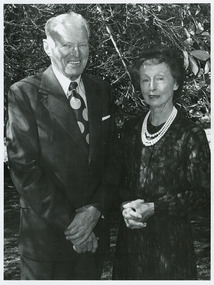
Photograph (Item) - Black and white photograph, 1980
... well-known local, Clarrie Smith, had spoken about showing the 'talkies' in the local hall and then subsequently had local builder, Harold Cuzens, build the Marysville Theatre in 1932. The Marysville Theatre was located on Murchison Street. The solid concrete building was used as a Theatre from 1932 to 1970. The building was then purchased by The Darmody Family and was used as an Arts and Crafts Centre for two years from 1975. The building was then purchased by Norman and Rosemary Fiske in 1977 and converted into a restaurant ...A black and white photograph of Jim and Marj Wallace from Marysville in Victoria.A black and white photograph of Jim and Marj Wallace from Marysville in Victoria. Jim Wallace was born in Dumfries in Scotland and emigrated to Australia with his family at age 6. He arrived and settled in Marysville in 1922 and ended up working for the Barton Brothers looking after their touring cars and their garage. He met Marj in 1928 and they married in 1930. Jim and another well-known local, Clarrie Smith, had spoken about showing the 'talkies' in the local hall and then subsequently had local builder, Harold Cuzens, build the Marysville Theatre in 1932. The Marysville Theatre was located on Murchison Street. The solid concrete building was used as a Theatre from 1932 to 1970. The building was then purchased by The Darmody Family and was used as an Arts and Crafts Centre for two years from 1975. The building was then purchased by Norman and Rosemary Fiske in 1977 and converted into a restaurant called The Pumpernickel. This building, along with most of the town, was destroyed in the 2009 Black Saturday bushfires. The Wallaces departed Marysville in 1980 for a new life in Ringwood, Victoria.Jim and Marj Wallace 1980marysville theatre, marysville, victoria, harold cuzens, jim wallace, darmody family, norman fiske, rosemary fiske, the pumpernickel, 2009 black saturday bushfires, marj wallace, marie wallace, jill wallace, barton brothers, clarrie smith -
 Marysville & District Historical Society
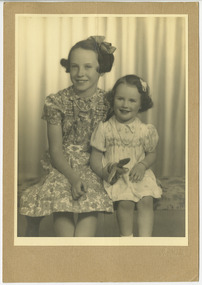
Photograph (Item) - Black and white photograph, Unknown
... well-known local, Clarrie Smith, had spoken about showing the 'talkies' in the local hall and then subsequently had local builder, Harold Cuzens, build the Marysville Theatre in 1932. The Marysville Theatre was located on Murchison Street. The solid concrete building was used as a Theatre from 1932 to 1970. The building was then purchased by The Darmody Family and was used as an Arts and Crafts Centre for two years from 1975. The building was then purchased by Norman and Rosemary Fiske in 1977 and converted into a restaurant ...A black and white photograph of Jill and Marie Wallace from Marysville in Victoria.A black and white photograph of Jill and Marie Wallace from Marysville in Victoria. Jim Wallace was born in Dumfries in Scotland and emigrated to Australia with his family at age 6. He arrived and settled in Marysville in 1922 and ended up working for the Barton Brothers looking after their touring cars and their garage. He met Marj in 1928 and they married in 1930. Jim and another well-known local, Clarrie Smith, had spoken about showing the 'talkies' in the local hall and then subsequently had local builder, Harold Cuzens, build the Marysville Theatre in 1932. The Marysville Theatre was located on Murchison Street. The solid concrete building was used as a Theatre from 1932 to 1970. The building was then purchased by The Darmody Family and was used as an Arts and Crafts Centre for two years from 1975. The building was then purchased by Norman and Rosemary Fiske in 1977 and converted into a restaurant called The Pumpernickel. This building, along with most of the town, was destroyed in the 2009 Black Saturday bushfires. The Wallaces departed Marysville in 1980 for a new life in Ringwood, Victoria. Jill and Marie Wallace/ Marysville.marysville theatre, marysville, victoria, harold cuzens, jim wallace, darmody family, norman fiske, rosemary fiske, the pumpernickel, 2009 black saturday bushfires, marj wallace, marie wallace, jill wallace, barton brothers, clarrie smith -
 Marysville & District Historical Society
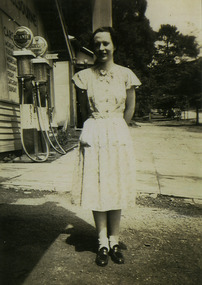
Photograph (Item) - Black and white photograph, 1950s
... well-known local, Clarrie Smith, had spoken about showing the 'talkies' in the local hall and then subsequently had local builder, Harold Cuzens, build the Marysville Theatre in 1932. The Marysville Theatre was located on Murchison Street. The solid concrete building was used as a Theatre from 1932 to 1970. The building was then purchased by The Darmody Family and was used as an Arts and Crafts Centre for two years from 1975. The building was then purchased by Norman and Rosemary Fiske in 1977 and converted into a restaurant ...A black and white photograph of Jill Wallace in Marysville in Victoria.A black and white photograph of Jill Wallace in Marysville in Victoria. Jim Wallace was born in Dumfries in Scotland and emigrated to Australia with his family at age 6. He arrived and settled in Marysville in 1922 and ended up working for the Barton Brothers looking after their touring cars and their garage. He met Marj in 1928 and they married in 1930. Jim and another well-known local, Clarrie Smith, had spoken about showing the 'talkies' in the local hall and then subsequently had local builder, Harold Cuzens, build the Marysville Theatre in 1932. The Marysville Theatre was located on Murchison Street. The solid concrete building was used as a Theatre from 1932 to 1970. The building was then purchased by The Darmody Family and was used as an Arts and Crafts Centre for two years from 1975. The building was then purchased by Norman and Rosemary Fiske in 1977 and converted into a restaurant called The Pumpernickel. This building, along with most of the town, was destroyed in the 2009 Black Saturday bushfires. The Wallaces departed Marysville in 1980 for a new life in Ringwood, Victoria.Jill Wallace/ early 1950s/ Oldest daughter of/ Jim + Marjorie Wallace Outside/ McKenzies/ Tourist Depot/ Main Streetmarysville theatre, marysville, victoria, harold cuzens, jim wallace, darmody family, norman fiske, rosemary fiske, the pumpernickel, 2009 black saturday bushfires, marj wallace, marie wallace, jill wallace, barton brothers, clarrie smith -
 Marysville & District Historical Society
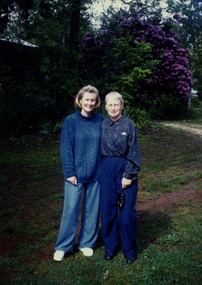
Photograph (Item) - Colour photograph, Unknown
... well-known local, Clarrie Smith, had spoken about showing the 'talkies' in the local hall and then subsequently had local builder, Harold Cuzens, build the Marysville Theatre in 1932. The Marysville Theatre was located on Murchison Street. The solid concrete building was used as a Theatre from 1932 to 1970. The building was then purchased by The Darmody Family and was used as an Arts and Crafts Centre for two years from 1975. The building was then purchased by Norman and Rosemary Fiske in 1977 and converted into a restaurant ...A colour photograph of Marie and Jill Wallace in Marysville in Victoria.A colour photograph of Marie and Jill Wallace in Marysville in Victoria. Jim Wallace was born in Dumfries in Scotland and emigrated to Australia with his family at age 6. He arrived and settled in Marysville in 1922 and ended up working for the Barton Brothers looking after their touring cars and their garage. He met Marj in 1928 and they married in 1930. Jim and another well-known local, Clarrie Smith, had spoken about showing the 'talkies' in the local hall and then subsequently had local builder, Harold Cuzens, build the Marysville Theatre in 1932. The Marysville Theatre was located on Murchison Street. The solid concrete building was used as a Theatre from 1932 to 1970. The building was then purchased by The Darmody Family and was used as an Arts and Crafts Centre for two years from 1975. The building was then purchased by Norman and Rosemary Fiske in 1977 and converted into a restaurant called The Pumpernickel. This building, along with most of the town, was destroyed in the 2009 Black Saturday bushfires. The Wallaces departed Marysville in 1980 for a new life in Ringwood, Victoria.Marie + Jill Standing/ in front of our old home.marysville theatre, marysville, victoria, harold cuzens, jim wallace, darmody family, norman fiske, rosemary fiske, the pumpernickel, 2009 black saturday bushfires, marj wallace, marie wallace, jill wallace, barton brothers, clarrie smith -
 Marysville & District Historical Society
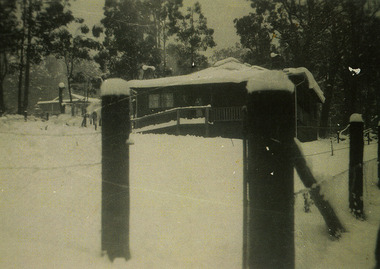
Photograph (Item) - Black and white photograph, Unknown
... well-known local, Clarrie Smith, had spoken about showing the 'talkies' in the local hall and then subsequently had local builder, Harold Cuzens, build the Marysville Theatre in 1932. The Marysville Theatre was located on Murchison Street. The solid concrete building was used as a Theatre from 1932 to 1970. The building was then purchased by The Darmody Family and was used as an Arts and Crafts Centre for two years from 1975. The building was then purchased by Norman and Rosemary Fiske in 1977 and converted into a restaurant ...A black and white photograph of the Wallace house in Marysville in Victoria during winter.A black and white photograph of the Wallace house in Marysville in Victoria during winter. Jim Wallace was born in Dumfries in Scotland and emigrated to Australia with his family at age 6. He arrived and settled in Marysville in 1922 and ended up working for the Barton Brothers looking after their touring cars and their garage. He met Marj in 1928 and they married in 1930. Jim and another well-known local, Clarrie Smith, had spoken about showing the 'talkies' in the local hall and then subsequently had local builder, Harold Cuzens, build the Marysville Theatre in 1932. The Marysville Theatre was located on Murchison Street. The solid concrete building was used as a Theatre from 1932 to 1970. The building was then purchased by The Darmody Family and was used as an Arts and Crafts Centre for two years from 1975. The building was then purchased by Norman and Rosemary Fiske in 1977 and converted into a restaurant called The Pumpernickel. This building, along with most of the town, was destroyed in the 2009 Black Saturday bushfires. The Wallaces departed Marysville in 1980 for a new life in Ringwood, Victoria.Snow in Marysvillemarysville theatre, marysville, victoria, harold cuzens, jim wallace, darmody family, norman fiske, rosemary fiske, the pumpernickel, 2009 black saturday bushfires, marj wallace, marie wallace, jill wallace, barton brothers, clarrie smith -
 Marysville & District Historical Society
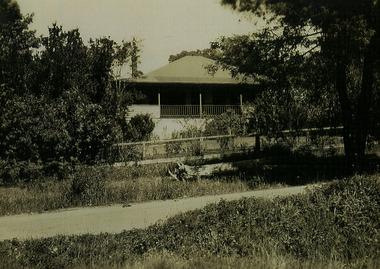
Photograph (Item) - Black and white photograph, Unknown
... well-known local, Clarrie Smith, had spoken about showing the 'talkies' in the local hall and then subsequently had local builder, Harold Cuzens, build the Marysville Theatre in 1932. The Marysville Theatre was located on Murchison Street. The solid concrete building was used as a Theatre from 1932 to 1970. The building was then purchased by The Darmody Family and was used as an Arts and Crafts Centre for two years from 1975. The building was then purchased by Norman and Rosemary Fiske in 1977 and converted into a restaurant ...A black and white photograph of the Wallace Family home in Marysville in Victoria.A black and white photograph of the Wallace Family home in Marysville in Victoria. Jim Wallace was born in Dumfries in Scotland and emigrated to Australia with his family at age 6. He arrived and settled in Marysville in 1922 and ended up working for the Barton Brothers looking after their touring cars and their garage. He met Marj in 1928 and they married in 1930. Jim and another well-known local, Clarrie Smith, had spoken about showing the 'talkies' in the local hall and then subsequently had local builder, Harold Cuzens, build the Marysville Theatre in 1932. The Marysville Theatre was located on Murchison Street. The solid concrete building was used as a Theatre from 1932 to 1970. The building was then purchased by The Darmody Family and was used as an Arts and Crafts Centre for two years from 1975. The building was then purchased by Norman and Rosemary Fiske in 1977 and converted into a restaurant called The Pumpernickel. This building, along with most of the town, was destroyed in the 2009 Black Saturday bushfires. The Wallaces departed Marysville in 1980 for a new life in Ringwood, Victoria.Wallace Homemarysville theatre, marysville, victoria, harold cuzens, jim wallace, darmody family, norman fiske, rosemary fiske, the pumpernickel, 2009 black saturday bushfires, marj wallace, marie wallace, jill wallace, barton brothers, clarrie smith -
 Marysville & District Historical Society
Booklet (Item) - Leisure guide, Michael Chesire & Associates Pty. Ltd, MARYSVILLE & DISTRICT LEISURE GUIDE-SPRING, 1986/SUMMBER, 1987, 1986
... well...taggerty river recreation area...athols abbey...phantom falls...keppel falls...the beeches walking track...marylyn guest house...kufstein inn motel...the cumberland...marysville tourist & progress association...marysville newsagency & general store...crossways restaurant...A free leisure guide to Marysville and the surrounding district published for Spring 1986, and Summer 1987. marysville victoria australia leisure guide michael cheshire & associates pty ltd marysville golf club blackwood lodges sir colin mackenzie fauna park lake eildon fraser national park yarra valley wineries marysville coach tours kooringa marylands guest house lady talbot forest drive wishing well taggerty river recreation area athols abbey phantom falls keppel falls the beeches walking track marylyn guest house kufstein inn motel the cumberland marysville tourist & progress association marysville newsagency & general store crossways restaurant & motel beauty spot walk tree fern gully walk michaeldene track keppel track woods lookout track marysville hotel motel lake mountain ski hire marysville recreation and fun park mytanta horseback safaris upper big river valley the big culvert marysville mountain view horse hire maryton park amber view holiday lodges cathedral restaurant the top shop tower motel menzes garage beauty spot nursery marysville ski hire lake mountain ski school faraway forest scenic motel buxton trout farm marysville hardware timbertop steakhouse marysville trout farm healesville sanctuary buxton hotel motel nanda binya lodge buxton antique and furniture mart the black spur inn hotel alexandra lake mountain j l gould sawmills pty. ltd. geoffrey pope & associates marysville crafts & gifts olde yarra track shoppe cumberland scenic reserve tudor lodge road house fruit salad farm highwayman's retreat Kilmore Historical Society *10/183 *MDL.1. ...A free leisure guide to Marysville and the surrounding district published for Spring 1986, and Summer, 1987. This was produced by Michael Cheshire as a free publication to promote tourism in Marysville and the surrounding district. It includes maps of the Big River Valley, Cumberland Valley, Lady Talbot Forest Drive, the Marysville area, and the township of Marysville. It was released in the spring of 1986. A free leisure guide to Marysville and the surrounding district published for Spring 1986, and Summer 1987.Kilmore Historical Society *10/183 *MDL.1.marysville, victoria, australia, leisure guide, michael cheshire & associates pty ltd, marysville golf club, blackwood lodges, sir colin mackenzie fauna park, lake eildon, fraser national park, yarra valley wineries, marysville coach tours, kooringa, marylands guest house, lady talbot forest drive, wishing well, taggerty river recreation area, athols abbey, phantom falls, keppel falls, the beeches walking track, marylyn guest house, kufstein inn motel, the cumberland, marysville tourist & progress association, marysville newsagency & general store, crossways restaurant & motel, beauty spot walk, tree fern gully walk, michaeldene track, keppel track, woods lookout track, marysville hotel motel, lake mountain ski hire, marysville recreation and fun park, mytanta horseback safaris, upper big river valley, the big culvert, marysville mountain view horse hire, maryton park, amber view holiday lodges, cathedral restaurant, the top shop, tower motel, menzes garage, beauty spot nursery, marysville ski hire, lake mountain ski school, faraway forest, scenic motel, buxton trout farm, marysville hardware, timbertop steakhouse, marysville trout farm, healesville sanctuary, buxton hotel motel, nanda binya lodge, buxton antique and furniture mart, the black spur inn hotel, alexandra, lake mountain, j l gould sawmills pty. ltd., geoffrey pope & associates, marysville crafts & gifts, olde yarra track shoppe, cumberland scenic reserve, tudor lodge road house, fruit salad farm, highwayman's retreat -
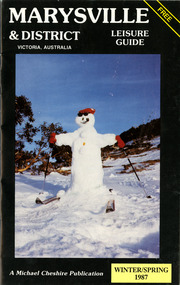 Marysville & District Historical Society
Booklet (Item) - Leisure guide, Michael Chesire & Associates Pty. Ltd, MARYSVILLE & DISTRICT LEISURE GUIDE-WINTER/SPRING 1987, 1987
... well...taggerty river recreation area...athols abbey...phantom falls...keppel falls...the beeches walking track...marylyn guest house...kufstein inn motel...the cumberland...marysville tourist & progress association...marysville newsagency & general store...crossways restaurant...A free leisure guide to Marysville and the surrounding district published for Winter and Spring, 1987. marysville victoria australia leisure guide michael cheshire & associates pty ltd marysville golf club blackwood lodges sir colin mackenzie fauna park lake eildon fraser national park yarra valley wineries marysville coach tours kooringa marylands guest house lady talbot forest drive wishing well taggerty river recreation area athols abbey phantom falls keppel falls the beeches walking track marylyn guest house kufstein inn motel the cumberland marysville tourist & progress association marysville newsagency & general store crossways restaurant & motel beauty spot walk tree fern gully walk michaeldene track keppel track woods lookout track marysville hotel motel lake mountain ski hire marysville recreation and fun park mytanta horseback safaris upper big river valley the big culvert marysville mountain view horse hire maryton park amber view holiday lodges cathedral restaurant the top shop tower motel menzes garage marysville ski hire lake mountain ski school faraway forest scenic motel buxton trout farm marysville hardware timbertop steakhouse marysville trout farm healesville sanctuary buxton hotel motel nanda binya lodge buxton antique and furniture mart the black spur inn hotel alexandra lake mountain j l gould sawmills pty. ltd. geoffrey pope & associates marysville crafts & gifts olde yarra track shoppe cumberland scenic reserve tudor lodge road house fruit salad farm highwayman's retreat beauty spot display gardens & nursery ski lake mountain cross country ski hire & kitchen buxton store valley view marysville acheron way mt donna buang road snow gum woodlands alpine ash forests mountain ash forests stringybark forests messmate forests manna gum forests A free leisure guide to Marysville and the surrounding district published for Winter/Spring 1987 MARYSVILLE & DISTRICT LEISURE GUIDE-WINTER/SPRING 1987 Booklet Leisure guide Michael Chesire & Associates Pty. ...A free leisure guide to Marysville and the surrounding district published for Winter and Spring, 1987. This was produced by Michael Cheshire as a free publication to promote tourism in Marysville and the surrounding district. It includes maps of the Big River Valley, Cumberland Valley, Lady Talbot Forest Drive, the Marysville area, and the township of Marysville. It was released in the winter of 1987. A free leisure guide to Marysville and the surrounding district published for Winter and Spring, 1987.marysville, victoria, australia, leisure guide, michael cheshire & associates pty ltd, marysville golf club, blackwood lodges, sir colin mackenzie fauna park, lake eildon, fraser national park, yarra valley wineries, marysville coach tours, kooringa, marylands guest house, lady talbot forest drive, wishing well, taggerty river recreation area, athols abbey, phantom falls, keppel falls, the beeches walking track, marylyn guest house, kufstein inn motel, the cumberland, marysville tourist & progress association, marysville newsagency & general store, crossways restaurant & motel, beauty spot walk, tree fern gully walk, michaeldene track, keppel track, woods lookout track, marysville hotel motel, lake mountain ski hire, marysville recreation and fun park, mytanta horseback safaris, upper big river valley, the big culvert, marysville mountain view horse hire, maryton park, amber view holiday lodges, cathedral restaurant, the top shop, tower motel, menzes garage, marysville ski hire, lake mountain ski school, faraway forest, scenic motel, buxton trout farm, marysville hardware, timbertop steakhouse, marysville trout farm, healesville sanctuary, buxton hotel motel, nanda binya lodge, buxton antique and furniture mart, the black spur inn hotel, alexandra, lake mountain, j l gould sawmills pty. ltd., geoffrey pope & associates, marysville crafts & gifts, olde yarra track shoppe, cumberland scenic reserve, tudor lodge road house, fruit salad farm, highwayman's retreat, beauty spot display gardens & nursery, ski lake mountain cross country ski hire & kitchen, buxton store, valley view marysville, acheron way, mt donna buang road, snow gum woodlands, alpine ash forests, mountain ash forests, stringybark forests, messmate forests, manna gum forests -
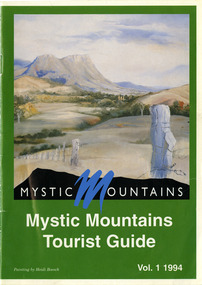 Marysville & District Historical Society
Ephemera (Item) - Tourist Guide, Michael Nash et al, Mystic Mountains Tourist Guide Vol. 1 1994, 1994
... well...taggerty river picnic area...taggery river...phantom falls...keppel falls...the beeches walking track...mount sugarloaf...beauty spot walk...tree fern gully walk...michaeldene track...keppel track...woods lookout track...marysville caravan park...baree mud brick cottages...cumberland scenic reserve...nanda binya lodge...cambarville...the big tree...barton's lookout...cumberland falls...our lady of the snows catholic church...anglican church christ...marysville christian fellowship...sovereign view...the big culvert...st fillan...steavenson's restaurant...A tourist guide outlining services, accommodation, activities and places of interest to visit in and around Marysville and the local district. marysville victoria australia tourist guide mystic mountains michael nash dudley jones marysville and district tourist and progress association department of conservation & natural resources shire of alexandra paperwork professionals pp art services harrier printing darrowby deer farm heidi boesch hidden talent craft gallery olde yarra track shoppe lady talbot forest drive mathilde's of marysville country guest house wishing well taggerty river picnic area taggery river phantom falls keppel falls the beeches walking track mount sugarloaf beauty spot walk tree fern gully walk michaeldene track keppel track woods lookout track marysville caravan park baree mud brick cottages cumberland scenic reserve nanda binya lodge cambarville the big tree barton's lookout cumberland falls our lady of the snows catholic church anglican church christ marysville christian fellowship sovereign view the big culvert st fillan steavenson's restaurant the birches resort cathedral range state park tower motel marysville post shop lake mountain wirreanda festival cross country ski hire marysville hotel motel kerami house marysville holiday cottages missing links miniature golf top shop pancake parlour marylands guest house dalrymples guest cottages crossways country inn esa camping & conference centre scenic motel the cumberland maryton park holiday cottages lomatia lodge holiday house willowbank gallery and art centre igloo roadhouse a model tours geoffrey pope & associates ACKNOWLEDGEMENTS:/ Marysville and District Tourist and Progress Association, Marysville/ Office of the Department of Conservation & Natural Resources, Shire/ of Alexandra Visitors Guide and all our advertisers whom without/ their support this publication would not have been possible. ...A tourist guide outlining services, accommodation, activities and places of interest to visit in and around Marysville and the local district.A tourist guide outlining services, accommodation, activities and places of interest to visit in and around Marysville and the local district.ACKNOWLEDGEMENTS:/ Marysville and District Tourist and Progress Association, Marysville/ Office of the Department of Conservation & Natural Resources, Shire/ of Alexandra Visitors Guide and all our advertisers whom without/ their support this publication would not have been possible.marysville, victoria, australia, tourist guide, mystic mountains, michael nash, dudley jones, marysville and district tourist and progress association, department of conservation & natural resources, shire of alexandra, paperwork professionals, pp art services, harrier printing, darrowby deer farm, heidi boesch, hidden talent craft gallery, olde yarra track shoppe, lady talbot forest drive, mathilde's of marysville country guest house, wishing well, taggerty river picnic area, taggery river, phantom falls, keppel falls, the beeches walking track, mount sugarloaf, beauty spot walk, tree fern gully walk, michaeldene track, keppel track, woods lookout track, marysville caravan park, baree mud brick cottages, cumberland scenic reserve, nanda binya lodge, cambarville, the big tree, barton's lookout, cumberland falls, our lady of the snows catholic church, anglican church christ, marysville christian fellowship, sovereign view, the big culvert, st fillan, steavenson's restaurant, the birches resort, cathedral range state park, tower motel, marysville post shop, lake mountain, wirreanda festival, cross country ski hire, marysville hotel motel, kerami house, marysville holiday cottages, missing links miniature golf, top shop pancake parlour, marylands guest house, dalrymples guest cottages, crossways country inn, esa camping & conference centre, scenic motel, the cumberland, maryton park holiday cottages, lomatia lodge holiday house, willowbank gallery and art centre, igloo roadhouse, a model tours, geoffrey pope & associates -
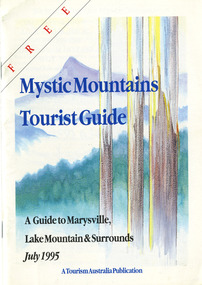 Marysville & District Historical Society
Ephemera (Item) - Tourist Guide, Graeme Haycraft, Mystic Mountains Tourist Guide July 1995, 07-1995
... restaurant...olde yarra track shoppe...danish coffee gardens...oscars take-away...country touch pottery studio & gallery...cumberland memorial scenic reserve...cathedral range state park...lady talbot forest drive...wishing well...A tourist guide outlining services, accommodation, activities and places of interest to visit in and around Marysville, Lake Mountain and the local district. marysville victoria australia tourist guide mystic mountains lake mountain tourism australia graeme haycraft magic creek nursery missing links miniature golf phelps bakery blackwood cottages marysville hotel motel tower motel kerami house marylands guest house lomatia lodge willowbank at taggerty barree mud brick cottages scenic motel somerled mountain retreat dalrymples guest cottages nanda binya lodge mathilde's of marysville country guest house the birches resort mystic mountains tourist information marysville caravan park the cumberland igloo roadhouse top shop pancake parlour the silver birch restaurant steavenson's restaurant olde yarra track shoppe danish coffee gardens oscars take-away country touch pottery studio & gallery cumberland memorial scenic reserve cathedral range state park lady talbot forest drive wishing well taggerty river picnic area taggerty river phantom falls keppels falls the beeches walking track mount sugarloaf maryton park holiday cottages snowviews esa camping & conference centre wirreanda festival marysville post shop hidden talent craft gallery marysville automotive repairs geoffrey pope & associates beauty spot walk tree fern gully walk michaeldene track marysville riding school gerraty's ski centre marysville holiday cottages marysville triangle taxi service fruit salad farm lake mountain alpine resort marysville ski hire lake mountain ski school cross country ski hire lake mountain ski hire marysville country club Acknowledgements/ Mystic Mountains Tourism Association, Marysville Office of the Dept. of Conser/ vation & Natural Resources, Mrs Elaine Postlethwaite, Ms Sue Henry & every/ advertiser without whose support this Guide would not have been possible. ...A tourist guide outlining services, accommodation, activities and places of interest to visit in and around Marysville, Lake Mountain and the local district.A tourist guide outlining services, accommodation, activities and places of interest to visit in and around Marysville, Lake Mountain and the local district.Acknowledgements/ Mystic Mountains Tourism Association, Marysville Office of the Dept. of Conser/ vation & Natural Resources, Mrs Elaine Postlethwaite, Ms Sue Henry & every/ advertiser without whose support this Guide would not have been possible.marysville, victoria, australia, tourist guide, mystic mountains, lake mountain, tourism australia, graeme haycraft, magic creek nursery, missing links miniature golf, phelps bakery, blackwood cottages, marysville hotel motel, tower motel, kerami house, marylands guest house, lomatia lodge, willowbank at taggerty, barree mud brick cottages, scenic motel, somerled mountain retreat, dalrymples guest cottages, nanda binya lodge, mathilde's of marysville country guest house, the birches resort, mystic mountains tourist information, marysville caravan park, the cumberland, igloo roadhouse, top shop pancake parlour, the silver birch restaurant, steavenson's restaurant, olde yarra track shoppe, danish coffee gardens, oscars take-away, country touch pottery studio & gallery, cumberland memorial scenic reserve, cathedral range state park, lady talbot forest drive, wishing well, taggerty river picnic area, taggerty river, phantom falls, keppels falls, the beeches walking track, mount sugarloaf, maryton park holiday cottages, snowviews, esa camping & conference centre, wirreanda festival, marysville post shop, hidden talent craft gallery, marysville automotive repairs, geoffrey pope & associates, beauty spot walk, tree fern gully walk, michaeldene track, marysville riding school, gerraty's ski centre, marysville holiday cottages, marysville triangle taxi service, fruit salad farm, lake mountain alpine resort, marysville ski hire, lake mountain ski school, cross country ski hire, lake mountain ski hire, marysville country club -
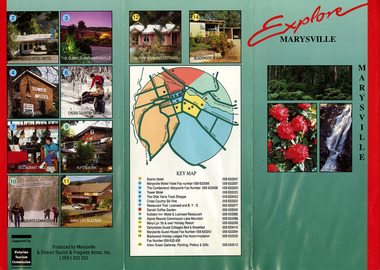 Marysville & District Historical Society
Ephemera (Item) - Information brochure, Marysville and District Tourist and Progress Association, Explore MARYSVILLE, Unknown
... An information brochure with photographs and locations of various accommodation sites and businesses in Marysville as well as activities to experience in and around Marysville. marysville victoria australia information brochure scenic motel marysville motel hotel the cumberland tower motel the olde yarra track shoppe cross country ski hire restaurant tirol danish coffee garden kufstein inn lake mountain mary-lyn resort dalrymples guest cottages marylands guest house blackwood holiday lodges abor green galleries marysville & district tourist & progress association victorian tourism commission Supported by/ Victorian/ Tourism/ Commission Produced by Marysville/ & District Tourist & Progress Assoc. ...An information brochure with photographs and locations of various accommodation sites and businesses in Marysville as well as activities to experience in and around Marysville. This brochure was produced by the Marysville & District Tourist & Progress Association with the support of the Victorian Tourism Commission.An information brochure with photographs and locations of various accommodation sites and businesses in Marysville as well as activities to experience in and around Marysville.Supported by/ Victorian/ Tourism/ Commission Produced by Marysville/ & District Tourist & Progress Assoc. Inc.marysville, victoria, australia, information brochure, scenic motel, marysville motel hotel, the cumberland, tower motel, the olde yarra track shoppe, cross country ski hire, restaurant tirol, danish coffee garden, kufstein inn, lake mountain, mary-lyn resort, dalrymples guest cottages, marylands guest house, blackwood holiday lodges, abor green galleries, marysville & district tourist & progress association, victorian tourism commission
