
Showing 45 items matching "wesleyan missions"
-
 Uniting Church Archives - Synod of Victoria
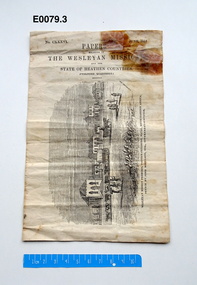
Pamphlet, James Nichols, Papers relative to the Wesleyan missions and the sate of the heathen countries, 1854
... Papers relative to the Wesleyan missions and the sate of the heathen countries...The Wesleyan Missions...Cream paper folded document with lithographic image on the front of the Wesleyan Mission premises in Natal, South-Eastern Africa....The Wesleyan Missions Published quarterly Cream paper folded document with lithographic image on the front of the Wesleyan Mission premises in Natal, South-Eastern Africa. ...Published quarterlyCream paper folded document with lithographic image on the front of the Wesleyan Mission premises in Natal, South-Eastern Africa.non-fictionPublished quarterlythe wesleyan missions -
 Uniting Church Archives - Synod of Victoria
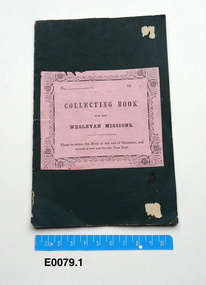
Book - Collecting book, Collecting book for the Wesleyan Missions
... Collecting book for the Wesleyan Missions......Wesleyan Missions...The book was given to an individual who was an accredited Collector of Subscriptions for carrying on the Missions of the Wesleyan Methodist Missionary Society. ...Wesleyan Methodist Missionary Society Wesleyan Missions Collecting book for the Wesleyan Missions Book Collecting book ...The book was given to an individual who was an accredited Collector of Subscriptions for carrying on the Missions of the Wesleyan Methodist Missionary Society. It contains an introductory letter from The Committee with instructions for the role and examples of how the book should be used.wesleyan methodist missionary society, wesleyan missions -
 Uniting Church Archives - Synod of Victoria
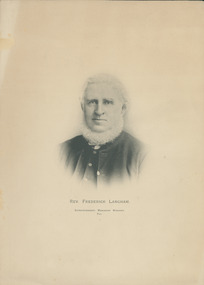
Printed etching, Undated
... Frederick Langham, Superintendent - Wesleyan Missions, Fiji"...Frederick Langham, Superintendent - Wesleyan Missions, Fiji" Head and Shoulders etching of Rev. ...B. 1833 Tasmania; died 1903 Newington, England. See below.Head and Shoulders etching of Rev. Frederick Langham,"Rev. Frederick Langham, Superintendent - Wesleyan Missions, Fiji"langham, frederick, fiji, wesleyan church -
 Clunes Museum
Book, WILLIAM NICHOLS, MEMOIR OF THE REV. WILLIAM SHAW, 1875
... TAN COLOURED HARD COVER BOOK -MEMOIR OF THE REV WILLIAM SHAW LATE GENERAL SUPERINTENDENT OF THE WESLEYAN MISSIONS IN SOUTH -EASTERN AFRICA....local history books religion MEMOIR OF THE REV WILLIAM SHAW LATE GENERAL SUPERINTENDENT OF THE WESLEYAN MISSIONS IN SOUTH -EASTERN AFRICA. TAN COLOURED HARD COVER BOOK -MEMOIR OF THE REV WILLIAM SHAW LATE GENERAL SUPERINTENDENT OF THE WESLEYAN MISSIONS IN SOUTH -EASTERN AFRICA. ...MEMOIR OF THE REV WILLIAM SHAW LATE GENERAL SUPERINTENDENT OF THE WESLEYAN MISSIONS IN SOUTH -EASTERN AFRICA.TAN COLOURED HARD COVER BOOK -MEMOIR OF THE REV WILLIAM SHAW LATE GENERAL SUPERINTENDENT OF THE WESLEYAN MISSIONS IN SOUTH -EASTERN AFRICA.non-fictionMEMOIR OF THE REV WILLIAM SHAW LATE GENERAL SUPERINTENDENT OF THE WESLEYAN MISSIONS IN SOUTH -EASTERN AFRICA.local history, books, religion -
 Bendigo Historical Society Inc.
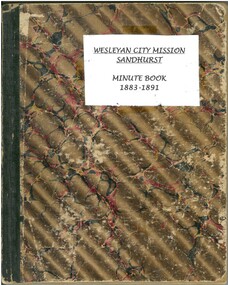
Book - FOREST STREET UNITING CHURCH COLLECTION: MINUTE BOOK, 1883-1981
... Wesleyan City Mission Sandhurst Minute Book 1883-1891 Brown cover with marbled pattern. ...BHS Collection CHURCH History uniting church forest street Wesleyan City Mission Sandhurst Minute Book 1883-1891 Brown cover with marbled pattern. ...BHS CollectionWesleyan City Mission Sandhurst Minute Book 1883-1891 Brown cover with marbled pattern. Handwritten minutes.church, history, uniting church forest street -
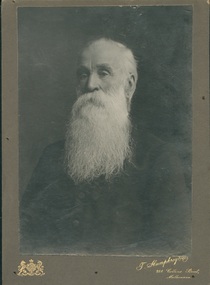 Uniting Church Archives - Synod of Victoria
Photograph, Undated c.1900
... john watsfore, wesleyan, methodist, minister, parramatta, fiji, prince alfred college, home mission, president australasian conference, ecumenical council...Spent 8 years with the Wesleyan Mission in Fiji. Founded Prince Alfred College Adelaide. ...Spent 8 years with the Wesleyan Mission in Fiji. Founded Prince Alfred College Adelaide. ...Rev John Watsford (1820 - 1907). Born at Parramatta, N.S.W. First Australian born minister of the Methodist Conference. Spent 8 years with the Wesleyan Mission in Fiji. Founded Prince Alfred College Adelaide. Home Mission Secretary for Victoria. President of the Australasian Conference of the Wesleyan Methodist Church 1871. President of the General Conference of the Australasian Wesleyan Methodist Church in 1878. Australasian Representative at the Ecumenical Council of Methodism in London 1881.B & W head and shoulders studio portrait of the Rev. John Watsford, mounted on brown card.john watsfore, wesleyan, methodist, minister, parramatta, fiji, prince alfred college, home mission, president australasian conference, ecumenical council -
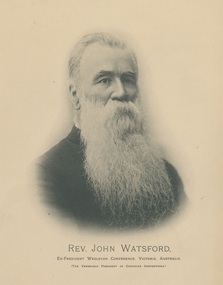 Uniting Church Archives - Synod of Victoria
Printed image, Undated c.1900
... john watsfore, wesleyan, methodist, minister, parramatta, fiji, prince alfred college, home mission, president australasian conference, ecumenical council...Spent 8 years with the Wesleyan Mission in Fiji. Founded Prince Alfred College Adelaide. ...Spent 8 years with the Wesleyan Mission in Fiji. Founded Prince Alfred College Adelaide. ...Rev John Watsford (1820 - 1907). Born at Parramatta, N.S.W. First Australian born minister of the Methodist Conference. Spent 8 years with the Wesleyan Mission in Fiji. Founded Prince Alfred College Adelaide. Home Mission Secretary for Victoria. President of the Australasian Conference of the Wesleyan Methodist Church 1871. President of the General Conference of the Australasian Wesleyan Methodist Church in 1878. Australasian Representative at the Ecumenical Council of Methodism in London 1881.B & W Head and shoulders printed image of the Rev. John Watsford. Taken from a photograph."Rev. John Watsord, Ex-President Wesleyan Conference, Victoria, Australia. (The Venerable President of Christian Conventions.)"john watsfore, wesleyan, methodist, minister, parramatta, fiji, prince alfred college, home mission, president australasian conference, ecumenical council -
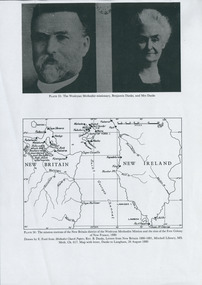 Uniting Church Archives - Synod of Victoria
Photograph, Rev. Benjamin Danks, 19th C
... Danks and a map showing New Britain and New Ireland and the mission stations of the New Britain district of the Wesleyan Methodist Mission and the sites of the Free Colony of New France....Danks and a map showing New Britain and New Ireland and the mission stations of the New Britain district of the Wesleyan Methodist Mission and the sites of the Free Colony of New France. ...Benjamin Danks was b. 1853 England, ordained 1878, and died 1921 in Rookwood, NSW. DANKS, Benjamin (1853-1921) Michael Horsburgh, DANKS, BENJAMIN (b. Wednesbury, England, 12 Feb 1853; d. Sydney, NSW, 12 April 1921). Methodist missionary in New Britain and missionary administrator. Benjamin Danks migrated to Vic with his family when a young child. He entered the Wesleyan Methodist ministry in 1878 and was sent with his wife, Emma, daughter of John and Elizabeth Watsford, to join the Rev George Brown in the newly established missionary venture on the Duke of York group in New Britain, where he remained for nine years. An opponent of 'blackbirding', the traffic in indentured island labour for the Australian sugar cane industry, he warned local inhabitants not to go aboard any vessel recruiting labour for distant places, much to the displeasure of the labour traders. In 1880 he participated in the rescue of the survivors of the ill-fated settlement established by the Marquis de Rays. In 1907 he succeeded George Brown as the general secretary of Foreign Missions for the Methodist Church of Australasia and was president of the NSW Conference in 1908. He retired in 1918 and died in 1921 after a long illness attributed to the privations of his missionary career. Danks was highly regarded as a linguist and published the first book in the Tolai language of New Britain. He was a strong supporter of state legislation to control social evils, and to ensure pure food and drugs. He was an ardent temperance advocate. George Brown, An Autobiography (London, 1908); New South Wales Methodist Conference, Souvenir of the Presidency of the Rev. Benjamin Danks (Sydney, 1909); Wallace Deane (ed), In Wild New Britain (Sydney, 1933); Neville Threlfall, One Hundred Years in the Islands (Rabaul, 1975). MICHAEL HORSBURGH Electronic Version © Southern Cross College, 2004. Content © Evangelical History Association of Australia and the author, 2004.Photocopy of page from a book (A4 size) with pictures of Danks and Mrs. Danks and a map showing New Britain and New Ireland and the mission stations of the New Britain district of the Wesleyan Methodist Mission and the sites of the Free Colony of New France.danks, benjamin, new britain -
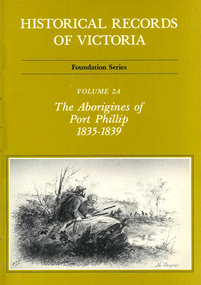 Victorian Aboriginal Corporation for Languages
Book, Ian Macfarlane, Historical records of Victoria : foundation series : volume 2A : the Aborigines of Port Phillip 1835-1839, 1982
... House of Commons Select Committee on Aborigines Part II, The Wesleyan Mission at Buntingdale Ch. 4. Establishment and early operations of the Wesleyan mission Part III, The Government acts Ch. 5. ...House of Commons Select Committee on Aborigines Part II, The Wesleyan Mission at Buntingdale Ch. 4. Establishment and early operations of the Wesleyan mission Part III, The Government acts Ch. 5. ...Reproductions of various transactions and reports dealing with Aboriginal people in Port Phillip in the period 1835-39, beginning with some of the earliest reports and tracing the evolution of government interaction and policy towards Aborigines in the 19th century. Covers mission work, government reports, the native police, conflicts with squatters, with numerous illustrations and original reports. Contents: Part I, Evolution of British policy Ch. 1. Proposals to appoint protectors of aborigines Ch. 2. Racial conflict in the year of official settlement at Port Phillip Ch. 3. House of Commons Select Committee on Aborigines Part II, The Wesleyan Mission at Buntingdale Ch. 4. Establishment and early operations of the Wesleyan mission Part III, The Government acts Ch. 5. Establishing the first government mission 1835-7 Ch. 6. Food and clothing for the Aborigines Ch. 7. Punishment of Aborigines found drunk, 1836-8 Ch. 8. Operations of the government mission, November 1837 to March 1839 Ch. 9. First attempt to form a native police corps Part IV, Growing conflict with squatters, 1837-8 Ch. 10. The disappearance of Gellibrand and Hesse Ch. 11. Attacks in the Western District Ch. 12. Attacks on the overland routes to Port Phillip Ch. 13. Evolution of policy in Sydney, 1838.b&w illustrations, b&w photographs, tables, document reproductionsvictorian history, colonisation, justice system -
 Uniting Church Archives - Synod of Victoria
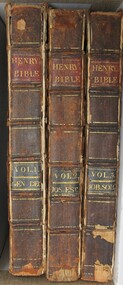
Book - Bible, Henry's bible
... He was appointed to the Hobart Circuit; Chairman of Van Diemen's Land District; General Superintendent of Wesleyan Missions in Australasia and Polynesia. He died in Hobart, Tasmania in March 1942. ...He was appointed to the Hobart Circuit; Chairman of Van Diemen's Land District; General Superintendent of Wesleyan Missions in Australasia and Polynesia. He died in Hobart, Tasmania in March 1942. ...Matthew Henry's Commentary on the Whole Bible (1706) is a six-volume, verse-by-verse exposition of the Old and New Testaments known for its devotional, practical, and scholarly insights. Written by the British Nonconformist minister Matthew Henry (1662–1714). [Source: Wikipedia]Six volumes of brown leather-bound books with gold text on the spines. VOL.1. GEN.DEU Title page: First MDCCLXVII [1767] 7th Edinburgh VOL.2. JOS.EST Title page: Second MDCLXVII 7th Edinburgh VOL.3. JOB.SOLO. Title page: Third MDCLXVII 7th Edinburgh VOL.4. ISA.MALA. Title page: Fourth MDCCLXVII [1767] 7th ed. Edinburgh VOL.5. MAT.JON. Title page: First MDCCLXIX [1769] 7th ed. Edinburgh VOL.6. ACTS.REV. Title page: Second MDCCLXII [1763] 5th ed. London.non-fictionMatthew Henry's Commentary on the Whole Bible (1706) is a six-volume, verse-by-verse exposition of the Old and New Testaments known for its devotional, practical, and scholarly insights. Written by the British Nonconformist minister Matthew Henry (1662–1714). [Source: Wikipedia]rev john waterhouse 1789 - 1842 -
 Uniting Church Archives - Synod of Victoria
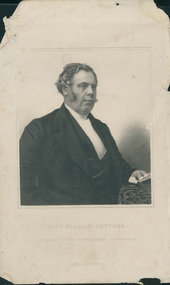
Printed etching, Undated c.1858
... ...Wesleyan Mission Carlton, President of Conference...A founder of the Wesleyan Mission Carlton. President of the Australasian Conference in 1858. ...A founder of the Wesleyan Mission Carlton. President of the Australasian Conference in 1858. ...Rev William Butters (1810 - 1887). Born Hibbaldstone, Lincolnshire on 24 January 1810. Entered the Wesleyan ministry in 1833 and sent as a missionary to Van Dieman's Land. Worked with convicts at Port Arthur, then served at Hobart, Ross and Launceston. In 1850 he was appointed to Melbourne. His health failed during the unprecedented difficulties initiated by the discovery of gold in 1851. Appointed to Adelaide 1855 - 1862. returned to Victoria in 1862, but his health broke down completely and he returned to England in 1863 and became a supernumerary. A founder of the Wesleyan Mission Carlton. President of the Australasian Conference in 1858. William Butters lived for 24 years in the London (Brixton) circuit before dying suddenly on 10 October 1887.B & W waist length printed etching of Rev. William Butters"Revd William Butters President of the Australasian Conference"william butters, wesleyan, methodist, minister, chaplain, port arthur, van dieman's land, wesleyan mission carlton, president of conference -
 Uniting Church Archives - Synod of Victoria
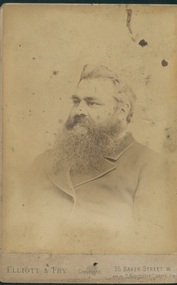
Photograph
... Rev Peter Williams, Methodist, Wesleyan, minister, East End Mission...Peter Thompson (1847 - 1909) was Superintendent of the East End Wesleyan Mission. Entered the Wesleyan ministry in 1871. ...Peter Thompson (1847 - 1909) was Superintendent of the East End Wesleyan Mission. Entered the Wesleyan ministry in 1871. ...Rev. Peter Thompson (1847 - 1909) was Superintendent of the East End Wesleyan Mission. Entered the Wesleyan ministry in 1871. Died 1909. The second son of a Lancashire farmer, Peter grew up in a tee-total Methodist household with a rather austere father and a saintly mother. He trained at Didsbury Wesleyan College where he was, by all accounts, a brilliant student. He was stationed in Ulverston and then Huddersfield (by 1876). By 1881 Peter had married and was Minister at Wood Green. He and his wife, Mary, do not appear to have had any children. They spent some years in Redhill and then, following the decision of Conference in 1885 to establish the London Wesleyan Methodist Mission, Peter was sent to the East End of London to take charge of the almost defunct St George’s Wesleyan Chapel. His work as a slum missionary was so successful that soon larger premises were required. In addition the mission took over a ‘most undesirable’ public house (The White Swan on Ratcliffe Highway) and later, in 1891, the Mahogany Bar. In 1898 he was interviewed by Charles Booth as part of Booth’s survey of London. Peter died after a long illness in 1909 having served 24 years in East London, one of the best known and loved Wesleyan ministers of his time. Sepia toned head and shoulders studio portrait of the Rev. Peter Thompson.rev peter williams, methodist, wesleyan, minister, east end mission -
 Flagstaff Hill Maritime Museum and Village
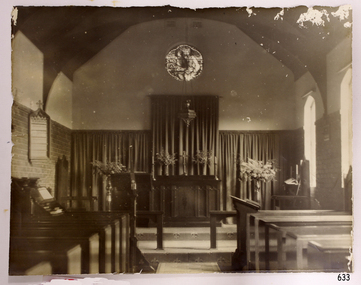
Photograph - Historical, religious, mid-20th century
... Missions to Seamen clubs in Victoria’s cities of Melbourne, Portland, Geelong and Hastings. Flagstaff Hill’s St Nicholas’ Seamen’s Church is named after its namesake from Williamstown, Victoria, which began in 1857. Bishop Perry opened the first Sailors’ Church there, known as ‘Bethel’, on an old hulk floating in Hobson’s Bay, Port of Melbourne. In 1860, a Sailors’ Rest started operating from rented premises in Williamstown. In 1878, the Sailors’ Church moved into an old Wesleyan...Missions to Seamen clubs in Victoria’s cities of Melbourne, Portland, Geelong and Hastings. Flagstaff Hill’s St Nicholas’ Seamen’s Church is named after its namesake from Williamstown, Victoria, which began in 1857. Bishop Perry opened the first Sailors’ Church there, known as ‘Bethel’, on an old hulk floating in Hobson’s Bay, Port of Melbourne. In 1860, a Sailors’ Rest started operating from rented premises in Williamstown. In 1878, the Sailors’ Church moved into an old Wesleyan ...This photograph records the interior of St Nicholas Seamen's Church at 139 Nelson Place, Williamstown, Victoria, which was purchased and furnished around 1943. The furniture and furnishings are now part of the St. Nicholas Seamen's Church collection. HISTORY of the Missions to Seamen: - DETAILED HISTORY of the Missions to Seamen: - The Missions to Seamen is an Anglican (Church of England) charity that has served the world’s seafarers since 1856. It was inspired by the work of Rev. John Ashley, who, 20 years earlier, had pioneered a ministry to seafarers in the Bristol Channel in Great Britain. When Ashley retired, others continued the work, founding the Missions to Seamen. It adopted a Flying Angel as its symbol, inspired by a verse from the Bible in Revelation 14. Today, over 200 world ports have Missions to Seamen centres and chaplains. A Missions to Seamen’s Club warmly welcomes sailors of all colours, creeds and races and provides a wide range of facilities. The Missions to Seamen organisation changed its name to the Mission to Seafarers in 2000, continuing to include Missions to Seamen clubs in Victoria’s cities of Melbourne, Portland, Geelong and Hastings. Flagstaff Hill’s St Nicholas’ Seamen’s Church is named after its namesake from Williamstown, Victoria, which began in 1857. Bishop Perry opened the first Sailors’ Church there, known as ‘Bethel’, on an old hulk floating in Hobson’s Bay, Port of Melbourne. In 1860, a Sailors’ Rest started operating from rented premises in Williamstown. In 1878, the Sailors’ Church moved into an old Wesleyan chapel in Ann Street. By the end of that year, they managed to purchase the building, which they had already refurbished. In 1883, they affiliated with the Victorian Seamen’s Mission. A few years later, in 1906, the building had to be demolished because it was no longer safe. While they raised funds for a new building, the Sailors’ Rest temporarily moved to premises in front of Customs House in Nelson Place. Around this time, in 1906, the Ladies Harbour Lights Guild was formed in Australia to support and raise funds for the Mission to Seamen organisation in Melbourne. Two of the most significant ladies of the Guild were founding members Ethel Godfrey and Alice Sibthorpe. During the Mission's time at Siddeley Street, Melbourne, the activities of the Guild raised funds for the Mission to Seamen's Chapel at their new, and still current, premises in Flinders Street, Melbourne, opened in 1917. The Guild continued its important work until the 1960s. In 1908, the Williamstown Mission had enough money to purchase the former Mascotte skating rink on Thompson Street, Williamstown. In August of that year, they were inaugurated into the Victorian Missions to Seamen. They continued at that venue for a few decades. In 1943, the former ES&A Bank building at 139 Nelson Place, Williamstown, was purchased to become the new Mission to Seamen’s Club. On May 6th, 1944, it was officially opened, described as a ‘distinctive little building’. Funds had previously been raised for the building and furnishing of the chapel at the rear. The chapel was named St Nicholas’ Seamen’s Church, after St Nicholas, fourth-century bishop and patron saint of sailors. Services were held on Wednesdays and Sundays. The church was supported by the Williamstown Lightkeepers’ Auxiliary, newly founded by Mrs Ethel Margaret Musther in 1943, as well as the Harbour Lights Guild and the League of Soldiers’ and Sailors’ Friends. The Williamstown Mission to Seamen’s Church operated until 1966, when large international ships no longer used the Port of Williamstown. The Commonwealth Government then leased the premises. In the formative years of Flagstaff Hill Maritime Village, the Advisory Board decided to include a Missions to Seamen Chapel and Recreation Room in its village. The Missions organisation was a significant feature of ports during the late 1800s and early 1900s, the period that the Village represents. They often erected Missions to house social and worshipful activities for seamen. Flagstaff Hill’s curator, Mr Ken Marshman, approached the Melbourne Board of Management of Missions to Seamen regarding the Williamstown branch. Consequently, the Board permitted the furnishings of the Williamstown chapel to be transferred to Flagstaff Hill Maritime Village. A provision of the transfer was that the Victoria Missions to Seamen be recognised, that the items would remain as a collection, and that the chapel would be called St Nicholas Seamen’s Church and conduct Divine services. The donation was approved on 21st May 1979. Flagstaff Hill's St. Nicholas Seamen's Church: - The idea behind Flagstaff Hill’s Missions to Seamen’s Church was partly driven by the offer of Stained Glass Memorial Windows that originated from the Warrnambool and District Base Hospital, which was undergoing multi-storey expansion in the late 1960s and early 1970s. The hospital’s Manager/Secretary was eager to see the historic window installed in a suitable place. The church, or chapel, was designed by a local architectural draftsman in collaboration with the Flagstaff Hill Planning Board and was constructed by Mr Leon Habel. The designers hoped that the church would be used for formal worship such as weddings, funerals, and multi-denominational special services like war commemorations. The design is inspired by the ‘Missions to Seamen’ buildings in Portland and the Port of Melbourne. The furniture and furnishings were placed as accurately as possible according to photographs of the Williamstown St Nicholas Seamen’s Church and with assistance from local clergy. The Recreation Room was furnished and arranged on advice from experienced members of the Missions to Seamen organisation. A framed document in the building recognises the donor of the furnishings, Victoria Missions to Seamen, and includes the names of some original donors and their donated item/s. The building’s design incorporates local features such as Warrnambool sandstone, which was no longer commercially available but was procured from demolished buildings and uniformly cut to use as a veneer over the stronger Mt. Gambier stone. Also, traditional green American roofing slate was used, sourced from the 1908 local shipwreck “Falls of Halladale” by Flagstaff Hill volunteer divers. The bell tower includes a bell believed to be from a local shipwreck. Additional furnishings were acquired locally, along with several items donated by Warrnambool residents. Light fittings in both rooms were assembled to simulate 19th-century gas light fittings. The stained-glass window at the back of the church is a memorial to Dr Connell, a well-respected member of the Warrnambool community. It was originally installed in 1928 in the main building of Warrnambool Hospital. The St Nicholas’ Seamen’s Church at Flagstaff Hill was officially opened by His Worship the Mayor, Cr. John Lindsay, on Sunday, 11th October 1981. The event included a service of thanksgiving conducted by the Warrnambool Ministers Fraternal. Since then, the Chapel has been the historic venue for many weddings. This photograph is significant through its association with the St Nicholas' Mission to Seamen Church in Williamstown, Melbourne, established in 1857. The building in the photograph is the former English, Scottish and Australian Bank (ES&A bank), also known as the Mission to Seamen. It is listed on the Victorian Heritage Database for having local historic and aesthetic interest. Photograph of St Nicholas Seamen's Church, Williamstown. Sepia photograph. The photograph shows the inside of the Chapel of Mission to Seamen, including organ, pews and other furniture and furnishings. There is a circular stained glass window high on the back wall depicting a sailor at the helm of a ship and a man standing behind him and pointing the way - "Christ Showing The Helmsman The Way". A Sanctuary Light is suspended from the ceiling. The Sanctuary chars are visible. This shows the St Nicholas Seamen's Church in Williamstown, the furnishings and furniture of which is now part of the St Nicholas Seamen's Church Collection’.flagstaff hill, warrnambool, shipwrecked-coast, flagstaff-hill, flagstaff-hill-maritime-museum, maritime-museum, shipwreck-coast, flagstaff-hill-maritime-village, st nicholas mission to seamen's church williamstown, mission to seamen williamstown, mission to seamen victoria, st nicholas mission to seamen, chapel window, christ showing the helmsman the way, stained glass window, st nicholas seamen's church, religion, religious service, sailor's rest, ladies harbour light guild -
 Flagstaff Hill Maritime Museum and Village
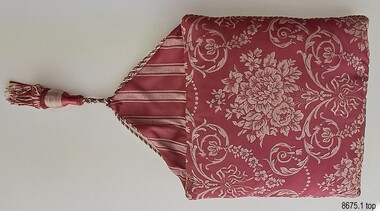
Textile - Seat Squabs, mid-20th century
... Missions to Seamen clubs in Victoria’s cities of Melbourne, Portland, Geelong and Hastings. Flagstaff Hill’s St Nicholas’ Seamen’s Church is named after its namesake from Williamstown, Victoria, which began in 1857. Bishop Perry opened the first Sailors’ Church, which was known as ‘Bethel’, on an old hulk floating in Hobson’s Bay, Port of Melbourne. In 1860, a Sailors’ Rest started operating from rented premises in Williamstown. In 1878, the Sailors’ Church moved into an old Wesleyan...Missions to Seamen clubs in Victoria’s cities of Melbourne, Portland, Geelong and Hastings. Flagstaff Hill’s St Nicholas’ Seamen’s Church is named after its namesake from Williamstown, Victoria, which began in 1857. Bishop Perry opened the first Sailors’ Church, which was known as ‘Bethel’, on an old hulk floating in Hobson’s Bay, Port of Melbourne. In 1860, a Sailors’ Rest started operating from rented premises in Williamstown. In 1878, the Sailors’ Church moved into an old Wesleyan ...The term 'seat squabs' is no longer commonly used, but is sometimes referred to in the upholstery and motor vehicle industries. Squabs are padded cushions frequently added to wooden chairs or benches to add comfort to their hard forms. They have been made to an 18th-to-19th-century pattern using beautiful, richly coloured satin fabric and fancy cord tassels. The weighted flap at the rear of the squabs helps to keep them in place on the chair, and could be used on the top of the backrest instead of on the seat. These days, squabs are attached with fabric ties or hook-and-loop tabs. These seat squabs were once used in the St Nicholas Seamen's Church at 139 Nelson Place, Williamstown, Victoria, which was purchased and furnished around 1943. The furniture and furnishings are now part of the St. Nicholas Seamen's Church collection. DETAILED HISTORY of the Missions to Seamen: - The Missions to Seamen is an Anglican (Church of England) charity that has served the world’s seafarers since 1856. It was inspired by the work of Rev. John Ashley, who, 20 years earlier, had pioneered a ministry to seafarers in the Bristol Channel in Great Britain. When Ashley retired, others continued the work, founding the Missions to Seamen. It adopted a Flying Angel as its symbol, inspired by a verse from the Bible in Revelation 14. Today, over 200 world ports have Missions to Seamen centres and chaplains. A Missions to Seamen’s club warmly welcomes sailors of all colours, creeds and races and provides a wide range of facilities. The Missions to Seamen organisation changed its name to the Mission to Seafarers in 2000, continuing to include Missions to Seamen clubs in Victoria’s cities of Melbourne, Portland, Geelong and Hastings. Flagstaff Hill’s St Nicholas’ Seamen’s Church is named after its namesake from Williamstown, Victoria, which began in 1857. Bishop Perry opened the first Sailors’ Church, which was known as ‘Bethel’, on an old hulk floating in Hobson’s Bay, Port of Melbourne. In 1860, a Sailors’ Rest started operating from rented premises in Williamstown. In 1878, the Sailors’ Church moved into an old Wesleyan chapel in Ann Street. By the end of that year, they managed to purchase the building, which they had already refurbished. In 1883, they affiliated with the Victorian Seamen’s Mission. A few years later, in 1906, the building had to be demolished because it was no longer safe. While they raised funds for a new building, the Sailors’ Rest temporarily moved to premises in front of Customs House in Nelson Place. Around this time, in 1906, the Ladies Harbour Lights Guild was formed in Australia to support and raise funds for the Mission to Seamen organisation in Melbourne. Two of the most significant ladies of the Guild were founding members Ethel Godfrey and Alice Sibthorpe. During the Mission's time at Siddeley Street, Melbourne, the activities of the Guild raised funds for the Mission to Seamen's Chapel at their new, and still current, premises in Flinders Street, Melbourne, opened in 1917. The Guild continued its important work until the 1960s. In 1908, the Williamstown Mission had enough money to purchase the former Mascotte skating rink on Thompson Street, Williamstown. In August of that year, they were inaugurated into the Victorian Missions to Seamen. They continued at that venue for a few decades. In 1943, the former ES&A Bank building at 139 Nelson Place, Williamstown, was purchased for the new Mission to Seaman’s Club. The official opening was on May 6th, 1944. It was described as a ‘distinctive little building’. Funds had previously been raised for the building and furnishing of the chapel at the rear. The chapel was named St Nicholas’ Seamen’s Church, after St Nicholas, fourth-century bishop and patron saint of sailors. Services were held on Wednesdays and Sundays. The church was supported by the Williamstown Lightkeepers’ Auxiliary, newly founded by Mrs Ethel Margaret Musther in 1943, as well as the Harbour Lights Guild and the League of Soldiers’ and Sailors’ Friends. The Williamstown Mission to Seamen’s Church operated until 1966, when large international ships no longer used the Port of Williamstown. The Commonwealth Government then leased the premises. In the formative years of Flagstaff Hill Maritime Village, the Advisory Board decided to include a Missions to Seamen Chapel and Recreation Room in its village. The Missions organisation was a significant feature of ports during the late 1800s and early 1900s, the period that the Village represents. They often erected Missions to house social and worshipful activities for seamen. Flagstaff Hill’s curator, Mr Ken Marshman, approached the Melbourne Board of Management of Missions to Seamen regarding the Williamstown branch. Consequently, the Board permitted the furnishings of the Williamstown chapel to be transferred to Flagstaff Hill Maritime Village. A provision of the transfer was that the Victoria Missions to Seamen be recognised, that the items would remain as a collection, and that the chapel would be called St Nicholas Seamen’s Church and conduct Divine services. The donation was approved on 21st May 1979. Flagstaff Hill's St. Nicholas Seamen's Church: - The idea behind Flagstaff Hill’s Missions to Seamen’s Church was partly driven by the offer of Stained Glass Memorial Windows that originated from the Warrnambool and District Base Hospital, which was undergoing multi-storey expansion in the late 1960s and early 1970s. The hospital’s Manager/Secretary was eager to see the historic window installed in a suitable place. The church, or chapel, was designed by a local architectural draftsman in collaboration with the Flagstaff Hill Planning Board and was constructed by Mr Leon Habel. The designers hoped the church would be used for formal worship, such as weddings, funerals, and multi-denominational special services like war commemorations. Its design was inspired by the ‘Missions to Seamen’ buildings in Portland and the Port of Melbourne. The furniture and furnishings were placed as accurately as possible according to photographs of the Williamstown St Nicholas Seamen’s Church and with assistance from local clergy. The Recreation Room was furnished and arranged on advice from experienced members of the Missions to Seamen organisation. A framed document in the building recognises the donor of the furnishings, Victoria Missions to Seamen, and includes the names of some original donors and their donated item/s. The building’s design incorporates local features such as Warrnambool sandstone, which was no longer commercially available but was procured from demolished buildings and uniformly cut to use as a veneer over the stronger Mt. Gambier stone. Also, traditional green American roofing slate was used, sourced from the 1908 local shipwreck “Falls of Halladale” by Flagstaff Hill volunteer divers. The bell tower includes a bell believed to be from a local shipwreck. Additional furnishings were acquired locally, and several items were donated by Warrnambool residents. Light fittings in both rooms were assembled to simulate 19th-century gas light fittings. The stained-glass window at the back of the church is a memorial to Dr Connell, a well-respected member of the Warrnambool community. It was originally installed in 1928 in the main building of Warrnambool Hospital. The St Nicholas’ Seamen’s Church at Flagstaff Hill was officially opened by His Worship the Mayor, Cr. John Lindsay, on Sunday, 11th October 1981. The event included a service of thanksgiving conducted by the Warrnambool Ministers Fraternal. Since then, the Chapel has been the historic venue for many weddings. This pair of seat squabs is historically significant for its origin in the St Nicholas Mission to Seamen's Church in Williamstown, established in 1857 to cater for seafarers’ physical, social, and spiritual needs. The organisation originated in Bristol, England, when a Seamen's Mission was formed in 1837. The squabs are also significant for their use in the St Nicholas Missions to Seamen's chapel, Williamstown, as the original building is now listed on the Victorian Heritage Register. Squabs or padded seat cushions, a pair of two. These 18th to 19th-century design squabs have crimson and cream satin fabric on top and underneath, and weighted tassels are attached to their rear corners. They can be used for comfort on hard seats and benches. The squabs were furnishings from the Missions to Seamen chapel in Williamstown, and they are now part of the St Nicholas Seamen's Church Collection.flagstaff hill, warrnambool, shipwrecked-coast, flagstaff-hill, flagstaff-hill-maritime-museum, maritime-museum, shipwreck-coast, flagstaff-hill-maritime-village, st nicholas mission to seamen's church williamstown, mission to seamen williamstown, mission to seamen victoria, st nicholas mission to seamen, st nicholas seamen's church, religion, religious service, sailor's rest, ladies harbour light guild, squab, seat covers, cushions, squabs, religious furnishing, padded seats, seating, accessory -
Glenelg Shire Council Cultural Collection
Booklet - Booklet - History of Drik Drik Methodist Church, n.d
... Mission... methodist... wesleyan...The former Methodist Wesleyan Chapel was built in 1885 and the congregation served by ministers and preachers from Portland and Heywood. Drik Drik was the first preaching station of the Portland Bush Commission. place of worship Portland Buss Mission methodist wesleyan centenary 1885 1985 Eight page booklet detailing history of the Drik Drik Methodist Church. ...Drik Drik is a small town located in the Glenelg Shire. The former Methodist Wesleyan Chapel was built in 1885 and the congregation served by ministers and preachers from Portland and Heywood. Drik Drik was the first preaching station of the Portland Bush Commission.Eight page booklet detailing history of the Drik Drik Methodist Church. Produced for its centenary - 1885 - 1985. Blue card cover, black print and image of church.place of worship, portland buss mission, methodist, wesleyan, centenary, 1885, 1985 -
 Mission to Seafarers Victoria
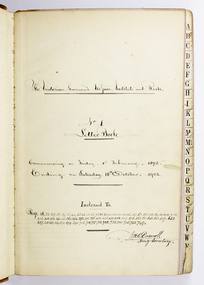
administrative record (item) - Letter book, W.H.C. Darvall, The Victorian Seamens' Mission, Institutes and Rests: No 1 Letter Book, late 19th Century
... The late 19th C - early 20th C period covered by the 2 vol collection of correspondence records together with annual reports and minutes documents a significant transition period not only across centuries but also towards a new framework of operations for the original mid 19th C founded Mission to seamen. The death of a long-standing Chaplain, Wesleyan, Ebenezer James in 1901 eventually led to a proposed merger in 1905 which resulted in the amalgamation of the Victorian Mission with the Anglican based Mission to Seafarers under the leadership of Rev'd Gurney Goldsmith who arrived in 1905. ...One of 2 volumes of late 19th early 20th Century letter books. Each volume provides us with extensive listings of correspondence with supporters, fundraisers, patrons, architects, Mission staff and business transactions carried out by the Honorary Secretary Mr WHC Darvall over the period of a decade. Queen Victoria, Governors of Victoria: Earl of Hopetoun, Lord Brassey, Sir George Sydenham Clark, Lord Talbot and Governors General: Baron Northcote, performers such as Nellie Melba, Kitty Grindley, Sir Samuel Gllott president of the Law Institute, Hugh Reid, Crawford Pasco R.N. FRGS are just a few. The late 19th C - early 20th C period covered by the 2 vol collection of correspondence records together with annual reports and minutes documents a significant transition period not only across centuries but also towards a new framework of operations for the original mid 19th C founded Mission to seamen. The death of a long-standing Chaplain, Wesleyan, Ebenezer James in 1901 eventually led to a proposed merger in 1905 which resulted in the amalgamation of the Victorian Mission with the Anglican based Mission to Seafarers under the leadership of Rev'd Gurney Goldsmith who arrived in 1905. The new Mission was launched in 1906 with a long planned and much needed new central building opened in 1907 on the Australian Wharf. Mr Darvall, in his time produced a handwritten 40 page epitomised history, drawn from annual reports and was exceptionally meticulous in his efforts to cross reference related correspondence, press clippings, report material and documents. He was a strong supporter of Libraries and first town clerk of Beechworth.Primary inscription on title page ( see title field this record) also: "Commencing on Sunday 1st of February , 1895. / Ending on Saturday 18th December , 1902 / Indexed to / Page 18,22,29,32,34,35,44,45,48,53,63,75,80,82, 90, 112, 120, 121,136,151,167,171,173,174, 185, 200, 212, 216, 218, 232, 233, 241, 361, 362, 373, 375, 378, 428, 455, 477, 508, 509, 516, 520, 521, 543, 562, 607, 657, 658, 667, 669, 706, 718, 724, 732, 735, 738, 741, 745 748, 749 ./ WHC Darvall / Hon'y Secretary. "correspondence records, seafarer advocacy, seafarer shore facilities, ship to shore, index, missions to seamen, seamen's missions, mission to seafarers, correspondance, letters, letter book, welfare, nellie melba, kitty grindley, crawford pasco, lord thomas brassey, william henry charles darvall (1830-1906) -
 Mission to Seafarers Victoria
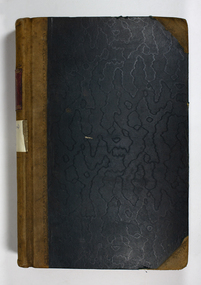
administrative record (item) - Letter book, W.H.C. Darvall, The Victorian Seamens' Mission, Institutes and Rests: No 2 Letter Book, c. 1890
... The late 19th C - early 20th C period covered by the 2 vol collection of correspondence records together with annual reports and minutes documents a significant transition period not only across centuries but also towards a new framework of operations for the original mid 19th C founded Mission to seamen. The death of a long-standing Chaplain, Wesleyan, Ebenezer James in 1901 eventually led to a proposed merger in 1905 which resulted in the amalgamation of the Victorian Mission with the Anglican based Mission to Seafarers under the leadership of Rev'd Gurney Goldsmith who arrived in 1905. ...One of 2 volumes of late 19th early 20th Century letter books. Each volume provides us with extensive listings of correspondence with supporters, fundraisers, patrons, architects, Mission staff and business transactions carried out by the Honorary Secretary Mr WHC Darvall over the period of a decade. Queen Victoria, Governors of Victoria: Earl of Hopetoun, Lord Brassey, Sir George Sydenham Clark, Lord Talbot and Governors General: Baron Northcote, performers such as Nellie Melba, Kitty Grindley, Sir Samuel Gllott president of the Law Institute, Hugh Reid, Crawford Pasco R.N. FRGS are just a few. The late 19th C - early 20th C period covered by the 2 vol collection of correspondence records together with annual reports and minutes documents a significant transition period not only across centuries but also towards a new framework of operations for the original mid 19th C founded Mission to seamen. The death of a long-standing Chaplain, Wesleyan, Ebenezer James in 1901 eventually led to a proposed merger in 1905 which resulted in the amalgamation of the Victorian Mission with the Anglican based Mission to Seafarers under the leadership of Rev'd Gurney Goldsmith who arrived in 1905. The new Mission was launched in 1906 with a long planned and much needed new central building opened in 1907 on the Australian Wharf. Mr Darvall, in his time produced a handwritten 40 page epitomised history, drawn from annual reports and was exceptionally meticulous in his efforts to cross reference related correspondence, press clippings, report material and documents. He was a strong supporter of public Libraries and first town clerk of Beechworth.In handwritten black ink primary inscription on title page (see title field this record...) also: "Commencing on 19th October 1902 Ending ...1905 / Indexed to:.../ WHC Darvall / Hon'y Secretary. "correspondence records, seafarer advocacy, seafarer shore facilities, ship to shore, william henry charles darvall (1830-1906), letters, sailors' rest, welfare, seamen's mission, mission to seamen, mission to seafarers, correspondence, letter book, nellie melba, kitty grindley, lord thomas brassey, crawford pasco -
 Mission to Seafarers Victoria
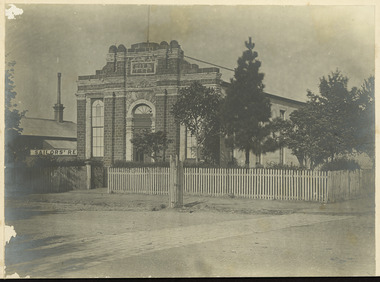
Photograph - Photograph, Sepia, Andrew Rider, c. 1885
... mission...andrew rider (1821-1903)...wesleyan...This Wesleyan Chapel was used as the first Sailor's Rest in Williamstown in 1875. Photograph of the first Institute locales in Williamstown. williamstown ann street sailors' rest seamen's mission andrew rider (1821-1903) wesleyan church Typed sheet attached to verso: No. 15: The Sailor's Rest, Ann Street, Williamstown, about 1885. ...This Wesleyan Chapel was used as the first Sailor's Rest in Williamstown in 1875. Photograph of the first Institute locales in Williamstown.View looking across street to a brick building with arched doorway on a corner block. A sign on the left reads: Sailors' Re[st].Typed sheet attached to verso: No. 15: The Sailor's Rest, Ann Street, Williamstown, about 1885. Written on verso: Photograph - Andrew Rider. Written on verso: Sailors' Rest, Ann St., Williamtown, 1880's.williamstown, ann street, sailors' rest, seamen's mission, andrew rider (1821-1903), wesleyan church -
Mission to Seafarers Victoria
Flyer, 1904-1908
... The Williamstown location of the institute on Ann Street where it was still in the Wesleyan Church and the name of Reverend Goldsmith dates the flyer between 1904-1908. The flyer is a rare example of the flyer in foreign language. french francais soirees speciales Missions de Victoria pour les Marins Tous les marins sont invités chaleureusement à se servir de la Salle pour lire écrie et fumer. ...Wool and grain were an important trading commodity with France, particularly wool which France heavily imported for its textile industry. The ladies from the Guild, having often been educated in good school had learned French which was the only foreign language taught in Victoria at the time. The Williamstown location of the institute on Ann Street where it was still in the Wesleyan Church and the name of Reverend Goldsmith dates the flyer between 1904-1908. The flyer is a rare example of the flyer in foreign language.Medium size flyer printed in blue ink on a creamy paper.Missions de Victoria pour les Marins Tous les marins sont invités chaleureusement à se servir de la Salle pour lire écrie et fumer. Journaux, Index Maritime etc. Tout ce qu'il faut pour écrire dans la Salle. Jeux. Boissons sans spiritueux.french, francais, soirees speciales -
 Bendigo Historical Society Inc.
Photograph - CORNISH COLLECTION: PHOTOGRAPHS OF CHURCH BUILDINGS WITH CORNISH CONNECTIONS, 1900
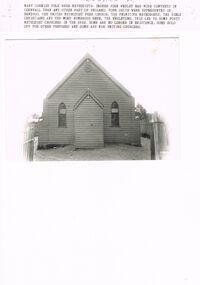
... United Methodist Free Church. Wesleyan Mission Hall. Bible Christian Church. Uniting Church....Photo of interior of Chapel Street Gospel Hall (Mission Hall) decorated for Sunday School Anniversary (no date); c. three photos - Former Wesleyan Church, Kangaroo Flat; the former Primitive Methodist Church, Eaglehawk; former Bible Christian Church , California Gully (''now St Judes Anglican'' - typewritten attachment to photo)....United Methodist Free Church. Wesleyan Mission Hall. Bible Christian Church. Uniting Church. ...Collection of photographs of various Bendigo church buildings with Cornish connections: a. front of simple (Methodist) wooden church with handwritten annotation of ''Webster St'' together with typewritten attachment to photo giving some of history of Methodism and the Cornish (and the four sects represented in Bendigo); b. Photo of interior of Chapel Street Gospel Hall (Mission Hall) decorated for Sunday School Anniversary (no date); c. three photos - Former Wesleyan Church, Kangaroo Flat; the former Primitive Methodist Church, Eaglehawk; former Bible Christian Church , California Gully (''now St Judes Anglican'' - typewritten attachment to photo).photograph, building, church, john wesley. united methodist free church. wesleyan mission hall. bible christian church. uniting church. -
Port Melbourne Historical & Preservation Society
Book, Ian Breward, South Port Parks Parish Mission: 150 Years of Service, 2003
... Religion - Uniting Church Religion - Wesleyan Methodist Church Religion - Primitive Methodist Church Religion - Presbyterian Church Ian BREWARD Emily LOCK Hazel WILSON Nancy U'REN nee MORRIS South Port Parks Parish Mission: 150 Years of Service by Ian BREWARD - A history of the congregations and missions. ...This was written by PMH&PS member Ian BREWARD, who is the archivist for the Uniting Church in Melbourne, and therefore for the Methodist, Congregational and Presbyterian churches. It was launched at the Uniting Church in South Melbourne on 2003.South Port Parks Parish Mission: 150 Years of Service by Ian BREWARD - A history of the congregations and missions. Soft cover, 174 pp, illustrated.religion - uniting church, religion - wesleyan methodist church, religion - primitive methodist church, religion - presbyterian church, ian breward, emily lock, hazel wilson, nancy u'ren nee morris -
 Uniting Church Archives - Synod of Victoria
Printing blocks, c 1960s
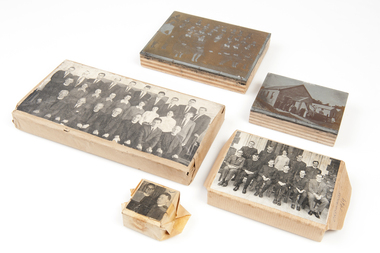
... Mission Training College...Thomas Verrier...Arnold Street Wesleyan...Otira Methodist Home Mission Training College: 26 individuals [7 women] including Hilda Fisher, R. Phelp, G Harris, Alec Pederick. Size: 21.5 x 11 x 2.5 3. Arnold Street Wesleyan...Otira Methodist Home Mission Training College Thomas Verrier Arnold Street Wesleyan Methodist Church Bendigo Five photographic printing blocks. 1. ...Five photographic printing blocks. 1. Ordinances c 1969. 11 individuals. Size: 11.5 x 9 x 2.5 2. Otira Methodist Home Mission Training College: 26 individuals [7 women] including Hilda Fisher, R. Phelp, G Harris, Alec Pederick. Size: 21.5 x 11 x 2.5 3. Arnold Street Wesleyan Methodist Church Bendigo. 4. Thomas Verrier and unknown man. Size: 4.5 x 4 x 2.5 5. Deaconesses. Size: 14.5 x 11 x 2.5 Numbers 1, 2 & 4 wrapped in brown paper with image on the front.otira methodist home mission training college, thomas verrier, arnold street wesleyan methodist church bendigo -
 Uniting Church Archives - Synod of Victoria
Cup, saucer and plates
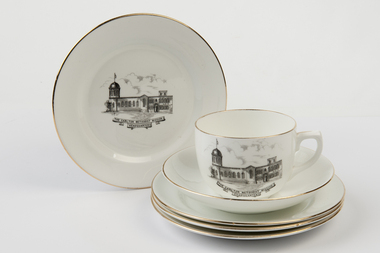
... carlton methodist mission headquarters...wesleyan...carlton methodist mission headquarters wesleyan methodist 'The Carlton Methodist Mission Headquarters' White china crockery with gold rim and grey/black transfer print of headquarters. 4 plates, registration numbers 12.3, 12.4, 12.5 & 12.6; cup, registration number 12.1 and saucer, registration number 12.2. ...White china crockery with gold rim and grey/black transfer print of headquarters. 4 plates, registration numbers 12.3, 12.4, 12.5 & 12.6; cup, registration number 12.1 and saucer, registration number 12.2.'The Carlton Methodist Mission Headquarters'carlton methodist mission headquarters, wesleyan methodist -
 Uniting Church Archives - Synod of Victoria
Accessory - Woven fan, c1850s
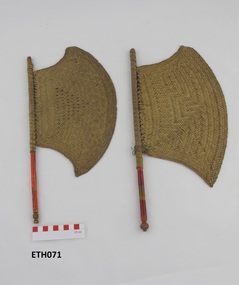
... In 1830 was accepted as a candidate for the Wesleyan Ministry and married Hannah Entwistle. They sailed with a missionary party to Tonga. The work of the mission was jeopardised by prolonged and involved struggles between Christian and non-Christian Tongan chiefs. ...In 1830 was accepted as a candidate for the Wesleyan Ministry and married Hannah Entwistle. They sailed with a missionary party to Tonga. The work of the mission was jeopardised by prolonged and involved struggles between Christian and non-Christian Tongan chiefs. ...From the collection of the Rev James Watkin. The Rev James Watkin, 1805-1886, was a Pioneer Wesleyan missionary. He was born in Manchester, UK, in 1805. In 1830 was accepted as a candidate for the Wesleyan Ministry and married Hannah Entwistle. They sailed with a missionary party to Tonga. The work of the mission was jeopardised by prolonged and involved struggles between Christian and non-Christian Tongan chiefs. He left with his family for Sydney in September 1837. He was offered a free passage for a missionary appointed to Waikouaiti, New Zealand and arrived there in May 1840. He established the first mission station in the South Island of New Zealand. Watkin established schools at Waikouaiti and Matanaka, and stationed partly trained Maori teachers at Stewart Island and at Moeraki. He had a natural flair for languages, preached in Maori four months after his arrival, and compiled an elementary reading book to be printed in Ngai Tahu. Watkin was relieved by Charles Creed and inWatkin finished his posiion in Waikouaiti in June 1844 when he sailed for Wellington, leaving 227 church members in Otago. In 1855 Watkin settled in New South Wales, Australia, and was president of the National Methodist Conference at Adelaide in 1862. He retired in 1869 and died on 14 May 1886, at Ashfield, New South Wales. Source: https://teara.govt.nz/en/1966/watkin-jamesETH071.1 and ETH071.2: Mid nineteenth century woven palm fans with red coloured bamboo handles.rev james watkin -
 Uniting Church Archives - Synod of Victoria
Accessory - Woven fan, c1850s
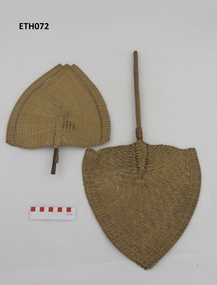
... In 1830 was accepted as a candidate for the Wesleyan Ministry and married Hannah Entwistle. They sailed with a missionary party to Tonga. The work of the mission was jeopardised by prolonged and involved struggles between Christian and non-Christian Tongan chiefs. ...In 1830 was accepted as a candidate for the Wesleyan Ministry and married Hannah Entwistle. They sailed with a missionary party to Tonga. The work of the mission was jeopardised by prolonged and involved struggles between Christian and non-Christian Tongan chiefs. ...From the collection of the Rev James Watkin. From the collection of the Rev James Watkin. The Rev James Watkin, 1805-1886, was a Pioneer Wesleyan missionary. He was born in Manchester, UK, in 1805. In 1830 was accepted as a candidate for the Wesleyan Ministry and married Hannah Entwistle. They sailed with a missionary party to Tonga. The work of the mission was jeopardised by prolonged and involved struggles between Christian and non-Christian Tongan chiefs. He left with his family for Sydney in September 1837. He was offered a free passage for a missionary appointed to Waikouaiti, New Zealand and arrived there in May 1840. He established the first mission station in the South Island of New Zealand. Watkin established schools at Waikouaiti and Matanaka, and stationed partly trained Maori teachers at Stewart Island and at Moeraki. He had a natural flair for languages, preached in Maori four months after his arrival, and compiled an elementary reading book to be printed in Ngai Tahu. Watkin was relieved by Charles Creed and inWatkin finished his posiion in Waikouaiti in June 1844 when he sailed for Wellington, leaving 227 church members in Otago. In 1855 Watkin settled in New South Wales, Australia, and was president of the National Methodist Conference at Adelaide in 1862. He retired in 1869 and died on 14 May 1886, at Ashfield, New South Wales. Source: https://teara.govt.nz/en/1966/watkin-jamesETH072.1 and ETH072.2: Mid nineteenth century woven palm fans with handles.rev james watkin -
 Uniting Church Archives - Synod of Victoria
Accessory - Seed necklace and bracelet, c1850s
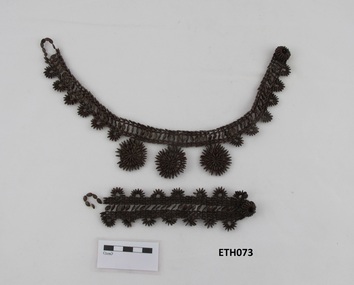
... In 1830 was accepted as a candidate for the Wesleyan Ministry and married Hannah Entwistle. They sailed with a missionary party to Tonga. The work of the mission was jeopardised by prolonged and involved struggles between Christian and non-Christian Tongan chiefs. ...In 1830 was accepted as a candidate for the Wesleyan Ministry and married Hannah Entwistle. They sailed with a missionary party to Tonga. The work of the mission was jeopardised by prolonged and involved struggles between Christian and non-Christian Tongan chiefs. ...From the collection of the Rev James Watkin. From the collection of the Rev James Watkin. The Rev James Watkin, 1805-1886, was a Pioneer Wesleyan missionary. He was born in Manchester, UK, in 1805. In 1830 was accepted as a candidate for the Wesleyan Ministry and married Hannah Entwistle. They sailed with a missionary party to Tonga. The work of the mission was jeopardised by prolonged and involved struggles between Christian and non-Christian Tongan chiefs. He left with his family for Sydney in September 1837. He was offered a free passage for a missionary appointed to Waikouaiti, New Zealand and arrived there in May 1840. He established the first mission station in the South Island of New Zealand. Watkin established schools at Waikouaiti and Matanaka, and stationed partly trained Maori teachers at Stewart Island and at Moeraki. He had a natural flair for languages, preached in Maori four months after his arrival, and compiled an elementary reading book to be printed in Ngai Tahu. Watkin was relieved by Charles Creed and inWatkin finished his posiion in Waikouaiti in June 1844 when he sailed for Wellington, leaving 227 church members in Otago. In 1855 Watkin settled in New South Wales, Australia, and was president of the National Methodist Conference at Adelaide in 1862. He retired in 1869 and died on 14 May 1886, at Ashfield, New South Wales. Source: https://teara.govt.nz/en/1966/watkin-jamesETH073.1 dark brown wild tamarind seed necklace and ETH073.2 bracelet.rev james watkin -
 Uniting Church Archives - Synod of Victoria
Accessory - Wooden comb, c1850s
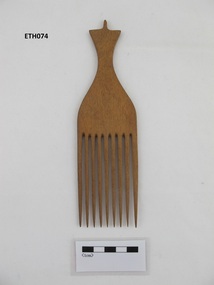
... In 1830 was accepted as a candidate for the Wesleyan Ministry and married Hannah Entwistle. They sailed with a missionary party to Tonga. The work of the mission was jeopardised by prolonged and involved struggles between Christian and non-Christian Tongan chiefs. ...In 1830 was accepted as a candidate for the Wesleyan Ministry and married Hannah Entwistle. They sailed with a missionary party to Tonga. The work of the mission was jeopardised by prolonged and involved struggles between Christian and non-Christian Tongan chiefs. ...From the collection of the Rev James Watkin. From the collection of the Rev James Watkin. The Rev James Watkin, 1805-1886, was a Pioneer Wesleyan missionary. He was born in Manchester, UK, in 1805. In 1830 was accepted as a candidate for the Wesleyan Ministry and married Hannah Entwistle. They sailed with a missionary party to Tonga. The work of the mission was jeopardised by prolonged and involved struggles between Christian and non-Christian Tongan chiefs. He left with his family for Sydney in September 1837. He was offered a free passage for a missionary appointed to Waikouaiti, New Zealand and arrived there in May 1840. He established the first mission station in the South Island of New Zealand. Watkin established schools at Waikouaiti and Matanaka, and stationed partly trained Maori teachers at Stewart Island and at Moeraki. He had a natural flair for languages, preached in Maori four months after his arrival, and compiled an elementary reading book to be printed in Ngai Tahu. Watkin was relieved by Charles Creed and inWatkin finished his posiion in Waikouaiti in June 1844 when he sailed for Wellington, leaving 227 church members in Otago. In 1855 Watkin settled in New South Wales, Australia, and was president of the National Methodist Conference at Adelaide in 1862. He retired in 1869 and died on 14 May 1886, at Ashfield, New South Wales. Source: https://teara.govt.nz/en/1966/watkin-jamesMid nineteenth century wooden comb from Pacific Islands.rev james watkin -
 Uniting Church Archives - Synod of Victoria
Accessory - Woven bag, c1850s
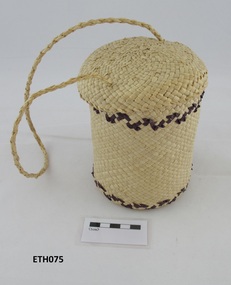
... In 1830 was accepted as a candidate for the Wesleyan Ministry and married Hannah Entwistle. They sailed with a missionary party to Tonga. The work of the mission was jeopardised by prolonged and involved struggles between Christian and non-Christian Tongan chiefs. ...In 1830 was accepted as a candidate for the Wesleyan Ministry and married Hannah Entwistle. They sailed with a missionary party to Tonga. The work of the mission was jeopardised by prolonged and involved struggles between Christian and non-Christian Tongan chiefs. ...From the collection of the Rev James Watkin. From the collection of the Rev James Watkin. The Rev James Watkin, 1805-1886, was a Pioneer Wesleyan missionary. He was born in Manchester, UK, in 1805. In 1830 was accepted as a candidate for the Wesleyan Ministry and married Hannah Entwistle. They sailed with a missionary party to Tonga. The work of the mission was jeopardised by prolonged and involved struggles between Christian and non-Christian Tongan chiefs. He left with his family for Sydney in September 1837. He was offered a free passage for a missionary appointed to Waikouaiti, New Zealand and arrived there in May 1840. He established the first mission station in the South Island of New Zealand. Watkin established schools at Waikouaiti and Matanaka, and stationed partly trained Maori teachers at Stewart Island and at Moeraki. He had a natural flair for languages, preached in Maori four months after his arrival, and compiled an elementary reading book to be printed in Ngai Tahu. Watkin was relieved by Charles Creed and inWatkin finished his posiion in Waikouaiti in June 1844 when he sailed for Wellington, leaving 227 church members in Otago. In 1855 Watkin settled in New South Wales, Australia, and was president of the National Methodist Conference at Adelaide in 1862. He retired in 1869 and died on 14 May 1886, at Ashfield, New South Wales. Source: https://teara.govt.nz/en/1966/watkin-jamesMid nineteenth century cylindrical woven carry bag with a lid attached and a platted handle. The bag has a brown pattern within the weaving at the top and bottom.rev james watkin, pioneer wesleyan missionary -
 Uniting Church Archives - Synod of Victoria
Photograph, undated
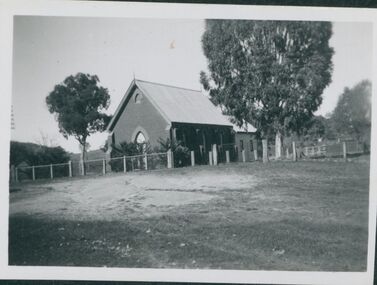
... In 1889 the Wesleyan Conference resolved that the Corryong & Cudgewa Home Mission Stations should be made a circuit....In 1889 the Wesleyan Conference resolved that the Corryong & Cudgewa Home Mission Stations should be made a circuit. ...In 1889 the Wesleyan Conference resolved that the Corryong & Cudgewa Home Mission Stations should be made a circuit.B & W exterior view of the Cudgewa Methodist Church.cudgewa methodist church -
 Uniting Church Archives - Synod of Victoria
Photograph, undated
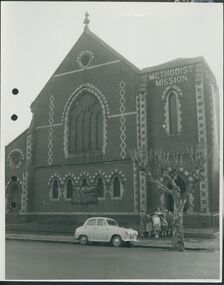
... The Gipps Street Wesleyan Methodist Church of 1874 and the adjoining school hall, were built in the Collingwood Flat area - one of the municipality's poorest areas. In 1903, the Collingwood Methodist Mission...The Gipps Street Wesleyan Methodist Church of 1874 and the adjoining school hall, were built in the Collingwood Flat area - one of the municipality's poorest areas. In 1903, the Collingwood Methodist Mission ...The Gipps Street Wesleyan Methodist Church of 1874 and the adjoining school hall, were built in the Collingwood Flat area - one of the municipality's poorest areas. In 1903, the Collingwood Methodist Mission was established with its headquarters in the Gipps Street Church. Six Methodist Missions were created in inner Melbourne. Three churches were operated by the Collingwood Mission. They were: Sackville Street Collingwood, Elizabeth Street, North Richmond (demolished), and Gipps Street Collingwood (demolished). The Mission operated until approximately 1930.B & W exterior view of the Gipps St. Collingwood Methodist Church. The image is a street view of a group of children and an adult standing in front of the brick church.gipps st. methodist church, les gorrie, collingwood mission
