
Showing 11 items matching "what's on where in april"
-
 Marysville & District Historical Society
THE TRIANGLE NEWS-VOL 39 NO 12-APRIL 6 2012
... ...what's on where in april...marysville victoria australia funding success for youth projects murrindindi youth partnership group council adopts youth strategy what's on where in april advertisements creative triangle cultural community agm guided walks cathedral range state park emotions anonymous international meeting murrindindi shire council dog/cat registration marysville pharmacy marysville golf report marysville sub branch rsl anzac day service mayor's chair 2012 season launch happy hour marysville community golf & bowls club marysville & district sesquicentenary celebrations marysville & district historical society meeting memory lane cafes travel the silk road at alexandra library alexandra library events marysville triangle real estate the lions triangle tool library maryton park b & b marysville beer & platter garden marysville lake mountain visitor information centre public notice marysville saddle tramps news ladies lunch saladin lodge councillor comment lake mountain alpine resort marysville medical centre news THE TRIANGLE NEWS-VOL 39 NO 12-APRIL 6 2012 ...marysville, victoria, australia, funding success for youth projects, murrindindi youth partnership group, council adopts youth strategy, what's on where in april, advertisements, creative triangle, cultural community agm, guided walks, cathedral range state park, emotions anonymous international meeting, murrindindi shire council, dog/cat registration, marysville pharmacy, marysville golf report, marysville sub branch rsl, anzac day service, mayor's chair, 2012 season launch, happy hour, marysville community golf & bowls club, marysville & district sesquicentenary celebrations, marysville & district historical society meeting, memory lane cafes, travel the silk road at alexandra library, alexandra library events, marysville triangle real estate, the lions triangle tool library, maryton park b & b, marysville beer & platter garden, marysville lake mountain visitor information centre, public notice, marysville saddle tramps news, ladies lunch, saladin lodge, councillor comment, lake mountain alpine resort, marysville medical centre news -
 Lara RSL Sub Branch
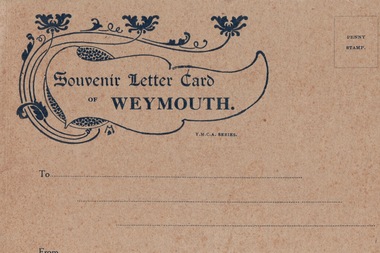
Postcards Booklet, Souvenir Letter Card of Weymouth
... Following the landing of Australian & New Zealand troops, the Anzacs, at Gallipoli on 25th April 1915, casualties mounted rapidly and were initially transported to their base in Egypt, which was soon unable to cope, with wounded being sent to England. Here the troops found that there was no Australian base to which they could report once they had been discharged from hospital; what was needed urgently was a base in England where troops could be sent to convalesce. ...Following the landing of Australian & New Zealand troops, the Anzacs, at Gallipoli on 25th April 1915, casualties mounted rapidly and were initially transported to their base in Egypt, which was soon unable to cope, with wounded being sent to England. Here the troops found that there was no Australian base to which they could report once they had been discharged from hospital; what was needed urgently was a base in England where troops could be sent to convalesce. ...Following the landing of Australian & New Zealand troops, the Anzacs, at Gallipoli on 25th April 1915, casualties mounted rapidly and were initially transported to their base in Egypt, which was soon unable to cope, with wounded being sent to England. Here the troops found that there was no Australian base to which they could report once they had been discharged from hospital; what was needed urgently was a base in England where troops could be sent to convalesce. So on 31st May 1915 a command depot was set up at Monte Video House in Chickerell, some two miles from Weymouth. Weymouth then became the Australian Imperial Forces (AIF) Command Depot No.2 which accommodated those men not expected to be fit for duty within six months, therefore, most of the Diggers repatriated as a result of wounds or sickness passed through Weymouth. During the years 1915-1919 over 120,000 Australian and New Zealand troops passed through Weymouth. In Spring & Summer, Weymouth Esplanade would be full of Anzac soldiers in wheelchairs, being wheeled along by their more able mates. The first contingent of 200 wounded men arrived in the first week of June 1915, and two weeks later a group of local ladies organised a cream tea for the newcomers, followed by a concert party 'The Frolics' at the camp. So began the close connection that was to grow between the soldiers and the villagers of Chickerell. The ANZAC Memorial on Weymouth seafront commemorates the Australian and New Zealand troops who were accommodated in three camps in the town during WW1: Monte Video, Westham and Littlemoor. In Weymouth and Melcombe Regis Cemetery there are about eighty-six graves of those Anzacs who were never to return to their homelands. Also in memory of these troops, there a number of roads close to the camps named after Australian cities and states.A World War 1 Letter Card sent home by Australian troops repatriated in Weymouth, UK containing images of Weymouth and a picture of the Australian Base Camp.Front cover (see image) Souvenir Letter Card of Weymouth Inside are eight pictures of the Weymouth area including the YMCA Hut - Australian Base Campymca, uk, australian base camp, world war 1, ww1, aif, army, australian army, westham, littemoor, weymouth, melcombe regis cemetery, anzac -
 Ringwood and District Historical Society
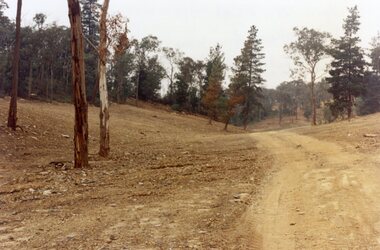
Photograph, Kubis Estate, North Ringwood in April 1978. Looking upstream from below the retaining wall of Loughnan's Lake that was where the truck tracks disappear. The wall was extended to the left across what was then a small gorge
... April 1978. Looking upstream from below the retaining wall of Loughnan's Lake that was where the truck tracks disappear. The wall was extended to the left across what was then a small gorge....April 1978. Looking upstream from below the retaining wall of Loughnan's Lake that was where the truck tracks disappear. The wall was extended to the left across what was then a small gorge. ...E548 N19 Part of a 51-photo record of the development of the "Kubis" Estate, Ringwood North, including road works to Debbie Place, Kubis Drive, Werac Drive, Manuelo Drive, Iluka Place and Glenvale Road. From the Jack Lundy Clarke collection. -
 Mission to Seafarers Victoria
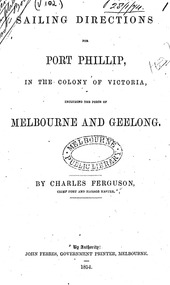
Booklet - Manual, Sailing directions for Port Phillip, in the colony of Victoria including the ports of Melbourne and Geelong, 1854
... what I consider my duty, and seeking to strengthen your hands as far as I may in bringing the character of his long services before the existing colonial authorities. Of his private career previous to his entering the service of the Colonial Government in 1851 nothing need be said. Captain Ferguson was appointed as the Harbour Master at Geelong in April, 1851 – a few months before the separation of the colony from New South Wales. He there did excellent service in a variety of ways calculated to advance the interests of the port, and to introduce www.latrobesociety.org.au 27 order, where...what I consider my duty, and seeking to strengthen your hands as far as I may in bringing the character of his long services before the existing colonial authorities. Of his private career previous to his entering the service of the Colonial Government in 1851 nothing need be said. Captain Ferguson was appointed as the Harbour Master at Geelong in April, 1851 – a few months before the separation of the colony from New South Wales. He there did excellent service in a variety of ways calculated to advance the interests of the port, and to introduce www.latrobesociety.org.au 27 order, where ...Captain Charles Ferguson was born in Scotland in 1813. He was the Master of the "Rajah" from 1838 to 1850 on voyages from England to Australia and vice versa. He became the First Chief Harbour Master for the port of Melbourne in 1852 after being the first Harbour Master and Water Police Officer in Geelong for 12 months. On the 5th of April 1841, the Rajah sailed with James Donovan M.D. as Surgeon Superintendent, and the Rajah sailed from Woolwich with 180 female convicts. The Rajah arrived on the 19th of July in Hobart, with 179 females (one died during the voyage) and 10 children. Miss Kezia Elizabeth Hayter was the matron on board. On page 28 of the "Sailing directions for Port Phillip, in the colony of Victoria including the ports of Melbourne and Geelong", a mention is made of the Mariner's Hospital and Floating Church soon to be established. There were discussions to built the hospital in Williamstown but instead the Government decided to build it in Melbourne. The Harbour Master and a commiittee decided to use the water police hulk, Emily, left unsold in 1856, to create a floating church: the Bethel was open in July 1857 with Reverend Kerr Johnston as Chaplain. Latrobe wrote a letter to Captain Cole in 1869, a few months after learning his death : "To Captain George Ward Cole † [from a draft in another’s hand] Clapham House, Lewes, Sussex, January 28th, 1869. My dear Captain Cole, Last mail will have taken out the sad intelligence of the death of our excellent old friend, Captain Ferguson. This will have been a terrible blow to his children and to his friends in the colony, who may have held reason to expect his early return to his home, with a not unreasonable prospect of ultimate restoration to health and activity. In the course of last October I went up to town with one of my children, mainly with the purpose of finding my way to Pinner, where he and Mrs. Ferguson were staying with an intimate friend. I found him in excellent health and spirits, and enjoying the prospect of a speeding resumption of the service to which he had devoted his best days, and upon the furtherance of which his entire energy was still directed. A week or two later Captain and Mrs. Ferguson went to Dover for change of air, and being still under the impression received from the advisers by whom they had been guided during their residence at a hydropathic establishment at Matlock, felt encouraged to plan almost immediate return to the colony by the Jerusalem early in December. However, certain misgivings in the mind of a medical gentleman, then in England, under whose care Captain Ferguson had at one time placed himself in Williamtown, led them to consider it judicious before departure to take the advice of some surgeon of eminence in London. Accordingly they came up to town at the close of November. The first London practitioners they consulted shook their heads, and advised consultation with Sir Wm. Ferguson. The result was that amputation, without loss of time, was pronounced necessary. The rest is soon told. He received the painful intelligence with calmness and full resignation to God's will, and underwent the operation at King's College Hospital with exemplary firmness and Courage on the 28th of November. Perfect success seemingly attended it, and there seemed, humanly speaking, to be every prospect of a prompt cure and early convalescence; everything seemed in his favour. A few days later, however, all was clouded by symptoms of hospital fever (pyoe æm ia). This resisted all control, and finally carried him off on the 27th of December, just one month after the operation. He had lived a Christian life, and his death was the peaceful and resigned death of a Christian. It was a melancholy satisfaction to me to be able to join a few friends in following his remains to their resting place in one of the outlying London cemeteries on the last day of the year. You know Mrs Ferguson well, and will be prepared to hear me say that her whole conduct and demeanour throughout this period of suspense and bitter trial has been worthy of her high character and steadfast principle. Come what will, and happen what may, I have the fullest conviction that neither the widow nor the children will be forsaken, however doubtful and clouded the future may appear, in consequence of the irreparable loss which, they have sustained. And now, dear Captain Cole, it is possible that you may already have heard all this from other sources, but I have dictated it to you under strong impulse, for I feel assured that there is no member of the community in which you live who will more sincerely deplore the loss of Captain Ferguson on private grounds; at the same time that there is no one who, from long acquaintance with his official character and services, will be in a better position to estimate their real value or the loss which the colony has sustained. The circumstances in which Captain Ferguson's family are left not only demands the utmost display of sympathy and interest on the part of friends, but may call for decided and prompt action; therefore I cannot rest satisfied without discharging what I consider my duty, and seeking to strengthen your hands as far as I may in bringing the character of his long services before the existing colonial authorities. Of his private career previous to his entering the service of the Colonial Government in 1851 nothing need be said. Captain Ferguson was appointed as the Harbour Master at Geelong in April, 1851 – a few months before the separation of the colony from New South Wales. He there did excellent service in a variety of ways calculated to advance the interests of the port, and to introduce www.latrobesociety.org.au 27 order, where, from circumstances, but little order had hitherto prevailed. His was the first appointment of this class in that locality. The separation of the colony from New South Wales took place in the month of July following. Shortly after, the late Captain Bunbury resigned the Harbour Mastership of Port Phillip. Captain Ferguson was at once (February, 1852) appointed to succeed him, and from that time performed all duties of Chief Harbour Master of the colony. The previous year (May 1851) the first gold discoveries in New South Wales had taken place, and in the month of August those of our colony followed. At the time of Captain Ferguson’s taking charge of the Port of Melbourne their influence had begun to be fully felt, and in no department more seriously than in that of the Harbour Master. This is no place for statistical details, but they must bear me out in reminding you of a few facts connected with our late friend’s career. At the time of separation that department comprised only 30 individuals of all ranks, and when he took charge the number was much reduced. There were at that time, according to the returns, no fewer than 54 vessels, registering 26,785 tons, in Hobson’s Bay alone. The crews on arrival numbered 1,235 men. Of this number only 463 remained on board, 500 having deserted, and the rest having been discharged by arrangement or pure necessity. For the first six months after Captain Ferguson’s assumption of office as Harbour Master the duties of Police Magistrate and Chief of the Water Police were superadded, and how much labour they involved may be surmised from the fact that from 1st of April to the 31st July, 1852, four months only, no less than 236 marine cases were brought before the bench at Williamstown - sometimes as many as 30 in a day. A year later (March 1853) the returns show that the number of vessels in the harbour in Hobson’s Bay alone were 91, tonnage 43,754; and passing on to the still later returns of May, 1853, two years after Captain Ferguson’s assumption of office, we find from the records that the number of ships in port had increased to 129; tonnage, 63,292; crew on board on arrival, 2872, and at the date of report, 1628; the amount of desertions at that time having, however, proportionally diminished, in consequence of the abatement of the gold fever, caused by the non-success attendant upon the labours of thousands at the goldfields. The above numbers take no account of the large number of vessels and amount of tonnage lying at the wharves at Melbourne or elsewhere. From these figures alone it may be judged what must have been a struggle in which the Chief Harbour Master was engaged from the very outset to secure order, and answer the innumerable calls on every branch of his department, at the same time that there was for many months an almost complete impossibility of securing subordinate agency, such as boatmen, pilots, and police, at any price. But I may bear witness to the untiring diligence, energy, and self-devotion with which Captain Ferguson grappled with the difficulties of his position, and the seemingly insurmountable obstacles which stood in his way. Ashore and afloat he was always ready, showing the same directness of purpose, intelligence, and forgetfulness of self. He shunned no responsibility, and turned his hand from no work, whether within or beyond the ordinary scope of his duty, which the hard necessity of the times forced the Government to bring under his notice. Already in 1852, when the overflowing of our gaol and stockade rendered the adoption of other methods of restraint absolutely necessary, and addition to the existing buildings could not be thought of, it was Captain Ferguson who first suggested the employment of hulks; and it was with his personal assistance and supervision, and under his unflagging energy, that the three first of these – the Success, the President, and the Sacramento – were purchased, fitted up, and made available for the purpose in view, and the rules and regulations for the employment and safety of the men afloat and ashore prescribed and carried out. He carried the same energy into every branch of his department, and his influence was soon apparent. His subordinates of every class became actuated by his spirit. As time moved on, the range of his duties, both ordinary and extraordinary, increased. In the formation of the quarantine station at the heads, in the management if not the erection of lighthouses, sailing directions, port and wharf regulations, buoys, signal stations, www.latrobesociety.org.au 28 steam dredging &c., he was the main and most active agent. The whole pilot establishment and regulations, men, and vessels, were under his charge; and when I left the colony in May, 1854, the entire range of ports outside Port Phillip Heads from Point Lonsdale to Portland, as well as that of Geelong had felt the influence of his intelligent supervision and care. The entire department of Chief Harbour Master, which I have numbered at the period of separation about thirty individuals, then numbered 230. The character of Captain Ferguson’s unbroken service during the fourteen years which have elapsed since I left the colony must be well known to the Government and the people he has served so long and so faithfully. I confine myself to recalling to mind those earlier, and what must have been the hardest and most difficult, period – none can know how difficult but those who were in that fierce struggle for the maintenance of order under so many disadvantages; and on this subject I have spoken advisedly and with reason, for I may truly say he worked under my own eye. I had sincere regard for the man, and just pride in the qualities of his heart, head, and hand. Whatever mistakes may have been made by the Government of the colony in those hard and difficult times (and I am quite ready to admit that there were many, especially if the past is to be judged by the light of the present), I never have hesitated in believing that, in appointing Captain Ferguson to the office he has so long filled, it was the right man in the right place. I shall be heartily rejoiced to find that the Government and inhabitants of the colony admit that this has been the case, and to learn that they have not forgotten the strong claims of one who has served them so long and so faithfully, and who, removed by God’s providence, so to say, in the maturity of his powers, has left a widow and young family behind him. I have done, I leave you to make use of this communication, or any portion of it, which you may think judicious and called for. There may be among Ferguson’s friends those who may not be sorry to be reminded of facts. By-the-bye, I may mention as a proof how completely Captain Ferguson’s mind was engrossed by devotion to his public duty, that while in Dover, only ten days before the operation, he took an opportunity to drag himself up into the lantern of the S. Foreland Lighthouse, and made a most careful scrutiny of the whole apparatus and arrangement, with a view of the adoption of any hint for the perfection of those under his charge in the colony. And now, goodbye. I trust this will find you in good health, and in comparative vigour. Believe me ever, dear Captain Cole, Yours very truly, C. J. La Trobe"The attempt for a floating church was made as early as 1853 following similar examples in London like the Seamen's Hospital. Captain Ferguson was instrumental in the foundation of the Bethel Church.Digital copies of the 37 pages ; 22 cm.1854, hobsons bay, geelong, melbourne, williamstown, sandridge, mariner's hospital, floating church, seamen's hospital, captain charles ferguson (1813-1868), kezia elizabeth hayter (1818-1885), rajah quilt, prison hulks, water police, harbour master, harbor master, gaols -
 Monbulk RSL Sub Branch
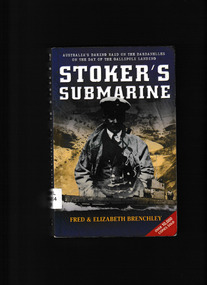
Book, Harper Collins et al, Stoker's submarine, 2003
... world war 1914-1918 - campaigns - gallipoli gallipoli campaign - naval operations submarine ae2 On 25 April 1915 - the day the Anzacs landed at Gallipoli - Lieutenant Commander Dacre Stoker set out as captain of the Australian submarine AE2 on a mission to breach the treacherous Dardanelles Strait with the intention of disrupting Turkish supply lines to the isolated Gallipoli peninsula. Facing dangerous currents, mines and withering enemy fire, Stoker and his men succeeded where British and French submarines had come to grief." "Stoker's achievement meant much in military terms, and even more emotionally in boosting the morale of embattled Allied troops. But what ...On 25 April 1915 - the day the Anzacs landed at Gallipoli - Lieutenant Commander Dacre Stoker set out as captain of the Australian submarine AE2 on a mission to breach the treacherous Dardanelles Strait with the intention of disrupting Turkish supply lines to the isolated Gallipoli peninsula. Facing dangerous currents, mines and withering enemy fire, Stoker and his men succeeded where British and French submarines had come to grief." "Stoker's achievement meant much in military terms, and even more emotionally in boosting the morale of embattled Allied troops. But what was proclaimed at the time as 'the finest feat in submarine history' has since sunk into oblivion. Few Australians even know their country had a submarine at Gallipoli, much less that it achieved daring feats, sank an enemy craft, and possibly played a pivotal role in Anzac troops staying on the beachhead for eight months." "Now, finally, Stoker's Submarine tells the story of a remarkable naval hero and the men under his command. And the AE2 itself, still lying intact on the floor of the Sea of Marmara, is celebrated as the most tangible relic of Australia's role at Gallipoli, the crucible of nationhood.Index, bibliography, notes, ill. (some col.), maps, ports, p.318.non-fictionOn 25 April 1915 - the day the Anzacs landed at Gallipoli - Lieutenant Commander Dacre Stoker set out as captain of the Australian submarine AE2 on a mission to breach the treacherous Dardanelles Strait with the intention of disrupting Turkish supply lines to the isolated Gallipoli peninsula. Facing dangerous currents, mines and withering enemy fire, Stoker and his men succeeded where British and French submarines had come to grief." "Stoker's achievement meant much in military terms, and even more emotionally in boosting the morale of embattled Allied troops. But what was proclaimed at the time as 'the finest feat in submarine history' has since sunk into oblivion. Few Australians even know their country had a submarine at Gallipoli, much less that it achieved daring feats, sank an enemy craft, and possibly played a pivotal role in Anzac troops staying on the beachhead for eight months." "Now, finally, Stoker's Submarine tells the story of a remarkable naval hero and the men under his command. And the AE2 itself, still lying intact on the floor of the Sea of Marmara, is celebrated as the most tangible relic of Australia's role at Gallipoli, the crucible of nationhood.world war 1914-1918 - campaigns - gallipoli, gallipoli campaign - naval operations, submarine ae2 -
 Bendigo Historical Society Inc.
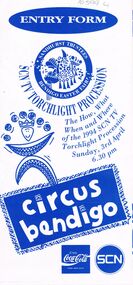
Document - BENDIGO EASTER FAIR COLLECTION: ENTRY FORM TORCHLIGHT PROCESSION 1994, Sunday 3rd April, 1994
... Folded entry form, blue print on white, for SCN TV torchlight Procession - the how, what when and where of the 1994 SCN ( Southern Cross Network ) RV torchlight Procession Sunday 3rd April, 6.30 p.m. ...BENDIGO Bendigo easter fair easter fair society Folded entry form, blue print on white, for SCN TV torchlight Procession - the how, what when and where of the 1994 SCN ( Southern Cross Network ) RV torchlight Procession Sunday 3rd April, 6.30 p.m. ...Folded entry form, blue print on white, for SCN TV torchlight Procession - the how, what when and where of the 1994 SCN ( Southern Cross Network ) RV torchlight Procession Sunday 3rd April, 6.30 p.m. Circus Bendigobendigo, bendigo easter fair, easter fair society -
 Otway Districts Historical Society
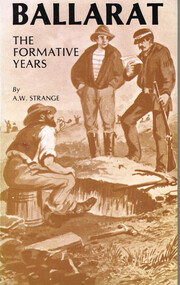
Book, B. & B. Strange, Ballarat: the formative years, April 1982
... where the hills were clothed in virgin forest and the flats covered with lush pasture. Then gold was discovered to spark off what was Victoria's first great gold rush. This book covers the gold rush after on the aboriginal ownership and early pastoral activities. Ballarat; pastoralism; aborigines; gold rush; mining; Eureka; local government; A.W. Strange; Signed: "A.W. Strange 10/1/1983" Map inside back cover. Ballarat: the formative years. A.W. Strange. B. & B. Strange; Ballarat (Vic); April ...From 1838 early Ballarat was settled by pastoralists in ideal conditions, a peaceful, verdant valley where the hills were clothed in virgin forest and the flats covered with lush pasture. Then gold was discovered to spark off what was Victoria's first great gold rush. This book covers the gold rush after on the aboriginal ownership and early pastoral activities.Ballarat: the formative years. A.W. Strange. B. & B. Strange; Ballarat (Vic); April 1982. viii, 100 p.; illus.; map. Soft cover. ISBN 0 9596802 3 3Signed: "A.W. Strange 10/1/1983" Map inside back cover.ballarat; pastoralism; aborigines; gold rush; mining; eureka; local government; a.w. strange; -
 Sunshine and District Historical Society Incorporated
Archive - City of Sunshine Street Names Origins
... Minutes of Brimbank City Council Ordinary Meeting No 111 on 19 September 2001|Alphabetical Book with Street Names|Letter to City Of Maribyrnong on 24 September 2000 regarding change Burke Street Braybrook|Newspaper article Sunshine Advocate 21 April 1993 Streets to change Hampshire Road partly one way|Newspaper article Messenger 1 February 2000 Signposts pointing to the previous days of our lives|Newspaper article The Age 9 January 2002 Melbourne Street names|Photocopy of Alphabetical book of Sunshine Street names 3020|Handwritten notes about possible origins|Newspaper article Sunshine Advocate 15 December 1939 Council Rejects the Ratepayers request to keep Hampshire Road instead of Main Street|Newspaper article Sunshine Advocate 31 March 1950 Ratepayer complains at Councils neglect|Newspaper article Sunshine Advocate 18 August 1950 Confusion over Street Names Hampshire Crescent and Hampshire Road|Newspaper article Sunshine Advocate 14 November 1952 Letter to the Editor rise in rates|Newspaper Article Sunshine Advocate 10 July 1953 New type of Street Name Corio Street to have concrete slab containing a street name set into the footpath|Newspaper article Sunshine Advocate 26 March 1954 Council items|Newspaper article Sunshine Advocate 17 September 1954 Tottenham requests|Newspaper article Sunshine Advocate 1 October 1954|Newspaper article Sunshine Advocate 7 February 1920 Braybrook Shire Council First session in year lasts until midnight|Newspaper article Sunshine Advocate 18 July 1930 Aussie Draws Dinkum Workers Fire|Newspaper article Sunshine Advocate 12 February 1932 Keilor Council|Newspaper article Sunshine Advocate 23 September 1932 Braybrook Shire Council|Newspaper article Sunshine Advocate 28 July 1933 Braybrook Council Meeting|Newspaper article Sunshine Advocate 26 November 1937 the Novembers of Yesteryear|Newspaper article Sunshine Advocate 14 January 1938 Street Names and numbers|Newspaper article Sunshine Advocate 31 March 1939 Naming of Streets costly procedure|Newspaper article Sunshine Advocate 23 January 1926 Braybrook Shire Council|Newspaper article Sunshine Advocate 28 August 1926 Sunshine Progress Association|Newspaper article Sunshine Advocate 30 October 1926 Saving the Roads|Newspaper article Sunshine Advocate 4 June 1927 Braybrook Council|Newspaper article Sunshine Advocate 25 June 1927 Meeting of Braybrook Shire Council|Newspaper article Sunshine Advocate 16 July 1937 Braybrook Shire Council Fortnightly meeting|Newspaper article Sunshine Advocate 30 July 1927 Braybrook Shire Council|Newspaper article Sunshine Advocate 13 August 1927 Braybrook Shire Council|Newspaper article Sunshine Advocate 10 September 1927 Ordindary Meeting Correspondence|Newspaper article Sunshine Advocate 1 October 1927 Braybrook Council another lengthy meeting|Newspaper article Sunshine Advocate 19 November 1927 Gas and Electric Humour|Newspaper article Sunshine Advocate 3 December 1927 Braybrook Shire Council|Newspaper article Sunshine Advocate 17 December 1927 Braybrook Shire Council|Newspaper article Sunshine Advocate 28 January 1928 Braybrook Shire Council|Newspaper article Sunshine Advocate 5 May 1928 Braybrook Council|Newspaper article Sunshine Advocate 9 June 1928 Keilor Shire Council|Newspaper article Sunshine Advocate 14 March 1952 Duplication of Street Names|Newspaper article Sunshine Advocate 21 March 1952 Street Names to Honor Citizens|Newspaper article Sunshine Advocate 19 September 1952 Confusion on Street names|Newspaper article Sunshine Advocate 3 October 1952 Change of Street Name|Newspaper article Sunshine Advocate 10 October 1952 Keilor Council decisions|Newspaper article Sunshine Advocate 6 February 1953 Duplicated Street Names to be altered|Newspaper article Sunshine Advocate 27 February 1953 Lack of Street Names|Newspaper article Sunshine Advocate 5 June 1953 Duplication of Street Names|Newspaper article Sunshine Advocate 19 June 1953 Honoring the Fee|Newspaper article Sunshine Advocate 30 October 1953 Request for change to Street Name|Newspaper article Sunshine Advocate 5 February 1954 Attention to Street name plates|Newspaper article Sunshine Advocate 7 May 1954 New Street Names|Newspaper article Sunshine Advocate 30 July 1954 Street Name confusion|Newspaper article Sunshine Advocate 17 September 1954 Complaints at Street name plates|Newspaper Article Sunshine Advocate 5 November 1954 Street name changed|Newspaper Article Sunshine Advocate 1 May 1931 Alteration of Street names essential|Newspaper Article Sunshine Advocate 25 August 1933 New Road to be Names St Albans Road|Newspaper Article Sunshine Advocate 29 May 1936 Bars to Progress of Sunshine some Suggestions|Newspaper Article Sunshine Advocate 8 July 1938 Shire of Braybrook Street Name changed|Newspaper Article Sunshine Advocate 12 August 1938 Shire of Braybrook|Newspaper Article Sunshine Advocate 19 August 1938 Shire of Braybrook|Newspaper Article Sunshine Advocate 26 May 1939Some Streets should be renamed|Newspaper Article Sunshine Advocate 10 November 1939 Street Names Suggested|Newspaper Article Sunshine Advocate 24 November 1939 Topics of the week Street Names aleration|Newspaper Article Sunshine Advocate 1 December 1939 Shopkeepers Object to Change of Street Name|Newspaper Article Sunshine Advocate 15 December 1939 Council Rejects the Ratepayers Request|Newspaper Article Sunshine Advocate 2 August 1924 Street Names Sunshine and Native Product|Newspaper Article Sunshine Advocate 16 August 1924 Street names|Newspaper Article Sunshine Advocate 23 August 1924 Sunshine Street names|Newspaper Article Sunshine Advocate 30 August 1924 Rebaptism of Streets|Newspaper Article Sunshine Advocate 26 June 1926 Braybrook Council|Newspaper Article Sunshine Advocate 17 July 1926 Street names farce|Newspaper Article Sunshine Advocate 4 September 1926 Street names|Newspaper Article Sunshine Advocate 25 September 1926 What is in a name|Newspaper Article Sunshine Advocate 11 December 1926 Our Street Names|Newspaper Article Sunshine Advocate 7 May 1927 Street Names|Newspaper Article Sunshine Advocate 7 April 1928 New Street Names for Sunshine|Newspaper Article Sunshine Advocate 6 December 1929 Braybrook Shire Council|Newspaper Article Sunshine Advocate 19 February 1937 Where is Langbien Street|Newspaper Article Sunshine Advocate 30 May 1941 Council Reports Engineers report|Newspaper Article Sunshine Advocate 8 August 1941 Keilor Council Activities|Newspaper Article Sunshine Advocate 24 April 1947 Referred to Officers|Newspaper Article Sunshine Advocate 9 February 1940 Name of Hampshire Road to be Retained|Newspaper Article Sunshine Advocate 10 May 1940 Confusing Street Names|Newspaper Article Sunshine Advocate 19 July 1940 Confusing Street Name|Newspaper Article Sunshine Advocate 18 October 1940 St Albans Street Renamed|Newspaper Article Sunshine Advocate 25 October 1940 Braybrook Council Enigneers report|Newspaper Article Sunshine Advocate 23 November 1941 The Councillors and Street Names|Newspaper Article Sunshine Advocate 23 January 1942 The Kilt beats the Hammer and Sickle|Newspaper Article Sunshine Advocate 23 January 1942 Old Ships Remembered|Newspaper Article Sunshine Advocate 3 August 1945 Braybrook Council|Newspaper Article Sunshine Advocate 3 April 1947 Street Names to Perpetuate Old Residents|Newspaper Article Sunshine Advocate 18 November 1949 Council News Street names Duplicated|Newspaper Article Sunshine Advocate 16 December 1949 New street Names South Road Beachley Hotham Windsor|Newspaper Article Sunshine Advocate 13 December1940 More Fire Alarms needed|Flyer Willaton Street St Albans...City of Sunshine Minutes of Brimbank City Council Ordinary Meeting No 111 on 19 September 2001|Alphabetical Book with Street Names|Letter to City Of Maribyrnong on 24 September 2000 regarding change Burke Street Braybrook|Newspaper article Sunshine Advocate 21 April 1993 Streets to change Hampshire Road partly one way|Newspaper article Messenger 1 February 2000 Signposts pointing to the previous days of our lives|Newspaper article The Age 9 January 2002 Melbourne Street names|Photocopy of Alphabetical book of Sunshine Street names 3020|Handwritten notes about possible origins|Newspaper article Sunshine Advocate 15 December 1939 Council Rejects the Ratepayers request to keep Hampshire Road instead of Main Street|Newspaper article Sunshine Advocate 31 March 1950 Ratepayer complains at Councils neglect|Newspaper article Sunshine Advocate 18 August 1950 Confusion over Street Names Hampshire Crescent and Hampshire Road|Newspaper article Sunshine Advocate 14 November 1952 Letter to the Editor rise in rates|Newspaper Article Sunshine Advocate 10 July 1953 New type of Street Name Corio Street to have concrete slab containing a street name set into the footpath|Newspaper article Sunshine Advocate 26 March 1954 Council items|Newspaper article Sunshine Advocate 17 September 1954 Tottenham requests|Newspaper article Sunshine Advocate 1 October 1954|Newspaper article Sunshine Advocate 7 February 1920 Braybrook Shire Council First session in year lasts until midnight|Newspaper article Sunshine Advocate 18 July 1930 Aussie Draws Dinkum Workers Fire|Newspaper article Sunshine Advocate 12 February 1932 Keilor Council|Newspaper article Sunshine Advocate 23 September 1932 Braybrook Shire Council|Newspaper article Sunshine Advocate 28 July 1933 Braybrook Council Meeting|Newspaper article Sunshine Advocate 26 November 1937 the Novembers of Yesteryear|Newspaper article Sunshine Advocate 14 January 1938 Street Names and numbers|Newspaper article Sunshine Advocate 31 March 1939 Naming of Streets costly procedure|Newspaper article Sunshine Advocate 23 January 1926 Braybrook Shire Council|Newspaper article Sunshine Advocate 28 August 1926 Sunshine Progress Association|Newspaper article Sunshine Advocate 30 October 1926 Saving the Roads|Newspaper article Sunshine Advocate 4 June 1927 Braybrook Council|Newspaper article Sunshine Advocate 25 June 1927 Meeting of Braybrook Shire Council|Newspaper article Sunshine Advocate 16 July 1937 Braybrook Shire Council Fortnightly meeting|Newspaper article Sunshine Advocate 30 July 1927 Braybrook Shire Council|Newspaper article Sunshine Advocate 13 August 1927 Braybrook Shire Council|Newspaper article Sunshine Advocate 10 September 1927 Ordindary Meeting Correspondence|Newspaper article Sunshine Advocate 1 October 1927 Braybrook Council another lengthy meeting|Newspaper article Sunshine Advocate 19 November 1927 Gas and Electric Humour|Newspaper article Sunshine Advocate 3 December 1927 Braybrook Shire Council|Newspaper article Sunshine Advocate 17 December 1927 Braybrook Shire Council|Newspaper article Sunshine Advocate 28 January 1928 Braybrook Shire Council|Newspaper article Sunshine Advocate 5 May 1928 Braybrook Council|Newspaper article Sunshine Advocate 9 June 1928 Keilor Shire Council|Newspaper article Sunshine Advocate 14 March 1952 Duplication of Street Names|Newspaper article Sunshine Advocate 21 March 1952 Street Names to Honor Citizens|Newspaper article Sunshine Advocate 19 September 1952 Confusion on Street names|Newspaper article Sunshine Advocate 3 October 1952 Change of Street Name|Newspaper article Sunshine Advocate 10 October 1952 Keilor Council decisions|Newspaper article Sunshine Advocate 6 February 1953 Duplicated Street Names to be altered|Newspaper article Sunshine Advocate 27 February 1953 Lack of Street Names|Newspaper article Sunshine Advocate 5 June 1953 Duplication of Street Names|Newspaper article Sunshine Advocate 19 June 1953 Honoring the Fee|Newspaper article Sunshine Advocate 30 October 1953 Request for change to Street Name|Newspaper article Sunshine Advocate 5 February 1954 Attention to Street name plates|Newspaper article Sunshine Advocate 7 May 1954 New Street Names|Newspaper article Sunshine Advocate 30 July 1954 Street Name confusion|Newspaper article Sunshine Advocate 17 September 1954 Complaints at Street name plates|Newspaper Article Sunshine Advocate 5 November 1954 Street name changed|Newspaper Article Sunshine Advocate 1 May 1931 Alteration of Street names essential|Newspaper Article Sunshine Advocate 25 August 1933 New Road to be Names St Albans Road|Newspaper Article Sunshine Advocate 29 May 1936 Bars to Progress of Sunshine some Suggestions|Newspaper Article Sunshine Advocate 8 July 1938 Shire of Braybrook Street Name changed|Newspaper Article Sunshine Advocate 12 August 1938 Shire of Braybrook|Newspaper Article Sunshine Advocate 19 August 1938 Shire of Braybrook|Newspaper Article Sunshine Advocate 26 May 1939Some Streets should be renamed|Newspaper Article Sunshine Advocate 10 November 1939 Street Names Suggested|Newspaper Article Sunshine Advocate 24 November 1939 Topics of the week Street Names aleration|Newspaper Article Sunshine Advocate 1 December 1939 Shopkeepers Object to Change of Street Name|Newspaper Article Sunshine Advocate 15 December 1939 Council Rejects the Ratepayers Request|Newspaper Article Sunshine Advocate 2 August 1924 Street Names Sunshine and Native Product|Newspaper Article Sunshine Advocate 16 August 1924 Street names|Newspaper Article Sunshine Advocate 23 August 1924 Sunshine Street names|Newspaper Article Sunshine Advocate 30 August 1924 Rebaptism of Streets|Newspaper Article Sunshine Advocate 26 June 1926 Braybrook Council|Newspaper Article Sunshine Advocate 17 July 1926 Street names farce|Newspaper Article Sunshine Advocate 4 September 1926 Street names|Newspaper Article Sunshine Advocate 25 September 1926 What is in a name|Newspaper Article Sunshine Advocate 11 December 1926 Our Street Names|Newspaper Article Sunshine Advocate 7 May 1927 Street Names|Newspaper Article Sunshine Advocate 7 April 1928 New Street Names for Sunshine|Newspaper Article Sunshine Advocate 6 December 1929 Braybrook Shire Council|Newspaper Article Sunshine Advocate 19 February 1937 Where is Langbien Street|Newspaper Article Sunshine Advocate 30 May 1941 Council Reports Engineers report|Newspaper Article Sunshine Advocate 8 August 1941 Keilor Council Activities|Newspaper Article Sunshine Advocate 24 April 1947 Referred to Officers|Newspaper Article Sunshine Advocate 9 February 1940 Name of Hampshire Road to be Retained|Newspaper Article Sunshine Advocate 10 May 1940 Confusing Street Names|Newspaper Article Sunshine Advocate 19 July 1940 Confusing Street Name|Newspaper Article Sunshine Advocate 18 October 1940 St Albans Street Renamed|Newspaper Article Sunshine Advocate 25 October 1940 Braybrook Council Enigneers report|Newspaper Article Sunshine Advocate 23 November 1941 The Councillors and Street Names|Newspaper Article Sunshine Advocate 23 January 1942 The Kilt beats the Hammer and Sickle|Newspaper Article Sunshine Advocate 23 January 1942 Old Ships Remembered|Newspaper Article Sunshine Advocate 3 August 1945 Braybrook Council|Newspaper Article Sunshine Advocate 3 April 1947 Street Names to Perpetuate Old Residents|Newspaper Article Sunshine Advocate 18 November 1949 Council News Street names Duplicated|Newspaper Article Sunshine Advocate 16 December 1949 New street Names South Road Beachley Hotham Windsor|Newspaper Article Sunshine Advocate 13 December1940 More Fire Alarms needed|Flyer Willaton Street St Albans List of City Sunshine Street Names Origins and collection of articles on street names Archive City of Sunshine Street Names Origins ...Minutes of Brimbank City Council Ordinary Meeting No 111 on 19 September 2001|Alphabetical Book with Street Names|Letter to City Of Maribyrnong on 24 September 2000 regarding change Burke Street Braybrook|Newspaper article Sunshine Advocate 21 April 1993 Streets to change Hampshire Road partly one way|Newspaper article Messenger 1 February 2000 Signposts pointing to the previous days of our lives|Newspaper article The Age 9 January 2002 Melbourne Street names|Photocopy of Alphabetical book of Sunshine Street names 3020|Handwritten notes about possible origins|Newspaper article Sunshine Advocate 15 December 1939 Council Rejects the Ratepayers request to keep Hampshire Road instead of Main Street|Newspaper article Sunshine Advocate 31 March 1950 Ratepayer complains at Councils neglect|Newspaper article Sunshine Advocate 18 August 1950 Confusion over Street Names Hampshire Crescent and Hampshire Road|Newspaper article Sunshine Advocate 14 November 1952 Letter to the Editor rise in rates|Newspaper Article Sunshine Advocate 10 July 1953 New type of Street Name Corio Street to have concrete slab containing a street name set into the footpath|Newspaper article Sunshine Advocate 26 March 1954 Council items|Newspaper article Sunshine Advocate 17 September 1954 Tottenham requests|Newspaper article Sunshine Advocate 1 October 1954|Newspaper article Sunshine Advocate 7 February 1920 Braybrook Shire Council First session in year lasts until midnight|Newspaper article Sunshine Advocate 18 July 1930 Aussie Draws Dinkum Workers Fire|Newspaper article Sunshine Advocate 12 February 1932 Keilor Council|Newspaper article Sunshine Advocate 23 September 1932 Braybrook Shire Council|Newspaper article Sunshine Advocate 28 July 1933 Braybrook Council Meeting|Newspaper article Sunshine Advocate 26 November 1937 the Novembers of Yesteryear|Newspaper article Sunshine Advocate 14 January 1938 Street Names and numbers|Newspaper article Sunshine Advocate 31 March 1939 Naming of Streets costly procedure|Newspaper article Sunshine Advocate 23 January 1926 Braybrook Shire Council|Newspaper article Sunshine Advocate 28 August 1926 Sunshine Progress Association|Newspaper article Sunshine Advocate 30 October 1926 Saving the Roads|Newspaper article Sunshine Advocate 4 June 1927 Braybrook Council|Newspaper article Sunshine Advocate 25 June 1927 Meeting of Braybrook Shire Council|Newspaper article Sunshine Advocate 16 July 1937 Braybrook Shire Council Fortnightly meeting|Newspaper article Sunshine Advocate 30 July 1927 Braybrook Shire Council|Newspaper article Sunshine Advocate 13 August 1927 Braybrook Shire Council|Newspaper article Sunshine Advocate 10 September 1927 Ordindary Meeting Correspondence|Newspaper article Sunshine Advocate 1 October 1927 Braybrook Council another lengthy meeting|Newspaper article Sunshine Advocate 19 November 1927 Gas and Electric Humour|Newspaper article Sunshine Advocate 3 December 1927 Braybrook Shire Council|Newspaper article Sunshine Advocate 17 December 1927 Braybrook Shire Council|Newspaper article Sunshine Advocate 28 January 1928 Braybrook Shire Council|Newspaper article Sunshine Advocate 5 May 1928 Braybrook Council|Newspaper article Sunshine Advocate 9 June 1928 Keilor Shire Council|Newspaper article Sunshine Advocate 14 March 1952 Duplication of Street Names|Newspaper article Sunshine Advocate 21 March 1952 Street Names to Honor Citizens|Newspaper article Sunshine Advocate 19 September 1952 Confusion on Street names|Newspaper article Sunshine Advocate 3 October 1952 Change of Street Name|Newspaper article Sunshine Advocate 10 October 1952 Keilor Council decisions|Newspaper article Sunshine Advocate 6 February 1953 Duplicated Street Names to be altered|Newspaper article Sunshine Advocate 27 February 1953 Lack of Street Names|Newspaper article Sunshine Advocate 5 June 1953 Duplication of Street Names|Newspaper article Sunshine Advocate 19 June 1953 Honoring the Fee|Newspaper article Sunshine Advocate 30 October 1953 Request for change to Street Name|Newspaper article Sunshine Advocate 5 February 1954 Attention to Street name plates|Newspaper article Sunshine Advocate 7 May 1954 New Street Names|Newspaper article Sunshine Advocate 30 July 1954 Street Name confusion|Newspaper article Sunshine Advocate 17 September 1954 Complaints at Street name plates|Newspaper Article Sunshine Advocate 5 November 1954 Street name changed|Newspaper Article Sunshine Advocate 1 May 1931 Alteration of Street names essential|Newspaper Article Sunshine Advocate 25 August 1933 New Road to be Names St Albans Road|Newspaper Article Sunshine Advocate 29 May 1936 Bars to Progress of Sunshine some Suggestions|Newspaper Article Sunshine Advocate 8 July 1938 Shire of Braybrook Street Name changed|Newspaper Article Sunshine Advocate 12 August 1938 Shire of Braybrook|Newspaper Article Sunshine Advocate 19 August 1938 Shire of Braybrook|Newspaper Article Sunshine Advocate 26 May 1939Some Streets should be renamed|Newspaper Article Sunshine Advocate 10 November 1939 Street Names Suggested|Newspaper Article Sunshine Advocate 24 November 1939 Topics of the week Street Names aleration|Newspaper Article Sunshine Advocate 1 December 1939 Shopkeepers Object to Change of Street Name|Newspaper Article Sunshine Advocate 15 December 1939 Council Rejects the Ratepayers Request|Newspaper Article Sunshine Advocate 2 August 1924 Street Names Sunshine and Native Product|Newspaper Article Sunshine Advocate 16 August 1924 Street names|Newspaper Article Sunshine Advocate 23 August 1924 Sunshine Street names|Newspaper Article Sunshine Advocate 30 August 1924 Rebaptism of Streets|Newspaper Article Sunshine Advocate 26 June 1926 Braybrook Council|Newspaper Article Sunshine Advocate 17 July 1926 Street names farce|Newspaper Article Sunshine Advocate 4 September 1926 Street names|Newspaper Article Sunshine Advocate 25 September 1926 What is in a name|Newspaper Article Sunshine Advocate 11 December 1926 Our Street Names|Newspaper Article Sunshine Advocate 7 May 1927 Street Names|Newspaper Article Sunshine Advocate 7 April 1928 New Street Names for Sunshine|Newspaper Article Sunshine Advocate 6 December 1929 Braybrook Shire Council|Newspaper Article Sunshine Advocate 19 February 1937 Where is Langbien Street|Newspaper Article Sunshine Advocate 30 May 1941 Council Reports Engineers report|Newspaper Article Sunshine Advocate 8 August 1941 Keilor Council Activities|Newspaper Article Sunshine Advocate 24 April 1947 Referred to Officers|Newspaper Article Sunshine Advocate 9 February 1940 Name of Hampshire Road to be Retained|Newspaper Article Sunshine Advocate 10 May 1940 Confusing Street Names|Newspaper Article Sunshine Advocate 19 July 1940 Confusing Street Name|Newspaper Article Sunshine Advocate 18 October 1940 St Albans Street Renamed|Newspaper Article Sunshine Advocate 25 October 1940 Braybrook Council Enigneers report|Newspaper Article Sunshine Advocate 23 November 1941 The Councillors and Street Names|Newspaper Article Sunshine Advocate 23 January 1942 The Kilt beats the Hammer and Sickle|Newspaper Article Sunshine Advocate 23 January 1942 Old Ships Remembered|Newspaper Article Sunshine Advocate 3 August 1945 Braybrook Council|Newspaper Article Sunshine Advocate 3 April 1947 Street Names to Perpetuate Old Residents|Newspaper Article Sunshine Advocate 18 November 1949 Council News Street names Duplicated|Newspaper Article Sunshine Advocate 16 December 1949 New street Names South Road Beachley Hotham Windsor|Newspaper Article Sunshine Advocate 13 December1940 More Fire Alarms needed|Flyer Willaton Street St Albanscity of sunshine -
 Robin Boyd Foundation
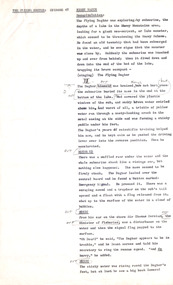
Document - Script, Robin Boyd, The Flying Dogtor. Episode 47 Night Watch, 1963
... where it came from and what it wanted. Suddenly, he heard heavy breathing close behind him in the darkness. The Flying Dogtor" series was broadcast on Australian Television Network (later becoming the Seven Network) between February and April 1964 (see item D254 for schedule). ...The Flying Dogtor, called by the Government to Canberra to help solve the mystery of a monster or sea-serpent, that seemed to be threatening the Snowy Mountain Scheme, spent a night in a tunnel. He was waiting for the monster to appear, so that he could try to find out where it came from and what it wanted. Suddenly, he heard heavy breathing close behind him in the darkness.The Flying Dogtor" series was broadcast on Australian Television Network (later becoming the Seven Network) between February and April 1964 (see item D254 for schedule).Typewritten, carbon copy, foolscap, 2 pagesHandwritten pencil edits and additions.the flying dogtor, robin boyd, crawford productions, manuscript -
 Kew Historical Society Inc
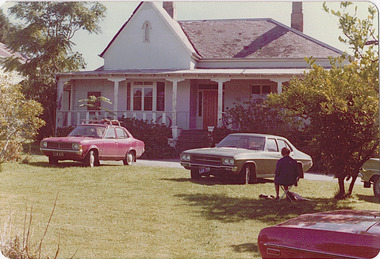
Photograph - 'Neama', Studley Park Road, 1978
... where he lived at Neama in Studley Park Road, a property later incorporated into the St Paul’s School for the Blind. Rare colour photograph of what was once a significant house in Kew. st paul's school for the blind neama Studley Park Road -- kew (Vic.) historic houses -- kew (Vic.) villa Maria society Annotated reverse: "Front view of Neama / Farmhouse on St Paul's School for the Blind Children / Fernhurst Estate" Original colour positive photograph (Kodak print) of the main house of 'Neama', colloquially known as the 'farmhouse'. Photographed by Stewart West in April ...Edward Augustus Atkyns was born in Wiltshire, England in 1840. His family emigrated to Australia in 1852. As a young man he was a keen cricketer and played at the first cricket ground in the district, located between Barkers Road and Hawthorn Grove, on the site of the future Barker railway station. Atkyns was admitted to the Victorian Bar in 1861, initially working in his father’s practice. He sat as a local magistrate in both Kew and Hawthorn and acted as solicitor for several shire councils. Elected to the Hawthorn Borough Council in 1863 at the age of 23, he served in that municipality as mayor in 1866-67. By 1877, he had moved to Kew where he lived at Neama in Studley Park Road, a property later incorporated into the St Paul’s School for the Blind.Rare colour photograph of what was once a significant house in Kew.Original colour positive photograph (Kodak print) of the main house of 'Neama', colloquially known as the 'farmhouse'. Photographed by Stewart West in April 1978 (it was later demolished by the Villa Maria Society).Annotated reverse: "Front view of Neama / Farmhouse on St Paul's School for the Blind Children / Fernhurst Estate"st paul's school for the blind, neama, studley park road -- kew (vic.), historic houses -- kew (vic.), villa maria society -
 Kew Historical Society Inc
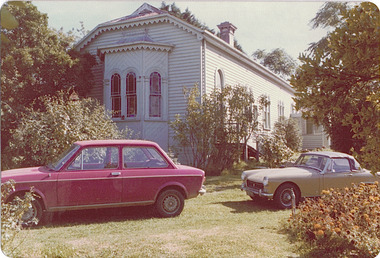
Photograph - 'Neama', Studley Park Road, 1978
... where he lived at Neama in Studley Park Road, a property later incorporated into the St Paul’s School for the Blind. Rare colour photograph of what was once a significant house in Kew. st paul's school for the blind neama studley park road -- kew (vic.) historic houses -- kew (vic.) villa maria society Annotated reverse: "Timber hall on Fernhurst land / Transported there approx 1878." Original colour positive photograph (Kodak print) of the secondary building at 'Neama', colloquially known as the 'hall'. Photographed by Stewart West in April ...Edward Augustus Atkyns was born in Wiltshire, England in 1840. His family emigrated to Australia in 1852. As a young man he was a keen cricketer and played at the first cricket ground in the district, located between Barkers Road and Hawthorn Grove, on the site of the future Barker railway station. Atkyns was admitted to the Victorian Bar in 1861, initially working in his father’s practice. He sat as a local magistrate in both Kew and Hawthorn and acted as solicitor for several shire councils. Elected to the Hawthorn Borough Council in 1863 at the age of 23, he served in that municipality as mayor in 1866-67. By 1877, he had moved to Kew where he lived at Neama in Studley Park Road, a property later incorporated into the St Paul’s School for the Blind.Rare colour photograph of what was once a significant house in Kew.Original colour positive photograph (Kodak print) of the secondary building at 'Neama', colloquially known as the 'hall'. Photographed by Stewart West in April 1978 (it was later demolished by the Villa Maria Society).Annotated reverse: "Timber hall on Fernhurst land / Transported there approx 1878."st paul's school for the blind, neama, studley park road -- kew (vic.), historic houses -- kew (vic.), villa maria society
