
Showing 25 items matching "william hovell"
-
 The Beechworth Burke Museum
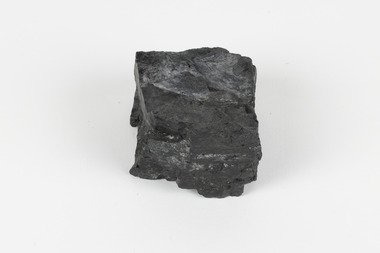
Geological specimen - Bituminous Coal, Unknown
... ...William Hovell...The discovery of bituminous coal in this locality was first made in 1826 by explorer William Hovell. More discoveries were gradually made over the following decades and in 1859 the Victorian Coal Company commenced the first active coal mining operations in the state by sinking a number of shafts and bores near the area of Cape Paterson. ...The discovery of bituminous coal in this locality was first made in 1826 by explorer William Hovell. More discoveries were gradually made over the following decades and in 1859 the Victorian Coal Company commenced the first active coal mining operations in the state by sinking a number of shafts and bores near the area of Cape Paterson. ...Bituminous coal is the most common type of coal, abundantly found in ancient coal deposits which can be dated back millions of years. Often referred to as soft or black coal, this specimen exhibits a high carbon content, ranging from 76-86%. It also holds a relatively high energy density (27 MJ/kg) meaning that it releases significant amounts of energy when burned. Bituminous coal is most commonly used for electricity generation, as well as in the production of steel. This particular piece of coal was collected as part of the Geological Survey of Victoria in the nineteenth century. It originates from Cape Paterson, a seaside village located in South Gippsland, Victoria (located on Bunurong Country). The discovery of bituminous coal in this locality was first made in 1826 by explorer William Hovell. More discoveries were gradually made over the following decades and in 1859 the Victorian Coal Company commenced the first active coal mining operations in the state by sinking a number of shafts and bores near the area of Cape Paterson. Evidence of this coal-focused past can be found today at the State Coal Mine Museum in the nearby town of Wonthaggi. This specimen is significant as it was collected from the locality of Cape Paterson in Victoria, an area that has since become historically instrumental in the mining of coal and other substances in the state of Victoria. This specimen is part of a larger collection of geological and mineral specimens collected from around Australia (and some parts of the world) and donated to the Burke Museum between 1868-1880. A large percentage of these specimens were collected in Victoria as part of the Geological Survey of Victoria that begun in 1852 (in response to the Gold Rush) to study and map the geology of Victoria. Collecting geological specimens was an important part of mapping and understanding the scientific makeup of the earth. Many of these specimens were sent to research and collecting organisations across Australia, including the Burke Museum, to educate and encourage further study. A solid hand-sized piece of bituminous coal with a shiny black-grey surface and jagged edges.Existing Label: BITUMINOUS COAL / Locality: Cape / Patterson, VIC. burke museum, beechworth, geological, geological specimen, state coal mine museum, wonthaggi coal mine, victorian coal company, bituminous coal, coal victoria, coal energy generation, william hovell, cape paterson, coal specimen -
 City of Moorabbin Historical Society (Operating the Box Cottage Museum)
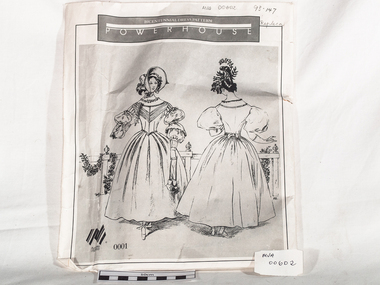
Craft - Dress Pattern Bi-centennial 0001, c1988
... ...hovell william...It is a copy of a dress belonging to Isobel Hovell, the wife of the explorer William Hovell. Isobel died 1837. The original dress was made from yellow, satin -striped, cotton voile, printed with sprigs of flowers in lilac and green...It is a copy of a dress belonging to Isobel Hovell, the wife of the explorer William Hovell. Isobel died 1837. The original dress was made from yellow, satin -striped, cotton voile, printed with sprigs of flowers in lilac and green This Dress Pattern was made for the Bi-Centennial Celebrations at Power House Museum, Sydney in 1988 dressmaking craft equipment dress patterns craftwork sewing hovell isobel hovell william ward lindie bi-centennial celebrations melbourne moorabbin victoria new south wales market gardneres power house museum Front of packet : BICENTENNIAL DRESS PATTERN / POWERHOUSE / 0001 c1988 A large paper envelope with printed design of dress c1837. ...A Bi-Centennial Dress Pattern 0001 made by Lindie Ward for Power House Museum . It is a copy of a dress belonging to Isobel Hovell, the wife of the explorer William Hovell. Isobel died 1837. The original dress was made from yellow, satin -striped, cotton voile, printed with sprigs of flowers in lilac and greenThis Dress Pattern was made for the Bi-Centennial Celebrations at Power House Museum, Sydney in 1988c1988 A large paper envelope with printed design of dress c1837. Dressmaking tissue pattern pieces for dress are enclosed and a measurement scale is on the backFront of packet : BICENTENNIAL DRESS PATTERN / POWERHOUSE / 0001dressmaking, craft equipment, dress patterns, craftwork, sewing, hovell isobel, hovell william, ward lindie, bi-centennial celebrations, melbourne, moorabbin, victoria, new south wales, market gardneres, power house museum -
 Tatura Irrigation & Wartime Camps Museum
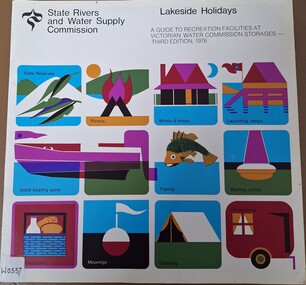
Booklet - Water in Store. Dams and Water Storages in Victoria. NO dates on the publication, Water in Store. A review of the Victorian Water Commission Major Storages
... Soft cover booklet front photo lake William Hovell, rear cover map of Vic showing rivers and dams, plus listing of them...There are NO DATES in this booklet Soft cover booklet front photo lake William Hovell, rear cover map of Vic showing rivers and dams, plus listing of them Water in Store. ...Review of Victorian Water Commission's Major Water Storages, including capacities, photos and profile drawings of each dam. There are NO DATES in this bookletSoft cover booklet front photo lake William Hovell, rear cover map of Vic showing rivers and dams, plus listing of themnon-fictionReview of Victorian Water Commission's Major Water Storages, including capacities, photos and profile drawings of each dam. There are NO DATES in this booklet -
 Sunshine and District Historical Society Incorporated
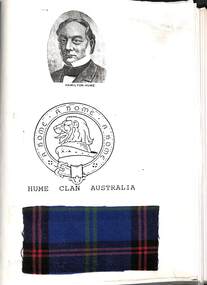
Document - Hume Clan Australia, unknown
... Collection of documents relating to Andrew Hamilton Hume and William Hilton Hovell...The Hume Family in Australia: Settlement and Legacy Hume and Hovell’s Overland Expedition, 1824–1825 Commemorative Monuments of the Hume–Hovell Route, NSW to Victoria Hovell family history The collection contains newspaper articles from the Sunshine Advocate and photographs of cairns in Deer Park and St Albans/Sydenham Hume & Hovell exploration Hume Clan Australia Collection of documents relating to Andrew Hamilton Hume and William Hilton Hovell Document Hume Clan Australia unknown ...The Hume Family in Australia: Settlement and Legacy Hume and Hovell’s Overland Expedition, 1824–1825 Commemorative Monuments of the Hume–Hovell Route, NSW to Victoria Hovell family history The collection contains newspaper articles from the Sunshine Advocate and photographs of cairns in Deer Park and St Albans/SydenhamHume Clan Australiahume & hovell, exploration -
 The Beechworth Burke Museum
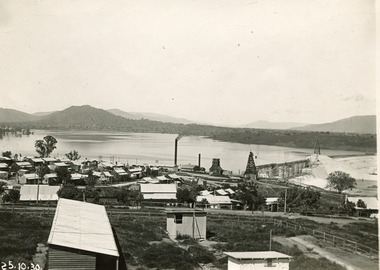
Photograph, 25 October 1930
... ...William Hilton Hovell...Hume and Hovell: Hamilton Hume (1979-1873) and William Hilton Hovell (1786-1875). ...Hume and Hovell: Hamilton Hume (1979-1873) and William Hilton Hovell (1786-1875). ...Taken on 25 October 1930, various houses with the Hume Dam under construction are depicted in the background. The construction of the Hume Dam took place from 1919 to 1936. At the time of construction, it was the second largest dam in the world. It was also one of the earliest civil projects developed after the Federation. Some of the Dam workers consisted of World War I veterans. Dam workers often settled their families in Mitta Junction Village and Wodonga. Archaeological surveys were completed by Austral Archaeology, which was done when the Department of Land & Water Conservation was doing work to improve Hume Dam. The archaeological report that came out of the survey recommended three sites of interest where archaeological excavation should be done: Camp Ganger’s Quarters, Stableman’s Quarters, and the Industrial Dump. The excavation uncovered artefacts. Mitta Mitta: Mitta Mitta is situated between Mount Welcome and Mount Misery. It is named after the river that explorers Hume and Hovell discovered in 1824. The town would eventually become a huge gold mining town. Mitta Mitta is called Midamodunga by the local Indigenous peoples Wodonga: Wodonga is situated on the Murray River and is part of North East Victoria. Hume and Hovell: Hamilton Hume (1979-1873) and William Hilton Hovell (1786-1875). W. H. Hovell was born in Norfolk England and Hume was born in Parramatta, New South Wales Hovell and Hume undertook an exploration journey in 1824 and thought they discovered a river, which turned out to be the Murray River. They returned home in 1825, but returned to the area in 1826 and discovered coal in the area. This photo is historically significant as it shows the Hume Dam under construction in 1930. The Dam was named after Hamilton Hume, who is an important historical figure for this area as he helped discover the area where resources were found. Black and white rectangular photograph printer unmountedReverse: 1997.3145/ 84-20-2construction, houses, veterans, mitta junction village, hume dam, world war i, federation, wodonga, archaeological survey, excavation, austral archaeology, department of land & water conservation, camp ganger's quarter's, stableman's quarters, industrial dump, artefacts, mitta mitta, mount welcome, mount misery, murray river, hamilton hume, william hilton hovell, hume and hovell expedition -
 The Beechworth Burke Museum
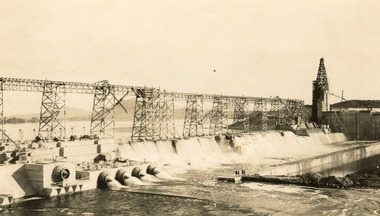
Photograph
... ...William Hilton Hovell...Hume and Hovell: Hamilton Hume (1979-1873) and William Hilton Hovell (1786-1875). ...Hume and Hovell: Hamilton Hume (1979-1873) and William Hilton Hovell (1786-1875). ...Taken on 25 October 1930, various houses with the Hume Dam under construction are depicted in the background. The construction of the Hume Dam took place from 1919 to 1936. At the time of construction, it was the second largest dam in the world. It was also one of the earliest civil projects developed after the Federation. Some of the Dam workers consisted of World War I veterans. Dam workers often settled their families in Mitta Junction Village and Wodonga. Archaeological surveys were completed by Austral Archaeology, which was done when the Department of Land & Water Conservation was doing work to improve Hume Dam. The archaeological report that came out of the survey recommended three sites of interest where archaeological excavation should be done: Camp Ganger’s Quarters, Stableman’s Quarters, and the Industrial Dump. The excavation uncovered artefacts. Mitta Mitta: Mitta Mitta is situated between Mount Welcome and Mount Misery. It is named after the river that explorers Hume and Hovell discovered in 1824. The town would eventually become a huge gold mining town. Mitta Mitta is called Midamodunga by the local Indigenous peoples Wodonga: Wodonga is situated on the Murray River and is part of North East Victoria. Hume and Hovell: Hamilton Hume (1979-1873) and William Hilton Hovell (1786-1875). W. H. Hovell was born in Norfolk England and Hume was born in Parramatta, New South Wales Hovell and Hume undertook an exploration journey in 1824 and thought they discovered a river, which turned out to be the Murray River. They returned home in 1825, but returned to the area in 1826 and discovered coal in the area. This photo is historically significant as it shows the Hume Dam under construction in 1930. The Dam was named after Hamilton Hume, who is an important historical figure for this area as he helped discover the area where resources were found.Sepia rectangular photograph printed unmountedReverse: 84-19-5 / 1997.3185/ Values & spillway. / When completed the wall / will be as high as the / scaffolding. [featuring trademark: kodak print]construction, houses, veterans, mitta junction village, hume dam, world war i, federation, wodonga, archaeological survey, excavation, austral archaeology, department of land & water conservation, camp ganger's quarter's, stableman's quarters, industrial dump, artefacts, mitta mitta, mount welcome, mount misery, murray river, hamilton hume, william hilton hovell, hume and hovell expedition -
 The Beechworth Burke Museum
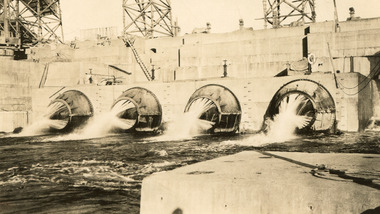
Photograph, c1930
... ...William Hilton Hovell...Hume and Hovell: Hamilton Hume (1979-1873) and William Hilton Hovell (1786-1875). ...Hume and Hovell: Hamilton Hume (1979-1873) and William Hilton Hovell (1786-1875). ...Taken on 25 October 1930, various houses with the Hume Dam under construction are depicted in the background. The construction of the Hume Dam took place from 1919 to 1936. At the time of construction, it was the second largest dam in the world. It was also one of the earliest civil projects developed after the Federation. Some of the Dam workers consisted of World War I veterans. Dam workers often settled their families in Mitta Junction Village and Wodonga. Archaeological surveys were completed by Austral Archaeology, which was done when the Department of Land & Water Conservation was doing work to improve Hume Dam. The archaeological report that came out of the survey recommended three sites of interest where archaeological excavation should be done: Camp Ganger’s Quarters, Stableman’s Quarters, and the Industrial Dump. The excavation uncovered artefacts. Mitta Mitta: Mitta Mitta is situated between Mount Welcome and Mount Misery. It is named after the river that explorers Hume and Hovell discovered in 1824. The town would eventually become a huge gold mining town. Mitta Mitta is called Midamodunga by the local Indigenous peoples Wodonga: Wodonga is situated on the Murray River and is part of North East Victoria. Hume and Hovell: Hamilton Hume (1979-1873) and William Hilton Hovell (1786-1875). W. H. Hovell was born in Norfolk England and Hume was born in Parramatta, New South Wales Hovell and Hume undertook an exploration journey in 1824 and thought they discovered a river, which turned out to be the Murray River. They returned home in 1825, but returned to the area in 1826 and discovered coal in the area.This photo is historically significant as it shows the Hume Dam under construction in 1930. The Dam was named after Hamilton Hume, who is an important historical figure for this area as he helped discover the area where resources were found.Sepia rectangular photograph printed unmountedReverse: 84-19-2/ 1997.3188/ These are the four / release valves they are / not always open (illegible) this / when closed the water flows / over the spillway. [featuring trademark: kodak print] photograph number: 354construction, houses, veterans, mitta junction village, hume dam, world war i, federation, wodonga, archaeological survey, excavation, austral archaeology, department of land & water conservation, camp ganger's quarter's, stableman's quarters, industrial dump, artefacts, mitta mitta, mount welcome, mount misery, murray river, hamilton hume, william hilton hovell, hume and hovell expedition -
 The Beechworth Burke Museum
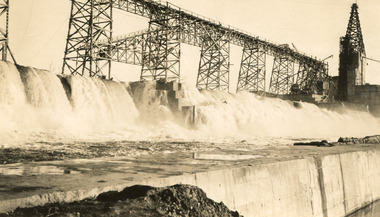
Photograph, 25 October 1930
... ...William Hilton Hovell...Hume and Hovell: Hamilton Hume (1979-1873) and William Hilton Hovell (1786-1875). ...Hume and Hovell: Hamilton Hume (1979-1873) and William Hilton Hovell (1786-1875). ...Taken on 25 October 1930, various houses with the Hume Dam under construction are depicted in the background. The construction of the Hume Dam took place from 1919 to 1936. At the time of construction, it was the second largest dam in the world. It was also one of the earliest civil projects developed after the Federation. Some of the Dam workers consisted of World War I veterans. Dam workers often settled their families in Mitta Junction Village and Wodonga. Archaeological surveys were completed by Austral Archaeology, which was done when the Department of Land & Water Conservation was doing work to improve Hume Dam. The archaeological report that came out of the survey recommended three sites of interest where archaeological excavation should be done: Camp Ganger’s Quarters, Stableman’s Quarters, and the Industrial Dump. The excavation uncovered artefacts. Mitta Mitta: Mitta Mitta is situated between Mount Welcome and Mount Misery. It is named after the river that explorers Hume and Hovell discovered in 1824. The town would eventually become a huge gold mining town. Mitta Mitta is called Midamodunga by the local Indigenous peoples Wodonga: Wodonga is situated on the Murray River and is part of North East Victoria. Hume and Hovell: Hamilton Hume (1979-1873) and William Hilton Hovell (1786-1875). W. H. Hovell was born in Norfolk England and Hume was born in Parramatta, New South Wales Hovell and Hume undertook an exploration journey in 1824 and thought they discovered a river, which turned out to be the Murray River. They returned home in 1825, but returned to the area in 1826 and discovered coal in the area.This photo is historically significant as it shows the Hume Dam under construction in 1930. The Dam was named after Hamilton Hume, who is an important historical figure for this area as he helped discover the area where resources were found.Sepia rectangular photograph printed unmountedReverse: 84-19-6/ 1997.3187/ The spillway [featuring trademark: kodak print] construction, houses, veterans, mitta junction village, hume dam, world war i, federation, wodonga, archaeological survey, excavation, austral archaeology, department of land & water conservation, camp ganger's quarter's, stableman's quarters, industrial dump, artefacts, mitta mitta, mount welcome, mount misery, murray river, hamilton hume, william hilton hovell, hume and hovell expedition -
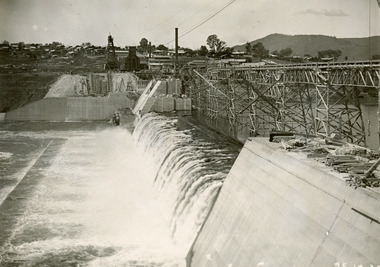 The Beechworth Burke Museum
Photograph, 25 October 1930
... ...William Hilton Hovell...Hume and Hovell: Hamilton Hume (1979-1873) and William Hilton Hovell (1786-1875). ...Hume and Hovell: Hamilton Hume (1979-1873) and William Hilton Hovell (1786-1875). ...Taken on 25 October 1930, various houses with the Hume Dam under construction are depicted in the background. The construction of the Hume Dam took place from 1919 to 1936. At the time of construction, it was the second largest dam in the world. It was also one of the earliest civil projects developed after the Federation. Some of the Dam workers consisted of World War I veterans. Dam workers often settled their families in Mitta Junction Village and Wodonga. Archaeological surveys were completed by Austral Archaeology, which was done when the Department of Land & Water Conservation was doing work to improve Hume Dam. The archaeological report that came out of the survey recommended three sites of interest where archaeological excavation should be done: Camp Ganger’s Quarters, Stableman’s Quarters, and the Industrial Dump. The excavation uncovered artefacts. Mitta Mitta: Mitta Mitta is situated between Mount Welcome and Mount Misery. It is named after the river that explorers Hume and Hovell discovered in 1824. The town would eventually become a huge gold mining town. Mitta Mitta is called Midamodunga by the local Indigenous peoples Wodonga: Wodonga is situated on the Murray River and is part of North East Victoria. Hume and Hovell: Hamilton Hume (1979-1873) and William Hilton Hovell (1786-1875). W. H. Hovell was born in Norfolk England and Hume was born in Parramatta, New South Wales Hovell and Hume undertook an exploration journey in 1824 and thought they discovered a river, which turned out to be the Murray River. They returned home in 1825, but returned to the area in 1826 and discovered coal in the area.This photo is historically significant as it shows the Hume Dam under construction in 1930. The Dam was named after Hamilton Hume, who is an important historical figure for this area as he helped discover the area where resources were found.Black and white rectangular photograph printer unmountedReverse: 84-20-1/ 1997.3147construction, houses, veterans, mitta junction village, hume dam, world war i, federation, wodonga, archaeological survey, excavation, austral archaeology, department of land & water conservation, camp ganger's quarter's, stableman's quarters, industrial dump, artefacts, mitta mitta, mount welcome, mount misery, murray river, hamilton hume, william hilton hovell, hume and hovell expedition -
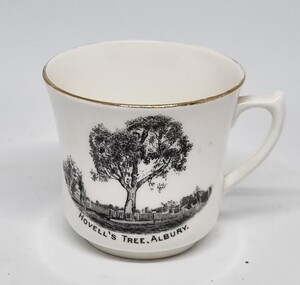 Wodonga & District Historical Society Inc
Souvenir - Cup Hovell's Tree, Albury
... In 1824, Governor Brisbane asked Hume to join forces with an English sea captain, William Hovell, to go from Lake George to the Spencer Gulf in South Australia. ...In 1824, Governor Brisbane asked Hume to join forces with an English sea captain, William Hovell, to go from Lake George to the Spencer Gulf in South Australia. ...This souvenir represents the Hovell Tree, a local historic landmark in Albury, NSW. This item is from a collection donated by descendants of John Francis Turner of Wodonga. The Hovell Tree commemorates the exploration and naming of the Hume River (now the Murray) by Hume and Hovell`s expedition of 1824. In 1824, Governor Brisbane asked Hume to join forces with an English sea captain, William Hovell, to go from Lake George to the Spencer Gulf in South Australia. The Hovell Tree, marked by William Hovell on November 17, 1824 was flanked by another tree marked by Hamilton Hume which was destroyed by fire in the 1840's. The river gum was marked by William Hovell when discovering river. Hume and Hovell travelled from the Yass area and after crossing the Murray River where Lake Hume now is, they crossed the Mitta Mitta River and proceeded to Corio Bay, Westernport.This item is representative of souvenirs produced to represent key buildings and historic landmarks in the Albury-Wodonga district.A white cup with gilt trim around the lip. It bears an image of the Hovell Tree in Albury, NSWBeneath image: "HOVELL'S TREE, ALBURY."albury souvenirs, hovell tree, hume and hovell, australian exploration -
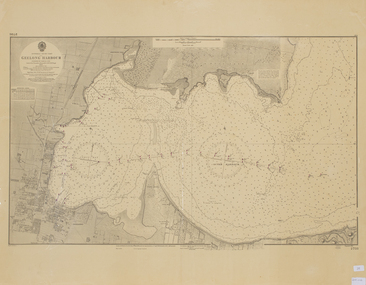 Queenscliffe Maritime Museum
Map - Chart of Geelong Harbour, Geelong Harbour
... When Hamilton Hume and William Hovell arrived at the bay in 1824 they met with the local Wautharong people who referred to the bay as "Jillong" and the surround land "Corayo", but by the time the area was surveyed in the late 1830s the Aboriginal names had been swapped. ...When Hamilton Hume and William Hovell arrived at the bay in 1824 they met with the local Wautharong people who referred to the bay as "Jillong" and the surround land "Corayo", but by the time the area was surveyed in the late 1830s the Aboriginal names had been swapped. ...When Hamilton Hume and William Hovell arrived at the bay in 1824 they met with the local Wautharong people who referred to the bay as "Jillong" and the surround land "Corayo", but by the time the area was surveyed in the late 1830s the Aboriginal names had been swapped. The names "Corayo" and "Jillong" had since been Anglicised to "Corio" and "Geelong".Corio Bay is an important harbour and leisure location in the West and continues to attract development such as the new Tasmania Ferry Terminal.An Admiralty Chart of Geelong Harbour revised in 1954Geelong Harbour Map Ref: 2731geelong, corio, admiralty charts -
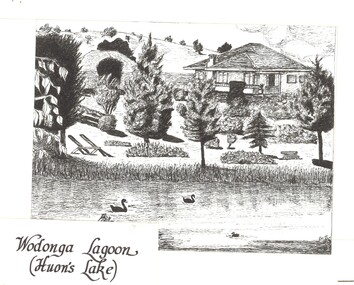 Wodonga & District Historical Society Inc
Work on paper - Wodonga Lagoon (Huon's Lake), Des Martin, 1987
... In 1824 Hamilton Hume and William Hovell discovered the Hume River, later renamed to the Murray River and the rich land surrounding it. ...In 1824 Hamilton Hume and William Hovell discovered the Hume River, later renamed to the Murray River and the rich land surrounding it. ...Gabriel Louis Marie Huon de Kerilleau was born to a French aristocratic family in 1769. He escaped to England during the French Revolution and enlisted in the New South Wales Corps. He married in Parramatta to Louisa Emmanuel Le Sage. They had five children who took the name of Huon – Elizabeth, Paul, Jean Francois, Aime Augustus and Charles. Paul and Charles were to become the “founders’ of the Wodonga District. In 1824 Hamilton Hume and William Hovell discovered the Hume River, later renamed to the Murray River and the rich land surrounding it. By 1835, squatters began arriving at the Hume River. During the following year, Paul Huon arrived at the Hume (Murray) River, then "taking up" 40,000 acres on the south side of the river bank. To this property he gave the name WOODONGA RUN. Charles Huon, younger brother of Paul, was sent to manage the "Run" until Paul's son, William, became old enough to take over management. Charles Huon built a mud brick home on the eastern side of a rise south of the now Wodonga Creek. Thus was Charles the first permanent settler in the district. He was a great admirer of the English Lord Belvoir hence "Belvoir" was the name Charles Huon gave to the first permanent home on Woodonga Run. By the 1857, residents numbered fifty, and the Government had surveyed a township area, proclaiming it "Belvoir" in the new State of Victoria. However, the residents wanted their own choice of a name for the town. Huon’s first home overlooked a lagoon which was often referred to as Huon’s Lagoon. It has borne several names since then including Lake Huon and Belvoir Lagoon. After much redevelopment and many roles including the location of sporting fields and the Wodonga Golf Course, it is now known as Belvoir Park, a major parkland and recreation area in Wodonga.Donated by Des Martin & Rosemary BoyesPart of a set of original sketches by Des Martin for "A Record of the 150th Anniversary" Celebrations of the Rural City of Wodonga held on 30th October 1986.huon family, belvoir park wodonga, huon's lagoon -
 Wodonga & District Historical Society Inc
Work on paper - Stonleigh, Wodonga - Home of Paul Huon, Des Martin, 1987
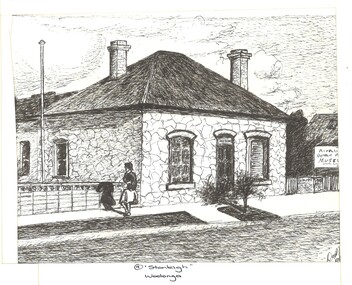
... In 1824 Hamilton Hume and William Hovell discovered the Hume River, later renamed to the Murray River and the rich land surrounding it. ...In 1824 Hamilton Hume and William Hovell discovered the Hume River, later renamed to the Murray River and the rich land surrounding it. ...Gabriel Louis Marie Huon de Kerilleau was born to a French aristocratic family in 1769. He escaped to England during the French Revolution and enlisted in the New South Wales Corps. He married in Parramatta to Louisa Emmanuel Le Sage. They had five children who took the name of Huon – Elizabeth, Paul, Jean Francois, Aime Augustus and Charles. Paul and Charles were to become the “founders’ of the Wodonga District. In 1824 Hamilton Hume and William Hovell discovered the Hume River, later renamed to the Murray River and the rich land surrounding it. By 1835, squatters began arriving at the Hume River. During the following year, Paul Huon arrived at the Hume (Murray) River, then "taking up" 40,000 acres on the south side of the river bank. To this property he gave the name WOODONGA RUN. Charles Huon, younger brother of Paul, was sent to manage the "Run" until Paul's son, William, became old enough to take over management. Charles Huon built a mud brick home on the eastern side of a rise south of the now Wodonga Creek. Thus was Charles the first permanent settler in the district. He was a great admirer of the English Lord Belvoir hence "Belvoir" was the name Charles Huon gave to the first permanent home on Woodonga Run. By the 1857, residents numbered fifty, and the Government had surveyed a township area, proclaiming it "Belvoir" in the new State of Victoria. However, the residents wanted their own choice of a name for the town. A battle lasting thirteen years followed over the name of the town until the residents won in 1874 when the Victorian Government dropped the name "Belvoir" and proclaimed the town's name as "Wodonga." A local government Shire formed two years later became the Shire of Wodonga. The Huon name features in the town today including Huon Hill, Huon Creek, Huon Street and the former township and railway siding at Huon. The name "Belvoir" is used today by organisations and locations in Wodonga including Belvoir Park formerly known as Huon’s Lagoon. On 3rd October 1986 the Wodonga community celebrated the 150th anniversary of the first settlement by Charles Huon of the district that was to become Wodonga. These drawings were completed by Desmond Martin as part of a booklet produced to record the event. Stonleigh in Wodonga was once owned by Paul Huon.Donated by Des Martin & Rosemary BoyesPart of a set of original sketches by Des Martin for "A Record of the 150th Anniversary" Celebrations of the Rural City of Wodonga held on 30th October 1986.150th anniversary celebrations, huon family, early wodonga, stonleigh wodonga -
 Wodonga & District Historical Society Inc
Work on paper - 150th Anniversary Celebrations of the Rural City of Wodonga, Des Martin, 1987
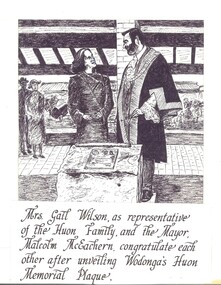
... In 1824 Hamilton Hume and William Hovell discovered the Hume River, later renamed to the Murray River and the rich land surrounding it. ...In 1824 Hamilton Hume and William Hovell discovered the Hume River, later renamed to the Murray River and the rich land surrounding it. ...Gabriel Louis Marie Huon de Kerilleau was born to a French aristocratic family in 1769. He escaped to England during the French Revolution and enlisted in the New South Wales Corps. He married in Parramatta to Louisa Emmanuel Le Sage. They had five children who took the name of Huon – Elizabeth, Paul, Jean Francois, Aime Augustus and Charles. Paul and Charles were to become the “founders’ of the Wodonga District. In 1824 Hamilton Hume and William Hovell discovered the Hume River, later renamed to the Murray River and the rich land surrounding it. By 1835, squatters began arriving at the Hume River. During the following year, Paul Huon arrived at the Hume (Murray) River, then "taking up" 40,000 acres on the south side of the river bank. To this property he gave the name WOODONGA RUN. Charles Huon, younger brother of Paul, was sent to manage the "Run" until Paul's son, William, became old enough to take over management. Charles Huon built a mud brick home on the eastern side of a rise south of the now Wodonga Creek. Thus was Charles the first permanent settler in the district. He was a great admirer of the English Lord Belvoir hence "Belvoir" was the name Charles Huon gave to the first permanent home on Woodonga Run. By the 1857, residents numbered fifty, and the Government had surveyed a township area, proclaiming it "Belvoir" in the new State of Victoria. However, the residents wanted their own choice of a name for the town. A battle lasting thirteen years followed over the name of the town until the residents won in 1874 when the Victorian Government dropped the name "Belvoir" and proclaimed the town's name as "Wodonga." A local government Shire formed two years later became the Shire of Wodonga. The Huon name features in the town today including Huon Hill, Huon Creek, Huon Street and the former township and railway siding at Huon. The name "Belvoir" is used today by organisations and locations in Wodonga including Belvoir Park formerly known as Huon’s Lagoon. On 3rd October 1986 the Wodonga community celebrated the 150th anniversary of the first settlement by Charles Huon of the district that was to become Wodonga. These drawings were completed by Desmond Martin as part of a booklet produced to record the event. Donated by Des Martin & Rosemary BoyesPart of a set of original sketches by Des Martin for "A Record of the 150th Anniversary" Celebrations of the Rural City of Wodonga held on 30th October 1986.150th anniversary celebrations, huon family -
 Wodonga & District Historical Society Inc
Work on paper - Huon Family Portraits, Des Martin, 1987
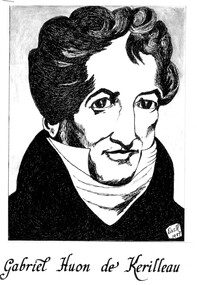
... In 1824 Hamilton Hume and William Hovell discovered the Hume River, later renamed to the Murray River and the rich land surrounding it. ...In 1824 Hamilton Hume and William Hovell discovered the Hume River, later renamed to the Murray River and the rich land surrounding it. ...Gabriel Louis Marie Huon de Kerilleau was born to a French aristocratic family in 1769. He escaped to England during the French Revolution and enlisted in the New South Wales Corps. He married in Parramatta to Louisa Emmanuel Le Sage. They had five children who took the name of Huon – Elizabeth, Paul, Jean Francois, Aime Augustus and Charles. Paul and Charles were to become the “founders’ of the Wodonga District. In 1824 Hamilton Hume and William Hovell discovered the Hume River, later renamed to the Murray River and the rich land surrounding it. By 1835, squatters began arriving at the Hume River. During the following year, Paul Huon arrived at the Hume (Murray) River, then "taking up" 40,000 acres on the south side of the river bank. To this property he gave the name WOODONGA RUN. Charles Huon, younger brother of Paul, was sent to manage the "Run" until Paul's son, William, became old enough to take over management. Charles Huon built a mud brick home on the eastern side of a rise south of the now Wodonga Creek. Thus was Charles the first permanent settler in the district. He was a great admirer of the English Lord Belvoir hence "Belvoir" was the name Charles Huon gave to the first permanent home on Woodonga Run. By the 1857, residents numbered fifty, and the Government had surveyed a township area, proclaiming it "Belvoir" in the new State of Victoria. However, the residents wanted their own choice of a name for the town. A battle lasting thirteen years followed over the name of the town until the residents won in 1874 when the Victorian Government dropped the name "Belvoir" and proclaimed the town's name as "Wodonga." A local government Shire formed two years later became the Shire of Wodonga. The Huon name features in the town today including Huon Hill, Huon Creek, Huon Street and the former township and railway siding at Huon. The name "Belvoir" is used today by organisations and locations in Wodonga including Belvoir Park formerly known as Huon’s Lagoon. On 3rd October 1986 the Wodonga community celebrated the 150th anniversary of the first settlement by Charles Huon of the district that was to become Wodonga. These drawings were completed by Desmond Martin as part of a booklet produced to record the event.Donated by Des Martin & Rosemary BoyesThree portraits of members of the Huon De Kerilleau Family, pioneers of Wodonga in Victoria. charles huon, huon de kerilleau, wodonga pioneers -
 Marysville & District Historical Society
Article (item) - Book Extract, Aboriginal History, Unknown
... hovell...molesworth...broadford...william...The extract also covers current (1991) status of Aboriginal affairs and European settlement of the area. kulin nation woiworung taungurong bunurong watherong jajowrong wurrundjeri-willam waring-ilam-balluk goulburn valley acheron valley upper goulburn district eildon-thornton eildon homestead o'rourke thornton assistant protector thomas yarra valley kilmore mount william jt gellibrand william buckley major mitchell port phillip murray river yorta yorta yowung-illam-balluk waring-illam-balluk ngurai-illam-wurrung kurnai nation protectorate system victoria george robinson chief protector willam thomas james dredge edward parker charles sievewright central board for the protection of aborigines presbyterian mission anglican mission moravian mission wonga munnarin beaning murrin murrin parugean baruppin koo-gurrin acheron river little river acheron run peter snodgrass stephen jones barak dividing range black spur watts river badger creek healesville coranderrk victorian christmas bush aboriginal and torres strait islander heritage protection act 1984 archaelological and aboriginal relics preservation act 1972 camp jungai rubicon warrawa college victorian archaeological survey hume and hovell molesworth broadford william hamilton alexandra mansfield avenel tallarook worrough john cotton trawool valley seymour pyalong gold mining central victoria strath creek reedy creek yea jamieson marysville jordan goldfields comet mine wandong melbourne-albury railway rabbit plague narbethong lord kitchener puckapunyal military camp 1944 decentralisation policy eildon weir hume freeway bypass timber industry australian paper manufacturers mill An extract from a book regarding a brief history of the Kulin nation of the North Central district of Victoria. ...An extract from a book regarding a brief history of the Kulin nation of the North Central district of Victoria.An extract from a book regarding a brief history of the Kulin nation of the North Central district of Victoria. This history covered is both prior to European history and post-European history. The extract also covers current (1991) status of Aboriginal affairs and European settlement of the area.kulin nation, woiworung, taungurong, bunurong, watherong, jajowrong, wurrundjeri-willam, waring-ilam-balluk, goulburn valley, acheron valley, upper goulburn district, eildon-thornton, eildon homestead, o'rourke, thornton, assistant protector thomas, yarra valley, kilmore, mount william, jt gellibrand, william buckley, major mitchell, port phillip, murray river, yorta yorta, yowung-illam-balluk, waring-illam-balluk, ngurai-illam-wurrung, kurnai nation, protectorate system, victoria, george robinson, chief protector, willam thomas, james dredge, edward parker, charles sievewright, central board for the protection of aborigines, presbyterian mission, anglican mission, moravian mission, wonga, munnarin, beaning, murrin murrin, parugean, baruppin, koo-gurrin, acheron river, little river, acheron run, peter snodgrass, stephen jones, barak, dividing range, black spur, watts river, badger creek, healesville, coranderrk, victorian christmas bush, aboriginal and torres strait islander heritage protection act 1984, archaelological and aboriginal relics preservation act 1972, camp jungai, rubicon, warrawa college, victorian archaeological survey, hume and hovell, molesworth, broadford, william hamilton, alexandra, mansfield, avenel, tallarook, worrough, john cotton, trawool valley, seymour, pyalong, gold mining, central victoria, strath creek, reedy creek, yea, jamieson, marysville, jordan goldfields, comet mine, wandong, melbourne-albury railway, rabbit plague, narbethong, lord kitchener, puckapunyal military camp, 1944 decentralisation policy, eildon weir, hume freeway bypass, timber industry, australian paper manufacturers mill -
 Seaworks Maritime Museum
List of Pennants
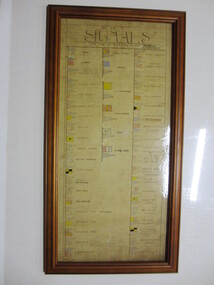
... BOYD/WILLIAM PITT/WILLIAM STRONG/CHAS DUCKETT/EDWARD NORTHCOTE/ H C PIGGOTT/BATMAN/FAWKNER/FRANCIS DUNCAN/WILLIAM ANDREWS/COMMISSIONER/PENGUIN (at Geelong)/ RED BIRD/GELLIBRAND/MOTOR BOAT NO 2 TATEGAMI/MOTOR BOAT NO 3/MOTOR BOAT NO 4/ENGINEER/HARBOR MASTER/LADY STANLEY/HOVELL/ W. ...BOYD/WILLIAM PITT/WILLIAM STRONG/CHAS DUCKETT/EDWARD NORTHCOTE/ H C PIGGOTT/BATMAN/FAWKNER/FRANCIS DUNCAN/WILLIAM ANDREWS/COMMISSIONER/PENGUIN (at Geelong)/ RED BIRD/GELLIBRAND/MOTOR BOAT NO 2 TATEGAMI/MOTOR BOAT NO 3/MOTOR BOAT NO 4/ENGINEER/HARBOR MASTER/LADY STANLEY/HOVELL/ W. ...Has recently been framed and laminatedFramed list of pennants signifying ships and signals hand drawn with coloured pencil in 1915 on paper. Later corrections made in 1933 in black penM. H. T./SIGNALS/FOR THE USE OF FLOATING PLANT OCT 1915 1915/Corrected Feb 1933/ HUME/ J. A. BOYD/WILLIAM PITT/WILLIAM STRONG/CHAS DUCKETT/EDWARD NORTHCOTE/ H C PIGGOTT/BATMAN/FAWKNER/FRANCIS DUNCAN/WILLIAM ANDREWS/COMMISSIONER/PENGUIN (at Geelong)/ RED BIRD/GELLIBRAND/MOTOR BOAT NO 2 TATEGAMI/MOTOR BOAT NO 3/MOTOR BOAT NO 4/ENGINEER/HARBOR MASTER/LADY STANLEY/HOVELL/ W. S. MOUNTAIN/W.M. COWPER/G.F.H./D. YORK SYME/ SUPER of DREDGING/ASSISTANT/HARBOR MASTER/SUPER of MACHINERY/ELECTRICIAN/INSP of DREDGING/INSP of MACHINERY/INSPECTOR WHARVES/(F WILLIAMS)/INSPECTOR DOCKING/& SHIPWRIGHTS/DIVERS WANTED/ACCIDENT SEND/MEDICAL ASSISTANCE/WAITING FOR/EMPTY BARGES/DREDGING STOPPED/WEATHER UNFAVOURABLE/TAKE AWAY/EMPTY BARGES/TUG WANTED/DERRICK PUNT/WANTED/TAKE DERRICK/PUNT AWAY/TAKE AWAY/COAL BARGE/BUCKETS FOULED/OBSTRUCTION SEND/DERRICK PUNT &/DIVERS/ DREDGING STOPPED/REPAIRING/DREDGING RESUMED/ B. Harris 16.8.15/ Drawing No 3415melbourne harbour trust (mba) -
 Williamstown Historical Society Inc
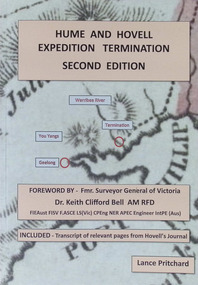
Book - Book - Hume and Hovell Expedition Termination, Second Edition, Pritchard, Lance, Hume and Hovell Expedition Termination, Second Edition by Lance Pritchard, 2023
... Hovell as the Arndell River". Softcover. 104 pages including illustrations and maps. Cover text in black. Text boxes in light orange. Marked up enlarged part copy of map published in 'Journey of Discovery to Port Phillip, New South Wales, in 1824-1825. Compiled and edited by William ...This book challenges the widely held belief that the Hume and Hovell expedition of 1824 - 1825 terminated at Corio Bay, Port Phillip, and argues it in fact terminated at the Werribee River.Softcover. 104 pages including illustrations and maps. Cover text in black. Text boxes in light orange. Marked up enlarged part copy of map published in 'Journey of Discovery to Port Phillip, New South Wales, in 1824-1825. Compiled and edited by William Bland. Published in 1837.non-fictionThis book challenges the widely held belief that the Hume and Hovell expedition of 1824 - 1825 terminated at Corio Bay, Port Phillip, and argues it in fact terminated at the Werribee River.hume & hovell, port phillip, maps, discovery -
Koorie Heritage Trust
Book, Bland, William, Journey of discovery to Port Phillip, 1985
... Hovell...W. H. (William Hilton)...Hovell W. H. (William Hilton) 1786-1875. | Hume Hamilton 1797-1873. | Victoria -- Discovery and exploration. | New South Wales -- Discovery and exploration. ...Prehistory, early culture contact and history -- Early European contact -- Exploration and expeditions -- Colonisation -- 1788-1850.137 p. : 2 plates. ; 21 cm.Prehistory, early culture contact and history -- Early European contact -- Exploration and expeditions -- Colonisation -- 1788-1850.hovell, w. h. (william hilton), 1786-1875. | hume, hamilton, 1797-1873. | victoria -- discovery and exploration. | new south wales -- discovery and exploration. -
Koorie Heritage Trust
Book, Bonwick, James, Discovery and Settlement of Port Phillip; being a history of the country now called Victoria, up to the arrival of Mr. Superintendent Latrobe, in October, 1839 by James Bonwick; revised, at request, by W. Westgarth, 1856
... Contents: Discovery of Port Phillip; First Settlement of Port Phillip; Abandonment of the Colony of Port Phillip; Further discoveries in the Country; Hume and Hovell's Overland Trip; Settlement of Western Port; Captain Sturt on the Murray; Major Mitchell's Australia Felix; The Successful Settlement of Port Phillip; Batman and Gellibrand's Application; Settlement of Portland Bay; Life of Batman; Batman's visit to Port Phillip; Fawkner's Yarra Settlement; Mr. Wedge's Narrative; William ...Contents: Discovery of Port Phillip; First Settlement of Port Phillip; Abandonment of the Colony of Port Phillip; Further discoveries in the Country; Hume and Hovell's Overland Trip; Settlement of Western Port; Captain Sturt on the Murray; Major Mitchell's Australia Felix; The Successful Settlement of Port Phillip; Batman and Gellibrand's Application; Settlement of Portland Bay; Life of Batman; Batman's visit to Port Phillip; Fawkner's Yarra Settlement; Mr. Wedge's Narrative; William Buckley; The Association and Government; Progress of the Settlement; Flocks and Flock-masters; Government; Stewart, Simpson, Lonsdale, Latrobe; The Land and Land Sales; Law, Police and Port; Commerce, Trade and Shipping; Melbourne and Geelong; Hotels and Licences; Amusements; Rise and Progress of the Port Phillip Press; Religion in Port Phillip.142 p. : 1 fold-out map. ; 21 cm.Contents: Discovery of Port Phillip; First Settlement of Port Phillip; Abandonment of the Colony of Port Phillip; Further discoveries in the Country; Hume and Hovell's Overland Trip; Settlement of Western Port; Captain Sturt on the Murray; Major Mitchell's Australia Felix; The Successful Settlement of Port Phillip; Batman and Gellibrand's Application; Settlement of Portland Bay; Life of Batman; Batman's visit to Port Phillip; Fawkner's Yarra Settlement; Mr. Wedge's Narrative; William Buckley; The Association and Government; Progress of the Settlement; Flocks and Flock-masters; Government; Stewart, Simpson, Lonsdale, Latrobe; The Land and Land Sales; Law, Police and Port; Commerce, Trade and Shipping; Melbourne and Geelong; Hotels and Licences; Amusements; Rise and Progress of the Port Phillip Press; Religion in Port Phillip.victoria -- history -- to 1834. | victoria -- history -- 1834-1851. | melbourne (vic.) -- history -- to 1834. | melbourne (vic.) -- history -- 1834-1851. -
Koorie Heritage Trust
Booklet, Boys, Robert Douglass, Australian History : Summary of historical events from 1768
... Australia-History-Summary 1768-1834 Australia-Discovery and exploration-summary Port Phillip-Settlement p.17-35 Contents:James Cook; Arthur Phillip; John Pascoe Fawkner; The Sydney Cove; George Bass; Tobias Furneaux; John Hunter; Matthew Flinders and George Bass; John Batman; James Grant; John Murray; Discovery of Port Phillip Bay; Proposed Settlement at Port Phillip; Matthew Flinders; Nicolas Baudin and Emmanuel Hamelin; Charles Robbins; Charles Grimes; The Settlement at Sullivan Bay, Sorrento; General Orders; Garrison Orders; Some Events at Sullivan Bay; Western Port; Edward Henty; Sealing; The Geordy; John Oxley; Hamilton Hume and William Hilton Hovell; The Settlement at Western Port; Port Fairy and Portland Bay; Charles Sturt; The Lively; Portland Bay and the Hentys; 36 p. ; footnotes; 24 cm. ...Contents: James Cook; Arthur Phillip; John Pascoe Fawkner; The Sydney Cove; George Bass; Tobias Furneaux; John Hunter; Matthew Flinders and George Bass; John Batman; James Grant; John Murray; Discovery of Port Phillip Bay; Proposed Settlement at Port Phillip; Matthew Flinders; Nicolas Baudin and Emmanuel Hamelin; Charles Robbins; Charles Grimes; The Settlement at Sullivan Bay, Sorrento; General Orders; Garrison Orders; Some Events at Sullivan Bay; Western Port; Edward Henty; Sealing; The Geordy; John Oxley; Hamilton Hume and William Hilton Hovell; The Settlement at Western Port; Port Fairy and Portland Bay; Charles Sturt; The Lively; Portland Bay and the Hentys;36 p. ; footnotes; 24 cm.Contents: James Cook; Arthur Phillip; John Pascoe Fawkner; The Sydney Cove; George Bass; Tobias Furneaux; John Hunter; Matthew Flinders and George Bass; John Batman; James Grant; John Murray; Discovery of Port Phillip Bay; Proposed Settlement at Port Phillip; Matthew Flinders; Nicolas Baudin and Emmanuel Hamelin; Charles Robbins; Charles Grimes; The Settlement at Sullivan Bay, Sorrento; General Orders; Garrison Orders; Some Events at Sullivan Bay; Western Port; Edward Henty; Sealing; The Geordy; John Oxley; Hamilton Hume and William Hilton Hovell; The Settlement at Western Port; Port Fairy and Portland Bay; Charles Sturt; The Lively; Portland Bay and the Hentys; australia-history-summary 1768-1834, australia-discovery and exploration-summary, port phillip-settlement p.17-35 -
 Wodonga & District Historical Society Inc
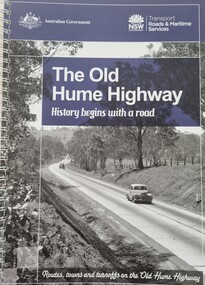
Book - The Old Hume Highway - History begins with a Road, 2014
... Old Hume Highway hume highway Travel Guide Hume Highway \ The Hume Highway was officially named in 1928, when both the New South Wales and Victorian governments agreed to give the unified inland route between Sydney and Melbourne the name, honouring explorer Hamilton Hume who, with William Hovell, first found the overland path in 1824. ...The Hume Highway was officially named in 1928, when both the New South Wales and Victorian governments agreed to give the unified inland route between Sydney and Melbourne the name, honouring explorer Hamilton Hume who, with William Hovell, first found the overland path in 1824. Much of the original highway followed their overland route wherever the landscape allowed. The road connected many small communities and rural properties, although in many parts was narrow and unsurfaced. Over the following years alterations and some deviations occurred with changing transport needs and heavier traffic loads. One of these deviations was completed in 1933 at Table Top north of Albury between Ettamogah and Mullengandra due to the construction of the Hume Weir which flooded the existing highway. Gradually sections of the road were converted to a dual carriageway. In 1961 the first modern freeway-standard, four-lane section was completed in Victoria at Craigieburn. The Hume Highway was also rerouted in Albury to avoid the town centre. Many major bypasses and duplications in New South Wales were completed throughout the 1980s and 1990s. In 1994 the last section of the Hume Highway in Victoria was duplicated with the completion of the Wangaratta bypass. The Albury-Wodonga bypass was opened in 2007 and in 2013 the final section, the Holbrook Bypass in NSW, was opened to traffic on August 7, completing the full Sydney-Melbourne dual carriageway link. In the course of this gigantic engineering achievement, many small, historic towns throughout Victoria and New South Wales were bypassed and often forgotten by passing commuters in a rush to reach their destination. This publication includes maps and information about the sites and landmarks in these towns. It encourages travellers to venture of the modern highway and rediscover the Old Hume Highway and the stories it holds about out past.A spiral bound volume of 122 pages including maps, photographs and illustrations prepared as a travel guide to the Old Hume Highway. It includes a Foreword by Peter FitzSimons.The Hume Highway was officially named in 1928, when both the New South Wales and Victorian governments agreed to give the unified inland route between Sydney and Melbourne the name, honouring explorer Hamilton Hume who, with William Hovell, first found the overland path in 1824. Much of the original highway followed their overland route wherever the landscape allowed. The road connected many small communities and rural properties, although in many parts was narrow and unsurfaced. Over the following years alterations and some deviations occurred with changing transport needs and heavier traffic loads. One of these deviations was completed in 1933 at Table Top north of Albury between Ettamogah and Mullengandra due to the construction of the Hume Weir which flooded the existing highway. Gradually sections of the road were converted to a dual carriageway. In 1961 the first modern freeway-standard, four-lane section was completed in Victoria at Craigieburn. The Hume Highway was also rerouted in Albury to avoid the town centre. Many major bypasses and duplications in New South Wales were completed throughout the 1980s and 1990s. In 1994 the last section of the Hume Highway in Victoria was duplicated with the completion of the Wangaratta bypass. The Albury-Wodonga bypass was opened in 2007 and in 2013 the final section, the Holbrook Bypass in NSW, was opened to traffic on August 7, completing the full Sydney-Melbourne dual carriageway link. In the course of this gigantic engineering achievement, many small, historic towns throughout Victoria and New South Wales were bypassed and often forgotten by passing commuters in a rush to reach their destination. This publication includes maps and information about the sites and landmarks in these towns. It encourages travellers to venture of the modern highway and rediscover the Old Hume Highway and the stories it holds about out past.old hume highway, hume highway, travel guide hume highway, \ -
 Wodonga & District Historical Society Inc
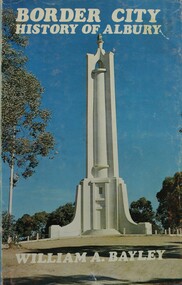
Book - Border City: History of Albury, William A. Bayley, 1976
... Hovell in the area in 1824. Border City: History of Albury Book Border City: History of Albury William A. ...A history of Albury from first European settlement. This is a revised edition of a book originally published in 1954. It traces the history of Albury from the arrival of explorers Hume and Hovell in the area in 1824.non-fictionA history of Albury from first European settlement. This is a revised edition of a book originally published in 1954. It traces the history of Albury from the arrival of explorers Hume and Hovell in the area in 1824.albury history, new south wales. albury, albury 1824 - 1976 -
 Wodonga & District Historical Society Inc
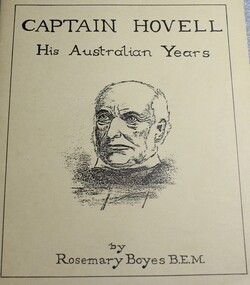
Book - Captain Hovell, His Australian Years, Rosemary Boyes, 1986
... hovell...w. h. (william hilton)...A biography of explorer, Captain William Hilton Hovell and his life and discoveries in Australia from 1813 until his death in Sydney on 9 November 1875. ...A biography of explorer, Captain William Hilton Hovell and his life and discoveries in Australia from 1813 until his death in Sydney on 9 November 1875.non-fictionA biography of explorer, Captain William Hilton Hovell and his life and discoveries in Australia from 1813 until his death in Sydney on 9 November 1875.hovell, w. h. (william hilton), 1786-1875. | explorers -- australia -- biography. | australia -- discovery and exploration. -
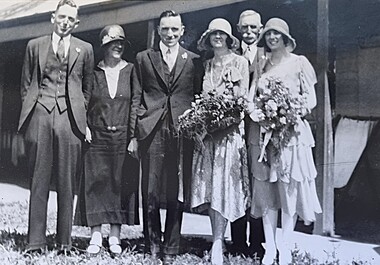 Wodonga & District Historical Society Inc
Clothing - Wedding Dress of Catherine Waite, 1929
... After the journey of Hume and Hovell to Victoria, John Waite and the Hore family sought pastoral land further south. John Hore Jnr and his brothers Andrew, William, Thomas and Charles all settled in the Upper Murray. ...After the journey of Hume and Hovell to Victoria, John Waite and the Hore family sought pastoral land further south. John Hore Jnr and his brothers Andrew, William, Thomas and Charles all settled in the Upper Murray. ...Catherine Waite married Hugh Hyndman in Albury in 1929 at the age of 23 years. She was a great granddaughter of John Waite and Mary Ann Robinson who settled in “Bungil” and became pioneers of the Upper Murray region of Victoria. John Waite was born in 1771 at Gravesend, Kent, England. He arrived in Sydney on 7th May 1804 from Sevenoaks, Kent, England on the convict ship "Coromandel" having been convicted of stealing two sheep. He was assigned to Dr Charles Throsby, surgeon, land holder and inland explorer. John Waite was granted an absolute pardon in 1818. John married Mary Robinson on 14th April 1812 at Windsor, NSW. Mary was the daughter of a member of the NSW Corps and an emancipated convict. John and Mary went on to have 14 children. The family of John Waite formed strong connections with the Hore family which also became prominent in the Upper Murray, Albury and Wodonga. John Hore (Hoare) Snr. of Wexford County, Ireland, was a volunteer in the English Navy for four years before being sentenced to death for mutiny. On appeal this was commuted to seven years’ transportation to Australia. In Australia several marriages occurred between the two families. After the journey of Hume and Hovell to Victoria, John Waite and the Hore family sought pastoral land further south. John Hore Jnr and his brothers Andrew, William, Thomas and Charles all settled in the Upper Murray. John and Elizabeth's son John Hore Jnr married Elizabeth Waite, a daughter of John and Mary Waite. This forged a family connection that would have an influence on the Upper Murray for generations to come. John Waite formed the Bungil run for his son-in-law John Hore, acquiring land through the Robertson Land Act of 1861 which enabled land owners to use relatives as "dummies" to help acquire land. When the “dummy” defaulted on the rent John Hore and other landowners were able to buy the land at reduced prices at auction. In this way the Hore family and their relatives established a large pastoral empire in the Upper Murray, including Bungil, Wagra and Cumberoona. Catherine Waite was born in Albury, NSW in 1905, great granddaughter of John Waite Snr and Mary Robinson. In 1929 she married Hugh Hyndman who before migrating to Australia from Northern Ireland had worked on the construction of the Titanic at the dockyards in Belfast. This dress is significant because it was worn by a descendant of two important pioneer families of the Upper Murray Region of Victoria.A wedding dress from the late 1920s made from peach coloured silk and lace. The bodice and sleeves feature a lace overlay which is repeated from hip length. It is matched with cloche style hat made from matching lace and decorated with ribbon, flowers and a bow.1920s wedding dress, waite family, hore family
