
Showing 474 items matching "williams street"
-
 Greensborough Historical Society
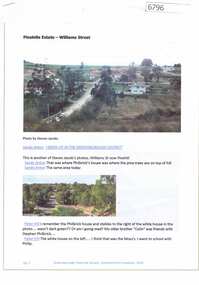
Article and Photograph, Pinehills Estate - Williams Street Greensborough, 2016_
... Pinehills Estate - Williams Street Greensborough...Pinehills Estate - Williams Street Greensborough Article and Photograph ...Photographs and captions relating to the Pinehills Estate, Greensborough. This text and photographs were copied from a Facebook site. Members are people who lived in the Greensborough area and share their reminiscences of the area with others. The site is administered by a GHS member but is not officially affiliated with the Society. Any information is the opinion of the contributor. Photographs and text sourced from social media.pinehills estate, pinehills drive greensborough -
 Inverloch Historical Society
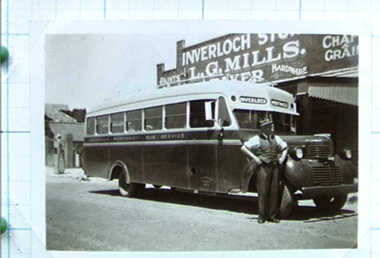
000526 Photograph - Inverloch-Wonthaggi Bus, driver Arthur (Taffy) Thomas @ Mills Store Williams Street Inverloch - S Power
... 000526 Photograph - Inverloch-Wonthaggi Bus, driver Arthur (Taffy) Thomas @ Mills Store Williams Street Inverloch - S Power...000526 Photograph - Inverloch-Wonthaggi Bus, driver Arthur (Taffy) Thomas @ Mills Store Williams Street Inverloch - S Power ... -
 Melbourne Tram Museum
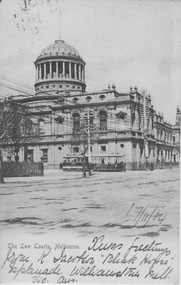
Postcard - Law Courts, 1904
... ...Williams Street...Postcard photograph of Law Courts at the corner of Williams and Lonsdale Streets with a West Melbourne bound cable tram about to cross Williams Street. ...Postcard photograph of Law Courts at the corner of Williams and Lonsdale Streets with a West Melbourne bound cable tram about to cross Williams Street. ...Postcard photograph of Law Courts at the corner of Williams and Lonsdale Streets with a West Melbourne bound cable tram about to cross Williams Street. The streets appear deserted.Yields information about the Melbourne Law CourtsBlack and white postcard with title and personal message on front and addressee and stamp on rear.On front: 'Our Law Courts, Melbourne' and '17/11/04, Xmas Greetings from K Jacobson "Bleak House" Esplanade Williamstown Melb Vic Aus'. On rear: 'Miss A Huxley "Minister" House Haiesleau Sussex England' law courts, lonsdale street, williams street, cable tram -
 Greensborough Historical Society
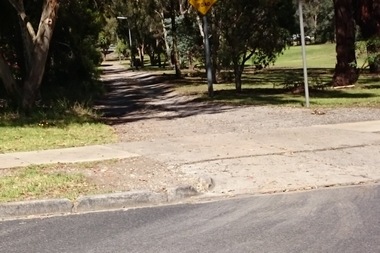
Photograph - Digital Image, Marilyn Smith, Plantation Lane Briar Hill, 16/01/2018
... ...williams street greensborough...Plantation Lane runs from Williams Street Greensborough, near Sherbourne Road, through the E J Andrew Reserve...Plantation Lane runs from Williams Street Greensborough, near Sherbourne Road, through the E J Andrew Reserve e j andrew reserve briar hill plantation lane williams street greensborough Digital colour photograph Plantation Lane Briar Hill Photograph - Digital Image Marilyn Smith ...Plantation Lane runs from Williams Street Greensborough, near Sherbourne Road, through the E J Andrew ReserveDigital colour photographe j andrew reserve, briar hill, plantation lane, williams street greensborough -
 Bendigo Historical Society Inc.
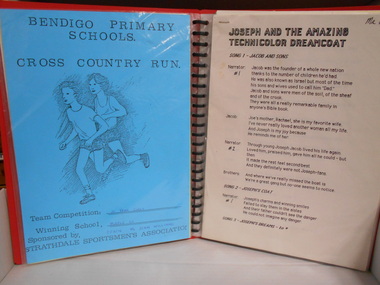
Document - JOHN WILLIAMS COLLECTION: MAPLE STREET PRIMARY SCHOOL, 1990s
... JOHN WILLIAMS COLLECTION: MAPLE STREET PRIMARY SCHOOL...Red folder containing plays produced by John Williams at Maple Street primary school. Plays are: The wallaby track, Joseph and the amazing techinocolor dreamcot, the pirate of the Penzance. ...BENDIGO Education maple street primary school Red folder containing plays produced by John Williams at Maple Street primary school. ...Red folder containing plays produced by John Williams at Maple Street primary school. Plays are: The wallaby track, Joseph and the amazing techinocolor dreamcot, the pirate of the Penzance. Also photos of the various productions and letters from the school thanking Johnbendigo, education, maple street primary school -
 The Beechworth Burke Museum
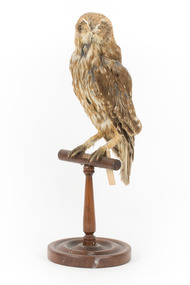
Animal specimen - Morepork, Trustees of the Australian Museum, 1860-1880
... Williams Street , Sydney, NSW, Australia ...The Morepork is a small brown and white spotted owl found in New Zealand, Tasmania and Norfolk Island. It is known by around twenty different names which are all onomatopoeic which emulate the birds distinctive two-pitched call. They are mostly nocturnal and carnivorous (eating insects and small vertebrates). They reside in habitats with trees, they sleep in roosts and hunt mainly in the evenings and early morning. Females are slightly bigger than males. This species attains full plumage in its third or fourth year. They can turn their heads 270 degrees." In Māori tradition the morepork was seen as a watchful guardian. It belonged to the spirit world as it is a bird of the night. Although the more-pork or ruru call was thought to be a good sign, the high pitched, piercing, ‘yelp’ call was thought to be an ominous forewarning of bad news or events." (NZ Department of Conservation). This specimen is part of a collection of almost 200 animal specimens that were originally acquired as skins from various institutions across Australia, including the Australian Museum in Sydney and the National Museum of Victoria (known as Museums Victoria since 1983), as well as individuals such as amateur anthropologist Reynell Eveleigh Johns between 1860-1880. These skins were then mounted by members of the Burke Museum Committee and put-on display in the formal space of the Museum’s original exhibition hall where they continue to be on display. This display of taxidermy mounts initially served to instruct visitors to the Burke Museum of the natural world around them, today it serves as an insight into the collecting habits of the 19th century.This specimen is part of a significant and rare taxidermy mount collection in the Burke Museum. This collection is scientifically and culturally important for reminding us of how science continues to shape our understanding of the modern world. They demonstrate a capacity to hold evidence of how Australia’s fauna history existed in the past and are potentially important for future environmental research. This collection continues to be on display in the Museum and has become a key part to interpreting the collecting habits of the 19th century.This Morepork (also known as the Masked Owl) is covered in brown and white plumage on its head and body. The white feathers delineate its round yellow eyes. Its belly and back are brown and white with the white feathering appearing spotted. This Morepork specimen sits on a wooden perch with his head turned to the left. A swing tag is attached to its left leg.Swing tag: 10 / Masked Owl / See Catalogue, page 3 /taxidermy mount, taxidermy, animalia, burke museum, beechworth, australian museum, skin, reynell eveleigh johns, bird, ruru, spotted owl, tasmanian spotted owl, morepork, mopoke, new zealand owls, new zealand birds, tasmanian owls, tasmanian birds, norfolk island owls, norfolk island birds -
 Federation University Historical Collection
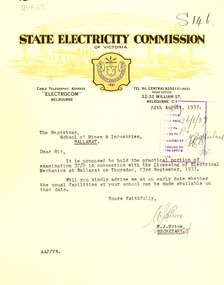
Correspondence, State Electricity Commission of Victoria to Ballarat School of Mines, 1937, 1937
... 22-32 Williams Street, Melbourne, Victoria, Australia ...The Ballarat School of Mines trained electricians.Correspondence on State Electricity Commission of Victoria letterhead between the State Electricity Commission of Victoria to Ballarat School of Mines in 1937. .1) Dated 16/01/1937 this item relates to the licensing of Electrical Mechanics Regulations 1935 and is signed by W.J. Price .2) Dated 24/08/1937 this item relates to the practical portion of examination 37/2 in connection with Licensing of Electrical Mechanics at Ballarat on 23 September 1937 and is signed by W.J. Price .3) Dates 18 October 1937 this three page foolscap letter relates to radio interference suppressors, and the increasing us of earth leakage circuit breakers for the protection of installations, and is signed by D. Dunhamstate electricity commission of victoria, ballarat school of mines, electricity, trades, electricians, w.j. price, d. dunham, sec -
 City of Moorabbin Historical Society (Operating the Box Cottage Museum)
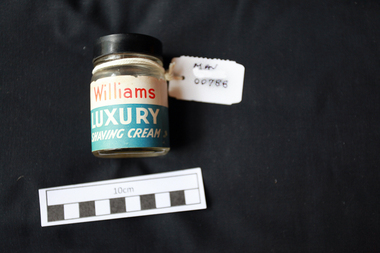
Containers,Shaving cream, J.B.Williams Co, mid 20thC
... In 1847, Williams moved his enterprise to a rented gristmill on William Street in Glastonbury, Connecticut, and his brother, William S. ...Williams Street, Glastonbury, Connecticut, United States of America...In 1847, Williams moved his enterprise to a rented gristmill on William Street in Glastonbury, Connecticut, and his brother, William S. ...Shaving cream is a cream applied to the face, or wherever else hair grows, to facilitate shaving. The use of cream achieves three effects: lubricates the cutting process; swells keratin; and de-sensitizes skin. Shaving creams commonly consist of an emulsion of oils, soaps or surfactants, and water. James Baker Williams was born in 1818 in Lebanon, Connecticut USA and, in 1834, began employment with F. and H.C. Woodbridge, a general store located in Manchester. Williams was offered half-interest in the store in 1838, after which its name was changed to Keeny and Williams. Two years later, Williams sold his interest in the store, but retained his share in the drug department. He began experimenting with various soaps to determine which were best for shaving, and eventually developed Williams' Genuine Yankee Soap, the first manufactured soap for use in shaving mugs. In 1847, Williams moved his enterprise to a rented gristmill on William Street in Glastonbury, Connecticut, and his brother, William S. Williams, joined the firm around 1848, when the firm's name was changed to the James B. Williams and Company. William's shaving soaps were sold throughout the United States and Canada and James Williams supervised many aspects of the company until shortly before his death in 1907 at the age of eighty-eight. The Williams family continued to manage the company until it was sold in 1957. By the early 1900s, the company was known throughout the world. In addition to its line of shaving creams, the firm produced talcum powder, toilet soaps, and other toilet preparations. The original 1847 factory is still standing in Glastonbury and, in 1979, was converted into a condominium complex. I In 1983 it was placed on the National Register of Historic Places. 1927 - 1990 Salmond and Spraggon (Australia) Limited , Sydney , New South Wales, was registered as a company on 10 June 1927 following the liquidation of Salmond and Spraggon (Australia) Limited known as the Old Company. The company distributed household cleaning and mineral, metal and chemical wholesaling, pharmaceutical wholesaling throughout Australia on behalf of manufacturers. In 1990 the company was taken over by Alberto Culver, a manufacturer of hair and skin products. A clear glass jar with a screw lid containing 'Williams Shaving Cream' Front Label : J.B WILLIAMS / LUXURY / SHAVING CREAM Back Label : The contents of this jar are guaranteed to be / The J.B.WILLIAMS Luxury Shaving Cream Jar has been changed to meet the Wartime conditions but / the cream is of the same high quality / made in Australia for / J.B. WILLIAMS COMPANY / Glastonbury, Conn. U.S.A. / Vendors / SALMOND & SPRAGGON (AUST.) PTY.LTD. / All Statesshaving equipment, razors, safety razors, cutthroat razors, soap, world war 11 1939-1945, moorabbin, bentleigh, cheltenham, early settlers, shaving cream, williams j.b. company ltd, connecticut usa, glastonbury connecticut usa, salmond & spraggon pty ltd, sydney, new south wales, toiletries, shaving soap, -
 City of Moorabbin Historical Society (Operating the Box Cottage Museum)
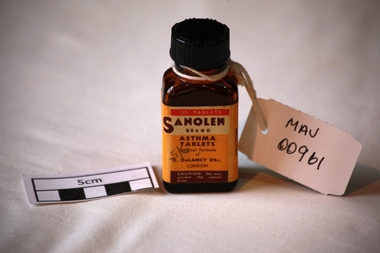
Manufactured Glass, bottle 'Sanolen' asthma tablets, mid 20thC
... Williams Street, Melbourne, Victoria, Australia ...A medication for the treatment of Asthma made by J.L Brown Chemist Pty Ltd Melbourne c 1950A brown glass bottle with a plastic screw lid for 'Sanolin' asthma tablets Front: 25 TABLETS/ SANOLEN / BRAND / ASTHMA / TABLETS/ Original Formula / of / D. DeLancy DSc. / LONDON / Caution: Do not / exceed the stated / dose. Back: SANOLEN / BRAND / ASTHMA TABLETS / give instant relief and positive / relief from Asthma, Hay / Fever, …. etc. / J.L. BROWN & Co. / 123 Williams St., Melbourne. Left Side: INGREDIENTS……….. “POISON”…… / Reg. Vic. No. 388 . Right Side : DIRECTIONS pharmacy, medicines, asthma, respiratory diseases, early settlers, market gardeners, moorabbin, bentleigh, cheltenham, manufactured glass, bottles, j l brown & co ltd melbourne -
 The Beechworth Burke Museum
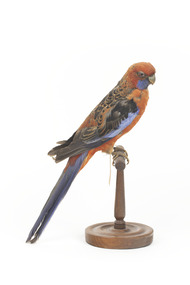
Animal specimen - Crimson Rosella, Trustees of the Australian Museum, 1860-1880
... Williams Street , Sydney , NSW ...This specimen is part of a collection of almost 200 animal specimens that were originally acquired as skins from various institutions across Australia, including the Australian Museum in Sydney and the National Museum of Victoria (known as Museums Victoria since 1983), as well as individuals such as amateur anthropologist Reynell Eveleigh Johns between 1860-1880. These skins were then mounted by members of the Burke Museum Committee and put-on display in the formal space of the Museum’s original exhibition hall where they continue to be on display. This display of taxidermy mounts initially served to instruct visitors to the Burke Museum of the natural world around them, today it serves as an insight into the collecting habits of the 19th century. The Crimson Rosella is relatively easy to see as it forages on the ground or among the leaves of eucalypts, with its spectacular combination of deep-crimson, royal-blue and black plumage. However, not all Crimson Rosellas look the same. Along the Murray River, Crimson Rosellas aren’t crimson at all — they are yellow, black and blue, with the yellow feathering replacing the crimson plumage. In southern South Australia they differ again, being roughly intermediate between crimson and yellow, with varying amounts of red and yellow in their plumage. Research featured in the 'State of Australia's Birds 2015' headline and regional reports suggest that the Crimson Rosella may be declining in the East Coast. There are several populations of the Crimson Rosella. Red (crimson) birds occur in northern Queensland, in southern Queensland to south-eastern South Australia and on Kangaroo Island. Orange birds are restricted to the Flinders Ranges region of South Australia, while yellow ones are found along the Murray, Murrumbidgee and neighbouring rivers (where yellow birds meet red birds they hybridise, producing orange offspring). Red birds have been introduced to Norfolk Island and New Zealand.This specimen is part of a significant and rare taxidermy mount collection in the Burke Museum. This collection is scientifically and culturally important for reminding us of how science continues to shape our understanding of the modern world. They demonstrate a capacity to hold evidence of how Australia’s fauna history existed in the past and are potentially important for future environmental research. This collection continues to be on display in the Museum and has become a key part to interpreting the collecting habits of the 19th century.There are several colour forms of the Crimson Rosella. The form it is named for has mostly crimson (red) plumage and bright blue cheeks. The feathers of the back and wing coverts are black broadly edged with red. The flight feathers of the wings have broad blue edges and the tail is blue above and pale blue below and on the outer feathers. This particular specimen has lost some feathers in its plumage and its colour is not as bright as that of a live specimen.Label: 77a / Pennant's Parakeet / See catalogue, page 22taxidermy, crimson rosella, bird, australian bird, rosella, crimson -
 The Beechworth Burke Museum
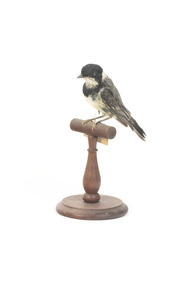
Animal specimen - Golden Whistler, Trustees of the Australian Museum, 1860-1880
... williams street, sydney, nsw, australia ...The Golden Whistler is native to coastal areas of Australia, from Queensland around to Southern Western Australia, including Tasmania. It usually lives in dense forested areas. The males have bright yellow plumage, whilst the females have only pale yellow plumage. The males and females work together to build the nest and raise chicks. They eat spiders and insects. The taxidermy specimen is not a good example of a Golden Whistler. Its feathers are very faded and ruffled. There looks to be some damage on the throat of the specimen. The Golden Whistler has usually vibrant colours, whilst this one is almost white. The colour markings on the bird indicate that it is male; the specimen should be a bright yellow. This specimen is part of a collection of almost 200 animal specimens that were originally acquired as skins from various institutions across Australia, including the Australian Museum in Sydney and the National Museum of Victoria (known as Museums Victoria since 1983), as well as individuals such as amateur anthropologist Reynell Eveleigh Johns between 1860-1880. These skins were then mounted by members of the Burke Museum Committee and put-on display in the formal space of the Museum’s original exhibition hall where they continue to be on display. This display of taxidermy mounts initially served to instruct visitors to the Burke Museum of the natural world around them, today it serves as an insight into the collecting habits of the 19th century.This specimen is part of a significant and rare taxidermy mount collection in the Burke Museum. This collection is scientifically and culturally important for reminding us of how science continues to shape our understanding of the modern world. They demonstrate a capacity to hold evidence of how Australia’s fauna history existed in the past and are potentially important for future environmental research. This collection continues to be on display in the Museum and has become a key part to interpreting the collecting habits of the 19th century. This male Golden Whistler has a black head and stripe on chest, brown-grey wings and tail and white patches on throat and neck. The belly is a white-yellow, though significantly faded. Its feathers are quite ruffled and there is sign of damage to the throat. The specimen stands on a wooden stand and has an identification tag attached to its leg. Label: 24a / white throated Thickhead / See catalogue, page 11taxidermy mount, taxidermy, golden whistler, beechworth, burke museum, australian bird -
 The Beechworth Burke Museum
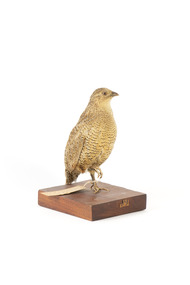
Animal specimen - Brown Quail, Trustees of the Australian Museum, 1860-80
... Williams Street , Sydney , NSW ...This specimen is part of a collection of almost 200 animal specimens that were originally acquired as skins from various institutions across Australia, including the Australian Museum in Sydney and the National Museum of Victoria (known as Museums Victoria since 1983), as well as individuals such as amateur anthropologist Reynell Eveleigh Johns between 1860-1880. These skins were then mounted by members of the Burke Museum Committee and put-on display in the formal space of the Museum’s original exhibition hall where they continue to be on display. This display of taxidermy mounts initially served to instruct visitors to the Burke Museum of the natural world around them, today it serves as an insight into the collecting habits of the 19th century. Like many species of quail, the Brown Quail is often difficult to see, as it inhabits rank, overgrown grassy areas, often in damp, low-lying patches beside wetlands. They are difficult to flush from this cover, preferring to squat among the grass or run quickly off through the vegetation rather than fly off. As is the case with many species that inhabit dense habitats, the Brown Quail may be heard more often than it is seen, with its characteristically mournful two-note call whistle often heard at dawn and dusk. The Brown Quail is found across northern and eastern Australia, from the Kimberley region in Western Australia to Victoria and Tasmania, as well as in south-western Australia. It is also found in Papua New Guinea and Indonesia, and has been introduced to New Zealand. The Brown Quail feeds in the early morning or evening, on the ground, mainly on seeds and green shoots, but also on insects. In some area, quails will readily cross roads and may be seen feeding along roadsides.This specimen is part of a significant and rare taxidermy mount collection in the Burke Museum. This collection is scientifically and culturally important for reminding us of how science continues to shape our understanding of the modern world. They demonstrate a capacity to hold evidence of how Australia’s fauna history existed in the past and are potentially important for future environmental research. This collection continues to be on display in the Museum and has become a key part to interpreting the collecting habits of the 19th century. The Brown Quail is a small, plump ground-dwelling bird. It is variable in colour, ranging from red brown to grey brown with fine white streaks and black barring above, and chestnut brown below. The eye is red to yellow, the bill black and the legs and feet orange-yellow. In Tasmania, this species is called the Swamp Quail and tends to be larger and darker than mainland birds, with a pale yellow eye. Female Brown Quails are larger and may be more heavily marked with black and paler below than males. Young birds are like adult females, with less distinct markings and a dark brown eye.Label: 33. / Swamp Quail / See Catalogue, page 30 / Mount: 09/taxidermy, quail, brown quail, taxidermy bird, burke museum taxidermy -
 4th/19th Prince of Wales's Light Horse Regiment Unit History Room
Photograph, Darge, 1914/15 ?
... 360 Williams Street, Melbourne, Victoria, Australia ...A black & white photo mounted on card, showing 14 Light Horsemen. There is a line of 6 at the back with rifles at the slope . Five in front are on one knee with rifle butts resting on the ground. A sergeant is standing on their right and a bugler and officer standing to their leftDarge. Phone F4497 360 Williams St Melb. And, on the back: Mrs Hallett 8 Anne Cr Nth Brightonphoto, light horsemen, melbourne -
 Greensborough Historical Society
Article and Photographs, The Ashley Family, 2019_
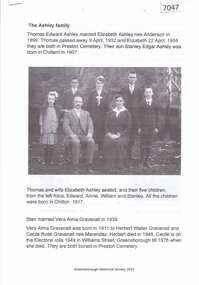
... ...williams street greensborough...They lived in Williams Street Greensborough, and Stan had a men's wear and drapery store in Main Street Greensborough. ...They lived in Williams Street Greensborough, and Stan had a men's wear and drapery store in Main Street Greensborough. ...Records of members of the Ashley family. Stanley Edgar Ashley married Vera Ama Gravenall in 1939. They lived in Williams Street Greensborough, and Stan had a men's wear and drapery store in Main Street Greensborough. He was elected to Council for the North Ward of the City of Heidelberg in August 1954, and died in December 2002. Vera died in August 2007, and their son Ralph in September 2009.5 pages black and white text and photographsashley family, williams street greensborough, stan ashleys menswear, main street greensborough -
 Bendigo Historical Society Inc.
Photograph - JOHN WILLIAMS COLLECTION: MAPLE STREET PRIMARY SCHOOL GOLDEN SQUARE, 1992
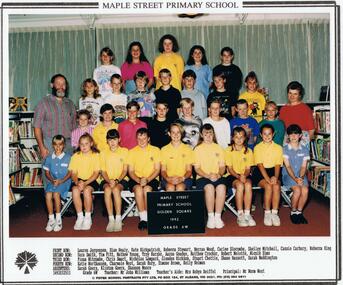
... JOHN WILLIAMS COLLECTION: MAPLE STREET PRIMARY SCHOOL GOLDEN SQUARE...Maple Street Primary School, Golden Square, Grade 6w, 1992 Photograph JOHN WILLIAMS COLLECTION: MAPLE STREET PRIMARY SCHOOL GOLDEN SQUARE ...Photograph. Maple Street Primary School, Golden Square, Grade 6w, 1992photograph, person, maple street primary school. -
 Bendigo Historical Society Inc.
Photograph - JOHN WILLIAMS COLLECTION: MAPLE STREET PRIMARY SCHOOL, 1991
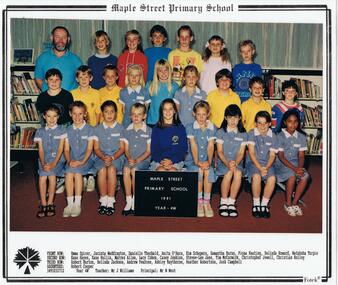
... JOHN WILLIAMS COLLECTION: MAPLE STREET PRIMARY SCHOOL...Maple Street Primary School, Golden Square. Year 1991. Grade 4w. Photograph JOHN WILLIAMS COLLECTION: MAPLE STREET PRIMARY SCHOOL ...Photograph. Maple Street Primary School, Golden Square. Year 1991. Grade 4w.photograph, person, maple street primary school. -
 Bendigo Historical Society Inc.
Photograph - JOHN WILLIAMS COLLECTION: MAPLE STREET P.S. GOLDEN SQUARE, 1989
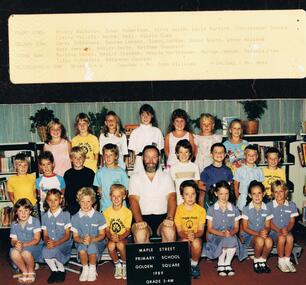
... JOHN WILLIAMS COLLECTION: MAPLE STREET P.S. GOLDEN SQUARE...Maple Street Primary School, Golden Square. 1989. Grade 3-4w. Photograph JOHN WILLIAMS COLLECTION: MAPLE STREET P.S. ...Photograph. Maple Street Primary School, Golden Square. 1989. Grade 3-4w.photograph, person, maple street p.s. golden square -
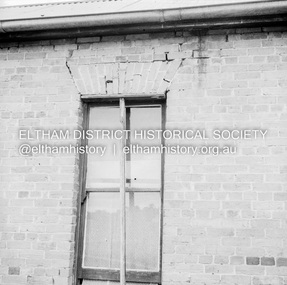 Eltham District Historical Society Inc
Negative - Photograph, J.A. McDonald, Old house, Susan Street, Eltham, c. 1962
... Street...Williams house...Williams house, Susan Street...Eltham houses Susan Street Williams house Medium format 120/Kodak 620 6x6 cm black and white negative (1 of 3) contained in an envelope with various inscriptions and markings. ...Williams house, Susan StreetRecord of various Shire of Eltham infrastructure works undertaken during the period of 1952-1962 involving bridge and road reconstruction projects, sometimes with Eltham Shire Council Project Reference numbers quoted. It was during this period that a number of significant improvements were made to roads and new bridges constructed within the shire that remain in place as of present day (2022). In many situations, the photos provide a tangible visible record of infrastructure that existed throughout the early days of the Shire. The album was put together by or under the direction of the Shire Engineer, J.A. McDonald.eltham, houses, susan street, williams house -
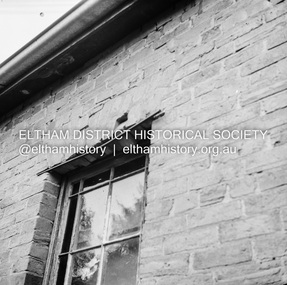 Eltham District Historical Society Inc
Negative - Photograph, J.A. McDonald, Old house, Susan Street, Eltham, c. 1962
... Street...Williams house...Williams house, Susan Street...Eltham houses Susan Street Williams house Medium format 120/Kodak 620 6x6 cm black and white negative (1 of 3) contained in an envelope with various inscriptions and markings. ...Williams house, Susan StreetRecord of various Shire of Eltham infrastructure works undertaken during the period of 1952-1962 involving bridge and road reconstruction projects, sometimes with Eltham Shire Council Project Reference numbers quoted. It was during this period that a number of significant improvements were made to roads and new bridges constructed within the shire that remain in place as of present day (2022). In many situations, the photos provide a tangible visible record of infrastructure that existed throughout the early days of the Shire. The album was put together by or under the direction of the Shire Engineer, J.A. McDonald.eltham, houses, susan street, williams house -
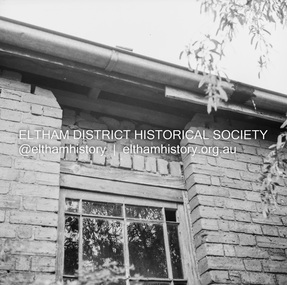 Eltham District Historical Society Inc
Negative - Photograph, J.A. McDonald, Old house, Susan Street, Eltham, c. 1962
... Street...Williams house...Williams house, Susan Street...Eltham houses Susan Street Williams house Medium format 120/Kodak 620 6x6 cm black and white negative (1 of 3) contained in an envelope with various inscriptions and markings. ...Williams house, Susan StreetRecord of various Shire of Eltham infrastructure works undertaken during the period of 1952-1962 involving bridge and road reconstruction projects, sometimes with Eltham Shire Council Project Reference numbers quoted. It was during this period that a number of significant improvements were made to roads and new bridges constructed within the shire that remain in place as of present day (2022). In many situations, the photos provide a tangible visible record of infrastructure that existed throughout the early days of the Shire. The album was put together by or under the direction of the Shire Engineer, J.A. McDonald.eltham, houses, susan street, williams house -
Stawell Historical Society Inc
Booklet - Realia, C.J. Williams Bread Factory, Patrick Street, c.1930
... C.J. Williams Bread Factory, Patrick Street...75 Delicious Dishes made with bread with compliments from C.J. Williams, Bread Factory Patric Street STAWELL Telephone 333...Depresion era recipies. 75 Delicious Dishes made with bread with compliments from C.J. Williams, Bread Factory Patric Street STAWELL Telephone 333 Paper - Blue. ...Recipies made with bread. These delicious Dishes are made with BREAD. BREAD is our Best Food Eat more of it.lEconomical, tempting RECIPES From Mor Bread campaign - W Slater M.L.A. Minister for Agricuture. Depresion era recipies.Paper - Blue. Colour Illustration of Woman with bob cut, green dress holding Steaming Dish75 Delicious Dishes made with bread with compliments from C.J. Williams, Bread Factory Patric Street STAWELL Telephone 333 -
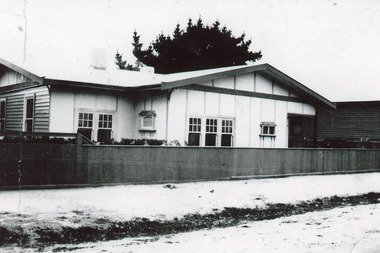 Lakes Entrance Historical Society
Photograph - Historic House, Cnr Myer Street and Williams Road, Lakes Entrance, 2000
... Historic House, Cnr Myer Street and Williams Road, Lakes Entrance...Also one colour photograph of the front entrance of same dwelling in new location at Williams Road Lakes Entrance Victoria Houses Heritage Study Black and white photograph of a fibro dwelling on Esplanade, beside Harbecks's Store. Lakes Entrance Victoria Photograph Historic House, Cnr Myer Street and Williams Road, Lakes Entrance ...This residence named 'Mourilyan' was built in 1892 beside Harbeck's Store, Lakes Entrance, as a family residence. It was altered and extended in 1927. In 1968 it was relocated to present site in Williams Road. The entrance steps and stonework were constructed by Rev A E Clark. Internal renovations during 1990's. Continually occupied by Harbeck family and descendents. Also a colour photograph of the front entrance of same dwelling in new location at Williams Road, Lakes Entrance. Also one colour photograph of the front entrance of same dwelling in new location at Williams Road Lakes Entrance VictoriaBlack and white photograph of a fibro dwelling on Esplanade, beside Harbecks's Store. Lakes Entrance Victoriahouses, heritage study -
 Allan Doney Collection, Bendigo Historical Society Inc.
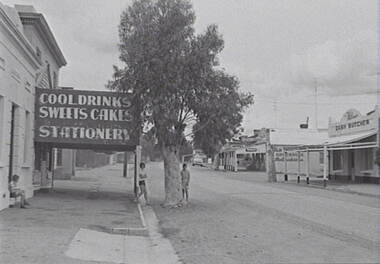
Negative - Town - Street - Businesses - Williams Cash Butcher, Allan Doney, 1950 -1970
... Town - Street - Businesses - Williams Cash Butcher...Negative Town - Street - Businesses - Williams Cash Butcher Allan Doney ...In the years of Allan Doney’s photography, landmark buildings succumbed to fire, neglect and redevelopment. He photographed the grey sand hills from Bendigo’s mining past, the streetscapes, poppet heads, miners’ cottages, gracious homes with ornate verandahs, trams and much more. Above all, his photographs show how much of the city has survived from the 19th century – and how much has not. Through two decades of great change, Allan Doney was there to capture ways people interacted with it. Although he travelled to many other places in Northern Victoria and beyond in search of subjects for his art, he seemed to always return to Bendigo for inspiration. -
 Allan Doney Collection, Bendigo Historical Society Inc.
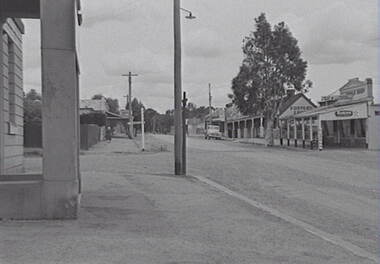
Negative - Town - Street - Businesses - Williams Cash Butcher, Allan Doney, 1950 -1970
... Town - Street - Businesses - Williams Cash Butcher...Negative Town - Street - Businesses - Williams Cash Butcher Allan Doney ...In the years of Allan Doney’s photography, landmark buildings succumbed to fire, neglect and redevelopment. He photographed the grey sand hills from Bendigo’s mining past, the streetscapes, poppet heads, miners’ cottages, gracious homes with ornate verandahs, trams and much more. Above all, his photographs show how much of the city has survived from the 19th century – and how much has not. Through two decades of great change, Allan Doney was there to capture ways people interacted with it. Although he travelled to many other places in Northern Victoria and beyond in search of subjects for his art, he seemed to always return to Bendigo for inspiration. -
 Lakes Entrance Historical Society
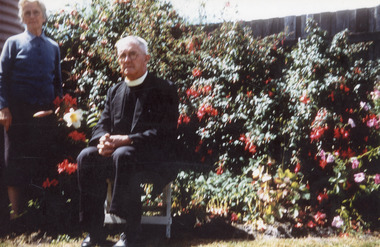
Photograph - Cannon A.E. Clark and Mrs Clark c1990
... Clark and Mrs Clark in their garden at Williams Street Lakes Entrance Victoria...Clark and Mrs Clark in their garden at Williams Street Lakes Entrance Victoria Photograph Cannon A.E. ...Colour photograph showing Cannon A.E. Clark and Mrs Clark in their garden at Williams Street Lakes Entrance Victoriagenealogy -
 Uniting Church Archives - Synod of Victoria
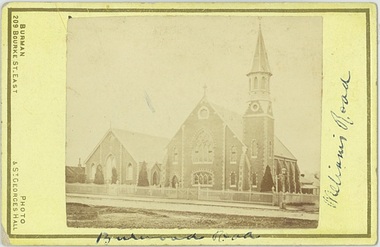
Photograph, Undated c.1880
... Sepia carte de visite photograph of the Wesleyan Methodist Church located at the corner of Burwood Road and Williams Street Hawthorn....Alexander Fraser Burwood Road, Williams Road Sepia carte de visite photograph of the Wesleyan Methodist Church located at the corner of Burwood Road and Williams Street Hawthorn. Photograph Photograph ...The Wesleyan Church was located at the corner of Burwood Road and William St. Hawthorn. It was designed by Messrs. Crouch and Wilson. The foundation stone was laid by the Hon. Alexander Fraser MLC on 14 August 1867. The Sunday School next to the church was built in 1878.Sepia carte de visite photograph of the Wesleyan Methodist Church located at the corner of Burwood Road and Williams Street Hawthorn.Burwood Road, Williams Roadwesleyan church, hawthorn, crouch and wilson, hon. alexander fraser -
 Kew Historical Society Inc
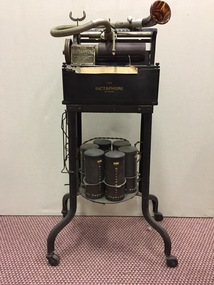
Machine - Dictaphone, 1900-1920
... Metal label: "THE DICTAPHONE / TRADE MARK / 35 WILLIAMS STREET / MELBOURNE / PHONES 3688-11572 / AND AT SYDNEY - BRISBANE - ADELAIDE...Dictaphone from the Kew Town Hall Local historic significance due to its use and wider scientific significance for its technological innovation dictaphone kew town hall (walpole street) office equipment recording equipment Metal label: "THE DICTAPHONE / TRADE MARK / 35 WILLIAMS STREET / MELBOURNE / PHONES 3688-11572 / AND AT SYDNEY - BRISBANE - ADELAIDE Dictaphone used in the Kew Town Hall in Walpole Street Machine Dictaphone ...Dictaphone from the Kew Town HallLocal historic significance due to its use and wider scientific significance for its technological innovationDictaphone used in the Kew Town Hall in Walpole StreetMetal label: "THE DICTAPHONE / TRADE MARK / 35 WILLIAMS STREET / MELBOURNE / PHONES 3688-11572 / AND AT SYDNEY - BRISBANE - ADELAIDEdictaphone, kew town hall (walpole street), office equipment, recording equipment -
 Queen's College
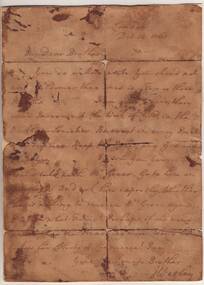
Letter, December 14 1761
... Back of mount: pencil note JG Williams Baker Street....Not in Telford. john wesley Back of mount: pencil note JG Williams Baker Street. Letter 1761 December 14, London to "Dear Brother" from John Wesley. ...John Lenton noted: "To a Preacher, probably an Assistant, in the North." Not in Telford.Letter 1761 December 14, London to "Dear Brother" from John Wesley. Holograph, signed.Back of mount: pencil note JG Williams Baker Street.john wesley -
 Eltham District Historical Society Inc
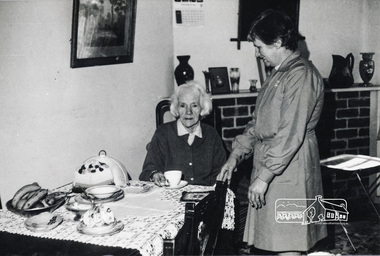
Photograph, Elsie Williams
... williams...susan street...Colour reproduction of black and white photograph of Elsie Williams in her home in Susan Street, Eltham with biographical notes....elsie williams susan street Colour reproduction of black and white photograph of Elsie Williams in her home in Susan Street, Eltham with biographical notes. ...Colour reproduction of black and white photograph of Elsie Williams in her home in Susan Street, Eltham with biographical notes.elsie williams, susan street -
 Port Melbourne Historical & Preservation Society
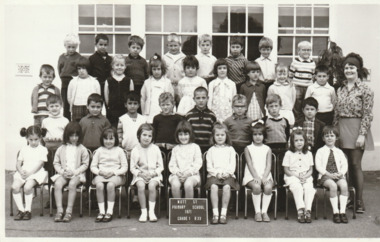
Photograph - Grade 1 Nott Street Primary School 1971, 1971
... WILLIAMS...Nott Street Primary School...The yearly photograph of the teacher, Margaret WILLIAMS, and pupils taken at Nott Street Primary School. The class is Grade1, A33 and was taken in 1971. ...Margaret WILLIAMS Nott Street Primary School Some children's names written in pencil on reverse side. ...The yearly photograph of the teacher, Margaret WILLIAMS, and pupils taken at Nott Street Primary School. The class is Grade1, A33 and was taken in 1971. B & W photograph of Grade1, A33, Nott Street Primary School in 1971. A row of girls is seated at the front with three rows of children standing behind them.. Some children's names written in pencil on reverse side.margaret williams, nott street primary school
