
Showing 14 items matching "wolves"
-
 Tatura Irrigation & Wartime Camps Museum
Literary work - Folder, Hitler's Indian Ocean Grey Wolves
... Hitler's Indian Ocean Grey Wolves...Plastic sleeve containing copy of article on Hitler's Indian Ocean Grey Wolves, U-boat Captains and their sinking of enemy ships....Hitler's Indian Ocean Grey Wolves Literary work Folder ...Tells the stories behind the sinking of U-boats during WW2 and their Captains. Plastic sleeve containing copy of article on Hitler's Indian Ocean Grey Wolves, U-boat Captains and their sinking of enemy ships. admiral donitz, helmut pich, fritz julius lemp, georg wenzel, hans baenge, hans feiertag, heinz niemann, german u-boats -
 Flagstaff Hill Maritime Museum and Village
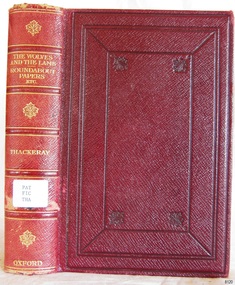
Book, The Wolves and The Lamb
... The Wolves and The Lamb...The Wolves and The Lamb Lovel the Widower, Denis Duval, Roundabout Papers Author: W M Thackeray Edited by George Saintsbury Publisher: Henry Frowde, Oxford University Press Date: 1864...The Warrnambool Mechanics' Institute’s publication collection is of both local and state significance. warrnambool shipwrecked-coast flagstaff-hill flagstaff-hill-maritime-museum maritime-museum shipwreck-coast flagstaff-hill-maritime-village shipwrecked-artefact book pattison collection warrnambool library warrnambool mechanics’ institute ralph eric pattison corangamite regional library service warrnambool city librarian mechanics’ institute library victorian library board warrnambool books and records warrnambool children’s library great ocean road the wolves and the lamb w m thackeray george saintsbury Lovel the Widower Denis Duval Roundabout Papers Label on spine cover with typed text PAT FIC THA Pastedown front endpaper has sticker from Warrnambool Mechanics Institute and Free Library Front loose endpaper has a sticker from Corangamite Regional Library Service The Wolves and The Lamb Lovel the Widower, Denis Duval, Roundabout Papers Author: W M Thackeray Edited by George Saintsbury Publisher: Henry Frowde, Oxford University Press Date: 1864 The Wolves and The Lamb Book ...This item is from the ‘Pattison Collection’, a collection of books and records that was originally owned by the Warrnambool Mechanics’ Institute, which was founded in Warrnambool in 1853. By 1886 the Warrnambool Mechanics’ Institute (WMI) had grown to have a Library, Museum and Fine Arts Gallery, with a collection of “… choice productions of art, and valuable specimens in almost every branch and many wonderful national curiosities are now to be seen there, including historic relics of the town and district.” It later included a School of Design. Although it was very well patronised, the lack of financial support led the WMI in 1911 to ask the City Council to take it over. In 1935 Ralph Pattison was appointed as City Librarian to establish and organise the Warrnambool Library as it was then called. When the WMI building was pulled down in 1963 a new civic building was erected on the site and the new Warrnambool Library, on behalf of the City Council, took over all the holdings of the WMI. At this time some of the items were separated and identified as the ‘Pattison Collection’, named after Ralph Pattison. Eventually the components of the WMI were distributed from the Warrnambool Library to various places, including the Art Gallery, Historical Society and Flagstaff Hill. Later some were even distributed to other regional branches of Corangamite Regional Library and passed to and fro. It is difficult now to trace just where all of the items have ended up. The books at Flagstaff Hill Maritime Village generally display stamps and markings from Pattison as well as a variety of other institutions including the Mechanics’ Institute itself. RALPH ERIC PATTISON Ralph Eric Pattison was born in Rockhampton, Queensland, in 1891. He married Maude Swan from Warrnambool in 1920 and they set up home in Warrnambool. In 1935 Pattison accepted a position as City Librarian for the Warrnambool City Council. His huge challenge was to make a functional library within two rooms of the Mechanics’ Institute. He tirelessly cleaned, cleared and sorted a disarrayed collection of old books, jars of preserved specimens and other items reserved for exhibition in the city’s museum. He developed and updated the library with a wide variety of books for all tastes, including reference books for students; a difficult task to fulfil during the years following the Depression. He converted all of the lower area of the building into a library, reference room and reading room for members and the public. The books were sorted and stored using a cataloguing and card index system that he had developed himself. He also prepared the upper floor of the building and established the Art Gallery and later the Museum, a place to exhibit the many old relics that had been stored for years for this purpose. One of the treasures he found was a beautiful ancient clock, which he repaired, restored and enjoyed using in his office during the years of his service there. Ralph Pattison was described as “a meticulous gentleman whose punctuality, floorless courtesy and distinctive neat dress were hallmarks of his character, and ‘his’ clock controlled his daily routine, and his opening and closing of the library’s large heavy doors to the minute.” Pattison took leave during 1942 to 1945 to serve in the Royal Australian Navy, Volunteer Reserve as Lieutenant. A few years later he converted one of the Museum’s rooms into a Children’s Library, stocking it with suitable books for the younger generation. This was an instant success. In the 1950’s he had the honour of being appointed to the Victorian Library Board and received more inspiration from the monthly conferences in Melbourne. He was sadly retired in 1959 after over 23 years of service, due to the fact that he had gone over the working age of council officers. However he continued to take a very keen interest in the continual development of the Library until his death in 1969. WARRNAMBOOL'S MECHANICS' INSTITUTE Warrnambool's Mechanics' Institute (or Institution as it was sometimes called) was one of the earliest in Victoria. On 17th October 1853 a meeting was held where it was resolved to request the Lieutenant Governor of the Colony to grant land for the erection of a Mechanics' Institutes building. A committee was formed at the meeting and Richard Osburne chaired the first meeting of this committee. The land on the North West corner of Banyan and Merri Streets was granted but there were no funds to erect the building. The Formal Rights of the Warrnambool Mechanics' Institute's encompassed its aims and these were officially adopted in1859; "This Institution has for its object the diffusion of literary, scientific, and other useful knowledge amongst its members, excluding all controversial subjects, religious or political. These objects are sought to be obtained by means of a circulating library, a reading room, the establishment of classes, debates, and the occasional delivery of lectures on natural and experimental philosophy, mechanics, astronomy, chemistry, natural history, literature, and the useful and ornamental arts, particularly those which have a more immediate reference to the colony." The Warrnambool Mechanics' Institute opened its first reading room in November1884 in the National School building at the corner of Banyan and Timor Streets. The Institute was funded by member subscription, payable on a quarterly, half yearly or yearly basis. Samuel Hannaford, the Manager of the Warrnambool Bank of Australasia, was the first Honorary Secretary of the Mechanics' Institutes, and an early President and Vice-President. He also gave several of the early lectures in the Reading Room. Another early Secretary, Librarian and lecturer was Marmaduke Fisher, the teacher at the National School. Lecture topics included The Poets and Poetry of Ireland', 'The Birth and Development of the Earth', 'The Vertebrae - with Remarks on the pleasures resulting from the study of Natural History' and 'Architecture'. In 1856 the Reading Room was moved to James Hider's shop in Timor Street, and by 1864 it was located in the bookshop of Davies and Read. In the 1860's the Mechanics' Institute struggled as membership waned but in 1866, after a series of fund raising efforts, the committee was able to purchase land in Liebig Street, on a site then called Market Square, between the weighbridge and the fire station. A Mechanics' Institute building was opened at this site in August 1871. The following year four more rooms were added to the main Reading Room and in 1873 the Artisan School of Design was incorporated into the Institute. The same year Joseph Archibald established a Museum; however it deteriorated when he was transferred to Bendigo in 1877. In 1880, with Archibald's return to Warrnambool, the Museum was re-established, and in 1885 a new building was built at the back of the Institute to accommodate the re-created School of Design, the Art Gallery and the Museum. In 1887 the Museum section was moved to the former court house in Timor Street (for some time the walls of the building formed part of the TAFE cafeteria but all is now demolished)). In 1911 the Museum was transferred back to the original building and the management of the Mechanics' Institute was handed over to the Warrnambool City Council. The Museum and Art Gallery became one and housed many fine works of art, and the Library continued to grow. The building was well patronised, with records showing that at the beginning of the 20th century there were between 500 and 800 visitors. During World War One the monthly figures were in the thousands, with 3,400 people visiting in January 1915. The Museum was a much loved Institution in Warrnambool until the contents of the Museum and Art Gallery were removed to make room for the Warrnambool City Council Engineers' Department. The contents were stored but many of the items were scattered or lost. When the original building was demolished the site became occupied by the Civic Centre, which included the new City Library. (The library was temporarily located in the old Palais building in Koroit Street.) In the process of reorganisation the Collection was distributed amongst the community groups: -The new City Library took some of the historic books and some important documents, historic photographs and newspapers. -The Art Gallery kept the 19th Century art collection and some of the artefacts from the museum. -The Historic Society has some items -The State Museum has some items -Some items were destroyed -Flagstaff Hill Maritime Village has old newspapers, Government Gazettes, most of the Mechanics' Institute Library, ledgers and documents connected to the Mechanics' Institute Library, some framed and unframed art works and some photographs. The Warrnambool Mechanics' Institute Library book collection is deemed to be of great importance because it is one of the few collections in an almost intact state, and many of the books are now very rare and of great value. The Pattison Collection, along with other items at Flagstaff Hill Maritime Village, was originally part of the Warrnambool Mechanics' Institute’s collection. The Warrnambool Mechanics’ Institute Collection is primarily significant in its totality, rather than for the individual objects it contains. Its contents are highly representative of the development of Mechanics' Institute libraries across Australia, particularly Victoria. A diversity of publications and themes has been amassed, and these provide clues to our understanding of the nature of and changes in the reading habits of Victorians from the 1850s to the middle of the 20th century. The collection also highlights the Warrnambool community’s commitment to the Mechanics’ Institute, reading, literacy and learning in the regions, and proves that access to knowledge was not impeded by distance. These items help to provide a more complete picture of our community’s ideals and aspirations. The Warrnambool Mechanics Institute book collection has historical and social significance for its strong association with the Mechanics Institute movement and the important role it played in the intellectual, cultural and social development of people throughout the latter part of the nineteenth century and the early twentieth century. The collection of books is a rare example of an early lending library and its significance is enhanced by the survival of an original collection of many volumes. The Warrnambool Mechanics' Institute’s publication collection is of both local and state significance. The Wolves and The Lamb Lovel the Widower, Denis Duval, Roundabout Papers Author: W M Thackeray Edited by George Saintsbury Publisher: Henry Frowde, Oxford University Press Date: 1864 Label on spine cover with typed text PAT FIC THA Pastedown front endpaper has sticker from Warrnambool Mechanics Institute and Free Library Front loose endpaper has a sticker from Corangamite Regional Library Service warrnambool, shipwrecked-coast, flagstaff-hill, flagstaff-hill-maritime-museum, maritime-museum, shipwreck-coast, flagstaff-hill-maritime-village, shipwrecked-artefact, book, pattison collection, warrnambool library, warrnambool mechanics’ institute, ralph eric pattison, corangamite regional library service, warrnambool city librarian, mechanics’ institute library, victorian library board, warrnambool books and records, warrnambool children’s library, great ocean road, the wolves and the lamb, w m thackeray, george saintsbury, lovel the widower, denis duval, roundabout papers -
 Lara RSL Sub Branch
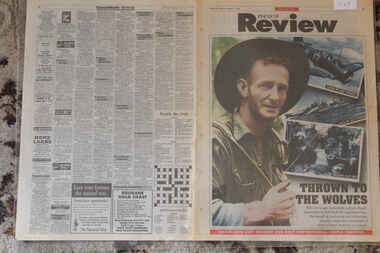
Newspaper - Herald Sun Dated 11/2/1995 50 Anniv. of Japanese Attacks Contiue Thru Java, New Guinea and Rabual
... Australian Troops continue to be Thrown To The Wolves by Disastrous Leadership, Thousands of Australian Troops captured and Die....Herald Sun Newspaper Dated 11/2/1995 50 Anniversary of Japanese attacks along Java, New Guinea and Rabaul 50 Anniversary of Japanese attacks along Java, New Guinea and Rabaul australian troops continue to be thrown to the wolves by disastrous leadership Australian Troops continue to be Thrown To The Wolves by Disastrous Leadership, Thousands of Australian Troops captured and Die. ...Herald Sun Newspaper Dated 11/2/1995 50 Anniversary of Japanese attacks along Java, New Guinea and Rabaul 50 Anniversary of Japanese attacks along Java, New Guinea and Rabaul Herald Sun Newspaper Dated 11/2/1995 50 Anniversary of Japanese attacked along Java, New Guinea and Rabaul Australian Troops continue to be Thrown To The Wolves by Disastrous Leadership, Thousands of Australian Troops captured and Die. australian troops continue to be thrown to the wolves by disastrous leadership -
Phillip Island and District Historical Society Inc.
Book, WILSON, Erle, Coorinna : a novel of the Tasmanian uplands, 1955
... Wolves...Wolves juvenile fiction tasmania Coorinna : a novel of the Tasmanian uplands Book WILSON, Erle Pamela LINDSAY Longmans ...wolves, juvenile fiction, tasmania -
Bialik College
Photograph (item) - Sports, 2016
... ...Wolves...Please contact [email protected] to request access to this record. 2010s Wolves EISM Photograph Sports, 2016 ...Photographs of sporting activities, 2016. Includes athletics and girls netball team. Please contact [email protected] to request access to this record. 2010s, wolves, eism -
Bialik College
Card (item) - Bialik Wolves Alumni Sporting Program Thankyou Card, 2015, 2015
... A thank you card produced in 2015 to thank patrons for supporting the Bialik Wolves Alumni Sporting Program. For access to this record, please contact [email protected] thank you card produced in 2015 to thank patrons for supporting the Bialik Wolves Alumni Sporting Program. For access to this record, please contact [email protected] Sport 2010s Card Bialik Wolves Alumni Sporting Program Thankyou Card, 2015 ...A thank you card produced in 2015 to thank patrons for supporting the Bialik Wolves Alumni Sporting Program. For access to this record, please contact [email protected] sport, 2010s -
Bialik College
Photograph (item) - Sports, 2017
... ...Wolves...Please contact [email protected] to request access to this record. 2010s awards Wolves EISM Photograph Sports, 2017 ...Photographs of champion sporting teams, 2017. Includes soccer, volleyball, hockey and tennis. Please contact [email protected] to request access to this record. 2010s, awards, wolves, eism -
Emerald Museum & Nobelius Heritage Park
Book - Fiction book, Jarrolds Publishers Ltd. et al, Bracken, 1948
... Bernard Cronin also wrote "Dragonfly", "Timber Wolves", "Red Dawson" and "Salvage"....Bernard Cronin also wrote "Dragonfly", "Timber Wolves", "Red Dawson" and "Salvage". Emerald Victoria Australia Fiction Bernard Cronin Writers of the Dandenongs J.B. ...The author Bernard Cronin lived in Emerald in the 1920s. His two daughters attended Emerald State School. The family lived at Lumeah Guest House, Monbulk Road, Emerald. Bernard Cronin also wrote "Dragonfly", "Timber Wolves", "Red Dawson" and "Salvage". Green cloth-covered novel. First Australian edition. J.B. Pencilled references on condition emerald, victoria, australia, fiction, bernard cronin, writers of the dandenongs -
 Bendigo Historical Society Inc.
Newspaper - Bendigo Advertiser Article - Historic win for Katrina, Sat Oct 23 2021
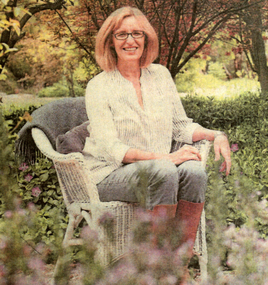
... Katrina Nannestad won the 2021 ARA Historical Novel Prize in the Children and Young Adult (CYA) category for her book We Are Wolves. Nannestad, a teacher and children's author, received the prize after being shortlisted the previous month. ...Katrina Nannestad won the 2021 ARA Historical Novel Prize in the Children and Young Adult (CYA) category for her book We Are Wolves. Nannestad, a teacher and children's author, received the prize after being shortlisted the previous month. ...Katrina Nannestad won the 2021 ARA Historical Novel Prize in the Children and Young Adult (CYA) category for her book We Are Wolves. Nannestad, a teacher and children's author, received the prize after being shortlisted the previous month. The ARA Historical Novel Prize is a significant award, with $100,000 in total prize money; the CYA category winner receives $30,000. We Are Wolves is Nannestad's first historical novel, inspired by a tidbit she sent to her publisher. The story follows Liesl, Otto, and baby Mia Wolf as they flee East Prussia and survive as displaced war orphans. The novel explores themes of identity, family, trust, survival, and hope. The judging panel, chaired by Paul Macdonald, praised the novel for its writing, research, and appeal to both young and older readers.The book was described as simple, poetic, deeply moving, and a brilliant exploration of important issues. Bendigo Advertiser Article - Historic win for Katrina Sat Oct 23 2021 Page 2 Bendigo weekly This item contains the following documents 3486.52a Colour photo of Sedgwick author Katrina Nannestad 3486.52b The article Historic win for Katrina bendigo, author katrina nannestead novelist -
 Merri-bek City Council
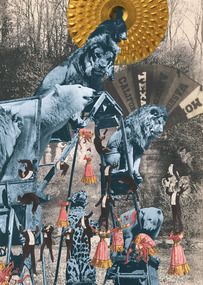
Four-colour lithographic offset print on Fabriano Artistico 300gsm traditional white hot-press paper, Gracia Haby and Louise Jennison, Turning the Tables on Alfred Court, 2013
... In 1925, Court's menagerie boasted a collection of 25 lions, 8 tigers, 9 hyenas, 7 wolves, 3 cougars, 12 polar bears, 16 panthers and leopards, 5 jaguars, 2 cheetahs, and an extensive assemblage of exotic animals, including antelopes, llamas, and camels, alongside several monkeys, porcupines, and mongooses. ...In 1925, Court's menagerie boasted a collection of 25 lions, 8 tigers, 9 hyenas, 7 wolves, 3 cougars, 12 polar bears, 16 panthers and leopards, 5 jaguars, 2 cheetahs, and an extensive assemblage of exotic animals, including antelopes, llamas, and camels, alongside several monkeys, porcupines, and mongooses. ...Gracia Haby and Louise Jennison have been creative collaborators since 1999, working together to make artist books, zines, collages, drawings, prints and stories. In this artwork, the animals have the upper hand. They are turning the tables on French acrobat, circus owner, and animal trainer, Alfred Court (1883-1977). In 1925, Court's menagerie boasted a collection of 25 lions, 8 tigers, 9 hyenas, 7 wolves, 3 cougars, 12 polar bears, 16 panthers and leopards, 5 jaguars, 2 cheetahs, and an extensive assemblage of exotic animals, including antelopes, llamas, and camels, alongside several monkeys, porcupines, and mongooses. Haby and Jennison’s collaboration explores their mutual fascination with the adaptable possibilities of paper and found images. -
 Emerald Museum & Nobelius Heritage Park
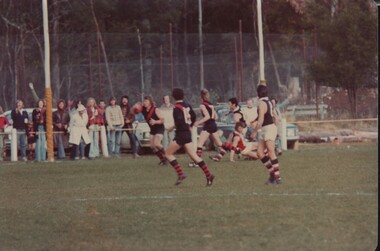
Photograph - Emerald Football Club, 1977, Unknown maker, 1977
... ...Wolves...It depicts a key moment between the Emerald Football Club (the 'Bombers') and South Belgrave Football Club (the 'Wolves'); both clubs are still active in the area. ...Emerald Football Club was formed in 1905, one of the first teams in the Mountain District Football Association (renamed the Yarra Valley Mountain District Football League in 1967). The club has changed its official colours three times, playing firstly under blue and white colours, then green and gold before adopting the red and black colours shown in the photograph and still used today. The club has also been known variously as the 'Emites', the 'Redlegs' and the current 'Bombers.' A joint Australian Football League (AFL) and La Trobe University Centre for Sport and Social Impact study discusses the importance of local football teams for fostering community cohesion and relationships and distributing information and health and social issues to local people. Local football and other sporting teams are integral to the economic and social development of an area and are therefore significant far beyond the immediate players or families associated with the club. The photograph is significant for its insights into the history of sports and recreation in the Emerald region in the 1970s. It depicts a key moment between the Emerald Football Club (the 'Bombers') and South Belgrave Football Club (the 'Wolves'); both clubs are still active in the area. Australian Rules Football has a long history in the region and played a fundamental role in community life. Colour rectangular photograph printed on photographic paper. The photograph depicts seven men playing Australian Rules Football at a suburban football oval; fifteen spectators including a junior player in uniform are visible in the background of the photograph. Cars and sports field netting can also be seen. Notations on the reverse of the photograph indicate that the match shown is the second semi-final of the 1977 season, held in Marysville, between the Emerald Football Club (wearing red and black) and South Belgrave. Three names are written on the reverse in different hand-writing, these are Geoff 'Digger' Dolan, Tony Greenwell and Dave Sands. Reverse: 1977 / 7. / Second Semi Final / V SOUTH BELGRAVE / Marysville / GEOFF 'DIGGER' DOLAN / TONY GREENWELL / DAVE SANDS / VEMUP 417 / 1970s, clubs, associations, societies, sports, australian rules football, emerald football club, bombers, south belgrave football club, geoff 'digger' dolan, tony greenwell, dave sands, marysville, wolves, redlegs, emites -
 Monbulk RSL Sub Branch
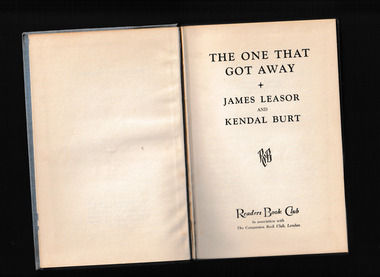
Book, Readers Book Club et al, The one that got away, 1958
... His experiences inspired him to write such books as Boarding Party (filmed as The Sea Wolves). He later became a feature writer and foreign correspondent at the Daily Express. ...In World War II James Leasor was commissioned into the Royal Berkshire Regiment and posted to the 1st Lincolns in Burma and India, where he served for three and a half years. His experiences inspired him to write such books as Boarding Party (filmed as The Sea Wolves). He later became a feature writer and foreign correspondent at the Daily Express. Here he wrote The One that Got Away.p.255. non-fiction In World War II James Leasor was commissioned into the Royal Berkshire Regiment and posted to the 1st Lincolns in Burma and India, where he served for three and a half years. His experiences inspired him to write such books as Boarding Party (filmed as The Sea Wolves). He later became a feature writer and foreign correspondent at the Daily Express. Here he wrote The One that Got Away. franz von werra, prisoners of war - germany - escapes -
Tatura Irrigation & Wartime Camps Museum
Document, U-168, 2010
... Various articles researched and collected by Frank MacDonough. german u-boat 168 captain helmut pich indian ocean grey wolves hnms "zwaardvisch" lt commander goosens catalina flying boat captain detmers major bertram german pows dhurringile books military U- 168 Plastic sleeves joined together, containing information about Sinking of U-168 by HNMS "Zwaardvisch" & subsequent imprisonment of Captain Pich and Officers at Dhurringile. ...Various articles researched and collected by Frank MacDonough. Plastic sleeves joined together, containing information about Sinking of U-168 by HNMS "Zwaardvisch" & subsequent imprisonment of Captain Pich and Officers at Dhurringile. U- 168 german u-boat 168, captain helmut pich, indian ocean grey wolves, hnms "zwaardvisch", lt commander goosens, catalina flying boat, captain detmers, major bertram, german pows dhurringile, books, military -
Emerald Museum & Nobelius Heritage Park
Photograph - Emerald Football Club, 1977, Unknown maker, 1977
... It depicts a key moment between the Emerald Football Club (the 'Bombers') and South Belgrave Football Club (the 'Wolves'); both clubs are still active in the area. ...Emerald Football Club was formed in 1905, one of the first teams in the Mountain District Football Association (renamed the Yarra Valley Mountain District Football League in 1967). The club has changed its official colours three times, playing firstly under blue and white colours, then green and gold before adopting the red and black colours shown in the photograph and still used today. The club has also been known variously as the 'Emites', the 'Redlegs' and the current 'Bombers.' A joint Australian Football League (AFL) and La Trobe University Centre for Sport and Social Impact study discusses the importance of local football teams for fostering community cohesion and relationships and distributing information and health and social issues to local people. Local football and other sporting teams are integral to the economic and social development of an area and are therefore significant far beyond the immediate players or families associated with the club. The photograph is significant for its insights into the history of sports and recreation in the Emerald region in the 1970s. It depicts a key moment between the Emerald Football Club (the 'Bombers') and South Belgrave Football Club (the 'Wolves'); both clubs are still active in the area. Australian Rules Football has a long history in the region and played a fundamental role in community life. Colour rectangular photograph printed on photographic paper. The photograph depicts men playing Australian Rules Football at a suburban football oval; spectators with flags and banners are visible in the background of the photograph. Cars and buildings can also be seen. Notations on the reverse of the photograph indicate that the match shown is the second semi-final of the 1977 season, held in Marysville, between the Emerald Football Club (wearing red and black) and South Belgrave. Obverse:ERALD /Reverse:1977 /5. /Second semi final v SOUTH BELGRAVE /Marysville /IAN CRAIG WITH BALL / 1970s, clubs, associations, societies, sports, australian rules football, emerald football club, bombers, south belgrave football club, ian craig
