
Showing 83 items matching "wool craft"
-
 City of Moorabbin Historical Society (Operating the Box Cottage Museum)
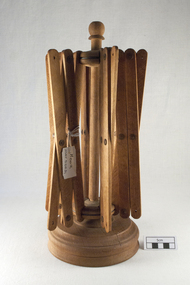
Craft - Craft equipment, wool winder, c1860
... Craft equipment, wool winder...wool...craft work...Circa 1860s this winder was made in Ireland. Craft Craft equipment, wool winder Unrecorded person ...Pioneers migrating to Moorabbin Shire brought items they thought would assist them in the new Country. They had to be self reliant and made their own clothing and utensils while establishing their market gardens and farms. A wooden wool winder, with extending arms for winding hanks of wool into balls prior to knitting. For ease of use the winder also rotates. Circa 1860s this winder was made in Ireland.The pioneer settlers and market gardeners of Moorabbin Shire had to be self reliant and made their own clothing and utensils. This is one of many items used to exhibit the skill and craftsmanship of the women in these families. Phillip Jones migrated from Ireland c1852 and his son, James Jones 1857 – 1940 was born in East Brighton , married Mary Ann Moore and raised his family in Bentleigh, as the area became known. A wooden wool winder, with extending arms for winding hanks of wool into balls prior to knitting. For ease of use the winder also rotates. Circa 1860s this winder was made in Ireland.brighton, moorabbin, pioneers, bentleigh, market gardeners, wool, craft work, early settlers, knitting, craft equipment, jones mary ann, jones james, jones phillip, herron john -
 National Wool Museum
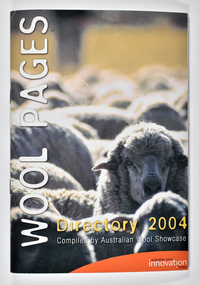
Book - Wool Pages: A Directory of the Sheep and Wool Industry, Eighth Edition, The Australian Wool Showcase Inc, 2004
... ...Wool Craft...Contents include Education, Processing and Manufacturing, Rural Equipment, Services, Rural Tourism, Sheep, Trade / Commerce / Finance, Wool Craft, Wool Organisations / Associations, Wool Products. ...Contents include Education, Processing and Manufacturing, Rural Equipment, Services, Rural Tourism, Sheep, Trade / Commerce / Finance, Wool Craft, Wool Organisations / Associations, Wool Products. ...Contents include Education, Processing and Manufacturing, Rural Equipment, Services, Rural Tourism, Sheep, Trade / Commerce / Finance, Wool Craft, Wool Organisations / Associations, Wool Products. Eighty eight page booklet showing an image of sheep on the cover, with printed text.front: [printed] WOOL PAGES / Directory 2004 / Compiled by Australian Wool Showcase / australian wool / innovation / limitedwool, organisations, directory, rural equipment, manufacturing, tourism, wool craft, wool products, education -
 Tatura Irrigation & Wartime Camps Museum
Book - handcraft, Zweiter Band, Schachenmayr Lehrbuch Der Handarbeiten Aus Wolle, 1937
... ...wool craft...Appears to be a book of patterns for hand crafts using wool. Written totally in German. Yellow hard cover....book handcraft camp 3 internee wool craft Schachenmayr Lehrbuch Der Handarbeiten Aus Wolle A Stamp - N. ...Appears to be a book of patterns for hand crafts using wool. Written totally in German. Yellow hard cover.Schachenmayr Lehrbuch Der Handarbeiten Aus Wolle A Stamp - N. Arnot POG 573 Jerusalem - Palestinebook, handcraft, camp 3, internee, wool craft -
 National Wool Museum
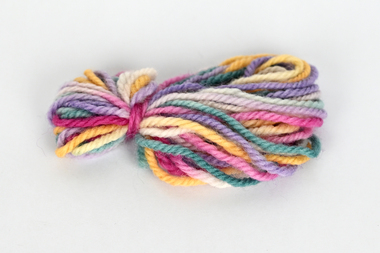
Textile - Dyed Wool Sample, Robin Walker, 1999
... Wool...Craft...Handicrafts Walker Mrs Robin Dying Hand Dyed Wool Craft Felting Small hank of home dyed woollen yarn. ...This sample is one of five donated by Mrs Walker who dyed her own yarns to knit into hats which she felted herself (in a washing machine) to sell at craft shops. She ran workshops and also taught home dyeing. She used a Landscape and Earth Palette and also used food colouring, jelly and cake decorating colours.Small hank of home dyed woollen yarn. In light shades of pink, mauve, yellow, blue and green.handicrafts, walker, mrs robin, dying, hand dyed, wool, craft, felting -
 National Wool Museum
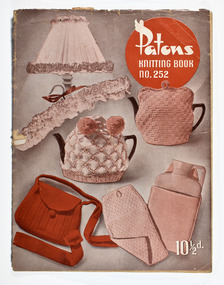
Book - Patons Knitting Book No. 252, Patons and Baldwins, c. 1950s
... Wool...Craft...Wool Craft Knitting Patterns Patons and Baldwins (Australia) Ltd Rabbit Bunny front: [printed] Patons / KNITTING BOOK / NO. 252 / 10 ½ d. ...Twenty eight page black and white pattern book showing graphics and text. Front and back cover show graphics in tones of red and pink. Front cover shows knitted objects and back cover shows knitted children’s toys. front: [printed] Patons / KNITTING BOOK / NO. 252 / 10 ½ d.wool, craft, knitting, patterns, patons and baldwins (australia) ltd, rabbit, bunny -
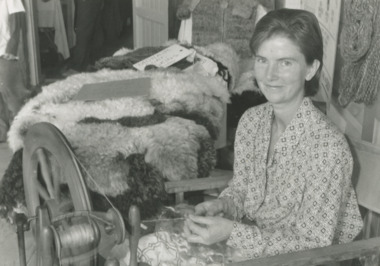 Lakes Entrance Historical Society
Photograph - Alyson Horne, Lakes Post Newspaper, 1/10/1996 12:00:00 AM
... Alyson Horne of Sarsfield Victoria spinning sheep wool at Art and Craft weekend held at the Mechanics Hall Bruthen Victoria...Black and white photograph showing Alyson Horne of Sarsfield Victoria spinning sheep wool at Art and Craft weekend held at the Mechanics Hall Bruthen Victoria...Alyson Horne of Sarsfield Victoria spinning sheep wool at Art and Craft weekend held at the Mechanics Hall Bruthen Victoria Arts and crafts Social History Black and white photograph showing Alyson Horne of Sarsfield Victoria spinning sheep wool at Art and Craft weekend held at the Mechanics Hall Bruthen Victoria Photograph Alyson Horne Lakes Post Newspaper ...Alyson Horne of Sarsfield Victoria spinning sheep wool at Art and Craft weekend held at the Mechanics Hall Bruthen VictoriaBlack and white photograph showing Alyson Horne of Sarsfield Victoria spinning sheep wool at Art and Craft weekend held at the Mechanics Hall Bruthen Victoriaarts and crafts, social history -
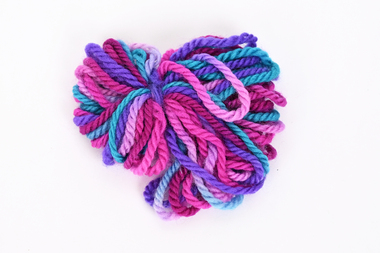 National Wool Museum
Textile - Dyed Wool Sample, Robin Walker, 1999
... ...Craft...Wool...Handicrafts Robin Walker Craft Wool Hand Dyed Yarn Felting Small hank of home dyed woollen yarn. ...This sample is one of five donated by Mrs Walker who dyed her own yarns to knit into hats which she felted herself (in a washing machine) to sell at craft shops. She ran workshops and also taught home dyeing. She used a Landscape and Earth Palette and also used food colouring, jelly and cake decorating colours.Small hank of home dyed woollen yarn. In dark shades of pink, mauve, blue and green.handicrafts, robin walker, craft, wool, hand dyed, yarn, felting -
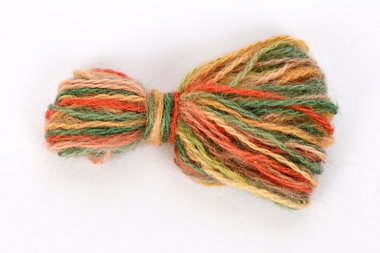 National Wool Museum
Textile - Dyed Wool Sample, Robin Walker, 1999
... Wool...Yarn...Felting...Craft...craft shops. She ran workshops and also taught home dyeing. She used a Landscape and Earth Palette and also used food colouring, jelly and cake decorating colours. Handicrafts Robin Walker Hand Dyed Wool ...This sample is one of five donated by Mrs Walker who dyed her own yarns to knit into hats which she felted herself (in a washing machine) to sell at craft shops. She ran workshops and also taught home dyeing. She used a Landscape and Earth Palette and also used food colouring, jelly and cake decorating colours.Small hank of home dyed woollen yarn. In shades of yellow, orange, green and brown.handicrafts, robin walker, hand dyed, wool, yarn, felting, craft, colour -
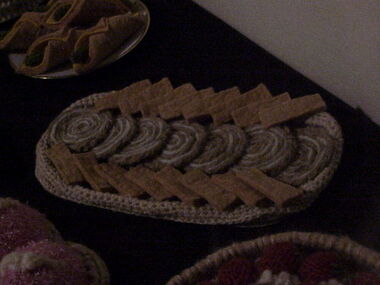 National Wool Museum
Textile Handcraft, The Afternoon Tea Party: Plate of Slices
... To qualify, the entry needed to be from a group of five people and be able to demonstrate a number of wool crafts in at least five different items. ...To qualify, the entry needed to be from a group of five people and be able to demonstrate a number of wool crafts in at least five different items. ...The Geelong Handweavers and Spinners Guild Inc. entered "The Afternoon Tea Party" , designed by Val Ingeme, into the "Five Articles" Section of the Melbourne Sheep and Woolcraft Show c.1992. To qualify, the entry needed to be from a group of five people and be able to demonstrate a number of wool crafts in at least five different items. "The Afternoon Tea Party" was loaned to the NWM for display and was subsequently donated in 2003.agricultural shows textile art handicrafts, geelong handweavers and spinners guild inc., crochet, felting, ingeme, mrs val, agricultural shows, textile art, handicrafts -
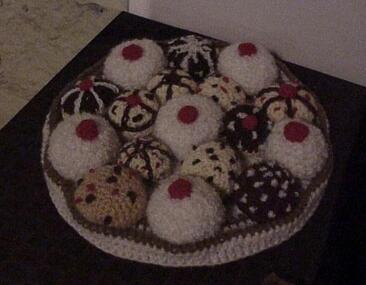 National Wool Museum
Textile Handcraft, The Afternoon Tea Party: Plate of cakes
... To qualify, the entry needed to form a group and be able to demonstrate a number of wool crafts in at least five different items. ...To qualify, the entry needed to form a group and be able to demonstrate a number of wool crafts in at least five different items. ...The Geelong Handweavers and Spinners Guild Inc. entered "The Afternoon Tea Party" , designed by Val Ingeme, into the "Five Articles" Section of the Melbourne Sheep and Woolcraft Show c.1992. To qualify, the entry needed to form a group and be able to demonstrate a number of wool crafts in at least five different items. "The Afternoon Tea Party" was loaned to the NWM for display and was subsequently donated in 2003. This piece was designed and made by Anna Rahoferagricultural shows textile art handicrafts, geelong handweavers and spinners guild inc., crochet, embroidery, ingeme, mrs val rahofer, anna - geelong handweavers and spinners guild inc., agricultural shows, textile art, handicrafts -
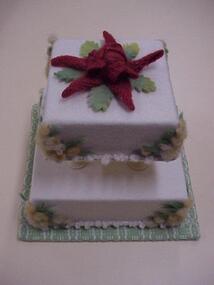 National Wool Museum
Textile Handcraft, The Afternoon Tea Party: Celebration Cake
... To qualify, the entry needed to form a group and be able to demonstrate a number of wool crafts in at least five different items. ...To qualify, the entry needed to form a group and be able to demonstrate a number of wool crafts in at least five different items. ...The Geelong Handweavers and Spinners Guild Inc. entered "The Afternoon Tea Party", designed by Val Ingeme, into the "Five Articles" Section of the Melbourne Sheep and Woolcraft Show c.1992. To qualify, the entry needed to form a group and be able to demonstrate a number of wool crafts in at least five different items. The covering of the cake was woven by Anneli Rickards, the plate woven by Jean Inglis, Mary Donnan and Val Ingeme made and assembled the floral trimmingsagricultural shows handicrafts textile art knitting weaving, geelong handweavers and spinners guild inc., spinning - hand, felting, weaving, ingeme, mrs val inglis, jean - geelong handweavers and spinners guild inc. rickards, anneli - geelong handweavers and spinners guild inc. donnan, mary - geelong handweavers and spinners guild inc., melbourne, victoria, agricultural shows, handicrafts, textile art, knitting -
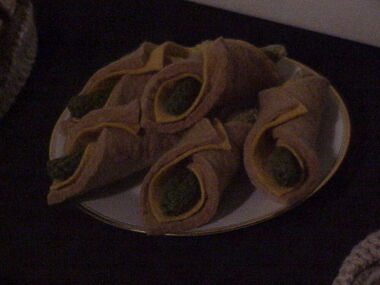 National Wool Museum
Textile Handcraft, The Afternoon Tea Party: Plate of cheese and asparagus rolls
... To qualify, the entry needed to by from a group of five people and be able to demonstrate a number of wool crafts in at least five different items. ...To qualify, the entry needed to by from a group of five people and be able to demonstrate a number of wool crafts in at least five different items. ...The Geelong Handweavers and Spinners Guild Inc. entered "The Afternoon Tea Party" , designed by Val Ingeme, into the "Five Articles" Section of the Melbourne Sheep and Woolcraft Show c.1992. To qualify, the entry needed to by from a group of five people and be able to demonstrate a number of wool crafts in at least five different items. "The Afternoon Tea Party" was loaned to the NWM for display and was subsequently donated in 2003. This piece was designed and made by Val Ingeme from wool fleece.agricultural shows textile art handicrafts knitting, geelong handweavers and spinners guild inc., felting, ingeme, mrs val, agricultural shows, textile art, handicrafts, knitting -
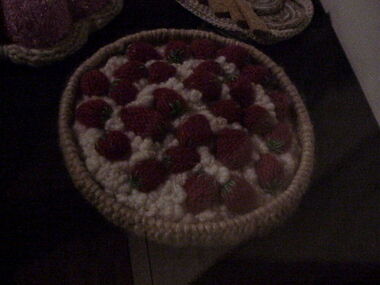 National Wool Museum
Textile Handcraft, The Afternoon Tea Party: Strawberry Pie
... To qualify, the entry needed to be from a group of five people and be able to demonstrate a number of wool crafts in at least five different items. ...To qualify, the entry needed to be from a group of five people and be able to demonstrate a number of wool crafts in at least five different items. ...The Geelong Handweavers and Spinners Guild Inc. entered "The Afternoon Tea Party" , designed by Val Ingeme, into the "Five Articles" Section of the Melbourne Sheep and Woolcraft Show c.1992. To qualify, the entry needed to be from a group of five people and be able to demonstrate a number of wool crafts in at least five different items. "The Afternoon Tea Party" was loaned to the NWM for display and was subsequently donated in 2003. This piece was designed and made by Val Ingeme from commercial wool.agricultural shows textile art handicrafts knitting, geelong handweavers and spinners guild inc., embroidery, ingeme, mrs val, agricultural shows, textile art, handicrafts, knitting -
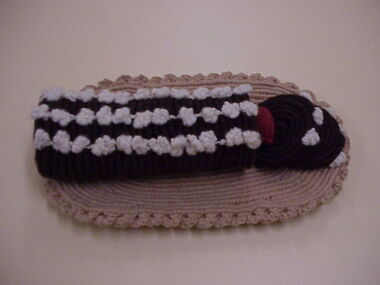 National Wool Museum
Textile Handcraft, The Afternoon Tea Party: Chocolate Roll
... To qualify, the entry needed to be from a group of five people and be able to demonstrate a number of wool crafts in at least five different items. ...To qualify, the entry needed to be from a group of five people and be able to demonstrate a number of wool crafts in at least five different items. ...The Geelong Handweavers and Spinners Guild Inc. entered "The Afternoon Tea Party" , designed by Val Ingeme, into the "Five Articles" Section of the Melbourne Sheep and Woolcraft Show c.1992. To qualify, the entry needed to be from a group of five people and be able to demonstrate a number of wool crafts in at least five different items. "The Afternoon Tea Party" was loaned to the NWM for display and was subsequently donated in 2003. This piece was designed and made by Val Ingeme from commercial rug wool, the plate by an unknown member.agricultural shows textile art handicrafts, geelong handweavers and spinners guild inc., macrame, embroidery, ingeme, mrs val, agricultural shows, textile art, handicrafts -
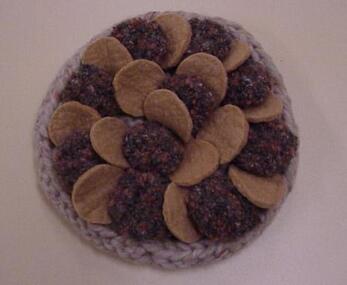 National Wool Museum
Textile Handcraft, The Afternoon Tea Party: Plate of Biscuits and Cookies
... To qualify, the entry needed to be from a group of five people and be able to demonstrate a number of wool crafts in at least five different items. ...To qualify, the entry needed to be from a group of five people and be able to demonstrate a number of wool crafts in at least five different items. ...The Geelong Handweavers and Spinners Guild Inc. entered "The Afternoon Tea Party" , designed by Val Ingeme, into the "Five Articles" Section of the Melbourne Sheep and Woolcraft Show c.1992. To qualify, the entry needed to be from a group of five people and be able to demonstrate a number of wool crafts in at least five different items. "The Afternoon Tea Party" was loaned to the NWM for display and was subsequently donated in 2003. This piece was designed and made by Val Ingeme from wool blend yarn, the plate from wool.agricultural shows textile art handicrafts knitting, geelong handweavers and spinners guild inc., felting, ingeme, mrs val, agricultural shows, textile art, handicrafts, knitting -
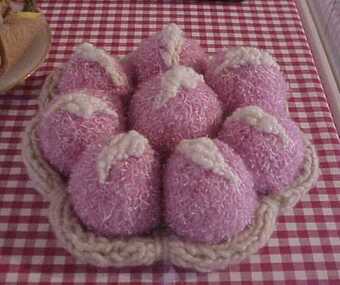 National Wool Museum
Textile Handcraft, The Afternoon Tea Party: Plate of Jelly Cakes
... To qualify, the entry needed to be from a group of five people and be able to demonstrate a number of wool crafts in at least five different items. ...To qualify, the entry needed to be from a group of five people and be able to demonstrate a number of wool crafts in at least five different items. ...The Geelong Handweavers and Spinners Guild Inc. entered "The Afternoon Tea Party" , designed by Val Ingeme, into the "Five Articles" Section of the Melbourne Sheep and Woolcraft Show c.1992. To qualify, the entry needed to be from a group of five people and be able to demonstrate a number of wool crafts in at least five different items. "The Afternoon Tea Party" was loaned to the NWM for display and was subsequently donated in 2003. This piece was designed and made by Val Ingeme from wool blend yarn, the plate mae by Les Clarke from wool.agricultural shows textile art handicrafts knitting, geelong handweavers and spinners guild inc., ingeme, mrs val, agricultural shows, textile art, handicrafts, knitting -
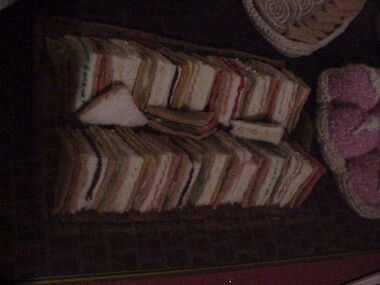 National Wool Museum
Textile Handcraft, The Afternoon Tea Party: Plate of Sandwiches
... To qualify, the entry needed to be from a group of five people and be able to demonstrate a number of wool crafts in at least five different items. ...To qualify, the entry needed to be from a group of five people and be able to demonstrate a number of wool crafts in at least five different items. ...The Geelong Handweavers and Spinners Guild Inc. entered "The Afternoon Tea Party" , designed by Val Ingeme, into the "Five Articles" Section of the Melbourne Sheep and Woolcraft Show c.1992. To qualify, the entry needed to be from a group of five people and be able to demonstrate a number of wool crafts in at least five different items. "The Afternoon Tea Party" was loaned to the NWM for display and was subsequently donated in 2003. This piece was designed by Janette Stonehouse and Val ingeme. the white bread and plate made by Janette Stonehouse and the brown bread by Val Ingeme.agricultural shows textile art handicrafts, geelong handweavers and spinners guild inc., felting, embroidery, ingeme, mrs val stonehouse, janette - geelong handweavers and spinners guild inc., agricultural shows, textile art, handicrafts -
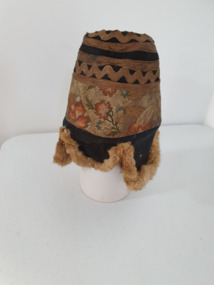 Great Stupa of Universal Compassion
Clothing - Tibetan hat with fur flaps
... Tibetan felt hats, typically made from wool felt crafted from sheep or yak wool, are well-suited to the harsh, cold climate of the Tibetan Plateau. ...Tibetan felt hats, typically made from wool felt crafted from sheep or yak wool, are well-suited to the harsh, cold climate of the Tibetan Plateau. ...Tibetan felt hats, typically made from wool felt crafted from sheep or yak wool, are well-suited to the harsh, cold climate of the Tibetan Plateau. A lining and decorative elements, such as embroidery or patterns, are often added. The fur flaps, made from rabbit or fox fur, provide extra warmth. Felt hats are worn by both men and women.Tibetan hats (also known as ‘chuba hats’ or ‘tsamtha’) are rich in cultural significance. They are often worn during religious ceremonies, festivals, and other important occasions. The design and quality of a hat can indicate the wearer's social status or role within the community.Traditional Tibetan hat with silk brocaded crown in dark and light brown colours, with orange and green flower pattern, and large fur flaps.everyday life, clothing, hats -
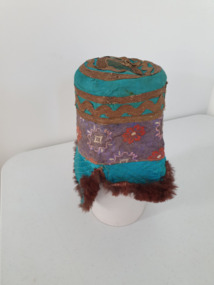 Great Stupa of Universal Compassion
Clothing - Tibetan hat with fur flaps
... Tibetan felt hats, typically made from wool felt crafted from sheep or yak wool, are well-suited to the harsh, cold climate of the Tibetan Plateau. ...Tibetan felt hats, typically made from wool felt crafted from sheep or yak wool, are well-suited to the harsh, cold climate of the Tibetan Plateau. ...Tibetan felt hats, typically made from wool felt crafted from sheep or yak wool, are well-suited to the harsh, cold climate of the Tibetan Plateau. A lining and decorative elements, such as embroidery or patterns, are often added. The fur flaps, made from rabbit or fox fur, provide extra warmth. Felt hats are worn by both men and women.Tibetan hats (also known as ‘chuba hats’ or ‘tsamtha’) are rich in cultural significance. They are often worn during religious ceremonies, festivals, and other important occasions. The design and quality of a hat can indicate the wearer's social status or role within the community.Traditional Tibetan hat with silk brocaded crown in blue and purple colours, with red and white flower pattern, and large fur flaps.everyday life, clothing, hats -
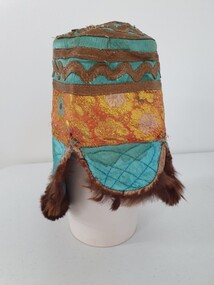 Great Stupa of Universal Compassion
Clothing - Tibetan hat with fur flaps
... Tibetan felt hats, typically made from wool felt crafted from sheep or yak wool, are well-suited to the harsh, cold climate of the Tibetan Plateau. ...Tibetan felt hats, typically made from wool felt crafted from sheep or yak wool, are well-suited to the harsh, cold climate of the Tibetan Plateau. ...Tibetan felt hats, typically made from wool felt crafted from sheep or yak wool, are well-suited to the harsh, cold climate of the Tibetan Plateau. A lining and decorative elements, such as embroidery or patterns, are often added. The fur flaps, made from rabbit or fox fur, provide extra warmth. Felt hats are worn by both men and women. Tibetan hats (also known as ‘chuba hats’ or ‘tsamtha’) are rich in cultural significance. They are often worn during religious ceremonies, festivals, and other important occasions. The design and quality of a hat can indicate the wearer's social status or role within the community.Traditional Tibetan hat with silk brocaded crown in blue, red and golden colours, and large fur flaps. The TFG initials written in ink inside.everyday life, clothing, hats -
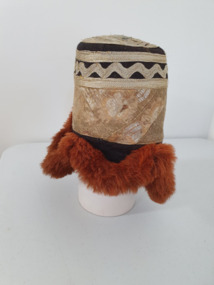 Great Stupa of Universal Compassion
Clothing - Tibetan hat with fur flaps
... Tibetan felt hats, typically made from wool felt crafted from sheep or yak wool, are well-suited to the harsh, cold climate of the Tibetan Plateau. ...Tibetan felt hats, typically made from wool felt crafted from sheep or yak wool, are well-suited to the harsh, cold climate of the Tibetan Plateau. ...Tibetan felt hats, typically made from wool felt crafted from sheep or yak wool, are well-suited to the harsh, cold climate of the Tibetan Plateau. A lining and decorative elements, such as embroidery or patterns, are often added. The fur flaps, made from rabbit or fox fur, provide extra warmth. Felt hats are worn by both men and women.Tibetan hats (also known as ‘chuba hats’ or ‘tsamtha’) are rich in cultural significance. They are often worn during religious ceremonies, festivals, and other important occasions. The design and quality of a hat can indicate the wearer's social status or role within the community.Traditional Tibetan hat with silk brocaded crown; it has dark brown background, and silver and beige flower pattern, the fur flaps are of ruse colour.everyday life, clothing, hats -
 National Wool Museum
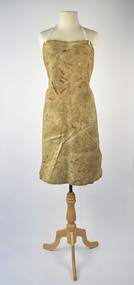
Textile - Dyers Apron
... Aprons were practical for protecting the wearer’s clothing as well as signifying their trade or craft. Wool dyeing was an industrialised profession to aid in the mass production of synthetic dyed clothing. ...Aprons were practical for protecting the wearer’s clothing as well as signifying their trade or craft. Wool dyeing was an industrialised profession to aid in the mass production of synthetic dyed clothing. ...Over time, apron design and function diversified, and many trades and professions developed their own versions. Aprons were practical for protecting the wearer’s clothing as well as signifying their trade or craft. Wool dyeing was an industrialised profession to aid in the mass production of synthetic dyed clothing. This dyer’s apron would have protected the wearer from the chemicals of the dyer’s trade. There are several ways that fabrics would have been dyed including direct application, exhaust methods, continuous methods and waterless dyeing methods. As seen folded in archive box.dying, wool, apron, wool dying -
 Orbost & District Historical Society
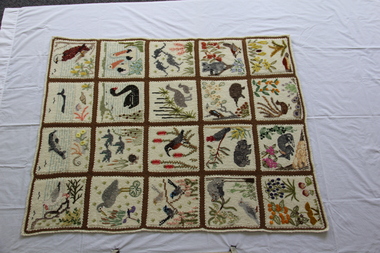
Textile - Handmade quilt, Elsa Williams, late1980s
... Elsa had her own sheep, spun and dyed the wool, and crafted this quilt. For about 20 years, Elsa was a member of a weaving group started by Gwenda Bland at Lake Tyers. ...Elsa had her own sheep, spun and dyed the wool, and crafted this quilt. For about 20 years, Elsa was a member of a weaving group started by Gwenda Bland at Lake Tyers. ...This quilt or wall hanging is entirely hand-made by noted Orbost district craftsperson, Elsa Williams (nee Elsa Beavis, b 27-5-1924, d 22-6-2007) who lived on a property at Wombat Creek near Orbost in the 1980s. Elsa had her own sheep, spun and dyed the wool, and crafted this quilt. For about 20 years, Elsa was a member of a weaving group started by Gwenda Bland at Lake Tyers. Elsa wove carpets for her own home at Wombat Creek. Gwenda Beavis was given this quilt by Elsa in 2007 and it was often displayed around the district, receiving many comments due to the quality of the workmanship and design. This quilt has been made from hand-spun and hand-dyed wool. The background is Tricot crochet squares, and the coloured decorations of Australian animals and plants have been embroidered onto the tricot squares. This items is significant because it shows excellent creativity and quality of workmanship. It also represents an era in Australia when hand-weaving, spinning, and dying wool became very popular as hand-crafts. A hand-made woollen quilt, cream background, with images of Australian flowers, plants, birds, and animals embroidered onto the cream background. elsa williams, handcrafted quilt, australiana design, spinning and weaving -
 Flagstaff Hill Maritime Museum and Village
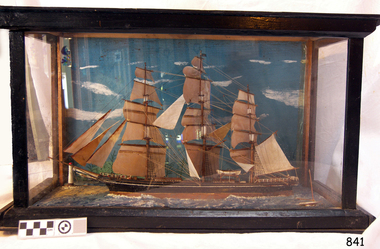
Craft - Ship Model, Cutty Sark
... wool export...Cornwall...training ship...Greenwich...British Museum...ship model...craft...Flagstaff Hill Warrnambool Flagstaff Hill Maritime Museum Shipwreck Coast Flagstaff Hill Maritime Village Maritime Museum Great Ocean Road Cutty sark historic sailing ship tea clipper sail training vessel cadet training ship commercial trading vessel cargo sail vessel Ferreria 1869 tea cargo tea trade China tea wool export Australian export Australian wool export Cornwall training ship Greenwich British Museum ship model craft hobby ship model Cutty Sark model making "Cutty Sark" Ship model: the clipper ship Cutty Sark in full ship rig with raised poop deck, deck house, three boats on deck (one has fallen). ...THE CUTTY SARK: - The Cutty Sark was built in Britain in 1869 and was one of the last great sailing ships. At first, it carried tea from China. Later, it was used to transport wool from Australia. It became famous for its speed and held the record for the fastest voyage from Australia to Britain for ten years. Later, a Portuguese company bought the ship and renamed it Ferreira. After that, a retired sea captain purchased it to use as a training ship in Cornwall. When the captain died, the ship was given to a training college in Greenwich in 1938. In 1954, it was placed in dry dock at Greenwich, where it remains on display. The Cutty Sark is a special ship because it carried wool from Australia to other parts of the world. Models like this one help us imagine what sea travel was like before steam-powered ships were common, and they show us how trade, travel and migration changed over time. The Cutty Sark is also famous for being very fast. It set a record for the journey from Australia to Britain and kept that title for ten years. Today, people still recognise its importance because it has been carefully preserved and is on display at the British Maritime Museum in Greenwich. Its story has also made it a favorite subject for people who enjoy building ship models. Ship model: the clipper ship Cutty Sark in full ship rig with raised poop deck, deck house, three boats on deck (one has fallen). It has a two-toned black and tan hull and three jibs. The model is set in a diorama of a blue sea, a lighthouse and another small yacht. It is housed in a glass-sided case with a dark grey painted structure. The bow has an inscription."Cutty Sark"flagstaff hill, warrnambool, flagstaff hill maritime museum, shipwreck coast, flagstaff hill maritime village, maritime museum, great ocean road, cutty sark, historic sailing ship, tea clipper, sail training vessel, cadet training ship, commercial trading vessel, cargo sail vessel, ferreria, 1869, tea cargo, tea trade, china tea, wool export, australian export, australian wool export, cornwall, training ship, greenwich, british museum, ship model, craft, hobby, ship model cutty sark, model making -
 Flagstaff Hill Maritime Museum and Village
Textile - Tapestry, Mary O'Brien, Gerda Shanley, Judith Stewart, Beryl Conlan (crafts people), 1988
... wool being hand-dyed. Handmade in 1988 by local women. Textile Tapestry Mary O'Brien, Gerda Shanley, Judith Stewart, Beryl Conlan (crafts people) ...This creative tapestry, woven in 1988, documents a thousand years of Warrnambool history. It hangs in the Great Circle Gallery at Flagstaff Hill and complements the theme of the display. Three local women, with the help of Museum staff, researched and designed the tapestry, which was woven in 1988 from wool and cotton. It is ten meters long and seventy centimetres high. The beautiful creation took seven months to create. The tapestry introduces the seafaring theme of Flagstaff Hill Maritime Museum and Village, and illustrates a timeline of events dating back to the arrival of Europeans in the Warrnambool area. It begins with the settlement of the area by Europeans and travels back in time as you walk further into the gallery, depicting shipwrecks along the coast, whaling in the area, early exploration by Europeans James Grant and Nicholas Baudin, back to the indigenous settlement of the area, represented by middens and indigenous symbols. Interestingly, before being hung in the gallery, the tapestry was originally hung with the intention of being framed from right to left. All materials in the cotton and wool tapestry, including dyed wool, were prepared for a cost of $33,000. The project was supported by local philanthropic groups.The tapestry is a hand worked creation by local women. It shows a visual display of a thousand years of Warrnambool's history, connecting the land and sea to people and events.Tapestry of the early history of the Warrnambool area, rectangular in shape. Materials include cotton and wool, some of the wool being hand-dyed. Handmade in 1988 by local women.A plaque accompanies the Tapestry "Flagstaff Hill Maritime Tapestry / 1989 / Tapestry: Woven Cotton and Wool / Mary O'Brien Gerda Shanley / Judith Stewart Beryl Conlan"flagstaff hill, flagstaff hill maritime museum and village, warrnambool, maritime museum, maritime village, great ocean road, shipwreck coast, tapestry, warrnambool history, warrnambool textiles, wall hanging, weave, south west victoria history, south west victoria timeline, indigenous people, early settlement, whaling, james grant, nicholas baudin, cotton, wool, dyed yarn, handmade, hand-dyed yarn -
 Flagstaff Hill Maritime Museum and Village
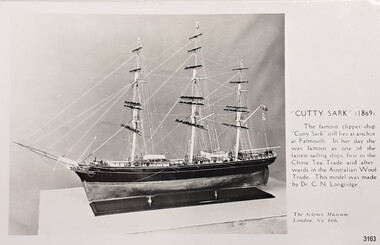
Postcard - Vessel, Sailing Ship, B Matthews (photo printer), Cutty Sark, 20t century
... wool export...China tea trade...Cornwall...training ship...Greenwich...British Museum...ship model...craft...Flagstaff Hill Warrnambool Flagstaff Hill Maritime Museum Shipwreck Coast Flagstaff Hill Maritime Village Maritime Museum Great Ocean Road Cutty sark historic sailing ship tea clipper sail training vessel cadet training ship commercial trading vessel cargo sail vessel clipper races Scott and Linton of Dunbarton Scottland race record Ferreria 1869 tea cargo tea trade China tea wool export Australian export Australian wool export China tea trade Cornwall training ship Greenwich British Museum ship model craft hobby ship model Cutty Sark model making postcard C Nelson Longridge Charles Nelson Longridge B Matthews photo printer B Matthews Bradford England B Matthews (photo printer ) Ltd. ...The maker of the ship model on the postcard was Dr C Nelson Longridge (1876–1952), an English surgeon, maritime author, and builder of detailed ship models. Other models include the SS Marioness and the steam yacht Asia. He also wrote the books 'Cutty Sark' and 'The Anatomy of Nelson's Ships'. The postcard was printed by B Matthews, Bradford, England, incorporated in 1970 as B. Matthews (Photo Printers) Limited. Collections of B Matthews' photo prints of famous painted portraits are held at The National Portrait Gallery of London. Copies of B Matthews postcards are today sought after by collectors. THE CUTTY SARK: - The Cutty Sark was built in Britain in 1869 and was one of the last great sailing ships. At first, it carried tea from China. Later, it was used to transport wool from Australia. It became famous for its speed and held the record for the fastest voyage from Australia to Britain for ten years. Later, a Portuguese company bought the ship and renamed it Ferreira. After that, a retired sea captain purchased it to use as a training ship in Cornwall. When the captain died, the ship was given to a training college in Greenwich in 1938. In 1954, it was placed in dry dock at Greenwich, where it remains on display. This postcard features a photograph of a model of the sailing ship Cutty Sark, making it significant because of its connection to this well-known vessel. The famous tea clipper transported wool from Australia to markets around the world. Models such as this one help us understand what sea travel was like before steam-powered ships became widespread, while also illustrating how trade, travel and migration developed over time. Cutty Sark was also celebrated for its speed. It broke records on the voyage from Australia to Britain and held this distinction for ten years. Its importance is still recognised today, as the ship has been carefully preserved and is now displayed at the British Maritime Museum in Greenwich. Its remarkable history has also made it a popular subject for model ship enthusiasts. The postcard is also valuable because it shows a model of Cutty Sark built by the renowned C. N. Longridge, who was not only a respected surgeon but also a skilled model maker and author of detailed maritime works. A further connection is found in the printer, B Matthews, who photographed and printed collections featuring famous people, model ships and maritime scenes, adding another layer of historical interest to the postcard. Postcard, black and white, showing a model of the sailing ship Cutty Sark. Printed details are provided on both the front and back of the postcard. Inscriptions include a brief description of the Cutty Sark, the location and maker of the model, and the printer's contact information. The postcard was printed in Great Britain.FRONT: " "CUTTY SARK" (1869) The famous clipper ship "Cutty Sark" still lies at anchor at Falmouth. In her day, she was famous as one of the fastest sailing ships, first in the China Tea Trade, and afterwards in the Australian Wool Trade. This model was made by Dr C.N. Longridge." "The Science Museum, London. No. 166." REVERSE: "POSTCARD" "COMMUNICATION" "ADDRESS" "Printed by B Matthews, Bradford, England"flagstaff hill, warrnambool, flagstaff hill maritime museum, shipwreck coast, flagstaff hill maritime village, maritime museum, great ocean road, cutty sark, historic sailing ship, tea clipper, sail training vessel, cadet training ship, commercial trading vessel, cargo sail vessel, clipper races, scott and linton of dunbarton scottland, race record, ferreria, 1869, tea cargo, tea trade, china tea, wool export, australian export, australian wool export, china tea trade, cornwall, training ship, greenwich, british museum, ship model, craft, hobby, ship model cutty sark, model making, postcard, c nelson longridge, charles nelson longridge, b matthews, photo printer, b matthews bradford england, b matthews (photo printer ) ltd. -
 Flagstaff Hill Maritime Museum and Village
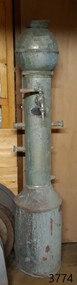
Functional object - Water Boiler, Jackson Boilers Ltd, 1920s
... wool, horses, cattle, timber, explosives, potatoes, shell grit, and gypsum. It passed through numerous owners over the years and primarily maintained its purpose as a cargo vessel. In 1975, the decommissioned Reginald M was purchased by Flagstaff Hill Maritime Museum as an attraction. Although restoration efforts were undertaken and maintained for the craft...wool, horses, cattle, timber, explosives, potatoes, shell grit, and gypsum. It passed through numerous owners over the years and primarily maintained its purpose as a cargo vessel. In 1975, the decommissioned Reginald M was purchased by Flagstaff Hill Maritime Museum as an attraction. Although restoration efforts were undertaken and maintained for the craft ...Jackson Boilers Ltd., brass founders, electro platers and sheet metal works made this tube water boiler. It was a fitting in the vessel Reginald M, a small cargo ship built at Port Adelaide in 1922 and named after her builder and first owner, John Murch. The Reginald M was launched at Largs Bay, South Australia, in 1922 to carry cargo around South Australia that included guano, barley, wool, horses, cattle, timber, explosives, potatoes, shell grit, and gypsum. It passed through numerous owners over the years and primarily maintained its purpose as a cargo vessel. In 1975, the decommissioned Reginald M was purchased by Flagstaff Hill Maritime Museum as an attraction. Although restoration efforts were undertaken and maintained for the craft above the water line, deterioration occurred below the surface and resulted in the ship being unsafe for visitors to board. It was broken up and removed from Flagstaff Hill in 2018, but items such as the historical boiler remain in Flagstaff Hill’s Collection. JACKSON BOILERS LTD.: - In 1911, Henry Jackson was the Managing Director at Jackson Boilers Ltd. He had gained around 30 years’ experience as a tin plate worker, plumber and gas fitter at Ilkey in 1881, then at Leeds by 1901. By 1921, he had changed employment from Jackson Boilers to Managing Director of Patent Water Boilers. During World War I, Jackson Boilers Ltd of Leeds performed war work like many other manufacturers at that time. The firm made cases for the explosive picric acid and electroplated fuse hole plugs. In 1918, the firm employed 15 males and 19 females. Jacksons Boilers became very successful throughout the first half of the twentieth century with showrooms and sales offices in Scotland, the Midlands and Southern England. It also had an office in Dublin, Ireland. In the post-war 1920s, the firm’s production included instantaneous water boilers and coffee machines for cafes, restaurants and canteens. Jackson Boilers also began to supply shipping lines with catering water boilers for their ships. The firm applied for a USA patent for the tube boiler in 1930, for the design which appears to have been invented in 1926. A 1971 advertisement adds the credentials, Members of the Catering Equipment Manufacturers’ Association. The tube water boiler was designed specifically for use in a ship's restaurant or dining area and patented by Jackson Boilers Ltd. of Leeds. The boiler is significant as a patented design, illustrating the evolution of maritime, commercial and domestic water boilers that have led to many innervations and improvements in today's boilers that are used in heating and in producing hot water for domestic and catering use. It is also significant as it is one of the earlier boilers the Jackson company made in the early 1920s before they applied for a US patent on their revised design in 1926.Water boiler, free standing Jackson's Tube boiler. A tall metal cylindrical stand with a metal sphere on top and several pipe fittings on the sides. A brass tap with a lever handle is connected to the front. A plaque with maker's details is attached under the tap. Details are also impressed into the cylinder above the tap.Jackson Boilers Leeds Ltd. "JACKSON'S PATENT" . Other details indecipherable. flagstaff hill maritime museum and village, flagstaff hill maritime museum, flagstaff hill, maritime museum, maritime village, warrnambool, great ocean road, leeds, jackson boilers ltd, jackson boilers, henry jackson, brass founders, electro platers, sheet metal works, patent water boilers, leeds manufacturer, tube water boiler, domestic boiler, tube domestic boiler, tube boiler, water heaters, water boilers, self-feeding water boilers, sheet metal work instantaneous water heaters, engineering, allied trades, metal workers, metal trade, food machinery, hospitality equipment, ship equipment, ship water boiler, ship heater, catering boilers, café boiler, restaurant boiler, canteen boiler, catering equipment manufacturers’ association, cema, kitchen equipment, kitchen appliance, war work, world war i, wwi, picric acid, picric acid cases, fuse hole plugs, electro plated fuse hole plugs, reginald m, cargo ship, port adelaide, 1922, john murch -
 City of Moorabbin Historical Society (Operating the Box Cottage Museum)
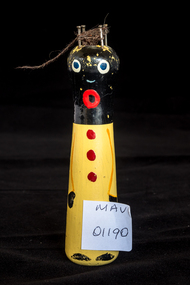
Craft work, doll, wool chain stitch, 20thC
... Craft work, doll, wool chain stitch...The chains could be made to any length and then sewn together to make a usable object eg face washer.Gladys Reed was a member of the Ormond Choral Society c 1950. who performed plays and musicals the City of Moorabbin and she was skilled in hand knitting, crochet and dressmaking Gladys Reed was a member of the Ormond Choral Society c 1950. who performed plays and musicals in the City of Moorabbin and this Doll was made and used by her family.c1950 knitting, clothing, haberdashery, crochet, doilies, brighton, moorabbin, pioneers, dressmaking, market gardeners, early settlers, craftwork , bentleigh, lacework, moorabbin shire, reed gladys, dairy farms, fruit orchards Painted doll features A small piece of painted, carved wood with central hollow and 4 nails on top used for making/ knitting a woollen chain. Craft work, doll, wool chain stitch Mrs Gladys Reed ...20th C and probably earlier families could make this simple 'knitting machine' by using a piece of round, hollow wood and knocking 4 nails into one end of the cylinder leaving a protrusion of 2cm. An empty cotton reel was commonly used with left over knitting wool. Children were taught to wind the wool around the nails in loops, figure of 8 and other patterns so that a chain was made which gradually protruded through the base of the cylinder as a knitted chain. The chains could be made to any length and then sewn together to make a usable object eg face washer.Gladys Reed was a member of the Ormond Choral Society c 1950. who performed plays and musicals the City of Moorabbin and she was skilled in hand knitting, crochet and dressmakingGladys Reed was a member of the Ormond Choral Society c 1950. who performed plays and musicals in the City of Moorabbin and this Doll was made and used by her family.c1950A small piece of painted, carved wood with central hollow and 4 nails on top used for making/ knitting a woollen chain.Painted doll featuresknitting, clothing, haberdashery, crochet, doilies, brighton, moorabbin, pioneers, dressmaking, market gardeners, early settlers, craftwork , bentleigh, lacework, moorabbin shire, reed gladys, dairy farms, fruit orchards -
 City of Moorabbin Historical Society (Operating the Box Cottage Museum)
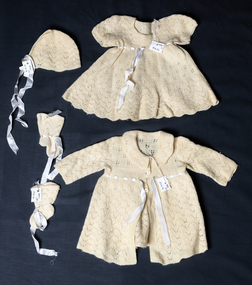
Clothing, Baby Layette 5piece wool hand knitted 1956, 1956
... craft workers and dressmakers as they cared for their families. Typical hand knitted woollen clothes for a baby c1960 in City of Moorabbin clothing, baby layette, knitting,craftwork, wool, early settlers, city of moorabbin, bentleigh, ormond, moorabbin, post war settlers, world war 11 1939-40 sharp valma, Baby Layette consisting of hand knitted cream woollen dress, coat, hat and bootees for baby 1956 Clothing, Baby Layette 5piece wool hand knitted 1956 Mrs Valma Sharp ...Baby Layette consisting of hand knitted woolen dress, coat, hat and bootees with satin ribbons that was worn in City of Moorabbin c1960. Women were accomplished knitters, craft workers and dressmakers as they cared for their families. Typical hand knitted woollen clothes for a baby c1960 in City of Moorabbin Baby Layette consisting of hand knitted cream woollen dress, coat, hat and bootees for baby 1956clothing, baby layette, knitting,craftwork, wool, early settlers, city of moorabbin, bentleigh, ormond, moorabbin, post war settlers, world war 11 1939-40 sharp valma, -
 City of Moorabbin Historical Society (Operating the Box Cottage Museum)
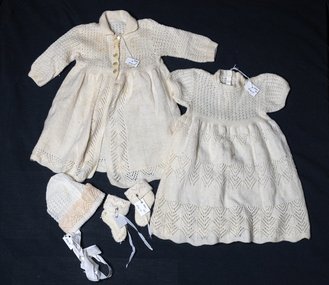
Clothing, Baby Layette 5 piece wool hand knitted 1962, 1962
... Typical of a Baby Layette of hand knitted woollen dress, coat , hat, and bootees with satin ribbon worn in City of Moorabbin c 1960 Women were accomplished knitters, craft workers and dressmakers as they cared for their families knitting, craftwork, baby clothes, baby layette, sharp valma, wool, city of moorabbin, ormond, bentleigh, moorabbin, post war settlers, world war 11 1939-40, baby boomers, Baby Layette consisting of cream woollen hand knitted dress, coat, hat and bootees with ribbon Clothing, Baby Layette 5 piece wool hand knitted 1962 Mrs Valma Sharp ...Women in the City of Moorabbin knitted, sewed and crocheted clothes for their babies as they established their families in the new settlements in Ormond, Bentleigh and Moorabbin that followed World War 11. Typical of a Baby Layette of hand knitted woollen dress, coat , hat, and bootees with satin ribbon worn in City of Moorabbin c 1960 Women were accomplished knitters, craft workers and dressmakers as they cared for their families Baby Layette consisting of cream woollen hand knitted dress, coat, hat and bootees with ribbon knitting, craftwork, baby clothes, baby layette, sharp valma, wool, city of moorabbin, ormond, bentleigh, moorabbin, post war settlers, world war 11 1939-40, baby boomers,
