
Showing 331 items matching "world war 2 history"
-
 Lara RSL Sub Branch
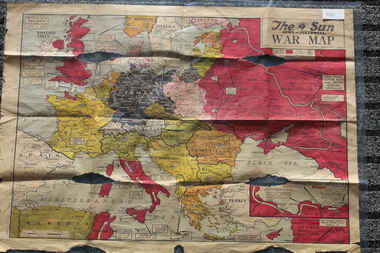
Newspaper - The Sun Newspaper Dated 5/8/1944 -specia - World War 2 Europe Map and History Of World War 2 and Nazi Tide Flows and Ebbs Across Europe, THe Sun Newspaper Dated 5/8//1944 - Special War Maps
... The Sun Newspaper Dated 5/8/1944 -specia - World War 2 Europe Map and History Of World War 2 and Nazi Tide Flows and Ebbs Across Europe... World War 2 Europe Map and History Of World War 2 and Nazi Tide Flows and Ebbs Across Europe...The Sun Newspaper Dated 5/8/1944 world war 2 europe map and hisytory of world war 2 and nazi tide flows and ebbs across europe World War 2 Europe Map and History Of World War 2 and Nazi Tide Flows and Ebbs Across Europe Local Newspaper Dated 5/8/1944 - Special World War 2 Maps THe Sun Newspaper Dated 5/8//1944 - Special War Maps Newspaper The Sun Newspaper Dated 5/8/1944 -specia - World War 2 Europe Map and History Of World War 2 and Nazi Tide Flows and Ebbs Across Europe ...The Sun Newspaper Dated 5/8/1944 Local Newspaper Dated 5/8/1944 - Special World War 2 Maps World War 2 Europe Map and History Of World War 2 and Nazi Tide Flows and Ebbs Across Europeworld war 2 europe map and hisytory of world war 2 and nazi tide flows and ebbs across europe -
 Lara RSL Sub Branch
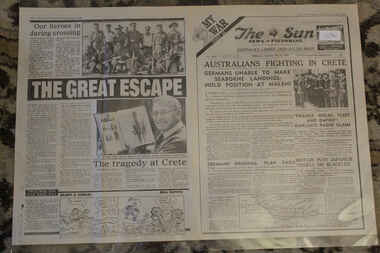
Newspaper - The Sun News Paper Special Dated 24/ 5/ 1941 - My War Part 14 - Australians Fighting In Crete, Local Newspaper reporting on World War 2 Events - Dated 24/5/1941 - Tragety At Crete
... ...world war 2 history...Local Newspaper reporting on World War 2 Events - My War Part 14 - Dated 24/5/1941 Local News Paper Reporting on World War 2 Events = Special Dated 24/5/1941 australians fighting in crete world war 2 history local newspaper dated 24/5/1941 Australians Fighting in Crete - Te Tragedy at Crete The Sun Newspaper - Special - My War Part 14 - Reporting on Events - The Tragedy at Crete Local Newspaper reporting on World War 2 Events - Dated 24/5/1941 - Tragety At Crete Newspaper The Sun News Paper Special Dated 24/ 5/ 1941 - My War Part 14 - Australians Fighting In Crete ...Local Newspaper reporting on World War 2 Events - My War Part 14 - Dated 24/5/1941Local News Paper Reporting on World War 2 Events = Special Dated 24/5/1941The Sun Newspaper - Special - My War Part 14 - Reporting on Events - The Tragedy at CreteAustralians Fighting in Crete - Te Tragedy at Creteaustralians fighting in crete, world war 2 history, local newspaper dated 24/5/1941 -
 4th/19th Prince of Wales's Light Horse Regiment Unit History Room
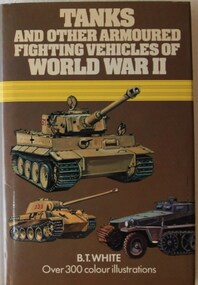
Book, Peerage Books, B T White: Tanks and Other Armoured Fighting Vehicles of World War II, 1972 (exact)
... world war 2...military history...world war 2 military history tanks armour armoured fighting vehicles b t white world war 2 military history tanks armour armoured fighting vehicles b t white ISBN 0 907408 35 4 This book covers the period 1939-45, which was the most momentous period in the history of the tank. ...This book covers the period 1939-45, which was the most momentous period in the history of the tank. Includes 160 pages of coloured drawings with descriptive text. The book is divided into two sections - Book 1 dealing with 'Blitzkrieg Era' of 1939-41, and Book II covering the years 1942-5, in which some of the greatest tank battles of all time took place. ISBN 0 907408 35 4world war 2, military history, tanks, armour, armoured fighting vehicles, b t white, world war 2, military history, tanks, armour, armoured fighting vehicles, b t white -
 4th/19th Prince of Wales's Light Horse Regiment Unit History Room
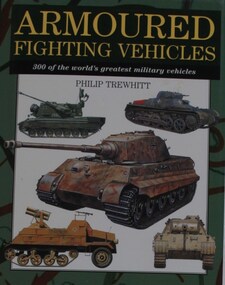
Book, Philip Trewhitt: Armoured Fighting Vehicles, 300 of the world's greatest military vehicles, 2000 (exact); Reprinted 2001, 2002, 2003, 2004
... world war 1...world war 2...military history...world war 1 world war 2 military history tanks armour armoured fighting vehicles wheeled infantry vehicles anti aircraft guns military vehicles philip trewhitt world war 1 world war 2 military history tanks armour armoured fighting vehicles wheeled infantry vehicles anti aircraft guns military vehicles philip trewhitt ISBN 1-84013-338-4 A compendium of of the most important and influential military vehicles that have been in service since World War 1. ...A compendium of of the most important and influential military vehicles that have been in service since World War 1. Each vehicle featured is illustrated by a full-colour side-profile artwork, and accompanied by a detailed specifications table giving country of origin, crew, weight, dimensions, armour, armament, powerplant and performance, all measurements in imperial and metric. Accompanying text for each vehicle summarises its development and service history.ISBN 1-84013-338-4world war 1, world war 2, military history, tanks, armour, armoured fighting vehicles, wheeled infantry vehicles, anti aircraft guns, military vehicles, philip trewhitt, world war 1, world war 2, military history, tanks, armour, armoured fighting vehicles, wheeled infantry vehicles, anti aircraft guns, military vehicles, philip trewhitt -
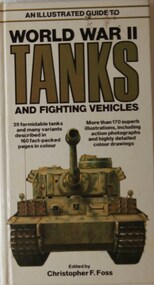 4th/19th Prince of Wales's Light Horse Regiment Unit History Room
Book, An Illustrated Guide to World War II Tanks and Fighting Vehicles, 1981 (exact)
... world war 2...military history...world war 2 military history tanks armoured vehicles christopher f foss world war 2 military history tanks armoured vehicles christopher f foss ISBN 0 7018 1488 8 An illustrated directory of major battle tanks used by the world's armies in World War II. ...An illustrated directory of major battle tanks used by the world's armies in World War II. Included photographs, illustrations and specifications.ISBN 0 7018 1488 8world war 2, military history, tanks, armoured vehicles, christopher f foss, world war 2, military history, tanks, armoured vehicles, christopher f foss -
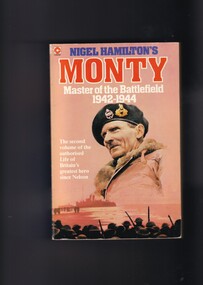 Monbulk RSL Sub Branch
Book, Nigel Hamilton, Monty: Master of the battlefield 1942-1944, 1985
... ...world war 2 - history...field marshal montgomery - biography world war 2 - history A biography of Britain's greatest hero since Nelson. ...A biography of Britain's greatest hero since Nelson. This volume covers the Middle East campaigns and the invasion of FranceIndex, Bibliography, ill (b/w), maps, p.896.non-fictionA biography of Britain's greatest hero since Nelson. This volume covers the Middle East campaigns and the invasion of Francefield marshal montgomery - biography, world war 2 - history -
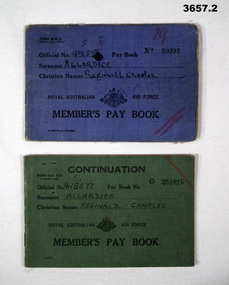 Bendigo Military Museum
Financial record - PAY BOOKS, RAAF WW2, (.1) 1942 - 1944, (.2) 1944 - 1945
... world war 2...payment history...Refer Cat No 3627.5 for his service history. world war 2 payment history (.1) Pay book No 80392, RAAF, blue cover re Allardice, Reginald Charles, has small inset photo re Allardice, entries are in blue and red ink. (.2) Pay book No 251015, RAAF, green cover re Allardice, Reginald Charles, entries are in blue ink, has small inset photo re Allardice. ...Items relate to Reginald Charles ALLARDICE No 418577 RAAF. Refer Cat No 3627.5 for his service history.(.1) Pay book No 80392, RAAF, blue cover re Allardice, Reginald Charles, has small inset photo re Allardice, entries are in blue and red ink. (.2) Pay book No 251015, RAAF, green cover re Allardice, Reginald Charles, entries are in blue ink, has small inset photo re Allardice.world war 2, payment history -
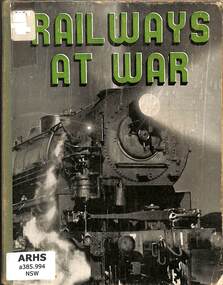 Victorian Railway History Library
Book, New South Wales Government Railways, Railways At War
... Railroad operations in war - Australia - history...World War 2...Railroad operations in war - Australia - history World War 2 - transport - history A record of the activities of the New South Wales Government Railways in the second world war. ill, p.71. ...A record of the activities of the New South Wales Government Railways in the second world war.ill, p.71.non-fictionA record of the activities of the New South Wales Government Railways in the second world war.railroad operations in war - australia - history, world war 2 - transport - history -
 Greensborough Historical Society
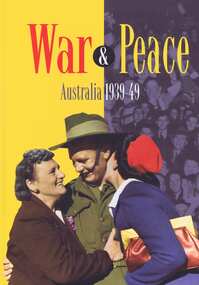
Book, Australia Post, War & Peace Australia 1939 - 1949, 1995
... world war 2...Australian History...Philitalic history of stamps and times during World War 2 and Australia 1939-1949...Philitalic history of stamps and times during World War 2 and Australia 1939-1949 world war 2 Australian History postage stamps philately australia post 40 page book with hard cover and coloured and black and white photos and text War & Peace Australia 1939 - 1949 Book Book Australia Post ...Philitalic history of stamps and times during World War 2 and Australia 1939-194940 page book with hard cover and coloured and black and white photos and textworld war 2, australian history, postage stamps, philately, australia post -
 Federation University Historical Collection
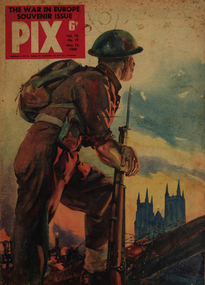
Magazine, Pix - The War in Europe Souvenir Issue, 1945, 12/05/1945
... World War 2 Pictorial History of the War images of the war ...World War 2 Pictorial History of the War images of the war world war 2 britain japan allies europe World War 2 The Empire's ideals Pictorial Diary of the war 32 pages The War in Europe Souvenir Issue Pix - The War in Europe Souvenir Issue, 1945 Magazine Magazine ...World War 2 Pictorial History of the War images of the war 32 pages The War in Europe Souvenir IssueThe Empire's ideals Pictorial Diary of the war world war 2, britain, japan, allies, europe, world war 2 -
 Bendigo Military Museum
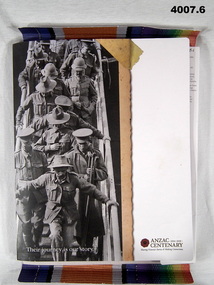
Education kit, Print Board, ANZAC CENTENARY 2014-2018
... 'Sharing Victoria's Stories & Making Connections'. .2) 'WORLD WAR ONE HISTORY - Victoria's Story'. .3) 'VICTORIA'S WORLD WAR ONE LEGACY - Recipients of the Victoria Cross'. .4) 'COMMUNITY RESOURCE GUIDE - Planning a commemorative event and sharing local stories'. ...'Sharing Victoria's Stories & Making Connections'. .2) 'WORLD WAR ONE HISTORY - Victoria's Story'. .3) 'VICTORIA'S WORLD WAR ONE LEGACY - Recipients of the Victoria Cross'. .4) 'COMMUNITY RESOURCE GUIDE - Planning a commemorative event and sharing local stories'. ...ANZAC CENTENARY 2014-2018. 'Sharing Victoria's Stories & Making Connections'. .2) 'WORLD WAR ONE HISTORY - Victoria's Story'. .3) 'VICTORIA'S WORLD WAR ONE LEGACY - Recipients of the Victoria Cross'. .4) 'COMMUNITY RESOURCE GUIDE - Planning a commemorative event and sharing local stories'. .1) Folder - cardboard, folded to store books etc. Gold, black & white print on front and spine. Illustrated black & white photograph of troops disembarking. Interior - colour illustration of medal ribbons. .2) .3) .4) - soft cover, cardboard, black & gold print front & back. Illustrated black & white photograph. .2) troops in shell crater .3) troops on wharf .4) group portrait of 15th Battalion. Pages - cut, plain, white, illustrated black & white photographs .2) 42 pages .3) biographies 31 pages .4) 18 pages .5) letter A4 white paper .6 medal mounted on cardboard - copy of 1919 children's Peace Medal with printed colour ribbon. oval block print on cardboard, beige background. .7) Duplicate folder.ww1, educational folder -
 Flagstaff Hill Maritime Museum and Village
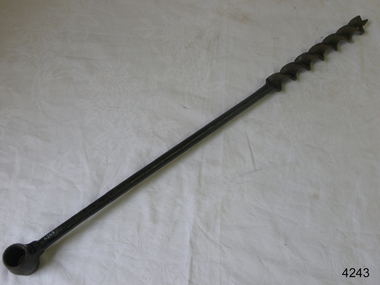
Tool - Auger, Thomas R Ellin, First half of the 20th century
... history as far back as the 1760s when Alfrid Ridge & Sons was established as a manufacturer of woodworking tools. Ridge was bought by the current owning family in 1932. The Footprint brand originates from 1875 when Thomas R Ellin, a member of a cutlery manufacturing family, started a tool manufacturing business under the brand "Footprint". This subsequently became known as Thomas R Ellin (Footprint Works). This company was bought by the current owning family in 1948 and began to manufacture a range of tools under the Footprint, Domino, Climax, John Bull, and Clinker brands. During World War 2...history as far back as the 1760s when Alfrid Ridge & Sons was established as a manufacturer of woodworking tools. Ridge was bought by the current owning family in 1932. The Footprint brand originates from 1875 when Thomas R Ellin, a member of a cutlery manufacturing family, started a tool manufacturing business under the brand "Footprint". This subsequently became known as Thomas R Ellin (Footprint Works). This company was bought by the current owning family in 1948 and began to manufacture a range of tools under the Footprint, Domino, Climax, John Bull, and Clinker brands. During World War 2 ...Footprint Tools is a hand tool manufacturer based in Sheffield, England. In 2014 most of their hand tools were still made in Sheffield at the Footprint factory. Footprint Tools can trace its manufacturing history as far back as the 1760s when Alfrid Ridge & Sons was established as a manufacturer of woodworking tools. Ridge was bought by the current owning family in 1932. The Footprint brand originates from 1875 when Thomas R Ellin, a member of a cutlery manufacturing family, started a tool manufacturing business under the brand "Footprint". This subsequently became known as Thomas R Ellin (Footprint Works). This company was bought by the current owning family in 1948 and began to manufacture a range of tools under the Footprint, Domino, Climax, John Bull, and Clinker brands. During World War 2 the divisions of the business were engaged in manufacturing hand tools for British and Commonwealth forces. After the war Footprint continued to grow, manufacture, and expand its range of hand tools for the professional tradesman. In 2008 Footprint moved to a larger factory and invested in new forging equipment, but this process was interrupted by a global recession, and Footprint was unable to generate enough business to cover the cost of the upgrades. In early 2009 the company was forced to liquidate and lay off its staff to pay creditors. The Jewitt family retained the brand and intellectual property, and later that year revived the company under the name Footprint Sheffield and began producing a smaller range of products at first. With the same family of owner-managers, now run by the fourth generation, in 2015 Footprint continues to manufacture most of their products in Sheffield, England, and exports worldwide.This item gives us a look into the history of the beginnings of an early company that made tools in Sheffield England and is still producing tools today.Ring Auger, Double Twist with Lead Screw, bit 1" with round shaft Imprinted 'footprint' trademarkflagstaff hill, warrnambool, shipwrecked-coast, flagstaff-hill, flagstaff-hill-maritime-museum, maritime-museum, shipwreck-coast, flagstaff-hill-maritime-village -
 Federation University Historical Collection
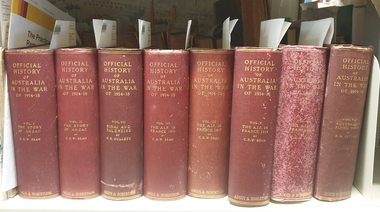
Book, Charles E.W. Bean, The Official History of Australia in the War of 1914-1918, Volume 2, The Story of ANZAC from 4 May, 1915 to the Evacuation, 1937
... world war one Red Hardcovered book of 975 pages. Indexed. Illustrated. Gift of Professor Scott Bowman, Vice-Chancellor, Central Queensland University, 2014 The Official History of Australia in the War of 1914-1918, Volume 2, The Story of ANZAC from 4 May, 1915 to the Evacuation Book Book Charles E.W. ...Red Hardcovered book of 975 pages. Indexed. Illustrated. Gift of Professor Scott Bowman, Vice-Chancellor, Central Queensland University, 2014charles bean, world war one -
 Flagstaff Hill Maritime Museum and Village
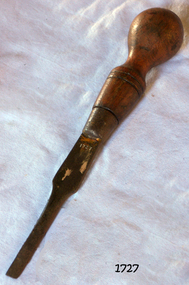
Tool - Screw Driver, A Ridge and Son, 1950s Item is in company catalogue in 1951
... history as far back as the 1760s when Alfrid Ridge & Sons was established as a manufacturer of wood working tools. Ridge was bought by the current owning family in 1932. The Footprint brand originates from 1875 when Thomas R Ellin, a member of a cutlery manufacturing family, started a tool manufacturing business under the brand “Footprint”. This subsequently became known as Thomas R Ellin (Footprint Works). This company was bought by the current owning family in 1948 and began to manufacture a range of tools under the Footprint, Domino, Climax, John Bull and Clinker brands. During World War 2...history as far back as the 1760s when Alfrid Ridge & Sons was established as a manufacturer of wood working tools. Ridge was bought by the current owning family in 1932. The Footprint brand originates from 1875 when Thomas R Ellin, a member of a cutlery manufacturing family, started a tool manufacturing business under the brand “Footprint”. This subsequently became known as Thomas R Ellin (Footprint Works). This company was bought by the current owning family in 1948 and began to manufacture a range of tools under the Footprint, Domino, Climax, John Bull and Clinker brands. During World War 2 ...Footprint Tools is a hand tool manufacturer based in Sheffield, England. In 2014 most of their hand tools are still made in Sheffield at the Footprint factory. Footprint Tools can trace its manufacturing history as far back as the 1760s when Alfrid Ridge & Sons was established as a manufacturer of wood working tools. Ridge was bought by the current owning family in 1932. The Footprint brand originates from 1875 when Thomas R Ellin, a member of a cutlery manufacturing family, started a tool manufacturing business under the brand “Footprint”. This subsequently became known as Thomas R Ellin (Footprint Works). This company was bought by the current owning family in 1948 and began to manufacture a range of tools under the Footprint, Domino, Climax, John Bull and Clinker brands. During World War 2 the divisions of the business were engaged in manufacturing hand tools for British and Commonwealth forces. After the war Footprint continued to grow, manufacture and expand its range hand tools for the professional tradesman. In 2004, Footprint cooperated with the University of Sheffield in a study of modern manufacturing techniques. In 2008 Footprint moved to a larger factory and invested in new forging equipment, but this process was interrupted by a global recession, and Footprint was unable to generate enough business to cover the cost of the upgrades. In early 2009 the company was forced to liquidate and lay off its staff in order to pay creditors. The Jewitt family retained the brand and intellectual property, and later that year revived the company under the name Footprint Sheffield, and began producing a smaller range of products at first. With the same family of owner managers, now run by the fourth generation, in 2015 Footprint continues to manufacture most products in Sheffield, England and exports worldwide.A tool that was made by a UK company in the 1950s that has a long history of tool manufacture and after many changes in company ownership is still producing tools today in Sheffield England.Screw driver wooden handle turned and steel blade. Made in Sheffield by Alfrid Ridge and Son. London patternNoneflagstaff hill, warrnambool, shipwrecked-coast, flagstaff-hill, flagstaff-hill-maritime-museum, maritime-museum, shipwreck-coast, flagstaff-hill-maritime-village, screw driver, alfrid ridge & son, footprint tools, tools -
 The Beechworth Burke Museum
Audio - Oral History, Jennifer Williams, Mr Ken Howe, 23rd September 2000
... Ken discusses his job's, family, the arrival of Baltic immigrants after world war 2, The impact of the story of Kelly's in his life and just life in general at Beechworth. This oral history...Ken discusses his job's, family, the arrival of Baltic immigrants after world war 2, The impact of the story of Kelly's in his life and just life in general at Beechworth. This oral history ...Ken Howe was born on the 9th February 1941 in Beechworth. His parents came from Everton. His mothers parents were from Northern Island and his fathers parents from Everton. They were farmers and did not come to Beechworth for gold. Ken left school when he was 13 and a half and worked at the Zwar brothers Tannery for four years. He then went on to work at with the Forest Commission. Ken discusses his job's, family, the arrival of Baltic immigrants after world war 2, The impact of the story of Kelly's in his life and just life in general at Beechworth. This oral history recording was part of a project conducted by Jennifer Williams in the year 2000 to capture the everyday life and struggles in Beechworth during the twentieth century. This project involved recording seventy oral histories on cassette tapes of local Beechworth residents which were then published in a book titled: Listen to what they say: voices of twentieth century Beechworth. These cassette tapes were digitised in July 2021 with funds made available by the Friends of the Burke.Ken Howe's story offers an insight into life in Beechworth from the 1940's onwards, he details the various jobs that occurred in the Zwar brothers tannery factory, the tasks that occurred for the forest commission. He also provides insight into the role the Kelly story played in their lives and the significant places were incidents occurred. His story also offers a look into everyday Beechworth life and how the baltic immigrants after World War 2 integrated into the Australian lifestyle by working at the Zwar brothers tannery. This oral history account is socially and historically significant as it is a part of a broader collection of interviews conducted by Jennifer Williams which were published in the book 'Listen to what they say: voices of twentieth-century Beechworth.' While the township of Beechworth is known for its history as a gold rush town, these accounts provide a unique insight into the day-to-day life of the town's residents during the 20th century, many of which will have now been lost if they had not been preserved.This is a digital copy of a recording that was originally captured on a cassette tape. The cassette tape is black with a horizontal white strip and is currently stored in a clear flat plastic rectangular container. It holds up 40 minutes of recordings on each side.Mr Ken Howe /listen to what they say, beechworth, oral history, burke museum, ken howe, howe, everton, northern island, farmers, zwar brothers tannery, glue, forest commission, family -
 Mission to Seafarers Victoria
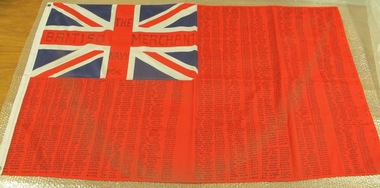
Flag, late 20th to 21st century
... World War 2 noting those who served, but this needs confirmation and an improved image. The flag was removed from permanent display in the Flying Angels Club as it requires assessment for cleaning of a build up of dust and smoke. See also existing condition report a new inspection needs to be carried out. If simply a listing of British merchant seamen visiting the Missions in the 2nd half of the 20th Century it is also notable in the history ...Requires more research. The flag appears to be a commemorative listing of British seafarers of World War 2 noting those who served, but this needs confirmation and an improved image. The flag was removed from permanent display in the Flying Angels Club as it requires assessment for cleaning of a build up of dust and smoke. See also existing condition report a new inspection needs to be carried out.If simply a listing of British merchant seamen visiting the Missions in the 2nd half of the 20th Century it is also notable in the history of the MTSV at 717 Flinders st.If confirmed as a WW2 memorial it is also significant. Reg nylon based flag with Union Jack in the top left corner. White trimming down left side with two metal hoops, one at each end. Across the Union Jack is written, 'THE BRITISH MERCHANT NAVY' and in small writing at the bottom of the Union Jack it reads, 'DONATED BY MIKE HALL IN THE U.K.'. Down the right side of the flag says, 'FLAG DONATED BY MIKE HALL IN THE U.K.' The red portion of the flag is covered with handwritten seamen's names and the seamen's registration numbers. THE BRITISH MERCHANT NAVY DONATED BY MIKE HALL IN THE U.K. FLAG DONATED BY MIKE HALL IN THE U.K. See image for more detail flag, british, mike hall, union jack, names, red ensign, merchant navy -
 Nhill Aviation Heritage Centre
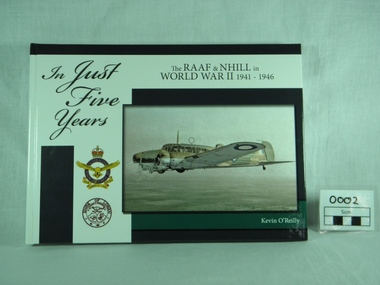
Book, K. O'Reilly, In Just Five Years - 1941 to 1946, Published 2009
... history of the RAAF Air School in Nhill during World War II. Details the operational history of the base, which was established in 1941 as part of the Empire Air Training Plan, initially as an OTU for pilots, though the unit moved to Sale (Vic) after only two months at Nhill. The base then became No.2...history of the RAAF Air School in Nhill during World War II. Details the operational history of the base, which was established in 1941 as part of the Empire Air Training Plan, initially as an OTU for pilots, though the unit moved to Sale (Vic) after only two months at Nhill. The base then became No.2 ...Hardback,history of the RAAF & Nhill in World War II 1941 - 1946, written by Kevin O'Reilly. Front coloured white & blue, photo of Avro Anson Mk1 on front, with emblems of RAAF and Shire of Lowan. Reverse in simlilar colours, with cartoons and 8 small photos. Preface by Chris G Spence AO, Air Vice Marshal (Retd).history world war ii, raaf base nhill, 1941 1946, kevin o reilly, john clarkson, peter isaccson wing commander retd am dfc afc dfm, chris, spence, air vice marshal retd -
 Federation University Historical Collection
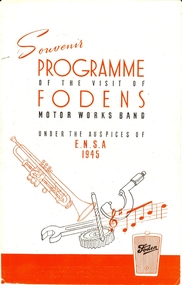
Booklet - Programme, Souvenir Programme of the Visit of Fodens Motor Works Band, 1945
... history and successes of the brass band set up at the Fodens Motor Body Works in 1900. On the back cover is a photograph and details of the band personnel and the Managing Director of the company. Also shown are two photographs, one of the 1902 Foden Steam Wagon and one of the World War 2...history and successes of the brass band set up at the Fodens Motor Body Works in 1900. On the back cover is a photograph and details of the band personnel and the Managing Director of the company. Also shown are two photographs, one of the 1902 Foden Steam Wagon and one of the World War 2 ...Frank Wright was a renown resident of Smeaton, where he was born. He lived at Laura Villa, and attended Smeaton State School. His father William was a gold miner and his mother's name was Sarah. Their family won many singing and instrumental awards. Frank was tutored by Percy Code and was awarded a gold medal for the highest marks in the ALCM examinations in the British Colonies at the age of seventeen years. He became the Australian Open Cornet Champion by the age of eighteen. A year later, Frank conducted the City of Ballarat Band, and later the Ballarat Soldiers’ Memorial Band. He formed the Frank Wright Frisco Band and Frank Wright and his Coliseum Orchestra. These bands won many South Street awards, and Frank as conductor won many awards in the Australian Band Championship contest. In 1933 Frank Wright sailed to England to conduct the famous St Hilda’s Band and was later appointed Musical Director of the London County Council (the GLC or Greater London Council), where he organized many amazing concerts in most of the 150 parks, in and around the London district. He was also responsible for some of London’s major concerts at Kenwood, the Crystal Palace and Holland Park. He was made Professor of Brass and Military Band Scoring and conducted at the Guildhall of Music and Drama. Frank was often invited to adjudicate Brass Band Championships around Europe, in Australia, including South Street and in New Zealand. The Frank Wright Medal at the Royal South Street competition is awarded to an individual recognized as making an outstanding contribution to brass music in Australia.A printed souvenir programme which details the history and successes of the brass band set up at the Fodens Motor Body Works in 1900. On the back cover is a photograph and details of the band personnel and the Managing Director of the company. Also shown are two photographs, one of the 1902 Foden Steam Wagon and one of the World War 2 Centaur Tank which had been built by the company.frank wright, foden diesel, fodens motor works band, brass band, centaur tank, foden steam wagon -
Lara RSL Sub Branch
Education Package, Anzac Centenary Corcmmunity Resource Guide
... Part 1 includes elements of a commemorative service and preserving precious memorabilia Part 2 includes Victoria's roll in the History of World War One. Also included are capsule stories of the men who were awarded the Victoria Cross for outstanding valour ...Part 1 includes elements of a commemorative service and preserving precious memorabilia Part 2 includes Victoria's roll in the History of World War One. Also included are capsule stories of the men who were awarded the Victoria Cross for outstanding valour The Community Resource Guide helps you plan a commemorative event in Victoria and share Local stories as part of the planning for ANZAC Centenary celebrations Anzac Centenary Corcmmunity Resource Guide Education Package. ...The Community Resource Guide helps you plan a commemorative event in Victoria and share Local stories as part of the planning for ANZAC Centenary celebrationsPart 1 includes elements of a commemorative service and preserving precious memorabilia Part 2 includes Victoria's roll in the History of World War One. Also included are capsule stories of the men who were awarded the Victoria Cross for outstanding valour -
 Lara RSL Sub Branch
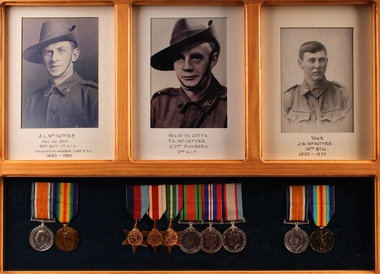
Photographs, Bob Wilson, Framed Photos and Medals - McIntyre Family, 2016
... war. He was wounded twice. Jim died in 1976. The McIntyre family were early pioneers in the Lara district, and the brothers were founding members of the Lara RSL. Their medals and photographs represent a significant link to the history of the town and sub-branch. photograph mcintyre medals wwi wwii world war 1 world war 2 aif pioneers lara rsl J.L. ...These photographs and medals are of the McIntyre family. Three members of Lara's McIntyre family served during the First and Second World Wars, and two were members of the Lara RSL. John Lachlan McIntyre was born at Beeac, Victoria in December 1890. He enlisted in the 1st AIF in July 1915. John fought on the Western Front, taking part in the battles of Fromelles and the 2nd Battle of the Somme. He was severely wounded at Fromelles and spent 12 months in hospital in England before returning to the front. John returned home in 1919 and was granted a soldier settlement block in Lara in 1937. He was a founding member of Lara RSL and is its longest serving member. John died in 1990. Thomas Gordon McIntyre was born at Lara in 1901. Thomas, known as Gordon, was too young to enlist in the First World War with his brothers. At the outbreak of the Second World War he joined the 2/2nd Pioneer Battalion. He fought in the Syrian Campaign, before being recalled to Australia to fight in the pacific campaign. Gordon was wounded in a battle against the Japanese in Java on the 19/02/1942, and taken prisoner. No record of him after this was ever discovered, and he is presumed to have been killed. Jim McIntyre was born in 1893, and grew up in Lara and Geelong. Jim enlisted in the 1st AIF in 1916, and served with the 14th Battalion through the war. He was wounded twice. Jim died in 1976. The McIntyre family were early pioneers in the Lara district, and the brothers were founding members of the Lara RSL. Their medals and photographs represent a significant link to the history of the town and sub-branch. Three photographs and three sets of medals in a pine wood frame with glass covering. Photographs are black and white portraits of soldiers in uniform mounted on cream card. The medals are mounted on black felt. T.G. McIntyre VX20754 - 35-45 Star, Africa Star, Pacific Star, Defence Medal, War Medal and the Australian Service Medal 39-45. J.L. McIntyre 3591 - War Medal and Victory Medal J.W. McIntyre 7049 - War Medal and Victory Medal J.L. McIntyre REG. No. 3591 58th. BATT. 1st A.I.F Foundation Member Lara R.S.L 1890 - 1990 REG. NO. VX20754 T.G. MC INTYRE 2/2nd PIONEERS 2nd A.I.F 7049 J.W. McINTYRE 14th BTN. 1893-1975photograph, mcintyre, medals, wwi, wwii, world war 1, world war 2, aif, pioneers, lara, rsl -
 Lara RSL Sub Branch
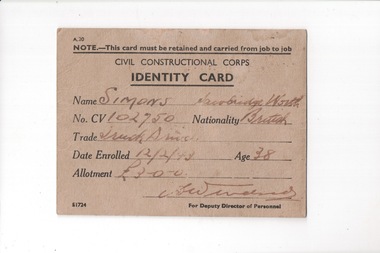
Personal Records, Civilian Construction Corps Identity Card, 1943
... world war two. Civil Constructional Corps Identity Card Issued to Simons Macrobridge Worth Nationality British Trade Truck Service 12/2/43 Allotment 3.0.0 Medical History Cardboard Civilian Construction Corps Identity Card Personal Records ...Identity Card for Civilian Construction Corps issued to SimonsID card issued to civilian trades persons during world war two.CardboardCivil Constructional Corps Identity Card Issued to Simons Macrobridge Worth Nationality British Trade Truck Service 12/2/43 Allotment 3.0.0 Medical History -
 Lara RSL Sub Branch
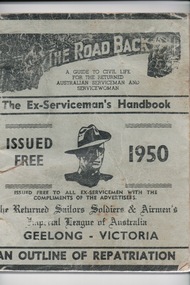
Handbook, W.A.Cooney, The Road Back, 1947/1950
... This booklet for returned service personnel from World War 2 living in the Geelong Region is og local district significance as a part of the history of Geelong. the road back the ex-serviceman's handbook world war 2 ww2 australian aif australian serviceman australian servicewoman rss&aila army navy air force returned sailor's, soldier's and airmen's imperial league of australia rsl The Road Back The Ex-Serviceman's Handbook Geelong. ...The handbook was distributed to all ex-servicemen on return from WW2 in the Geelong area and was a guide to civil life.This booklet for returned service personnel from World War 2 living in the Geelong Region is og local district significance as a part of the history of Geelong.The Road Back -two of The Ex-Serviceman's Handbooks,1947/ 1950 Geelong Issued Free.One is Light green in colour with black writingThe Road Back The Ex-Serviceman's Handbook Geelong.the road back, the ex-serviceman's handbook, world war 2, ww2, australian aif, australian serviceman, australian servicewoman, rss&aila, army, navy, air force, returned sailor's, soldier's and airmen's imperial league of australia, rsl -
 Lara RSL Sub Branch
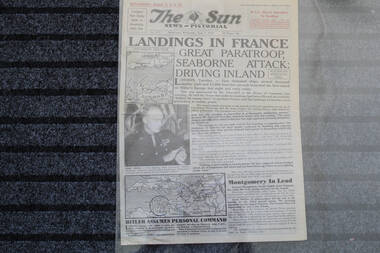
Newspaper - The Sun Newspaper June 7 th , 1944 - D-Day Landings In France, D-Day Landings In France
... The Sun Newspaper Articles on the Landings in France on D-Day 7/6/1944 History of World War 2 the landings in france on d-day 7/6/1944 The Sun Newspaper reporting on the D=Day Landings in France 7/6/1944 The Sun Newspaper reporting on the D_Day Landings in France D-Day Landings In France Newspaper The Sun Newspaper June 7 th , 1944 - D-Day Landings In France ...The Sun Newspaper Articles on the Landings in France on D-Day 7/6/1944History of World War 2The Sun Newspaper reporting on the D_Day Landings in FranceThe Sun Newspaper reporting on the D=Day Landings in France 7/6/1944the landings in france on d-day 7/6/1944 -
 Lara RSL Sub Branch
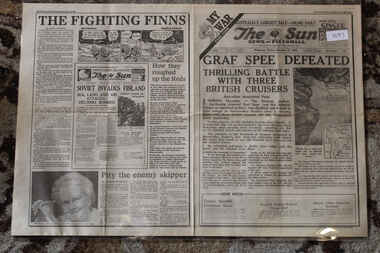
Newspaper - The Sun Dated 15/12/1939 - My War Part 4 - Graf Spee Defeated, Local Newspaper 15/12/1939 Special reporting World War 2 news
... The Sun Newspaper dated 5/12/1939 wit reports of World War 2 News History recorded by Local Newspaper graf spee defeated fins fight on against soviets Local Newspaper reporting World War 2 News The Sun Newspaper Special - My War Part 4 - Graf Spee Defeated Local Newspaper 15/12/1939 Special reporting World War 2 news Newspaper The Sun Dated 15/12/1939 - My War Part 4 - Graf Spee Defeated ...The Sun Newspaper dated 5/12/1939 wit reports of World War 2 NewsHistory recorded by Local NewspaperThe Sun Newspaper Special - My War Part 4 - Graf Spee DefeatedLocal Newspaper reporting World War 2 Newsgraf spee defeated, fins fight on against soviets -
 Lara RSL Sub Branch
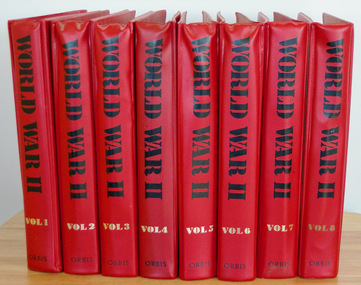
Book - World War II Vol 1-8 Orbis
... World War 2. The invasion of countries by Germany to American and japan's involvement. There are 8 volumes with an index compiled by F. D. Buck Pictorial .History ...Magazines describing the build up to World War 2. The invasion of countries by Germany to American and japan's involvement. There are 8 volumes with an index compiled by F. D. BuckPictorial .History of Word War 2 in Magazine format containing 3360 pages 0415Eight Red Plastic Folders Containing paper Magazines World War II Vol 1-8 orbis -
 Federation University Historical Collection
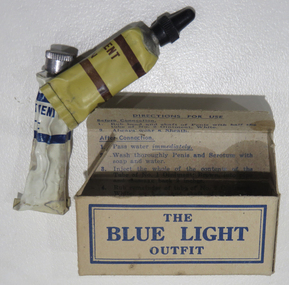
Object, Blue Light Outfit, c1914
... World War. (http://www.canberratimes.com.au/act-news/secret-wwi-history-of-australian-soldiers-with-venereal-disease-20141022-119wan.html, accessed 21 August 2017) Australia colloquial language defines a Blue Light clinic as a venereal disease clinic. blue light outfit veneral disease vd armed services gonorrhea syphilis disease medical Inside box: Directions for Use Before Connection 1. Rub head and shaft of Penis with half the tube of No. 2 ...The bluelight outfit was offered to members of the armed services in an attempt to prevent venereal disease. Around 60,000 Australian soldiers had contracted venereal disease by the end of the First World War. (http://www.canberratimes.com.au/act-news/secret-wwi-history-of-australian-soldiers-with-venereal-disease-20141022-119wan.html, accessed 21 August 2017) Australia colloquial language defines a Blue Light clinic as a venereal disease clinic.A cardboard box with two tubes of ointment - an anti-Venereal Disease outfit supplied to Australian Armed Services Tube number one is filled with brown contents known as 'No. 1 ointment BROWN' and has a long, tapered opening, with black pastic lid. Tube number two is filled with a thick white ointment 'No. 2 ointment WHITE', with a normal opening and metal lid. The tubes contained 3 percent Argyrol Jelly for gonorrhea and 33% Calomel Ointment (Mercury-Chloride) for syphilis prophylaxis.Inside box: Directions for Use Before Connection 1. Rub head and shaft of Penis with half the tube of No. 2 Ointment, White. 2. Always wear a sheath After Connection 1. Pass water IMMEDIATELY 2. Wash thoroughly Penis and Scrotum with soap and water. 3. Inject the whole of the contents of the Tube of No. 1. Oitnment, Brown, into pipe and massage back 2 inches. 4. Rub remainder of tube No. 2 Ointment, White, on head and shaft of Penis and Scrotum 5. Hold urine some hours after treatment 6. Report at V.D. Prevention Depot (Blue Light Depot) as soon as possible. 7. Having read directions and understood them, destroy by tearing up or by burning.blue light outfit, veneral disease, vd, armed services, gonorrhea, syphilis, disease, medical -
 Flagstaff Hill Maritime Museum and Village
Photograph - Military group, C. Fitch & Son, c. 1941
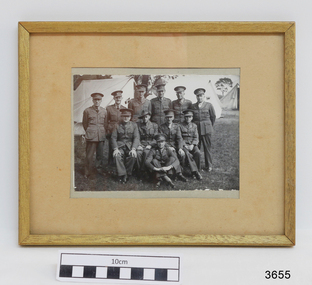
... World War 2 when Dr. W.R. Angus served as an army surgeon. The details on the back of the photograph include the date of 1941. The photograph was donated to Flagstaff Hill Maritime Village by the family of Doctor William Roy Angus, Surgeon and Oculist. It is part of the “W.R. Angus Collection” that includes historical medical equipment, surgical instruments and material once belonging to Dr Edward Ryan and Dr Thomas Francis Ryan, (both of Nhill, Victoria) as well as Dr Angus’ own belongings. The Collection’s history...World War 2 when Dr. W.R. Angus served as an army surgeon. The details on the back of the photograph include the date of 1941. The photograph was donated to Flagstaff Hill Maritime Village by the family of Doctor William Roy Angus, Surgeon and Oculist. It is part of the “W.R. Angus Collection” that includes historical medical equipment, surgical instruments and material once belonging to Dr Edward Ryan and Dr Thomas Francis Ryan, (both of Nhill, Victoria) as well as Dr Angus’ own belongings. The Collection’s history ...This photograph was taken during World War 2 when Dr. W.R. Angus served as an army surgeon. The details on the back of the photograph include the date of 1941. The photograph was donated to Flagstaff Hill Maritime Village by the family of Doctor William Roy Angus, Surgeon and Oculist. It is part of the “W.R. Angus Collection” that includes historical medical equipment, surgical instruments and material once belonging to Dr Edward Ryan and Dr Thomas Francis Ryan, (both of Nhill, Victoria) as well as Dr Angus’ own belongings. The Collection’s history spans the medical practices of the two Doctors Ryan, from 1885-1926 plus that of Dr Angus, up until 1969. ABOUT THE “W.R.ANGUS COLLECTION” Doctor William Roy Angus M.B., B.S., Adel., 1923, F.R.C.S. Edin.,1928 (also known as Dr Roy Angus) was born in Murrumbeena, Victoria in 1901 and lived until 1970. He qualified as a doctor in 1923 at University of Adelaide, was Resident Medical Officer at the Royal Adelaide Hospital in 1924 and for a period was house surgeon to Sir (then Mr.) Henry Simpson Newland. Dr Angus was briefly an Assistant to Dr Riddell of Kapunda, then commenced private practice at Curramulka, Yorke Peninsula, SA, where he was physician, surgeon and chemist. In 1926, he was appointed as new Medical Assistant to Dr Thomas Francis Ryan (T.F. Ryan, or Tom), in Nhill, Victoria, where his experiences included radiology and pharmacy. In 1927 he was Acting House Surgeon in Dr Tom Ryan’s absence. Dr Angus had become engaged to Gladys Forsyth and they decided he would take time to further his studies overseas in the UK in 1927. He studied at London University College Hospital and at Edinburgh Royal Infirmary and in 1928, was awarded FRCS (Fellow from the Royal College of Surgeons), Edinburgh. He worked his passage back to Australia as a Ship’s Surgeon on the on the Australian Commonwealth Line’s T.S.S. Largs Bay. Dr Angus married Gladys in 1929, in Ballarat. (They went on to have one son (Graham 1932, born in SA) and two daughters (Helen (died 12/07/1996) and Berenice (Berry), both born at Mira, Nhill ) Dr Angus was a ‘flying doctor’ for the A.I.M. (Australian Inland Ministry) Aerial Medical Service in 1928 . The organisation began in South Australia through the Presbyterian Church in that year, with its first station being in the remote town of Oodnadatta, where Dr Angus was stationed. He was locum tenens there on North-South Railway at 21 Mile Camp. He took up this ‘flying doctor’ position in response to a call from Dr John Flynn; the organisation was later known as the Flying Doctor Service, then the Royal Flying Doctor Service. A lot of his work during this time involved dental surgery also. Between 1928-1932 he was surgeon at the Curramulka Hospital, Yorke Peninsula, South Australia. In 1933 Dr Angus returned to Nhill where he’d previously worked as Medical Assistant and purchased a share of the Nelson Street practice and Mira hospital from Dr Les Middleton one of the Middleton Brothers, the current owners of what was once Dr Tom Ryan’s practice. Dr L Middleton was House Surgeon to the Nhill Hospital 1926-1933, when he resigned. [Dr Tom Ryan’s practice had originally belonged to his older brother Dr Edward Ryan, who came to Nhill in 1885. Dr Edward saw patients at his rooms, firstly in Victoria Street and in 1886 in Nelson Street, until 1901. The Nelson Street practice also had a 2 bed ward, called Mira Private Hospital ). Dr Edward Ryan was House Surgeon at the Nhill Hospital 1884-1902 . He also had occasions where he successfully performed veterinary surgery for the local farmers too. Dr Tom Ryan then purchased the practice from his brother in 1901. Both Dr Edward and Dr Tom Ryan work as surgeons included eye surgery. Dr Tom Ryan performed many of his operations in the Mira private hospital on his premises. He too was House Surgeon at the Nhill Hospital 1902-1926. Dr Tom Ryan had one of the only two pieces of radiology equipment in Victoria during his practicing years – The Royal Melbourne Hospital had the other one. Over the years Dr Tom Ryan gradually set up what was effectively a training school for country general-practitioner-surgeons. Each patient was carefully examined, including using the X-ray machine, and any surgery was discussed and planned with Dr Ryan’s assistants several days in advance. Dr Angus gained experience in using the X-ray machine there during his time as assistant to Dr Ryan. Dr Tom Ryan moved from Nhill in 1926. He became a Fellow of the Royal Australasian College of Surgeons in 1927, soon after its formation, a rare accolade for a doctor outside any of the major cities. He remained a bachelor and died suddenly on 7th Dec 1955, aged 91, at his home in Ararat. Scholarships and prizes are still awarded to medical students in the honour of Dr T.F. Ryan and his father, Dr Michael Ryan, and brother, John Patrick Ryan. ] When Dr Angus bought into the Nelson Street premises in Nhill he was also appointed as the Nhill Hospital’s Honorary House Surgeon 1933-1938. His practitioner’s plate from his Nhill surgery states “HOURS Daily, except Tuesdays, Fridays and Saturday afternoons, 9-10am, 2-4pm, 7-8pm. Sundays by appointment”. This plate is now mounted on the doorway to the Port Medical Office at Flagstaff Hill Maritime Village, Warrnambool. Dr Edward Ryan and Dr Tom Ryan had an extensive collection of historical medical equipment and materials spanning 1884-1926 and when Dr Angus took up practice in their old premises he obtained this collection, a large part of which is now on display at the Port Medical Office at Flagstaff Hill Maritime Village in Warrnambool. During his time in Nhill Dr Angus was involved in the merging of the Mira Hospital and Nhill Public Hospital into one public hospital and the property titles passed on to Nhill Hospital in 1939. In 1939 Dr Angus and his family moved to Warrnambool where he purchased “Birchwood,” the 1852 home and medical practice of Dr John Hunter Henderson, at 214 Koroit Street. (This property was sold in1965 to the State Government and is now the site of the Warrnambool Police Station. ). The Angus family was able to afford gardeners, cooks and maids; their home was a popular place for visiting dignitaries to stay whilst visiting Warrnambool. Dr Angus had his own silk worm farm at home in a Mulberry tree. His young daughter used his centrifuge for spinning the silk. Dr Angus was appointed on a part-time basis as Port Medical Officer (Health Officer) in Warrnambool and held this position until the 1940’s when the government no longer required the service of a Port Medical Officer in Warrnambool; he was thus Warrnambool’s last serving Port Medical Officer. (The duties of a Port Medical Officer were outlined by the Colonial Secretary on 21st June, 1839 under the terms of the Quarantine Act. Masters of immigrant ships arriving in port reported incidents of diseases, illness and death and the Port Medical Officer made a decision on whether the ship required Quarantine and for how long, in this way preventing contagious illness from spreading from new immigrants to the residents already in the colony.) Dr Angus was a member of the Australian Medical Association, for 35 years and surgeon at the Warrnambool Base Hospital 1939-1942, He served as a Surgeon Captain during WWII 1941-45, in Ballarat, Victoria, and in Bonegilla, N.S.W., completing his service just before the end of the war due to suffering from a heart attack. During his convalescence he carved an intricate and ‘most artistic’ chess set from the material that dentures were made from. He then studied ophthalmology at the Royal Melbourne Eye and Ear Hospital and created cosmetically superior artificial eyes by pioneering using the intrascleral cartilage. Angus received accolades from the Ophthalmological Society of Australasia for this work. He returned to Warrnambool to commence practice as an ophthalmologist, pioneering in artificial eye improvements. He was Honorary Consultant Ophthalmologist to Warrnambool Base Hospital for 31 years. He made monthly visits to Portland as a visiting surgeon, to perform eye surgery. He represented the Victorian South-West subdivision of the Australian Medical Association as its secretary between 1949 and 1956 and as chairman from 1956 to 1958. In 1968 Dr Angus was elected member of Spain’s Barraquer Institute of Barcelona after his research work in Intrasclearal cartilage grafting, becoming one of the few Australian ophthalmologists to receive this honour, and in the following year presented his final paper on Living Intrasclearal Cartilage Implants at the Inaugural Meeting of the Australian College of Ophthalmologists in Melbourne In his personal life Dr Angus was a Presbyterian and treated Sunday as a Sabbath, a day of rest. He would visit 3 or 4 country patients on a Sunday, taking his children along ‘for the ride’ and to visit with him. Sunday evenings he would play the pianola and sing Scottish songs to his family. One of Dr Angus’ patients was Margaret MacKenzie, author of a book on local shipwrecks that she’d seen as an eye witness from the late 1880’s in Peterborough, Victoria. In the early 1950’s Dr Angus, painted a picture of a shipwreck for the cover jacket of Margaret’s book, Shipwrecks and More Shipwrecks. She was blind in later life and her daughter wrote the actual book for her. Dr Angus and his wife Gladys were very involved in Warrnambool’s society with a strong interest in civic affairs. Their interests included organisations such as Red Cross, Rostrum, Warrnambool and District Historical Society (founding members), Wine and Food Society, Steering Committee for Tertiary Education in Warrnambool, Local National Trust, Good Neighbour Council, Housing Commission Advisory Board, United Services Institute, Legion of Ex-Servicemen, Olympic Pool Committee, Food for Britain Organisation, Warrnambool Hospital, Anti-Cancer Council, Boys’ Club, Charitable Council, National Fitness Council and Air Raid Precautions Group. He was also a member of the Steam Preservation Society and derived much pleasure from a steam traction engine on his farm. He had an interest in people and the community He and his wife Gladys were both involved in the creation of Flagstaff Hill, including the layout of the gardens. After his death (28th March 1970) his family requested his practitioner’s plate, medical instruments and some personal belongings be displayed in the Port Medical Office surgery at Flagstaff Hill Maritime Village, and be called the “W. R. Angus Collection”. The W.R. Angus Collection is significant for still being located at the site it is connected with, Doctor Angus being the last Port Medical Officer in Warrnambool. The collection of medical instruments and other equipment is culturally significant, being an historical example of medicine from late 19th to mid-20th century. Dr Angus assisted Dr Tom Ryan, a pioneer in the use of X-rays and in ocular surgery. Framed, glass covered photograph, black and white, of Australian Army Officers of 46th Battalion, 3rd Division at Camp Site 20, September 1941. Amongst the officers is Dr.W.R. Angus (front row, 1st on left). Frame is wood. Names of the officers are hand written in ink on the paper on the back of the photograph, as are the stamped details of the "Official Photographer C. Fitch & Son, 4 Racing Club Lane, off Little Bourke St, Melbourne. "Stamped details of the "Official Photographer C. Fitch & Son, 4 Racing Club Lane, off Little Bourke St, Melbourne. "flagstaff hill, warrnambool, shipwrecked coast, flagstaff hill maritime museum, maritime museum, shipwreck coast, flagstaff hill maritime village, great ocean road, dr w r angus, australian army officers, of 46th battalion, 3rd division, army surgeon camp 20, army surgeon ww2, c. fitch and son -
 Flagstaff Hill Maritime Museum and Village
Newspaper - The Standard, Warrnambool Standard Centenary Issue 1872-1972, 02/10/1972
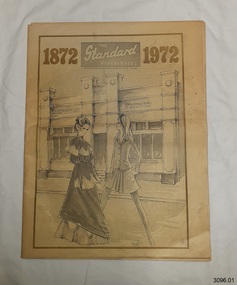
... The issue includes World and Local History, Advertisements, Timeline, Facsimile of the First Issue, Shipwrecks, and Wars. The Centenary edition was printed on October 2, 1972, 72 pages. ...The issue includes World and Local History, Advertisements, Timeline, Facsimile of the First Issue, Shipwrecks, and Wars. The Centenary edition was printed on October 2, 1972, 72 pages. ...The Warrnambool Standard Centenary Issue, 1872 - 1972, summarises the local and world history highlights over 100 years. The pages in the images are a sample of the newspaper's contents. They show: - PAGE 1; sketches of two young women, one dressed in 1872 fashion, the other in 1972 fashion. PAGE 34; This page was dedicated to the Ponting Bros. The business celebrated its Centenary in 1972. There apr photographs of the original and the new building, and a photograph and names of the staff of 1972. PAGES 34-38: Lift out facsimile copy of the first edition of The Standard (no longer in 3096.01) PAGE 39; In January 1917 Mr Basil Watson flew the first aeroplane to visit the Warrnambool area. He entertained the crowds by performing aerobic acrobatics in the plane he'd built himself. Two months later he died in a plane accident. PAGE 70; In 1967 Australia's Prime Minister, Mr Harold Holt, goes missing, presumed drowned. PAGE 71; In 1970 the mystery of four bodies were found in a car that crashed over the cliff at Loch Ard Gorge, near Port Campbel, made headlines in the Standard. PAGE 72; The back page features a photograph and greetings from Fletcher Jones and Staff. There are many staff members in front of the Fletcher Jones factory in Warrnambool, which was established around 1924.The centennial edition of the Standard newspaper includes local social, economic and historical aspects of Warrnambool, Victoria, Australia and the World. It reflects the interests of the local community and the reactions to the events of the time.The Standard, Warrnambool, Centenary Issue 1872 – 1972 (Two copies).100 years of District Service. The issue includes World and Local History, Advertisements, Timeline, Facsimile of the First Issue, Shipwrecks, and Wars. The Centenary edition was printed on October 2, 1972, 72 pages. One copy (3096.02) includes the centre lift-out on pages 35 to 38 of a facsimile copy of the first edition published on October 1, 1872.Page 1: "The Standard Warrnambool" "Warrnambool Standard Centenary Issue October 2 1972, 72 pages" On illustration of building "1872 / Warrnambool Standard" Page 34: "On this site ... since 1924" [Ponting Bros} "Staff of Ponting Bros. 1972" Page 39: "Aviation history-maker" "RECORD TRIP BY FIRST PLANE TO VISIT CITY" "Thrilling display of aerial acrobatics" Page 70: "PM HOLT IS PRESUMED DROWNED" "GAVE GOVT. IMAGE OF YOUTH" Page 71: "Where death car crashed on ledge" "PT CAMPBELL MYSTERY: FOUR BODIES FOUND IN CAR AT BOTTOM OF CLIFF" "POLICE SEARCH SWINGS BACK TO MELBOURNE" Page 72: "Greetings to the"Standard"" "Fletcher Jones" flagstaff hill, flagstaff hill maritime museum and village, warrnambool, maritime museum, maritime village, great ocean road, shipwreck coast, ladies fashion 1872, ladies fashion 1972, ponting bros. centenary 1872-1972, ponting bros. staff, basil watson, basil watson 1917, harold holt 1967, car crash at loch ard gorge, fletcher jones and staff 1972, the standard centenary 1872-1972, warrnambool newspaper, warrnambool standard, centenary edition, the standard -
 Flagstaff Hill Maritime Museum and Village
Plane Compass, 1941-1943
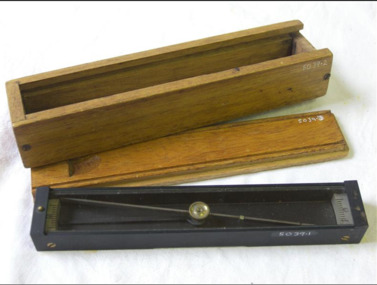
... World War 2. This item is actively sort by collectors of Australian Military memorabilia and represents a time in Australian history when the country was at war and the general population was concerned about an invasion from Japanese forces. ...This compass is the type used by an artillery unit of the Australian Military Forces during World War 2 and made by J W Handley. Although having owned the factory site since 1935 at 657 Victoria St J W Handley began to produce various items for the Australian Military forces after purchasing and expanding the factory to 655 Victoria St. It appears that he, or some one else may already have been occupying the site for industrial purposes, such as (Manufacturing, Foundry and Electroplating) since at least 1929. J W Handley Pty Ltd was actively producing items for the Military during the war years, a newspaper article from 1939 shows the factory in production and employing 420 people during 1939. J W Handley after the war moved into producing other non military items including a range of fishing reels. The company ceased trading in 1987 and was deregistered as J W Handley Pty Ltd in 1990.The item demonstrates the industrial capability of Australia at the start of World War 2. This item is actively sort by collectors of Australian Military memorabilia and represents a time in Australian history when the country was at war and the general population was concerned about an invasion from Japanese forces. It also therefor is of social significance as many Australians served in the Military forces at that time and the item is complete and in very good condition.A plane table compass, sometimes referred to as a trough compass, used by surveyors and artillery crew to accurately establish magnetic north. The compass is precision machined of brass material with a long needle to ensure accuracy. The compass scale is marked with a centre zero (for magnetic north) and graduations indicating plus and minus five degrees. The compass is housed in a protective wooden case with a sliding lid. The lid has a brass slide which locks the compass needle during periods when the compass is not in use.J.W.H./V Mark 11 D↑D. Made by J W Handley Richmond Melbourne, Victoria. Serial No 353flagstaff hill, warrnambool, shipwrecked-coast, flagstaff-hill, flagstaff-hill-maritime-museum, maritime-museum, shipwreck-coast, flagstaff-hill-maritime-village, trough compass, navigation instrument, surveyor's instrument, j w handley, artillery, australian army, trough, plane compass, world war 2 -
 Flagstaff Hill Maritime Museum and Village
Plane Compass, 1941-1943
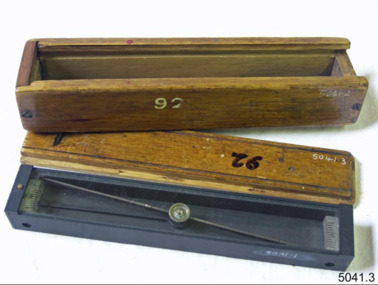
... World War 2. This item is actively sort by collectors of Australian Military memorabilia and represents a time in Australian history when the country was at war and the general population was concerned about an invasion from Japanese forces. ...This compass is the type used by an artillery unit of the Australian Military Forces during World War 2 and made by J W Handley. Although having owned the factory site since 1935 at 657 Victoria St J W Handley began to produce various items for the Australian Military forces after purchasing and expanding the factory to 655 Victoria St. It appears that he, or some one else may already have been occupying the site for industrial purposes, such as (Manufacturing, Foundry and Electroplating) since at least 1929. J W Handley Pty Ltd was actively producing items for the Military during the war years, a newspaper article from 1939 shows the factory in production and employing 420 people during 1939. J W Handley after the war moved into producing other non military items including a range of fishing reels. The company ceased trading in 1987 and was deregistered as J W Handley Pty Ltd in 1990.The item demonstrates the industrial capability of Australia at the start of World War 2. This item is actively sort by collectors of Australian Military memorabilia and represents a time in Australian history when the country was at war and the general population was concerned about an invasion from Japanese forces. It also therefor is of social significance as many Australians served in the Military forces at that time and the item is complete and in very good condition.A plane table compass, sometimes referred to as a trough compass, used by surveyors and artillery crew to accurately establish magnetic north. The compass is precision machined of brass material with a long needle to ensure accuracy. The compass scale is marked with a centre zero (for magnetic north) and graduations indicating plus and minus five degrees. The compass is housed in a protective wooden case with a sliding lid. The lid has a brass slide which locks the compass needle during periods when the compass is not in use.J.W.H./V Mark 11 D↑D. Made by J W Handley Richmond Melbourne, Victoria. Serial number 92 flagstaff hill, warrnambool, shipwrecked-coast, flagstaff-hill, flagstaff-hill-maritime-museum, maritime-museum, shipwreck-coast, flagstaff-hill-maritime-village, trough compass, navigation instrument, surveyor's instrument, j w handley, artillery, australian army, trough, plane compass, world war 2
