
Showing 30 items matching "yorta yorta people"
-
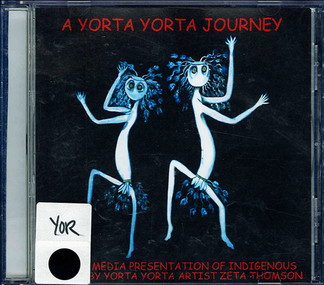 Victorian Aboriginal Corporation for Languages
CD-ROM, Zeta Thomson, A Yorta Yorta journey
... A multimedia presentation showcasing Dreaming Stories belonging to the Yorta Yorta People, featuring artwork by Indigenous artist Zeta Thomson....Yorta Yorta Aunty Zeta Thomson Dreaming stories folklore artwork CD-ROM A multimedia presentation showcasing Dreaming Stories belonging to the Yorta Yorta People, featuring artwork by Indigenous artist Zeta Thomson. ...A multimedia presentation showcasing Dreaming Stories belonging to the Yorta Yorta People, featuring artwork by Indigenous artist Zeta Thomson.CD-ROMyorta yorta, aunty zeta thomson, dreaming stories, folklore, artwork -
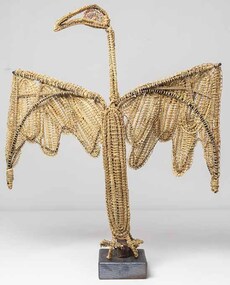 Wangaratta Art Gallery
Textile, Treahna Hamm, Cormorant, 2011
... ...Yorta Yorta people...Cormorant treahna hamm Yorta Yorta people traditional weaving weaving A textile sculpture of a cormorant woven from natural and man made fibres. ...The cormorant weaving was depicted through the traditional weaving method of the blanket stitch of the Yorta Yorta people. As birds are very significant and important in Aboriginal culture, the cormorant was created to represent the meaning of Wangaratta for the local people and wider community. The weaving is an extension of my series of works which represent wildlife along the waterways, particularly in the North East of Victoria and within my tribal homelands. In 2001 I was taught to weave at a weaving workshop held at Gas Works in Port Melbourne by old aunties from Victoria and South Australia which included Yvonne Koolmatrie. A body of my weaving works, which include turtles and spirits, is held at the National Gallery of Victoria. Other collections which hold my fibre weavings are the National Museum of Australia, Albury Museum and Wagga Wagga MuseumWangaratta Art Gallery CollectionA textile sculpture of a cormorant woven from natural and man made fibres.cormorant, treahna hamm, yorta yorta people, traditional weaving, weaving -
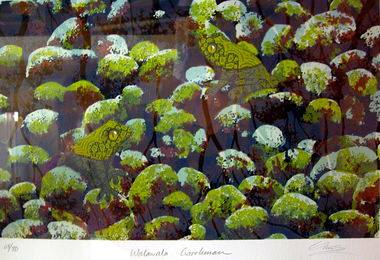 Federation University Art Collection
Work on paper - Printmaking - Silkscreen, Lin Onus, 'Walawala Garrkman' by Lin Onus, 2001
... Lin's father had been of the Yorta Yorta people from the Barmah Forest country, and Lin also used images from this area in his paintings. ...Lin's father had been of the Yorta Yorta people from the Barmah Forest country, and Lin also used images from this area in his paintings. ...Lin ONUS (1948-1996) Language: Wiradjuri / Yorta Yorta Lin Onus played a pivotal role in the recognition of Aboriginal art as an expression of a contemporary and dynamic living culture. Prior to his premature death at just 47 years of age he was a prominent, strident, yet non-confrontational agent in renegotiating the history of colonial and Aboriginal Australia. His father, Bill Onus, was the founder of the Aboriginal Advancement League in Victoria and a prominent maker of artefacts in Melbourne. As a young Koori growing up, Lin lived in a cultural environment that included exposure to visiting Aboriginal artists, including Albert Namatjira. He began his artistic life assisting his father in decorating artifacts, went on to develop skills working with metal and painting with air brush as a panel beater; and by 1974 he was painting watercolors and photo-realist landscapes. In the 1970's he completed a set of paintings on the first Aboriginal guerrilla fighter Mosquito, which holds pride of place on the walls of the Advancement League in Melbourne, to this day. Lin Onus was a largely self-taught artist. Particularly important in his development was his visits to Garmedi (Arnhem Land) starting in 1986. Jack Wunuwun, the Yolngu artist, introduced him into the Murrungun-Djinang clan and gave him permission to use some of traditional images in his paintings. His cultural education on the Aboriginal side was also provided by visits to Cummeragunja with his father, and stories told by his uncle Aaron Briggs, known as 'the old man of the forest' who gave him his Koori name - Burrinja, meaning 'star'. They would sit on the banks of the Murray River within view of the Barmah Forest, Lin's spiritual home, the subject of many of his later paintings and his final resting place. Lin's father had been of the Yorta Yorta people from the Barmah Forest country, and Lin also used images from this area in his paintings. The images in his works include haunting photorealist portrayals of the Barmah red gum forests of his father's ancestral country, and the use of rarrk cross-hatching-based based painting style that he learned (and was given permission to use when in Arnhemland). His painting Barmah Forest won Canberra's national Aboriginal Heritage Award in 1994. (http://www.cooeeart.com.au/aboriginal_artist/lin_onus/A, accessed 18 May 2015) This item is part of the Federation University Art Collection. The Art Collection features over 1000 works and was listed as a 'Ballarat Treasure' in 2007.Framed limited edition silkscreen.Signed 'Onus' lower right (posthumously by Tiriki Onus) Edition 68/80art, artwork, lin onus, onus, printmaking, screenprint, aboriginal, dreaming, frogs, available -
 Bass Coast Shire Council - Art Collection
Painting - Wayut Tarrang Gayaam, Steven Ulula Parker, 2024
... Steven Ulula Parker is a descendant of the Boonwurrung, Yorta Yorta, and Erub peoples and is an artist, surfer and leading cultural educator, living on Millowl (Phillip Island). ...Steven Ulula Parker is a descendant of the Boonwurrung, Yorta Yorta, and Erub peoples and is an artist, surfer and leading cultural educator, living on Millowl (Phillip Island). ...Steven Ulula Parker is a descendant of the Boonwurrung, Yorta Yorta, and Erub peoples and is an artist, surfer and leading cultural educator, living on Millowl (Phillip Island). This large canvas painting has a central black form recognisable as the shape of marks made on trees by First Nations ancestors, particularly in South-Eastern Australia. These marks (or “scars”) on trees show where bark was removed to create tools such as coolamons and shields, and reference a “complex matrix of relations to Country, community and culture” (Professor Brian Martin, 2023). The form also echoes the shape of a surfboard, a reference that connects to Parker’s practice of painting surfboards. White lines on this central black shape create a diamond pattern – a traditional pattern of the Boonwurrung. Surrounding the black and white diamond pattern, painted marks in a palette of black, white, red and yellow fill the canvas in a layered, action painting style. Handprints in yellow and red are visible, creating a connection to the earliest mark-making of First Nations ancestors using ochre. acrylic painting on canvas -
Federation University Historical Collection
Booklet - Book, Burra Lotjpa Dunguludja: Victorian Aboriginal Justice Agreement Phase 4, 2018
... Burra Lotjpa Dunguludja means 'Senior Leaders Talking Strong' in Yorta Yorta language. aboriginal martin pakula tont lovett marion hansen aboriginal justice aboriginal justice caucus message stick koori justice unit Sixty page book aiming to continue to address Aboriginal over-representation across the justice system, and to progress self-determination as the core policy approach. The vision was to ensure Aboriginal people ...Burra Lotjpa Dunguludja means 'Senior Leaders Talking Strong' in Yorta Yorta language.Sixty page book aiming to continue to address Aboriginal over-representation across the justice system, and to progress self-determination as the core policy approach. The vision was to ensure Aboriginal people have access to n equitable justice system that is shaped by self-determination, and protects and upholds their human, civil, legal and cultural rights.aboriginal, martin pakula, tont lovett, marion hansen, aboriginal justice, aboriginal justice caucus, message stick, koori justice unit -
Eltham District Historical Society Inc
Document - Folder, Pederson, Pamela
... people", Diamond Valley Leader, 23 November 2005. Pamela Pedersen to carry Commonwealth Games torch baton.. Newspaper article: "Family of champions", Diamond Valley News, 15 August 2007. Pamela Pedersen's life and family. Newspaper article: "Giant steps", Diamond Valley News, 15 August 2007. Cover picture and summary for article within newspaper. Pamela Pedersen Pastor Sir Doug Nicholls Heidelberg Women's Athletics Club Adam Petersen Victorian Aboriginal Community Controlled Health Organisation Kim Petersen Indigenous Sportsperson of the Year 2005 Yorta Yorta ...Pamela Pedersen, daughter of Pastor Sir Doug Nicholls, became an athlete, and lives in Eltham Contents Newspaper article: "An inner flame for her people", Diamond Valley Leader, 23 November 2005. Pamela Pedersen to carry Commonwealth Games torch baton.. Newspaper article: "Family of champions", Diamond Valley News, 15 August 2007. Pamela Pedersen's life and family. Newspaper article: "Giant steps", Diamond Valley News, 15 August 2007. Cover picture and summary for article within newspaper.Newspaper clippings, A4 photocopies, etcpamela pedersen, pastor sir doug nicholls, heidelberg women's athletics club, adam petersen, victorian aboriginal community controlled health organisation, kim petersen, indigenous sportsperson of the year 2005, yorta yorta elder, children's koori court -
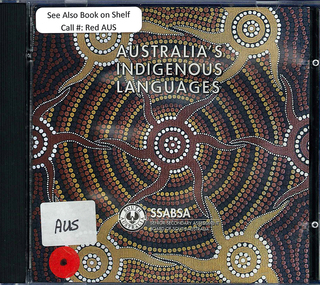 Victorian Aboriginal Corporation for Languages
Book with CD-ROM, Senior Secondary Assessment Board of South Australia, Australia's Indigenous languages, 1996
... language and culture bilingual education linguistics language and technology yorta yorta ganai Maps, colour illustrations, colour photographs, word lists, sheet music, CD-ROM The book shows that Australia's languages are rich, living languages that are relevant to all Australians. You can share the pride that Indigenous people ...The book shows that Australia's languages are rich, living languages that are relevant to all Australians. You can share the pride that Indigenous people have in their language by reading their accounts of what their language means to them and by learning about how Australian Indigenous languages are structured and used.Maps, colour illustrations, colour photographs, word lists, sheet music, CD-ROMlanguage and culture, bilingual education, linguistics, language and technology, yorta yorta, ganai -
 Uniting Church Archives - Synod of Victoria
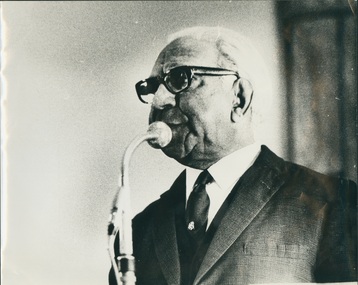
B&W photo of another photo or newspaper photograph of Pastor Sir Douglas Nicholls, Undated
... Yorta Yorta kinsman and fellow Christian, encouraged the young footballer. In February 1935 Cooper, Nicholls and others lobbied Thomas Paterson, the Commonwealth minister for the interior, over the need for Federal control of Aboriginal affairs. Nicholls attended the Day of Mourning protest for Aborigines held in Sydney on 26 January 1938, declaring: ‘after 150 years our people...Yorta Yorta kinsman and fellow Christian, encouraged the young footballer. In February 1935 Cooper, Nicholls and others lobbied Thomas Paterson, the Commonwealth minister for the interior, over the need for Federal control of Aboriginal affairs. Nicholls attended the Day of Mourning protest for Aborigines held in Sydney on 26 January 1938, declaring: ‘after 150 years our people ...Sir Douglas Ralph Nicholls (1906-1988), footballer, pastor, activist and governor, was born on 9 December 1906 at Cummeragunja Aboriginal mission, New South Wales, fifth child of Herbert Nicholls, seasonal worker, and his wife Florence, née Atkinson. Doug grew up at Cummeragunja, on the Murray River near Barmah, in its golden years of Aboriginal autonomy. Thomas Shadrach James gave him and other Yorta Yorta children a sound primary education, reinforcing the pride and self-assurance gained from their parents. As Doug grew, so too did the powers of the State’s Aboriginal Protection Board. Doug’s elder sister Hilda was removed about 1915. When Doug reached 14, he was moved off under the Aborigines Protection Act (1909) to find work. He took a job with dredging teams constructing levees on the Murray. Like other youths in the region Nicholls played Australian rules football, emulating kinsmen who had won local premierships since the 1890s. Doug and his brother Herbert (‘Dowie’) played with Tongala in the mid-1920s. Melbourne football beckoned, Doug trying out unsuccessfully for Carlton in 1927. He signed with the Northcote Victorian Football Association team, despite his nervousness about his Aboriginality, and was given a job with Northcote City Council. ‘Dowie’ joined him for a season. Doug was short at 5 ft 2 ins (158 cm), but muscular and lightning fast. He competed regularly during a boom in professional running, winning many heat and place prizes. In 1929 he won the Nyah and Warracknabeal gifts, earning a sash and £100 in each, together with a case of cutlery in the latter. Using his speed on the wing for Northcote, he produced great spring and agility from his compact body. The Sporting Globe reported in 1929 that ‘he flashes through packs of big men, whisks around small men . . . and attempts marks at the back of any six-footer’. In front-on clashes he was flattened only to rise again. The sole Aborigine in the VFA, he was known affectionately as the ‘flying Abo’ but called worse by his opponents’ barrackers. He competed for five seasons, being named ‘best and fairest’ twice, appearing in three association grand finals and winning in 1929. Keen to earn more than a seasonal wage, in 1931 Nicholls accepted a three-year contract with Jimmy Sharman’s travelling boxing show. The bouts matched opposites, local against tent boxer, white against black, and sometimes men of different sizes. He faced stiff competition from those who wanted to best the noted Melbourne black footballer, the crowd adding racial abuse. A far better footballer than boxer, he copped some punishment. Fighting in the Melbourne Stadium in December 1931, he was described by Truth as ‘slow and awkward’, but packing a ‘good wallop’. In 1932 Sharman, who treated his boxers fairly, released Nicholls to join the Fitzroy Victorian Football League team, which agreed to employ him as its groundsman. He played fifty-four games for Fitzroy over six seasons until knee trouble forced him out in 1937. Winning cups in 1934 and 1935, he played alongside Haydn Bunton and Wilfred (‘Chicken’) Smallhorn. Grand finals eluded him but he represented Victoria twice. Following his mother’s death, Nicholls revisited the Church of Christ chapel in Northcote, where they had worshipped together. On 17 July 1932 he experienced a conversion. He was soon baptised and witnessed openly, leading his fellow footballers to occasional church parades. Nicholls exhibited leadership qualities. William Cooper, founder of the Australian Aborigines’ League and Nicholls’ Yorta Yorta kinsman and fellow Christian, encouraged the young footballer. In February 1935 Cooper, Nicholls and others lobbied Thomas Paterson, the Commonwealth minister for the interior, over the need for Federal control of Aboriginal affairs. Nicholls attended the Day of Mourning protest for Aborigines held in Sydney on 26 January 1938, declaring: ‘after 150 years our people are still influenced and bossed by white people. I know we can proudly hold our own with others if given the chance’. When Cooper retired in November 1940 Nicholls became secretary of the AAL. On 2 June 1941 Nicholls enlisted in the Citizen Military Forces. He trained at Seymour and Bonegilla before being posted to the 29th Battalion. As Major Frank Corr’s batman, he was popular with other soldiers who tolerated his preaching and Bible reading. His army service was brief, however, and he was discharged in Melbourne on compassionate grounds on 22 January 1942. His biographer claimed that the Fitzroy police requested his return to mediate in the racial tensions developing between servicemen and the mostly respectable Aboriginal families living in crowded and dilapidated Fitzroy housing; Aboriginal people maintain that they requested his release. Nicholls began welfare work and religious services from an Aboriginal home in Gertrude Street, Fitzroy. In April 1942, ‘Dowie’ died of road accident trauma, leaving his wife, Gladys, née Bux, and three children. On 26 December 1942 at Moama Methodist Church, New South Wales, Nicholls married her, a caring gesture which developed into a loving partnership. In January 1943 he initiated ‘Aboriginal Sunday’, featuring a gum leaf orchestra and choir. By 1955 this service had moved to July and later evolved into National Aborigines and Islanders Day Observance Committee (NAIDOC) week. Ordained a Churches of Christ pastor in 1945, Nicholls conducted a vigorous ministry from a chapel in Gore Street, Fitzroy. His work survived on donations, a small honorarium, and his employment as team coach (1947) and curator at the Northcote Football Ground. In the 1950s Gladys established grocery and opportunity shops to earn income and provide services. Their house soon overflowed with people in need or visitors to Melbourne. Nicholls also hosted inspiring African American visitors such as the pianist Winifred Attwell and the singer Harry Belafonte. His ministry extended to Aboriginal country communities. Gladys taught Sunday school, undertook endless fund-raising and welfare work beside her husband, and became his greatest supporter and financial manager. They formed an Aboriginal Girls’ Hostel in 1956, for which they acted as house parents, and bought holiday units for Aborigines at Queenscliff. Persistently advocating Aboriginal rights, Nicholls protested about the impact of the Woomera rocket range on the people of the Warburton Ranges, co-ordinated the production of a concert, Out of the Dark, scripted by Jean Campbell, to rectify the omission of Aborigines from Victoria’s Commonwealth jubilee celebrations, and criticised the Victorian Aboriginal Protection Board. In 1957 when the board was transformed into the Aborigines’ Welfare Board, he and Harold Blair were appointed as Aboriginal representatives. Maintaining the stance of a political moderate, he did not bear grudges and sought to build bridges between black and white. He co-operated with any group that aided the cause, including the Council of Aboriginal Rights, whose executive were members of the Communist Party of Australia. This association attracted the attention of the Australian Security Intelligence Organization, which in 1957 began to keep a file on Nicholls. In May 1957 Nicholls formed the Victorian Aborigines Advancement League with Doris Blackburn and Gordon Bryant, a Federal parliamentarian. As its paid field officer and spokesman, Nicholls contested assimilation policies and used film to raise awareness of issues. When the Welfare Board attempted to close Lake Tyers reserve, Gippsland, he resigned in disgust and led a protest march on parliament in May 1963. The AAL also petitioned the United Nations on land rights in June, perhaps the first indigenous body to do so. He argued for new premises at 58 Cunningham Street, Northcote, opened in 1966 as the ‘Doug Nicholls Centre’. In 1958 Nicholls was a foundation member of the Federal Council for Aboriginal Advancement (Federal Council for the Advancement of Aboriginal and Torres Strait Islanders after 1964), which he served as national field officer (1961) and Victorian secretary (1962-63). While an innovator in tactics, he was alarmed by the influence of confrontational ‘black power’ politics in the AAL and resigned as a director amid turmoil on this issue in 1969, claiming the concept was a ‘bitter word’, not needed in Australia. Similar tensions in FCAATSI led him to join with Kath Walker (Oodgeroo Noonuccal) in establishing the short-lived National Tribal Council as an alternative forum. As the AAL leadership moderated their stance, he returned as president (1969-74) of the new all-Aboriginal organisation. He was also a keen patron of the National Aboriginal Sports Foundation, founded in 1969. Many honours were conferred on Nicholls: he was appointed MBE (1957) and OBE (1968) and knighted (1972). In 1962 he was named Victorian ‘Father of the Year’ and the State’s second Aboriginal justice of the peace. Crowned Melbourne’s 1973 King of Moomba, he was declared Bapu Mamus (a Torres Strait term for ‘headman’) by the NTC. On 1 December 1976 Sir Douglas was appointed Governor of South Australia, but his health deteriorated within weeks, making it difficult for him to perform his official duties. In March 1977 he hosted Queen Elizabeth during her royal tour and was appointed KCVO. He relinquished his governorship on 30 April 1977 following a stroke. Ill health continued to dog him during retirement, but he played his Nelson Eddy records, enjoyed his expanding family, and when able, ministered to the Aboriginal Church at the League’s premises. Sir Douglas Nicholls died on 4 June 1988 at Mooroopna, predeceased (1981) by his wife and survived by his five children. He was given a state funeral and buried in tribal ground at Cummeragunja cemetery. Among the many tributes to him are an oval at Northcote, handed to the AAL in 1982, a Canberra suburb gazetted in 1991, and a fellowship for Indigenous leadership established in 2003, all in his name, and a statue of Sir Doug and Lady Nicholls by Louis Laumen, unveiled in 2007 in Parliament Gardens, Melbourne. Sir Douglas Nicholls is shown speaking at a microphone; head and shoulders; dressed in a suit.Pastor Douglas Nicholls -
Victorian Aboriginal Corporation for Languages
Book, Dungala-Kaiela Foundation, 2013 Dungala-Kaiela Express Yourself Writing Awards : story/yarn/article/play, in Yorta Yorta language in any written form, poem/lyric/rap, 2013
... Yorta Yorta Barmah storytelling children creative writing Illustrations Writing competition featuring entries from all ages. Entries take the form of stories, articles, plays, poetry, lyrics and raps. Encourages Indigenous people of the region to write well and develop good standards of literacy. 2013 Dungala-Kaiela Express Yourself Writing Awards : story/yarn/article/play, in Yorta Yorta language in any written form, poem/lyric/rap Book Dungala-Kaiela Foundation Goulburn Valley Regional Library ...Writing competition featuring entries from all ages. Entries take the form of stories, articles, plays, poetry, lyrics and raps. Encourages Indigenous people of the region to write well and develop good standards of literacy.Illustrationsyorta yorta, barmah, storytelling, children, creative writing -
 Victorian Aboriginal Corporation for Languages
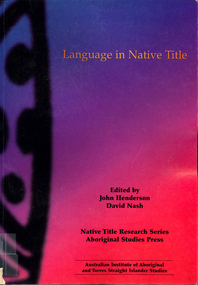
Book, John Henderson, Language in native title, 2002
... Nicholas Evans Linguistics and the Yorta Yorta native title claim /? Heather Bowe The language of the Peak Hill Aboriginal people: a linguistic report in a native title claim /? ...Yorta Yorta Yoda Yoda Yabala Yabala Bangerang Shepparton Miriuwung Gajerrong native title Maps, tables, b&w diagrams Introduction /? John Henderson and David Nash Language and native title /? John Henderson Linguistic evidence and native title cases in Australia /? Peter Sutton Linguistic continuity in colonised country /? Jeanie Bell Country and the word: linguistic evidence in the Croker Sea claim /? Nicholas Evans Linguistics and the Yorta Yorta native title claim /? Heather Bowe The language of the Peak Hill Aboriginal people ...Introduction /? John Henderson and David Nash Language and native title /? John Henderson Linguistic evidence and native title cases in Australia /? Peter Sutton Linguistic continuity in colonised country /? Jeanie Bell Country and the word: linguistic evidence in the Croker Sea claim /? Nicholas Evans Linguistics and the Yorta Yorta native title claim /? Heather Bowe The language of the Peak Hill Aboriginal people: a linguistic report in a native title claim /? Tamsin Donaldson Labels, language and native title groups: the Miriuwung-Gajerrong case /? Greg McIntyre and Kim Doohan Historical linguistic geography of south-east Western Australia /? David Nash Language ownership: a key issue for native title /? Michael Walsh Can lexicostatistics contribute an absolute time-scale to discussions of continuity of occupation in native title determinations? /? Barry Alpher Linguistic stratigraphy and native title: the case of ethnonyms /? Patrick McConvell Making your skin fit properly: displaced equivalence in 'skin' systems in the Barkly /? Gavan BreenMaps, tables, b&w diagramsyorta yorta, yoda yoda, yabala yabala, bangerang, shepparton, miriuwung, gajerrong, native title -
 Central Goldfields Art Gallery
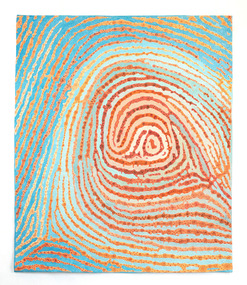
Textile - Australian Print, 2019
... With permission, and in collaboration with Elder Aunty Cynthia Hardie, Reid reproduced original drawings by Yorta Yorta man Troy Firebrace using acrylic paint, hand embroidery and machine quilting, to acknowledge and celebrate the world's oldest continuous living cultures, those of the First Nations peoples in Australia. ...With permission, and in collaboration with Elder Aunty Cynthia Hardie, Reid reproduced original drawings by Yorta Yorta man Troy Firebrace using acrylic paint, hand embroidery and machine quilting, to acknowledge and celebrate the world's oldest continuous living cultures, those of the First Nations peoples in Australia. ...Sue Reid is a non-Indigenous Australian textile artist. With permission, and in collaboration with Elder Aunty Cynthia Hardie, Reid reproduced original drawings by Yorta Yorta man Troy Firebrace using acrylic paint, hand embroidery and machine quilting, to acknowledge and celebrate the world's oldest continuous living cultures, those of the First Nations peoples in Australia. This work was acquired as the winner of the Golden Textures art quilt exhibition at Central Goldfields Art Gallery in Maryborough, Victoria in 2019. Held bi-annually at the Gallery, the Golden Textures Award Exhibition celebrates the region’s long connection with textile craft and textile manufacturing, especially in the early to mid-20th Century. Rights: © Sue Reid. Reproduced with permission of the artist. Artwork photographer: Megan Cardamone -
Koorie Heritage Trust
Book, Briggs-Pattison, Sue et al, Rafting on the river, 1998
... . | Readers (Primary) | Reading (Primary) Based on the lifestyle of the Yorta Yorta people of the Murray River, bear Barmah. ... ...Based on the lifestyle of the Yorta Yorta people of the Murray River, bear Barmah. ... Gives an insight into the lifestyles and experiences of the Koorie children who grew up this area. Illustrated by Craig Charles[15 p.] : col. ill. ; 21 cm. + 2 sheets (double-sided)Based on the lifestyle of the Yorta Yorta people of the Murray River, bear Barmah. ... Gives an insight into the lifestyles and experiences of the Koorie children who grew up this area. Illustrated by Craig Charleschildren, aboriginal australian -- juvenile literature. | readers (primary) | reading (primary) -
Koorie Heritage Trust
Book, Briggs-Pattison, Sue et al, Waiting for yabbies, 1998
... . | Readers (Primary) | Reading (Primary) The story in this book was based on the lifestyle of the Yorta Yorta people of the Murray River, near Barmah. ... ...The story in this book was based on the lifestyle of the Yorta Yorta people of the Murray River, near Barmah. ... [It] gives an insight into the lifestyles and experiences of the Koorie children who grew up in this area[16] p. : col. ill. ; 18 cm. + 2 sheets.The story in this book was based on the lifestyle of the Yorta Yorta people of the Murray River, near Barmah. ... [It] gives an insight into the lifestyles and experiences of the Koorie children who grew up in this areachildren, aboriginal australian -- juvenile literature. | readers (primary) | reading (primary) -
Koorie Heritage Trust
Book, Briggs-Pattison, Sue et al, Collecting firewood, 1998
... . | Readers (Primary) | Reading (Primary) The story in this book was based on the lifestyle of the Yorta Yorta people of the Murray River, near Barmah. ... ...The story in this book was based on the lifestyle of the Yorta Yorta people of the Murray River, near Barmah. ... [It] gives an insight into the lifestyles and experiences of the Koorie children who grew up in this area. Illustrated by Craig Charles.[15] p. : col. ill. ; 18 cm. + 2 sheets.The story in this book was based on the lifestyle of the Yorta Yorta people of the Murray River, near Barmah. ... [It] gives an insight into the lifestyles and experiences of the Koorie children who grew up in this area. Illustrated by Craig Charles.children, aboriginal australian -- juvenile literature. | readers (primary) | reading (primary) -
Koorie Heritage Trust
Book, Briggs-Pattison, Sue et al, Fishing, 1998
... . | Readers (Primary) | Reading (Primary) Yorta Yorta people's story of fishing and what they did with carp. ...Yorta Yorta people's story of fishing and what they did with carp. The story in this book was based on the lifestyle of the Yorta Yorta people of the Murray River, near Barmah. ... [It] gives an insight into the lifestyles and experiences of the Koorie children who grew up in this area. Illustrated by Elaine Russell.[15] p. : col. ill. ; 18 cm. + 2 sheets.Yorta Yorta people's story of fishing and what they did with carp. The story in this book was based on the lifestyle of the Yorta Yorta people of the Murray River, near Barmah. ... [It] gives an insight into the lifestyles and experiences of the Koorie children who grew up in this area. Illustrated by Elaine Russell.children, aboriginal australian -- juvenile literature. | readers (primary) | reading (primary) -
Koorie Heritage Trust
Book, Briggs-Pattison, Sue et al, Bath time, 1998
... . | Readers (Primary) | Reading (Primary) | Yorta Yorta The story in this book was based on the lifestyle of the Yorta Yorta people of the Murray River, near Barmah. ... ...The story in this book was based on the lifestyle of the Yorta Yorta people of the Murray River, near Barmah. ... [It] gives an insight into the lifestyles and experiences of the Koorie children who grew up in this area. Illustrated by Elaine Russell[15] p. : col. ill. ; 18 cm. + 2 sheets.The story in this book was based on the lifestyle of the Yorta Yorta people of the Murray River, near Barmah. ... [It] gives an insight into the lifestyles and experiences of the Koorie children who grew up in this area. Illustrated by Elaine Russellchildren, aboriginal australian -- juvenile literature. | readers (primary) | reading (primary) | yorta yorta -
Koorie Heritage Trust
Book, Briggs-Pattison, Sue et al, A mob of kangaroos, 1998
... The story in this book was based on the lifestyle of the Yorta Yorta people of the Murray River, near Barmah. ... ...During the hot months more kangaroos are seen drinking at the river. The story in this book was based on the lifestyle of the Yorta Yorta people of the Murray River, near Barmah. ... [It] gives an insight into the lifestyles and experiences of the Koorie children who grew up in this area. Illustrated by Donna Leslie.[15] p. : col. ill. ; 18 cm. + 2 sheets.During the hot months more kangaroos are seen drinking at the river. The story in this book was based on the lifestyle of the Yorta Yorta people of the Murray River, near Barmah. ... [It] gives an insight into the lifestyles and experiences of the Koorie children who grew up in this area. Illustrated by Donna Leslie.children, aboriginal australian -- juvenile literature. | readers (primary) | reading (primary) -
Koorie Heritage Trust
Book, Briggs-Pattison, Sue et al, The Barmah bunyip, 1998
... . | Readers (Primary) | Reading (Primary) The story in this book was based on the lifestyle of the Yorta Yorta people of the Murray River, near Barmah. ... ...The story in this book was based on the lifestyle of the Yorta Yorta people of the Murray River, near Barmah. ... [It] gives an insight into the lifestyles and experiences of the Koorie children who grew up in this area. llustrated by Karen Briggs[15] p. : col. ill. ; 18 cm. + 2 sheets.The story in this book was based on the lifestyle of the Yorta Yorta people of the Murray River, near Barmah. ... [It] gives an insight into the lifestyles and experiences of the Koorie children who grew up in this area. llustrated by Karen Briggschildren, aboriginal australian -- juvenile literature. | readers (primary) | reading (primary) -
Koorie Heritage Trust
Book, Briggs-Pattison, Sue et al, Mmm Turtle!, 1998
... . | Readers (Primary) | Reading (Primary) | Yorta Yorta How turtles were cooked traditional style. Based on the lifestyle of the Yorta Yorta people of the Murray River, bear Barmah. ... ...How turtles were cooked traditional style. Based on the lifestyle of the Yorta Yorta people of the Murray River, bear Barmah. ... Gives an insight into the lifestyles and experiences of the Koorie children who grew up in this area. Illustrated by Shane Russell.[15] p. : col. ill. ; 21 cm. + 2 sheets (double-sided)How turtles were cooked traditional style. Based on the lifestyle of the Yorta Yorta people of the Murray River, bear Barmah. ... Gives an insight into the lifestyles and experiences of the Koorie children who grew up in this area. Illustrated by Shane Russell.children, aboriginal australian -- juvenile literature. | readers (primary) | reading (primary) | yorta yorta -
Koorie Heritage Trust
Book, Briggs-Pattison, Sue et al, Too many rabbits, 1998
... Based on the lifestyle of the Yorta Yorta people of the Murray River, bear Barmah. ... ...When there were lots of rabbits along the river, rabbits were the only source of fresh meat for the Yorta Yorta people. Based on the lifestyle of the Yorta Yorta people of the Murray River, bear Barmah. ... Gives an insight into the lifestyles and experiences of the Koorie children who grew up in this area. Illustrated by Karen Briggs.[15] p. : col. ill. ; 21 cm. + 2 sheets (double-sided)When there were lots of rabbits along the river, rabbits were the only source of fresh meat for the Yorta Yorta people. Based on the lifestyle of the Yorta Yorta people of the Murray River, bear Barmah. ... Gives an insight into the lifestyles and experiences of the Koorie children who grew up in this area. Illustrated by Karen Briggs.children, aboriginal australian -- juvenile literature. | reading (primary) | readers (primary) | rabbits, | yorta yorta -
Koorie Heritage Trust
Book, Briggs-Pattison, Sue et al, Last winter, 1998
... . | Readers (Primary) Many hours were spent on the river by the Yorta Yorta children using whatever materials that could be found to amuse themselves. Based on the lifestyle of the Yorta Yorta people of the Murray River, near Barmah. ... ...Many hours were spent on the river by the Yorta Yorta children using whatever materials that could be found to amuse themselves. Based on the lifestyle of the Yorta Yorta people of the Murray River, near Barmah. ... Gives an insight into the lifestyles and experiences of the Koorie children who grew up in this area. Illustrated by Shane Russell.[15] p. : col. ill. ; 21 cm. + 2 sheets (double-sided)Many hours were spent on the river by the Yorta Yorta children using whatever materials that could be found to amuse themselves. Based on the lifestyle of the Yorta Yorta people of the Murray River, near Barmah. ... Gives an insight into the lifestyles and experiences of the Koorie children who grew up in this area. Illustrated by Shane Russell.children, aboriginal australian -- juvenile literature. | readers -- animals -- infancy. | readers (primary) -
Koorie Heritage Trust
Book, Briggs-Pattison, Sue et al, Possums on the roof, 1998
... . | Reading (Primary) | Readers (Primary) | Yorta Yorta Based on the lifestyle of the Yorta Yorta people of the Murray River, bear Barmah. ... ...Based on the lifestyle of the Yorta Yorta people of the Murray River, bear Barmah. ... Gives an insight into the lifestyles and experiences of the Koorie children who grew up in this area. Illustrated by Elaine Russell.[15] p. : col. ill. ; 21 cm. + 2 sheets (double-sided)Based on the lifestyle of the Yorta Yorta people of the Murray River, bear Barmah. ... Gives an insight into the lifestyles and experiences of the Koorie children who grew up in this area. Illustrated by Elaine Russell.children, aboriginal australian -- juvenile literature. | reading (primary) | readers (primary) | yorta yorta -
Koorie Heritage Trust
Book, Briggs-Pattison, Sue et al, Damper, 1998
... Reading (Primary) | Readers (Primary) | Children Aboriginal Australian -- Juvenile literature | Yorta Yorta How Yorta Yorta people made damper when they had no money for bread. ...How Yorta Yorta people made damper when they had no money for bread. Based on the lifestyle of the Yorta Yorta people of the Murray River, bear Barmah. ... Gives an insight into the lifestyles and experiences of the Koorie children who grew up in this area. Illustrated by Donna Leslie.[15] p. : ill. ; 21 cm. + 2 sheets (double-sided)How Yorta Yorta people made damper when they had no money for bread. Based on the lifestyle of the Yorta Yorta people of the Murray River, bear Barmah. ... Gives an insight into the lifestyles and experiences of the Koorie children who grew up in this area. Illustrated by Donna Leslie.reading (primary) | readers (primary) | children, aboriginal australian -- juvenile literature | yorta yorta -
![Artwork, other - Artwork, [Heart of a Champ] by Josh Muir, 2014](/media/collectors/530576742162ef0fa09a2288/items/5a583f0221ea6811d47d8349/item-media/5b67ad7a21ea6c034496b4fc/item-fit-380x285.jpg?cb=6) Federation University Art Collection
Federation University Art CollectionArtwork, other - Artwork, [Heart of a Champ] by Josh Muir, 2014
... Yorta Yorta/Gunditjmara/Barkinjl Born Ballarat, Victoria Muir's art draws on hip-hop and street art culture and often depicts the history of indigenous people and European settlers. He spent a lot of time in his teens researching and enjoying public art, especially graffiti. Inspired by the commitment of graffers he was inspired by the concepts they illustrate. He started expressing his own ideas with pen and pad and once the basic concept down and it was tangible and could be converted that to canvas or walls. Muir experimented with spray and stencil work a lot in his teens and later branched out into acrylic paints, paint pens, and digital forms of Art. In 2016 Josh Muir's work 'Still Here', projected onto the front wall of the National Gallery of Victoria was critically acclaimed. At that time he stated: "‘I am a proud Yorta...Yorta Yorta/Gunditjmara/Barkinjl Born Ballarat, Victoria Muir's art draws on hip-hop and street art culture and often depicts the history of indigenous people and European settlers. He spent a lot of time in his teens researching and enjoying public art, especially graffiti. Inspired by the commitment of graffers he was inspired by the concepts they illustrate. He started expressing his own ideas with pen and pad and once the basic concept down and it was tangible and could be converted that to canvas or walls. Muir experimented with spray and stencil work a lot in his teens and later branched out into acrylic paints, paint pens, and digital forms of Art. In 2016 Josh Muir's work 'Still Here', projected onto the front wall of the National Gallery of Victoria was critically acclaimed. At that time he stated: "‘I am a proud Yorta ...Josh MUIR (1991-05 February 2022) Yorta Yorta/Gunditjmara/Barkinjl Born Ballarat, Victoria Muir's art draws on hip-hop and street art culture and often depicts the history of indigenous people and European settlers. He spent a lot of time in his teens researching and enjoying public art, especially graffiti. Inspired by the commitment of graffers he was inspired by the concepts they illustrate. He started expressing his own ideas with pen and pad and once the basic concept down and it was tangible and could be converted that to canvas or walls. Muir experimented with spray and stencil work a lot in his teens and later branched out into acrylic paints, paint pens, and digital forms of Art. In 2016 Josh Muir's work 'Still Here', projected onto the front wall of the National Gallery of Victoria was critically acclaimed. At that time he stated: "‘I am a proud Yorta Yorta/ Gunditjmara man, born and living in Ballarat, Victoria. I hold my culture strong to my heart – it gives me a voice and a great sense of my identity. When I look around, I see empires built on Aboriginal land. I cannot physically change or shift this, though I can make the most of my culture in a contemporary setting and use my art projects to address current issues of reconciliation." In 2016 Josh Muir was awarded the second recipient of HMS Trust’s Hutchinson Indigenous Fellowship at University of Melbourne, based at the Victorian College of the Arts (VCA). The Fellowship was created to enable Indigenous artists to undertake significant projects of their choice. He was also a Telstra National Indigenous and Torres Strait Islander Youth Art Award winner. The Koorie Heritage Trust, the National Gallery of Australia, the National Gallery of Victoria, the Art Gallery of the Northern Territory and Federation University Australia all own his work. Digital output on stretched canvas.josh muir, artist, artwork, aboriginal, hutchinson indigenous fellowship -
![Artwork, other - artwork, Josh Muir, [Portrait] by Josh Muir, 2014](/media/collectors/530576742162ef0fa09a2288/items/5a583f9321ea6811d47e173d/item-media/5b67ad2d21ea6b0344f6a8e0/item-fit-380x285.jpg?cb=6) Federation University Art Collection
Federation University Art CollectionArtwork, other - artwork, Josh Muir, [Portrait] by Josh Muir, 2014
... Yorta Yorta/Gunditjmara/Barkinjl Muir's art draws on hip-hop and street art culture and often depicts the history of indigenous people and European settlers. He spent a lot of time in his teens researching and enjoying public art, especially graffiti. Inspired by the commitment of graffers he was inspired by the concepts they illustrate. He started expressing his own ideas with pen and pad and once the basic concept down and it was tangible and could be converted that to canvas or walls. Muir experimented with spray and stencil work a lot in his teens and later branched out into acrylic paints, paint pens, and digital forms of Art. In 2016 Josh Muir's work 'Still Here', projected onto the front wall of the National Gallery of Victoria was critically acclaimed. At that time he stated: "‘I am a proud Yorta...Yorta Yorta/Gunditjmara/Barkinjl Muir's art draws on hip-hop and street art culture and often depicts the history of indigenous people and European settlers. He spent a lot of time in his teens researching and enjoying public art, especially graffiti. Inspired by the commitment of graffers he was inspired by the concepts they illustrate. He started expressing his own ideas with pen and pad and once the basic concept down and it was tangible and could be converted that to canvas or walls. Muir experimented with spray and stencil work a lot in his teens and later branched out into acrylic paints, paint pens, and digital forms of Art. In 2016 Josh Muir's work 'Still Here', projected onto the front wall of the National Gallery of Victoria was critically acclaimed. At that time he stated: "‘I am a proud Yorta ...Josh MUIR (1991- ) Yorta Yorta/Gunditjmara/Barkinjl Muir's art draws on hip-hop and street art culture and often depicts the history of indigenous people and European settlers. He spent a lot of time in his teens researching and enjoying public art, especially graffiti. Inspired by the commitment of graffers he was inspired by the concepts they illustrate. He started expressing his own ideas with pen and pad and once the basic concept down and it was tangible and could be converted that to canvas or walls. Muir experimented with spray and stencil work a lot in his teens and later branched out into acrylic paints, paint pens, and digital forms of Art. In 2016 Josh Muir's work 'Still Here', projected onto the front wall of the National Gallery of Victoria was critically acclaimed. At that time he stated: "‘I am a proud Yorta Yorta/ Gunditjmara man, born and living in Ballarat, Victoria. I hold my culture strong to my heart – it gives me a voice and a great sense of my identity. When I look around, I see empires built on aboriginal land. I cannot physically change or shift this, though I can make the most of my culture in a contemporary setting and use my art projects to address current issues of reconciliation." In 2016 Josh Muir was awarded the second recipient of HMS Trust’s Hutchinson Indigenous Fellowship at University of Melbourne, based at the Victorian College of the Arts (VCA). The Fellowship was created to enable Indigenous artists to undertake significant projects of their choice.A computer generated artwork on stretched canvas.josh muir, artist, artwork, aboriginal, hutchinson indigenous fellowship -
![Artwork, other - Artwork, Josh Muir, [Eye] by Josh Muir, 2014](/media/collectors/530576742162ef0fa09a2288/items/5a58423321ea6811d480bfdf/item-media/5b67ace421ea6a0344f0061b/item-fit-380x285.jpg?cb=6) Federation University Art Collection
Federation University Art CollectionArtwork, other - Artwork, Josh Muir, [Eye] by Josh Muir, 2014
... Yorta Yorta/Gunditjmara Muir's art draws on hip-hop and street art culture and often depicts the history of indigenous people and European settlers. He spent a lot of time in his teens researching and enjoying public art, especially graffiti. Inspired by the commitment of graffers he was inspired by the concepts they illustrate. He started expressing his own ideas with pen and pad and once the basic concept down and it was tangible and could be converted that to canvas or walls. Muir experimented with spray and stencil work a lot in his teens and later branched out into acrylic paints, paint pens, and digital forms of Art. In 2016 Josh Muir's work 'Still Here', projected onto the front wall of the National Gallery of Victoria was critically acclaimed. At that time he stated: "‘I am a proud Yorta...Yorta Yorta/Gunditjmara Muir's art draws on hip-hop and street art culture and often depicts the history of indigenous people and European settlers. He spent a lot of time in his teens researching and enjoying public art, especially graffiti. Inspired by the commitment of graffers he was inspired by the concepts they illustrate. He started expressing his own ideas with pen and pad and once the basic concept down and it was tangible and could be converted that to canvas or walls. Muir experimented with spray and stencil work a lot in his teens and later branched out into acrylic paints, paint pens, and digital forms of Art. In 2016 Josh Muir's work 'Still Here', projected onto the front wall of the National Gallery of Victoria was critically acclaimed. At that time he stated: "‘I am a proud Yorta ...Josh MUIR (1991- ) Yorta Yorta/Gunditjmara Muir's art draws on hip-hop and street art culture and often depicts the history of indigenous people and European settlers. He spent a lot of time in his teens researching and enjoying public art, especially graffiti. Inspired by the commitment of graffers he was inspired by the concepts they illustrate. He started expressing his own ideas with pen and pad and once the basic concept down and it was tangible and could be converted that to canvas or walls. Muir experimented with spray and stencil work a lot in his teens and later branched out into acrylic paints, paint pens, and digital forms of Art. In 2016 Josh Muir's work 'Still Here', projected onto the front wall of the National Gallery of Victoria was critically acclaimed. At that time he stated: "‘I am a proud Yorta Yorta/ Gunditjmara man, born and living in Ballarat, Victoria. I hold my culture strong to my heart – it gives me a voice and a great sense of my identity. When I look around, I see empires built on aboriginal land. I cannot physically change or shift this, though I can make the most of my culture in a contemporary setting and use my art projects to address current issues of reconciliation." In 2016 Josh Muir was awarded the second recipient of HMS Trust’s Hutchinson Indigenous Fellowship at University of Melbourne, based at the Victorian College of the Arts (VCA). The Fellowship was created to enable Indigenous artists to undertake significant projects of their choice.Digital print on stretched canvas.josh muir, artist, artwork, aboriginal, hutchinson indigenous fellowship -
 Federation University Art Collection
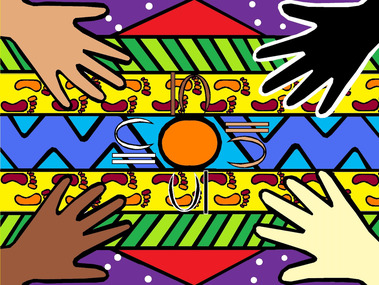
Artwork, other - Artwork, 'Reconciliation' by Shanaya Sheridan and Josh Muir, 2018
... Yorta Yorta, Dja Dja Wurrung and Boon Wurrung woman who has resided in Ballarat for 20 years, after living in Horsham, Shepparton and Melbourne. Growing up and watching her Elders, and their style of artworks, Shanaya is influenced by a traditional style of Aboriginal art, mixing it up with contemporary colours. This reconciliation piece is Shanaya’s first commission. reconciliation josh muir shanaya sheridan aboriginal reconciliation action plan Artists' Statement: '“This painting represents reconciliation across all lands, from the skies down to the waters including the mountains, grass and sand. The hands represent people ...This artwork was created in collaboration by Shanaya Sheridan and Josh Muir in 2018. Josh Muir was a proud Yorta Yorta, Gunditjmara and Barkinji man, who holds his culture close to his heart as it gives him a voice and great sense of identity. Josh is a Ballarat-based multimedia artist. In 2015 Josh was the recipient of the Telstra National Indigenous and Torres Strait Islander Art Award – Youth Award and the Hutchinson Scholarship, through which he undertook a 12-month residency at the Victorian College of the Arts in Melbourne. Muir's work has been acquired by the Koorie Heritage Trust, The National Gallery of Australia, the Museum and Art Gallery of the Northern Territory, the National Gallery of Victoria and was commissioned as a major project artist by White Night. Shanaya Sheridan, is a proud Yorta Yorta, Dja Dja Wurrung and Boon Wurrung woman who has resided in Ballarat for 20 years, after living in Horsham, Shepparton and Melbourne. Growing up and watching her Elders, and their style of artworks, Shanaya is influenced by a traditional style of Aboriginal art, mixing it up with contemporary colours. This reconciliation piece is Shanaya’s first commission. Artists' Statement: '“This painting represents reconciliation across all lands, from the skies down to the waters including the mountains, grass and sand. The hands represent people of all cultures reaching for a brighter future, and the men and women in talks of how reconciliation can be achieved. Last but not least, the footprints represent our Aboriginal and Torres Strait Islander ancestors that have fought for reconciliation before us and their steps/progress towards reconciliation.' Digital prints of this artwork on aluminum are displayed at Federation University Australia campuses at Mt Helen, Gippsland (Churchill), Berwick, Brisbane and Horsham.reconciliation, josh muir, shanaya sheridan, aboriginal, reconciliation action plan -
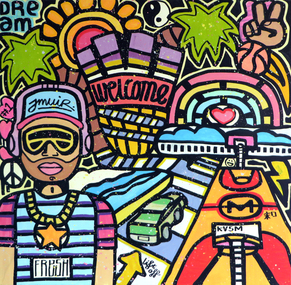 Federation University Art Collection
Artwork - Painting, [Welcome] by Josh Muir, 2014
... Yorta Yorta/Gunditjmara/Barkinjl Muir's art draws on hip-hop and street art culture and often depicts the history of indigenous people and European settlers. He spent a lot of time in his teens researching and enjoying public art, especially graffiti. Inspired by the commitment of graffers he was inspired by the concepts they illustrate. He started expressing his own ideas with pen and pad and once the basic concept down and it was tangible and could be converted that to canvas or walls. Muir experimented with spray and stencil work a lot in his teens and later branched out into acrylic paints, paint pens, and digital forms of Art. In 2016 Josh Muir's work 'Still Here', projected onto the front wall of the National Gallery of Victoria was critically acclaimed. At that time he stated: "‘I am a proud Yorta...Yorta Yorta/Gunditjmara/Barkinjl Muir's art draws on hip-hop and street art culture and often depicts the history of indigenous people and European settlers. He spent a lot of time in his teens researching and enjoying public art, especially graffiti. Inspired by the commitment of graffers he was inspired by the concepts they illustrate. He started expressing his own ideas with pen and pad and once the basic concept down and it was tangible and could be converted that to canvas or walls. Muir experimented with spray and stencil work a lot in his teens and later branched out into acrylic paints, paint pens, and digital forms of Art. In 2016 Josh Muir's work 'Still Here', projected onto the front wall of the National Gallery of Victoria was critically acclaimed. At that time he stated: "‘I am a proud Yorta ...Josh MUIR (1991- 2022) Yorta Yorta/Gunditjmara/Barkinjl Muir's art draws on hip-hop and street art culture and often depicts the history of indigenous people and European settlers. He spent a lot of time in his teens researching and enjoying public art, especially graffiti. Inspired by the commitment of graffers he was inspired by the concepts they illustrate. He started expressing his own ideas with pen and pad and once the basic concept down and it was tangible and could be converted that to canvas or walls. Muir experimented with spray and stencil work a lot in his teens and later branched out into acrylic paints, paint pens, and digital forms of Art. In 2016 Josh Muir's work 'Still Here', projected onto the front wall of the National Gallery of Victoria was critically acclaimed. At that time he stated: "‘I am a proud Yorta Yorta/ Gunditjmara man, born and living in Ballarat, Victoria. I hold my culture strong to my heart – it gives me a voice and a great sense of my identity. When I look around, I see empires built on aboriginal land. I cannot physically change or shift this, though I can make the most of my culture in a contemporary setting and use my art projects to address current issues of reconciliation." In 2016 Josh Muir was awarded the second recipient of HMS Trust’s Hutchinson Indigenous Fellowship at University of Melbourne, based at the Victorian College of the Arts (VCA). The Fellowship was created to enable Indigenous artists to undertake significant projects of their choice. Computer generated image on canvas.josh muir, aboriginal, artwork, artist, hutchinson indigenous fellowship -
![Painting - Artwork - Painting, [Boost It] by Josh Muir, c2014](/media/collectors/530576742162ef0fa09a2288/items/573d58712162f11db090922b/item-media/5b67ae0d21ea6e0344f91cc6/item-fit-380x285.jpg?cb=6) Federation University Art Collection
Federation University Art CollectionPainting - Artwork - Painting, [Boost It] by Josh Muir, c2014
... Yorta Yorta/Gunditjmara/Barkinjl Muir's art draws on hip-hop and street art culture and often depicts the history of indigenous people and European settlers. He spent a lot of time in his teens researching and enjoying public art, especially graffiti. Inspired by the commitment of graffers he was inspired by the concepts they illustrate. He started expressing his own ideas with pen and pad and once the basic concept down and it was tangible and could be converted that to canvas or walls. Muir experimented with spray and stencil work a lot in his teens and later branched out into acrylic paints, paint pens, and digital forms of Art. iN 2014 Josh Muir was THE Australian Indigenous Mentoring Experience'S (AIMe) Program Manager Assistant at Federation University Australia in Ballarat.Australian Indigenous Mentoring Experience Z In 2016 Josh Muir's work 'Still Here', projected onto the front wall of the National Gallery of Victoria was critically acclaimed. At that time he stated: "‘I am a proud Yorta...Yorta Yorta/Gunditjmara/Barkinjl Muir's art draws on hip-hop and street art culture and often depicts the history of indigenous people and European settlers. He spent a lot of time in his teens researching and enjoying public art, especially graffiti. Inspired by the commitment of graffers he was inspired by the concepts they illustrate. He started expressing his own ideas with pen and pad and once the basic concept down and it was tangible and could be converted that to canvas or walls. Muir experimented with spray and stencil work a lot in his teens and later branched out into acrylic paints, paint pens, and digital forms of Art. iN 2014 Josh Muir was THE Australian Indigenous Mentoring Experience'S (AIMe) Program Manager Assistant at Federation University Australia in Ballarat.Australian Indigenous Mentoring Experience Z In 2016 Josh Muir's work 'Still Here', projected onto the front wall of the National Gallery of Victoria was critically acclaimed. At that time he stated: "‘I am a proud Yorta ...Josh MUIR (14 August 1991- 05 February 2022 ) Yorta Yorta/Gunditjmara/Barkinjl Muir's art draws on hip-hop and street art culture and often depicts the history of indigenous people and European settlers. He spent a lot of time in his teens researching and enjoying public art, especially graffiti. Inspired by the commitment of graffers he was inspired by the concepts they illustrate. He started expressing his own ideas with pen and pad and once the basic concept down and it was tangible and could be converted that to canvas or walls. Muir experimented with spray and stencil work a lot in his teens and later branched out into acrylic paints, paint pens, and digital forms of Art. iN 2014 Josh Muir was THE Australian Indigenous Mentoring Experience'S (AIMe) Program Manager Assistant at Federation University Australia in Ballarat.Australian Indigenous Mentoring Experience Z In 2016 Josh Muir's work 'Still Here', projected onto the front wall of the National Gallery of Victoria was critically acclaimed. At that time he stated: "‘I am a proud Yorta Yorta/ Gunditjmara man, born and living in Ballarat, Victoria. I hold my culture strong to my heart – it gives me a voice and a great sense of my identity. When I look around, I see empires built on aboriginal land. I cannot physically change or shift this, though I can make the most of my culture in a contemporary setting and use my art projects to address current issues of reconciliation." In 2016 Josh Muir was awarded the second recipient of HMS Trust’s Hutchinson Indigenous Fellowship at University of Melbourne, based at the Victorian College of the Arts (VCA). The Fellowship was created to enable Indigenous artists to undertake significant projects of their choice.Signed lower right "jmuir"josh muir, artwork, artist, aboriginal, hutchinson indigenous fellowship -
![Artwork - Painting, [AMuir] by Josh Muir, 2014](/media/collectors/530576742162ef0fa09a2288/items/573d58e72162f11db090a2a8/item-media/5b67adc321ea6d034478bf31/item-fit-380x285.jpg?cb=6) Federation University Art Collection
Federation University Art CollectionArtwork - Painting, [AMuir] by Josh Muir, 2014
... Yorta Yorta/Gunditjmara Muir's art draws on hip-hop and street art culture and often depicts the history of indigenous people and European settlers. He spent a lot of time in his teens researching and enjoying public art, especially graffiti. Inspired by the commitment of graffers he was inspired by the concepts they illustrate. He started expressing his own ideas with pen and pad and once the basic concept down and it was tangible and could be converted that to canvas or walls. Muir experimented with spray and stencil work a lot in his teens and later branched out into acrylic paints, paint pens, and digital forms of Art. In 2016 Josh Muir's work 'Still Here', projected onto the front wall of the National Gallery of Victoria was critically acclaimed. At that time he stated: "‘I am a proud Yorta...Yorta Yorta/Gunditjmara Muir's art draws on hip-hop and street art culture and often depicts the history of indigenous people and European settlers. He spent a lot of time in his teens researching and enjoying public art, especially graffiti. Inspired by the commitment of graffers he was inspired by the concepts they illustrate. He started expressing his own ideas with pen and pad and once the basic concept down and it was tangible and could be converted that to canvas or walls. Muir experimented with spray and stencil work a lot in his teens and later branched out into acrylic paints, paint pens, and digital forms of Art. In 2016 Josh Muir's work 'Still Here', projected onto the front wall of the National Gallery of Victoria was critically acclaimed. At that time he stated: "‘I am a proud Yorta ...Josh MUIR (1991- ) Yorta Yorta/Gunditjmara Muir's art draws on hip-hop and street art culture and often depicts the history of indigenous people and European settlers. He spent a lot of time in his teens researching and enjoying public art, especially graffiti. Inspired by the commitment of graffers he was inspired by the concepts they illustrate. He started expressing his own ideas with pen and pad and once the basic concept down and it was tangible and could be converted that to canvas or walls. Muir experimented with spray and stencil work a lot in his teens and later branched out into acrylic paints, paint pens, and digital forms of Art. In 2016 Josh Muir's work 'Still Here', projected onto the front wall of the National Gallery of Victoria was critically acclaimed. At that time he stated: "‘I am a proud Yorta Yorta/ Gunditjmara man, born and living in Ballarat, Victoria. I hold my culture strong to my heart – it gives me a voice and a great sense of my identity. When I look around, I see empires built on aboriginal land. I cannot physically change or shift this, though I can make the most of my culture in a contemporary setting and use my art projects to address current issues of reconciliation." In 2016 Josh Muir was awarded the second recipient of HMS Trust’s Hutchinson Indigenous Fellowship at University of Melbourne, based at the Victorian College of the Arts (VCA). The Fellowship was created to enable Indigenous artists to undertake significant projects of their choice.josh muir, artist, artwork, aboriginal, hutchinson indigenous fellowship
