

Artists statement
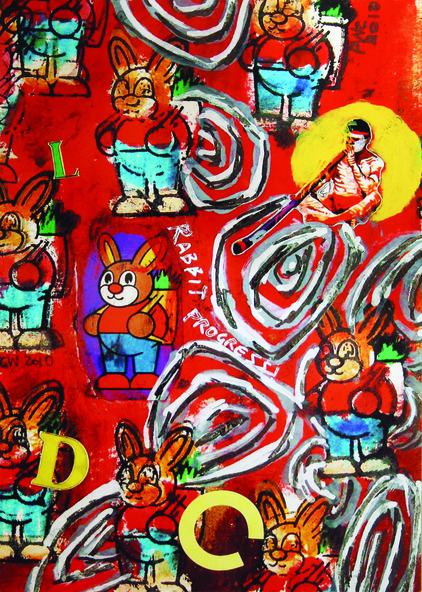
In 'Rabbit Progress', Peter Waples-Crowe presents the ever-multiplying rabbit as a symbol of European colonisation, and highlights the absurdity of the unintended consequences of the introduction of these extremely prolific creatures, which was catastrophic for the natural environment. Recognised as a critical agricultural threat, a rabbit-proof fence was constructed at the turn of the 20th century to keep Western Australian pastoral areas free of the devastation caused by crop damage and soil erosion. Later, drastic biological measures, including the use of myxomatosis in the 1950s and Rabbit Haemorrhage Disease (RHD) in the 1990s, were used in a semi-successful attempt to control burgeoning rabbit numbers. The long-lasting effects of the original folly are the constant dangers posed by the wild rabbit population to Australia’s ecology. In contrast, the didgeridoo player featured in the artwork represents traditional Aboriginal culture in harmony with the land.
Artist Bio
Peter Waples-Crowe is a Ngarigo queer visual and performance artist living in Melbourne. He creates bold, colourful work that explores the representation of Aboriginal people in popular culture, often referencing the dingo as a totemic figure and an analogy for indigenous peoples. Peter has been a multiple finalist for prestigious awards such as the National Aboriginal and Torres Strait Islander Art Awards and the Victorian Indigenous Art award. Together with Vincent Li, a Melbourne-based menswear designer, Waples-Crowe has created the MIRRIGANG collection, where feelings of struggling with identity, dislocation and conflict are conveyed through collaged textile, digital prints, embroidery and hand-painted artwork.
